10 Modern Floating Wall Shelf Ideas | Minimalist Black Wood Wall Decor
You installed a floating shelf, added a plant and a candle, and now it looks more like a random shelf than an actual design choice. That’s one of the most common problems with floating shelves, and it usually comes down to spacing, styling, and a lack of a clear material choice. These floating wall shelf ideas focus on using minimalist black wood wall decor with intention, so the shelves read as a real feature instead of an afterthought.
1. Choose the Right Floating Shelf Depth for Your Wall
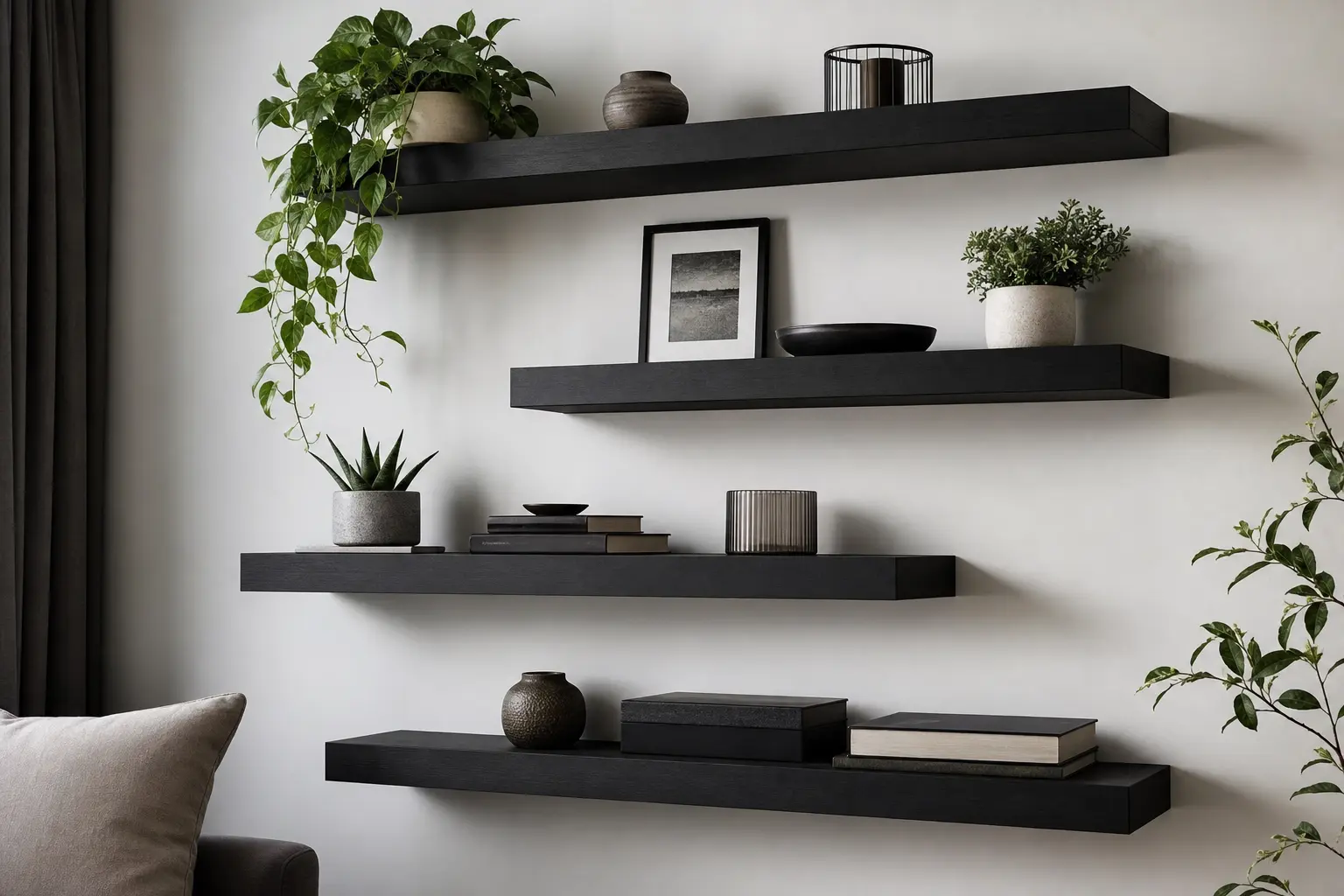
A shelf that’s too shallow can’t hold much beyond a single small object, while a very deep shelf can start to feel bulky on a smaller wall. For most living spaces, a depth of 8 to 10 inches works well for styling books, small plants, and decorative objects without overwhelming the wall.
Consider what you’ll actually display before choosing depth. A shelf meant for a small collection of ceramics needs less depth than one meant to hold larger picture frames or a stack of oversized books.
Matching Depth to Wall Size
A narrow hallway wall usually calls for a shallower shelf, around 6 inches, to avoid becoming a bump people brush against. A larger living room wall can support a deeper shelf without feeling out of proportion.
2. Pick Black Wood for a Bold, Minimalist Statement
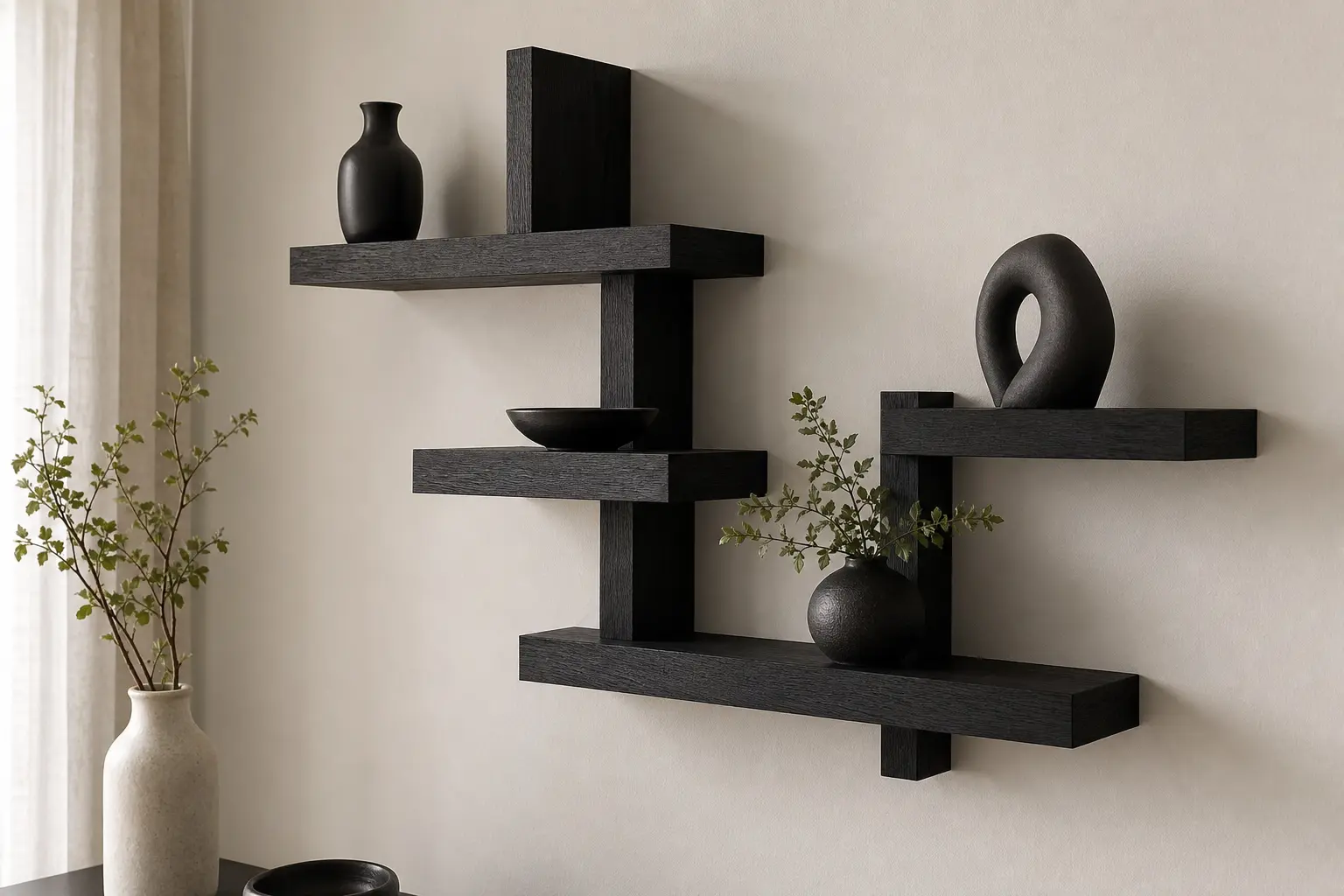
Black wood shelves create strong visual contrast against most wall colors, which makes them a popular choice for a minimalist look that still feels intentional rather than plain. The dark tone reads as a deliberate design choice, especially against a white or soft neutral wall.
If your existing furniture already leans warm and light, a black wood shelf can feel disconnected unless you tie it in with at least one or two other black accents elsewhere in the room, like a lamp base or a picture frame.
3. Decide on Shelf Placement and Spacing Before Drilling
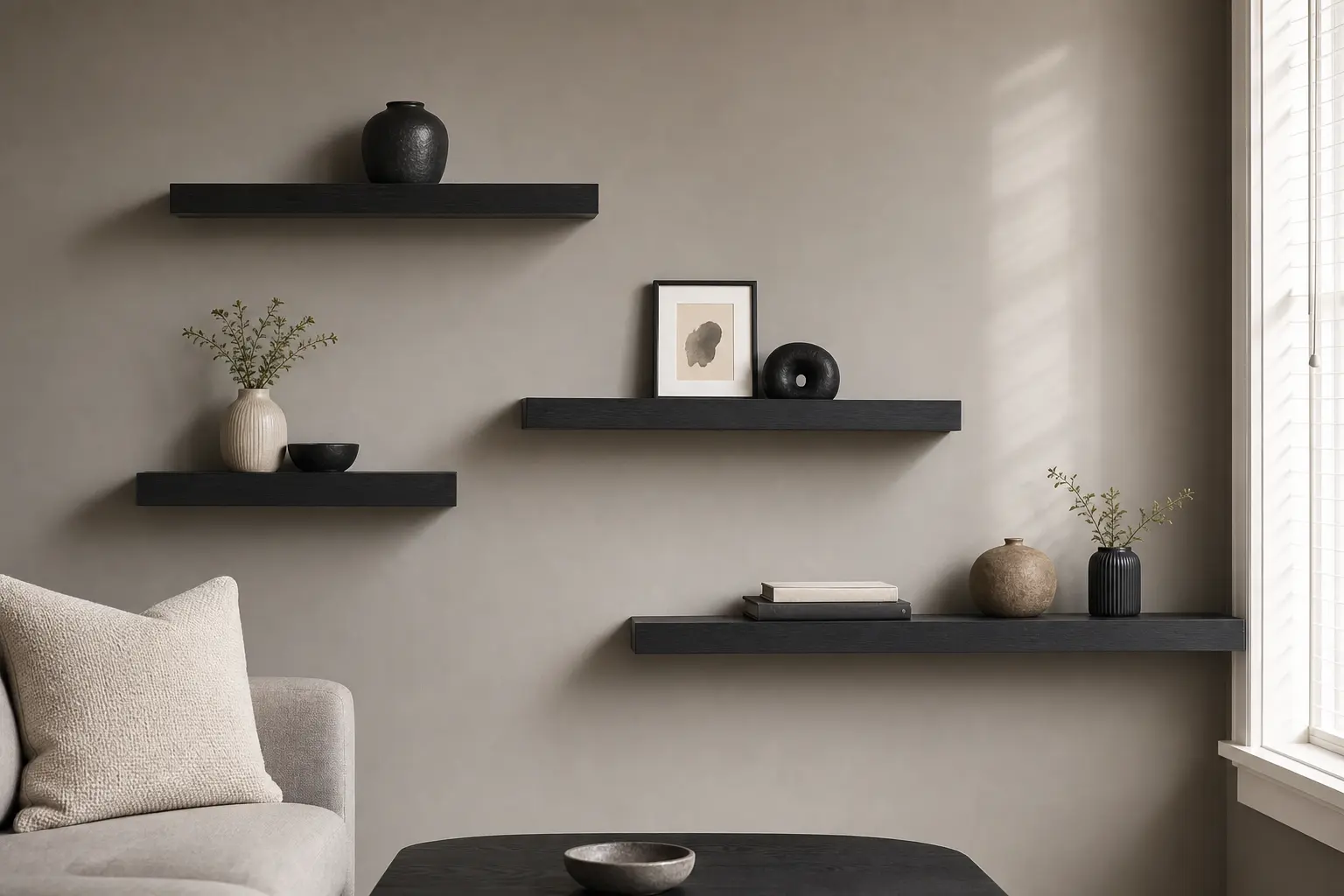
Spacing between multiple floating shelves affects how balanced the whole wall feels. As a general guide, leaving 10 to 14 inches between shelves gives enough room to style each one without them visually crowding each other.
Mark your intended placement with painter’s tape first and step back to view it from across the room. This simple step catches spacing issues before you’ve committed to actual holes in the wall.
4. Style Shelves With Odd Numbered Groupings
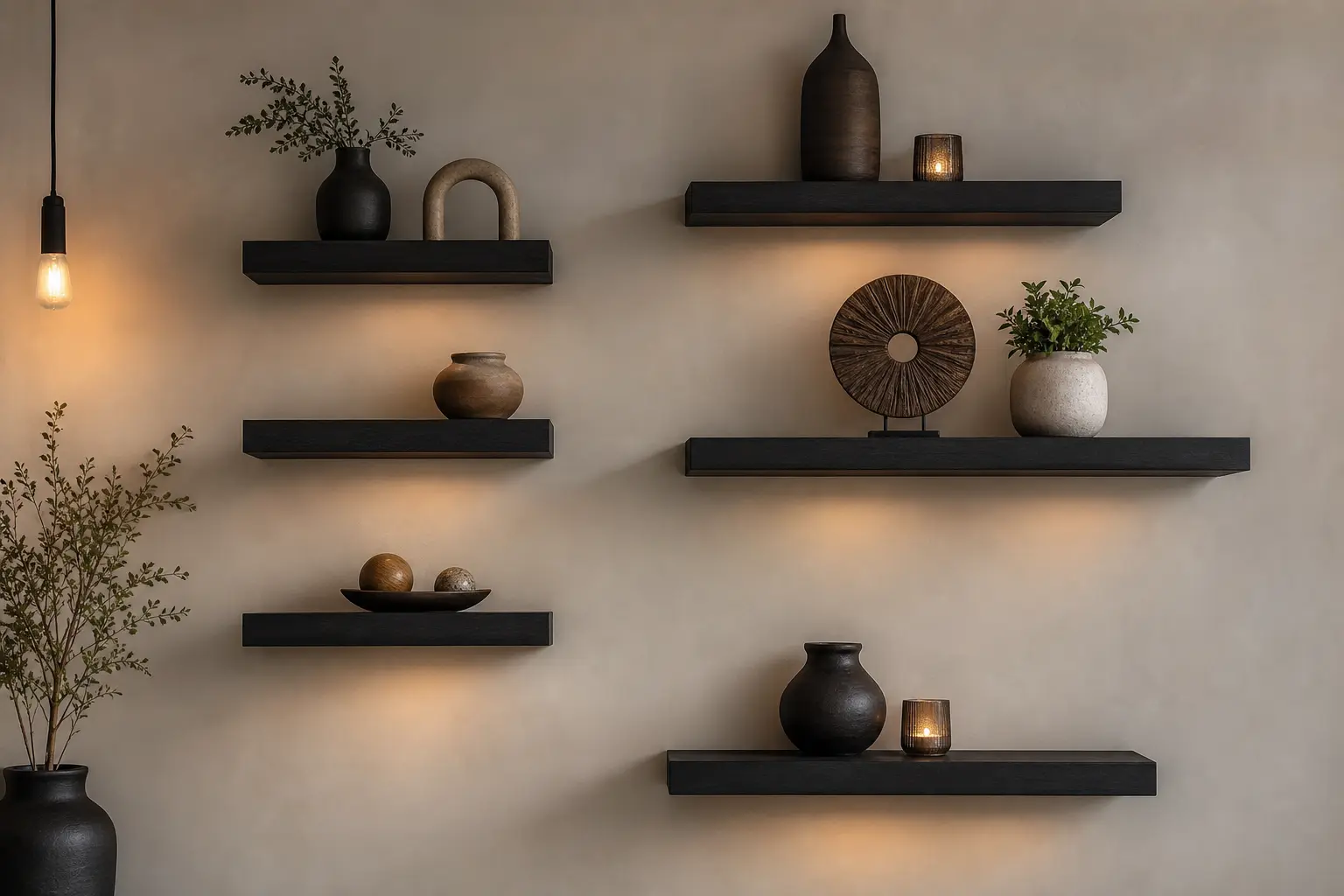
Objects grouped in odd numbers, usually three, tend to look more natural and less staged than pairs or even numbered groupings. A small stack of books, a single plant, and one ceramic object is a simple, reliable combination for a single shelf.
Vary the height within each grouping too. Three objects of the exact same height in a row reads as more rigid than a mix of tall, medium, and low pieces styled together.
5. Balance Negative Space Around Each Shelf
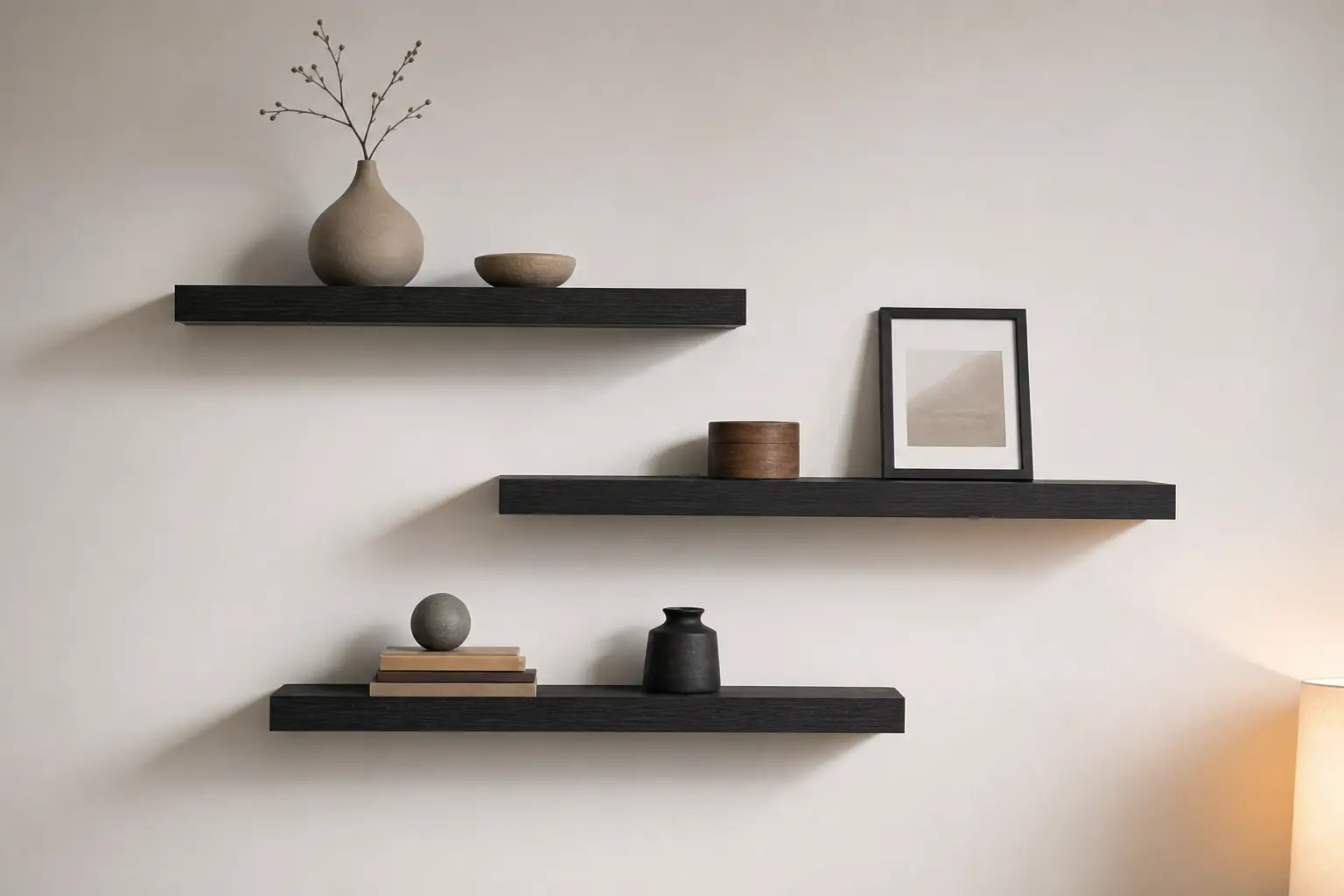
A shelf packed edge to edge with objects looks cluttered, no matter how nice each individual piece is. Leaving roughly a third of the shelf’s surface empty keeps the styling feeling intentional rather than crammed.
This negative space also helps the black wood material itself stand out as part of the design, rather than being completely hidden under decor.
6. Mix Shelf Heights for a More Dynamic Wall
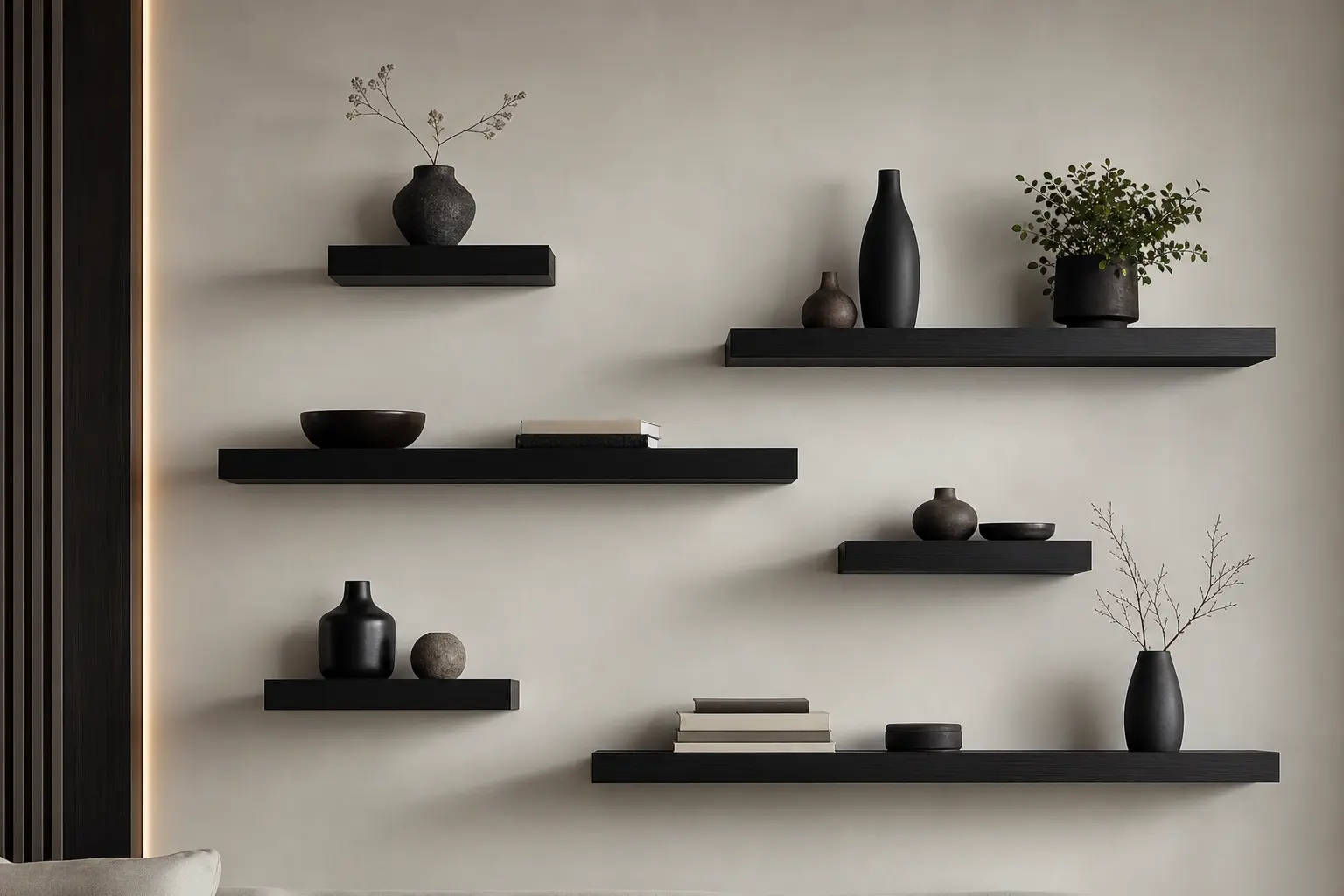
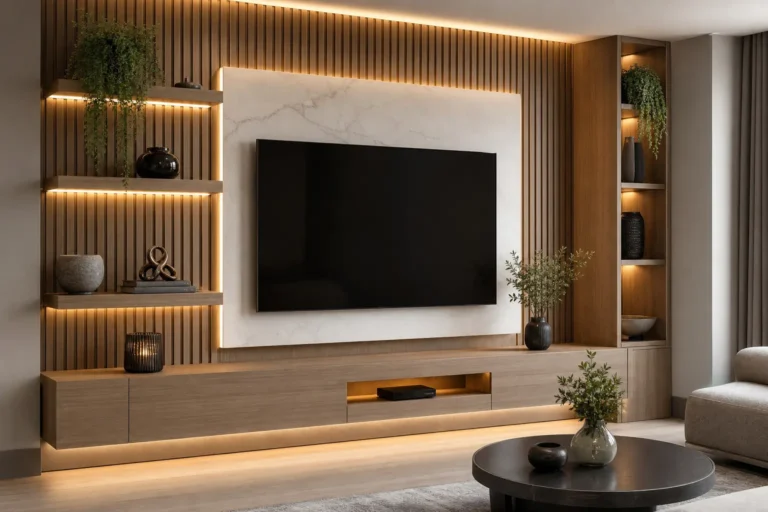
A single row of shelves at the same height can look flat, especially on a taller wall. Staggering two or three shelves at slightly different heights, sometimes called an asymmetrical layout, adds visual movement and makes better use of the vertical space.
Keep the offsets intentional rather than random. A staggered pattern with a consistent logic, like each shelf shifting slightly to one side, reads as more considered than an arrangement with no clear structure.
7. Choose Hardware That Supports Real Weight
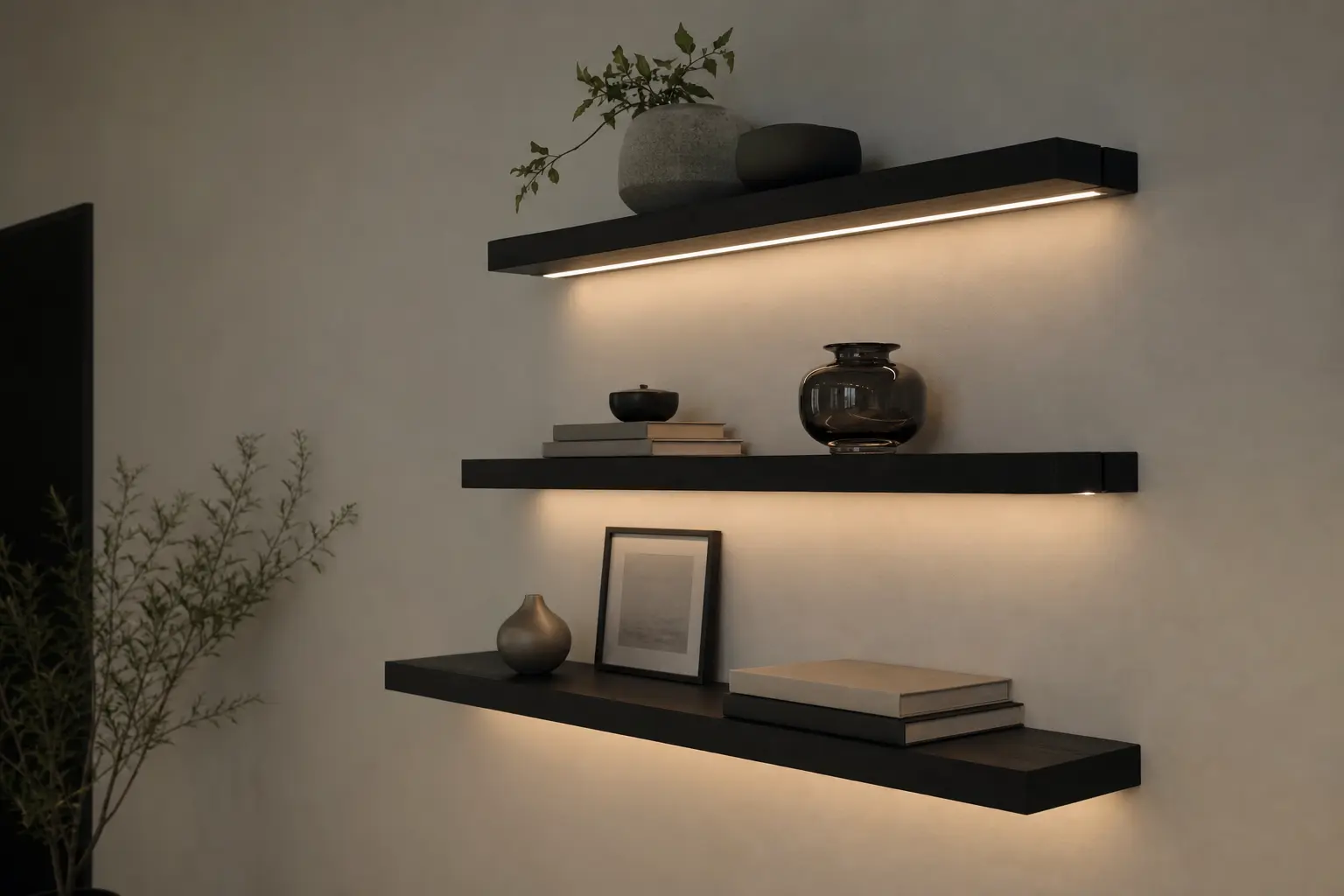
Floating shelf brackets vary significantly in weight capacity, and using the wrong hardware for heavier items like books or ceramics can lead to sagging or, in worse cases, the shelf pulling away from the wall. Check the manufacturer’s weight rating before loading a shelf with anything substantial.
For heavier displays, look for shelves designed to mount into wall studs rather than drywall anchors alone, since stud mounted brackets generally hold significantly more weight safely.
8. Add a Single Light Source to Highlight the Shelves
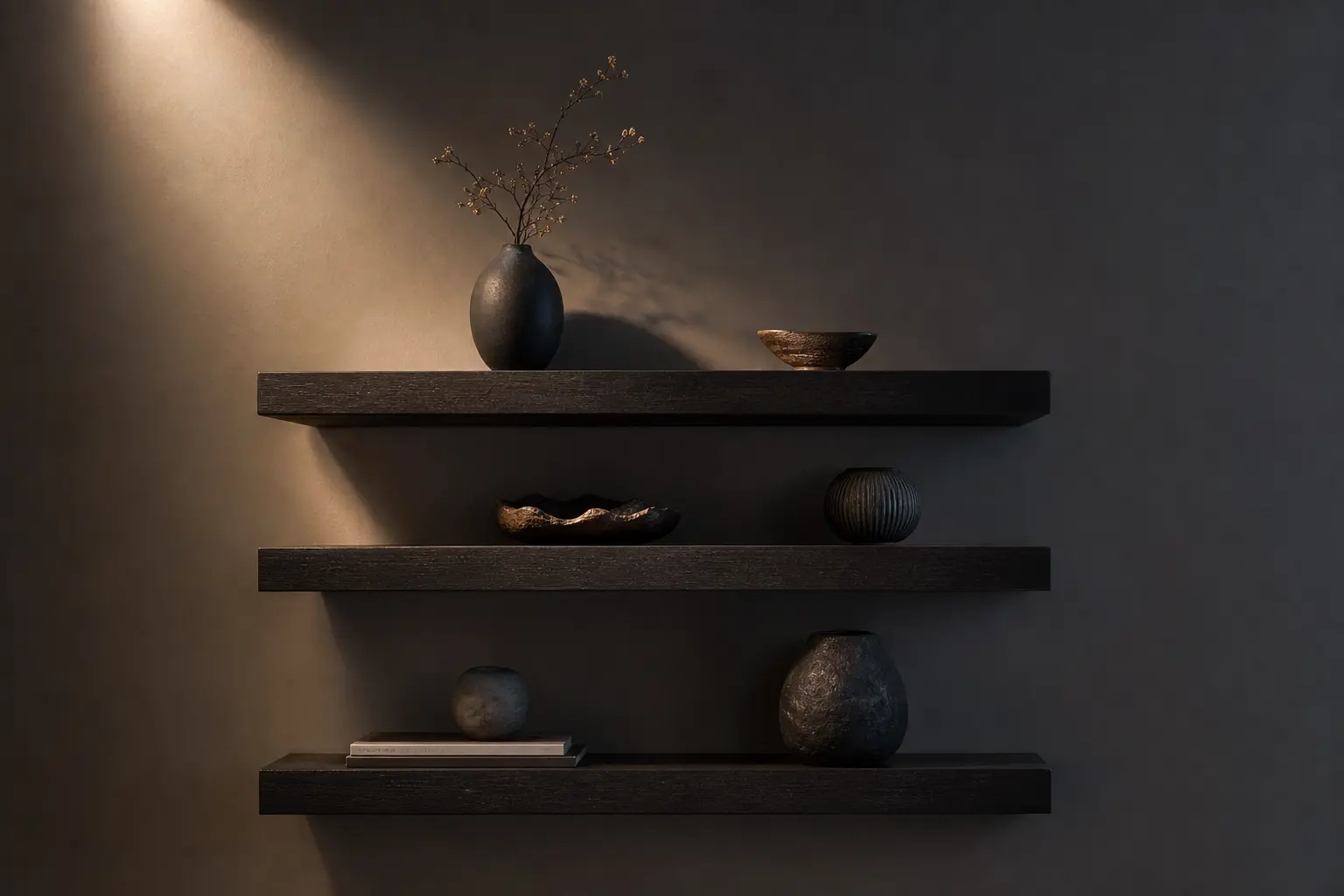
A small picture light or a warm LED strip mounted above or below a shelf grouping draws attention to the display, especially in the evening. This kind of accent lighting also helps black wood shelves stand out clearly against a wall, rather than blending into shadow after dark.
Keep any added lighting on a warm color temperature, generally 2700K to 3000K, so it complements rather than competes with the black wood’s tone.
9. Keep Colors Limited to Support the Minimalist Look
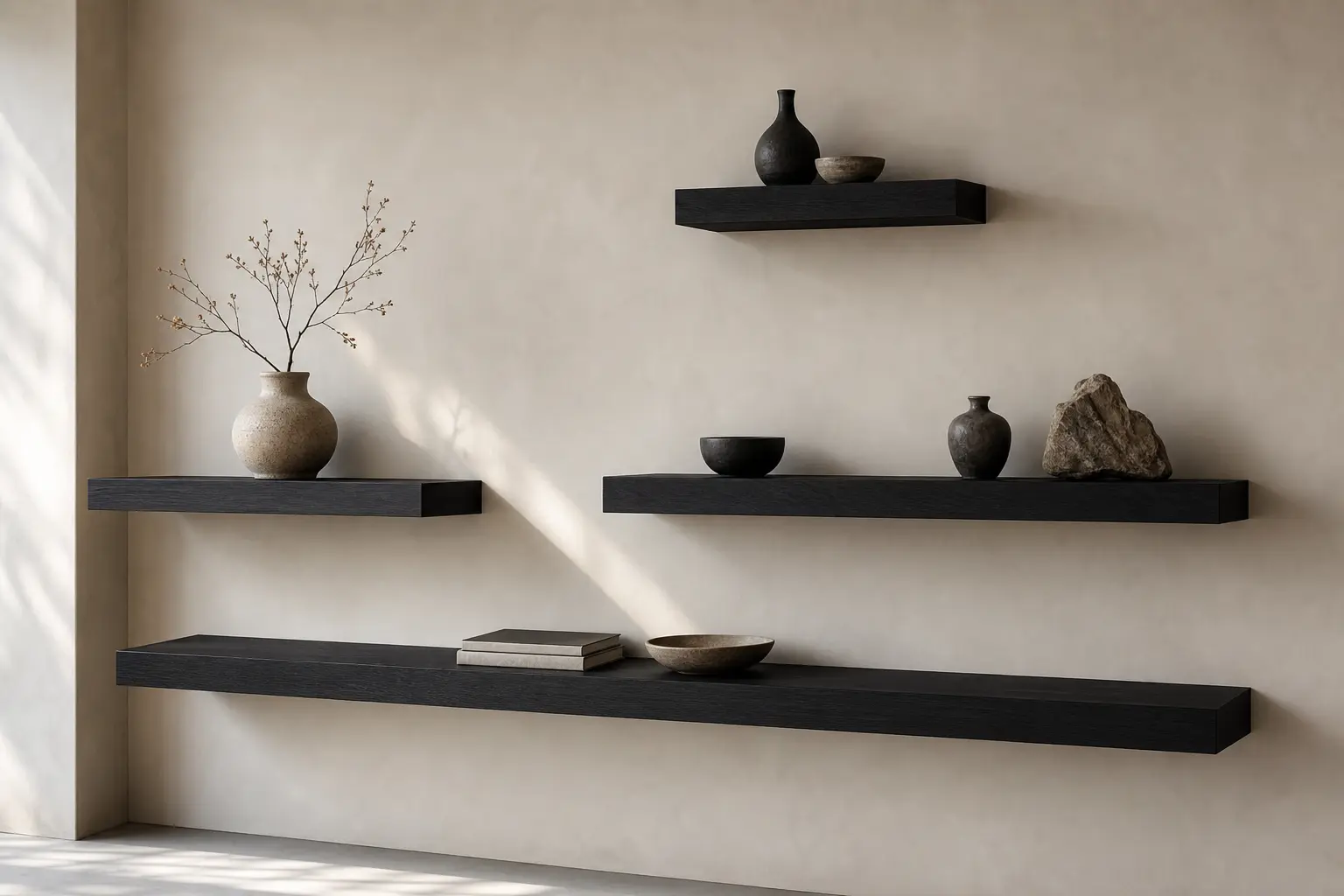
Too many colors across the objects on a shelf can undercut an otherwise clean, black wood minimalist look. Sticking to black, white, and one or two warm neutral tones across your styled objects keeps the whole wall feeling cohesive.
If you want a pop of color, limit it to a single small object, like one book cover or a small vase, rather than spreading multiple colors across every shelf.
10. Maintain Floating Shelves for a Clean, Lasting Finish
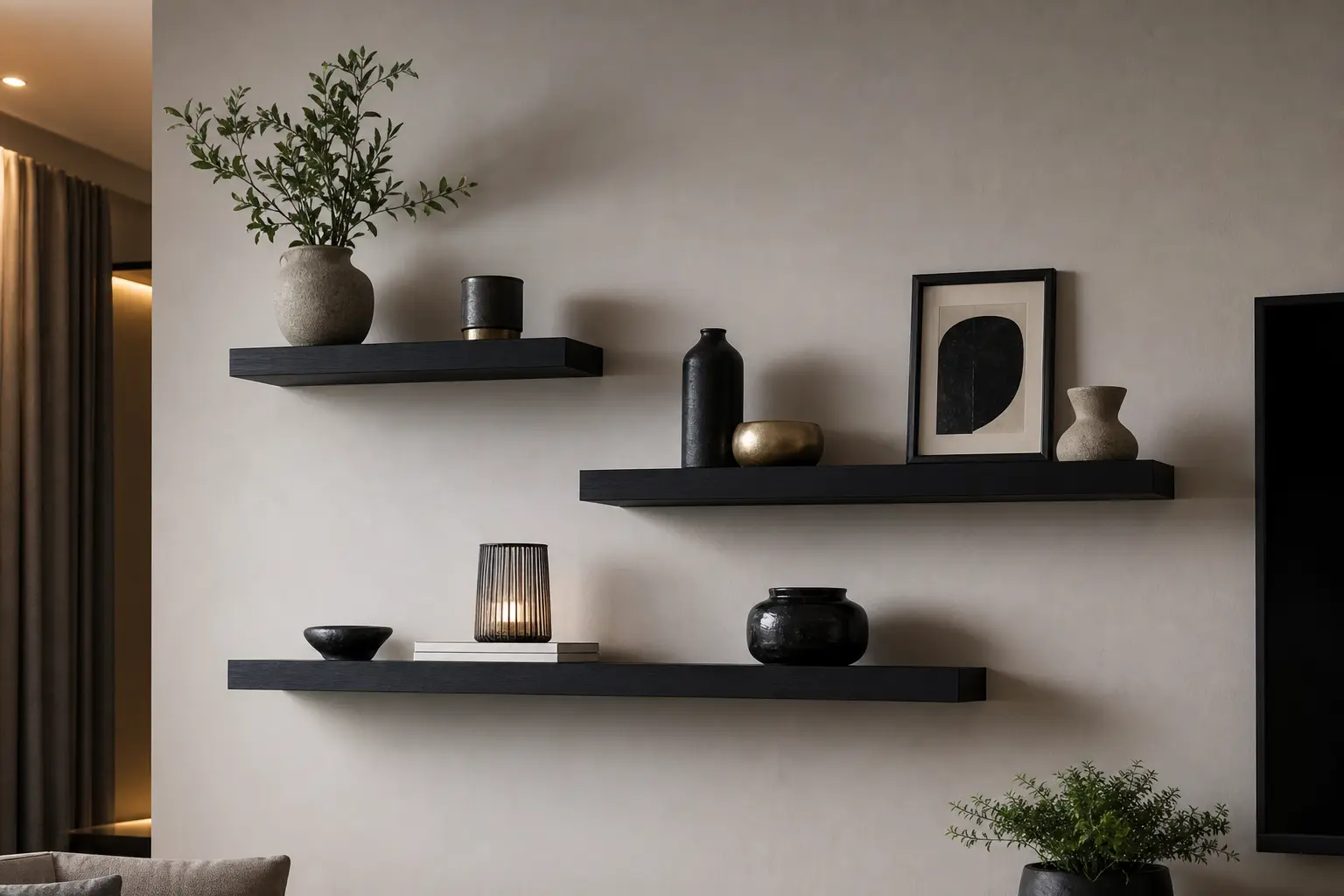
Wood shelves, even sealed ones, can show dust and fingerprints more visibly in a dark finish than in a lighter wood tone. A regular wipe down with a soft, dry cloth keeps the black finish looking clean and intentional rather than dull.
Periodically check that brackets remain secure, especially if you’ve added or swapped heavier items over time, since weight distribution can shift as your styling changes.
Mistakes to Avoid
- Choosing shelf depth that doesn’t match what you actually plan to display
- Spacing multiple shelves too close together, making the wall feel crowded
- Overloading a single shelf edge to edge with no negative space
- Using drywall anchors alone for shelves meant to hold heavier items
- Mixing too many colors across styled objects, working against the minimalist look
Frequently Asked Questions
How much weight can a typical floating shelf hold? It varies by product and mounting hardware, but many standard floating shelves handle 15 to 25 pounds when mounted correctly into studs. Always check the specific manufacturer’s rating before loading a shelf heavily.
Is black wood harder to keep clean than a lighter wood shelf? It can show dust and fingerprints more visibly than a lighter tone, simply because of the contrast, though the actual cleaning process is the same for both.
How far apart should multiple floating shelves be spaced? A common guide is 10 to 14 inches between shelves, which gives each one enough room to be styled individually without visually crowding the others.
Do floating shelves work in a small space like a hallway? Yes, especially with a shallower depth, around 6 inches, which avoids becoming an obstacle in a narrow walkway while still adding storage and display space.
Should I mount floating shelves into drywall or studs? Studs are strongly recommended for anything beyond very light, small objects. Drywall anchors alone are best reserved for shelves holding minimal weight.
Conclusion
Floating wall shelves become a real design feature once spacing, styling, and material choice all work together intentionally. Black wood adds a bold, minimalist statement, but it only reads as finished when the shelves are placed thoughtfully and styled with restraint. Start with one wall, mark your spacing with tape first, and build the styling from there.