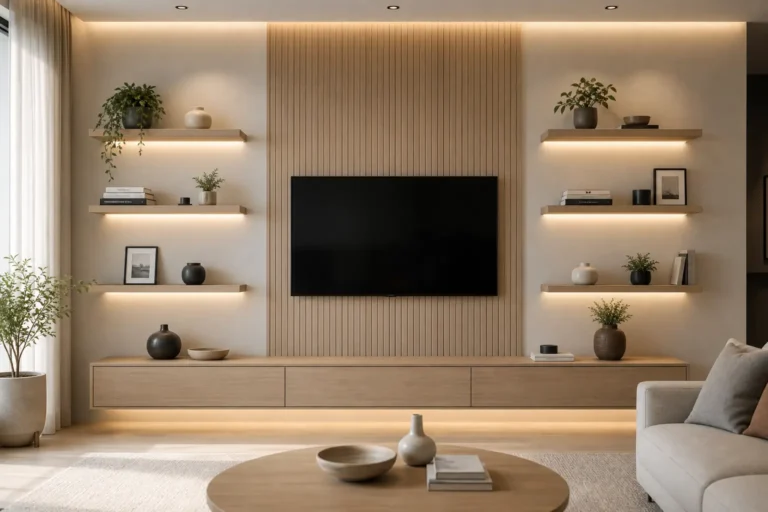
10 Modern TV Unit Wall Design Ideas with Semi-Circle Cove Lighting & Wood Slats
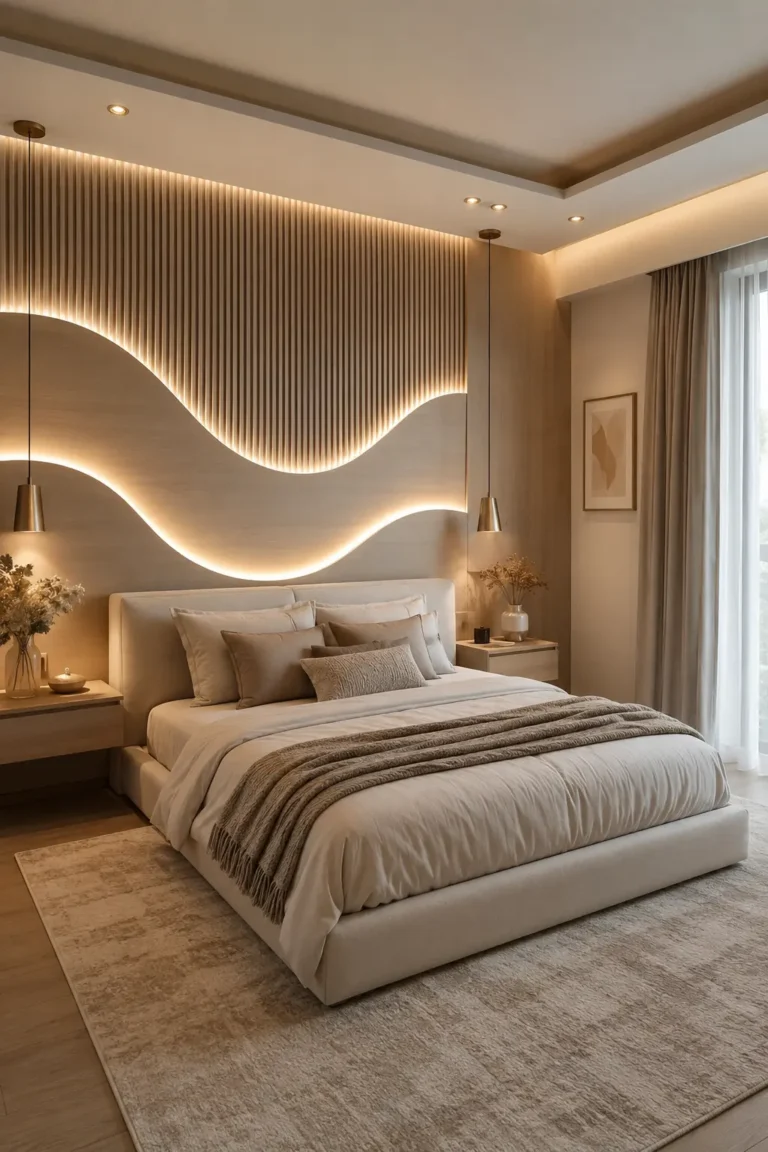
Most TV walls are an afterthought. A television gets mounted, maybe a floating shelf goes underneath, and that’s it. The wall does nothing for the room. If you’ve been scrolling for a TV unit wall design with semi-circle cove lighting because your living room feels flat under regular ceiling light, you’re not alone. A curved cove of warm light paired with a wood slat panel does something a flat painted wall can’t. It adds shape, shadow, and a sense that someone actually designed the space on purpose. This article walks through ten real ways to build that look, from layout to LED temperature to what it actually costs.
1. Choosing the Right TV Unit Wall Layout for Cove Lighting
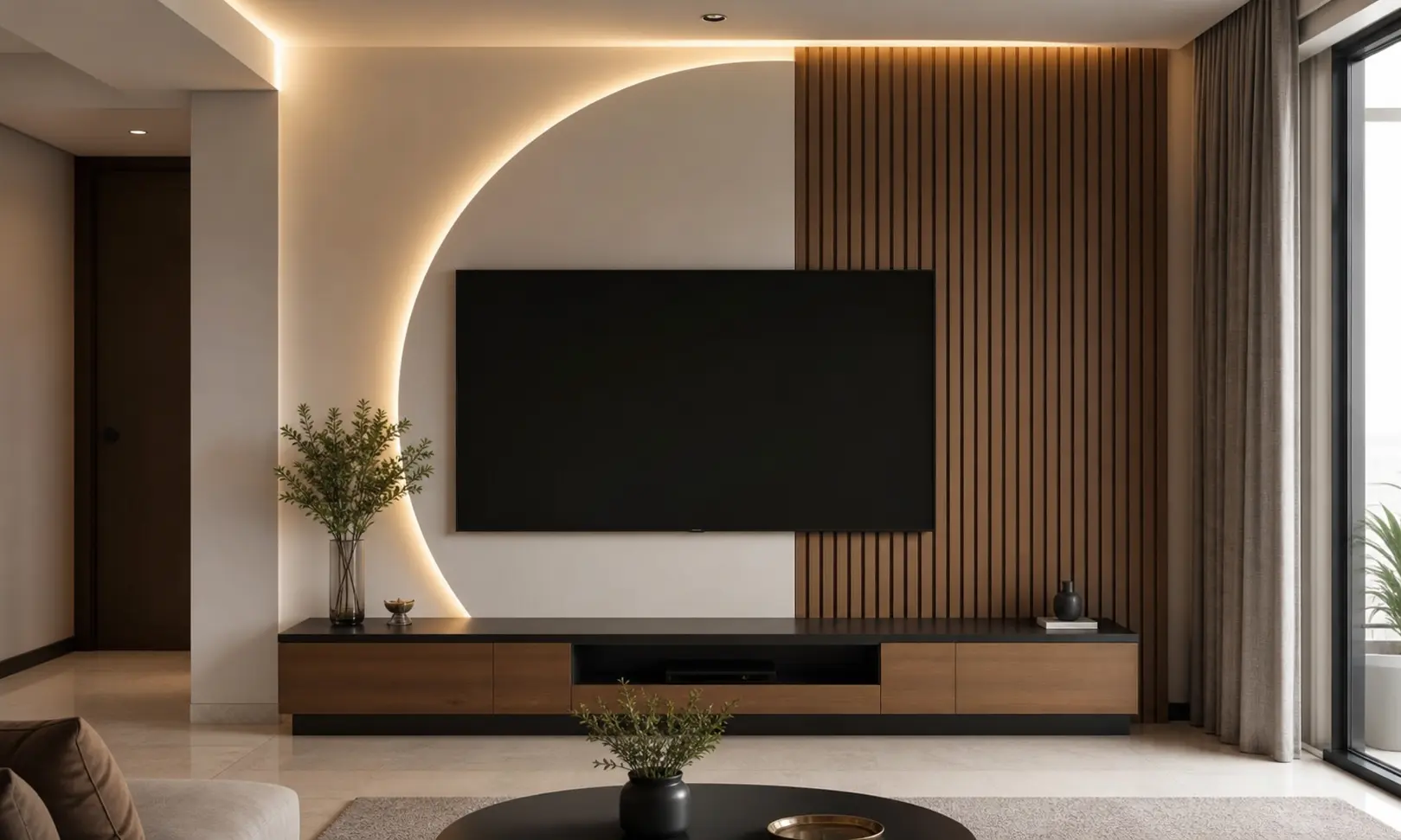
Before picking finishes, figure out where the curve goes. A semi-circle cove usually sits above the TV, wrapping the top corners of the slat panel like a soft halo. Some homes put it below instead, low behind a floating console, casting light upward across the slats.
The layout decision comes down to ceiling height. Rooms with 9 foot or taller ceilings usually look better with the cove up high, since it draws the eye upward and makes the room feel taller. Lower ceilings, closer to 8 feet, often look more balanced with the light source lower, near the console.
Why This Matters Before You Buy Materials
Picking the layout first saves you from ordering wood slats cut to the wrong height. Cove framing needs to be built into the wall structure or a mounted panel, so this decision has to happen before any wood goes up.
2. How Semi-Circle Cove Lighting Changes the Feel of a Room
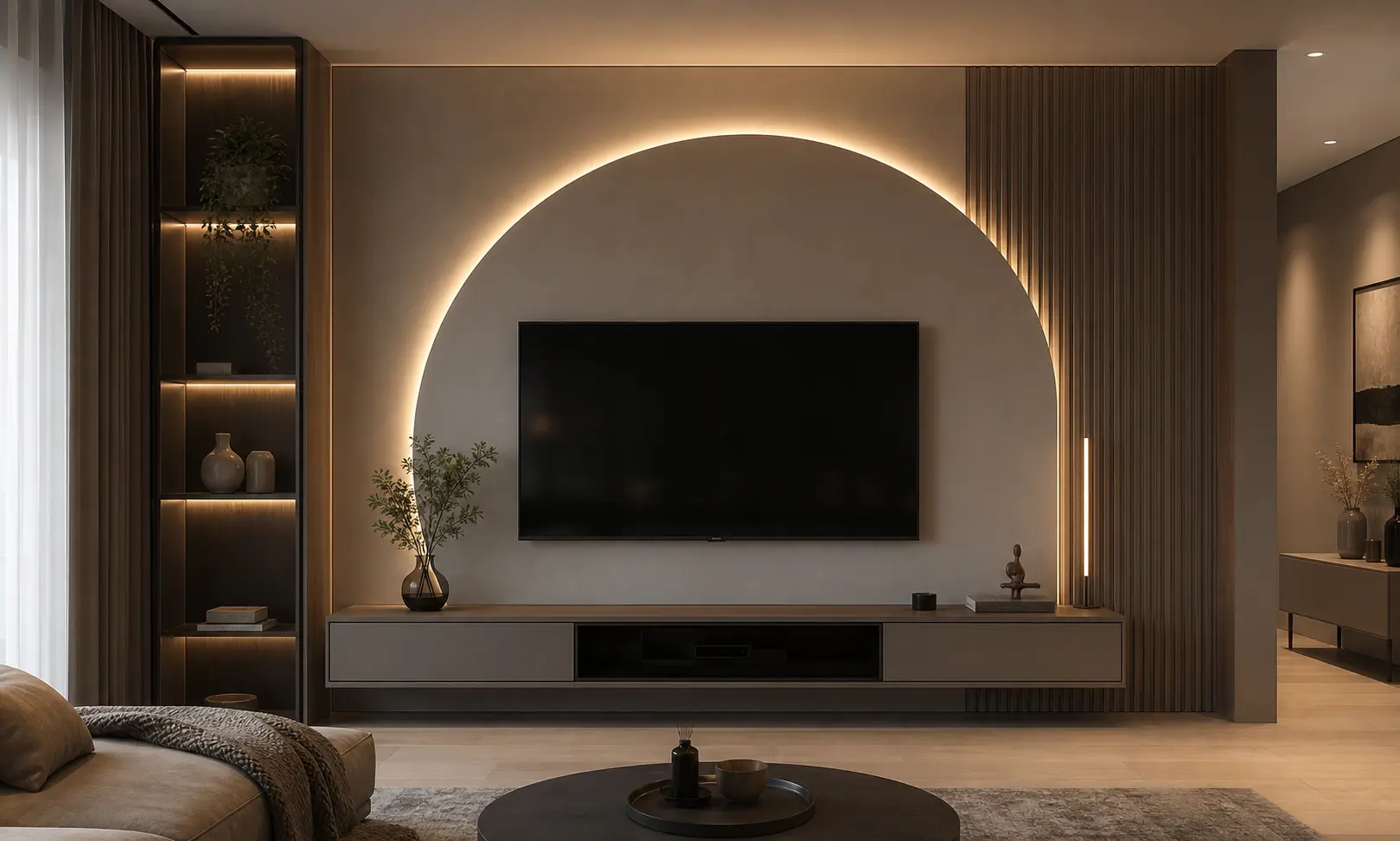
A straight line of light reads as functional. A curve reads as intentional. That’s the core reason semi-circle cove lighting has become such a popular TV wall feature. The curved shape softens a room that’s otherwise full of hard edges, like the TV itself, shelving, and furniture corners.
Cove lighting also solves a practical problem. Direct light hitting a TV screen creates glare. A cove hides the LED source behind a lip of wood or drywall, so the light bounces indirectly across the wall instead of shining straight at the screen. You get ambient light without the glare.
This kind of layered lighting is also what interior designers mean when they talk about a room having depth. A single ceiling fixture flattens everything. A semi-circle cove creates a secondary light layer that changes brightness and mood depending on the time of day.
3. Wood Slat Panel Styles That Pair Well with Curved Lighting
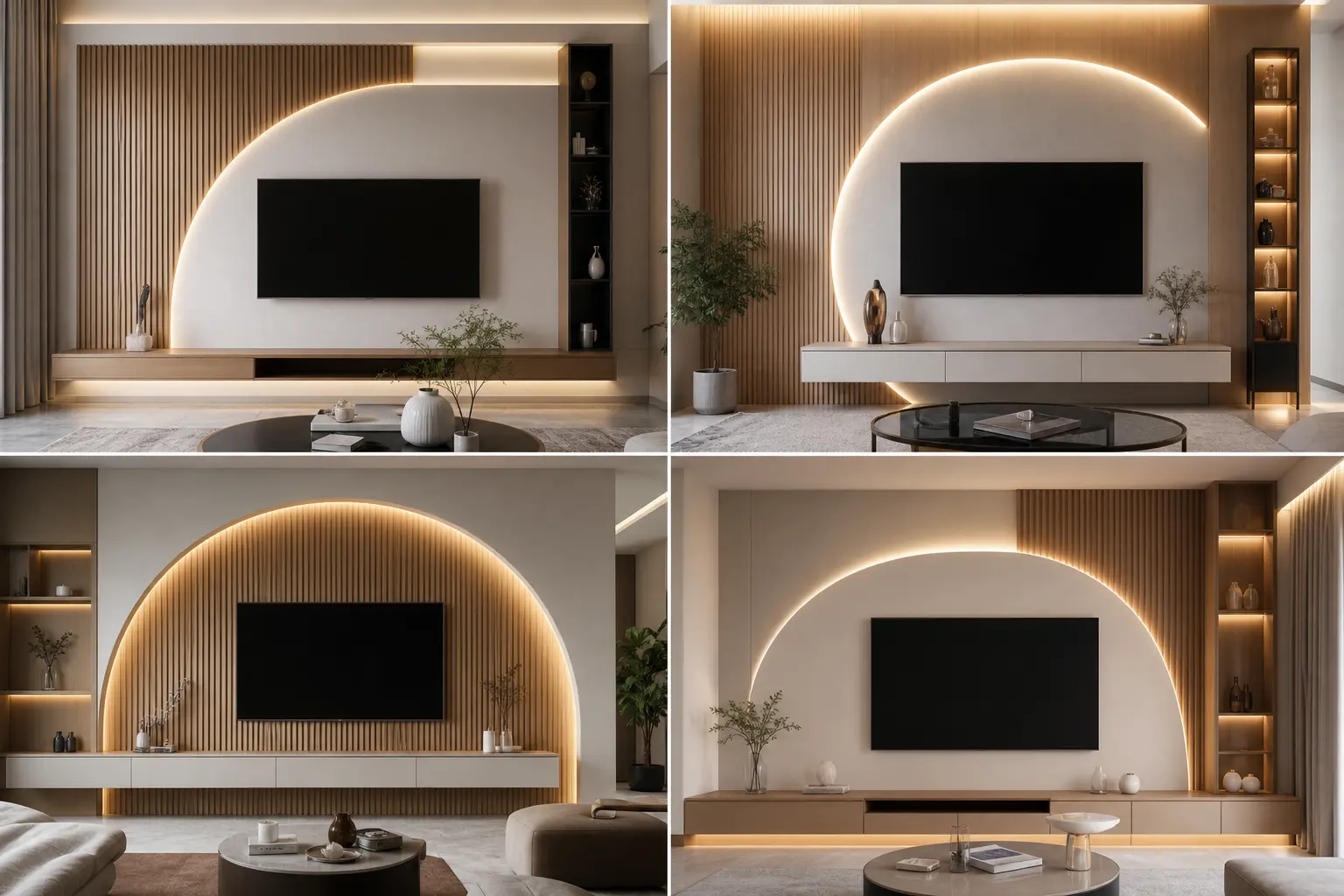
Not every slat style works the same way against curved light. Thin, closely spaced slats, around half an inch apart, create tighter shadow lines and read as more modern and minimal. Wider slats, spaced closer to an inch and a half apart, cast deeper shadows and give a warmer, more textured look.
Straight Slats vs Curved Slat Panels
Straight vertical slats are the most common and the easiest to install yourself. Curved slat panels, where the wood actually follows the arc of the cove, are harder to source and usually need a carpenter, but they echo the semi-circle shape in the wood itself instead of just the light.
Either option works. Straight slats against a curved light source still create contrast that looks deliberate. Curved slats cost more but make the whole wall feel like one continuous design instead of two separate elements stacked together.
4. Picking the Right LED Color Temperature for Your Cove
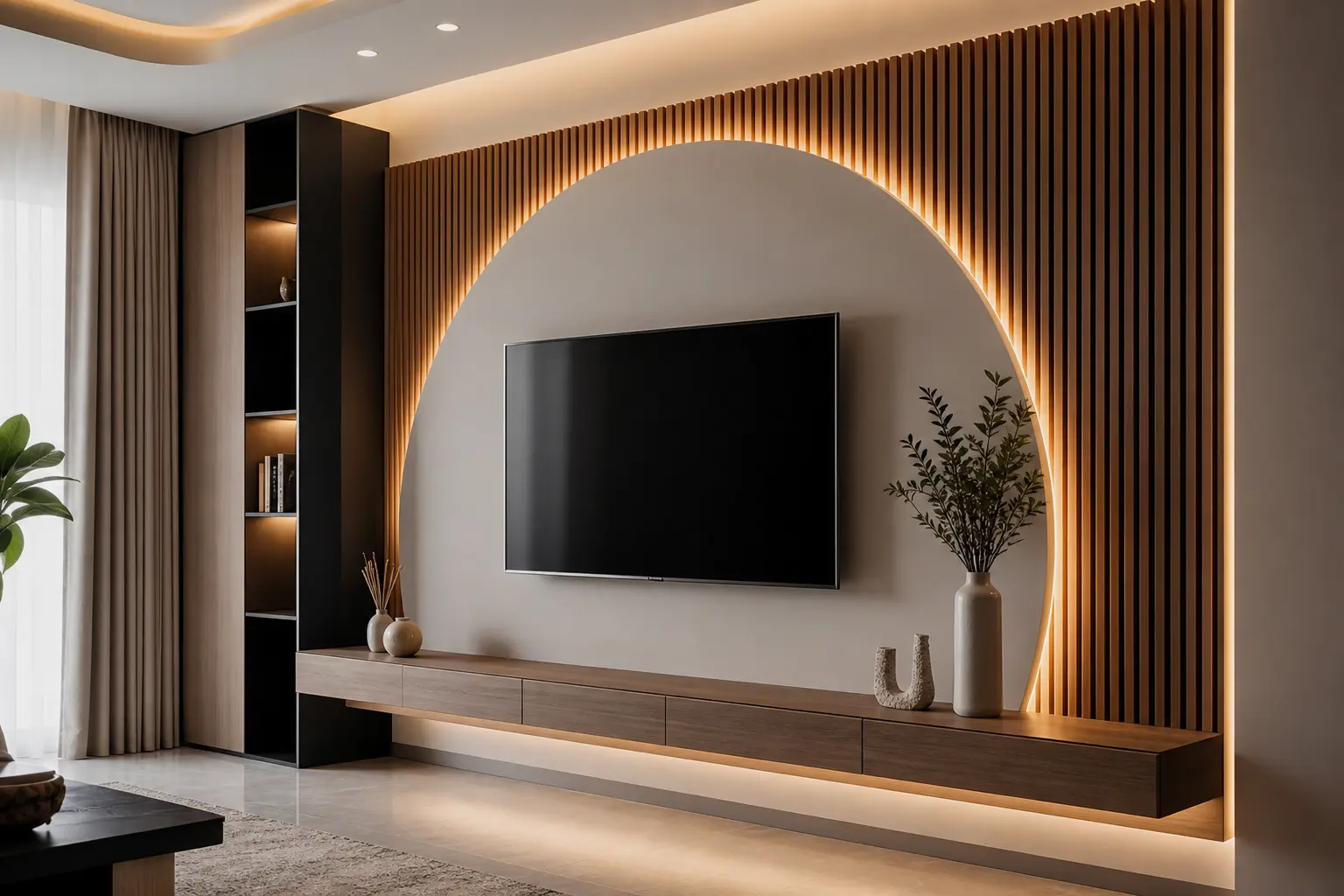
This is where a lot of these walls go wrong. LED strips come rated in kelvin, and the number matters more than most people expect. Anything above 4000K starts to look clinical, closer to office lighting than living room lighting. For a warm, inviting cove, look for LED strips rated between 2700K and 3000K.
At 2700K, the light reads amber and cozy, close to old incandescent bulbs. At 3000K, it’s slightly whiter but still warm. Either range works well behind wood slats, since the warm tone complements natural wood grain instead of washing it out under a bluish light.
Dimmable LED strips are worth the small extra cost. A cove at full brightness works for movie nights or entertaining. Dimmed low, it becomes ambient background light for a quieter evening, without needing the main ceiling light on at all.
5. Sizing Your TV Unit Wall Around a Semi-Circle Design
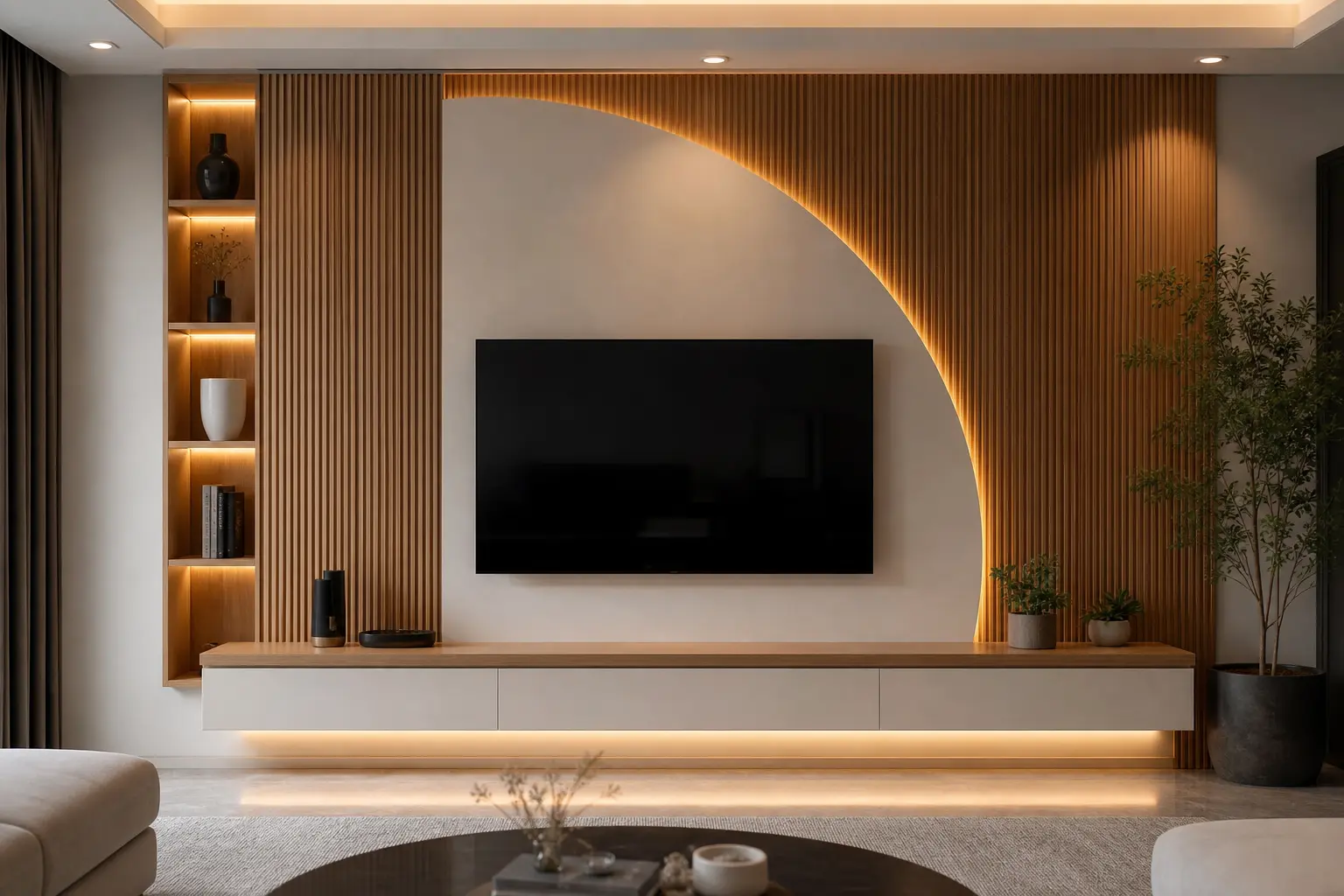
A semi-circle cove needs enough wall width to actually read as a curve rather than a random shape. As a rough guide, the cove diameter should be at least one and a half times the width of your TV. For a 65 inch television, that puts a comfortable cove width somewhere around 8 to 9 feet across.
Going smaller than that risks the curve looking cramped, like it was squeezed in around the TV rather than designed as its own feature. If your wall is narrower than that, a partial arc or a lower, smaller cove tucked behind the console often works better than trying to force a full sized semi-circle onto a tight wall.
6. Layering Storage Into a Semi-Circle TV Wall Unit
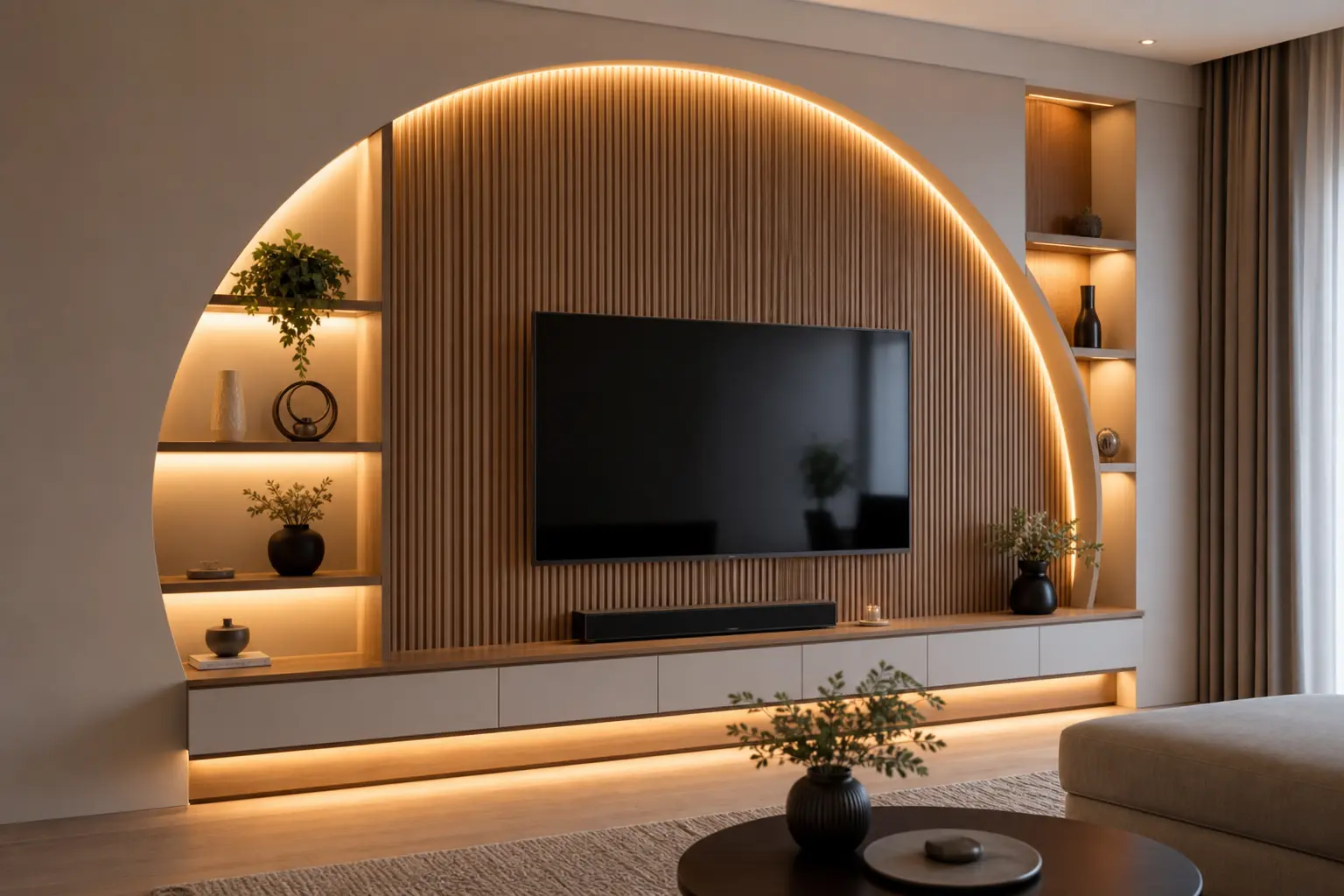
A TV wall still needs to function. Streaming boxes, gaming consoles, and speakers all need somewhere to sit that isn’t directly in the light path. Floating shelves below the slat panel keep the wall visually clean while giving you a spot for electronics.
Hiding Cables Without Losing the Clean Look
Cove lighting only looks good if the wiring stays hidden. Run LED strip wiring and any component cables through the wall cavity where possible, or use a cord channel painted to match the wall color. A tangle of visible cords under a beautifully lit cove undercuts the whole effect.
Closed cabinet storage below the TV works too, and it hides remotes, gaming controllers, and other clutter completely. Just keep the cabinet color close to the wood slat tone so it reads as part of the design instead of a separate piece of furniture.
7. Wood Slat Finishes and What They Do to Room Warmth
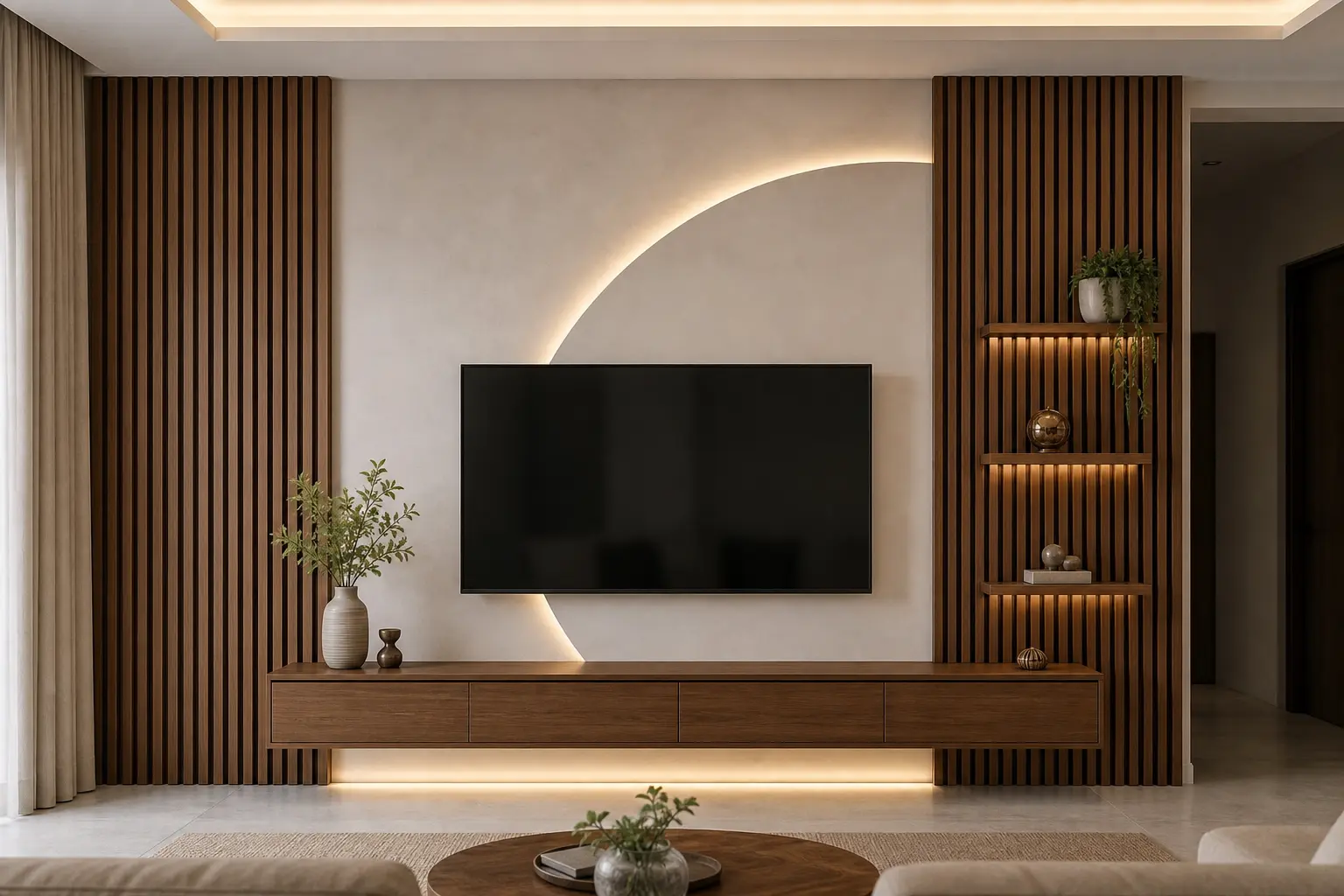
The finish on your slats changes the whole mood of the wall. A natural oak or walnut stain keeps grain visible and pairs well with warm LED light, since both are working in the same amber to brown color range. Painted slats, in black or a deep charcoal, create more contrast against the light, making the curve of the cove stand out even more sharply.
White or light gray painted slats are a softer option, good for smaller rooms where you don’t want the wall to feel heavy. But they show less texture under warm light than a natural wood finish does, since there’s less grain variation to catch shadow.
If you’re unsure, a satin or matte finish generally photographs and looks better in person than high gloss, which can create distracting light reflections right where you want the eye to rest.
8. Placement Tips for a Balanced Semi-Circle Cove Design
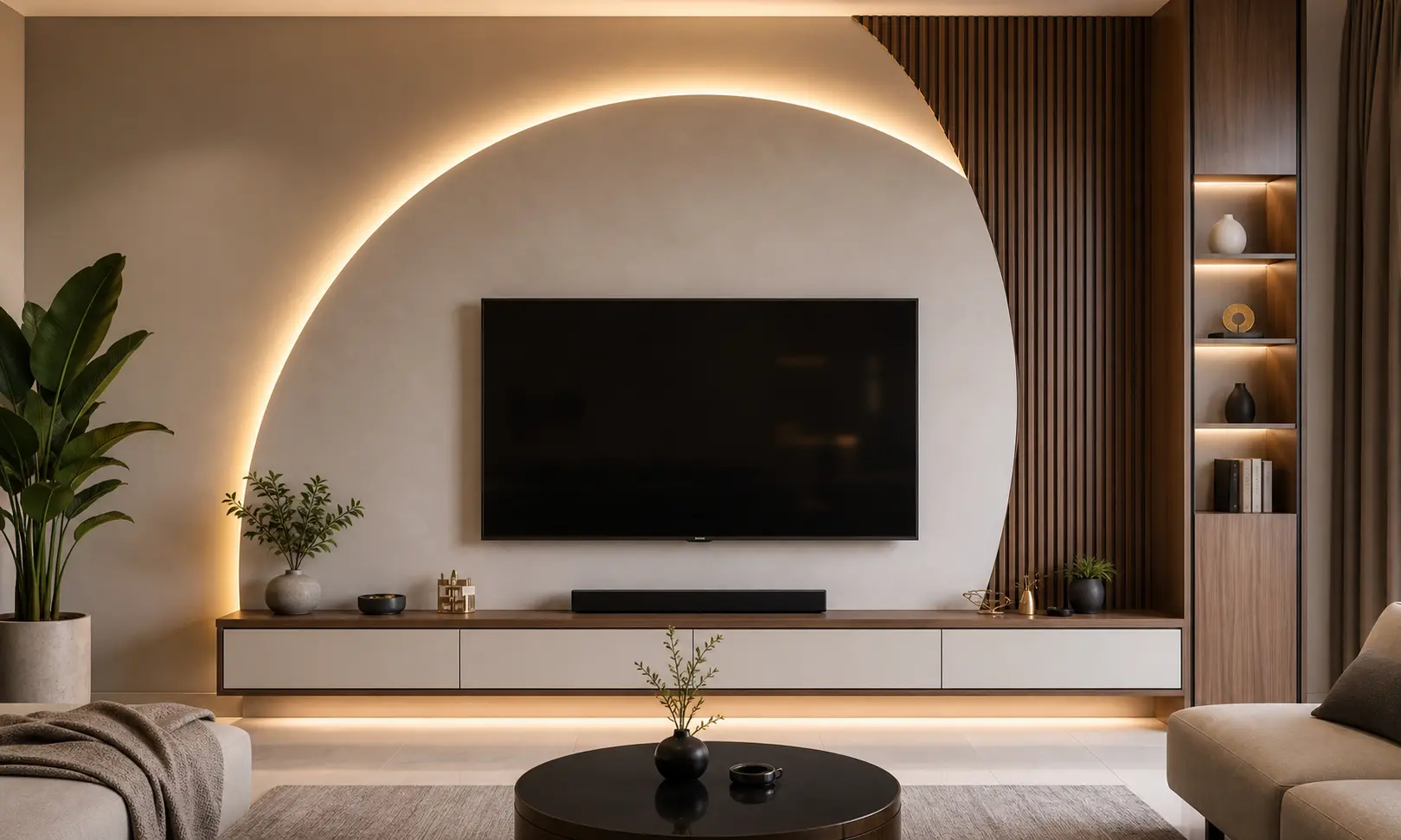
Centering the TV within the semi-circle is the single most important placement rule. An off center TV under a symmetrical arc of light looks like a mistake, not a design choice, even if everything else about the wall is done well.
Measure twice before cutting any wood or mounting any LED channel. Find the true center of your wall, mark it, and build both the slat panel and the cove symmetrically from that center point outward. A laser level makes this dramatically easier than eyeballing it.
9. Budget Ranges for a Semi-Circle Cove Lighting TV Wall
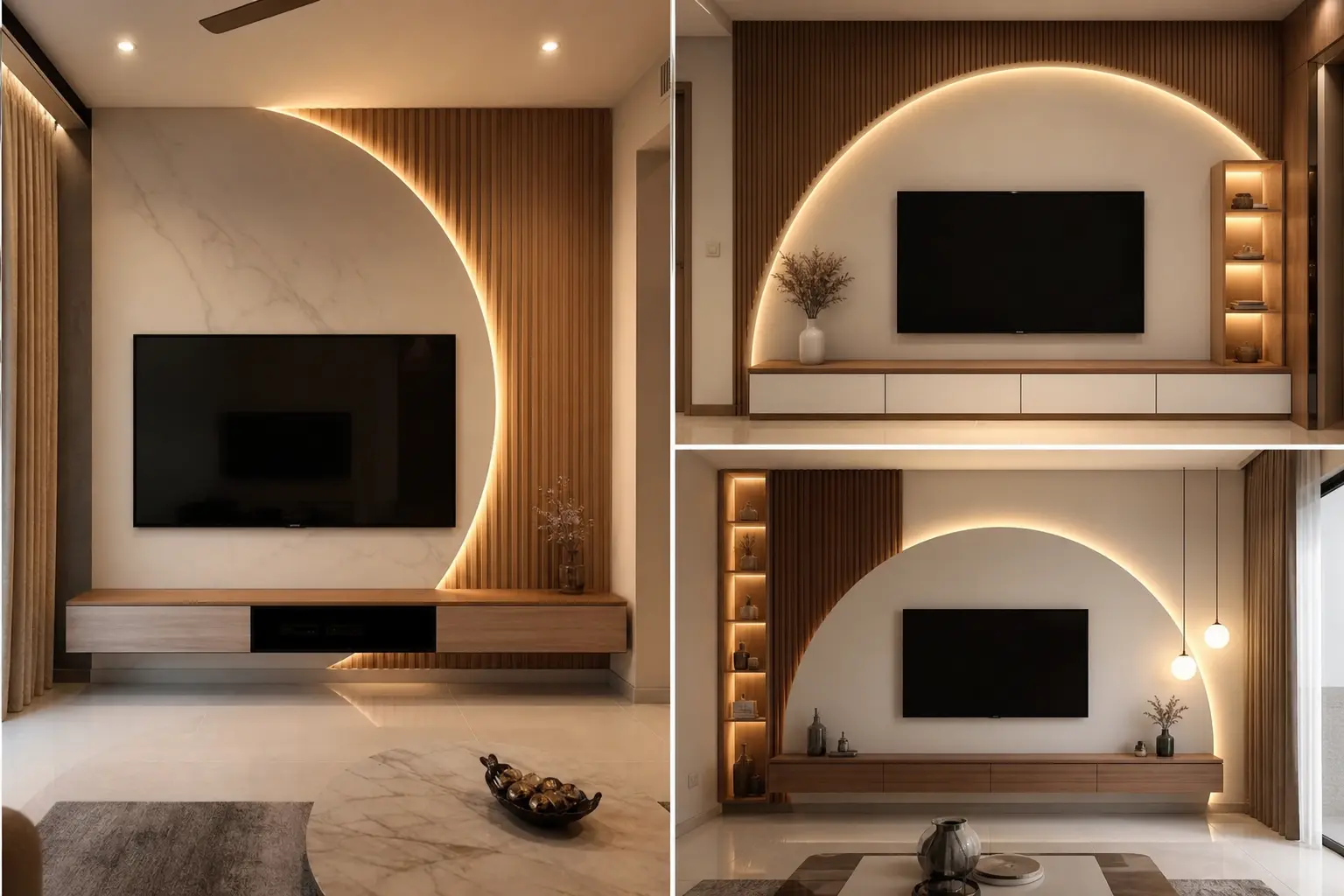
Costs vary a lot based on whether you DIY or hire out. A basic DIY version, using pre cut slat wall panels and a standard LED strip kit, can run somewhere in the range of 300 to 700 dollars for an average sized wall, depending on materials chosen.
A fully custom build, with a carpenter framing a true curved cove and installing solid wood slats, tends to run higher, often somewhere between 1500 and 4000 dollars depending on your region and the complexity of the curve. Dimmable, app controlled LED systems add a modest amount to either budget, usually an extra 50 to 150 dollars over basic strip lighting.
10. Small Room Adaptations for Semi-Circle TV Unit Walls
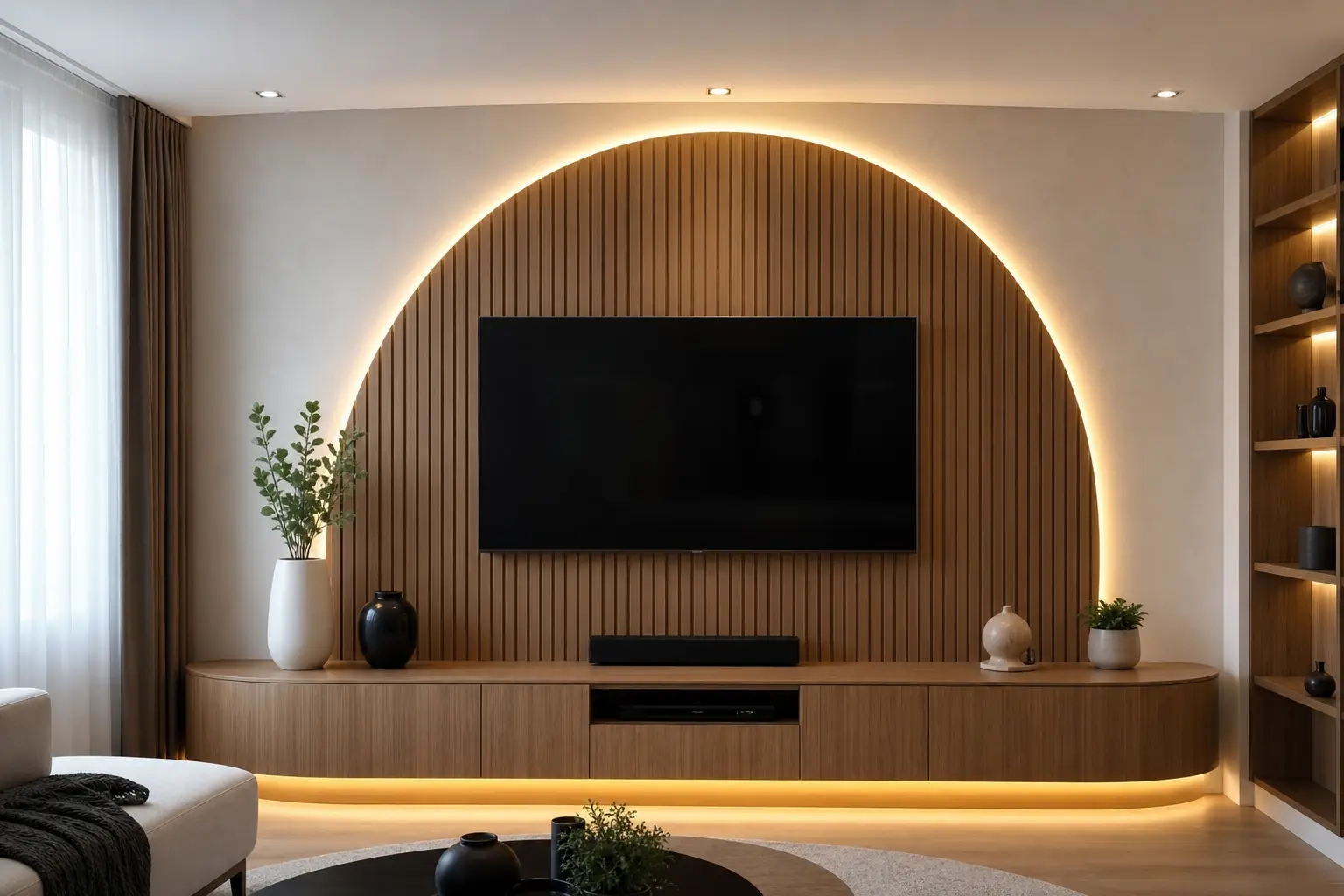
Not every living room has 9 feet of wall width to spare. In smaller rooms, a partial arc, showing maybe two thirds of a full semi-circle rather than the complete shape, still reads as intentional without overwhelming the space.
Vertical slats in a narrower panel, paired with a smaller, tighter cove closer to the TV itself, keep proportions in check. Lighter wood tones also help a small room feel less closed in than a dark stained finish would, especially paired with warmer, dimmer LED settings rather than a bright, wide cove.
Mistakes to Avoid
- Choosing LED strips above 4000K, which reads cold and clinical instead of warm and inviting
- Skipping the symmetry check and mounting the TV off center from the cove
- Leaving cable management as an afterthought instead of planning it before installation
- Using a cove that’s too small relative to the wall, so the curve looks cramped
- Picking high gloss slat finishes that create glare or distracting reflections
- Forgetting to test dimmer compatibility before buying an LED driver
Frequently Asked Questions
Do I need an electrician to install cove lighting? For a plug in LED strip kit on a low voltage driver, most homeowners can install it themselves. If you’re wiring the cove into your home’s electrical system with a dedicated switch, hire a licensed electrician for that part.
Can I add semi-circle cove lighting to an existing wood slat wall? Yes, in most cases. If there’s a small gap or ledge at the top of the existing panel, an LED strip can often be added without removing the slats. A larger renovation may be needed if you want a true recessed curved cove.
What wood works best for slat panels behind a TV? Oak, walnut, and ash are common choices for their grain pattern and durability. Pine is a lower cost option but shows dents more easily. MDF slat panels with a wood veneer are a budget friendly alternative that still gives the same visual effect.
Will cove lighting make my TV harder to see? No, as long as the LED source stays hidden behind the cove lip rather than shining directly at the screen. Indirect ambient light around a TV actually reduces eye strain compared to watching in a completely dark room.
How wide should the wood slats be for a modern look? Most modern TV walls use slats between 1.5 and 3 inches wide, with even spacing gaps of about half an inch to an inch between them. Narrower slats generally read as more minimal and contemporary.
Conclusion
A TV unit wall design with semi-circle cove lighting takes a functional wall and turns it into the actual focal point of the room. The combination works because it solves two problems at once. Wood slats add texture and warmth. The curved cove adds ambient, glare free light that changes how the whole room feels after dark. Start with layout and sizing before choosing finishes, keep the design centered and symmetrical, and pick a warm LED temperature between 2700K and 3000K. Do those three things right, and the rest of the design decisions get a lot easier.