10 Modern Luxury Staircase Design Ideas with LED Lighting & Contemporary Wooden Stairs
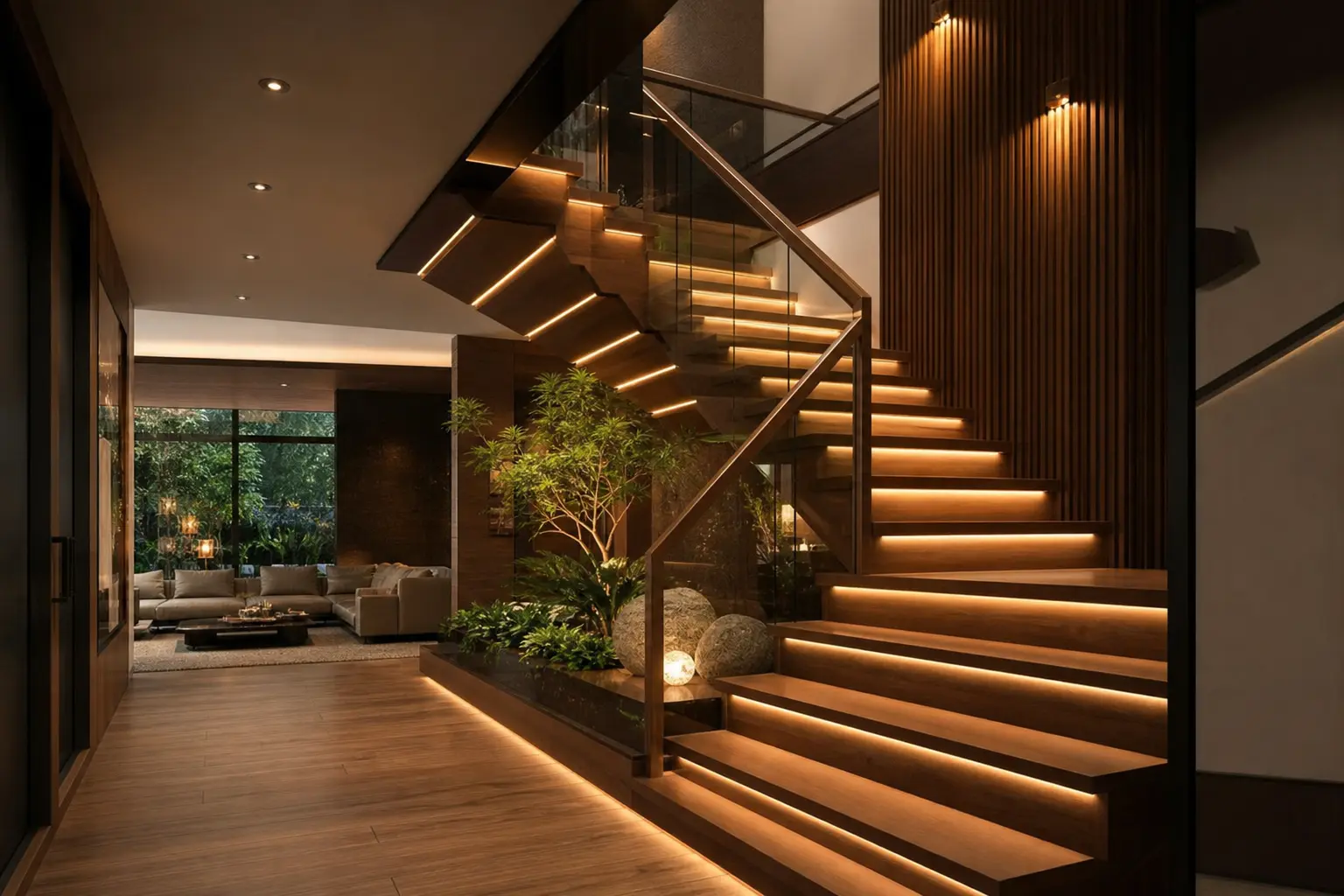
Your staircase gets used dozens of times a day, but it still looks and feels like a purely functional structure, plain treads and a builder grade railing with a single switch controlling one overhead light. Modern luxury staircase design with LED lighting and contemporary wooden stairs changes that by treating the staircase as a genuine architectural feature, using rich wood material and hidden lighting to turn daily use into something that actually feels considered. It’s one of the most visually impactful upgrades available in a multi level home, since the staircase is seen constantly from multiple angles throughout the day.
1. Understand Why Wood and LED Lighting Pair So Well on Stairs
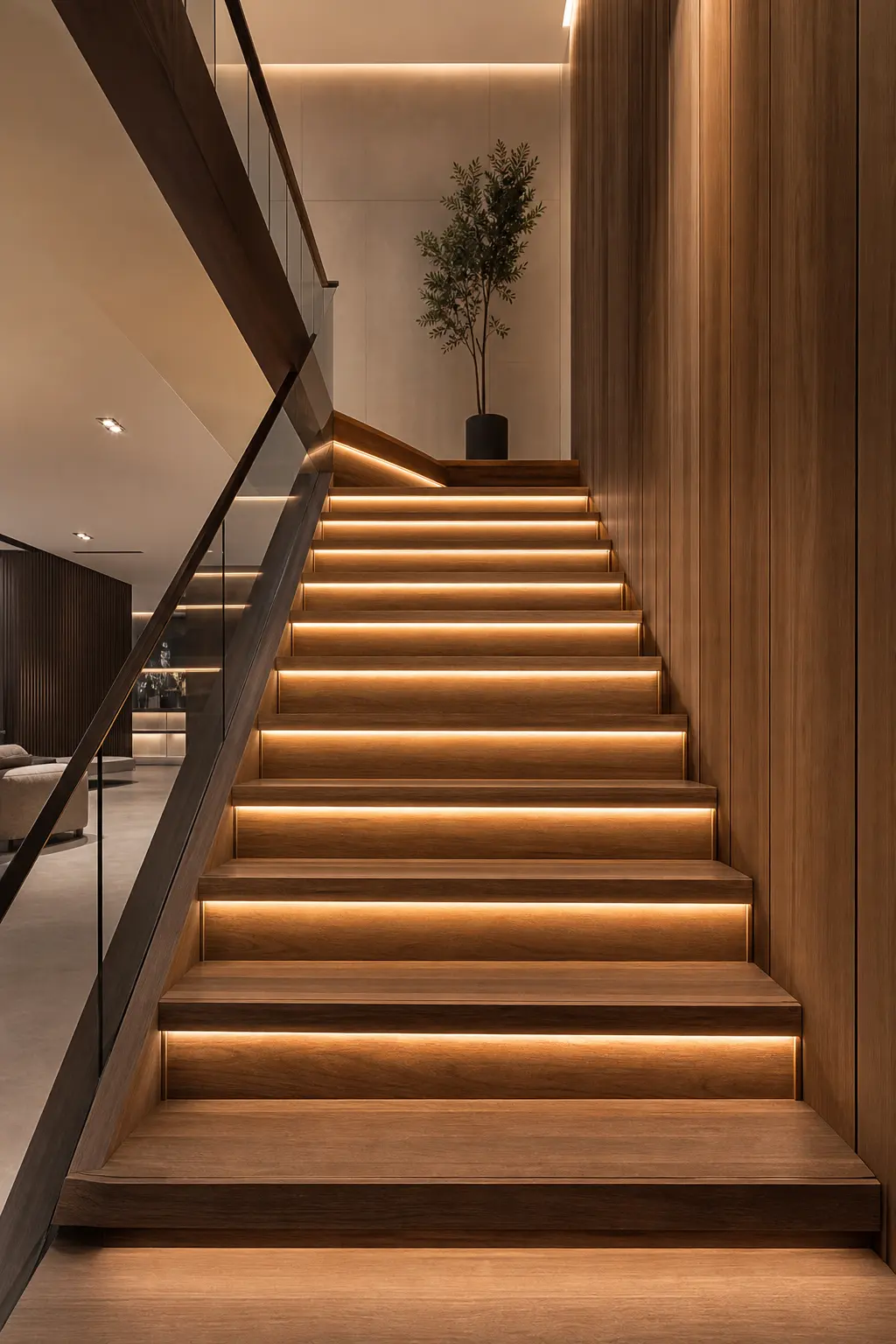
Wood brings warmth and natural texture to a staircase, a material quality that a plain painted or carpeted stair simply can’t match. Rich wood grain catches light differently depending on the angle and time of day, which gives a wooden staircase a sense of life and depth that flat, uniform materials lack. This natural variation is part of why wood remains such a consistent choice for a staircase meant to feel genuinely luxury rather than purely functional.
LED lighting, particularly when hidden beneath treads or along the stringer, adds a second layer of visual interest by highlighting the wood’s edges and grain in a way that ambient room lighting alone can’t achieve. The combination of natural material and dramatic, hidden light is a defining feature of contemporary staircase design specifically, since it merges warmth with a distinctly modern, architectural sensibility. Neither element alone achieves quite the same effect that the pairing does together.
2. Choose a Wood Species and Tone That Suits a Luxury Look
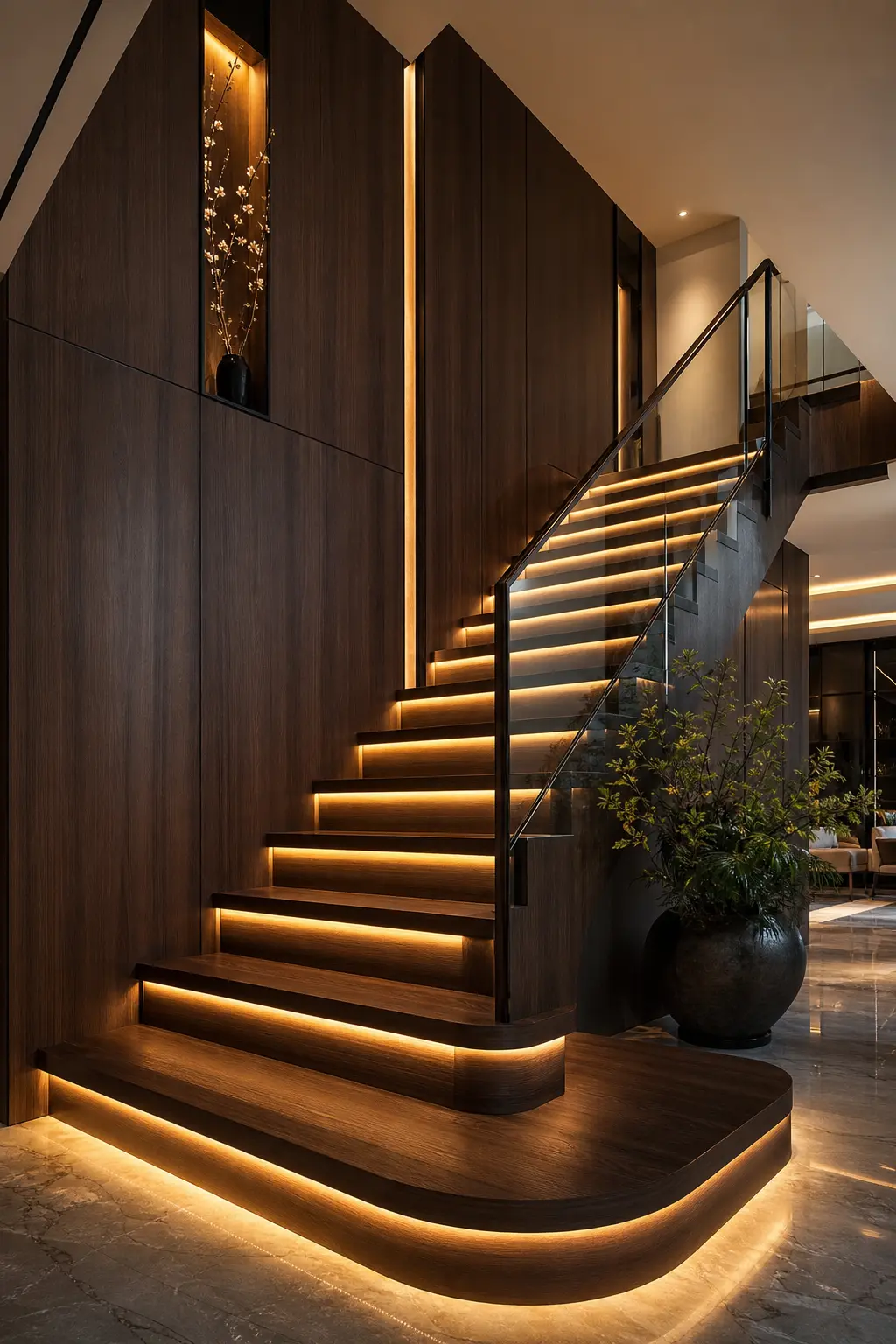
Walnut, white oak, and rich mahogany remain among the most requested wood species for a luxury staircase, each offering a different balance of grain pattern and tone. Walnut brings a deep, warm brown with dramatic grain variation, suited to a bold, dramatic staircase statement, while white oak offers a lighter, more versatile tone that pairs well with a wider range of interior styles. Solid wood treads, rather than a wood veneer over composite material, hold up better to decades of daily foot traffic and can typically be sanded and refinished if the surface wears down over time.
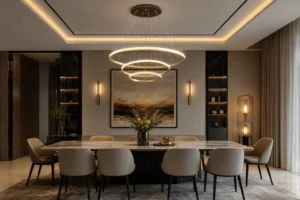
Match the staircase wood tone to any other significant wood elements already present in the home, flooring, cabinetry, or major furniture pieces, so the staircase feels connected to the rest of the interior rather than an isolated design choice. If the home already features several different wood tones, a staircase in a wood family that bridges those tones, a mid range walnut or a warm oak, often works better than matching any single existing piece exactly.
3. Decide Between Closed Riser and Open Floating Treads
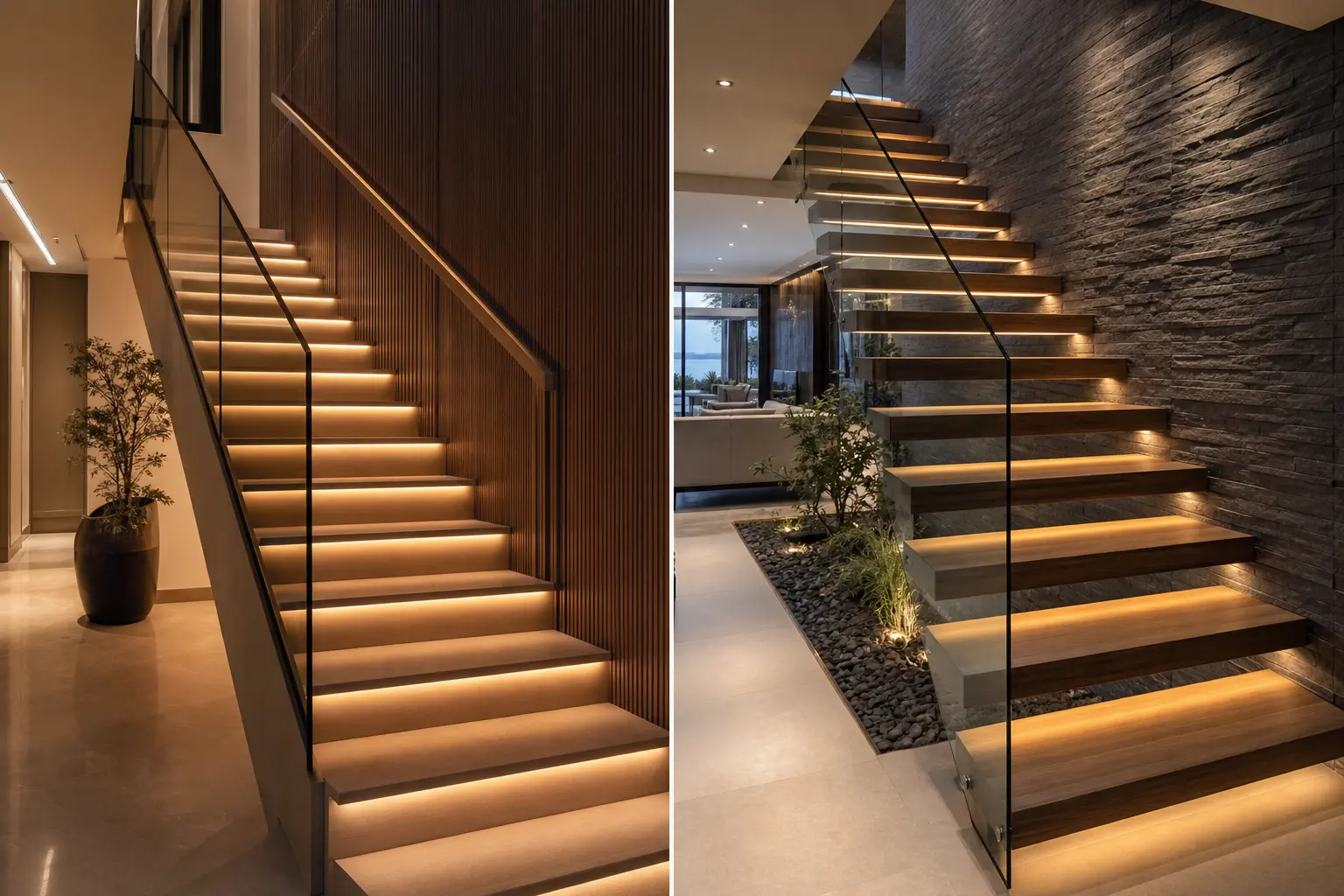
A closed riser staircase, where a solid panel fills the space beneath each tread, offers a more traditional, substantial look, while open floating treads, with visible space between each step, create a lighter, more contemporary feel that lets light pass through the staircase’s structure. Floating treads specifically create the opportunity for dramatic under tread LED lighting, since the open space beneath each step becomes a natural spot to tuck a hidden light strip. This choice significantly shapes both the staircase’s overall aesthetic and how effectively LED lighting can be incorporated into the design.
A closed riser staircase can still incorporate LED lighting along the tread’s front edge or the stringer running alongside the stairs, though the effect reads differently than light glowing from beneath an open floating step. Consider the staircase’s structural requirements and local building codes as well, since open floating stairs typically require additional engineering for adequate support compared to a traditional closed riser design.
4. Add Hidden LED Strips Beneath Each Tread
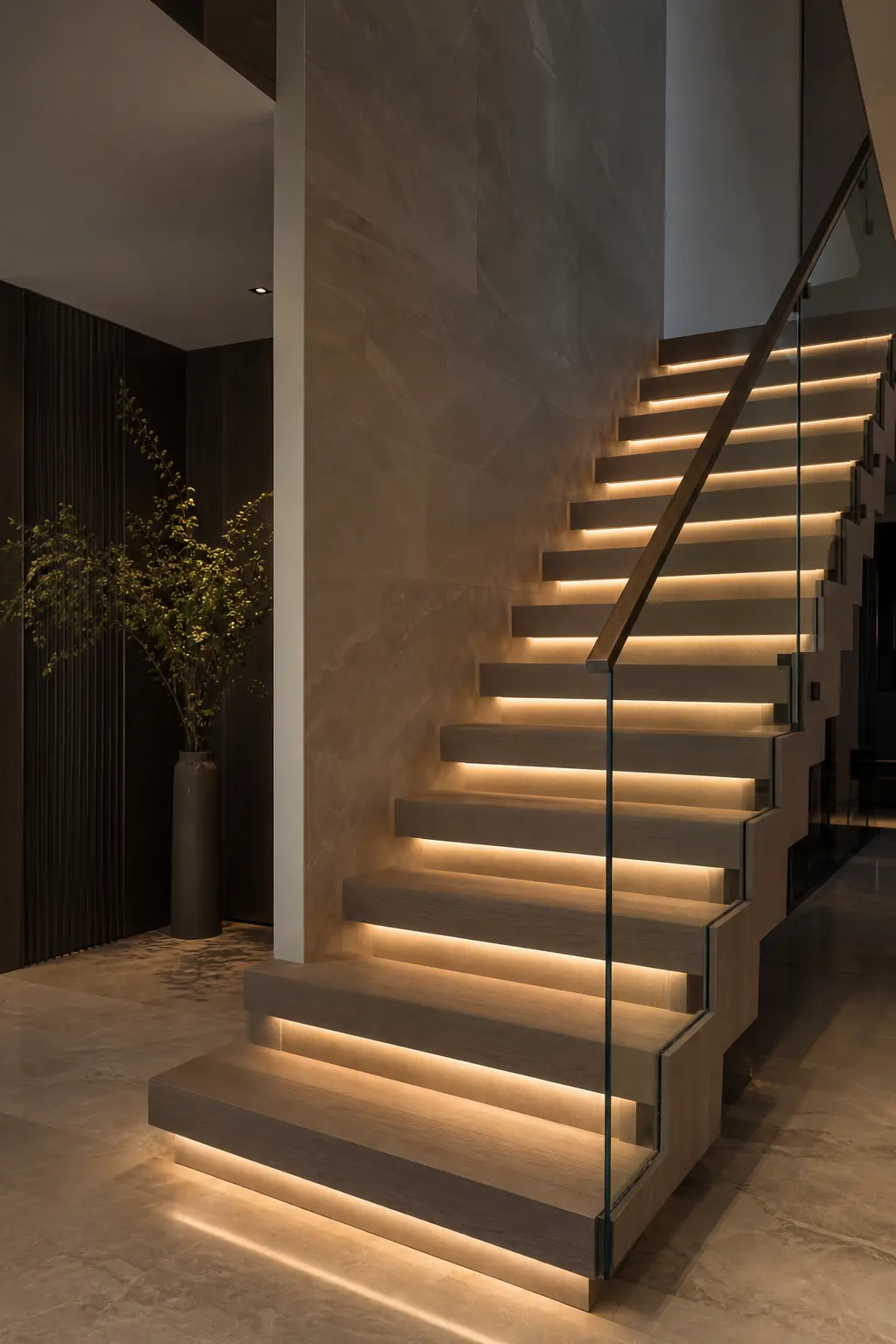
Running a warm LED strip along the underside of each tread, tucked just behind the front edge, creates a soft glowing line beneath every step that reads as both dramatic and genuinely functional for nighttime navigation. This under tread placement keeps the light source almost entirely hidden from a normal standing view, so what’s visible is primarily the resulting glow along the stair’s edge rather than an exposed fixture. A continuous run of this lighting along the full staircase creates a striking cascading effect, particularly dramatic when viewed from the base looking up.
Use a diffuser channel over the bare LED strip to soften the light and avoid visible hot spots or individual diode dots reflecting off the wood surface below each tread. Test the placement and diffusion on a single tread before committing to the full staircase run, since small adjustments in strip position can noticeably affect how even and flattering the final glow appears once every step is lit.
5. Pick a Warm Light Temperature for Safety and Ambiance Together
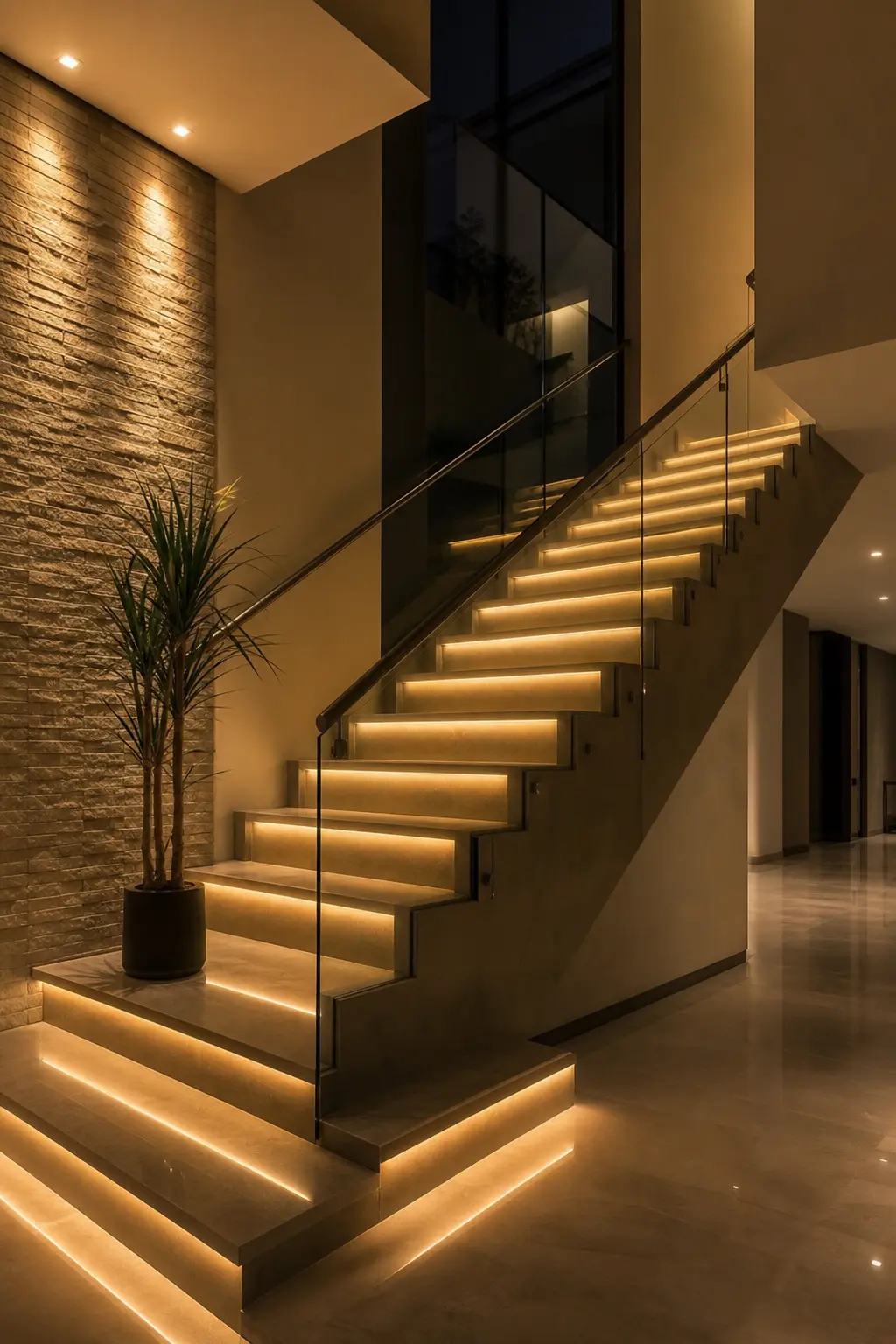
A warm 2700K to 3000K LED strip serves double duty on a staircase, providing enough illumination for safe nighttime navigation while still contributing to the overall warm, luxury ambiance the wood treads are meant to convey. Avoid a cool white temperature here specifically, since it can make the staircase feel more like a retail or office stairwell than a considered feature within a home. This warmth becomes especially noticeable at night, when the under tread lighting often becomes the staircase’s primary light source.
Confirm the LED strip’s brightness provides adequate illumination for safe use, generally in the 200 to 300 lumens per foot range for step lighting specifically, rather than choosing brightness purely for aesthetic effect. A staircase that looks beautifully dim in photos but doesn’t provide enough light for safe footing at night isn’t achieving its full purpose. Balancing warmth and genuine visibility is an important practical consideration alongside the design impact.
6. Choose a Railing Style That Complements the Wood
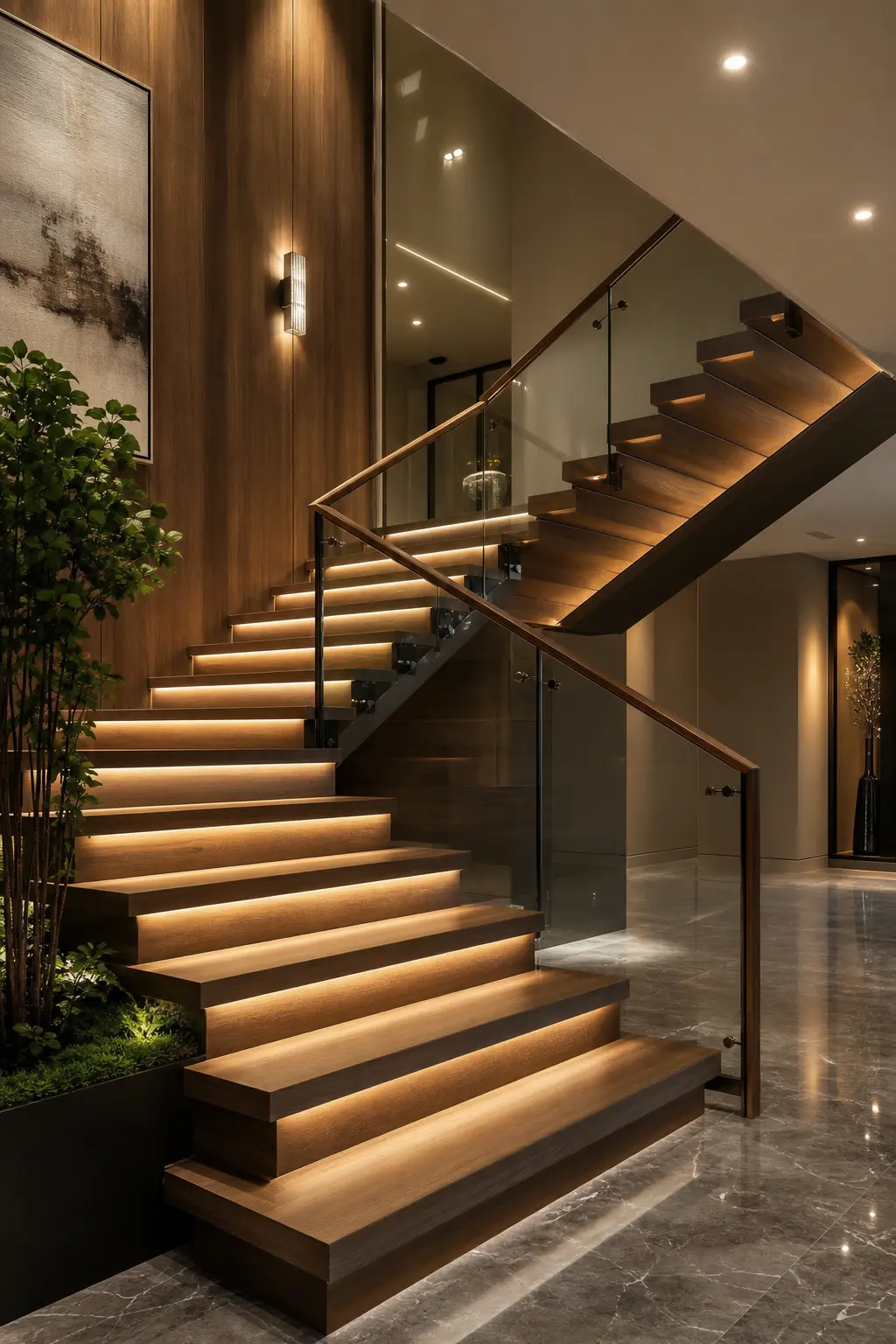
A slim metal railing, in black, brushed nickel, or warm brass, generally pairs well with a contemporary wooden staircase, since the railing’s simplicity lets the wood treads remain the visual focus. Avoid a heavily ornate or traditional railing style if the rest of the staircase leans toward a clean, modern aesthetic, since a mismatch here can undercut the contemporary feel established by the treads and lighting. A glass panel railing offers an alternative that maximizes light passage and visual openness, particularly suited to an open floating tread design.
Keep the railing’s metal finish consistent with any other metal accents visible from the staircase, light fixtures, door hardware, or nearby furniture, so the overall material story feels cohesive throughout the connected spaces. This consistency across metal finishes is a small detail that meaningfully affects how considered the whole staircase design reads within the broader home.
7. Balance the Staircase With the Surrounding Wall Finish
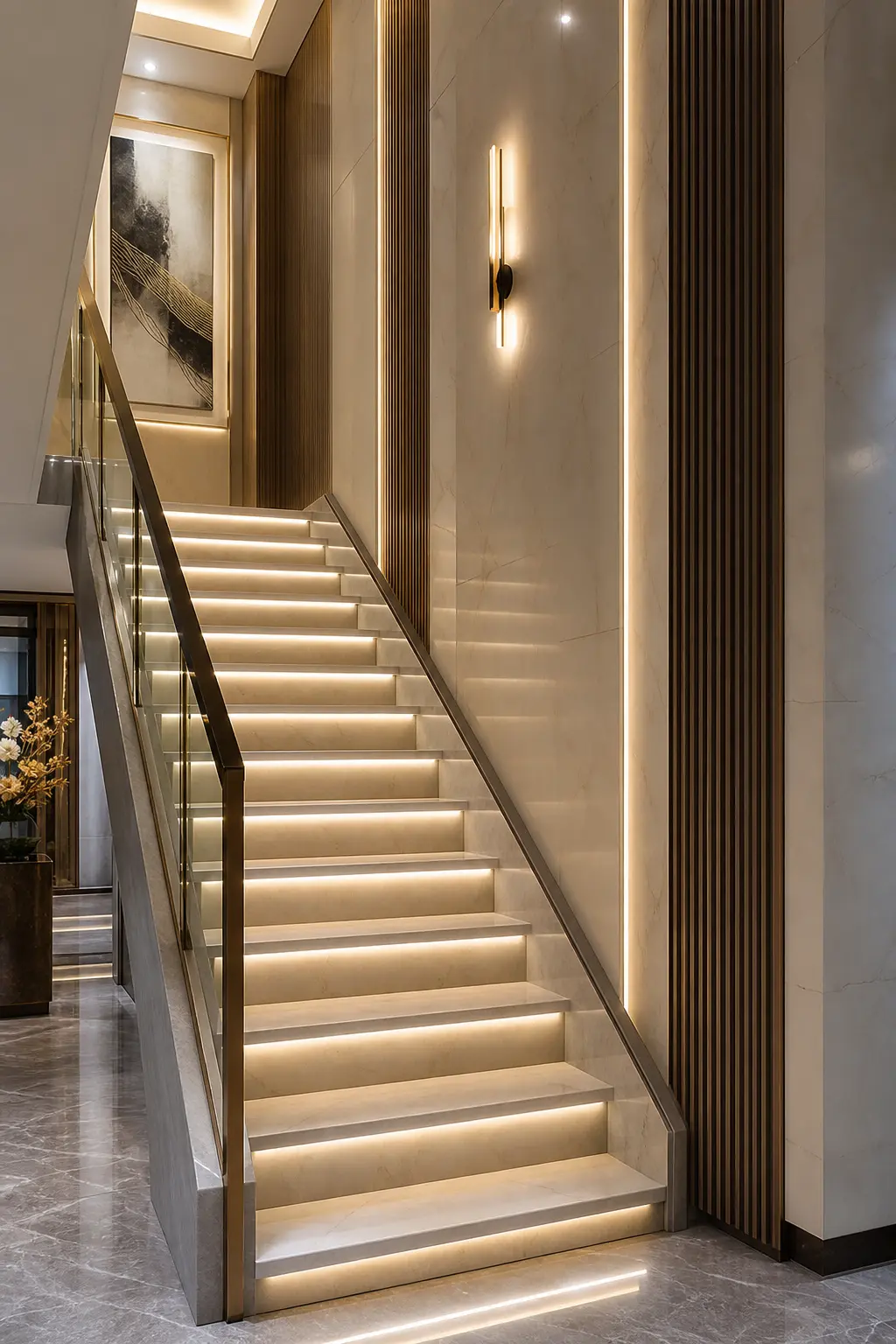
A dramatic wooden staircase with hidden LED lighting already carries significant visual weight, so the surrounding wall finish benefits from staying relatively simple, a clean painted surface in a warm white or soft neutral, rather than competing with a busy wallpaper or bold color. This restraint lets the staircase itself remain the clear architectural focal point rather than one bold element among several fighting for attention in the same sightline. A textured plaster finish on the adjacent wall can add subtle interest without overwhelming the stairs.
If the staircase wall connects to an entryway or another prominent space already discussed elsewhere in your home’s design, consider carrying a similar warm, restrained material palette through both areas so the transition feels cohesive rather than abrupt. This kind of consistency across connected spaces is often what separates a home that feels fully considered from one where each area was designed in isolation.
8. Plan the Wiring for Step Lighting Before Installation
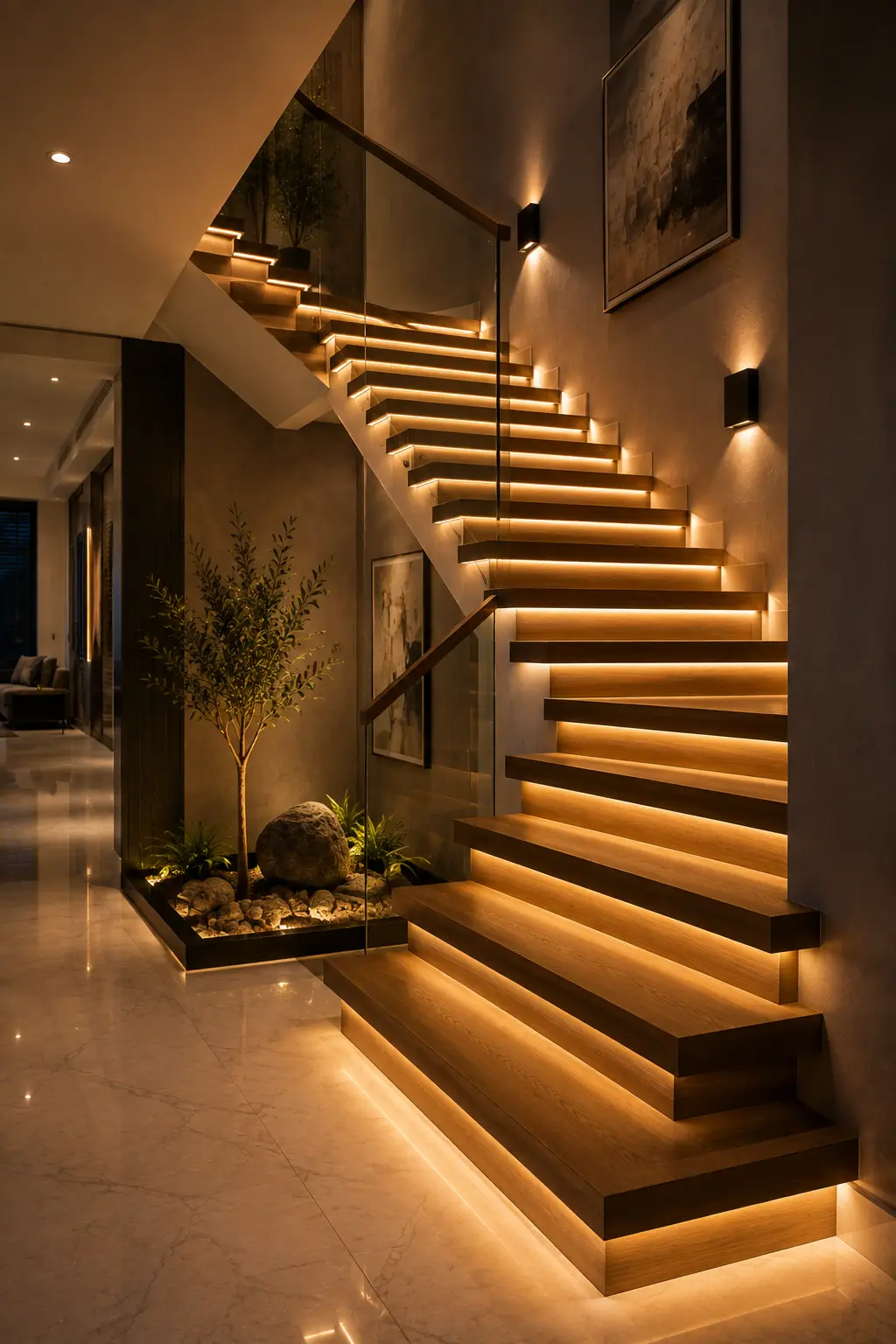
Under tread LED lighting requires wiring run to each individual step, typically connected to a shared transformer and dimmer switch, and this wiring needs to be planned before the treads themselves are installed rather than retrofitted afterward. Coordinate with both the contractor building the staircase and an electrician handling the low voltage wiring, since the two trades need to work in sequence for the lighting to be properly concealed within the finished structure. Confirm the transformer’s location allows for future access, since LED strips and transformers occasionally need replacement over a staircase’s lifespan.
For a renovation of an existing staircase rather than new construction, retrofitting under tread lighting is more involved, often requiring at least partial disassembly of the treads to run wiring cleanly. Budget for this additional complexity if you’re adding LED lighting to stairs that weren’t originally built with it in mind, since it’s a more significant undertaking than a simple lighting swap elsewhere in the home.
9. Add Motion Sensors for Practical Nighttime Use
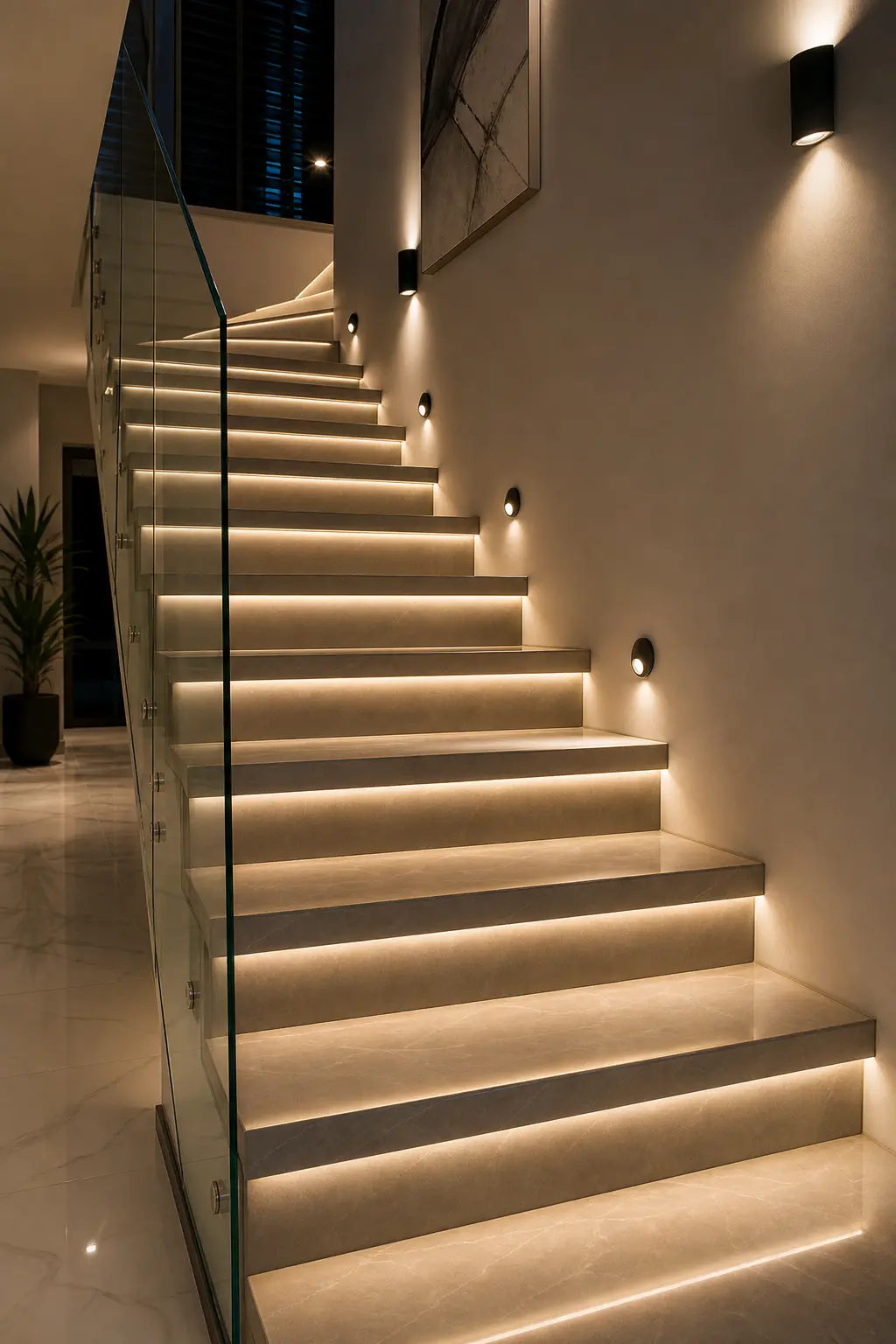
A motion sensor wired into the staircase lighting system turns the step lights on automatically as someone approaches, which adds genuine practical value beyond the aesthetic impact, particularly for nighttime trips up or down the stairs. This automation means the lighting serves its safety function reliably without requiring anyone to locate and flip a switch in the dark. Many LED staircase lighting kits now include motion sensor options specifically designed for this kind of step lighting application.
Set the sensor’s sensitivity and light duration appropriately for your household’s typical use, since a light that shuts off too quickly can leave someone still on the stairs in the dark, while one that stays on too long wastes energy unnecessarily. A brief test period after installation, adjusting the settings based on actual daily use, helps dial in the right balance for your specific household and staircase length.
10. Maintain the Wood Finish to Keep the Staircase Looking Refined
A staircase sees more concentrated daily foot traffic than almost any other wood surface in the home, and that wear shows up as scuffing, dulling, or minor scratches over time if the finish isn’t maintained. Apply a protective sealer or finish recommended for high traffic wood surfaces, and plan to reapply or touch up that finish every few years depending on how heavily the stairs get used. Wipe up spills promptly and avoid harsh cleaning chemicals that can strip or dull the wood’s natural finish over time.
A well maintained staircase finish is what keeps the wood’s rich tone and grain looking as striking years into ownership as it did on installation day, which matters significantly for a feature this visually prominent within the home. Budgeting for this ongoing maintenance from the start, rather than treating it as an afterthought, protects the investment made in choosing quality solid wood treads in the first place.
Mistakes to Avoid
- Choosing a wood veneer over composite material for high traffic treads instead of solid wood
- Using cool white LED strips instead of warm 2700K to 3000K light beneath the treads
- Skipping adequate brightness testing, leaving the staircase too dim for safe nighttime use
- Mismatching the railing style with the staircase’s overall contemporary or traditional direction
- Leaving the LED strip exposed without a diffuser channel, creating visible hot spots
- Neglecting regular wood maintenance, leading to premature wear on a high traffic staircase
Frequently Asked Questions
What wood species works best for a durable, luxury staircase? White oak and walnut are both popular choices, offering strong durability for daily foot traffic along with attractive grain patterns suited to a luxury aesthetic.
Do floating wood treads need special structural support? Yes, open floating staircases typically require additional engineering compared to a traditional closed riser design, so consult a structural engineer or experienced contractor during planning.
How bright should LED step lighting be for safety? Around 200 to 300 lumens per foot generally provides adequate illumination for safe nighttime navigation while still maintaining a warm, ambient glow.
What railing material suits a contemporary wooden staircase? Slim metal railings in black, brushed nickel, or warm brass, or a glass panel railing for maximum openness, generally complement a contemporary wood staircase better than an ornate traditional style.
How often does a wooden staircase need refinishing? This varies significantly based on foot traffic and the specific wood species, though many households refinish high traffic wood stairs every several years to maintain their appearance.
Final Thoughts
A modern luxury staircase with LED lighting and contemporary wooden treads works because the natural material warmth and the dramatic hidden light reinforce each other, creating a feature that’s both beautiful and genuinely functional for daily use. Start with the wood species and tread structure, since those foundational choices shape everything from the railing style to how the lighting gets installed. Plan the LED placement and wiring carefully alongside the construction, and choose a railing that supports the overall contemporary direction rather than competing with the wood treads for attention.