10 Modern Dining Room Ideas with Statement Chandelier Lighting | Elegant Contemporary Decor
A dining room with a plain flush mount light rarely feels special, even with good furniture and decor around it. A statement chandelier changes that instantly, giving the room a clear focal point and a completely different quality of light at dinner time. This article covers 10 dining room ideas built around statement chandelier lighting, from sizing to installation, so the fixture actually elevates the room instead of just filling the ceiling.
1. Choose a Chandelier Scale That Fits the Table and Room
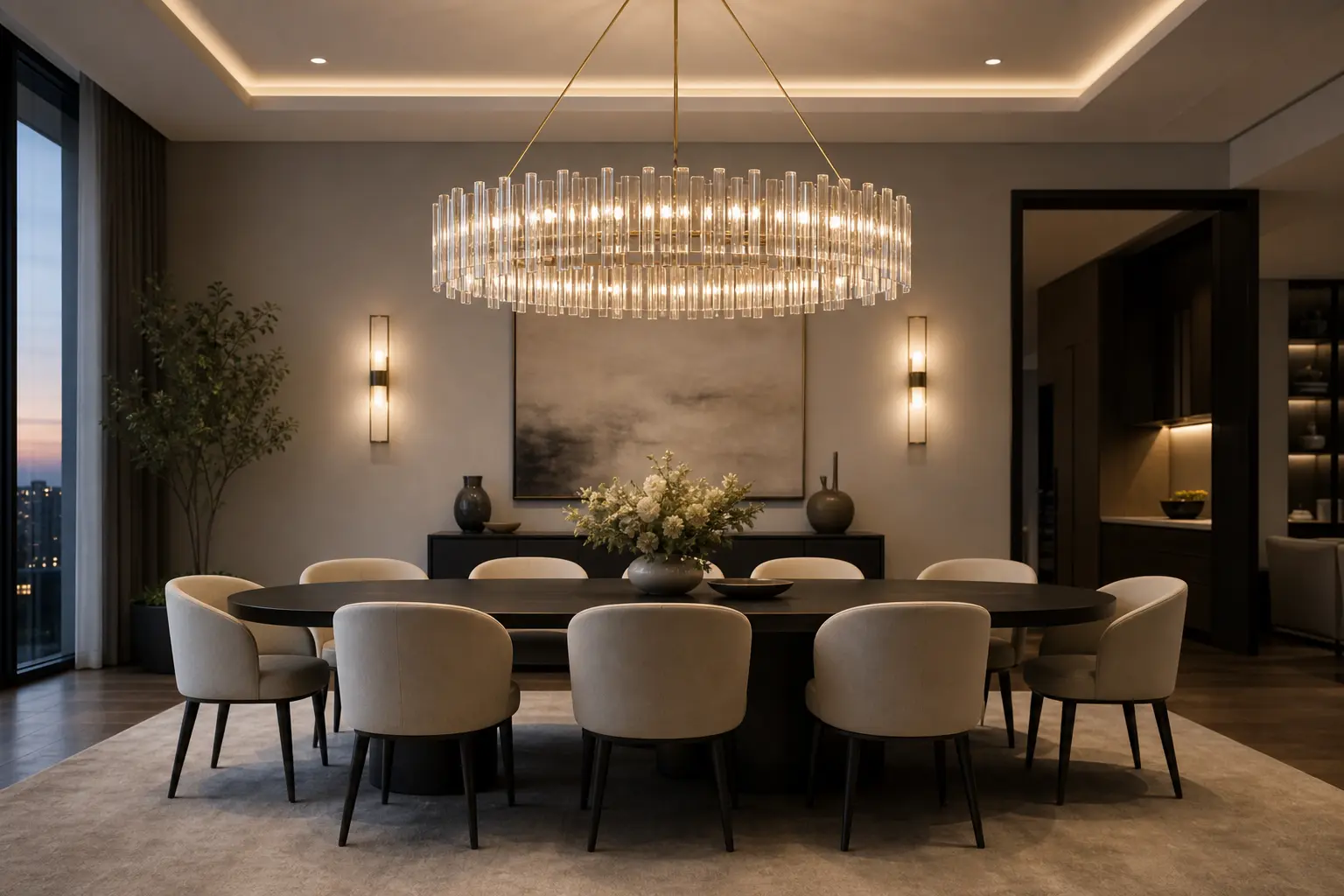
Chandelier size is the single most common mistake in dining room lighting. A fixture that’s too small gets visually lost above a large table, while an oversized chandelier can dominate a smaller room. A general guide is to keep the chandelier’s width around half to two thirds of the table’s width, though room height and ceiling size matter too.
For overall room proportion, add the room’s length and width in feet, then use that number in inches as a rough chandelier diameter guide. A 12 by 14 foot room, for example, suggests a chandelier around 26 inches in diameter as a starting point.
2. Pick a Chandelier Style That Matches a Contemporary Space
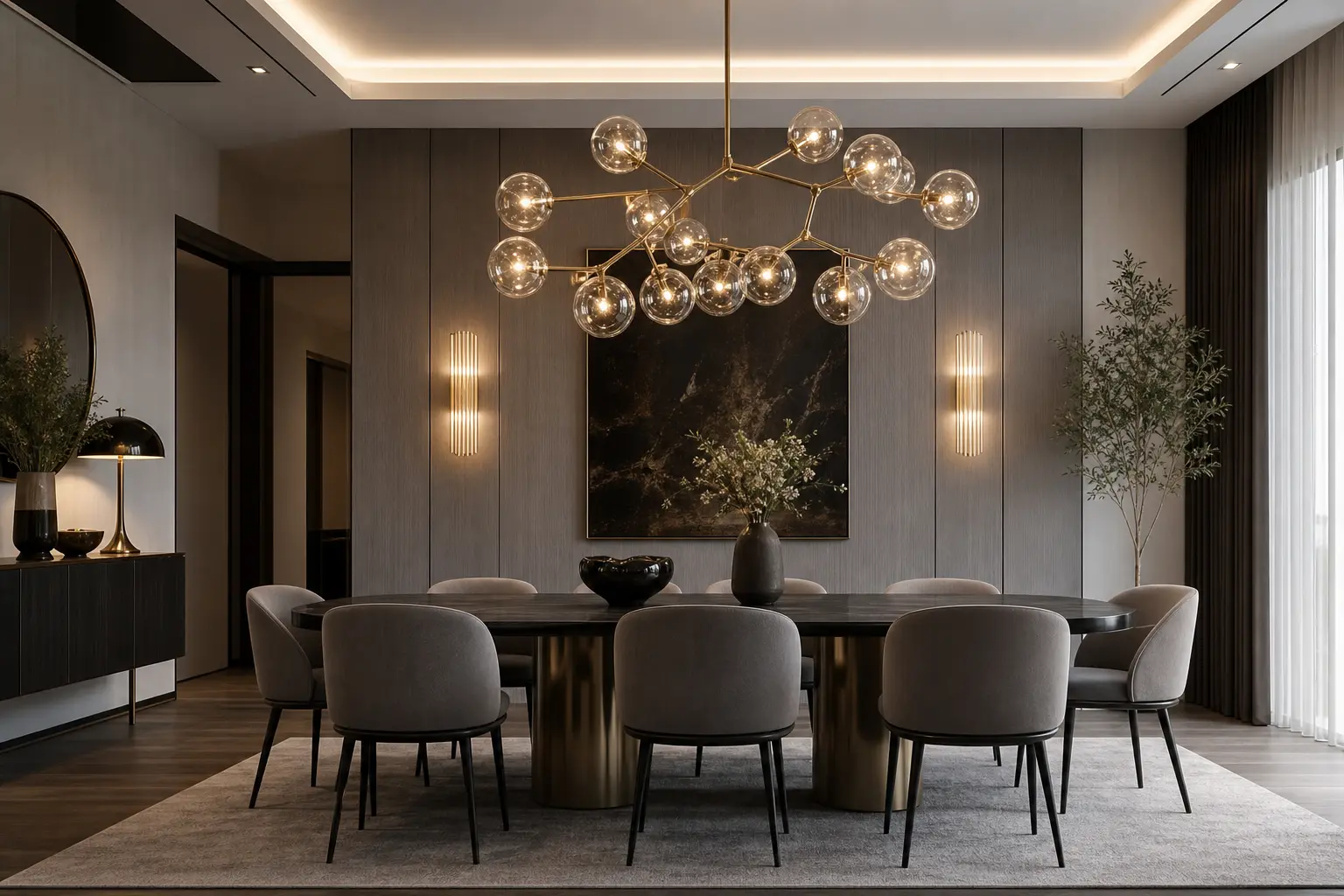
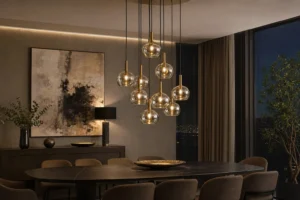
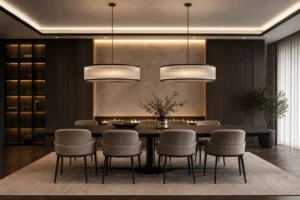
Contemporary dining rooms generally suit chandeliers with cleaner lines rather than heavily ornate, traditional designs. Linear chandeliers work especially well over rectangular tables, since their shape echoes the table’s proportions. Sculptural or geometric fixtures, using materials like blown glass or matte metal, suit a round or square table and add visual interest without excess detail.
Matching Chandelier Shape to Table Shape
A round or oval chandelier generally complements a round table better than a linear fixture, which can look visually mismatched hanging over a shape it doesn’t echo.
3. Set the Right Hanging Height Above the Table
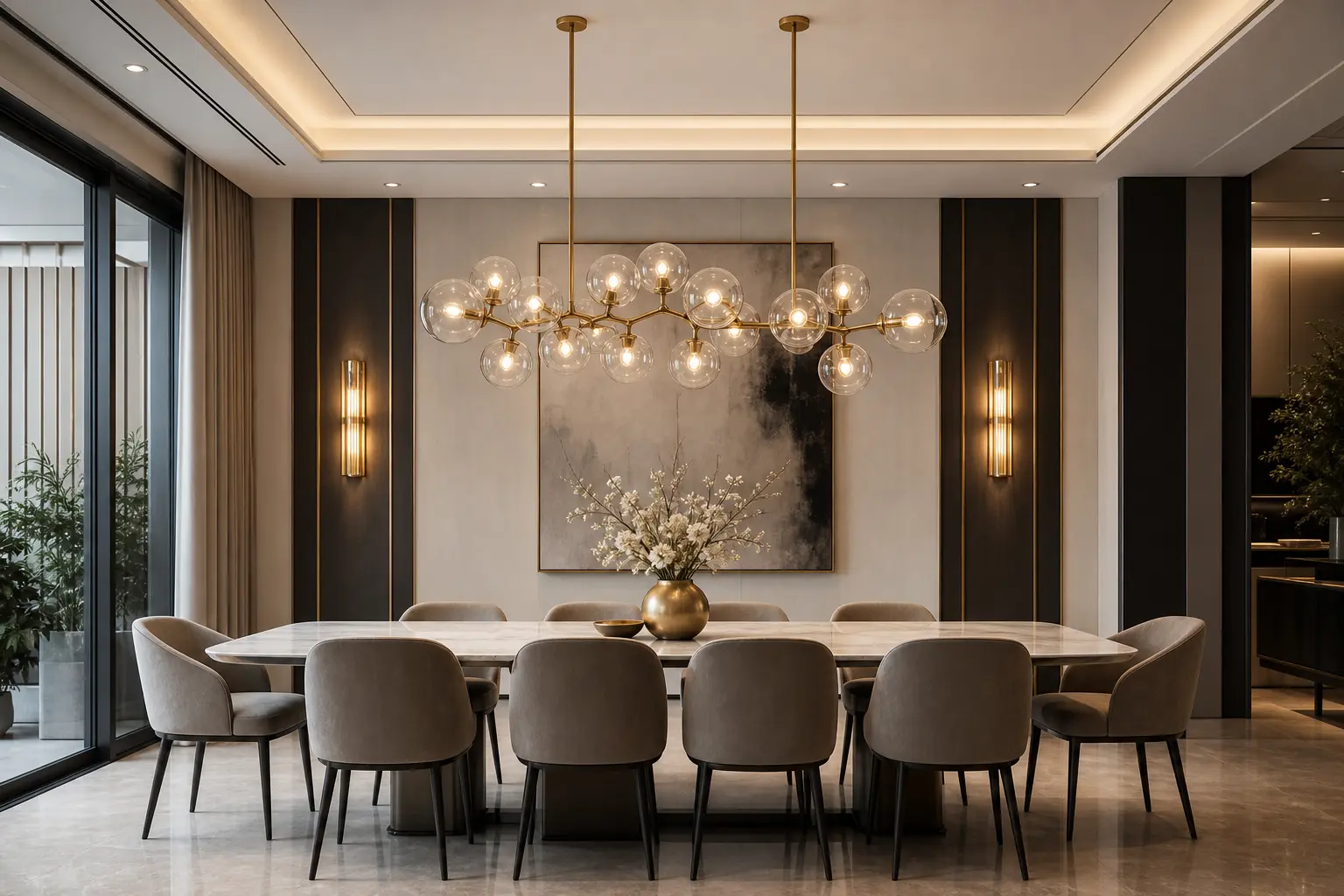
Hanging height affects both how the chandelier looks and how well it actually lights the table. A common guideline is 30 to 36 inches from the tabletop to the bottom of the fixture, assuming a standard 8 foot ceiling. For every additional foot of ceiling height beyond 8 feet, add roughly 3 inches to that distance.
Hanging a chandelier too low can block sightlines across the table during conversation, while hanging it too high weakens its impact as a focal point and reduces how much light actually reaches the table surface.
4. Layer Additional Lighting Beyond the Chandelier
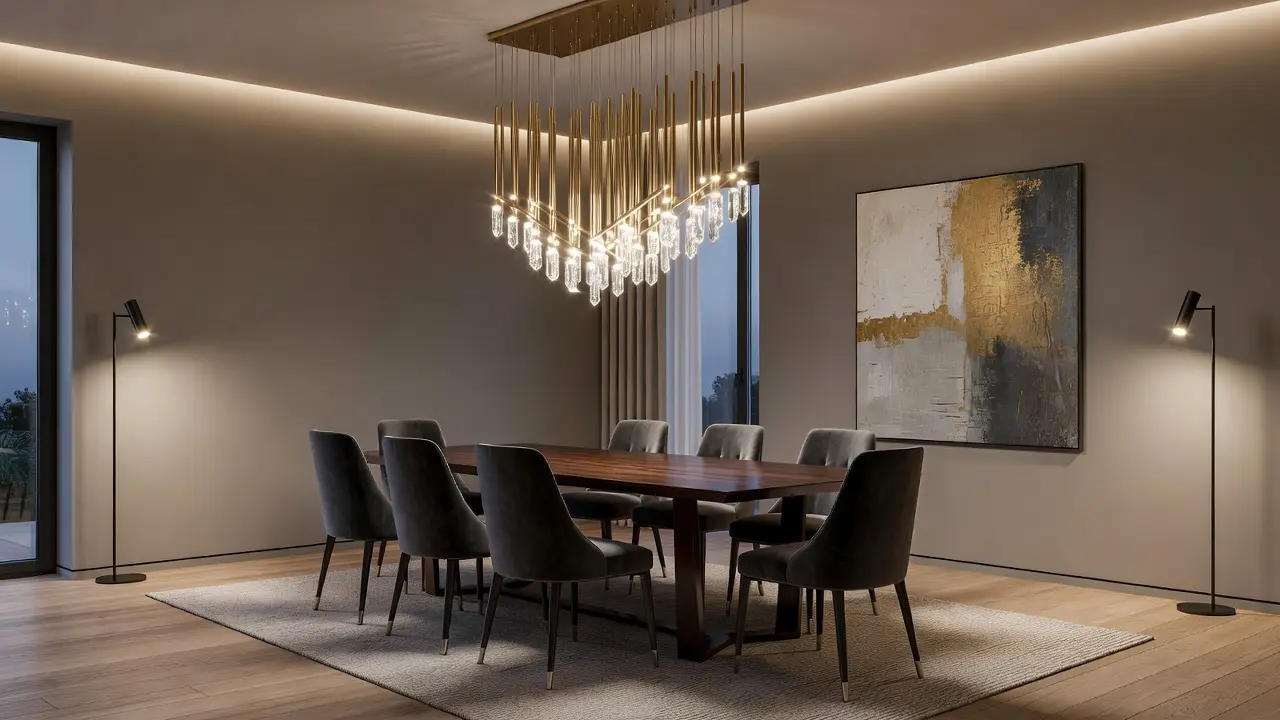
A single chandelier, however impressive, usually isn’t enough light on its own for the whole room. Wall sconces along the perimeter add ambient light without competing with the chandelier as the room’s focal point. Recessed lighting near a sideboard or buffet adds task lighting for serving without needing the chandelier at full brightness for that purpose.
5. Choose a Finish That Complements Your Dining Furniture
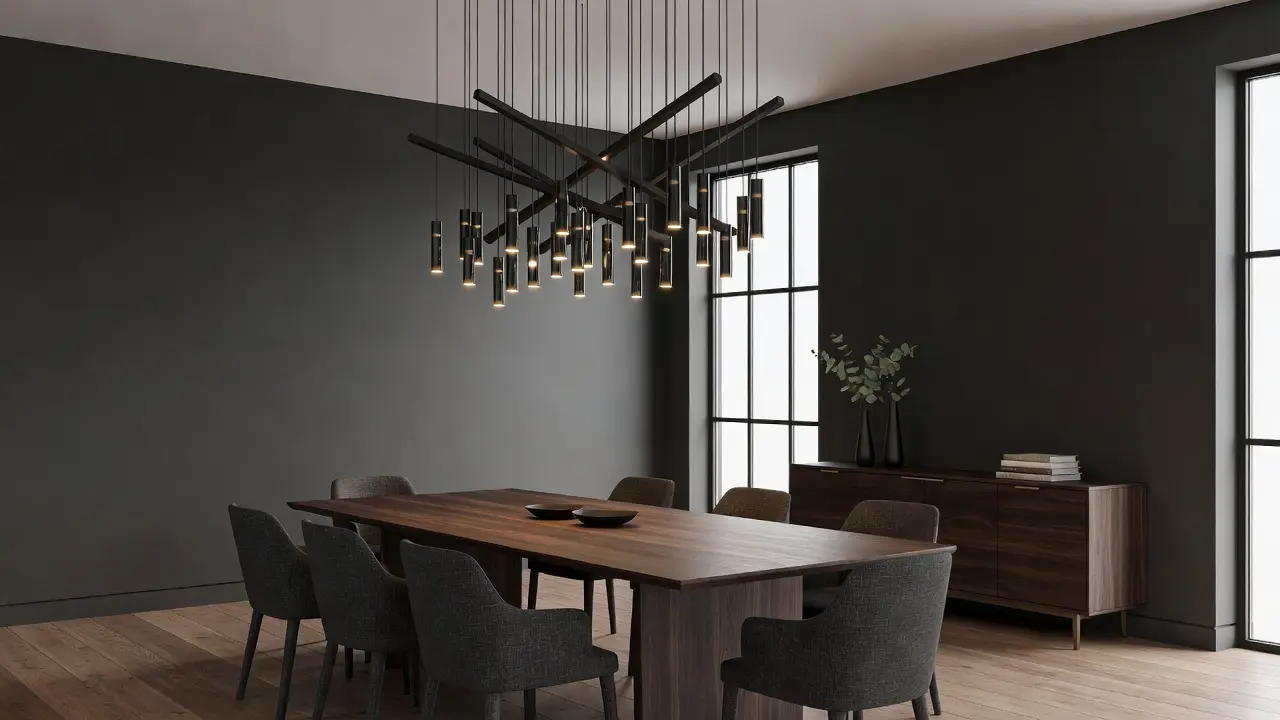
The chandelier’s finish should feel connected to the room’s existing furniture and hardware, not chosen in isolation. Matte black or aged bronze pairs well with dark wood furniture, while brushed brass or gold suits a lighter, more formal dining room. Chrome or polished nickel works in a sleeker, more minimal contemporary space, though it can read as colder than warmer metal tones.
6. Add Dimmers for Flexible Evening Ambience
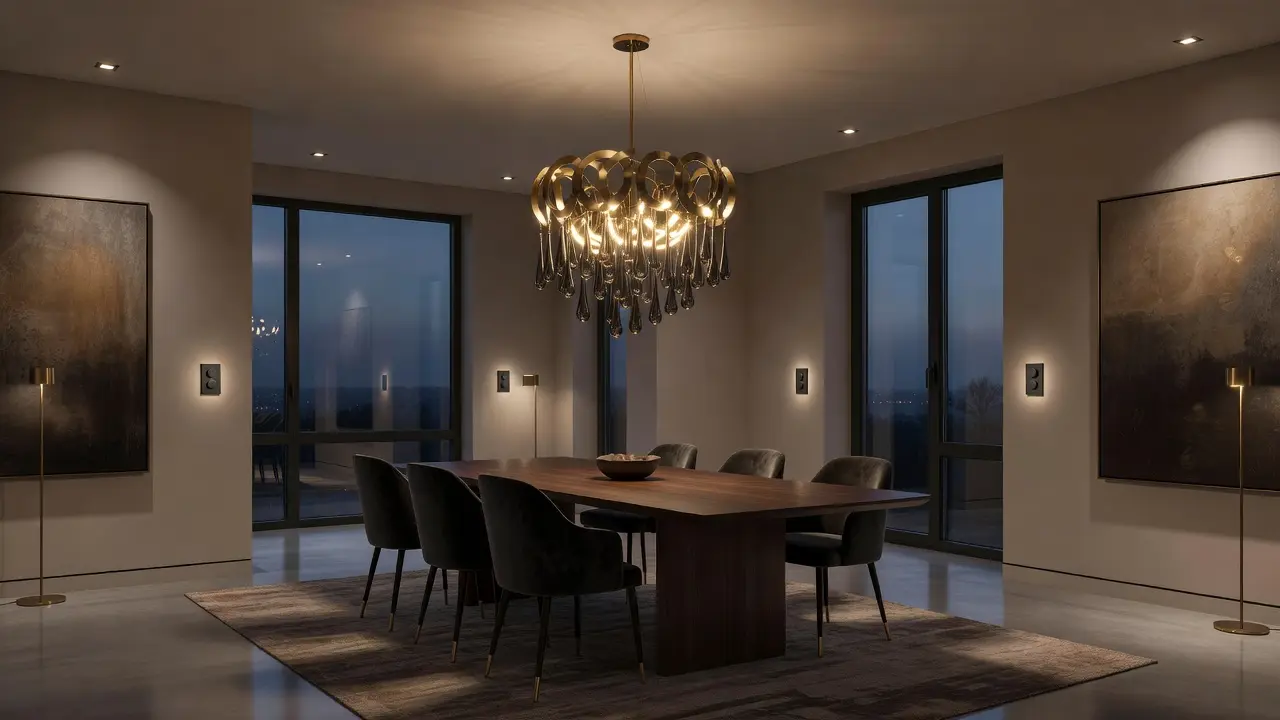
A chandelier at full brightness suits a bright, active family dinner, but that same brightness feels harsh for a quiet evening meal or a dinner party. Installing a dimmer switch lets the fixture adjust to different occasions without needing a second lighting source just for mood. This is a relatively small addition during installation that makes a noticeable difference in daily use.
7. Balance Chandelier Light with Natural Daylight
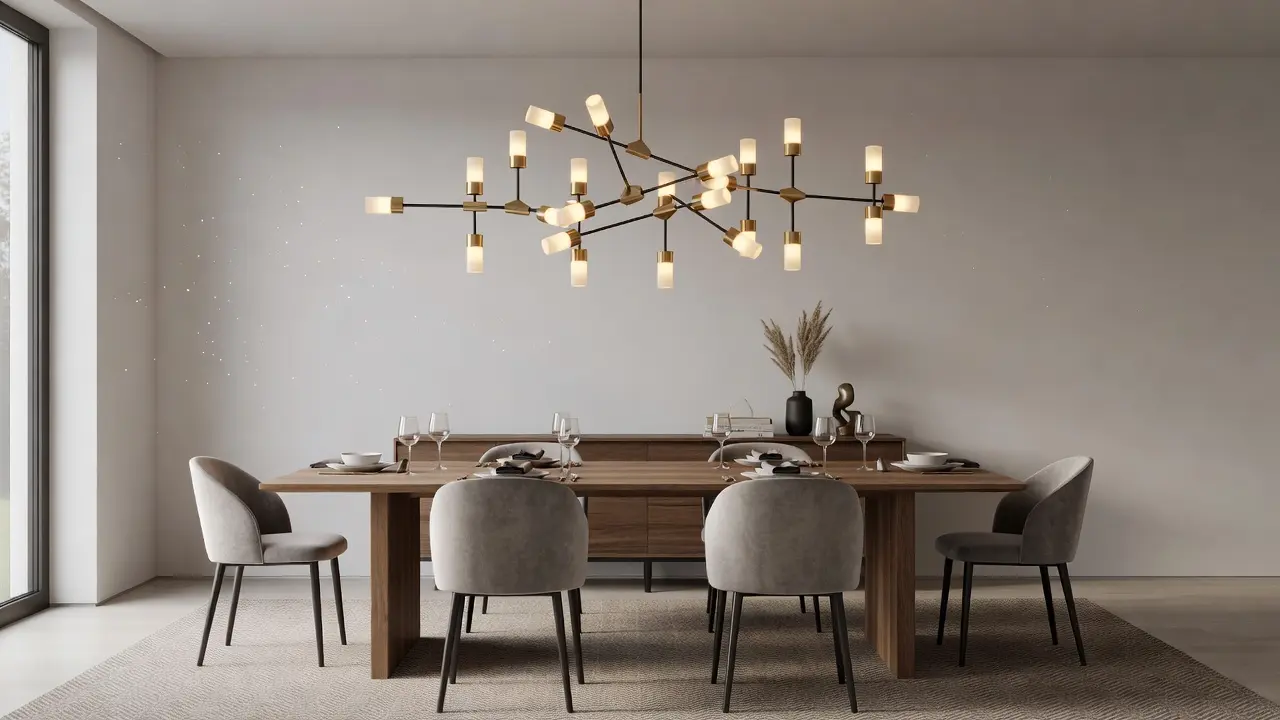
A dining room used for both daytime and evening meals needs to account for how the chandelier interacts with natural light. During the day, natural light should do most of the work, with the chandelier serving as a decorative element more than a light source. In the evening, especially with dimmers installed, the chandelier can take over as the primary light, layered with any wall sconces.
8. Use the Chandelier as the Room’s Central Focal Point
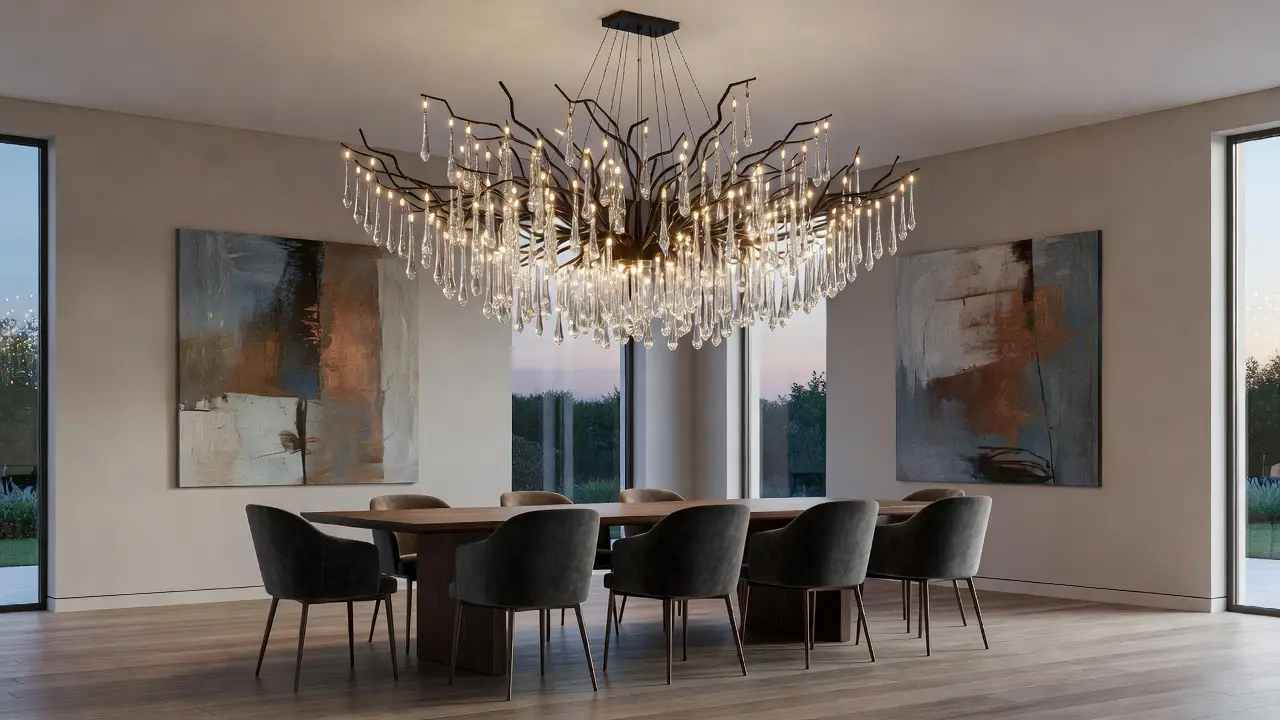
Once a statement chandelier is installed, the rest of the room’s decor should support it rather than compete with it. Keep wall art and other decor relatively simple and avoid adding a second large statement piece elsewhere in the room. This restraint is what allows the chandelier to genuinely read as the room’s centerpiece rather than one of several competing focal points.
9. Coordinate Chandelier Finish with Other Metal Accents
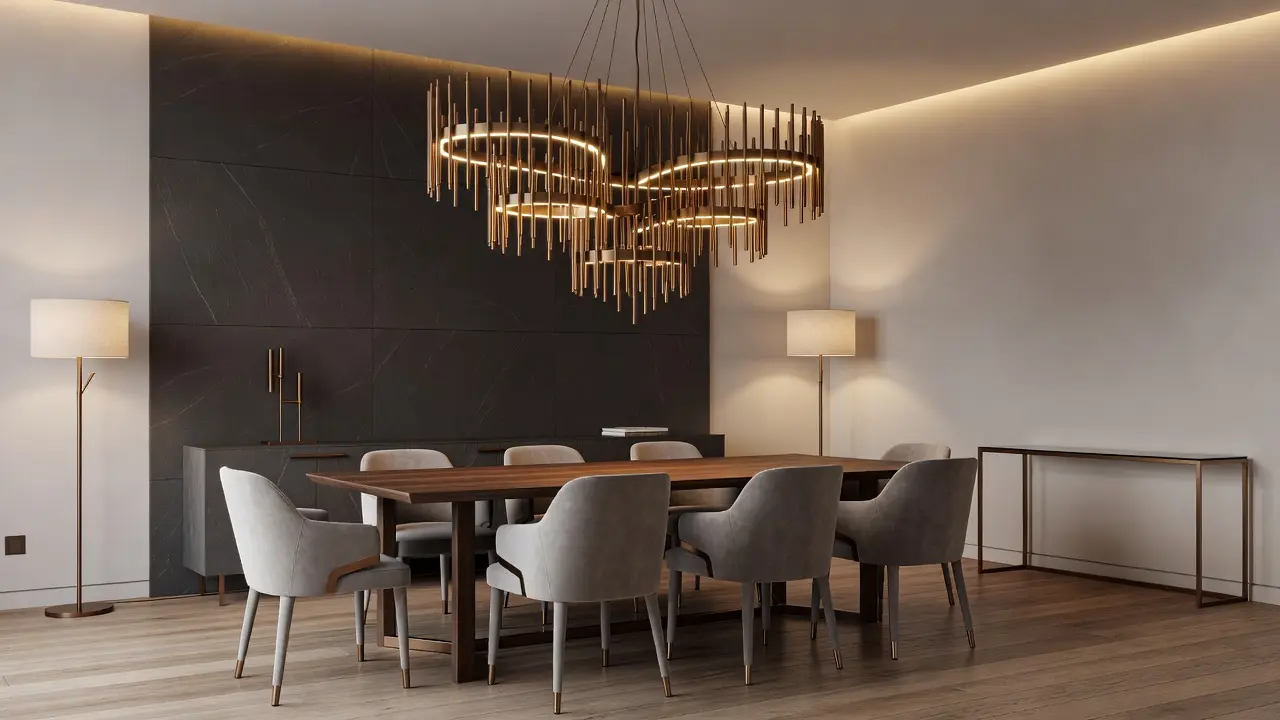
Chair legs, drawer pulls on a sideboard, and even window hardware should generally coordinate with the chandelier’s metal finish. This doesn’t mean every single metal element needs to match exactly, but a consistent overall tone, whether that’s warm or cool metals, ties the whole room together rather than leaving the chandelier feeling disconnected from everything else in the space.
Mixing Metals Intentionally
A secondary metal accent, like a black chandelier paired with brass drawer pulls, can work if it’s a deliberate, limited contrast rather than several unrelated finishes scattered throughout the room.
10. Plan Ceiling Support and Wiring Before Installation
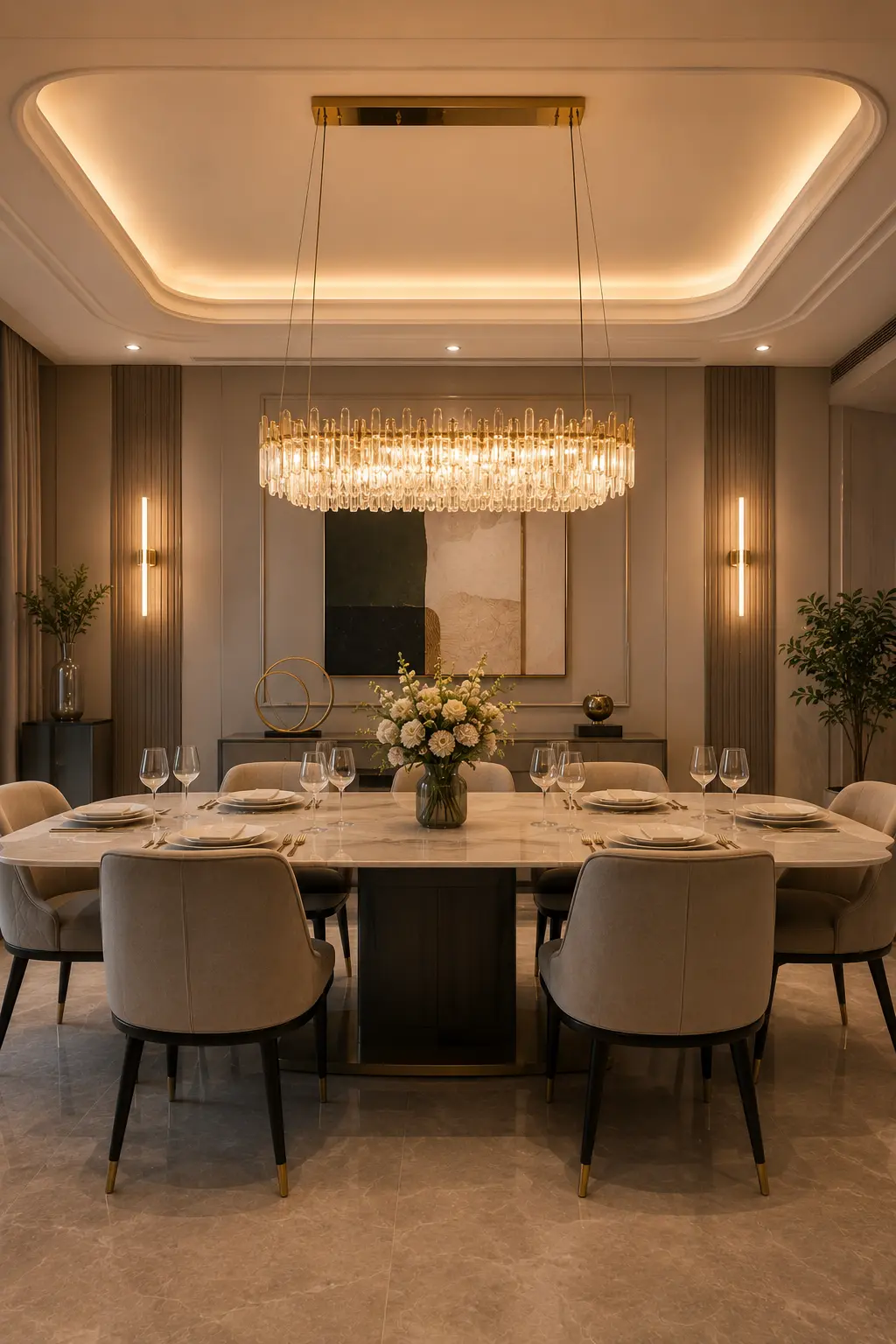
Large statement chandeliers are heavier than standard fixtures and often need additional ceiling support beyond a typical electrical box. Confirm with an electrician or contractor that the ceiling can support the fixture’s actual weight before purchasing, especially for chandeliers made from glass, crystal or heavy metal. Planning dimmer wiring and any additional support during a renovation, rather than after the ceiling is finished, avoids a more disruptive retrofit later.
Mistakes to Avoid
- Choosing a chandelier too small or too large for the table and room’s actual proportions
- Hanging the fixture too low, blocking sightlines across the table
- Skipping a dimmer switch, limiting how the room can be used at different times of day
- Ignoring the ceiling’s weight support requirements for a heavy statement fixture
- Mixing too many unrelated metal finishes across the chandelier and surrounding hardware
Frequently Asked Questions
What size chandelier works for a standard dining table? For a table around 6 feet long, a chandelier roughly 30 to 36 inches wide generally provides good proportion, though room size and ceiling height should factor in as well.
How high should a chandelier hang above a dining table? Generally 30 to 36 inches from the tabletop to the bottom of the fixture, with roughly 3 additional inches for every foot of ceiling height beyond 8 feet.
Do I need a professional to install a large chandelier? Yes, particularly for heavier fixtures, since they often require additional ceiling support beyond a standard electrical box that a professional can properly assess and install.
Can a chandelier work in a dining room with a low ceiling? Yes, a flush or semi flush mount chandelier style provides a similar visual impact without hanging as low as a traditional pendant style fixture.
Should the chandelier match other light fixtures in the house? Not exactly, but keeping a consistent metal tone or overall style across major fixtures throughout the home generally creates a more cohesive feel than choosing each fixture in isolation.
Conclusion
A statement chandelier can transform a dining room, but only when it’s sized, hung and finished correctly for the space it’s in. Start with proper scale and hanging height, then layer in dimmers and supporting lighting so the fixture works for both bright family dinners and quieter evening meals. Get those details right, and the chandelier becomes the room’s genuine centerpiece rather than just an expensive light fixture.