10 Modern Dining Room Pendant Lighting Ideas for a Luxury Look
Your dining table might be beautiful. The chairs might be perfect. But if the light above it is a plain builder grade fixture, none of that gets to shine, literally. Pendant lighting is one of the fastest ways to make a dining room feel designed instead of default. These modern dining room pendant lighting ideas walk through real fixture styles, spacing, and finish choices so you can pick one that actually fits your table and your room, not just whatever looked good in a showroom photo.
1. Start with the Pendant Style That Fits Your Table Shape
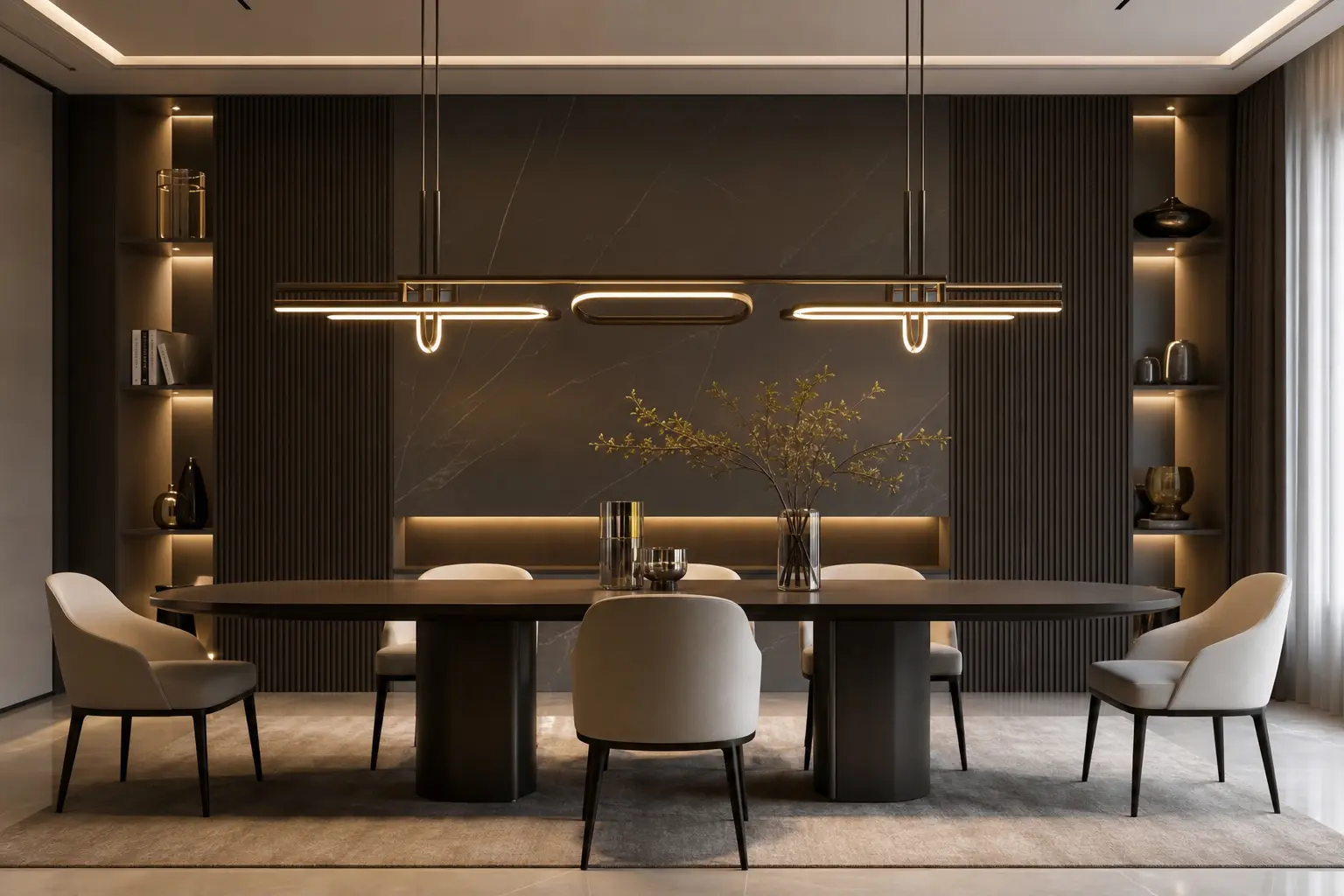
Before you fall in love with a fixture online, look at your table first. A round table generally calls for a single round pendant or a small cluster centered above it. A rectangular table almost always looks better under something horizontal, whether that’s a linear fixture or a row of individual pendants spaced along its length.
This sounds obvious once it’s pointed out, but it’s the single most common mismatch we see in dining room lighting. A single round pendant over a long rectangular table tends to leave the ends of the table dim and the middle overly bright. Matching shape to shape solves that before you even think about style or finish.
2. Try a Cluster of Small Pendants Instead of One Large Fixture
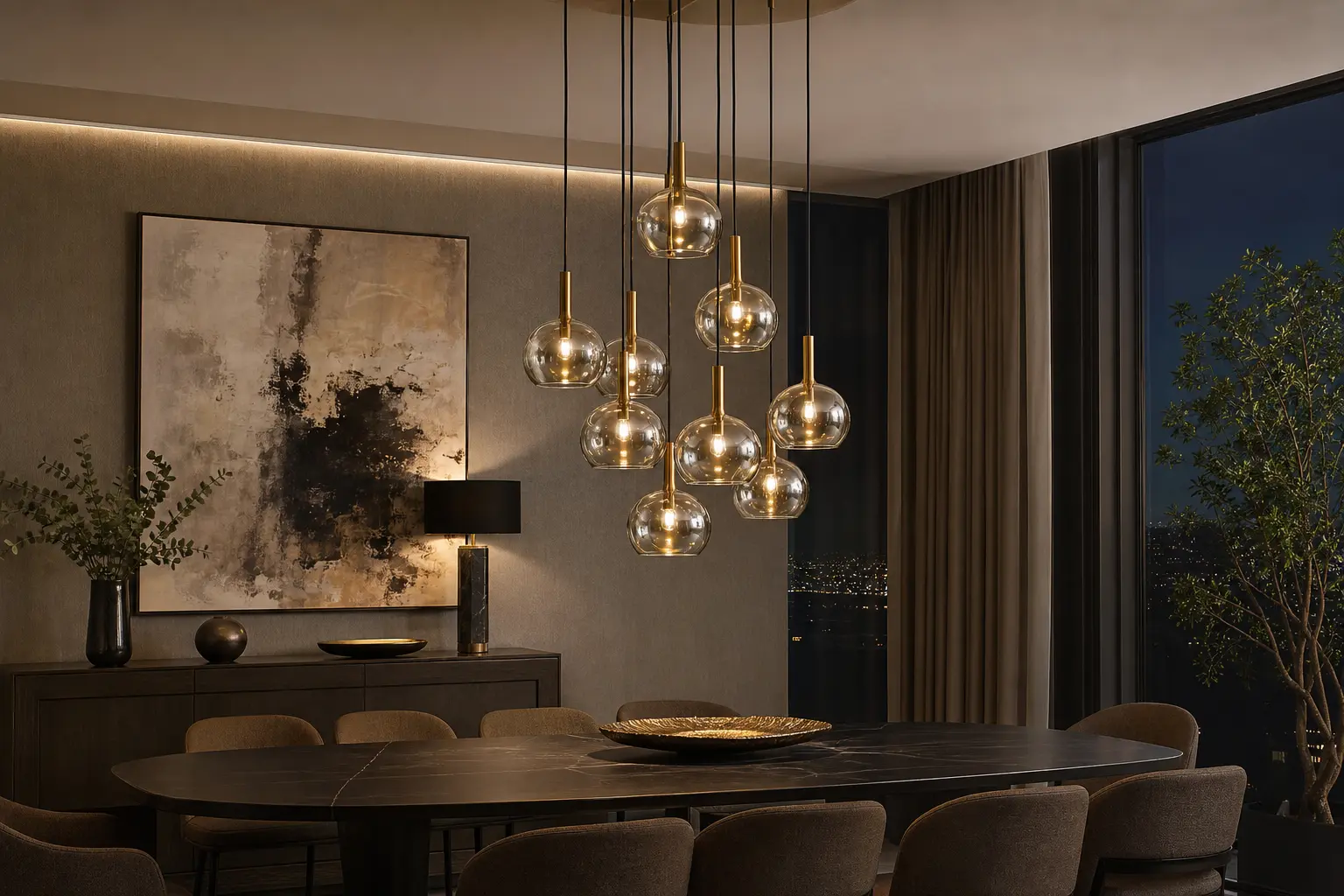
A cluster of three to five smaller pendants can do more visual work than a single oversized fixture, especially over a round or square table. Clustering also gives you more flexibility with height, since you can stagger the drop lengths slightly for a layered, sculptural look instead of one flat plane of light.
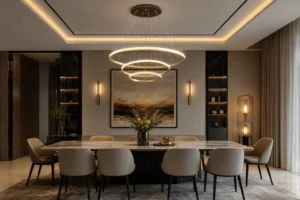
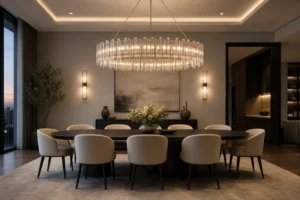
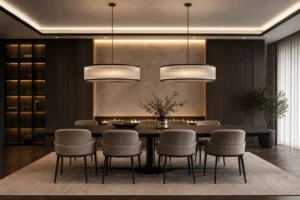
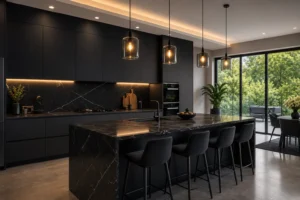
Price wise, a set of three smaller pendants often lands in a similar range to one large statement fixture, generally somewhere between 150 and 500 dollars depending on materials and finish. The advantage is that a cluster reads as more custom, almost like a lighting designer was involved, even on a modest budget.
Spacing a Cluster
Leave at least 8 to 10 inches between individual pendants in a cluster so the shapes stay distinct instead of blurring into one blob of light. Too tight and the effect gets muddy. Too spread out and it stops reading as a cohesive group.
3. Go Linear for Long, Narrow Dining Tables
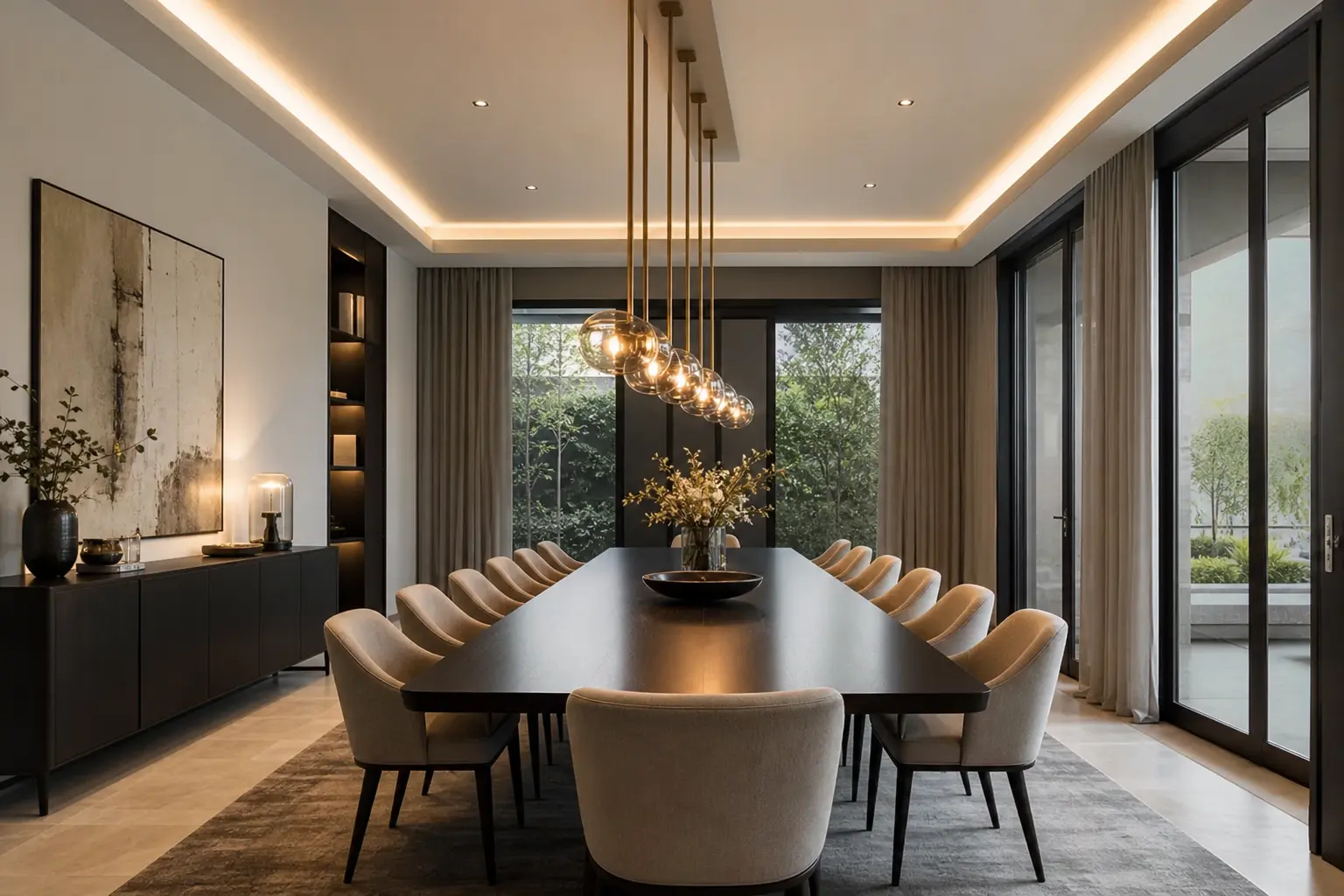
Linear pendant fixtures, sometimes called island lights or linear chandeliers, are built specifically for long tables. They run the length of the fixture in a single bar or track, which spreads light evenly across a table that a round pendant could never cover on its own.
For a table over 72 inches long, a linear fixture spanning roughly two thirds of that length usually looks proportional without overwhelming the room. Anything shorter starts to look stranded in the middle of the table, similar to an undersized round pendant.
This is one of the more popular modern dining room pendant lighting ideas for open concept homes, since a linear fixture also helps visually define the dining zone within a larger shared space.
4. Choose Glass Pendants for a Softer, Airy Glow
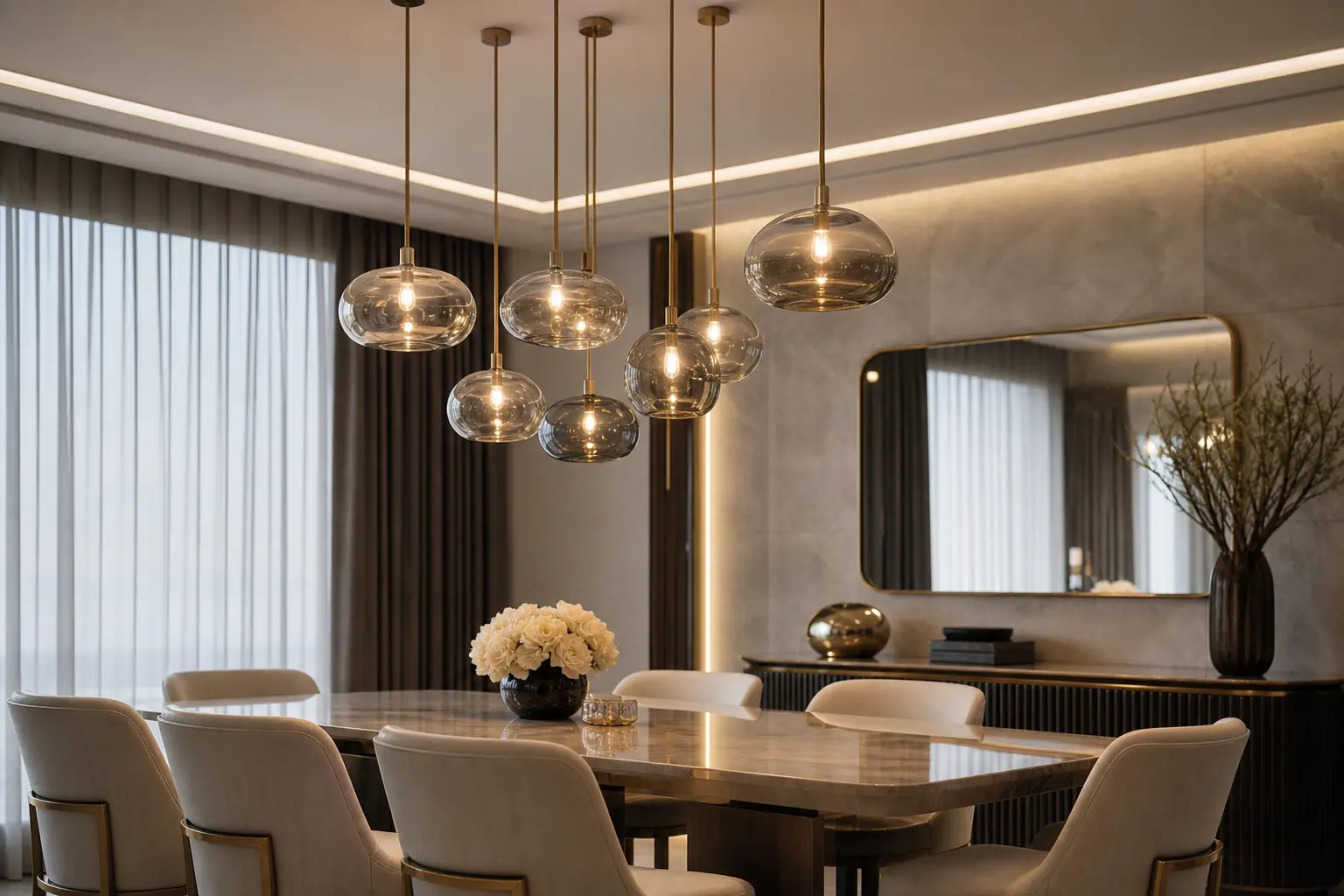
Glass pendants, whether clear, smoked, or ribbed, let more light escape through the shade itself, which creates a softer ambient glow in addition to the direct downlight. This works especially well in smaller dining rooms where you want brightness without a heavy, dense looking fixture overhead.
Smoked or amber toned glass adds a warm tint even before you factor in bulb temperature, which pairs naturally with the warm bulb advice most designers give for dining spaces. Clear glass, on the other hand, shows the bulb itself, so pick a decorative filament bulb if you go this route since it becomes part of the visual design.
5. Choose Metal Pendants for a Bolder, Moodier Look
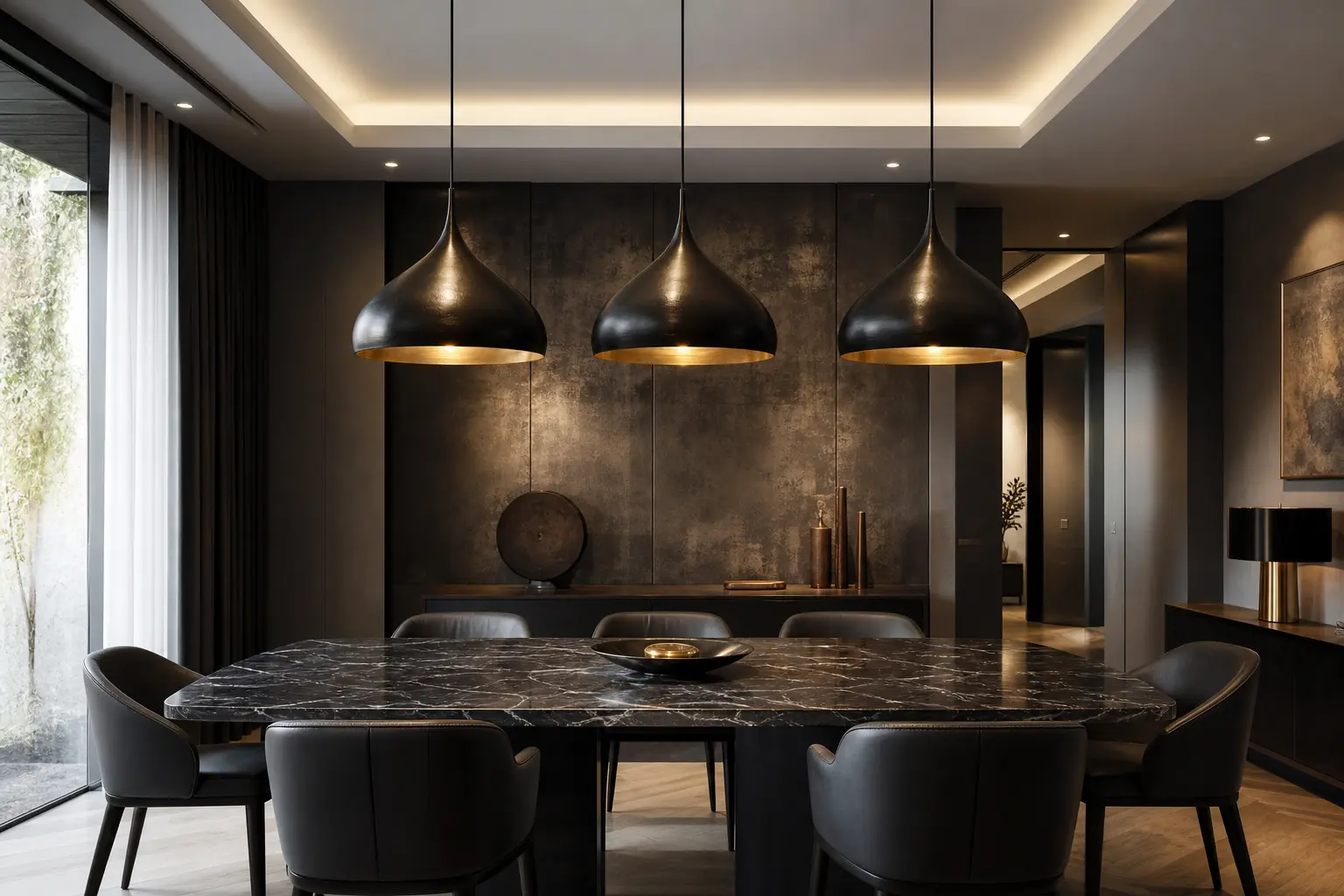
Metal pendants, especially in matte black, aged brass, or bronze, create more contrast and shadow than glass, which gives a dining room a moodier, more dramatic feel. This works well in rooms that already lean into darker wall colors or richer wood tones, where you want the fixture to feel substantial rather than delicate.
A solid metal pendant in the 100 to 400 dollar range typically holds up well over time and doesn’t show fingerprints or dust the way glass can. If your dining room doubles as a moody evening entertaining space, metal pendants generally photograph and perform better under a dimmer switch than glass does.
6. Space Multiple Pendants Evenly for a Polished Line
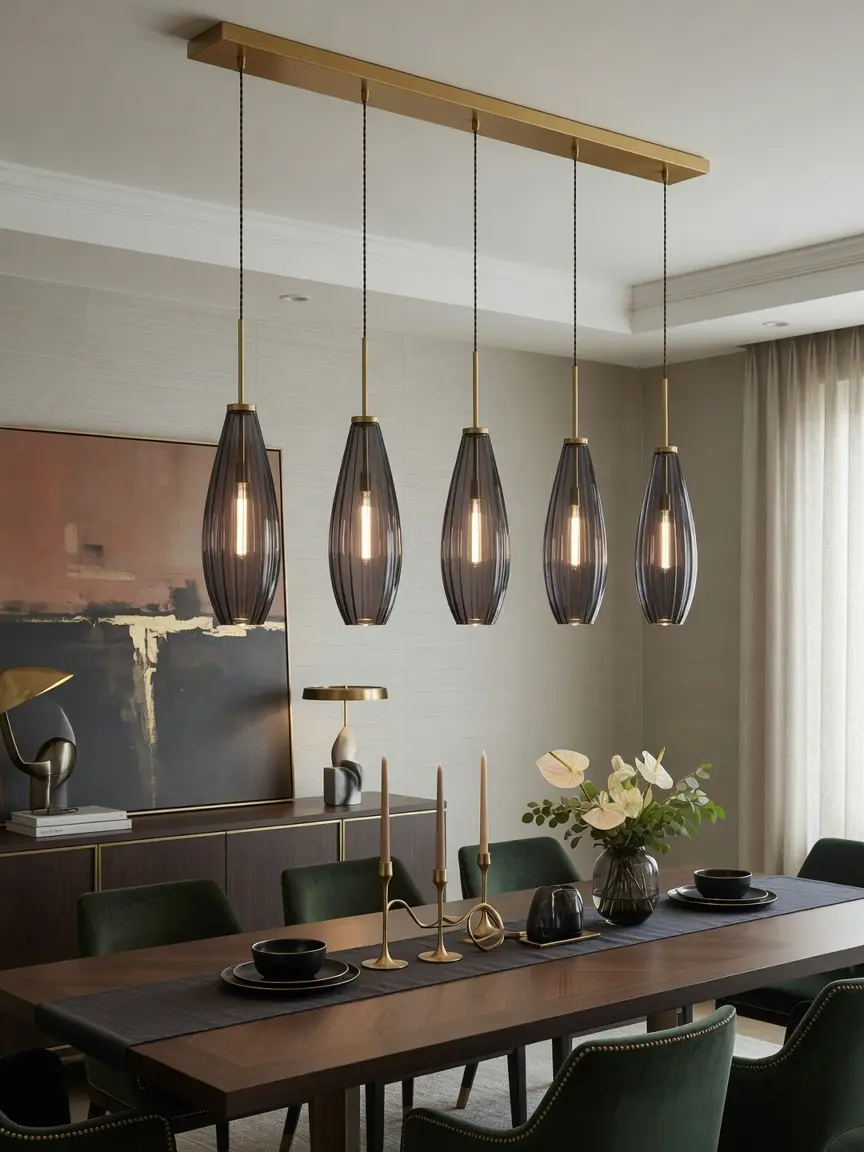
When you’re hanging more than one pendant, whether that’s two, three, or five, even spacing matters more than most people expect. Measure the total length of your table or your linear zone, then divide by the number of pendants plus one to find equal gaps on both ends and between each fixture.
Uneven spacing is a small detail, but it’s one of the fastest ways to make an otherwise great fixture look accidental instead of intentional. Take the extra ten minutes with a tape measure before your electrician installs the junction boxes, since fixing spacing after installation is far more expensive than getting it right the first time.
7. Layer Pendant Lighting with a Dimmer for Everyday Flexibility
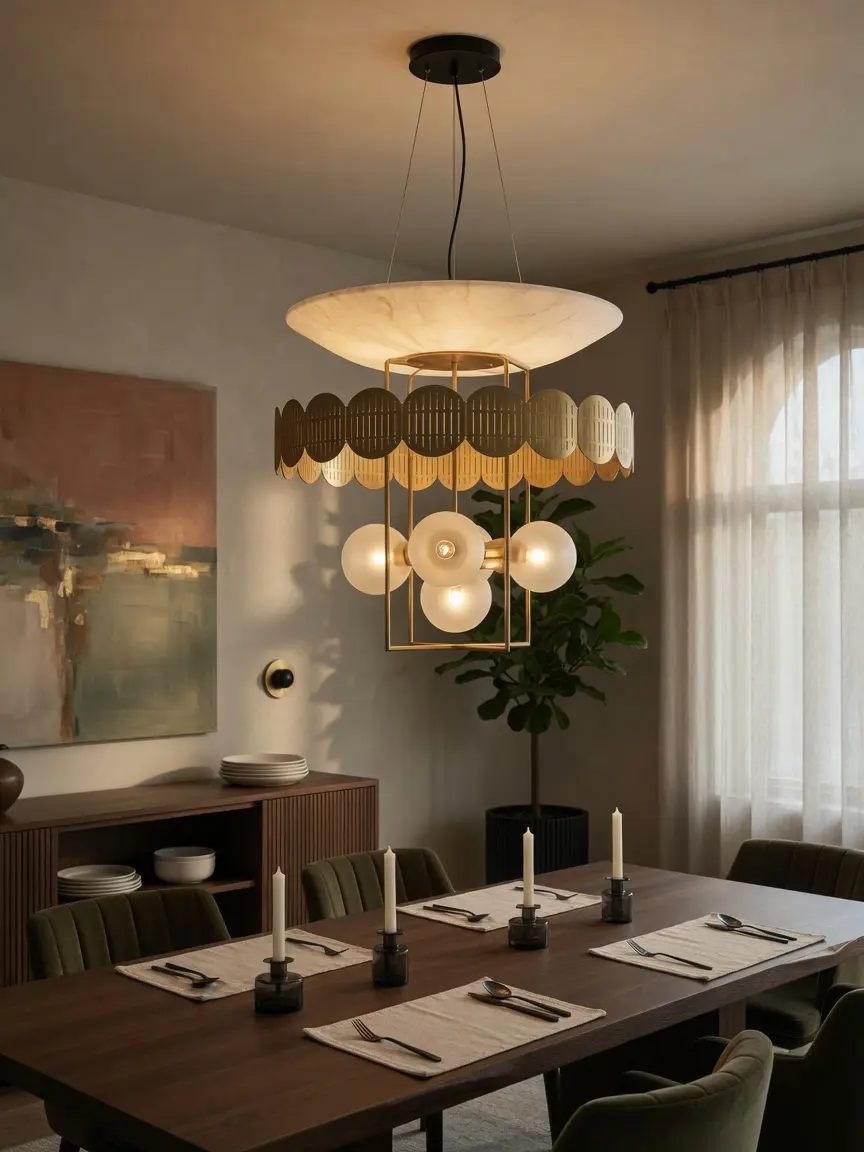
A beautiful pendant fixture still needs flexibility to actually earn its keep day to day. A dimmer switch lets the same fixture handle a bright weeknight dinner and a low, candle like glow for a dinner party without needing two separate light sources.
Installation generally runs 100 to 250 dollars with an electrician, and it’s worth confirming your chosen bulbs are dimmer compatible before purchase. Not every LED plays nicely with every dimmer, and a flickering pendant undercuts the whole luxury effect you’re going for.
8. Pick a Finish That Complements Your Table and Chairs
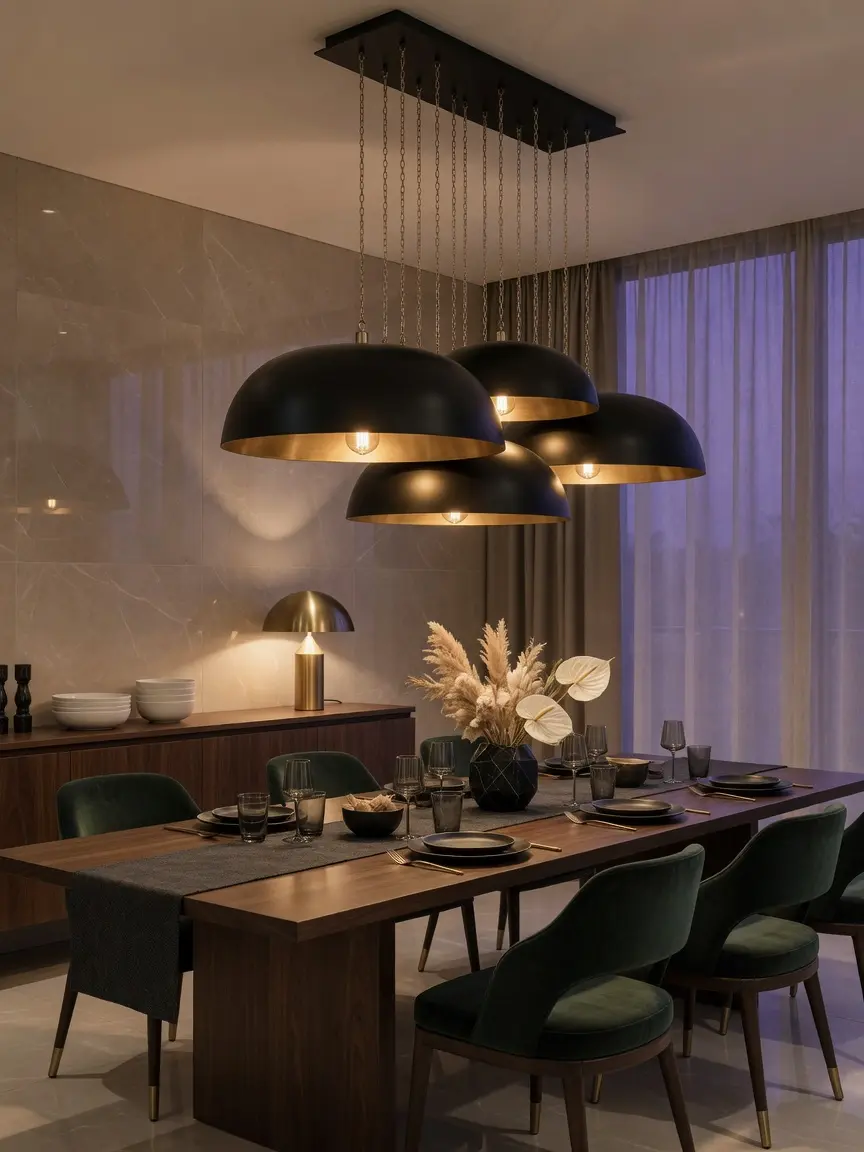
Your pendant finish doesn’t need to match your table legs or chair frames exactly, but it should feel like it belongs in the same room. A warm wood table generally pairs well with brass, bronze, or black pendants, while a lighter, more Scandinavian style table often works better with lighter woven shades or matte white fixtures.
If you’re unsure, bring a photo of your table and chairs when shopping, or hold a finish sample up against your existing furniture before ordering. This small step avoids the common regret of a pendant that looks great alone but fights with everything underneath it.
9. Consider Pendant Cord Length Before You Buy
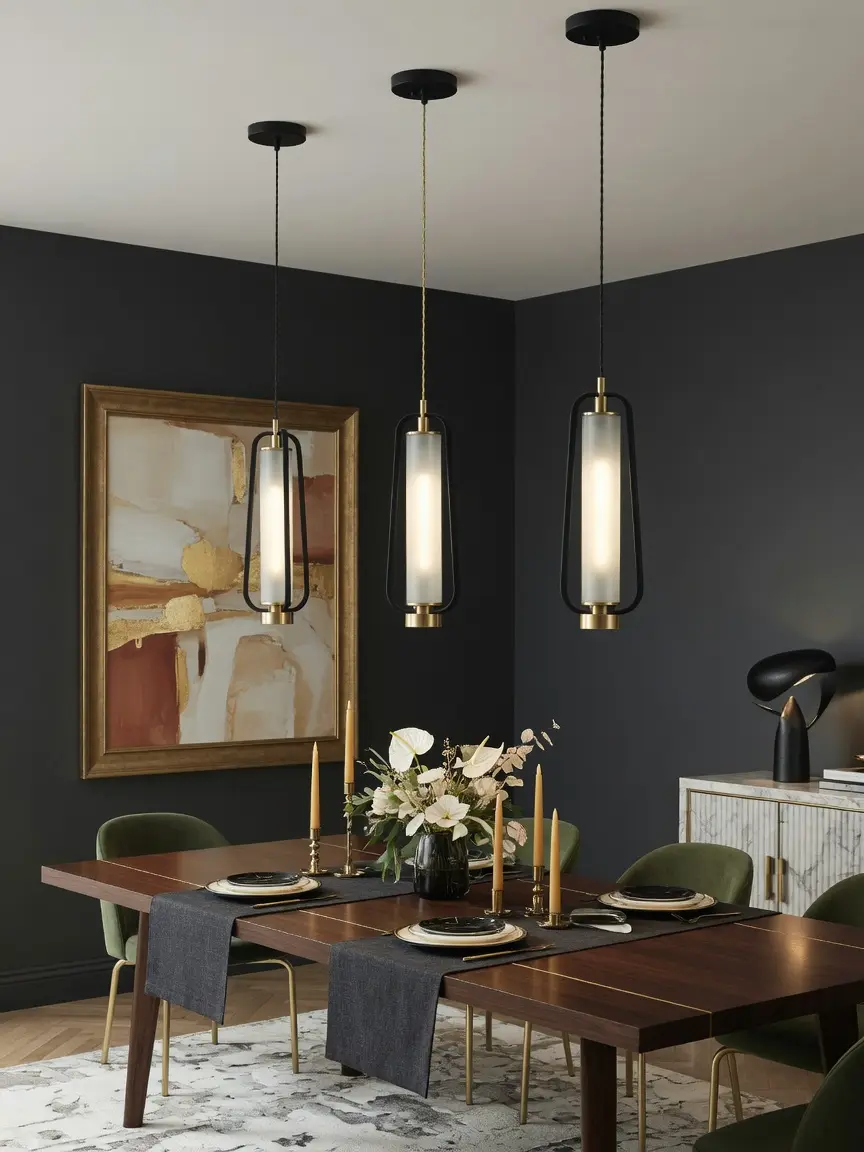
Cord or rod length matters just as much as the pendant itself, especially in rooms with higher or lower than standard ceilings. Most pendants ship with adjustable cords or rods, but always check the maximum and minimum drop length before ordering if your ceiling is above 9 feet or below 8 feet.
The general target is 30 to 36 inches above the tabletop, measured from the bottom of the fixture. A pendant that can’t adjust into that range, even after removing or adding cord segments, is going to fight you during installation no matter how good it looks in photos.
10. Use Pendant Lighting to Anchor an Open Concept Dining Area
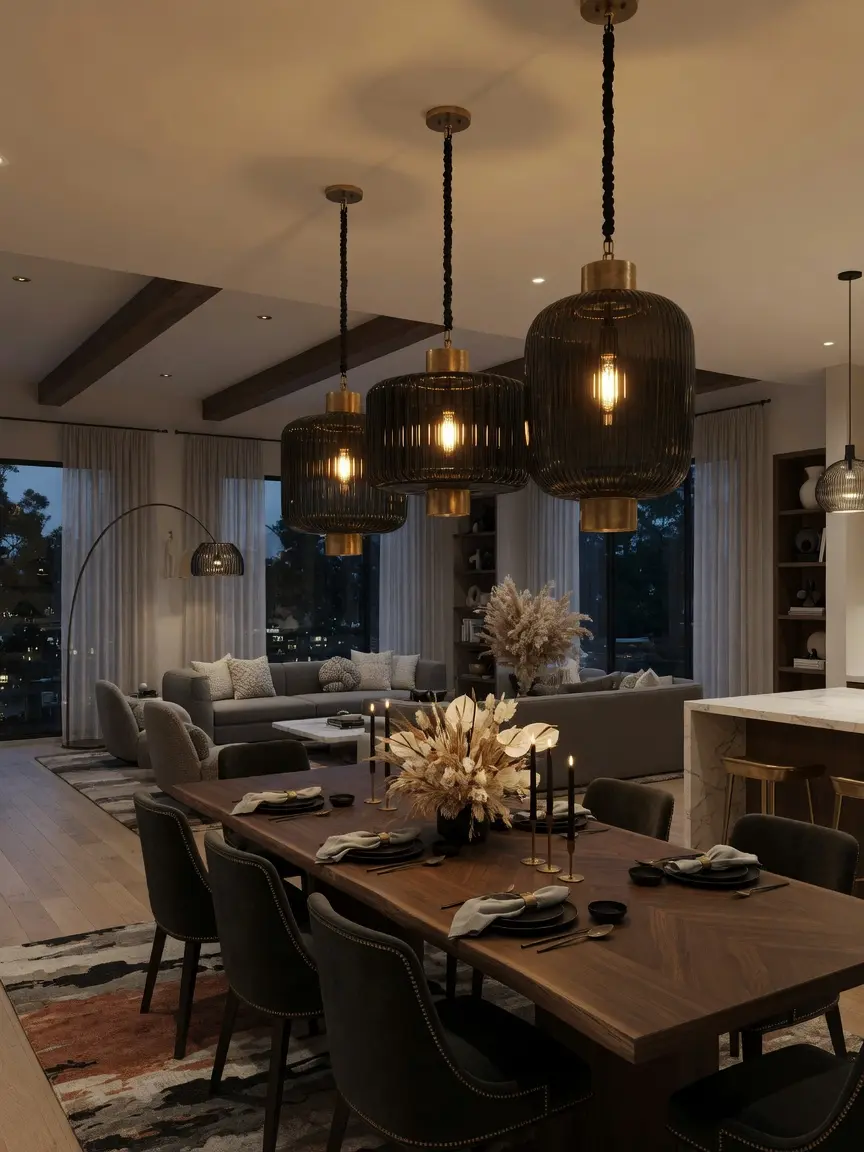
In open concept homes, the dining area often blends visually into the kitchen or living room with no walls to define it. A well chosen pendant fixture, especially a linear or clustered style, acts almost like a visual boundary, signaling where the dining zone starts and ends without any construction involved.
This is particularly useful over a kitchen island that doubles as a casual dining spot, or in a great room where the table sits between the kitchen and the living area. Hanging the fixture directly and only over the table, rather than centering it in the open floor plan, keeps that boundary clear and intentional.
Mistakes to Avoid
- Choosing a round pendant for a long rectangular table
- Spacing multiple pendants unevenly across the table
- Skipping a check on cord or rod length before ordering
- Picking a finish that clashes with the table and chairs underneath it
- Centering the fixture on the room instead of directly over the table
- Using a fixture that’s too small to visually anchor the space
- Forgetting to confirm bulb and dimmer compatibility before installation
Frequently Asked Questions
How many pendant lights should I use over a dining table? It depends on table shape and length. A round table usually works with one pendant or a small cluster, while a long rectangular table often looks best with two to three evenly spaced pendants or one linear fixture.
What’s the difference between a cluster and a linear pendant setup? A cluster groups several individual pendants close together, often over a round or square table. A linear fixture is a single unit that spans a length, built specifically for long rectangular tables.
Should dining room pendants match the finish of the chandelier in another room? Not necessarily. It’s fine for different rooms to have different lighting finishes as long as each room’s fixture pairs well with the furniture and finishes around it.
How low should a pendant hang over an island used for casual dining? The same general range applies, 30 to 36 inches above the surface, though many people go slightly higher, closer to 32 to 40 inches, in kitchen settings for easier movement around the island.
Are glass or metal pendants better for a dining room? Neither is objectively better. Glass tends to feel softer and airier, while metal feels bolder and moodier. The right choice depends on the overall tone of the room.
Do pendant lights need a dimmer switch? It’s not required, but a dimmer significantly increases the fixture’s flexibility, letting the same light work for both bright everyday use and a softer evening mood.
Conclusion
The right pendant lighting does more for a dining room than almost any other single upgrade, and it doesn’t require moving a single piece of furniture. Start by matching pendant shape to table shape, then get the spacing and height right before worrying about finish or style. Once those fundamentals are in place, the rest, glass versus metal, cluster versus linear, becomes a matter of personal taste rather than a functional problem to solve.