10 Luxury Living Room TV Wall Panel Design Ideas with LED Lights | Modern Media Wall Inspiration
A television mounted on a bare painted wall almost never looks finished, no matter how nice the TV itself is. If you’re looking into TV wall panel design ideas with LED lights because your living room wall feels like an afterthought, the fix is usually about layering. Panel material, hidden lighting, and smart storage all working together turn a flat wall into a real modern media wall. This article covers ten ways to build that look, with practical detail on materials, lighting, and cost.
1. What Makes a TV Wall Panel Design Feel Genuinely Luxury
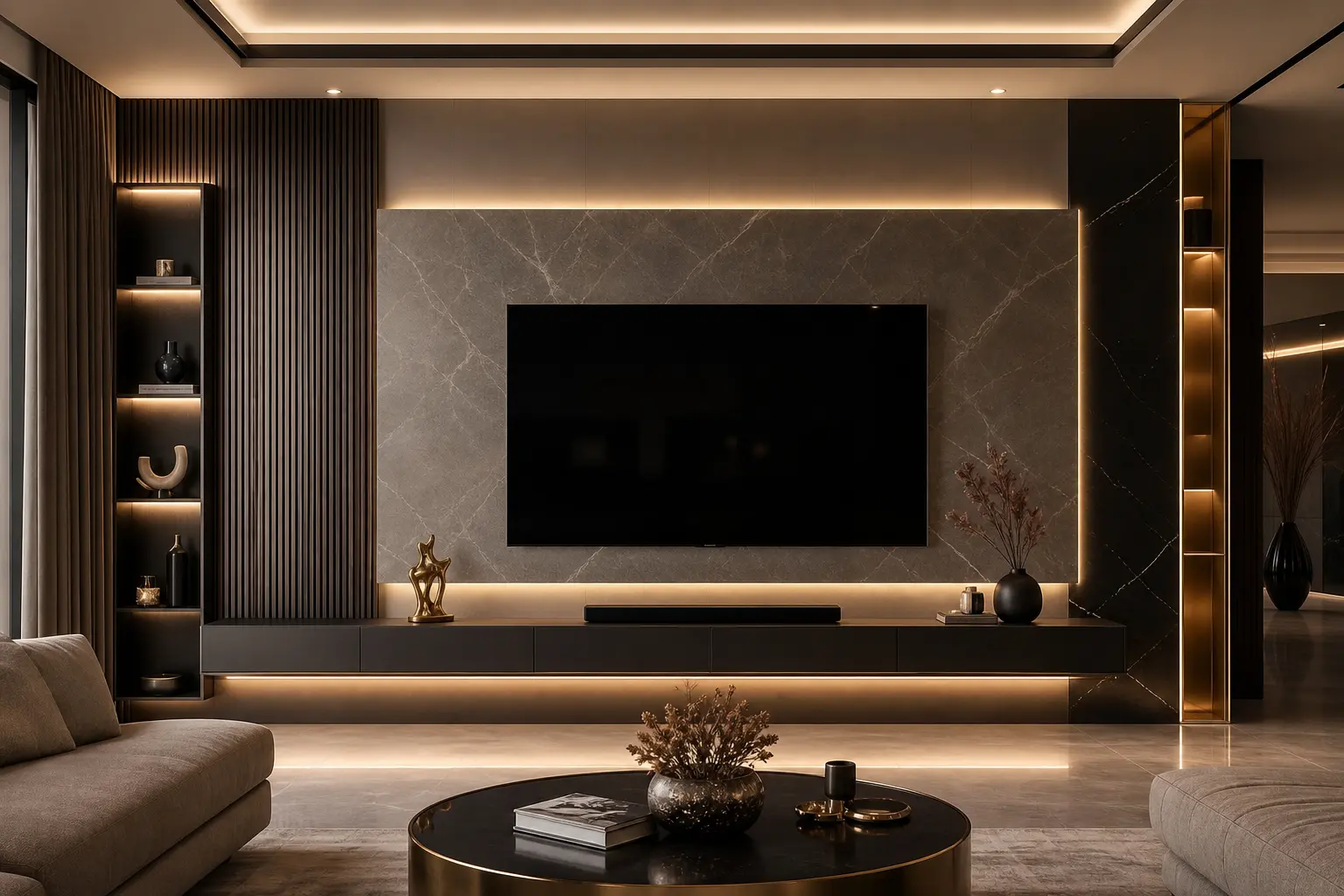
A luxury media wall almost never relies on the TV alone as the visual feature. Instead, the wall around the TV does most of the work, through material texture, layered lighting, and clean proportions. A textured panel behind the screen gives the eye something to notice even when the television is off.
The other consistent trait across higher end media walls is restraint. Too many materials or too many lighting sources competing at once tends to look busy rather than luxurious. Most well designed walls use one dominant panel material, one accent lighting layer, and simple, uncluttered storage.
2. Choosing Panel Materials for a Modern Media Wall
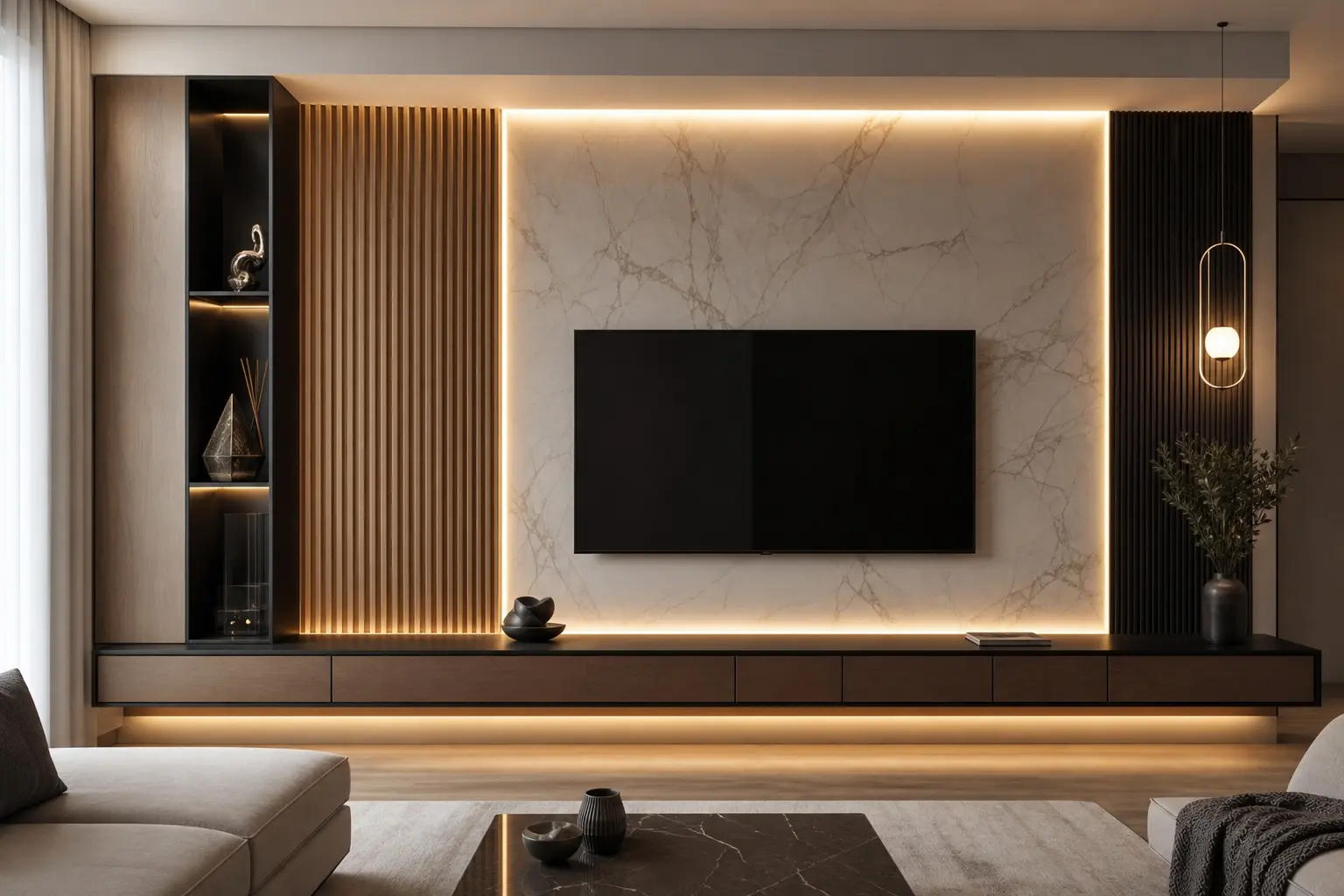
Wood paneling, whether flat panels, slats, or textured wood veneer, remains one of the most popular choices for a media wall, since it adds warmth and pairs easily with almost any color scheme. Stone or stone look porcelain panels create a heavier, more dramatic feel and work especially well in larger rooms with higher ceilings.
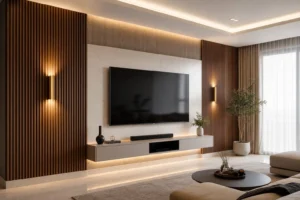
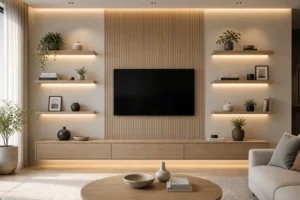
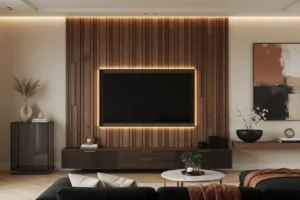
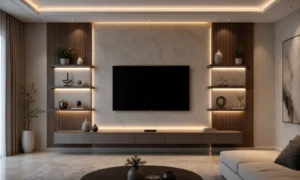
Microcement and plaster finishes have also grown in popularity for a softer, more organic texture without the strong grain of wood or the visual weight of stone. Whichever material you choose, keeping it to one main texture across the whole panel, rather than mixing several, tends to look more intentional.
Panel Thickness and Depth Considerations
Thicker panel systems, especially those with actual dimensional depth rather than a flat printed texture, cast real shadow lines that shift throughout the day as natural light changes. That subtle shifting shadow is part of what makes a textured panel feel more alive than a flat, single tone wall.
3. LED Lighting Placement Options Behind a TV Wall Panel
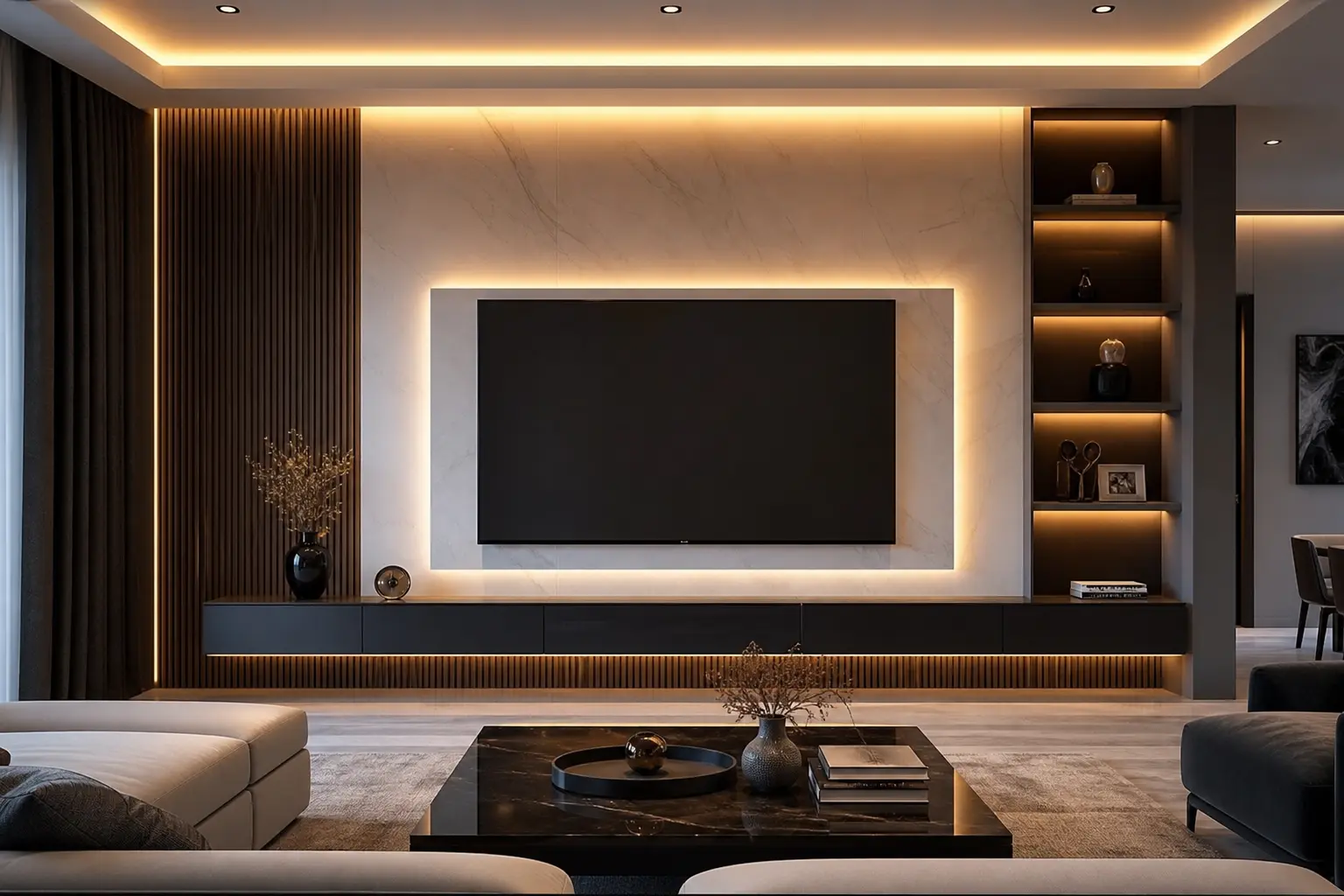
LED strips can be placed in several spots around a media wall, each creating a different effect. Backlighting behind the TV itself, using bias lighting, reduces eye strain during viewing and adds a soft glow around the screen edges. Perimeter lighting, run along the outer edge of the entire panel, highlights the shape and material of the panel as a whole.
Toe kick lighting, along the base of the wall or console, adds a lower ambient glow that makes the whole setup feel like it’s floating slightly above the floor. Most luxury media walls use at least two of these three lighting positions together, rather than relying on just one.
4. Picking LED Color Temperature for a Warm Media Wall Glow
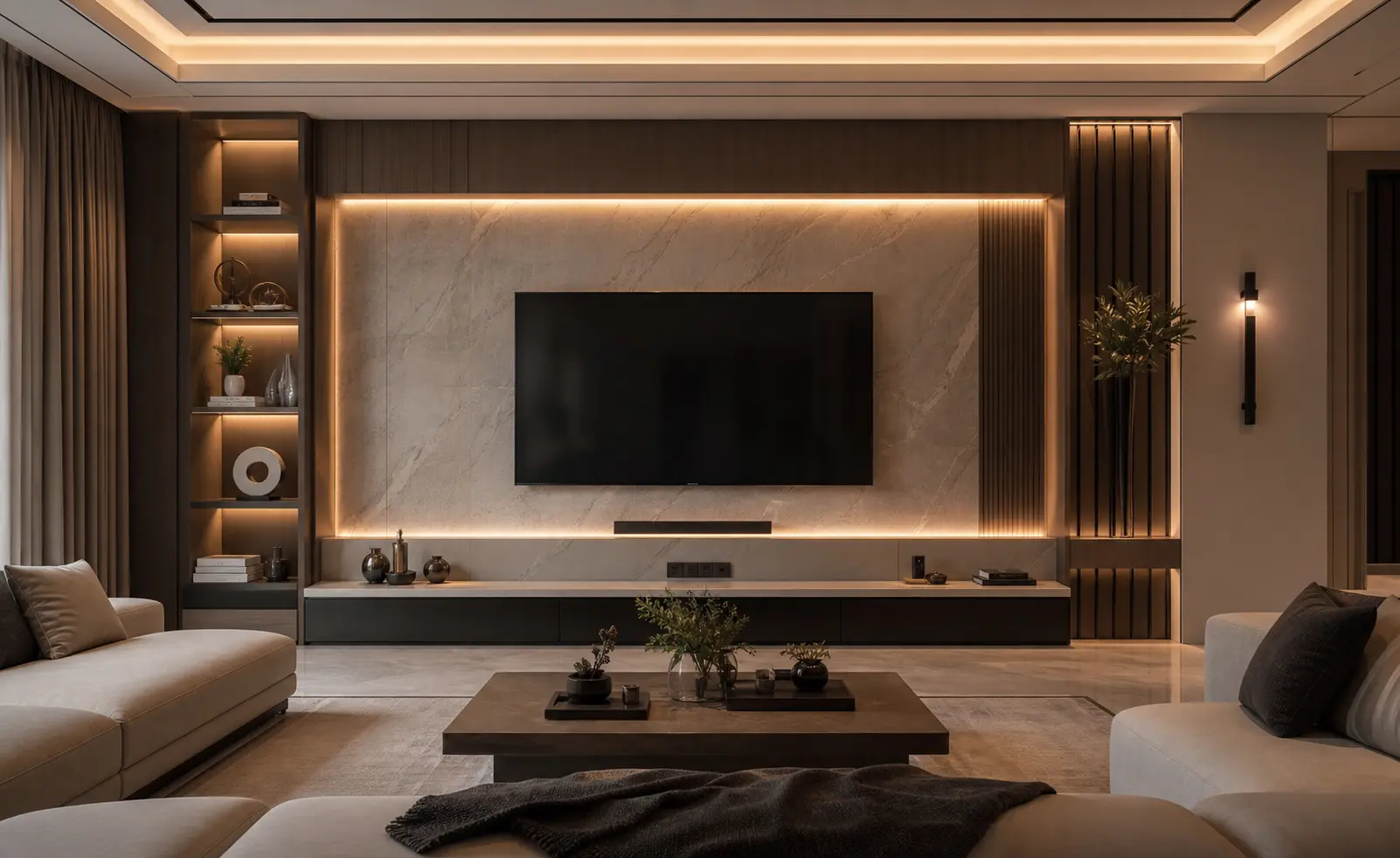
Color temperature has a big effect on how a media wall feels once the lights are on. Warm LED strips, in the 2700K to 3000K range, create a cozy, inviting glow that suits most living room settings and pairs especially well with wood paneling. Cooler temperatures, above 4000K, can look sharp and clinical, better suited to a very minimalist or industrial style room.
Dimmable, warm dimming LED strips are worth the extra cost if your budget allows it. These shift toward an even warmer tone as they’re dimmed lower, avoiding the slightly cold look that standard LED strips can have at low brightness.
5. Panel Layout Ideas for Different Living Room Sizes
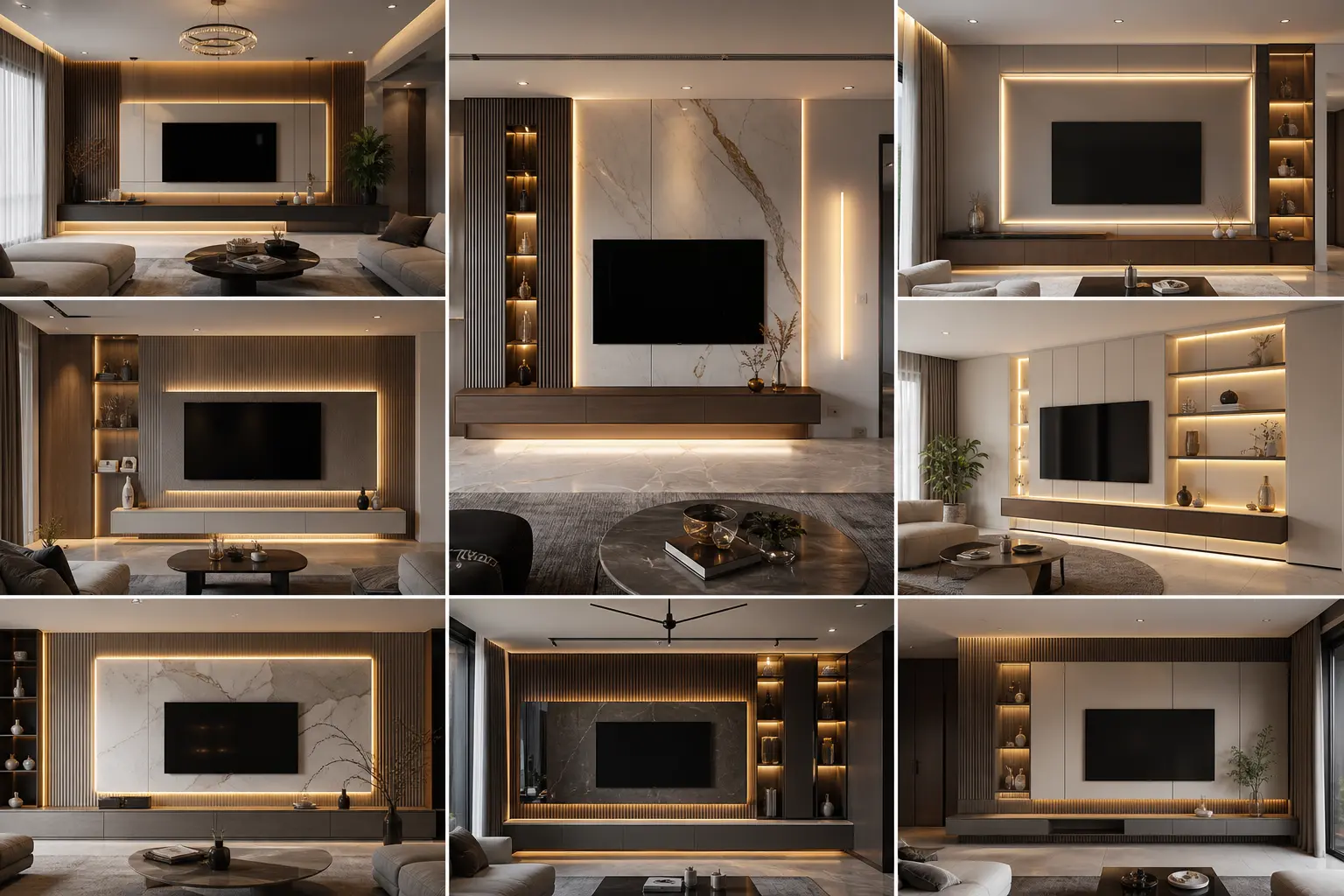
A full wall panel, running edge to edge across the entire TV wall, tends to suit larger rooms best, since it gives the material enough room to feel substantial rather than cramped. In smaller living rooms, a framed panel section, sized just slightly wider than the TV itself, often looks more proportional than trying to force a full wall treatment into a tight space.
As a rough guide, a framed panel section should extend at least 12 to 18 inches beyond each side of the TV to avoid looking undersized. Going much narrower than that starts to look like the panel was an afterthought rather than a planned feature.
6. Built In Storage and Shelving Within a TV Wall Panel
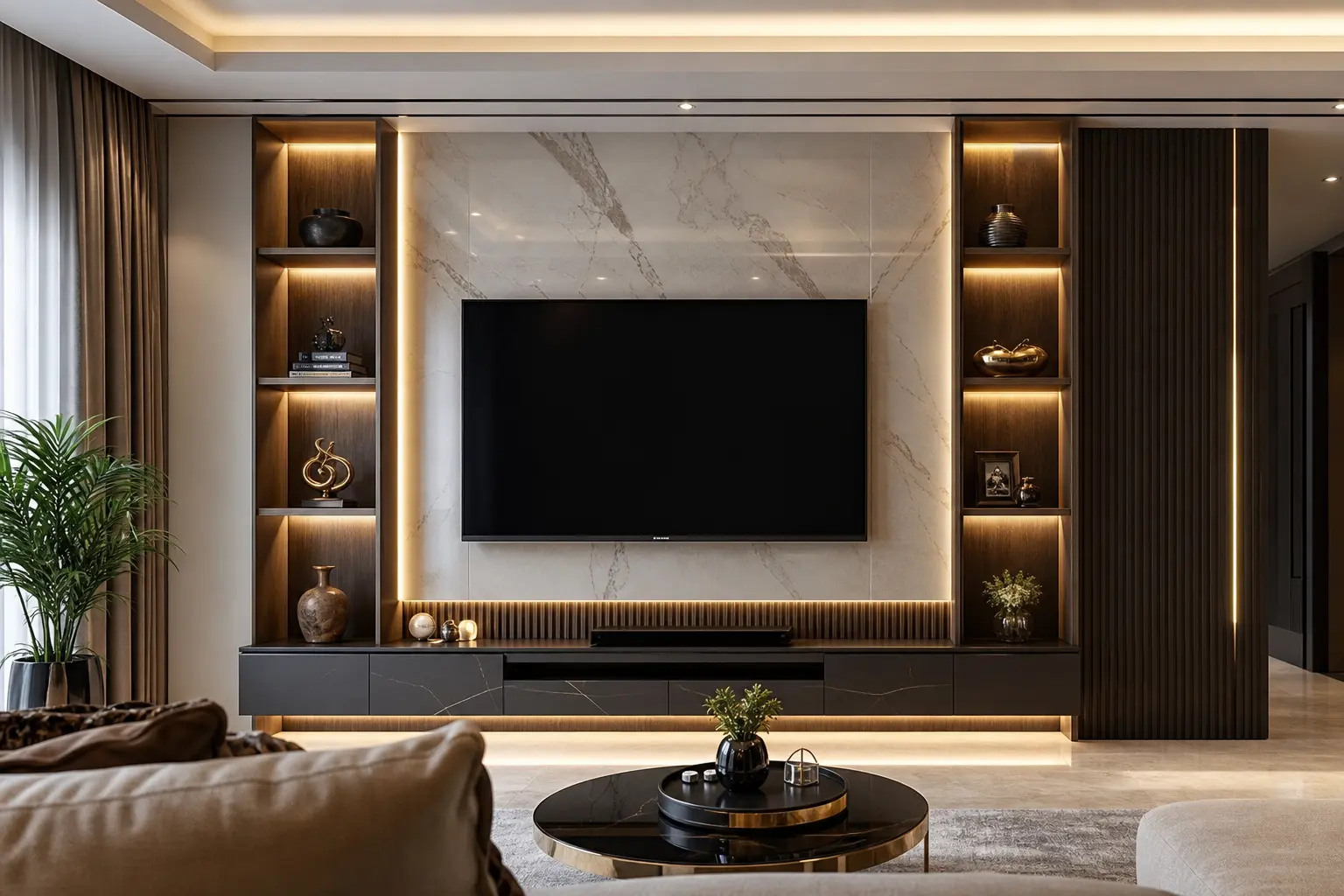
A media wall still needs to hold real equipment, from streaming devices to gaming consoles to speakers. Recessed shelving built directly into the panel keeps electronics accessible without breaking the clean look of the wall. Closed cabinet storage below the TV works well for hiding cords, controllers, and other visual clutter completely.
Floating Console vs Built In Cabinetry
A floating console, mounted below the panel with visible space beneath it, adds a lighter, more contemporary feel and pairs especially well with toe kick lighting underneath. Fully built in cabinetry, flush with the panel above it, gives a more seamless, custom look but generally costs more to install.
7. Color and Finish Pairings for a Modern Media Wall
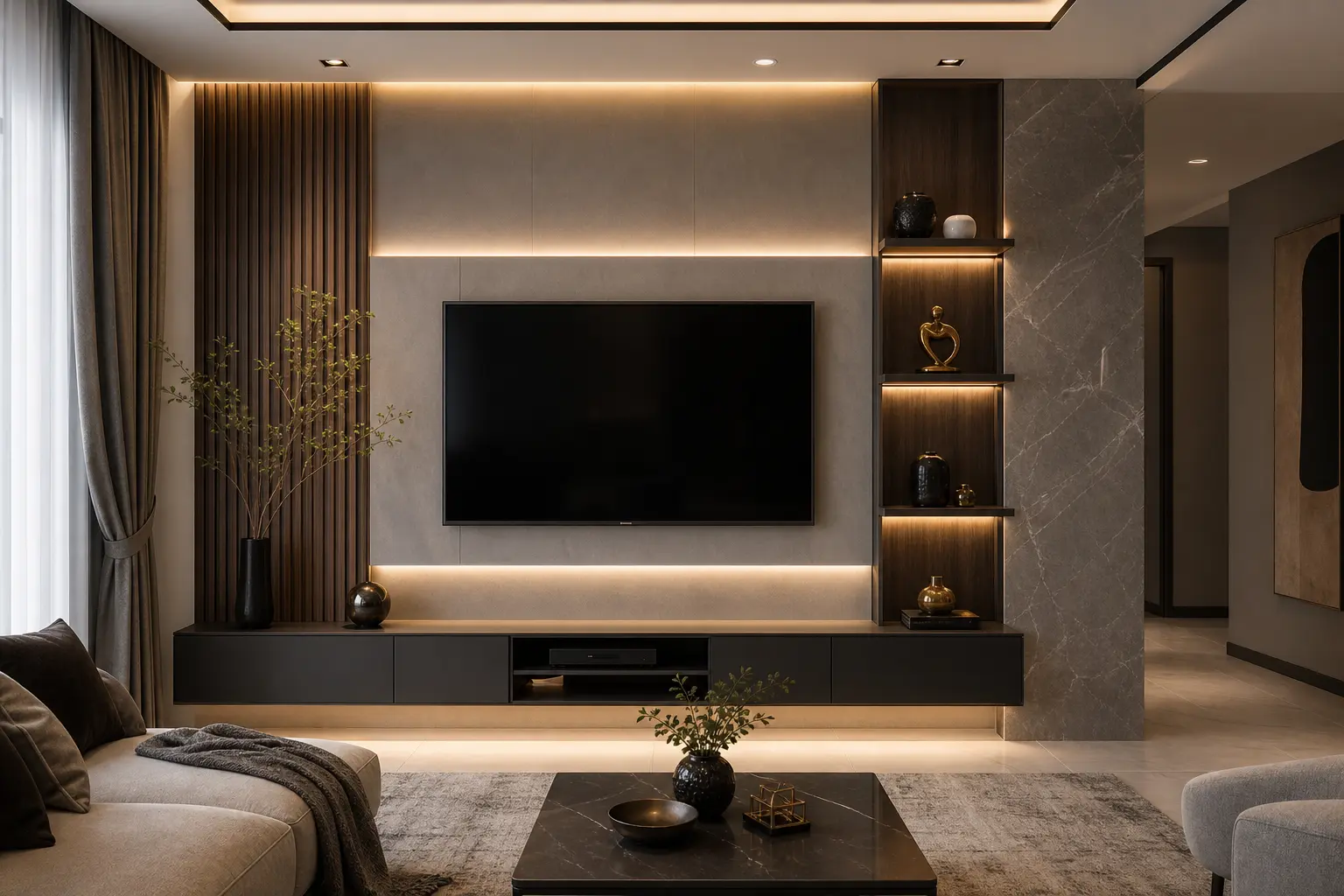
Neutral backgrounds, warm white, soft gray, or a muted greige, let a textured panel material stay the visual focus without competing for attention. Deeper wall colors around the panel, like a warm charcoal or a deep navy, can make the panel and its lighting stand out even more sharply through contrast.
Matte finishes generally photograph and look better in person than high gloss surfaces, which tend to create distracting reflections in exactly the spot where the eye should rest on the panel texture instead.
8. Ceiling to Floor vs Partial Height Panel Designs
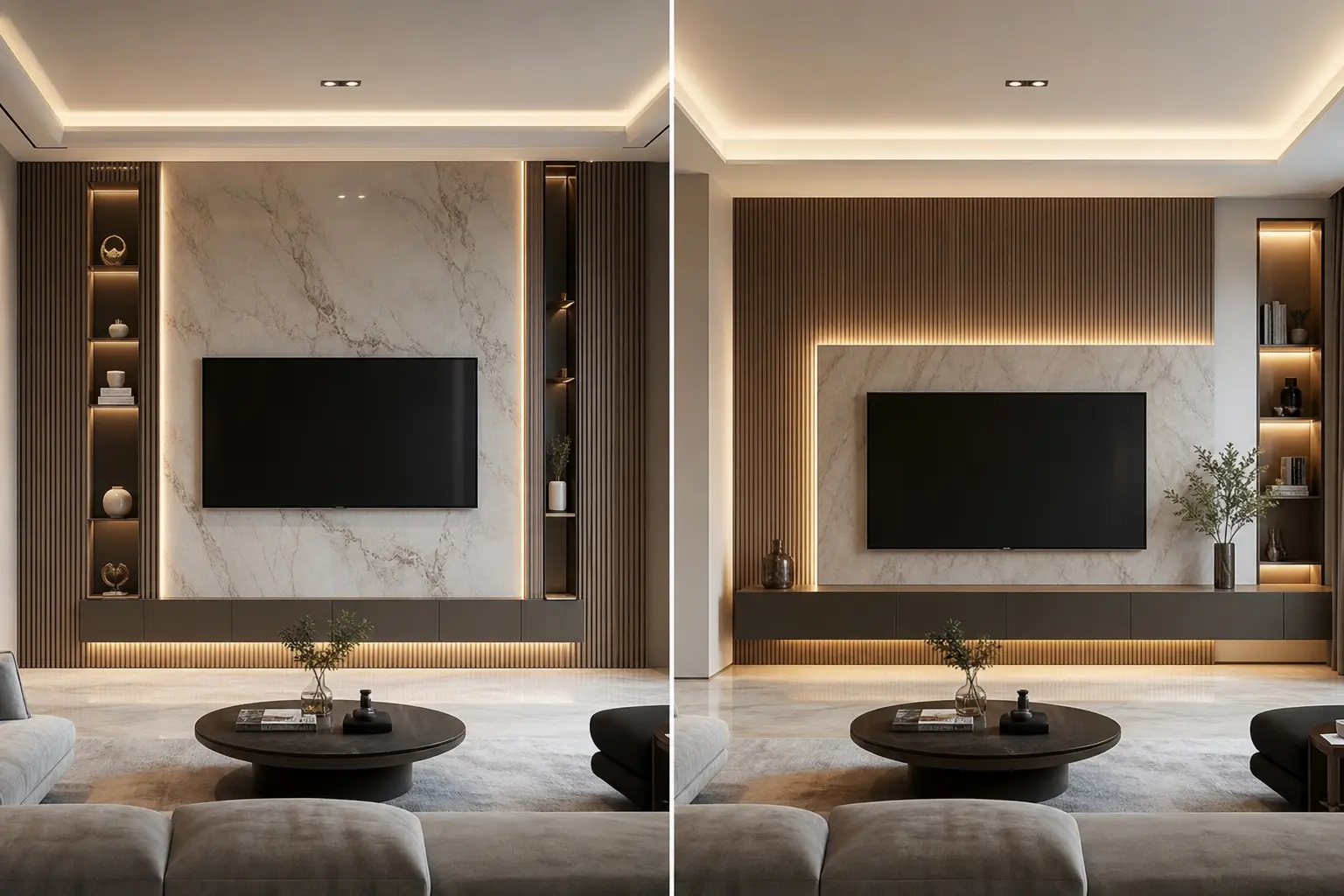
A ceiling to floor panel treatment makes a strong, dramatic statement and tends to make a room feel taller, especially useful in living rooms with higher ceilings. It does require more material and typically costs more than a partial height treatment.
A partial height panel, stopping somewhere between 6 and 8 feet up the wall, is a more budget friendly option that still delivers most of the visual impact, especially when paired with perimeter LED lighting along the top edge of the panel.
9. Adding Texture with Stone, Wood, and Fabric Panel Inserts
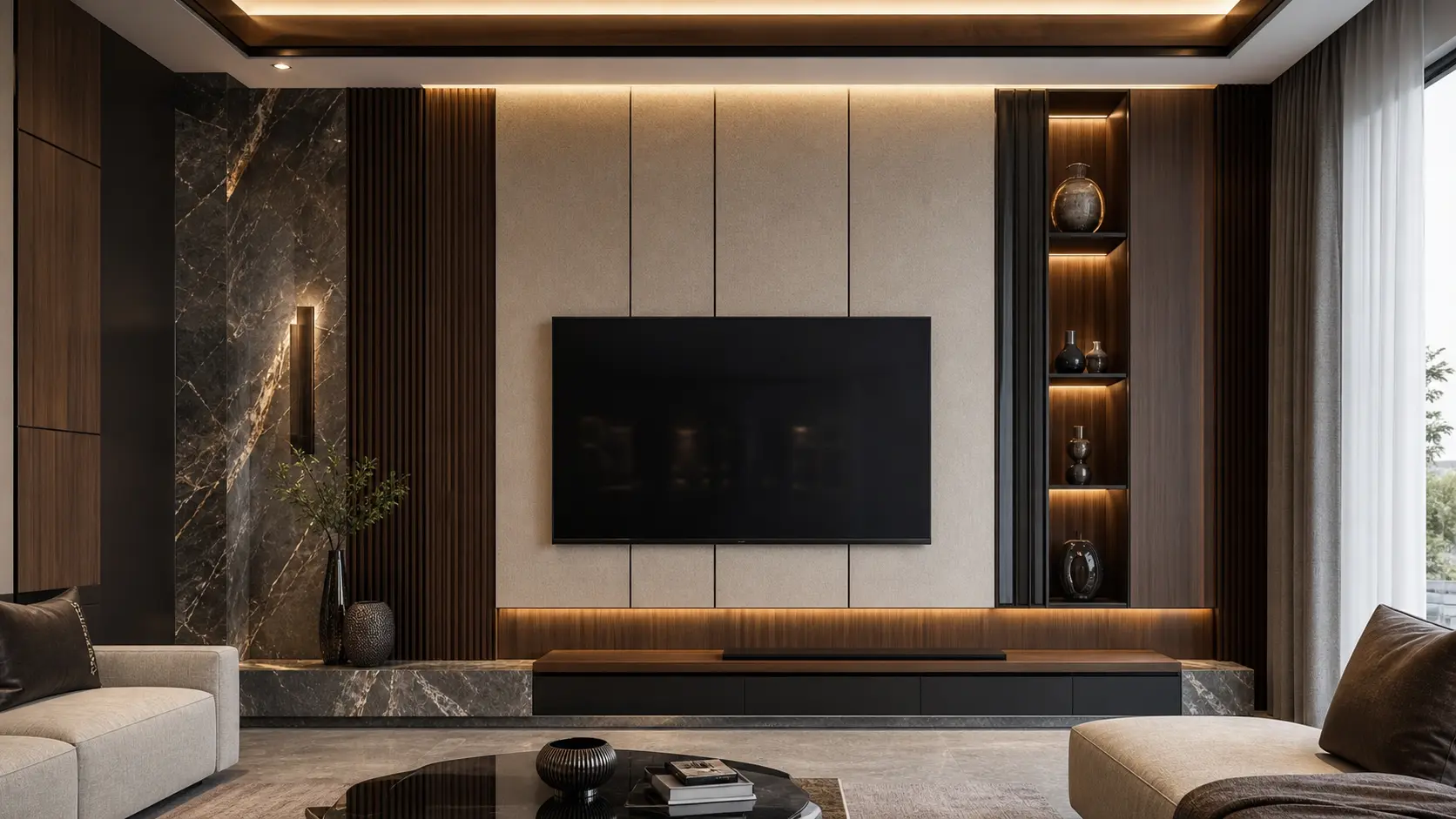
Combining two complementary textures, rather than relying on a single flat material, can add real depth to a media wall. A wood panel section paired with a smaller stone or stone look insert directly behind the TV creates a natural focal point without needing extra decor.
Acoustic fabric panels are another option, often used in a geometric or grid pattern, and they offer the added benefit of actually absorbing sound, which can meaningfully improve audio quality in rooms with hard floors and minimal soft furnishings.
10. Budget Ranges for a Luxury TV Wall Panel with LED Lighting
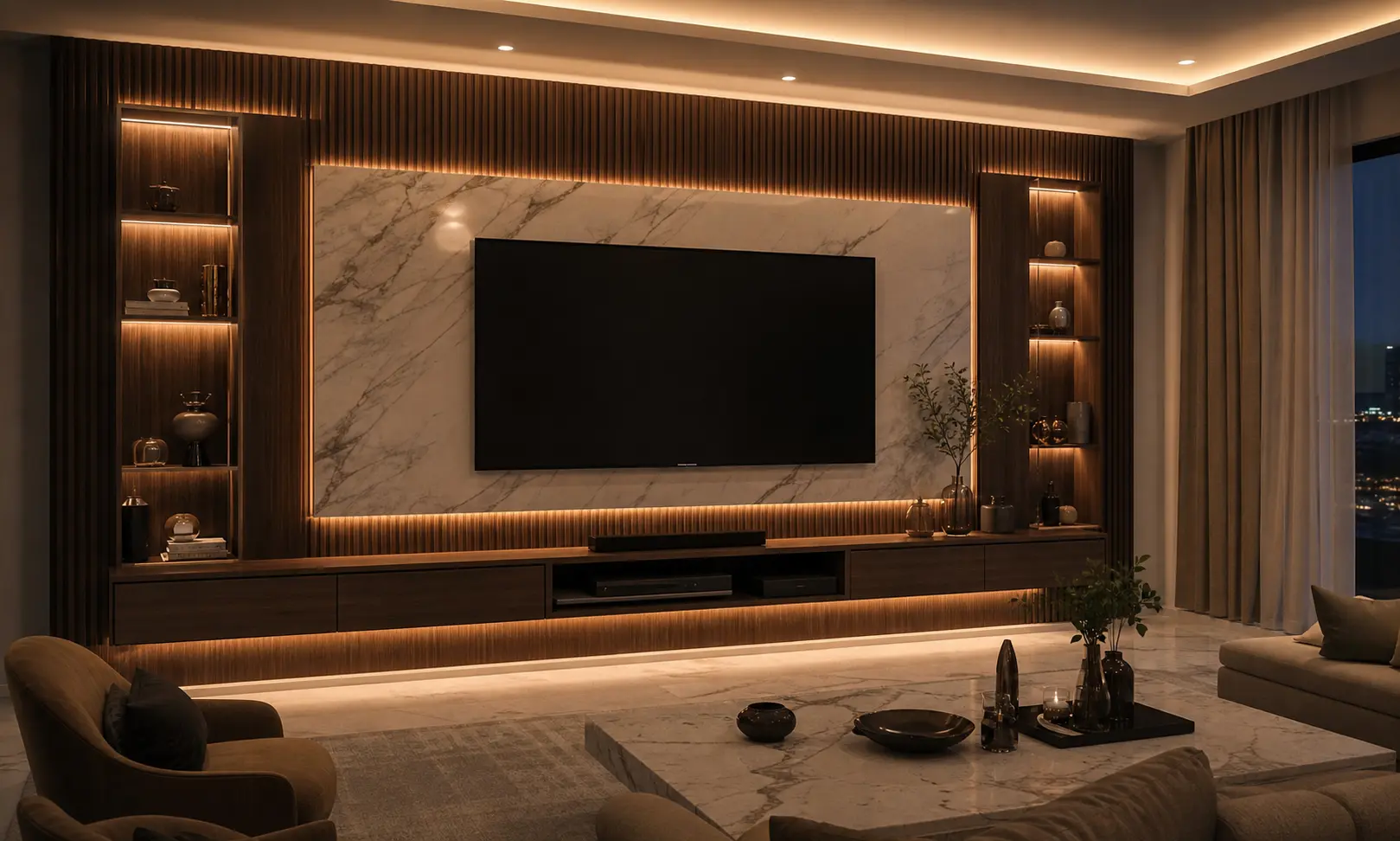
Costs vary a lot depending on material choice and whether it’s a DIY or professionally installed project. A DIY wood panel wall with a basic LED strip kit typically runs somewhere between 500 and 1200 dollars for an average sized living room wall.
A fully custom media wall, including stone or specialty panel materials, built in cabinetry, and a layered LED lighting system, tends to run considerably higher, often somewhere between 4000 and 12000 dollars depending on materials, room size, and region.
Mistakes to Avoid
- Mixing more than one or two panel materials, which tends to look busy rather than intentional
- Choosing LED strips above 4000K and ending up with a cold, clinical glow
- Sizing a framed panel section too narrow relative to the TV width
- Leaving cables and cords visible instead of routing them through the wall or console
- Using high gloss panel finishes that create distracting reflections
- Skipping a dimmer, which limits the wall to a single fixed brightness setting
Frequently Asked Questions
Do I need special wiring for LED lighting behind a TV wall panel? Low voltage, plug in LED strip kits generally don’t require an electrician. Hardwired lighting connected to a dedicated wall switch should be installed or connected by a licensed electrician.
What’s the most popular material for a modern media wall right now? Wood paneling, in flat panel or slat form, remains the most common choice, largely because it pairs easily with a wide range of color schemes and adds warmth without a heavy visual weight.
Can I add a TV wall panel to a rental without permanent changes? Yes, in many cases. Freestanding or lightly mounted panel systems, along with plug in LED strips rather than hardwired lighting, can often be installed and removed without damaging the wall.
How far should the panel extend beyond the TV on each side? As a rough guide, at least 12 to 18 inches beyond each side of the television keeps the proportions looking intentional rather than undersized.
Is a full wall panel better than a smaller framed section? It depends on room size. Larger rooms generally suit a full wall treatment, while smaller rooms often look more balanced with a framed panel section sized specifically around the TV.
Conclusion
A TV wall panel design with LED lighting works best when the panel material, the lighting layers, and the storage all get planned together rather than added one at a time. Pick one dominant texture, layer at least two LED lighting positions, and keep the color temperature warm for a genuinely inviting glow. Done well, a media wall becomes the actual focal point of the living room, whether the TV is on or off.