10 Modern Scandinavian Bedroom Design Ideas | Minimalist Wooden Bedroom Inspiration
Scandinavian style has a reputation for being cold or sparse, but a well done version of the look is actually the opposite. It’s warm, tactile, and genuinely calming, built on light wood and layered natural textiles rather than empty white space. If you’re researching Scandinavian bedroom design because your room feels either too bare or too cluttered, the ideas below cover the specific choices that make this style work in practice. This article walks through ten ways to build a minimalist wooden bedroom, with real detail on wood tone, textiles, and cost.
1. What Defines Scandinavian Bedroom Design
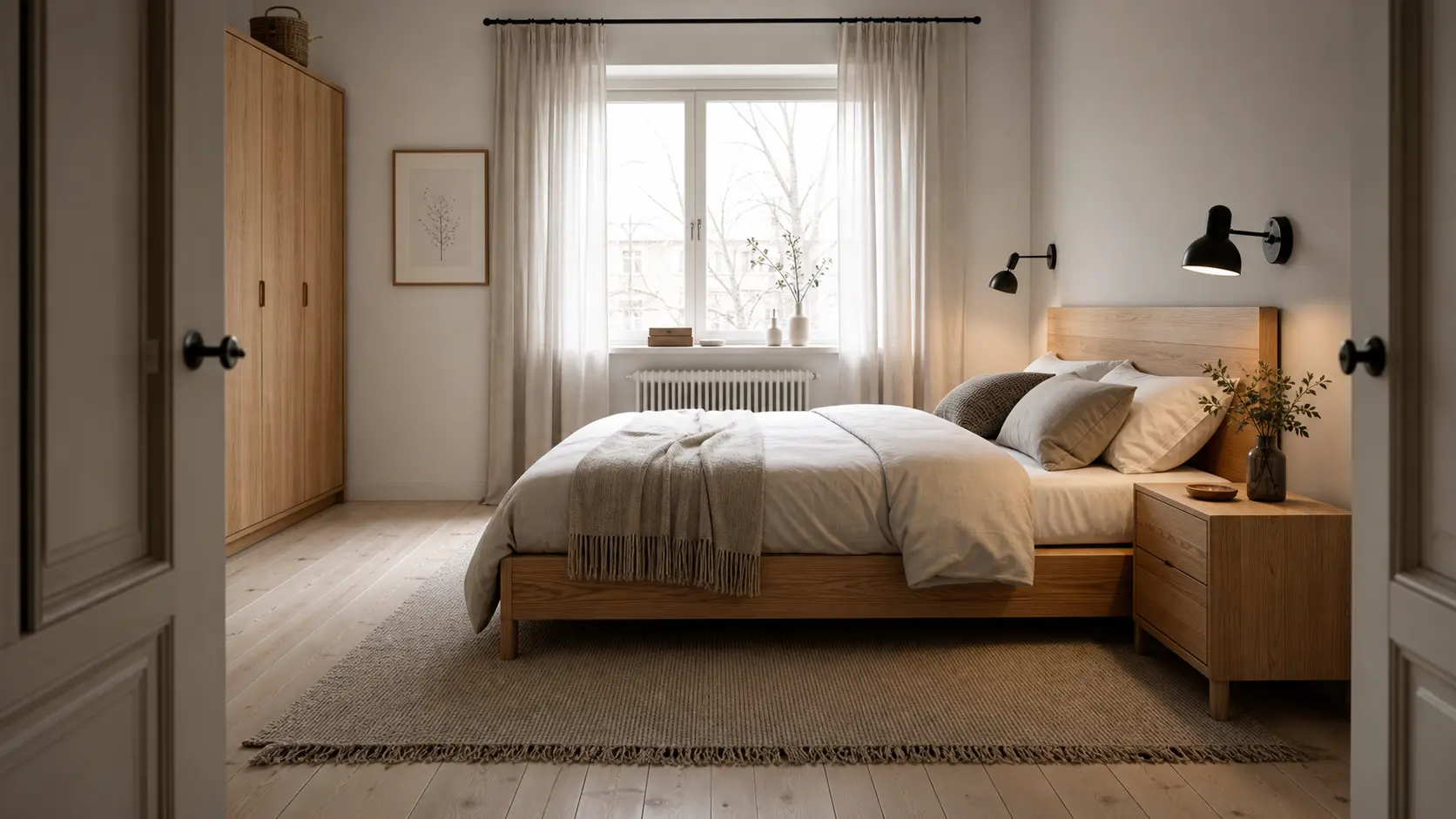
Scandinavian design centers on function, natural materials, and a restrained color palette, but it’s not the same as stark minimalism. The style specifically values coziness, often referred to by the Danish word hygge, which means warmth and texture matter just as much as clean lines and open space.
Light wood furniture, natural fiber textiles, and a soft neutral palette form the foundation. But the rooms that succeed at this style always include enough texture, through rugs, throws, and layered bedding, to avoid feeling empty or unfinished, which is the most common mistake when people try to recreate the look.
2. Choosing Light Wood Tones for a Scandinavian Bedroom
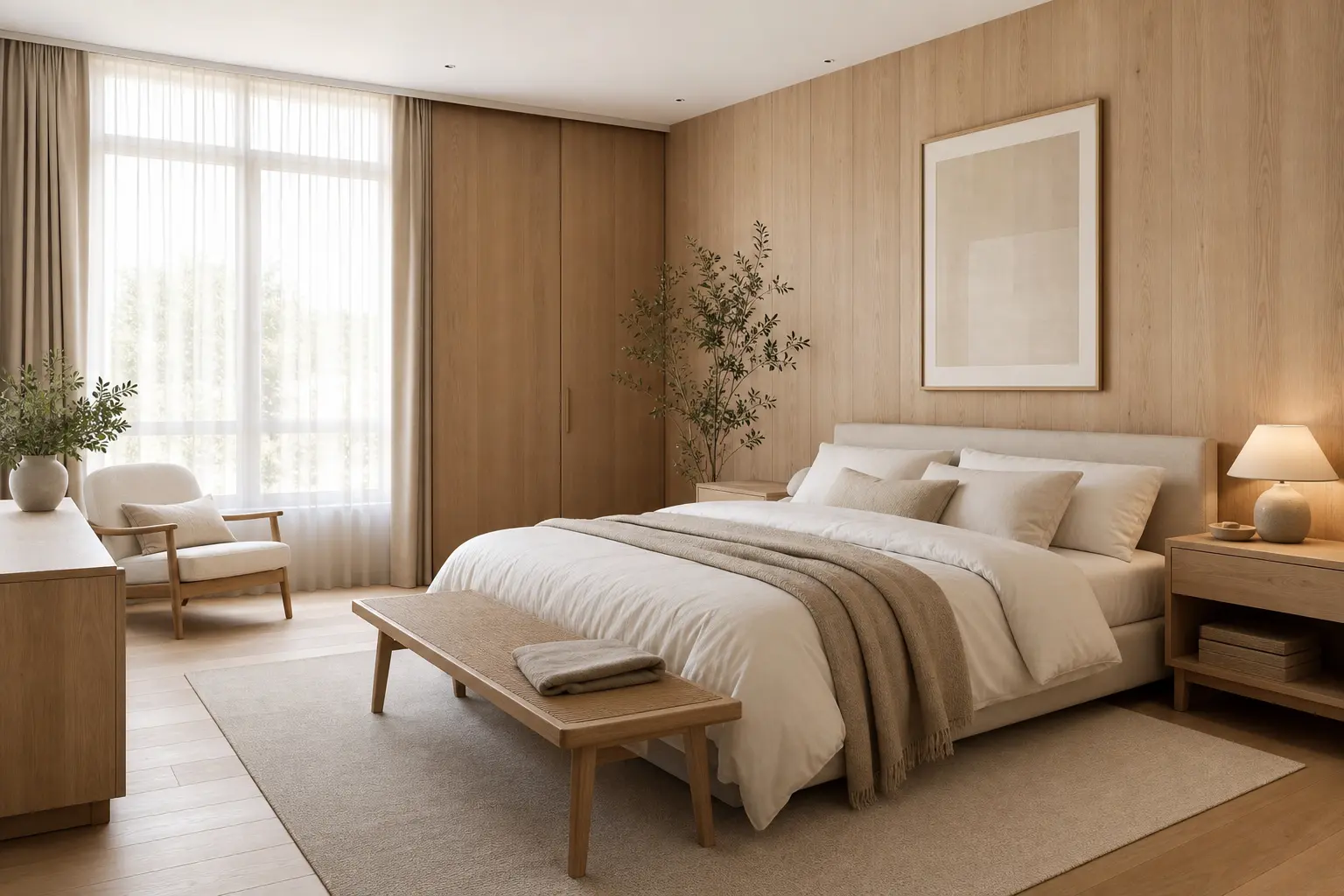
Light oak and ash are the most characteristic wood tones associated with Scandinavian furniture, chosen specifically for their pale, warm color and visible but subtle grain. Pine is another traditional choice, often left in a natural or very lightly whitewashed finish rather than a deep stain.
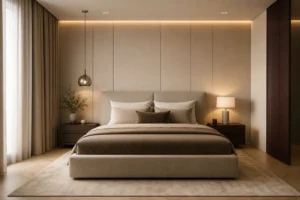


Avoid dark stained wood furniture in a Scandinavian bedroom, since the deep tone works against the light, airy quality that defines the style. If you already own darker wood pieces, a light whitewash or a paint treatment can shift them closer to the palette without requiring full replacement.
Matching Wood Tones Across Furniture Pieces
Keeping the bed frame, nightstands, and any dresser in a similar light wood tone, rather than mixing several distinct wood colors, helps the room feel cohesive. A slight variation in tone is fine and even adds character, but avoid combining a very orange toned pine with a cooler, grayer oak in the same small room.
3. Textile Layering for Warmth in a Minimalist Room
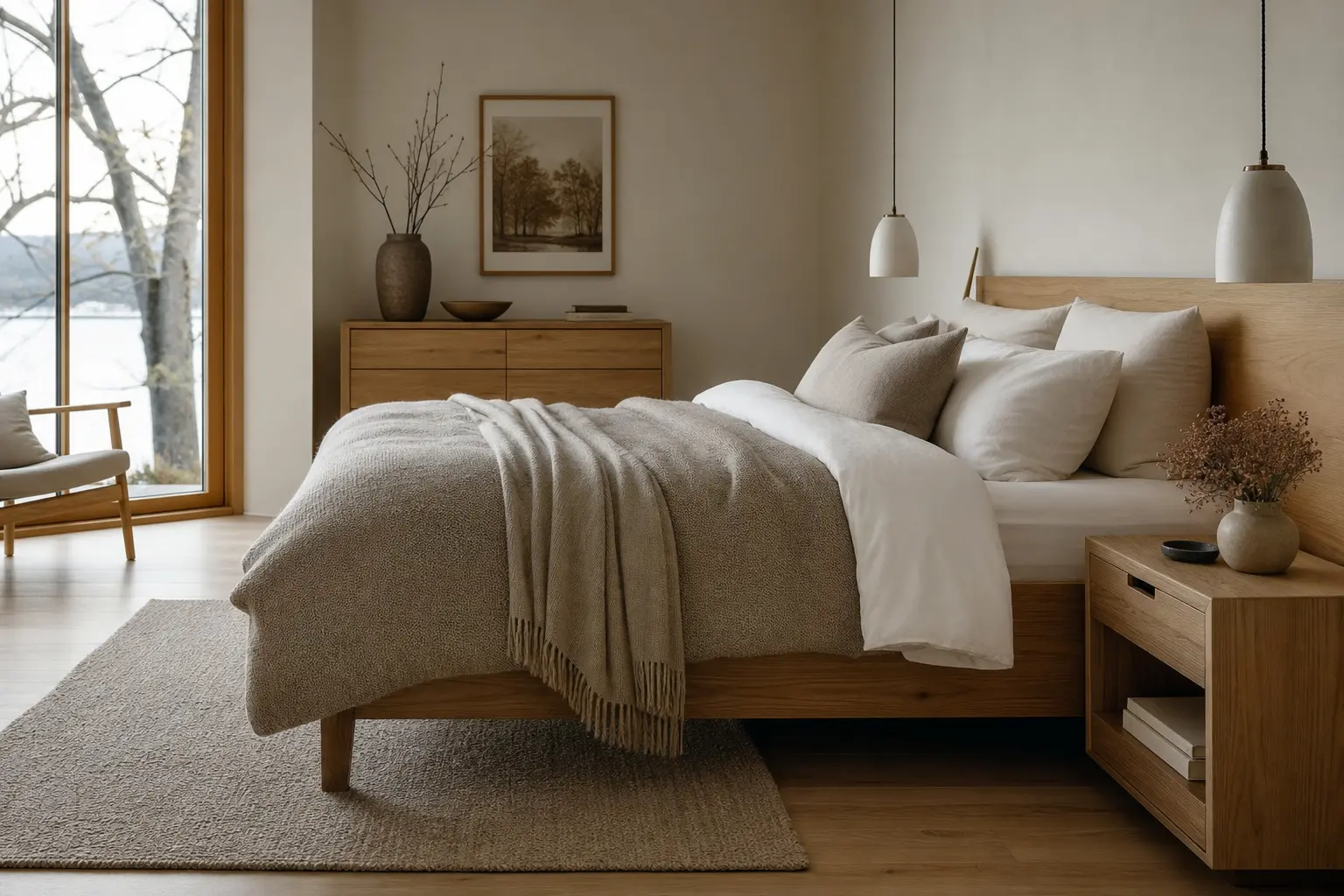
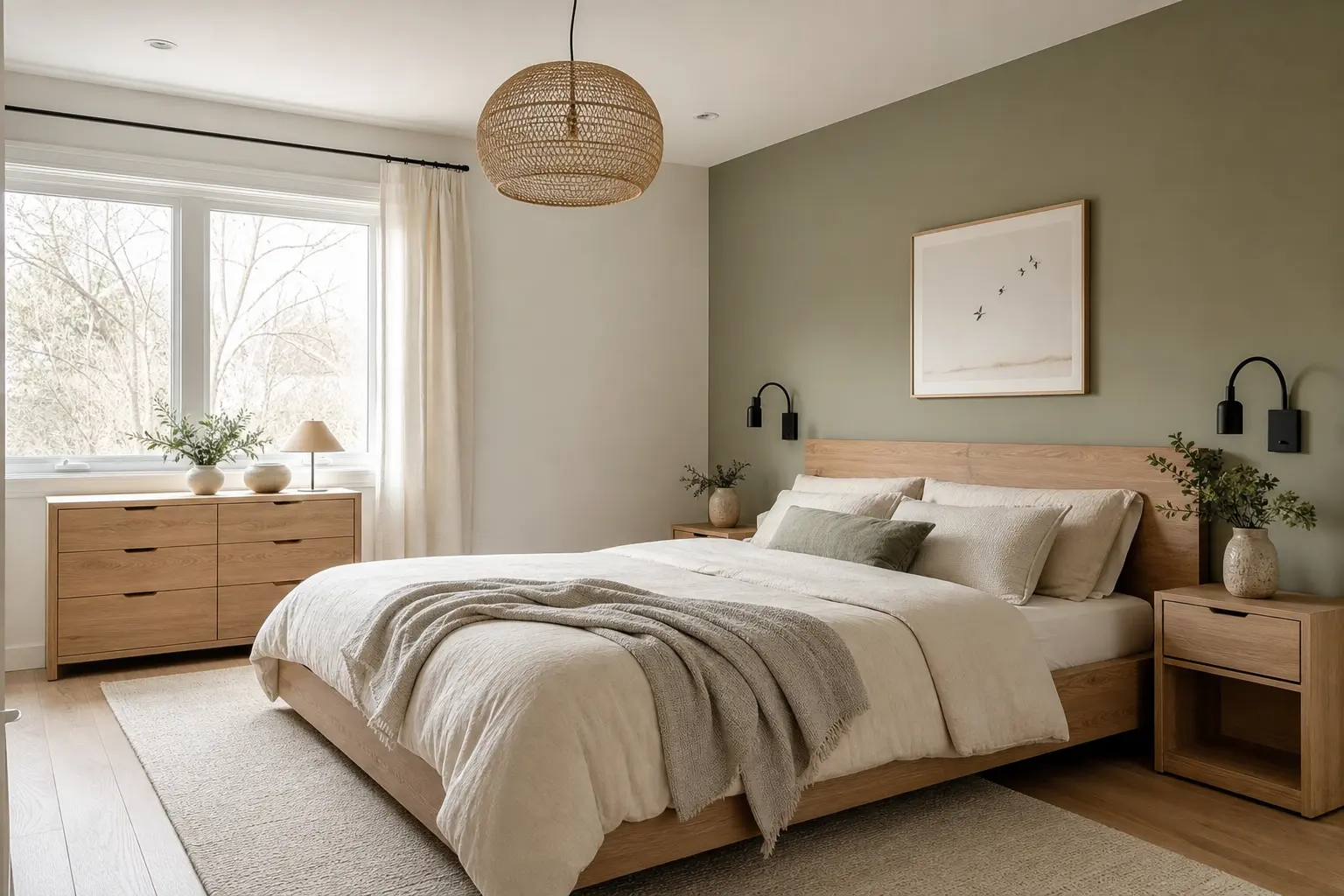
Layered textiles are what separate a genuinely cozy Scandinavian bedroom from a room that just looks sparse. A wool throw at the foot of the bed, a chunky knit blanket folded over a chair, and a natural fiber rug underfoot all add warmth through texture rather than through color or pattern.
Linen bedding, in warm white or a soft oatmeal tone, holds a relaxed, slightly wrinkled texture that suits the style better than very crisp, heavily starched cotton. Sheepskin throws, often draped over a chair or at the foot of the bed, are a classic Scandinavian textile choice that adds a soft, tactile accent without introducing new color.
4. Furniture Choices That Fit the Scandinavian Aesthetic
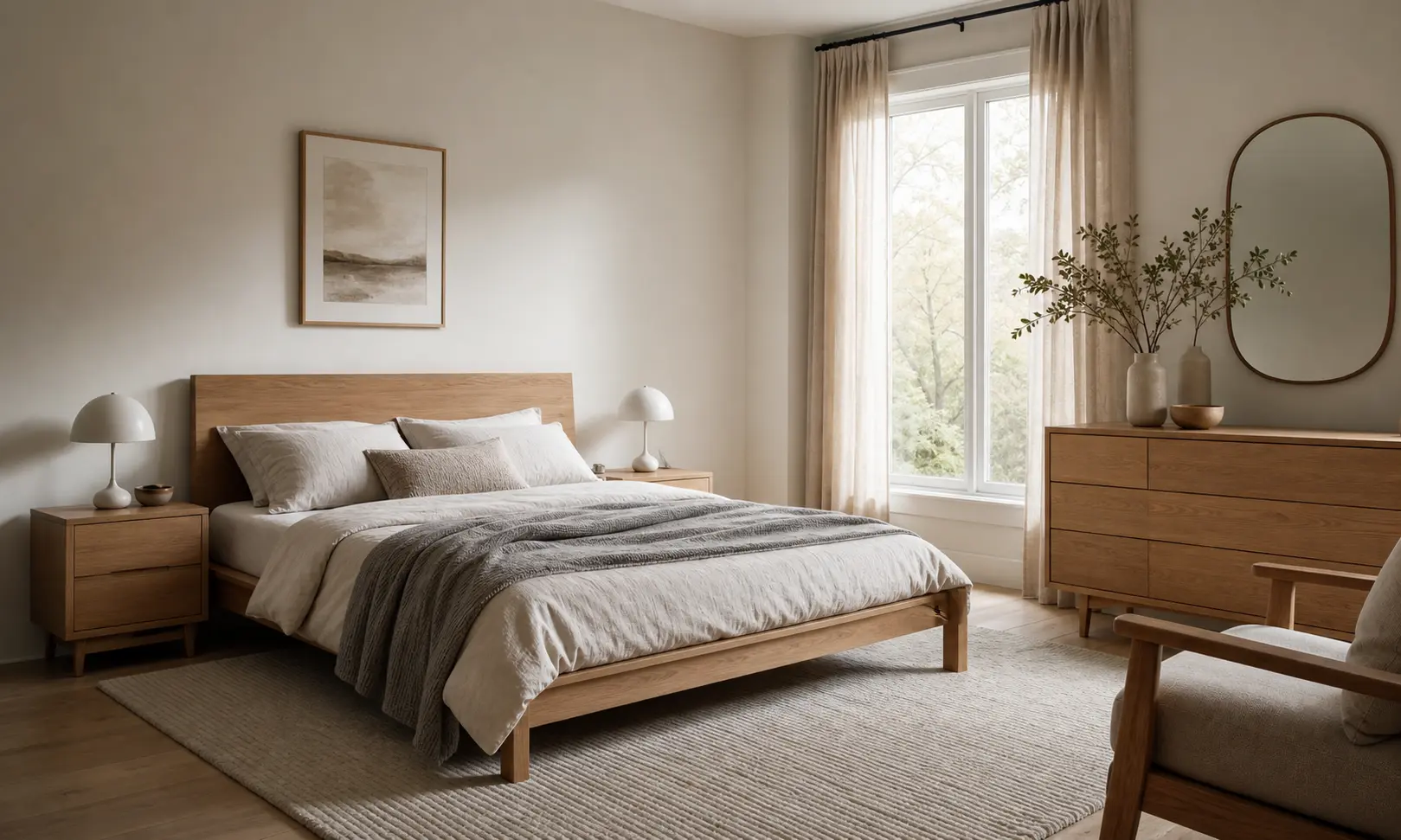
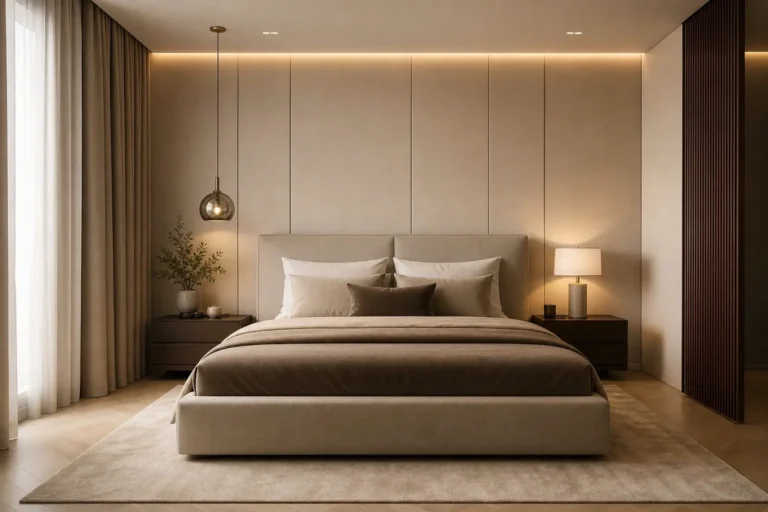
Simple, low profile bed frames, often without a tall or elaborate headboard, suit the understated character of the style better than an ornate or heavily upholstered piece. Tapered wooden legs, a detail common across midcentury and Scandinavian furniture alike, add a light, slightly elevated look compared to furniture with boxy, flush to the floor bases.
Function matters as much as form in this style. Furniture with genuine storage built in, like a bed frame with drawers underneath or a nightstand with a single clean drawer, fits the practical, no clutter ethos that Scandinavian design is built around.
5. Lighting Approaches for a Cozy Scandinavian Feel
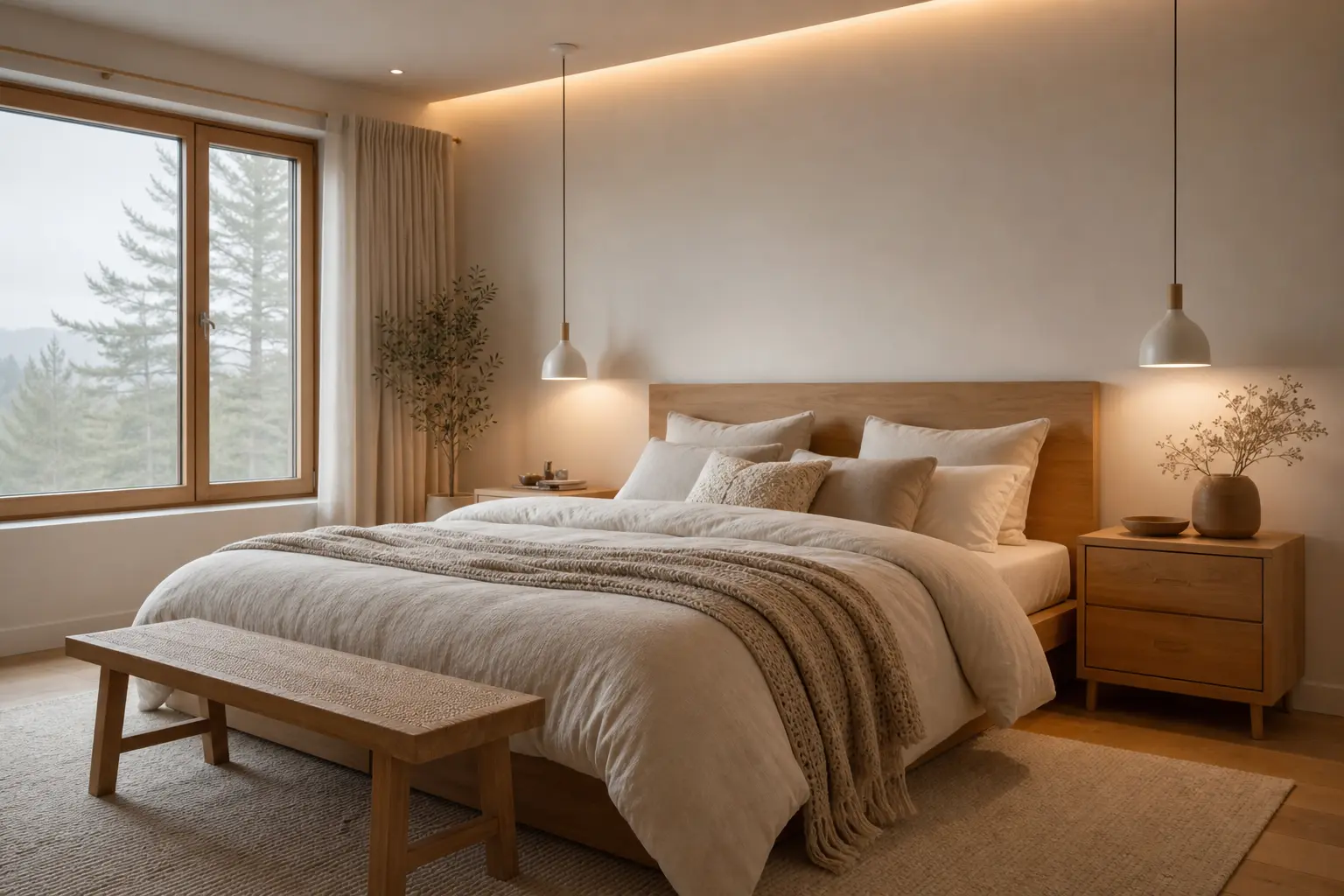
Warm LED lighting, generally in the 2700K to 3000K range, is essential to the style, since cooler lighting works directly against the cozy, inviting feeling Scandinavian design aims for. Multiple smaller light sources, like a table lamp and a floor lamp, are generally preferred over a single bright overhead fixture, since layered, lower level lighting suits the relaxed mood of the style better.
Candles, or flameless LED candles for practicality, are a traditional part of achieving hygge in a Scandinavian influenced room, adding a soft, flickering warmth that a standard lamp can’t quite replicate.
6. Color Palettes Beyond White and Wood
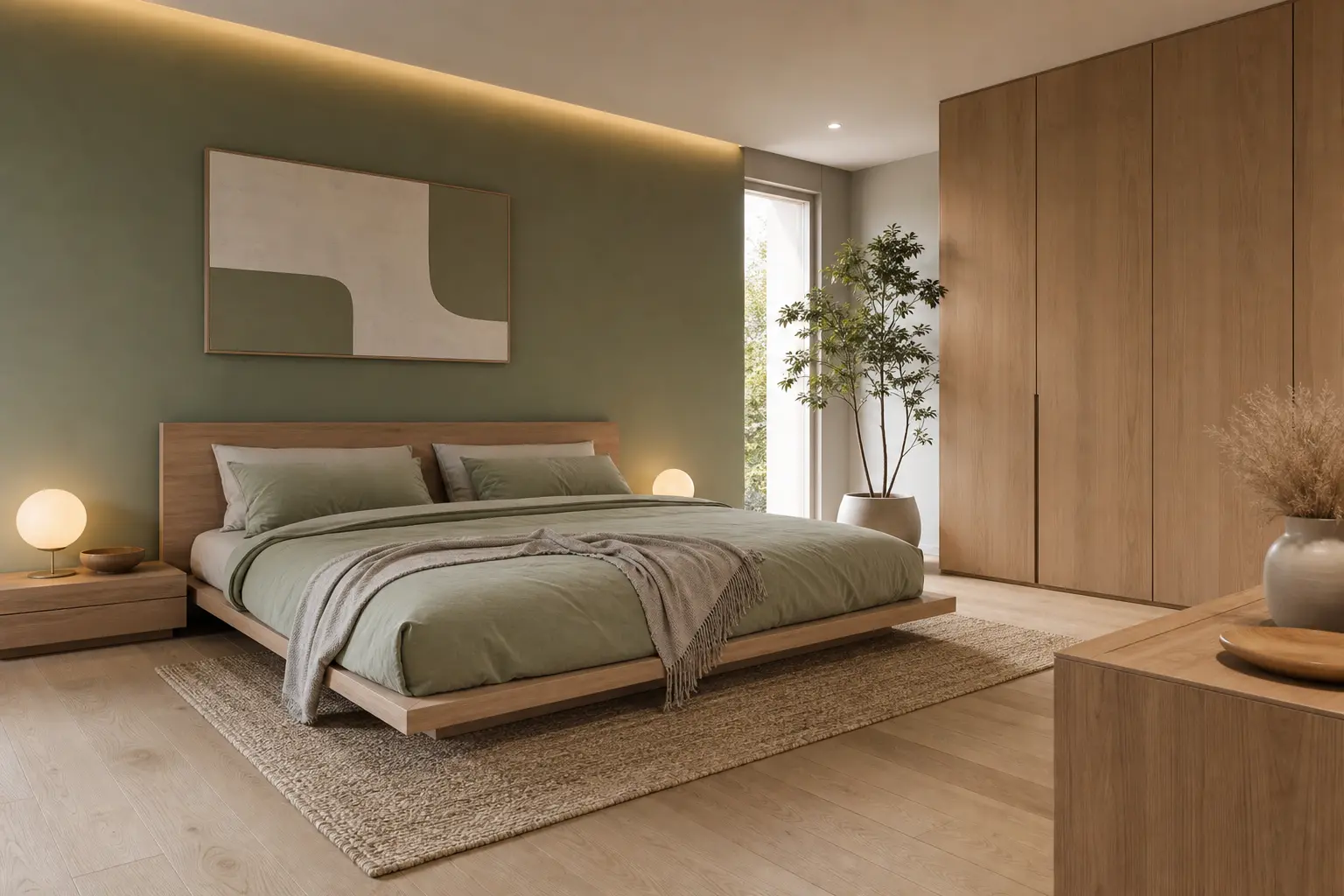
While white and light wood form the base of most Scandinavian rooms, the style isn’t limited to an entirely white and beige palette. Soft, muted colors, like a dusty blue, sage green, or warm terracotta, are commonly used as accent tones through bedding, a single accent wall, or a piece of textile art.
Black accents, often in the form of simple metal light fixtures or picture frames, provide a small amount of grounding contrast against the otherwise light, airy palette, and this pairing has become one of the more recognizable signatures of the modern Scandinavian look.
7. Storage Solutions That Keep the Room Clutter Free
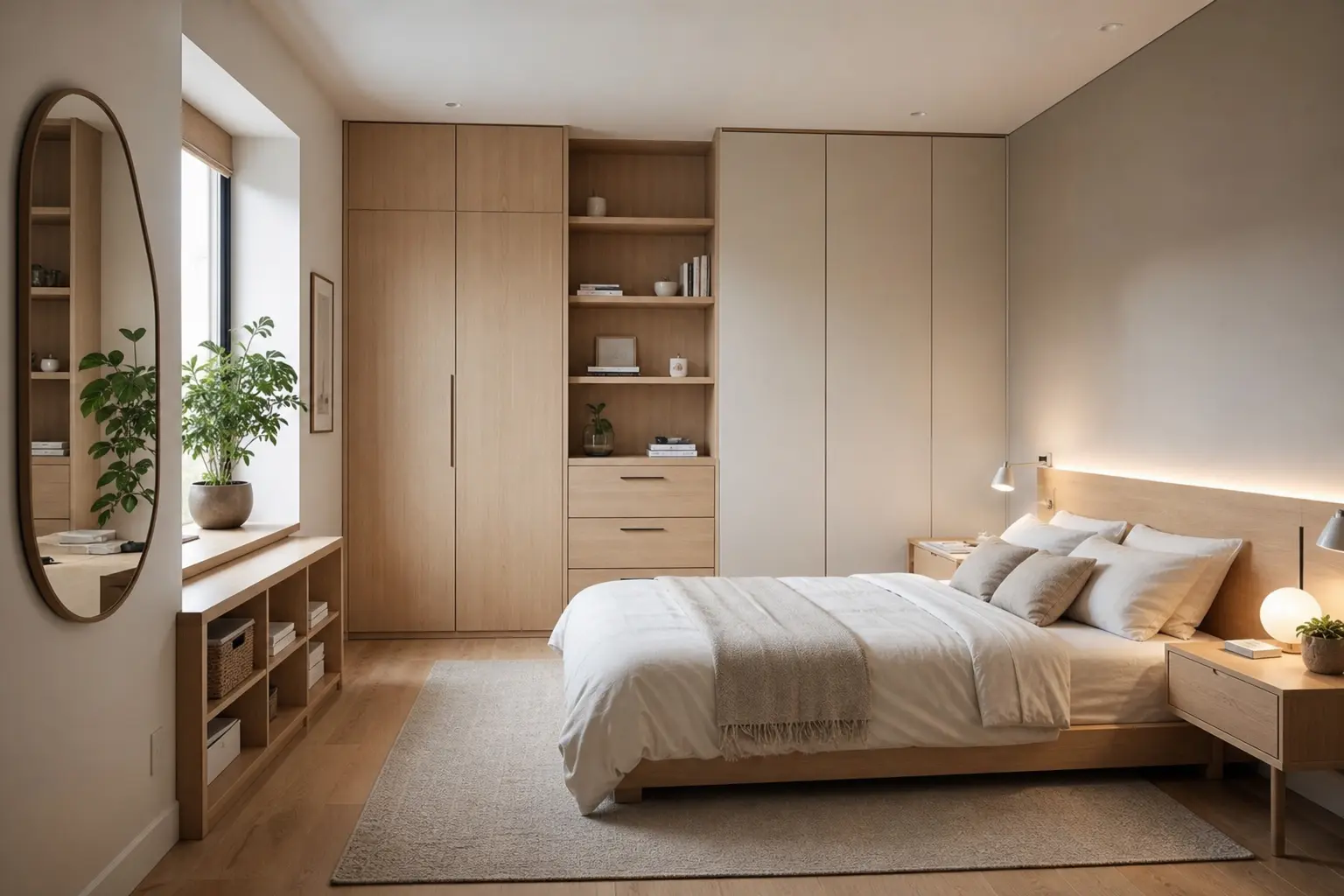
Closed storage, whether a simple wardrobe, under bed drawers, or a small chest, keeps daily items out of sight, which matters a great deal in a style built around visual calm. Open shelving is used sparingly, if at all, and typically holds only a few carefully chosen items rather than serving as general storage.
A single woven basket or box is often the only visible storage accessory in a well executed Scandinavian bedroom, used for smaller items like extra blankets, kept tucked in a corner rather than displayed as a centerpiece.
8. Wall Decor and Art That Suits a Minimalist Bedroom
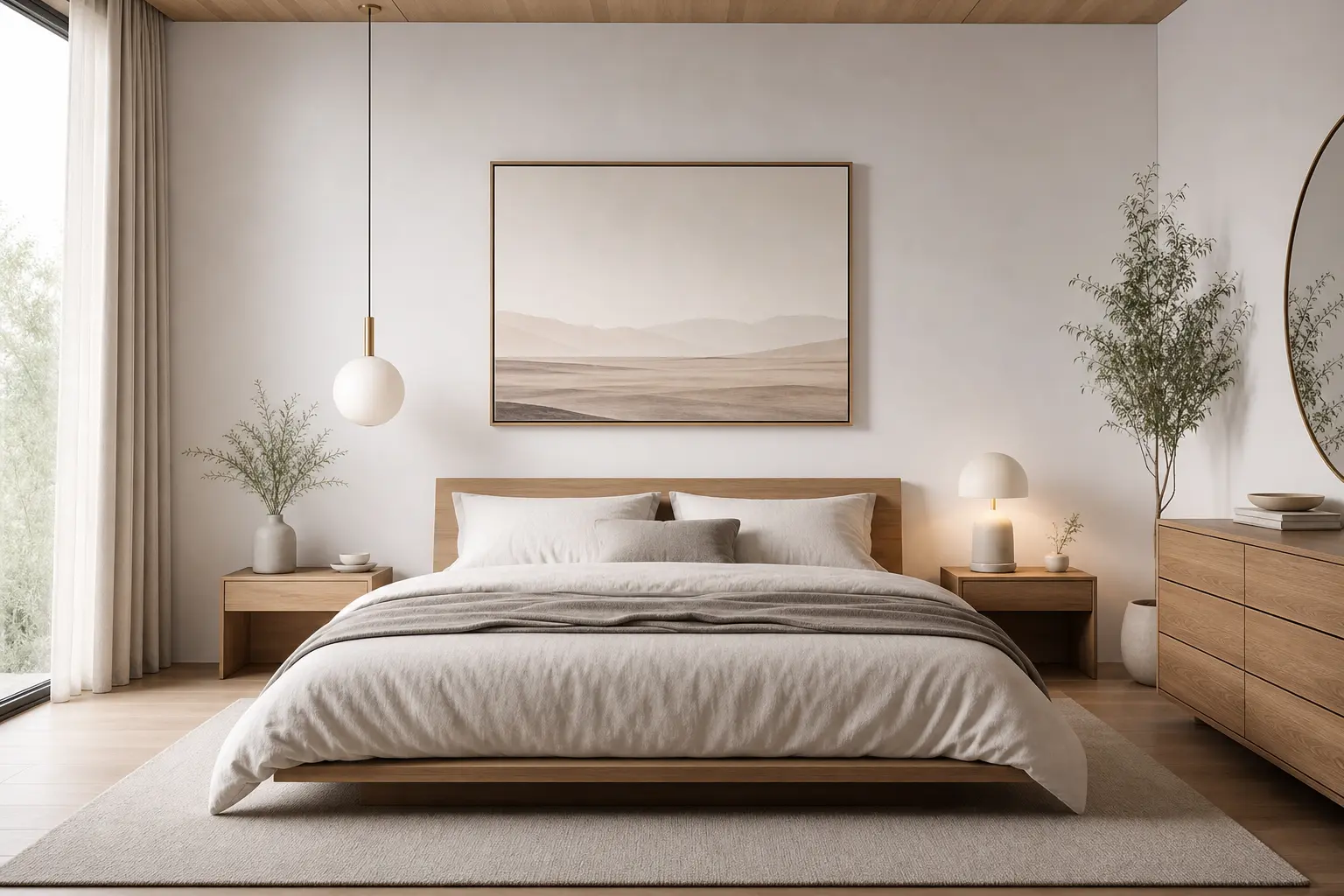
Simple, often black and white or muted toned art, in thin wood or black metal frames, suits the restrained character of the style better than large, colorful or heavily patterned pieces. Leaving generous negative space around any wall art, rather than filling every available inch of wall, is part of what keeps the room feeling calm rather than busy.
A single textile wall hanging, in a natural fiber like wool or cotton, is another common Scandinavian wall treatment, adding texture in a way that flat framed art can’t.
9. Small Bedroom Adaptations for Scandinavian Style
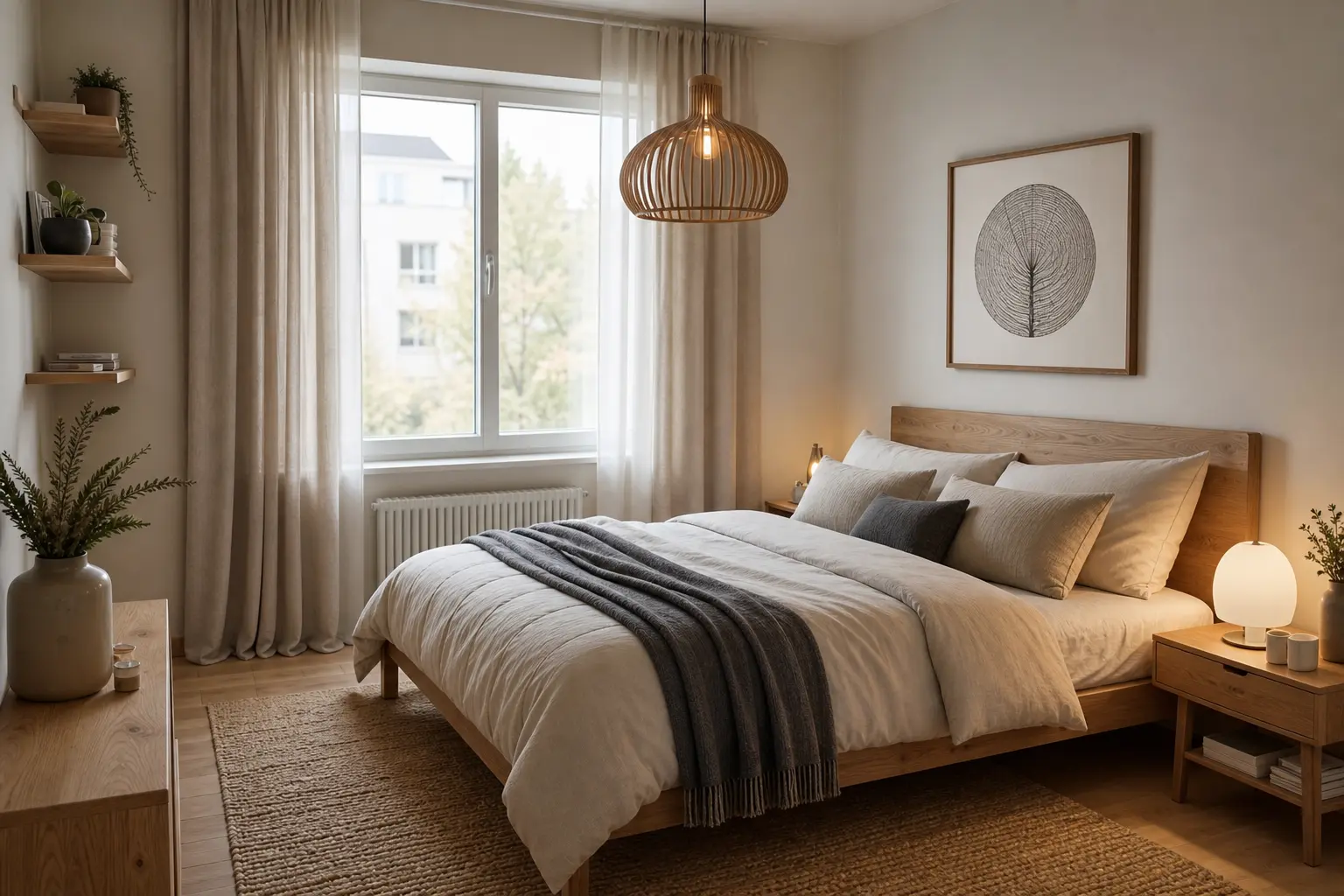
Scandinavian design actually suits small bedrooms particularly well, since the style’s emphasis on light tones and minimal clutter naturally helps a tight space feel more open. Choosing a bed frame with built in storage underneath makes efficient use of a small room’s limited floor space without requiring a separate dresser.
Keeping the color palette especially tight in a small room, mostly white and light wood with just one or two muted accent tones, helps maintain the airy feeling the style depends on, since too many competing tones can make a small space feel busier than intended.
10. Budget Planning for a Scandinavian Bedroom Refresh
A refresh focused on new bedding, a wool throw, and updated lighting typically runs somewhere between 400 and 1200 dollars depending on textile quality and lamp choice. Adding a new light wood bed frame or nightstands increases that range, often by an additional 800 to 2500 dollars depending on furniture quality.
A more complete room refresh, including new flooring, custom lighting, and a full set of matching light wood furniture, tends to run considerably higher, often somewhere between 4000 and 10000 dollars depending on room size and material choices.
Mistakes to Avoid
- Relying only on white walls and light wood without layering in enough textile warmth
- Mixing several distinct wood tones across furniture pieces in the same room
- Choosing cool toned LED lighting that works against the style’s cozy intent
- Overfilling open shelving instead of keeping displayed items minimal and intentional
- Using dark stained wood furniture that clashes with the light, airy palette
- Skipping textile layers like throws and rugs, leaving the room looking sparse rather than calm
Frequently Asked Questions
Is Scandinavian design the same as minimalism? Not exactly. Scandinavian design shares minimalism’s restraint and clean lines, but it places a much stronger emphasis on warmth and texture through natural materials and layered textiles, which sets it apart from a starker, more austere minimalist look.
What wood works best for Scandinavian bedroom furniture? Light oak and ash are the most characteristic choices, prized for their pale, warm tone and visible but subtle grain. Pine, often left natural or lightly whitewashed, is another traditional option.
Can I add color to a Scandinavian bedroom, or does it have to be all white? Yes, muted accent colors like dusty blue, sage green, or warm terracotta are commonly used through bedding or a single accent wall, as long as the overall palette stays soft and restrained.
How do I keep a Scandinavian bedroom from feeling cold or empty? Layer in natural textiles, like wool throws, linen bedding, and a natural fiber rug, and use warm LED lighting rather than cool toned bulbs. These textural and lighting choices are what create the cozy feeling central to the style.
Does Scandinavian design work well in a small bedroom? Yes, often especially well. The style’s emphasis on light tones and minimal clutter naturally helps a small space feel more open, particularly when paired with furniture that includes built in storage.
Conclusion
A Scandinavian bedroom feels genuinely cozy, not sparse, when light wood furniture gets paired with real textile warmth rather than left on its own. Layer wool, linen, and a natural fiber rug, keep lighting warm and multi layered, and let closed storage handle the clutter so the visible parts of the room can stay calm and intentional. Get those elements working together, and the style delivers exactly the balance of restraint and warmth it’s known for.