10 Modern Minimalist Bedroom Ideas with Wood Slat Accent Walls | Cozy Neutral Bedroom Design
A plain painted wall behind the bed is one of the most common reasons a minimalist bedroom ends up feeling unfinished instead of calm. If you’re considering a wood slat accent wall for your bedroom because the space feels a little flat, the appeal is straightforward. Vertical slats add real texture and warmth without introducing clutter or extra color, which fits naturally into a minimalist, neutral design. This article covers ten ways to bring that look into a bedroom, with practical detail on spacing, wood tone, and cost.
1. Why a Wood Slat Accent Wall Works So Well in a Minimalist Bedroom
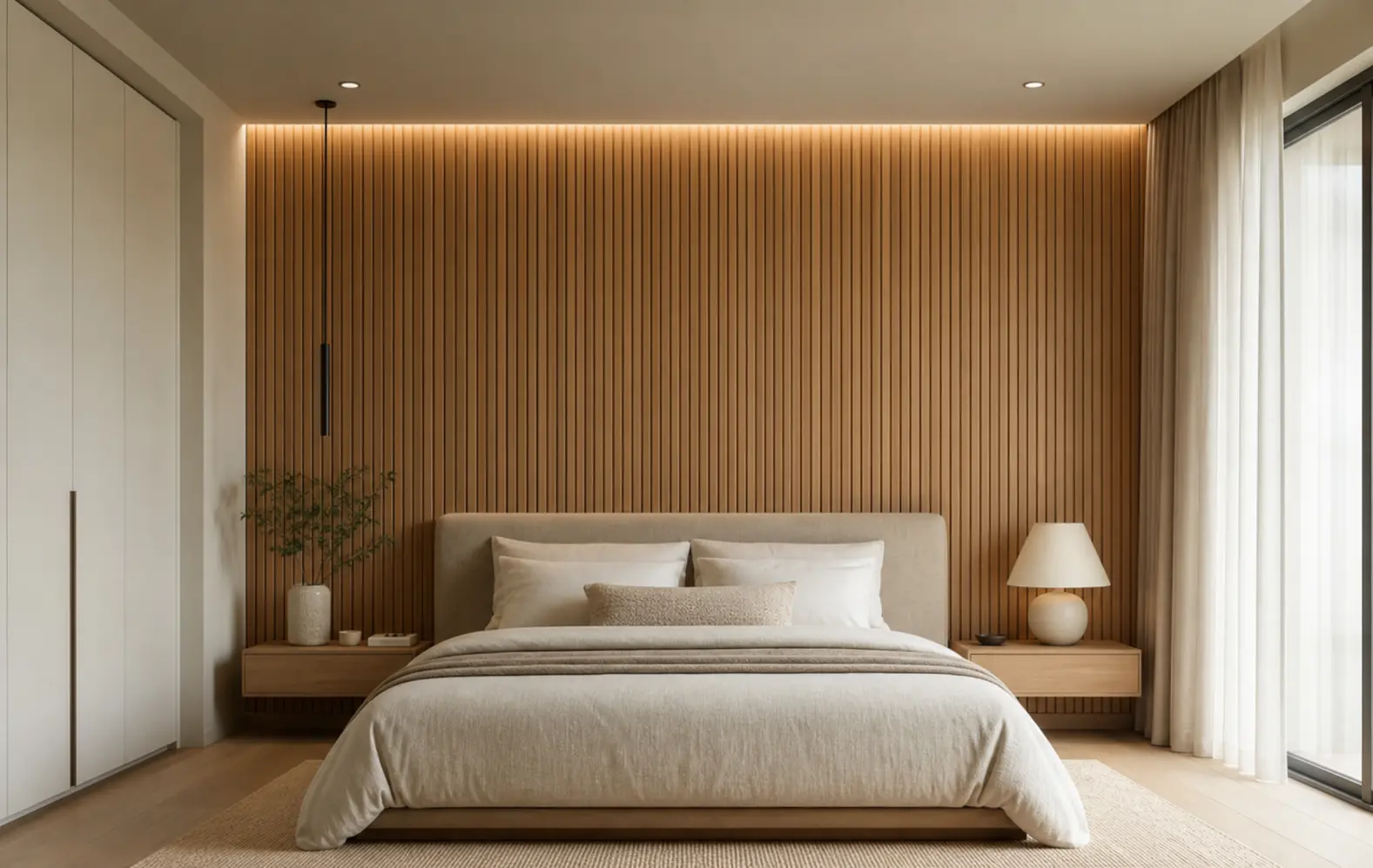
Minimalist design relies on restraint, but restraint doesn’t have to mean plain. A wood slat wall adds texture and visual rhythm through material and shadow rather than through color, pattern, or extra furniture, which is exactly why it fits so naturally into a neutral, uncluttered bedroom.
The vertical lines also do something subtle to the room’s proportions. A slat wall running from floor to ceiling draws the eye upward, which can make a bedroom with standard 8 to 9 foot ceilings feel slightly taller than it actually is.
2. Choosing Slat Spacing and Width for a Bedroom Wall
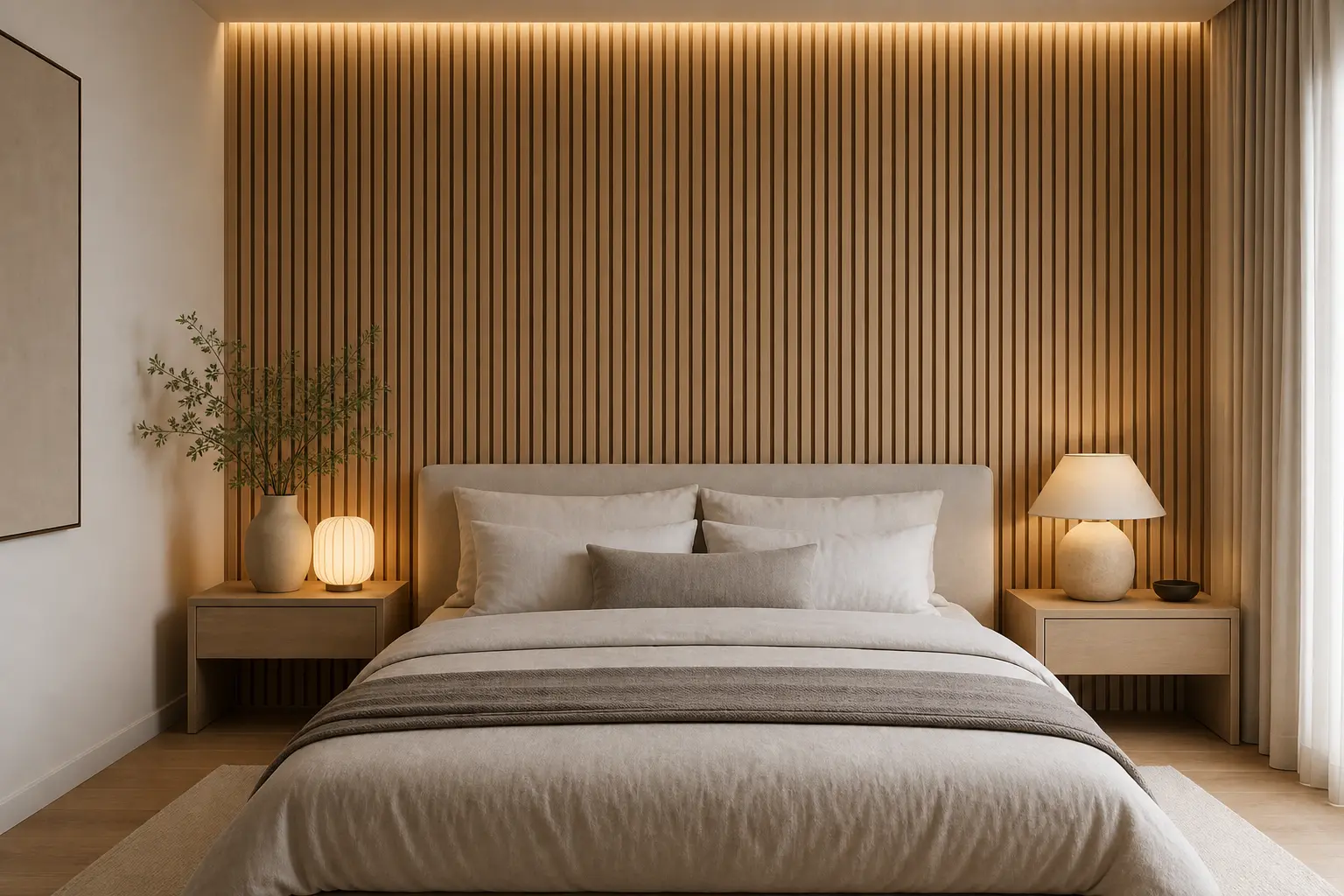
Slat width and gap spacing affect how bold or subtle the texture reads. Narrower slats, around 1.5 to 2 inches wide with a half inch gap, create a tighter, more refined pattern that suits a calmer, more minimalist bedroom. Wider slats, closer to 3 inches with a slightly larger gap, read as bolder and more textured.
Consistency in spacing matters more than the exact measurements chosen. Once the wall is lit, even a slightly uneven gap between slats becomes noticeable, so measuring carefully before installation is worth the extra time.
Full Height vs Partial Height Slat Walls
A full height slat wall, running floor to ceiling, creates the strongest visual statement and works especially well behind a bed with a low profile frame. A partial height wall, stopping around 6 to 7 feet up, still adds meaningful texture at a lower material cost and can feel slightly less overwhelming in a smaller room.
3. Wood Tones That Create a Cozy, Neutral Bedroom Feel
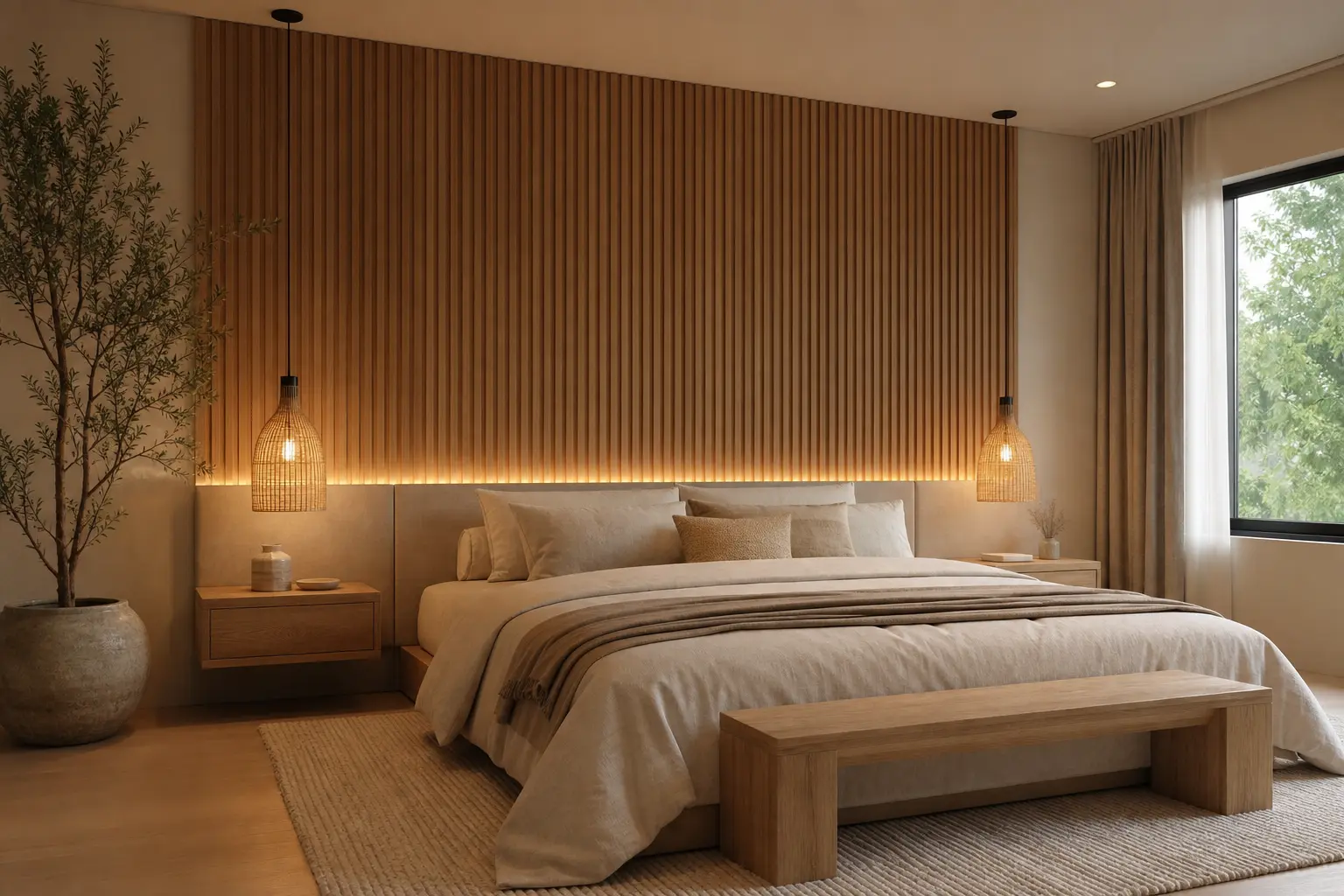
Warm, medium toned woods, like natural oak or a light walnut, tend to read as the coziest option for a bedroom, since the warmth in the wood echoes the same warmth found in most neutral bedding and wall colors. Very dark stained slats, closer to espresso or black walnut, create a more dramatic, moodier feel, better suited to a bedroom going for a slightly more formal or intense atmosphere.
Whitewashed or lightly bleached wood slats are a softer option that keeps a small or low light bedroom feeling airy rather than heavy, though they show less visible grain contrast than a richer, warmer stain.
4. Placing a Slat Wall Behind the Headboard vs Elsewhere in the Room
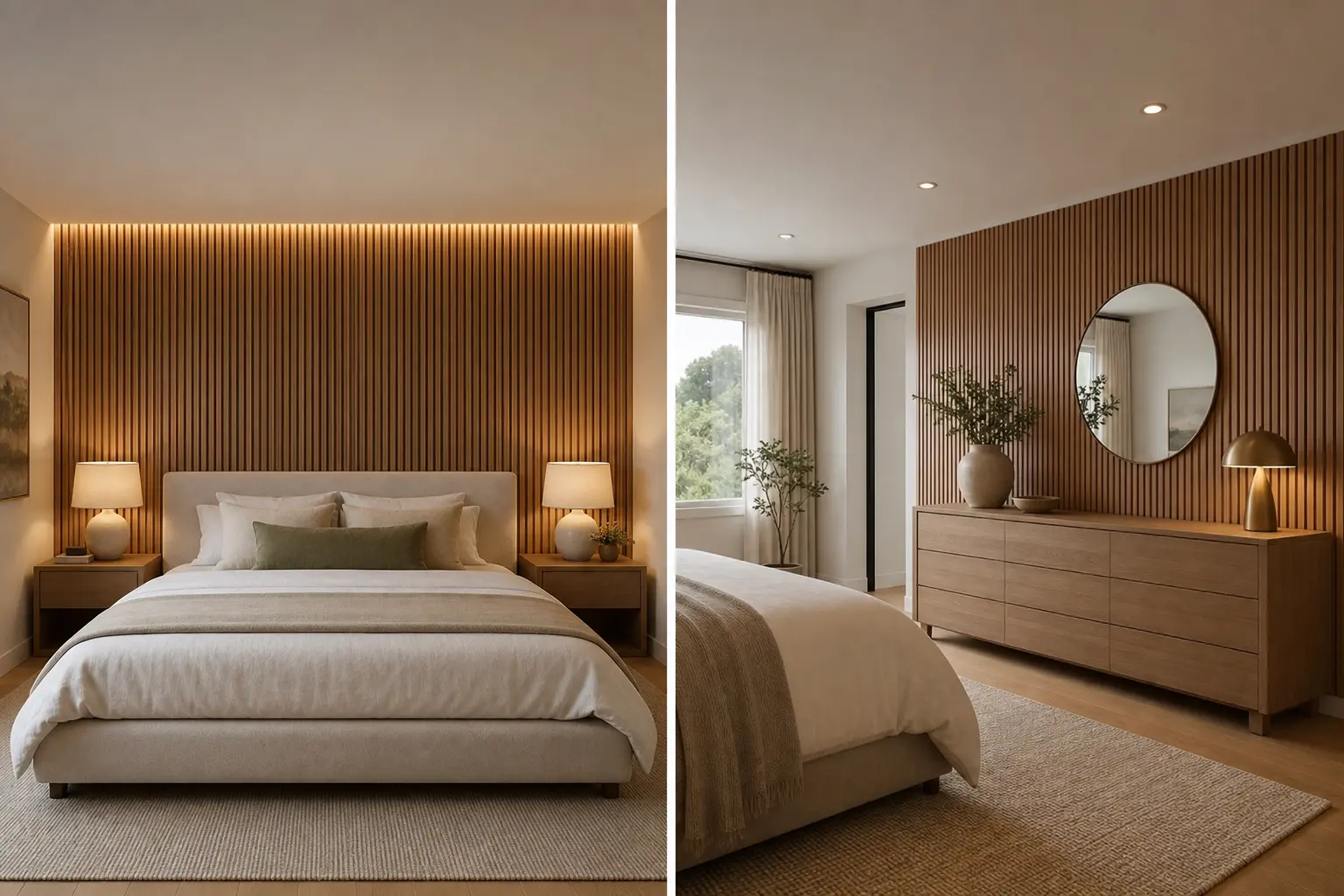
Placing the slat wall directly behind the bed is the most common choice, since it frames the headboard and creates an obvious, natural focal point for the room. This placement also means the texture is visible the moment you walk in, which reads as intentional rather than incidental.
An alternative placement runs the slat wall along a side wall instead, particularly in rooms where the bed sits under a window and can’t be centered against a solid wall. This approach still adds meaningful texture to the room without needing to reposition the bed itself.
5. Pairing LED Lighting with a Bedroom Slat Wall
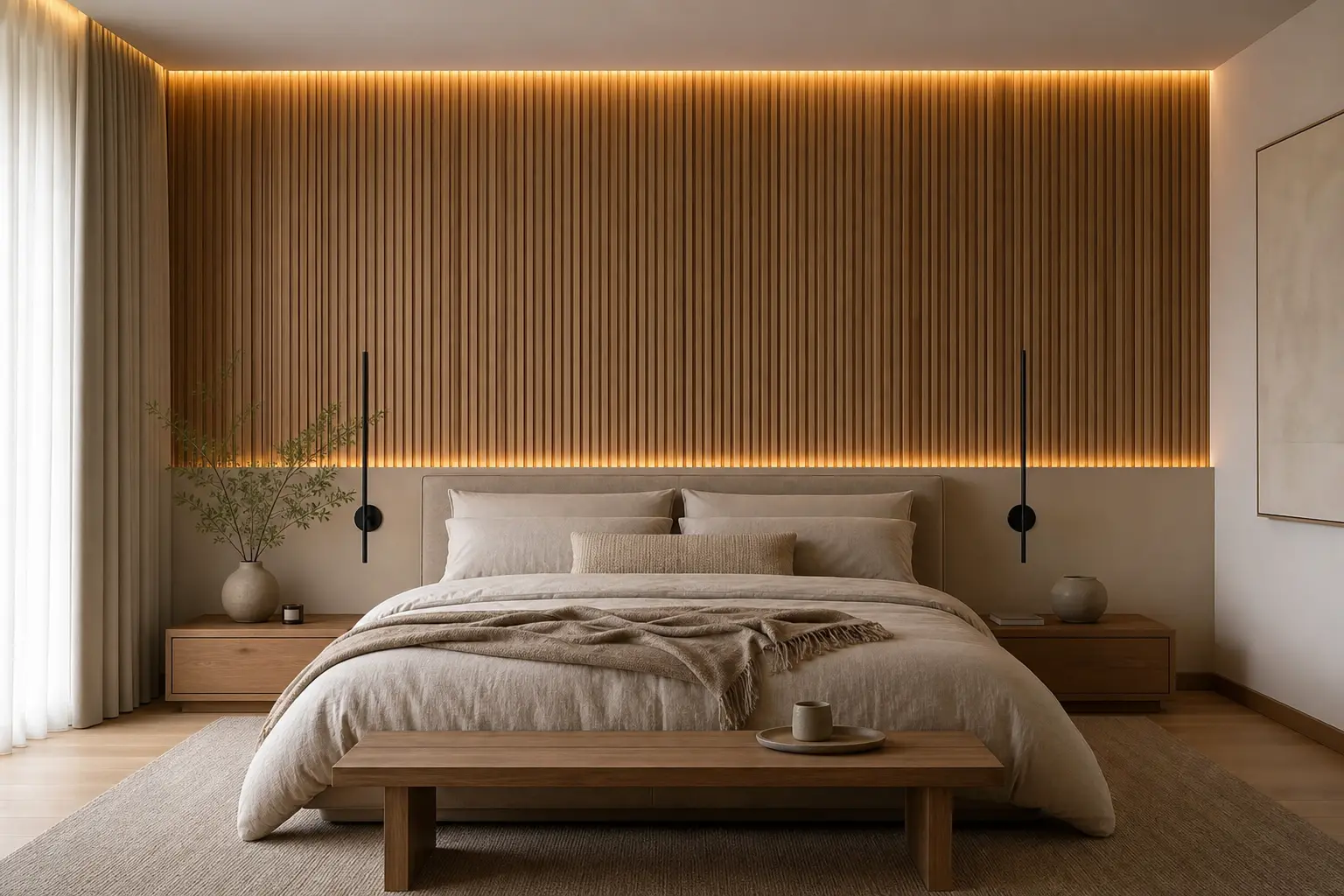
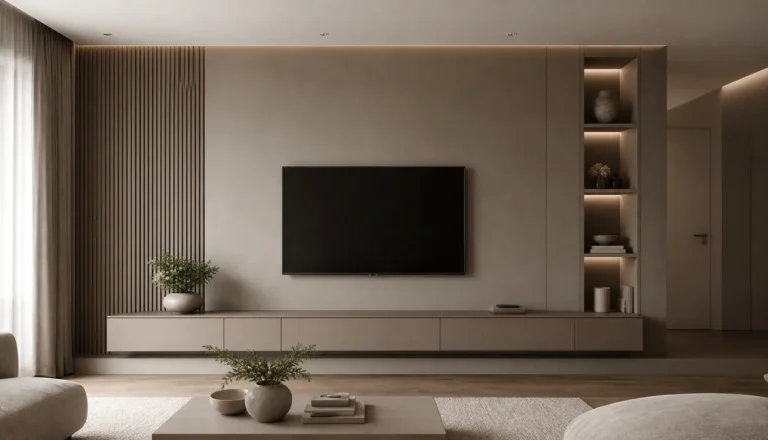
LED strips placed along the top edge of a slat wall, angled slightly to graze light down across the grooves, highlight the texture and create soft shadow lines between each slat. Warm LED color temperature, in the 2700K to 3000K range, complements the wood tone and creates a genuinely relaxing glow suited to a bedroom specifically.
A dimmable strip is especially useful in a bedroom, since it lets the light shift from a slightly brighter setting for reading or getting dressed down to a very soft, low glow appropriate for winding down before sleep.
6. Bedding and Textile Choices That Complement Wood Slats
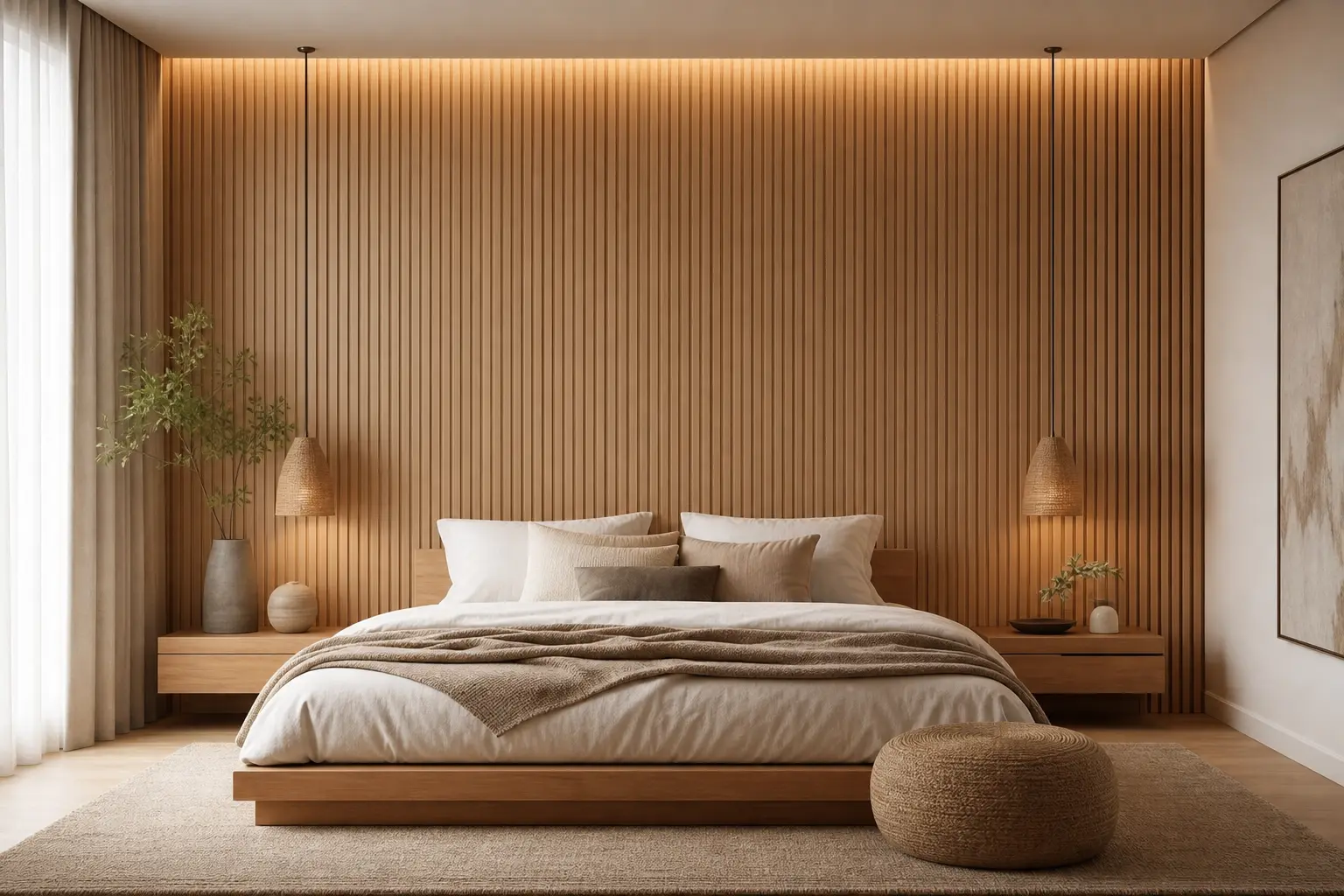
Neutral, natural fiber bedding, in linen or a linen cotton blend, pairs well with a wood slat wall since both materials share a similarly organic, textured quality. Avoid heavily patterned or brightly colored bedding directly against a slat wall, since two strong textures competing at once tends to look busy rather than calm.
A textured throw or a woven blanket at the foot of the bed adds a small additional layer of texture that echoes the slat wall without introducing a new color into the room.
7. Wall Colors That Pair Well with a Wood Slat Accent
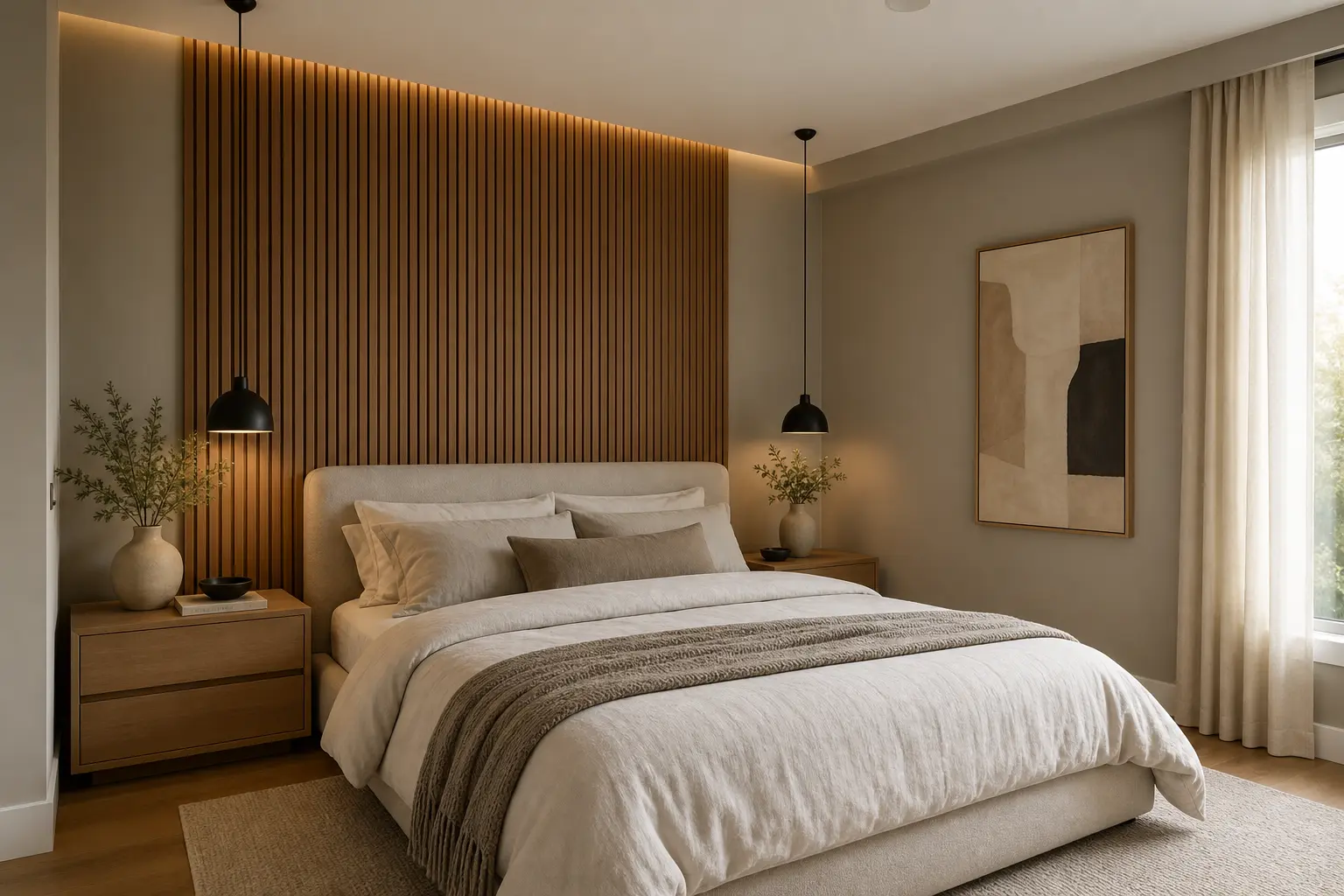
The wall color surrounding a slat accent, on the ceiling and adjacent walls, affects how much the texture stands out. A soft warm white or a light greige lets the slats read clearly as the main textural feature. A deeper surrounding color, like a muted sage or warm taupe, can create a more enveloping, cozy feel, especially in a bedroom used primarily in the evening.
Painting the slats themselves in a matte black or deep charcoal, rather than leaving the wood tone natural, is a bolder alternative that creates strong contrast against a lighter surrounding wall, though it shifts the room toward a more dramatic feel than a warm natural wood tone would.
8. Built In Nightstands and Shelving Within a Slat Wall
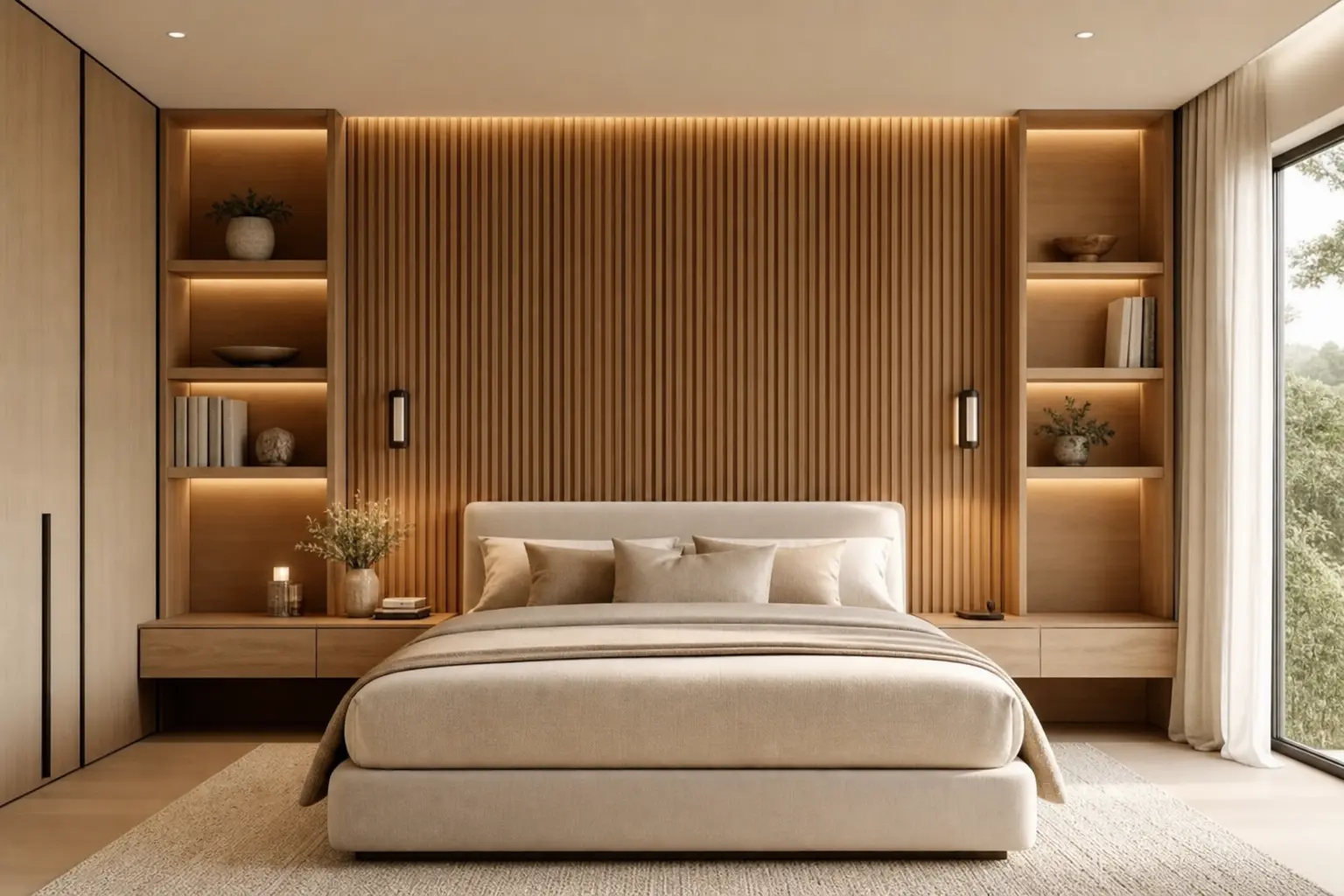
A slat wall can incorporate small built in shelving or floating nightstands directly within the panel, keeping the overall look clean and uninterrupted by separate furniture pieces. This works especially well in smaller bedrooms, where a freestanding nightstand can crowd the floor space next to the bed.
Floating Nightstands vs Traditional Furniture
Floating nightstands, mounted directly into or against the slat wall, create a lighter, more streamlined look and make the floor beneath them easier to clean. Traditional freestanding nightstands are simpler to install and easier to move later, but they interrupt the clean line of the slat wall at floor level.
9. Small Bedroom Adaptations for a Wood Slat Accent Wall
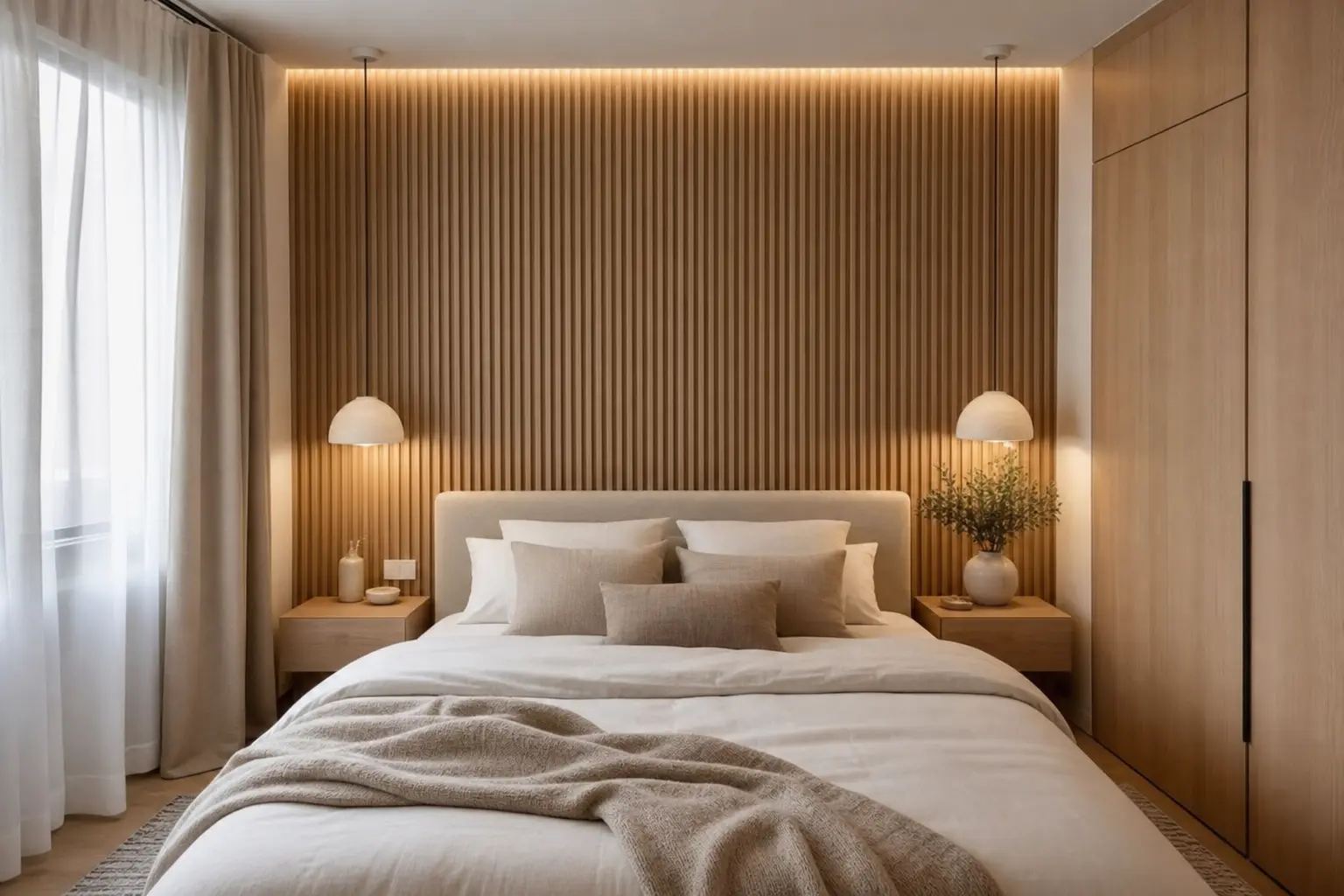
In smaller bedrooms, a partial height or narrower slat wall section, sized just behind the headboard rather than covering the entire wall, keeps the texture intentional without overwhelming a tight space. Lighter wood tones also help a small room feel less closed in than a dark stained finish.
Keeping slat spacing on the narrower side in a small room helps the pattern feel proportional to the space, rather than using wide, bold slats that can feel oversized relative to a compact wall.
10. Budget Planning for a Wood Slat Bedroom Accent Wall
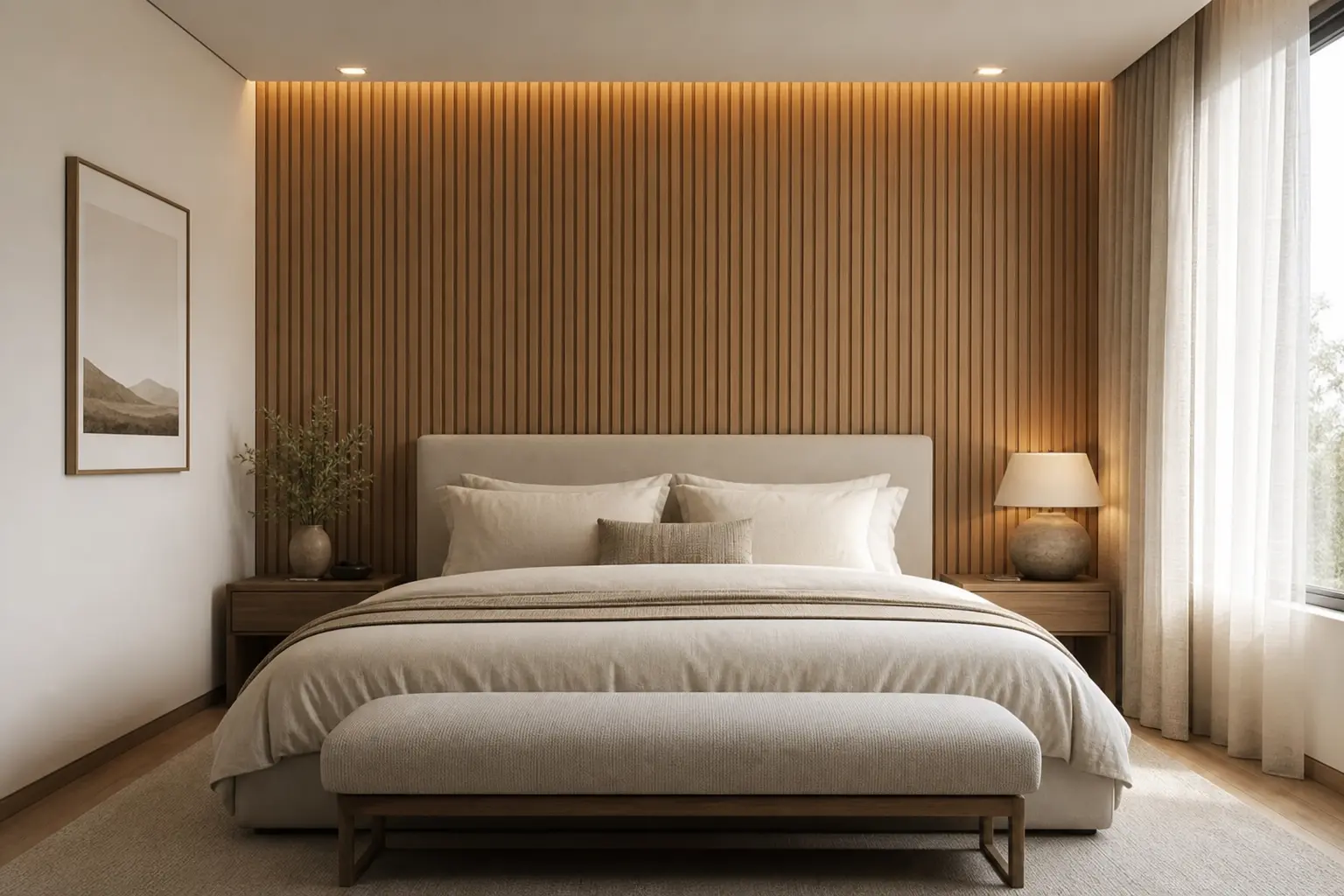
A DIY wood slat wall, using pre cut panels and a basic LED strip kit, typically runs somewhere between 300 and 800 dollars for an average bedroom wall, depending on wood species and wall size. Solid hardwood slats, professionally installed with a layered lighting system, tend to run higher, often somewhere between 1500 and 4000 dollars depending on region and complexity.
Adding built in floating nightstands or shelving within the slat design typically adds a few hundred dollars to either budget range, depending on the materials and mounting hardware chosen.
Mistakes to Avoid
- Installing slats with inconsistent spacing that becomes visible once the wall is lit
- Choosing overly wide, bold slats in a small bedroom where they feel oversized
- Pairing heavily patterned bedding directly against an already textured slat wall
- Lighting the wall with straight on light instead of angled light that highlights the grooves
- Skipping a dimmer, which limits the wall to a single fixed brightness level
- Choosing a dark stain without considering how much natural light the room actually gets
Frequently Asked Questions
Does a wood slat accent wall need to cover the entire wall? No, a partial height or narrower section behind the headboard works well, especially in smaller bedrooms, and still delivers most of the visual texture at a lower material cost.
What’s the best wood tone for a cozy, minimalist bedroom? Warm, medium tones like natural oak or light walnut tend to read as the coziest option, since they echo the same warmth found in most neutral bedding and wall colors.
Can I install a wood slat wall myself? Yes, pre cut MDF or wood veneer slat panels are generally manageable for an experienced DIYer. Solid hardwood installations and any electrical wiring for hardwired lighting are usually better left to a professional.
Will a slat wall make a small bedroom feel more cramped? Not if scaled appropriately. Narrower slat spacing, a lighter wood tone, and a partial rather than full height installation all help a slat wall feel proportional in a smaller room rather than overwhelming it.
What LED color temperature works best behind a bedroom slat wall? Warm LED lighting in the 2700K to 3000K range generally works best, since it complements the wood tone and creates a relaxing glow appropriate for a bedroom.
Conclusion
A wood slat accent wall brings texture and warmth into a minimalist bedroom without adding clutter or extra color, which is exactly why it pairs so naturally with a calm, neutral design. Keep the spacing consistent, choose a wood tone that matches the mood you want, and add angled, dimmable LED lighting to highlight the grooves rather than flatten them. Done well, the wall becomes the room’s main textural feature, whether it runs the full height of the wall or frames just the space behind the headboard.