10 Modern Grey Living Room Decor Ideas with Sectional Sofas & Glass Coffee Tables | Minimalist Home Decor
Grey is one of the most popular living room colors, but it can go wrong fast. Too much grey without warmth ends up feeling flat instead of calm.
A sectional sofa and glass coffee table are a common starting point for a minimalist living room. The trick is layering in enough warmth and texture so the space still feels lived in.
This guide covers 10 ways to get that balance right, from sofa shade to lighting choices.
1. Choose the Right Shade of Grey for Your Sectional Sofa
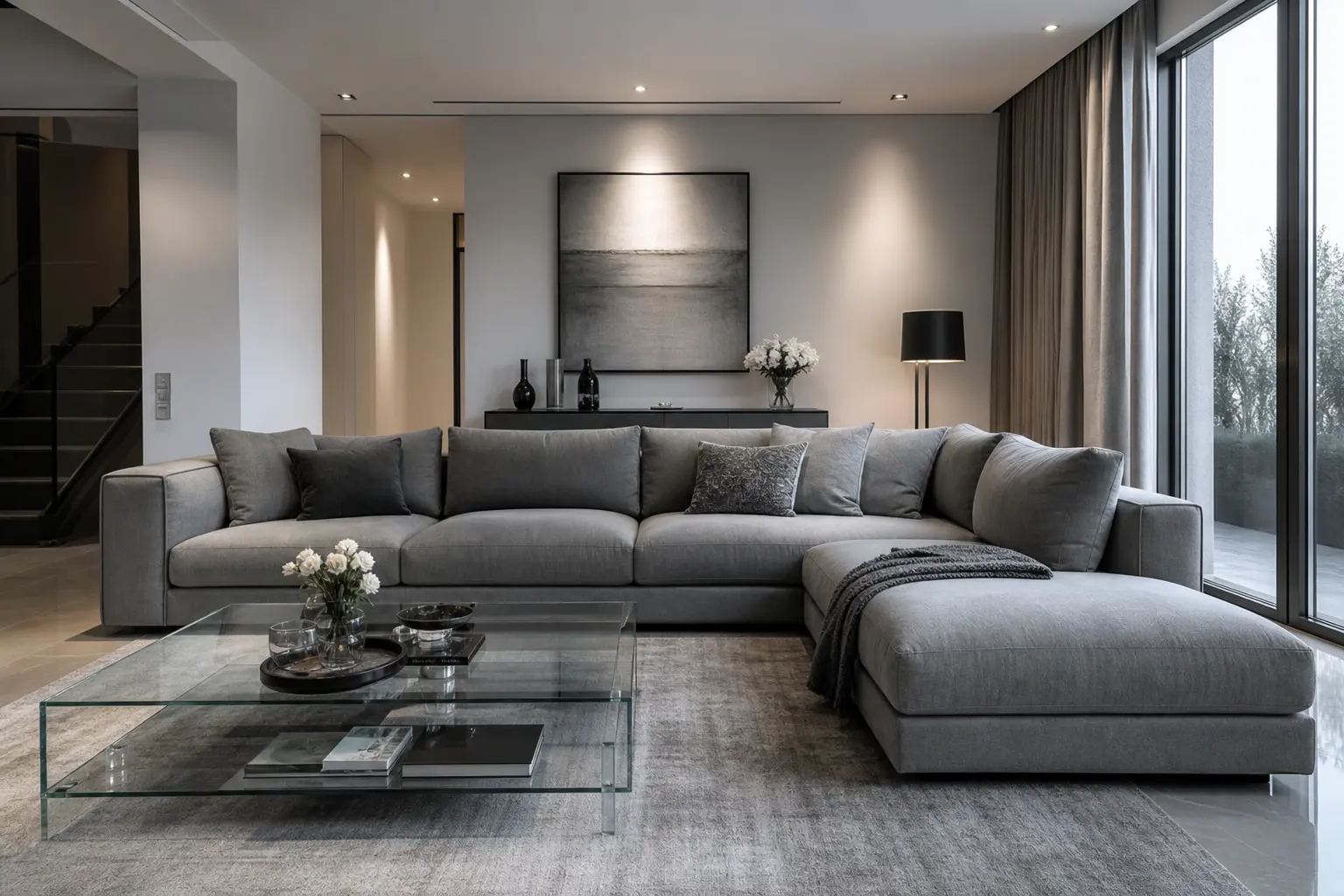
Grey ranges from cool blue-grey to warm greige, and the shade you pick sets the tone for the whole room. Warm grey tends to feel more inviting and pairs more easily with wood tones and warm lighting.
Cool grey can still work well, especially in bright, sunlit rooms, but it needs more intentional warmth added elsewhere. Bring in a fabric swatch and view it in your actual room’s lighting before committing, since grey shifts more under different light than most colors.
Boucle or textured weave fabrics also help a grey sectional feel softer than a flat, smooth fabric would.
2. Pick a Glass Coffee Table to Keep the Room Feeling Open
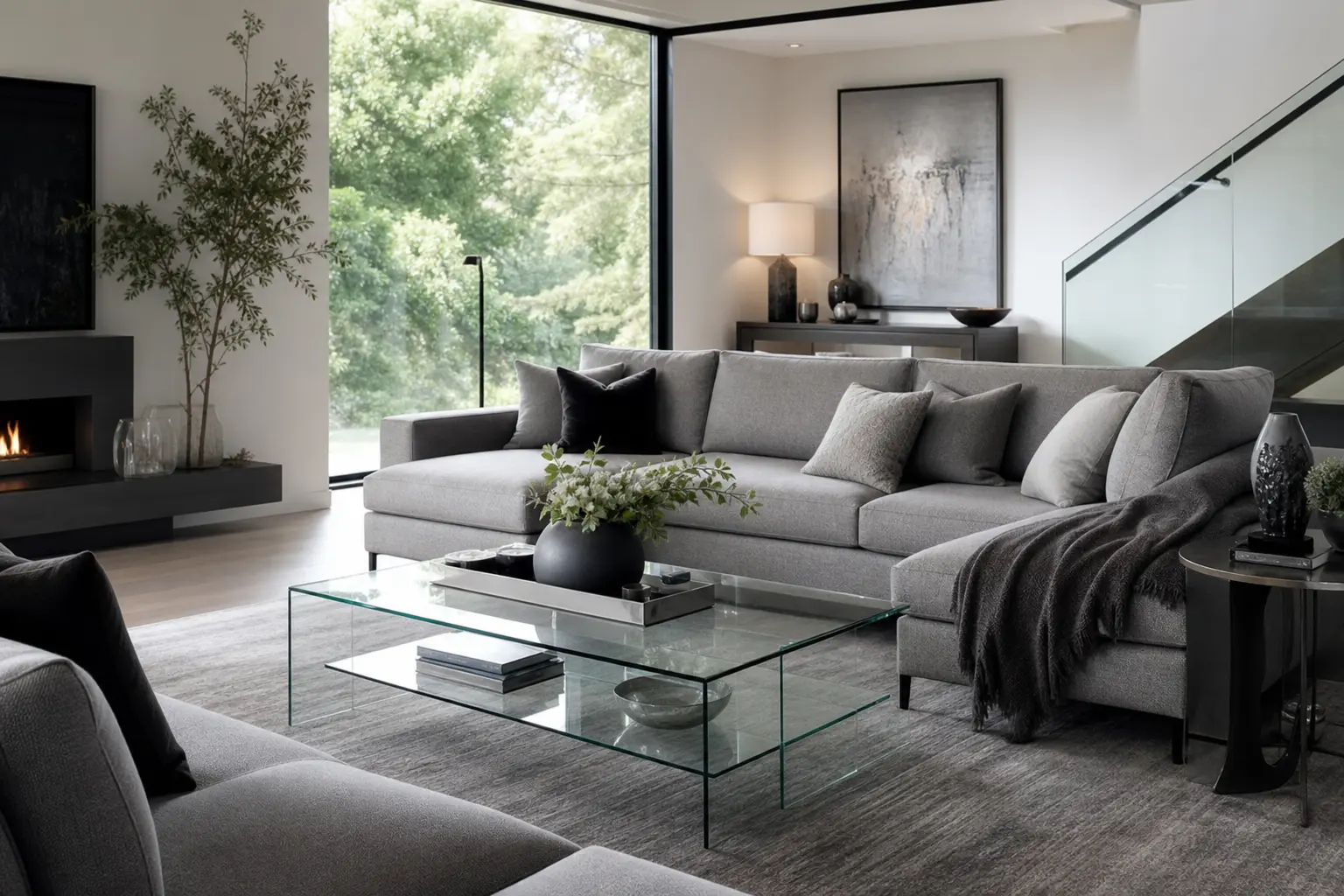
A glass top coffee table takes up visual space without adding bulk, which matters a lot in front of a large sectional. This keeps the room feeling open even when the sofa itself is substantial.
Choose a table with a metal or wood base rather than an all glass design if you want a bit more warmth. Round or oval glass tables also soften a room full of straight sectional lines better than sharp rectangular edges.
Tempered glass is worth the extra cost for safety, especially in a home with kids or pets.
3. Layer In Warm Textures So Grey Doesn’t Feel Cold
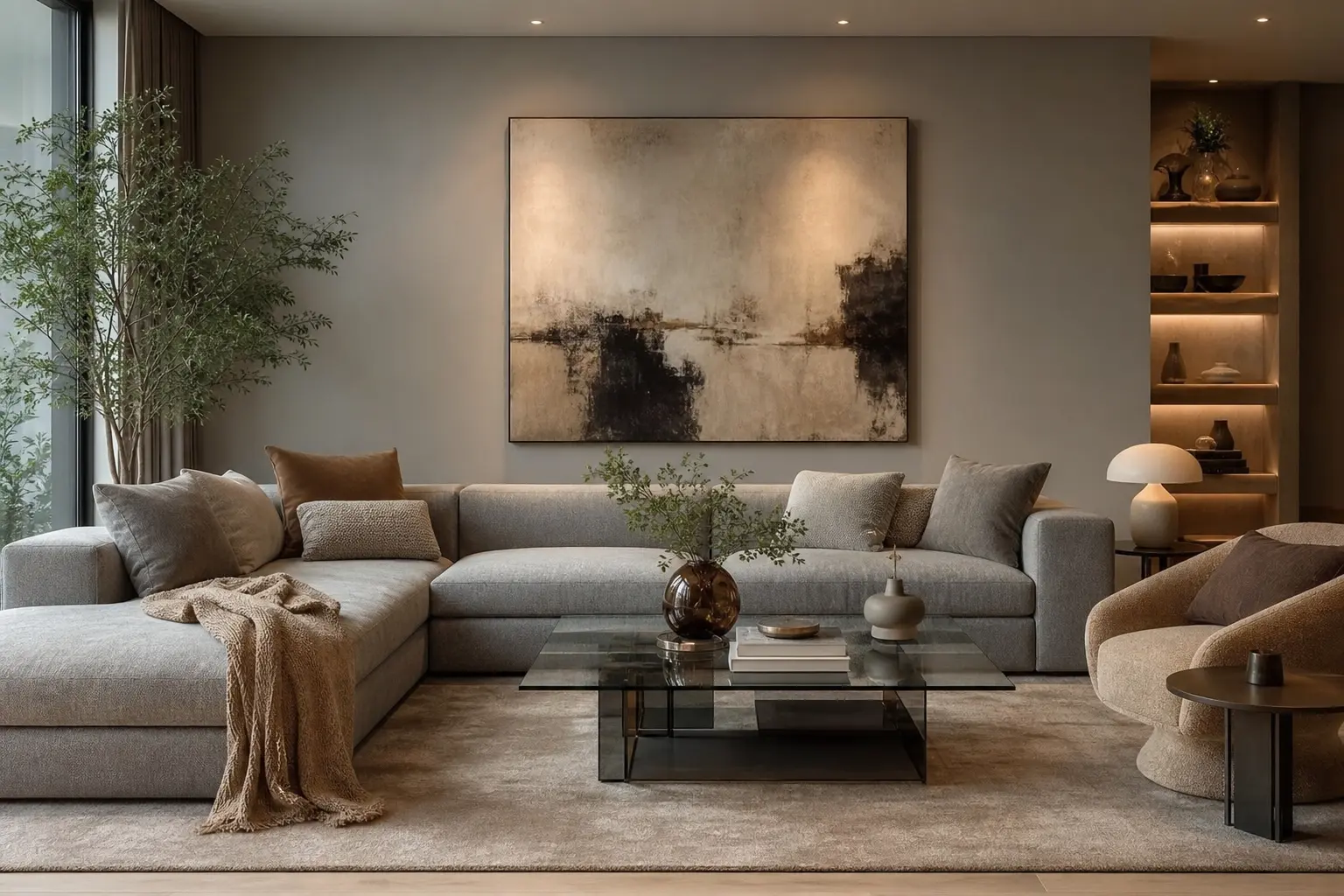
Texture is what keeps an all grey room from feeling sterile. A chunky knit throw, a boucle accent chair, or a woven basket all add tactile warmth without introducing new color.
Mixing textures matters more than people expect in a grey room specifically, since there’s no color variation doing that work instead. Aim for at least three different textures across the main pieces in the room.
Avoid an entire room of smooth, flat surfaces, glass table, leather sofa, painted walls, since that combination tends to feel the coldest.
4. Add a Bold Accent Color Through Pillows and Throws
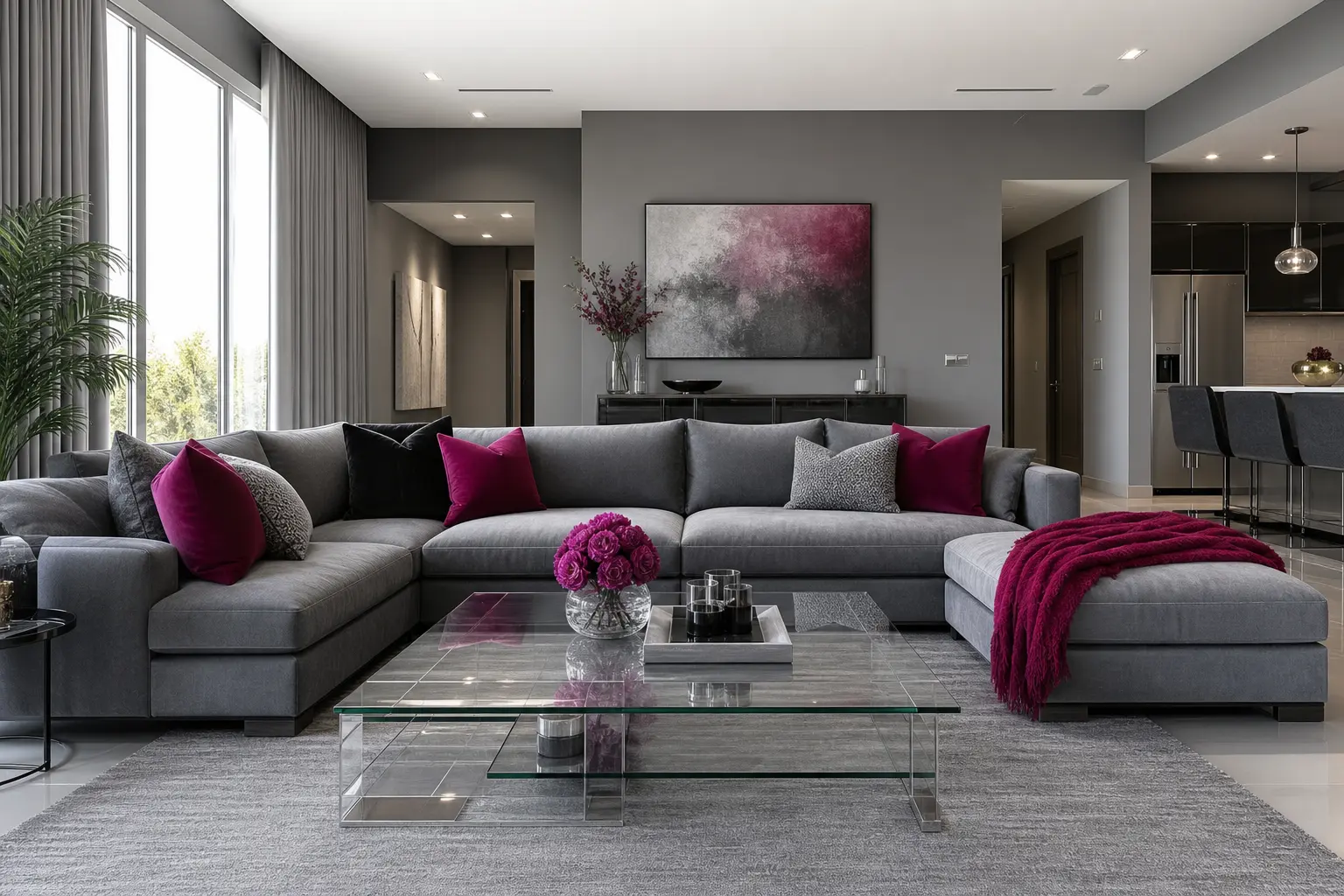
A grey sectional is a blank canvas for accent color. Mustard, terracotta, deep blue, or blush all work well against grey depending on the mood you want.
Keep the accent color to two or three items, throw pillows and a throw blanket, rather than spreading it across furniture and walls. This keeps the room feeling minimalist while still adding personality.
Choosing Accent Color by Room Mood
Warm tones like terracotta and mustard make a grey room feel cozier. Cooler accents like navy or sage keep it feeling calm and collected instead.
5. Position the Sectional to Define the Room’s Layout
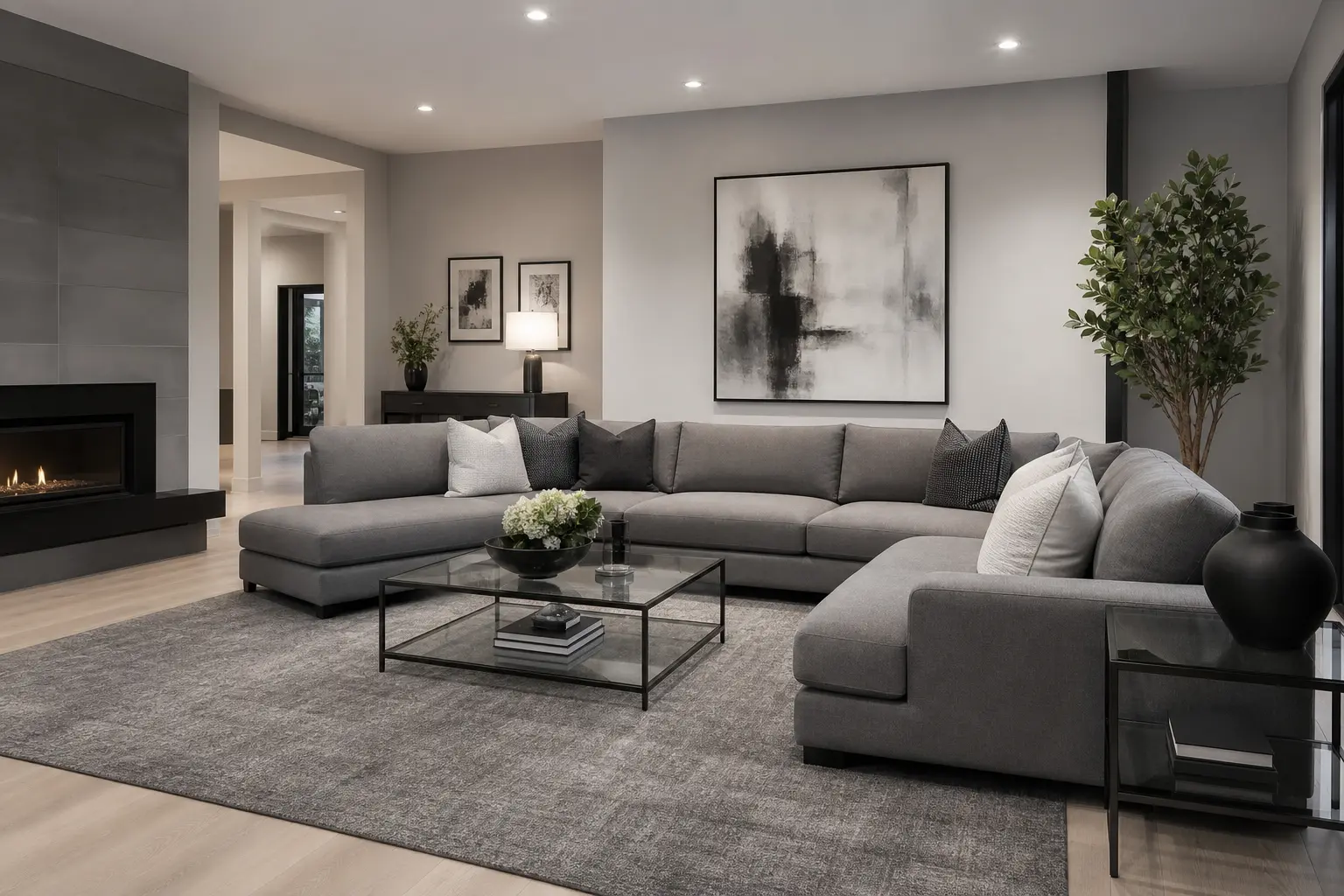
In an open floor plan, a sectional can act as a room divider rather than just seating. Positioning it with its back to a dining area or entryway helps define the living room as its own zone.
Leave enough space, generally 30 to 36 inches, for walking around the sectional comfortably. Angling the sectional toward a focal point, a fireplace, TV, or window, usually works better than centering it in the middle of the room without direction.
6. Use a Neutral Rug to Anchor the Sectional and Table
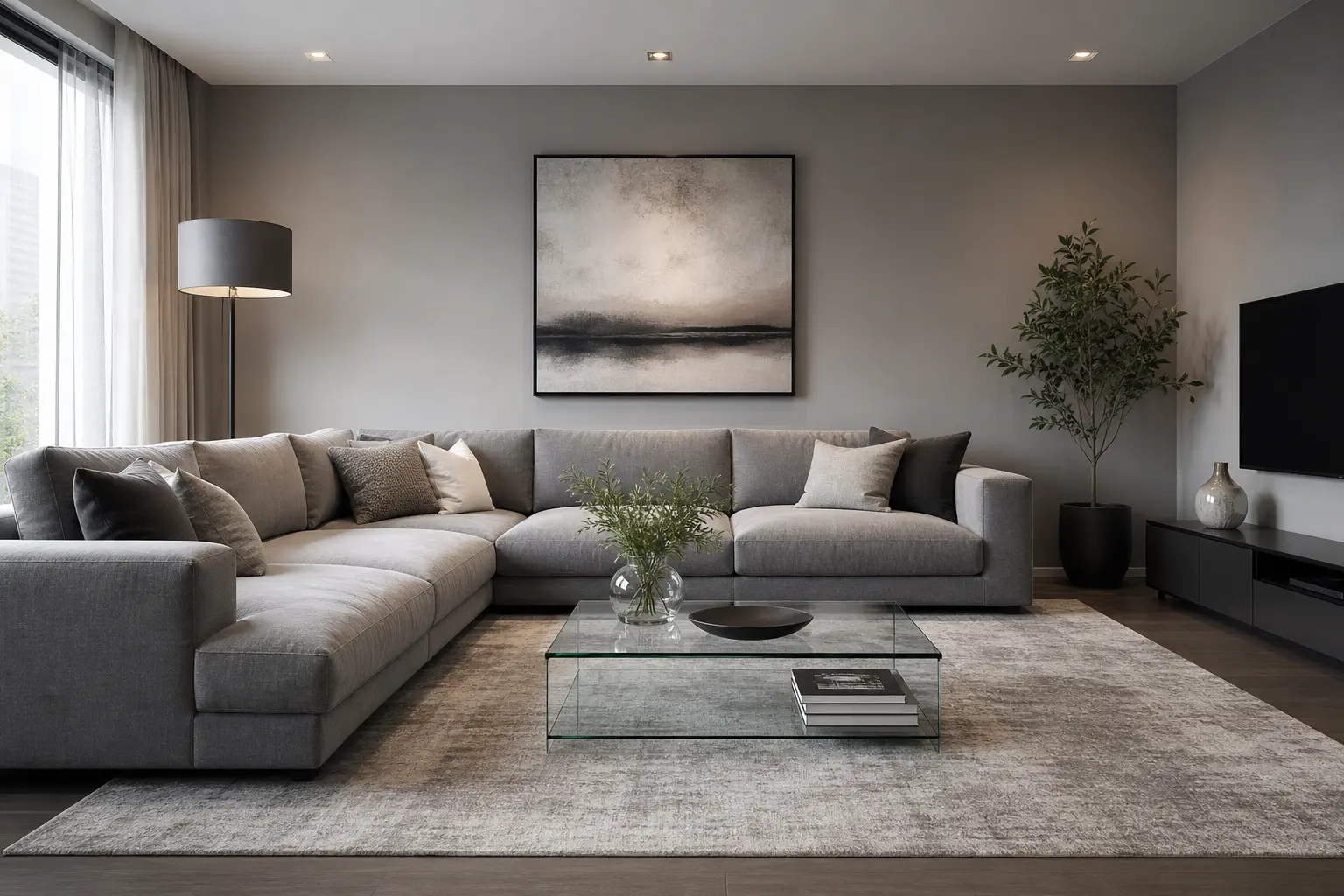
A rug ties the sectional and coffee table together instead of letting them float separately on the floor. Choose a rug large enough that at least the front legs of the sectional sit on it.
Neutral tones, cream, tan, or light beige, keep the floor grounded without competing with the grey sofa above it. A subtle texture like jute or a low pile wool adds interest without introducing a busy pattern.
A rug that’s too small is one of the most common mistakes in an otherwise well designed grey living room.
7. Add Warm Lighting to Balance the Cool Grey Tones
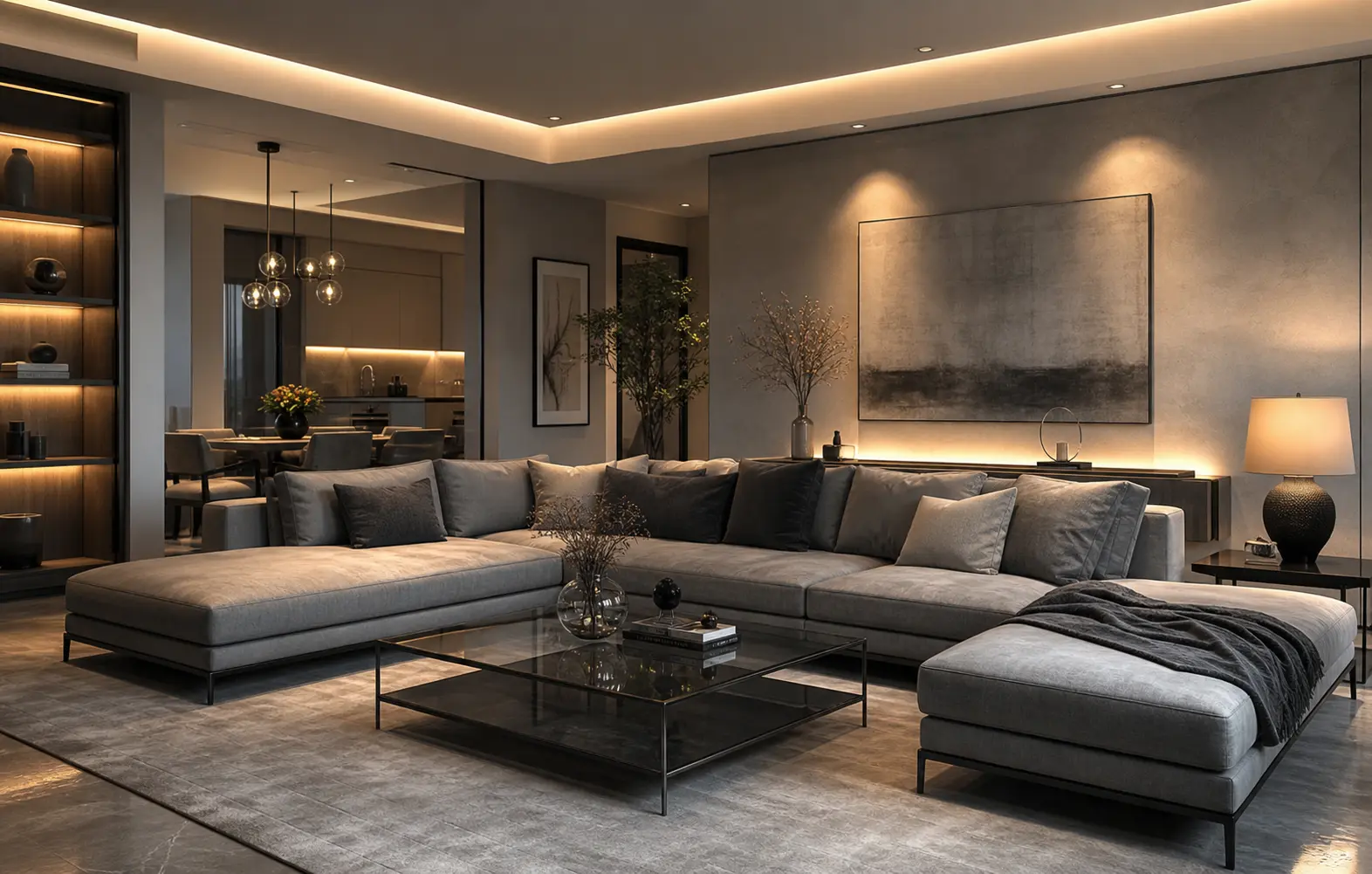
Overhead lighting alone tends to leave a grey room feeling flat and a little cold. A floor lamp and table lamp with warm white bulbs add layers of light at different heights around the room.
Brass or warm gold lamp bases pair particularly well with grey, adding a small metallic warmth without a big color commitment. A dimmer switch lets the room shift from bright and functional to soft and relaxed in the evening.
8. Keep Wall Decor Simple for a True Minimalist Look
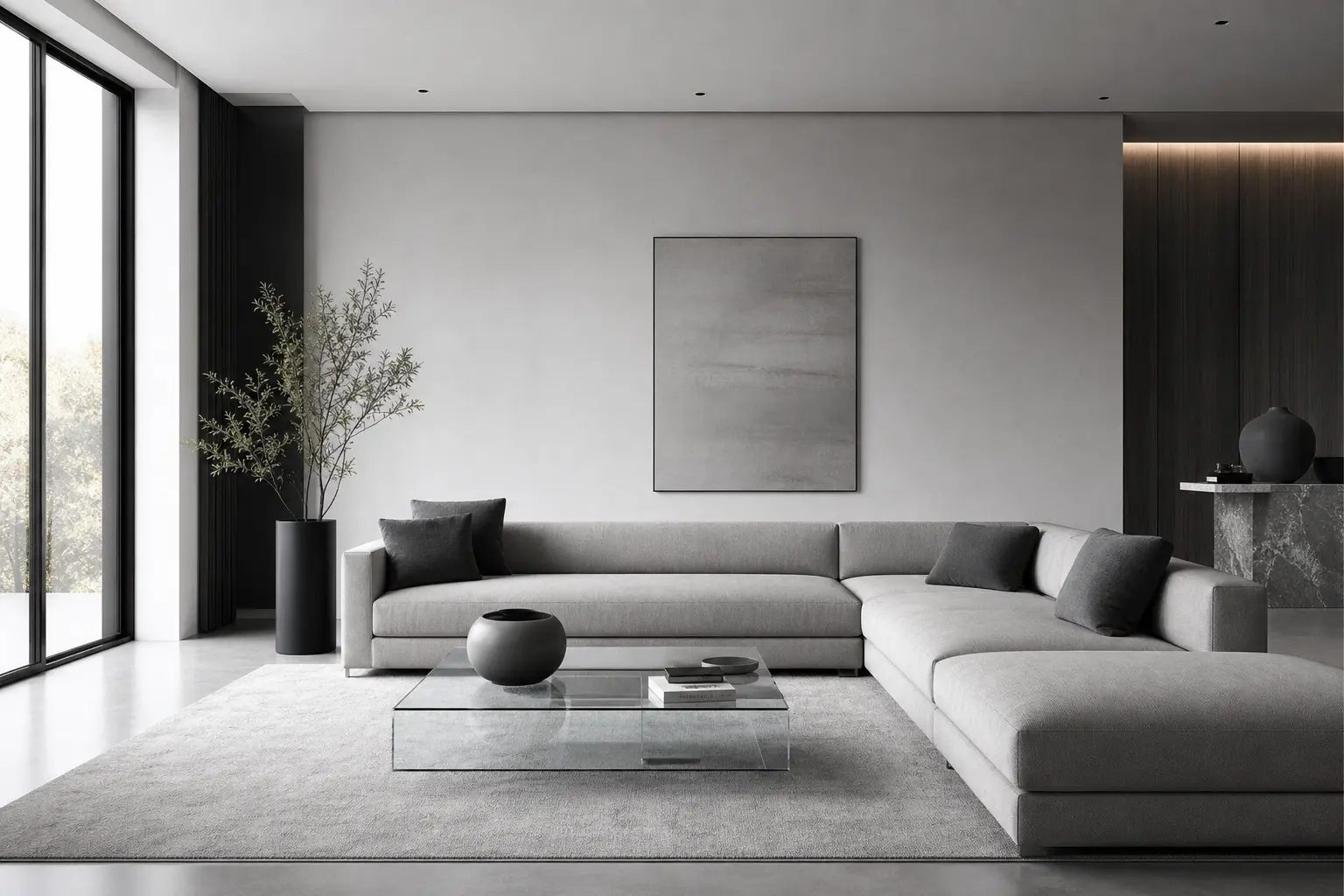
One or two large pieces of art usually work better than a cluttered gallery wall in a minimalist grey living room. Choose art with warm tones, earthy abstracts or botanical prints, to add contrast against the grey sofa.
Leave some breathing room on the walls rather than filling every surface. Minimalist doesn’t mean bare, but it does mean each piece earns its spot.
Choosing Frame Finishes
Warm wood or matte black frames tend to complement a grey room better than glossy gold, which can feel more ornate than the minimalist style calls for.
9. Style the Glass Coffee Table Without Overcrowding It
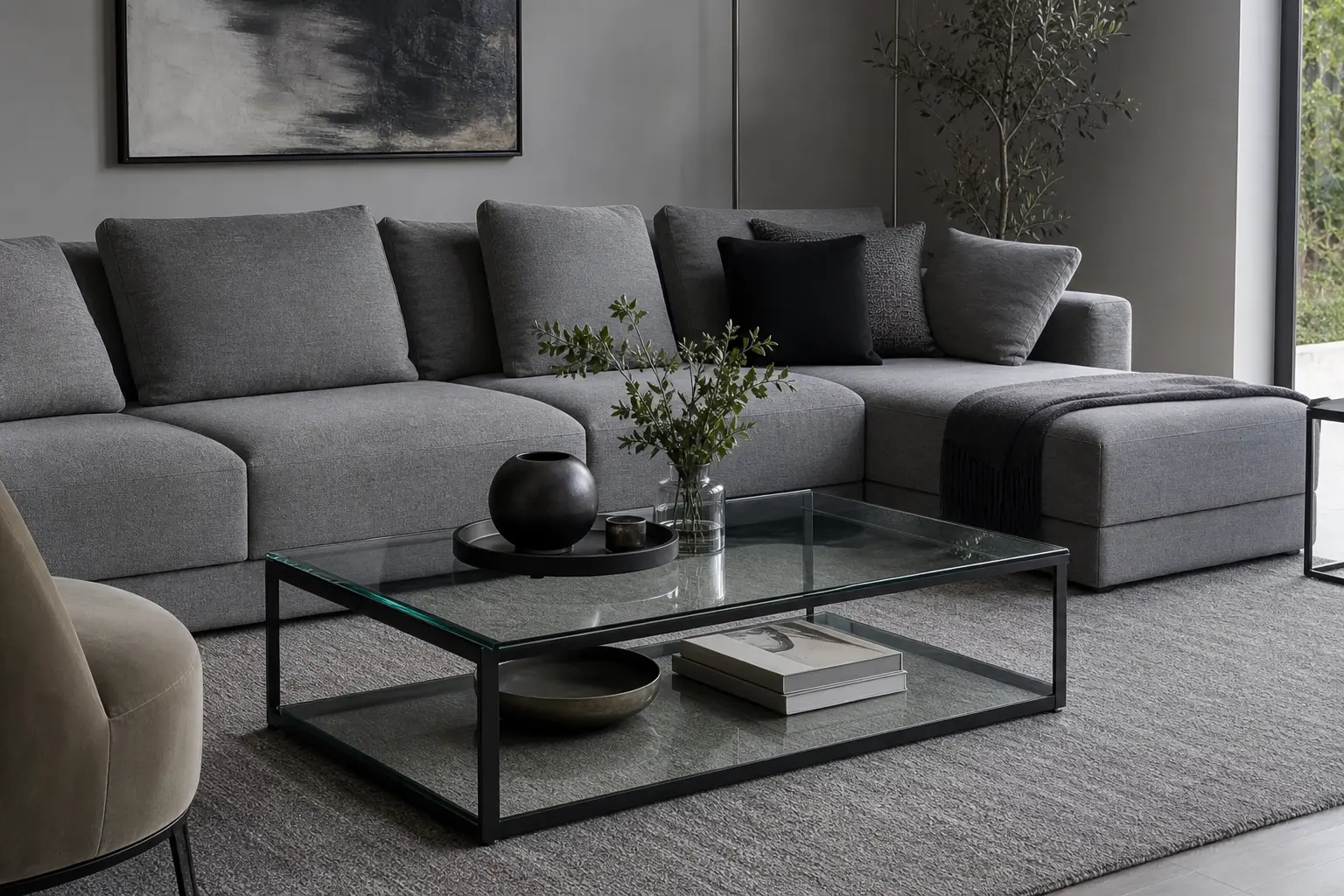
A glass table shows everything placed on it, so restraint matters more here than on a solid wood table. A stack of two or three books, a small tray, and a single candle or small plant is usually enough.
Leave visible empty space on the table rather than filling every inch. This keeps the glass surface doing its job, making the room feel open, instead of becoming another cluttered surface.
10. Add Greenery to Soften the Room’s Hard Edges
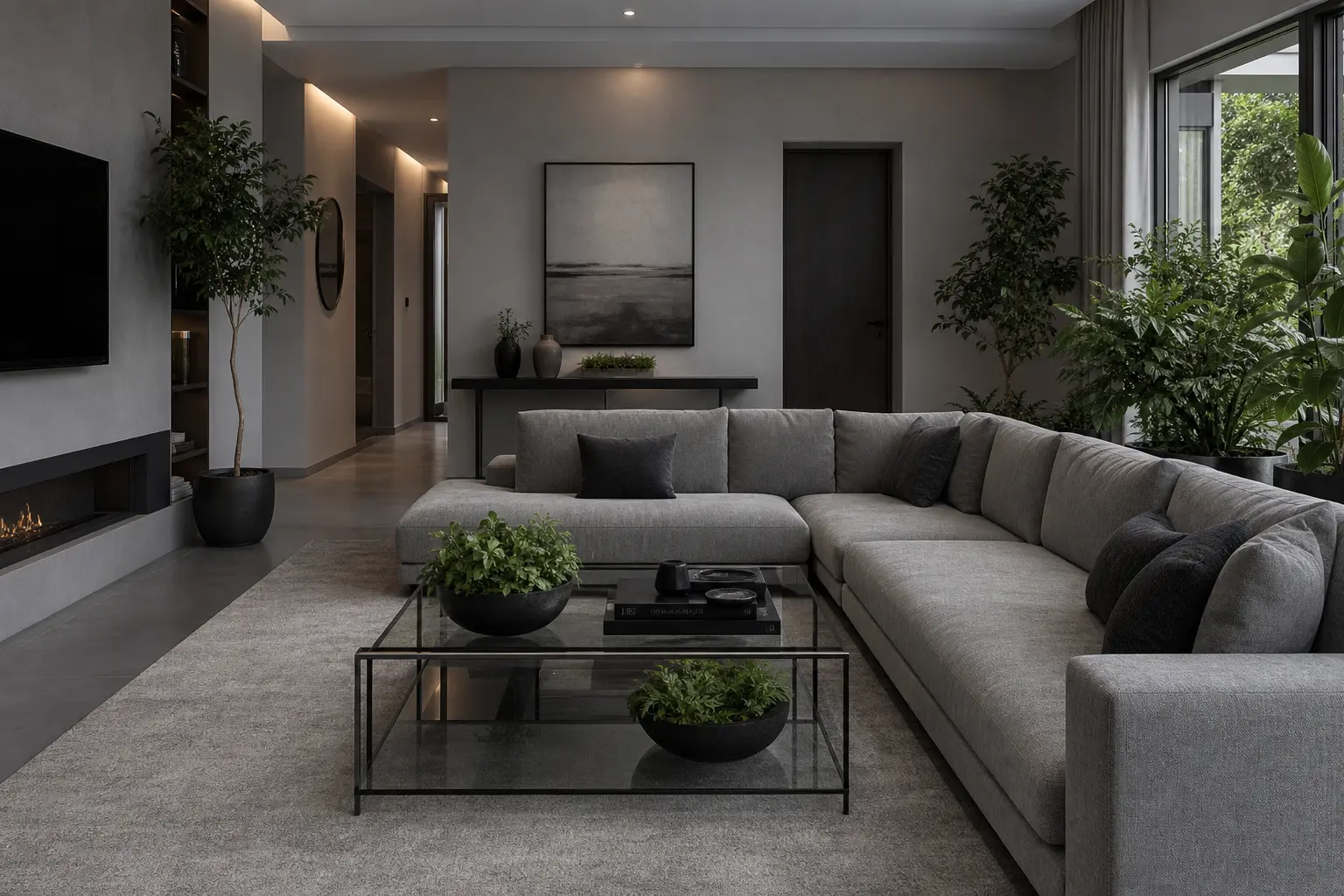
A sectional and glass table bring a lot of hard lines and smooth surfaces into a room. A plant or two softens that with organic shape and texture.
A tall plant in the corner near the sectional adds height without taking up floor space needed for walking. A smaller plant on a side table or shelf adds a second layer of greenery without overwhelming the minimalist look.
Mistakes to Avoid
- Choosing an all cool grey palette with no warm elements to balance it
- Picking a rug too small for the sectional to sit on properly
- Overcrowding the glass coffee table with too many decorative objects
- Relying only on overhead lighting instead of layering in lamps
- Spreading accent color across too many pieces instead of keeping it focused
- Filling every wall with art instead of leaving some visual breathing room
FAQ
Does a glass coffee table work with a large sectional? Yes, and it often works better than a solid table because the glass keeps the room feeling open. Choose a table with a substantial enough base that it doesn’t look flimsy next to a large sectional.
What color works best against a grey sectional? Warm tones like terracotta, mustard, and rust tend to make grey feel cozier, while cooler tones like navy and sage keep the room feeling calm. Both directions work, it depends on the mood you’re going for.
How do I keep a grey living room from feeling cold? Layer in warm lighting, mixed textures, and at least one warm accent color through pillows or a throw. Avoid an all smooth, all cool-toned room with no textural variation.
Is a sectional too big for a small living room? A smaller L-shaped sectional can still work in a modest room if you leave enough walking space around it. Measure your room carefully and consider a sectional with a reversible or modular chaise for flexibility.
How often should I rearrange the glass coffee table styling? There’s no fixed rule, but swapping a few small items seasonally, a different candle scent, a seasonal plant, keeps the space feeling fresh without a full redecorating project.
Conclusion
A modern grey living room comes down to balancing cool tones with real warmth. The sectional and glass table set the foundation, but texture, lighting, and accent color are what make the room feel finished.
Start with one warm layer, a rug or a set of lamps, and build from there. Small additions make a bigger difference in a grey room than in almost any other color palette.