10 Modern Wall Mounted Plant Shelf Ideas for Small Spaces
Small spaces and plant collections don’t usually get along well. Every pot takes up floor space that a small room or apartment can’t really spare, and it doesn’t take many plants before the room starts to feel more like a greenhouse than a living space. Wall mounted shelving solves that by moving the plants up and off the floor entirely. None of these ideas need a lot of wall space either, which matters in rooms where even that is limited. A single shelf, or a small cluster of them, can hold more greenery than most people expect once the plants stop competing with furniture for room.
Think about how much floor space a single plant stand actually takes up compared to a shelf mounted a few feet up the wall. The shelf wins every time, and it usually looks more intentional too, since a mounted display reads as designed rather than squeezed in wherever there was room. These ten ideas focus on exactly that kind of thinking, using height instead of floor space to make the most of a small room.
1. Staggered Floating Shelves at Varying Heights
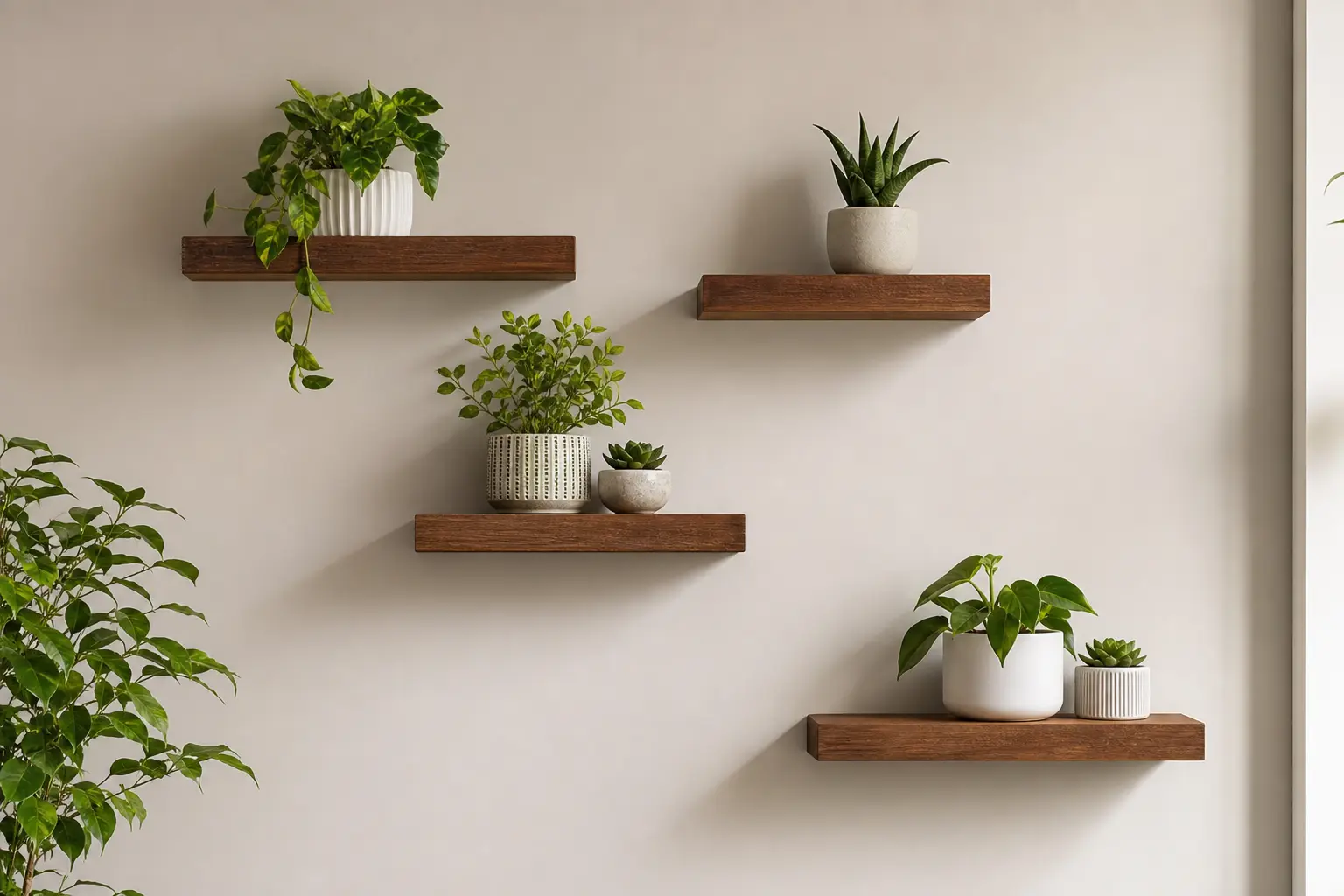
Rather than lining up several shelves at the same height, stagger them slightly, some higher, some lower, with a bit of vertical gap between each one. This creates a more dynamic display than a uniform row, and it lets taller trailing plants hang freely from upper shelves without their leaves crowding the plants below. Keep the shelf depth consistent even while varying the height, usually 6 to 8 inches is enough for most small potted plants, so the display still reads as one cohesive grouping rather than a scattered collection of random shelves.
2. Single Long Ledge Shelf Above a Window
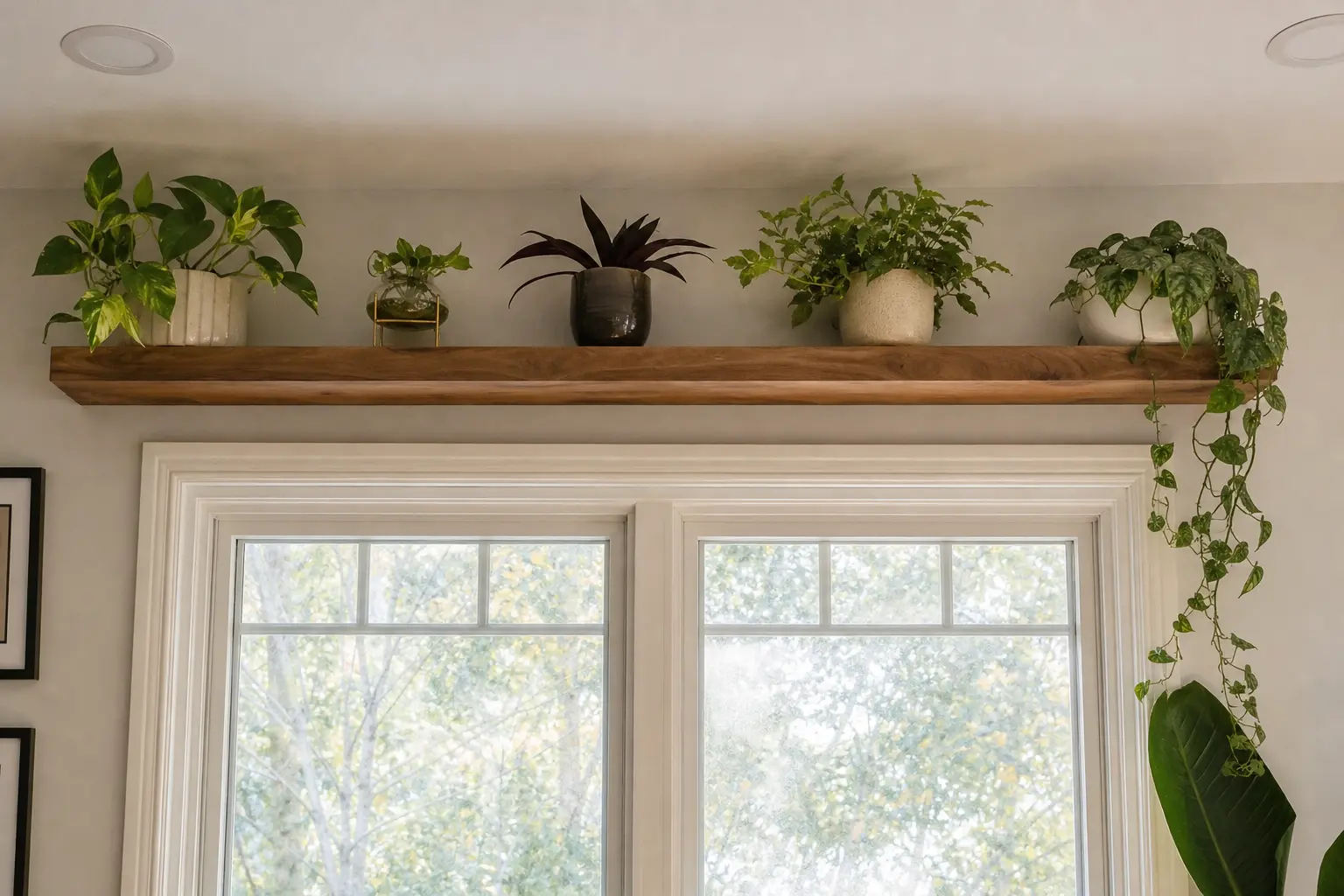
A single long, narrow shelf mounted just above a window frame takes advantage of a spot that’s almost always wasted otherwise. Line it with a row of small potted plants, and the greenery gets excellent natural light from the window just below. This works especially well in apartments with limited wall space elsewhere, since the area above a window rarely gets used for anything else. Keep the shelf narrow, around 6 inches deep, so it doesn’t block light from reaching the window itself.
3. Corner Triangle Shelves for Awkward Angles
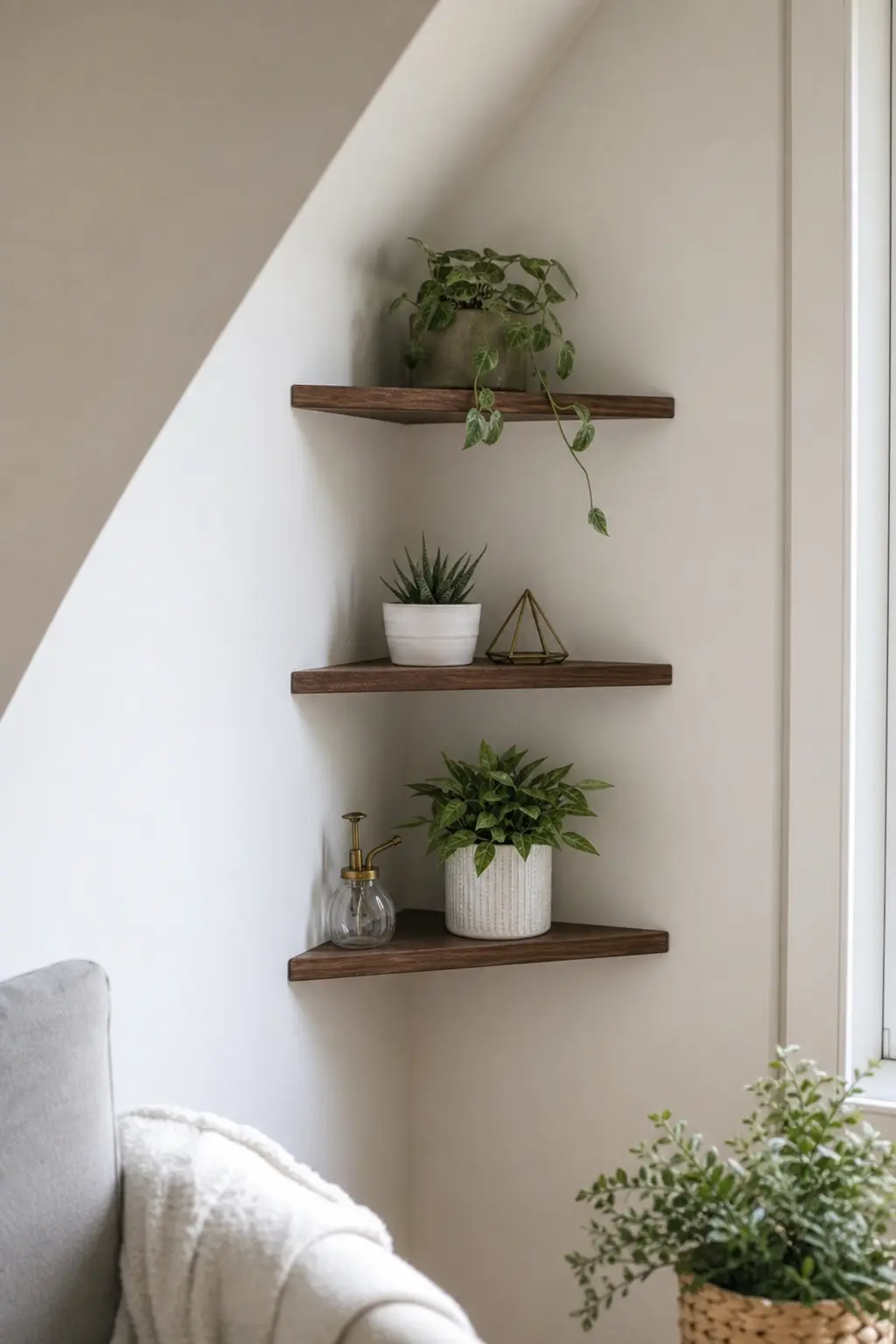
Corners are some of the most wasted space in any small room, but a triangular shelf built to fit the angle can turn that dead space into a plant display. Stack two or three triangle shelves vertically up the corner, each holding one small plant, and the whole thing reads as a designed feature rather than an awkward leftover space. This idea works particularly well in rooms with limited straight wall space, since corners are often the only area left once furniture is placed.
4. Modular Cube Shelving for a Plant Wall
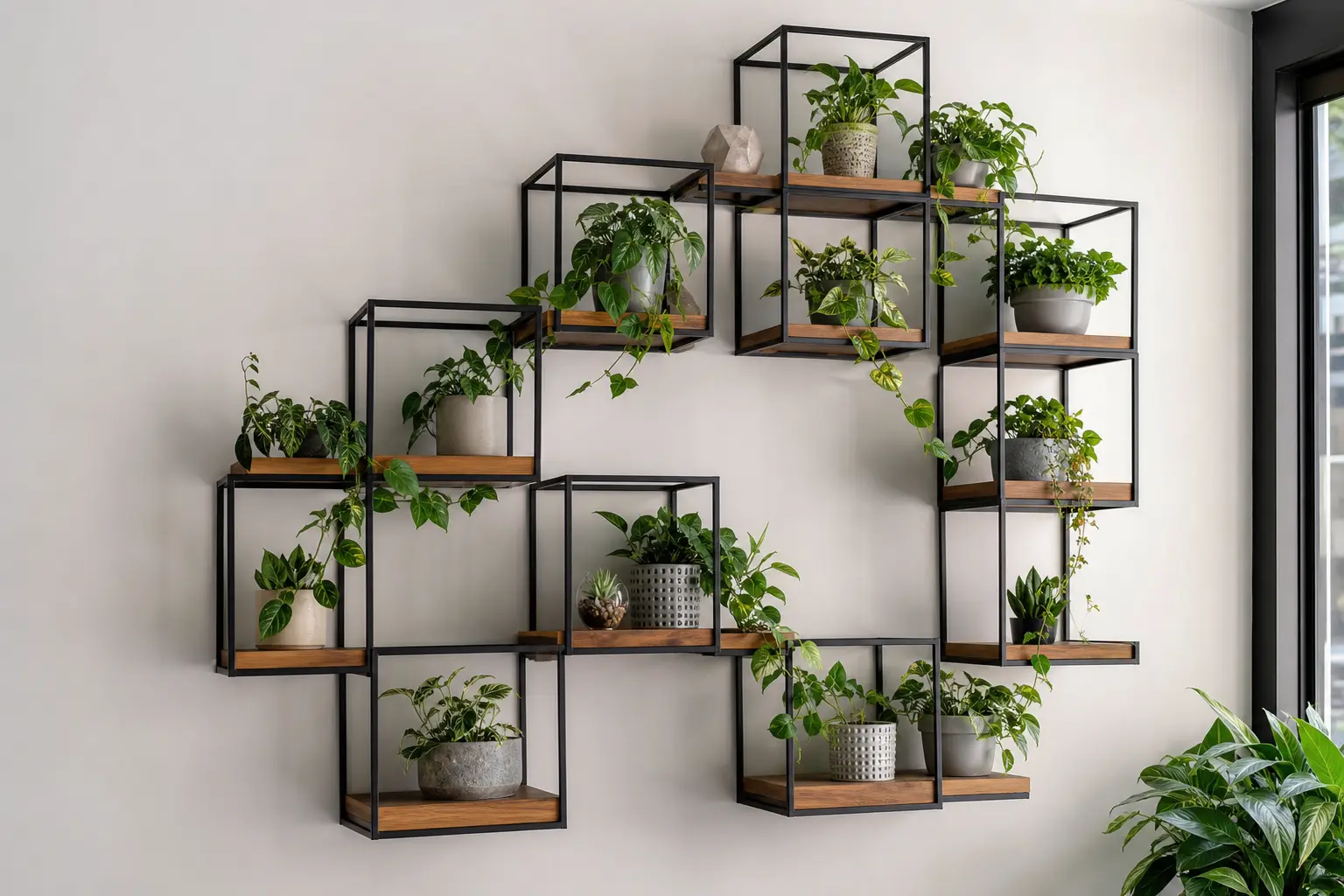
Modular cube shelves, the kind that can be arranged in different configurations, give a small space flexibility that a fixed shelf can’t. Mix cubes holding plants with a few empty cubes for visual breathing room, and the wall reads as more curated than a shelf packed edge to edge with greenery. These systems typically cost between 60 and 200 dollars depending on the number of cubes, and most can be rearranged later if the room’s layout changes.
5. Slim Picture Ledge Shelves for Small Pots
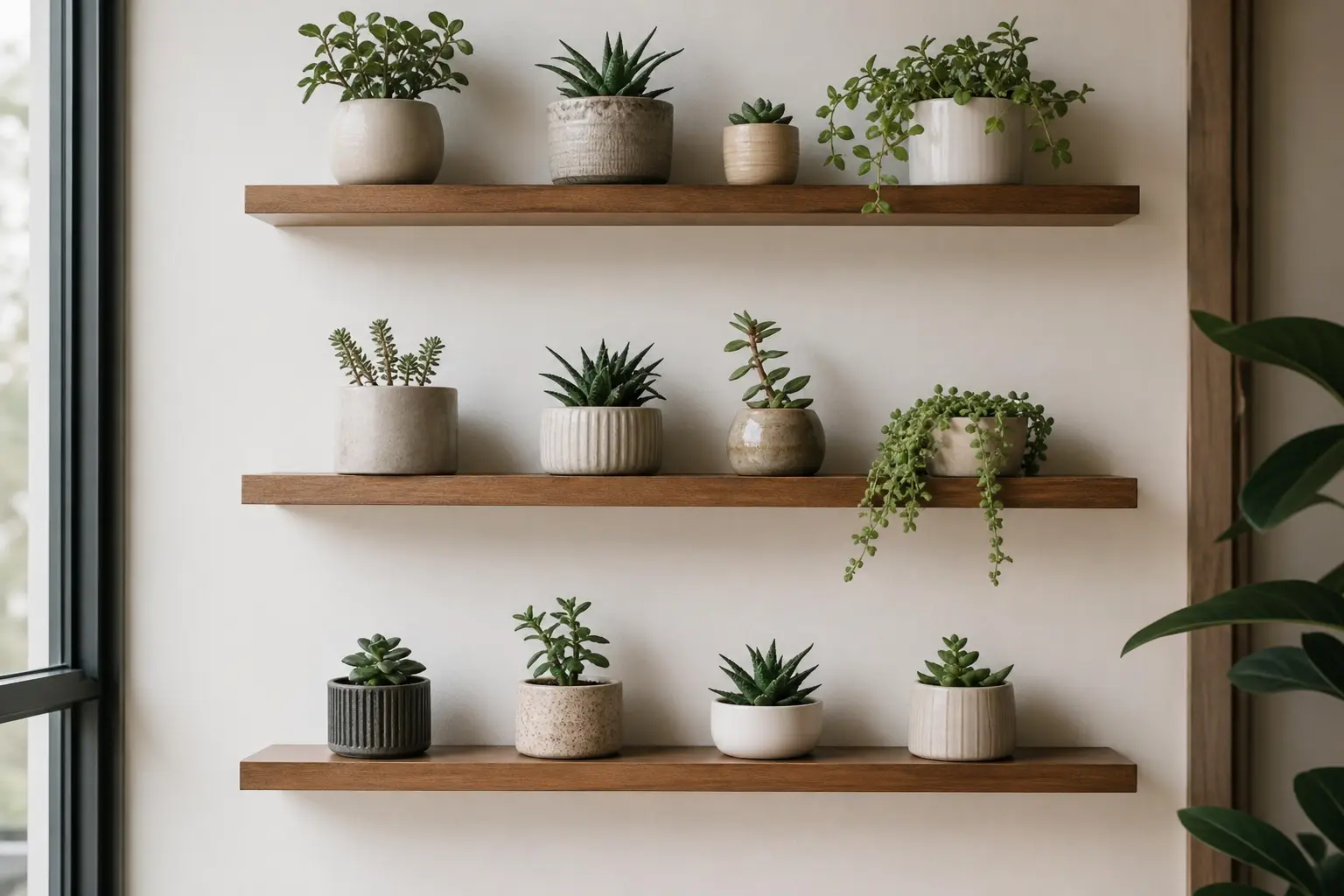
Picture ledges, originally designed for framed art, work just as well for small potted plants, especially ones in pots under 4 inches wide. Mount a few at slightly different heights along one wall, and the narrow depth, usually 2 to 4 inches, keeps the whole display from jutting too far into the room. This is one of the more budget friendly options here, since picture ledges are widely available and inexpensive compared to custom shelving.
6. Wall Mounted Wire Grid with Hanging Planters
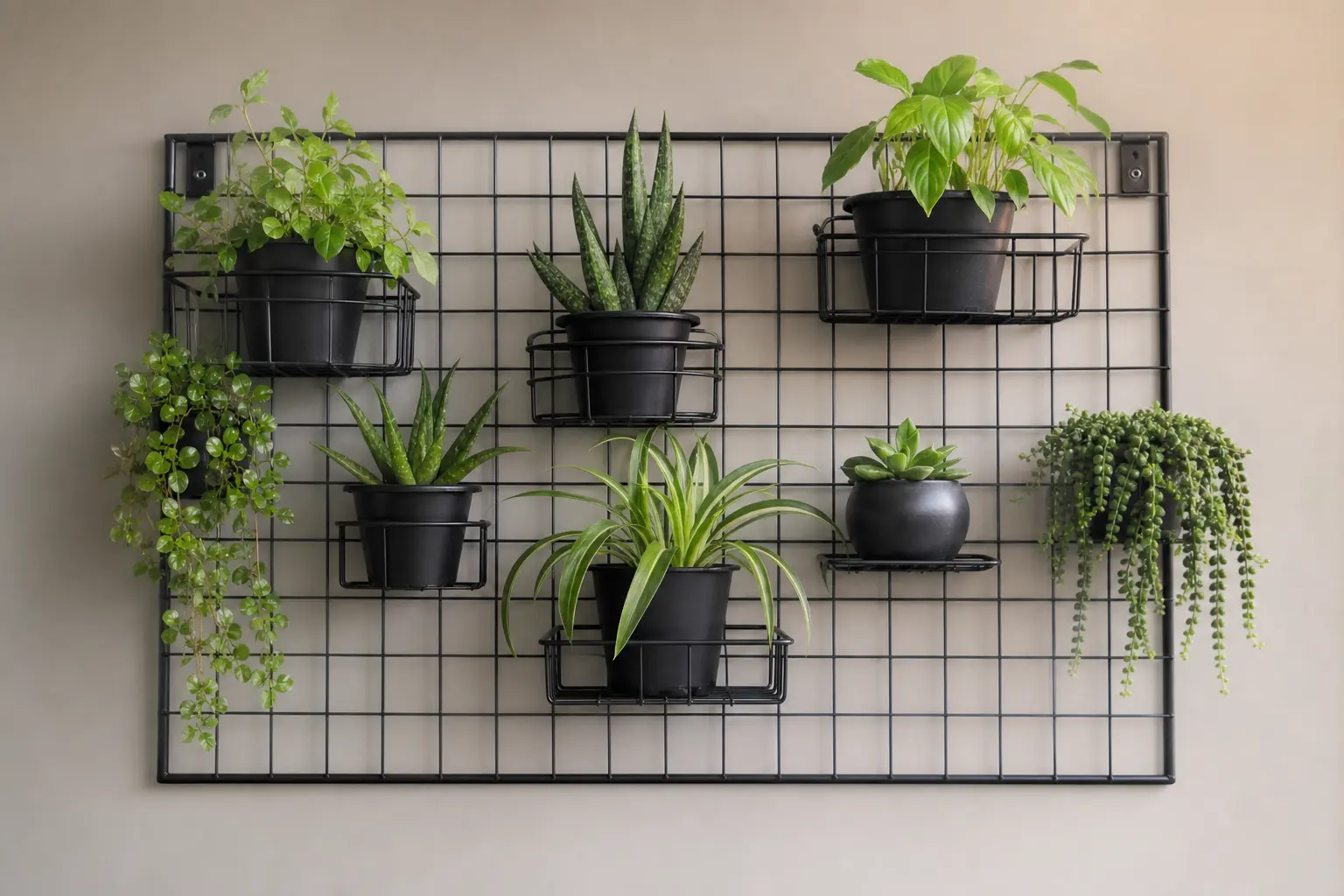
A wire grid panel mounted to the wall gives you a flexible surface to hang small planters from using clips or hooks, rather than committing to fixed shelf positions. This setup works well for renters, since the grid itself mounts with just a few screws or even adhesive strips for lighter loads, and the plant arrangement can be rearranged anytime without any new holes in the wall. Mixing planter heights and hanging distances adds visual interest that a flat shelf can’t quite achieve on its own.
7. Pegboard Panel with Adjustable Plant Hooks
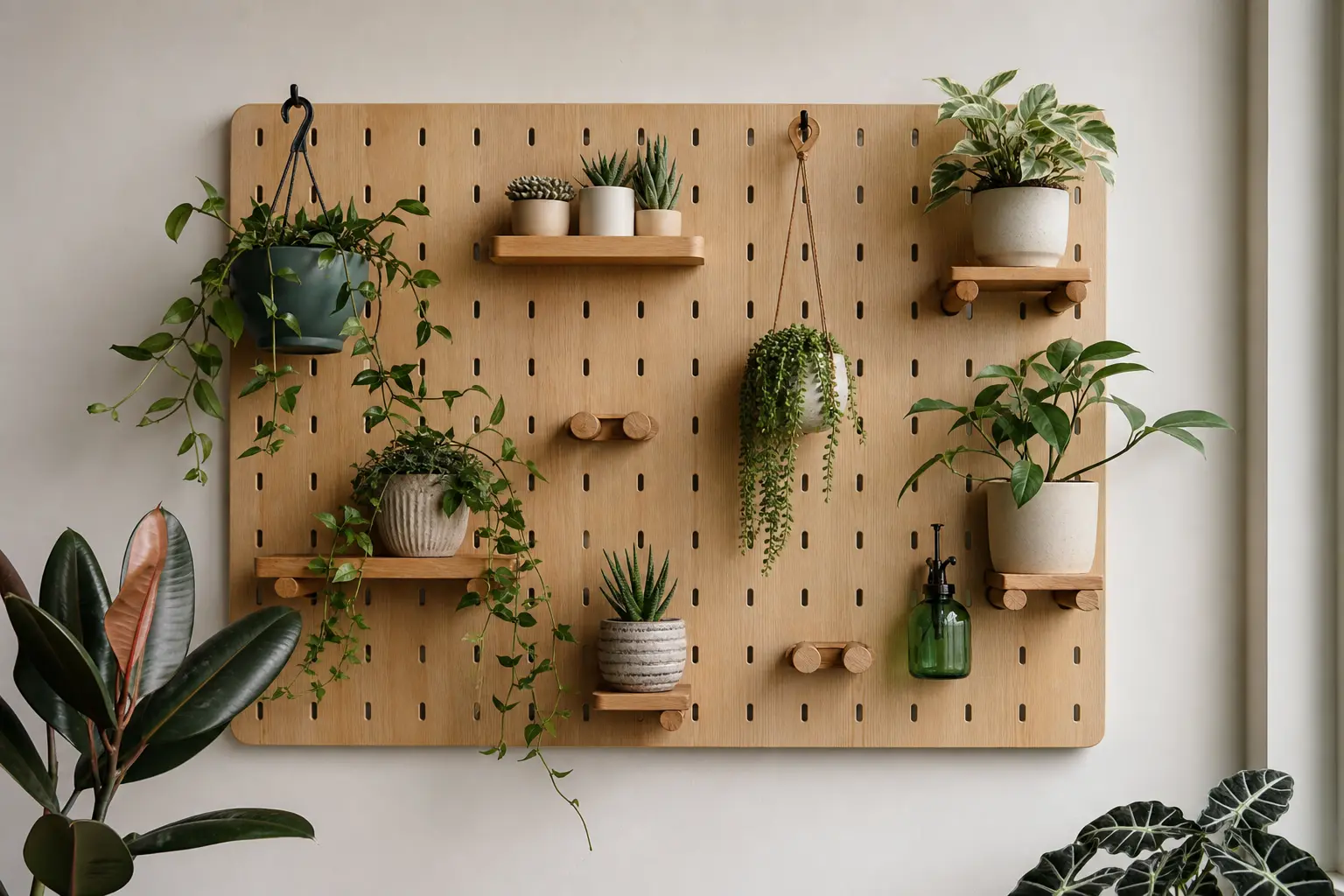
A pegboard panel, painted to match the wall or left as a contrasting accent, holds small shelf brackets and hooks that can move around as your plant collection grows or changes. This adaptability makes it a good fit for anyone still building out their plant collection, since the display can expand without needing new holes drilled every time a new plant comes home. Pegboard panels are also inexpensive, often under 50 dollars for a standard size, which makes this one of the more accessible ideas on this list.
8. Floating Shelf Above a Doorway
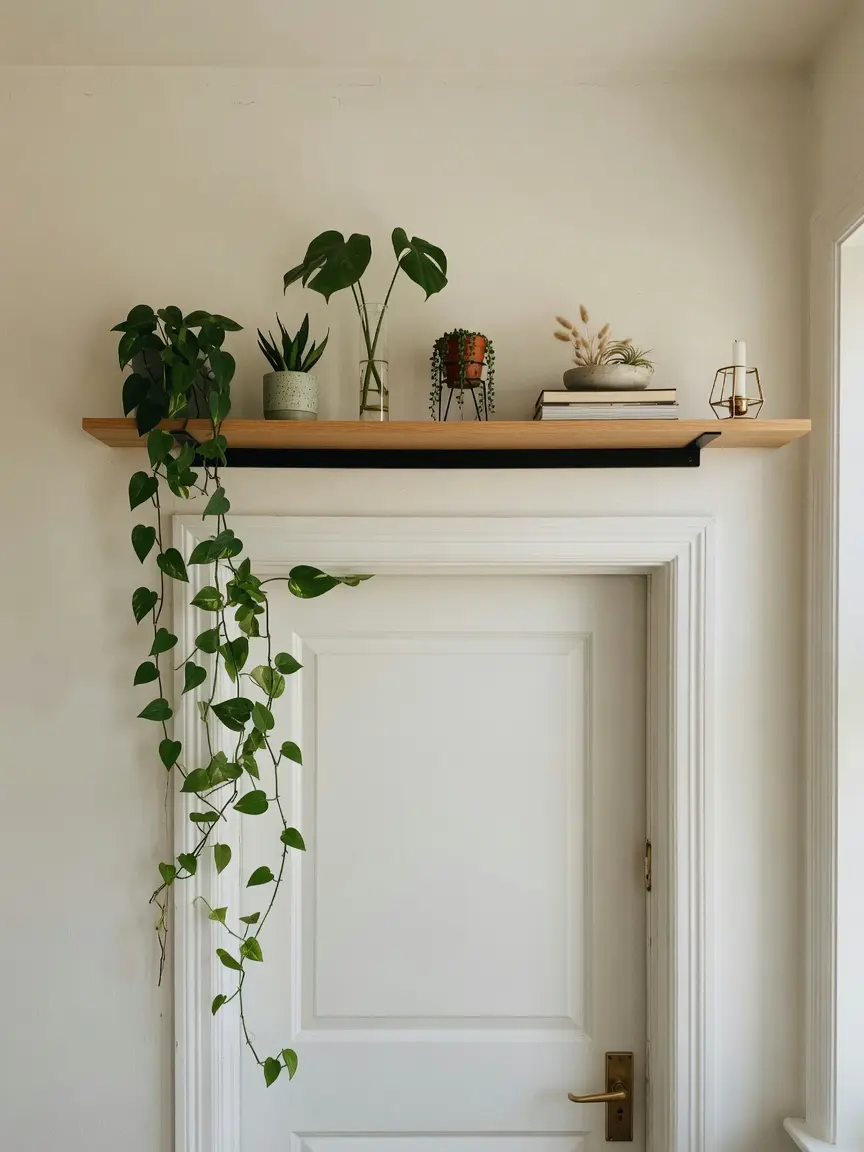
The wall space above a doorway almost never gets used, but a single floating shelf there can hold a trailing plant that cascades down along the door frame. Choose plants with a naturally draping growth habit, like pothos or string of hearts, so the trailing effect looks intentional rather than like the plant is simply too big for its pot. This idea works in even the tightest apartments, since it uses space that would otherwise sit completely empty.
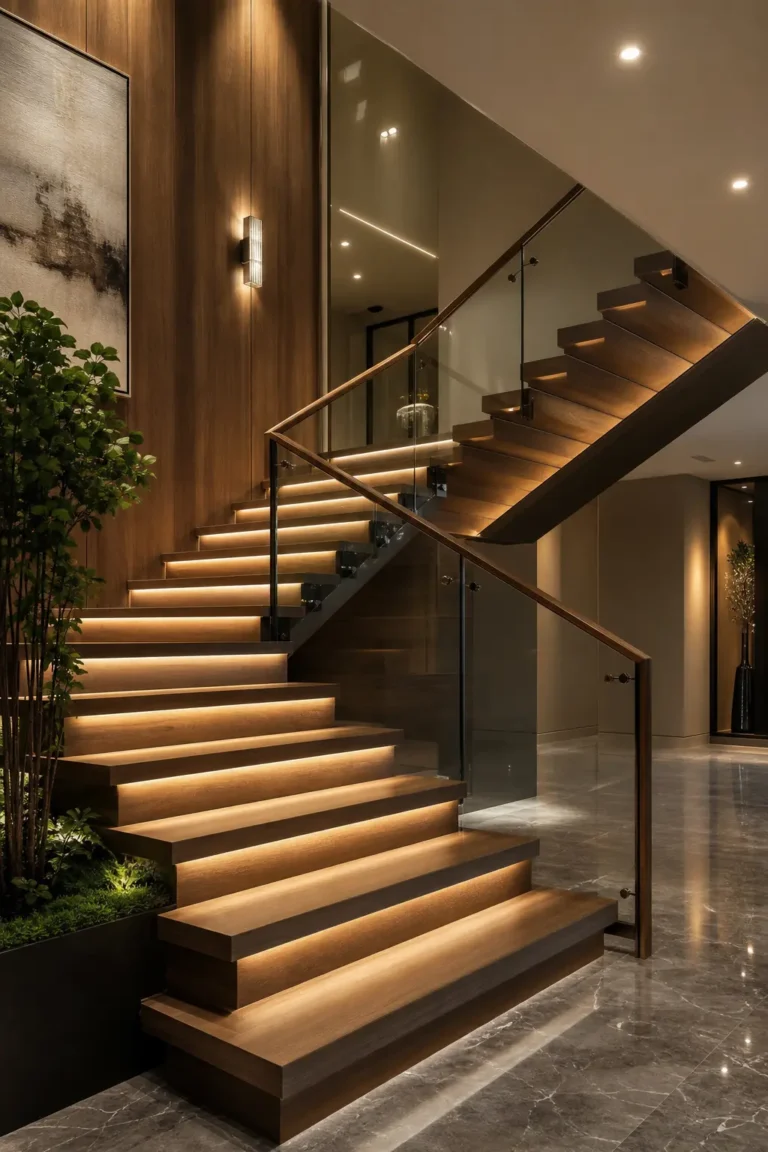
9. Tiered Wall Bracket Shelves in a Stairwell
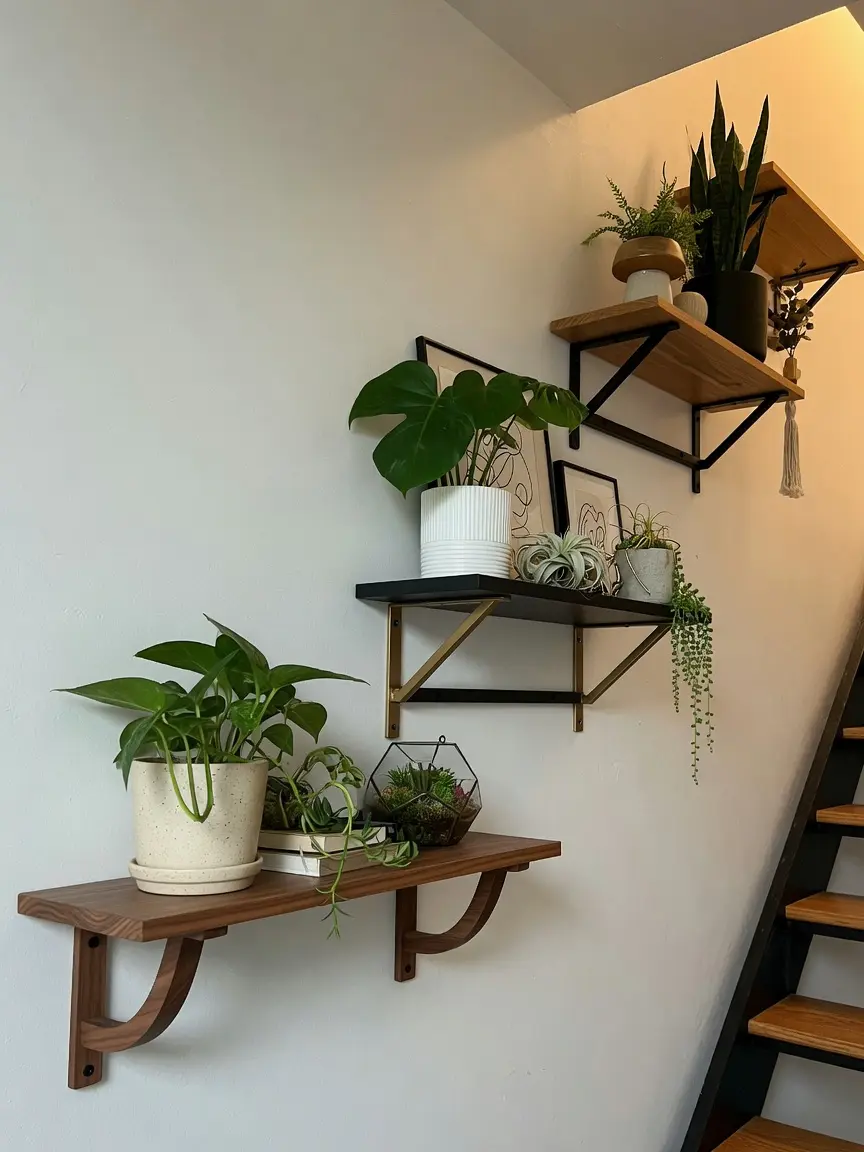
Stairwells often have tall, narrow wall space that’s tricky to decorate with regular furniture, but tiered bracket shelves mounted at intervals up the wall can fill that space with plants at multiple heights. This works particularly well in homes with an open stairwell, since the plants become visible from multiple angles and floors rather than just one room. Keep the shelf brackets sturdy, since stairwells often see more foot traffic and bumping than other walls in the home.
10. Minimalist Single Shelf with One Statement Plant
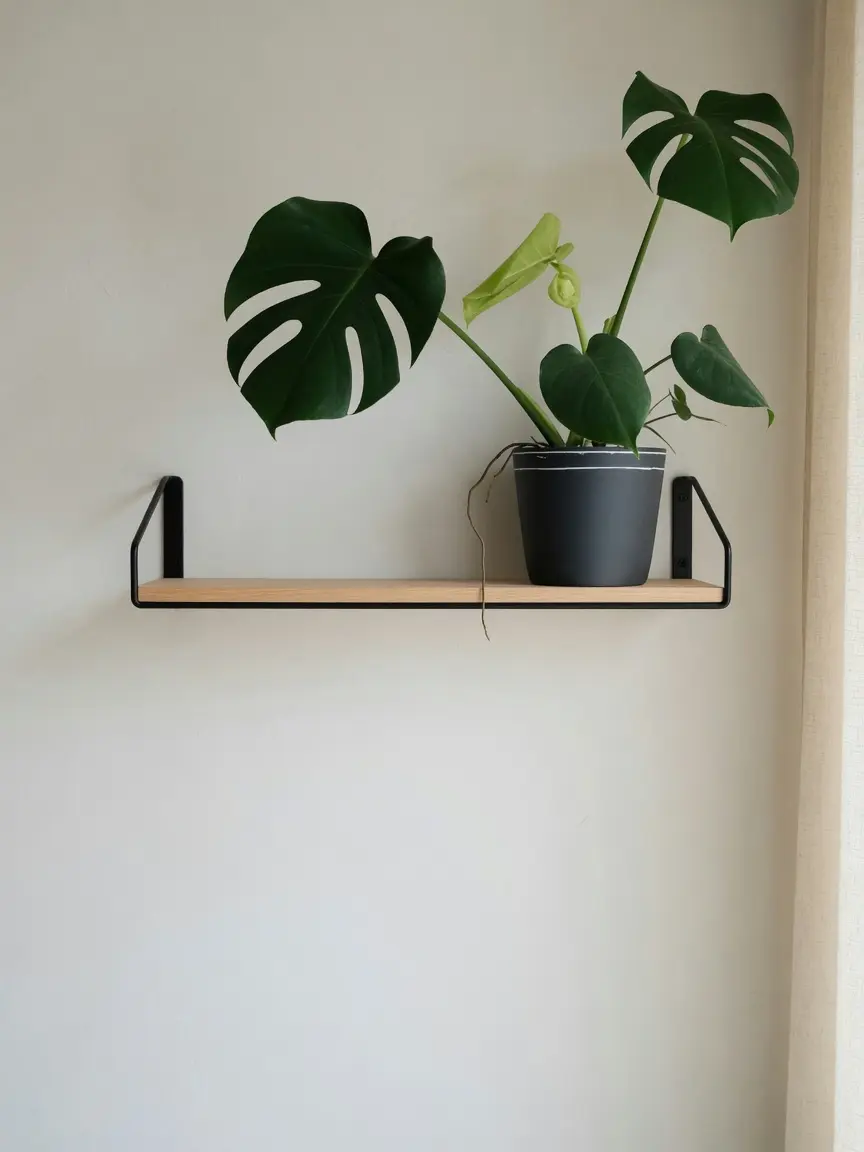
Sometimes one shelf and one plant is enough. A single floating shelf holding one striking plant, like a trailing pothos or a small snake plant, keeps the display simple and works well in rooms where too much greenery would compete with other decor. This is the easiest and least expensive idea on this list to try, since it requires only one shelf and one plant to pull off, with no need to build out a larger collection first.
Mistakes to Avoid
- Overloading a single shelf beyond its weight rating, especially with plants in heavier ceramic or concrete pots
- Choosing shelf brackets that aren’t rated for the combined weight of the pot, soil, and water
- Placing shelves too close together, leaving no room for plants to grow or trail properly
- Skipping a drip tray or saucer under each pot, risking water stains on the wall or shelf below
- Mounting shelves without checking for studs, especially for heavier ceramic or concrete pots
- Choosing plants that need more light than the mounted location actually receives
Frequently Asked Questions
How much weight can a typical floating shelf hold? Most floating shelves rated for home use can hold 15 to 30 pounds when properly mounted into studs, though weight capacity varies by bracket type and shelf material, so check the specific product rating before loading it with heavier pots.
What plants work best for wall mounted shelves? Smaller varieties like pothos, string of pearls, small succulents, and air plants work well on wall shelves, since they don’t outgrow a small pot as quickly as larger floor plants would.
Can I install wall mounted plant shelves in a rental without damaging the wall? Yes, several options on this list, like pegboard panels, wire grids, and adhesive backed picture ledges, are designed to install with minimal wall damage and can be removed cleanly when you move out.
How do I water plants on a high shelf without making a mess? A small watering can with a narrow spout makes this easier, and placing a saucer or tray under each pot catches any drips before they reach the shelf or wall below.
Do wall mounted plants need different care than floor plants? Not fundamentally, though plants higher on a wall may get more or less light than expected depending on their distance from a window, so it’s worth monitoring a new shelf placement for the first few weeks to make sure the plant is thriving there.
Conclusion
A small space doesn’t have to mean a small plant collection. Moving greenery onto the wall, rather than the floor, frees up room while still giving a space plenty of life and texture. Whether that means a single minimalist shelf or a full staggered display running up one wall, these wall mounted plant shelf ideas show how much can fit into a small room once floor space stops being the limiting factor.