10 Modern Indoor Plant Wall Ideas with Wood Slat Panels & Floating Shelves
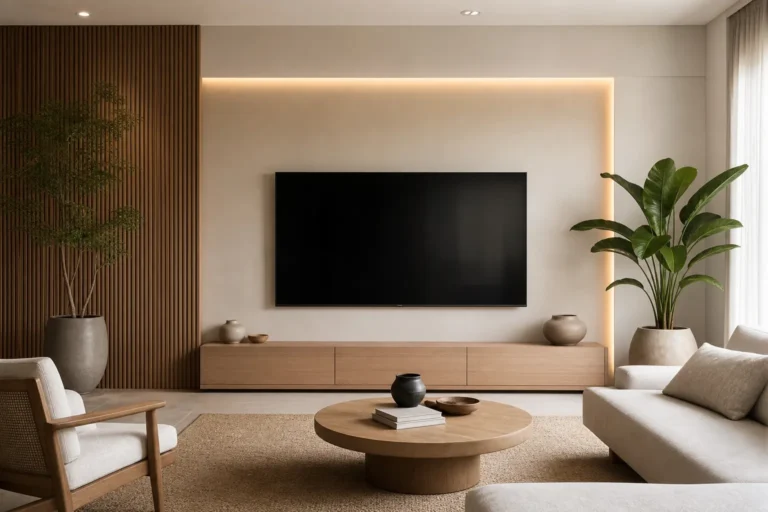
A plain drywall wall does very little for a room, and it does even less once a few plants get set in front of it. Add wood slats behind the shelves, though, and the whole thing changes. The texture gives the plants something to stand out against, and the warmth of real or engineered wood keeps the display from feeling sterile the way an all white wall sometimes can. These indoor plant wall ideas pair the two together, since wood slats and floating shelves solve different problems and work better as a team than either does alone.
Picture the difference between a shelf of plants against flat white paint and that same shelf against a textured wood backdrop. The plants barely change, but the wall around them suddenly does most of the visual work. That’s the whole appeal of combining slats with shelving. The wood adds depth and warmth, and the shelves give the plants somewhere considered to sit instead of just floating in front of a blank wall.
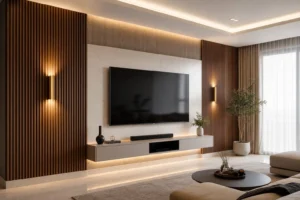
1. Full Wall Wood Slat Panel with Staggered Shelves
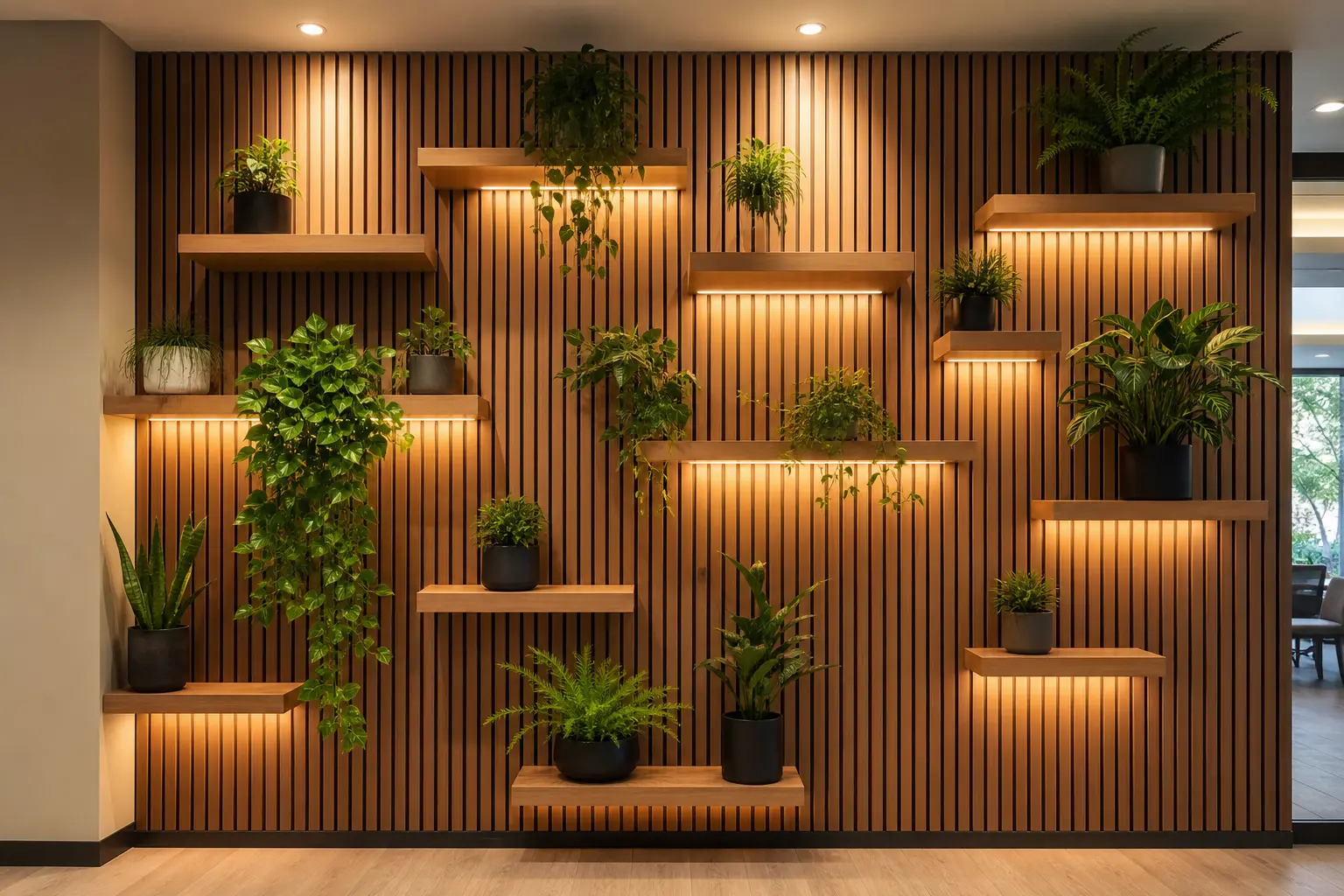
Cover an entire wall in vertical wood slats, then mount two or three floating shelves across it at staggered heights. The slats behind create a rhythm of light and shadow that a flat wall never could, and the staggered shelf heights let trailing plants hang without crowding whatever sits on the shelf below. This is one of the more involved projects on this list, since a full wall of slats takes real time to install, but it turns an entire wall into a single cohesive feature rather than a shelf with some decor tacked onto it.
2. Partial Slat Accent with a Single Floating Shelf
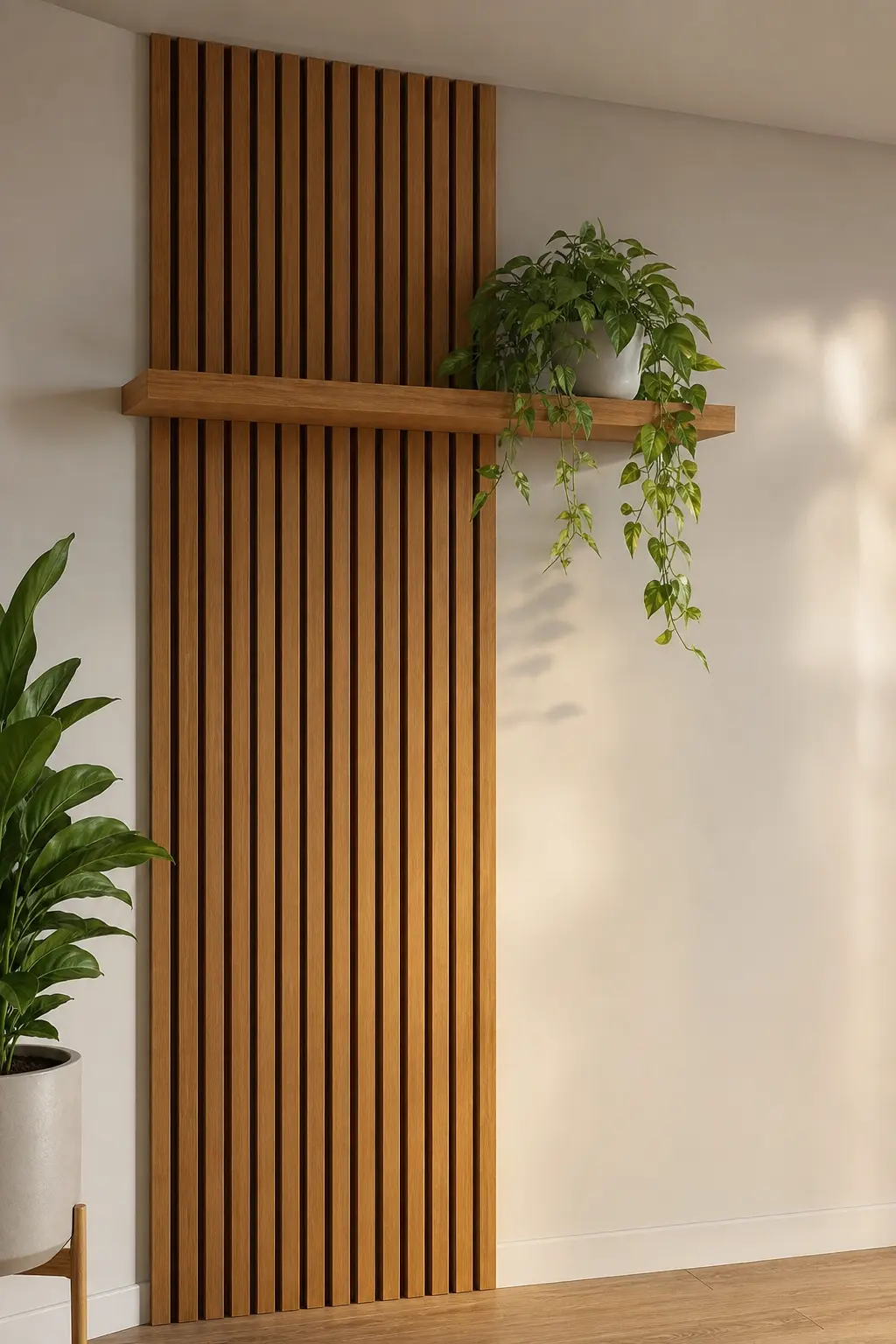
Not every wall needs full coverage. A slat panel running just 3 to 4 feet up from the floor, or centered as a horizontal band, paired with one floating shelf mounted across it, gives most of the visual impact of a full slat wall without the material cost or install time. This works especially well behind a couch or console table, where the lower portion of the wall gets the most visual attention anyway.
3. Vertical Slats Framing a Central Shelf Display
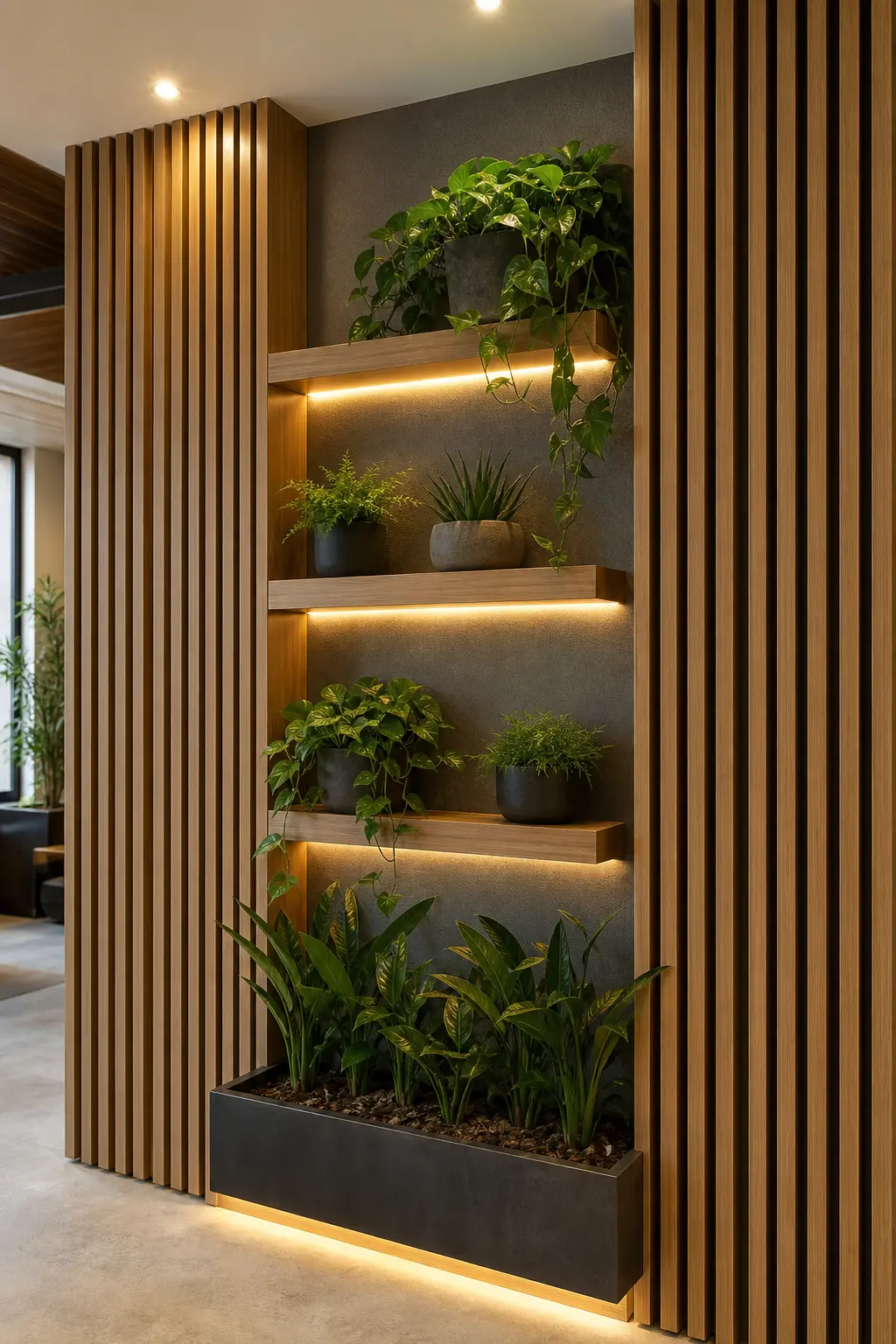
Rather than covering the whole wall, run vertical slats only on either side of a central shelf, leaving the area directly behind the shelf itself as flat wall or a contrasting paint color. This draws the eye straight to the plants in the middle, since the slats act almost like a frame rather than a full backdrop. It’s a good option for anyone who wants the textured look without committing to slats across an entire wall.
4. Wood Slat Wall with a Ladder Style Shelf Layout
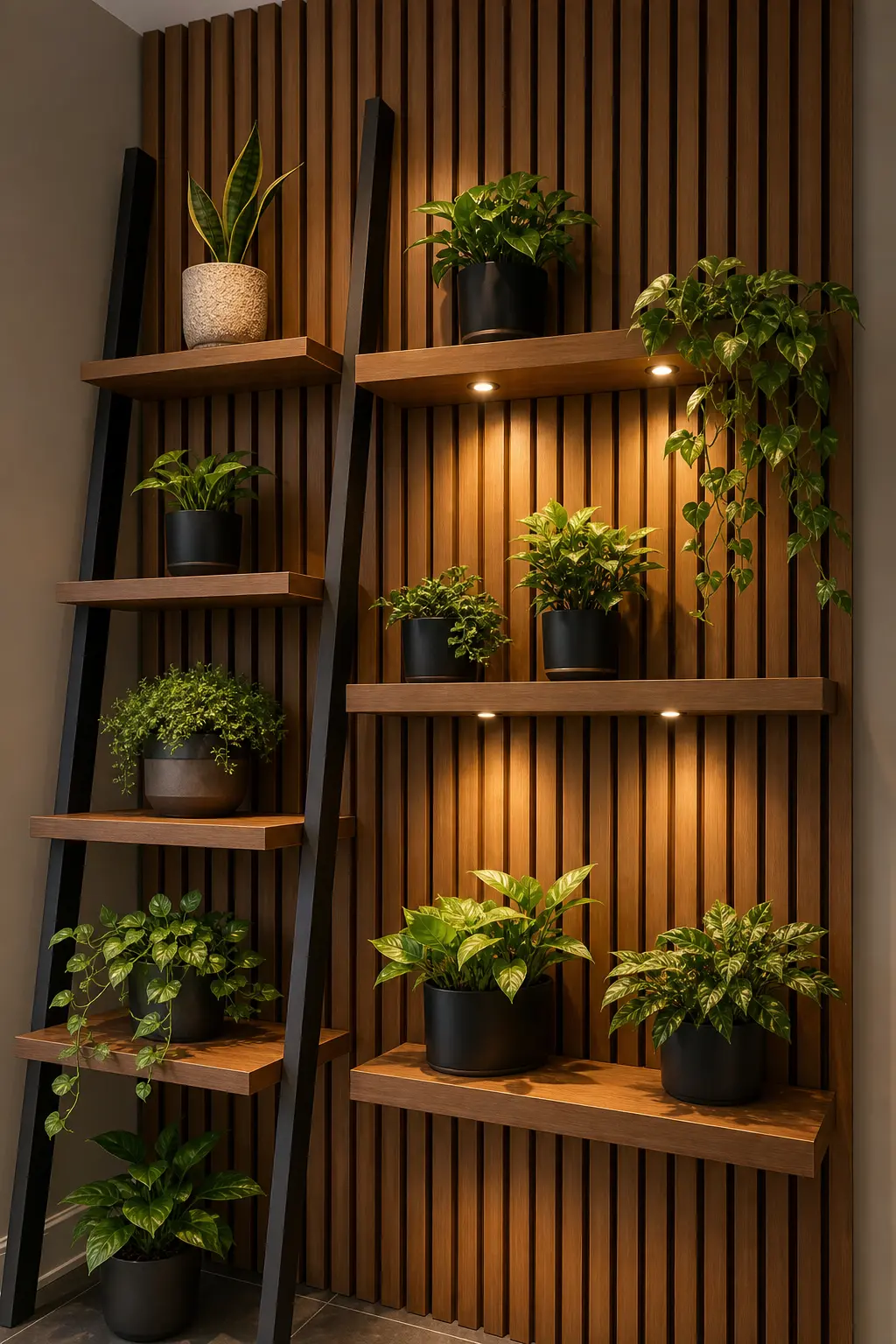
Instead of straight horizontal shelves, mount a few shorter shelves in a staggered, diagonal pattern that echoes the rungs of a ladder, all against a slat backdrop. This layout naturally varies the shelf depths and spacing, which keeps the eye moving across the whole wall instead of settling on one flat row. It suits taller walls especially well, since the diagonal pattern makes good use of vertical space that a single row of shelves would leave empty.
5. Horizontal Slat Panel with Wide Display Shelves
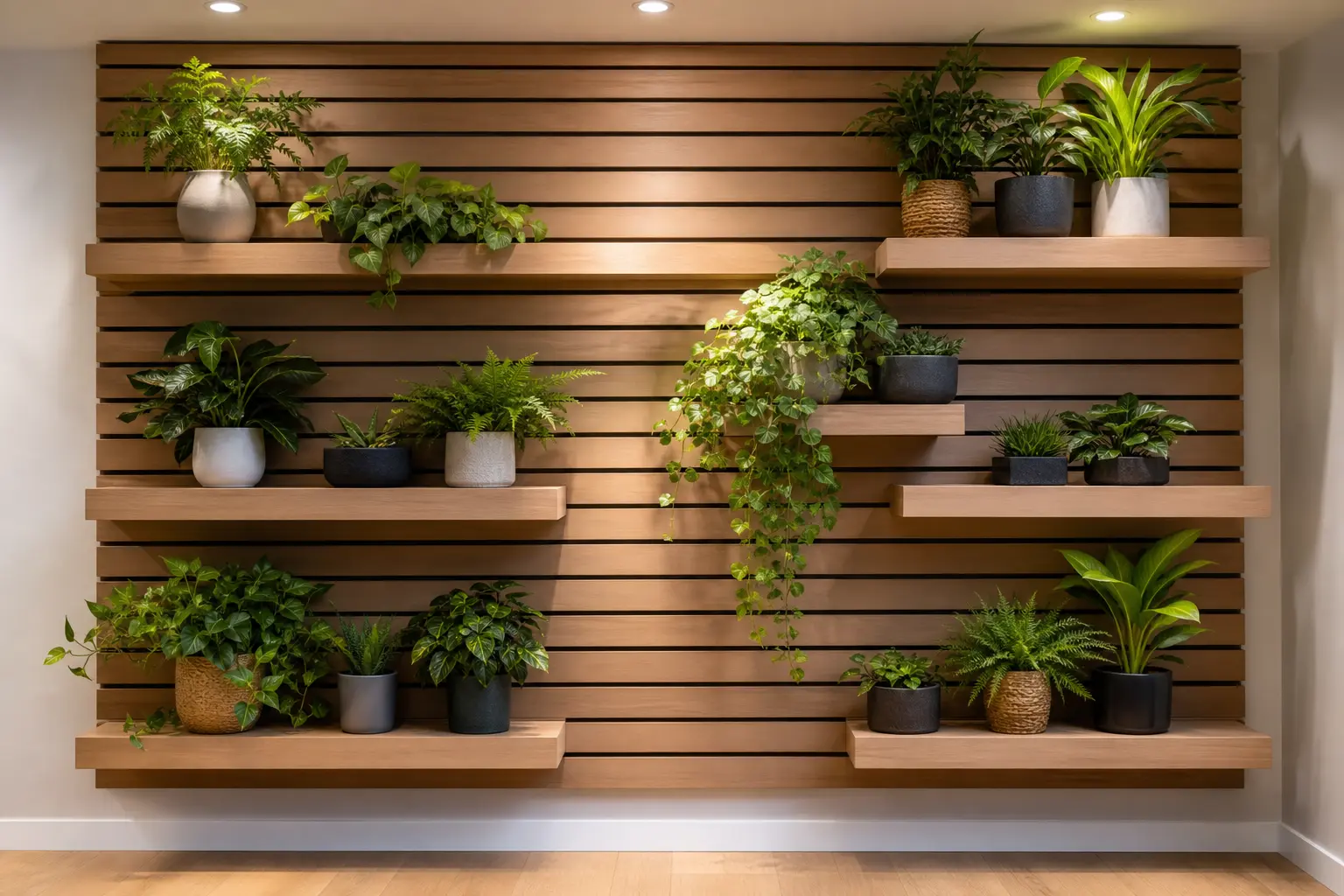
Horizontal slats create a different visual effect than vertical ones, generally making a wall feel wider rather than taller. Pair horizontal slats with a few wide, deep shelves, at least 8 to 10 inches, and there’s enough room for larger potted plants rather than just small succulents or trailing varieties. This combination suits wider walls in open living rooms better than narrow hallway spaces, where the horizontal lines might feel a bit cramped.
6. Slat Wall Behind a Reading Nook with Plant Shelves
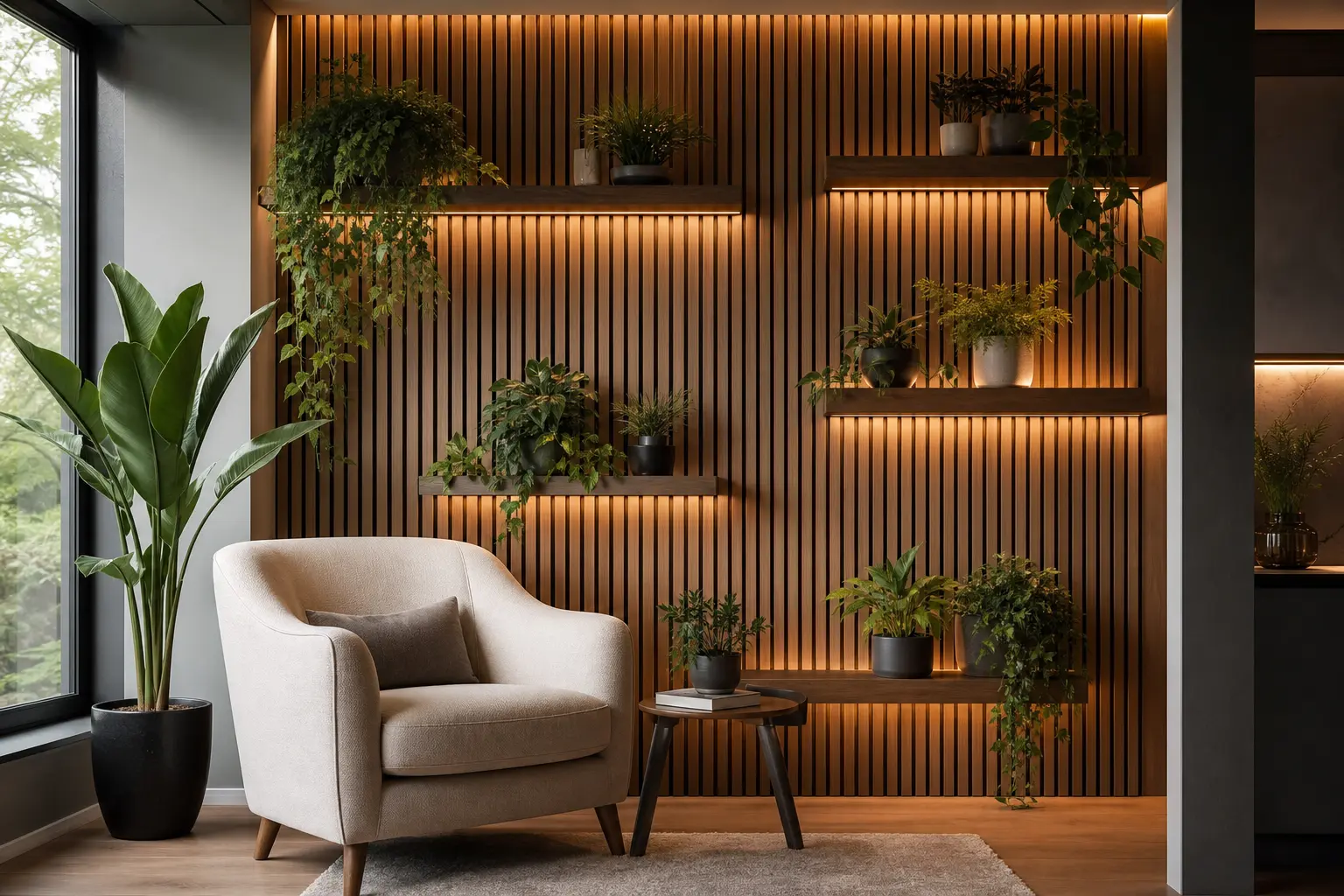
A slat wall makes a natural backdrop for a reading nook, and adding one or two small floating shelves at chair height gives the spot somewhere to rest a small plant, a book, or a warm reading lamp. The texture behind the chair adds coziness that a flat wall can’t quite manage on its own, and a single trailing plant on the shelf softens the whole corner further. This idea works well in a corner that already has a chair but has always felt a bit bare behind it.
7. Two Tone Wood Slat Wall with Mixed Shelf Depths
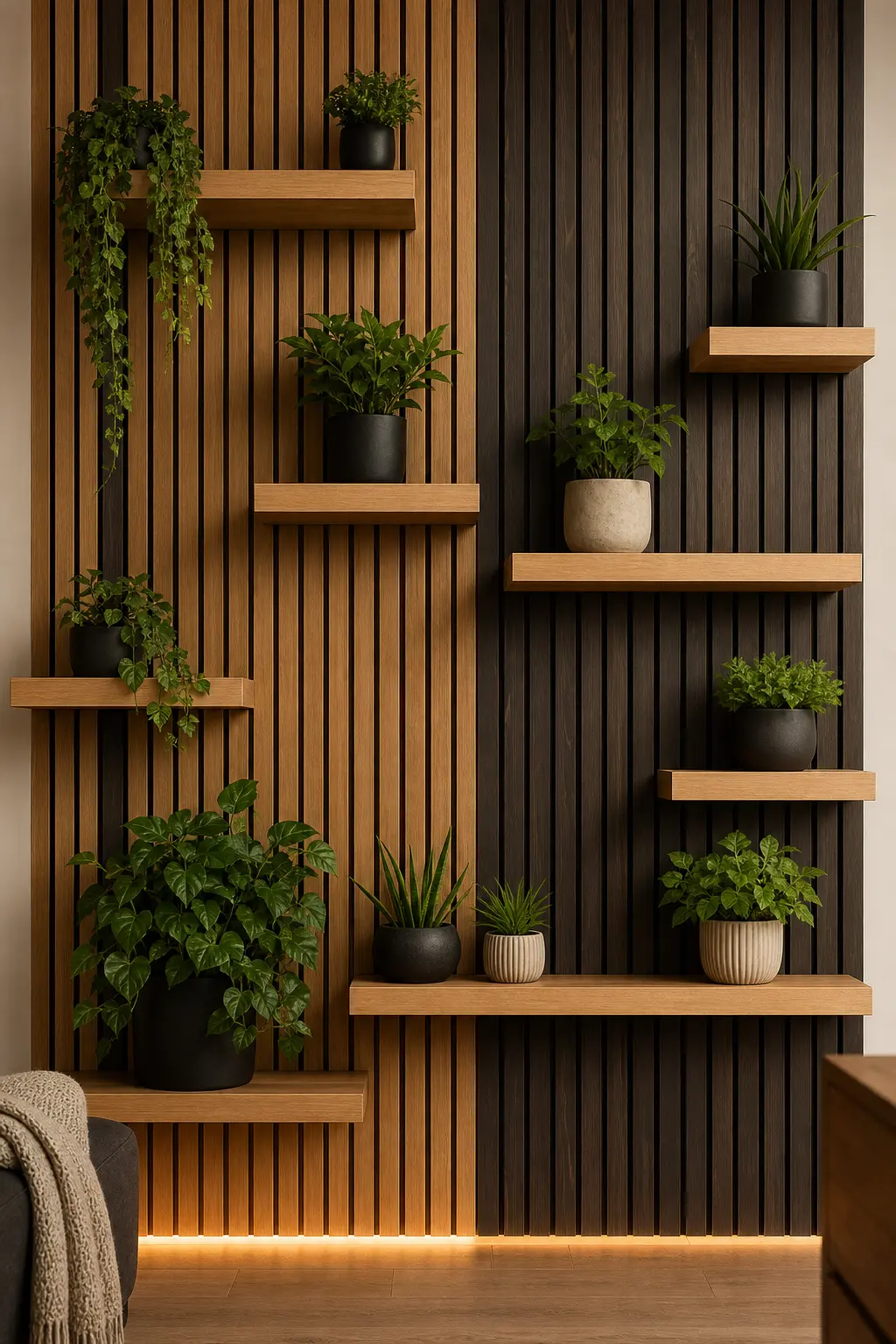
Mixing two wood tones, a lighter and a darker slat finish, in alternating sections adds visual interest beyond what a single uniform wood tone provides. Pair this with shelves of varying depths, some shallow for small pots and some deeper for larger plants, and the wall reads as more layered and considered than a uniform slat wall with matching shelves throughout. This idea takes a bit more planning than most others on this list, since the two wood tones need to work together rather than clash.
8. Slat Paneled Alcove with a Recessed Shelf
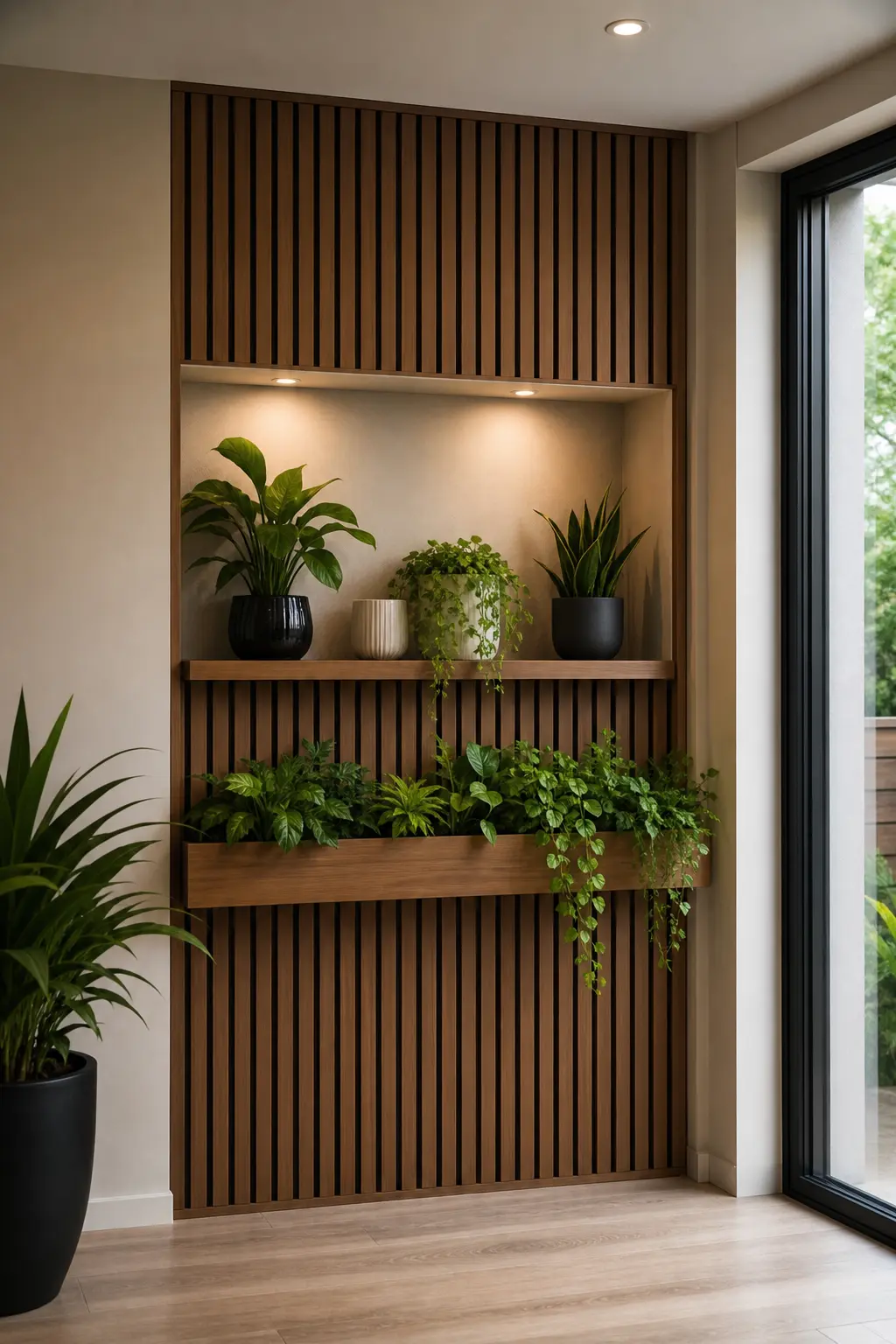
If a wall has a built in alcove or recessed nook, line the inside with wood slats and mount a shelf partway up rather than at the very top or bottom. The recessed format naturally frames the plants sitting there, and the slats add texture in a space that’s often left as plain drywall even when the rest of the room gets more design attention. This works particularly well in entryways or hallways with existing architectural nooks that haven’t been used for much beyond storage.
9. Slat Wall with Hidden Shelf Lighting
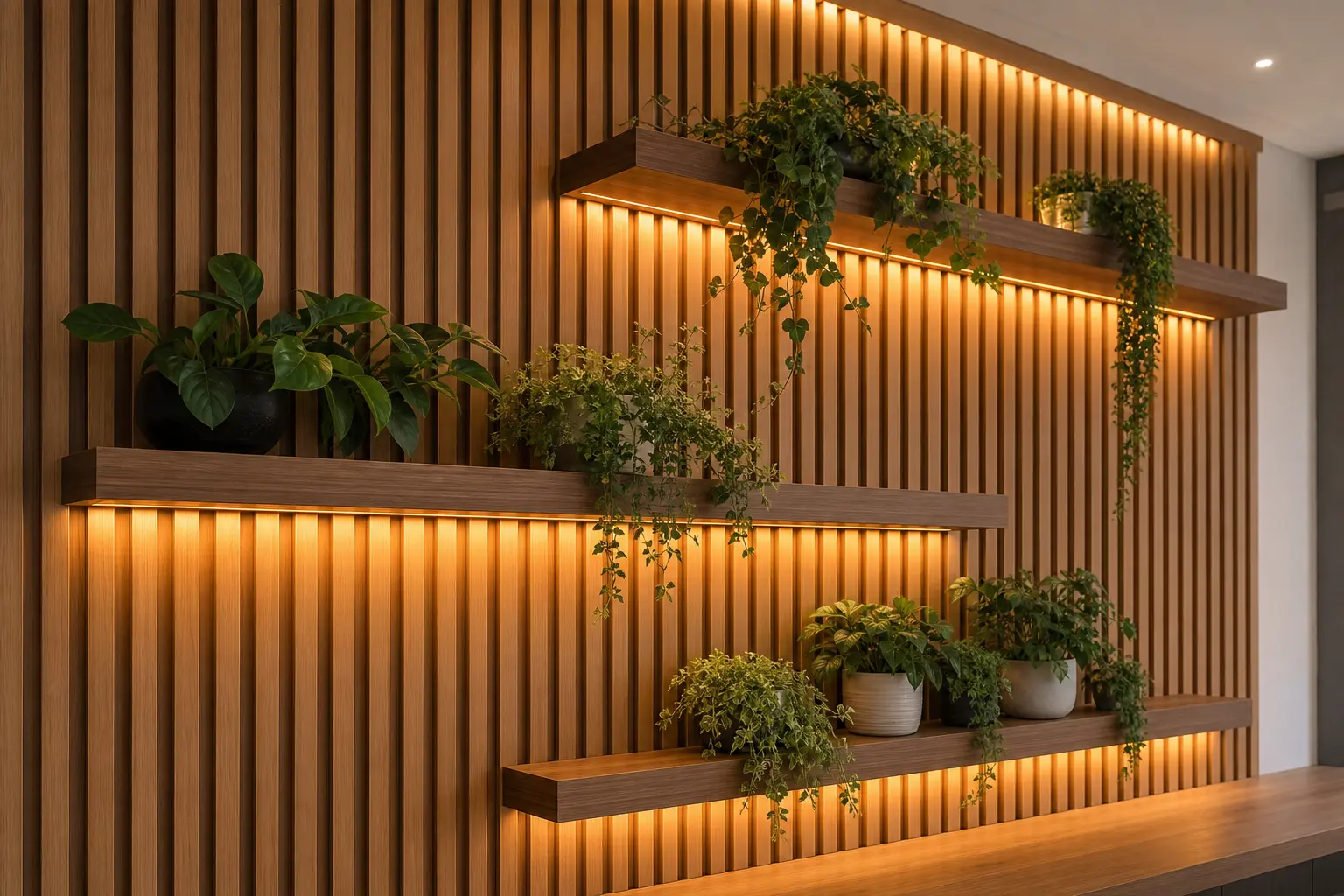
Add a thin LED strip along the underside of each floating shelf mounted against a slat wall, and the light picks up the texture of the wood in a way that daytime lighting alone doesn’t. At night, the combination of warm light and slatted shadow gives the wall a completely different character than it has during the day. Keep the light on a dimmer, since full brightness tends to flatten the texture rather than highlight it the way a softer glow does.
10. Minimalist Slat Strip with One Long Floating Shelf
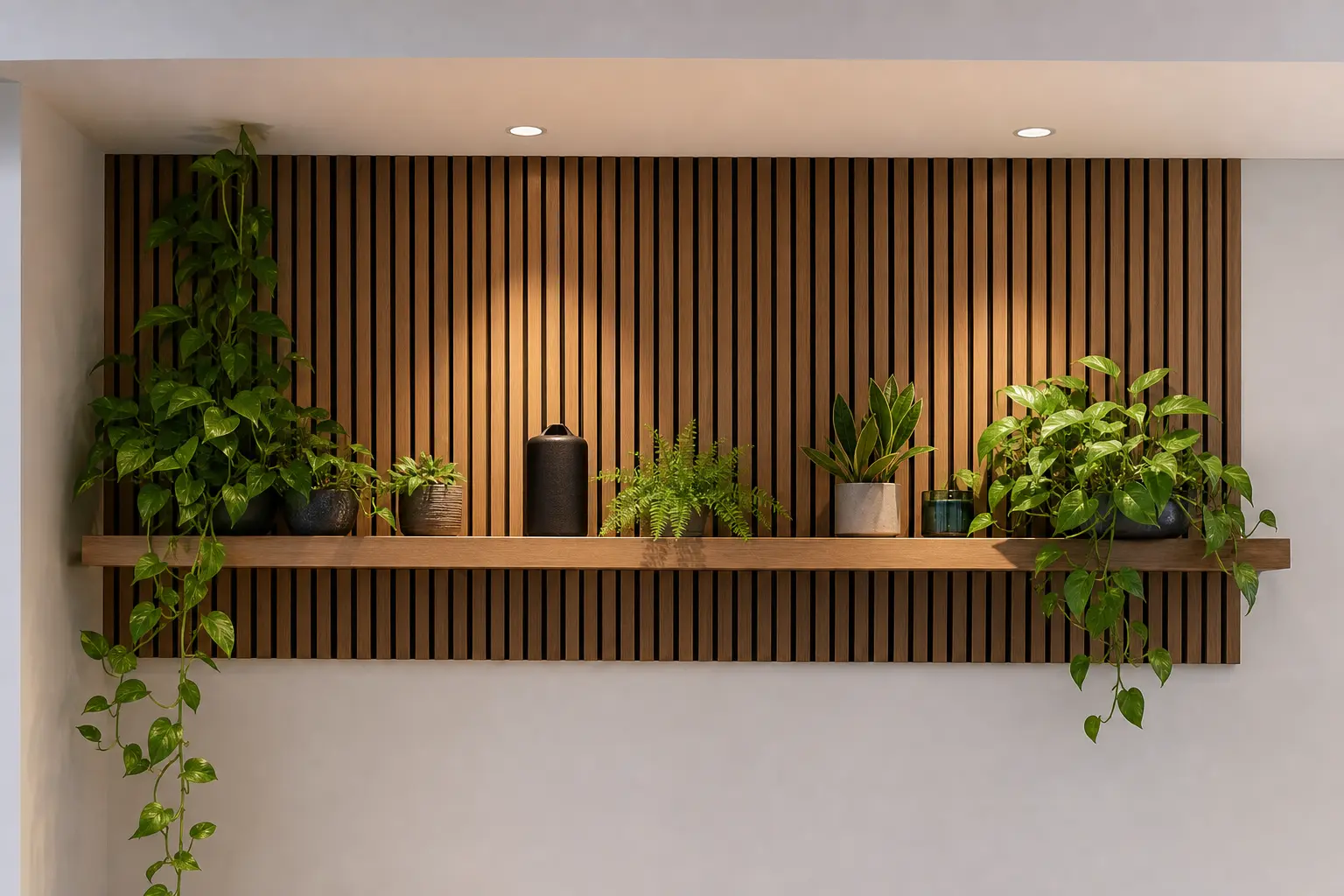
For the simplest version of this pairing, run a single narrow band of slats, maybe 12 to 18 inches tall, with one long floating shelf mounted directly in front of it. Style the shelf with just a few plants spaced apart rather than crowded together, letting the slat texture behind do most of the visual work. This is the easiest and least expensive option on this list, since it needs only a small amount of slat material and a single shelf to complete.
Mistakes to Avoid
- Choosing a slat spacing too wide or too narrow for the room’s scale, which can look either sparse or busy
- Mounting shelves before the slat panel is fully secured, risking uneven weight distribution over time
- Overloading shelves with plants too heavy for the bracket rating, especially with ceramic or concrete pots
- Skipping a finish or sealant on real wood slats, which can lead to warping in humid rooms over time
- Using cool white lighting instead of warm tones, which can make the wood look washed out rather than rich
- Ignoring stud placement when mounting both the slat panel and the shelves themselves
Frequently Asked Questions
What type of wood works best for a slat wall behind plants? Engineered wood slat panels, often sold in pre made kits, tend to hold up well in most rooms and resist warping better than solid raw wood, especially in rooms with higher humidity from nearby plants.
How much does a wood slat accent wall typically cost? A partial wall or accent section usually runs 200 to 600 dollars in materials, while covering a full wall can run 800 dollars or more depending on the wood type and finish chosen.
Do I need special tools to install wood slat panels myself? Basic tools like a level, stud finder, and a saw for cutting panels to size cover most DIY installs, though pre cut slat kits reduce the amount of cutting needed considerably.
Can a slat wall work in a rental apartment? Some slat panel systems are designed to mount with minimal wall damage, though a full wall installation usually isn’t reversible enough for most rental agreements, so check with a landlord before committing to anything beyond a small, removable panel.
How do I keep the wood from looking dark or the room feeling smaller? Choosing a lighter wood tone, keeping the slat coverage partial rather than full wall, and pairing the wood with plenty of natural light all help keep a slat wall from making a room feel closed in or heavy.
Conclusion
A plant wall works best when the wall itself is doing some of the work, not just the plants sitting in front of it. Wood slats add exactly that kind of texture, giving floating shelves a backdrop that makes the whole display feel considered rather than assembled piece by piece. Whether that means a full slat wall or just a narrow strip behind a single shelf, these indoor plant wall ideas show how much a bit of wood and a few well placed shelves can do for an otherwise plain wall.