10 Modern Scandinavian Dining Room Ideas for a Luxury & Elegant Space
You’ve leaned into Scandinavian style for your dining room, all light wood and clean lines, but somewhere along the way it started to feel more sparse and unfinished than elegant and calm. Modern Scandinavian dining room ideas built for a genuinely luxury feel solve that by adding warmth and intention back into the restraint, using natural materials, soft lighting, and careful curation rather than simply removing everything from the room. The goal isn’t more decor, it’s better chosen decor working harder within a simpler palette.
1. Understand How Scandinavian Style Achieves Elegance Through Restraint
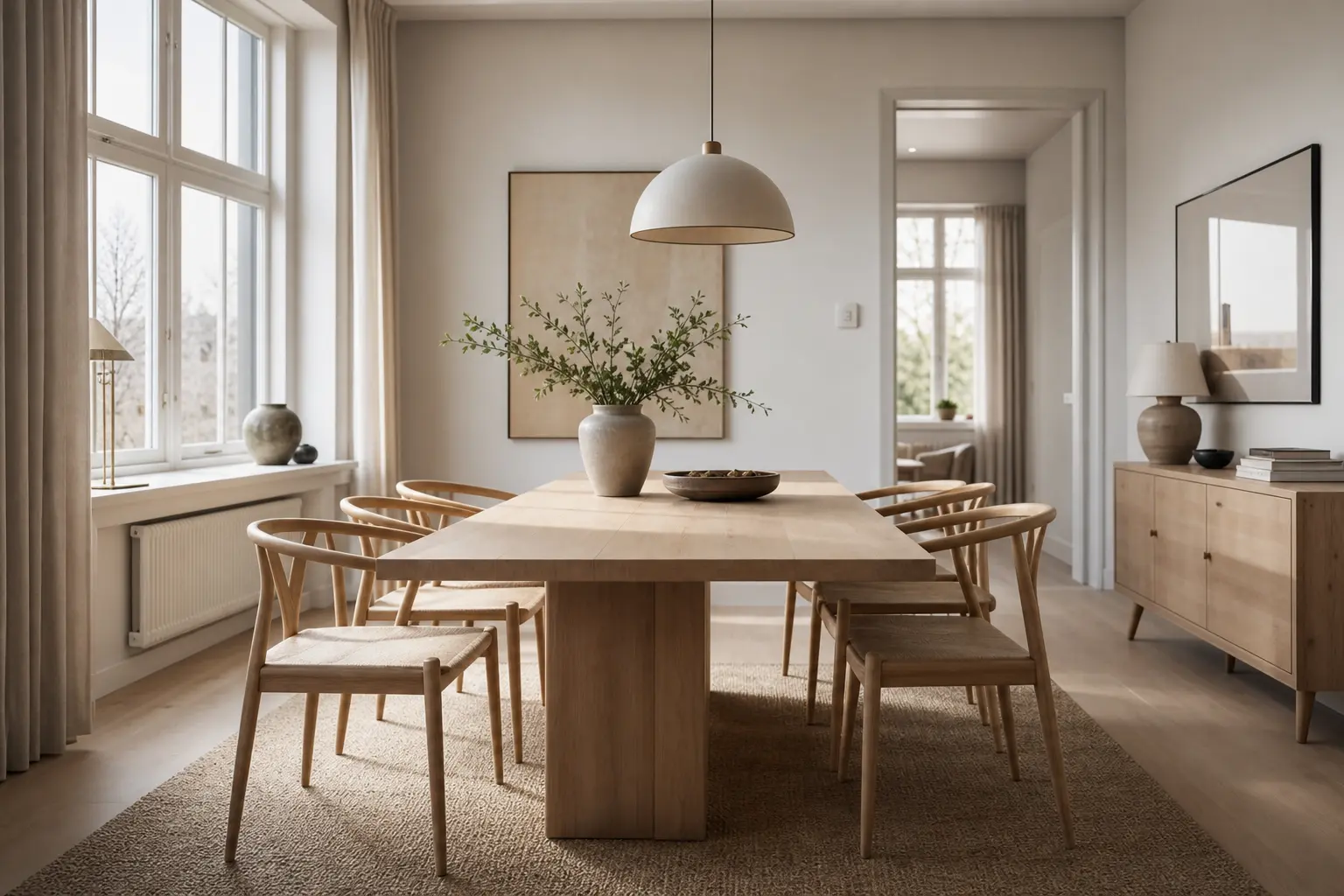
Scandinavian design has always centered on function and simplicity, but the elegant, luxury version of that style relies on quality materials and thoughtful proportion rather than simply having fewer objects in the room. A well made light oak table with clean joinery reads as more elegant than a busier room full of mismatched pieces, precisely because every element earns its place. This distinction between empty minimalism and considered restraint is the core idea behind making a Scandinavian dining room feel genuinely upscale rather than merely sparse.
The elegance comes from getting a small number of decisions right: the wood tone, the textile choices, and the lighting, rather than layering in additional decor to compensate for a room that feels unfinished. Each element in a well executed Scandinavian dining room should feel deliberately chosen rather than simply present. That intentionality is ultimately what separates a luxury minimalist room from one that just looks empty.
2. Choose Light Wood Tones as the Room’s Foundation
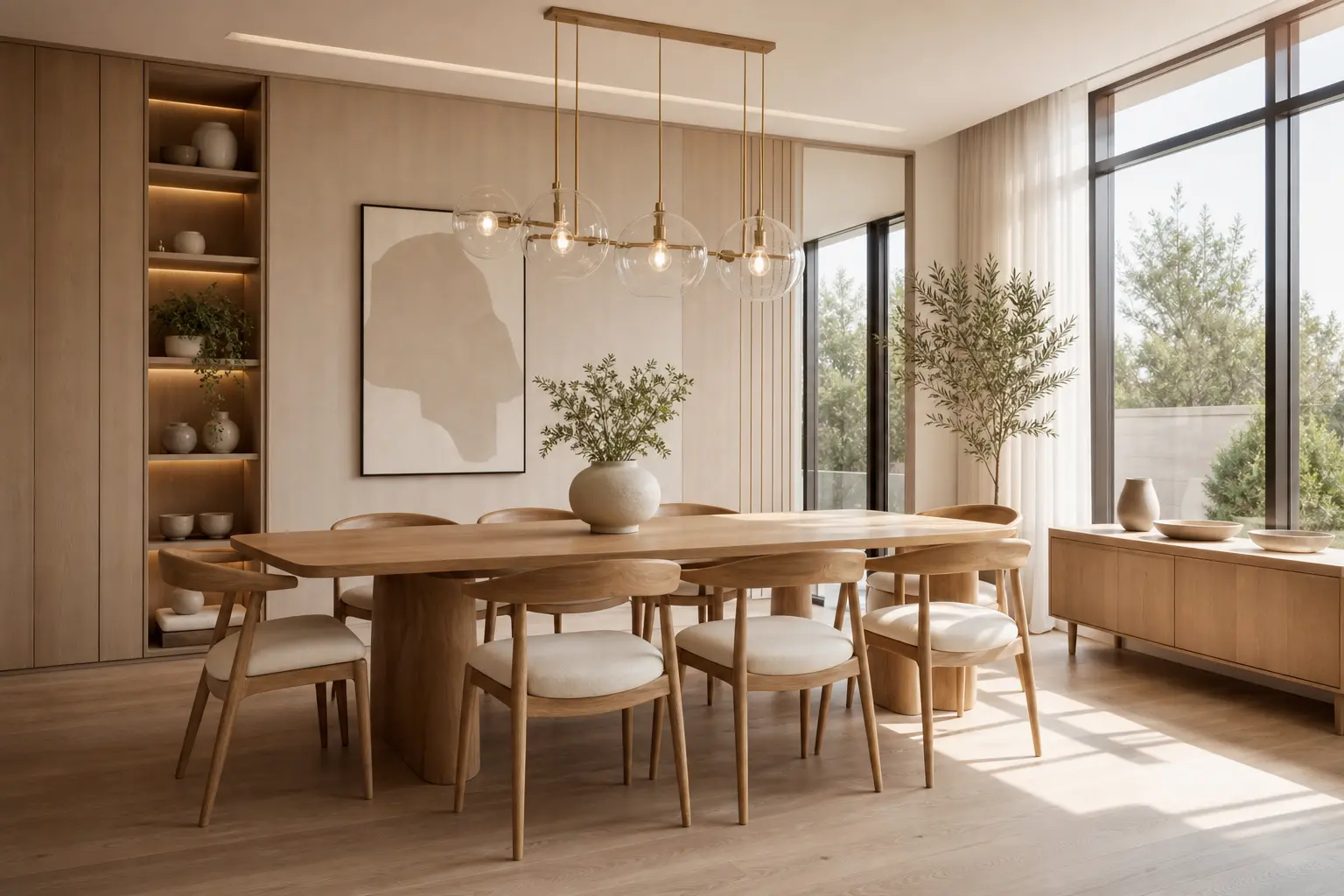
Light oak, ash, or birch remain the defining wood tones of Scandinavian design, chosen historically for their ability to reflect available light during long Nordic winters, and they continue to suit the style’s bright, airy aesthetic today. Look for a table and chairs with visible natural grain rather than a heavily processed, uniform finish, since that grain variation adds subtle texture and authenticity to an otherwise pared back room. Solid wood construction, rather than a light colored laminate, holds up better over time and typically develops a warmer patina as it ages.
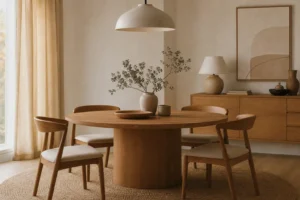
Keep any additional wood furniture in the room, a sideboard or a side table, in the same light tone family as the dining table for a cohesive, unified look. Introducing a second, contrasting dark wood tone can work in small doses but generally moves the room away from the light, airy quality that defines Scandinavian style at its core. Consistency in wood tone across the room’s furniture pieces is one of the simplest ways to keep the space feeling intentional.
3. Layer Natural Textiles for Warmth Without Clutter
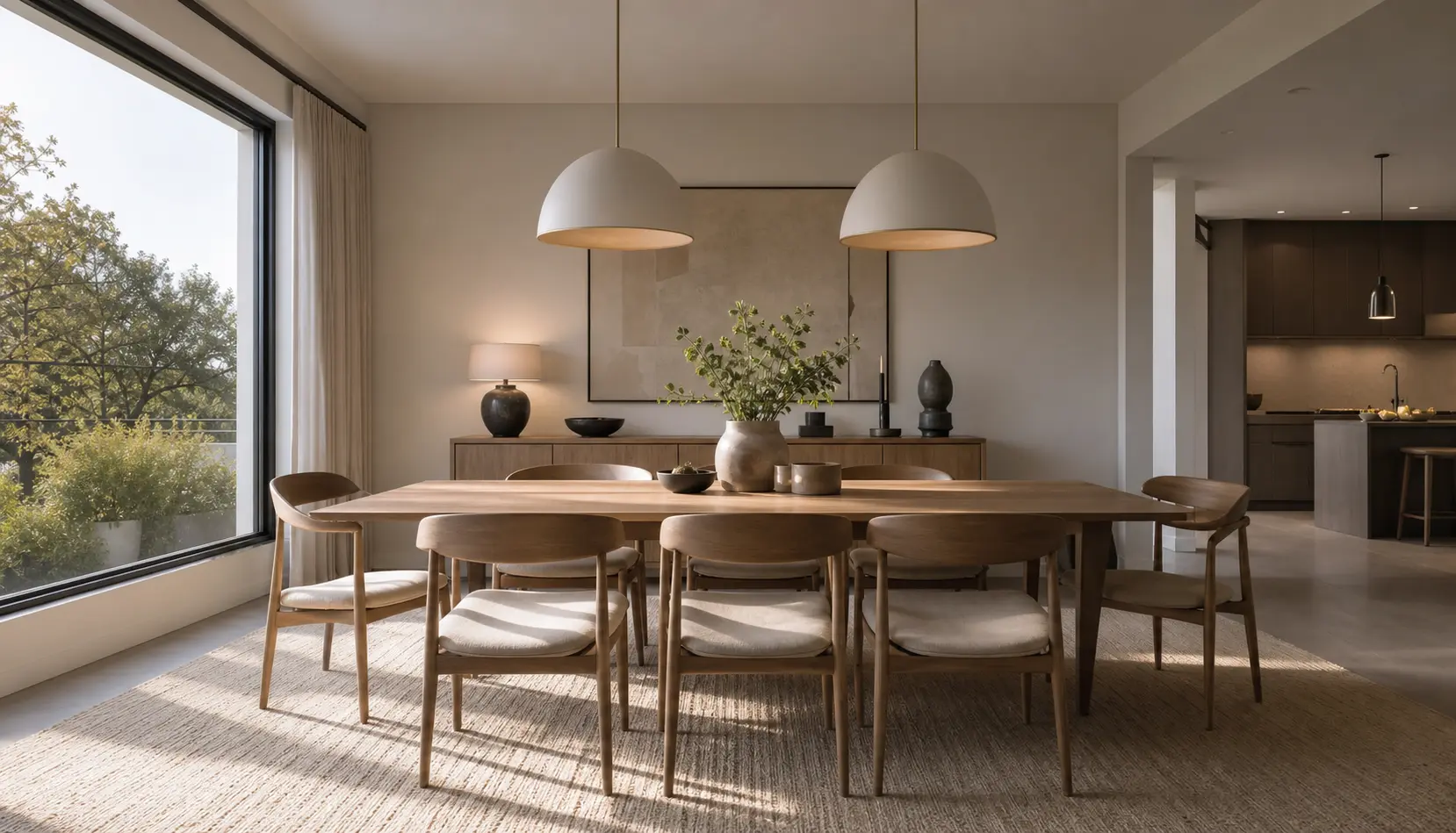
Linen table runners, wool seat cushions, and a natural fiber rug all add warmth and texture to a Scandinavian dining room without introducing visual clutter, since these materials work within the same soft, neutral palette the style relies on. A linen runner down the center of the table softens the wood surface beneath it and adds a bit of movement to an otherwise simple tabletop. Wool cushions on wood frame chairs add comfort and a tactile layer that keeps the seating from feeling too austere.
Keep textile patterns minimal, solid neutral tones or very subtle texture rather than bold prints, since pattern heavy textiles tend to pull the room away from Scandinavian style’s core simplicity. A cream, oatmeal, or soft grey palette across all textiles in the room supports the light wood tones rather than competing with them. This restraint in textile choice is what allows the warmth to come through without the room losing its clean, considered feel.
4. Add a Sculptural Pendant as the Room’s Quiet Statement
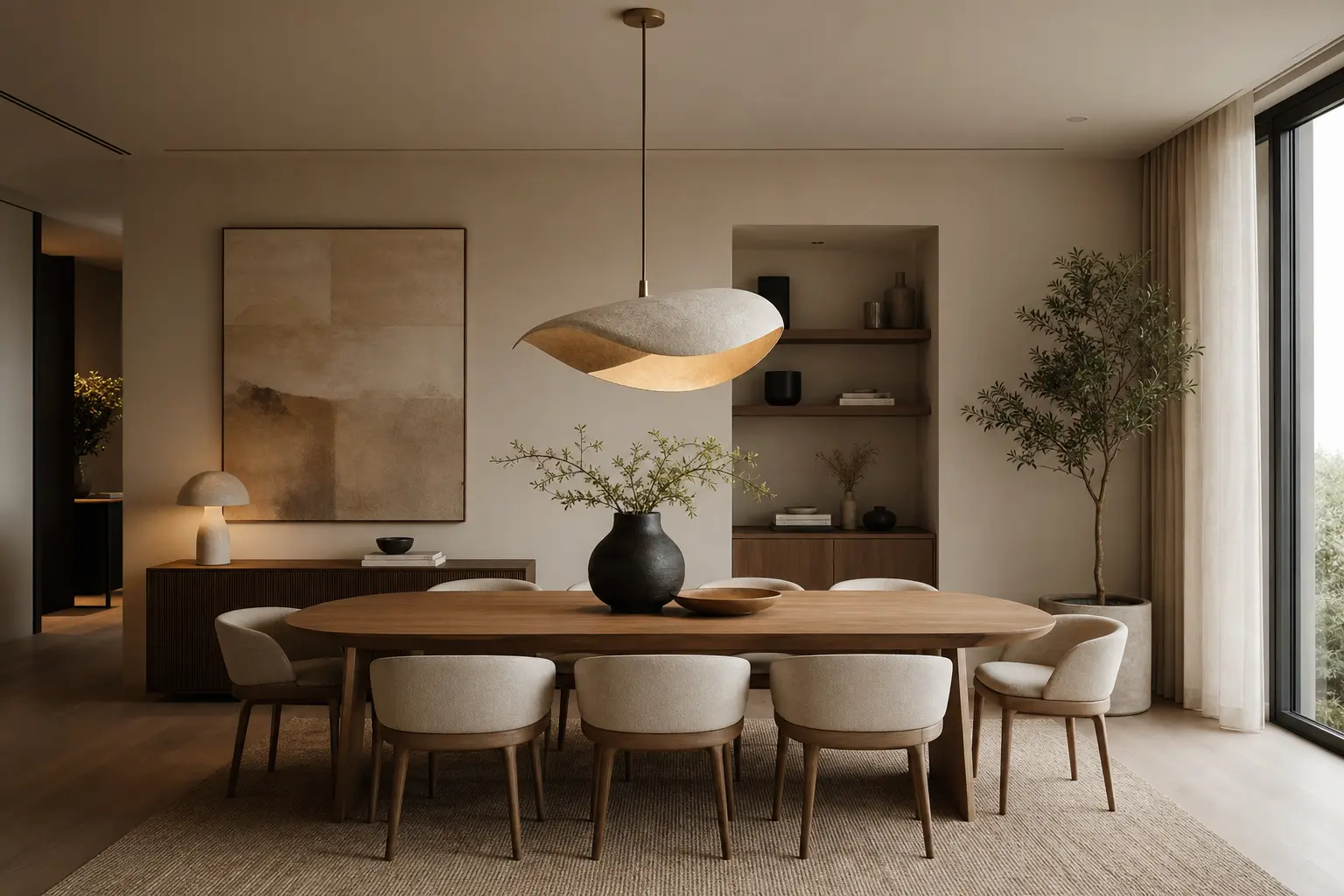
A single well designed pendant, often in paper, linen, or a simple ceramic material, serves as the room’s main statement piece within an otherwise restrained space. Scandinavian lighting design tends to favor organic, sculptural shapes over ornate or heavily embellished fixtures, so look for a pendant with a soft, rounded silhouette rather than anything overly geometric or industrial. Hang the fixture centered above the table at 30 to 36 inches above the surface, the same general guideline that applies across most dining room lighting.
Choosing Materials That Fit the Palette
A paper or linen shade pendant diffuses light softly and adds a warm, glowing quality once evening sets in, which suits the calm mood Scandinavian dining rooms are typically going for. A simple ceramic pendant in a matte white or soft stone finish works as an alternative if a fabric shade doesn’t suit the room’s other materials. Either choice should read as a single, quiet statement rather than a bold, attention grabbing fixture that pulls focus away from the room’s overall balance.
5. Mix Chair Materials for Texture Without Losing Simplicity
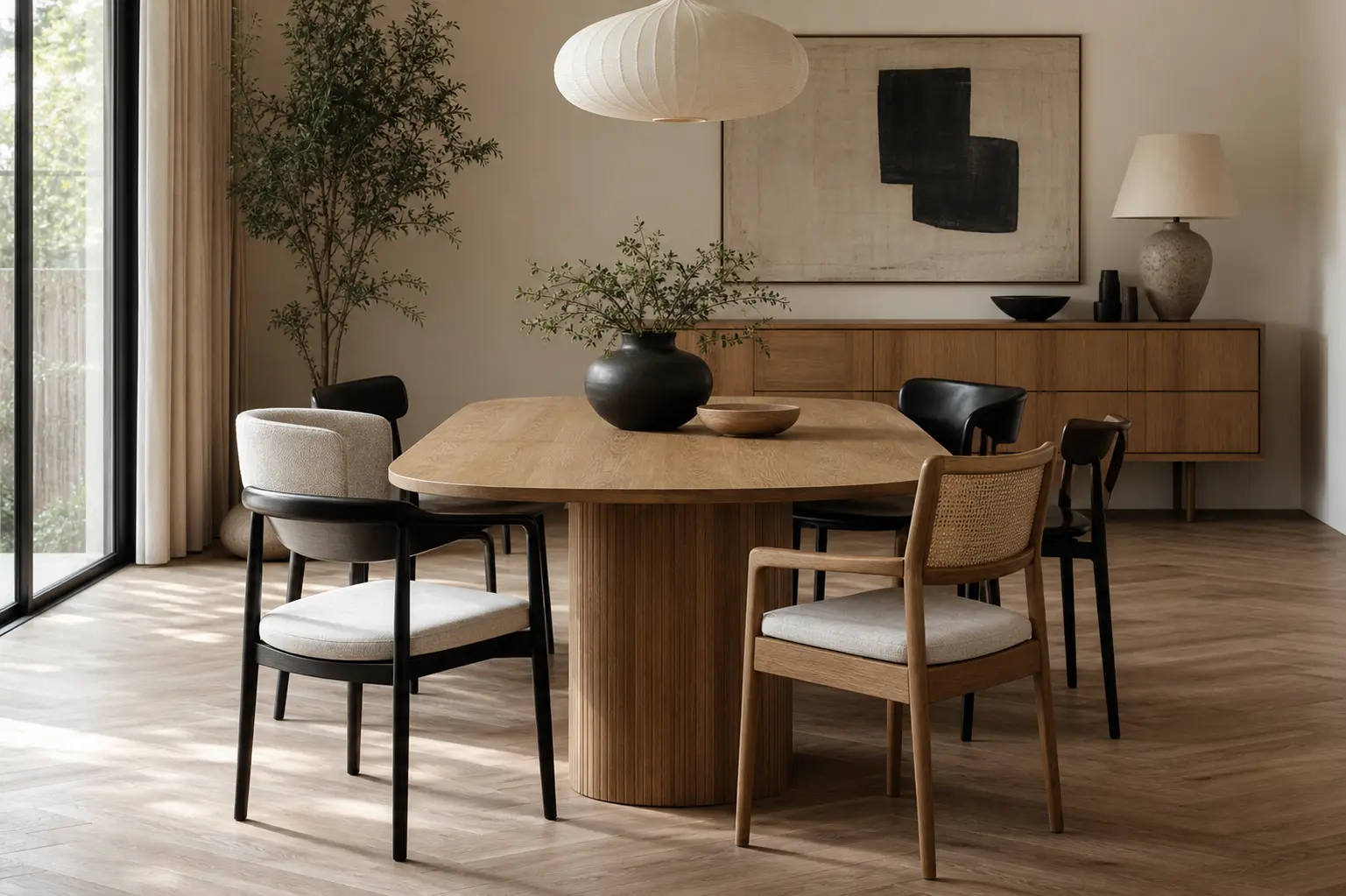
Pairing wood frame chairs with a few upholstered or woven seat options adds textural variety to a Scandinavian dining room without abandoning its core simplicity, as long as the materials stay within the same light, neutral palette. A common approach uses simple bentwood or light oak chairs around most of the table, with two chairs in a woven rattan or a soft boucle upholstery for contrast. This mix avoids the flatness of an entirely matched chair set while still reading as cohesive rather than eclectic.
Keep the chair silhouettes relatively similar in scale and simplicity even while varying the material, since Scandinavian style generally favors clean, unfussy shapes across all its furniture choices. A dramatically different chair style mixed in, an ornate carved chair for instance, would clash with the restraint defining the rest of the room. Subtle material variation within a consistent overall shape language keeps the mix feeling intentional.
6. Keep the Color Palette Soft and Tightly Curated
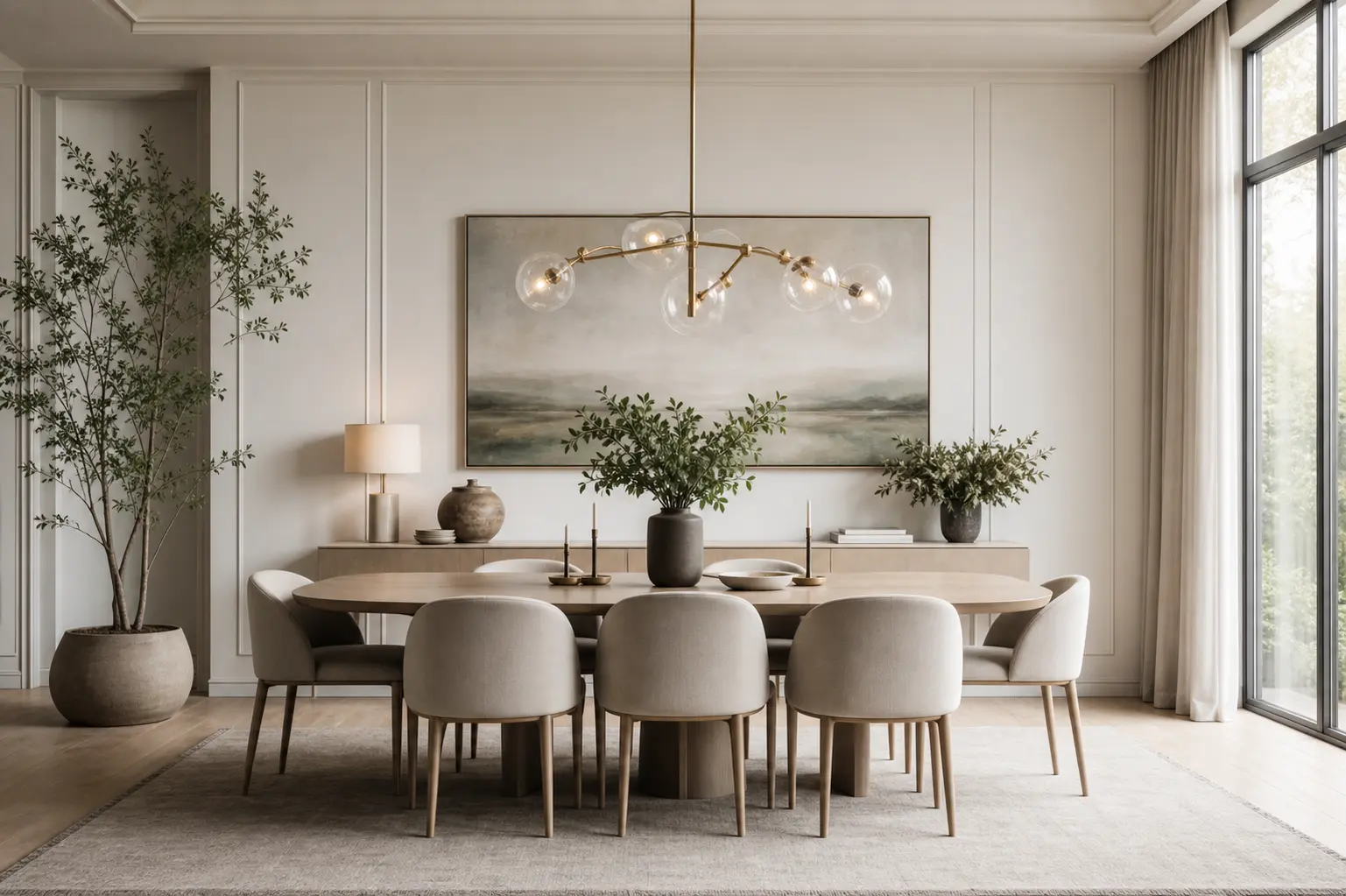
A Scandinavian dining room typically works within a tight palette of two or three tones, warm white, light oak, and a soft grey or sage green accent, rather than a wider range of competing colors. This restraint is central to the style’s calm, elegant feel, since introducing additional colors tends to pull the room away from the quiet cohesion that defines Scandinavian design at its best. Choose one soft accent color, if any, and repeat it in just a couple of spots, a cushion here, a vase there, rather than spreading it throughout the room.
Walls in a warm off white or very soft grey provide a calm backdrop that lets the natural wood tones and textiles carry the room’s visual interest. Avoid stark, cool white walls, which can push the room toward a colder, more clinical feel than the warm, elegant Scandinavian aesthetic intends. This careful, tight palette is one of the more overlooked details that separates an elegant Scandinavian room from a simply pared down one.
7. Maximize Natural Light to Support the Room’s Calm Feel
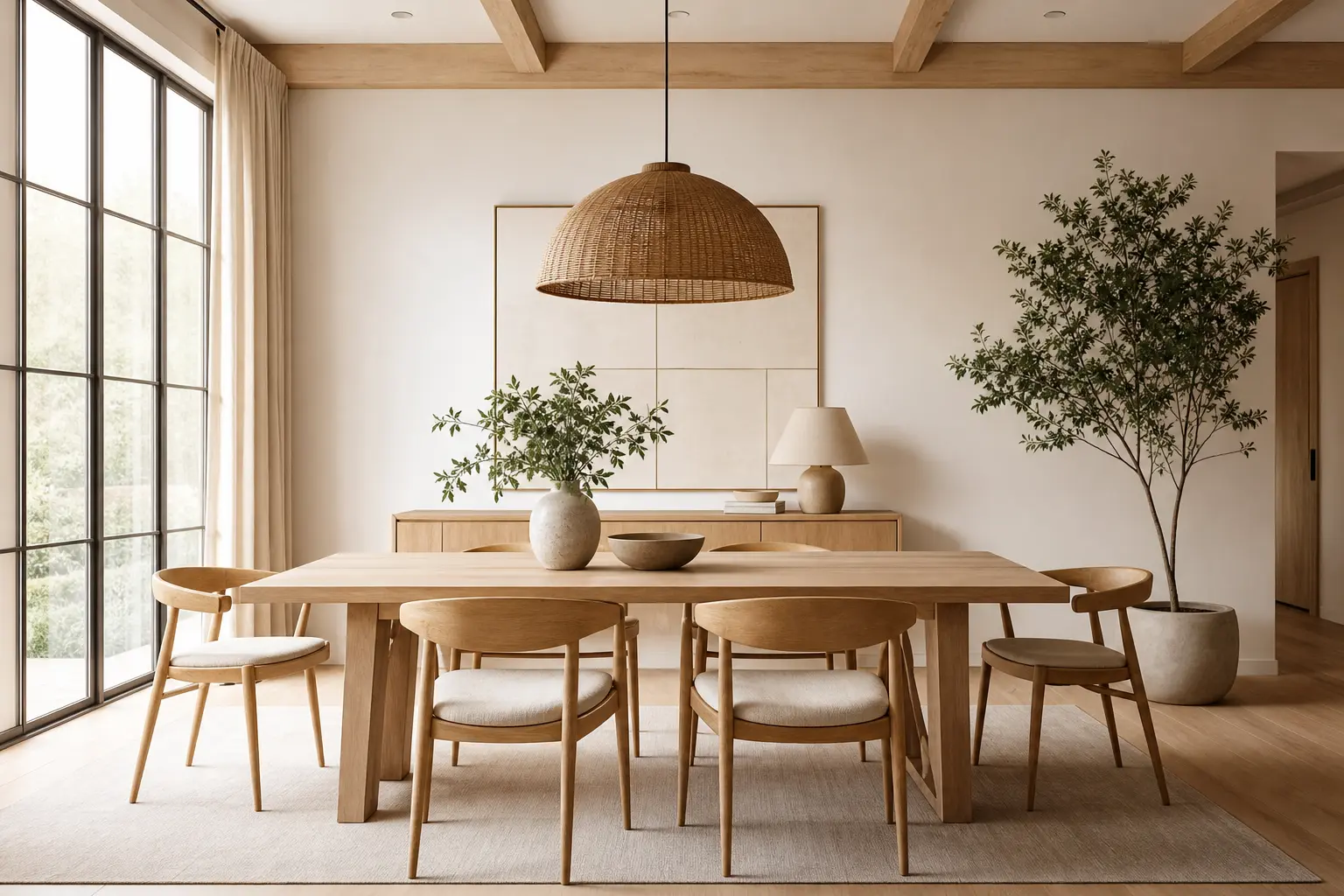
Scandinavian design has always prioritized natural light, both for practical reasons in Nordic climates and because that light supports the airy, calm feeling central to the style. Keep window treatments minimal, a simple linen curtain or none at all, rather than heavy drapery that blocks daylight from filling the room. If privacy requires some window covering, a sheer linen panel maintains the light filled quality while still offering some coverage.
In a dining room without abundant natural light, warm toned ambient lighting throughout the space, rather than a single overhead fixture, can approximate some of that same soft, diffused quality. Table lamps on a sideboard or a floor lamp in one corner add layered warmth that supports the room’s overall calm feel even after the sun goes down. This attention to light, both natural and artificial, is foundational to why Scandinavian rooms feel elegant rather than sparse.
8. Choose Ceramics and Objects With Intentional Restraint
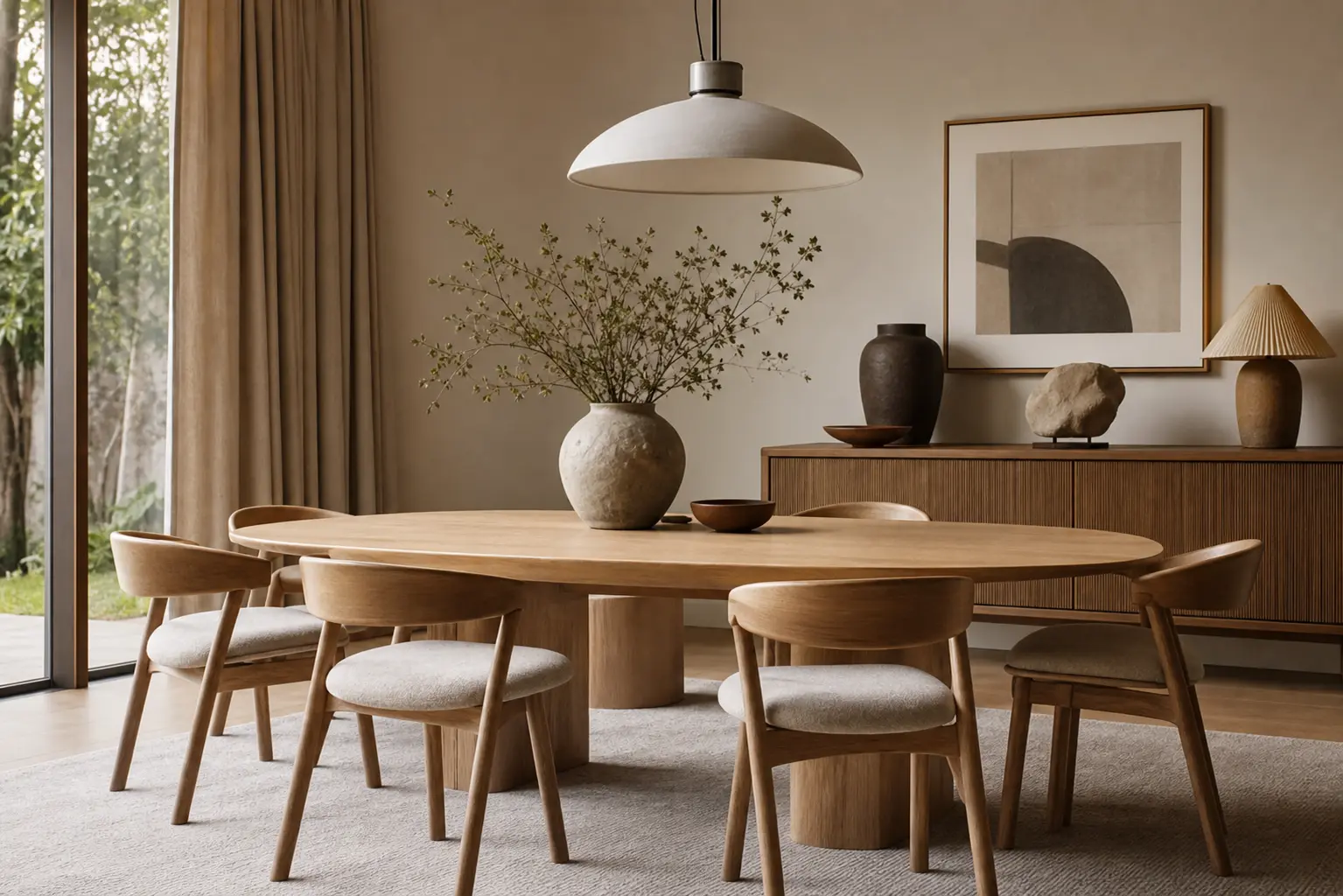
A single well made ceramic vase, a simple stoneware bowl, or one considered piece of pottery on the table or sideboard does more for a Scandinavian dining room than several smaller decorative objects scattered throughout the space. Choose pieces with visible handmade quality, a slightly irregular glaze or a subtle asymmetry, since that quality reads as more elevated than a mass produced, perfectly uniform object. This preference for a few well chosen pieces over many smaller ones is central to how the style achieves elegance without clutter.
Rotate a small number of these objects seasonally if you want variety over time, rather than adding permanently to the room’s collection of decor. A dried branch or a single stem in a simple vase can shift with the seasons without disrupting the room’s overall restraint. This kind of curated, changing detail keeps a minimal room feeling alive rather than static.
9. Add a Wool or Jute Rug to Ground the Space
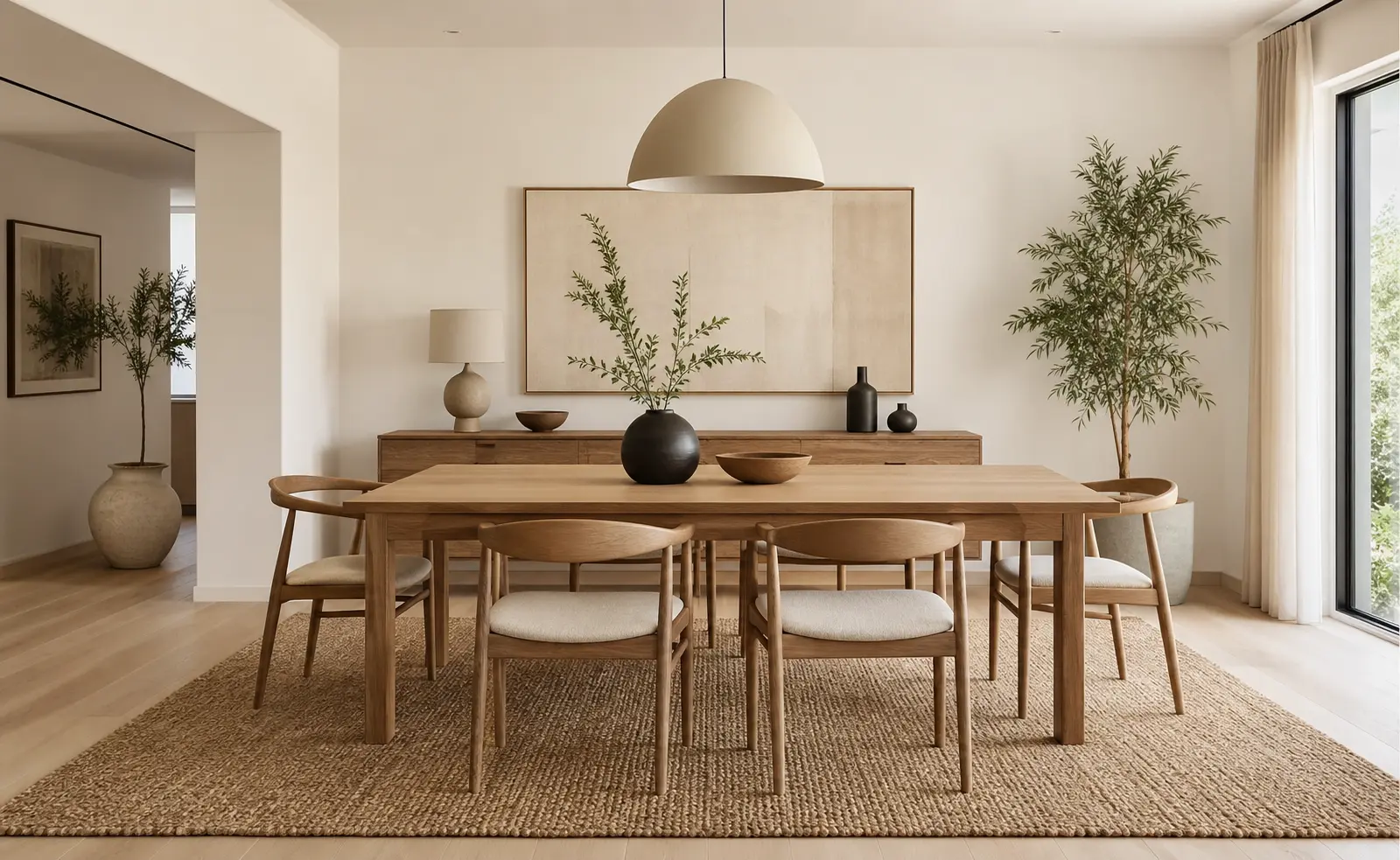
A wool rug in a soft neutral tone adds warmth underfoot and helps ground the dining table within the room, particularly on a hard surfaced floor like wood or polished concrete common in Scandinavian inspired spaces. Choose a rug that extends at least 24 inches beyond the table’s edge on all sides so chairs remain on the rug when pulled out during a meal. A subtle woven texture or a very light geometric pattern can add interest without disrupting the room’s overall calm palette.
Jute offers a slightly more textured, natural alternative to wool, particularly suited to a dining room with a more relaxed, organic feel rather than a fully polished one. Either material choice should stay within the same soft neutral family as the rest of the room’s textiles and wood tones. This grounding layer is a small addition that meaningfully supports how finished and considered the whole space feels.
10. Avoid the Trap of Making Minimalism Feel Cold
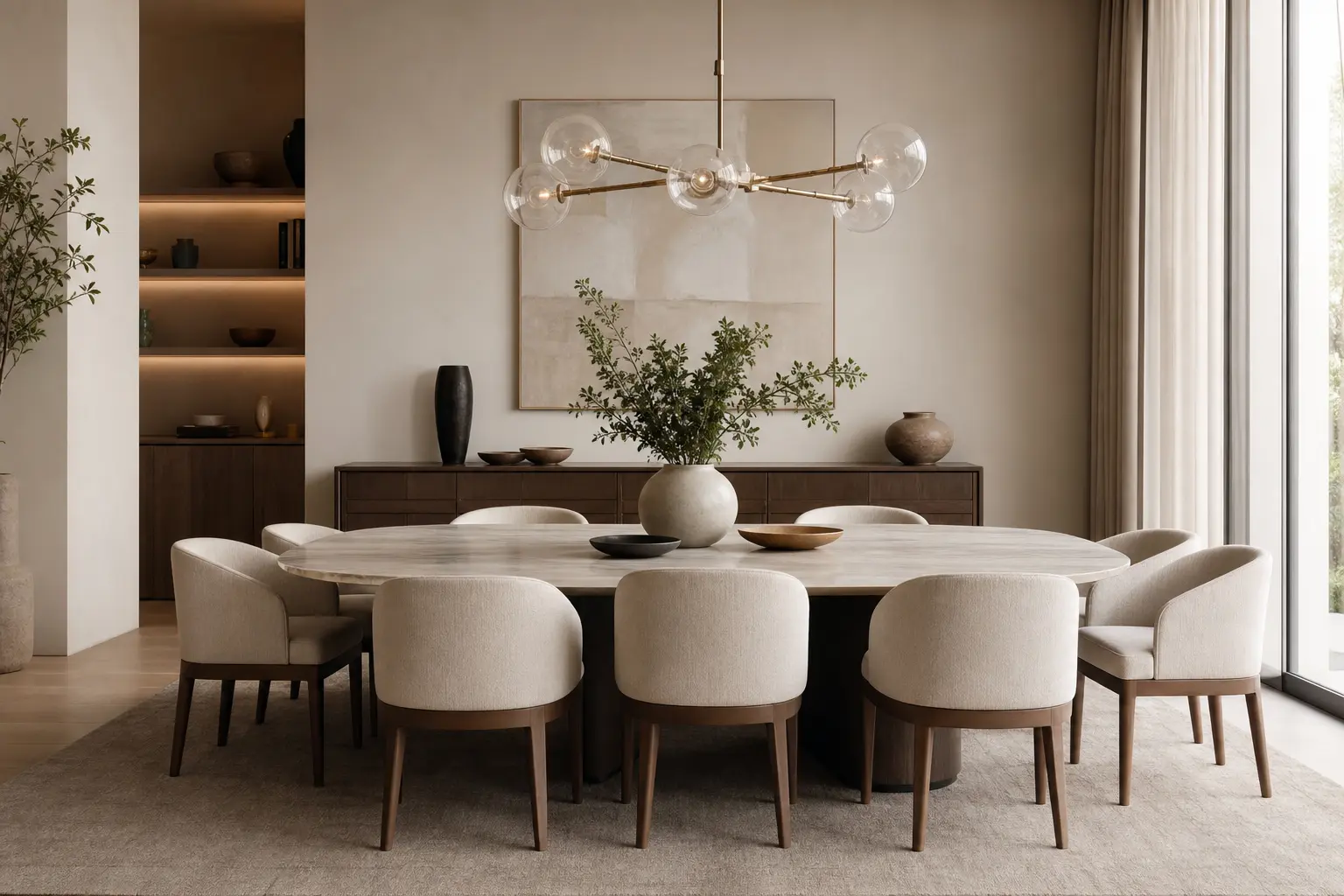
The line between elegant restraint and a room that simply feels cold and unfinished is thinner than it looks, and the difference usually comes down to warmth in materials and lighting rather than the quantity of items in the room. A Scandinavian dining room with light wood, soft textiles, and warm ambient lighting reads as inviting, while the same basic layout with cool white walls, sparse harsh lighting, and no textile layering can feel sterile despite following the same style guidelines on paper. Warmth, not just simplicity, is the real goal underlying the whole aesthetic.
If a Scandinavian room ever starts to feel more empty than calm, the fix is usually adding one more layer of natural texture or warmth, a textile, a ceramic piece, or softer lighting, rather than removing anything further. This style rewards getting the warmth right just as much as it rewards restraint, and leaning too far into bare minimalism without that warmth is the most common way the aesthetic goes wrong in practice. Checking the room against this balance regularly helps keep it feeling genuinely elegant rather than accidentally stark.
Mistakes to Avoid
- Removing so much decor that the room reads as empty rather than intentionally restrained
- Introducing a dark, contrasting wood tone that disrupts the room’s light, airy foundation
- Choosing a bold patterned textile that pulls focus away from the room’s soft, neutral palette
- Blocking natural light with heavy drapery instead of minimal or sheer window treatments
- Scattering many small decorative objects instead of choosing a few well made pieces
- Using a rug too small, leaving chair legs to catch on its edge when pulled out from the table
Frequently Asked Questions
What wood tone is most authentic to Scandinavian style? Light oak, ash, and birch are the most traditional choices, valued historically for reflecting available natural light and still central to the style’s bright, airy aesthetic today.
How do I keep a Scandinavian dining room from feeling too sparse? Focus on quality materials and a few well chosen pieces rather than removing decor entirely, and layer in natural textiles like linen and wool for warmth without clutter.
What colors work best in a Scandinavian dining room palette? A tight palette of warm white, light oak, and a single soft accent color, like grey or sage green, typically supports the style’s calm, cohesive feel better than a wider color range.
Is natural light necessary for this style to work? Natural light strongly supports the airy, calm quality central to Scandinavian design, though warm layered artificial lighting can approximate a similar feeling in a room without abundant daylight.
Can I mix chair styles in a Scandinavian dining room? Yes, pairing wood frame chairs with a few upholstered or woven options adds texture, as long as the materials and silhouettes stay within the same light, simple aesthetic.
Final Thoughts
A modern Scandinavian dining room achieves a luxury, elegant feel through restraint done well, not restraint for its own sake, with quality light wood, layered natural textiles, and a tightly curated palette doing the real work. Start with the wood tone and overall palette, since those foundational choices shape everything else in the room. Add textiles, a considered pendant, and a few well made objects in stages, checking that each addition still supports the room’s calm, cohesive feel rather than adding clutter.