10 Modern Luxury Dining Room Design Ideas with Round Wooden Tables
You walk into your dining room and it feels like an obligation, a rectangular table surrounded by matching chairs that nobody lingers around after the meal is finished. Modern luxury dining room design built around a round wooden table changes that by creating a genuinely warm, gathering focused space where conversation naturally continues past dessert. The round shape alone does a surprising amount of work toward making a formal room feel inviting rather than stiff.
1. Understand Why a Round Table Suits a Luxury Dining Room
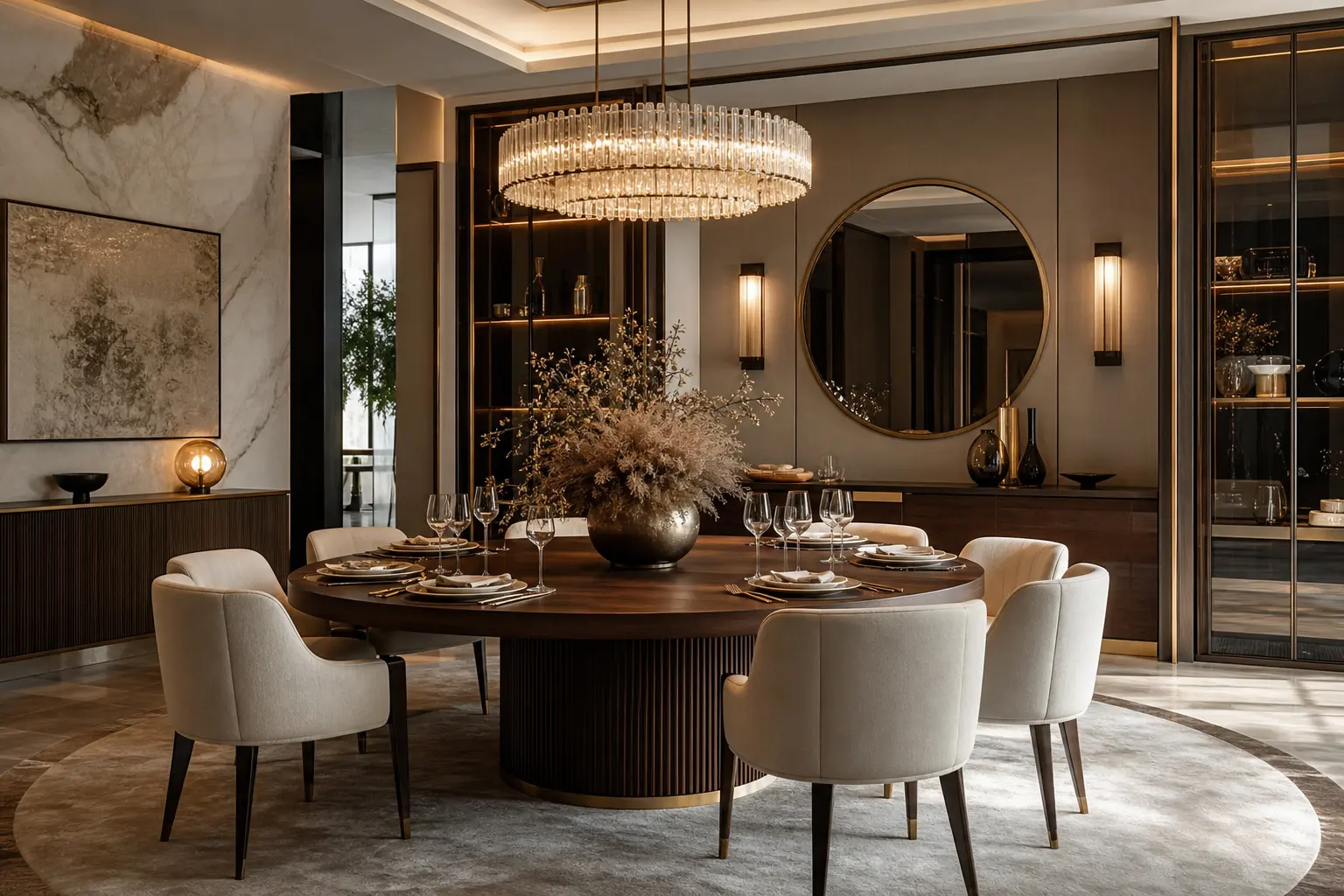
A round table removes the head and foot positions a rectangular table naturally creates, putting everyone at the table on more equal footing and making conversation flow more easily across the group. This democratic quality is part of why round tables have become such a consistent choice in upscale dining design, since luxury today often reads as relaxed and inviting rather than formal and hierarchical. The shape also softens a room that’s otherwise full of straight walls, doorways, and rectangular furniture.
A round table typically requires slightly less total floor space than a rectangular table seating the same number of guests, since there are no sharp corners eating into the walking path around it. This makes the shape especially useful in a dining room that needs to feel spacious despite a modest footprint. The efficiency and the social warmth work together, which is part of why the round table has held its place as a design favorite for so long.
2. Choose the Right Table Size for Your Room and Guest Count
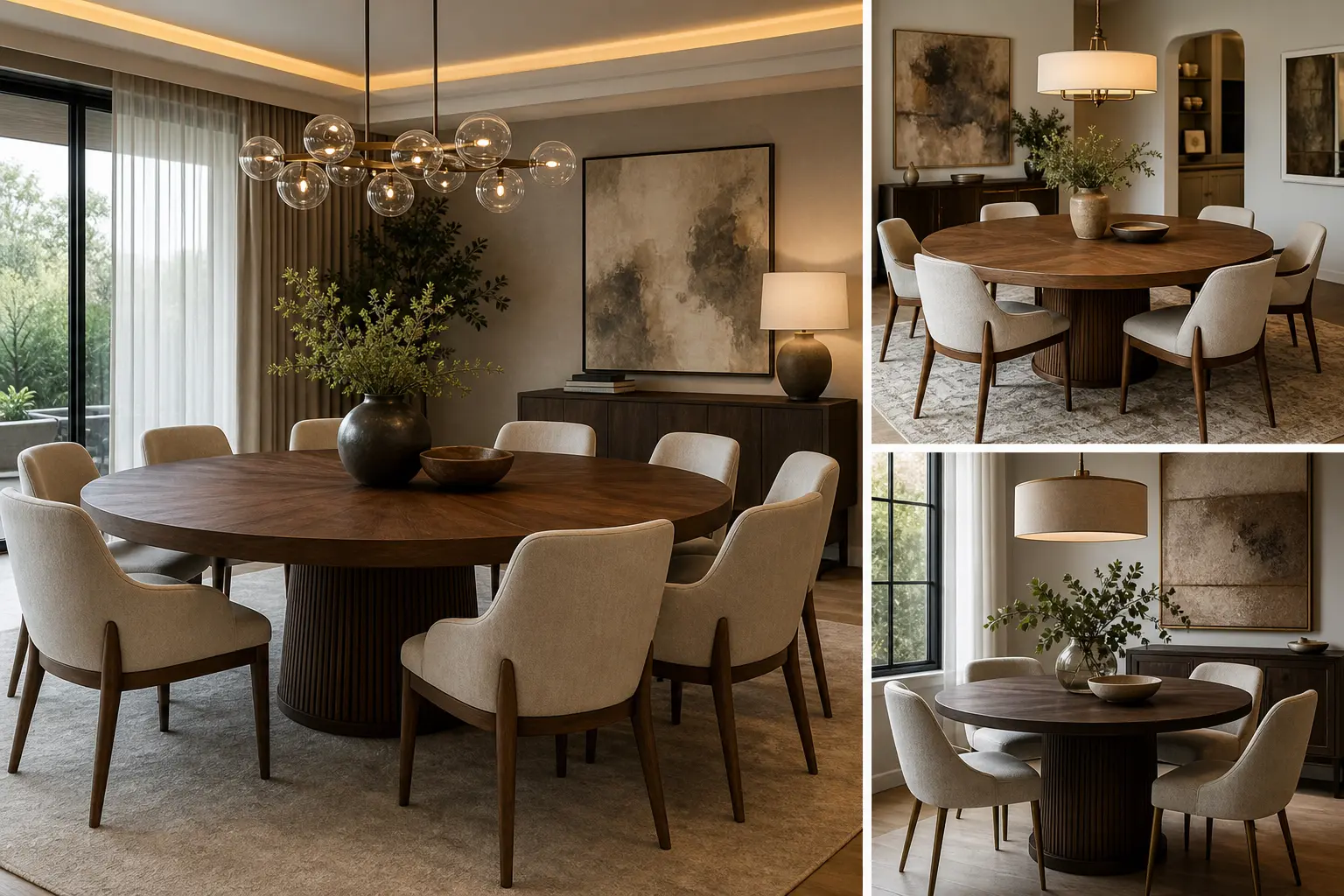
A round table needs roughly 24 inches of edge space per seated guest, so a 48 inch diameter table comfortably seats four, while a 60 inch table extends that to six with a bit more elbow room. Measure your dining room’s actual width and length before choosing a table size, leaving at least 36 inches of clearance on all sides for chairs to pull out and guests to walk around comfortably. A table that’s proportionally too large for the room, even a beautiful one, ends up feeling cramped rather than luxurious.
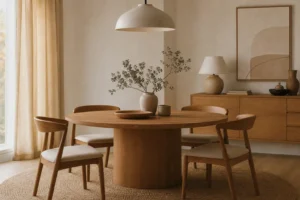
For a room that regularly hosts larger gatherings, consider a round table with a leaf extension that can expand from a more intimate 48 inches up to 66 or 72 inches when needed. This flexibility lets the everyday table feel appropriately scaled to a smaller household while still accommodating occasional larger dinners. Confirm the extended size still leaves adequate walking clearance before committing, since an expandable table’s largest size is what needs to fit the room, not just its everyday footprint.
3. Pick a Wood Tone That Anchors the Room’s Palette
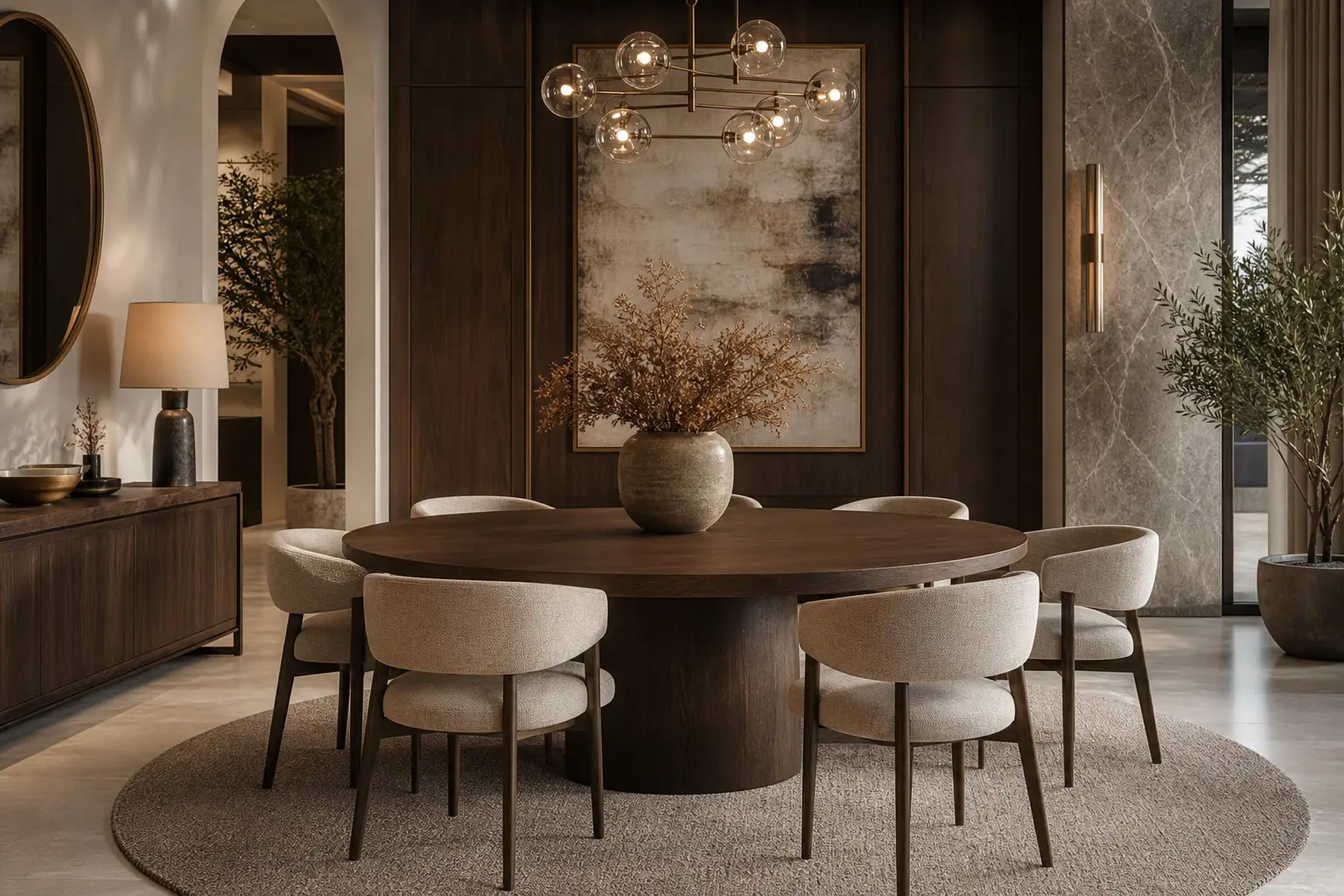
A rich walnut or dark oak table top brings warmth and visual weight to a dining room, working especially well as the room’s central anchor against lighter walls and flooring. A lighter ash or natural oak tone suits a room already carrying warmth through other materials, like a wood floor or wood accent wall, without wanting to add another dark element. Either direction works for a luxury feel, since the key factor is intentional contrast between the table and its surroundings rather than any specific tone being inherently more upscale.
Solid wood construction, rather than a veneer over composite material, holds up better to years of daily use and can typically be refinished if the surface shows wear over time. This durability matters for a piece expected to anchor the room for years, and it’s often reflected in the price difference between solid wood and veneer options. If budget requires a veneer table, look for a thicker veneer layer and a well finished edge, since these details affect how convincingly the piece reads as solid wood up close.
4. Mix Chair Styles Instead of Matching Every Seat
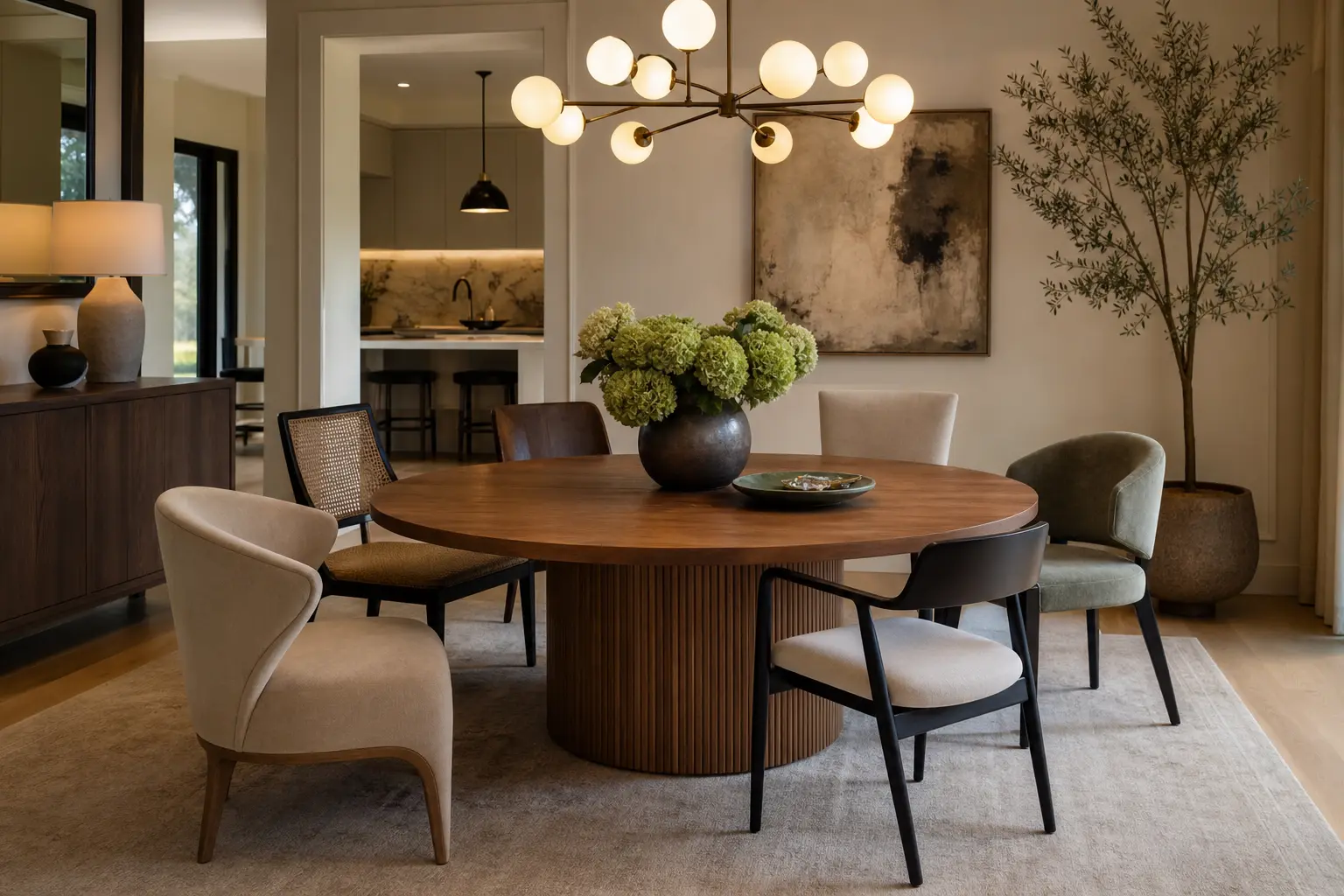
A fully matched set of dining chairs can look formal but slightly sterile, while mixing two chair styles around the same table introduces the kind of considered variety that reads as genuinely luxury rather than showroom coordinated. A common approach pairs upholstered chairs on most seats with two wood frame or metal frame chairs at opposite points around the table, adding visual interest without looking mismatched. Keep the chair frames in a consistent wood tone or metal finish even while varying the upholstery, so the mix still feels intentional.
This kind of mixing works particularly well around a round table, since there’s no natural head position demanding a distinctly different chair the way a rectangular table sometimes calls for. Instead, the variation can be worked in more subtly, alternating fabric colors or swapping every other chair for a slightly different silhouette. A round table’s continuous edge makes this kind of rotation feel natural rather than forced.
5. Hang a Statement Pendant Centered Above the Table
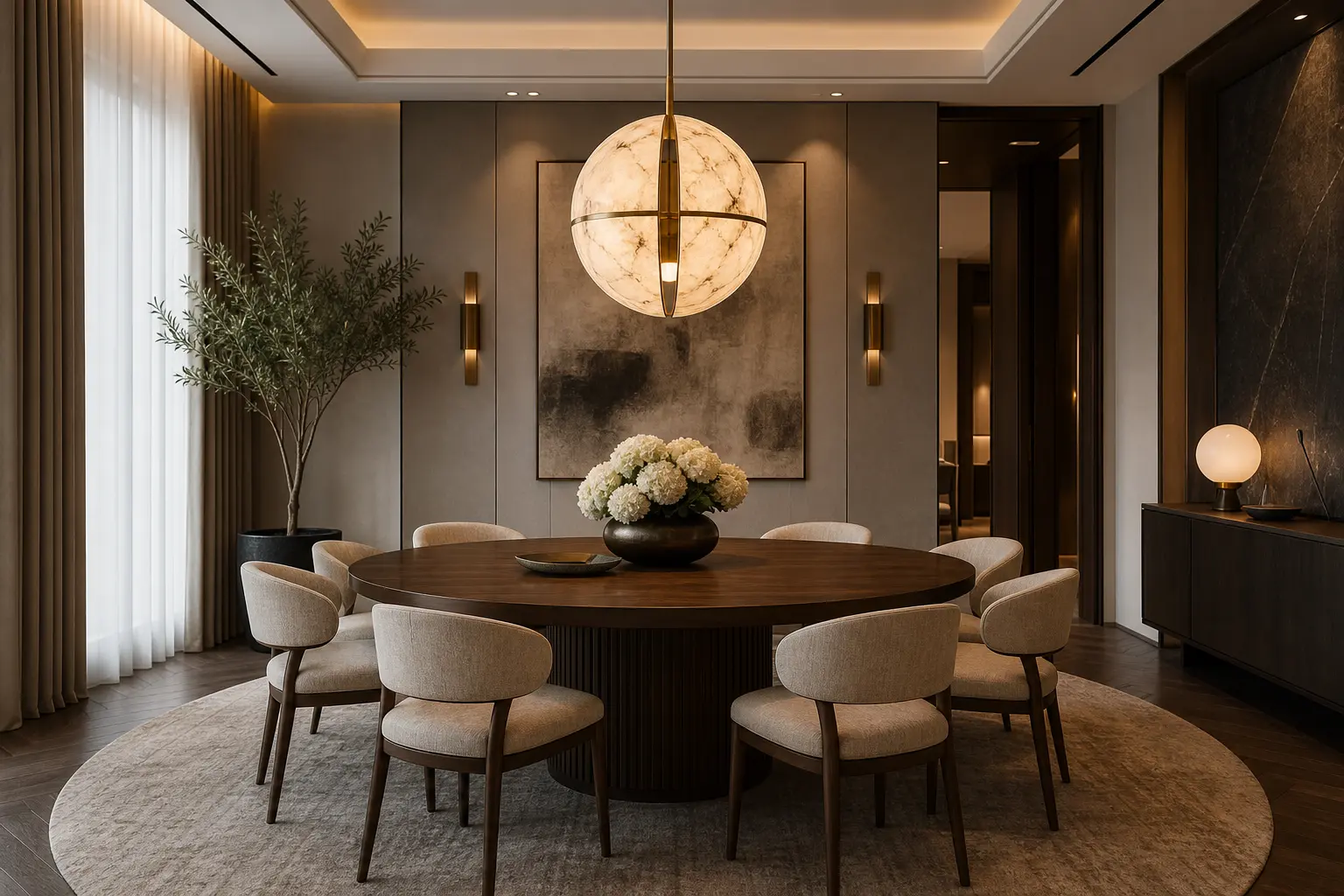
A single large pendant, or a cluster of two to three smaller ones, centered directly above a round table creates a natural focal point that echoes the table’s own circular shape. Hang the fixture so its lowest point sits 30 to 36 inches above the table surface, low enough to feel intimate during a meal but high enough to avoid blocking sightlines across the table. A pendant with a warm metal finish, brass or aged bronze, adds another layer of warmth that pairs naturally with a wood table beneath it.
Choose a pendant diameter roughly one third to one half the table’s own diameter for a proportional look, so a 60 inch table might pair well with a pendant in the 20 to 30 inch range. A fixture too small can look lost above a large round table, while one too large can overwhelm the space beneath it. This proportional relationship between table and pendant size is worth measuring carefully before ordering, since photos alone can be deceiving about actual scale.
6. Layer in a Sideboard or Buffet for Function and Styling
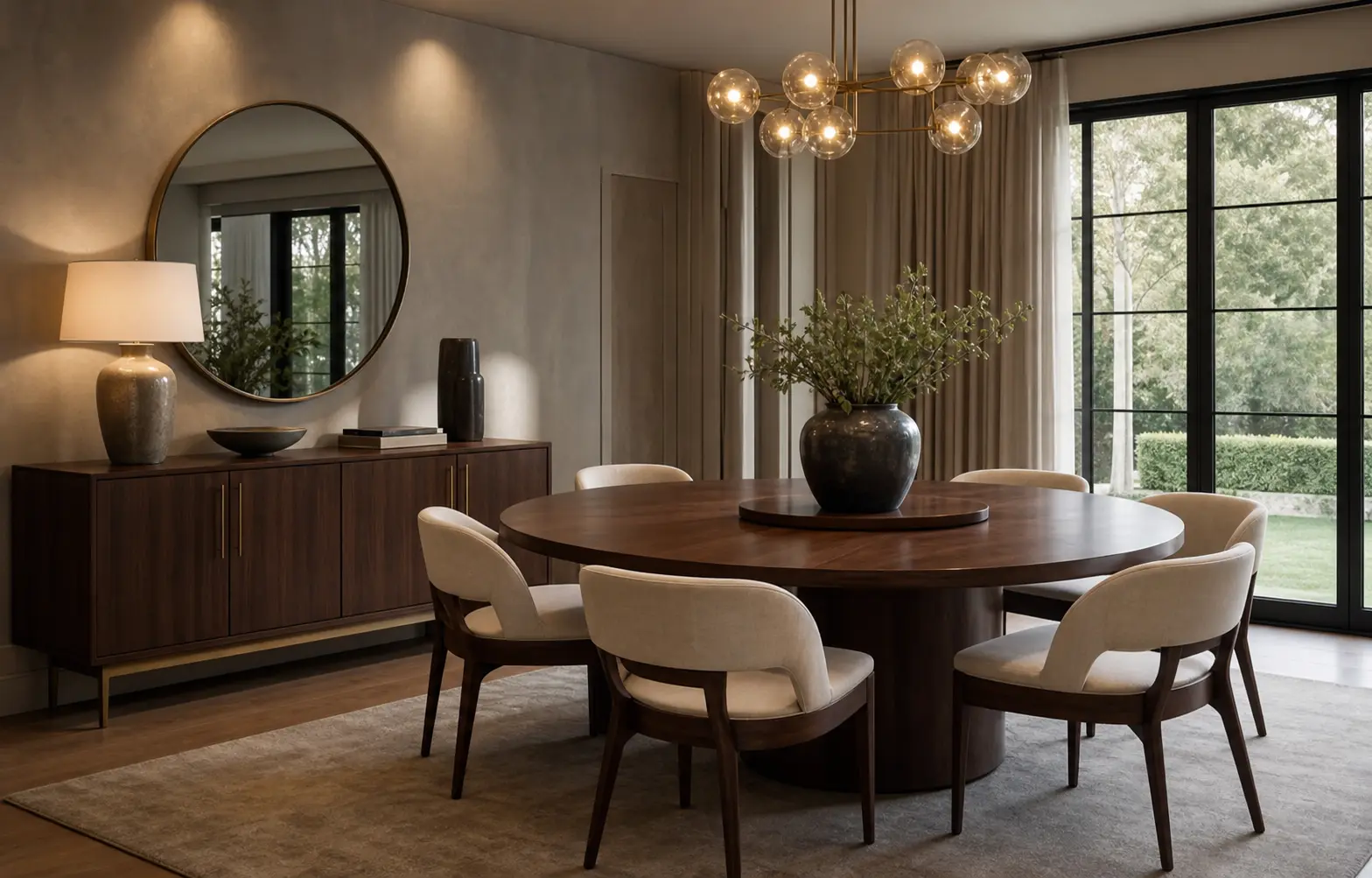
A sideboard along one wall of the dining room adds both practical storage for linens and serveware and a second styled surface that supports the round table as the room’s overall design story. Choose a sideboard in a complementary wood tone to the table, either matching closely or intentionally contrasting in a considered way, rather than an unrelated finish that reads as randomly placed. Leave the sideboard’s surface styled with just a few curated objects, a lamp, a piece of art, or a small vase, rather than crowding it with everyday clutter.
Position the sideboard on the wall with the most natural sightline from the table, since it becomes part of what guests see throughout a meal. This piece does real functional work as well, offering a spot to set serving dishes during a larger gathering without crowding the table itself. A well chosen sideboard often ends up being the second most noticed piece in the room after the table itself.
7. Add a Rug That Frames the Table Without Bunching Under Chairs
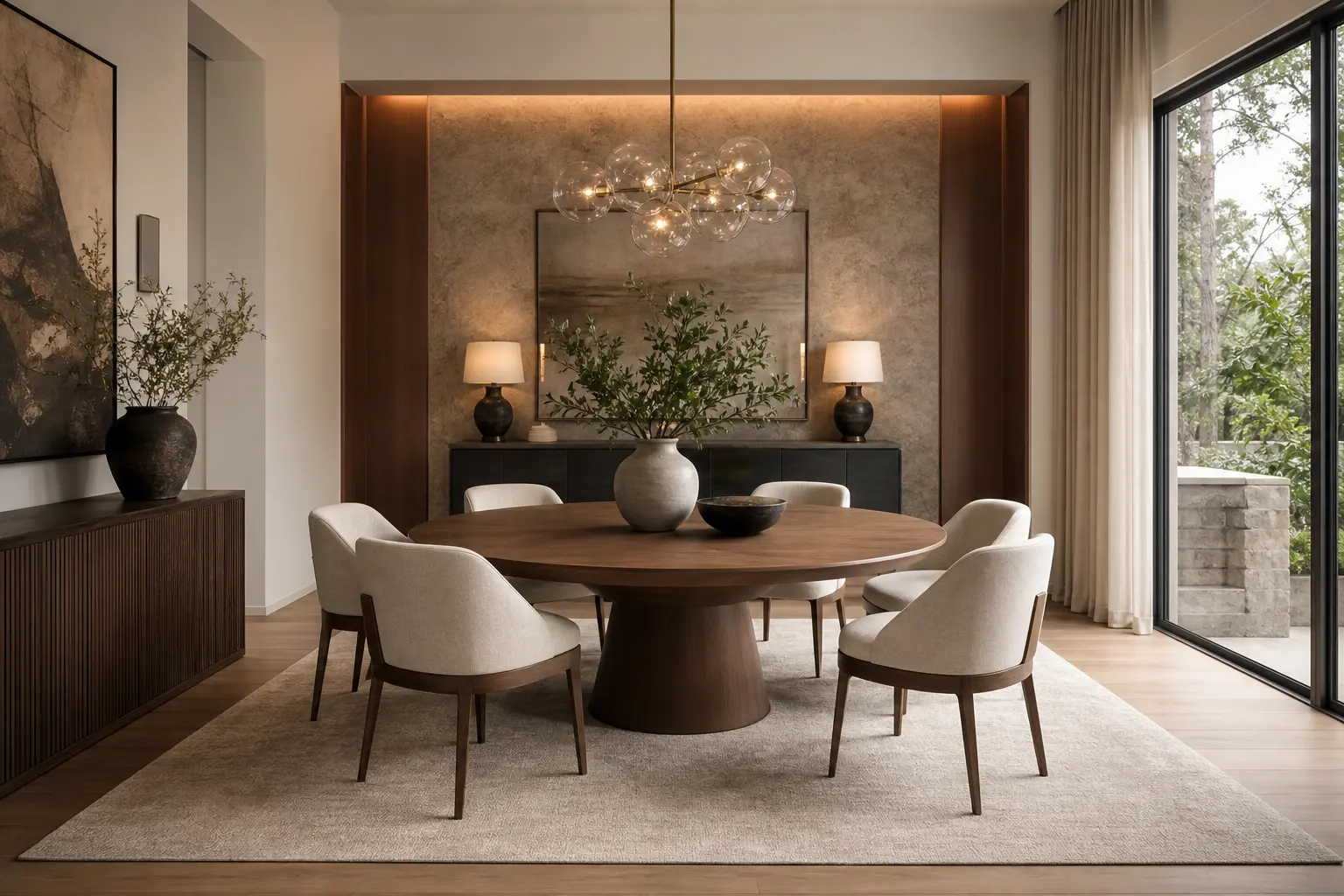
A rug beneath a round dining table should extend at least 24 to 30 inches beyond the table’s edge on all sides, so chairs stay fully on the rug even when pulled out from the table during a meal. A rug too small causes chair legs to catch on the rug’s edge repeatedly, which is both impractical and visually awkward once anyone actually sits down. A round or square rug both work beneath a round table, though a round rug echoes the table’s shape most directly for a cohesive look.
Choose a low pile, flat weave, or performance rug material for a dining room specifically, since spills are inevitable and a plush, high pile rug is far harder to clean in this setting. A neutral tone with subtle texture generally works better here than a bold pattern, letting the table and pendant remain the room’s visual focus rather than competing with a busy rug underfoot.
8. Use Warm Metal Accents to Elevate the Overall Look
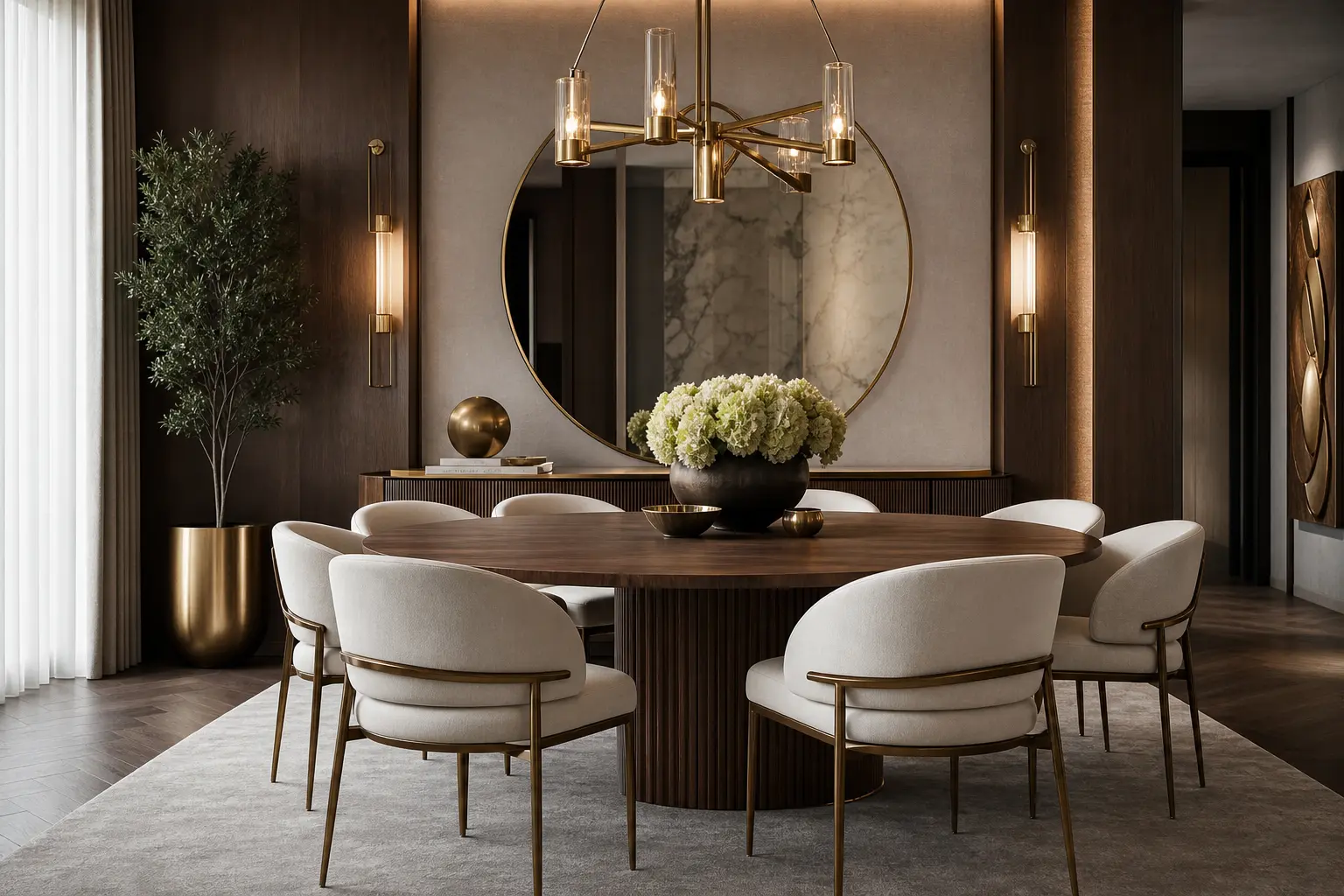
Brass or aged bronze accents throughout the dining room, on chair frames, the pendant fixture, and any cabinet hardware on a sideboard, tie the space together with a consistent thread of warmth that reads as genuinely elevated. Keep this metal finish consistent across every fixture in the room rather than mixing brass with chrome and black, since that consistency is part of what separates a luxury feel from a collection of individually nice but unrelated pieces. Candlesticks, a centerpiece bowl, or even simple drawer pulls on the sideboard all offer small opportunities to repeat this metal tone.
This warm metal thread works especially well against a round wooden table, since both materials share a similar rich, grounded quality that photographs and feels cohesive in person. Avoid overusing metal accents to the point where they compete with the wood table for attention, since the goal is a supporting thread throughout the room, not a second dominant material.
9. Keep the Wall Behind the Table Simple and Considered
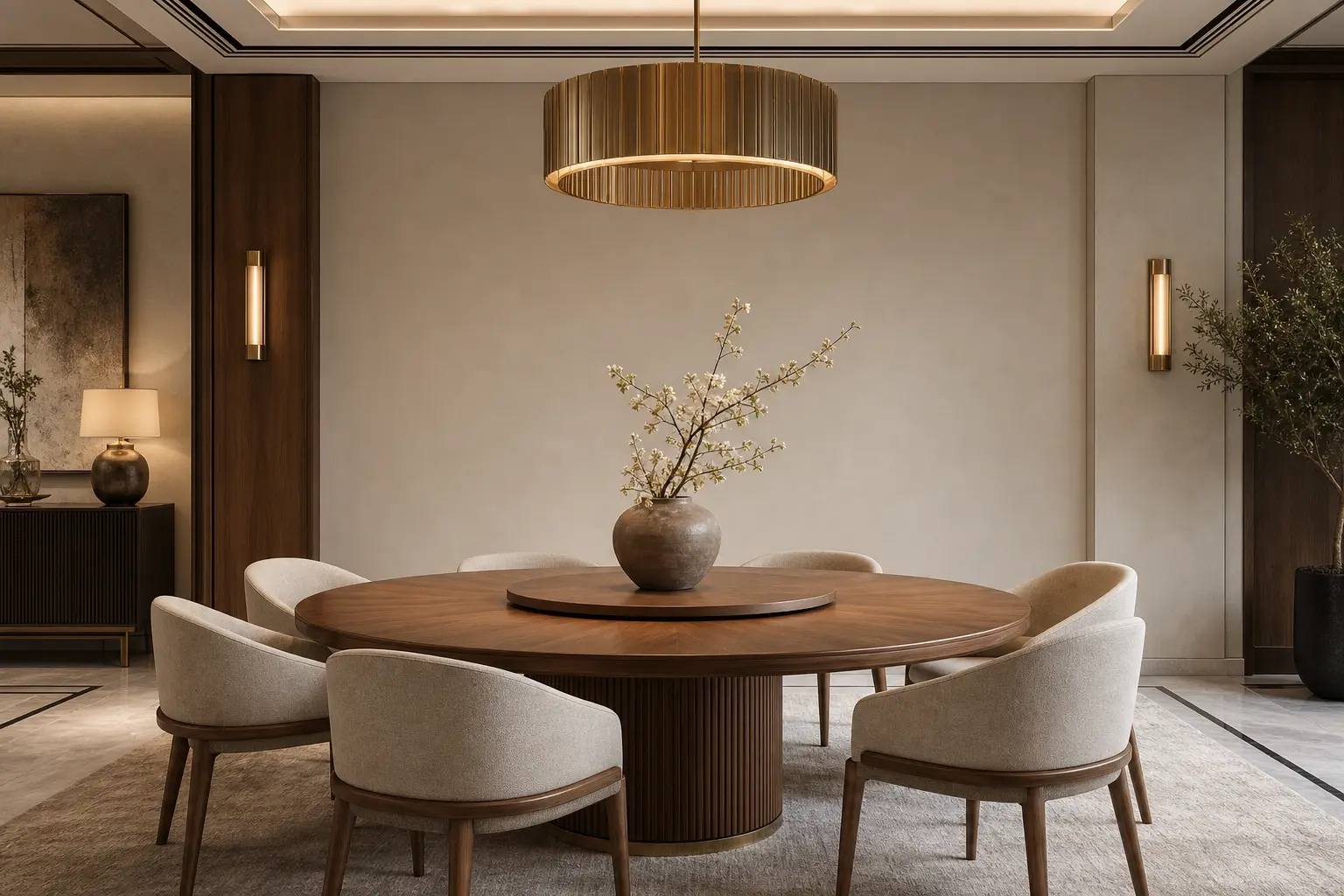
The wall most visible from the dining table, often directly behind the head of the table or facing the room’s main entry point, benefits from a simple, intentional treatment rather than being left blank or overly decorated. A single large piece of art, a textured wall finish, or even a considered paint color in a warm, muted tone gives the eye a place to rest without competing with the table and pendant as the room’s central focus. Avoid multiple gallery style frames or a busy pattern on this particular wall, since it’s meant to support the table, not rival it.
This restraint matters more on the wall directly in view during meals than on other walls in the room, since that’s the sightline guests spend the most time looking at while seated. A calm, considered treatment here does more for the room’s overall luxury feel than an elaborate design might, since it keeps the table as the clear star of the space.
10. Plan the Layout So the Room Never Feels Cramped
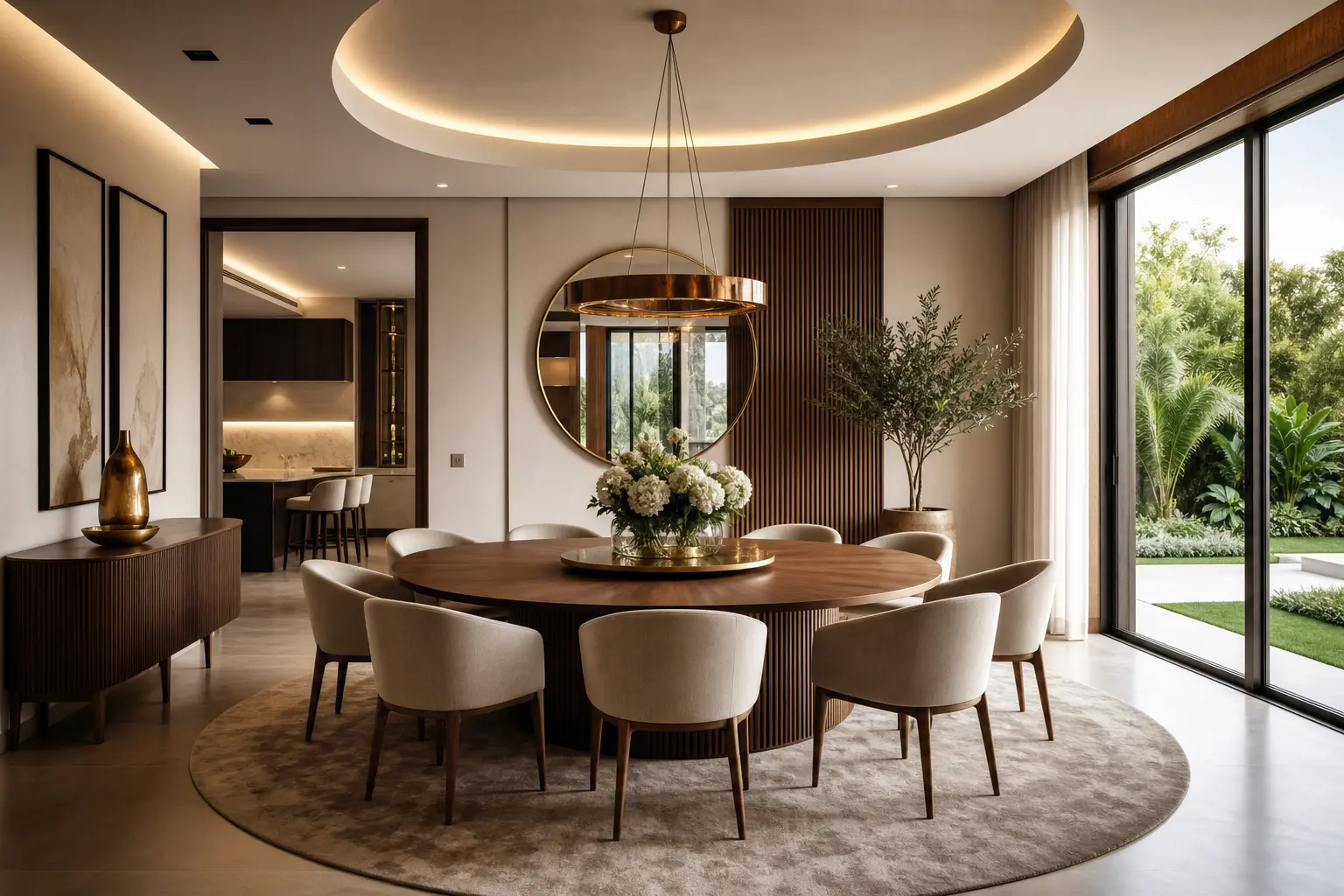
A round table’s efficient footprint still needs the rest of the room’s furniture planned around it carefully, since a sideboard, extra chairs, or a nearby doorway can quickly eat into the clearance a round table normally provides. Keep at least 36 inches of walking space between the table’s edge and any wall or additional furniture piece, and check that clearance with chairs pulled fully out, not just pushed in. This walking space matters as much for a luxury dining room’s actual daily use as any material or lighting choice.
If the room genuinely can’t accommodate a full 36 inches on every side, prioritize that clearance on the sides guests use most often to sit down and get up, even if it means a tighter margin near a wall that sees less regular use. A well planned layout is often invisible when done right, since guests simply move through the space comfortably without noticing the careful measuring behind it. This final planning step is what keeps an elegant table from feeling impractical in daily use.
Mistakes to Avoid
- Choosing a table too large for the room’s actual dimensions, leaving no comfortable walking clearance
- Matching every chair identically instead of introducing a considered mix of styles
- Hanging the pendant too high or too low relative to the table’s proportions
- Using a rug too small, causing chair legs to catch on its edge when pulled out
- Mixing multiple metal finishes across the pendant, chairs, and sideboard hardware
- Overcrowding the wall behind the table with busy art or pattern that competes with the table itself
Frequently Asked Questions
What size round table works best for a family of four? A 48 inch diameter table comfortably seats four with reasonable elbow room, while a 54 to 60 inch table offers a bit more breathing space if the budget and room size allow.
How high should a pendant hang above a round dining table? Most pendants hang with their lowest point 30 to 36 inches above the table surface, low enough to feel intimate without blocking sightlines across the table.
Is solid wood or veneer better for a luxury dining table? Solid wood generally holds up better over years of use and can be refinished if needed, though a quality veneer with a well finished edge can still look convincing at a lower price point.
Can a round table work in a smaller dining room? Yes, often better than a rectangular table of similar seating capacity, since a round table’s lack of sharp corners typically requires less total floor space for the same number of guests.
What rug size fits under a 60 inch round dining table? Look for a rug at least 8 feet in diameter or width, extending 24 to 30 inches beyond the table’s edge so chairs stay fully on the rug when pulled out.
Final Thoughts
A modern luxury dining room with a round wooden table works because the table’s warmth and inclusive shape set a tone the rest of the room simply needs to support rather than compete with. Start with the table size and wood tone relative to your actual room dimensions, since that decision anchors every other choice that follows. Add the pendant, chairs, and sideboard in stages, checking proportions against the table each time rather than filling the room all at once.