10 Modern Indoor Plant Corner Ideas for Small Spaces and Minimalist Home Decor
Minimalist homes get a reputation for feeling a little sparse, even cold, and plants are one of the easiest ways to push back against that without abandoning the style. The trick is restraint. A minimalist plant corner works because there’s usually just one plant, maybe two, given real room to be seen rather than crowded in with a dozen others. That’s actually good news for small spaces, since a single well placed plant takes up far less room than a cluttered display would, and it still does the job of making a room feel alive instead of empty.
Picture a corner with nothing in it but one tall plant in a simple pot, catching a bit of afternoon light from a nearby window. Nothing else is competing for attention. That’s the whole idea behind a minimalist plant corner, and it works in a studio apartment just as well as it does in a much larger home, since the amount of floor space it needs barely changes either way.
1. Single Statement Plant in a Concrete Pot
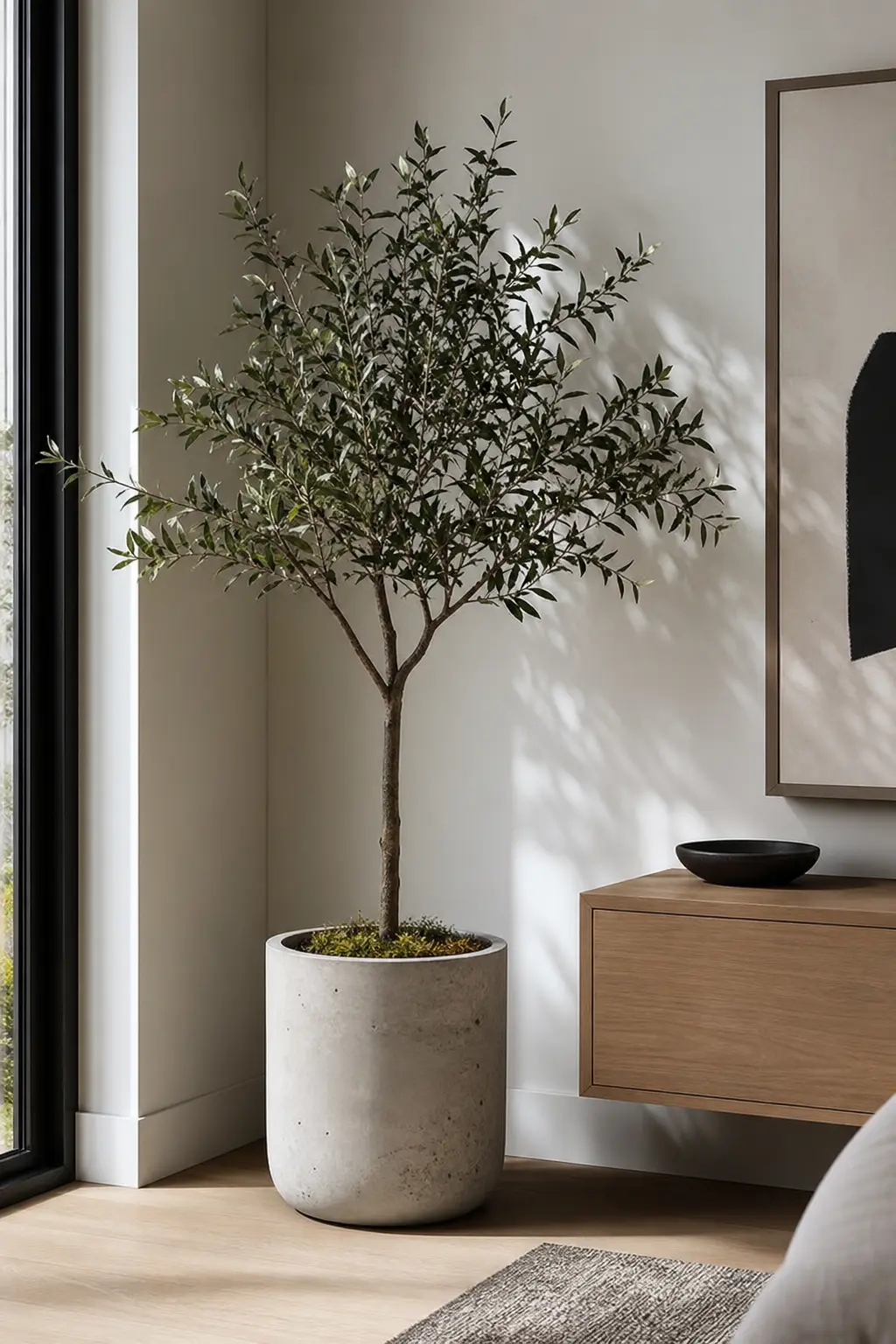
One tall plant, a fiddle leaf fig, a rubber plant, or a snake plant with real height, placed in a plain concrete or matte ceramic pot, does more for a minimalist room than a whole shelf of smaller plants ever could. Keep everything else in the corner empty. No side table, no extra decor. The plant is the entire feature, and giving it space around it is what makes it read as intentional rather than like something that just ended up there. Rotate the pot every couple of weeks too, since a single statement plant that leans toward the light unevenly will draw attention to the wrong thing.
2. Narrow Corner Ladder Shelf with One Plant Per Tier
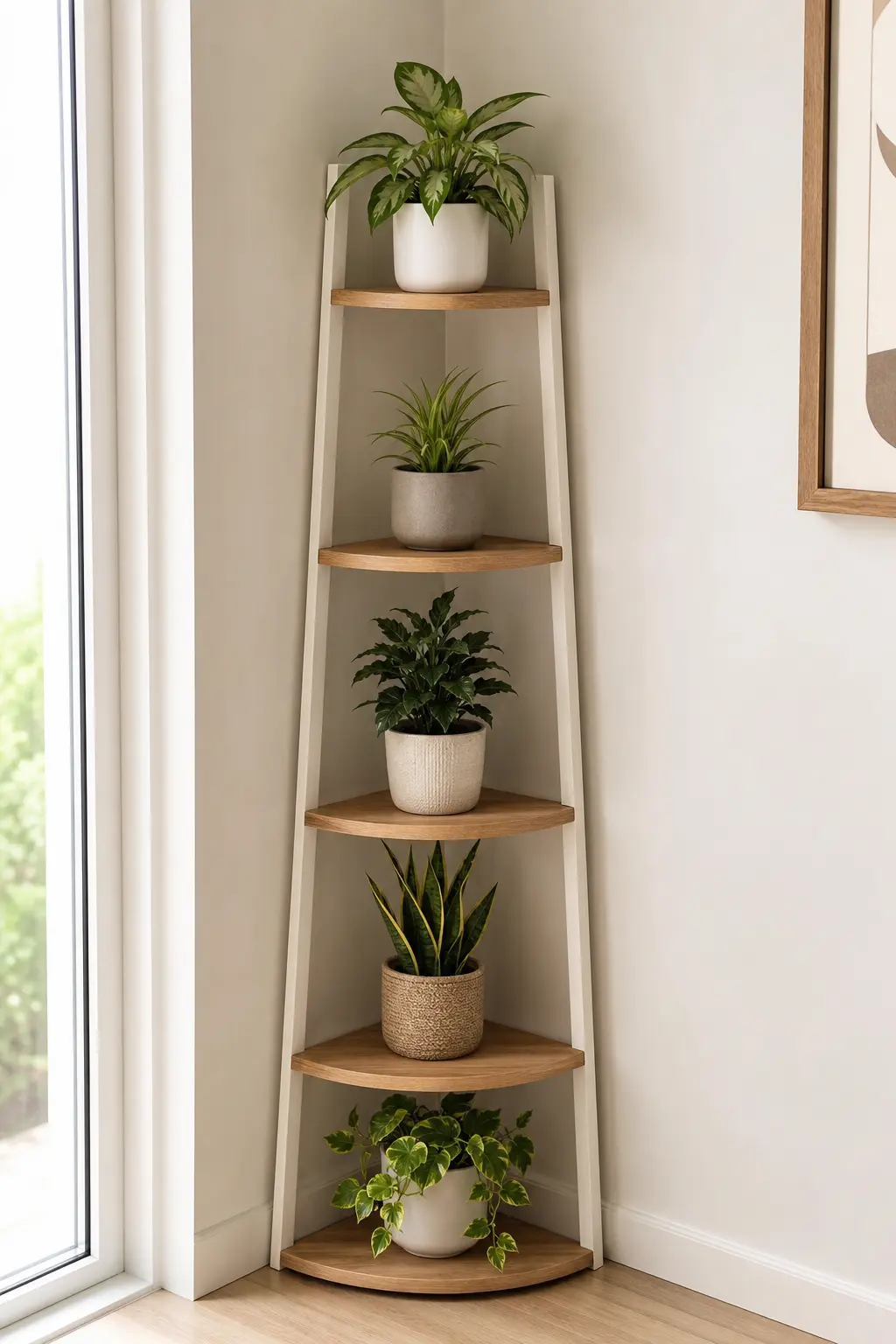
A slim wooden ladder shelf, built for corners, holds a small footprint while still offering a few tiers for plants. Rather than filling every shelf, place just one small plant per tier, leaving the rest of each shelf empty. This restraint keeps the display feeling curated instead of crowded, and it suits narrow corners where a wider plant stand simply wouldn’t fit. A ladder shelf around 16 to 20 inches wide tends to work best for this, wide enough for a small pot on each tier without feeling like it’s overreaching for the corner it’s in.
3. Plant Beside a Plain Reading Chair
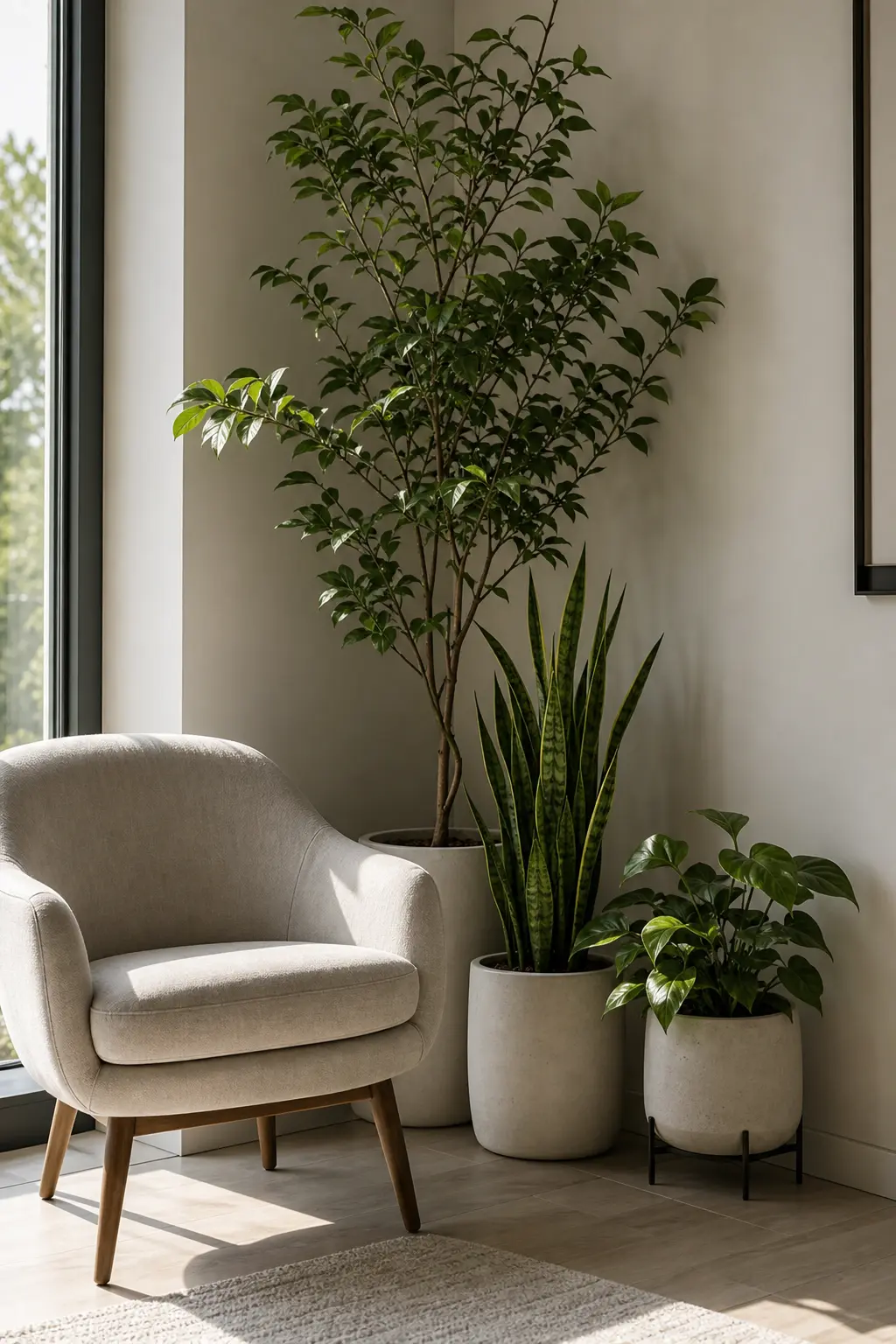
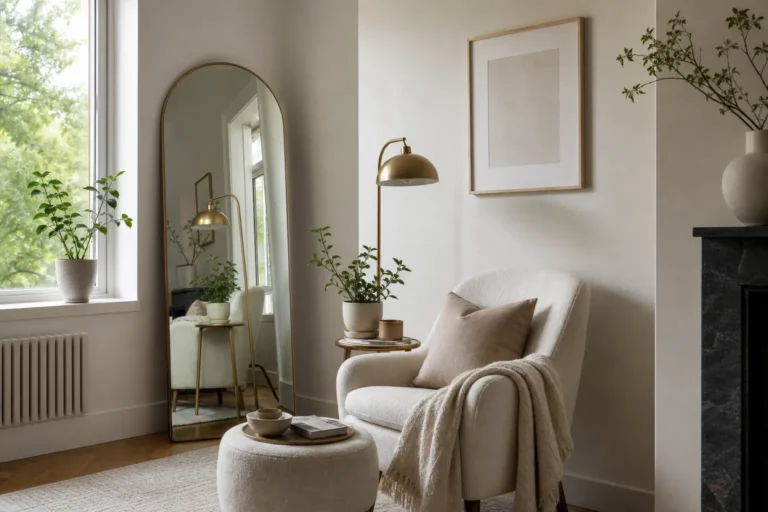
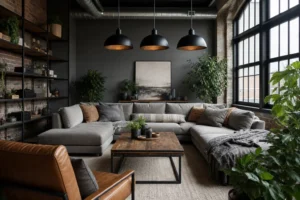
A single plant positioned beside an unadorned reading chair softens the corner without adding visual noise. Choose a plant with simple, uncomplicated foliage, like a ZZ plant or a snake plant, rather than something busy or flowering, so the pairing stays calm rather than competing with the chair for attention. This idea works particularly well in small apartments where the reading corner and the plant corner end up being the same few square feet.
4. Minimalist Plant Stand with Exposed Wood Legs
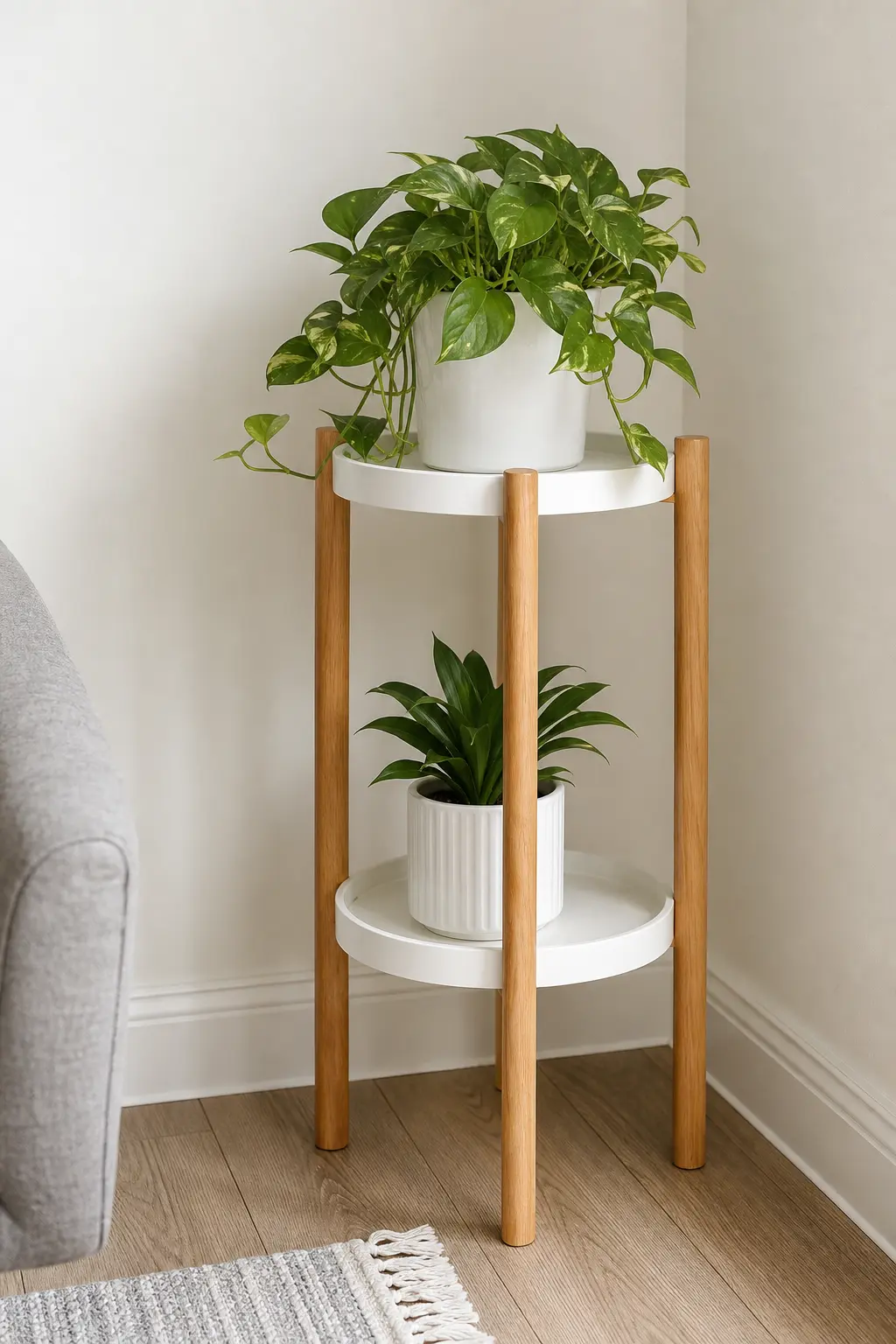
A plant stand with thin, exposed wood legs and a simple round top takes up very little visual weight compared to a solid plant stand or a heavy pot sitting directly on the floor. The gap between the floor and the pot itself adds a sense of lightness to the corner, which matters in small rooms where every piece of furniture, even a plant stand, affects how open the space feels. Look for a stand with legs no thicker than an inch or so, since anything bulkier starts to compete with the plant rather than quietly supporting it.
5. Windowsill Plant Row in Matching Pots
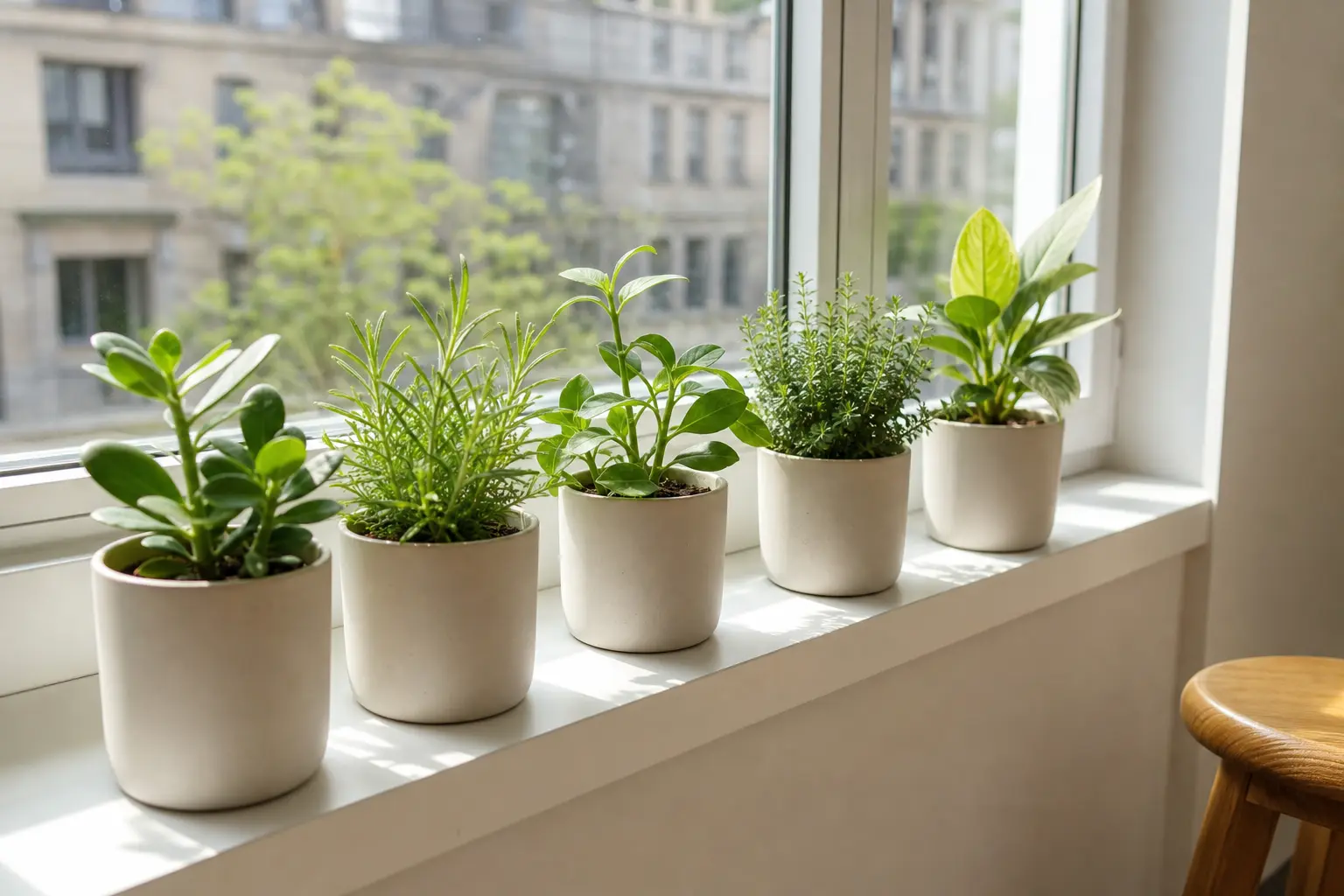
A row of small plants in identical pots, lined up along a windowsill, brings greenery into a room without needing any floor space at all. Keep the pots the same size and material so the row reads as one cohesive display rather than a random collection of plants gathered over time. This is one of the easiest ideas here to try in a small apartment, since a windowsill is rarely used for much else.
6. Floating Corner Shelf with a Single Trailing Plant
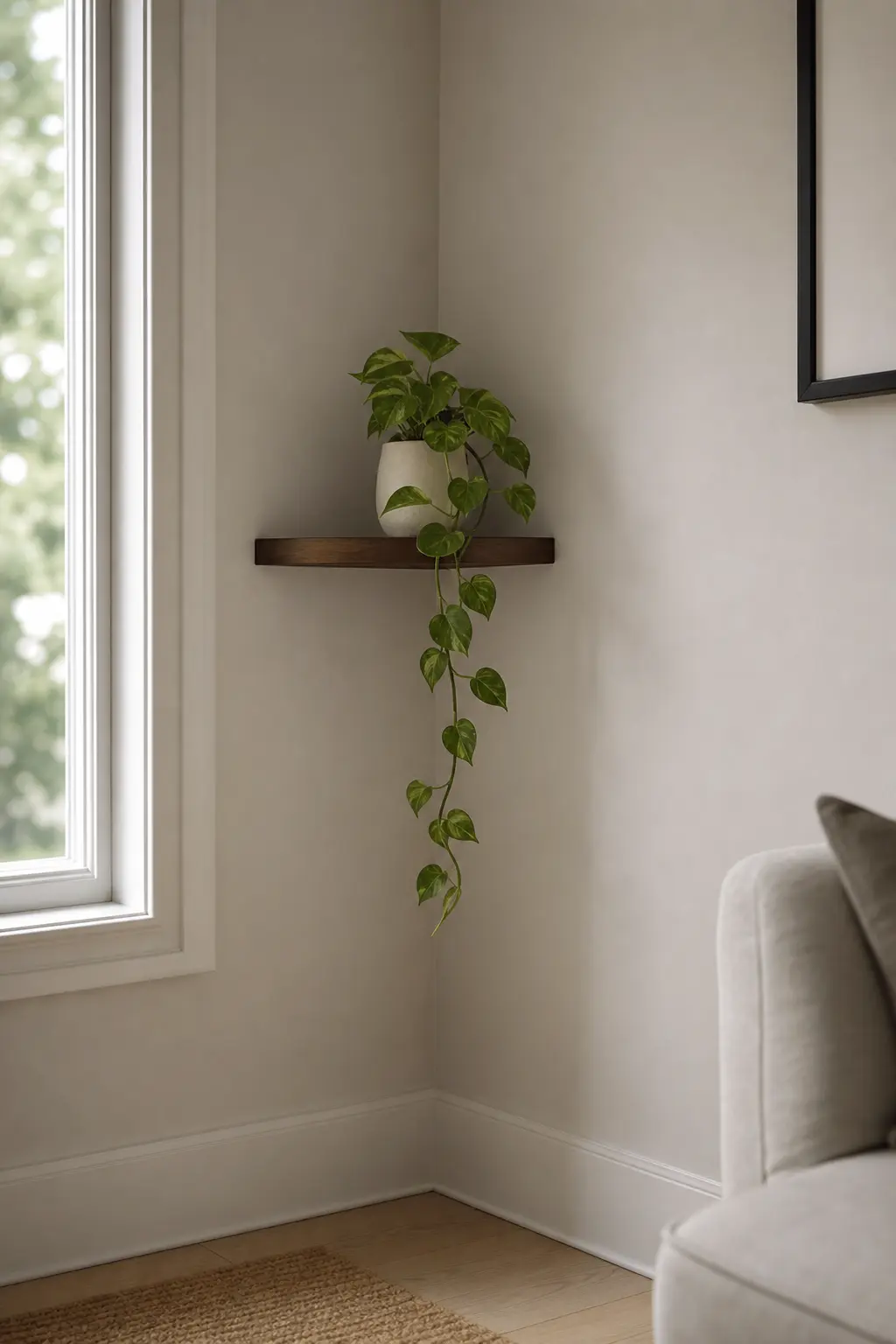
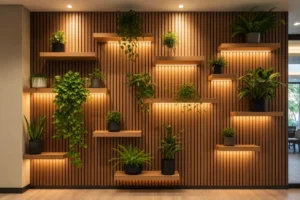
One small floating shelf, mounted in a corner, holding a single trailing plant like a pothos or string of hearts, adds greenery at eye level without touching the floor at all. Let the vines trail down along the corner naturally, and resist the urge to add a second plant nearby. One plant, given room to trail freely, tends to look more considered than two plants sharing the same small shelf.
7. Tall Plant Framed by Negative Space
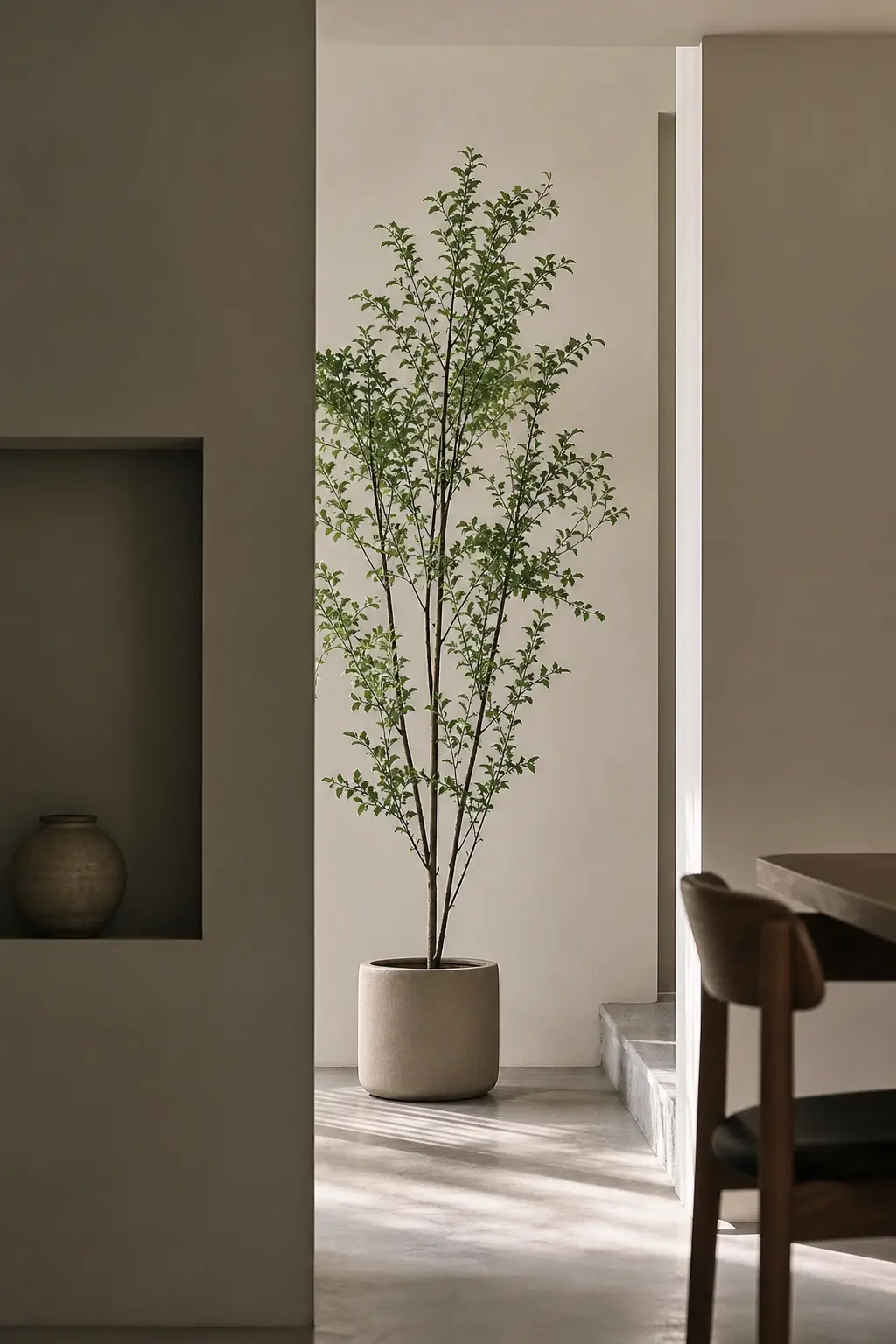
Sometimes the plant itself matters less than the space around it. Position a single tall plant in a corner with plenty of visible wall space on either side, rather than tucking it tightly against other furniture. That empty space acts almost like a frame, drawing attention to the plant precisely because there’s nothing else nearby competing with it.
8. Plant and Floor Lamp Pairing in an Empty Corner
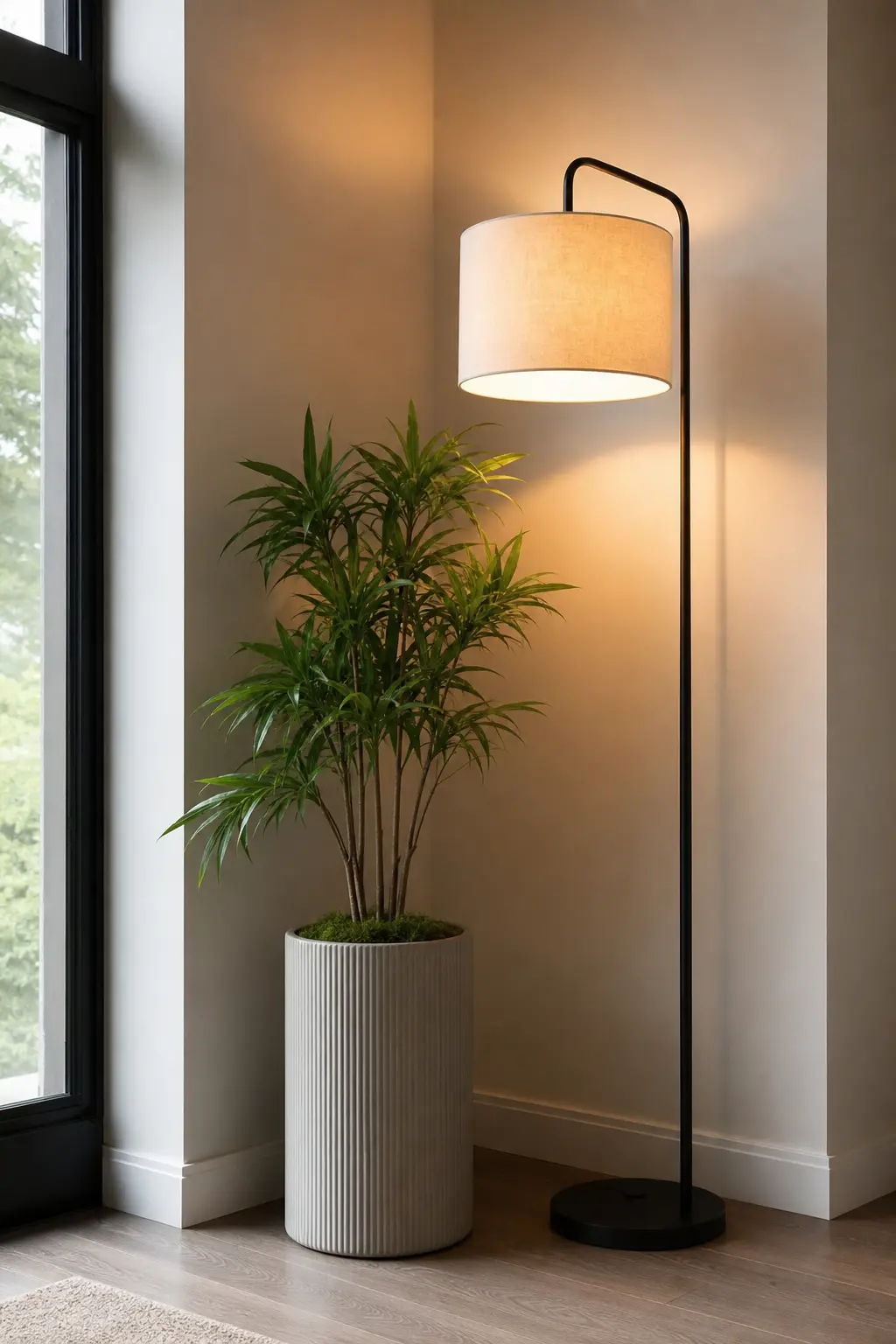
Pair a single plant with one floor lamp, positioned close enough together that they read as a considered pairing rather than two separate objects. The plant adds life and texture, the lamp adds warmth and a bit of height variation, and together the two fill an otherwise empty corner without needing anything else. This combination works especially well in living rooms where a full seating arrangement doesn’t extend all the way to the corner.
9. Small Plant Cluster on a Low Stool
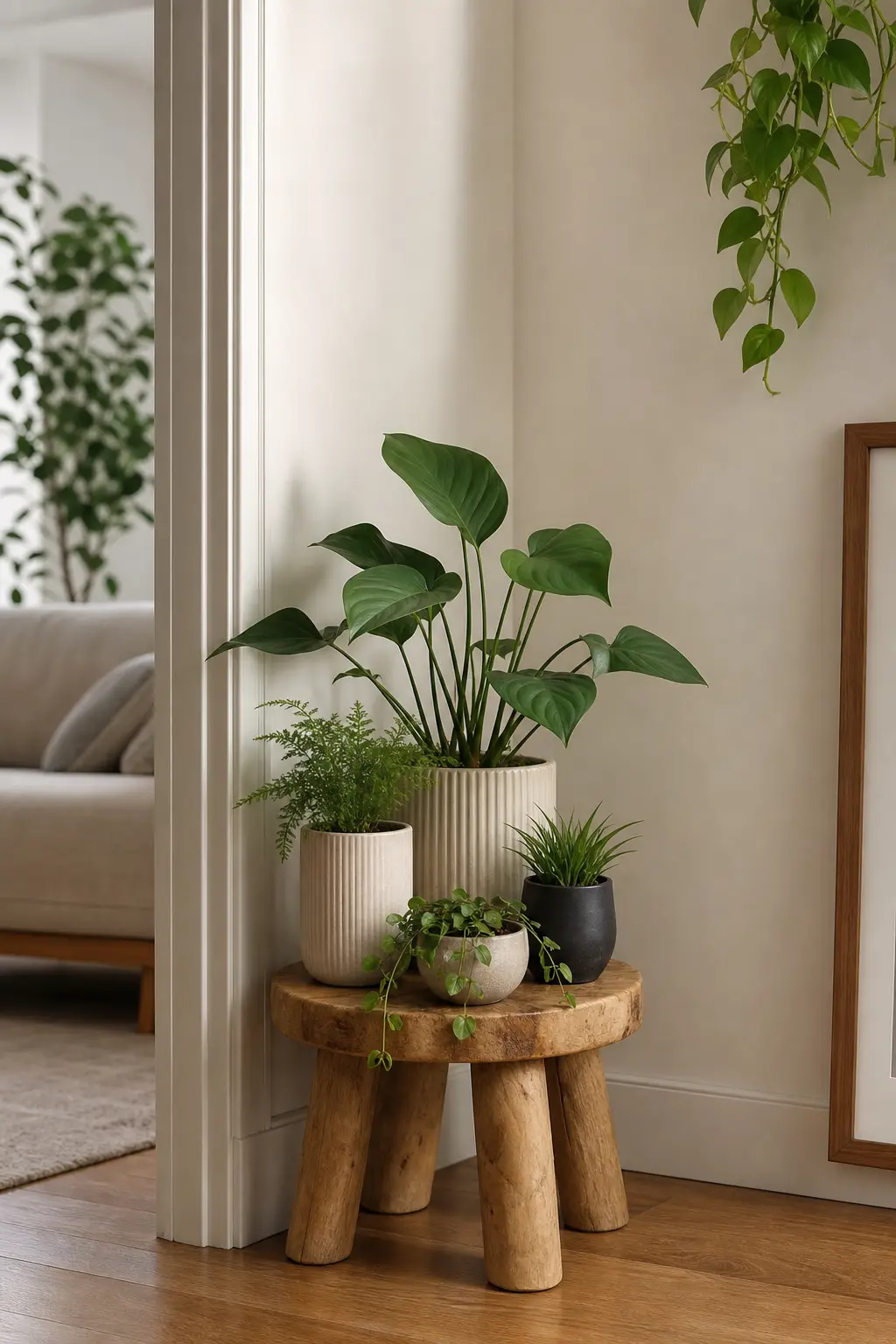
A single low stool, holding two or three small plants of varying heights, creates a compact, grounded display that takes up very little floor space. Keep the pots in a consistent material or color family so the small cluster reads as one grouping instead of a few unrelated plants placed side by side. This idea suits corners too small for even a narrow plant stand, since a stool’s footprint is often smaller still.
10. Plant Beside a Full Length Mirror for Depth
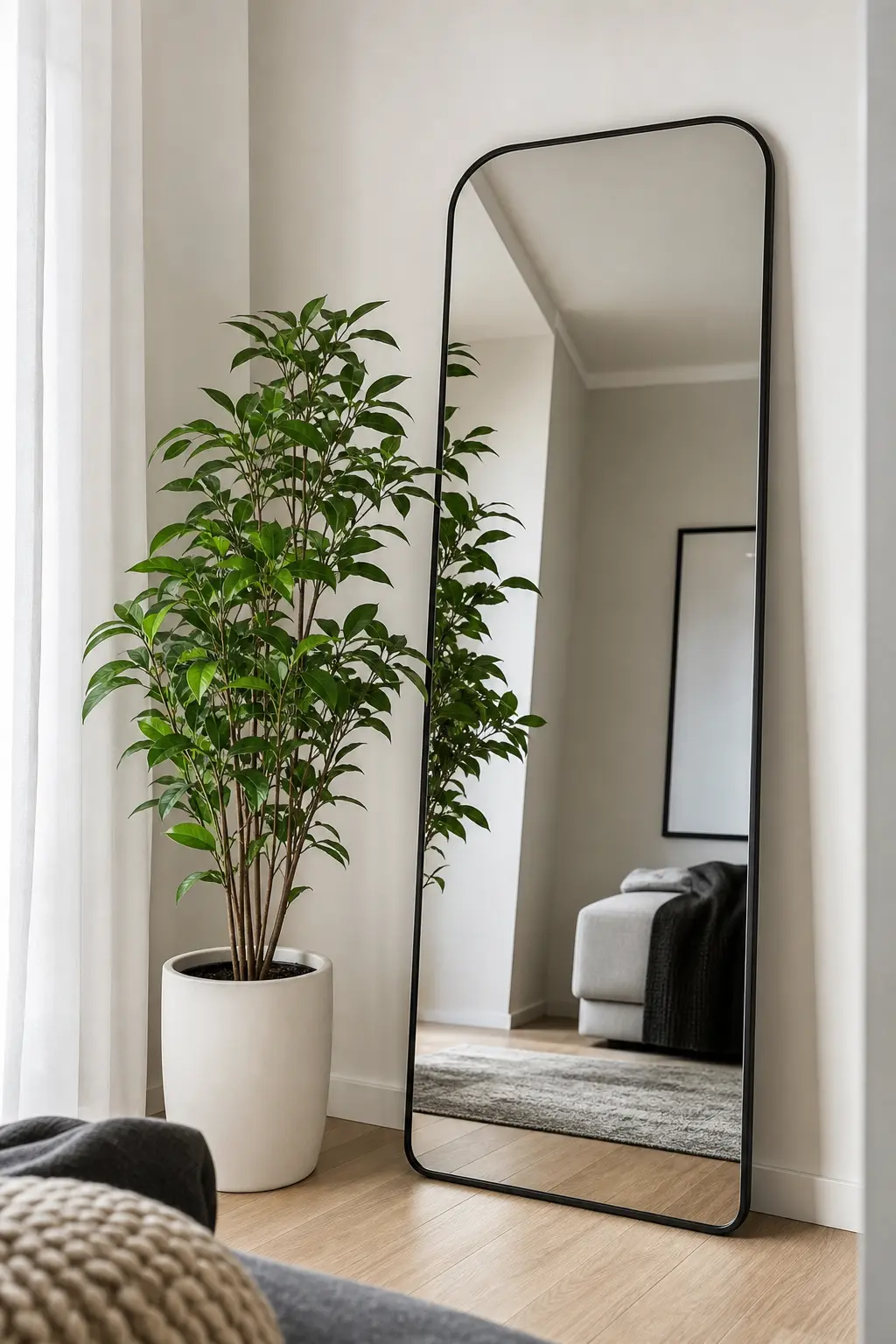
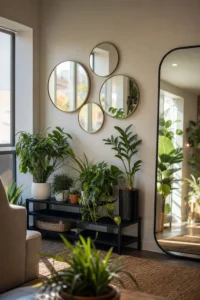
A single plant positioned beside a full length mirror gets visually doubled by the reflection, which makes a small minimalist corner feel more filled out without adding a second physical plant. This is a particularly useful trick in small apartments, where floor space for multiple plants often isn’t available but the appearance of a fuller, greener corner is still worth achieving.
Mistakes to Avoid
- Crowding a minimalist corner with too many plants, which undoes the calm, restrained feeling the style depends on
- Choosing ornate or patterned pots that clash with the simplicity of the surrounding space
- Placing a plant in a spot with insufficient light just because it fits the aesthetic, leading to poor plant health over time
- Mixing too many different plant varieties in one small corner instead of choosing one or two with intention
- Ignoring the negative space around a plant, which is often what makes a minimalist display feel deliberate rather than sparse
- Choosing a plant stand or shelf that’s visually heavier than the room’s overall style calls for
Frequently Asked Questions
What plants work best for a minimalist home? Plants with simple, architectural foliage, like snake plants, ZZ plants, and fiddle leaf figs, tend to suit minimalist interiors better than busier, more textured varieties, since their clean lines match the overall aesthetic.
How many plants should a minimalist plant corner have? Generally one to three, depending on the size of the space. The goal is a considered, uncrowded display rather than a full indoor garden, so restraint matters more than quantity here.
Can a small apartment still feel green without much floor space? Yes, windowsills, floating shelves, and a single well placed floor plant can all add noticeable greenery to a small space without requiring much square footage at all.
Do minimalist homes need low maintenance plants specifically? Not necessarily, though many people gravitate toward lower maintenance varieties since a minimalist home typically has fewer plants overall, making each one easier to keep track of and care for properly.
What pot styles work best for a minimalist plant display? Simple, unpatterned pots in materials like concrete, matte ceramic, or terracotta tend to suit minimalist spaces better than glossy, colorful, or heavily textured pots, which can pull focus away from the plant itself. A single neutral tone across every pot in the room also helps tie separate corners together if there’s more than one plant display in the home.
Conclusion
A minimalist home doesn’t have to feel plant free, it just needs a different approach than a maximalist jungle corner would. One well chosen plant, given real space to be seen, does more for a small room than a crowded display ever could. These plant corner ideas show that greenery and minimalism aren’t in conflict at all, they just require a bit more intention about what to include and, just as importantly, what to leave out.