10 Modern Industrial Living Room Ideas with Indoor Plants & Black Pendant Lights
You like the industrial look, exposed brick, black metal, raw wood, but every version you’ve tried in your own space ends up feeling cold and a little unfinished. That’s the most common complaint with industrial decor. It’s easy to nail the hard edges and much harder to make the room feel like somewhere you actually want to sit down. Indoor plants and black pendant lighting are the two easiest fixes. The plants bring life and softness, while the right pendant lighting adds warmth and a clear focal point. Here are 10 ways to put that combination to work in a real living room.
1. Why Indoor Plants and Black Pendant Lights Balance an Industrial Room
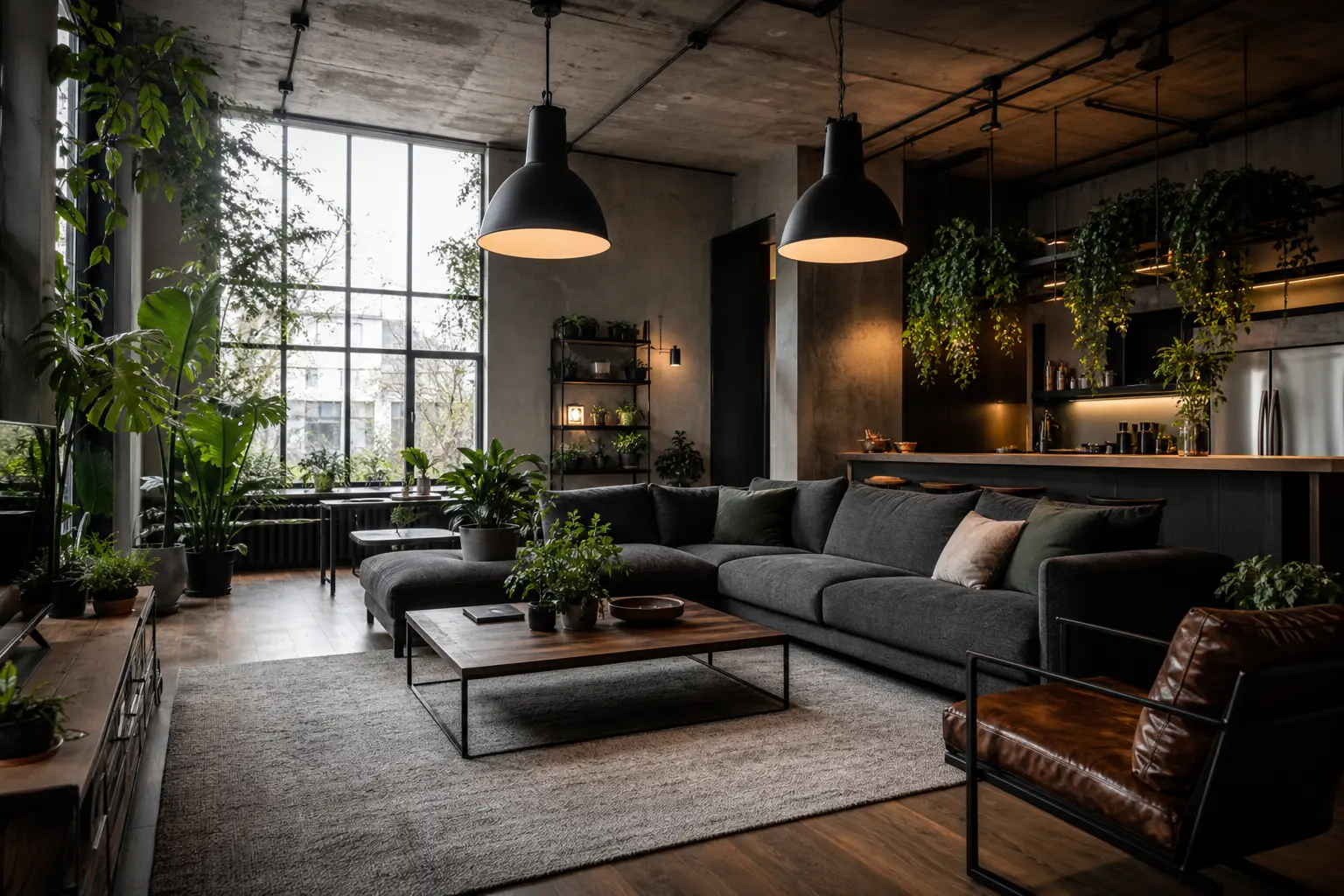
Industrial design relies heavily on hard, cool materials, metal, concrete, brick, and exposed wood beams. On their own, these materials can start to feel more like a warehouse than a living room.
Plants introduce a living, organic element that immediately softens all that hard surface. Even a couple of well placed plants can shift a room from feeling stark to feeling intentional and lived in.
Black pendant lighting, meanwhile, adds warmth through the quality of light itself rather than the fixture’s appearance. A warm bulb inside a matte black fixture creates a cozy glow that contrasts nicely against the room’s cooler surfaces, while the black finish still fits the industrial palette.
2. Choosing Black Pendant Lights That Fit Your Ceiling Height
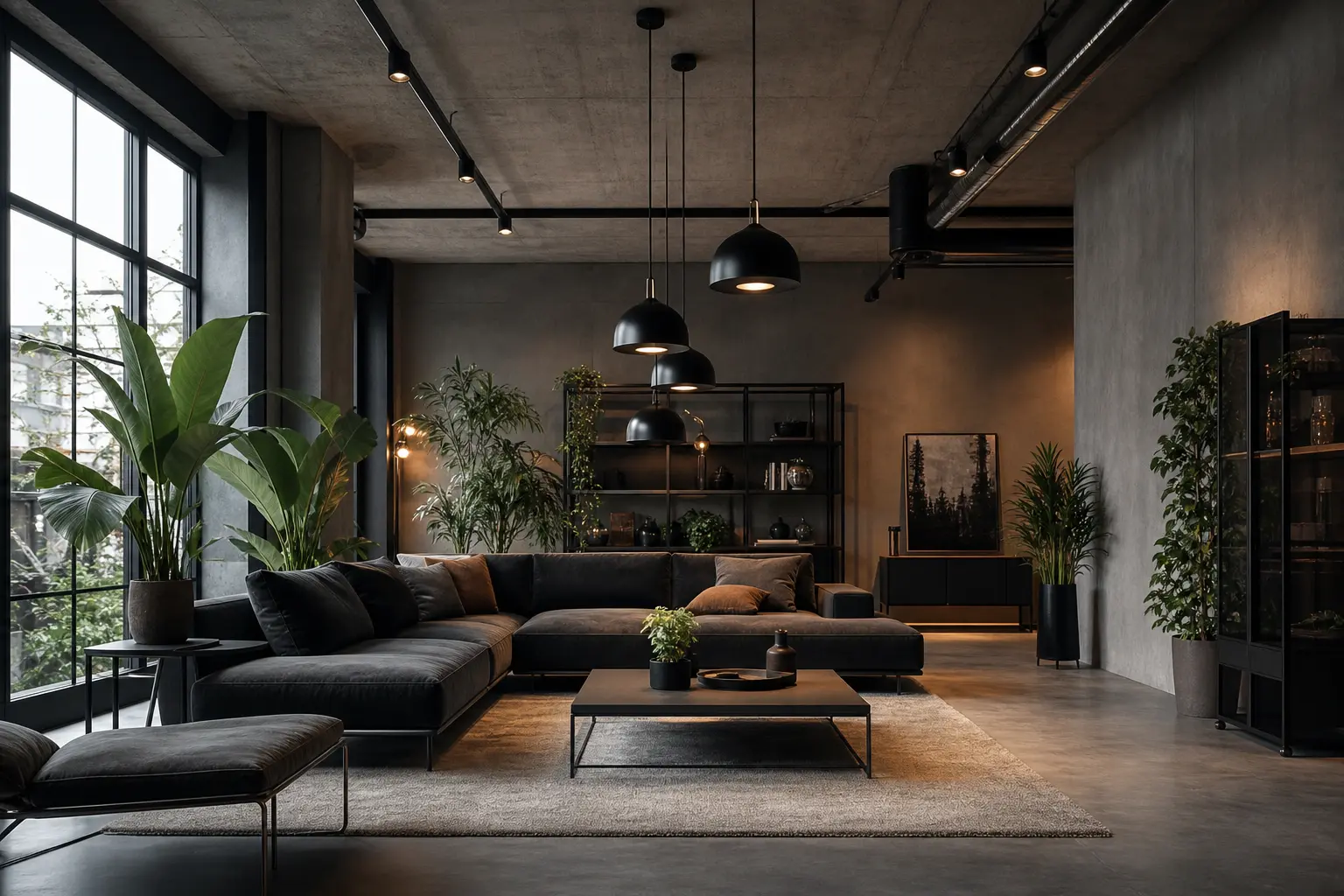
Standard living room ceilings, around 8 to 9 feet, generally suit a pendant that hangs 12 to 20 inches below the ceiling, positioned over a coffee table or a defined seating area rather than directly over walking paths.
Taller ceilings, particularly in converted lofts, can support a longer drop, sometimes 24 to 36 inches, and a larger cluster of two or three pendants at slightly staggered heights for more visual interest.
Cage style pendants, with exposed bulb designs, are a classic industrial choice, but a simple dome or cylinder shade also works well and can feel slightly more contemporary if you want to soften the look just a bit.
3. Plant Choices That Suit Industrial Light and Space Conditions
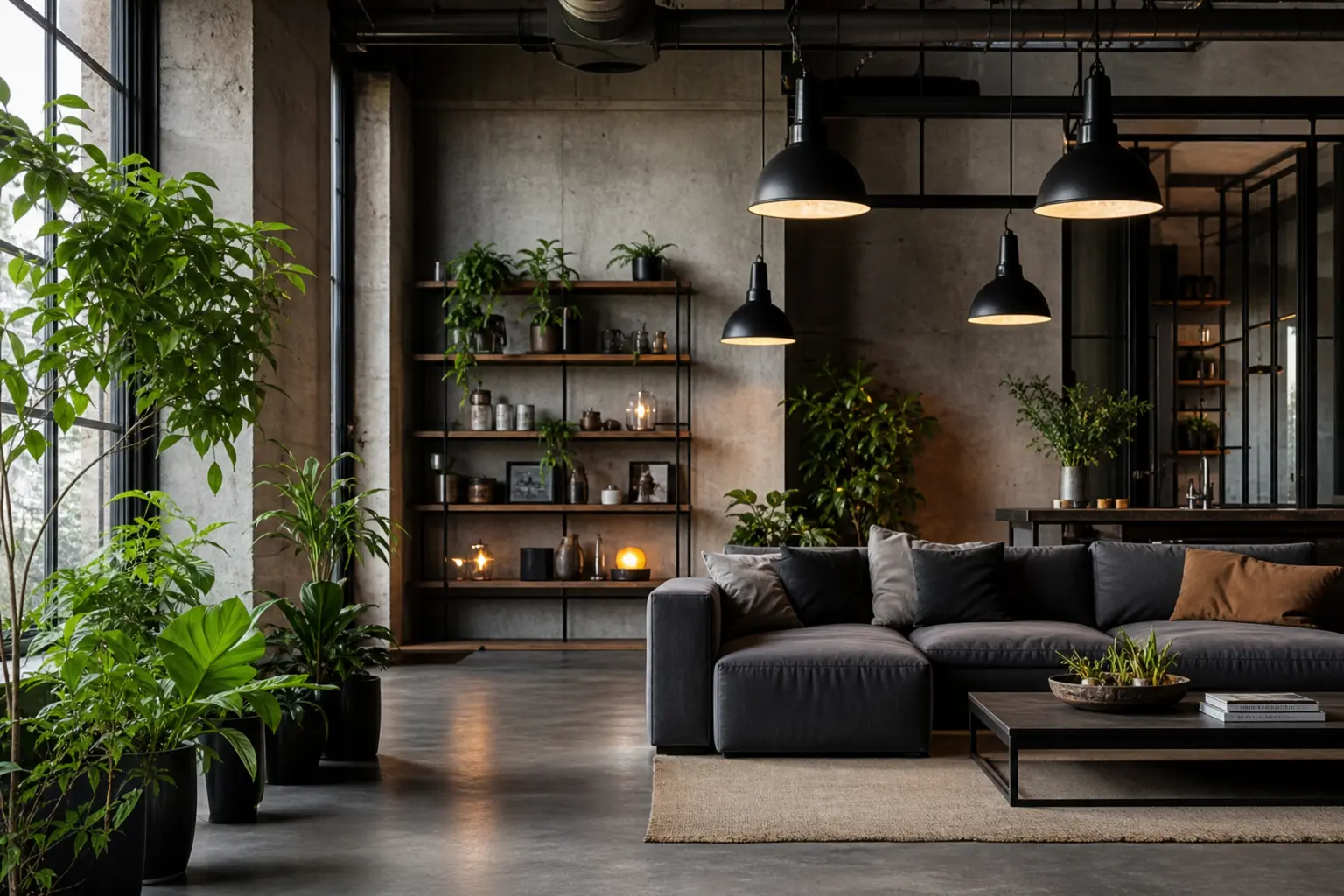
Many industrial spaces, especially converted lofts or apartments with large factory style windows, get strong indirect light but not always consistent direct sun. Plants like snake plants, pothos, and ZZ plants tolerate that kind of variable light well.
Larger statement plants, like a fiddle leaf fig or a rubber plant, work well near a black pendant cluster since their height and leaf shape echo the vertical lines common in industrial furniture and fixtures.
Trailing plants, like pothos or string of pearls, placed on an open shelf or a tall plant stand, add movement and soften the straight, angular lines typical of exposed pipe shelving or metal furniture frames.
A Quick Care Note
Most of these lower maintenance plants prefer to dry out slightly between waterings. Overwatering is a more common problem than underwatering, particularly for snake plants and ZZ plants.
4. Furniture Materials That Support the Industrial Look
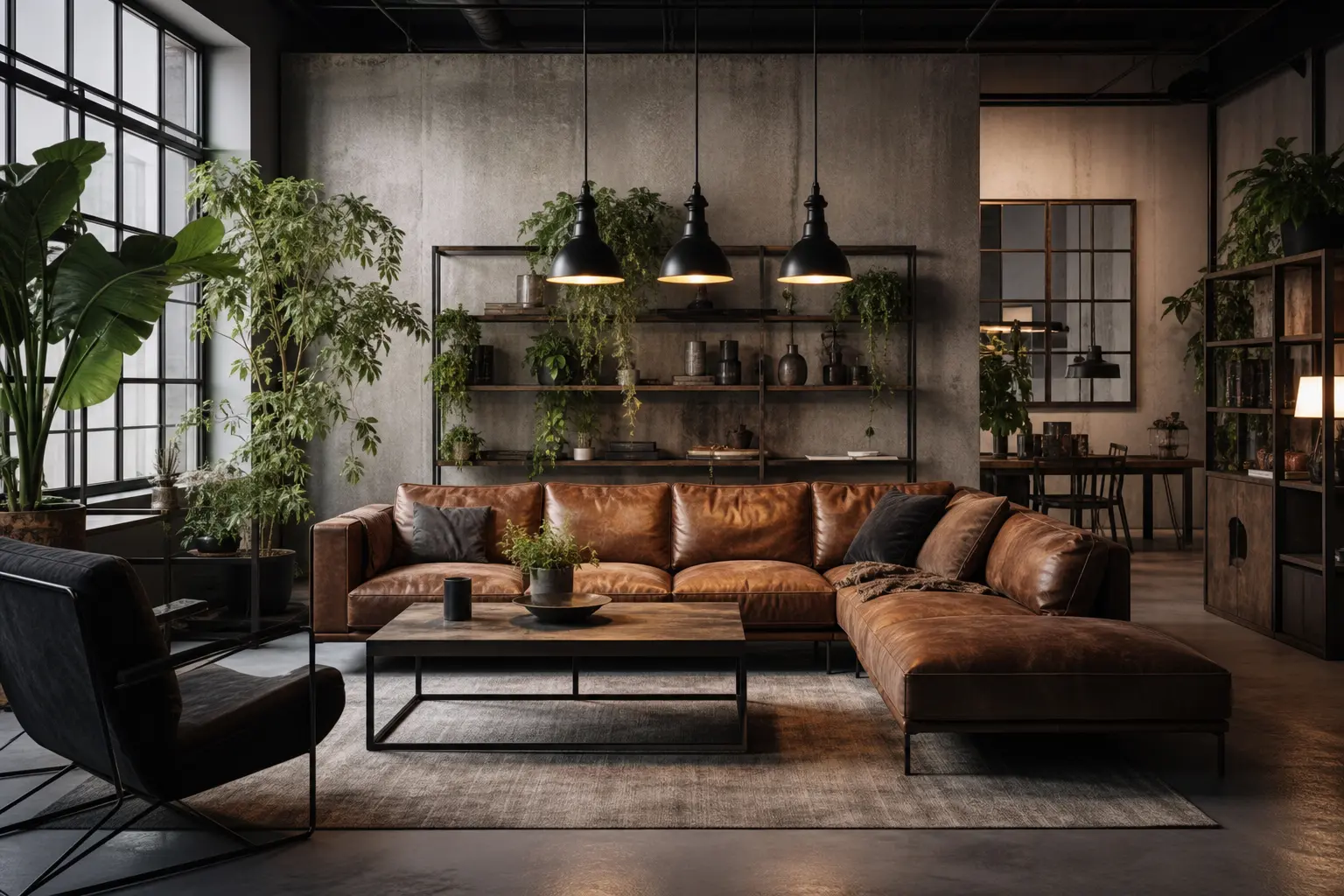
Leather or faux leather sofas, particularly in a worn or distressed brown or black finish, are a common industrial furniture choice. The material’s texture pairs naturally with metal and exposed brick.
Reclaimed or raw edge wood, used for coffee tables or shelving, adds warmth and a sense of history to the room. Look for visible grain and slight imperfections rather than a perfectly smooth, uniform finish.
Metal framed furniture, like a coffee table with black iron legs or open metal shelving units, reinforces the industrial material palette without needing to rely on brick or concrete alone to carry the theme.
5. Mixing Raw Textures with Softer Fabrics for Comfort
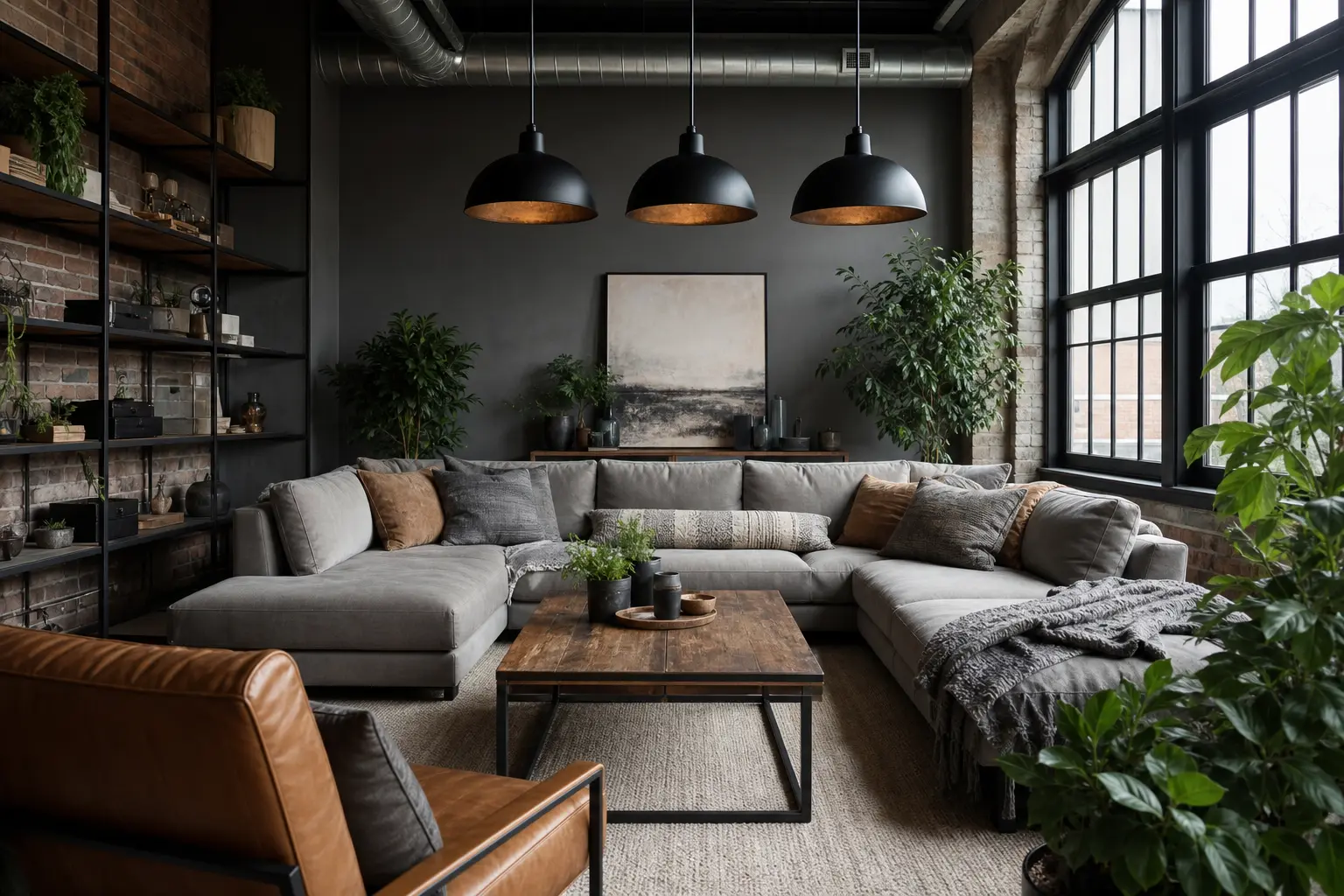
A wool or cotton area rug underfoot immediately softens the feel of concrete or wood flooring, which is common in many industrial style spaces. Choose a rug in a neutral tone with some texture, rather than a flat, thin weave.
Textured throw pillows in linen or cotton canvas add comfort to a leather sofa without clashing with the material’s roughness. Two or three pillows in muted tones, like charcoal, rust, or olive, tend to fit the palette well.
A knit or woven throw blanket draped over the sofa arm rounds out the softer textures in the room. This detail matters more than it might seem, since it signals the space is meant for relaxing, not just looking at.
6. Positioning Pendant Lights for Function and Visual Balance
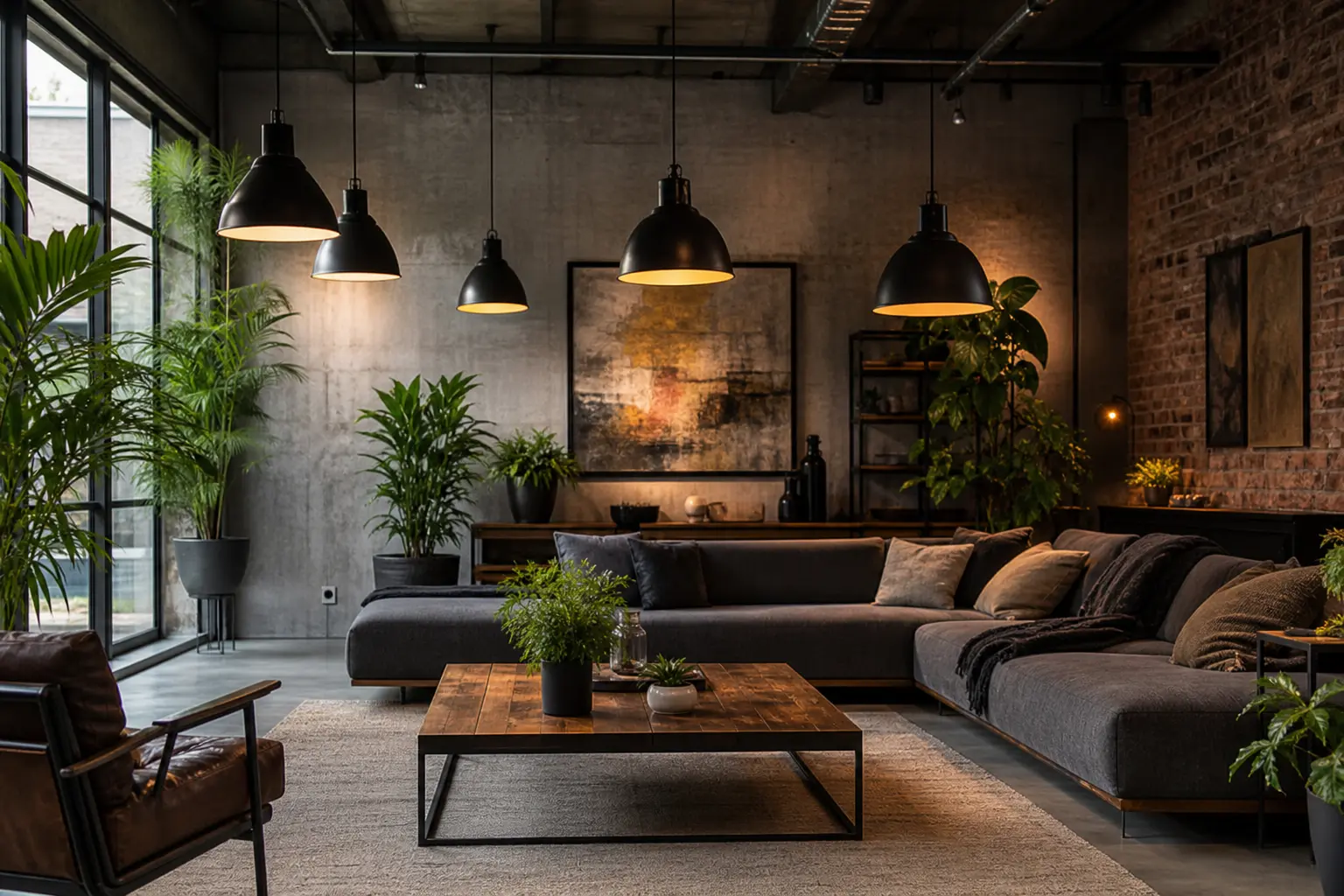
Center pendant lights over a coffee table or a defined seating cluster rather than the room’s geometric center, especially in an open floor plan where the true center might not align with any actual furniture.
If you’re using a cluster of two or three pendants, stagger the heights slightly, generally within 4 to 8 inches of each other, rather than hanging them perfectly level. This small variation adds visual interest and avoids a stiff, symmetrical look.
Pair pendant lighting with at least one warm floor or table lamp elsewhere in the room. Pendants alone, especially with exposed bulb designs, can create strong direct light and deep shadow, so a secondary softer light source helps balance the overall room lighting.
7. Building a Plant Layout That Doesn’t Feel Random
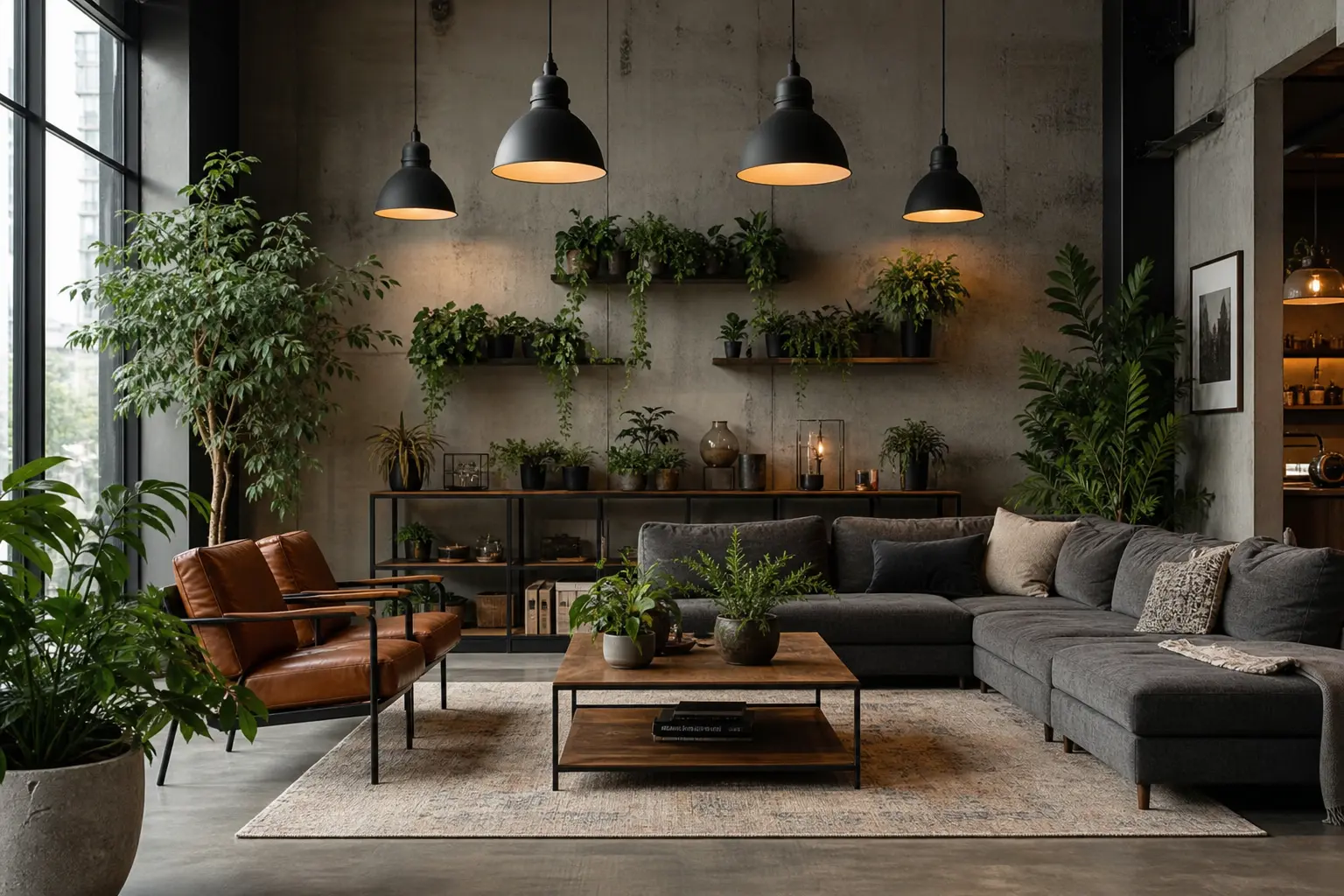
Group plants in odd numbers, generally three, when clustering them on a shelf or in a corner. Odd numbered groupings tend to look more natural and intentional than even pairs.
Vary the height of plants within a grouping by using stands or stacked crates for shorter plants alongside one taller floor plant. This creates a layered look rather than a flat row of pots all at the same height.
Repeat similar pot materials, like matte black, terracotta, or concrete, throughout the room rather than mixing several different pot styles. This repetition ties the plant styling together the same way repeated metal finishes do for the room’s hardware.
8. Color Palettes That Keep Industrial Decor from Feeling Cold
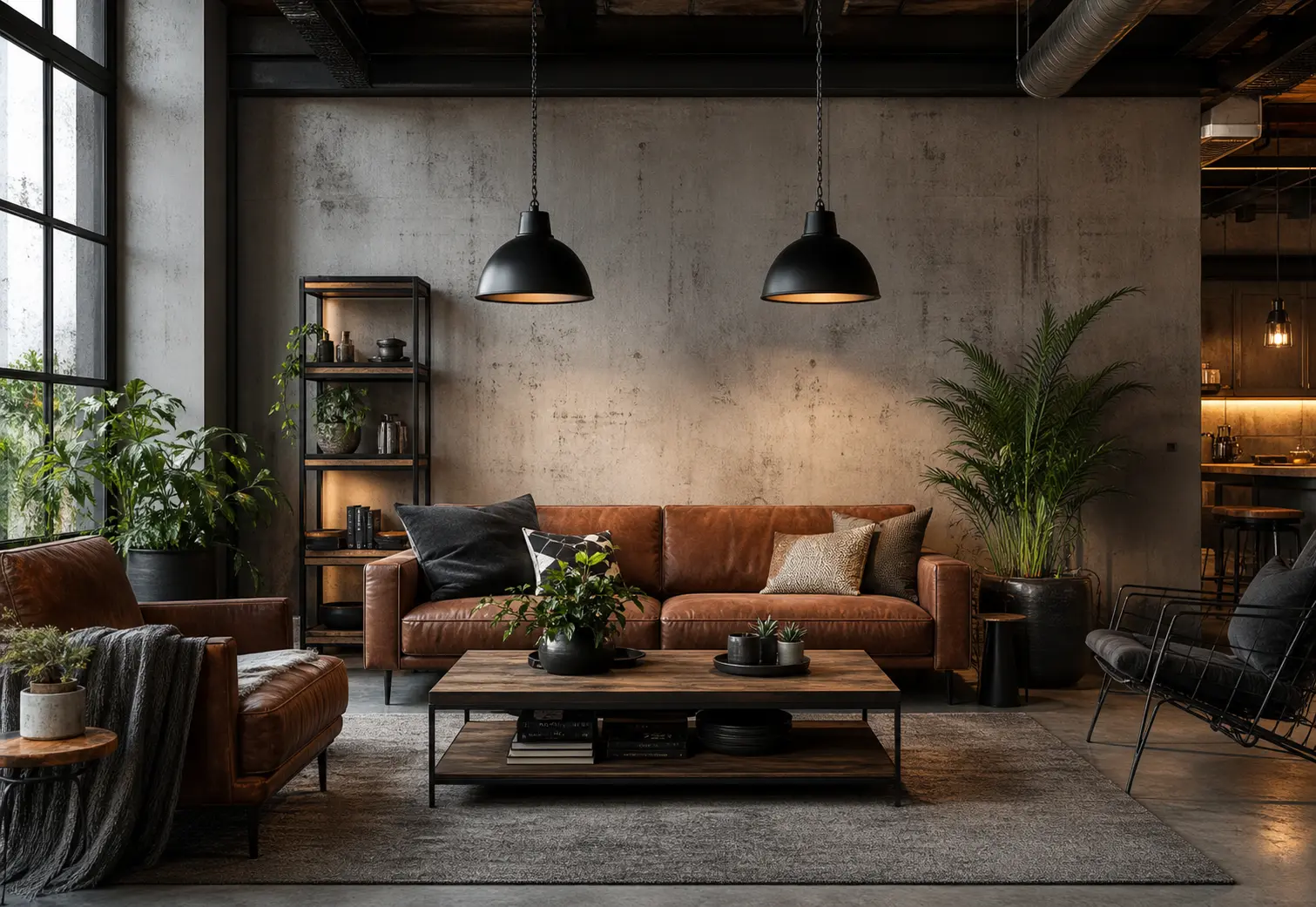
Charcoal, warm gray, and deep brown work well as base tones for industrial furniture and walls, since they read as moody without tipping into pure black or stark gray, which can feel harsher.
Add warmth through a few key accent colors, like rust, mustard, or olive green, used on pillows, a throw, or a piece of art. These tones echo the green of your plants and the warmth of exposed wood, tying the palette together.
Avoid an entirely monochrome black and gray room. Without any warm accent color, even well chosen plants and lighting can struggle to fully offset the coolness of concrete and metal.
9. Small Space Adaptations for Apartments and Lofts
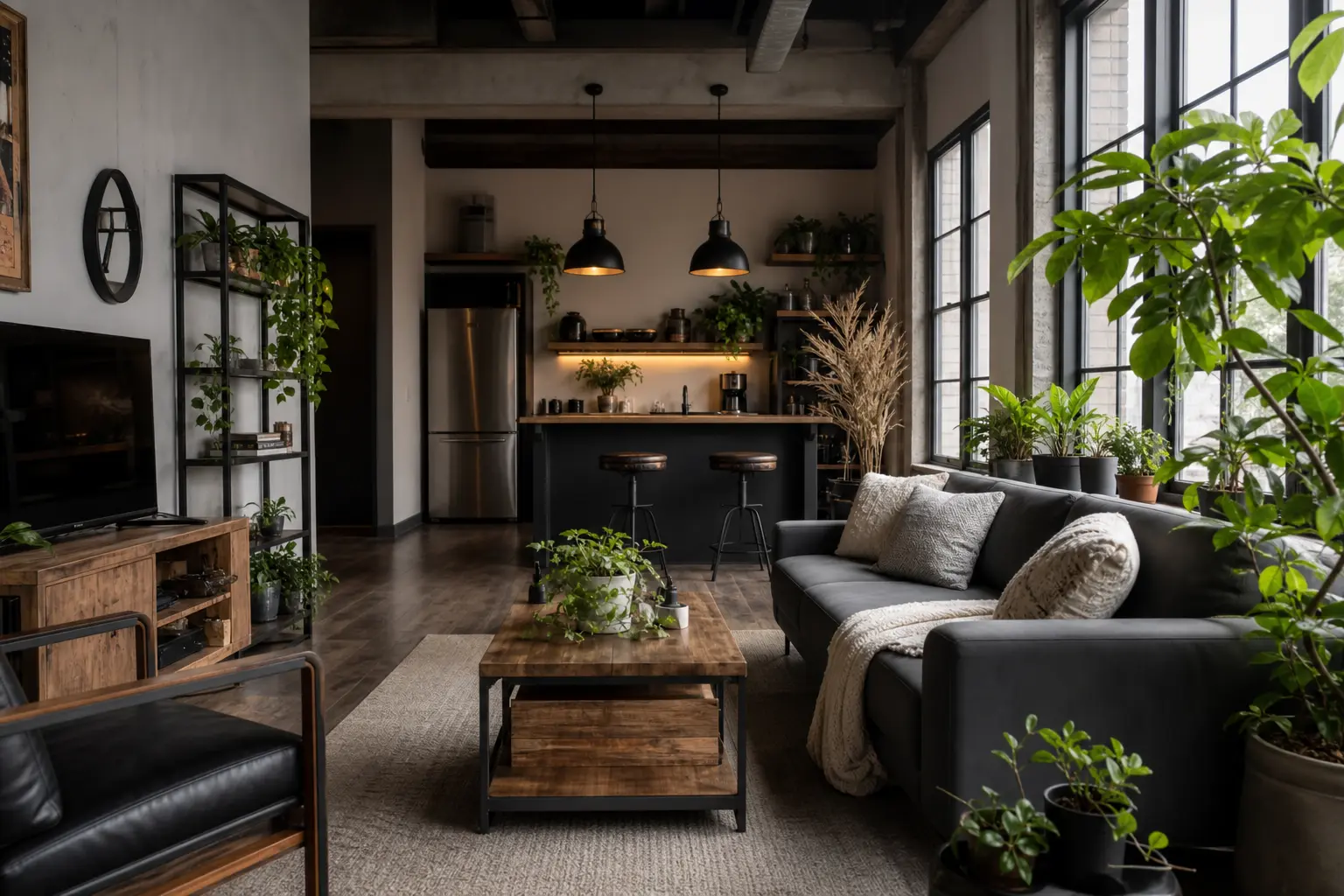
In a smaller apartment, a single well chosen pendant light over a small dining or coffee table can deliver the industrial lighting effect without needing a full cluster, which can feel like too much in a compact room.
Choose two or three plants rather than a large collection if floor space is limited. A single medium to large plant, like a rubber plant, combined with one trailing plant on a shelf, still delivers the softening effect without crowding a small room.
Wall mounted or floating shelves are especially useful in small industrial spaces, since they let you display plants and books vertically rather than using floor space that a small apartment likely can’t spare.
10. Budget Tiers: What to Expect at Each Price Point
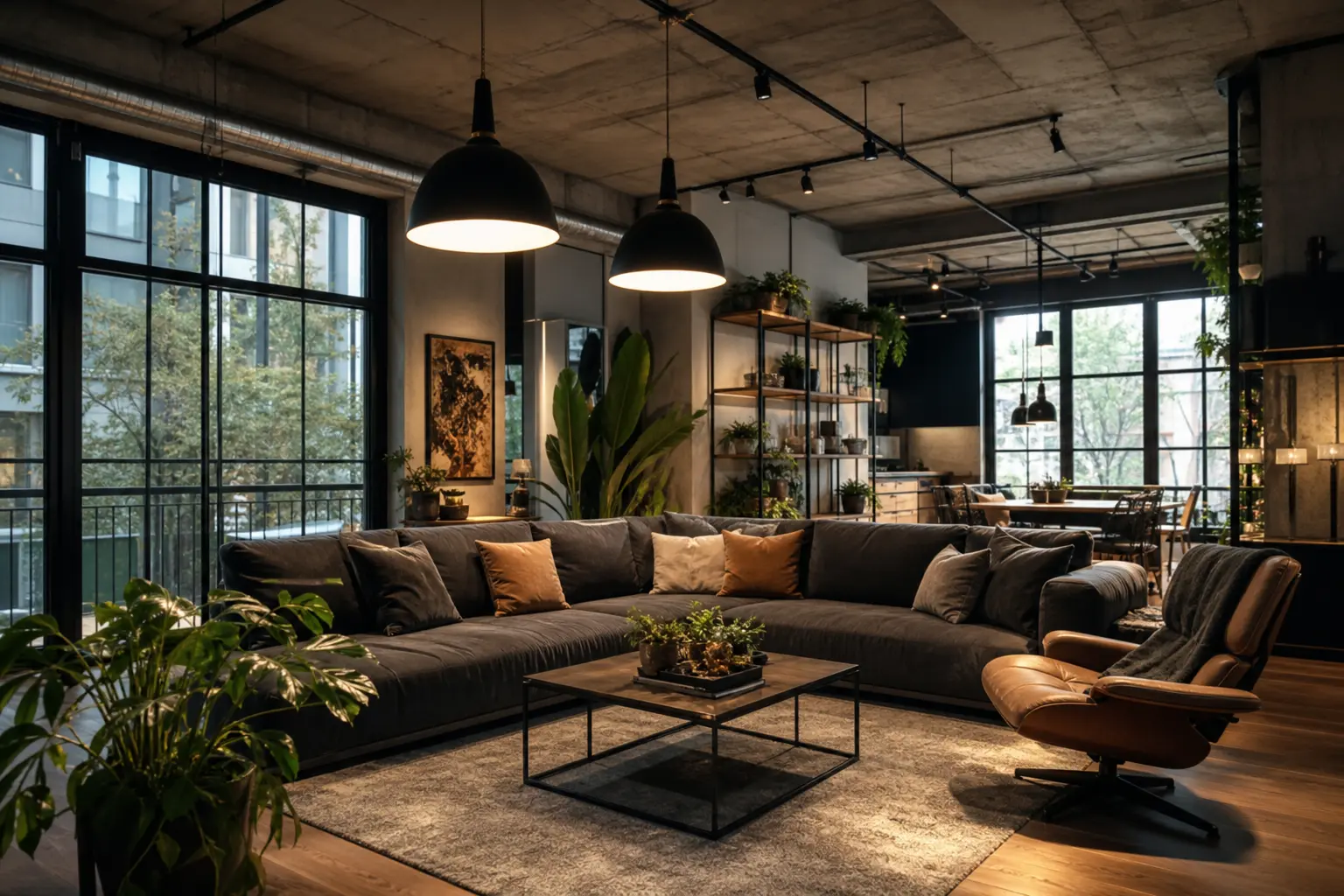
At the lower end, a basic black pendant light fixture typically costs 30 to 80 dollars, and low maintenance plants like pothos or snake plants generally run 15 to 40 dollars depending on size.
Mid tier updates, including a higher quality pendant cluster and a few larger statement plants like a fiddle leaf fig, generally total 200 to 500 dollars once you include pots and stands.
Full room overhauls, with designer pendant fixtures, leather furniture, and a larger collection of mature plants, can run 1500 dollars and up, particularly if you’re also adding structural elements like exposed shelving or a reclaimed wood feature.
Mistakes to Avoid
- Relying only on black pendant lighting without a secondary warm lamp, which can leave the room feeling harshly lit
- Choosing plants that need bright direct sun in a space with limited natural light
- Sticking to an entirely black and gray palette with no warm accent color
- Hanging pendant lights at the room’s geometric center instead of over the actual seating area
- Clustering plants in even, symmetrical groupings instead of more natural odd numbered groupings
- Overcrowding a small apartment with too many large plants instead of a few well chosen ones
Frequently Asked Questions
Will black pendant lights make a room feel darker overall? Not if paired with a warm bulb and a secondary light source like a floor lamp. The fixture’s black finish affects the room’s style more than its actual brightness, which comes down to bulb choice and wattage.
What are the easiest plants for someone who tends to forget to water? Snake plants and ZZ plants are both known for tolerating inconsistent watering and lower light conditions, making them reliable choices for industrial spaces with variable natural light.
Can industrial style work in a rental apartment without exposed brick? Yes. Black hardware, metal shelving, leather furniture, and the right lighting can establish the look even without an original brick or concrete wall. A brick style wallpaper is also an option in some rentals.
How many pendant lights should I use over a coffee table? A single pendant works fine for a smaller table, while a cluster of two or three suits a larger table or an open concept space where more visual presence helps anchor the seating area.
Do I need real plants, or do faux plants work for this style? High quality faux plants can work, particularly for larger statement pieces in low light spots, but real plants generally look more convincing up close and contribute genuine air quality benefits that faux versions don’t.
Conclusion
A modern industrial living room stops feeling cold the moment you add genuine warmth back into the mix, through plant life, layered lighting, and a few softer textures. Choose black pendant lighting that fits your ceiling and seating layout, add plants that suit your actual light conditions, and don’t skip the warm accent colors. Balance those elements, and the industrial look reads as edgy and comfortable at the same time, rather than stark and unfinished.