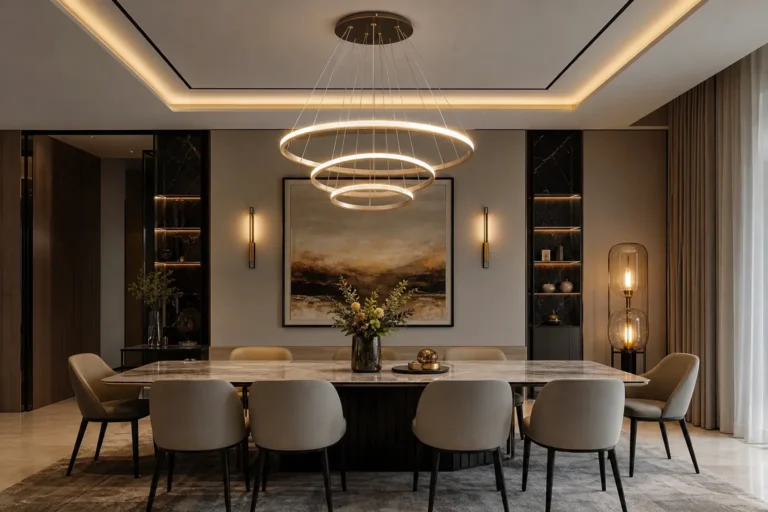
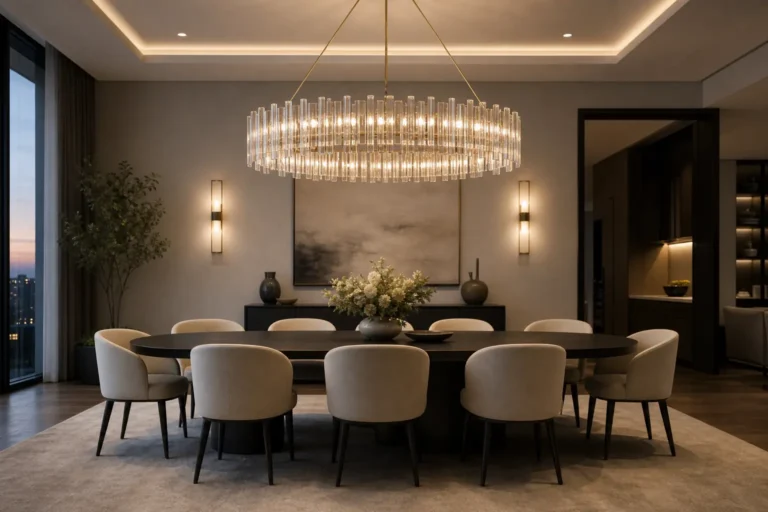
10 Modern Curved Sofa Living Room Design Ideas With Warm Ambient Lighting and Minimalist Luxury Inspiration
A boxy sofa with hard, square edges can make even a well decorated living room feel stiff and cold. Every corner is sharp, every line predictable. A curved sofa living room design flips that feeling, softening the whole space with rounded lines and, when paired with warm ambient lighting, creating a look that reads as minimalist luxury rather than sparse. This guide covers ten specific ways to build a curved sofa living room design that feels genuinely warm, not just stylish in photos.
1. Choose a Curved Sofa Shape That Fits Your Room’s Layout
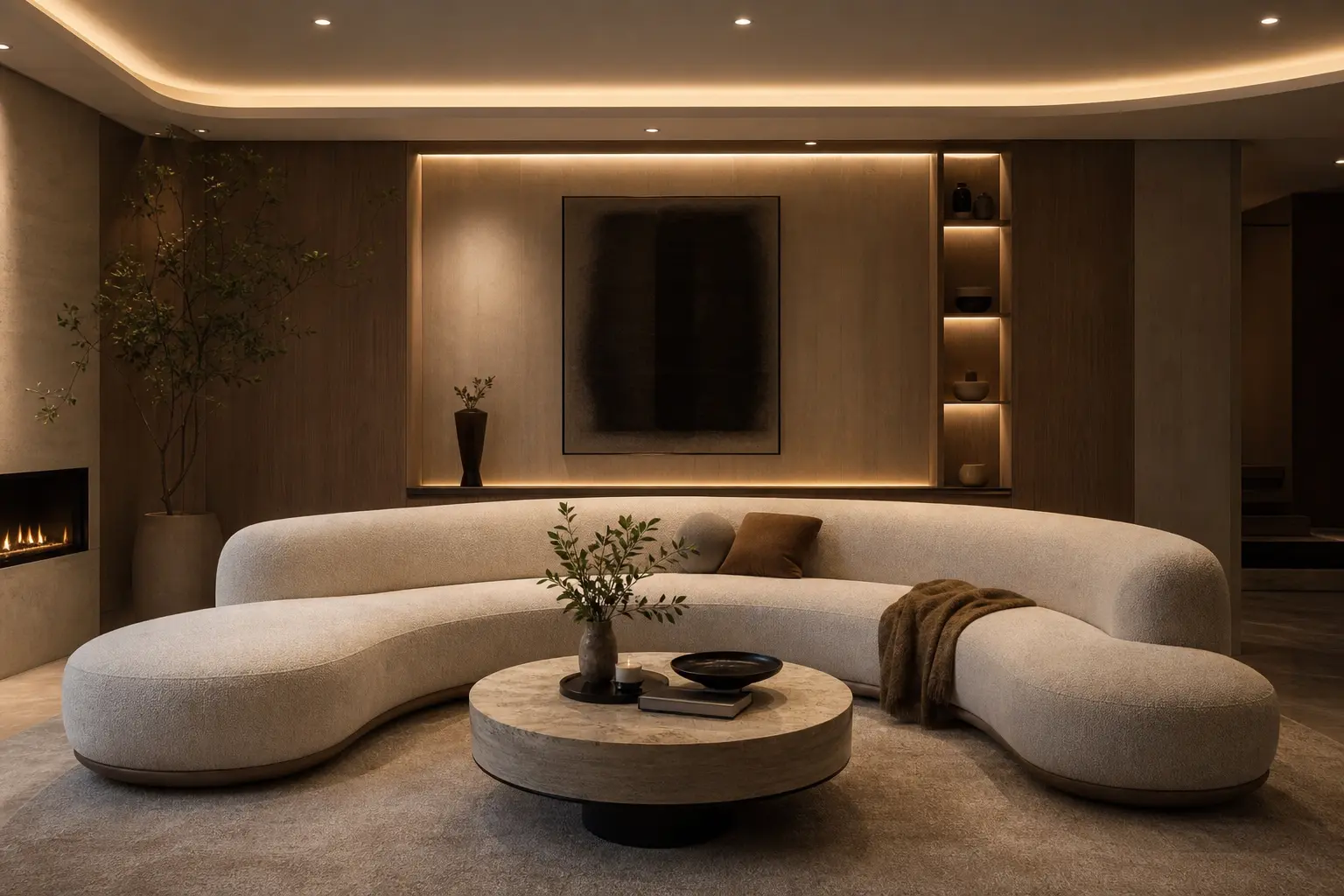
Curved sofas come in more variations than people expect, from a gentle bow shape to a dramatic full crescent. A subtle curve works better in a smaller or more rectangular room, since it doesn’t demand as much floor space around it. A deeper crescent shape needs more open square footage to avoid feeling cramped against the walls. Measure your actual seating area before shopping, and leave at least 30 inches of walking space around the sofa’s widest point.
2. Pick a Neutral Fabric That Lets the Curve Stand Out
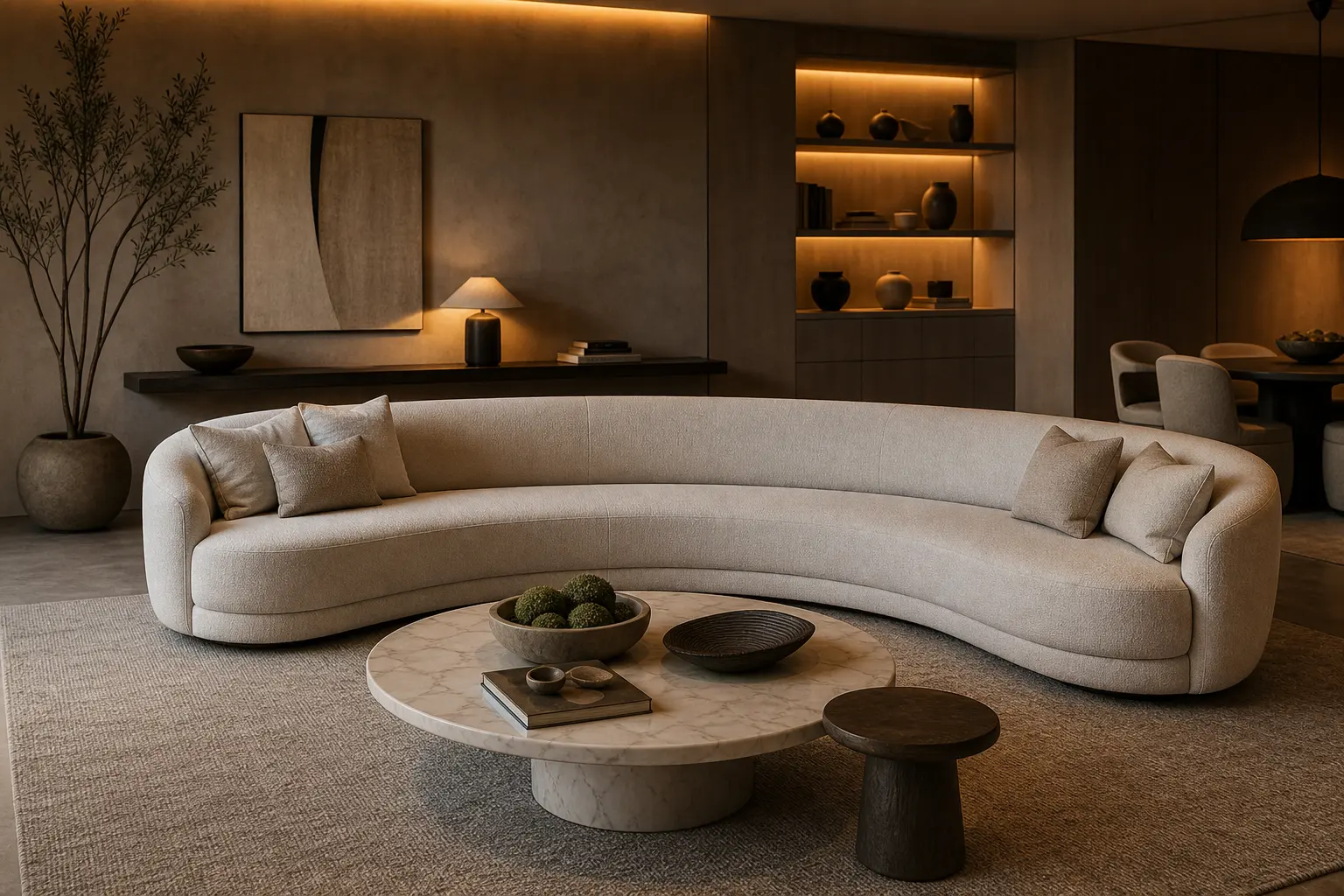
A curved silhouette is already a strong visual statement on its own, so a busy pattern usually competes with it rather than complementing it. A neutral boucle, linen or velvet in a warm tone lets the shape itself do the talking. Boucle in particular tends to catch light beautifully along a curved arm, emphasizing the sofa’s rounded lines in a way flat fabric can’t.
3. Add Warm Ambient Lighting to Soften Hard Angles
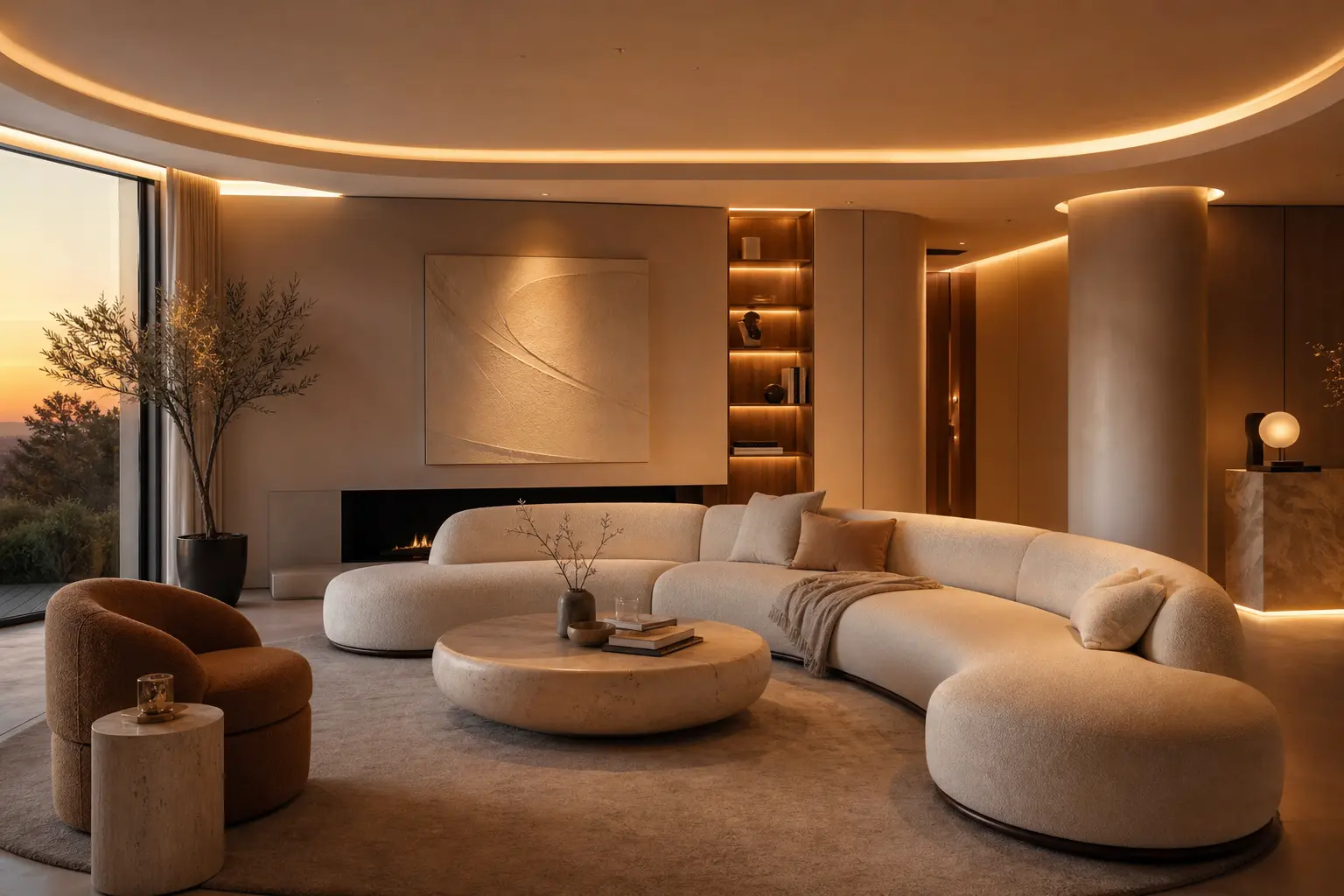
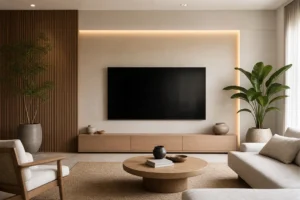
Even with a curved sofa as the centerpiece, harsh overhead lighting can undo the softness you’re going for. Warm ambient lighting, in the 2700K to 3000K range, smooths out shadows and flatters rounded furniture far better than a bright, direct overhead light. Layer a floor lamp near the sofa with a dimmable table lamp on a nearby side table. This combination lets you shift from bright and functional during the day to soft and warm in the evening.
Why Warm Light Suits Curved Furniture
Cool, direct light creates harder shadow edges that emphasize sharp corners elsewhere in the room. Warm, diffused light softens those edges, which visually supports the rounded shape of the sofa instead of fighting against it.
4. Pair the Sofa With Rounded Accent Furniture
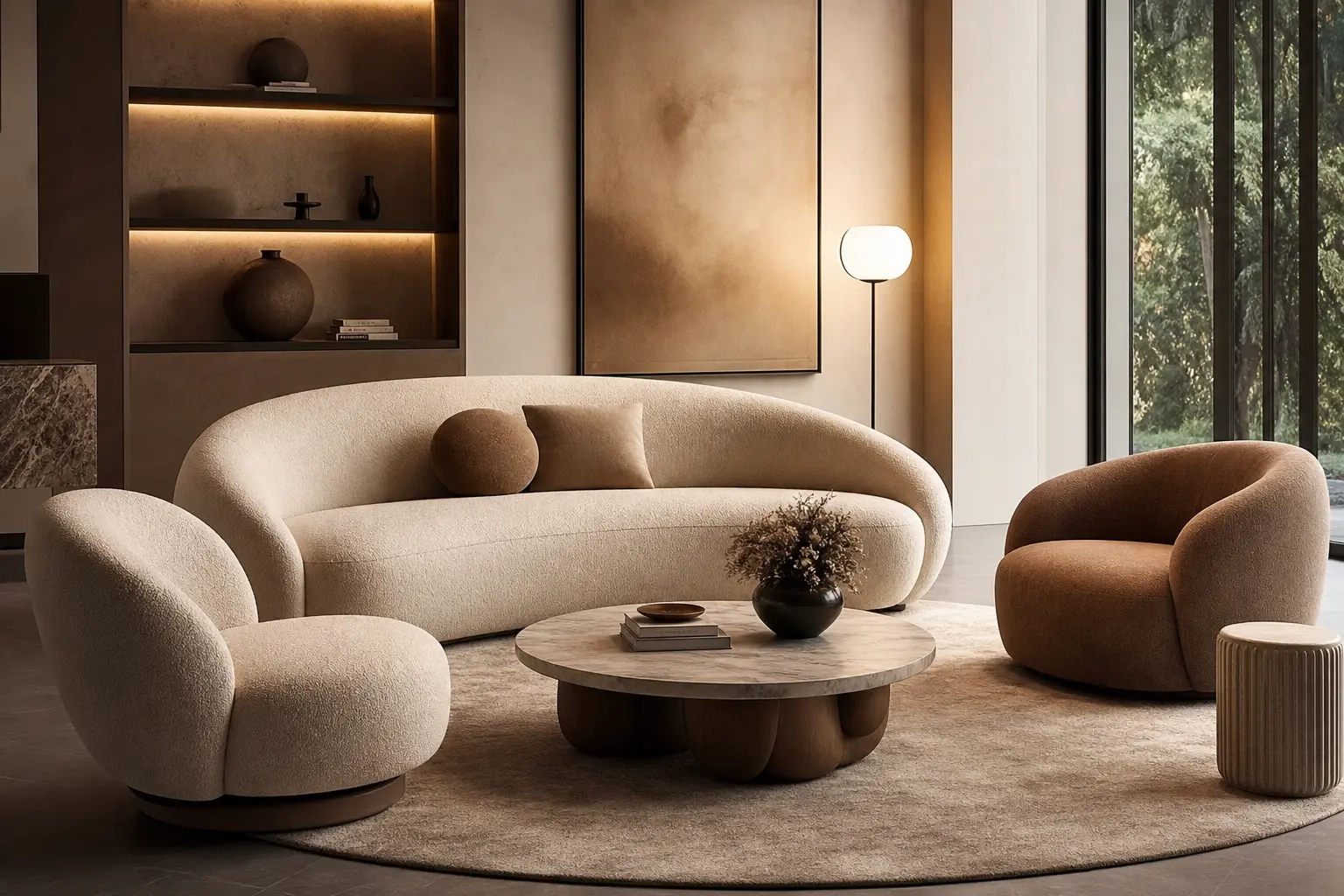
A curved sofa surrounded entirely by square edged furniture can look like an accident rather than a design choice. Bring in one or two additional rounded pieces, a circular side table, an arched mirror, or a rounded accent chair, to echo the sofa’s shape elsewhere in the room. You don’t need to round out every piece. Two or three repeated curves is usually enough to tie the room together.
5. Use a Round or Oval Coffee Table for Visual Flow
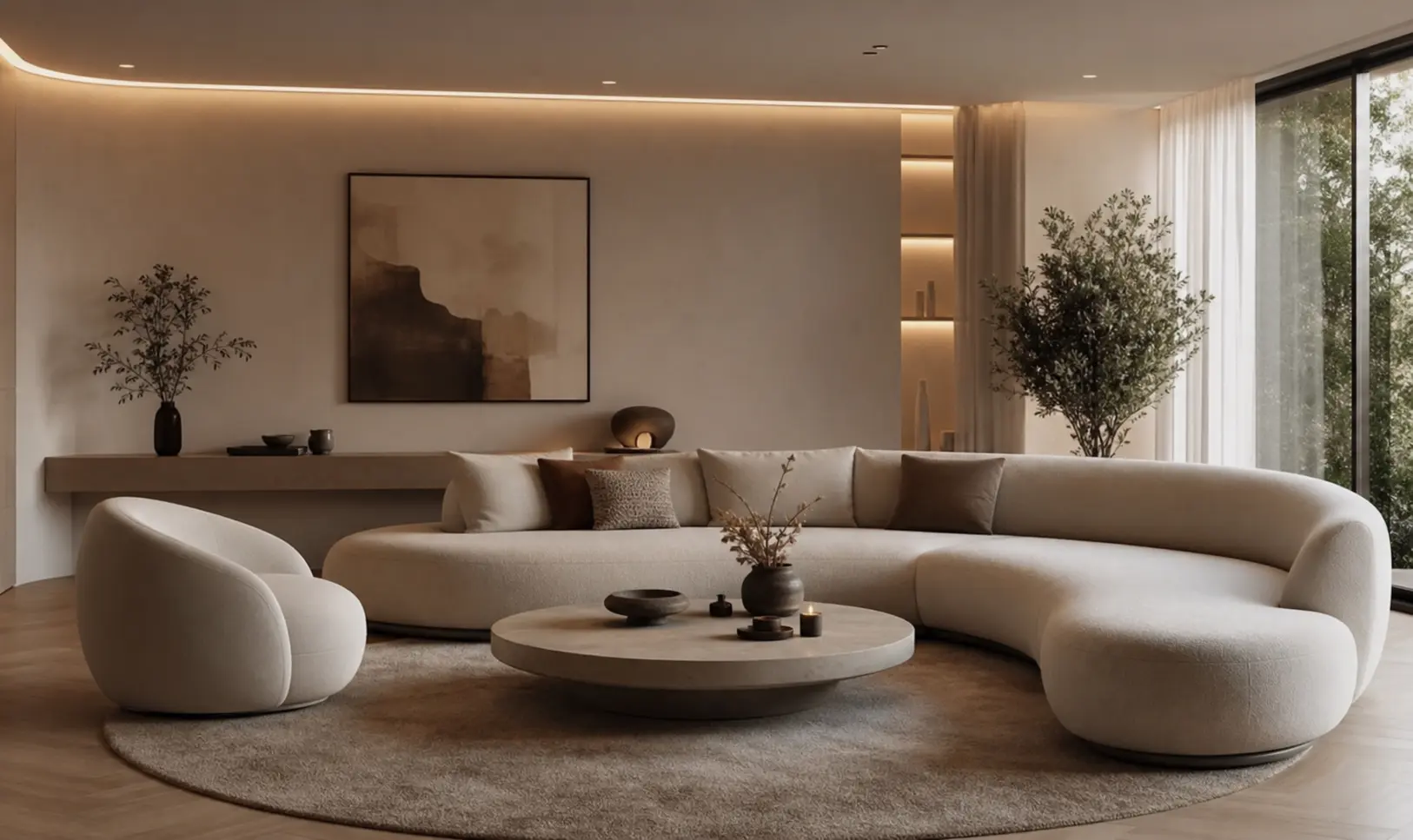
A sharp cornered rectangular coffee table sitting in front of a curved sofa creates an odd visual clash right at the center of the room. A round or oval table follows the sofa’s natural line instead, creating a smoother flow between pieces. This also has a practical benefit. Rounded tables have no sharp corners to bump into, which matters in smaller living rooms with tighter walking paths.
6. Anchor the Space With a Rug That Follows the Curve
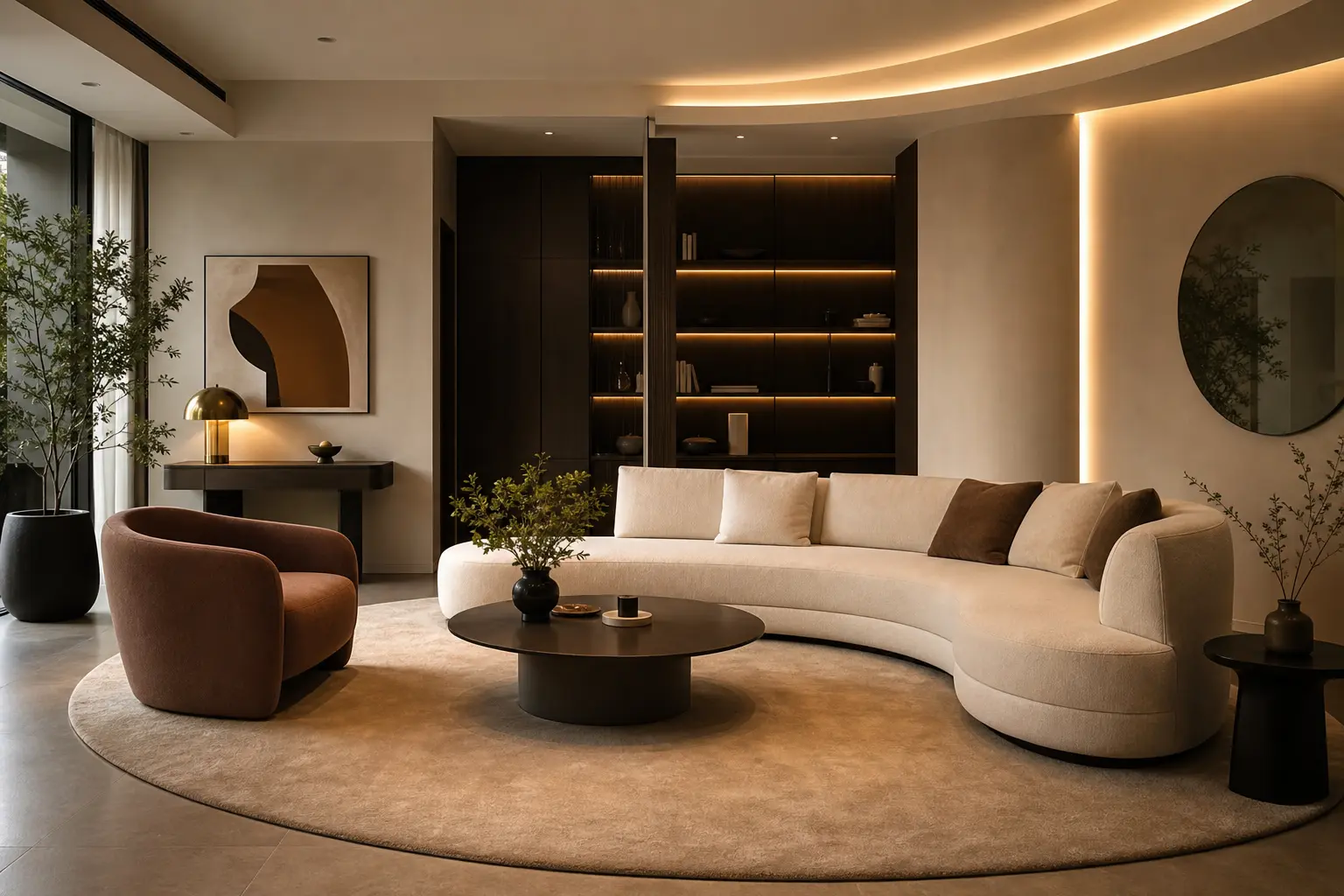
A rectangular rug under a curved sofa can look slightly mismatched, since the straight edges cut against the sofa’s rounded shape. A round rug, or an oval one for larger rooms, follows the same visual logic as the sofa itself. Size the rug so the sofa’s front legs sit on it, with enough rug remaining in front for the coffee table and any accent chairs.
7. Keep Wall Decor Simple to Let the Sofa Lead
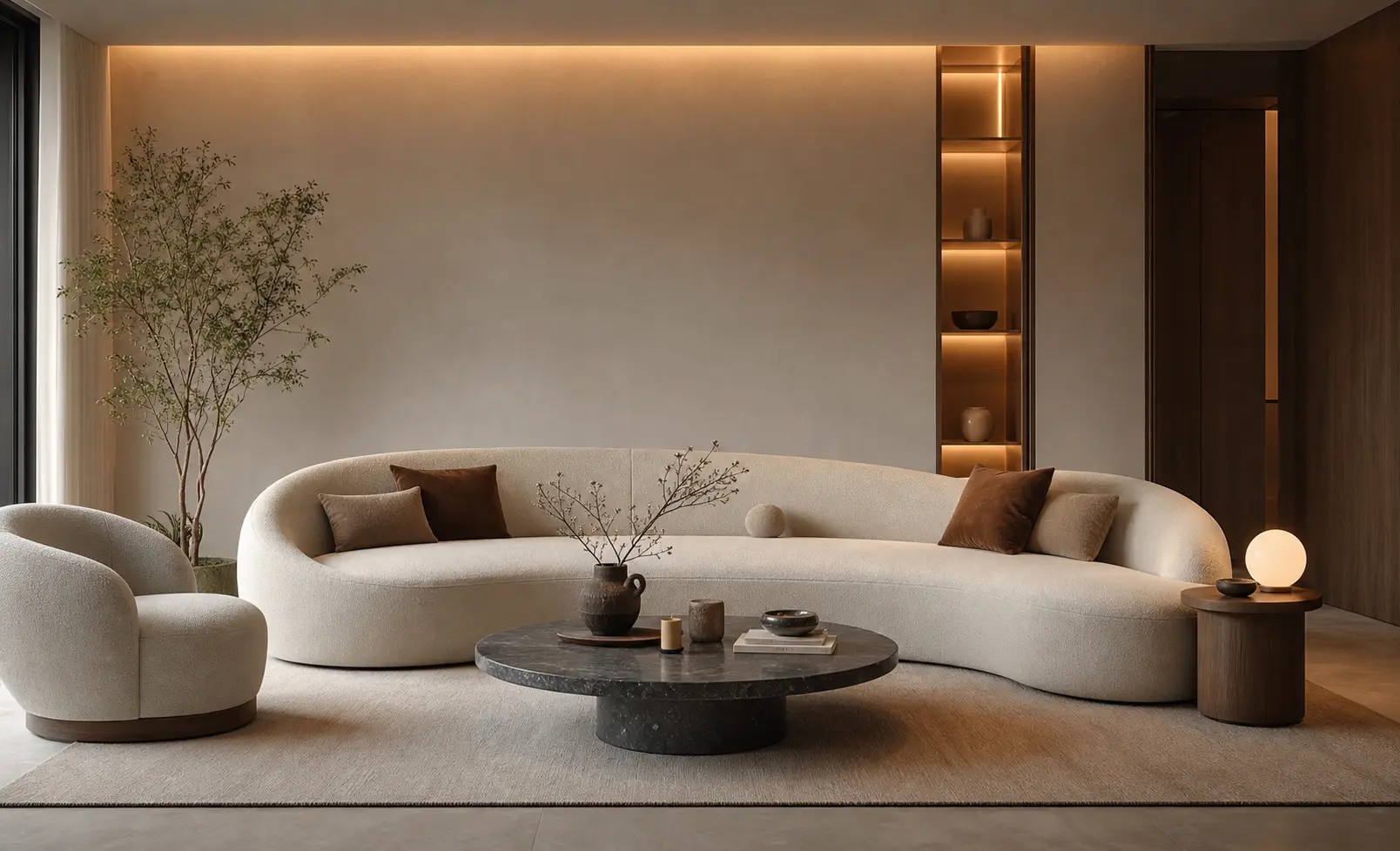
A curved sofa is already a strong focal point, so the walls around it don’t need to compete for attention. One well chosen piece of art, or a simple arched mirror, is usually enough. Leave real breathing room around it rather than filling the wall with several smaller pieces, which would distract from the sofa’s shape instead of supporting it.
8. Layer Floor and Table Lamps for Evening Ambience
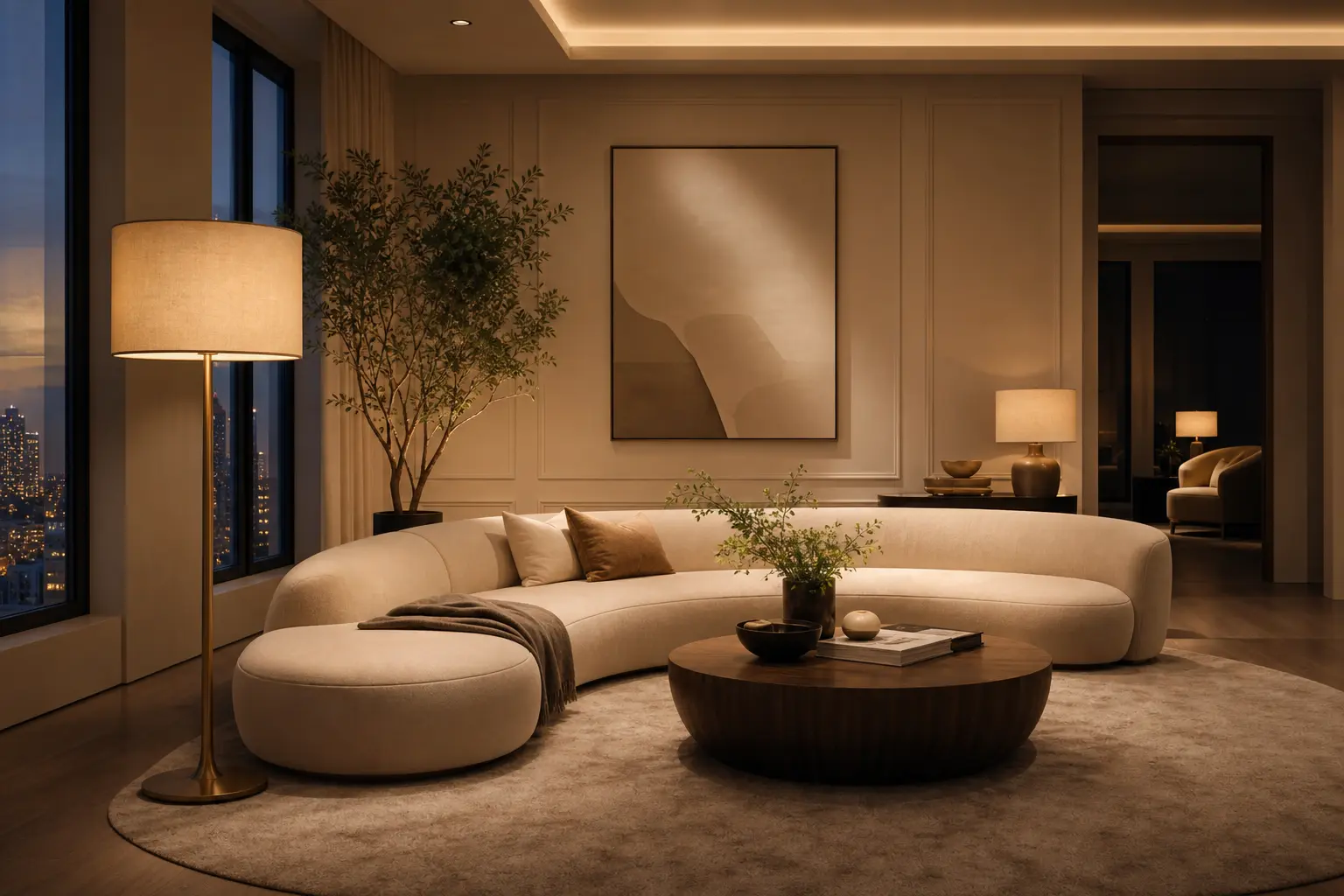
During the day, natural light and your main ceiling fixture likely handle most of the room’s lighting needs. In the evening, switch to floor and table lamps instead. This layered approach, turning off overhead light and relying on lower, warmer sources, creates the kind of ambient glow that makes a curved sofa living room design feel genuinely inviting rather than just well furnished.
9. Add One Sculptural Accent to Reinforce the Curve
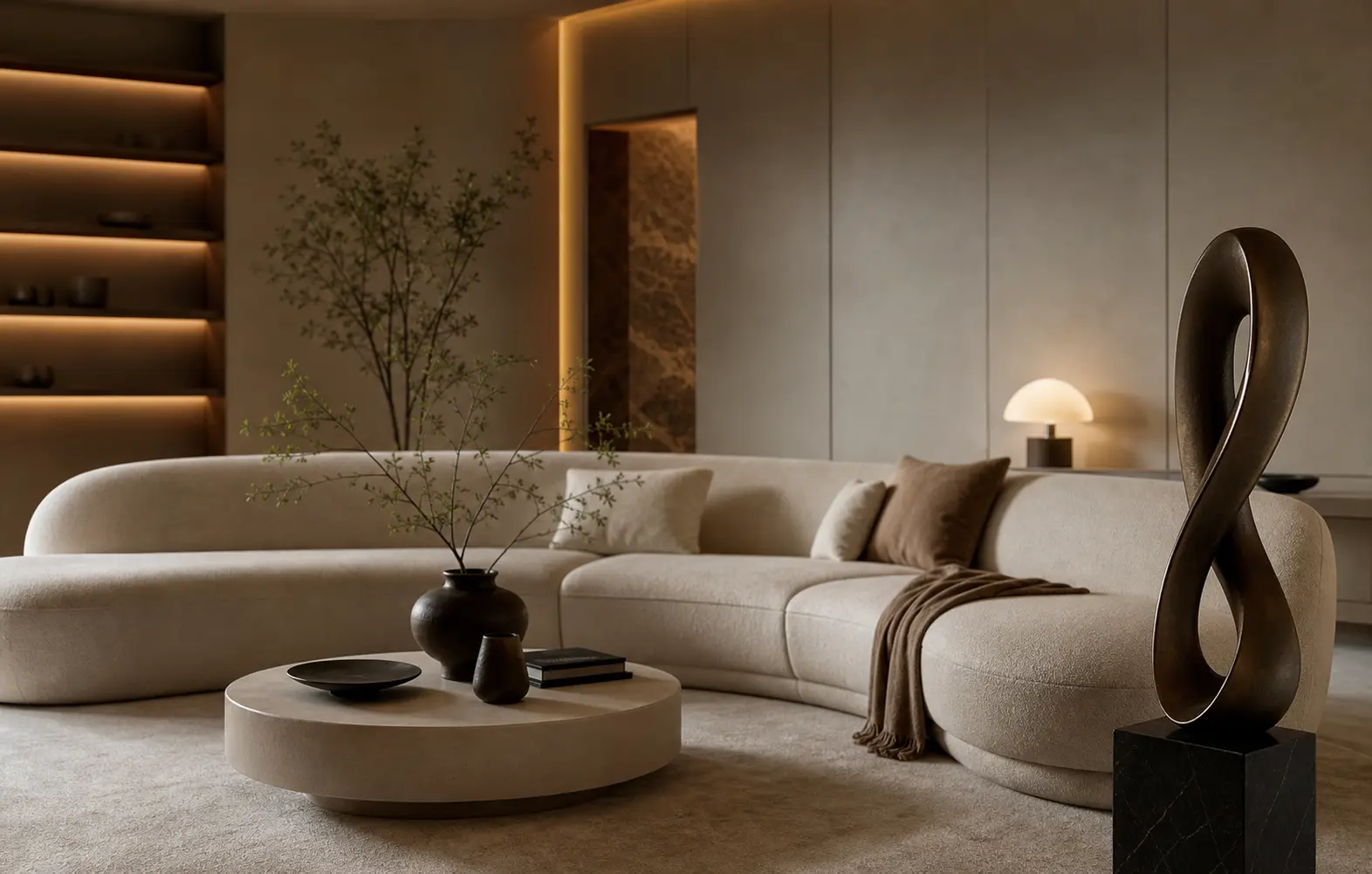
A single sculptural object, a curved floor lamp, an organic shaped vase, or an abstract sculpture, reinforces the room’s rounded theme without adding clutter. Place it somewhere it won’t compete with the sofa for attention, often on a console table or in an empty corner. One well chosen piece does more here than several smaller decorative objects scattered around the room.
10. Balance Curves With a Few Straight Lined Elements
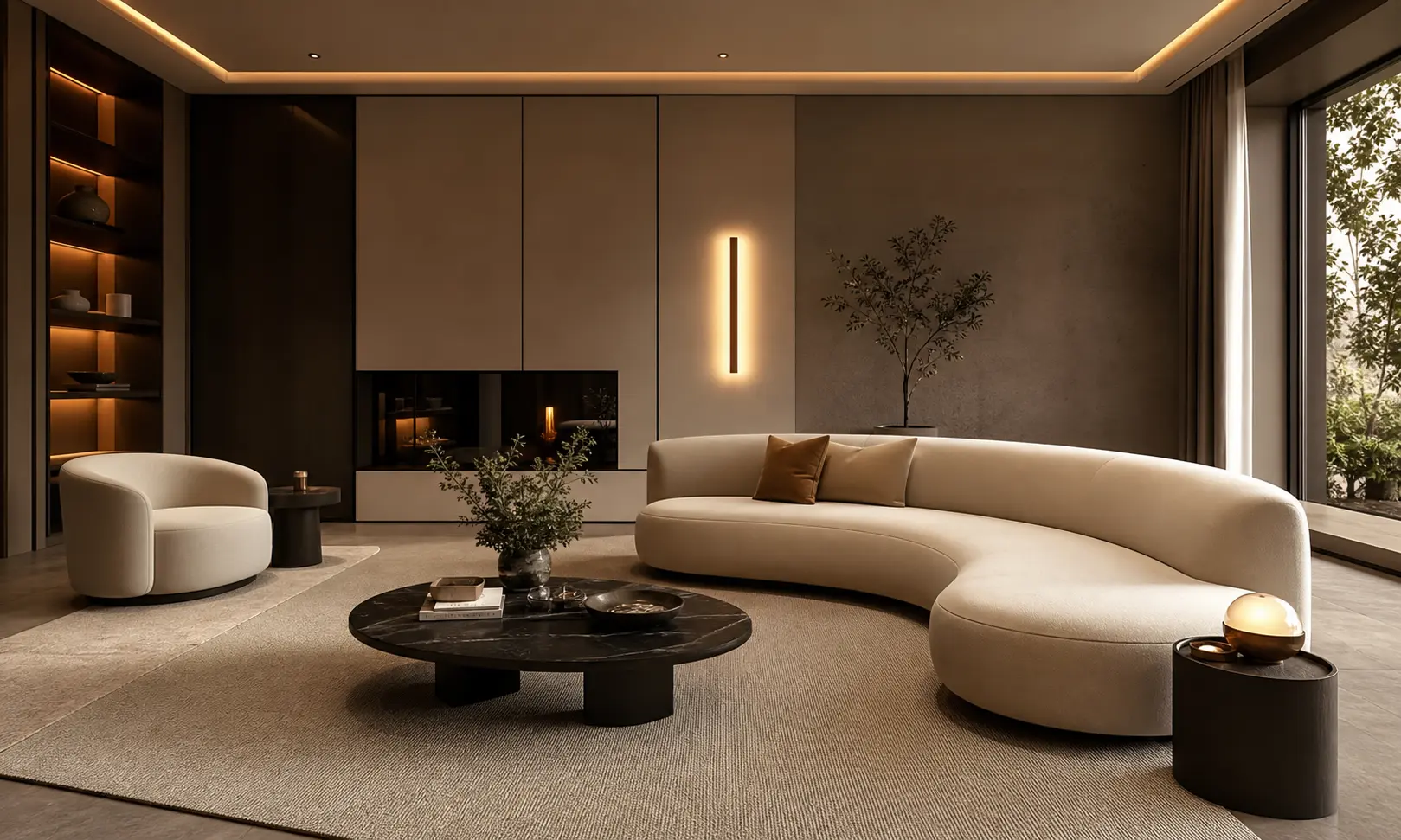
A room built entirely from curves can start to feel indecisive rather than intentional. Keep a few straight lined elements in the mix, a rectangular media console, straight window trim, or simple linear shelving, to ground the space. This contrast is what keeps a curved sofa living room design feeling like a deliberate choice rather than a theme applied without restraint.
Mistakes to Avoid
- Choosing a deep crescent sofa for a room too small to give it breathing room
- Pairing the sofa with a busy patterned fabric that competes with its shape
- Using only harsh overhead lighting instead of layering warm ambient sources
- Placing a sharp cornered rectangular coffee table directly in front of the curve
- Filling every wall with art instead of letting the sofa lead
- Building a room entirely from curves with no straight lined elements to ground it
Frequently Asked Questions
Are curved sofas comfortable for everyday use? Yes, most curved sofas offer the same seat depth and cushion support as a traditional sofa. The main difference is the shape of the back and arms, not the comfort of the seating itself.
What size room works best for a curved sofa? A subtle curve fits most standard living rooms. A dramatic crescent shape needs more open floor space, generally a room with at least 12 feet of usable width around the seating area.
What color works best for a curved sofa in a minimalist luxury room? Warm neutrals, cream, oatmeal or soft taupe, tend to work best, since they let the shape stand out without adding visual noise from a bold color or pattern.
How do I add warm ambient lighting without rewiring my living room? Plug in floor and table lamps with warm LED bulbs. You don’t need new wiring to shift a room’s lighting mood, especially if you put those lamps on a shared smart plug or timer.
Do curved sofas work with pets or kids in the home? Fabric choice matters more than the shape itself. A performance fabric like a durable boucle blend or a tightly woven linen holds up well regardless of the sofa’s silhouette.
What rug shape pairs best with a curved sofa? A round or oval rug generally complements a curved sofa better than a rectangular one, since it follows the same rounded visual logic.
Conclusion
A curved sofa living room design works best when the shape is supported, not fought against, by everything else in the room. Choose a fabric and rug that echo the curve, layer in warm ambient lighting for the evening, and add just enough straight lined furniture to keep the space grounded. Start with the lighting if you’re not ready to invest in a new sofa yet. Warm, layered light alone will move any living room closer to that soft, minimalist luxury feel.