10 Modern Minimalist Living Room Design Ideas | Scandinavian Japandi TV Wall Inspiration
Walk into a living room packed with mismatched furniture, cords everywhere, and a TV that dominates the whole wall, and it’s hard to relax. The space works against you instead of for you.
A modern minimalist living room fixes that by stripping things back to what actually matters. Scandinavian and Japandi style both lean on warm materials, calm color, and quiet function, which makes them a natural fit for a room built around a TV wall that still feels intentional rather than accidental.
This guide covers 10 practical ideas for building that kind of room, including how to treat the TV wall so it blends in instead of taking over.
1. Choose a Neutral Color Palette with Warm Wood Tones
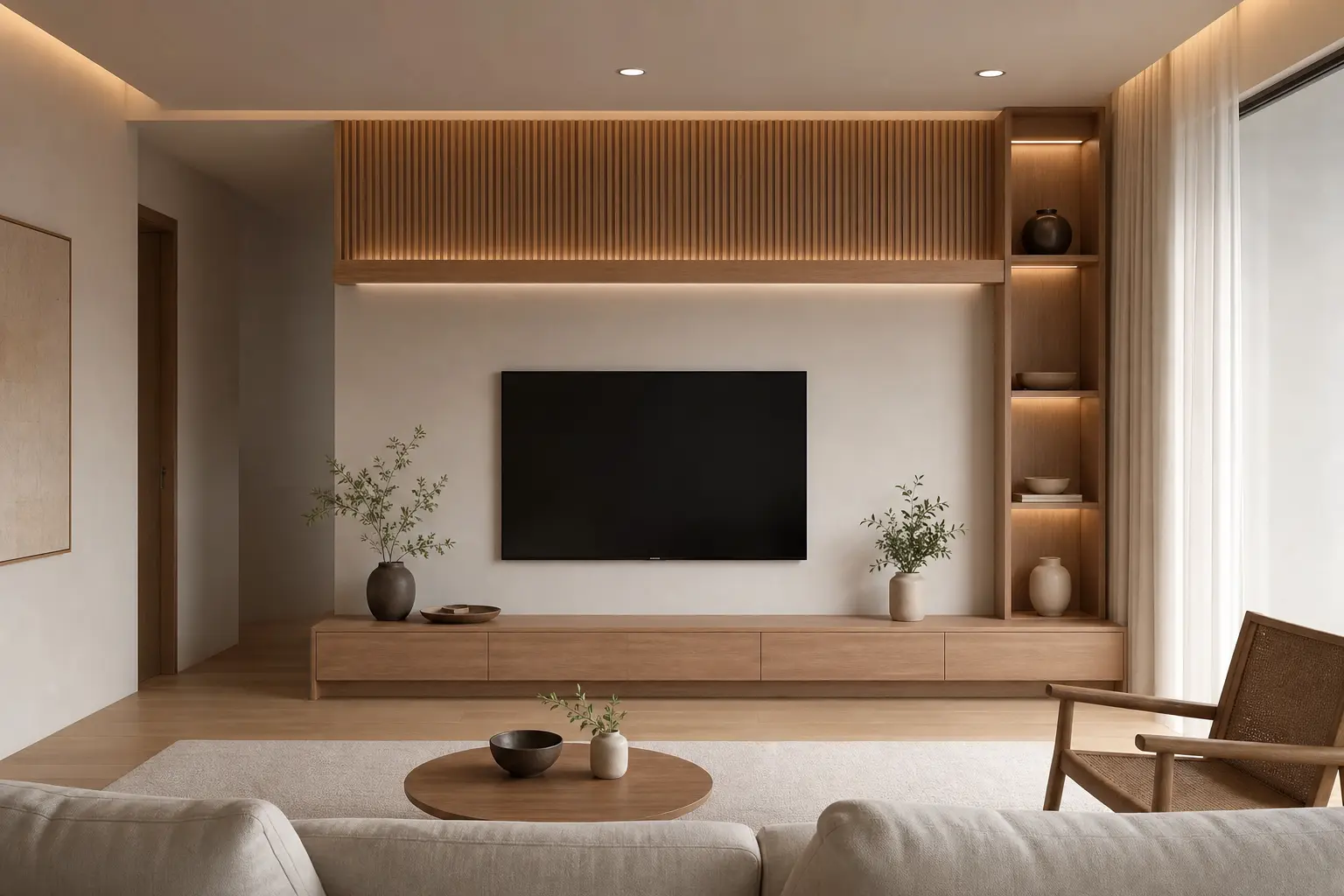
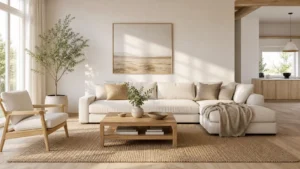
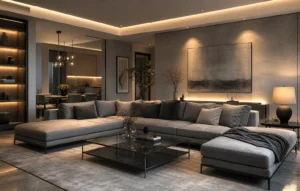
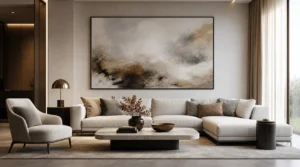
Scandinavian and Japandi style both start with a restrained color palette, usually whites, warm grays, and soft beige. Add depth through wood tones rather than bold accent colors. Light oak or ash reads more Scandinavian, while darker walnut or cedar leans more Japandi. Stick to two or three main tones throughout the room so nothing competes for attention. Walls, trim, and larger furniture pieces should all sit close together on the color spectrum. This restraint is what makes the room feel calm the moment you walk in.
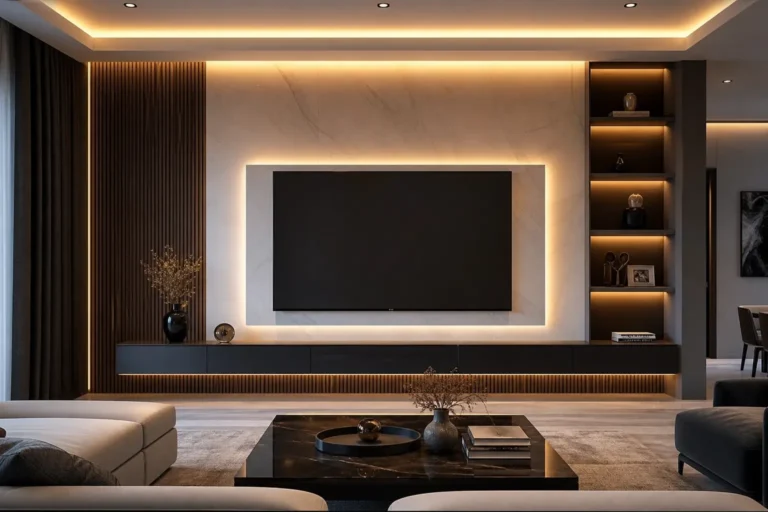
2. Build a Low Profile TV Wall with Floating Shelves
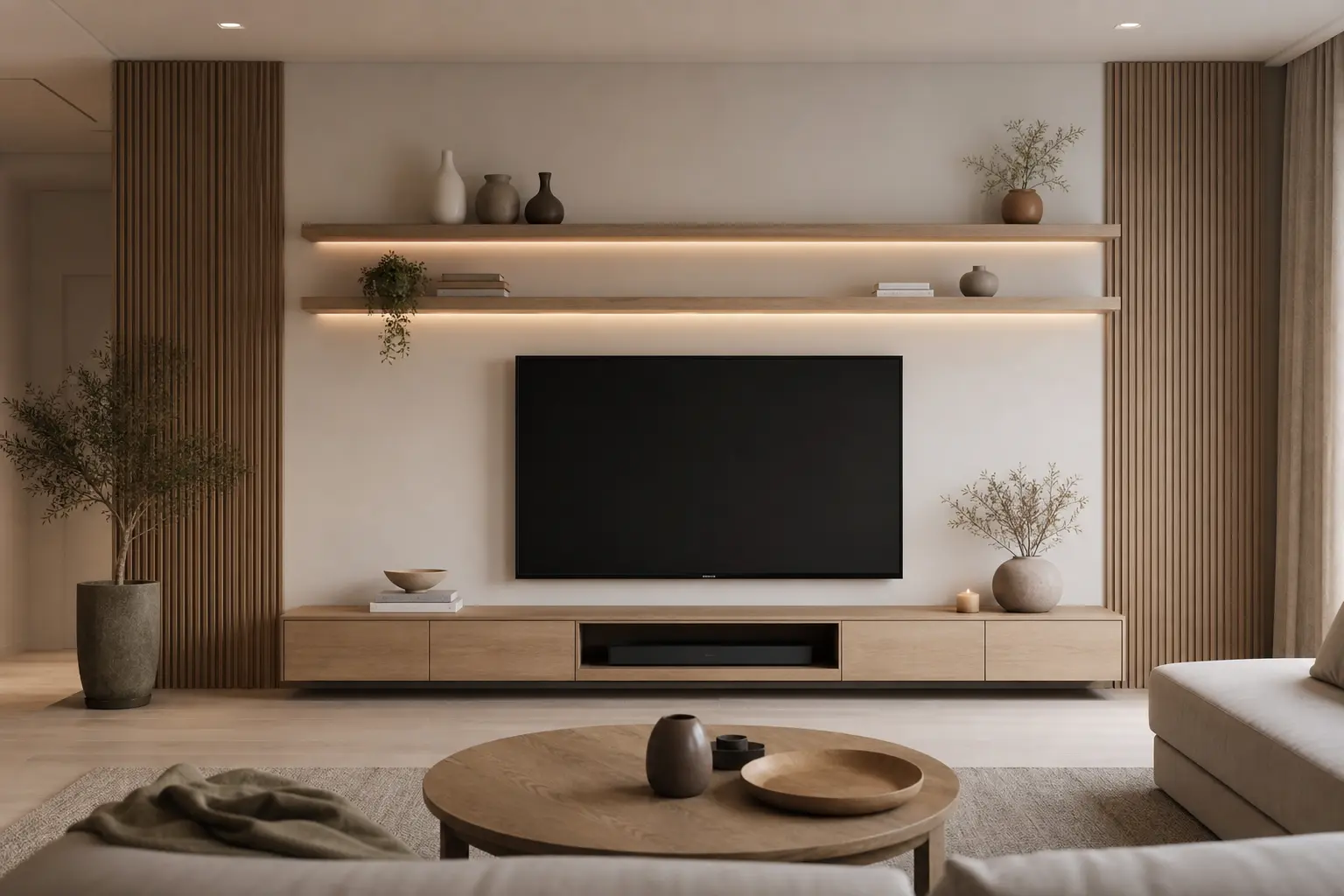
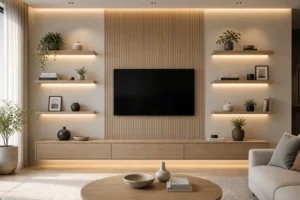
A TV mounted flush against the wall reads as far less intrusive than one perched on a bulky stand. Flank it with a pair of floating shelves in a matching wood tone to add storage without visual weight. Keep the shelves lightly styled, since an overloaded shelf undoes the whole minimalist effect. A slat wood panel behind the TV is a popular Japandi touch that adds texture without adding clutter. This setup works in almost any room size, from a small apartment to a larger open plan space.
Choosing Wood Tone for the Wall
Light oak or birch keeps the wall feeling bright and airy, which suits a more Scandinavian leaning room. A deeper walnut or cedar tone shifts the whole wall toward the moodier Japandi side, so pick based on the rest of your furniture first.
3. Keep Furniture Low and Simple for an Open, Airy Feel
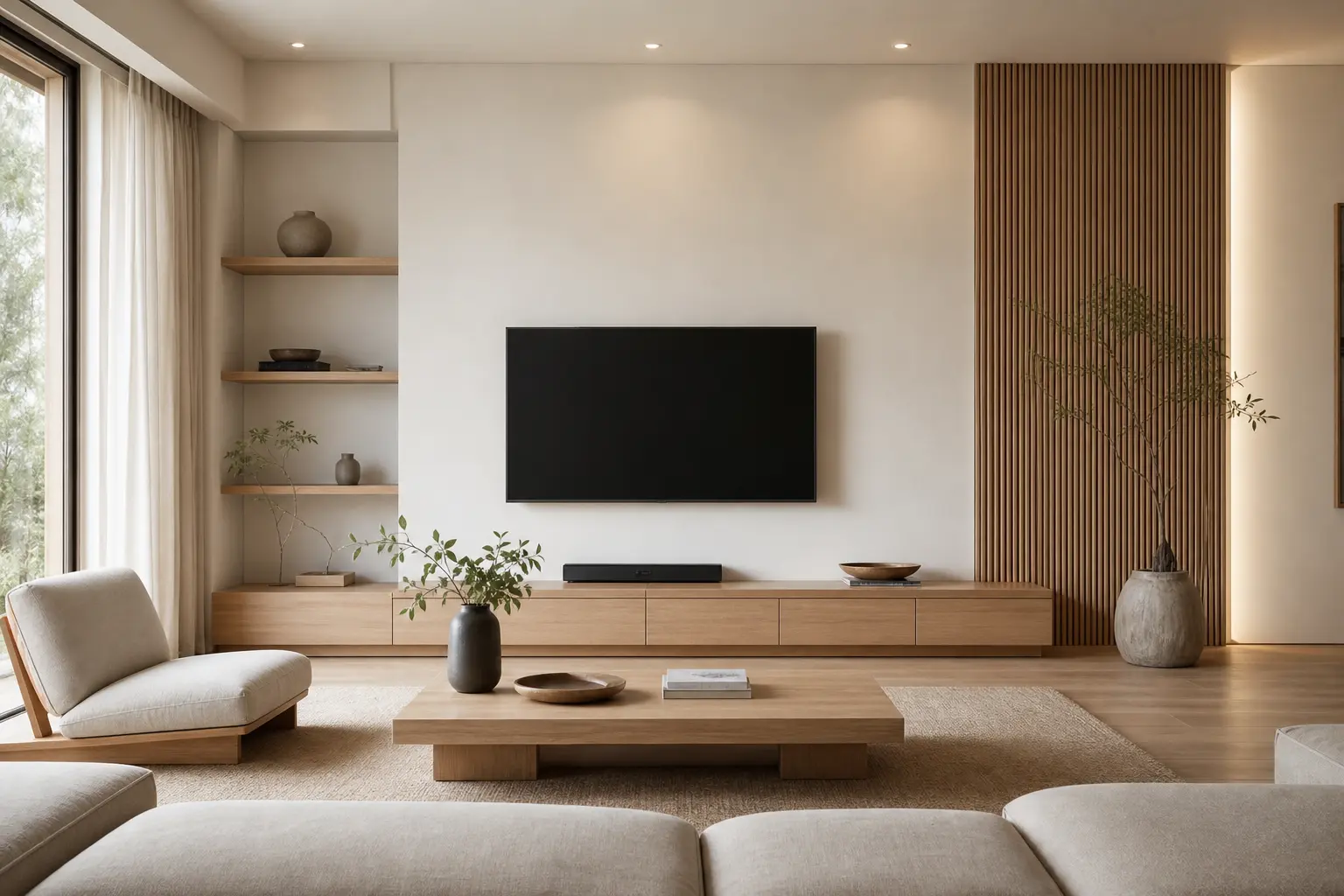
Both Scandinavian and Japandi design favor furniture that sits low to the ground. A low profile sofa with simple, straight lines fits the look better than something bulky or heavily tufted. Choose pieces with exposed wood legs instead of fully upholstered bases, since exposed legs let light pass underneath and make the room feel less crowded. Skip ornate detailing entirely. One or two well made pieces will always outperform a room full of smaller mismatched items.
4. Add Natural Textures Like Linen, Rattan, and Wool
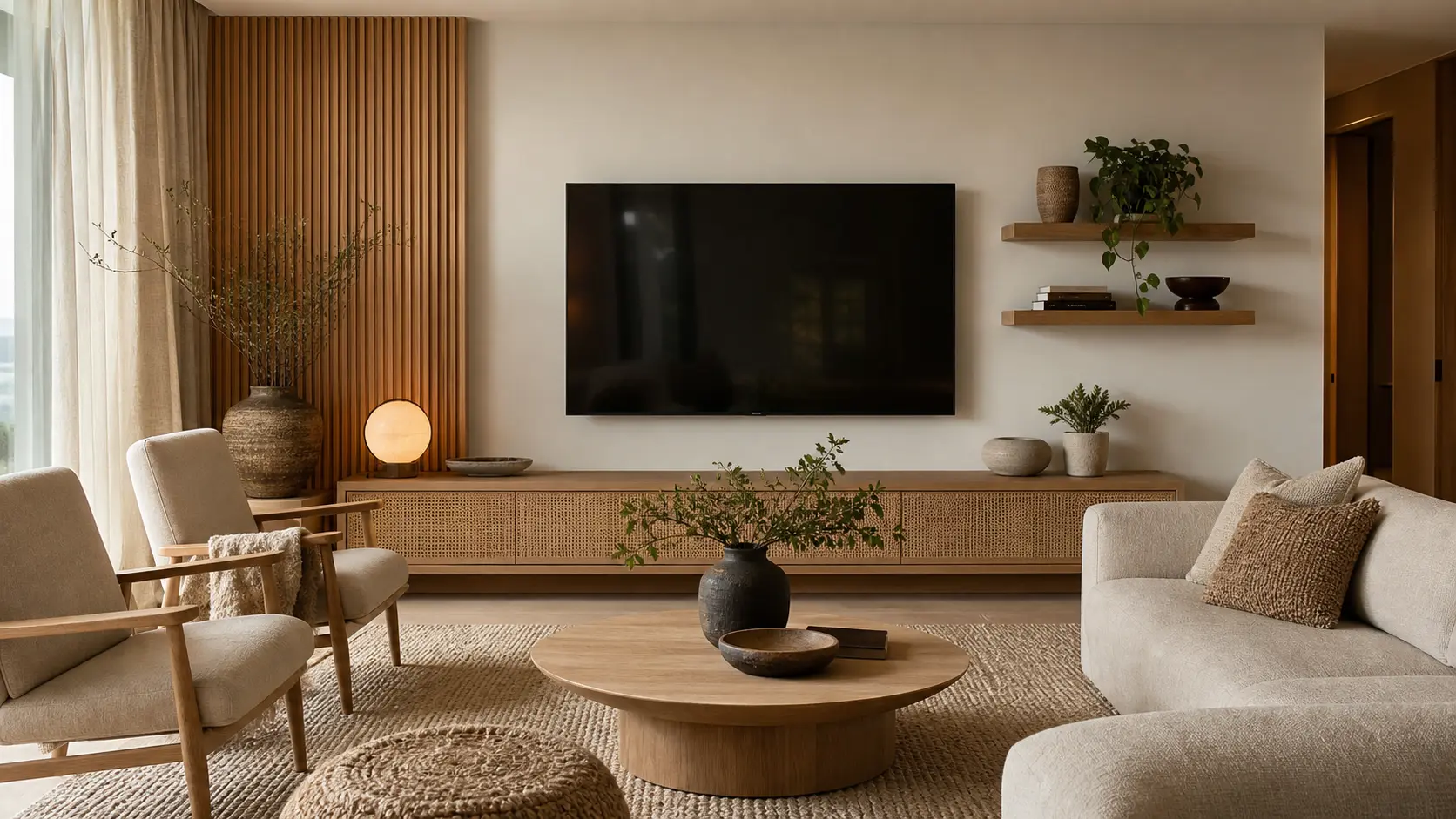
Minimalist doesn’t have to mean cold or sterile. Natural materials like linen, rattan, and wool add warmth and tactile interest without adding visual clutter. A linen throw on the sofa, a rattan side table, or a wool area rug all work in this direction. Mix at least two or three different textures in the room so it doesn’t feel flat. This is the detail that separates a genuinely cozy minimalist room from one that just feels empty.
5. Use Hidden Storage to Keep Clutter Out of Sight
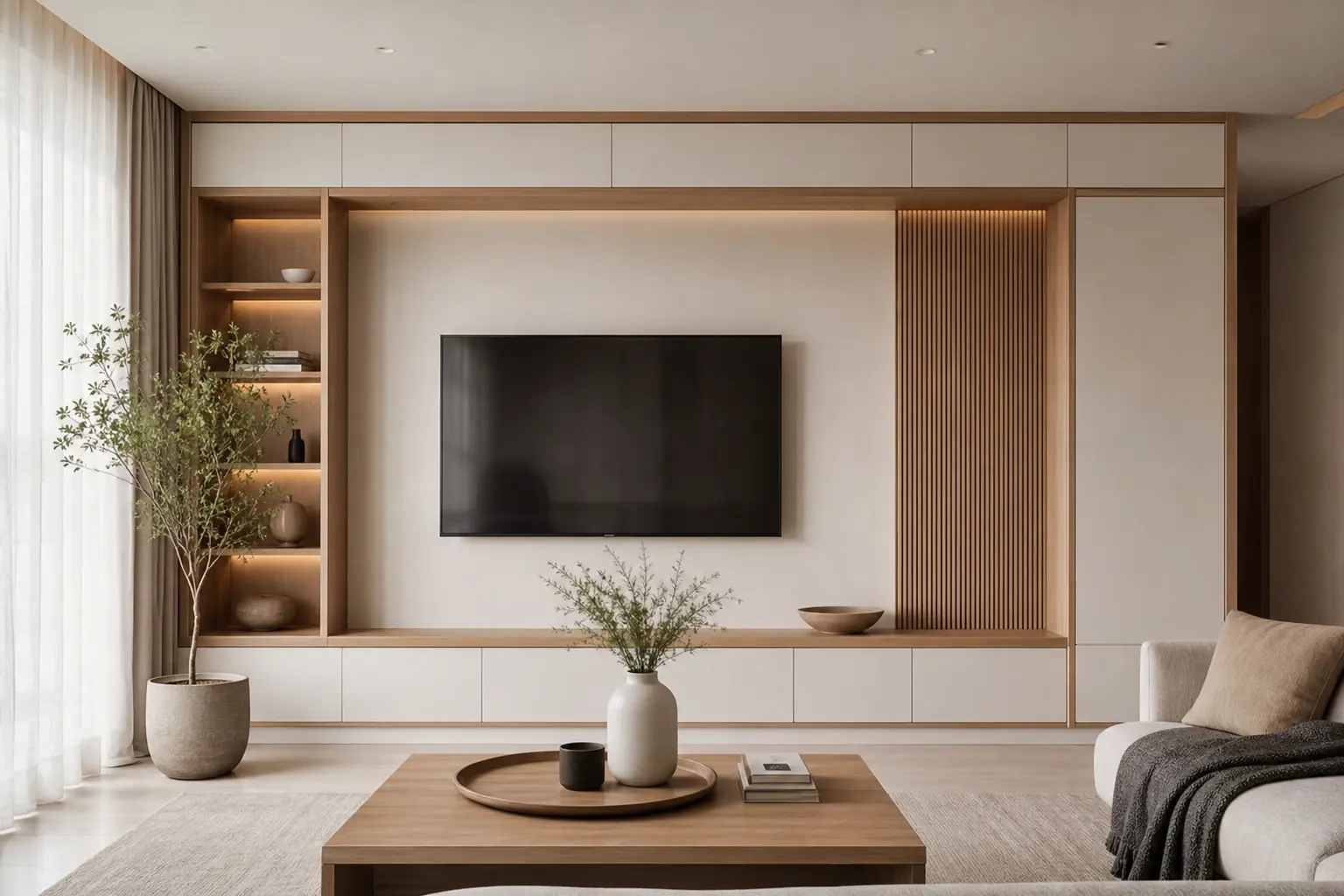
Clutter is the fastest way to undo a minimalist living room, so storage needs to be part of the plan from the start. Closed cabinet doors on a media console hide remotes, cables, and gaming consoles completely. A storage ottoman doubles as a coffee table and a spot to stash blankets. Built in shelving with a mix of open and closed sections balances display space with hidden storage. The goal is a room that looks simple because the mess has somewhere to go, not because there’s nothing in it.
6. Layer Soft, Layered Lighting Instead of One Overhead Fixture
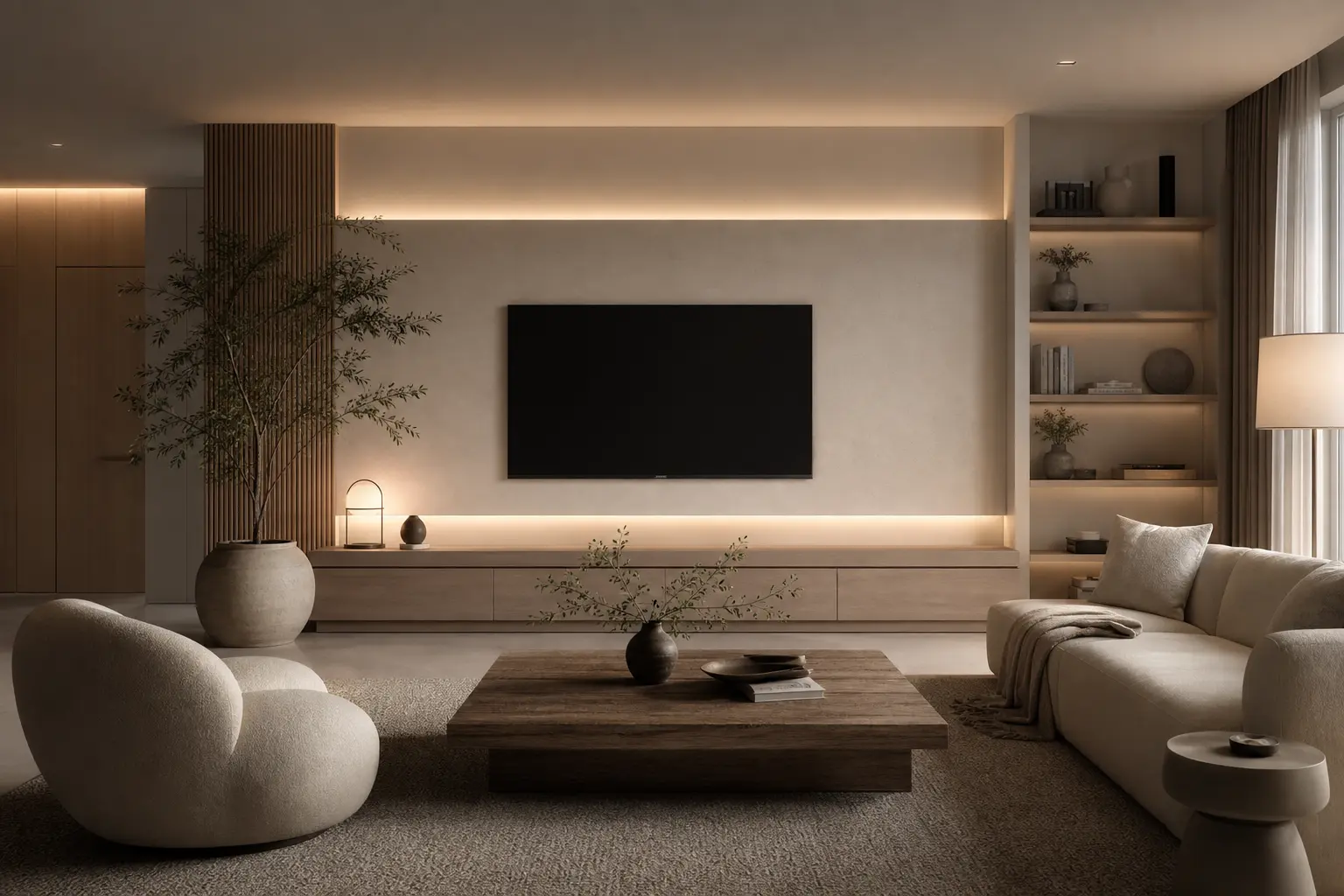
A single bright overhead light tends to feel harsh in a minimalist room built around calm, natural materials. Layer in a floor lamp, a table lamp, and maybe a few small accent lights instead. Warm bulbs in the 2700K to 3000K range keep the glow soft and inviting. Dimmer switches let you adjust the mood depending on the time of day. This layered approach does more for the room’s atmosphere than almost any other single change.
7. Add One or Two Statement Plants for Organic Contrast
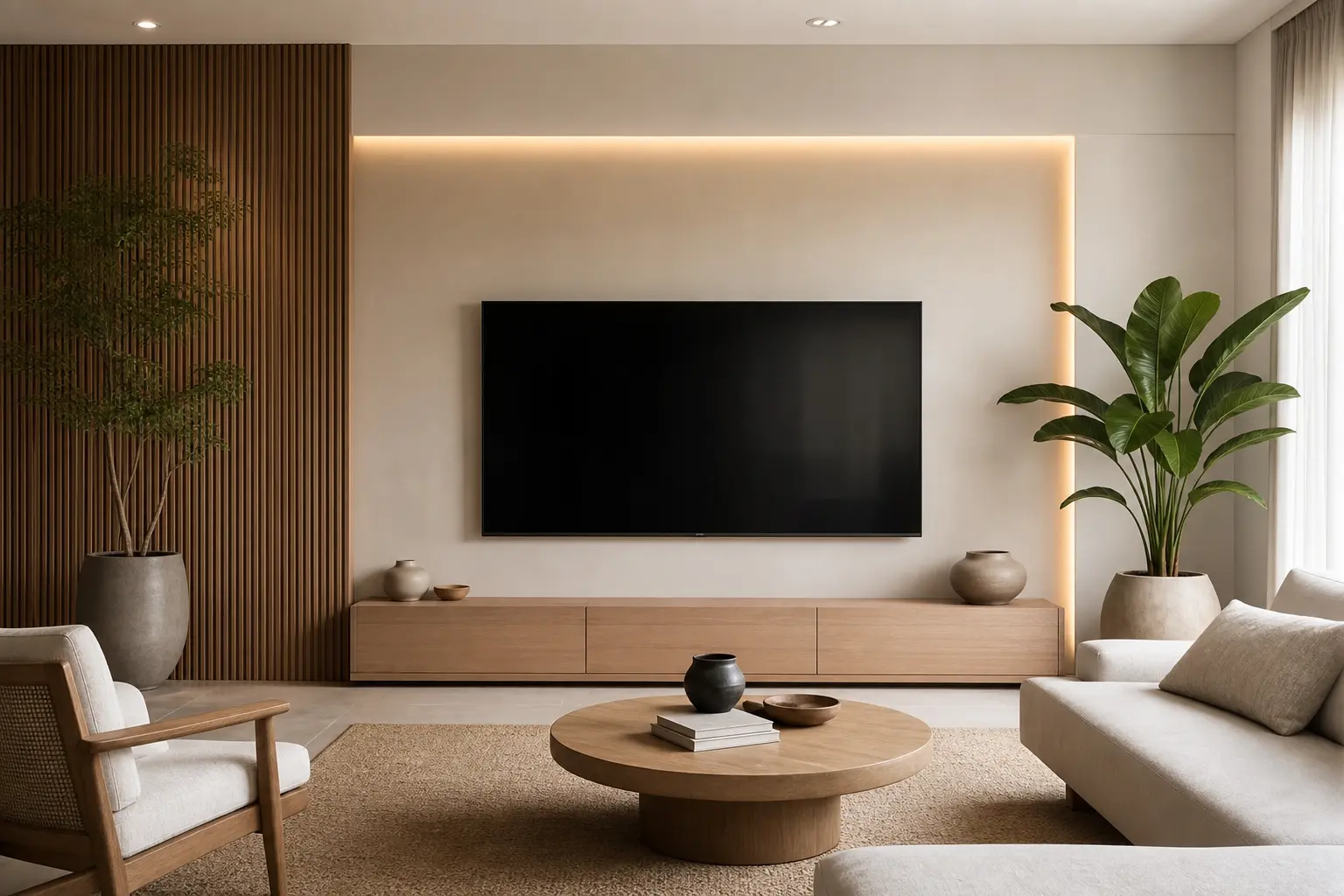
A minimalist room needs at least a little life, and plants deliver that without adding clutter. One large floor plant, like a fiddle leaf fig or an olive tree, brings height and organic shape into a room full of straight lines. Keep the plant count low. Two well placed plants usually read better than five smaller scattered ones. Choose a simple, unglazed pot in a neutral tone so the plant stays the focal point instead of the container.
8. Keep Wall Art Minimal and Intentional
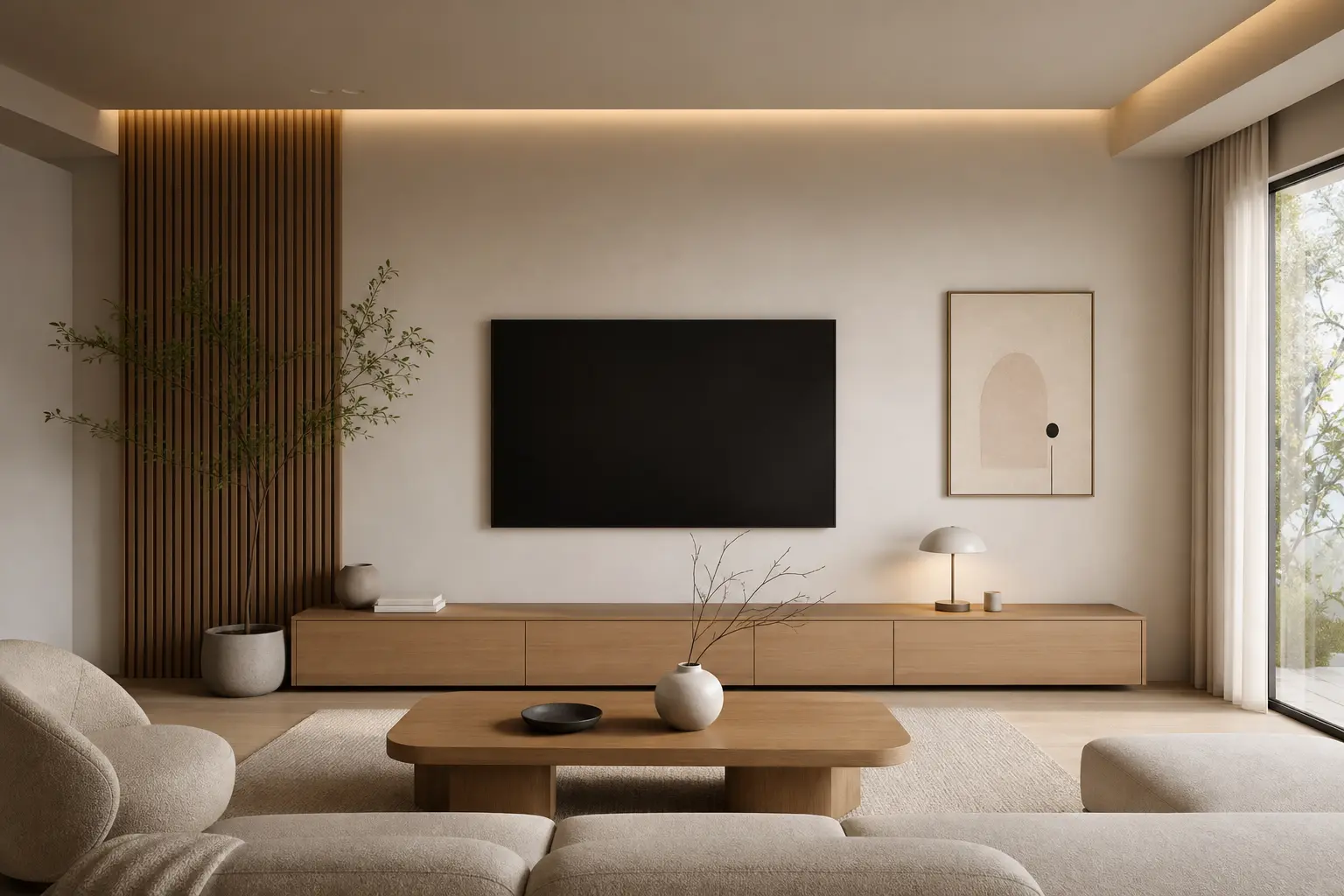
Empty wall space is not wasted space in a minimalist room, it’s part of the design. Choose one or two pieces of art that actually mean something to you rather than filling every wall. A single large piece often reads better than a cluttered gallery wall. Simple frames in wood or matte black keep the focus on the art itself. If you’re unsure, leave a wall bare for a season and see if it actually needs anything at all.
9. Choose a Simple Rug That Anchors the Seating Area
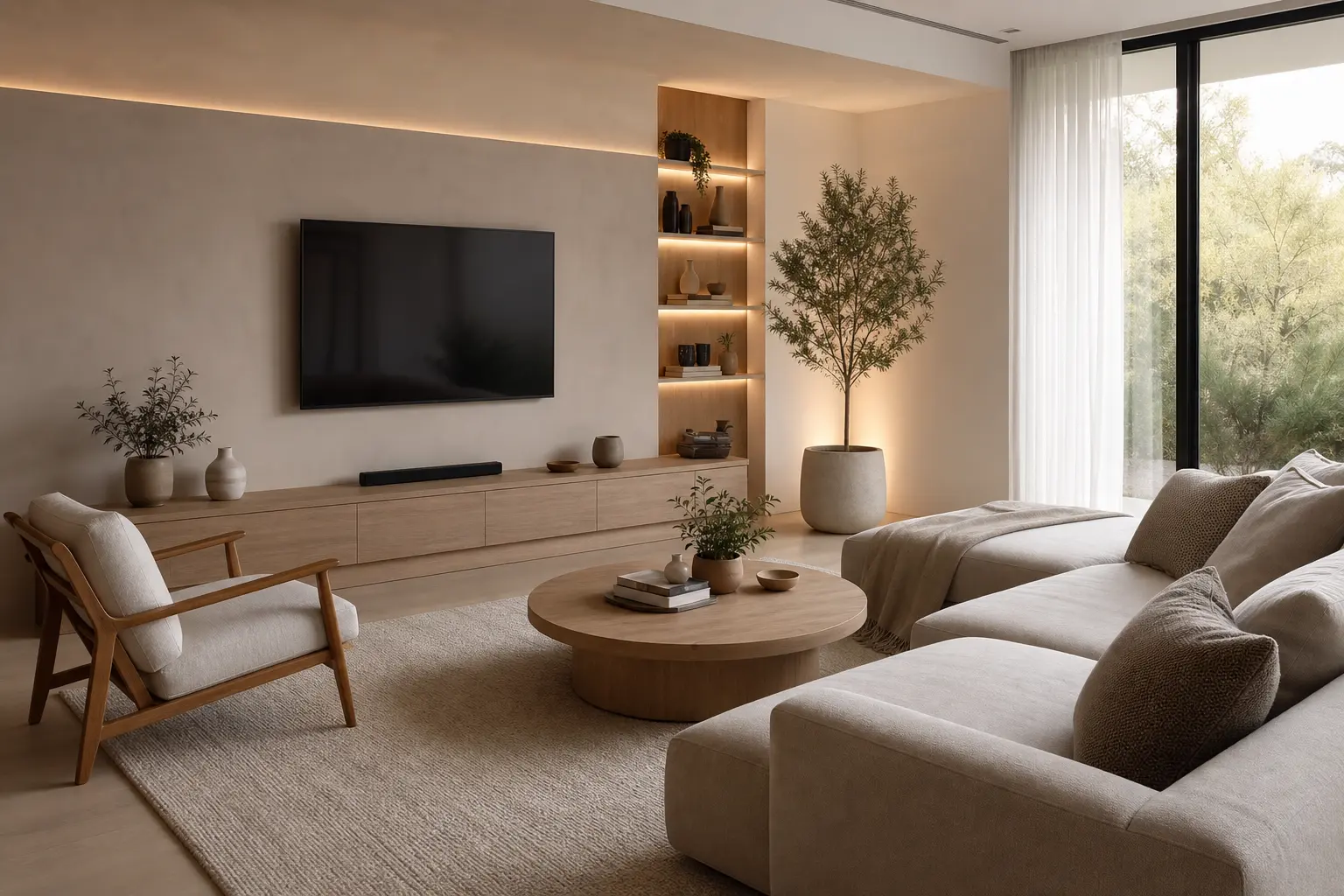
A rug grounds the seating area and adds warmth underfoot, which matters more than people expect in a minimalist room. Stick to a solid color or a very subtle texture instead of a busy pattern. Wool or a wool blend adds texture without competing with the rest of the room. Size the rug so all the front legs of your seating sit on it, which keeps the layout feeling intentional rather than accidental. A rug that’s too small is one of the most common reasons a living room feels unfinished.
10. Balance Negative Space Instead of Filling Every Corner
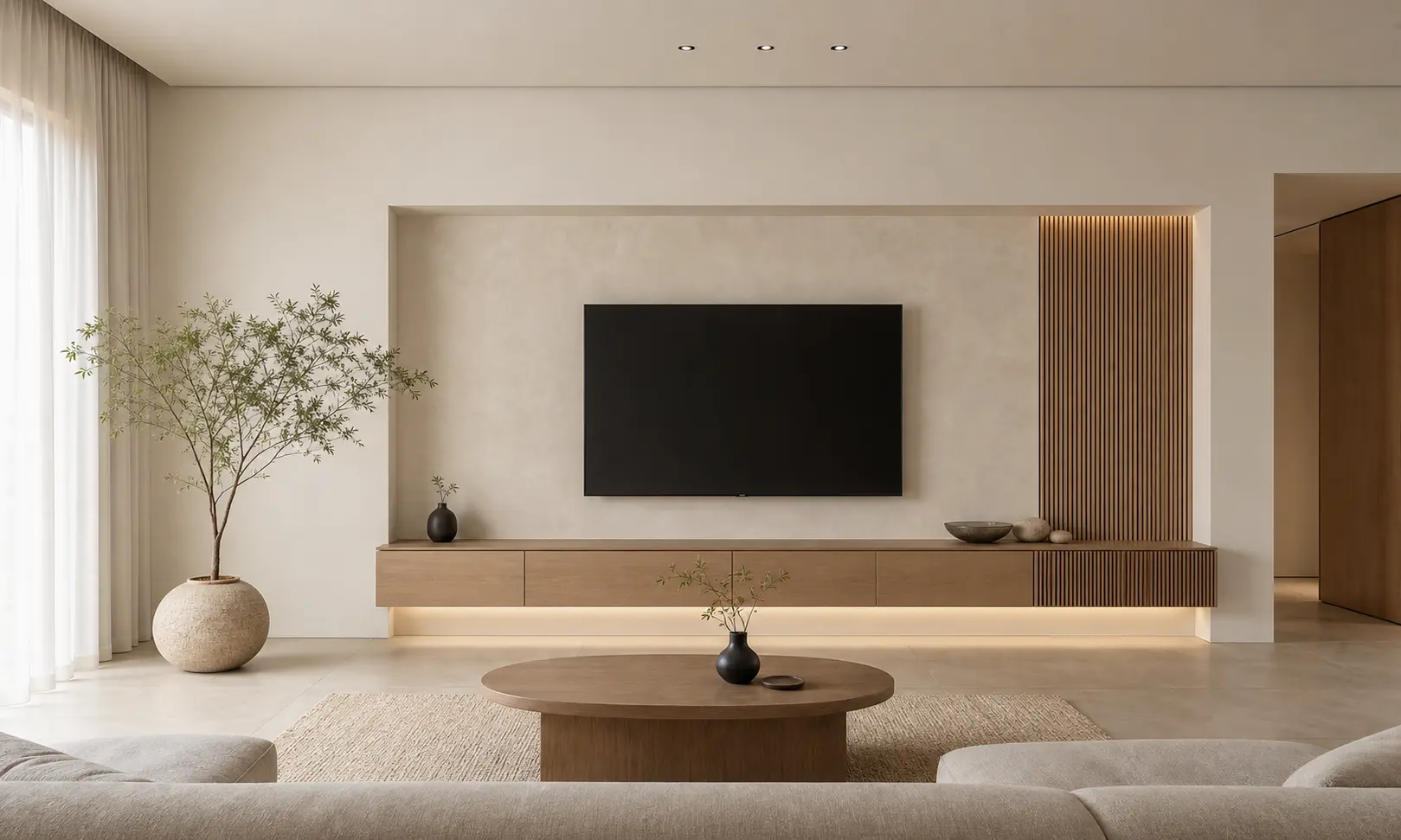
The instinct to fill every corner works against minimalist design. Empty space, sometimes called negative space, gives the eye somewhere to rest and makes the furnished areas feel more intentional. Leave breathing room around your TV wall instead of stacking shelves floor to ceiling. Resist the urge to add one more side table or one more plant just because a corner looks empty. A room that has room to breathe will almost always feel calmer than one that’s fully packed.
Mistakes to Avoid
- Choosing a large, ornate media console that fights with the room’s simple lines.
- Overloading floating shelves with too many small objects, which reads as clutter instead of decor.
- Mixing too many wood tones, which can make the room feel busy instead of cohesive.
- Skipping window treatments entirely, leaving harsh light and no way to soften the room in the evening.
- Choosing a rug that’s too small for the seating area, which makes the whole layout feel disconnected.
- Adding too many plants at once instead of a few well placed ones.
Frequently Asked Questions
Is Japandi the same as Scandinavian style? Not exactly. Japandi blends Scandinavian simplicity with Japanese wabi sabi principles, leaning toward darker wood tones and a bit more asymmetry, while pure Scandinavian style tends to stay lighter and more symmetrical.
How do I make a TV wall feel less like the focal point? Mount the TV flush to the wall, paint the wall the same neutral tone as the rest of the room, and add floating shelves or a slat panel so the eye reads the whole wall as one design element instead of just a screen.
What colors work best for a minimalist living room? Warm whites, soft grays, and beige tones form the base, with wood tones adding the main variation, so the palette should feel almost monochromatic from a distance.
Can a minimalist living room still feel cozy? Yes, through natural textures like linen and wool, warm layered lighting, and a few organic elements like plants, which keep the room from feeling sterile or cold.
How much furniture is too much for a minimalist room? If you can’t walk through the room without maneuvering around pieces, or if every surface has something on it, that’s usually a sign to remove rather than add.
Do I need to remove all decor to achieve this look? No, but each piece should earn its place. A good test is asking whether you’d miss it if it were gone. If not, it’s probably clutter.
Conclusion
A modern minimalist living room isn’t about having less for the sake of it. It’s about choosing pieces that actually matter and giving them room to stand out, including the TV wall itself. Start with color and furniture, then layer in texture, lighting, and a plant or two once the bones feel right. The result is a room that feels calm without feeling empty, which is really the whole point of Scandinavian and Japandi design in the first place.