10 Aesthetic Entryway Shoe Storage Bench & Coat Rack Ideas for a Stylish Home
Shoes by the door and coats over a chair are one of the most common small clutter problems in any home. It’s rarely about lack of effort. It’s usually about not having furniture actually designed for that specific job. A shoe storage bench paired with a proper coat rack solves both problems at once, as long as the pieces are sized and styled correctly. This article covers 10 entryway shoe storage bench and coat rack ideas that stay functional for a busy household without looking like a mudroom catalog page.
1. Choose a Bench Size That Fits Your Entryway’s Footprint
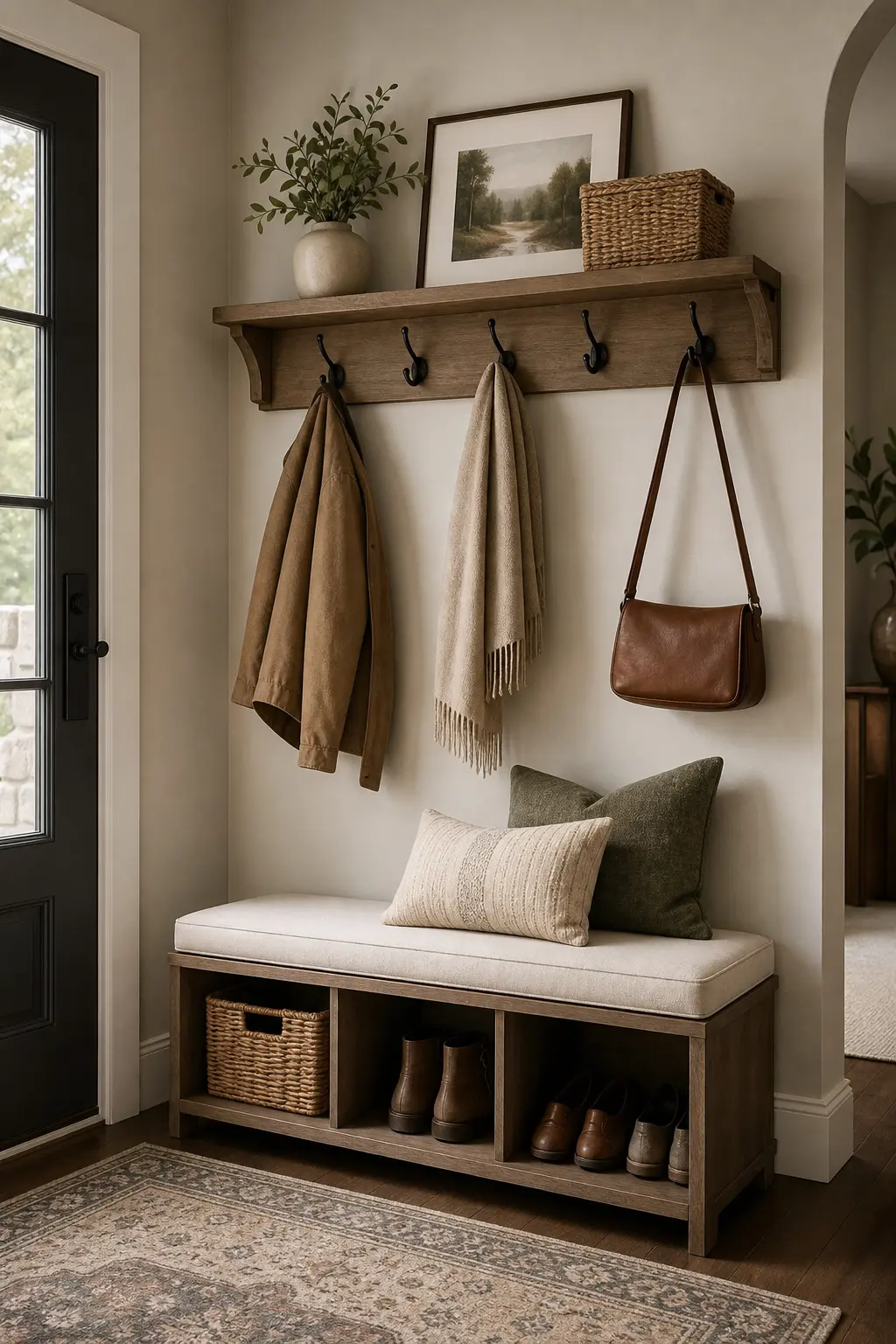
Bench size should come from your entryway’s actual dimensions, not a generic standard. In a narrow hallway, a bench around 36 to 42 inches wide with a shallow 14 to 16 inch depth fits without blocking the walkway. Wider entryways can support a longer bench, giving more than one person room to sit at once during busy mornings.
Measure the walkway clearance on either side of the bench before finalizing a size, since a bench that technically fits can still make the space feel cramped if it leaves too little room to pass by.
2. Pick Shoe Storage That Matches Your Household’s Needs
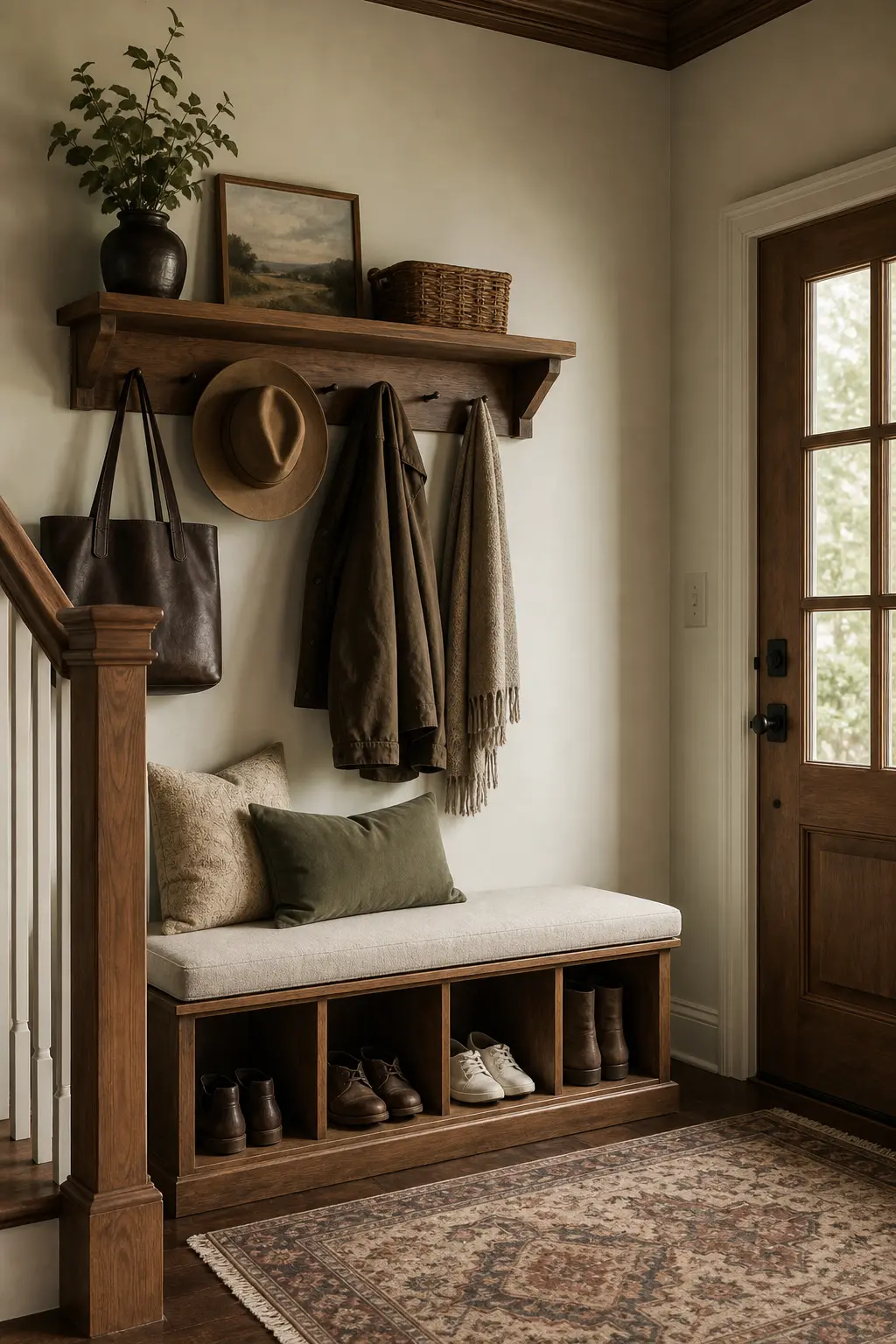
Not every household needs the same kind of shoe storage. Open cubbies work well for a household that wants quick, grab and go access, since there’s no lid or door to deal with. A bench with a hinged lift up seat hides shoes from view entirely, which suits households that prioritize a clean look over quick visibility.
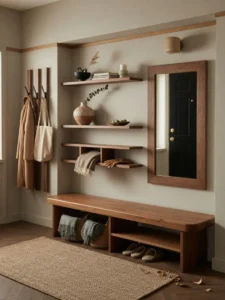
Sizing for Real Shoe Counts
Count how many pairs of shoes actually sit by your door on a typical day, then size the storage with some extra room. Underbuilt storage tends to spill over onto the floor within a few weeks.
3. Add a Coat Rack That Complements the Bench Style
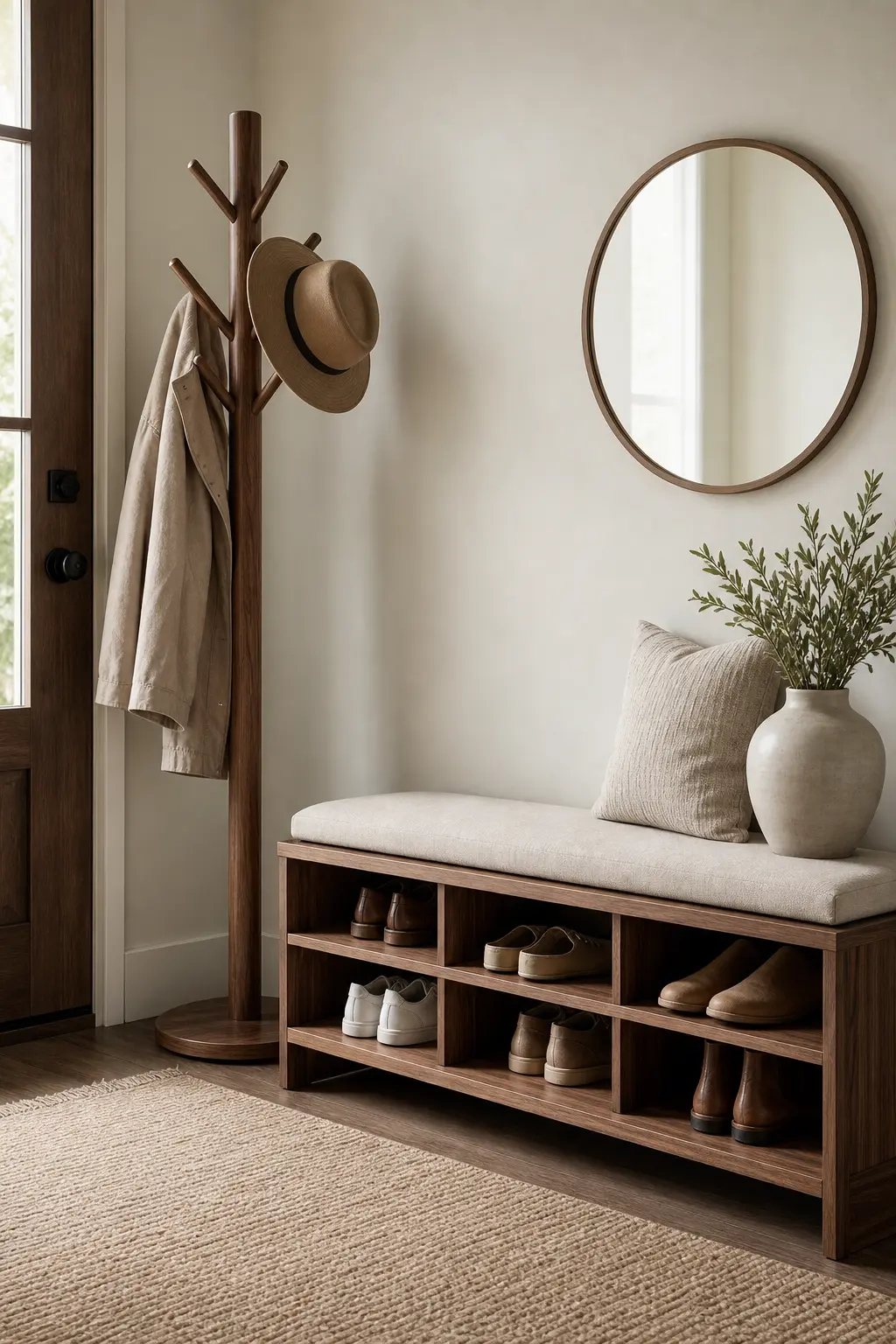
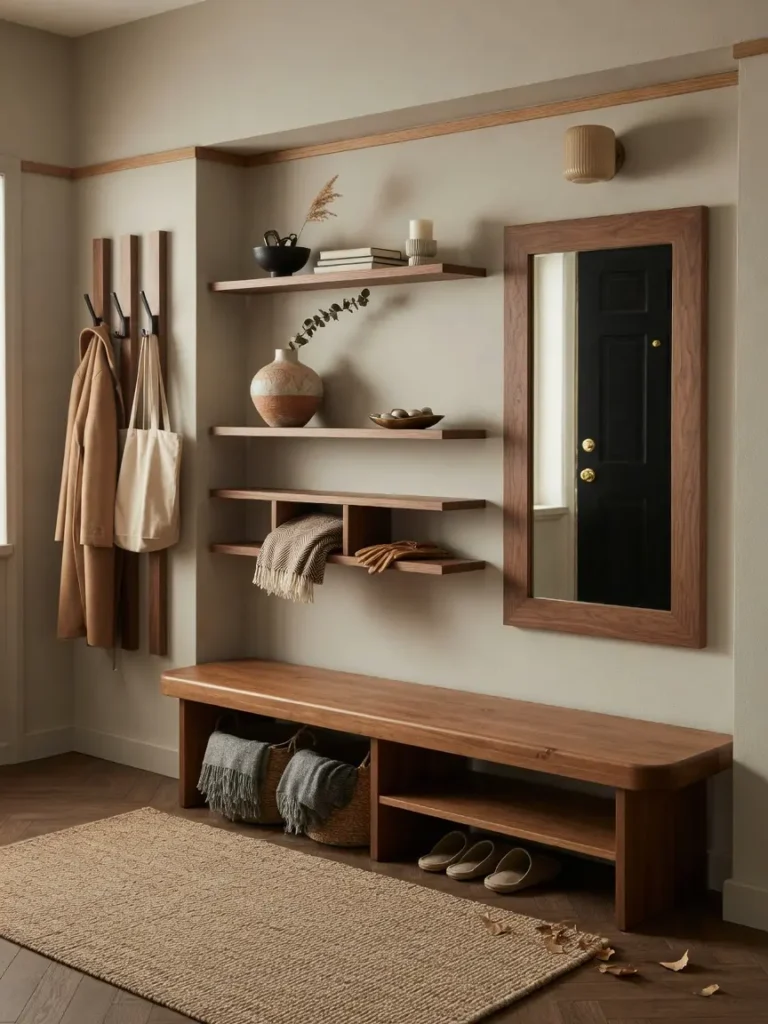
A coat rack and bench should feel like they belong to the same design, even if they’re not literally the same piece. A wall mounted rack with hooks in a matching wood tone or metal finish ties the two together visually. A freestanding coat tree works in larger entryways with floor space to spare, though it takes up more room than a wall mounted option.
4. Choose Materials That Handle Daily Wear and Weather
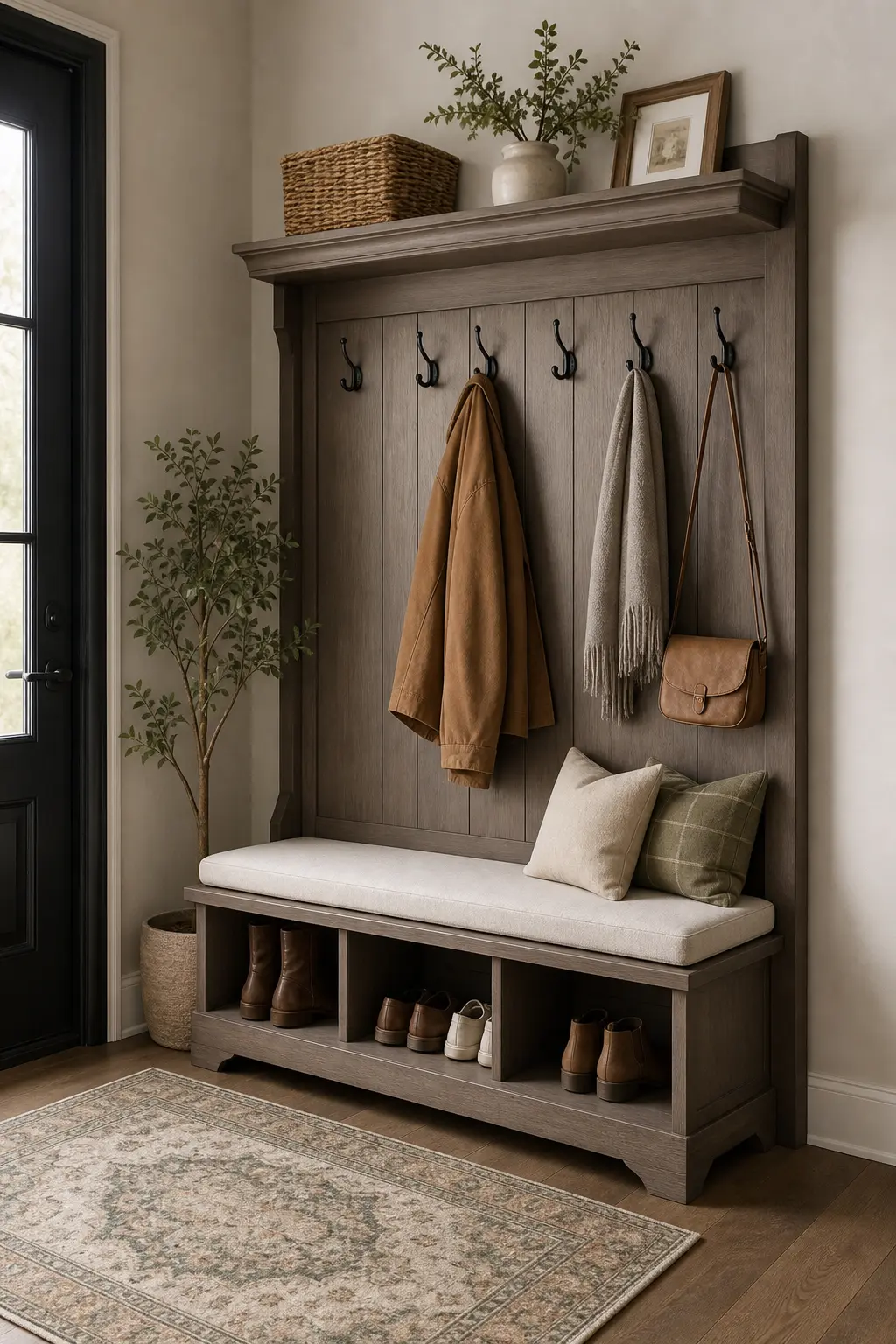
Entryway furniture deals with more moisture, dirt and daily impact than furniture almost anywhere else in the home. Solid wood or a durable engineered wood with a sealed finish resists scuffing better than an unfinished or painted surface. Metal hooks and hardware should be rated for regular use, since cheaper hardware tends to loosen or bend within a year of daily coat hanging.
5. Add Hooks and Small Storage for Bags and Accessories
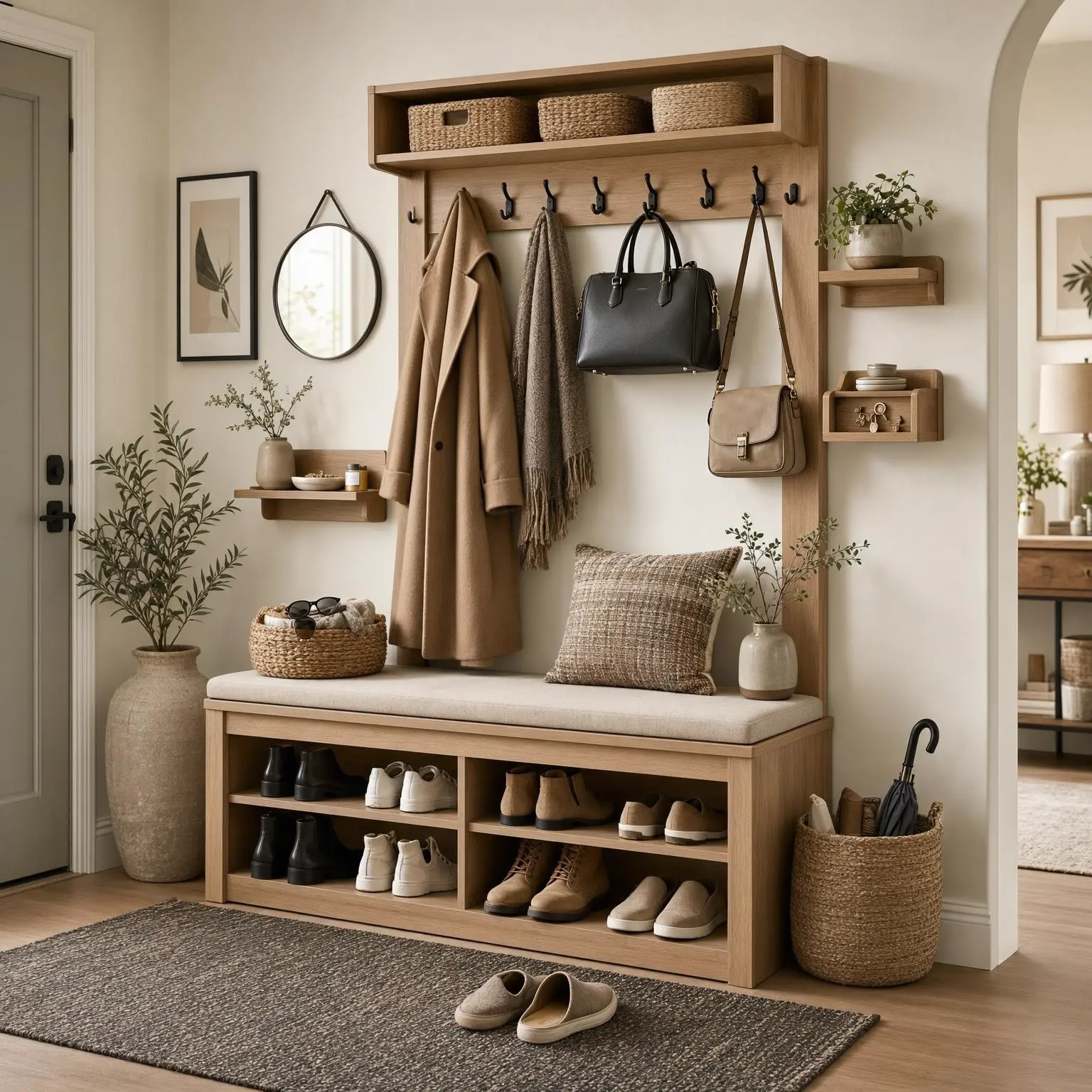
Beyond coats, most entryways need a spot for bags, umbrellas and keys. A row of hooks at two different heights, one for adults and a lower row for kids, keeps bags and jackets accessible without a pile forming on the bench itself. A small shelf or shallow drawer near the hooks handles keys and mail, keeping them from ending up on the bench seat.
6. Style the Bench Without Losing Its Function
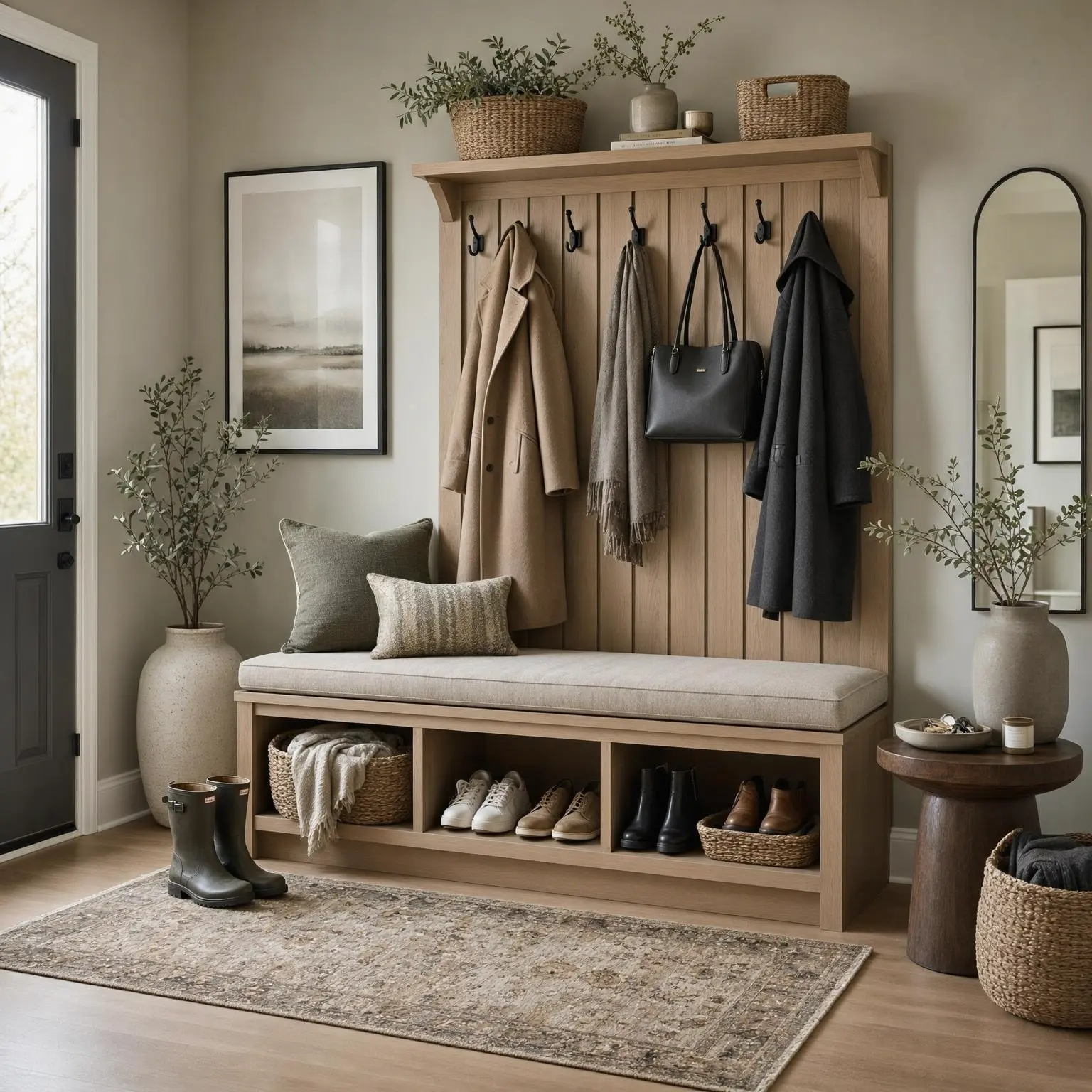
A styled bench still needs to function as a place to sit and put on shoes. Keep decorative items, like a small basket or a single throw pillow, to one end of the bench rather than spreading them across the entire seat. This preserves usable sitting space while still giving the bench a finished, intentional look.
7. Use Baskets or Bins for Hidden, Flexible Storage
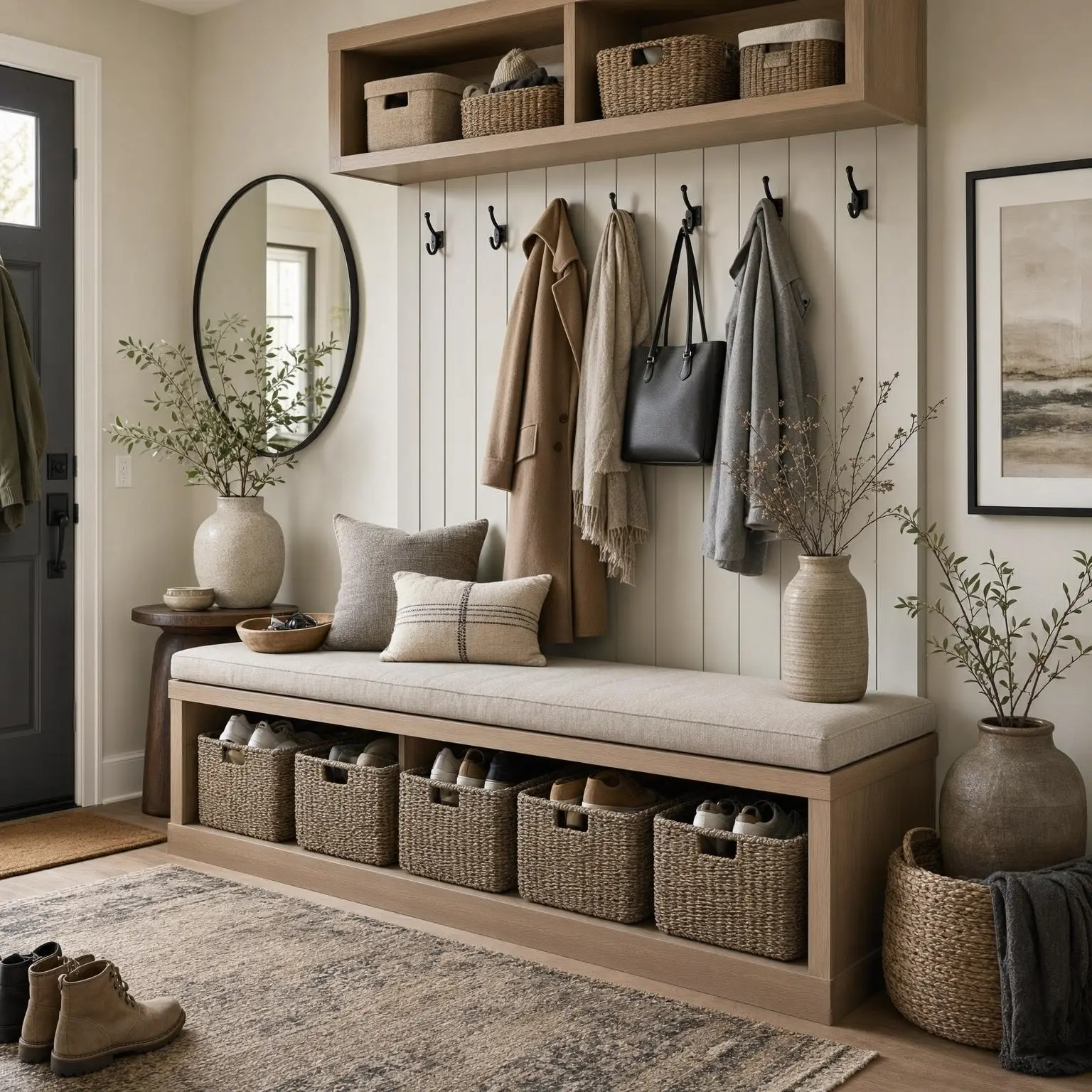
Woven baskets tucked beneath or beside the bench add flexible storage for items that don’t fit neatly into cubbies, like winter accessories or outdoor gear. They’re also easy to pull out and reorganize seasonally, unlike built-in compartments. Choose baskets in a natural material like rattan or seagrass, which tends to suit most entryway color palettes without clashing.
8. Add a Mirror or Wall Decor Above the Bench Area
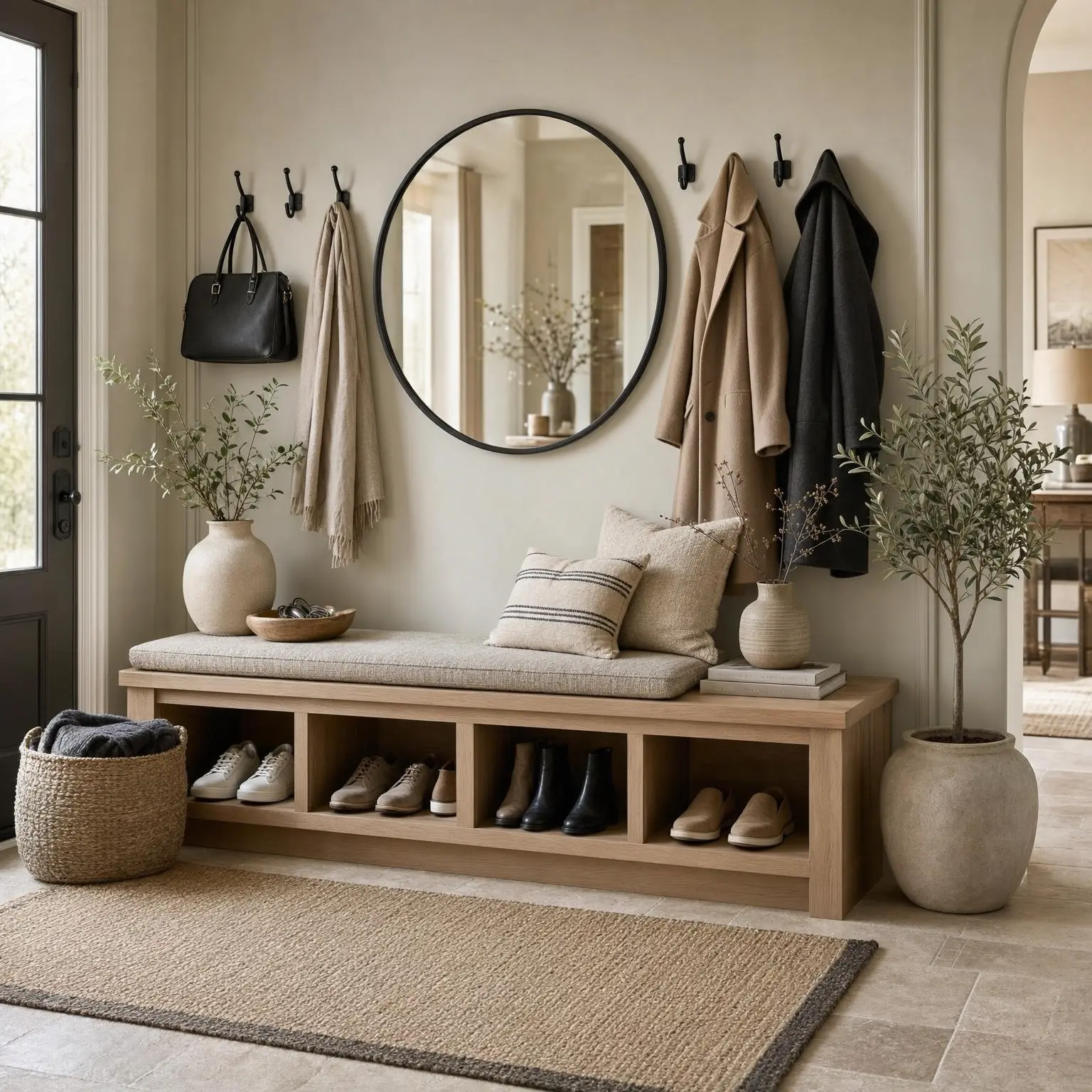
The wall space above a bench and coat rack setup often goes unused, but it’s a natural spot for a mirror or a small piece of art. A mirror adds function, useful for a last check before heading out, while also reflecting light back into what’s often a dimmer part of the house. Keep any wall decor modest in size so it doesn’t compete visually with the coat hooks below it.
9. Choose a Color Palette That Feels Stylish, Not Sterile
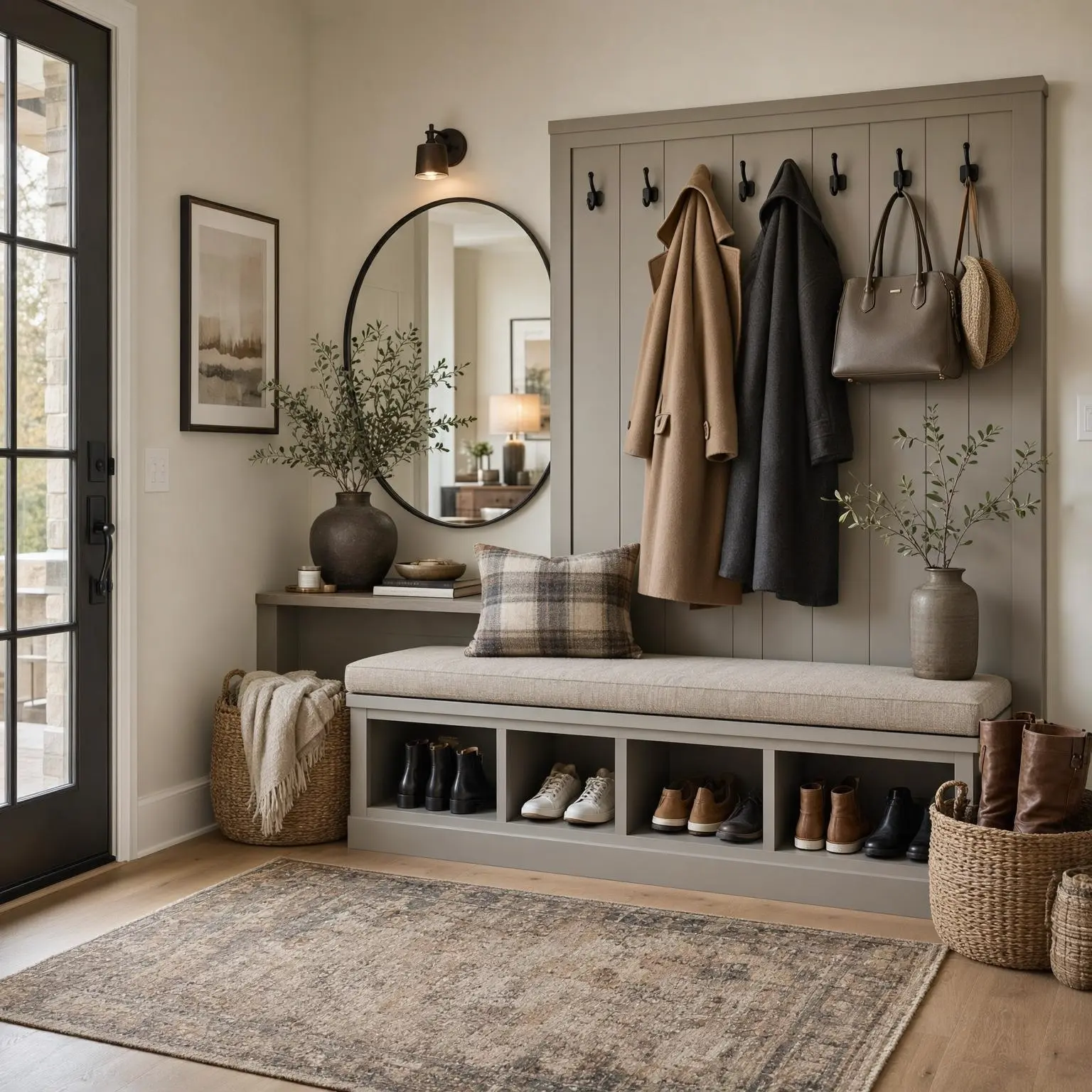
An entryway storage setup can look purely utilitarian if the materials and colors feel too plain. Warm wood tones, a mix of matte black or brass hardware, and one or two natural textures like woven baskets keep the space feeling considered rather than purely functional. Avoid an all white, all plastic look, which tends to read as sterile rather than stylish, even when it’s practical.
10. Plan Layout for Multiple People Using the Space at Once
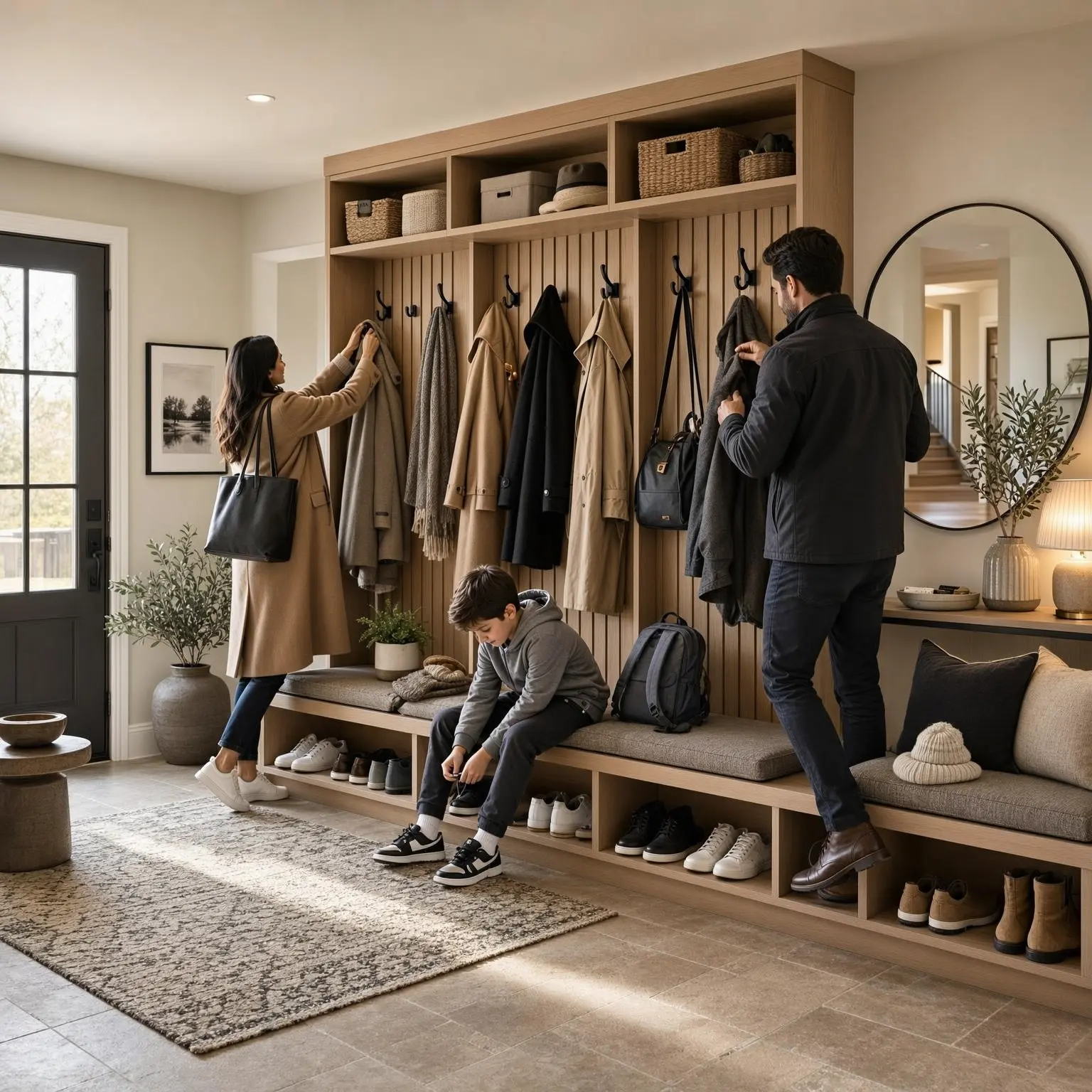
In a household with more than one or two people, entryway traffic can bottleneck fast, especially during busy mornings. A bench long enough for two people to sit at once, combined with hooks spread across a wider wall span rather than clustered in one spot, reduces congestion. If space allows, splitting storage into two zones, one near the main door and a secondary spot elsewhere, can also ease morning traffic in a larger household.
Mistakes to Avoid
- Sizing the bench to a generic standard instead of your entryway’s actual footprint
- Choosing shoe storage that doesn’t match how many pairs your household actually owns
- Overstyling the bench seat until there’s no room left to actually sit
- Skipping hooks at a lower height for kids in a family household
- Using an all white or all plastic palette that reads as sterile rather than stylish
Frequently Asked Questions
How many shoes should an entryway bench realistically store? This depends entirely on your household size, but a good rule is to count your typical daily shoe pile and size the storage with a bit of extra room, rather than an exact match.
What’s the best material for a shoe storage bench in a humid climate? Sealed engineered wood or a moisture resistant laminate holds up better than unfinished solid wood, which can warp with repeated humidity exposure near an entry door.
Should hooks or a closed coat rack be used for a small entryway? Wall mounted hooks generally work better in tight spaces, since they take up no floor space compared to a freestanding coat rack or coat tree.
How do I keep an entryway bench from becoming a dumping ground for random items? Pairing the bench with dedicated storage, like baskets, cubbies or a shelf for keys and mail, gives every item a specific place, which reduces the tendency to just pile things on the seat.
Can a shoe storage bench work in a very narrow entryway? Yes, a slim bench around 30 to 36 inches wide with a shallow depth can fit in most narrow entryways, especially when paired with wall mounted storage instead of bulkier freestanding pieces.
Conclusion
An entryway shoe storage bench and coat rack setup works best when it’s sized to your actual space and household, not a generic showroom layout. Choose storage that matches your real shoe count, add hooks at heights that work for everyone using the space, and keep styling light enough that the bench still functions as a place to sit. Get those basics right, and the entryway stops being a daily source of clutter and starts working the way it’s supposed to.