10 Modern Wooden Entryway Design Ideas with Arches & Shelves | Stylish Small Entryway Storage
An entryway with a single hook and nowhere to sit down rarely holds up to daily life. Shoes end up scattered, bags land on the floor, and the space never quite feels finished. If you’re researching wooden entryway design ideas built around arches and shelves, the appeal is that both add real architectural character while solving an actual storage problem. This article covers ten ways to bring that look into a small entry, with practical detail on wood tone, layout, and cost.
1. Why Arched Details Are Trending in Entryway Design
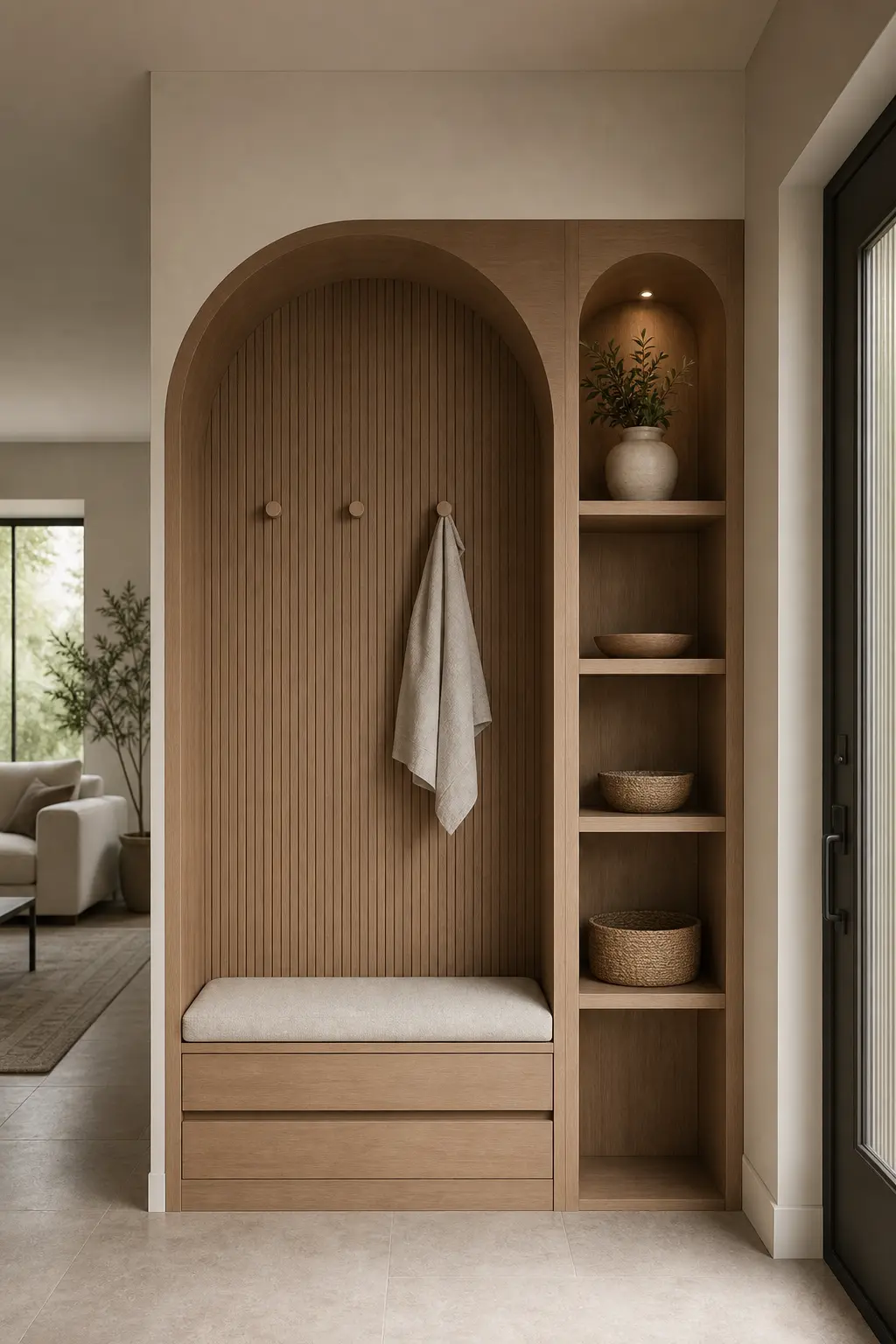
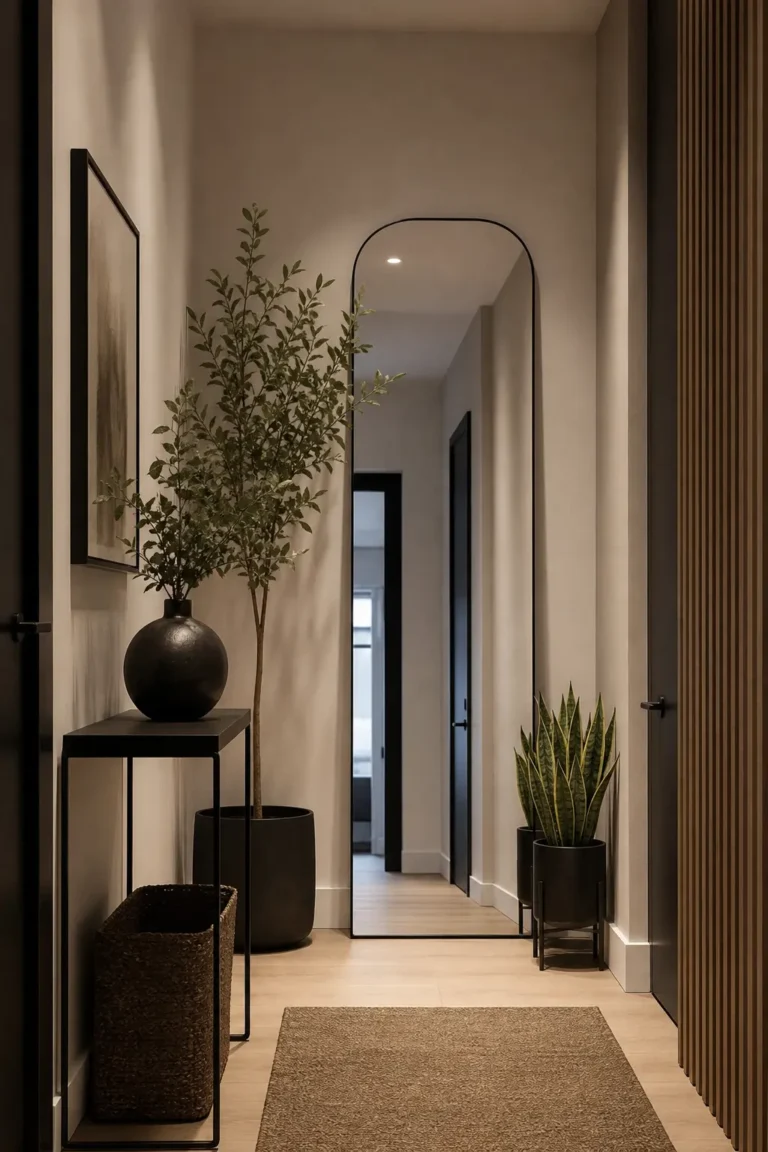
Arches introduce a soft, curved line into a space that’s otherwise full of straight, hard edged walls and doorways. That contrast is part of why arched niches, mirrors, and cabinetry have become such a consistent feature in contemporary entryway design over recent years.
An arch also creates a natural focal point without needing extra decoration. A simple arched wood niche, even without anything displayed inside it, reads as an intentional architectural detail rather than an empty gap in the wall.
2. Choosing Wood Tones for an Entryway Arch or Shelving Unit
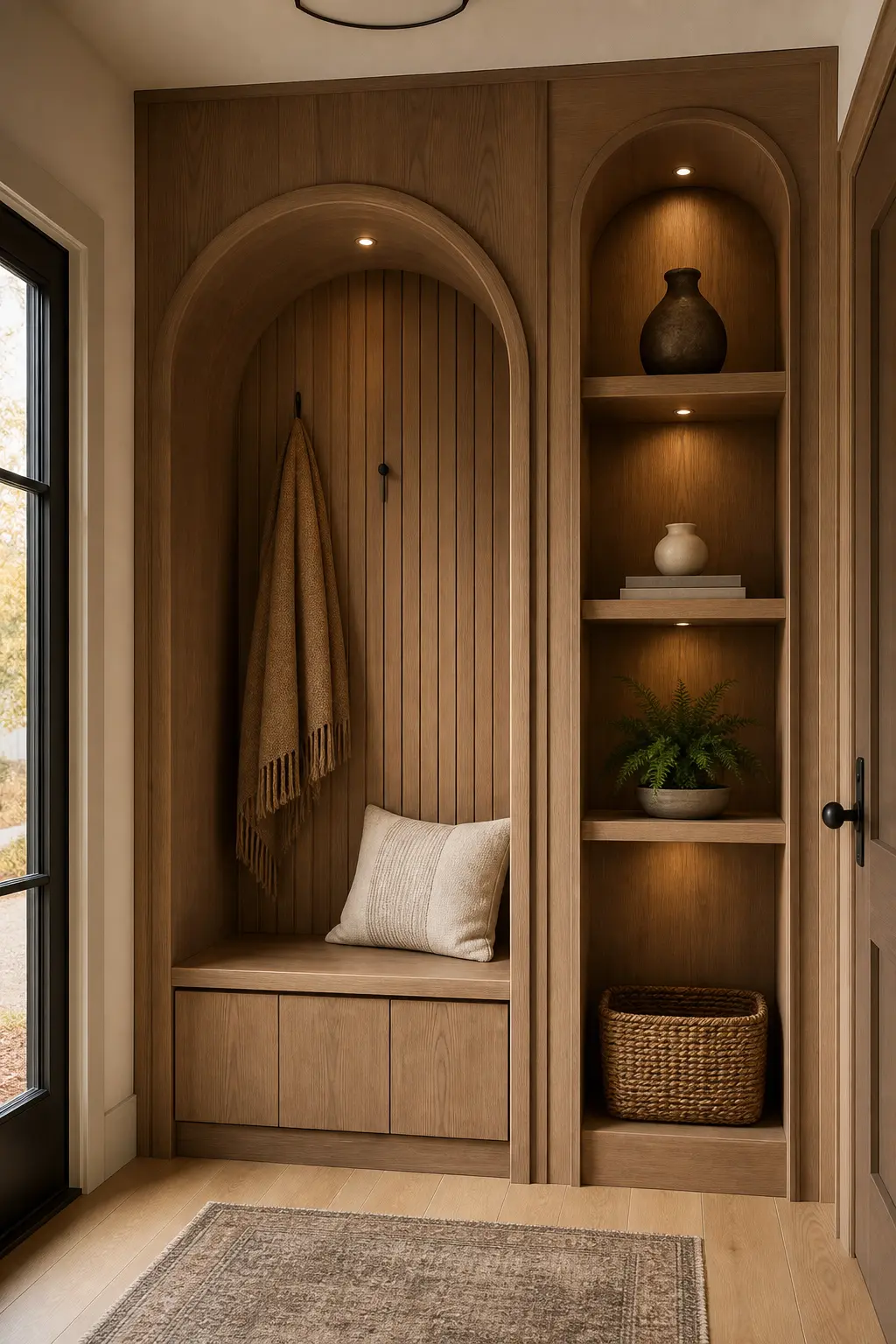
Warm, medium wood tones, like natural oak or a light walnut, tend to suit most entryways since they read as inviting rather than heavy, which matters in a space meant to feel welcoming the moment someone walks in. Darker stains, closer to espresso or a deep walnut, create a more dramatic, formal first impression, especially effective in entryways with higher ceilings or more natural light to balance the depth of the tone.
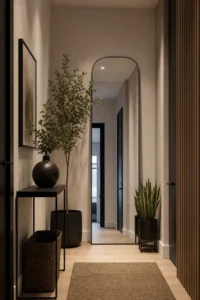
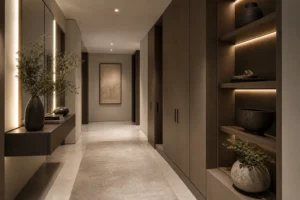
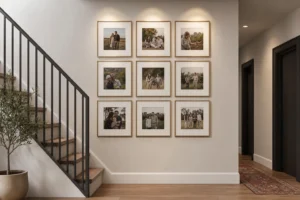
Whitewashed or lightly bleached wood is a softer option that helps a small, low light entryway feel airier, though it shows less visible grain contrast than a richer stain. Matching the entryway wood tone to flooring or door trim elsewhere in the home helps the space feel connected rather than like an isolated design choice.
Painted Wood as an Alternative
Painted wood, in a soft sage, warm white, or muted terracotta, is a popular alternative to a natural wood finish, especially for a more colorful or playful entryway style. Painted finishes also tend to show scuffs differently than natural wood, which is worth considering in a high traffic entry space.
3. Arch Shapes and Where They Work Best in an Entryway
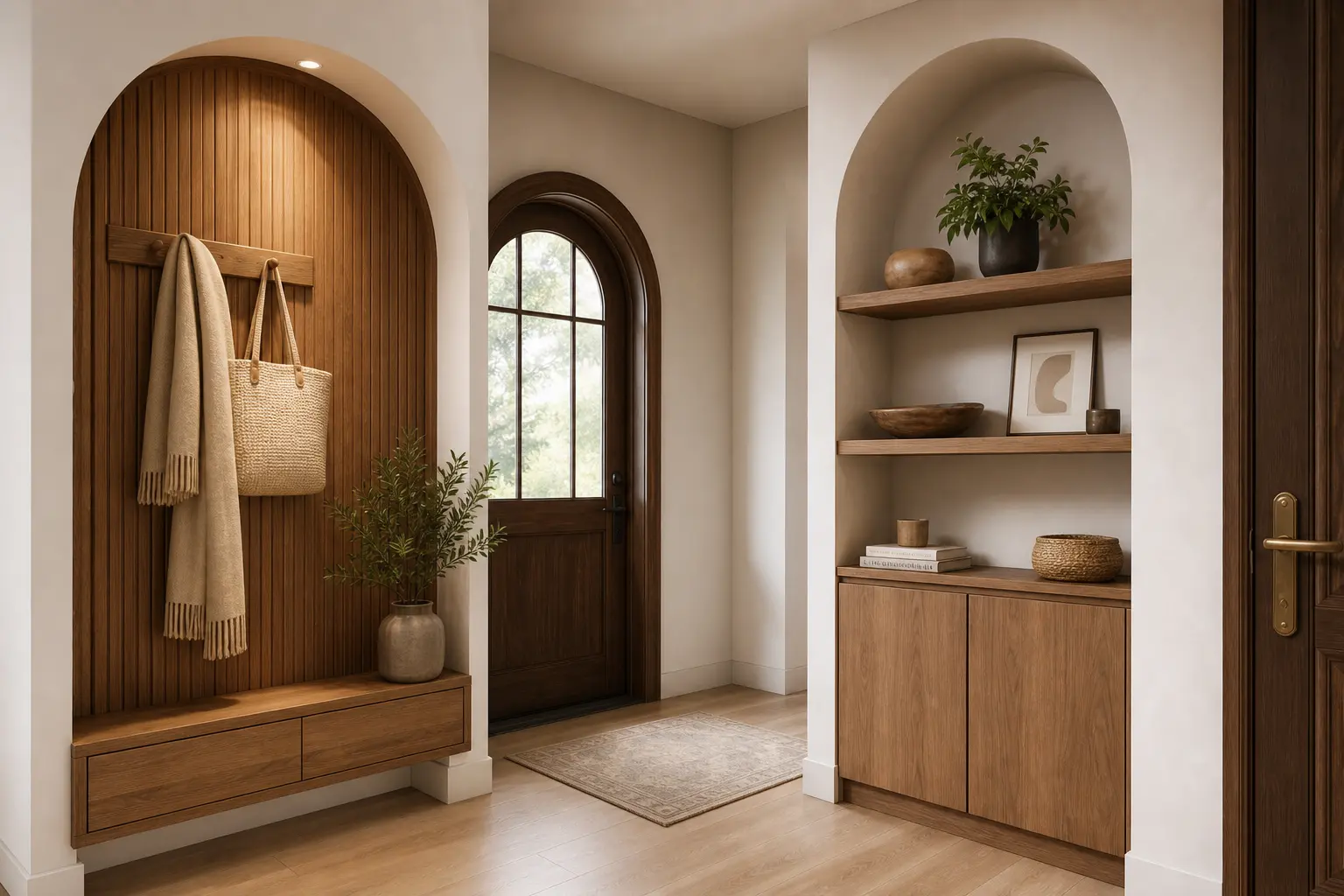
A full rounded arch, curving completely from one side to the other, creates the softest, most dramatic silhouette and tends to work best as a larger niche or doorway feature rather than a small detail. A flatter, more subtle arch, sometimes called an eyebrow arch, adds a gentler curve that suits smaller applications like a mirror frame or a shallow shelving nook.
Arched Doorways vs Arched Niches
An arched doorway, cut into an actual wall opening, is a larger structural project generally requiring professional installation. An arched niche, built as a shallower recessed or applied wood feature within an existing flat wall, achieves a similar visual effect with considerably less construction involved, making it a more accessible option for most homes.
4. Built In Shelving Ideas for Small Entryway Storage
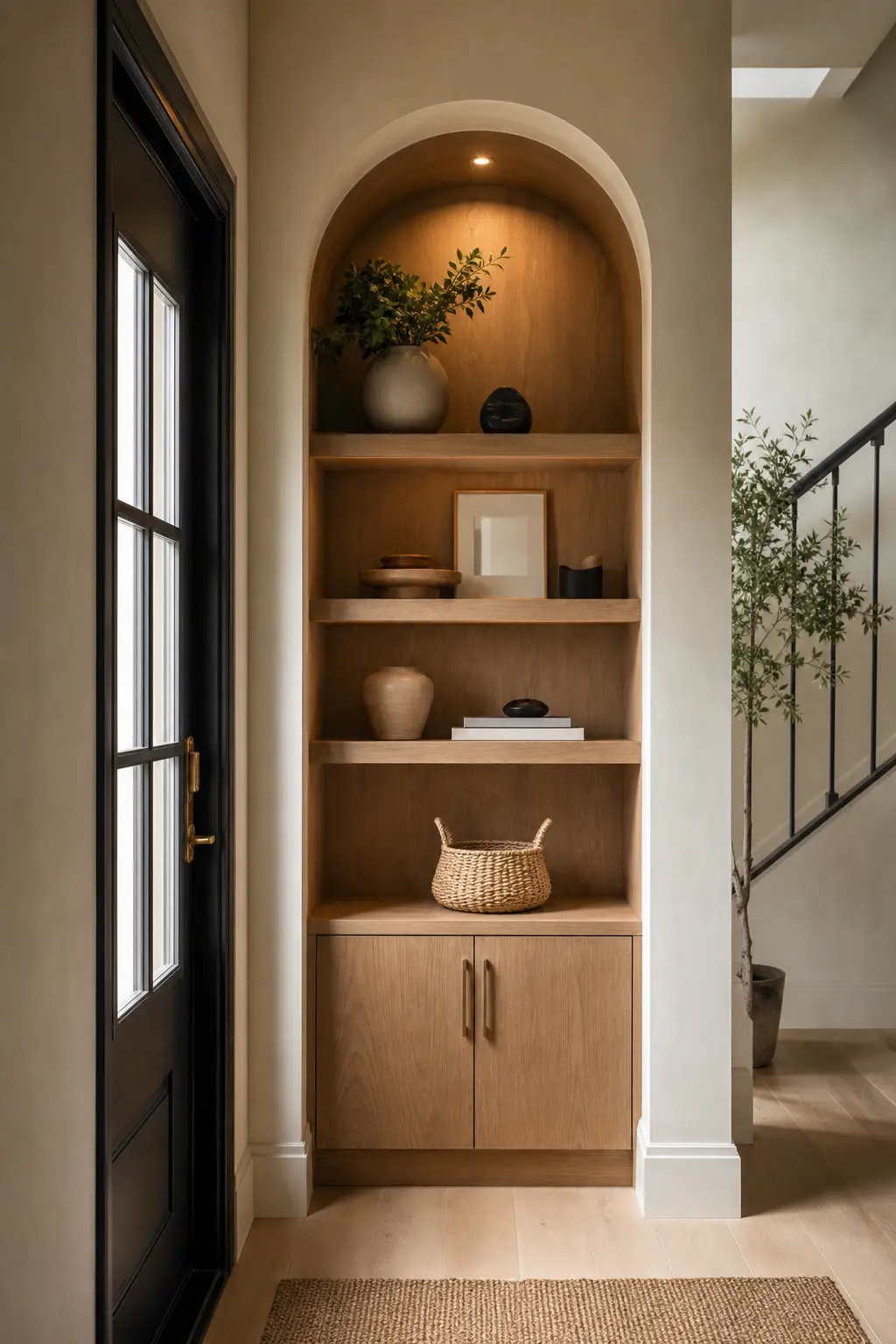
Open shelving within a wood arch or niche gives a small entryway a place to display a plant, a small tray for keys, or a piece of art, all without needing separate furniture. Keeping shelf contents intentionally sparse, rather than filling every inch with objects, maintains the calm, uncluttered feel that suits most entryway styles.
Floating shelves, mounted at varied heights within a wood surround, create visual interest through asymmetry while still keeping the overall footprint minimal. A single narrow shelf positioned at coat hook height is often enough to hold a small basket for gloves or mail, without requiring a larger shelving unit.
5. Bench Seating Paired with Wooden Storage Units
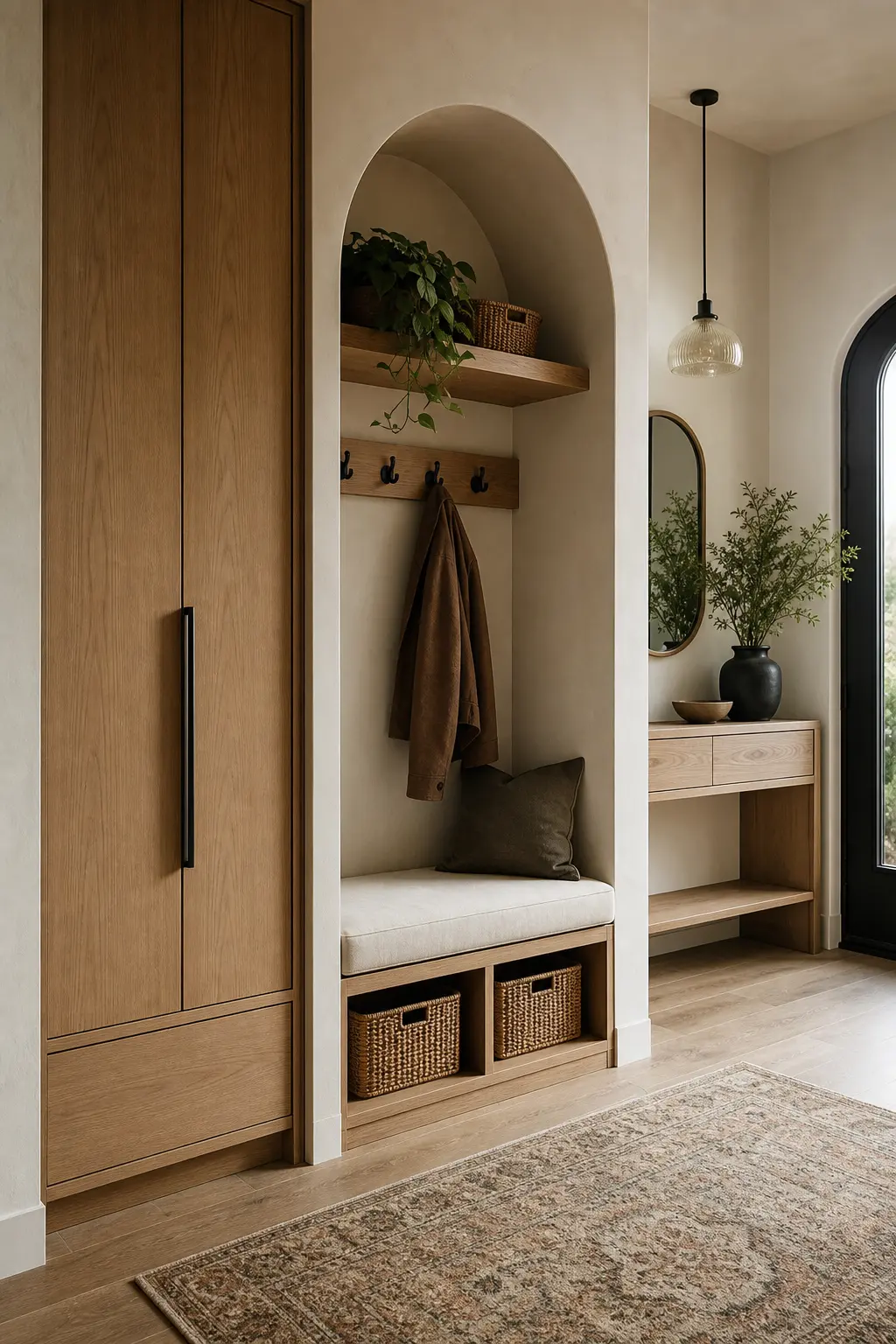
A small bench, built directly into or placed beneath a wood shelving unit, gives anyone entering the home a place to sit while removing shoes, which is a genuinely practical addition rather than just a stylistic choice. Benches with a lift up seat or drawers built into the base add hidden storage without requiring any additional floor footprint beyond the bench itself.
For very narrow entryways, a slim floating bench, mounted directly to the wall rather than resting on legs, keeps the floor visually and physically clearer, which matters in a tight space where every inch of floor counts.
6. Hooks, Baskets, and Hidden Storage Within a Wood Unit
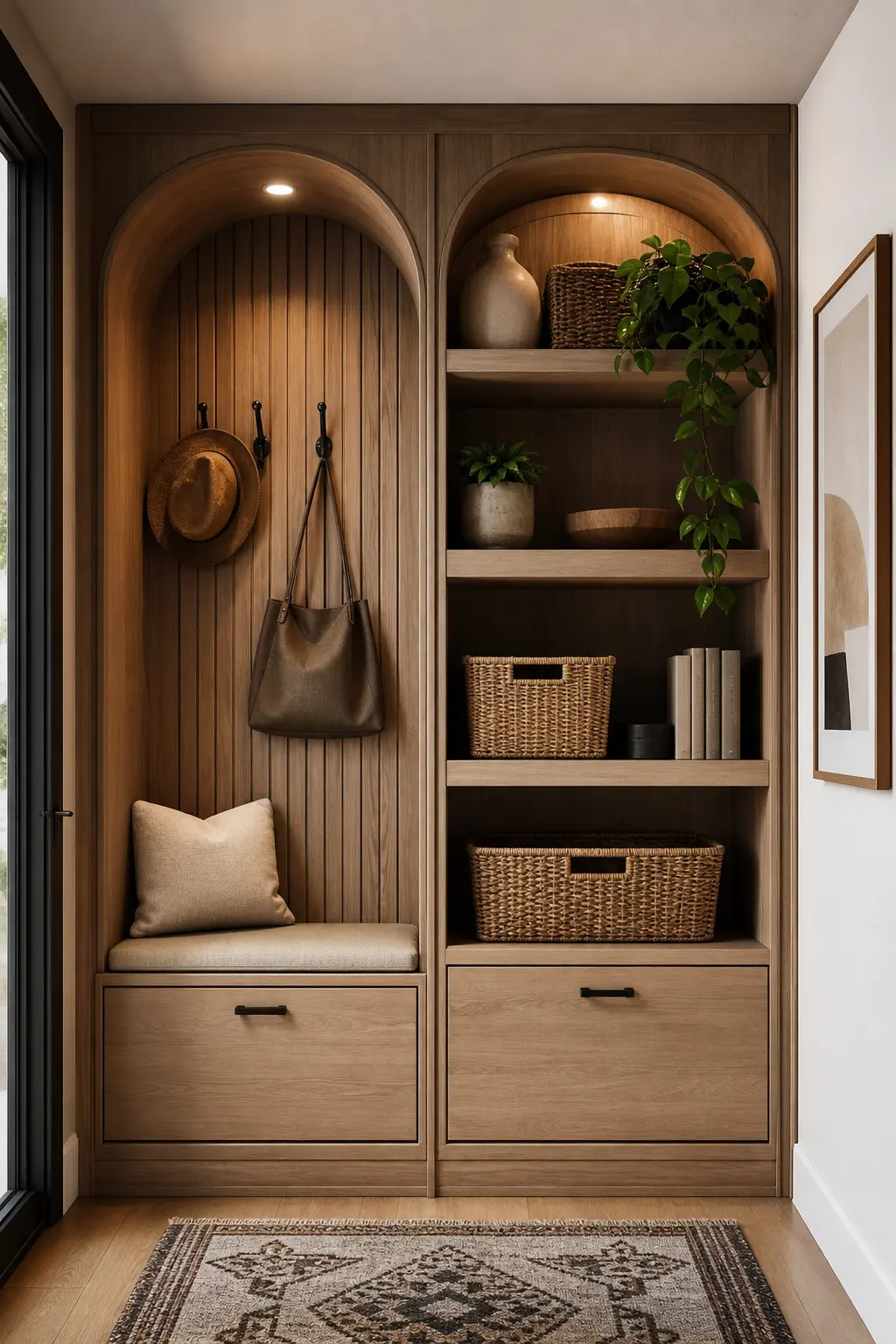
Wall mounted hooks, built into or mounted onto the wood surround itself, keep coats and bags off the floor without needing a separate closet. Limiting visible hooks to two or three, rather than a long row, keeps the space from feeling cluttered even when coats are actually hanging there.
Woven baskets, tucked into an open shelf or beneath a bench seat, hide smaller items like gloves, scarves, or dog leashes while still contributing warm texture that complements a wood finish. Closed cabinet doors, built into a portion of the unit, work well for anything you’d rather not have visible at all, like umbrellas or seasonal outerwear.
7. Lighting That Highlights Wood Grain and Arch Details
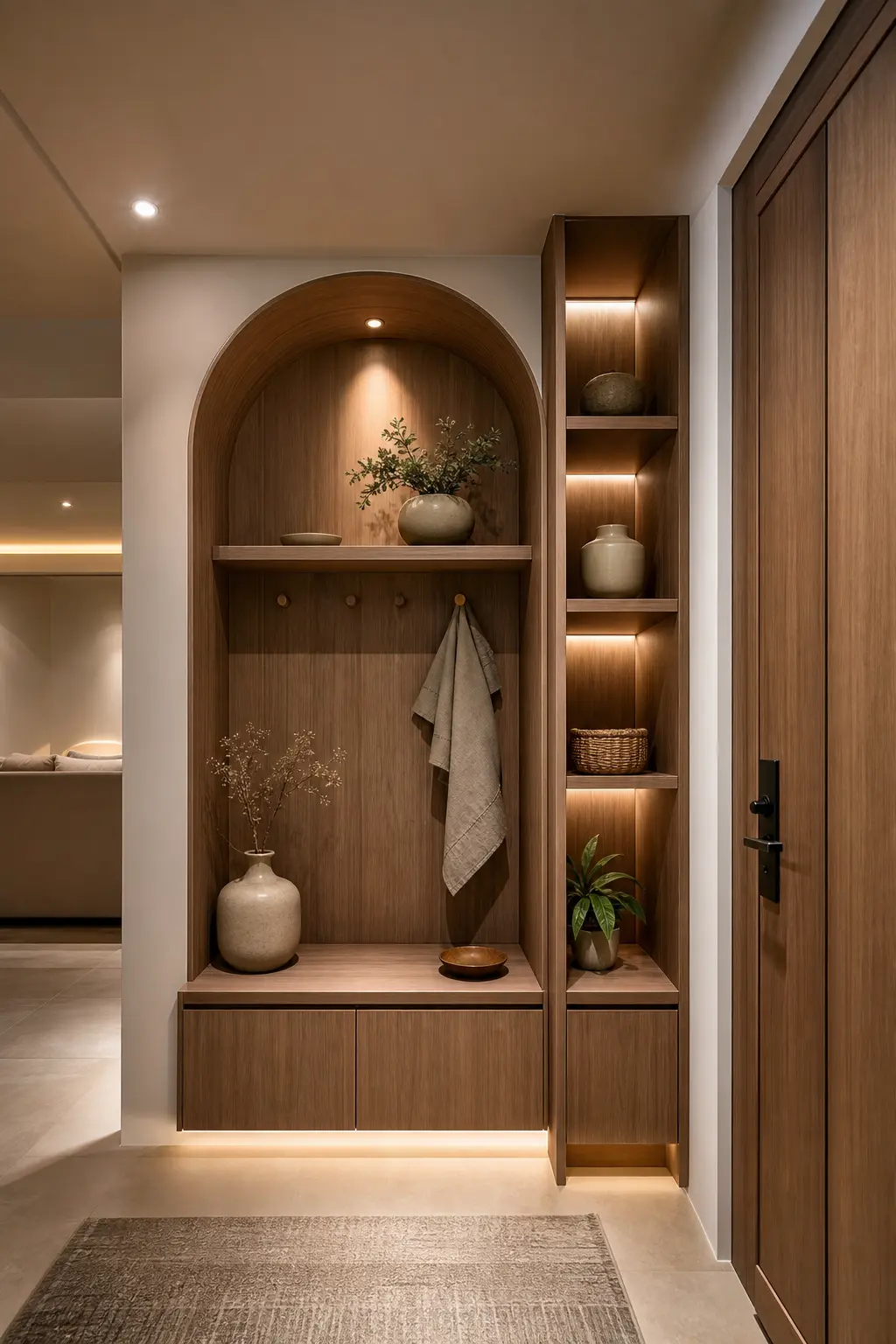
A small wall sconce or a recessed light positioned to wash light across the curve of an arch highlights the shape in a way flat, straight on lighting can’t. Warm LED lighting, in the 2700K to 3000K range, deepens the look of wood grain and keeps the space feeling inviting rather than clinical.
LED strip lighting, discreetly placed along the inside edge of an arched niche, adds a soft glow that makes any displayed items, like a plant or a piece of art, stand out more clearly, especially useful in entryways that get limited natural daylight.
8. Color Backgrounds That Complement Wooden Entryway Features
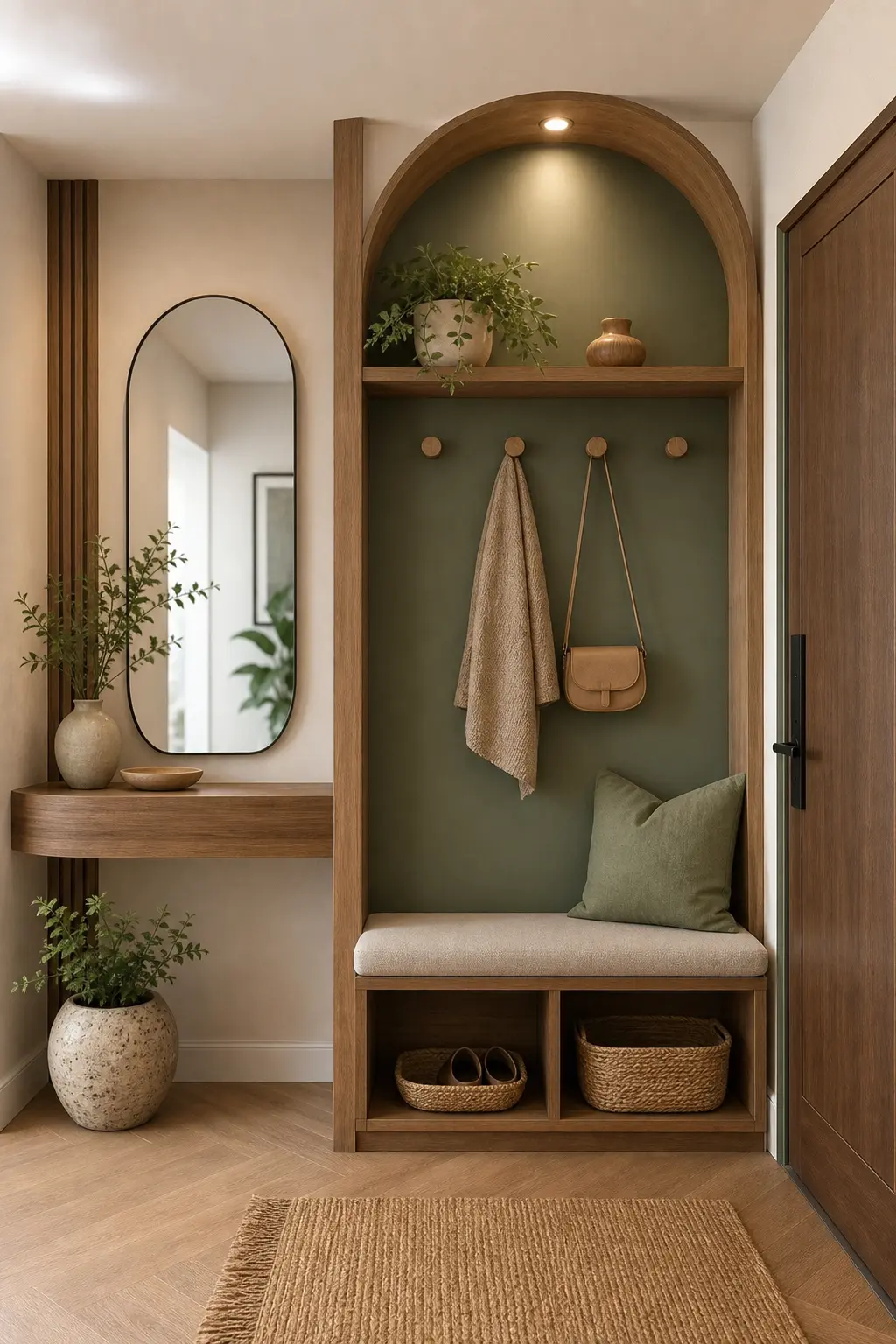
A soft neutral wall color, in warm white or light greige, lets a wood arch or shelving unit stand out clearly as the main textural feature. A deeper accent color, like a muted terracotta or dusty blue, immediately surrounding the wood detail can create additional contrast and make the feature read as more intentional and considered.
Avoid pairing a heavily grained, dark wood tone with an equally dark surrounding wall color, since the combined visual weight can make a small entryway feel closed in rather than warm and inviting.
9. Small Space Adaptations for Narrow Entryways
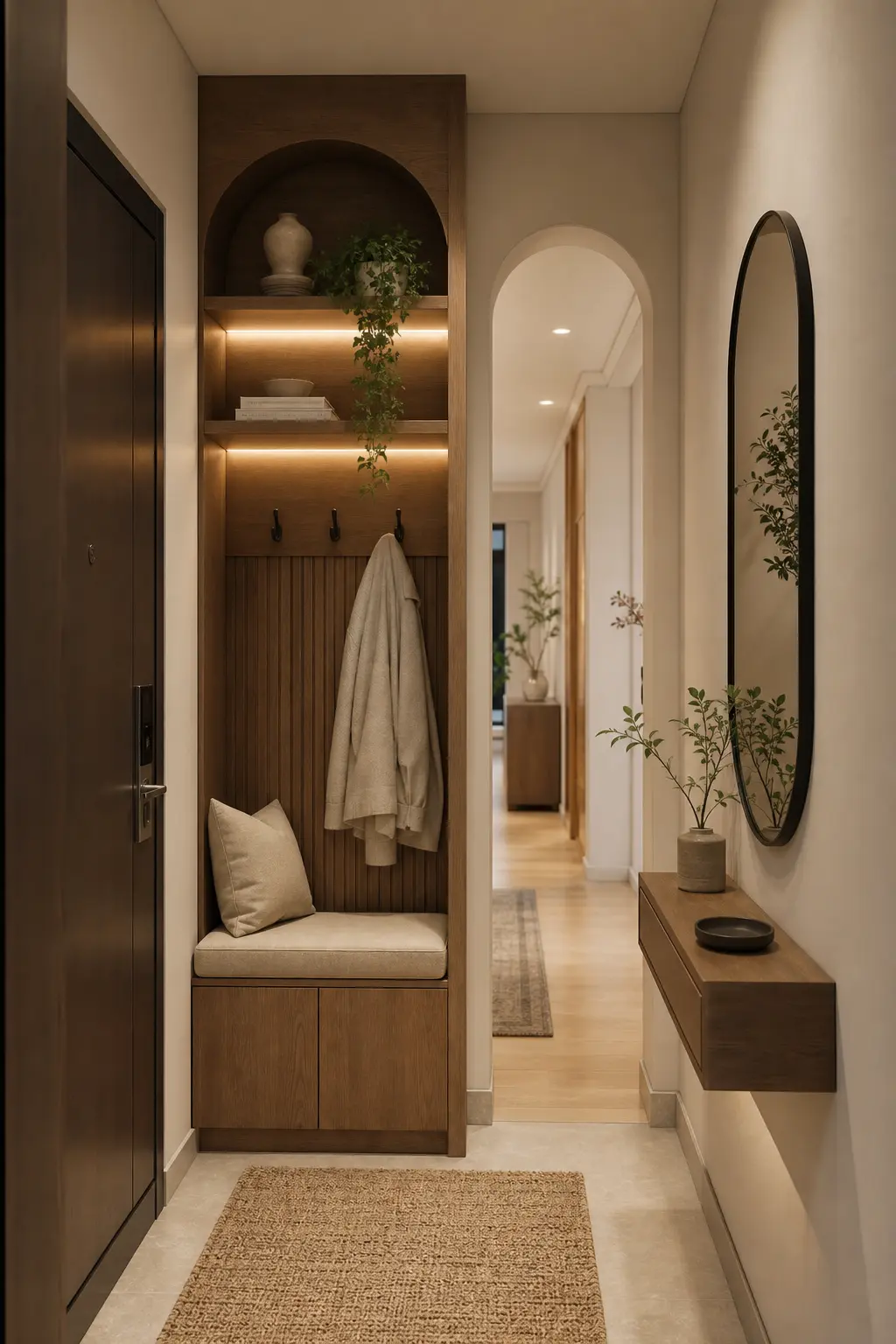
In very narrow entryways, scaling down the depth of shelving and choosing a shallower arch profile keeps the feature from protruding too far into limited floor space. A slim, wall mounted version of a wood shelving unit, rather than a freestanding piece with legs, also helps preserve floor space in a tight hallway style entry.
Lighter wood tones generally help a narrow entryway feel less closed in than a dark stained finish, especially when paired with a soft, neutral surrounding wall color and a smaller, more subtle arch shape rather than a large dramatic curve.
10. Budget Planning for a Wooden Entryway Storage Upgrade
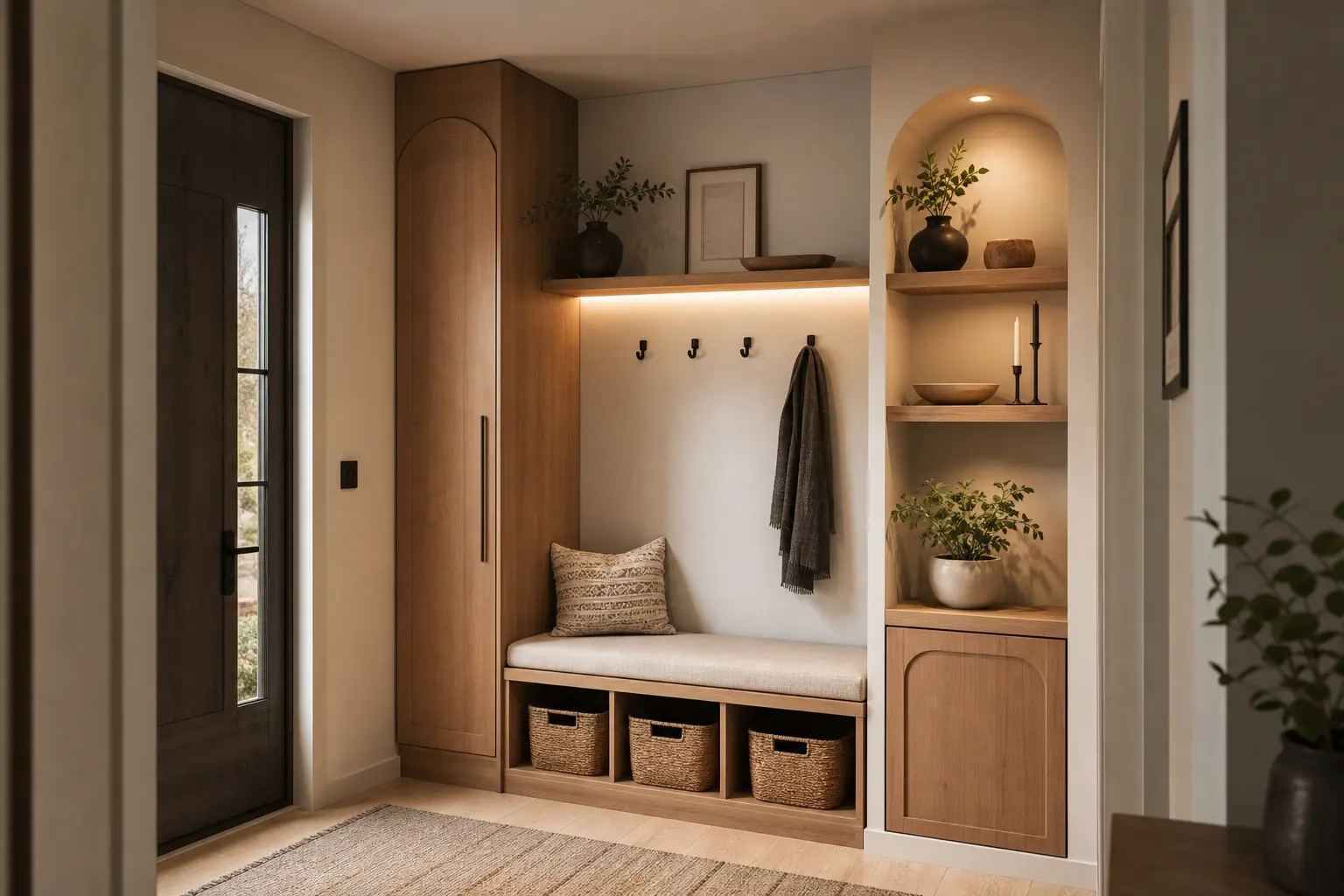
A basic upgrade, including a small wall mounted shelving unit with hooks and a narrow bench, typically runs somewhere between 300 and 900 dollars depending on wood type and size. Adding an arched wood niche or surround, whether a purchased unit or a custom built feature, increases that range, often by an additional 500 to 2000 dollars depending on complexity.
A fully custom built in entryway system, including an arched doorway, integrated shelving, bench seating, and dedicated lighting, tends to run considerably higher, often somewhere between 3000 and 8000 dollars depending on the scope of construction and materials chosen.
Mistakes to Avoid
- Overfilling open shelves with too many objects, which clutters an otherwise clean design feature
- Choosing a large, dramatic arch that overwhelms a genuinely narrow entryway
- Pairing a dark wood tone with an equally dark surrounding wall color in a small space
- Skipping bench seating in an entryway where shoe removal happens daily
- Mounting hooks in a long, cluttered row instead of limiting them to two or three
- Forgetting lighting entirely, leaving an arch or shelving detail hard to see in a dim entry
Frequently Asked Questions
Is an arched niche difficult to add to an existing entryway? An applied wood arch surround built onto an existing flat wall is considerably easier than cutting an actual arched doorway opening, which requires structural work. Most applied arch features can be installed without major construction.
What wood tone works best for a small, dark entryway? Lighter tones, like natural oak or a whitewashed finish, generally help a small or low light entryway feel more open than a dark espresso or walnut stain would.
Do I need a bench in a small entryway? It’s not required, but a bench, even a slim wall mounted version, adds genuine practical value for putting on and removing shoes, and it doesn’t have to take up much floor space in a narrow entry.
How many hooks should I install in a small entryway? Two or three hooks are generally enough to keep the space functional without looking cluttered. A long row of hooks tends to overwhelm a tight entry visually, even if it offers more capacity.
Can I combine an arch feature with closed storage in the same unit? Yes, many wooden entryway units combine an open arched shelf section with closed cabinet doors elsewhere in the same piece, giving you both a display feature and hidden storage in one unit.
Conclusion
A wooden entryway design built around an arch and built in shelves solves the two biggest problems a small entry usually has: no real storage and no architectural interest. The curved arch adds a soft, intentional focal point, while shelving, hooks, and a bench handle the practical daily demands of shoes, bags, and coats. Get the wood tone and scale right for your specific space, and even a narrow entryway can feel genuinely designed rather than like leftover space near the front door.