10 Luxury Indoor Garden Courtyard Ideas with Skylight and Water Features
Some homes have a room that never quite gets used. It might sit between the living room and the bedrooms, closed off, with no clear purpose. A luxury indoor garden courtyard turns that dead space into the most talked about room in the house, built around real plants, moving water and daylight from a skylight roof. This article covers 10 practical ideas for planning that kind of space, from layout to drainage, so the result feels like a garden retreat rather than a leaky, overgrown afterthought.
1. Start with a Layout That Balances Water, Greenery and Walkways
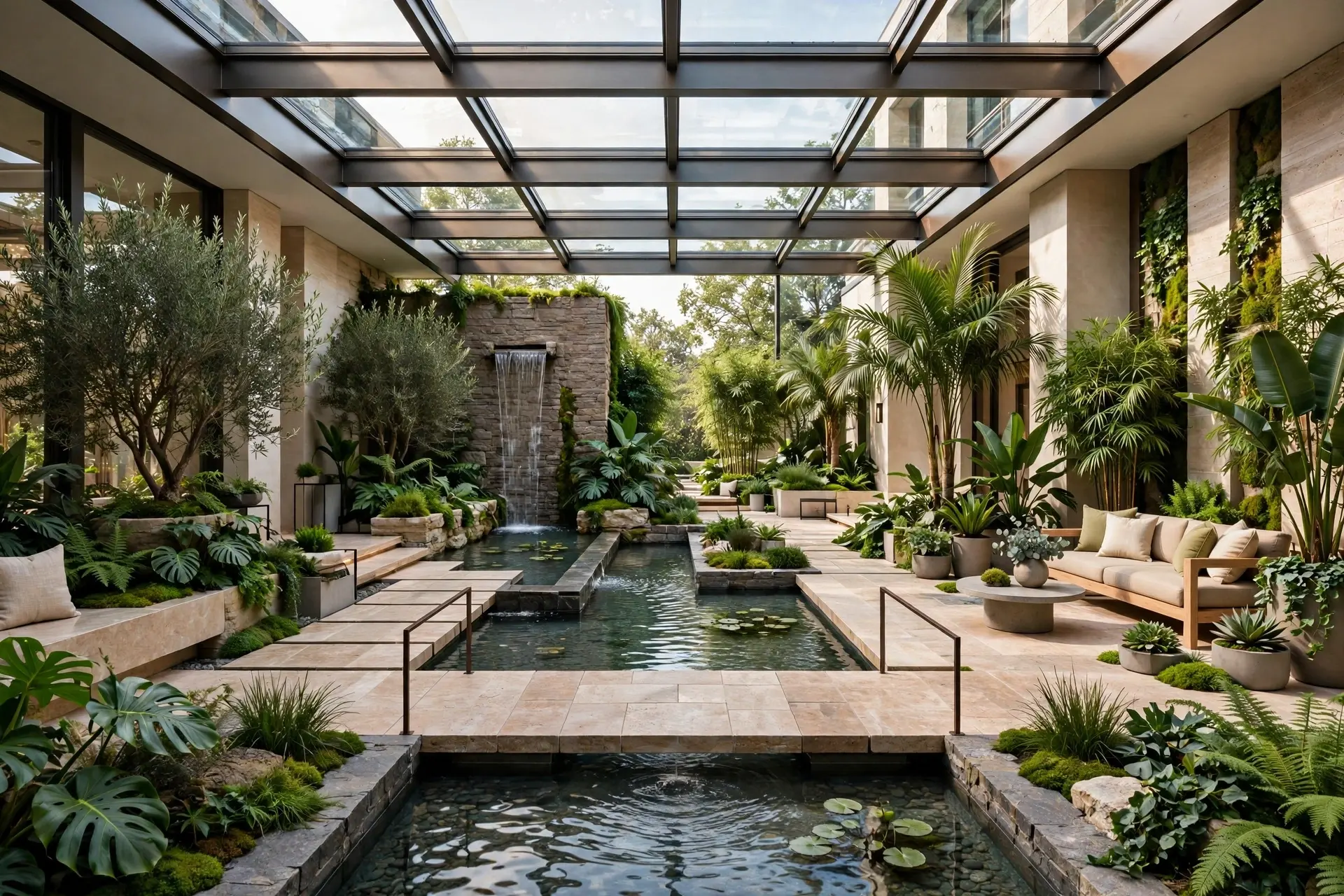
Before picking finishes, map out how the space divides between water, plants and places to actually stand or sit. A common mistake is letting the water feature or the planting bed eat up the entire footprint, leaving no real path through the room. In a courtyard around 120 to 200 square feet, aim to keep at least a third of the floor as usable walkway or seating space.
Sketch the layout with the skylight position in mind. Plants that need the most light should sit under the brightest part of the roof, while a water feature can sit slightly off center without losing visual balance.
2. Choose a Water Feature Style That Sets the Courtyard’s Mood
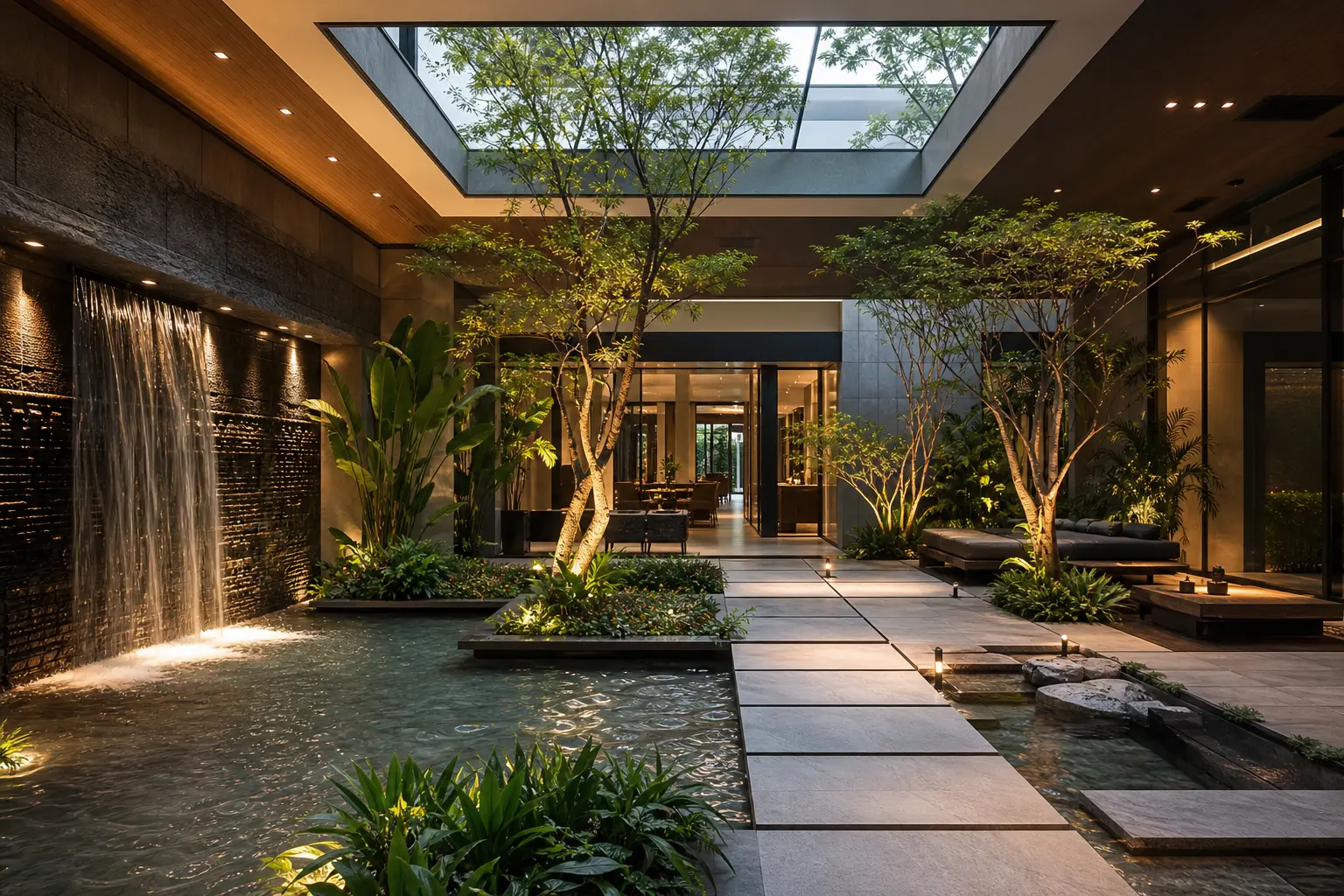
The water feature does more work than any other single element in a garden courtyard. A shallow reflecting pool creates a calm, quiet mood and works well in courtyards meant for reading or morning coffee. A tiered stone fountain adds more movement and sound, which suits a courtyard that connects to a busier part of the house.
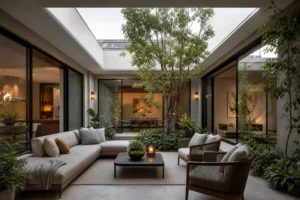
Matching Size to Room
In smaller courtyards, under about 100 square feet, a wall mounted water feature saves floor space while still giving you the sound and visual benefit of moving water.
3. Build Planting Zones Around Sun and Shade Patterns
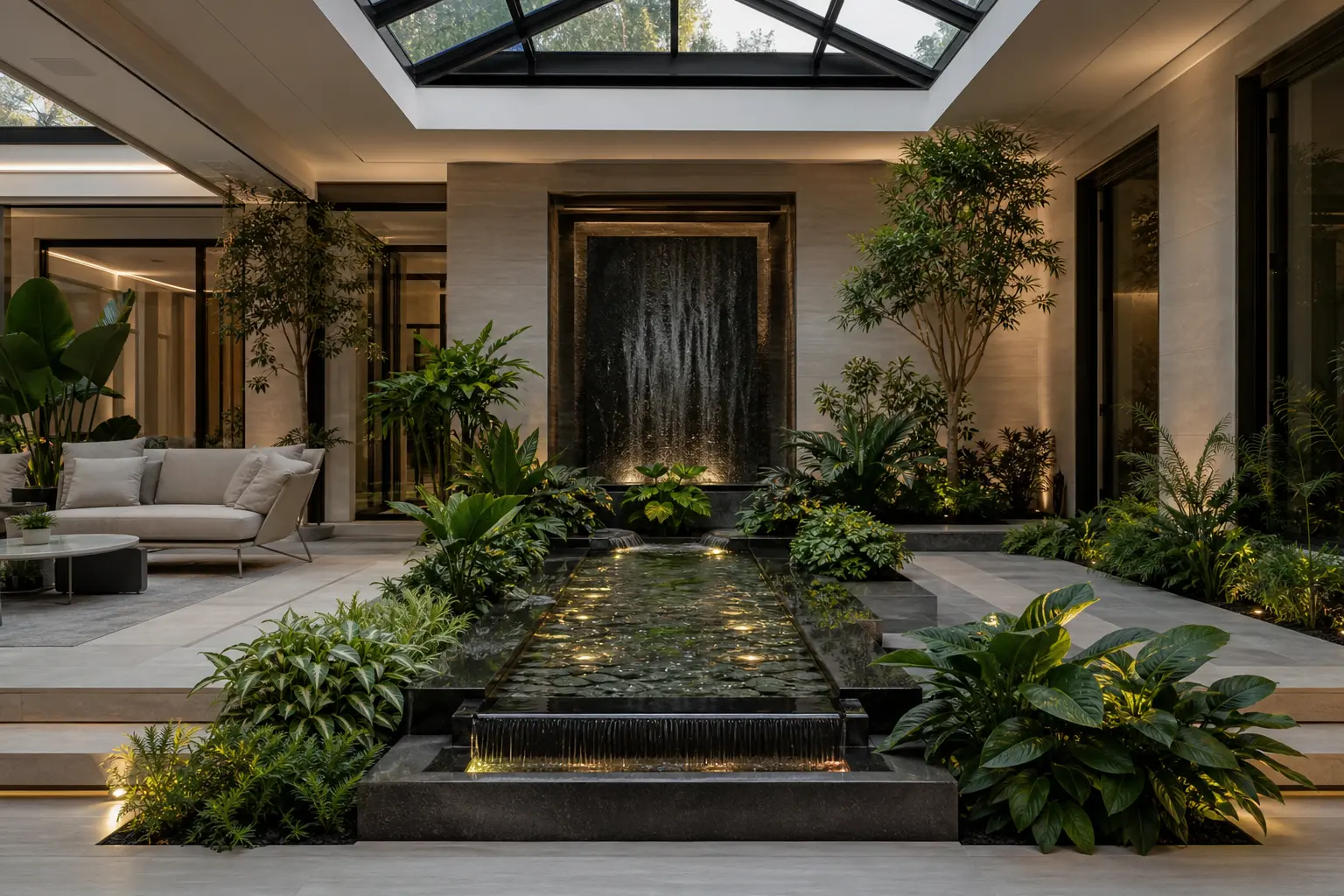
A skylight roof doesn’t light every corner of the room equally. Track where direct light falls throughout the day before choosing plant placement. The brightest zone, usually directly under the skylight, can support sun loving plants like citrus trees or bird of paradise. Shaded corners work better for ferns, calatheas or peace lilies.
Group plants by watering needs as well as light needs. Putting a drought tolerant succulent next to a moisture loving fern usually ends with one of them struggling, since their care routines pull in opposite directions.
4. Select a Skylight Roof That Supports Both Plants and Water
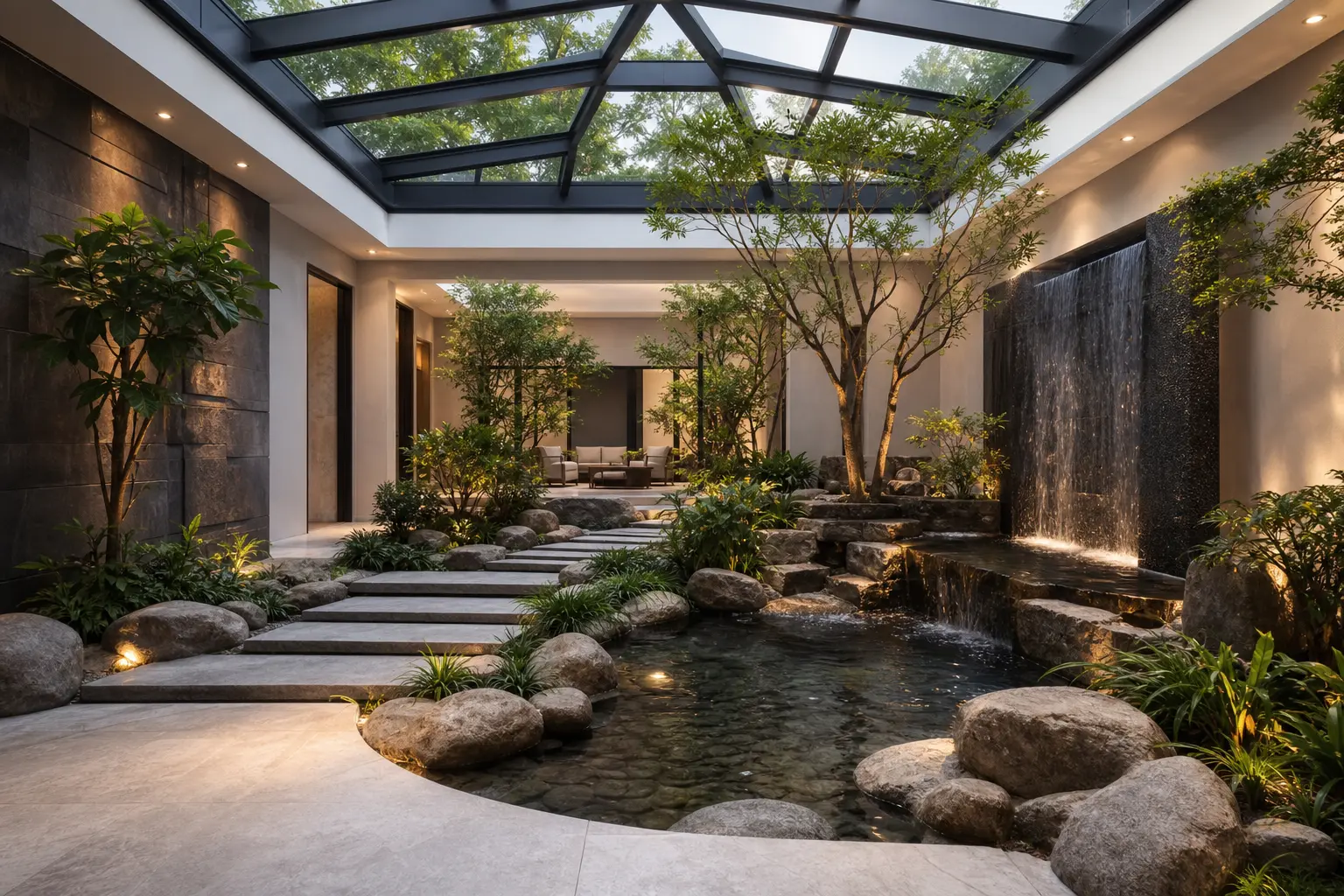
A garden courtyard with standing water needs a skylight that manages humidity, not just light. An operable skylight vent lets excess moisture escape on humid days, which matters more here than in a courtyard without a water feature. Look for a roof design with a slight pitch, since flat skylights can pool rainwater or condensation along the edges.
UV filtering glass protects both the plants and any wood furniture from fading, while still letting in enough usable light for photosynthesis. Ask your supplier about the light transmission percentage if you’re growing anything with higher light needs.
5. Add Stepping Stones or a Bridge for a True Garden Feel
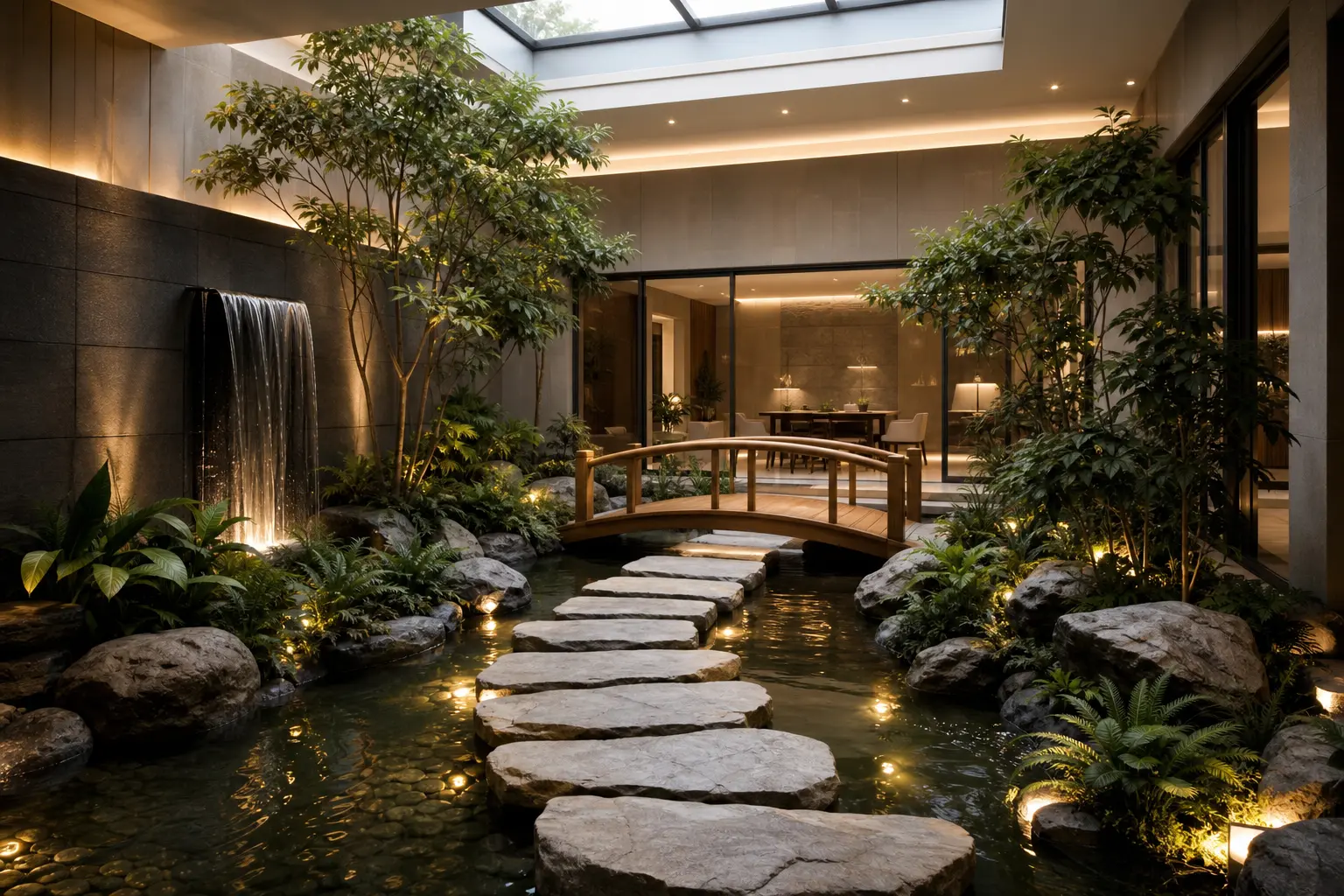
Stepping stones across a shallow pool or planting bed do more for the garden feel than almost any other single design choice. They turn a room you walk around into a room you walk through, which changes how the whole space is experienced. Large flat stone slabs, spaced about 12 to 15 inches apart, work well for a natural stride.
A small wood or stone bridge over a wider water feature reads as more luxurious, though it needs a solid structural base if it will support regular foot traffic rather than just serving as a visual element.
6. Choose Materials That Age Well Around Standing Water
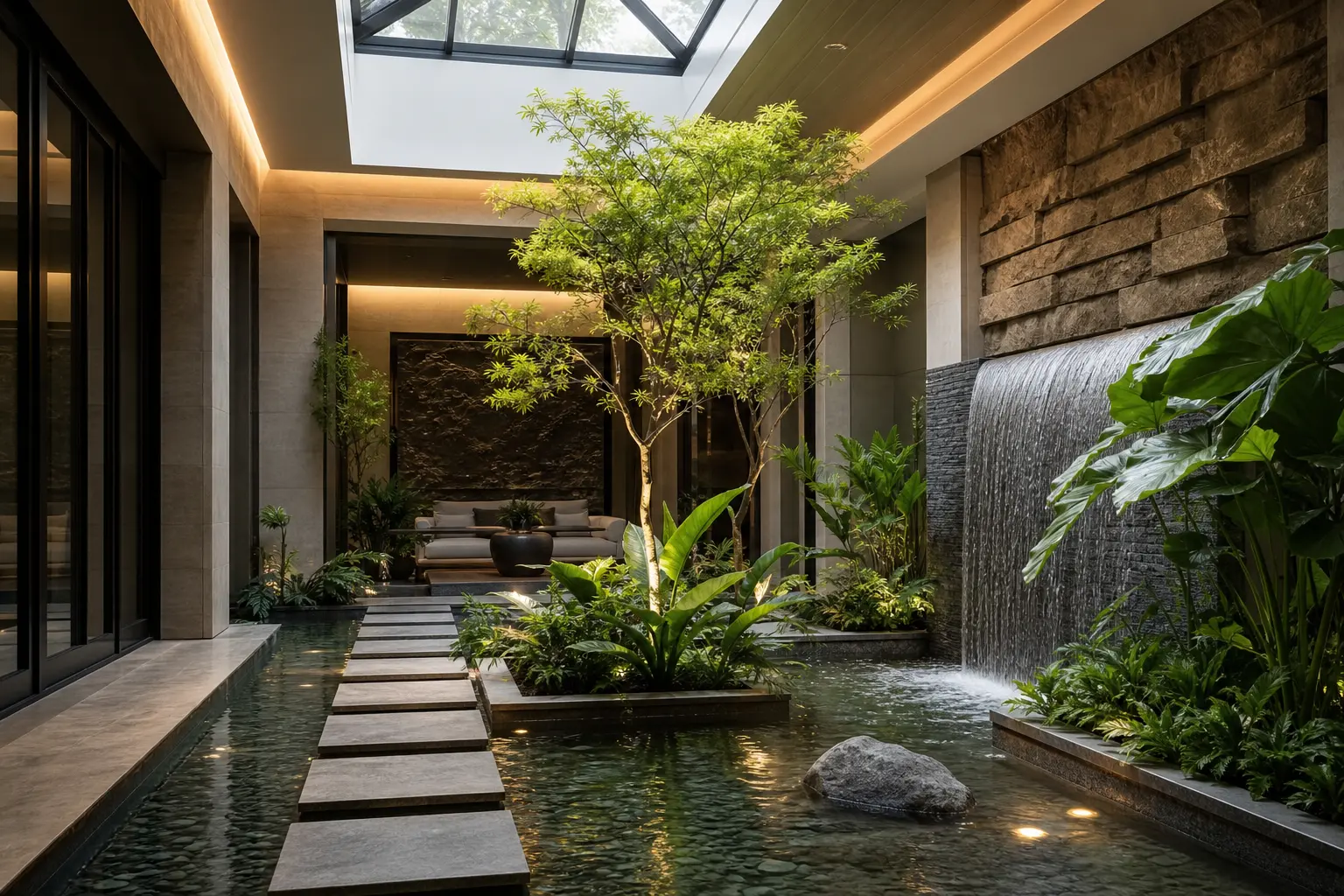
Standing water changes what materials make sense throughout the whole courtyard, not just right next to the pool. Natural stone like slate, basalt or travertine resists water staining better than most porcelain finishes. Untreated wood near a water feature needs regular sealing, or it will warp and discolor within a year or two.
Metal accents, like a copper or bronze fountain spout, develop a natural patina from moisture exposure that many homeowners consider part of the design rather than a flaw to prevent.
7. Bring in Luxury Texture with Stone, Wood and Metal Accents
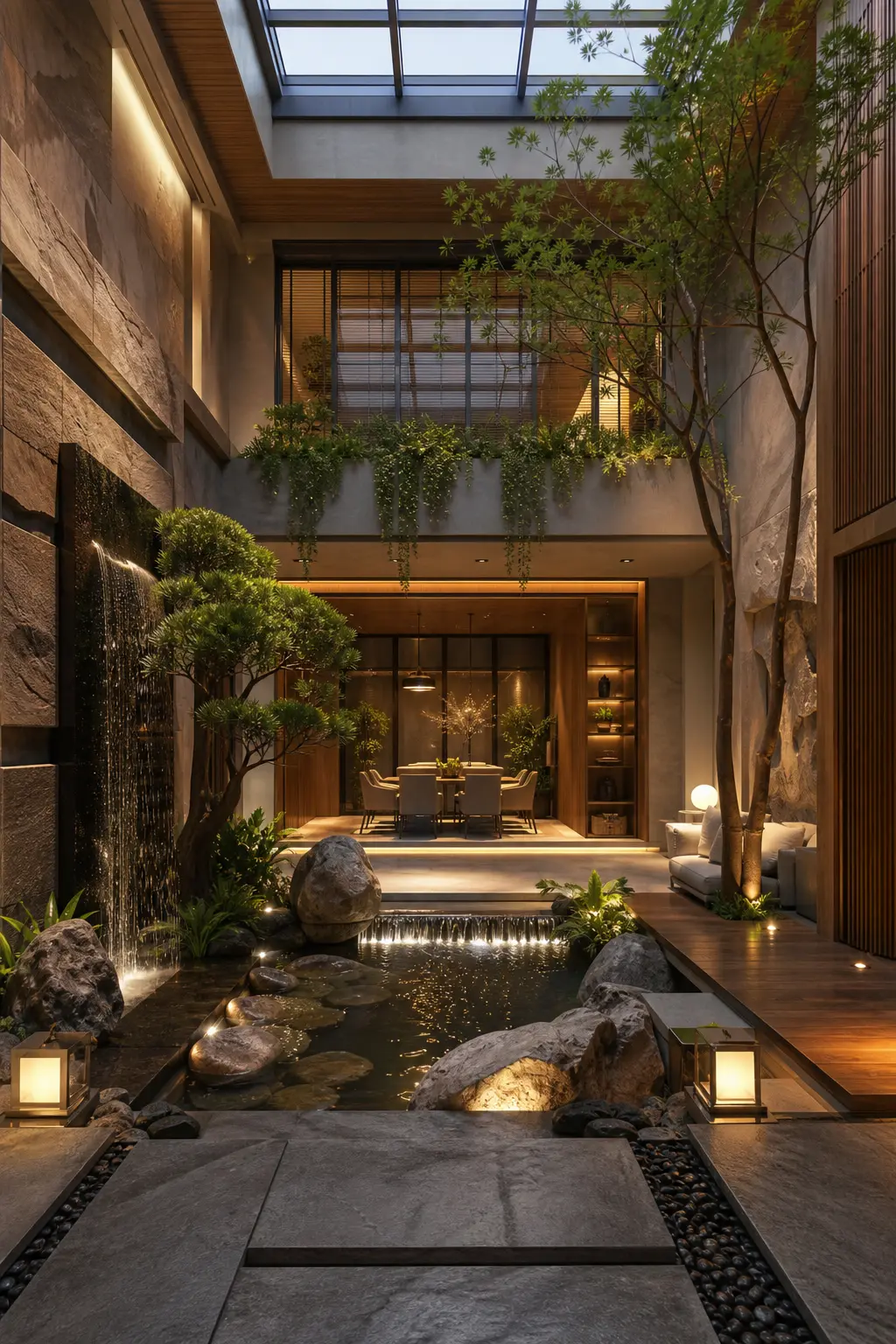
Luxury in a garden courtyard usually comes from material contrast, not from a single expensive centerpiece. Pair a smooth stone floor with a rough textured wood bench, and add a metal accent like a lantern or planter rim to break up the palette. Mixing two or three natural materials tends to read as more considered than relying on one material throughout.
Keep the color palette narrow, generally within two or three tones, so the greenery and water become the visual focus instead of competing finishes.
8. Add Koi or Aquatic Plants for a Living Water Feature
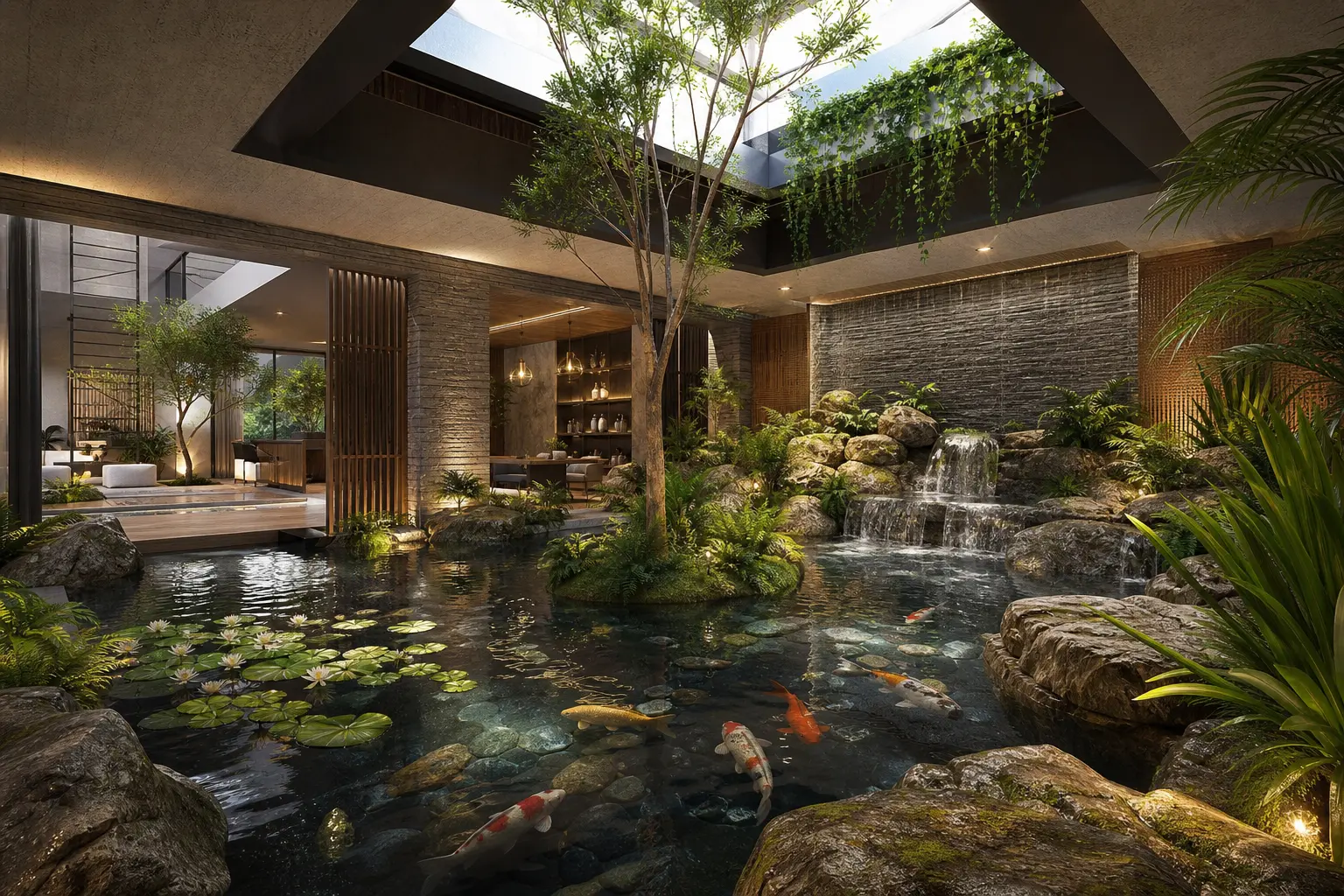
A pond with fish or aquatic plants brings a different kind of life to a courtyard than potted greenery alone. Koi need a pond with real depth, generally at least 24 inches, along with a filtration system to keep the water clear. If a full koi pond isn’t practical, floating aquatic plants like water lettuce or lotus add movement and color without the same depth requirement.
What a Koi Pond Actually Requires
Beyond depth, koi need a working filter and a plan for winter temperature drops if the courtyard isn’t fully climate controlled. This is worth discussing with a pond specialist before committing to fish rather than plants alone.
9. Layer Sound and Lighting for an Evening Garden Retreat
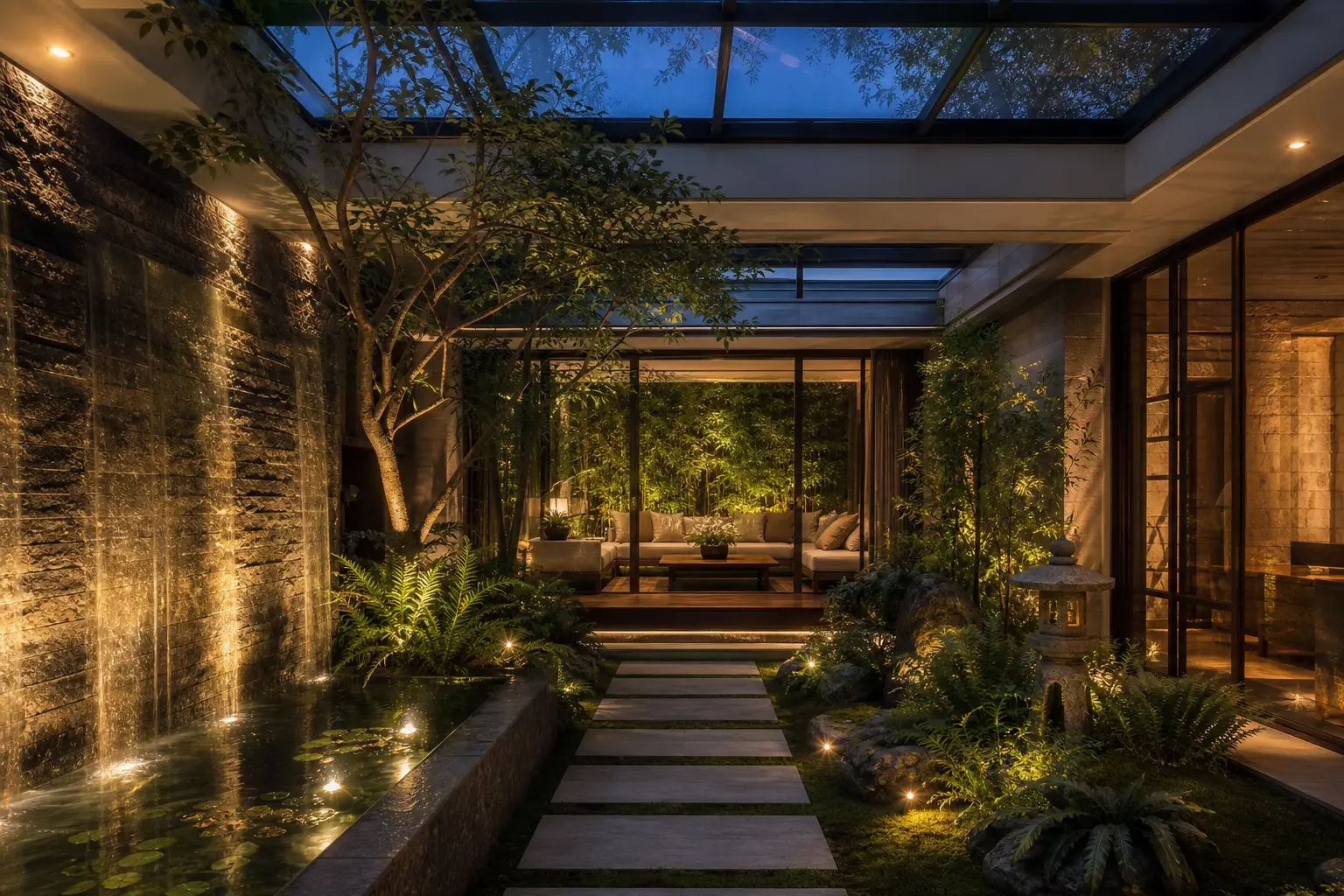
During the day, the skylight and moving water do most of the atmospheric work. At night, lighting has to recreate that mood on its own. Underwater lights inside the pool or fountain create a soft glow at the water’s surface. Uplighting aimed into taller plants adds depth and shadow along the walls.
Keep evening lighting warm, generally in the 2700 to 3000 Kelvin range, so it complements the natural tones of stone and wood rather than washing them out with a cooler, more clinical light.
10. Protect the Space with Real Waterproofing and Drainage
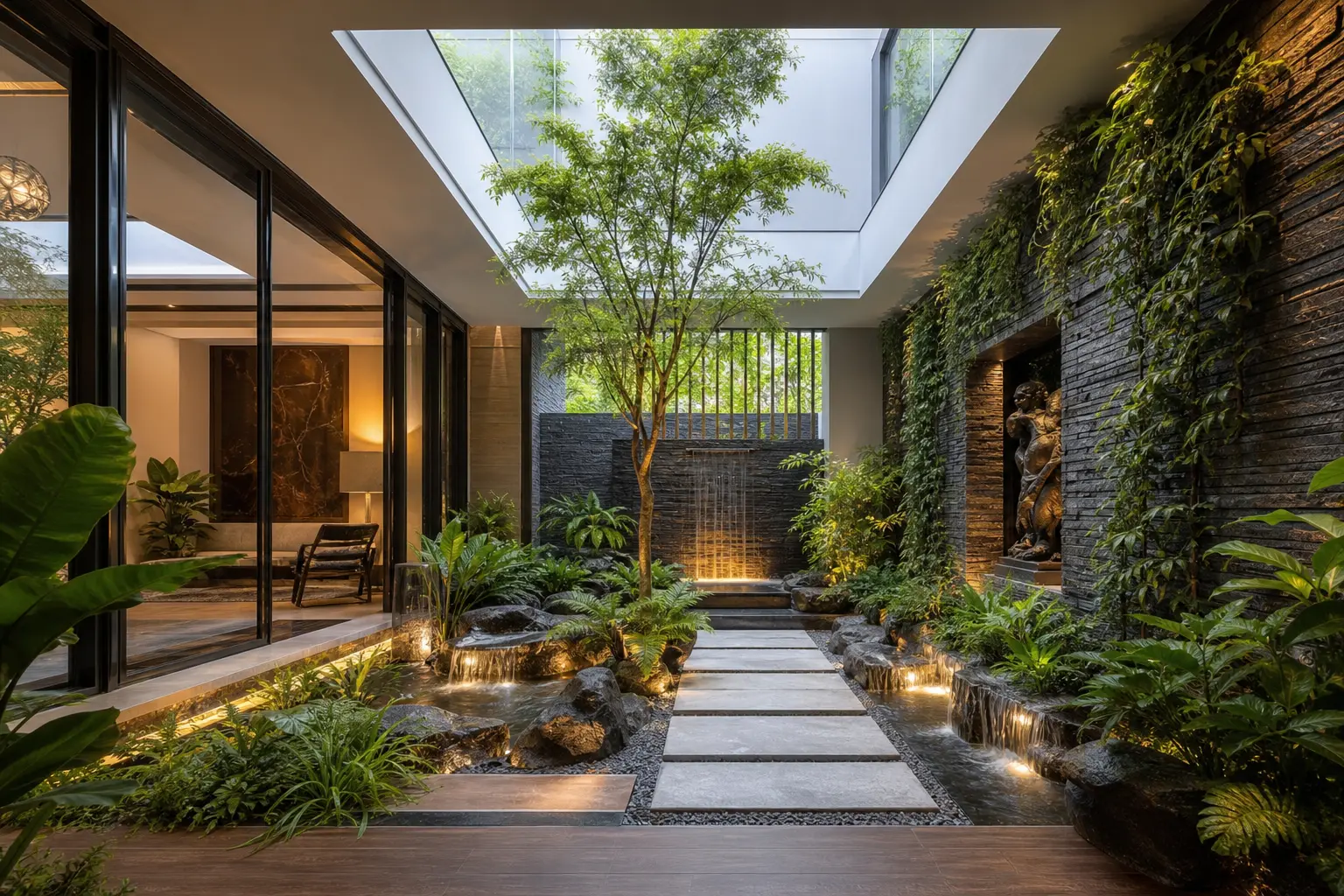
This is the step that separates a courtyard that lasts from one that causes water damage within a year. Any indoor space with a pond, fountain or heavy plant watering needs a proper waterproof membrane under the flooring, not just a sealant on top. Slope the floor toward a drain, and make sure that drain ties into real plumbing.
Have a contractor confirm the skylight seal is rated for the added humidity a water feature brings, since a seal built for a dry room can fail faster once moisture becomes a regular part of the environment.
Mistakes to Avoid
- Letting the water feature or planting bed take up so much space there’s no real walkway
- Choosing a pond depth or filtration setup that can’t actually support koi
- Skipping a waterproof membrane and relying only on surface sealant
- Mixing plants with conflicting light and watering needs in the same zone
- Using cool white lighting that clashes with the warm tones of stone and wood
Frequently Asked Questions
Do I need a professional to install a water feature indoors? For anything beyond a small tabletop fountain, yes. A real pond or in floor water feature needs proper waterproofing and drainage that most homeowners shouldn’t attempt without a contractor.
How much maintenance does an indoor garden courtyard need? Expect weekly plant care and water feature checks, plus a filter cleaning every few weeks if you’re keeping fish. It’s more upkeep than a standard room, but less than an outdoor garden of the same size.
Can a small room support both a water feature and real plants? Yes, as long as the layout stays proportional. In a room under 100 square feet, a wall mounted or tabletop water feature usually works better than a full pond.
What’s the biggest risk with an indoor water feature? Water damage from inadequate waterproofing is the most common and most expensive problem, which is why the drainage and membrane work matters more than any decorative choice.
Do indoor garden courtyards work in cold climates? Yes, since the space is enclosed and climate controlled, but plant and fish choices need to account for the fact that a skylight room can still run cooler than the rest of the house in winter.
Conclusion
A luxury indoor garden courtyard comes down to a handful of decisions done right. Get the layout and drainage sorted before you choose a single plant or fountain. Match the skylight to the humidity a water feature will create. Once those fundamentals are in place, the plants, stone and lighting are where the space actually starts to feel like a retreat instead of just another room.