10 Modern Symmetrical TV Unit Ideas | Warm LED Lighting & Wood Slat Accent Wall
Walk into a room where the TV wall is even slightly off balance, one shelf longer than the other, or the lighting brighter on one side, and something feels wrong even if you can’t name it. If you’ve been searching for symmetrical TV unit ideas, that’s probably the exact feeling you’re trying to fix. Balance is one of the fastest ways to make a room feel calm and finished. This article covers ten ways to build a symmetrical TV wall using warm LED lighting and a wood slat accent wall, including the actual measurements and lighting choices that make the balance work.
1. What Makes a TV Unit Design Truly Symmetrical
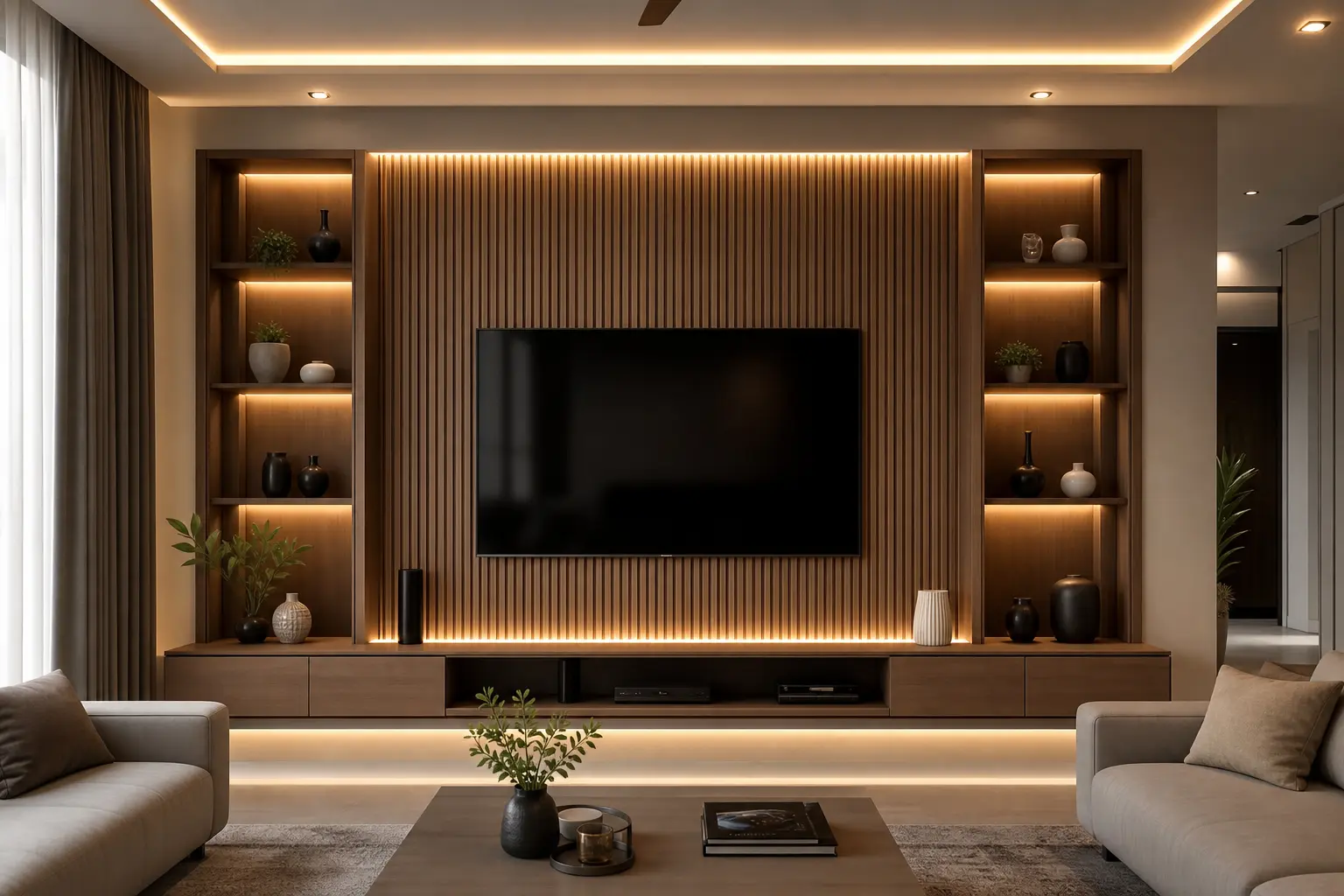
True symmetry means the wall mirrors itself from a center line drawn straight through the television. That includes shelving height, cabinet width, lighting placement, and even decor objects on either side. A near match isn’t the same thing. If one shelf sits two inches higher than the other, the eye catches it immediately, even from across the room.
The easiest way to check your plan for symmetry is to sketch the wall on paper with a vertical center line through the TV, then mirror every element across that line. Anything that doesn’t have a matching counterpart on the other side needs a reason to be there, like a single piece of statement art meant to break the pattern on purpose.
Intentional Asymmetry Is Different From Uneven Design
Some designers add one deliberately unmatched element, a single sculptural object or an asymmetric light fixture, as a stylistic choice. That’s different from symmetry that’s simply uneven by accident. If you want that look, make the break obvious and intentional rather than something that reads as a mismatch.
2. Choosing Warm LED Lighting Temperature for a Balanced Look
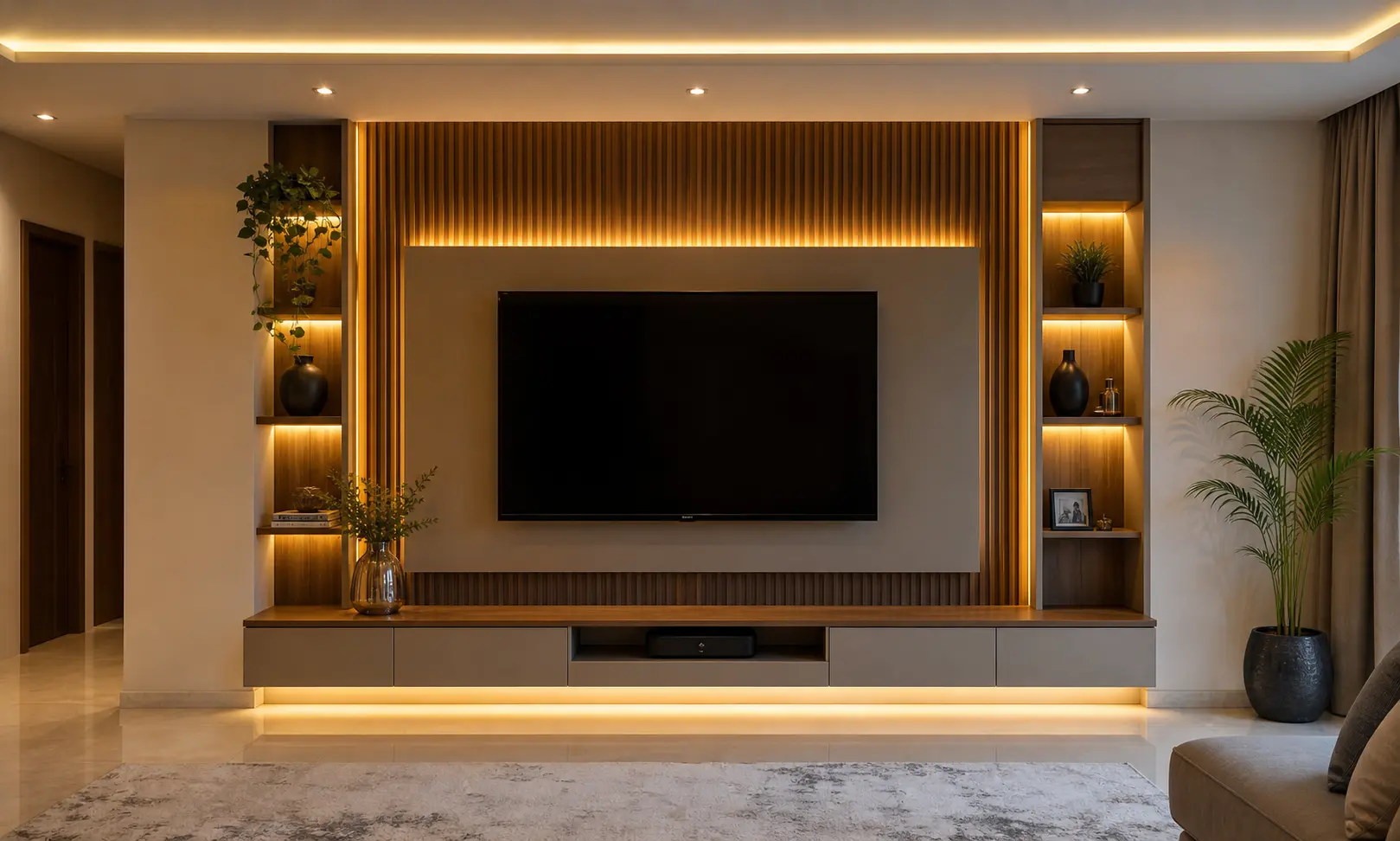
Lighting color temperature affects how balanced a symmetrical wall actually feels, not just how bright it is. Warm LED strips rated between 2700K and 3000K create a soft, even glow that reads as calm and cohesive. Cooler LED strips, above 4000K, tend to look sharp and clinical, which works against the relaxed feeling most symmetrical designs are going for.
Matching color temperature exactly on both sides of the wall matters more than people expect. Mixing a 2700K strip on one side with a 3000K strip on the other creates a subtle but noticeable color mismatch, even though both numbers sound close. Buy LED strips from the same batch or product line for both sides to avoid this.
3. Wood Slat Accent Wall Patterns for Symmetrical TV Units
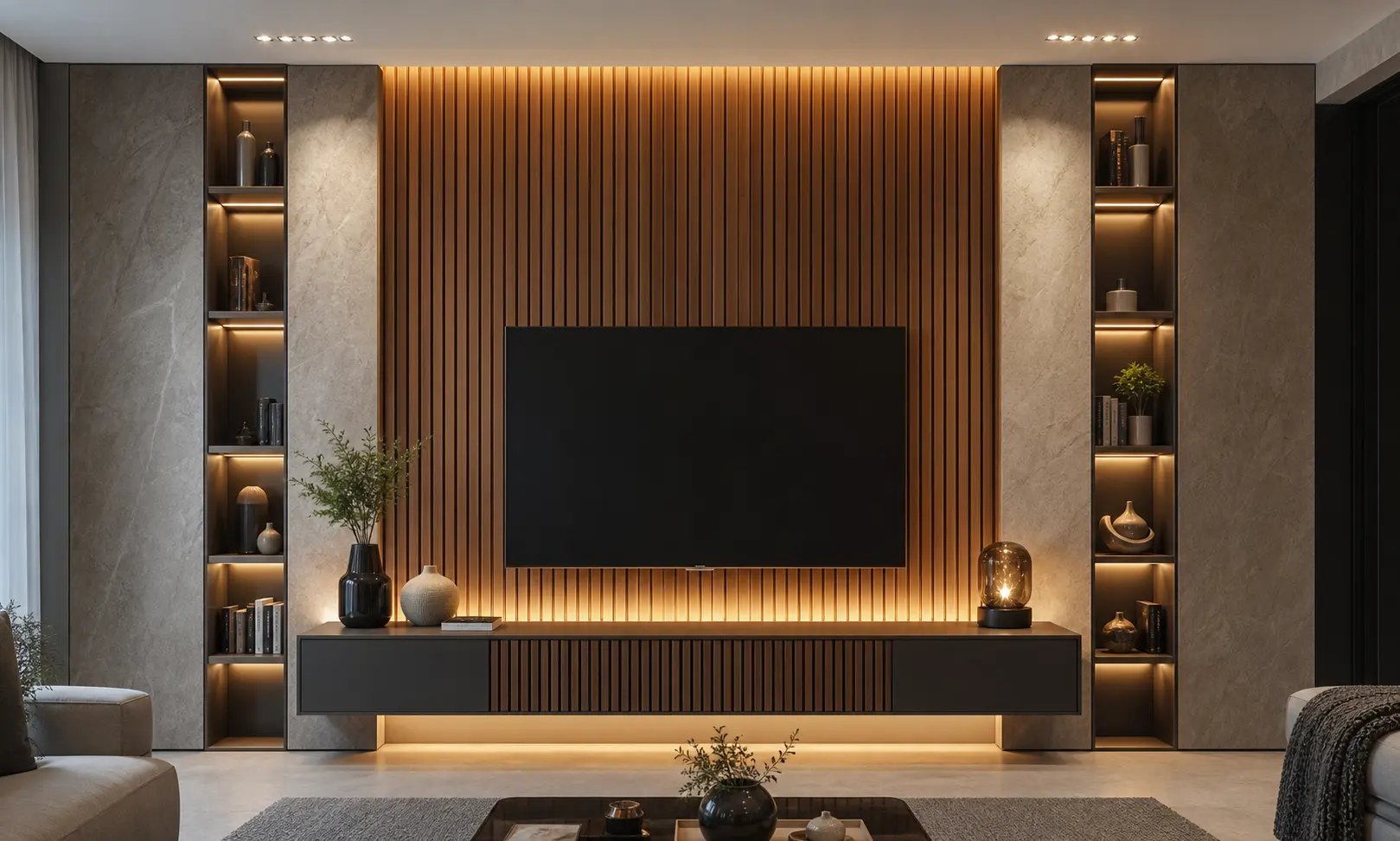
A wood slat accent wall reinforces symmetry through its own repeating pattern. Evenly spaced vertical slats, ideally with identical gaps measured to within an eighth of an inch, create a rhythm that naturally supports a balanced layout. Uneven spacing, even slightly, becomes obvious once the wall is lit.
Full Width vs Centered Panel Slats
A full width slat wall, running the entire length of the TV wall, is the simplest way to guarantee symmetry, since the pattern itself doesn’t need to be centered around anything. A centered slat panel, sized specifically around the TV, needs more careful measuring but creates a stronger visual anchor point at the television itself.
Either approach works well with warm LED lighting. Full width slats give a more understated, textured background. A centered panel makes the TV area feel like a framed feature within the larger wall.
4. Sizing and Proportion Rules for a Symmetrical TV Wall
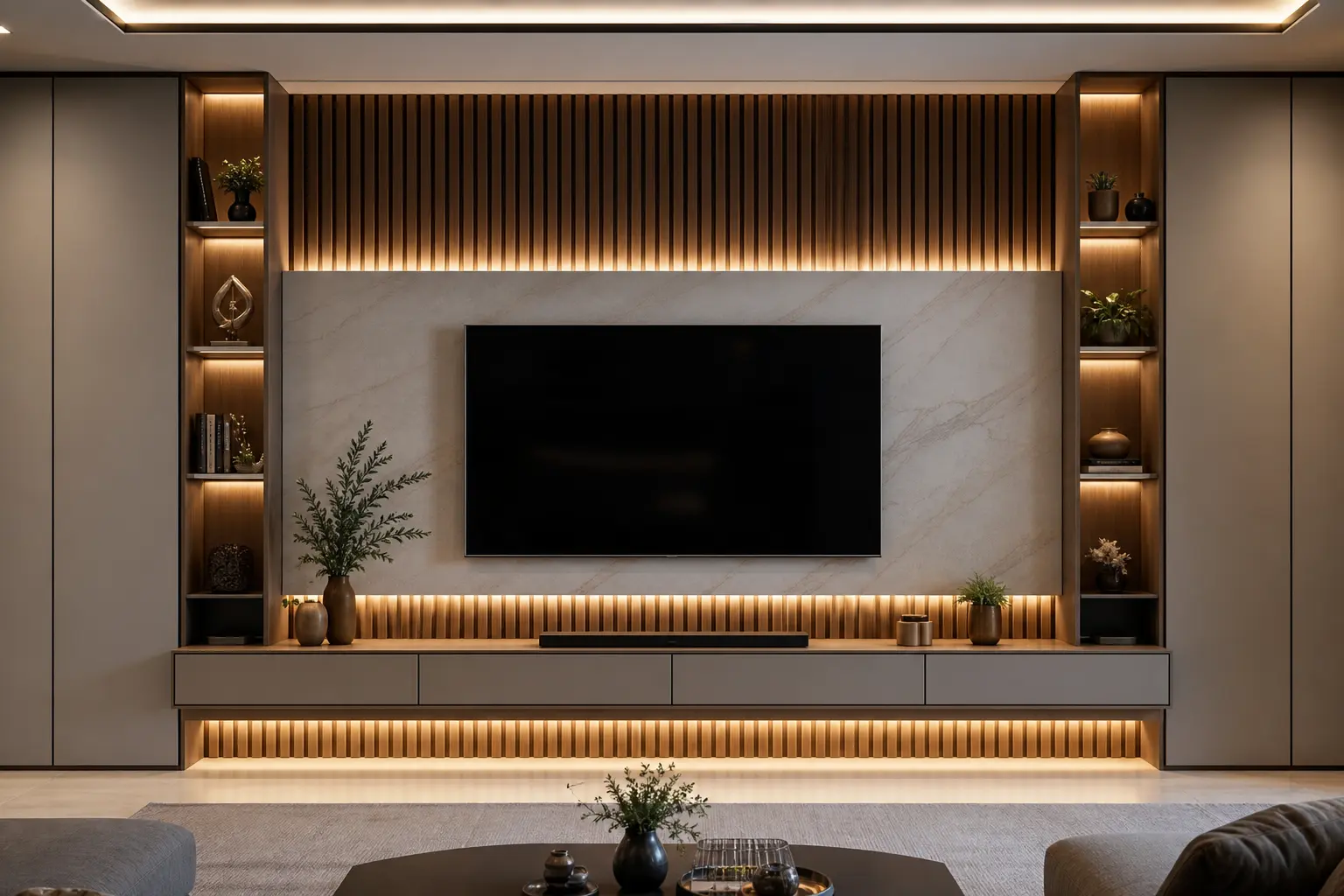
Proportion holds symmetrical designs together. As a general rule, shelving or cabinetry on either side of the TV should extend no more than about 18 to 24 inches beyond the width of the television itself. Go much wider than that and the furniture starts to visually overpower the screen instead of framing it.
Height matters too. Matching floating shelves typically look best mounted between 4 and 6 inches above and below the TV, keeping consistent spacing on both sides. Measure from the floor rather than eyeballing it, since even a half inch difference between two shelves becomes visible once the room is lit.
5. Storage Layouts That Keep the Symmetry Intact
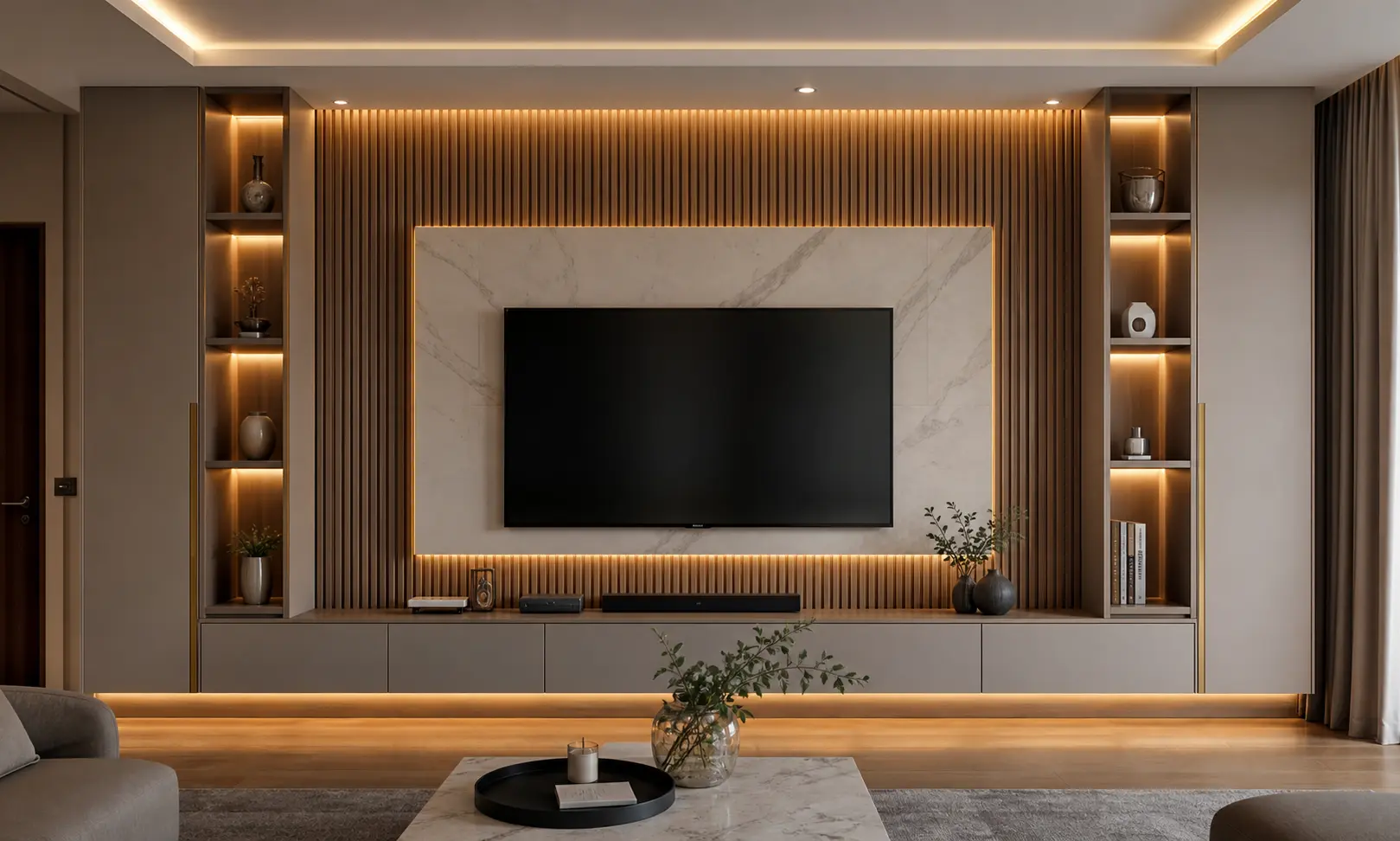
Storage is often where symmetrical designs break down, because real life doesn’t come in matching pairs. Media consoles, gaming systems, and speakers rarely split evenly into two identical piles. The fix is usually closed storage, matching cabinets on each side that hide the mismatch behind uniform doors.
Hiding Mismatched Items Behind Matching Doors
If you have a soundbar, streaming box, and gaming console but no matching second set of items, put everything behind one set of cabinet doors and leave the matching cabinet on the other side for books, decor, or simply negative space. The visual symmetry comes from the cabinets matching, not from the contents being identical, and nobody sees what’s actually inside.
6. Where to Place LED Strips for Even, Warm Light
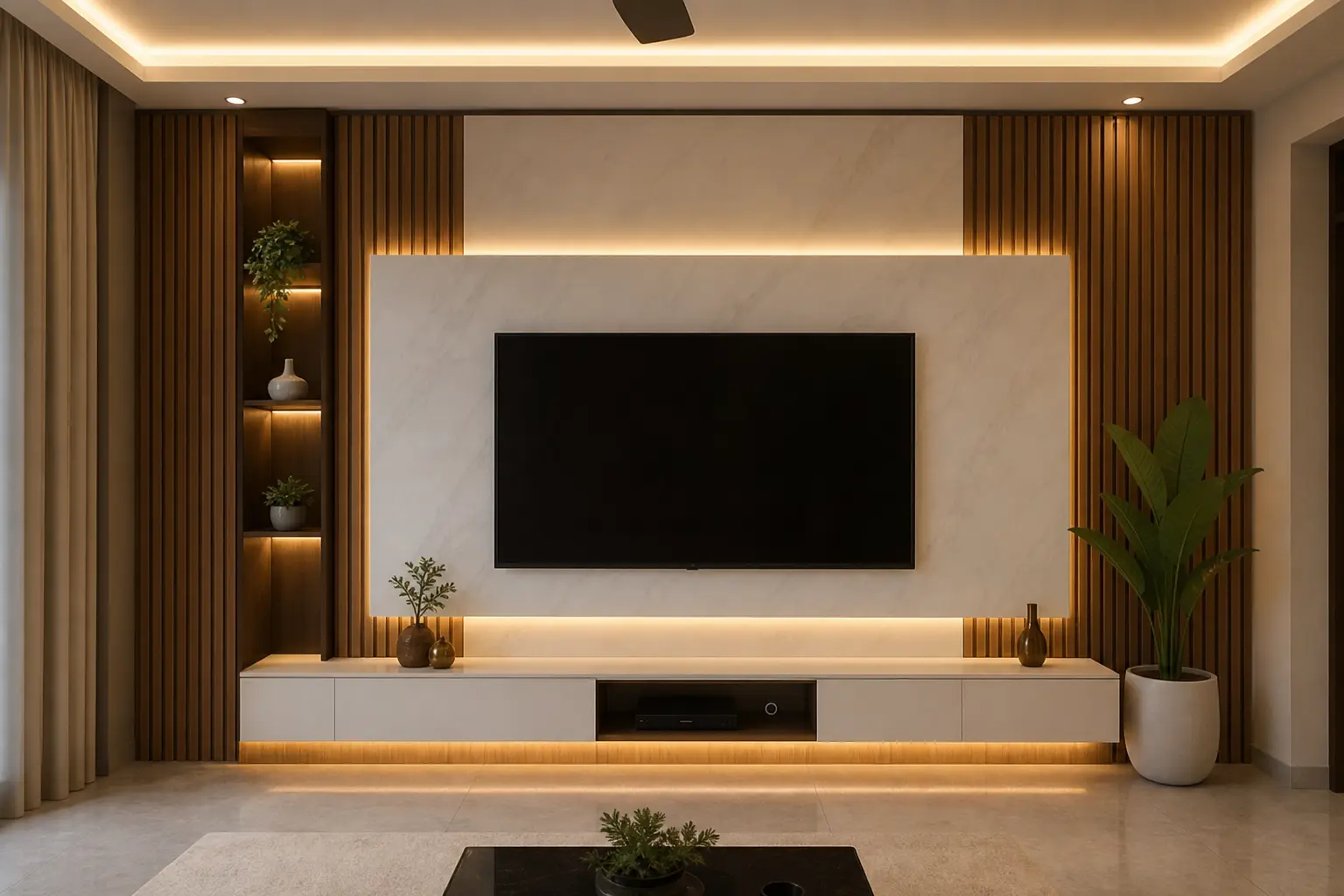
Placement affects how even the light actually reads, not just where you mount the strip. Running LED strips along the top edge of shelving on both sides, hidden behind a small lip, gives a consistent downward wash of light without visible hot spots. Strips placed too close to a wall’s edge tend to create an uneven bright strip right at the border instead of a soft, blended glow.
Test the brightness setting on both sides together before finalizing the install. Even identical LED strips can look slightly different in brightness depending on wall color, shelf material, and how much ambient daylight the room gets, so a matched, side by side test catches problems a spec sheet won’t.
7. Color Pairings That Work With Wood Slats and Warm Light
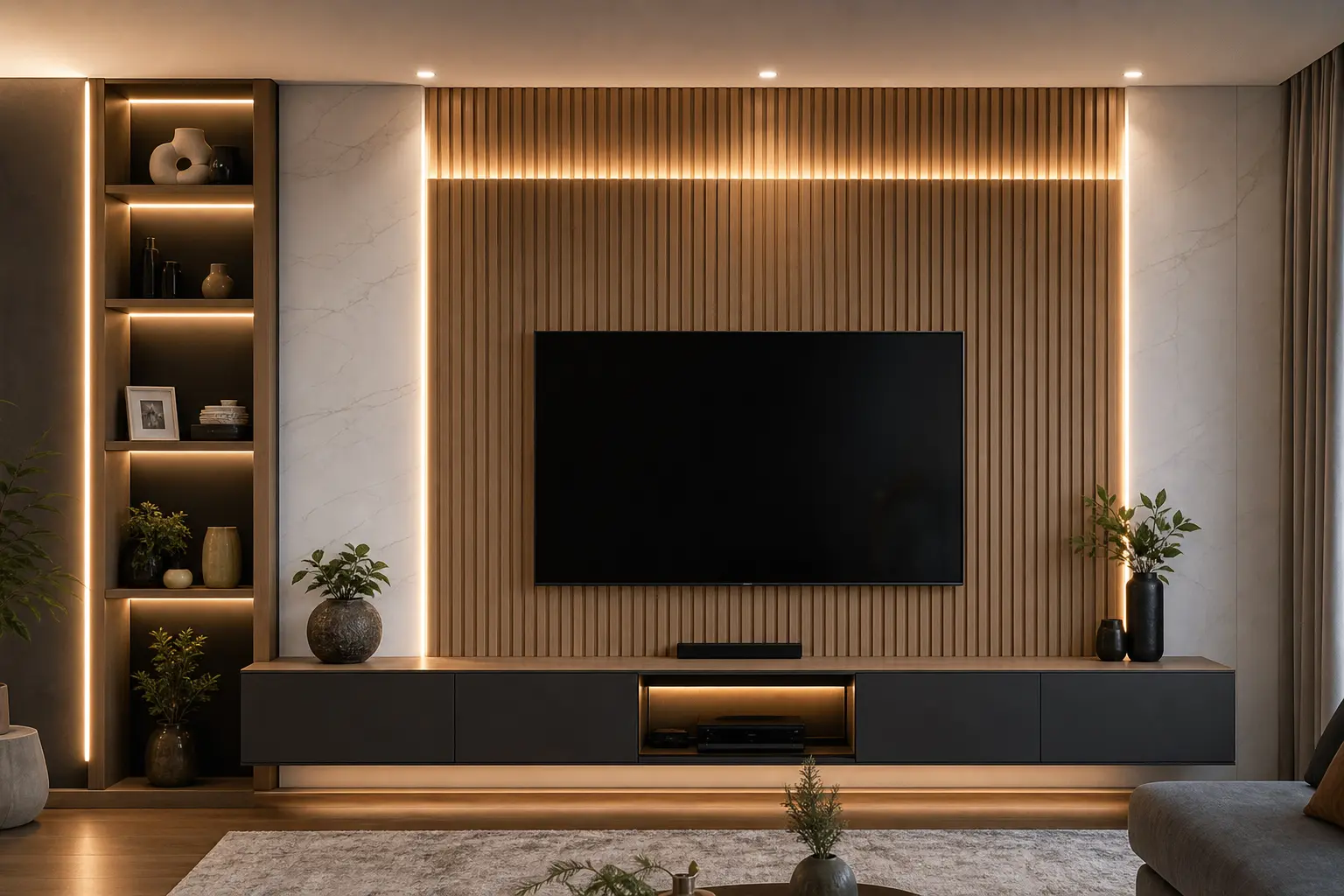
Warm LED light interacts differently with different wall colors, and that matters for how balanced the final room feels. Neutral tones, soft white, warm gray, or a light greige, let the wood slats and the warm light do most of the visual work without competing for attention.
Deeper colors, like a warm terracotta or a muted olive green, can look striking behind wood slats, but they absorb more light than pale walls do. If you go with a darker background color, plan for slightly higher LED brightness to compensate, or the cove and shelf lighting may read dimmer than expected once it’s installed.
8. Symmetrical TV Unit Ideas for Narrow or Small Walls
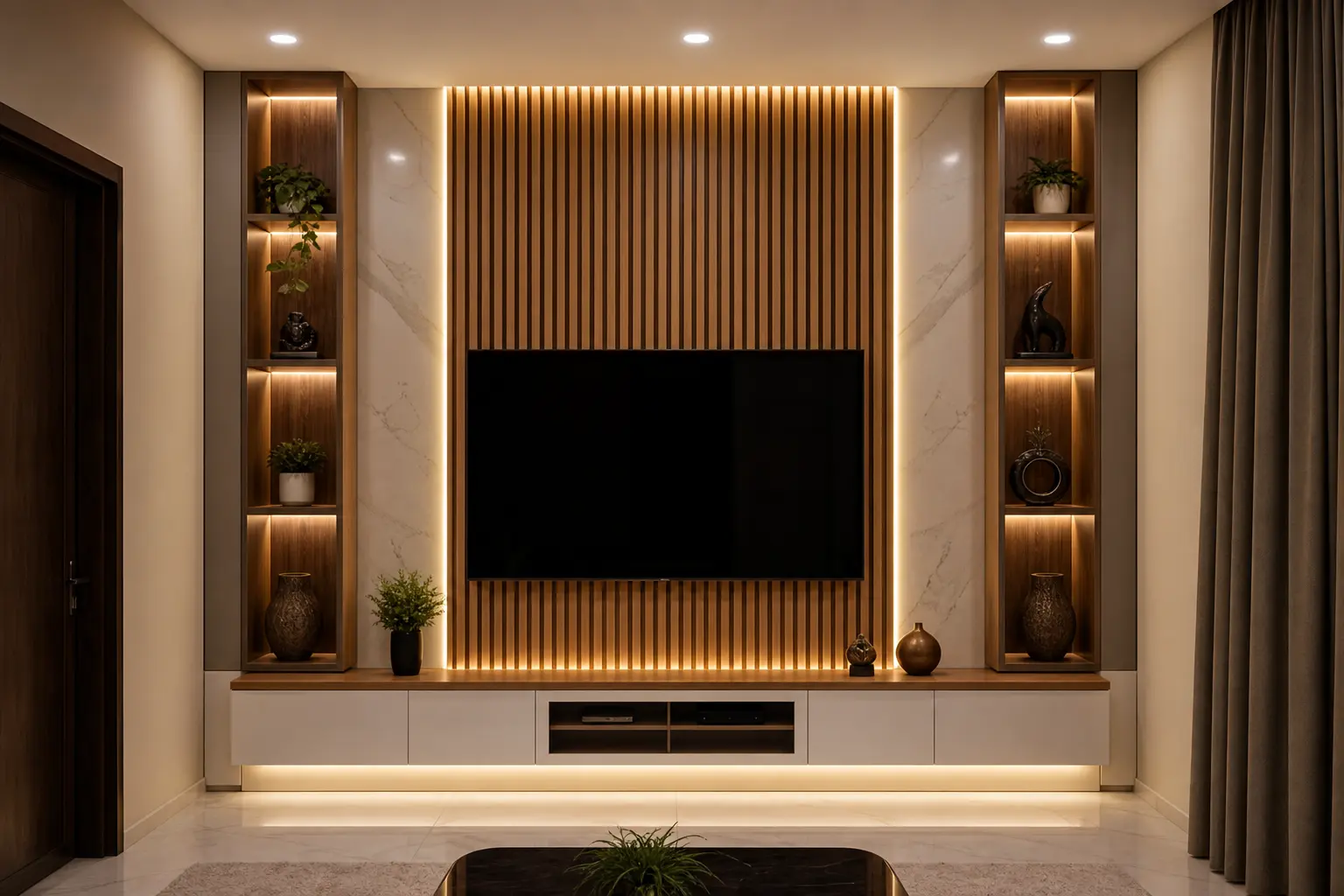
Symmetry gets harder in small rooms, but it’s still achievable. In narrower spaces, scale everything down proportionally rather than skipping elements on one side. A pair of narrow, matching floating shelves works better than one wide shelf on just one side of the TV.
Vertical wood slats, spaced slightly closer together than in a larger room, make a small wall feel taller and more intentional. Keep LED lighting warm and slightly dimmer in tight spaces, since a small room with bright lighting on every surface can start to feel busy instead of calm.
9. Blending Warm LED Light with Daylight and Room Lighting
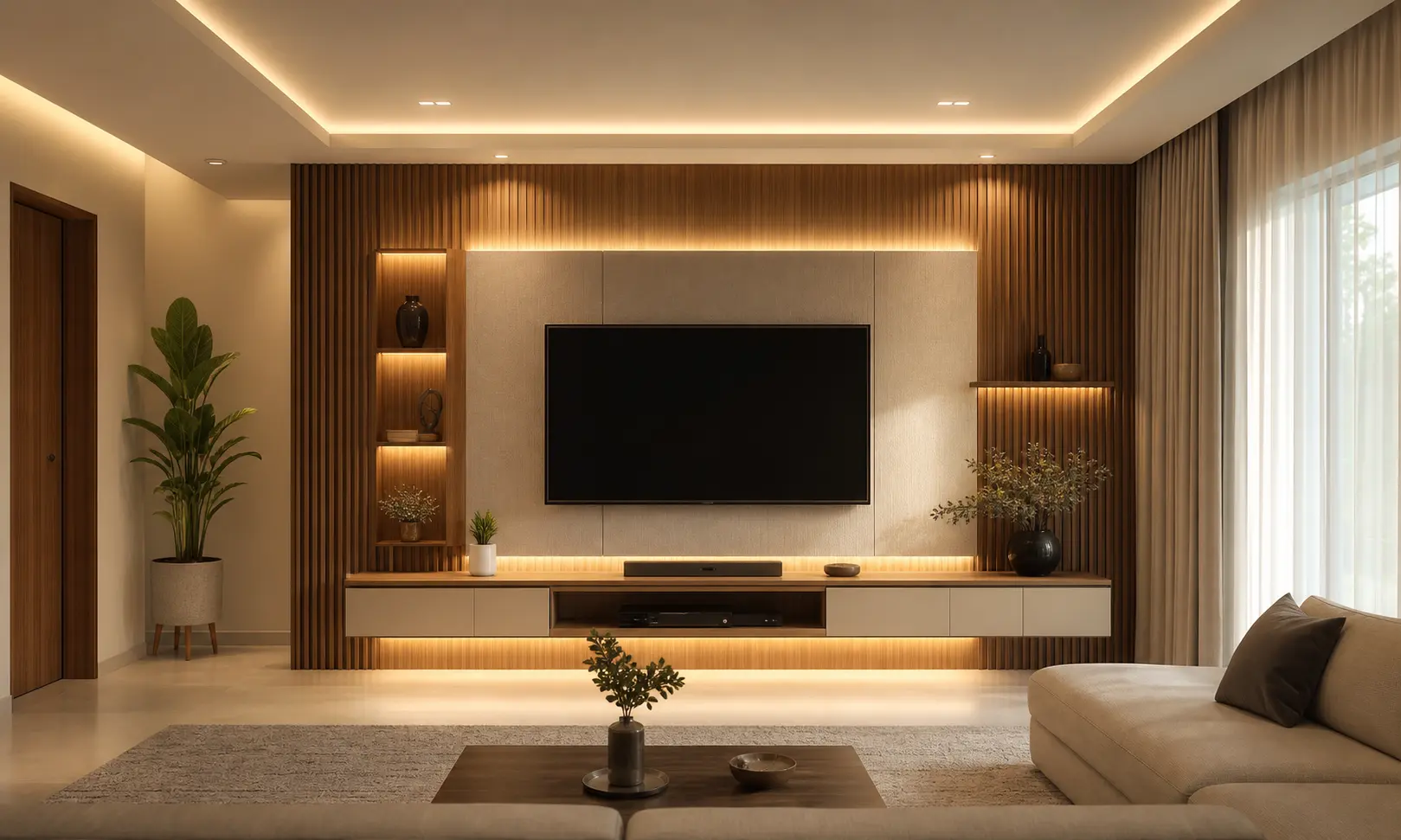
A symmetrical TV wall doesn’t exist in isolation. It needs to work alongside whatever daylight and ceiling lighting the room already has. Rooms with strong afternoon sun on one side of the wall can make LED lighting on that side look washed out by comparison, breaking the sense of balance even if the physical setup is perfectly symmetrical.
Sheer curtains or blinds that diffuse direct sunlight evenly across the wall help keep both sides visually matched throughout the day. In the evening, dimmable LED strips let you bring the warm light up to match whatever the rest of the room’s lighting is doing, rather than fighting against a bright overhead fixture.
10. Budget Planning for a Symmetrical Wood Slat TV Wall
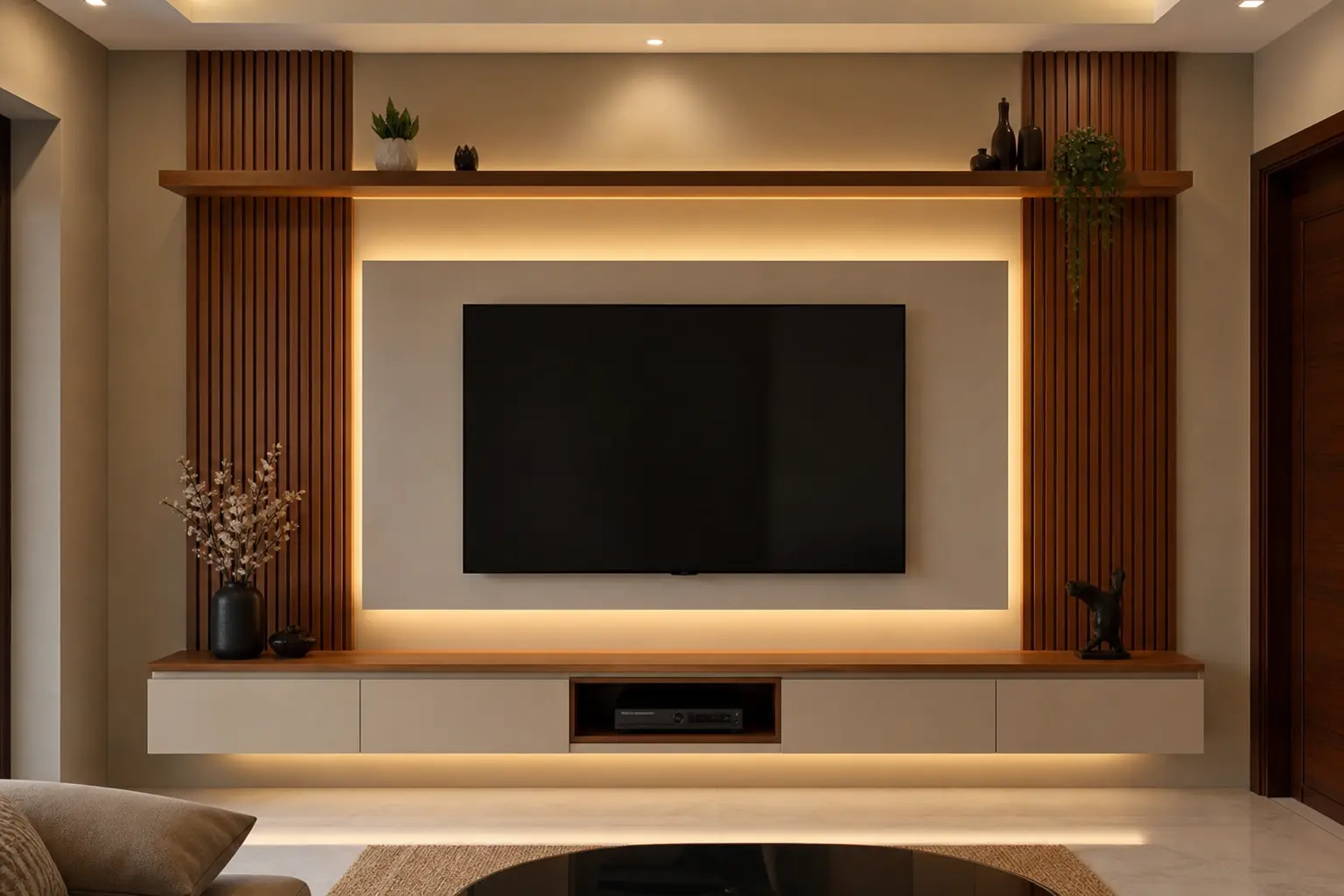
Symmetrical designs don’t have to cost more than an asymmetrical one, but buying matched pairs of everything does add up. Budget for two of each item, from shelving brackets to LED strip kits, rather than assuming leftover materials will stretch to cover both sides.
A DIY symmetrical wood slat wall with matching shelves and basic warm LED strips typically runs somewhere between 400 and 900 dollars for an average sized living room wall. Custom built cabinetry on both sides, with a carpenter matching finishes exactly, tends to push the budget higher, often in the range of 2000 to 5000 dollars depending on materials and region.
Mistakes to Avoid
- Mounting shelves at slightly different heights on each side, which breaks symmetry even by a small margin
- Mixing LED strip color temperatures between the two sides of the wall
- Letting furniture or cabinets on one side extend noticeably wider than the other
- Skipping a side by side brightness test before finalizing the lighting install
- Choosing a dark wall color without adjusting LED brightness to compensate
- Forgetting that daylight can make a physically symmetrical wall look uneven at certain times of day
Frequently Asked Questions
Does a symmetrical TV wall need matching furniture on both sides? Not exact matches necessarily, but the furniture should be the same size, height, and style on both sides. Contents inside cabinets can differ as long as the exterior reads as a matching pair.
What’s the best LED color temperature for a symmetrical wood slat wall? Something between 2700K and 3000K generally works best, since it reads as warm and cohesive rather than clinical. Buy both LED strips from the same product line to avoid subtle color mismatches.
Can I make an existing asymmetrical TV wall symmetrical without a full renovation? Often yes. Adding a matching shelf, cabinet, or light fixture to the shorter or dimmer side can fix a lot of the imbalance without touching the existing side at all.
How do I know if my wall is wide enough for a symmetrical layout? As a rough guide, you need enough width for the TV plus matching shelving or cabinets extending 18 to 24 inches beyond each side. Narrower walls can still work using a scaled down, more compact version of the same layout.
Should wood slats run the full width of the wall or just behind the TV? Both work. Full width slats are easier to keep symmetrical since there’s no centering required. A centered panel behind just the TV creates more of a framed focal point but needs more precise measuring.
Conclusion
A symmetrical TV unit built around warm LED lighting and a wood slat accent wall comes down to consistency more than complexity. Matching heights, matching LED color temperature, and matching proportions on both sides of the television do more for the finished look than any single expensive material choice. Sketch the wall with a center line before buying anything, test your lighting side by side, and budget for pairs rather than single pieces. Get those basics right, and the wall will read as balanced the moment you walk into the room.