10 Modern Hallway Accent Wall Ideas With Organic LED Curved Panels
A plain hallway wall is one of the most overlooked spots in a home, and also one of the easiest to fix. Instead of another framed print or a row of shelves, an organic LED curved panel accent wall gives you soft shape, warm glow, and real texture all in one piece. If you have a stretch of hallway that feels flat under a single overhead light, these 10 modern hallway accent wall ideas with organic LED curved panels can turn that dull stretch into the part of the house people actually stop to look at.
Picture walking down a hallway lit only by a harsh ceiling bulb, with bare walls on either side. Now picture that same wall holding a soft, wave shaped panel that glows a warm, gentle light along its curves. The hallway suddenly feels finished, almost gallery like, without a single extra piece of furniture added. That shift in feeling is exactly what a curved LED accent wall is built to deliver.
1. Understand What an Organic LED Curved Panel Actually Is
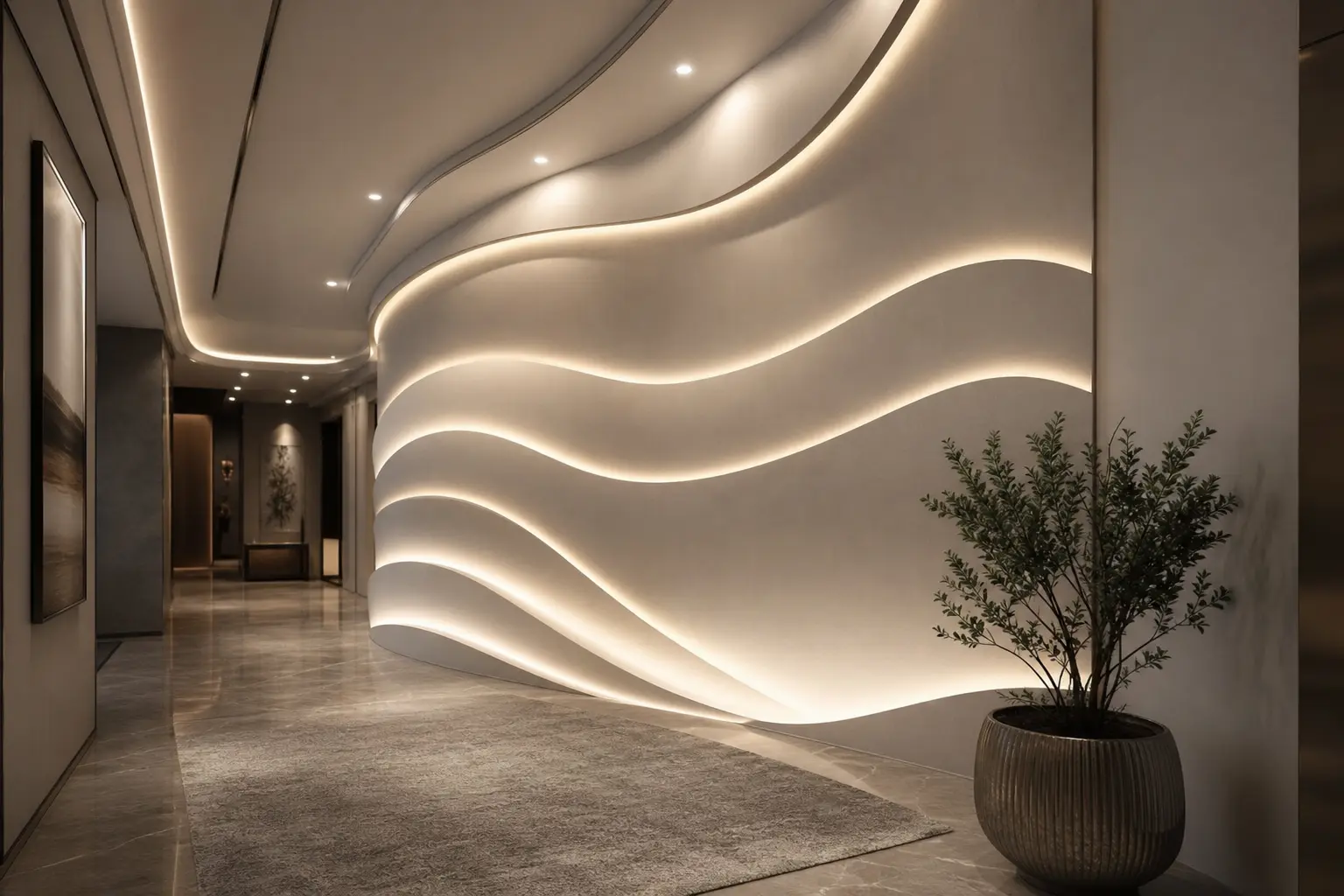
Organic LED curved panels are sculptural wall panels, usually made from wood, plaster, or molded composite, shaped into soft waves or rounded forms with LED strips built into or behind them. Unlike a flat framed light box, these panels have real depth, so the light spills and shadows shift depending on where you stand. Many come as modular sections you can arrange in different layouts, which makes them flexible for hallways of almost any length. Before buying, check the depth of the panel against your hallway width, since anything protruding more than 2 to 3 inches can start to feel tight in a narrow space.
2. Pick a Wall That Can Actually Handle a Focal Feature
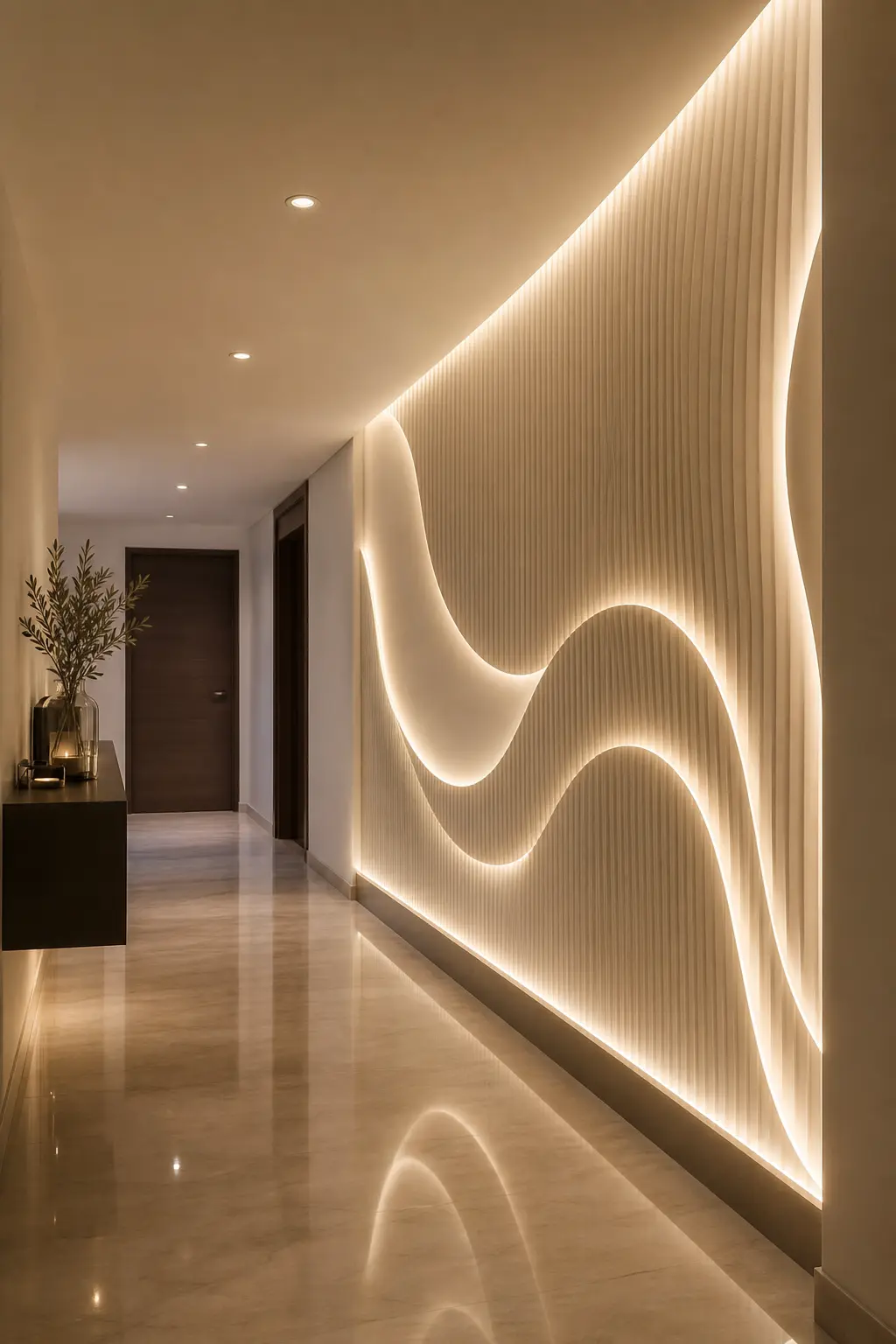
Not every hallway wall is a good candidate for this kind of statement piece. Look for a wall without doorways interrupting it, ideally at least 4 to 6 feet of unbroken space, so the panel has room to read as a focal point rather than a squeezed in afterthought. A wall you pass by often, rather than one tucked in a rarely used corner, will get more visual payoff for the effort. If your hallway has a natural dead end, like the wall you face when you turn a corner, that spot is often the strongest choice since it draws the eye immediately.
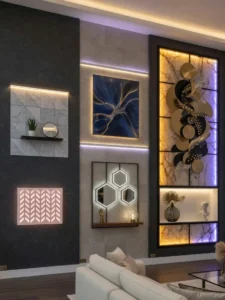
3. Choose Warm Light Over Cool Light for a Hallway Setting
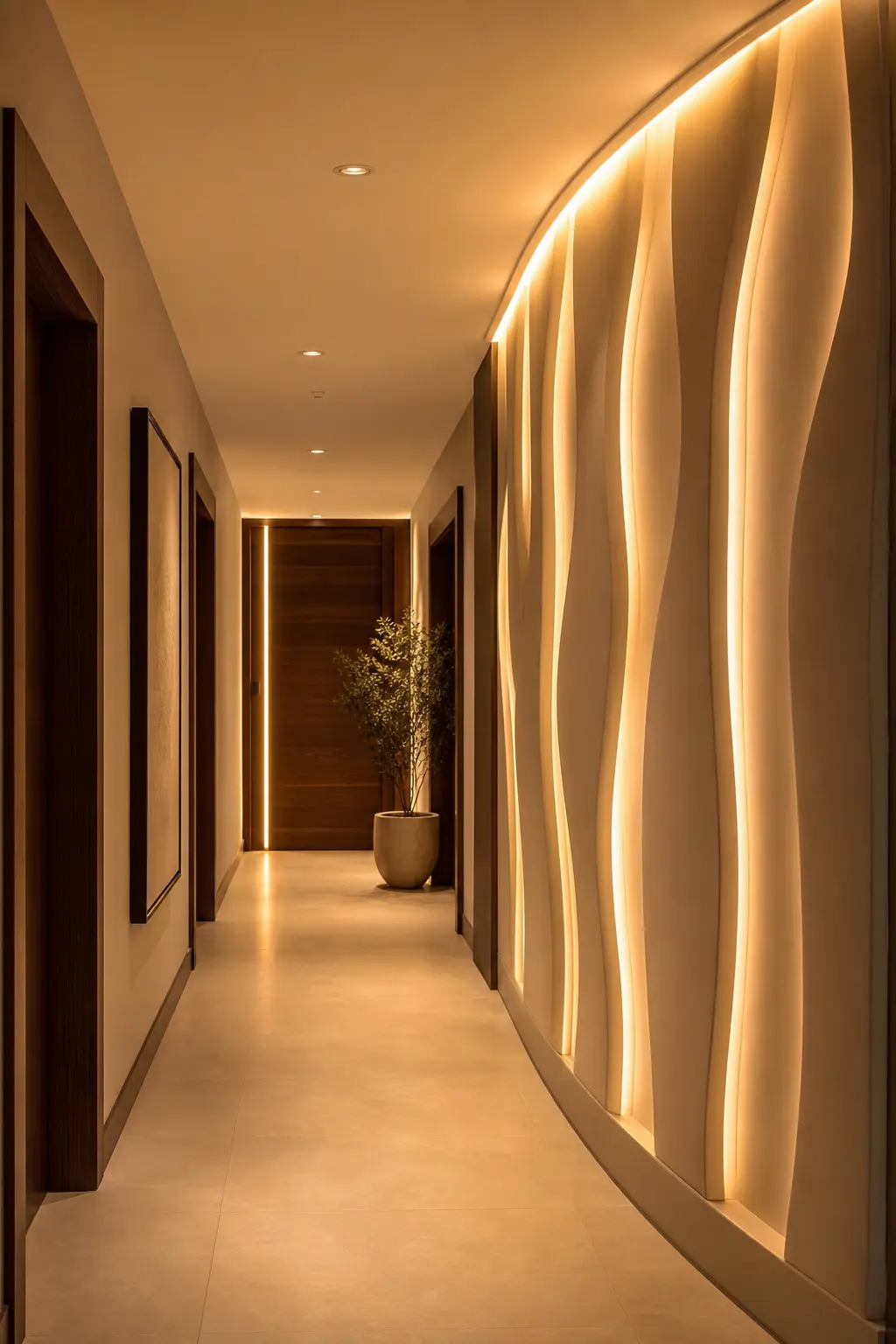
The color temperature of your LED panel changes the entire mood of the hallway. Warm white light, generally in the 2700K to 3000K range, feels cozy and inviting, while cooler light above 4000K can start to feel closer to office lighting. For a home hallway, warm tones almost always read better and pair more naturally with wood tones, neutral paint, and soft furnishings nearby. If you want some flexibility, look for panels with adjustable color temperature so you can shift the mood depending on the time of day or season.
4. Use a Single Large Panel for a Bold, Simple Statement
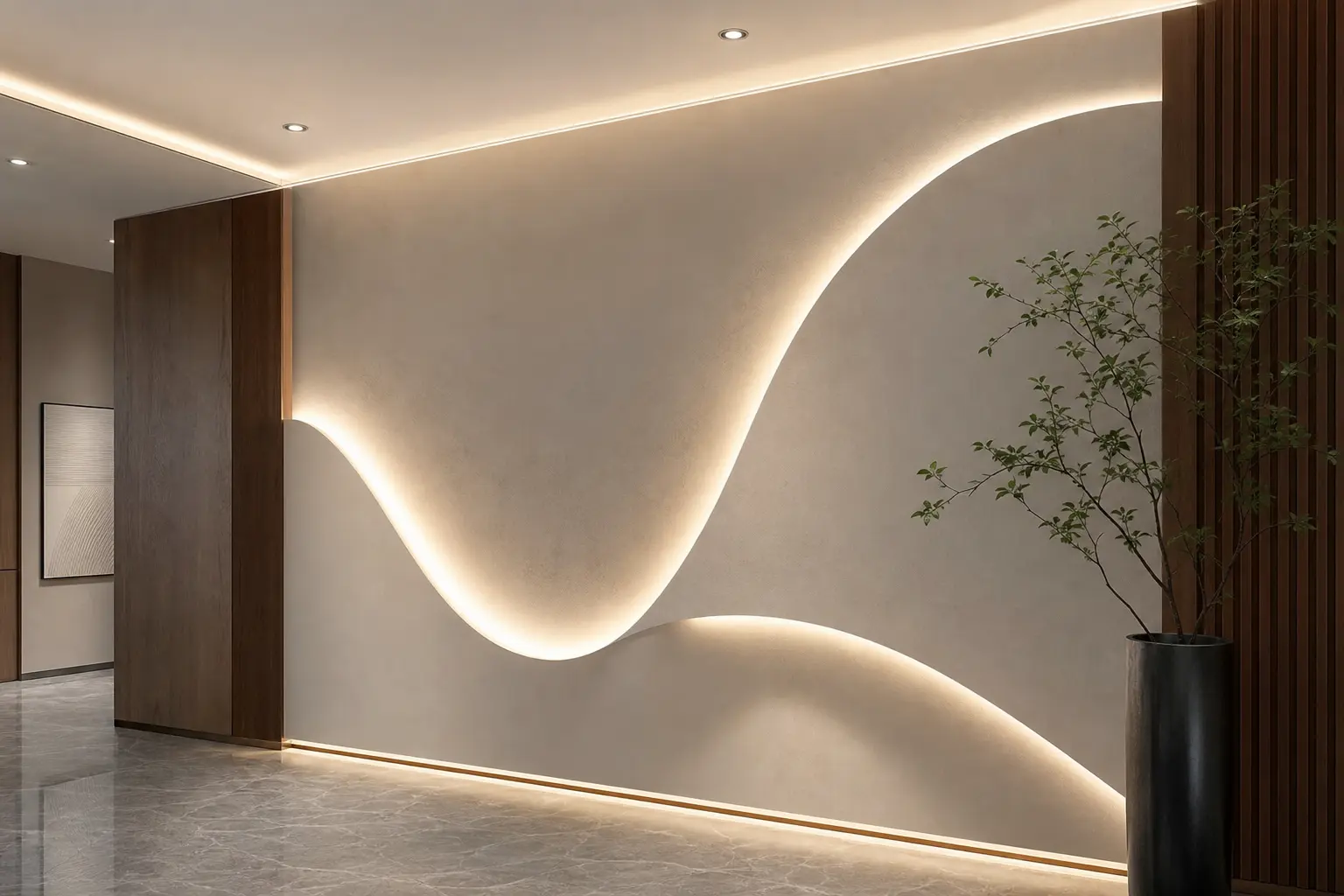
If your hallway wall is wide enough, one large curved panel can act as a single striking statement rather than a busy arrangement. This approach works especially well in a minimalist home, where the goal is one strong focal point rather than several smaller elements competing for attention. A single large panel also tends to be simpler to install, since you are working with one power source and one mounting process instead of coordinating several smaller pieces.
5. Try a Cluster of Smaller Curved Panels for a Layered Look
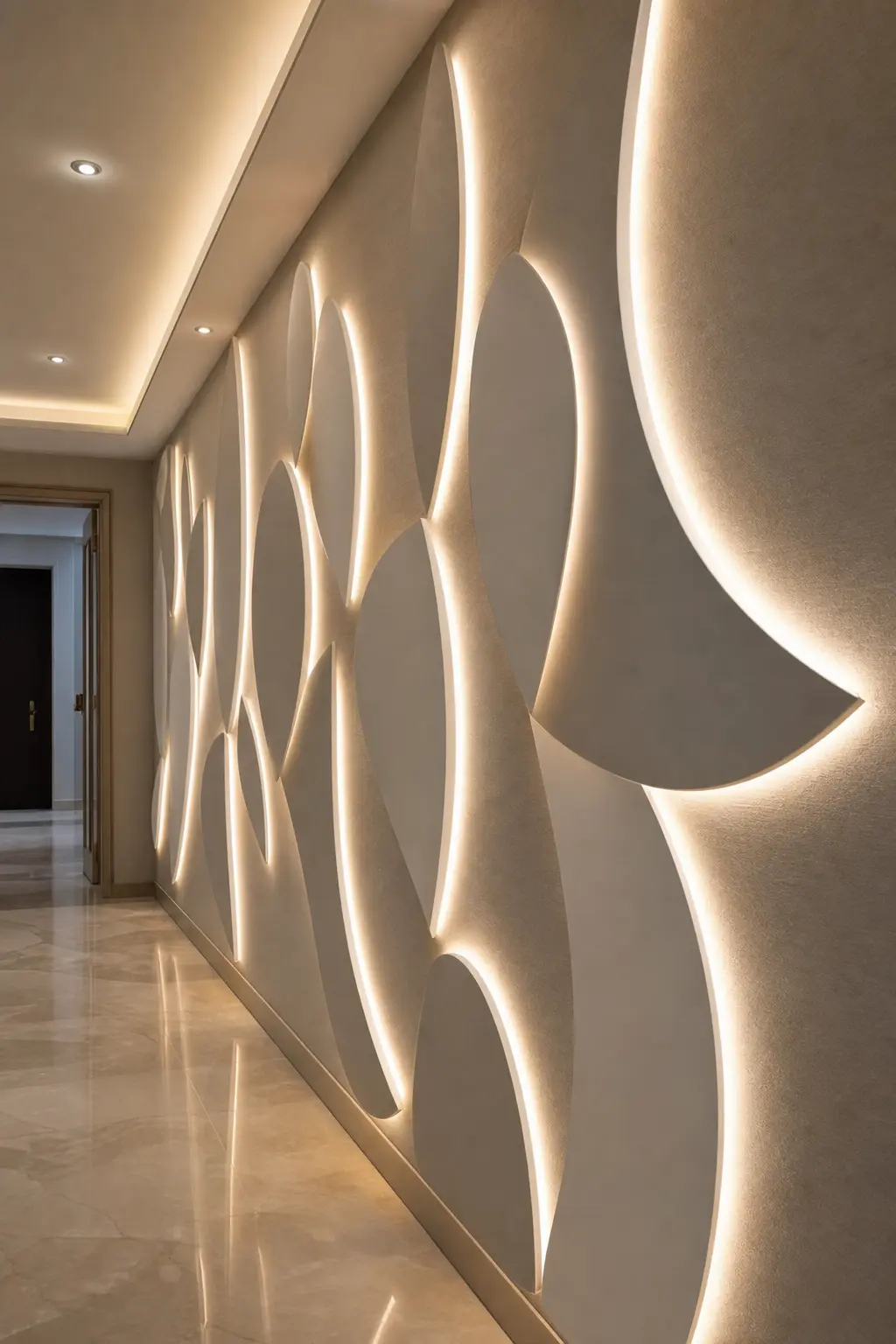
For hallways that want a bit more texture, a cluster of smaller curved panels arranged in an organic, slightly irregular pattern creates a layered, almost cloud like effect on the wall. Vary the sizes and the spacing slightly so the arrangement feels natural rather than gridded. This approach also gives you room to grow the display later, since you can add another panel to the cluster without disrupting the overall design. Keep the panels close enough together that they read as one grouping rather than scattered individual pieces.
Spacing Between Clustered Panels
A gap of roughly 2 to 4 inches between panels in a cluster usually keeps the grouping feeling connected without looking crowded or overlapping.
6. Let the Panels Follow the Natural Flow of the Hallway
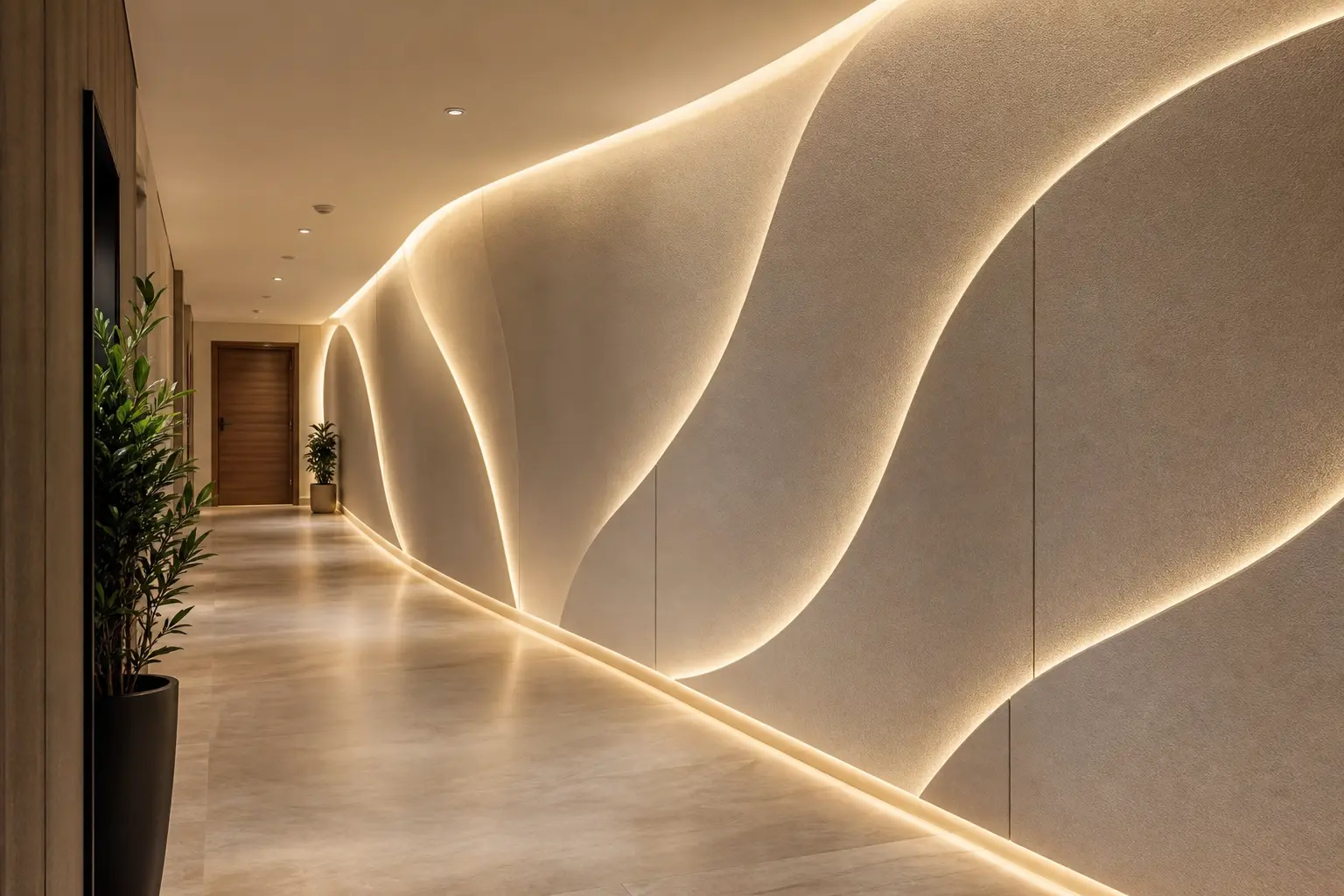
Rather than forcing a rigid, symmetrical layout, let the curves of the panels echo the direction people walk through the space. A gentle upward or diagonal flow along the wall can subtly guide the eye, and the foot traffic, down the hallway. This is a small detail, but it is part of why organic curved panels feel so different from a traditional framed piece of wall art, which usually sits static regardless of how the room is used.
7. Pair the Panels With a Matte, Neutral Wall Color
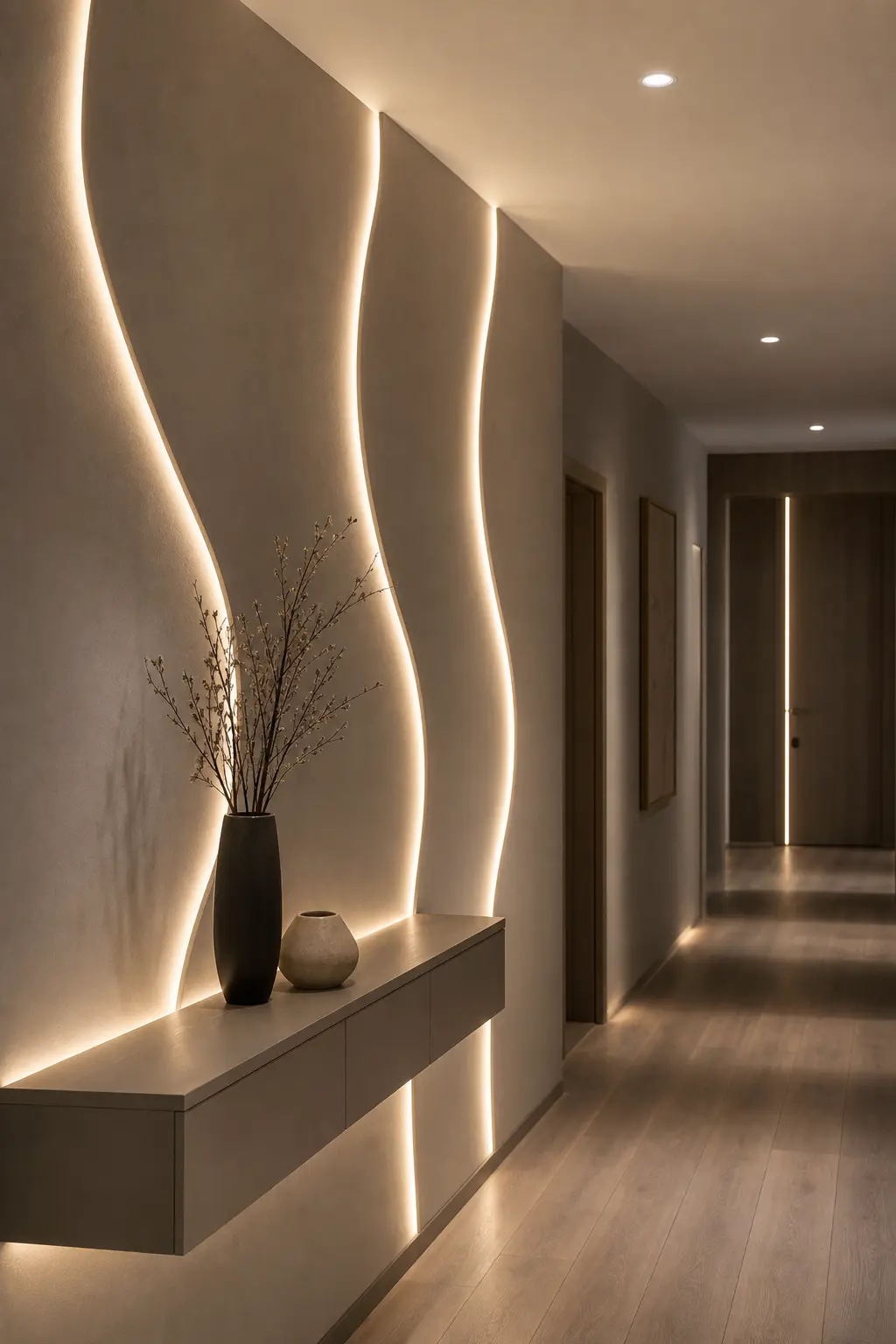
A glossy or heavily textured wall paint can compete with the glow of the panels and create distracting reflections. A matte, neutral wall color, like a soft warm white, greige, or light taupe, lets the panel’s light and shadow do the visual work without interference. This also keeps the overall hallway feeling calm and cohesive, rather than busy, especially if you plan to add other decor elements like a runner rug or small furniture piece later.
8. Add a Dimmer So the Wall Works Day and Night
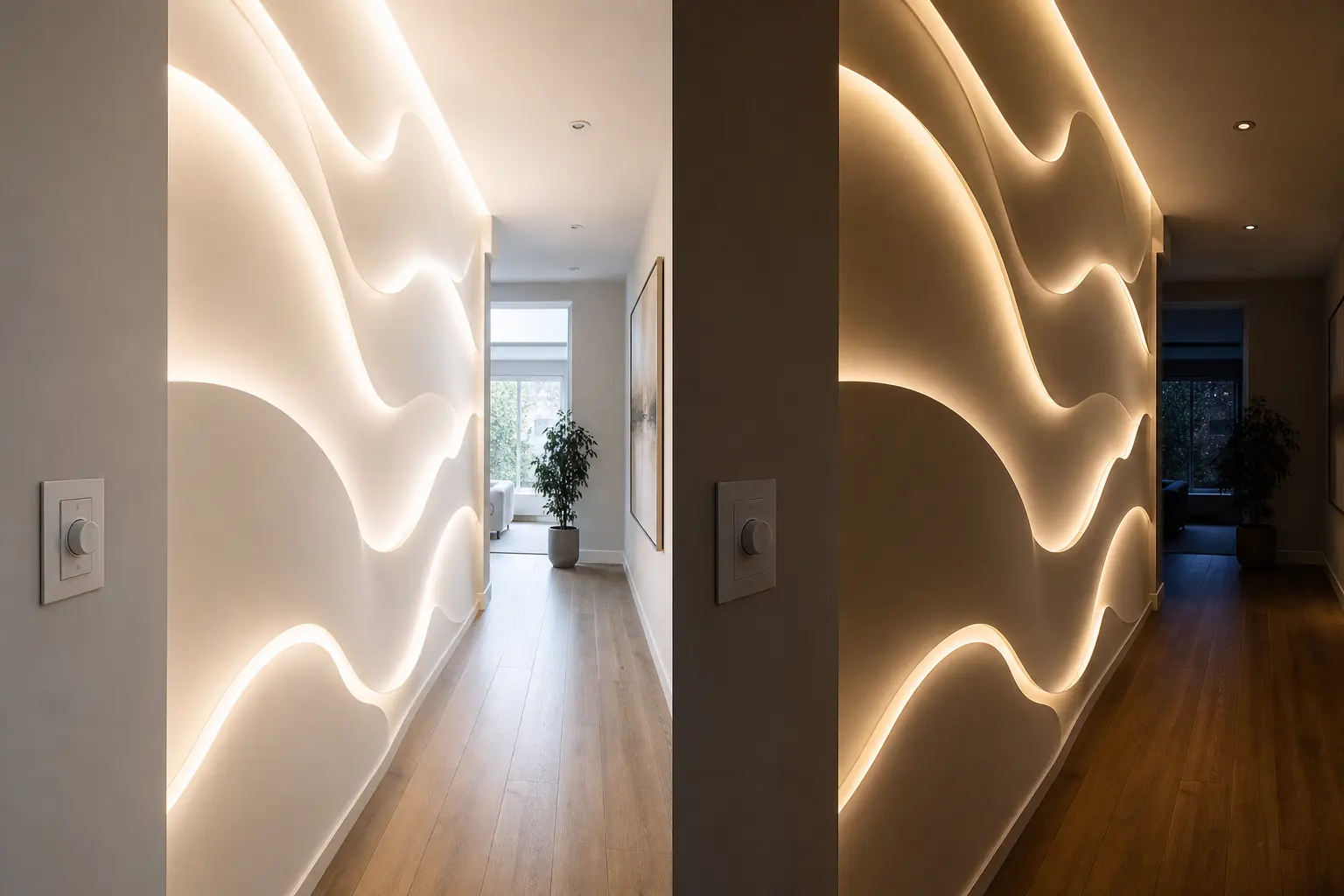
A curved LED panel wall should be able to shift from a bright, functional light source during the day to a soft, moody glow at night. A simple dimmer switch or a remote controlled panel system gives you that flexibility without needing separate fixtures. This is especially useful in a hallway that doubles as a nightlight path, since a dimmed panel can provide just enough light to move through safely without flipping on a harsh overhead bulb.
9. Keep the Rest of the Hallway Simple So the Wall Leads
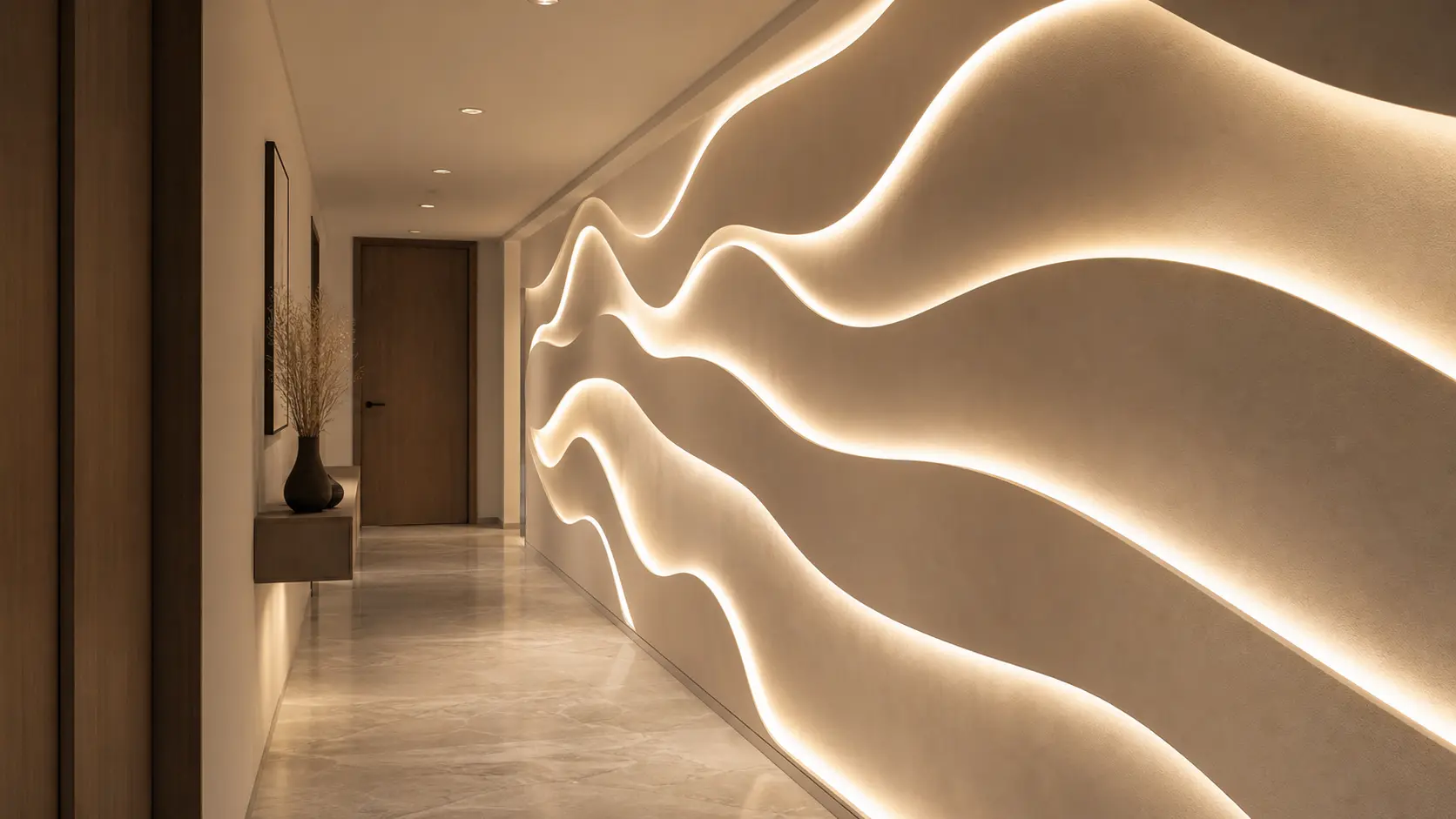
Once you commit to a curved LED panel accent wall, resist the urge to add competing decor nearby. Skip the framed art, the busy gallery wall, and the patterned wallpaper on the same stretch. A simple runner, a small plant, or a single piece of furniture is usually enough supporting decor. The panel wall should be the clear visual anchor of the space, and too much competing decor nearby will dilute the effect you worked to create.
10. Consider a Curved Panel Accent Near a Stairwell Landing
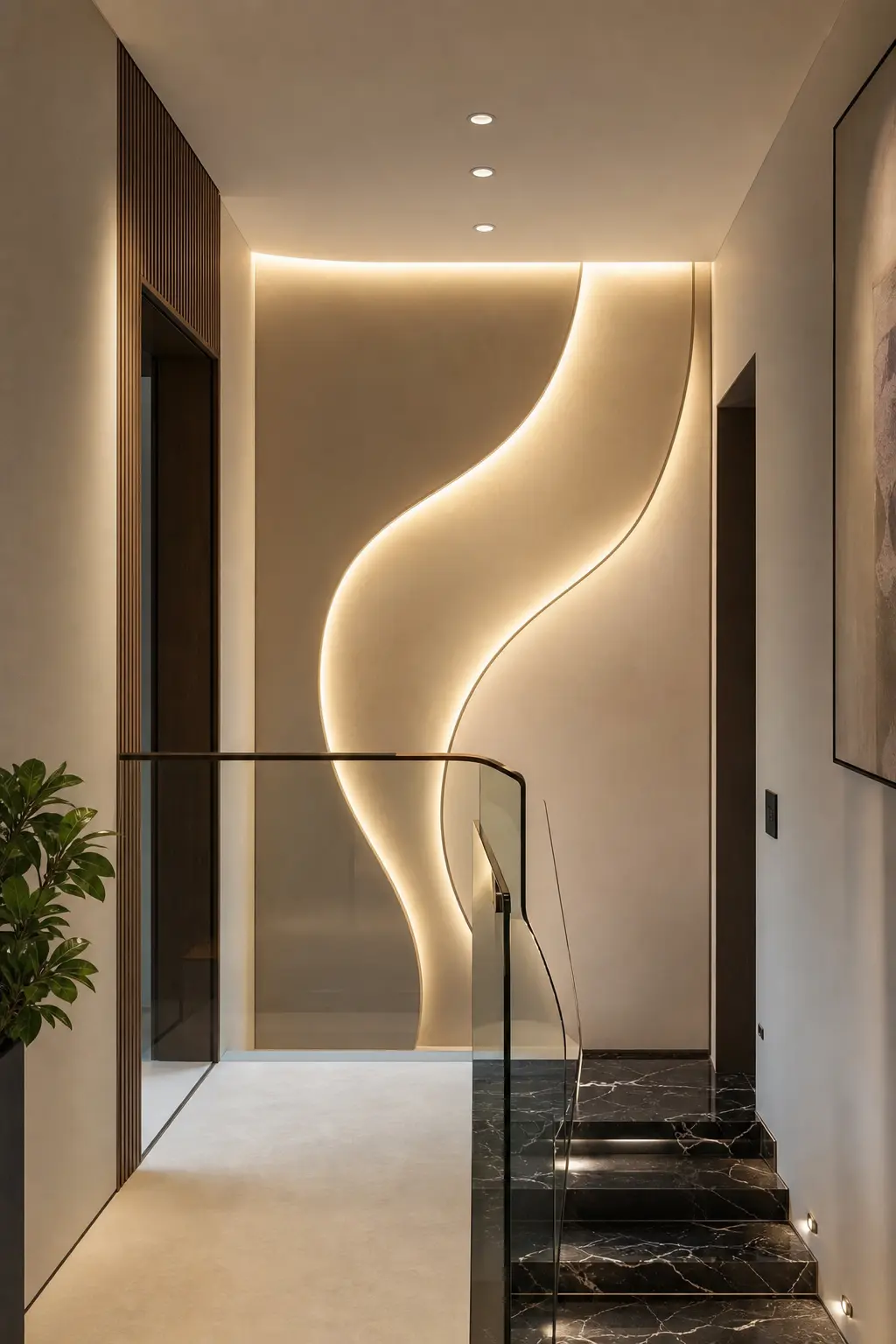
If your hallway connects to a stairwell, the landing wall is another strong spot for this kind of feature. A curved panel installed at the top or bottom of a staircase catches the eye from multiple angles as people move up and down, and it adds a sense of arrival to a part of the home that is often overlooked. Because stairwell walls are often taller, this is also a good spot for a vertical panel arrangement that draws the eye upward.
Mistakes to Avoid
- Choosing a wall broken up by doorways, which limits how the panel can be centered
- Picking cool, harsh light tones that feel more clinical than cozy
- Overcrowding the wall with too many panels packed too tightly together
- Skipping a dimmer, which limits how the feature can be used at different times of day
- Adding busy wallpaper or extra art nearby that competes with the panel’s glow
- Ignoring panel depth in a narrow hallway, which can make the space feel tighter
Frequently Asked Questions
What are LED curved panels made of? Most organic LED curved panels are made from wood, molded composite, or plaster, shaped into soft curves with LED strips built in or mounted behind them.
Do curved LED panels need an electrician to install? Many curved panels use plug in transformers or battery powered strips, so a straightforward setup usually does not require an electrician, though larger hardwired installations might.
What color LED light works best for a hallway accent wall? Warm white light in the 2700K to 3000K range tends to feel the most inviting for a home hallway, compared to a cooler, more office like white.
Can I use curved LED panels in a small or narrow hallway? Yes, as long as you choose panels with a shallow depth, generally under 3 inches, so the feature does not narrow the walking path too much.
How many panels do I need for a hallway accent wall? This depends on the wall length and whether you want one large statement panel or a cluster of smaller ones, but most hallway walls use anywhere from one to five panels.
Do LED panel accent walls use a lot of electricity? No, LED lighting is energy efficient, and most panel systems use very little power compared to traditional overhead lighting, especially when run on a dimmer.
Conclusion
A blank hallway wall does not have to stay blank. An organic LED curved panel accent wall brings shape, texture, and warm light together in a way that a flat piece of art simply cannot match. Whether you go with one bold panel or a layered cluster, the goal is the same, giving your hallway a focal point that makes the whole space feel considered rather than overlooked.