10 Futuristic Circular LED TV Wall Design Ideas for a Modern Living Room
Most media walls stick to straight lines because straight lines are easier to build, but a circle does something a rectangle just can’t. It draws the eye in a way that feels almost magnetic, and a glowing ring of LED light behind a TV takes on a genuinely futuristic quality that flat panel lighting rarely achieves. None of these ideas require a full sci-fi movie set budget either. A single LED ring, properly installed, can transform an entire wall on its own. What follows are ten different ways to bring that circular, glowing effect into a living room, from subtle to full statement piece.
Think about the last time a room actually surprised you the moment you walked in. Odds are there was something unexpected about the shape of it, not just the color or the furniture. A circle where you’d expect a rectangle does exactly that. It signals right away that this isn’t a standard media wall, and that’s really the whole appeal behind building one.
1. Single Oversized LED Ring Behind the TV
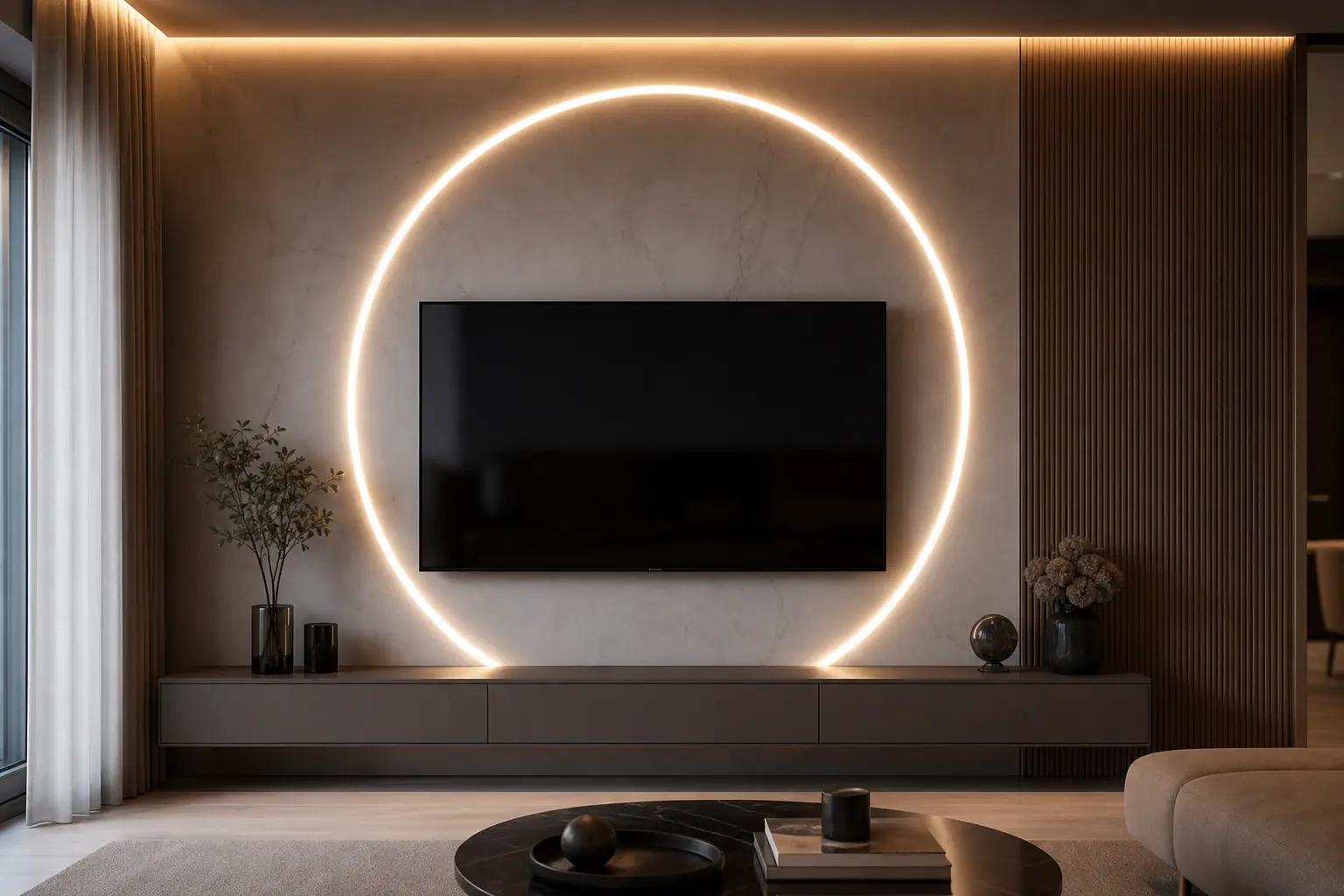
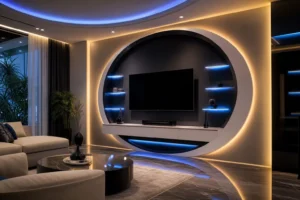
Mount one large LED ring, 5 to 6 feet in diameter, on the wall directly behind and slightly larger than the TV itself. The screen sits inside the circle almost like a portal, and the glow around the edges reads as futuristic without needing any additional design elements. Keep the wall around it dark, matte black or deep charcoal works well, so the ring itself becomes the clear visual centerpiece rather than competing with a busy background, and resist adding shelving or art nearby that might pull focus away from the glow.
2. Concentric Circles at Different Depths
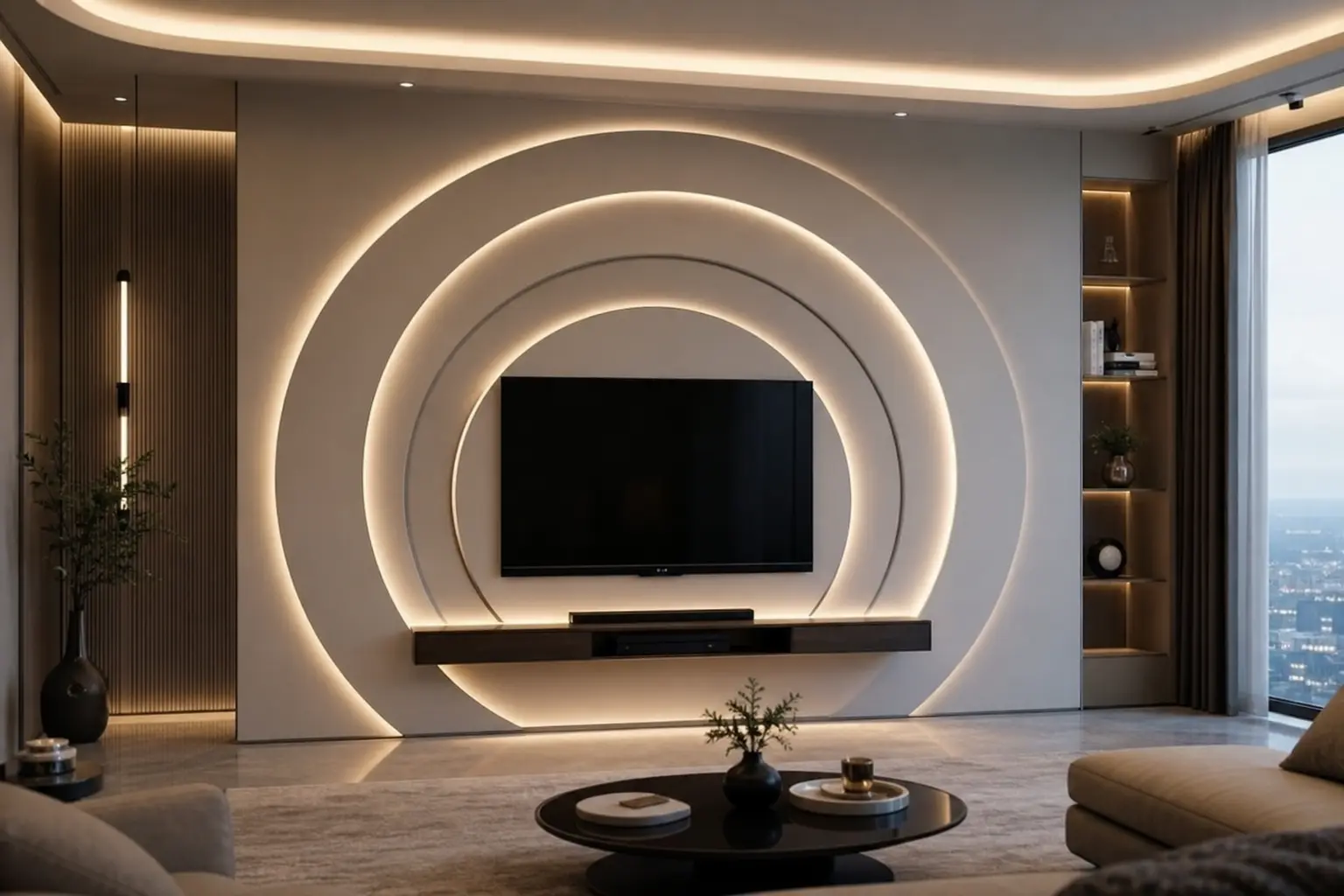
Instead of one ring, build two or three circles of decreasing size, each recessed slightly deeper into the wall than the last, with LED lighting along each edge. The layered depth creates a tunnel-like effect that feels distinctly high tech, almost like looking into a piece of machinery rather than a flat wall. This works best on a wall with enough real depth to build in, so plan for a few extra inches of structural buildout compared to a flat mounted panel, and consider varying the light color slightly between rings for an even stronger sense of depth.
3. Half Circle Arc Rising from the Floor
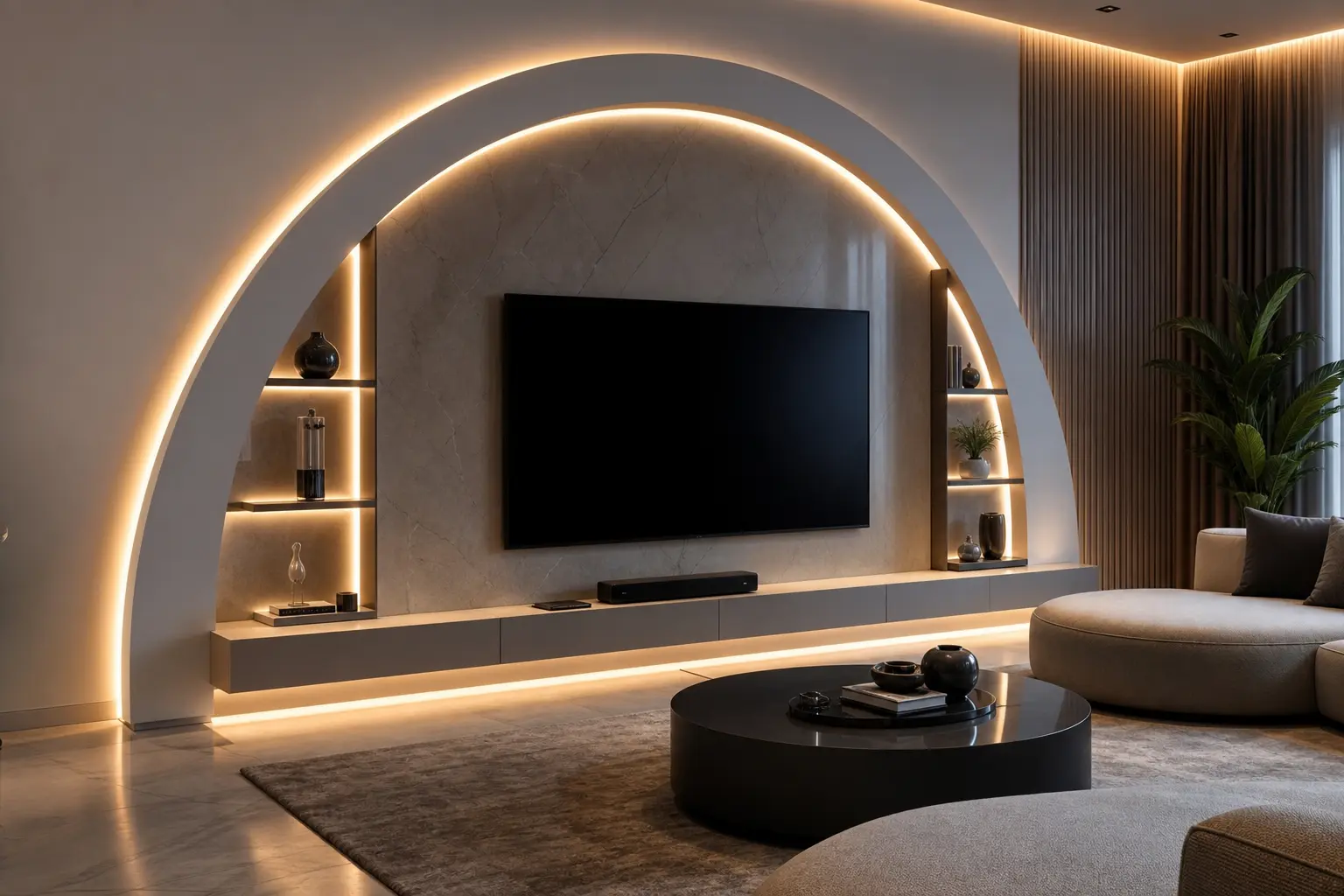
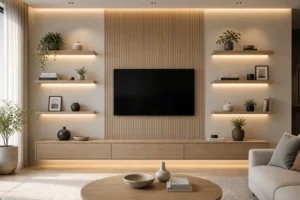
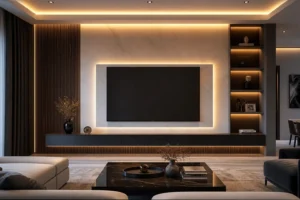
Rather than a full circle, build a half circle arc that starts at the floor and rises up behind the TV, lit along its curved edge. This grounds the shape in the room in a way a floating full circle doesn’t, and it reads as slightly more architectural, less like a decoration stuck onto the wall and more like something the wall was actually built around.
4. Circular Recessed Niche with Edge Lighting
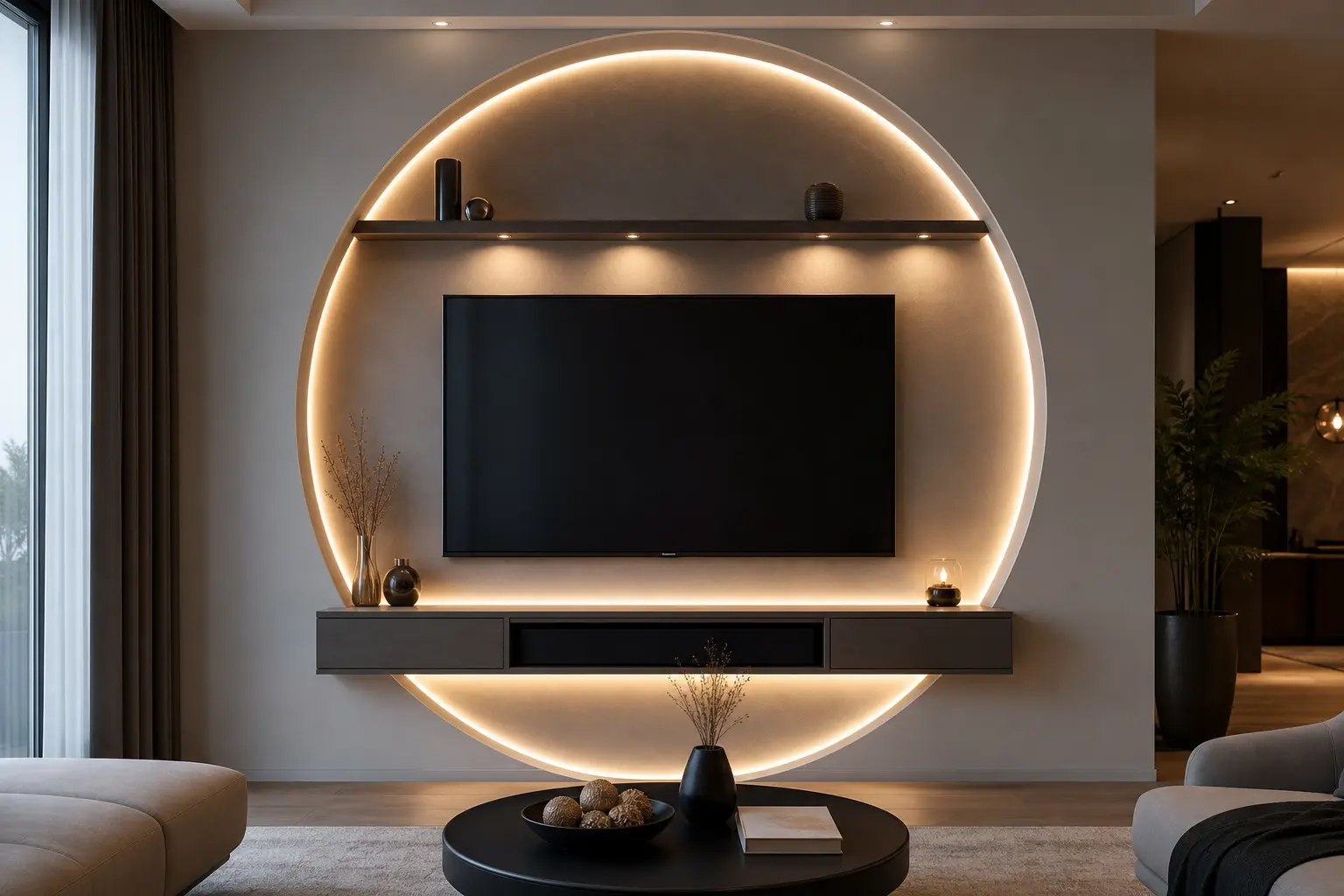
Build a circular niche into the wall itself, recessed a few inches, and mount the TV flush inside it. Line the inside edge with LED strip lighting, and the screen appears to float inside a glowing portal when it’s off. This is one of the more involved builds on this list, requiring real structural work rather than a surface mounted ring, but the payoff is a media wall that looks genuinely custom rather than added on afterward.
5. Dotted LED Grid Forming a Circular Pattern
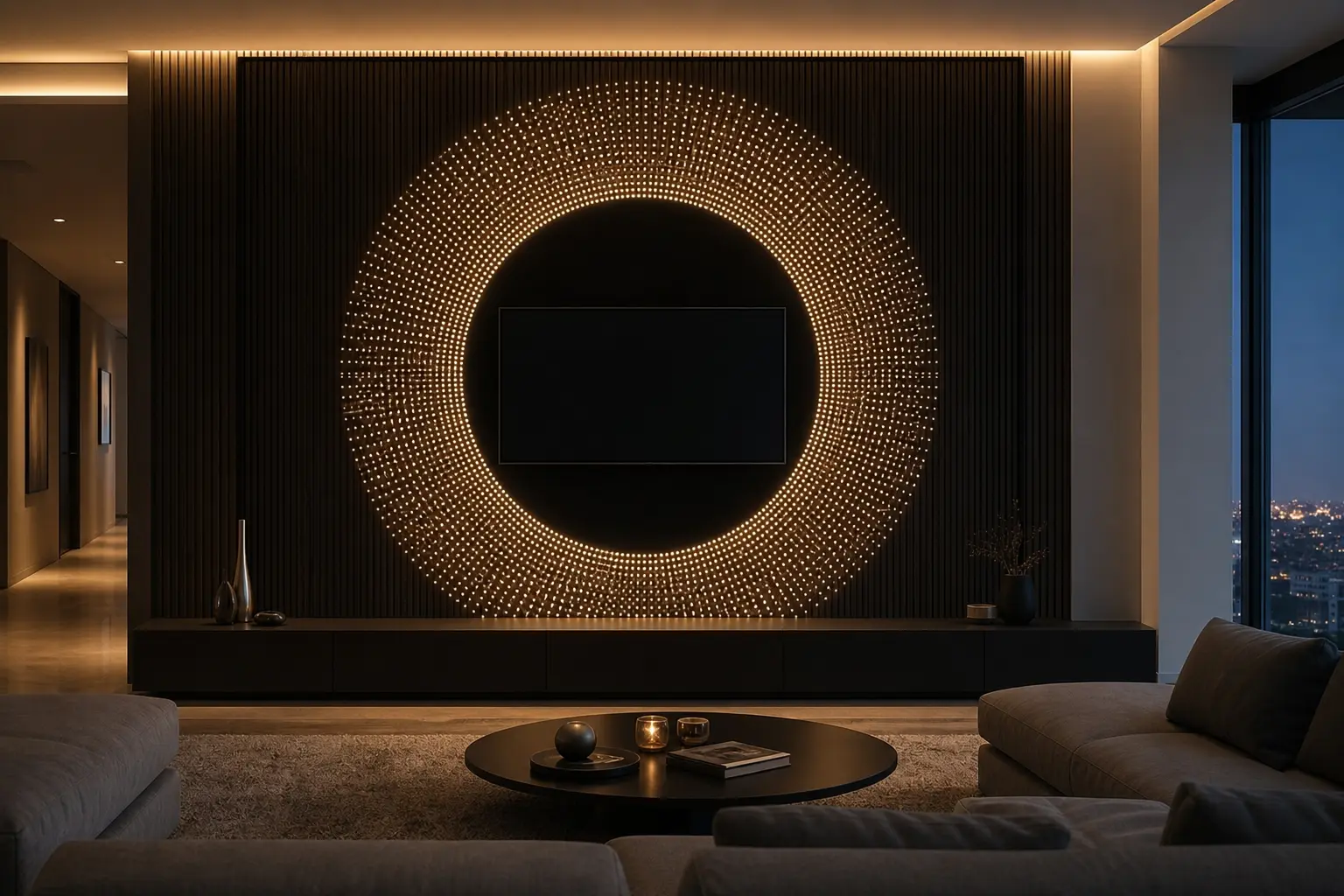
Rather than a continuous ring, arrange dozens of small individual LED points in a circular formation around the TV, similar to a constellation pattern. Each point can be programmed to pulse or shift color independently, giving the wall a dynamic, almost alive quality that a solid LED strip can’t match. This setup needs more electrical planning than a simple strip light, so budget extra time for programming the control system if going this route.
6. Circular Panel with Color Changing LEDs
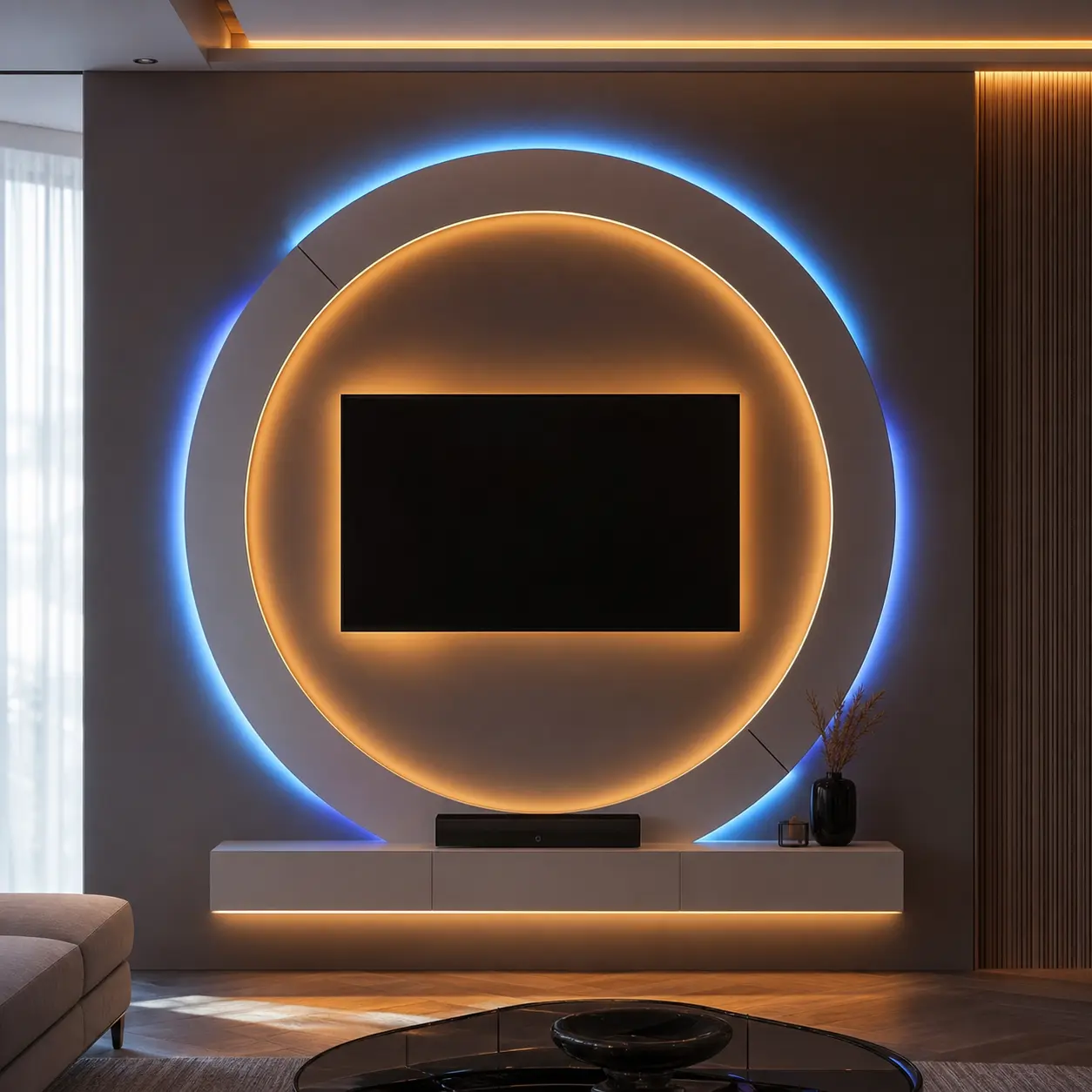
Use an RGB LED ring instead of a fixed warm or cool white one, and the wall can shift color entirely depending on mood, time of day, or even what’s playing on the screen. Blue and purple tones lean hardest into the futuristic feel, while a warmer amber setting can soften the same fixture into something cozier for a quiet night in. This flexibility is the main draw here, one physical installation covering a wide range of looks.
7. Offset Circle Paired with Angular Shelving
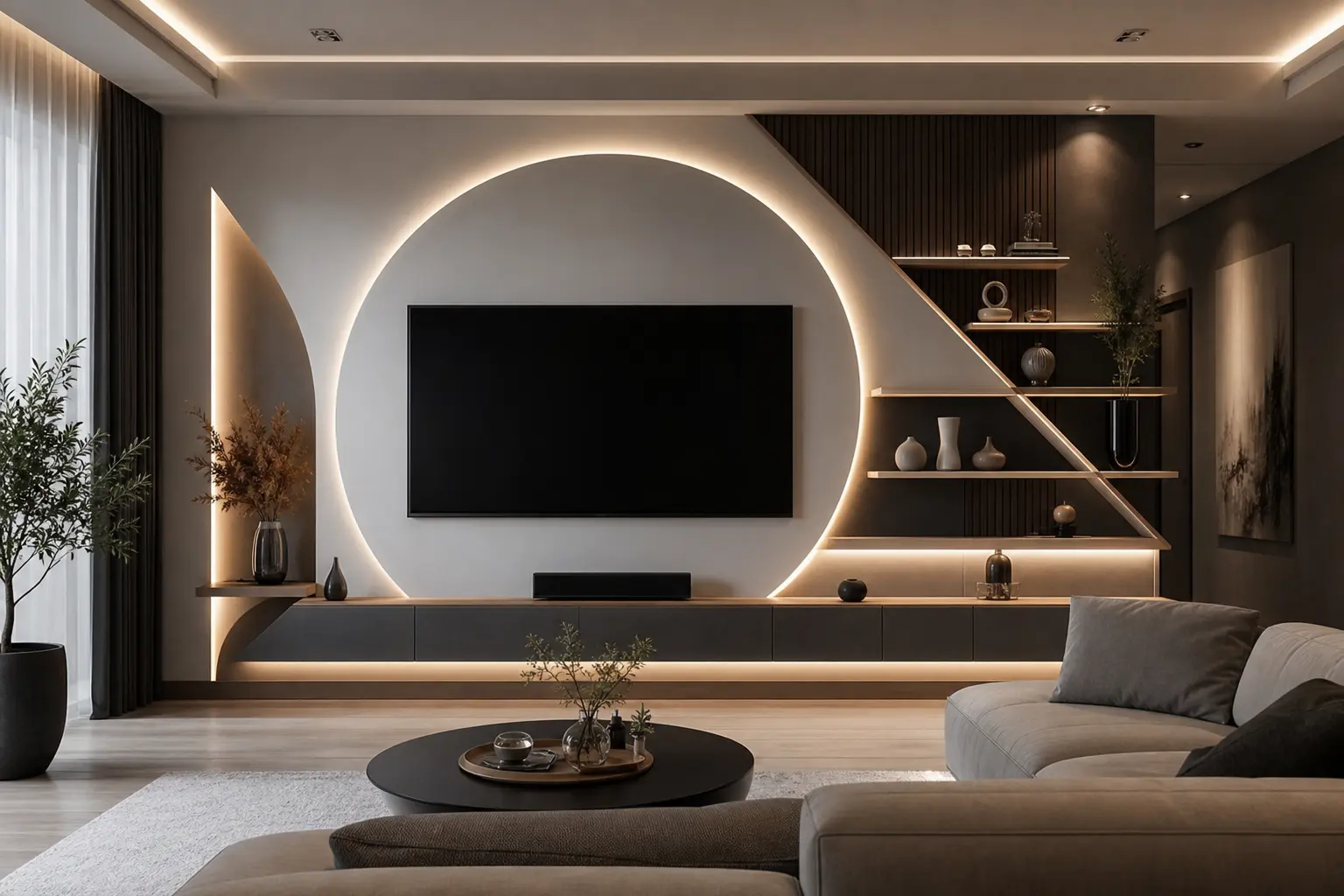
Position the LED circle slightly off center rather than perfectly symmetrical around the TV, and pair it with angular floating shelves on one side. The contrast between the soft, rounded glow and the sharp, geometric shelving creates visual tension that a fully matched, symmetrical design wouldn’t have. This combination suits living rooms that already lean toward a bolder, more architectural style throughout.
8. Circular Mirror Ring Framing the Screen
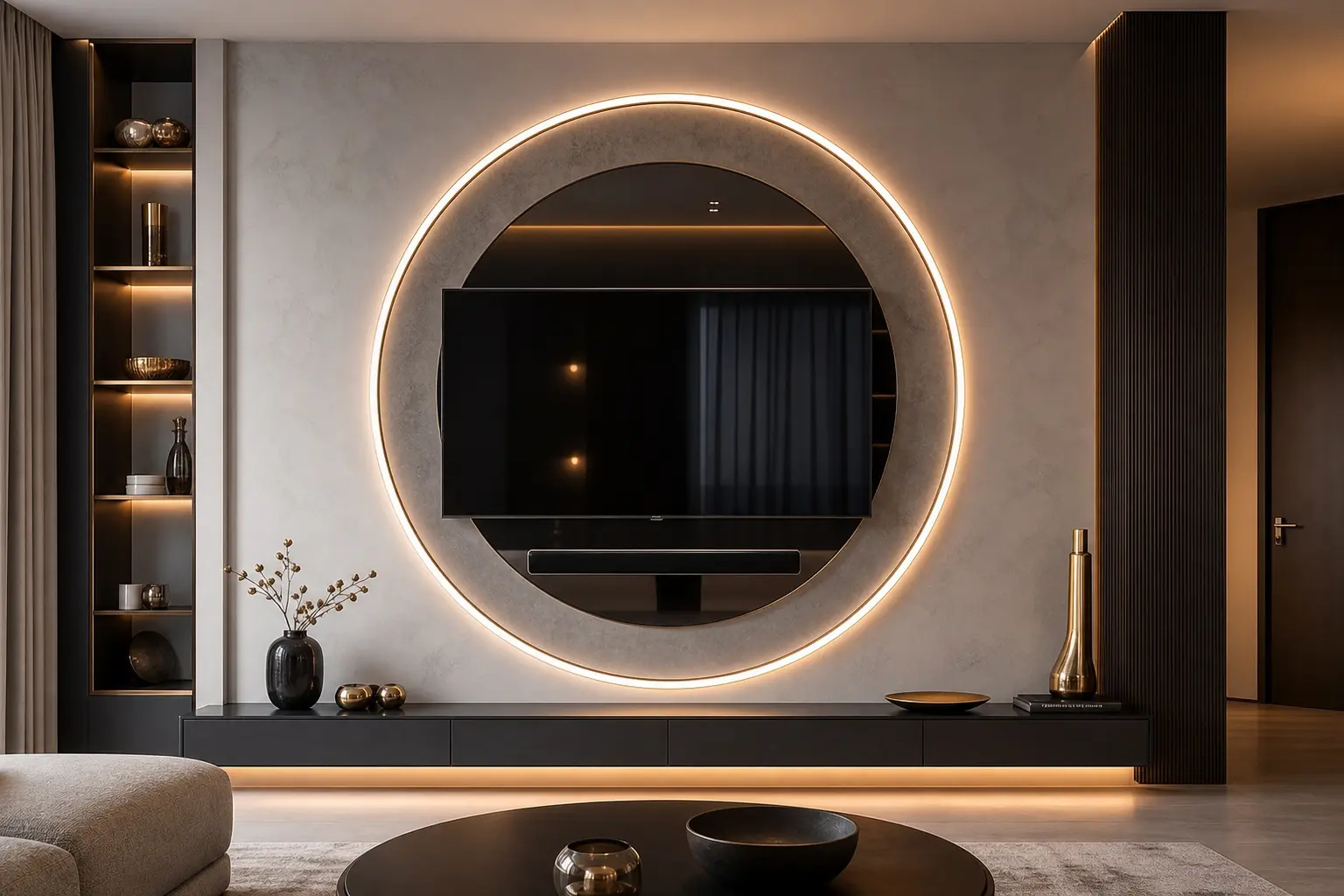
Instead of pure LED strip, use a ring of mirrored or reflective material around the TV, with LED lighting built into the mirror’s inner edge. The reflective surface catches and bounces the light further than a matte finish would, adding extra dimension and making the glow feel like it extends beyond the ring itself. This works particularly well in rooms with some natural light too, since the mirror picks up daylight during the hours the LEDs stay off.
9. Circular Wood Frame with Hidden LED Backlight
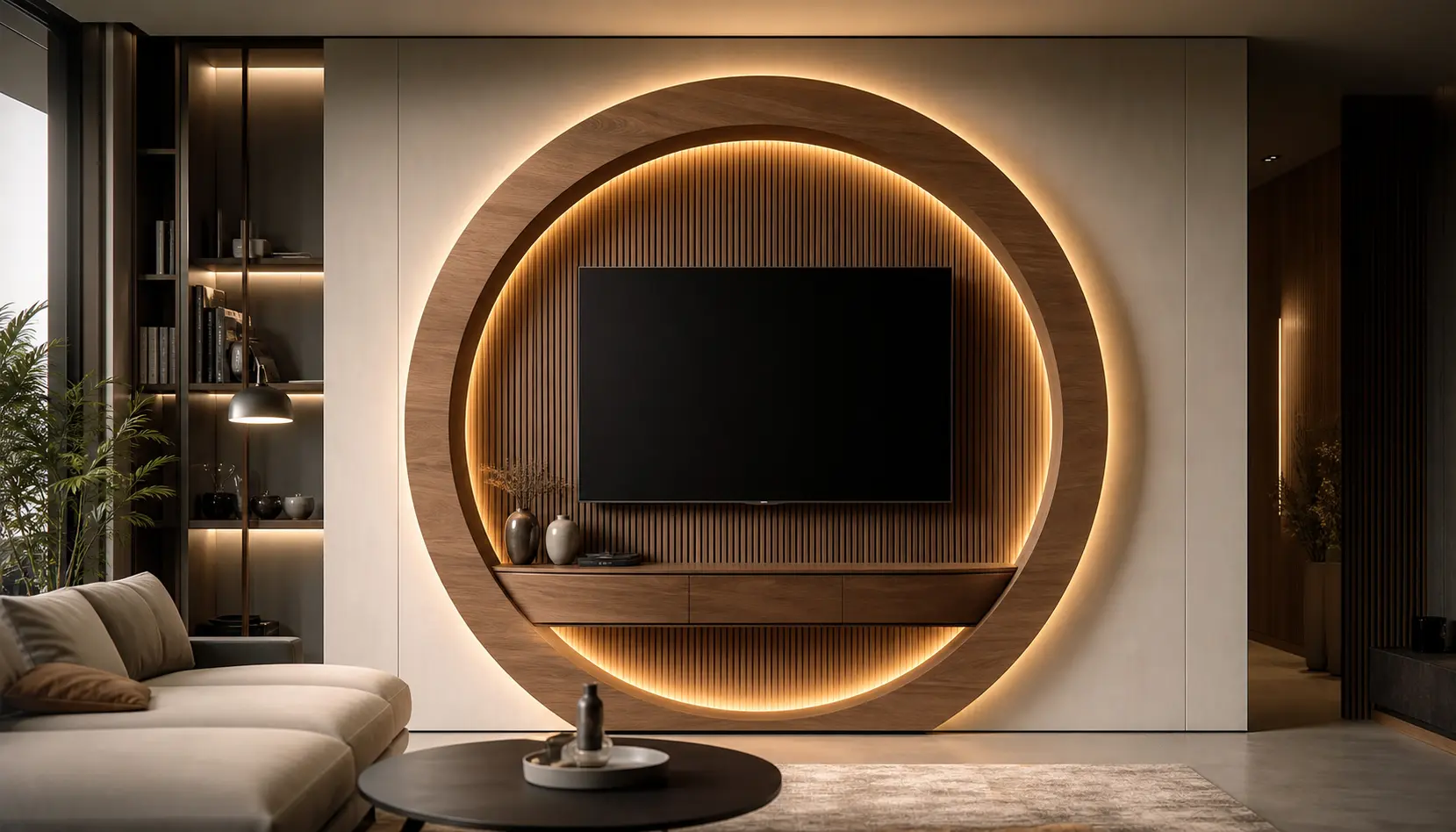
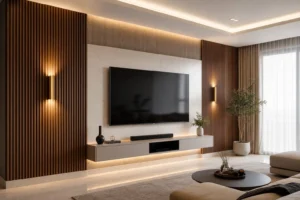
Build a circular wood frame around the TV, in a dark stained or matte black finish, with LED lighting hidden behind the frame so it washes outward onto the wall rather than glowing from the ring’s visible edge. This softens the futuristic effect slightly, blending sci-fi lighting with a warmer, more natural material, which suits living rooms that want the bold shape without going fully into a cold, tech forward aesthetic.
10. Multiple Small Circles Scattered Around the TV
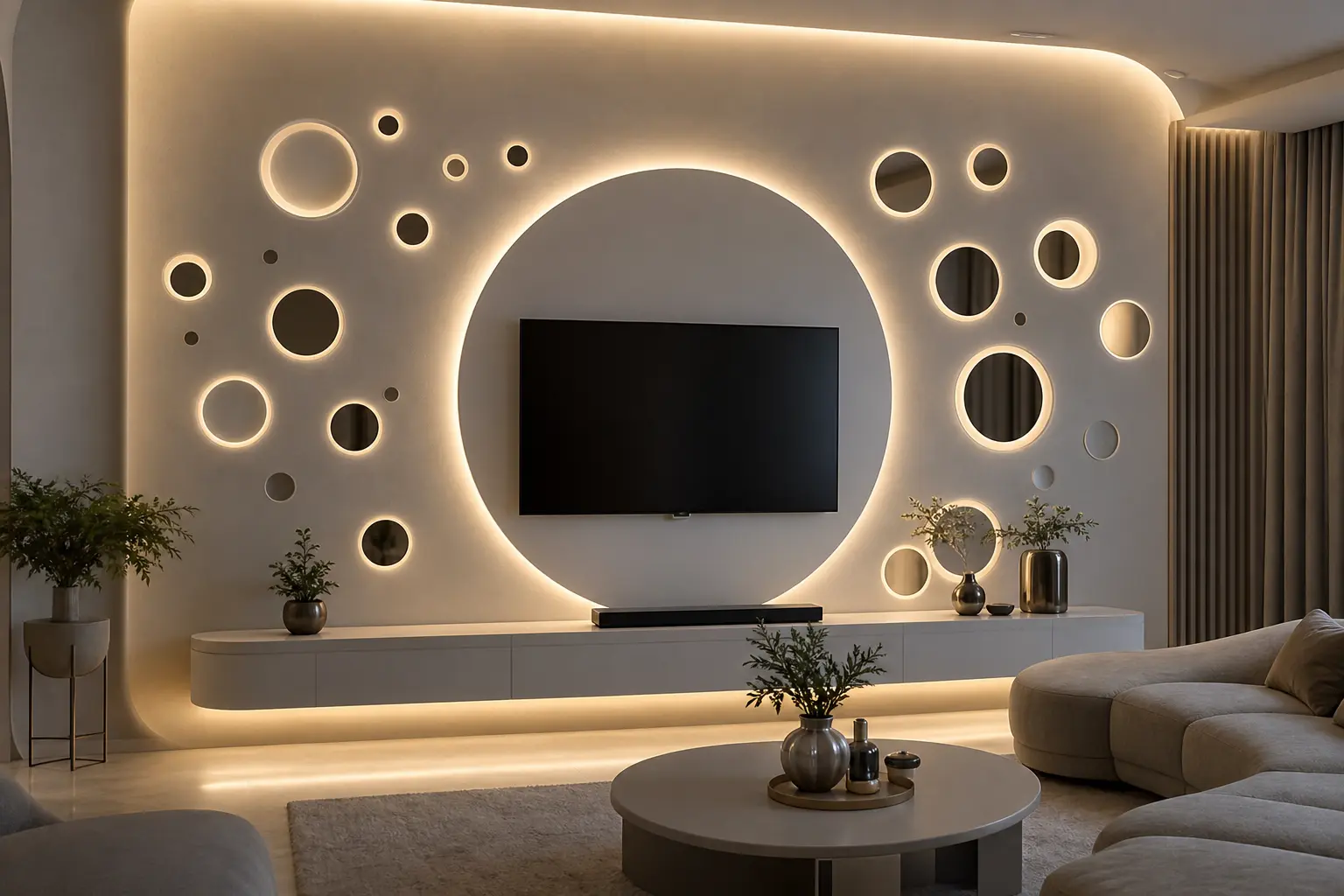
Rather than one dominant ring, scatter several smaller circular LED accents around the TV at different sizes and heights, almost like a constellation spreading outward from the screen. This creates a more playful, less symmetrical composition than a single centered ring, and it works well in living rooms where the media wall needs to share visual space with other design elements nearby rather than dominating the whole wall.
Mistakes to Avoid
- Choosing an LED ring too small relative to the TV, making the circle look like an afterthought rather than a real design feature
- Skipping a dimmer or brightness control, leaving the wall at one intensity regardless of what’s on screen or the time of day
- Using cool white light exclusively, which can feel sterile rather than genuinely futuristic without any color variation
- Ignoring cable management, since a visible tangle of wires undercuts the sleek, high tech look the whole design depends on
- Overcrowding the wall with too many competing shapes, losing the clean impact a single strong circular statement provides
- Forgetting to test the lighting at night specifically, since a design that looks subtle in daylight can read completely differently after dark
Frequently Asked Questions
How much does an LED ring TV wall typically cost? A basic surface mounted LED ring kit can run 200 to 600 dollars for the lighting alone, while a fully custom recessed niche with structural work involved can run several thousand dollars depending on size and complexity.
Can I install an LED ring myself, or does it need a professional? Simpler surface mounted rings with plug in power supplies can often be a DIY project, while recessed niches or anything requiring structural wall changes typically need a contractor or experienced electrician.
Do color changing LED rings require a special remote or app? Most RGB LED kits come with either a remote control or a smartphone app, and many integrate with existing smart home systems for voice or automated control.
Will a circular LED wall look dated in a few years? Trends do shift, but a well executed circular design, especially one with adjustable color and brightness, tends to age better than a design tied to a single very specific color palette or material trend.
What wall color works best behind a glowing LED circle? Darker tones, matte black, deep charcoal, or navy, tend to make the LED glow stand out most dramatically, since the contrast between the dark wall and the bright ring is what creates the strongest visual impact.
Conclusion
A TV wall doesn’t have to default to a flat rectangle just because that’s the easiest shape to build. A circular LED design brings genuine drama into a living room, turning what’s usually the most predictable wall in the house into something that actually stops people in their tracks. Whether that means one bold ring or a scattered constellation of smaller lights, these ideas show how much a simple shift in shape and a bit of glowing light can change the whole feel of a modern living room.