10 Modern Luxury Dining Room Design Ideas With LED Chandeliers, Contemporary Dining Room
A dining room can have beautiful furniture and still feel unfinished if the lighting is an afterthought. A modern LED chandelier does more than illuminate the table, it sets the entire tone of the room, shifting a plain dining space into something that feels genuinely luxury and contemporary. These 10 modern luxury dining room design ideas with LED chandeliers show how the right fixture, paired with a few supporting design choices, can transform how the whole room feels.
Picture a dining room with a nice table and chairs, lit only by a single dated overhead fixture that came with the house. The furniture is fine, but the room never quite feels special, even on nights when you actually use it for something more than a quick meal. Now picture that same table under a sculptural LED chandelier, its warm light catching the wood grain below and casting soft shadows across the walls. The room suddenly feels like somewhere worth sitting down for a while, and that shift comes almost entirely from the lighting.
1. Choose a Chandelier Size Proportional to Your Table
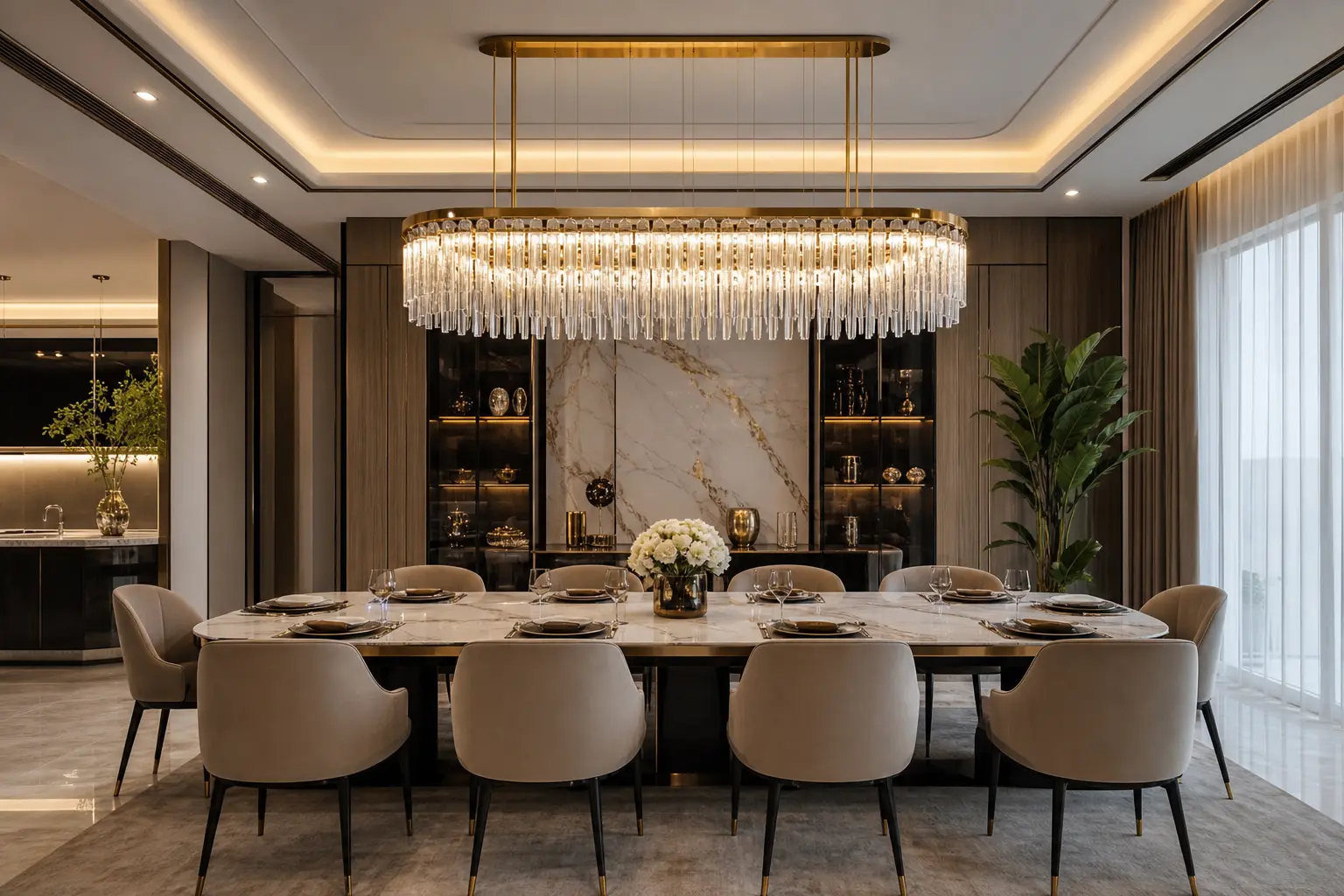
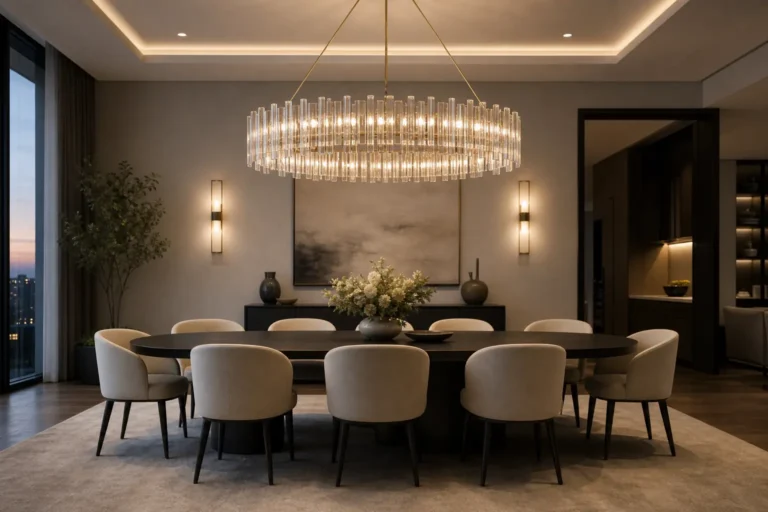
Getting the size right is the single most important decision in choosing a dining room chandelier. As a general rule, the fixture should be roughly one half to two thirds the width of your table, so it feels connected to the surface below rather than floating disconnected above it. For a table around 72 to 84 inches long, a chandelier in the 36 to 50 inch range usually strikes the right balance. Measure your specific table before shopping, since a fixture that looks appropriately sized in a showroom can easily look too small or too large once it is over your actual table.
2. Pick a Warm LED Temperature for a Flattering Glow
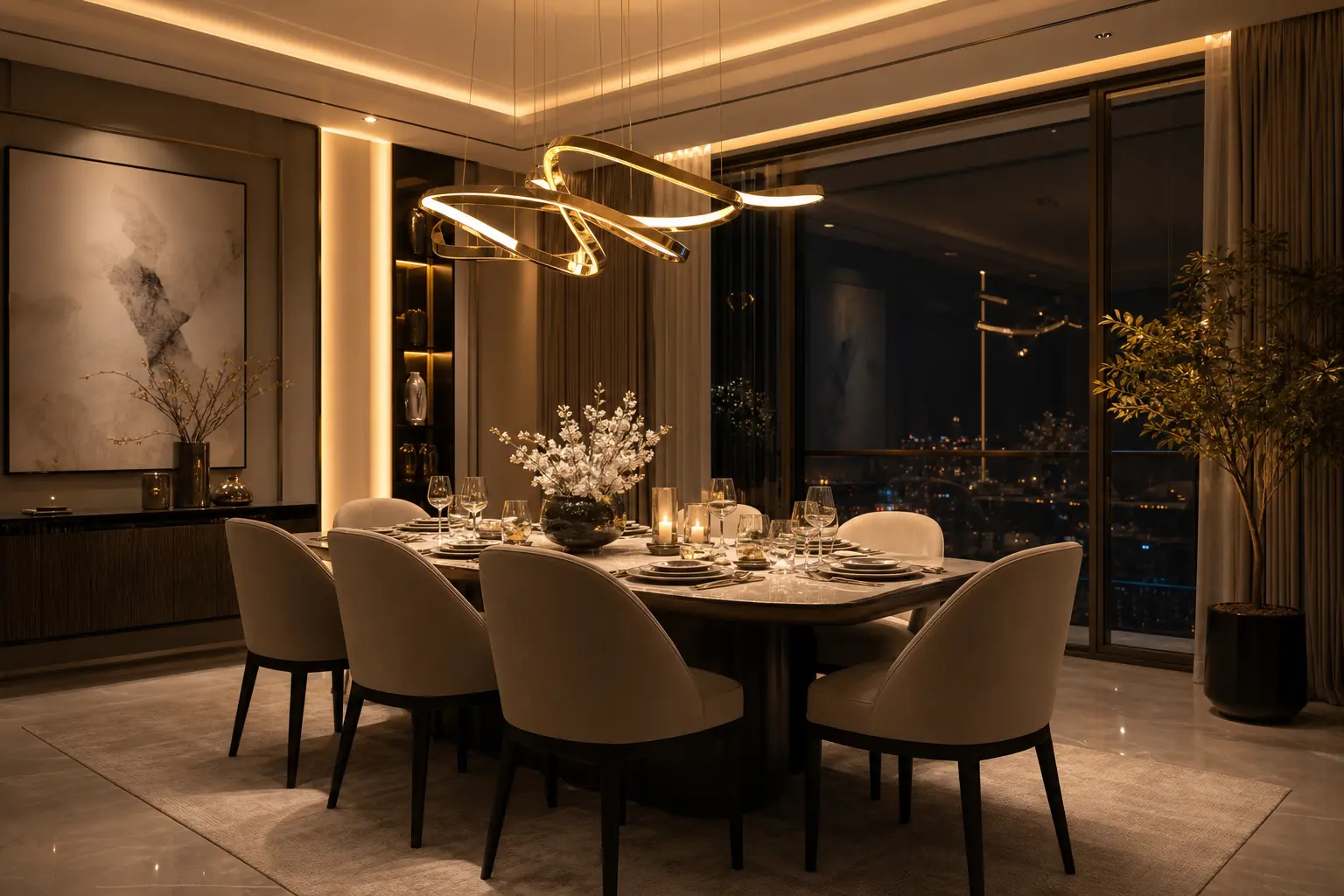
LED chandeliers come in a range of color temperatures, and this choice matters enormously for how food, faces, and the room itself look under the light. Warm white, generally in the 2700K to 3000K range, flatters skin tones and makes food look appetizing, while cooler temperatures above 4000K can feel closer to a clinical or office environment. For a dining room specifically, warm light is almost always the better choice, since it supports the relaxed, gathering focused feel most dining spaces are meant to have.

3. Consider a Linear Chandelier for Long Rectangular Tables
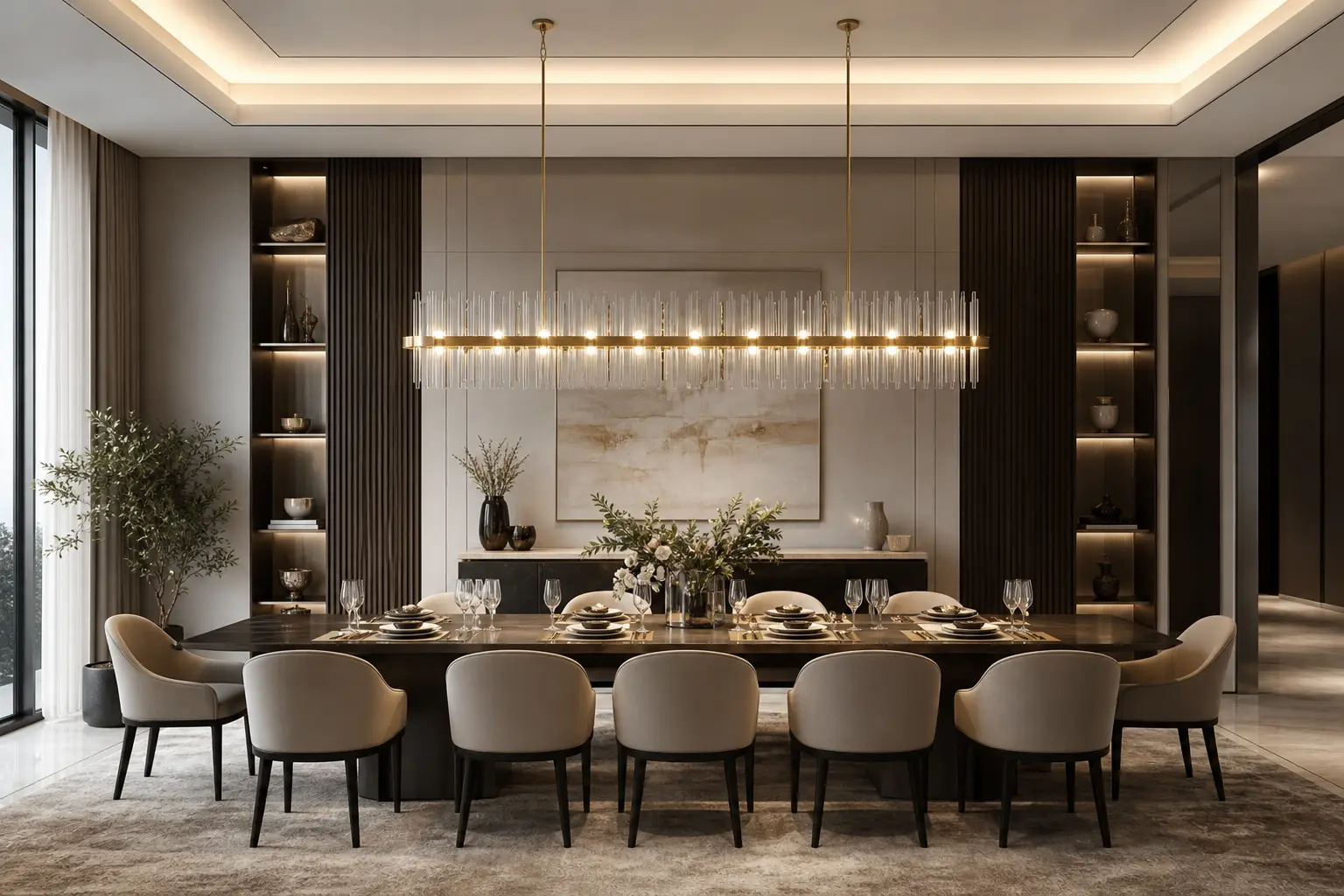
A traditional round chandelier can look slightly out of place over a long rectangular table, since the shapes do not align naturally. A linear chandelier, which runs in a straight line rather than clustering around a single point, echoes the shape of a rectangular table much more effectively. This style has become a signature of contemporary dining rooms for exactly that reason, and it also tends to distribute light more evenly along the full length of a longer table than a single centered round fixture would.
4. Add a Dimmer for Flexibility Between Everyday and Formal Use
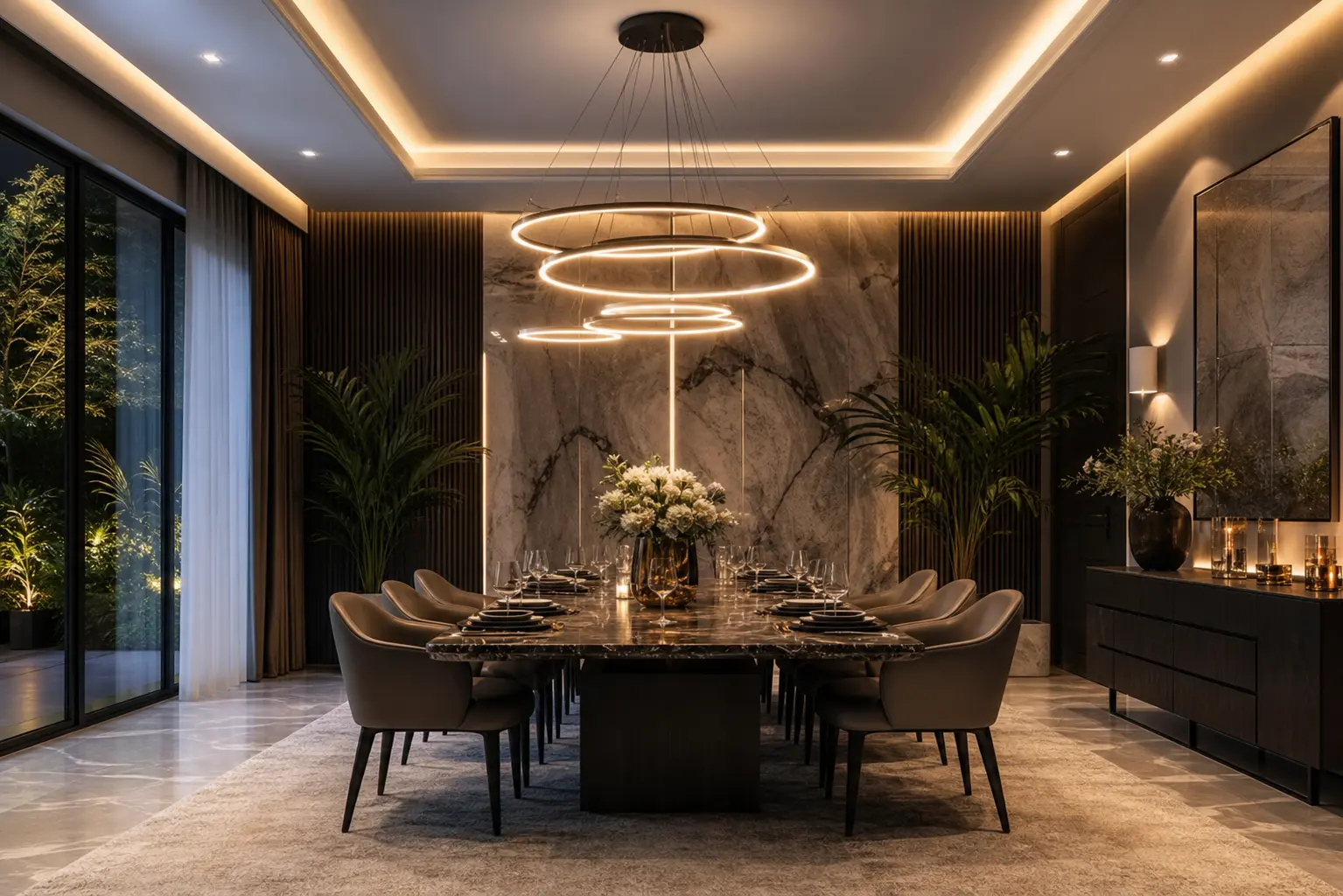
A dining room chandelier needs to work for a quick weeknight dinner and a more formal gathering, and a dimmer switch is what makes that range possible. Bright, full light suits daytime use or casual family meals, while a dimmed, warmer glow sets a more intimate tone for evening dinners or entertaining. Most LED chandeliers are dimmer compatible, but it is worth confirming this before installation, since not all LED fixtures pair with every type of dimmer switch on the market.
5. Balance a Bold Chandelier With a Simpler Table Setting
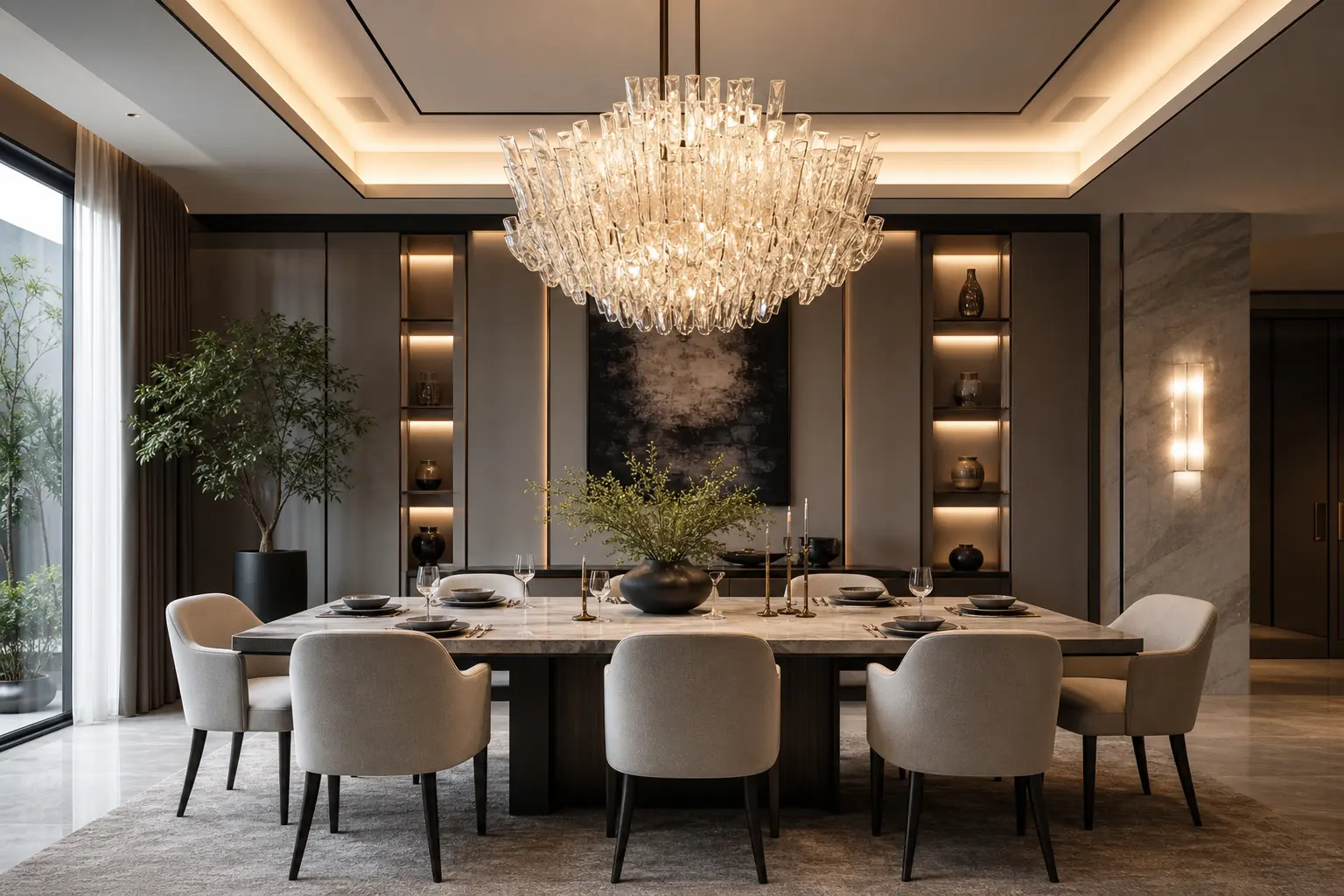
A sculptural, statement making chandelier is already doing a lot of visual work in the room, so the table setting beneath it should stay relatively restrained. Simple dinnerware, a few candles, and a low centerpiece keep the focus balanced between the fixture above and the table below, rather than competing for attention. This restraint is part of what gives a contemporary dining room its polished, considered feel, rather than looking overly busy or overdecorated.
Choosing a Low Centerpiece
Keep any table centerpiece under 12 inches tall so it does not block sightlines across the table or visually compete with the chandelier hanging above it.
6. Use the Chandelier’s Finish to Tie the Room Together
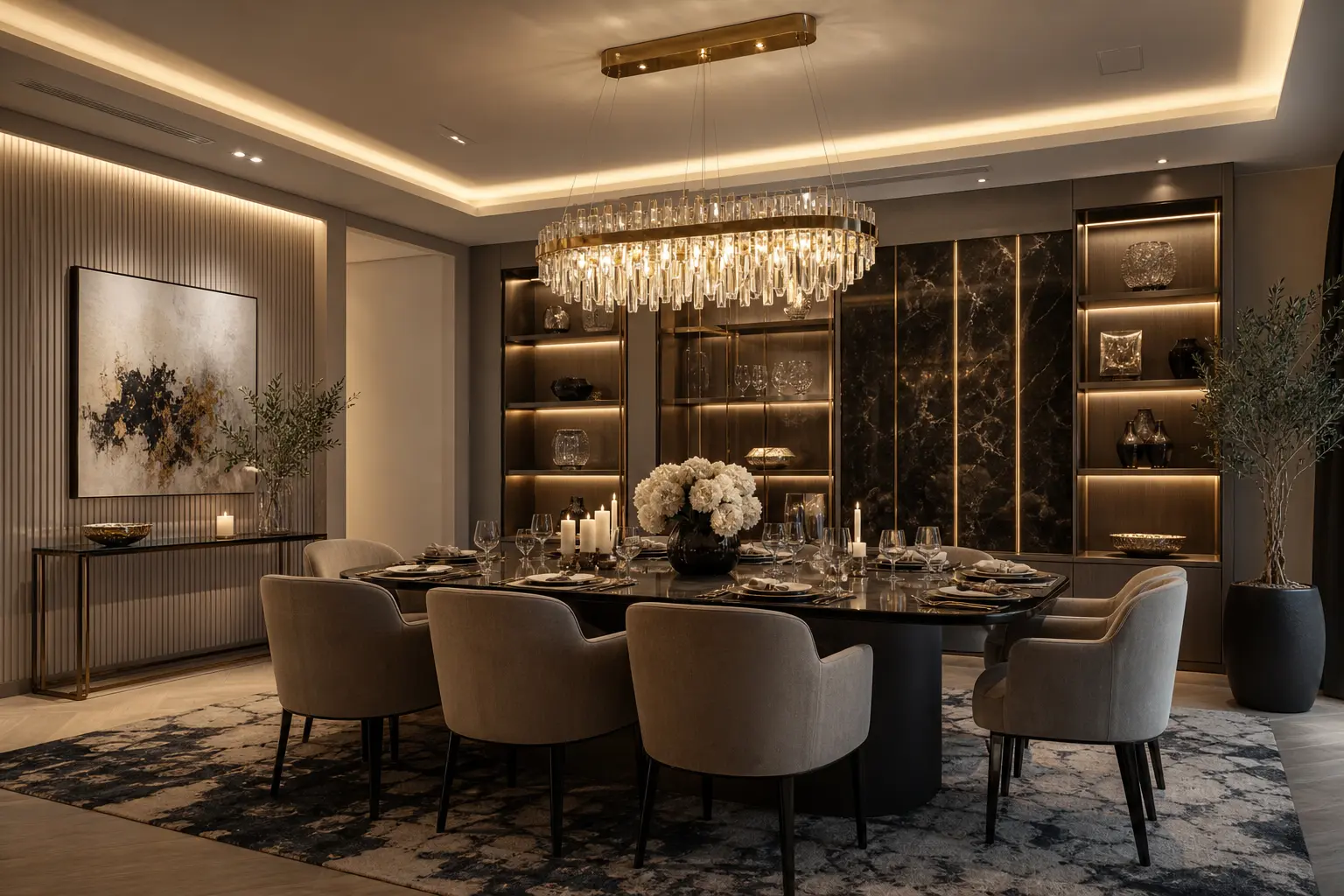
The metal finish of your chandelier, whether brushed brass, matte black, or warm bronze, should relate to other metal tones already present in the dining room, such as chair legs, drawer pulls, or a nearby sideboard. A cohesive finish across these elements makes the room feel like one considered design rather than several unrelated purchases. If your existing metals are mixed, a matte black chandelier often works as a versatile, neutral bridge between warmer and cooler toned pieces elsewhere in the room.
7. Hang the Chandelier at the Right Height Above the Table
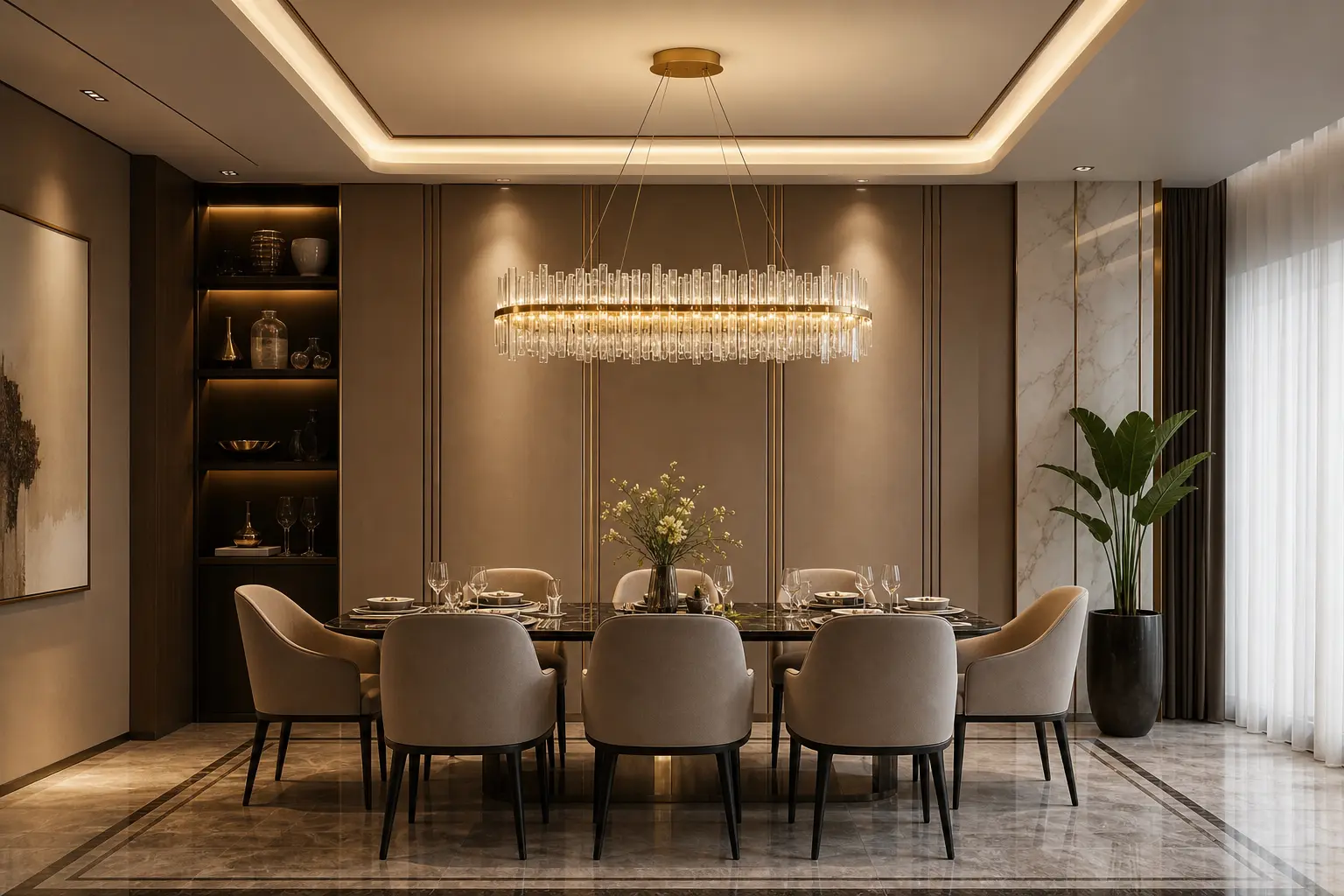
Hanging height affects both the room’s visual balance and practical comfort at the table. As a general guideline, the bottom of the chandelier should sit 30 to 36 inches above the table surface, which keeps the light low enough to feel intimate without blocking the sightline across the table for people seated at it. In rooms with higher ceilings, this measurement can shift slightly higher, but the fixture should never sit so high that it loses its visual connection to the table below.
8. Pair Contemporary Lighting With Textured, Not Matched, Furniture
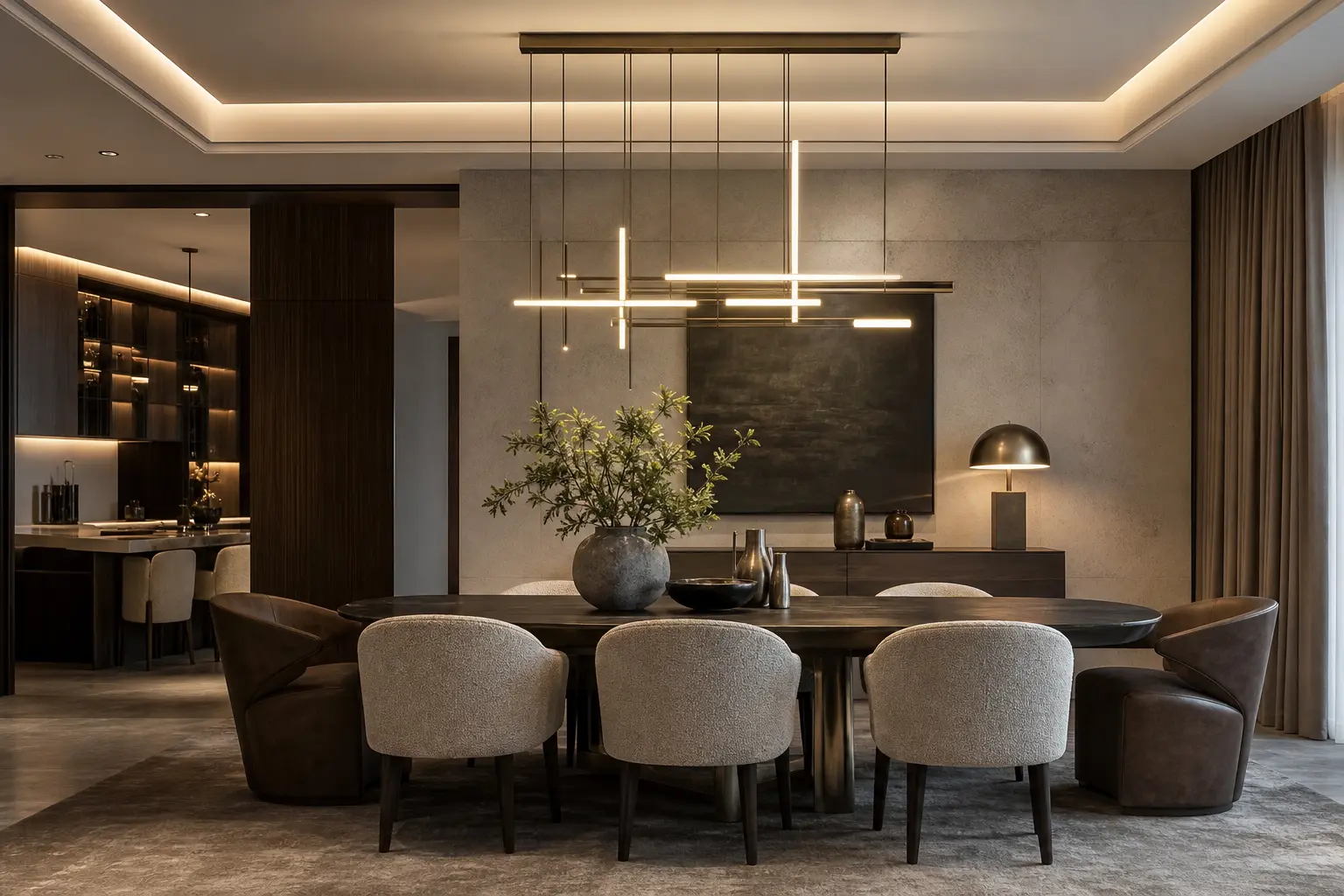
A common mistake in contemporary dining rooms is matching every piece of furniture and every finish too closely, which can end up feeling sterile rather than luxury. Instead, pair your modern chandelier with furniture that has some texture and variation, like a woven rattan chair alongside a smooth wood table, or a linen upholstered seat against a metal chandelier finish. This mix of textures keeps the room feeling collected and intentional rather than like a matching showroom set.
9. Add Layered Lighting Around the Room Beyond the Chandelier
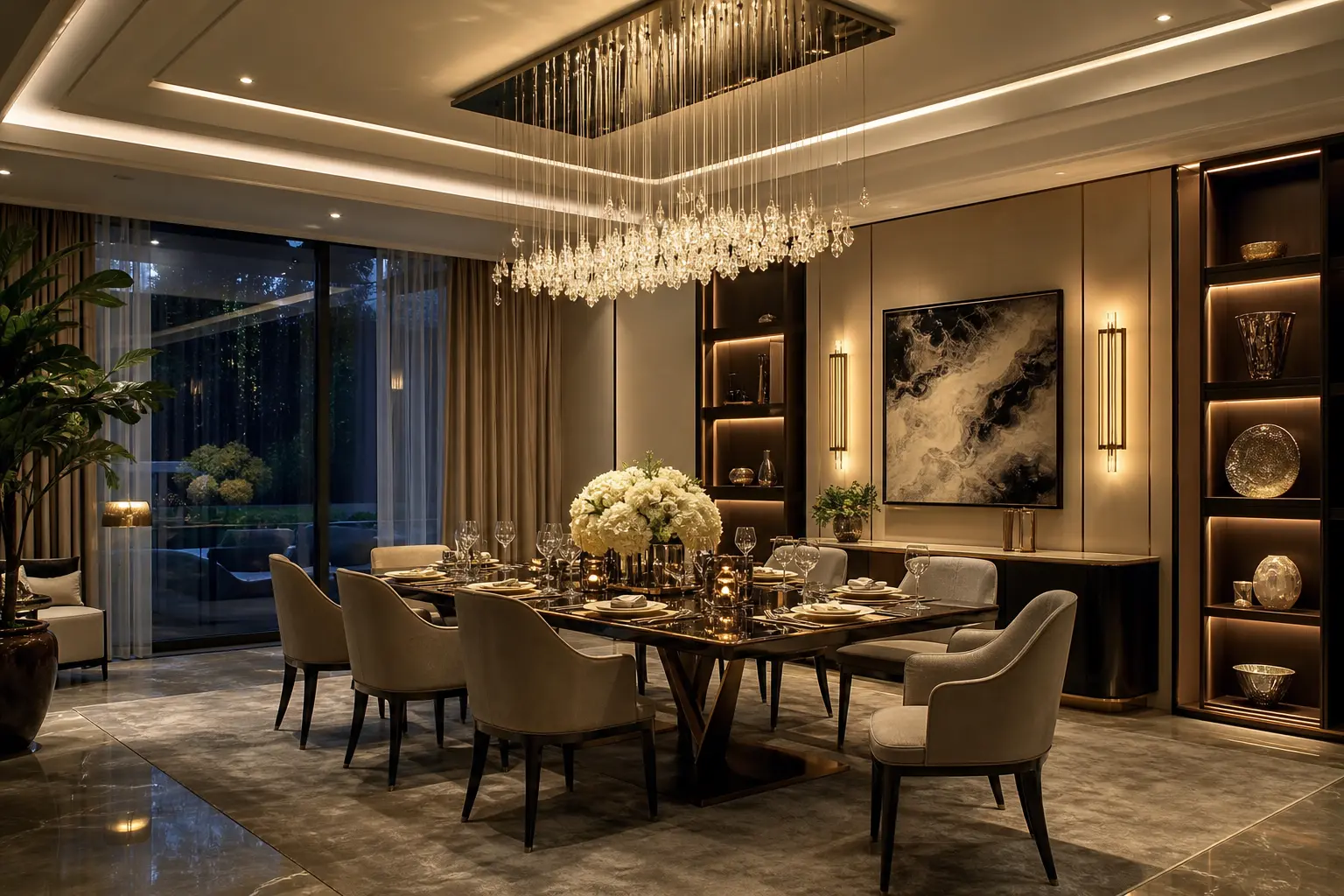
While the chandelier is the star of a dining room, additional light sources around the perimeter of the room add depth and prevent the space from feeling flat once the chandelier is dimmed. A console table lamp, wall sconces, or even candles on a sideboard give the room a softer, layered glow that complements the main fixture rather than relying on it alone. This layered approach is especially useful for evening dinners, when a single bright chandelier overhead can otherwise feel a little stark on its own.
10. Use a Mirror to Double the Chandelier’s Impact
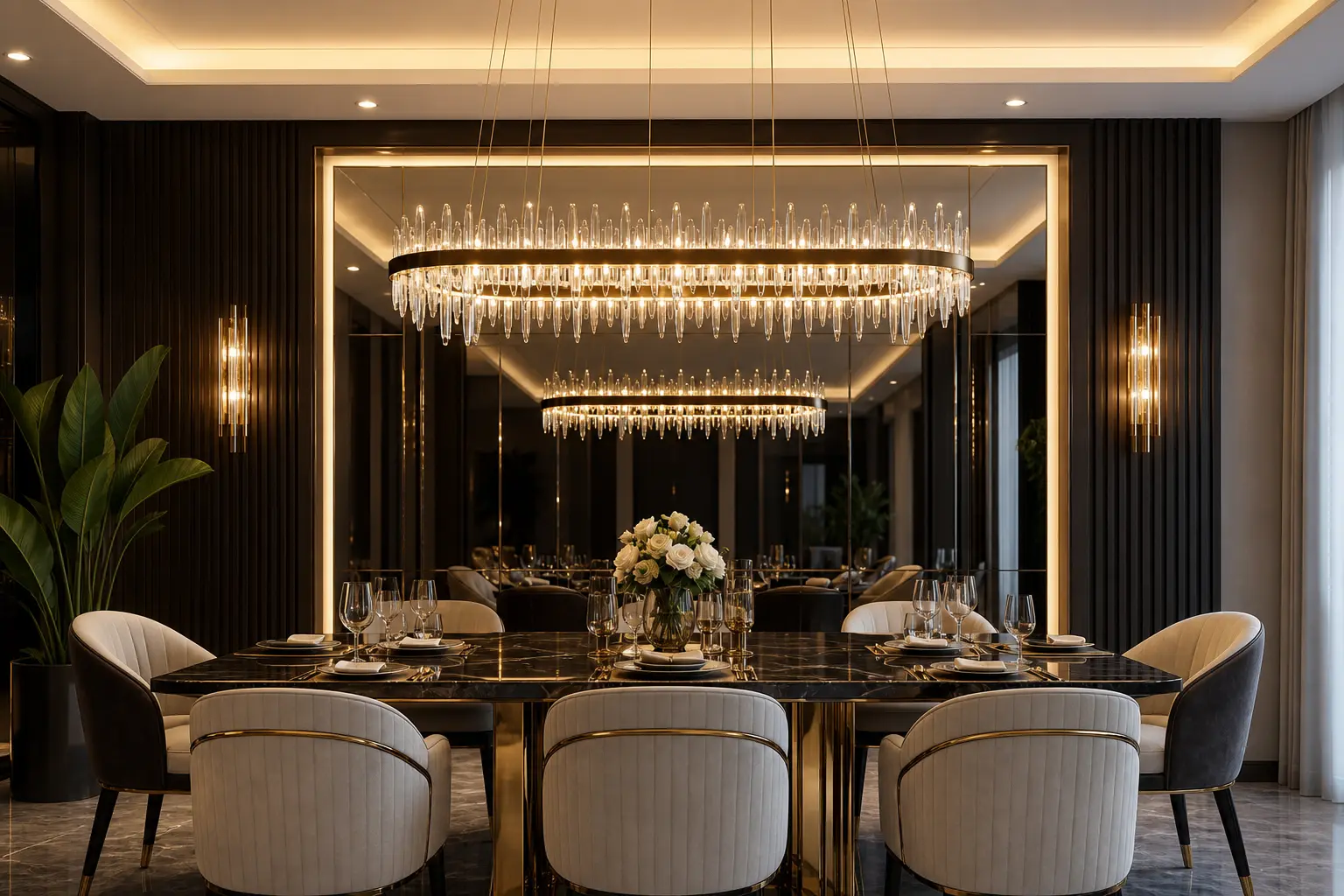
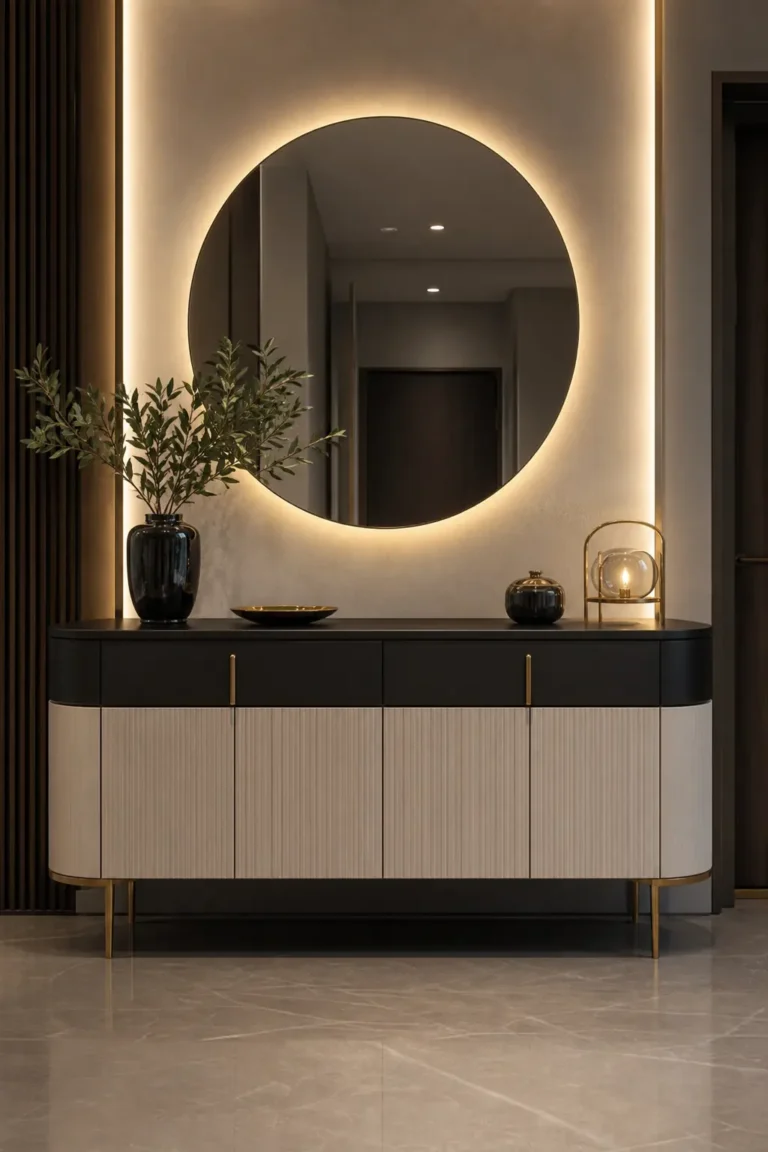
A large mirror placed on a nearby wall, positioned to reflect the chandelier, can amplify both the light and the visual impact of the fixture without adding another light source. This trick also makes a dining room feel larger and brighter overall, since the mirror bounces both natural and artificial light back into the space. Position the mirror so it reflects the chandelier directly rather than an awkward angle, which takes a bit of testing once the fixture is actually installed.
Mistakes to Avoid
- Choosing a chandelier too small or too large relative to the table’s actual size
- Picking a cool white LED temperature that makes food and skin tones look unflattering
- Hanging a round chandelier over a long rectangular table when a linear style would fit better
- Skipping a dimmer, which limits the room’s flexibility between casual and formal use
- Overloading the table setting with a tall centerpiece that competes with the chandelier
- Mixing too many mismatched metal finishes across the room’s furniture and fixtures
Frequently Asked Questions
What size chandelier should I choose for my dining table? As a general rule, the chandelier should be roughly one half to two thirds the width of the table, which usually falls in the 36 to 50 inch range for a standard sized dining table.
What LED color temperature is best for a dining room chandelier? Warm white light in the 2700K to 3000K range is generally the most flattering for a dining room, since it makes food and skin tones look their best.
How high should a chandelier hang above a dining table? The bottom of the fixture should typically sit 30 to 36 inches above the table surface, adjusting slightly higher in rooms with taller ceilings.
Is a linear chandelier better than a round one for a dining room? For long rectangular tables, a linear chandelier usually fits the shape better and distributes light more evenly than a single centered round fixture.
Do all LED chandeliers work with dimmer switches? Most do, but it is worth confirming compatibility with your specific dimmer switch before installation, since not every LED fixture pairs with every dimmer type.
Can a mirror really improve a dining room chandelier’s impact? Yes, positioning a mirror to reflect the chandelier can amplify both the light and the visual presence of the fixture, while also making the room feel larger.
Conclusion
Lighting is one of the most powerful, and most overlooked, ways to bring a luxury contemporary feel into a dining room. A well sized, warm toned LED chandelier hung at the right height above the table can transform the entire mood of the space, especially when paired with a dimmer, a few layered light sources, and furniture with enough texture to feel collected rather than matched. Start with the fixture, get the proportions right, and the rest of the room’s contemporary feel will follow.