10 Modern Wooden Entryway Design Ideas with Built-In Shelves | Minimalist Foyer Inspiration
Entryways take more daily abuse than almost any other part of the house. Shoes pile up. Bags get dropped on the floor. Mail sits in a stack on whatever flat surface is closest. A wooden entryway with built-in shelving solves this by giving everything a specific place, while keeping the look calm and minimalist instead of adding more visible storage bins. This article covers 10 wooden entryway design ideas with built-in shelves that actually hold up to daily use.
1. Choose a Wood Tone That Fits a Minimalist Foyer
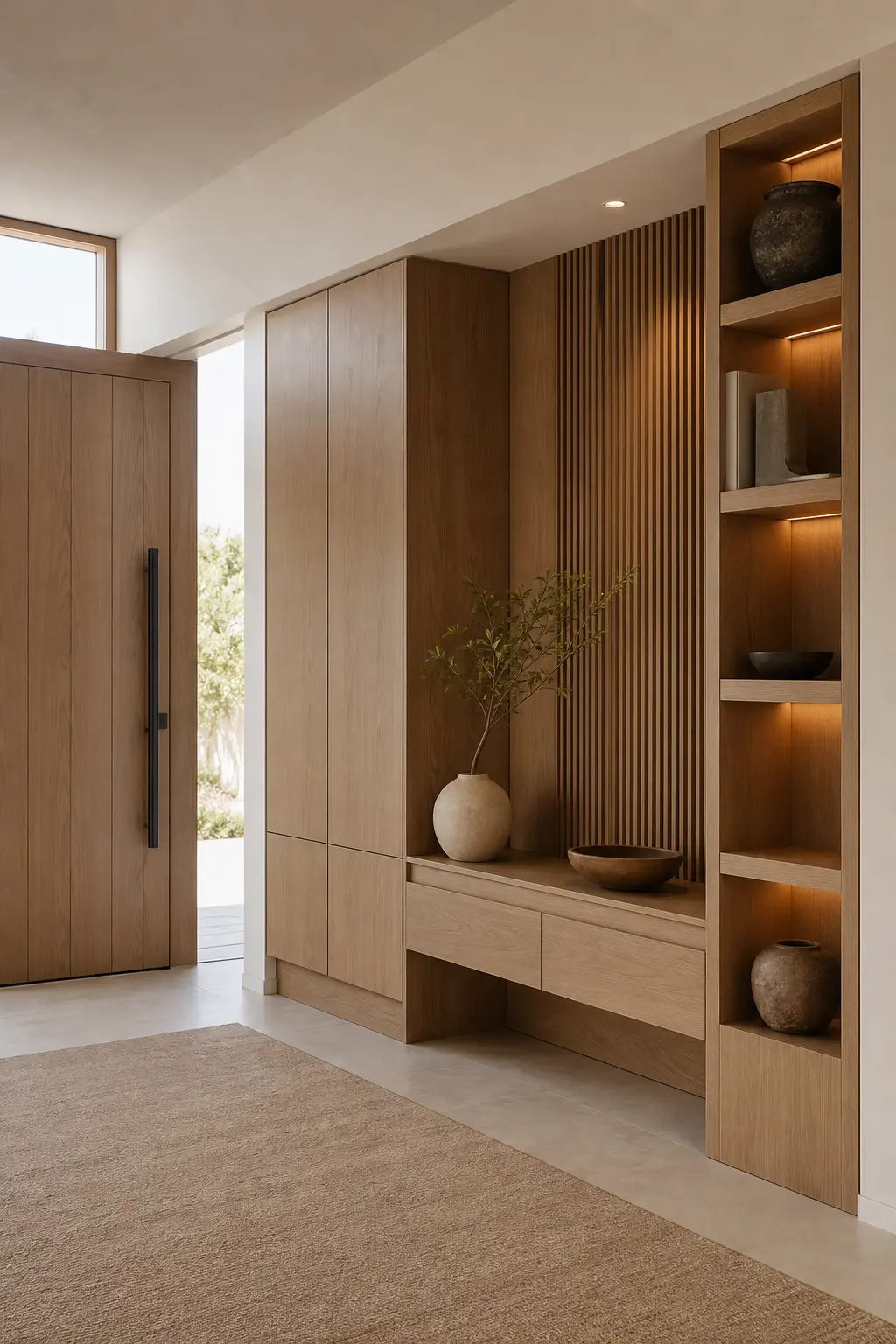
Entryways are often smaller, dimmer spaces than the rest of the house, so wood tone matters more here than in a larger room. Lighter woods like oak or ash keep a narrow foyer from feeling closed in, especially without much natural light. Darker woods like walnut can still work, but they suit entryways with a nearby window or good overhead lighting to balance the depth of tone.
Test the wood sample in the entryway itself, not under a showroom light, since entryways often have different lighting conditions than the rest of the home.
2. Design Built-In Shelves for Shoes, Bags and Daily Essentials
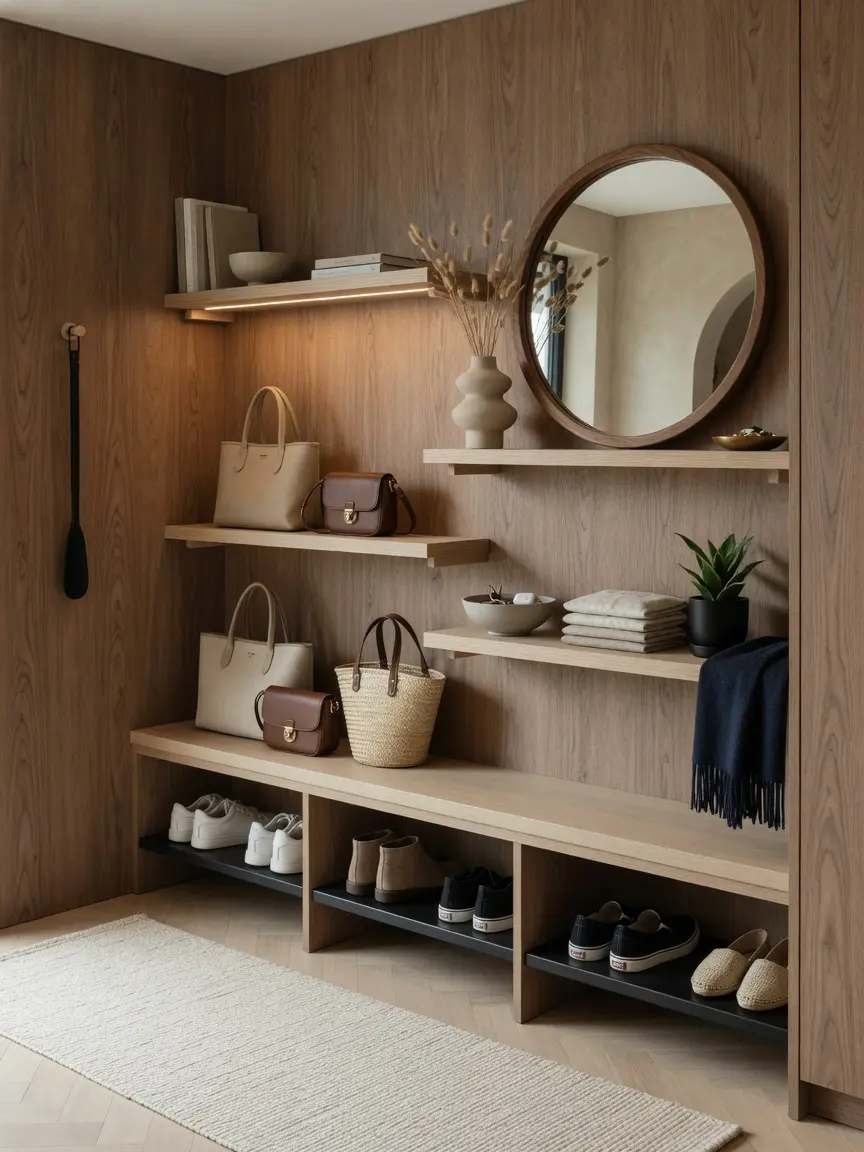
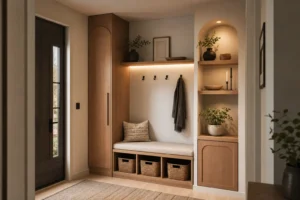
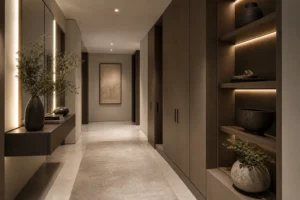
The most useful built-in shelving in an entryway is designed around what actually gets dropped there every day, not a generic shelf layout. A lower open cubby section works well for shoes, since it keeps them off the floor without needing a closed door. A mid height shelf or shallow drawer handles keys, mail and small daily items.
Sizing Shelves to Real Use
Measure your household’s actual shoe count and bag sizes before finalizing cubby dimensions. A shelf built to a generic size often ends up too shallow or too narrow for real daily use.
3. Add a Wood Bench for Function and Warmth
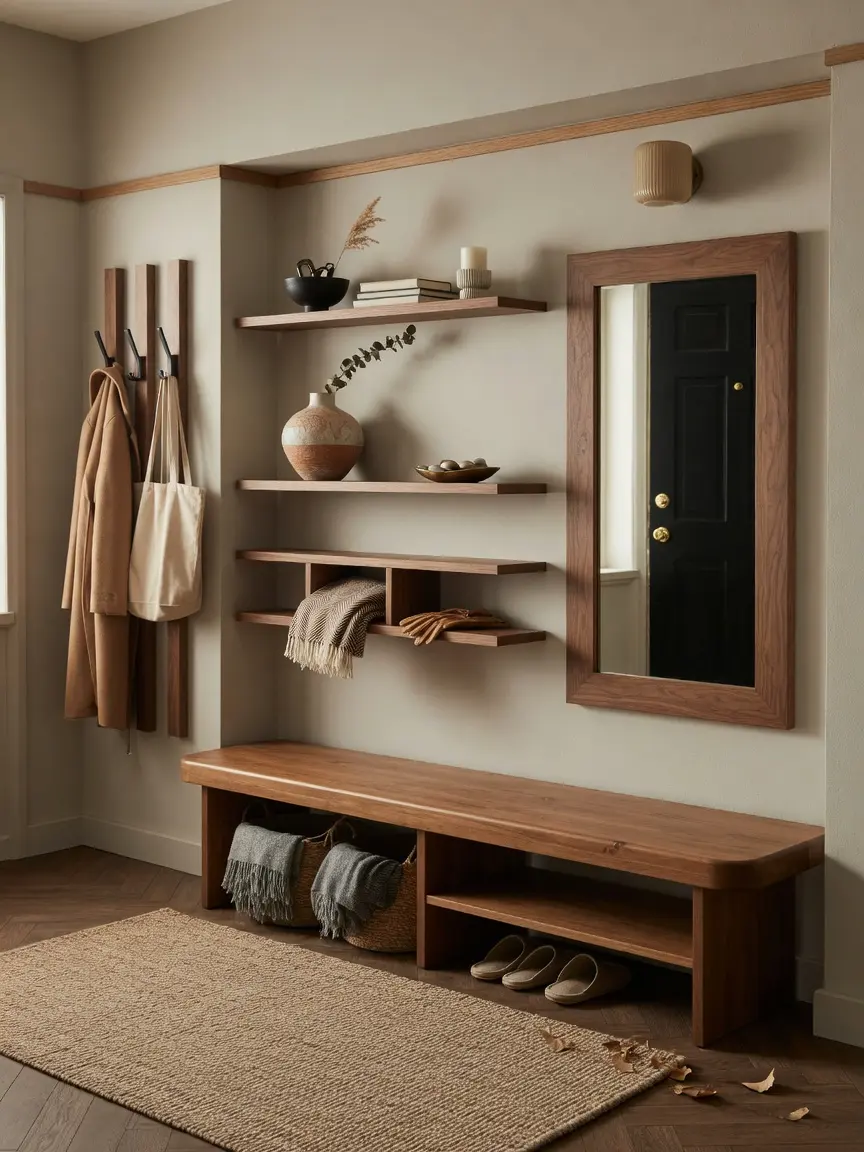
A simple wood bench, even a narrow one, makes a real difference in how usable an entryway feels. It gives you a spot to sit while putting on shoes, and it adds warmth to a space that can otherwise feel purely functional. A bench with a lift up seat adds hidden storage underneath, useful for seasonal items like winter boots or umbrellas.
4. Keep Wall Color Simple to Let Wood Tones Stand Out
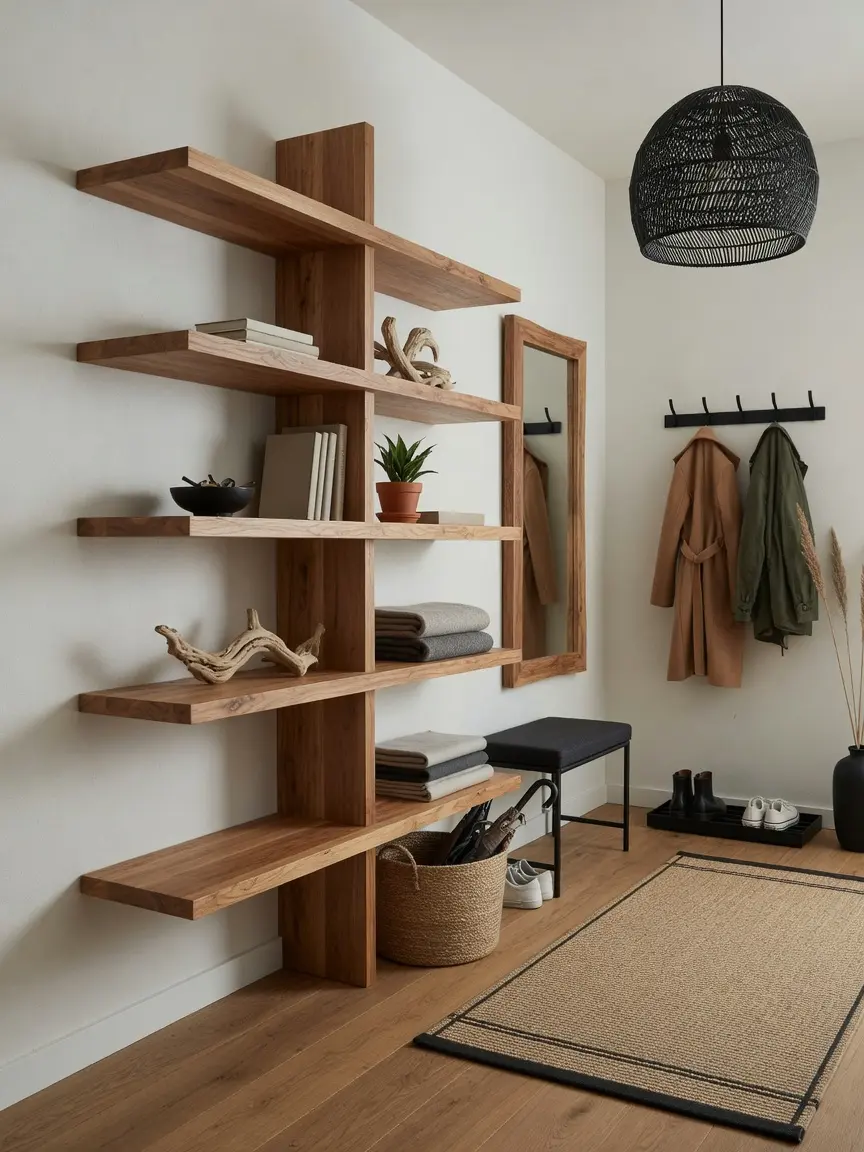
A busy or dark wall color competes with wood shelving in a small space. A soft white, warm beige or light gray wall lets the wood read as the room’s main texture rather than fighting for attention. This also helps a narrow entryway feel more open, since lighter walls reflect more available light.
5. Use Vertical Slat Paneling for Texture Without Clutter
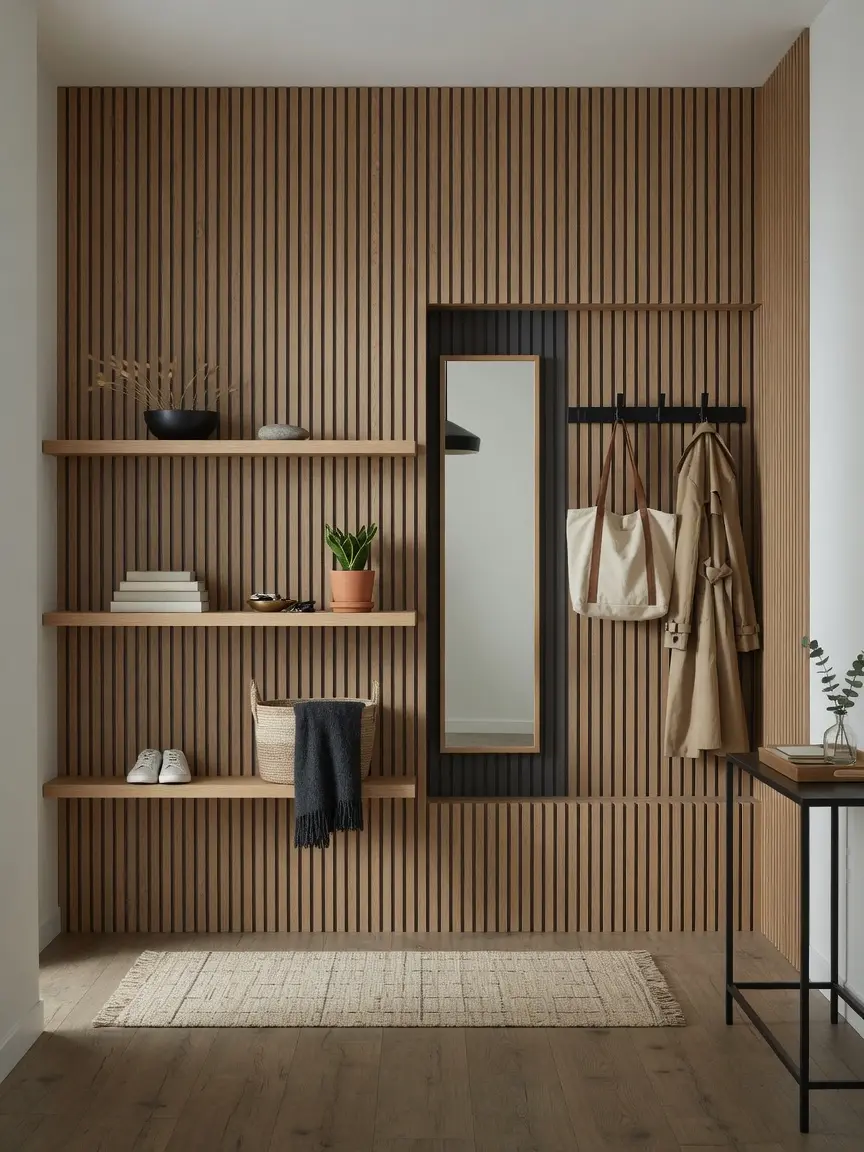
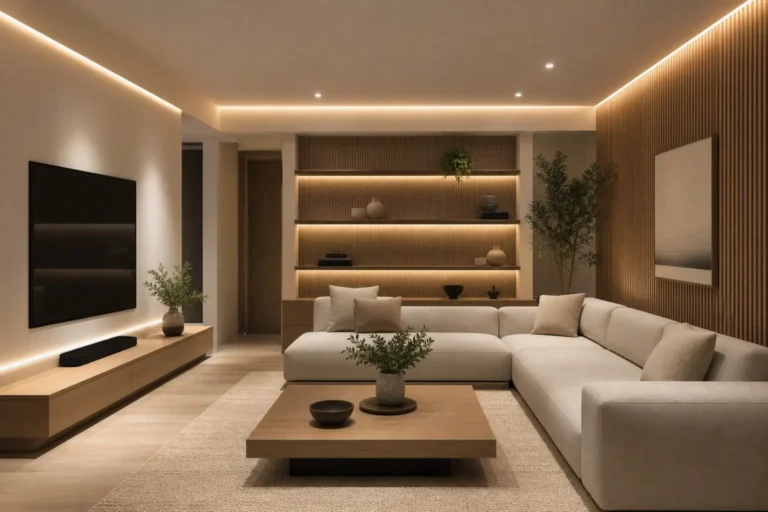
Vertical wood slat paneling adds visual interest to an entryway wall without requiring any additional decor. The repeated vertical lines also draw the eye upward, which can make a narrow foyer feel taller than it actually is. Slat paneling works especially well behind a bench or along the wall opposite built-in shelving, giving the space texture on both sides.
Keep the slat spacing and depth consistent throughout the panel run, since uneven spacing tends to look unintentional rather than deliberately textured.
6. Add a Mirror to Expand a Narrow Entryway
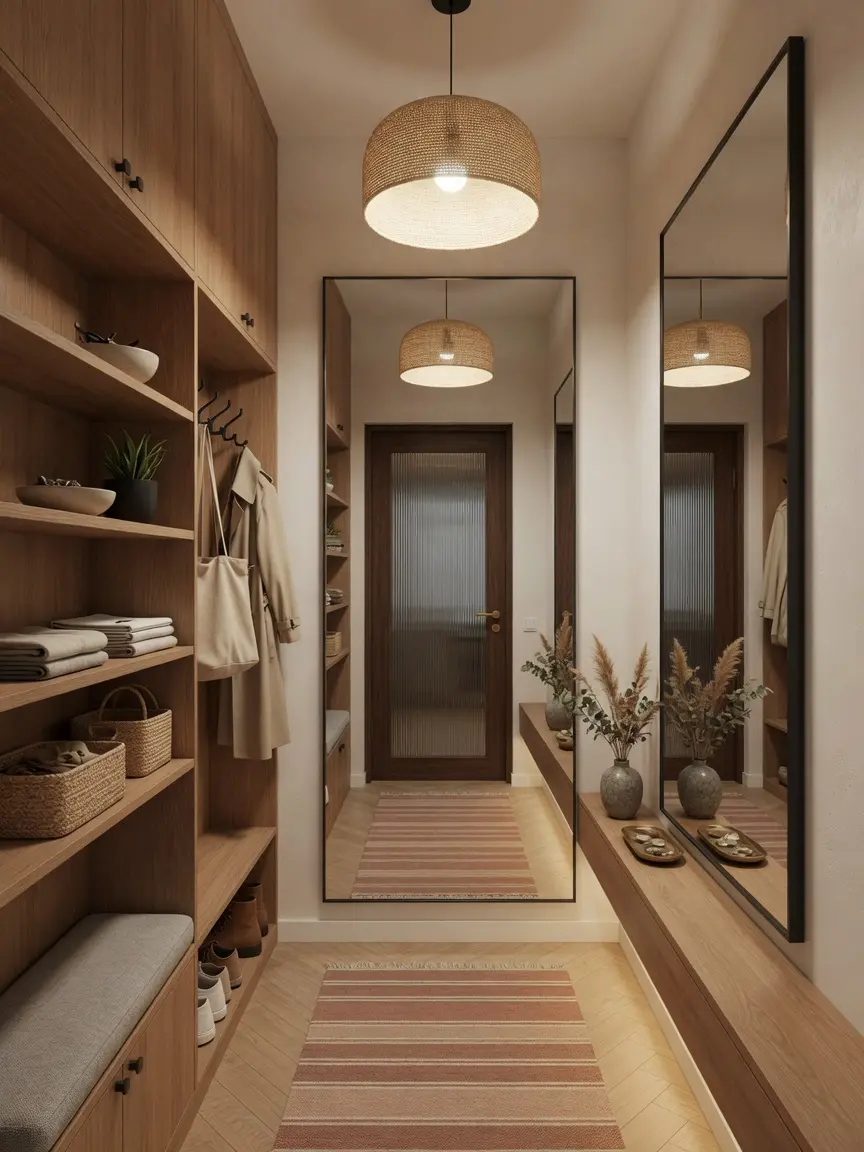
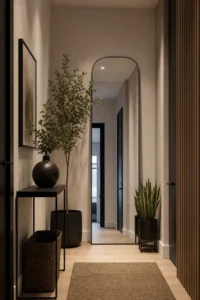
A mirror does two jobs in an entryway. It’s genuinely useful for a last look before heading out, and it visually doubles the sense of space in a narrow hallway or foyer. A wood framed mirror, matching the tone of nearby shelving, ties into the room’s material palette better than a metal or glass only frame.
Position the mirror to reflect a light source, like a window or an entry light fixture, rather than a blank wall, since this makes the biggest difference in how much brighter the space feels.
7. Layer Lighting to Welcome Guests Without Overdoing It
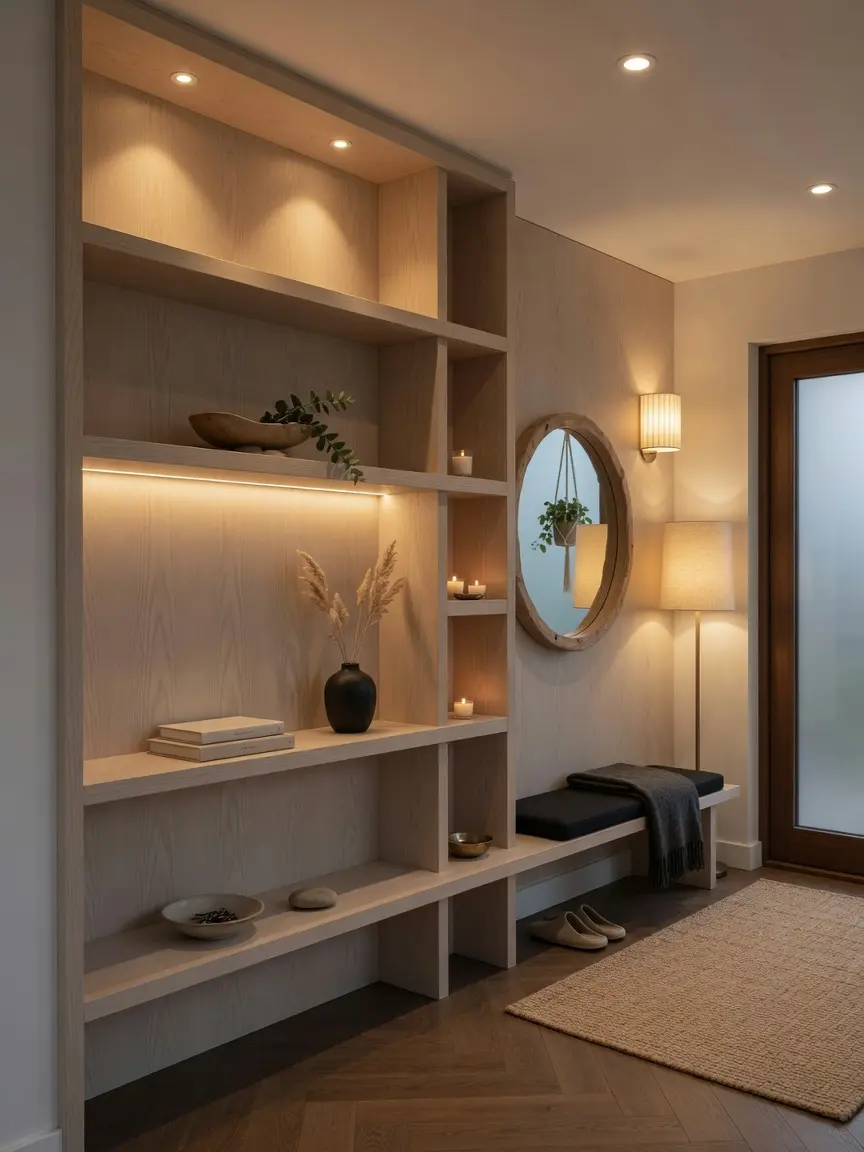
Entryway lighting needs to be functional first, since it’s usually the space where people search for keys or check their appearance on the way out. A single overhead fixture is fine as a base layer, but adding a wall sconce or a small lamp near the bench softens the space in the evening. Warm light, generally 2700 to 3000 Kelvin, suits an entryway better than a bright, cool overhead bulb.
8. Choose Hardware and Hooks That Match the Wood Tone
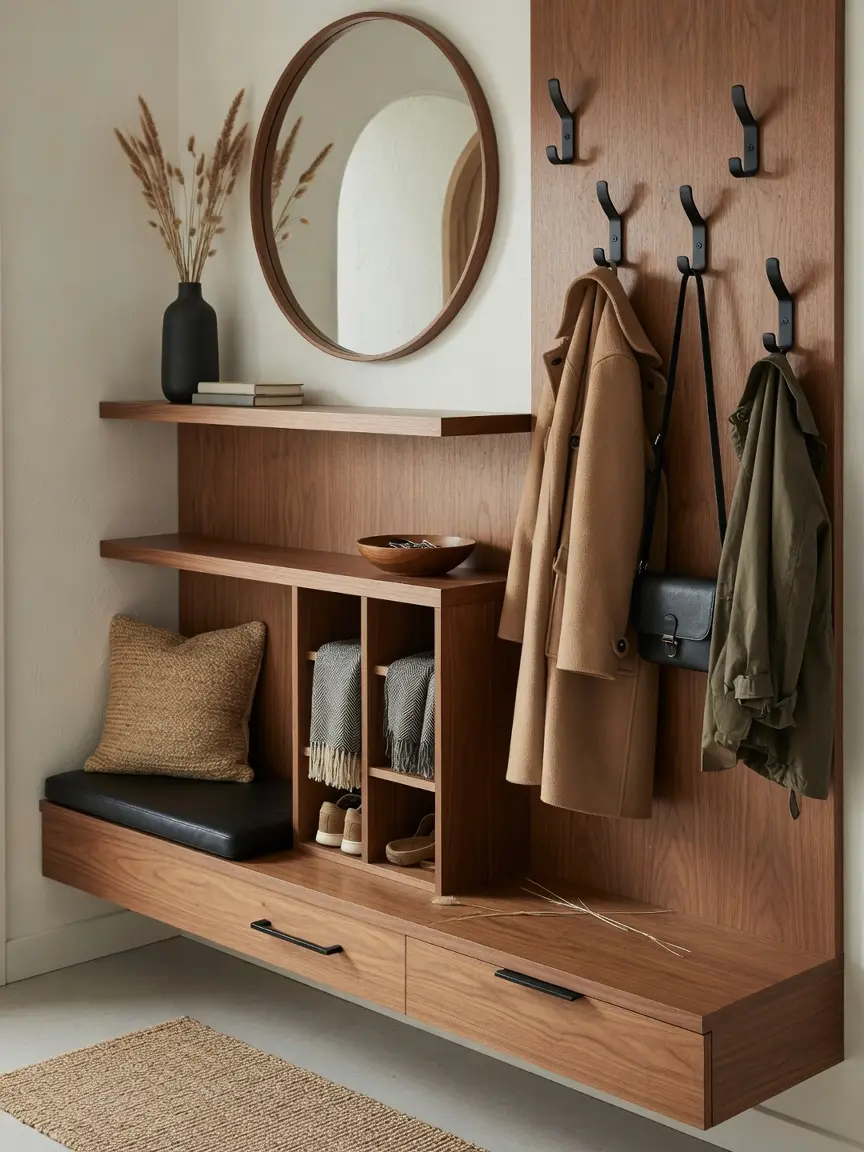
Hooks, drawer pulls and any visible hardware should stick to one consistent metal finish throughout the entryway. Matte black, brushed brass or brushed nickel all work well against most wood tones, but mixing several finishes in a small space reads as unplanned rather than intentional. Keep hook placement at a practical height, generally around 60 inches for adult use, with a lower row if kids regularly use the space too.
9. Keep Decor Minimal for a True Foyer Feel
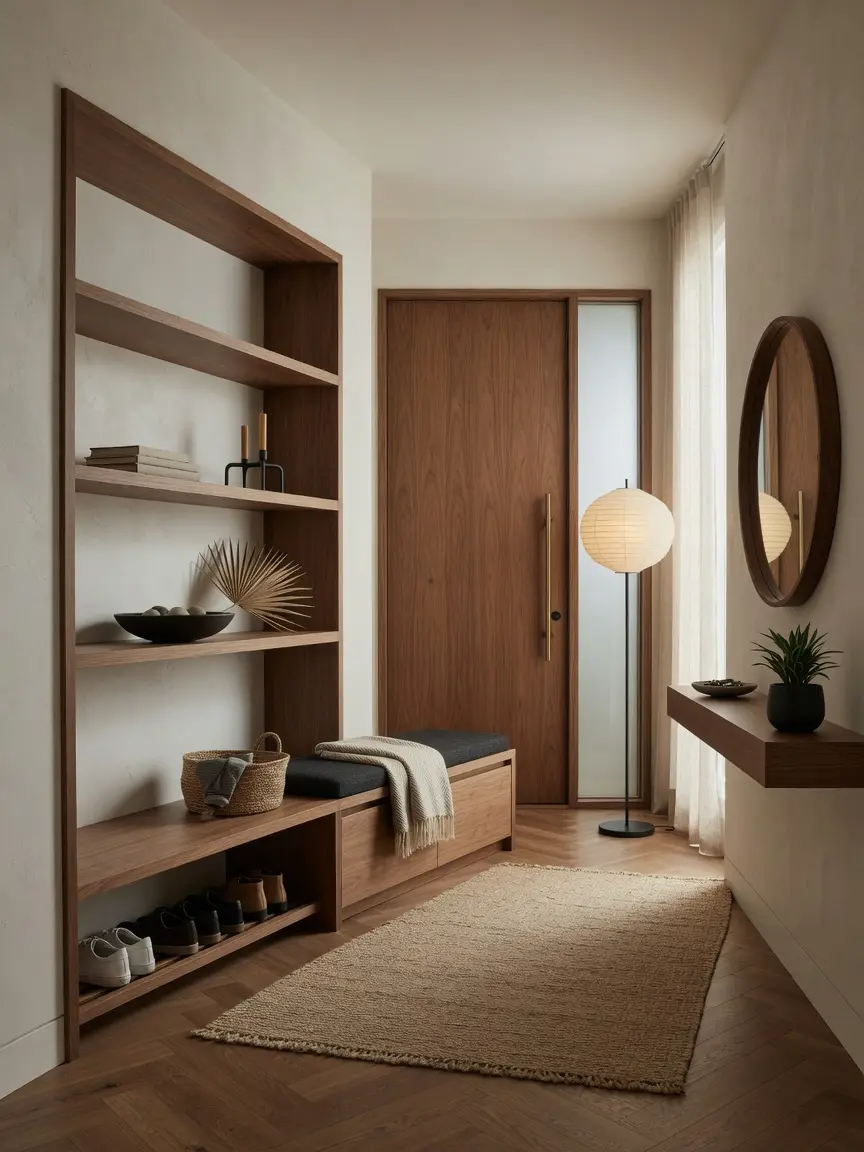
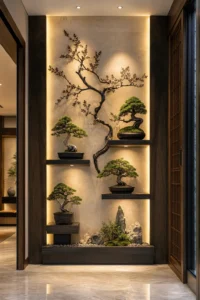
A minimalist entryway relies on restraint more than any single design choice. One or two objects on a shelf, a single piece of art, and maybe a small plant is usually enough. Overfilling the shelves with decorative items undercuts the calm, organized feeling that built-in storage is supposed to create in the first place.
10. Plan Storage Around Your Household’s Daily Routine
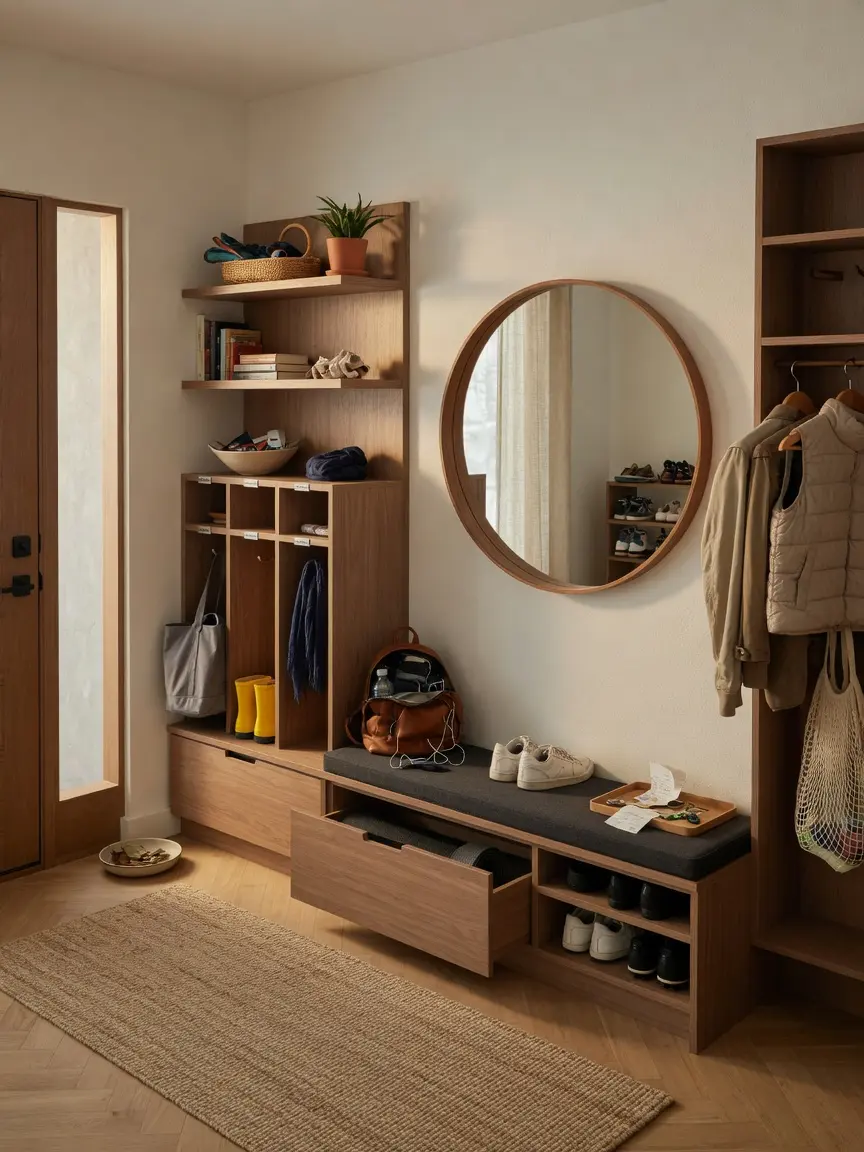
Before finalizing the shelving layout, think through what actually happens in your entryway every day. A household with kids needs lower hooks and larger shoe cubbies. A household that works from home might need a small drop zone for a bag and laptop near the door. Design the built-in storage around these real patterns rather than a generic entryway layout, so the space stays functional instead of just photogenic.
Mistakes to Avoid
- Choosing dark wood in a dim entryway without enough supporting light
- Building shelving to generic dimensions instead of your household’s actual items
- Mixing multiple metal finishes across hooks, hardware and light fixtures
- Overfilling open shelves with decorative items, undercutting the minimalist look
- Skipping a mirror placement that reflects natural or artificial light
Frequently Asked Questions
How deep should built-in entryway shelves be for shoes? Generally around 12 to 14 inches deep for most adult shoes, though measuring your household’s largest shoe size first avoids a shelf that’s too shallow.
Do built-in shelves work in a very narrow entryway? Yes, even a narrow foyer can support shallow wall mounted shelving, around 6 to 8 inches deep, for items like keys, mail and small decor.
What’s the best wood finish for entryway durability? A matte or satin sealed finish resists scuffing and daily wear better than a high gloss finish, which shows scratches more visibly over time.
Can I add built-in shelving to a rental without permanent changes? Freestanding shelving units designed to look built-in are a common workaround for renters, since true built-ins typically require permanent installation.
How do I keep a wooden entryway from feeling too dark? Pair the wood with lighter wall colors, add a mirror to reflect light, and layer in warm lighting rather than relying on a single overhead fixture.
Conclusion
A wooden entryway with built-in shelves works best when it’s designed around your household’s actual daily routine, not just a general layout. Choose a wood tone suited to your entryway’s light levels, build storage sized to your real items, and keep the decor minimal so the space stays calm rather than cluttered. Get those fundamentals right, and the entryway becomes a functional, welcoming first impression instead of a daily drop zone.