10 Cozy Reading Nook Ideas with Floor Mirrors | Scandinavian Corner Decor Inspiration
Your reading corner gets natural light for maybe an hour a day, and the rest of the time it feels dim and small. That’s a common problem in older apartments and rooms without a large window. A floor mirror solves this in a way most people overlook. Placed correctly, it bounces existing light across the corner and makes the whole nook feel more open, without adding a single extra light fixture. This article walks through 10 ways to build a cozy Scandinavian style reading nook around a floor mirror, from placement to furniture pairings to the mistakes that undercut the effect.
1. Why a Floor Mirror Belongs in a Small Reading Nook
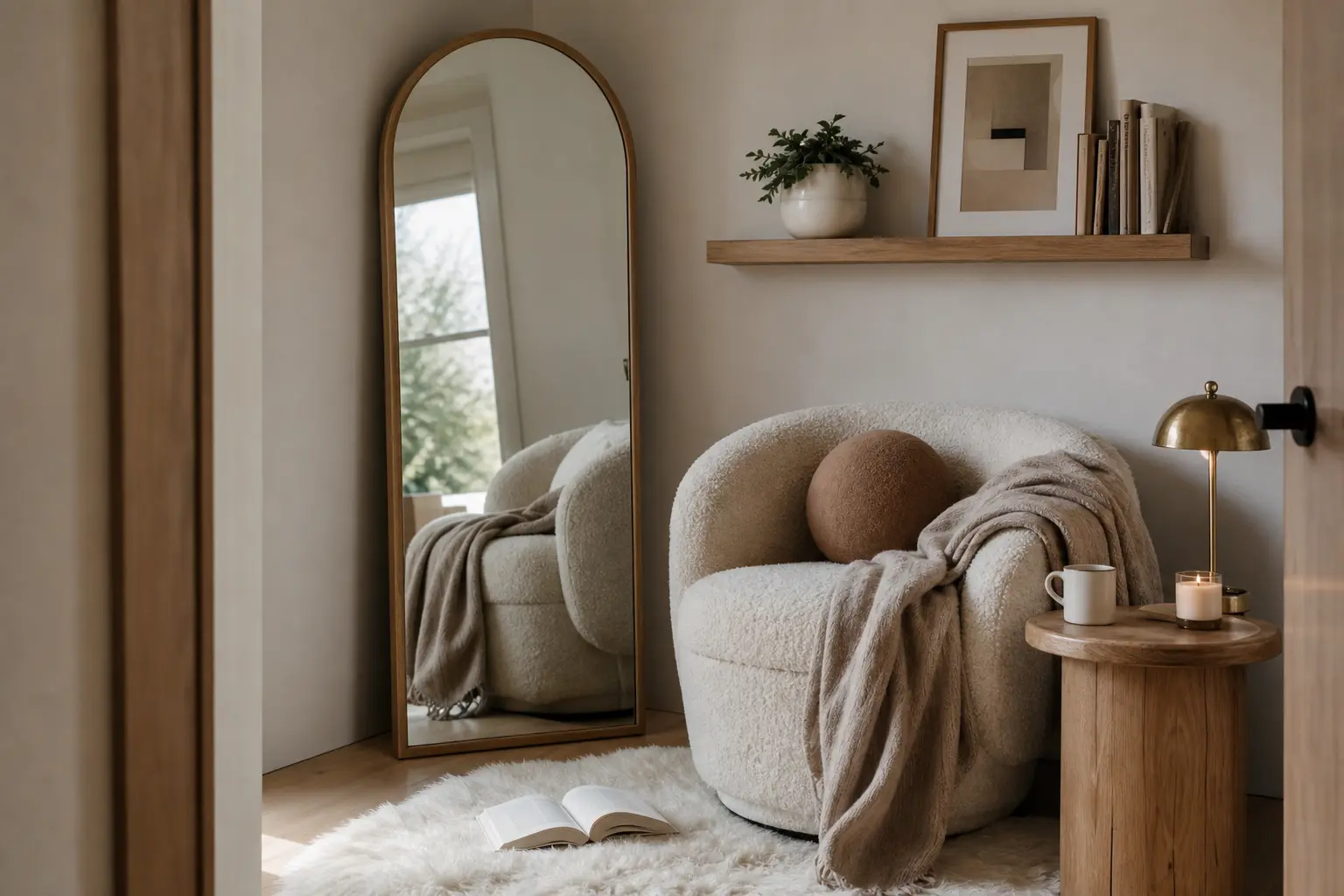
A floor mirror does two things a wall mirror usually can’t. It adds height to a small corner, since most floor mirrors stand 5 to 6 feet tall, and it reflects light at a lower, more natural angle that spreads across the seating area rather than just the wall.
In Scandinavian design specifically, mirrors are a common tool for working with limited daylight. Long winters and smaller windows in much of the region pushed the style toward reflective surfaces and pale finishes that make the most of whatever light is available.
For a reading nook, this means the mirror isn’t just decorative. It’s doing real work, bouncing whatever light comes through a nearby window back into the seating area, which can make reading comfortable even in a corner that gets limited direct sun.
2. Choosing the Right Floor Mirror Shape and Size
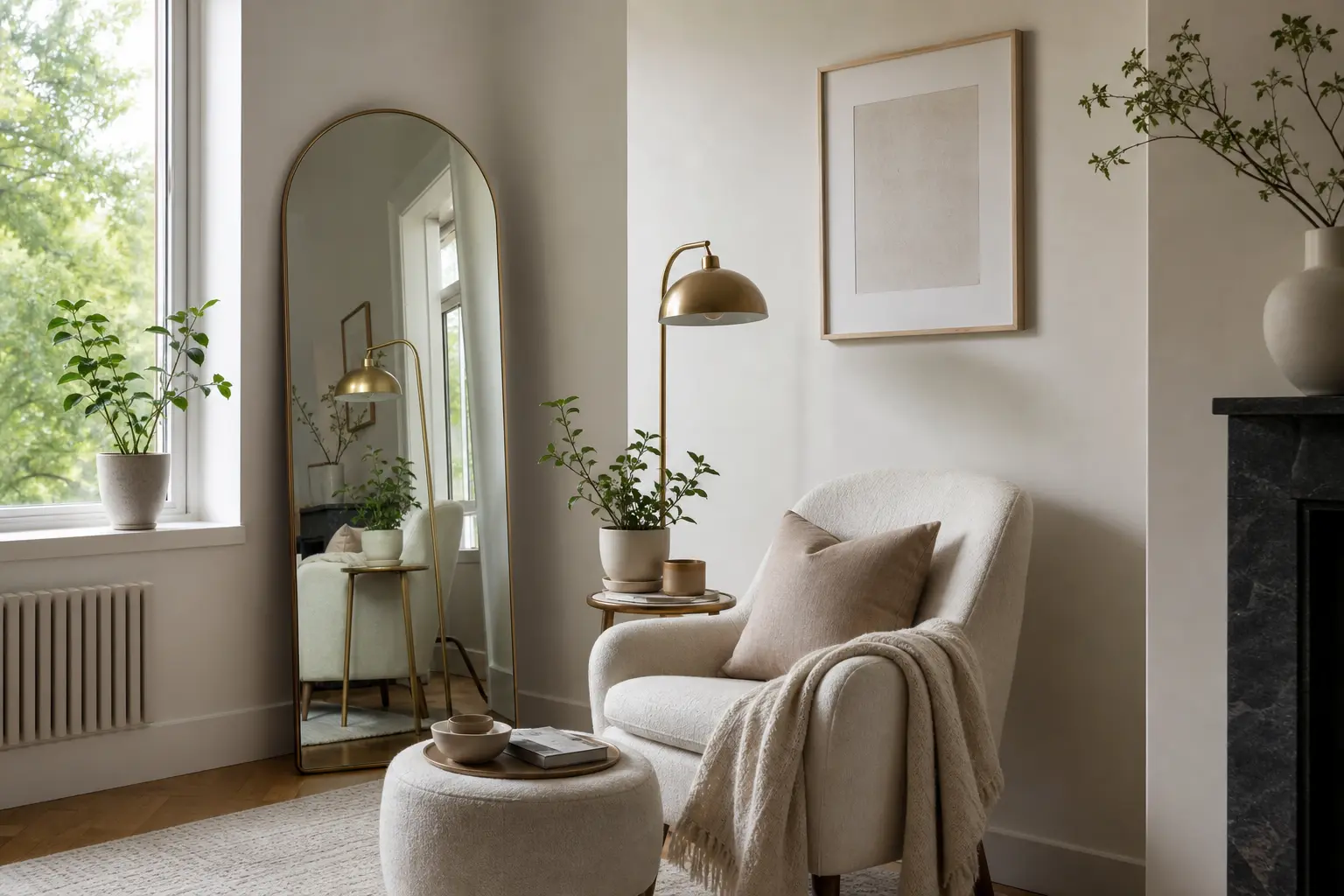
Rectangular leaning mirrors are the most common Scandinavian choice, typically 24 to 32 inches wide and 60 to 72 inches tall. This shape reflects the most vertical space, which helps a room feel taller.
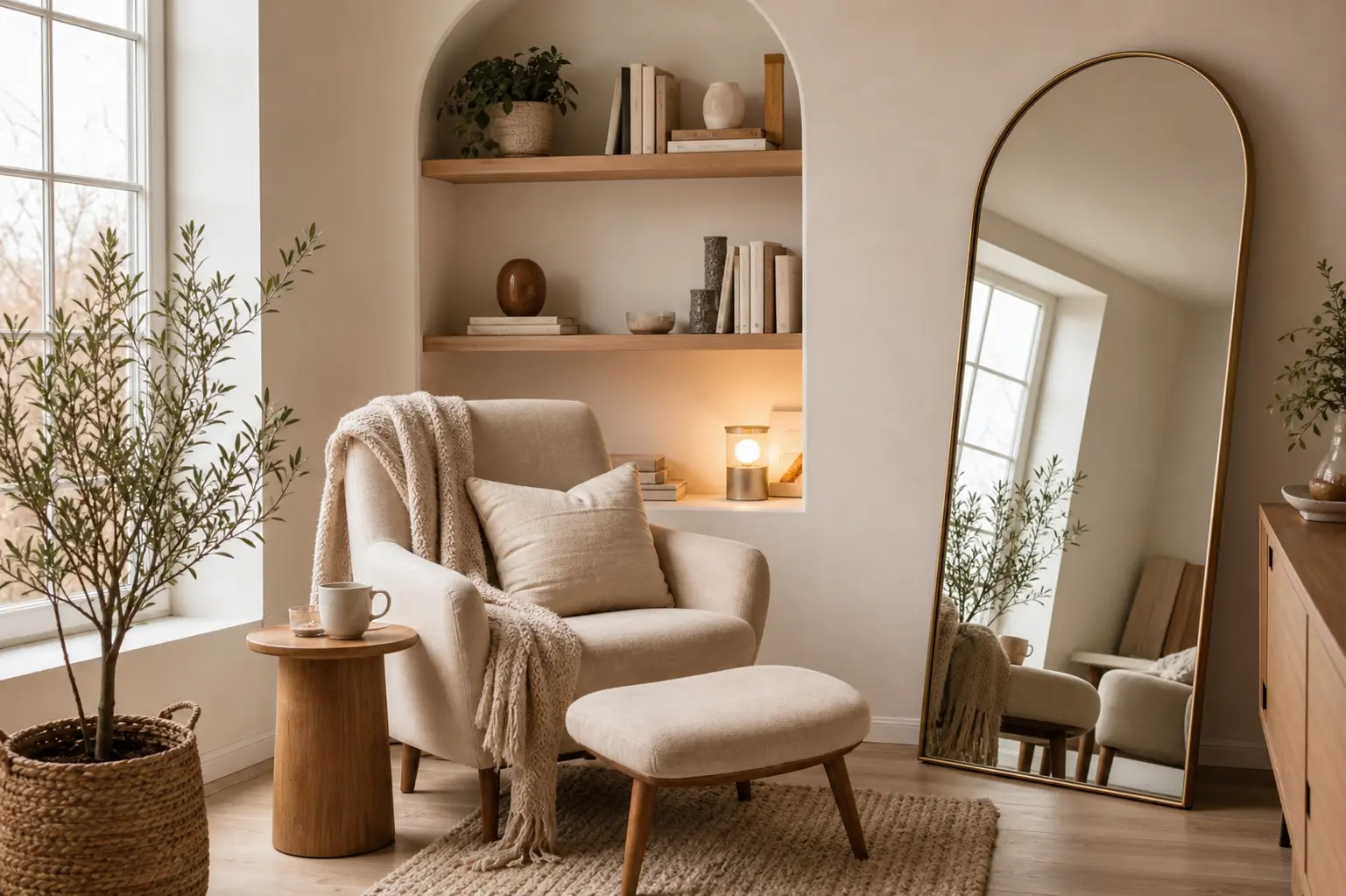
Arched or curved top mirrors have become popular recently and soften the otherwise straight lines common in Scandinavian furniture. If your nook already has a lot of straight edged furniture, an arched mirror can add a bit of visual variety.
Avoid oversized mirrors in a genuinely small corner. A mirror wider than about 32 inches can start to dominate a tight nook rather than complementing the seating area next to it. Measure your corner width first, then choose a mirror that leaves at least 12 inches of clearance on each side.
Frame Finish Matters
Pale wood, like ash or whitewashed oak, fits the Scandinavian look best. A dark or heavily ornate frame can pull the eye away from the calm, minimal feeling this style is going for.
3. Where to Place the Mirror for Maximum Reflected Light
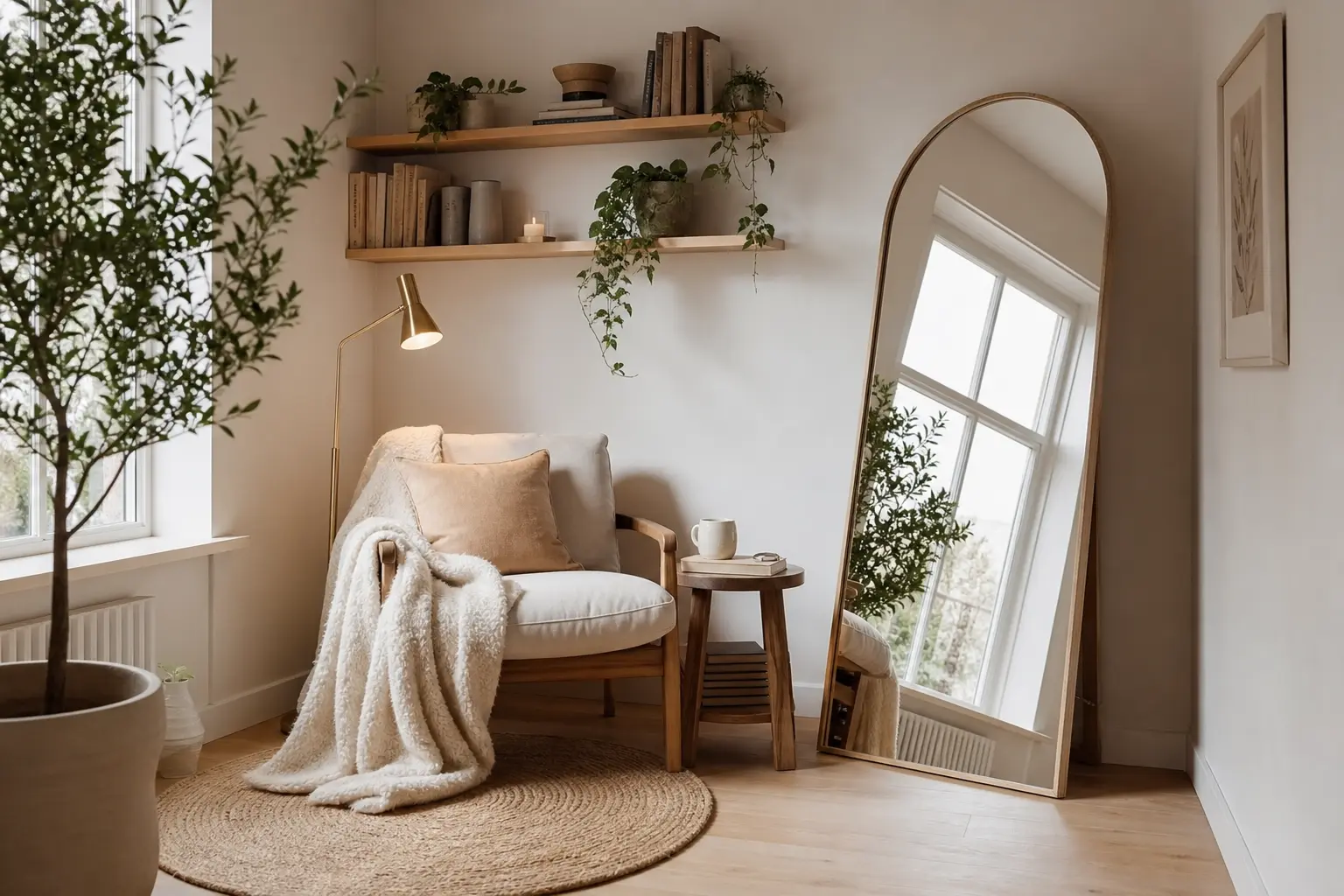
Position the mirror at an angle facing the nearest window, rather than directly across from it. A slight angle, around 30 to 45 degrees, tends to reflect light across the seating area instead of bouncing it straight back out the window.
Leaning the mirror against the wall, rather than mounting it flat, is both easier in a rental and part of the Scandinavian aesthetic itself. A slight lean, about 5 to 10 degrees off the wall, is standard for most leaning floor mirrors and doesn’t require any hardware.
Keep the mirror a few inches away from the chair itself, ideally to the side rather than directly behind it. This placement reflects the room and the window light without putting your own reflection directly in your line of sight while reading.
4. Pairing a Floor Mirror with Scandinavian Furniture Choices
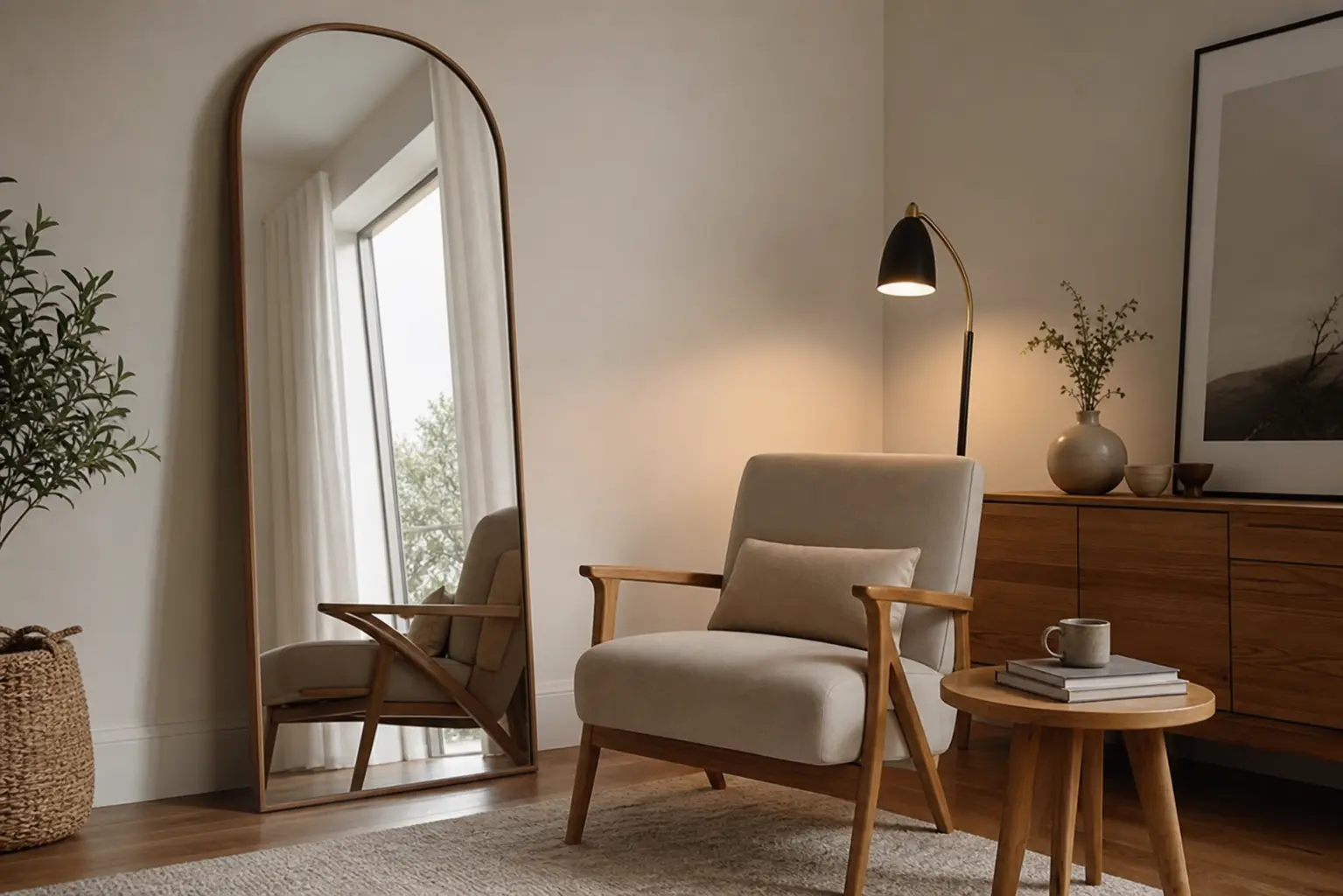
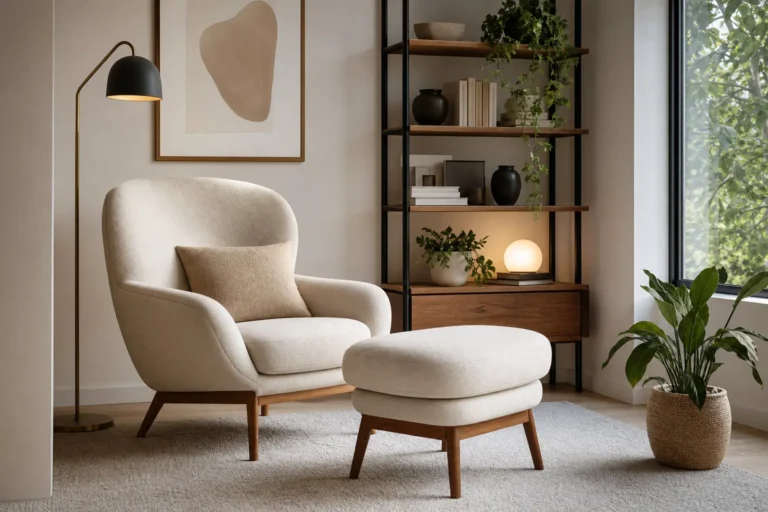
Look for a chair with visible pale wood legs, since that’s one of the defining traits of Scandinavian furniture. Wood tones like birch, ash, or light oak echo the frame of the mirror and tie the whole corner together.
A low profile ottoman or a simple footstool works better here than an oversized one. Scandinavian design tends to favor smaller, more functional pieces over large statement furniture, which also happens to suit a tight corner well.
Choose upholstery in a natural fabric, like linen, wool, or a nubby boucle, in a light neutral color. Avoid heavy velvet or glossy synthetic fabrics, which read as more traditional or formal than the relaxed, understated Scandinavian look.
5. Keeping the Color Palette Calm and Uncluttered
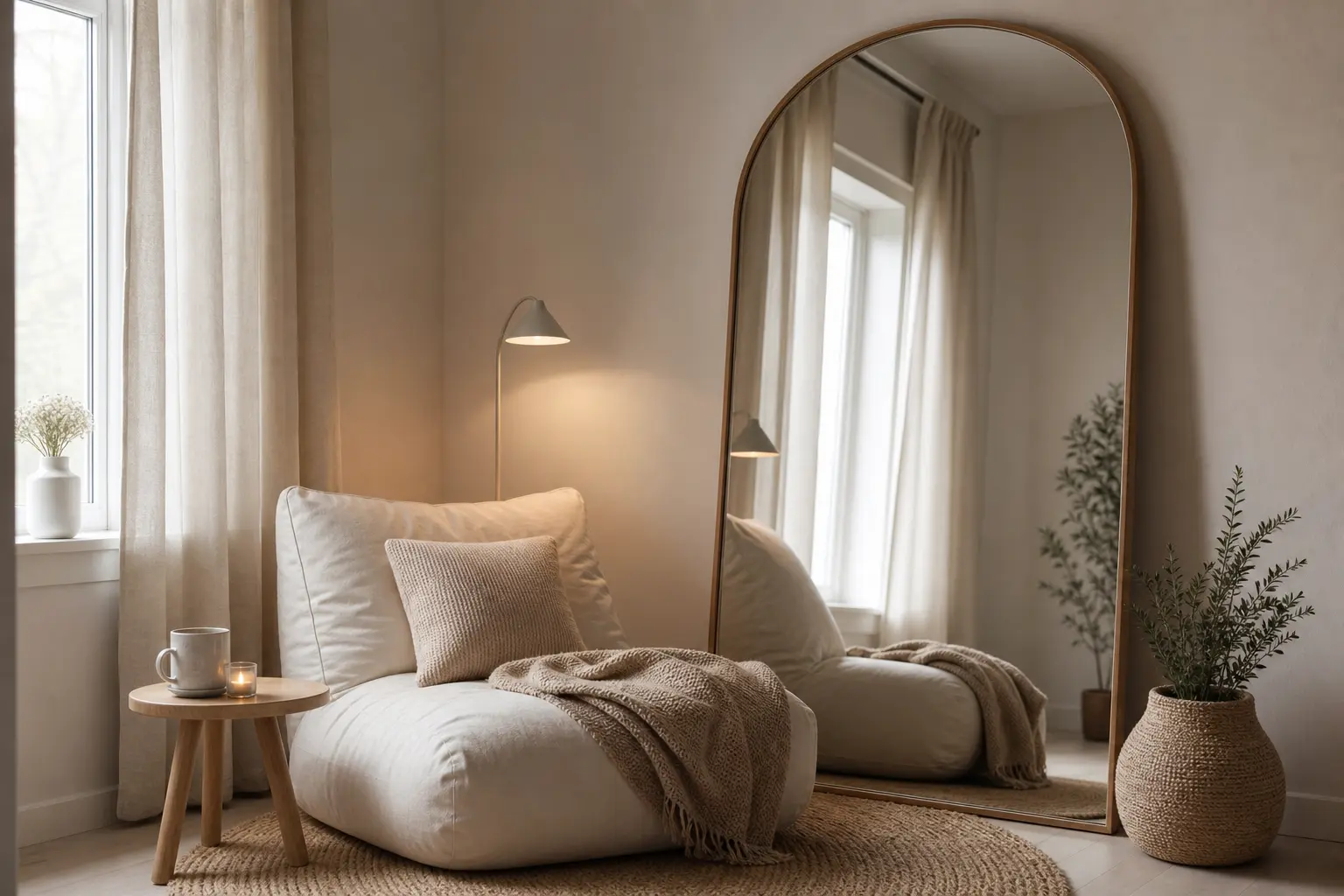
Stick to two or three colors total in the nook. A common Scandinavian palette is off white or cream, a pale wood tone, and one muted accent color, like sage green or dusty blue, used sparingly on a single pillow or throw.
Avoid patterns that are too busy or graphic. If you want pattern at all, a subtle woven texture or a simple stripe fits the style better than a bold floral or geometric print.
White or very pale walls behind the nook help the mirror do its job too, since a light wall reflects more of the available light than a dark one would. If your walls are already a deep color, consider limiting the darker tone to one accent wall elsewhere in the room.
6. Layering Natural Textures Without Losing the Minimalist Feel
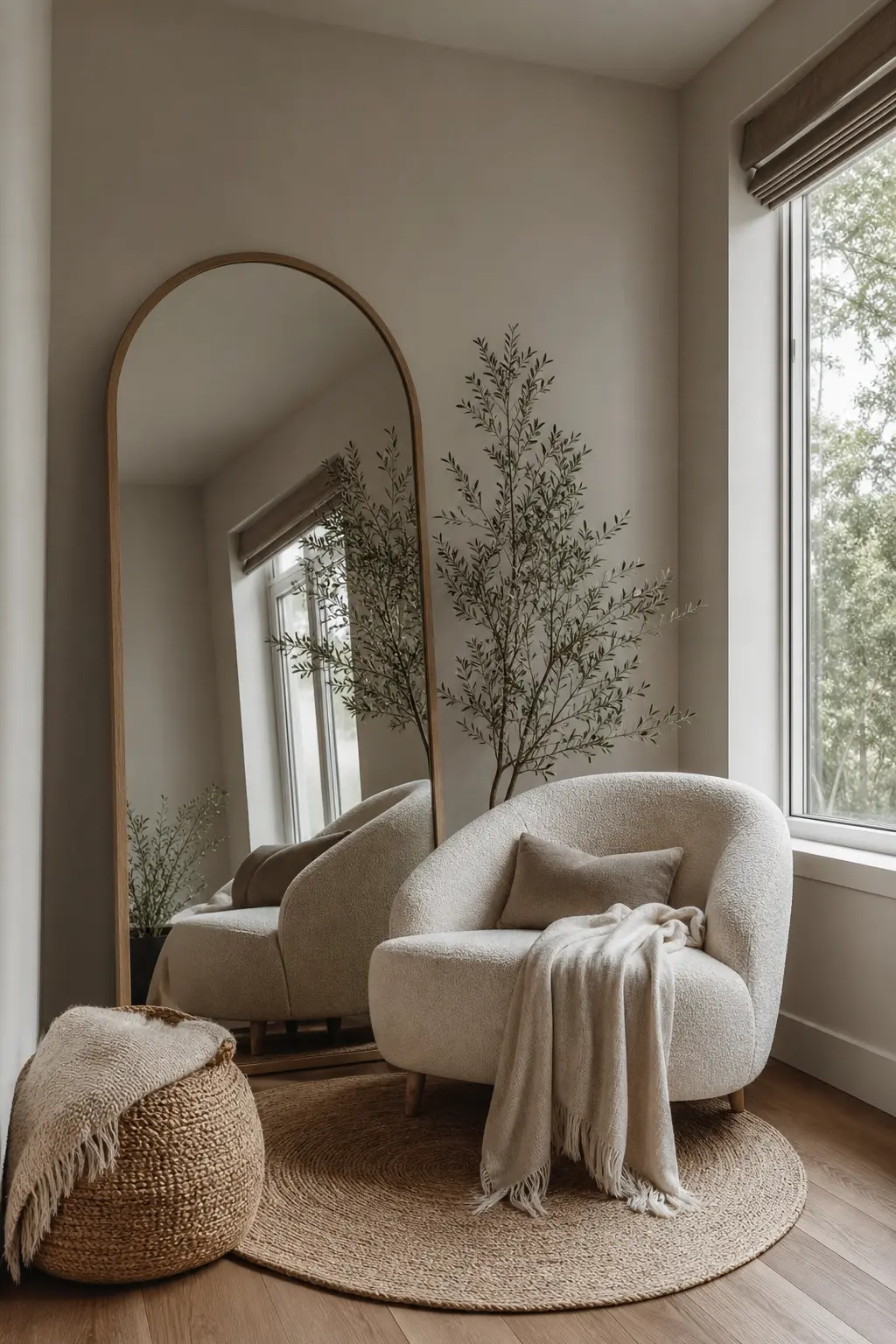
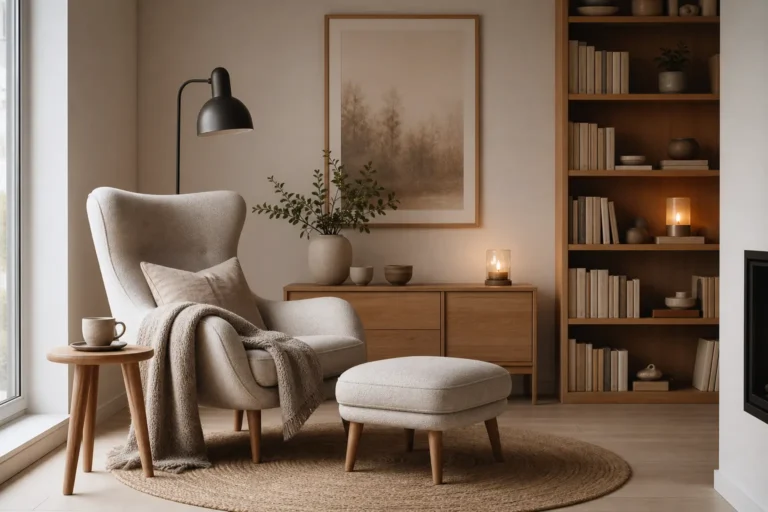
Scandinavian style isn’t meant to feel bare or cold. Layer in texture through a chunky knit throw, a sheepskin draped over the ottoman, or a woven jute rug beneath the chair.
Keep the number of textures limited to two or three within the nook itself. Piling on too many different materials, like fur, velvet, rattan, and knit all at once, starts to work against the calm, edited feeling that defines this style.
A small potted plant, like a snake plant or a trailing pothos, adds a bit of organic life to the corner without cluttering it. One plant is usually enough in a small nook. More than that can start to crowd the space.
7. Lighting That Works with the Mirror, Not Against It
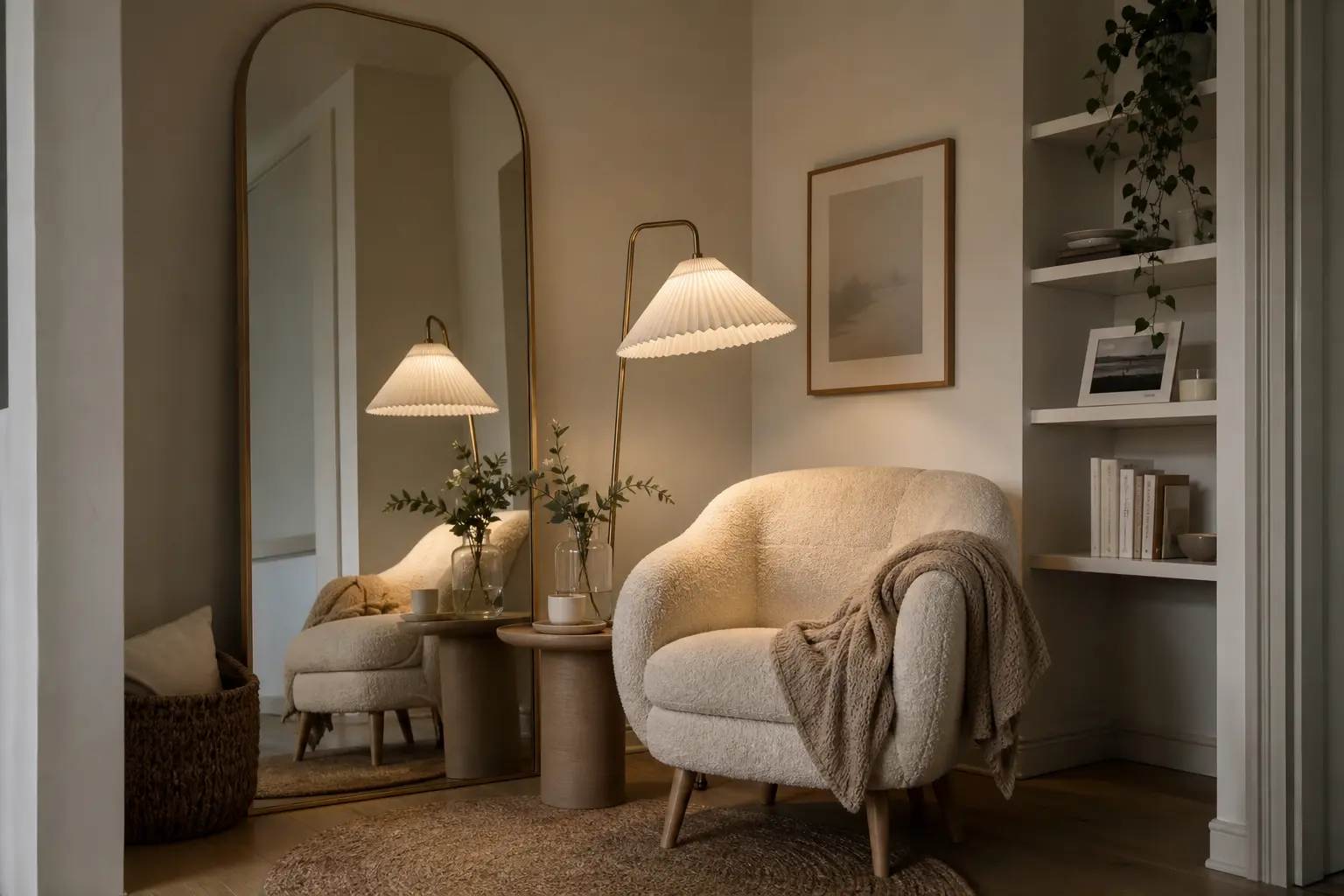
A floor mirror amplifies existing light, but you’ll still want a dedicated reading light for evenings when there’s no natural light to reflect. A simple wood based floor lamp or an arc lamp fits the Scandinavian aesthetic well.
Position the lamp so it doesn’t shine directly into the mirror at eye level, since that can create glare rather than a soft ambient glow. Slightly behind or beside the chair, angled toward the reading material, works best.
Warm white bulbs, generally in the 2700 to 3000 Kelvin range, suit the cozy feel this style is going for. Cooler, bluish light can feel at odds with the warm wood tones typical of Scandinavian furniture.
8. Avoiding Common Mirror Placement Mistakes in Tight Corners
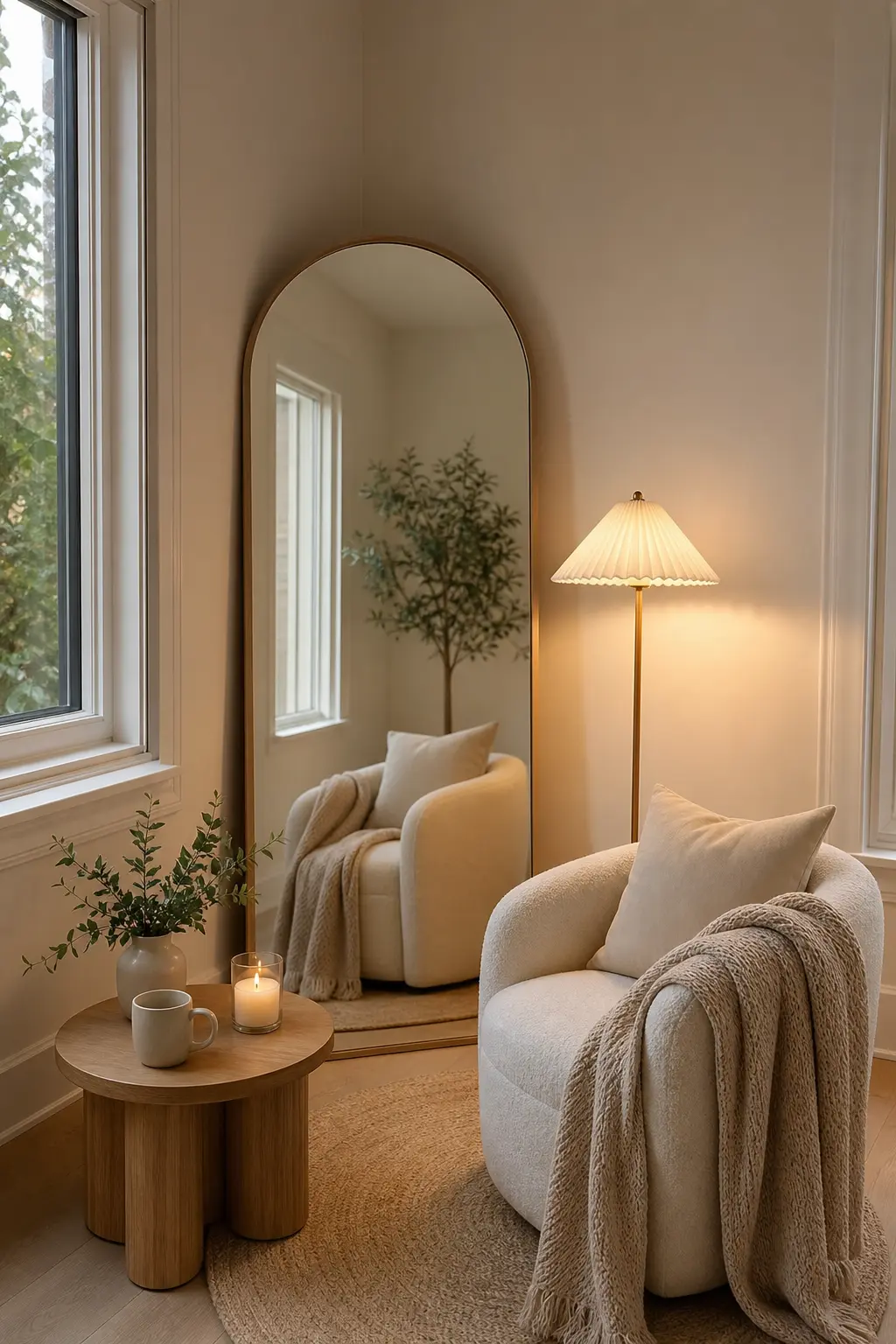
Placing a mirror directly across from a cluttered part of the room is one of the most common mistakes. The mirror will reflect that clutter right back into the nook, which undercuts the calm feeling you’re going for.
Another mistake is leaning the mirror too close to the chair, so it reflects the seated reader constantly. This can be distracting rather than relaxing, especially during long reading sessions.
Finally, avoid placing a floor mirror where it reflects a bright light source, like a bare window at sunset or an uncovered bulb, directly at seated eye level. That reflection can create harsh glare exactly where you’re trying to read comfortably.
9. Small Space Layouts That Make Room for a Mirror and a Chair
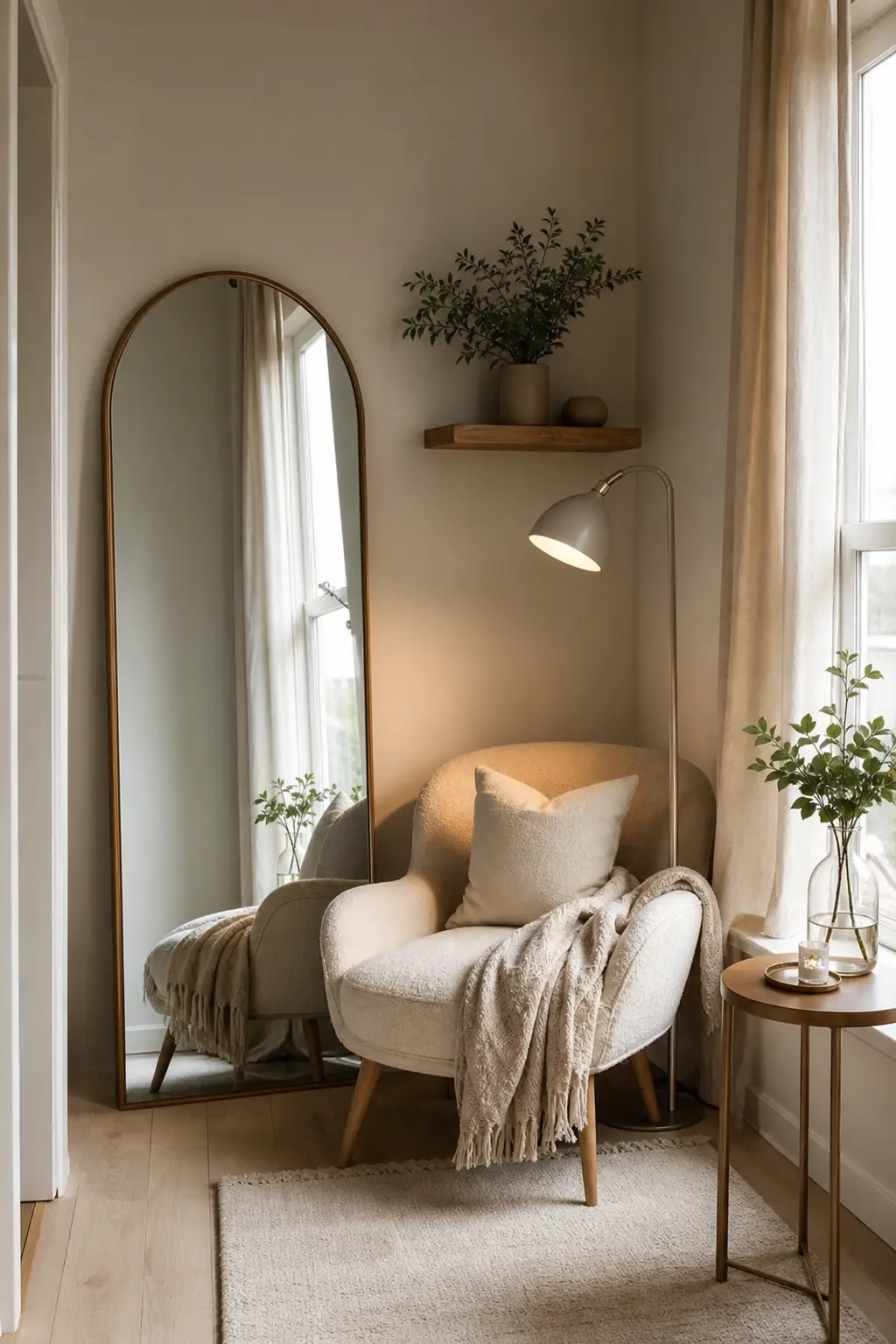
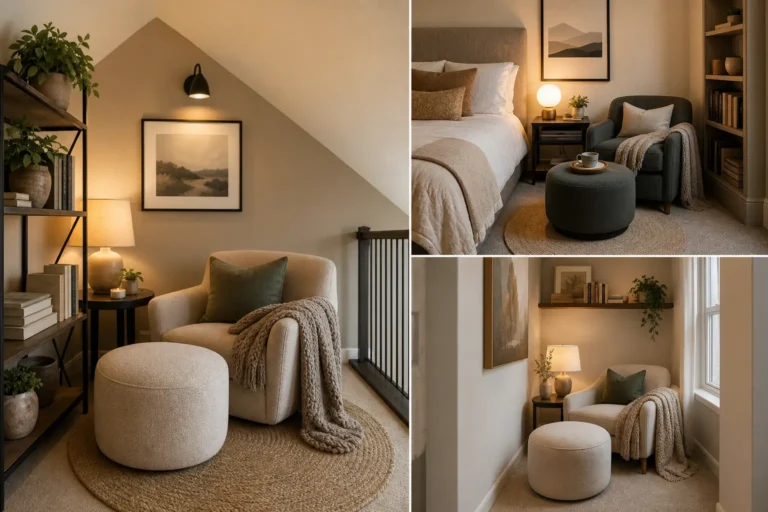
In a corner as tight as 4 by 4 feet, position the mirror flush along one wall and angle the chair diagonally into the remaining space. This diagonal placement often fits both pieces more comfortably than trying to square everything off.
If the nook sits in a bedroom, placing the mirror near the foot of the bed rather than directly in the reading corner can still contribute reflected light to the space while freeing up floor room specifically for the chair and ottoman.
In an open floor plan, use the mirror itself as part of the visual boundary that separates the reading nook from the rest of the room. Its height and reflectiveness naturally draw the eye and mark the edge of the space without needing an actual wall.
10. Budget Tiers: What to Expect at Each Price Point
At the lower end, a basic leaning floor mirror with a simple wood or metal frame typically costs 60 to 150 dollars, widely available from mainstream furniture retailers.
Mid tier options, including a solid wood frame in a specific Scandinavian style with an arched or rounded top, generally run 150 to 350 dollars, depending on size and finish quality.
Higher end mirrors, often handcrafted or from smaller design focused brands, can run 400 dollars and up. At this tier, you’re typically paying for solid wood construction and a more refined joinery on the frame, rather than a laminate or veneer finish.
Mistakes to Avoid
- Choosing a mirror too large for the corner, which overwhelms the seating area instead of opening it up
- Placing the mirror so it constantly reflects the seated reader, which can feel distracting over time
- Angling the mirror toward clutter elsewhere in the room instead of toward a window or clean wall
- Mixing more than three colors or four textures in a small nook, which works against the calm Scandinavian feel
- Skipping a dedicated reading light and relying only on reflected daylight, which fails once the sun goes down
- Positioning the mirror to reflect a bare bulb or bright window directly at eye level, creating glare
Frequently Asked Questions
Does a floor mirror actually make a small room feel bigger, or is that just a myth? It’s a real effect, though it depends on placement. A mirror angled toward a light source or an open part of the room genuinely adds a sense of depth and brightness, especially in a corner that otherwise feels closed in.
What’s the ideal height for a floor mirror in a reading nook? Most leaning floor mirrors used for this purpose stand between 5 and 6 feet tall. That height is enough to reflect a meaningful portion of the room without overwhelming a small corner.
Can I mount the mirror to the wall instead of leaning it? Yes, and mounting can be safer in a household with small children or pets, since a leaning mirror can potentially be pulled over. Just confirm your wall can support the mirror’s weight with proper anchors.
Is Scandinavian style the same as generic minimalism? Not exactly. Scandinavian style shares minimalism’s uncluttered approach, but it specifically emphasizes natural materials, pale wood, and cozy texture, rather than the starker, more industrial feel sometimes associated with pure minimalism.
How do I keep the mirror from getting in the way in a really tight corner? Choose a narrower mirror, under 28 inches wide, and place it flush against the wall rather than at a wide angle. A narrower footprint leaves more usable floor space for the chair and ottoman.
Conclusion
A floor mirror is one of the few decor pieces that adds both light and visual depth to a small reading nook without taking up much real floor space. Angle it toward your best light source, keep the surrounding palette calm, and pair it with pale wood furniture for the full Scandinavian effect. Get the placement right, and even a genuinely tiny corner can feel like the brightest, most open spot in the room.