10 Cozy Reading Nook Ideas with Accent Chairs & Ottomans | Small Space Decor Inspiration
You’ve got a corner that’s been empty for months. Maybe it’s collecting a laundry basket or nothing at all. It feels wasted, but every idea you’ve seen online assumes you have a spare room to work with. A cozy reading nook with an accent chair and ottoman doesn’t need much space at all. Even a 3 by 3 foot corner can hold a compact chair, a low ottoman, and a small light source. This article walks through 10 ways to build that nook without it feeling squeezed in or like an afterthought.
1. Why an Accent Chair and Ottoman Combo Works So Well in Small Spaces
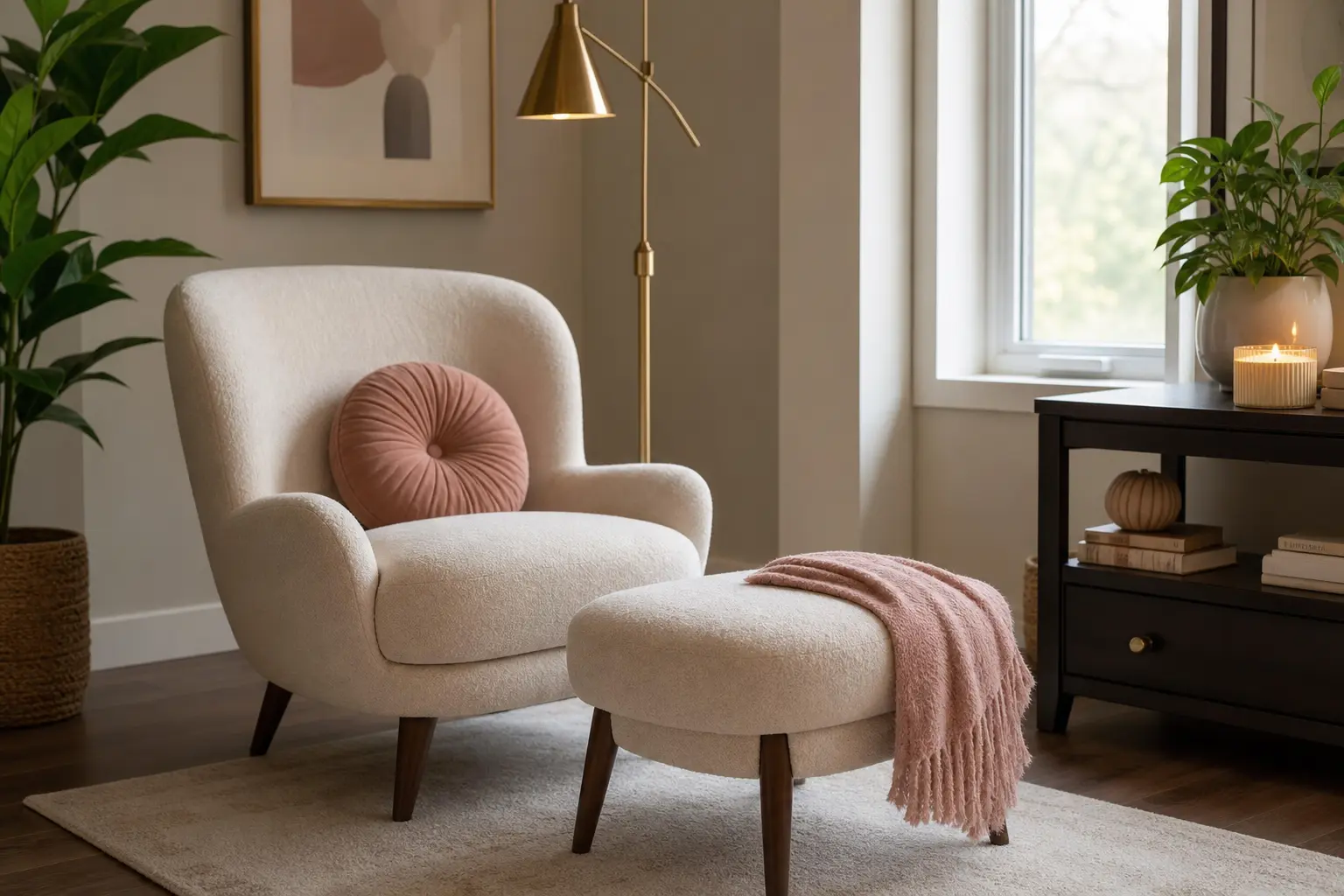
A single chair takes up far less floor space than a loveseat or sofa, which makes it the natural starting point for a small nook. An ottoman adds the comfort of a longer seat, since you can stretch your legs out, without the footprint of a full chaise.
This combo also works because it’s flexible. An ottoman can double as a footrest, a side table for a coffee cup, or extra seating when someone joins you. That kind of multi use furniture matters more in small spaces than in large ones.
Visually, a chair and ottoman pairing reads as a defined zone even without walls around it. That’s useful in an open floor plan or a studio apartment where you’re trying to carve out a distinct reading area within a larger room.
2. Measuring Your Corner Before You Choose a Chair
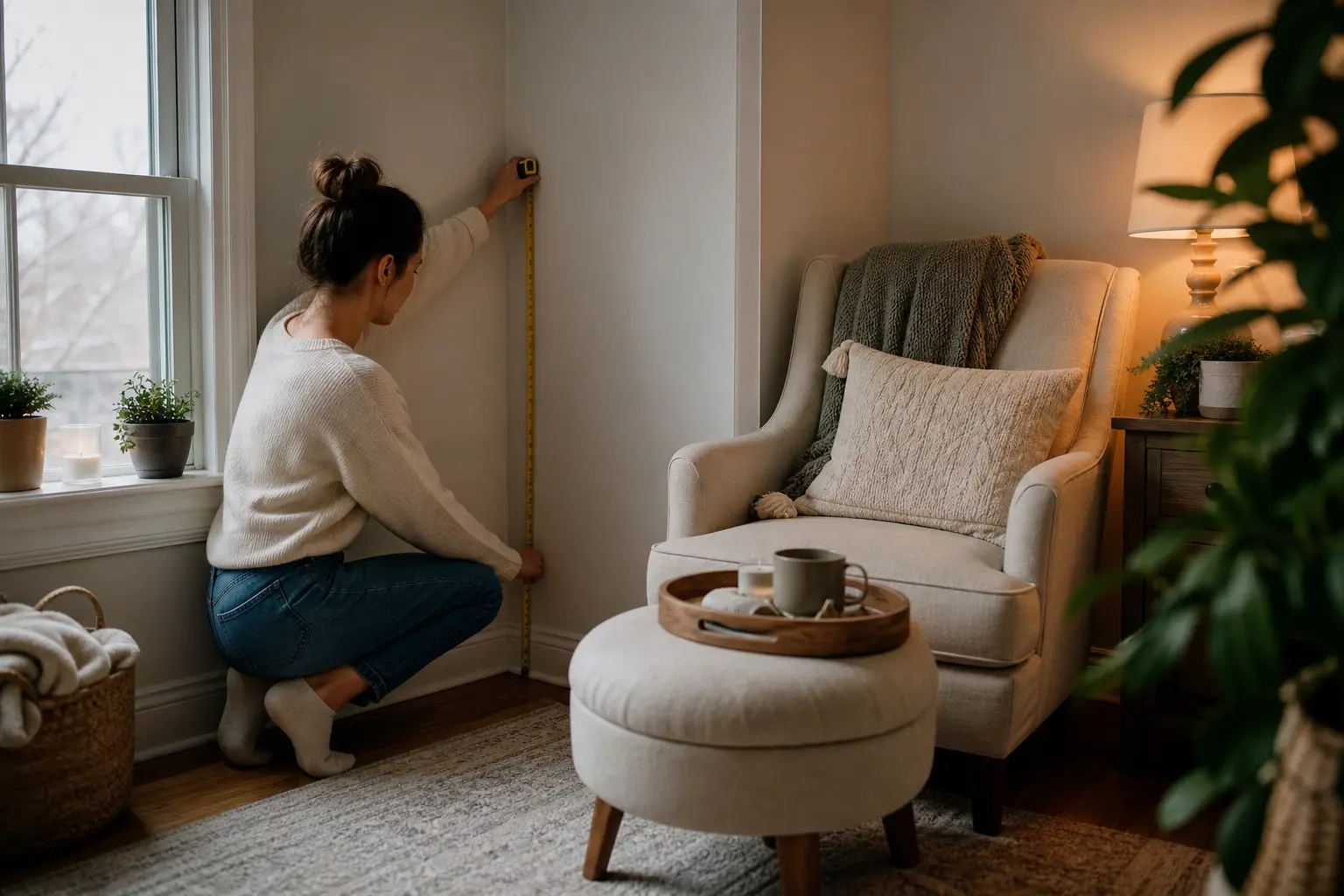
Before shopping, measure the actual corner space, not just a general estimate. A chair needs roughly 30 to 34 inches of width and depth to sit comfortably, and you’ll want another 24 to 30 inches in front of it for the ottoman and legroom.
If your corner is narrower than that, look for slipper chairs or armless accent chairs. These typically run 24 to 28 inches wide, several inches slimmer than a standard armchair, and they still read as a proper seat rather than a stool.
Don’t forget vertical space either. A tall wingback chair can feel overwhelming under a low ceiling or near a sloped roofline, so measure ceiling height in the exact spot you’re placing the chair, not just the room’s average height.
Quick Measuring Tip
Use painter’s tape on the floor to outline the chair and ottoman footprint before you buy anything. Walk around it for a day. If it feels tight already, size down before you commit to a purchase.
3. Chair Styles That Fit Tight Spaces Without Feeling Cramped
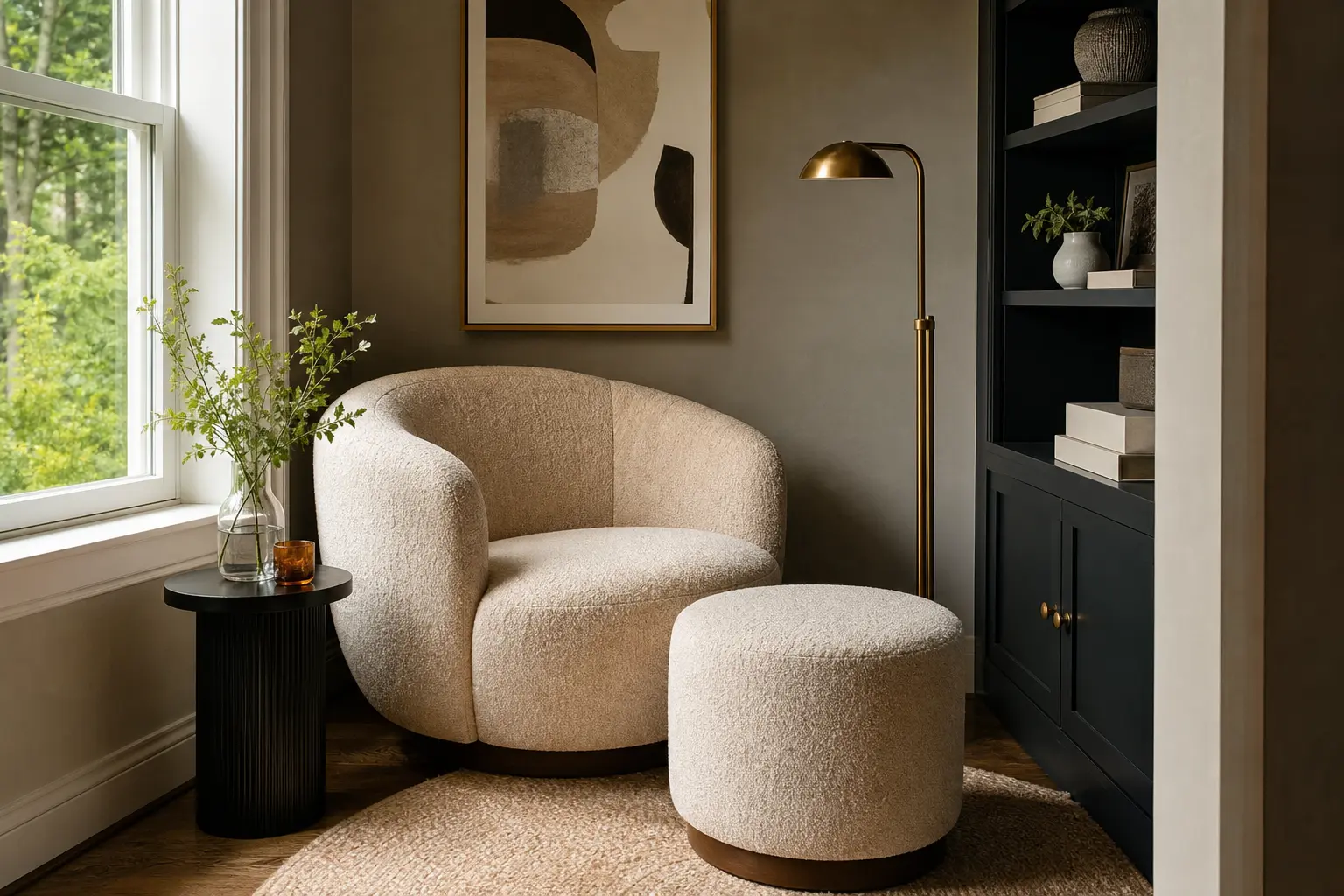
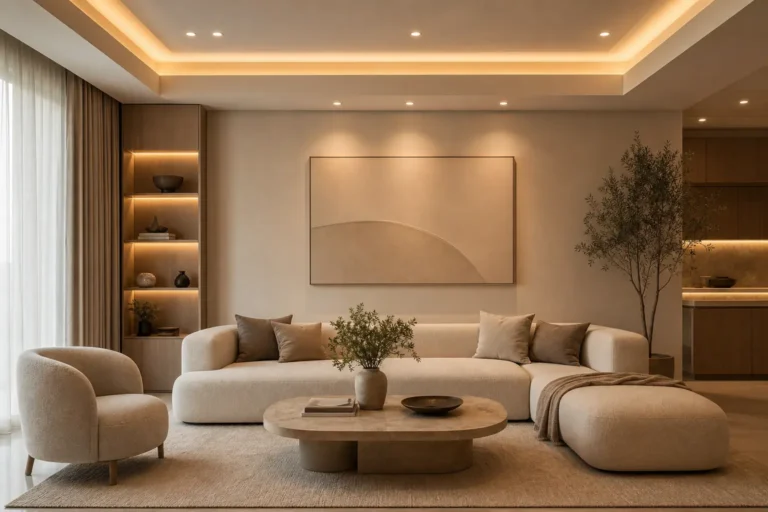
Slipper chairs, which have no arms and sit slightly lower than a standard armchair, are one of the best options for narrow corners. Without arms taking up width, they free up several inches on each side.
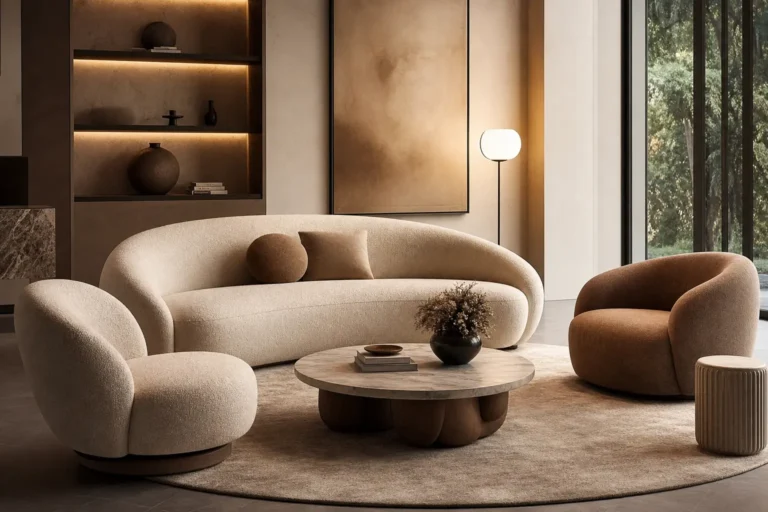
Swivel accent chairs are another strong choice, especially in a corner near a window. Being able to turn the chair toward natural light during the day and back toward a lamp at night adds function without needing extra floor space for a second seat.
Avoid oversized wingback or barrel chairs in a genuinely small nook. They look striking in photos of large rooms, but in a tight corner they can make the whole area feel like the chair barely fits, which undercuts the cozy effect you’re going for.
4. Ottoman Pairings That Add Function Without Bulk
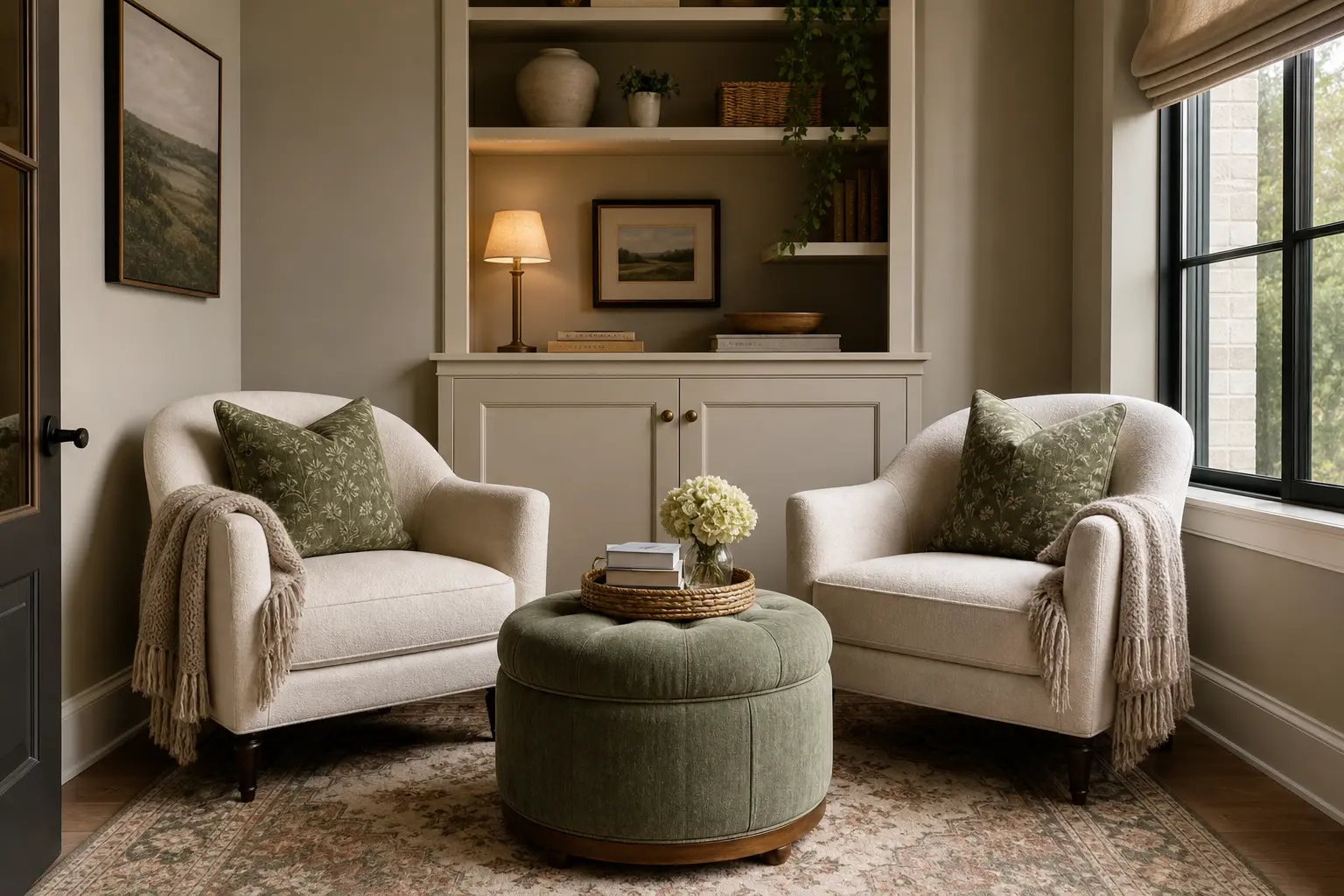
A round ottoman generally works better than a square one in a tight corner, since there are no sharp corners to catch on nearby furniture or walls. Aim for a diameter close to the width of your chair’s seat, usually 18 to 24 inches, so the pairing looks proportional.
Storage ottomans are worth considering if your nook doubles as a spot to stash a few books or a spare blanket. A lift top or fabric bin style ottoman keeps clutter out of sight while still functioning as a footrest.
If floor space is extremely tight, skip the ottoman entirely and choose a chair with a built in footrest or a recliner style accent chair instead. It’s a smaller footprint solution that still gets you the same stretched out comfort.
5. Layering Texture with Throws, Pillows, and Rugs
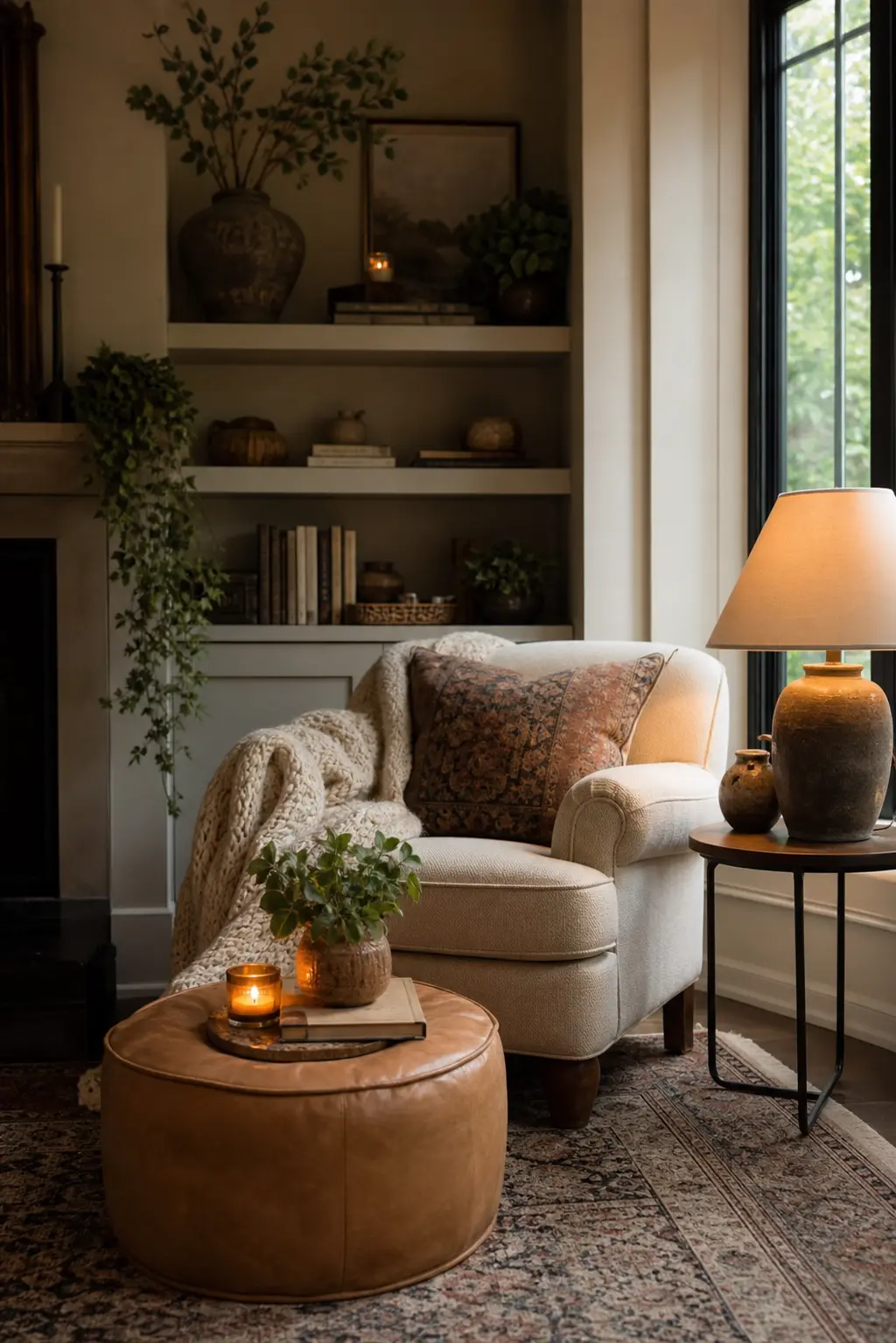
A single solid colored chair can look a bit flat on its own. Add one or two pillows in a contrasting texture, like a nubby bouclé or a woven pattern, to break up the surface without overwhelming a small seat.
A folded throw blanket draped over one arm or the back of the chair adds warmth and signals that this spot is meant for lingering, not just sitting briefly. Choose a color that echoes something else in the room so it doesn’t feel randomly placed.
A small area rug, even one as compact as 3 by 5 feet, helps ground the nook and define its boundary within a larger room. Just make sure the rug’s edge doesn’t create a tripping hazard where it meets the rest of the flooring.
6. Lighting a Reading Nook So It’s Actually Usable at Night
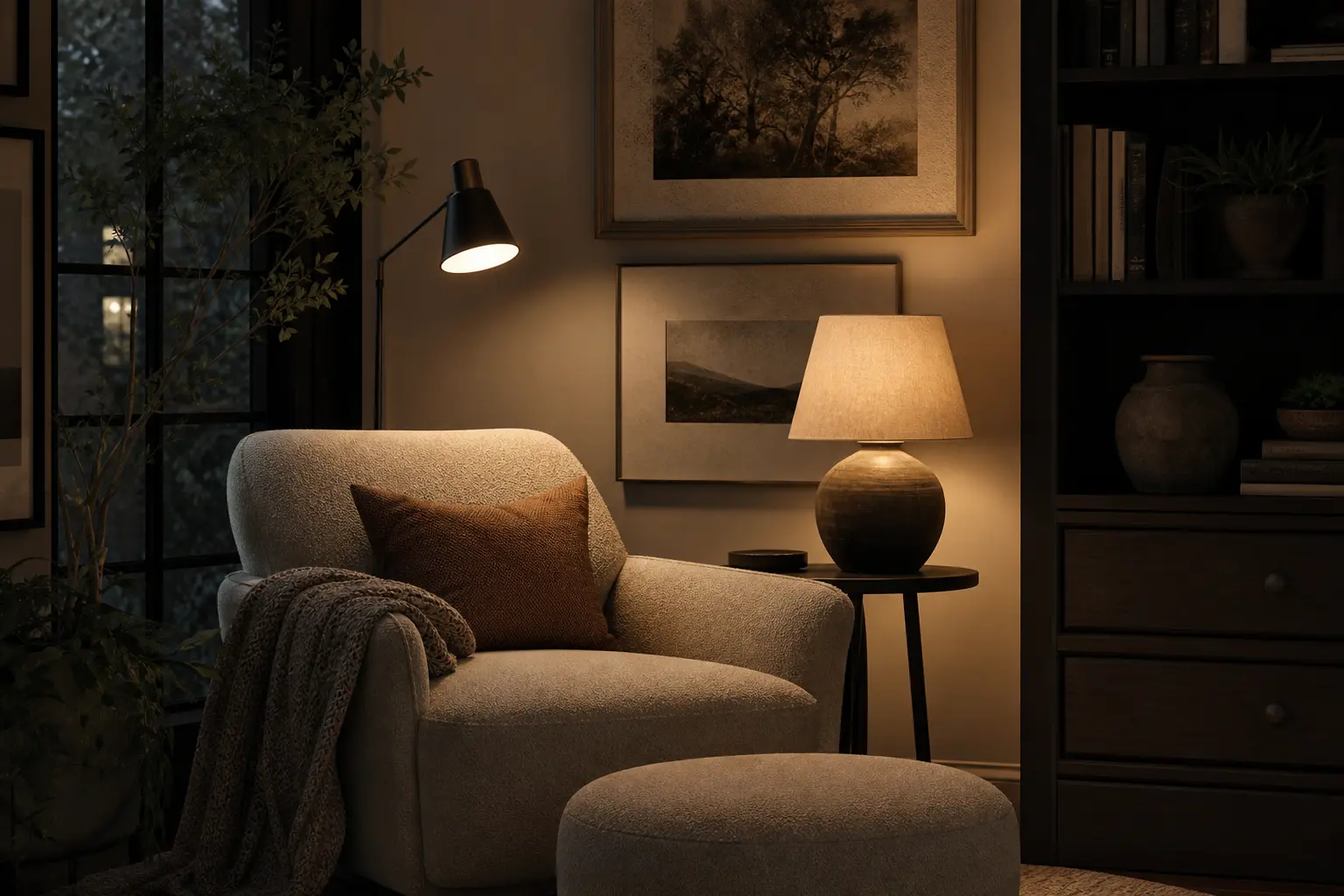
Overhead lighting is rarely enough for reading. A dedicated light source next to the chair matters more than almost anything else on this list if you actually plan to read there after dark.
A floor lamp with an adjustable arm or shade angle gives you direct light on the page without glare. Position it slightly behind and to the side of the chair, roughly at shoulder height when seated, rather than directly overhead.
If floor space is too tight for a lamp, a wall mounted swing arm sconce next to the chair frees up the floor entirely while still providing focused light. This is often the better choice in a genuinely small corner.
7. Adding Storage Around a Small Nook Without Cluttering It
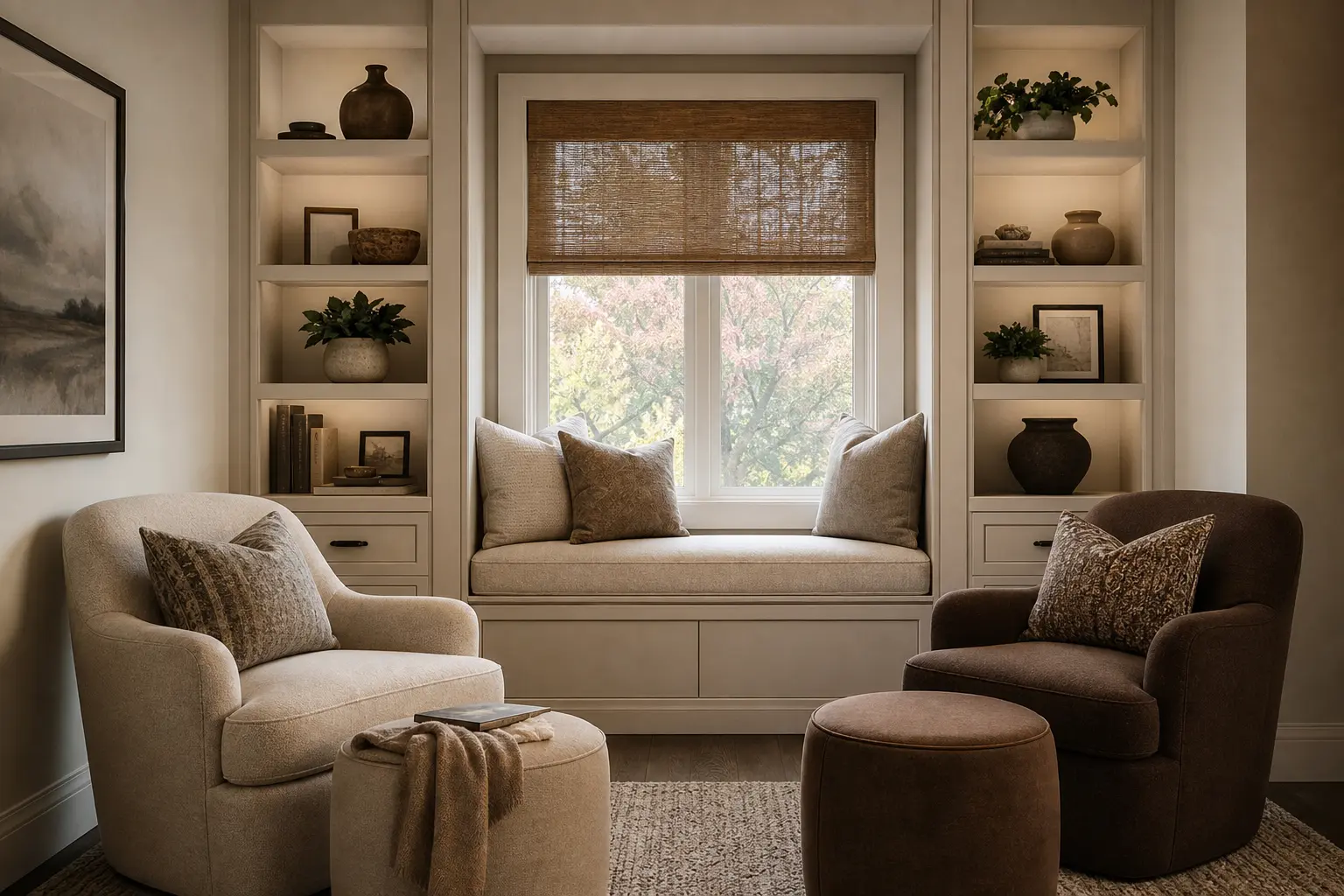
A small side table, even a narrow C shaped table that slides partially under the chair arm, gives you a spot for a drink or a stack of books without adding much footprint.
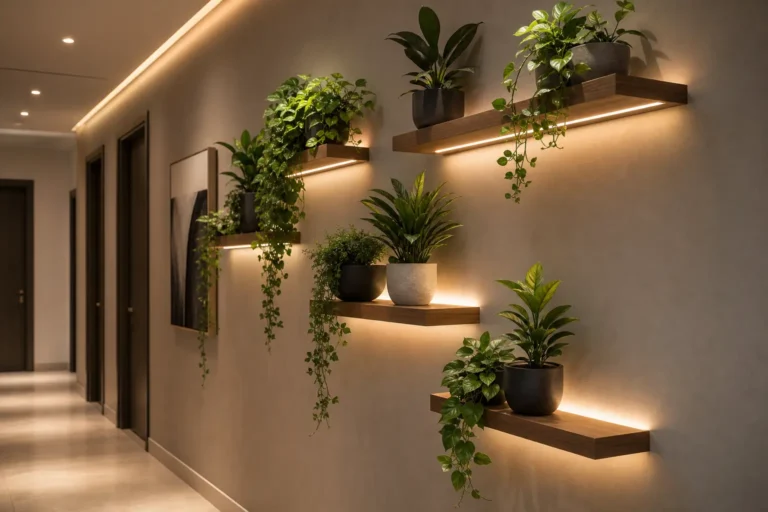
Wall mounted shelving above or beside the chair keeps books accessible without taking up floor space at all. A single 24 inch floating shelf can hold a handful of current reads plus a small plant or candle.
Avoid adding a large bookcase directly next to a compact nook. It tends to visually crowd the space and can make the chair feel like it’s tucked into storage rather than sitting in its own defined spot.
8. Color and Fabric Choices That Make a Small Nook Feel Larger
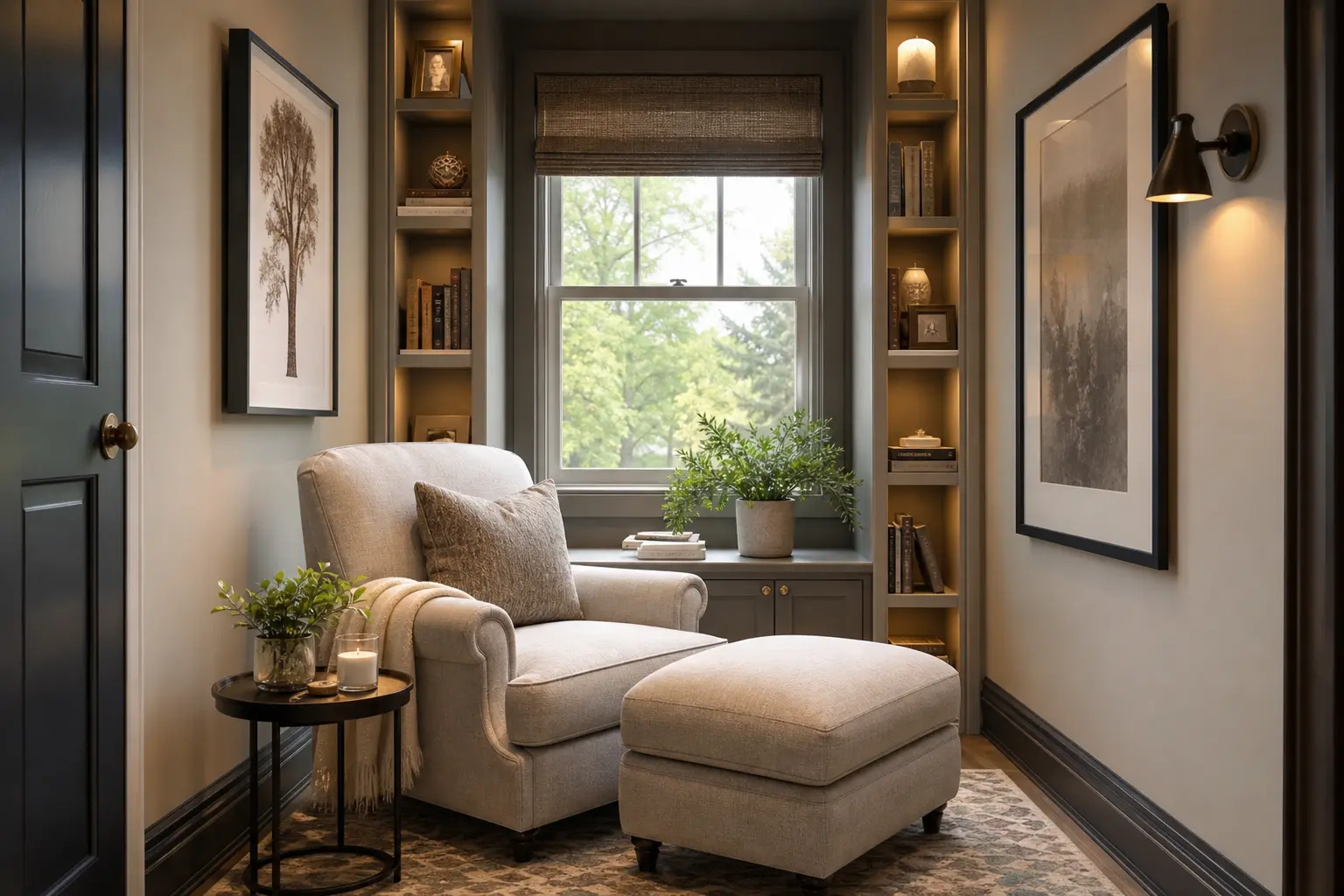
Lighter, muted fabric colors on the chair, like oatmeal, sage, or dusty blue, tend to make a small nook feel more open than a dark saturated color would. Dark colors aren’t off limits, but they read as heavier in a tight corner.
Stick to one or two main colors in the nook rather than several competing tones. A chair, ottoman, and pillow in three different bold colors can make an already small area feel busier and more cramped than it actually is.
Natural materials, like a wood framed chair or a woven rattan ottoman, add warmth without adding visual weight the way a heavily upholstered piece might. This matters more in small spaces, where every material choice is more visible.
9. Placement Ideas for Apartments, Bedrooms, and Awkward Corners
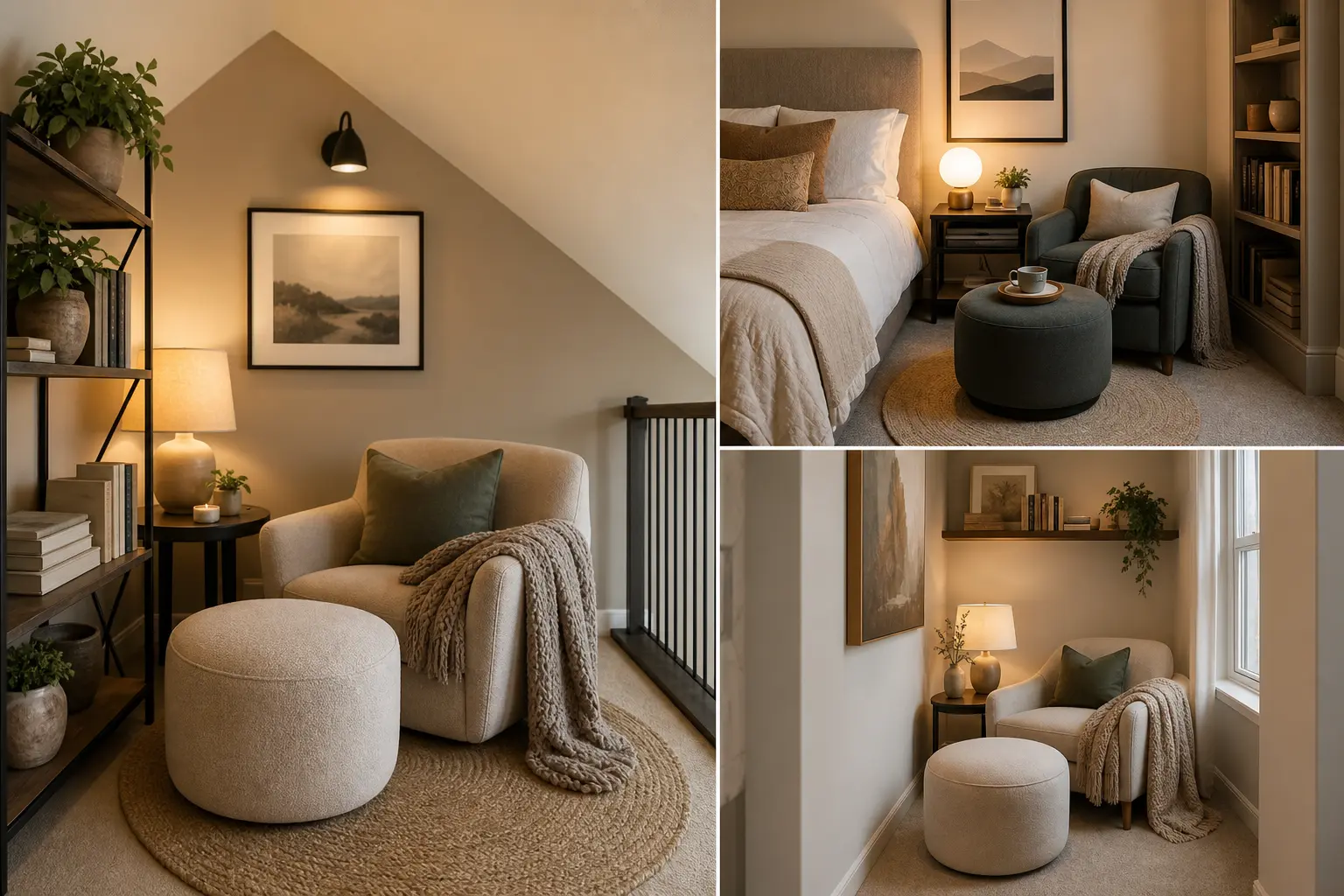
A window corner is the classic choice, since natural light doubles as both ambiance and functional reading light during the day. Even a narrow window nook, as little as 3 feet wide, can work with the right slim chair.
Bedroom corners work well too, particularly the space next to a closet or beside a dresser that otherwise goes unused. Just make sure the chair doesn’t block a closet door or walking path.
In a studio apartment, a reading nook can help visually divide the sleeping area from the living area. Placing the chair and ottoman at an angle, rather than flush against the wall, often makes better use of an oddly shaped corner.
10. Budget Tiers: What to Expect at Each Price Point
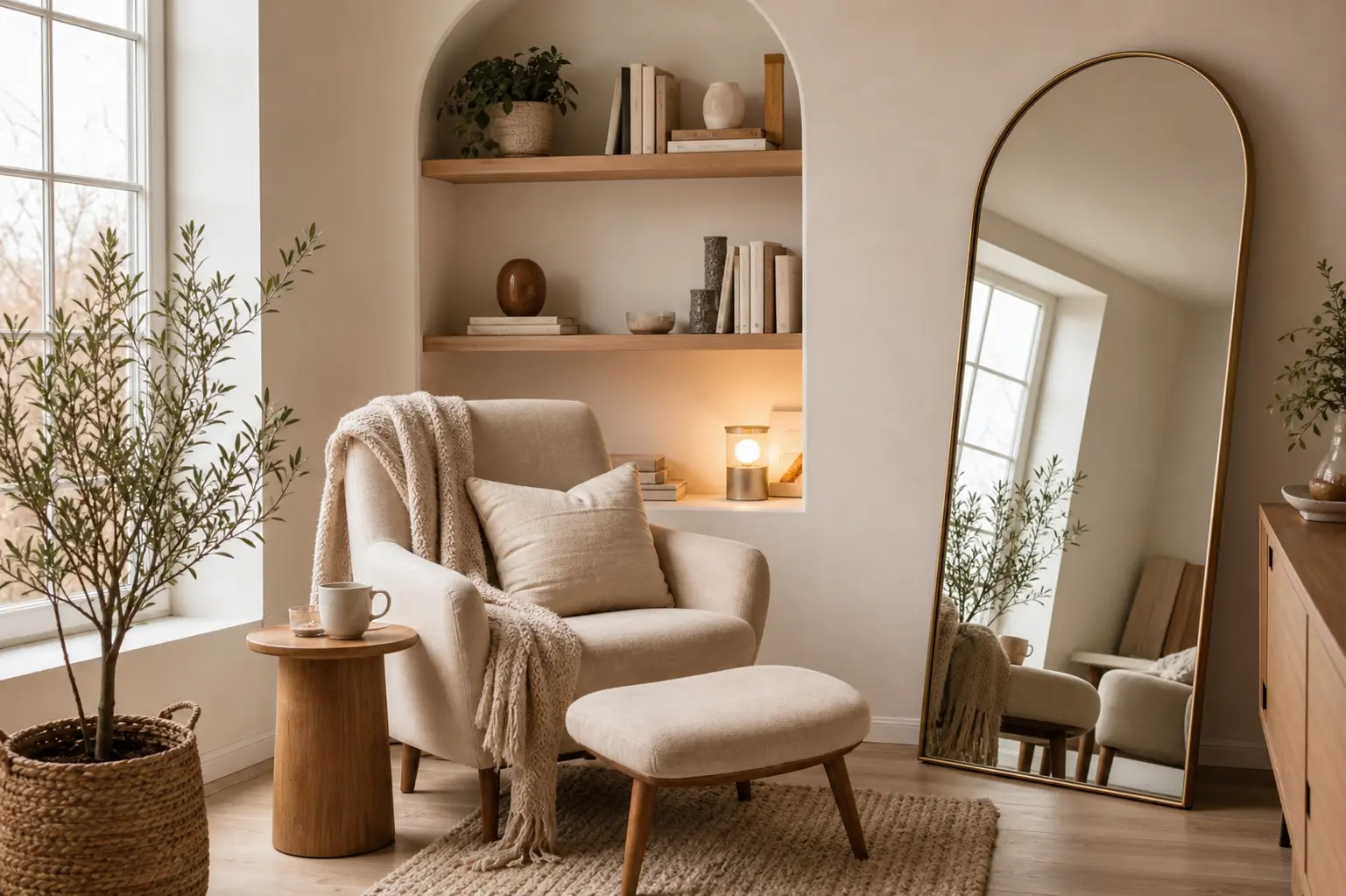
At the lower end, a basic accent chair and matching ottoman set can run 150 to 350 dollars total, particularly from budget furniture retailers or secondhand marketplaces.
Mid tier options, including a well made slipper or swivel chair with a coordinating storage ottoman, typically fall between 400 and 900 dollars, depending on fabric and frame quality.
Higher end setups, with a designer style chair, a leather or performance fabric ottoman, and a dedicated floor lamp, can run 1000 dollars and up. At this tier, you’re often paying for a more durable frame and fabric that holds up to daily use over many years.
Mistakes to Avoid
- Choosing a chair that’s too large for the actual corner, which makes the space feel cramped instead of cozy
- Skipping a dedicated light source, leaving the nook unusable once it gets dark
- Using three or more competing colors in one small area
- Forgetting to measure ceiling height, especially under sloped roofs or low windows
- Adding a large bookcase or bulky storage piece that visually crowds the seating
- Placing the chair where it blocks a door, closet, or main walking path
Frequently Asked Questions
How small can a corner be and still fit a reading nook? A corner as compact as 3 by 3 feet can work with the right slim chair, like a slipper or armless style. You may need to skip a full sized ottoman in favor of a chair with a built in footrest.
Do I need a window for a good reading nook? Natural light helps, but it’s not required. A well placed floor lamp or wall sconce can make a windowless corner just as functional for reading, especially in the evening.
What’s the most space efficient chair style for a tiny nook? Slipper chairs and armless accent chairs are generally the most space efficient, since removing the arms can save several inches of width compared to a standard armchair.
Should the ottoman match the chair exactly? It doesn’t have to. A complementary color or texture often looks more curated than an exact matching set, as long as the two pieces share a similar style or era.
Can a reading nook work in an open floor plan without walls around it? Yes. A rug, a change in lighting, and the chair and ottoman pairing itself are usually enough to visually define the space, even without walls separating it from the rest of the room.
Conclusion
A cozy reading nook doesn’t require a spare room or a big budget. It requires the right scaled chair, a functional ottoman, and a light source you’ll actually use after dark. Measure your corner honestly before you shop, and let that measurement guide the chair style rather than choosing a chair first and hoping it fits. That order makes the difference between a nook that gets used every week and one that just sits there looking nice.