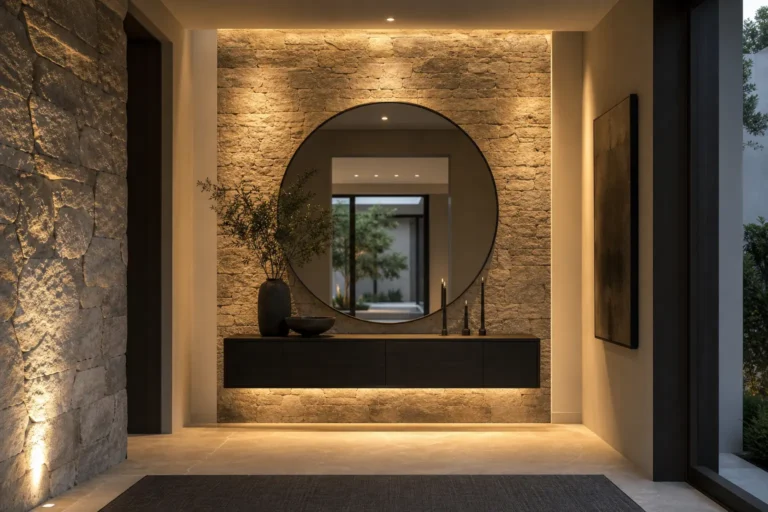
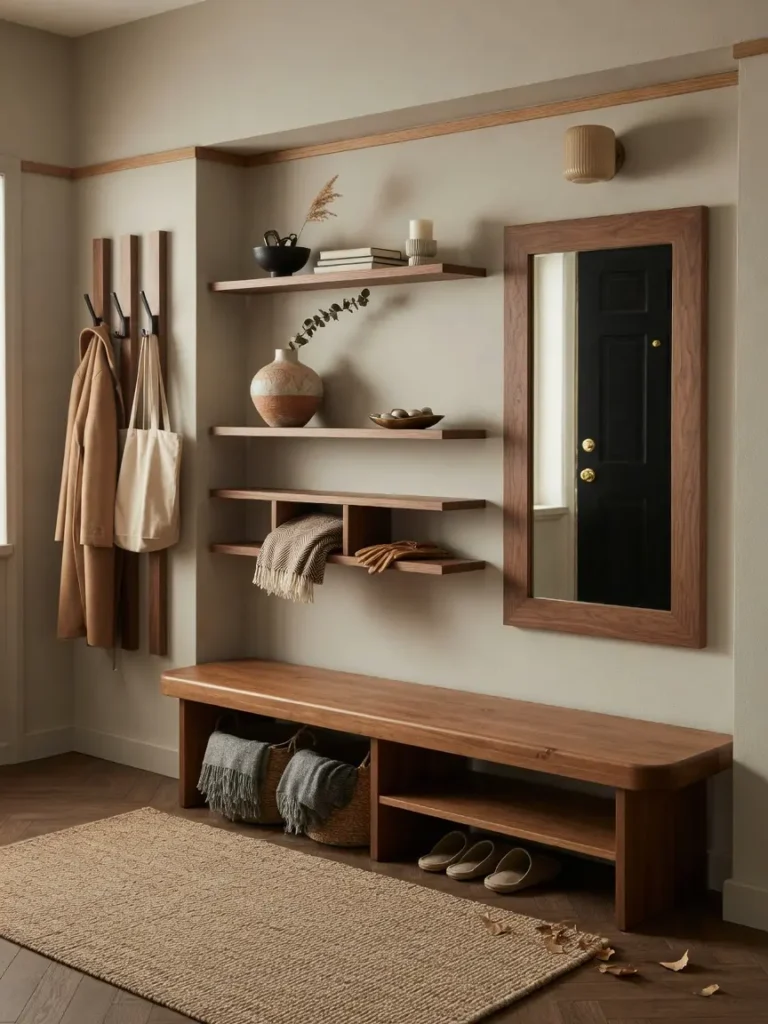
10 Modern Beige Minimalist Living Room Ideas With Cozy Neutral Decor and LED Ceiling Lighting
You walk into your living room after a long day and it feels sterile. All white walls, hard edges, nothing to hold onto. That flat, cold feeling is one of the most common complaints people have about minimalist spaces. The fix isn’t more furniture. It’s a beige minimalist living room built around warm neutrals, real texture, and lighting that flatters the space instead of flooding it. This guide covers ten specific ways to bring cozy neutral decor into a beige minimalist living room, including how an LED ceiling can change the entire mood of the room without adding a single extra object.
1. Start With a Warm Beige Base Instead of Stark White
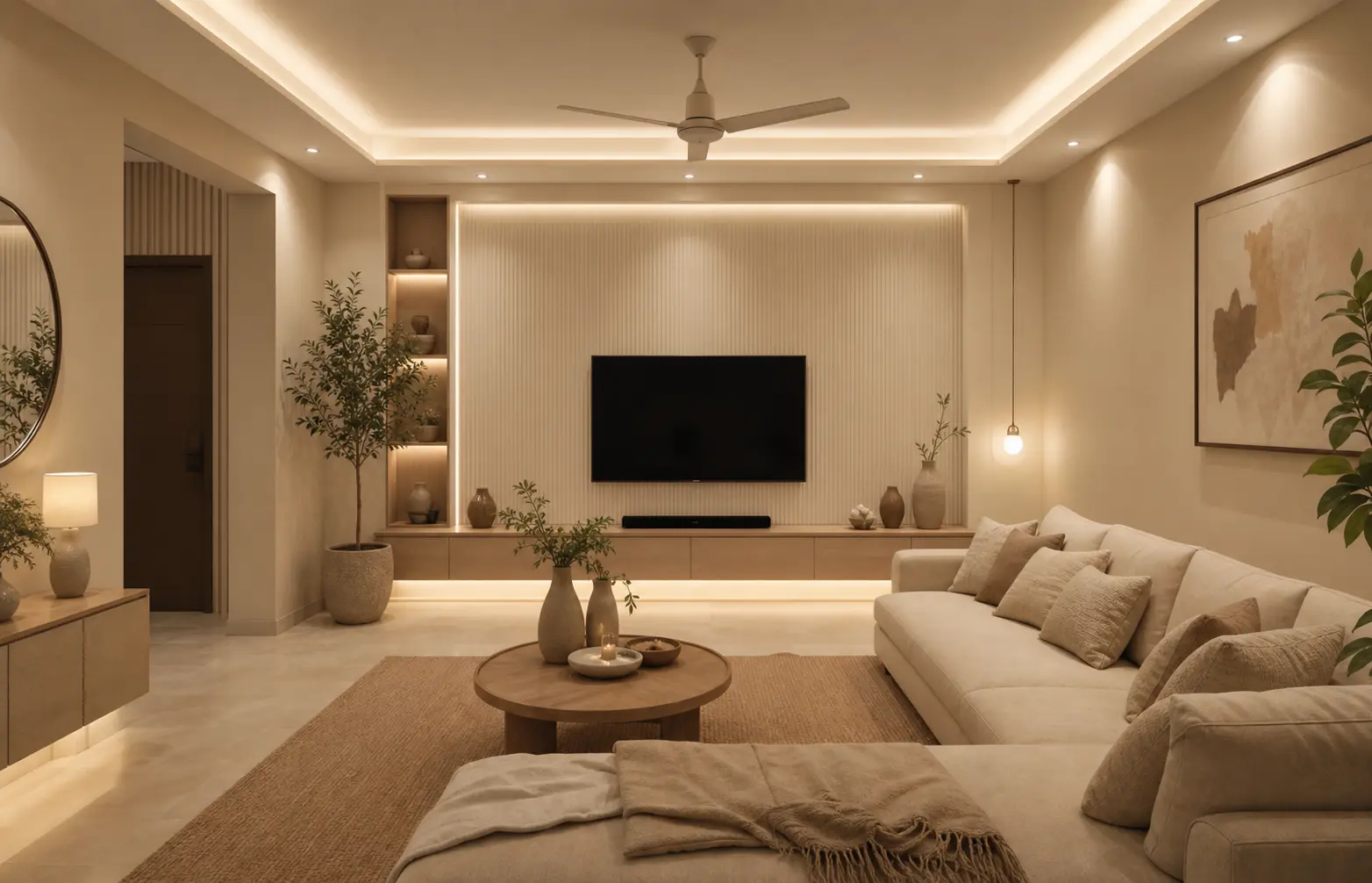
Not all beige is created equal. A beige with cool gray undertones can read almost as sterile as white, especially under daylight LED bulbs. Look for beige tones with a hint of yellow or pink in them instead. These warmer shades absorb light differently and make walls feel closer and more enveloping. Paint a large test swatch, at least two feet wide, and watch it through a full day. Morning light and evening light change beige more than any other neutral. If you’re working with existing off white walls, you don’t have to repaint. Warm beige can come from furniture, textiles and trim instead.
Warm Beige vs Cool Beige, Quick Test
Hold a paint chip next to a plain white sheet of paper. If it leans slightly yellow or peach, that’s warm. If it leans slightly blue or purple, that’s cool. Warm wins for coziness almost every time.
2. Layer Three Textures So the Room Doesn’t Feel Flat
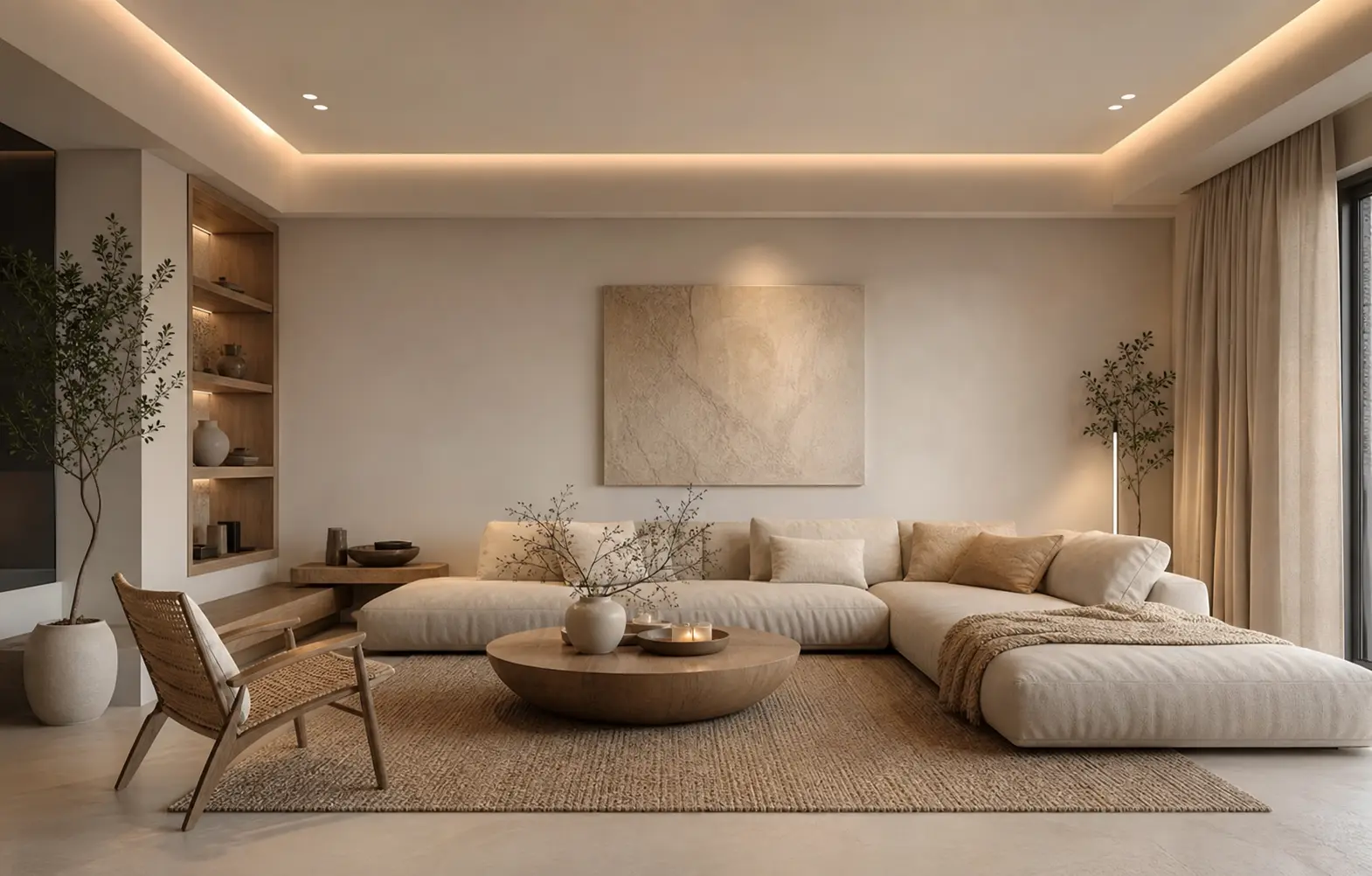
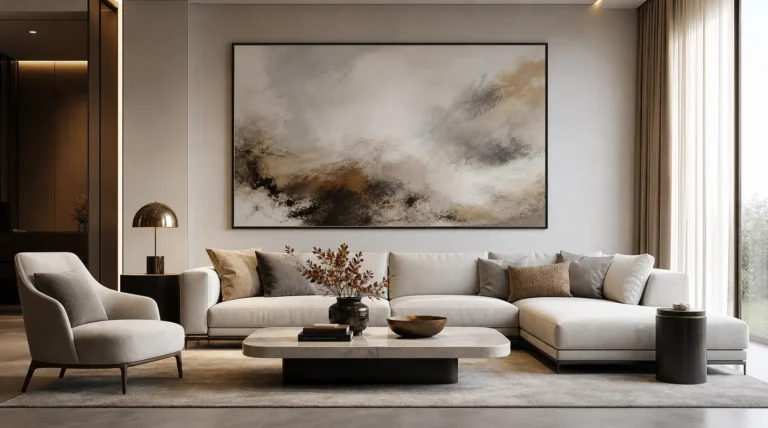
A room painted entirely in one flat beige can feel like a blank box if nothing else changes. Texture is what saves it. Mix a nubby boucle sofa with a smooth linen curtain and a woven jute rug. Each material catches light differently, and that variation reads as depth even in a small space. Aim for at least three distinct textures in every seating area. Skip anything too shiny or plastic. High gloss surfaces tend to flatten a neutral palette instead of adding richness to it.
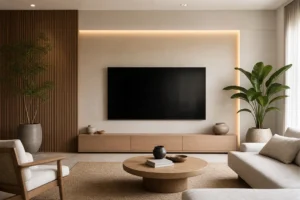
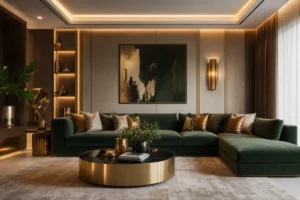
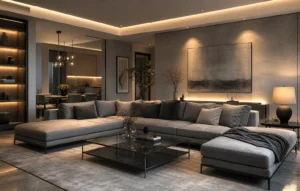
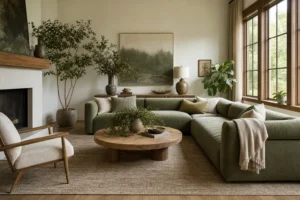
3. Add a Recessed LED Ceiling Ring for Soft, Even Light
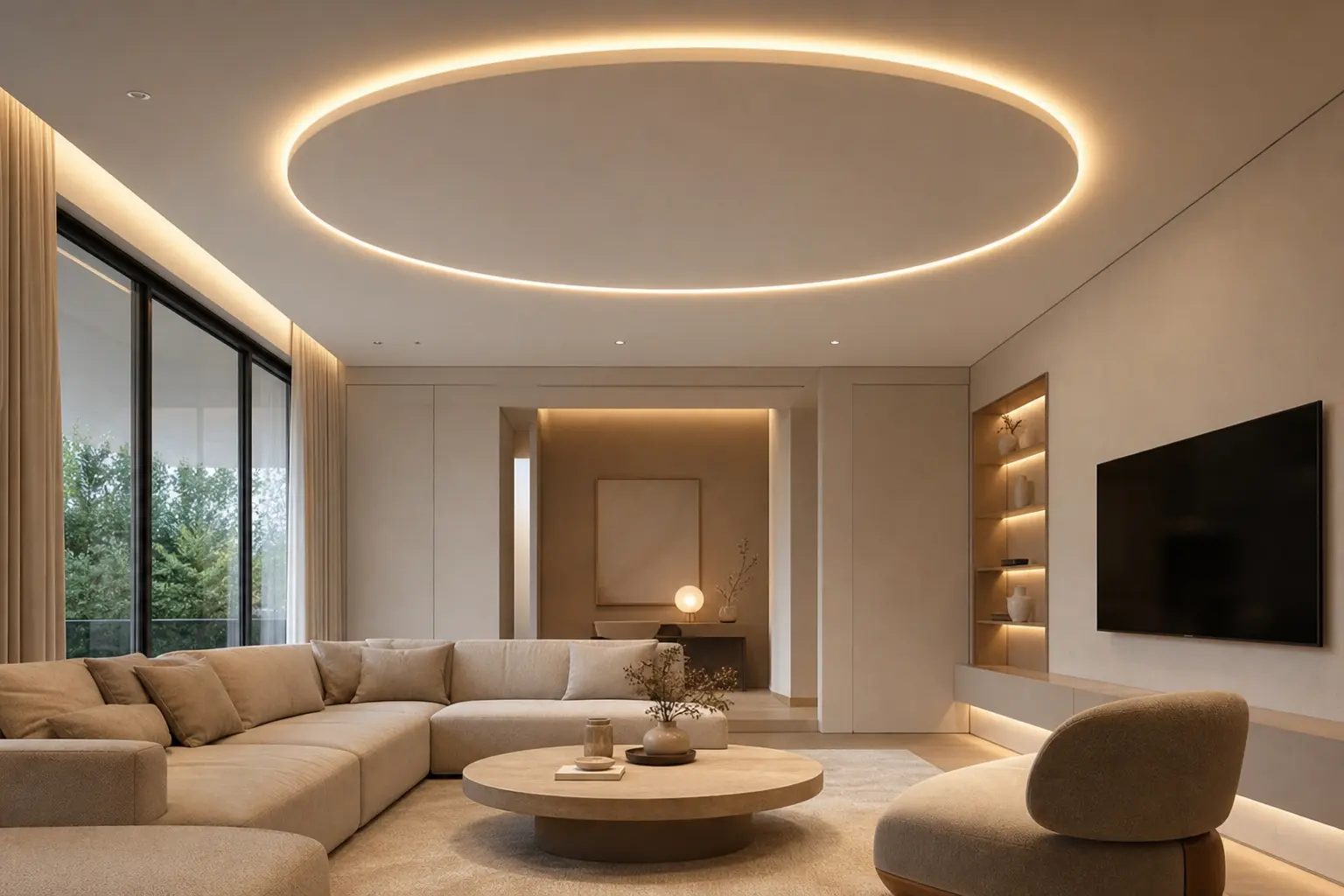
A single center pendant leaves the corners of a room dim and flat. A recessed LED ceiling ring, sometimes called a cove light or ring light, spreads soft illumination evenly across the whole ceiling plane. This matters more in a beige minimalist living room than almost any other style, because beige needs consistent light to avoid looking patchy or gray in shadowed corners. Choose a warm white LED, somewhere between 2700K and 3000K. Anything closer to 4000K will read cool and clinical against warm beige walls. Most ring style LED ceiling fixtures can be dimmed, so install one on a dimmer switch if your wiring allows it.
Why Color Temperature Matters
LED bulbs are labeled in Kelvin. Lower numbers, like 2700K, produce a warm amber glow close to candlelight. Higher numbers push toward blue white daylight. For a cozy neutral decor look, stay under 3000K.
4. Choose Low Profile Furniture to Keep Sightlines Open
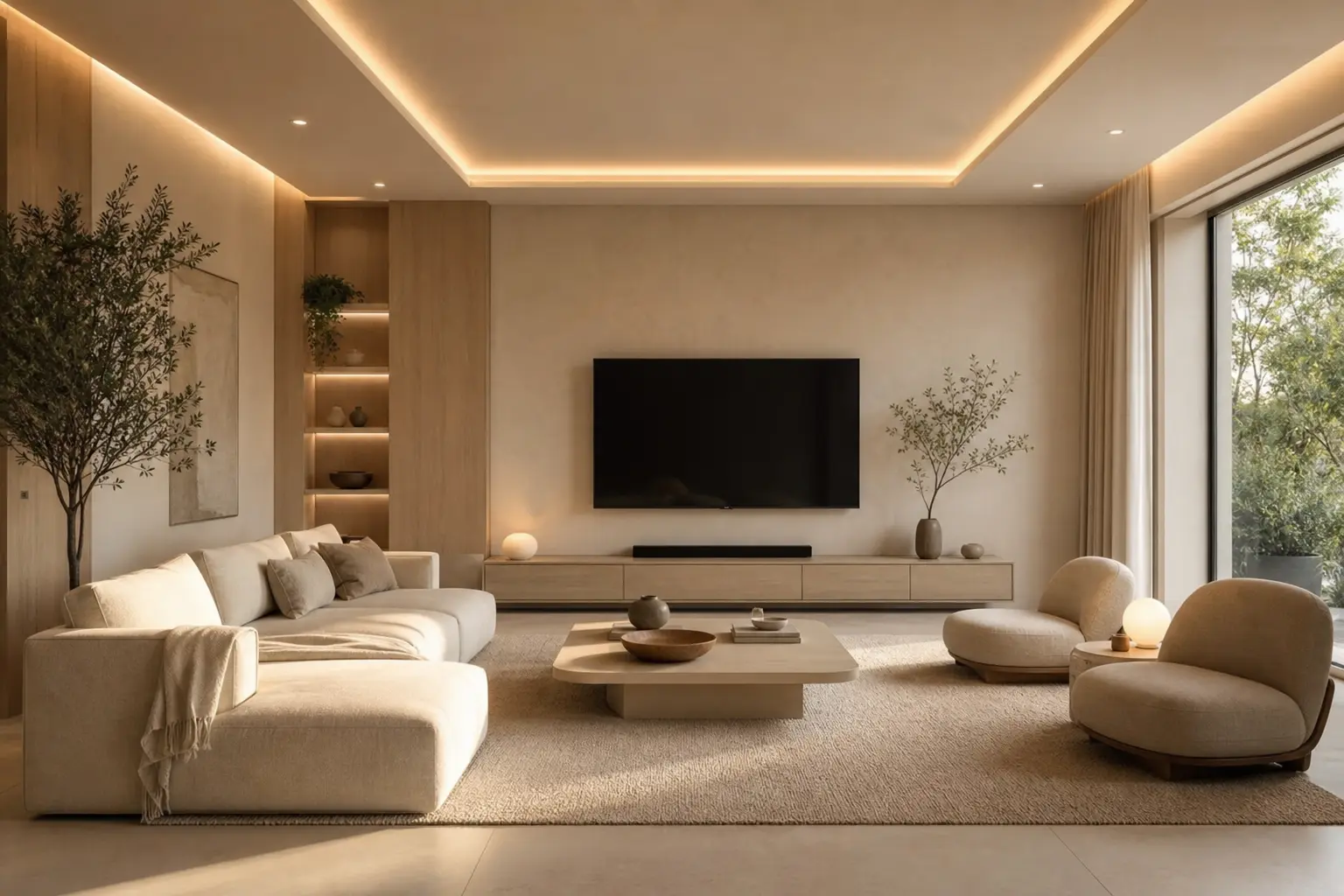
Minimalist doesn’t mean uncomfortable, but it does mean restraint in scale. A low profile sofa, one with a back under 30 inches tall, keeps sightlines open across the room. This makes even a small living room feel larger because your eye travels further before hitting an obstacle. Pair it with a coffee table that sits close to the floor, ideally under 16 inches. Skip bulky recliners with high backs if you can. They tend to dominate a room that’s supposed to feel light and open.
5. Bring in Wood Tones to Break Up the Neutral Palette
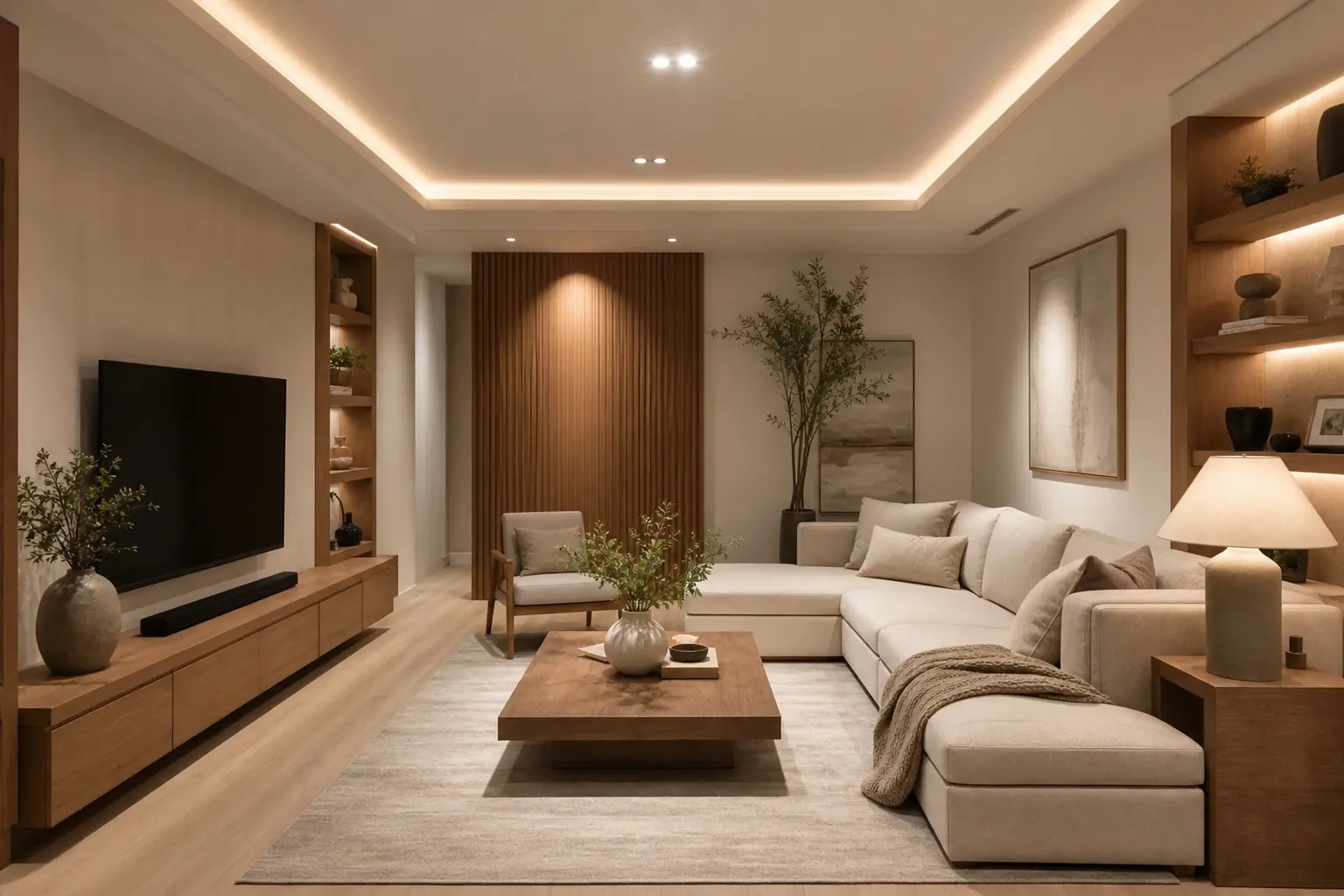
An all beige room without any wood can start to feel one dimensional. Wood grain adds a second layer of warmth and a visible, natural texture that beige alone can’t provide. Medium toned wood, like white oak or ash, tends to pair best with warm beige. Avoid very dark walnut unless you want strong contrast rather than a soft blend. A wood coffee table, a media console, or even simple wood floating shelves can do this job. You don’t need much. One or two wood pieces per seating area is usually enough.
6. Use a Large Area Rug to Anchor the Seating Area
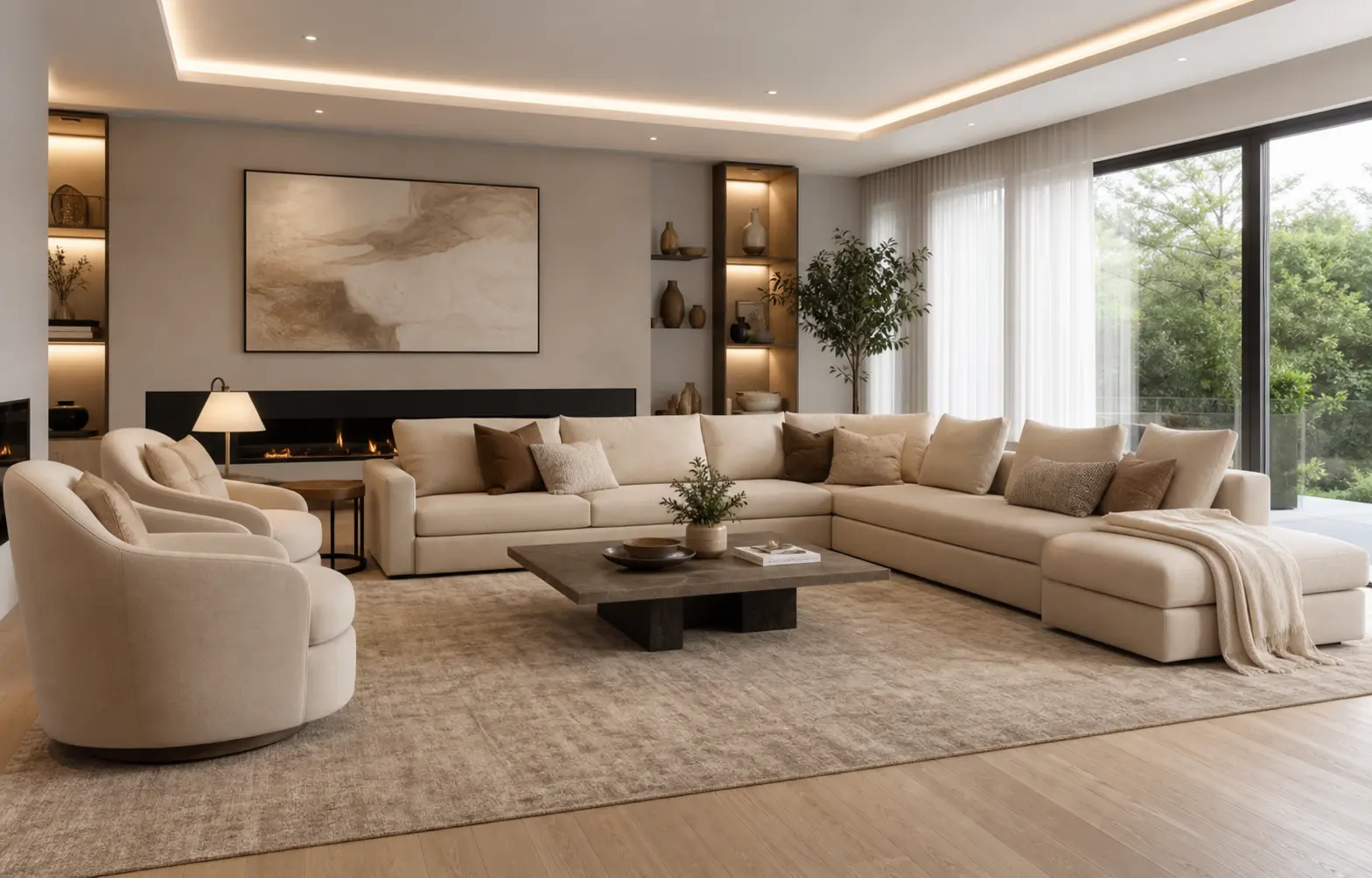
A rug that’s too small is one of the most common mistakes in any living room, minimalist or not. The front legs of every piece of furniture should sit on the rug, not just the coffee table. For a standard living room, that usually means an 8 by 10 foot rug at minimum, sometimes 9 by 12 for larger spaces. A rug in a slightly deeper beige or soft ivory anchors the seating area and visually separates it from the rest of an open floor plan. Wool or a wool blend holds up better than synthetic fibers and takes dye more evenly.
7. Keep Wall Art Minimal but Intentional
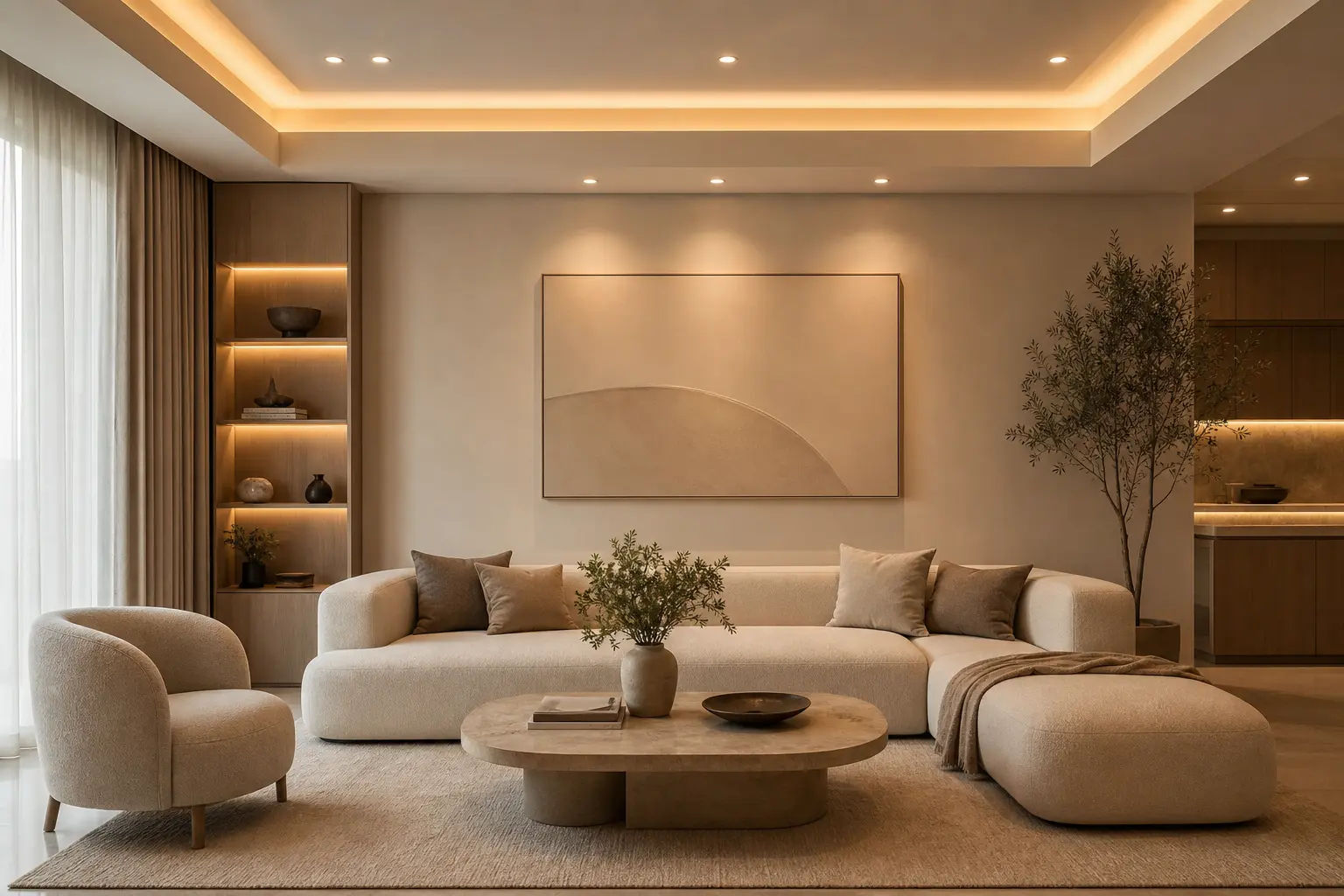
Bare walls can feel unfinished, but covering every inch works against the minimalist goal. Choose one or two pieces per wall instead of a gallery wall. Abstract art in muted tones, or black and white photography, tends to complement a beige palette without competing with it. Frame choice matters here too. Thin black or natural wood frames read as more intentional than heavy ornate ones. Leave real breathing room around each piece.
8. Add One Statement Piece Without Breaking the Minimalist Rule
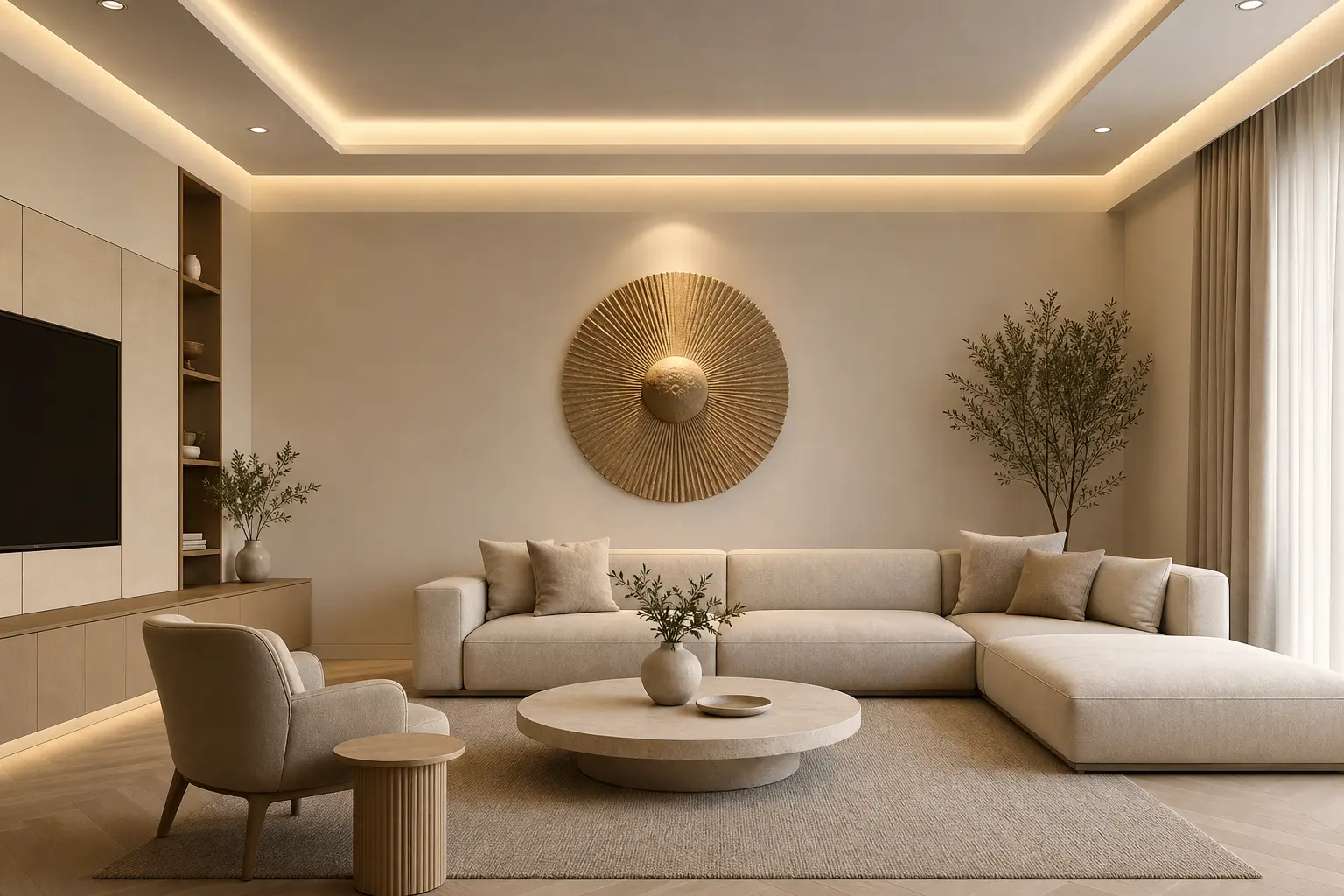
Every neutral room needs one moment that breaks the pattern, or it risks looking unfinished rather than restrained. This could be a curved boucle accent chair, a sculptural floor lamp, or a single piece of art in a slightly bolder tone. Limit yourself to one. Two competing statement pieces will fight each other for attention and undo the calm the rest of the room is working toward. Place it somewhere your eye naturally lands when entering the room, often across from the doorway.
9. Layer Lighting So the Room Works Day and Night
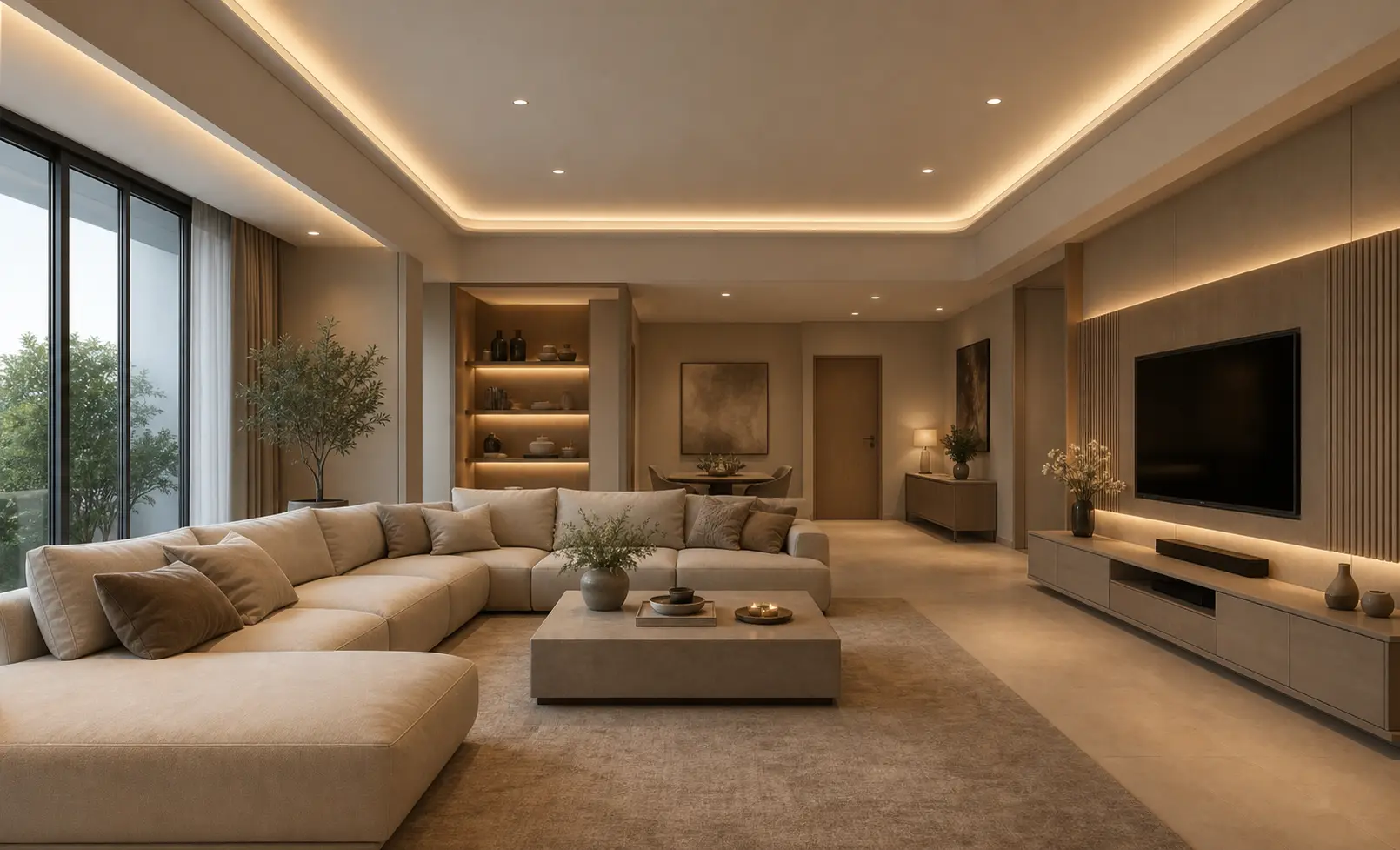
Your LED ceiling ring handles the base layer, but it shouldn’t be the only light source. Add a floor lamp near the reading chair and a table lamp on the console. This gives you three layers, ceiling, floor and table, that you can mix depending on the time of day and the mood you want. In the evening, turn off the ceiling ring entirely and rely on the warmer, lower lamps instead. This layered approach is what separates a professionally styled beige minimalist living room from one that just has a single bright light switched on.
10. Finish With Plants and Natural Materials for Warmth
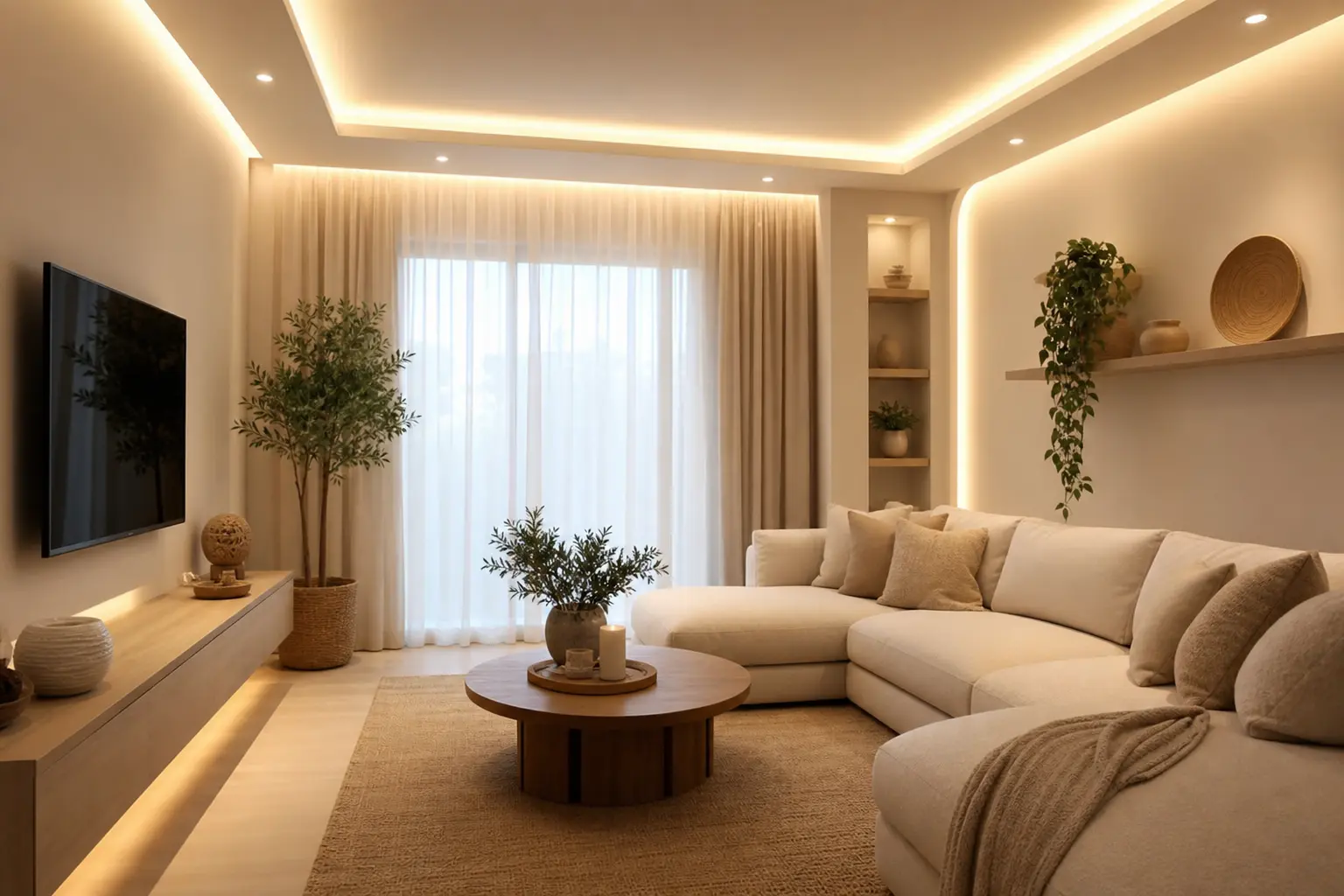
A room built entirely from manufactured materials, paint, fabric and metal, can start to feel a little flat no matter how well it’s styled. One or two plants fix this fast. A fiddle leaf fig or a snake plant in a simple ceramic or woven pot adds living texture and a touch of green that contrasts nicely with warm beige. If you don’t have natural light for a real plant, a well made faux version works almost as well from a design standpoint. Add a woven basket or a stack of linen throws for the same effect.
Mistakes to Avoid
- Skipping texture and ending up with a flat, one note room
- Choosing cool toned beige that reads gray under LED light
- Using a rug that’s too small for the furniture layout
- Relying on one overhead light instead of layering ceiling, floor and table lighting
- Adding too many statement pieces at once
- Forgetting wood tones, which leaves the room feeling incomplete
Frequently Asked Questions
What’s the difference between beige and greige in a minimalist living room? Beige leans warm with yellow or pink undertones. Greige blends gray and beige, landing somewhere in between. For a cozy neutral decor look, true warm beige usually feels friendlier than greige, which can read cooler depending on the light.
What LED color temperature works best for a beige minimalist living room? Stay between 2700K and 3000K. This warm white range flatters beige walls and avoids the flat, clinical look that daylight bulbs can create.
How many textures should I use in a minimalist room? Three is a good baseline. Combine something nubby like boucle, something smooth like linen, and something woven like jute or rattan.
Is an LED ceiling ring expensive to install? Cost varies by home and local electrician rates, so it’s worth getting a quote before budgeting. It’s generally more involved than a plug in lamp but far less costly than a full remodel, and the visual payoff is significant.
Can I make a small living room feel minimalist and cozy at the same time? Yes. Low profile furniture, a properly sized rug and layered lighting all help a small room feel calm rather than cramped. Avoid overcrowding, but don’t strip the space down so much that it feels cold.
What wood tone pairs best with warm beige walls? Medium tones like white oak or ash usually blend best. Very dark wood like walnut creates contrast rather than a soft, blended look.
Conclusion
A beige minimalist living room isn’t about removing everything until the room feels empty. It’s about choosing a warm base, layering real texture, and lighting the space properly so it feels lived in rather than staged. Start with just two changes. Swap your bulbs for warm white LEDs in the 2700K range, and add one textured throw or rug. Those two moves alone will shift the whole room from flat to genuinely cozy, and you can build the rest of this list in from there.