10 Aesthetic Boho Entryway Decor Ideas with Gallery Mirrors & Upholstered Benches
You walk in the door, drop your bag on the floor because there’s nowhere else for it to go, and the entryway just feels like empty space you pass through rather than somewhere that actually welcomes you home. Aesthetic boho entryway decor with a gallery mirror cluster and an upholstered bench solves that by giving the space both function and warmth, using mismatched textures and shapes that feel collected over time rather than bought all at once. It turns a purely functional passage into one of the coziest small moments in the whole house.
1. Start With the Bench as the Entryway’s Functional Anchor
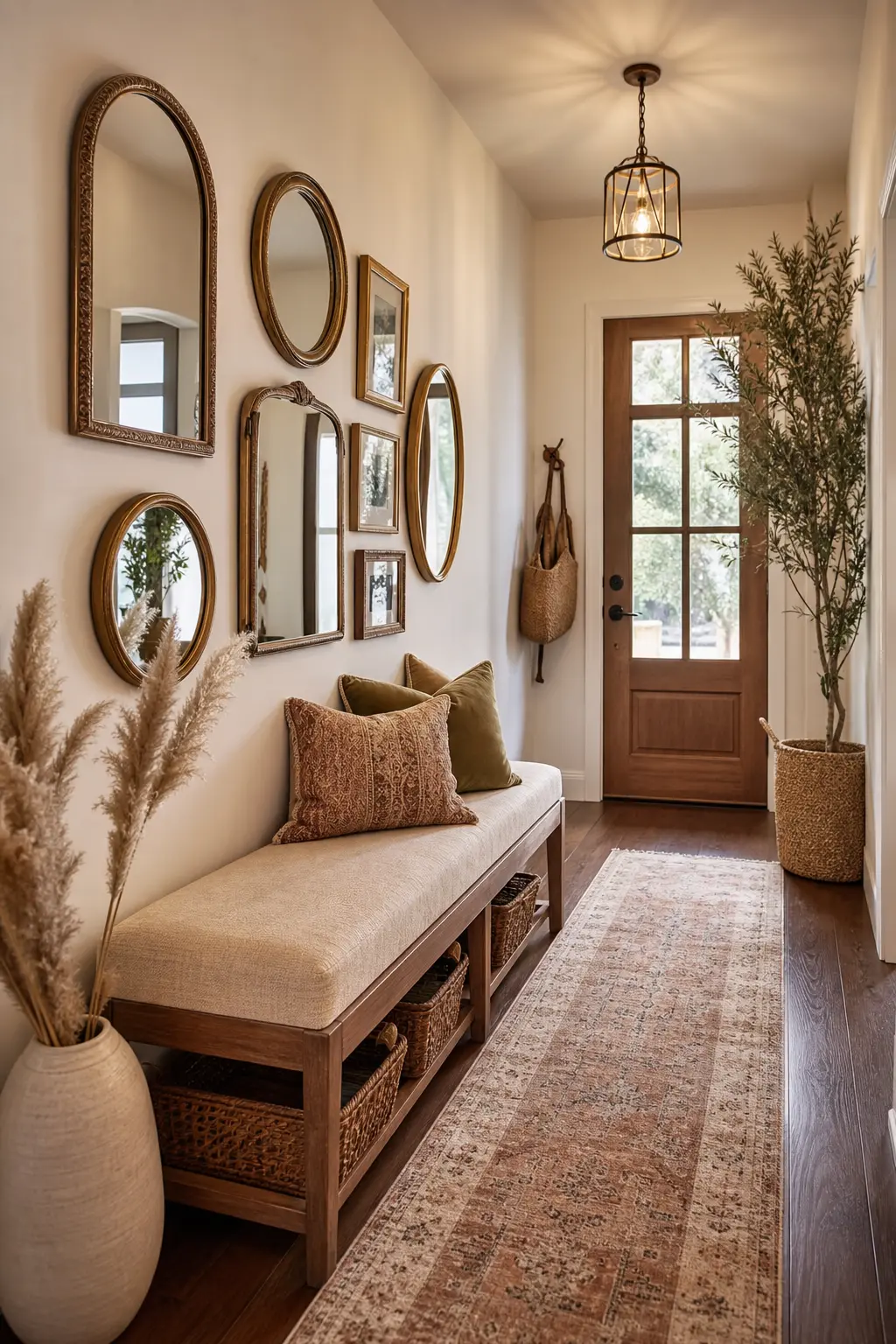
An upholstered bench gives an entryway a genuine reason to pause, whether that’s sitting to put on shoes or setting down bags for a moment before heading further into the house. Choose a bench sized to your actual entryway width, generally 36 to 48 inches for a standard entry, leaving enough clearance on either side for comfortable walking. A bench with a cushioned top in a soft, textured fabric immediately reads as more inviting than a hard wood or metal bench alone.
Position the bench along the wall with the most natural pause point, often just inside the front door or beneath a window. This piece typically becomes the entryway’s central functional item, so choose it before finalizing the mirror gallery or any other wall decor above it. Everything else in the space can build around the bench’s placement and scale.
2. Build a Gallery Mirror Cluster Instead of One Single Mirror
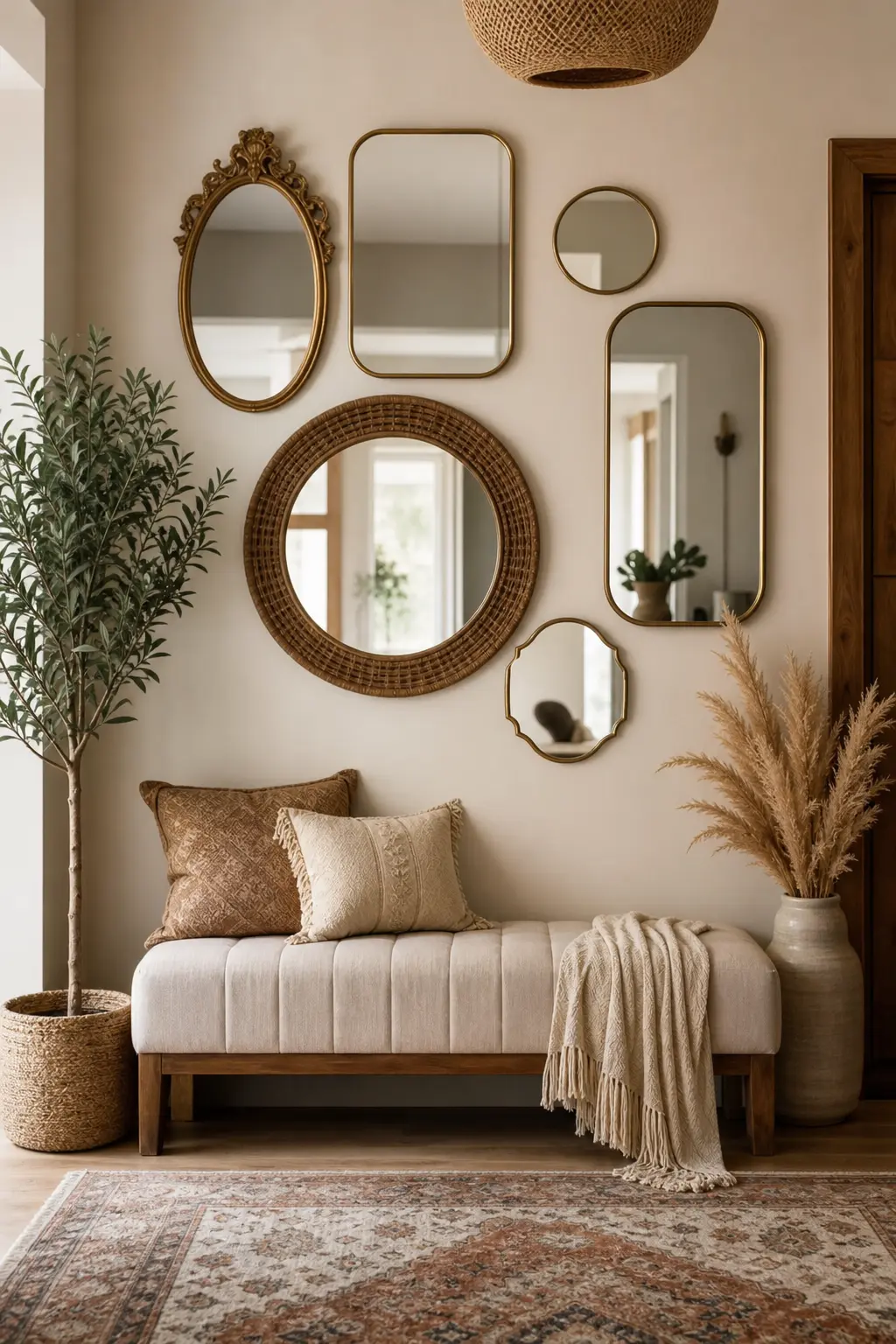
A cluster of three to five mirrors in varying shapes and sizes creates a more boho, collected feel than a single large mirror centered on the wall. This approach also works well above a bench specifically, since the cluster’s irregular shape mirrors the relaxed, gathered feel a bench and basket seating area already establishes. Mix round, arched, and oval shapes within the cluster rather than repeating the same shape at different sizes.
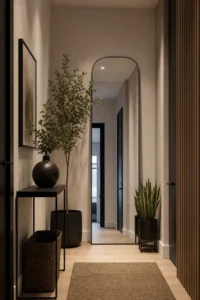
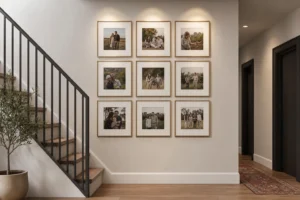
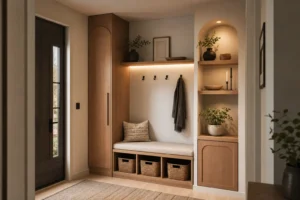
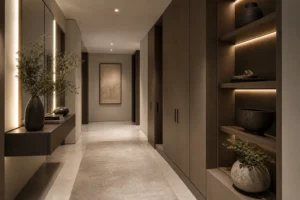
Plan the cluster on the floor before hanging anything, laying the mirrors out in their intended arrangement and photographing it from above. This step lets you adjust spacing and shape balance without extra nail holes once you move to the actual wall. A loosely balanced, slightly asymmetrical layout typically reads as more genuinely boho than a perfectly symmetrical grid.
3. Mix Mirror Shapes and Frame Materials for a Collected Look
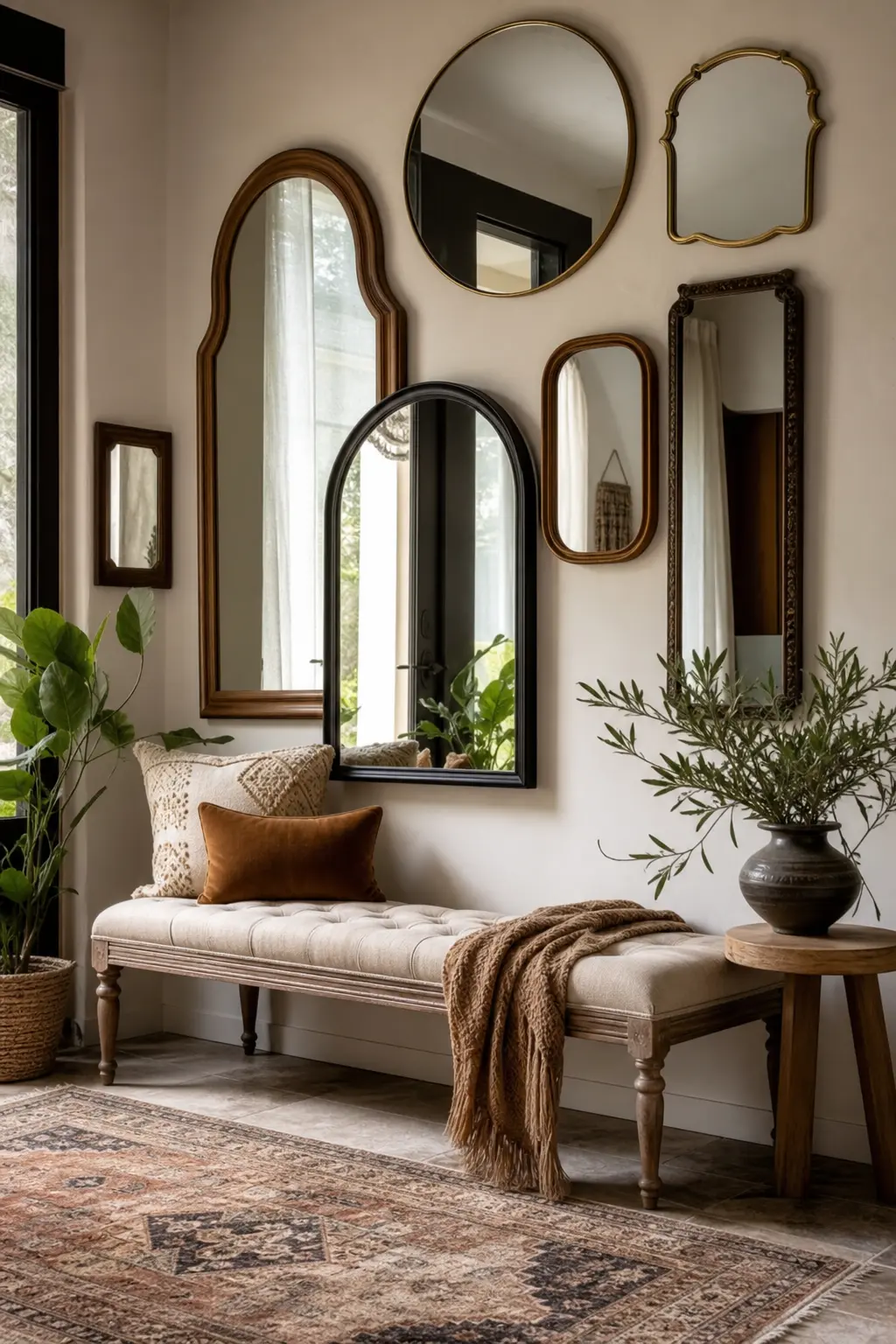
Combine rattan framed mirrors with a couple of dark wood or brass framed pieces for the same collected over time feel that defines boho style throughout a home. Avoid buying a matched mirror set, since uniformity works against the eclectic, gathered look a gallery cluster is meant to achieve. A genuinely mismatched collection, sourced from different places over time, reads as far more authentic than a single boxed set purchased together.
Keep at least one visual thread running through the different frames, whether that’s a similar warm wood tone or a shared rounded edge, so the mismatch still feels intentional rather than random. This small bit of consistency is what separates a curated eclectic cluster from a genuinely disorganized wall. Thrifted or vintage mirror finds work particularly well here, since they naturally carry some age and character that ties into the boho aesthetic.
4. Choose an Upholstery Fabric That Handles Daily Use
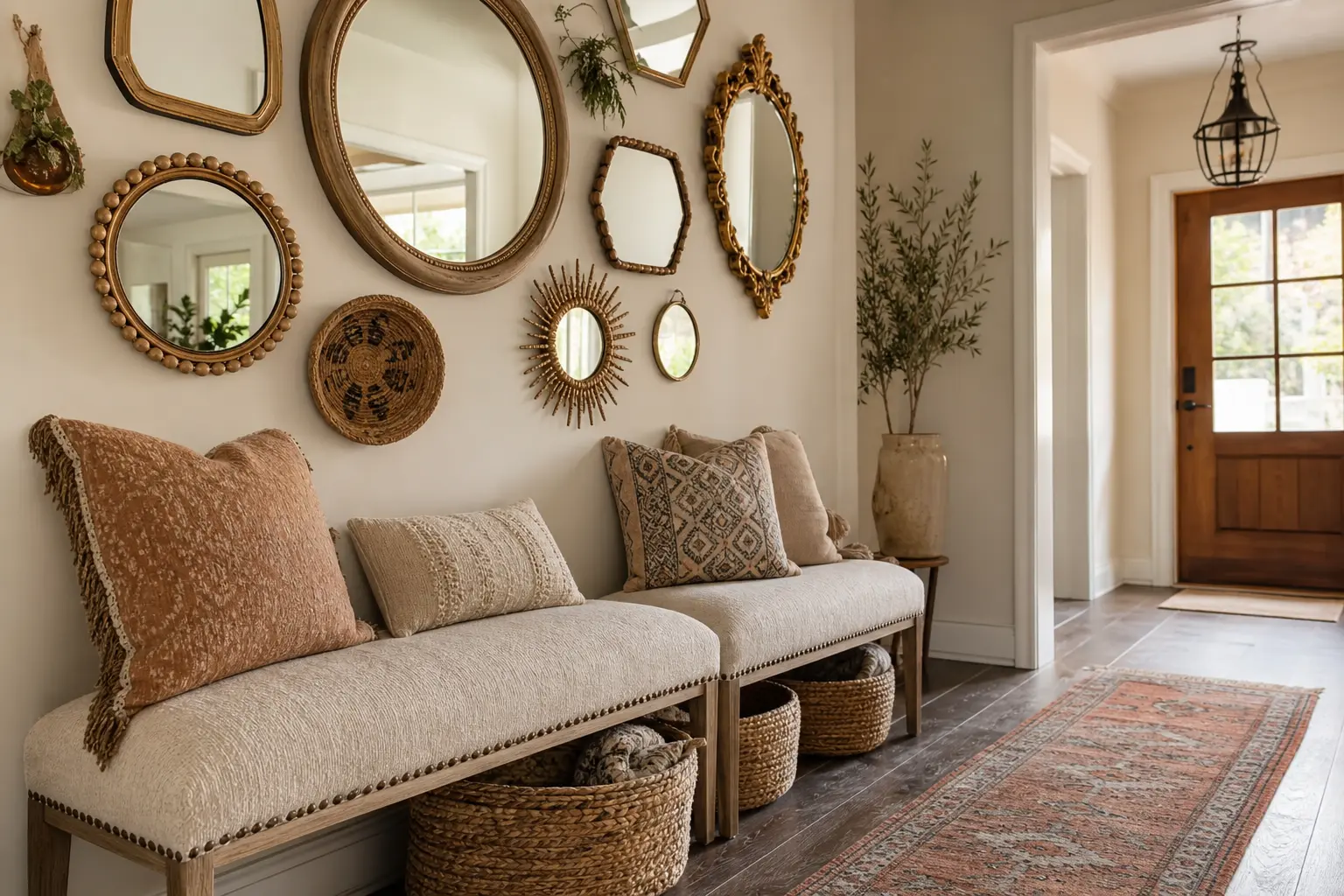
An entryway bench takes more daily wear than most upholstered furniture in the home, from shoes, bags, and pets brushing past it regularly. Look for a performance fabric or a tightly woven boucle that resists staining and wear better than a delicate linen or velvet would in this specific spot. Warm terracotta, rust, or a soft oatmeal tone all suit a boho palette while still being practical, everyday colors that hide minor marks reasonably well.
Considering a Removable or Washable Cover
A bench cushion with a removable, washable cover adds practical flexibility for a high traffic entryway, especially in a household with kids or pets. This doesn’t need to sacrifice the boho aesthetic, since many performance fabrics now come in warm, textured finishes that still read as soft and inviting rather than overly technical. A washable cover extends the life of the piece significantly compared to a fixed, non removable cushion.
5. Layer in Woven Texture Beneath and Around the Bench
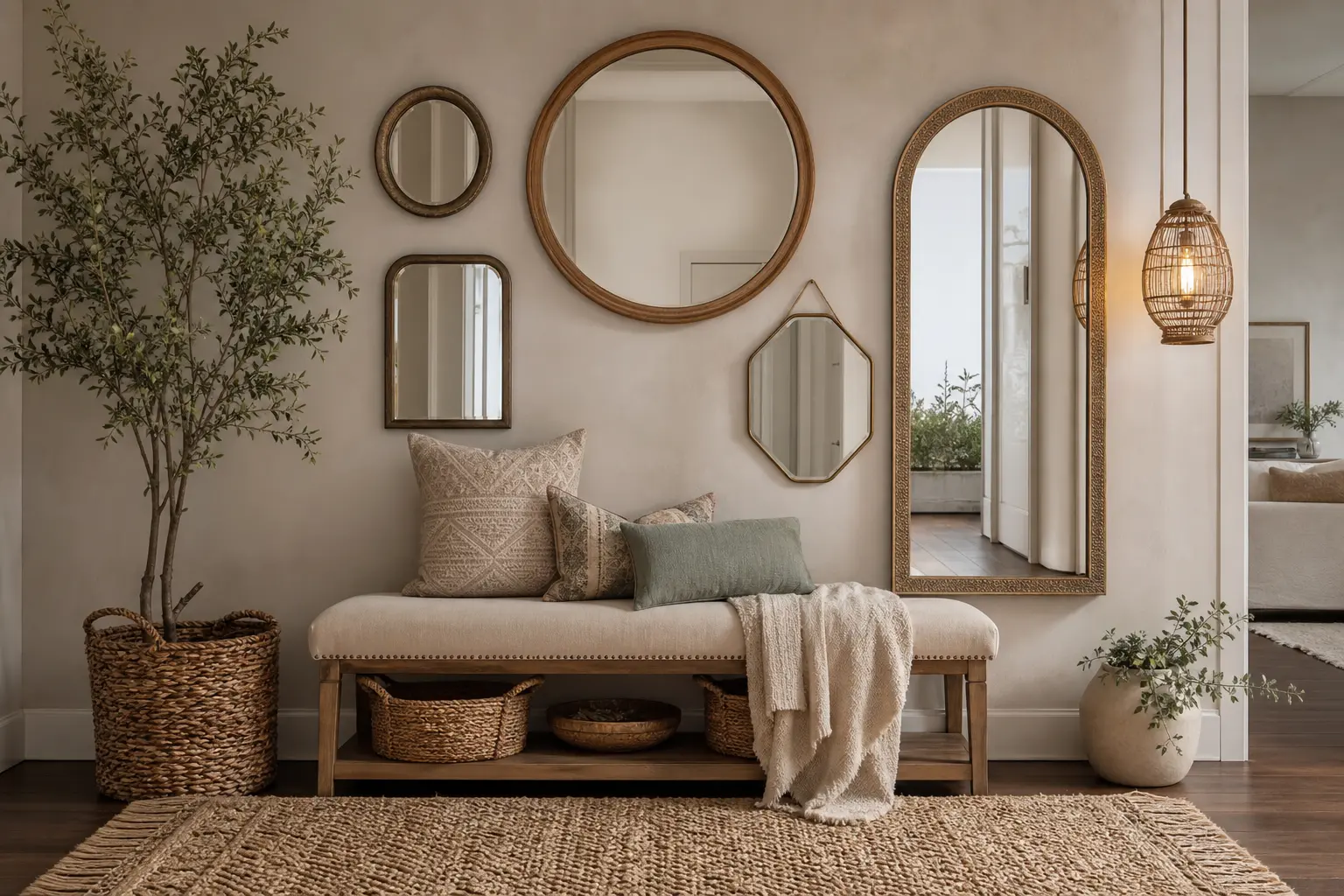
A woven basket or two beneath the bench adds both storage and the kind of natural texture that defines a boho aesthetic throughout the rest of the home. Use one basket for shoes and another for smaller items like scarves or dog leashes, keeping the entryway functional without leaving loose items scattered on the floor. The woven material also echoes any rattan in the mirror frames above, tying the whole vignette together.
A small woven or macrame wall hanging tucked near the mirror cluster, rather than competing with it directly, adds one more layer of texture without crowding the wall. Keep this addition modest in scale so it supports the mirrors rather than pulling equal attention away from them. This kind of layered texture is what gives a boho entryway its warm, tactile feel beyond just the color palette.
6. Add a Jute or Wool Rug to Ground the Space
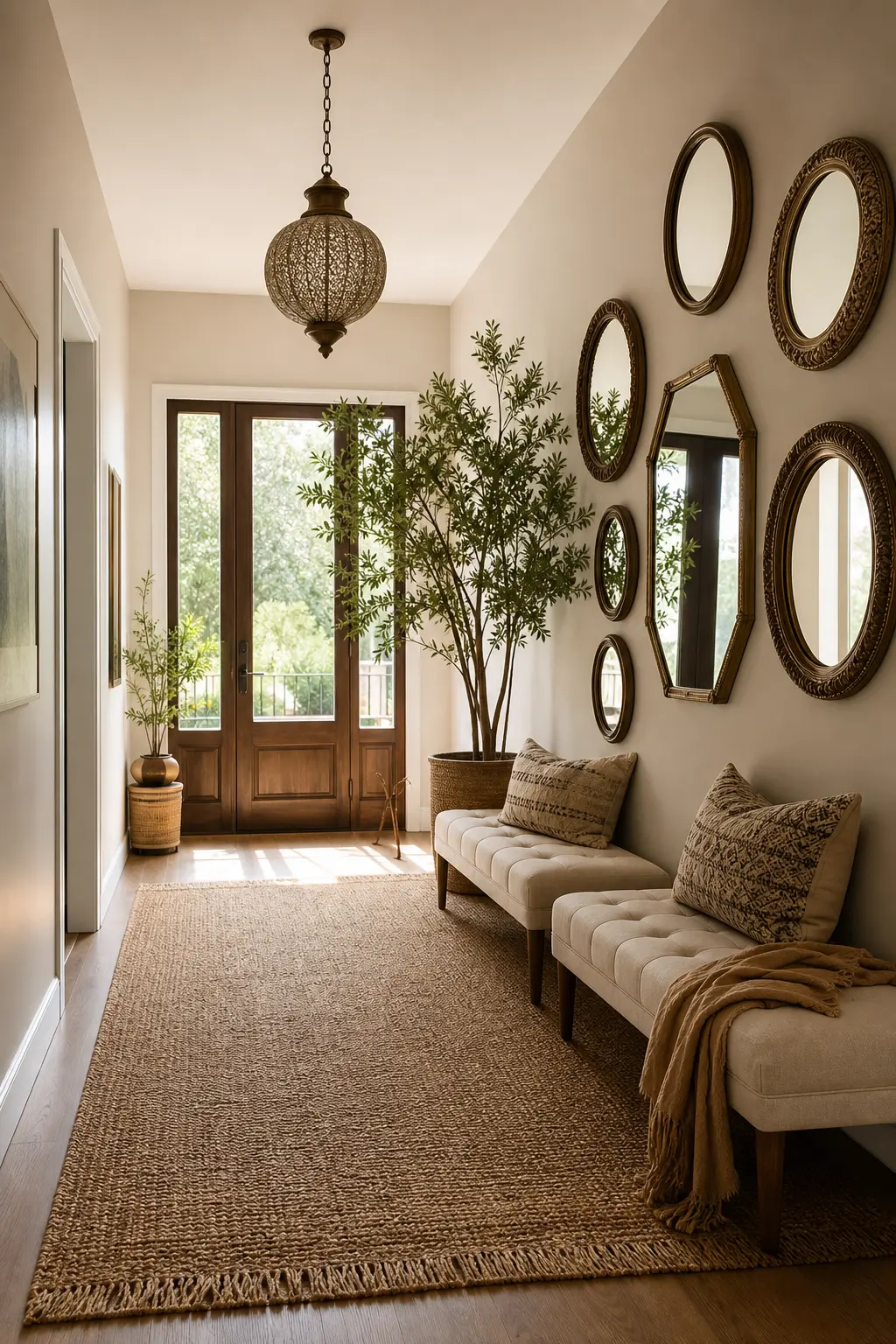
A natural fiber rug, jute or a chunky wool weave, adds warmth underfoot and visually grounds the bench and mirror cluster as one cohesive seating area rather than a floating collection of furniture. Choose a rug sized to extend a few inches beyond the bench’s footprint on the front side, where feet naturally land when sitting down. A neutral or subtly patterned rug works better here than a bold statement piece, since the mirrors and bench already carry plenty of visual interest.
Jute in particular suits a boho entryway well, since its natural, slightly rough texture pairs naturally with rattan mirror frames and woven baskets. A wool rug offers a softer underfoot feel if the entryway sees bare feet often, though it requires more care in a high traffic, potentially wet weather entry point. Either material choice reinforces the natural, textural theme running through the rest of the space.
7. Keep Storage Baskets Within Reach of the Bench
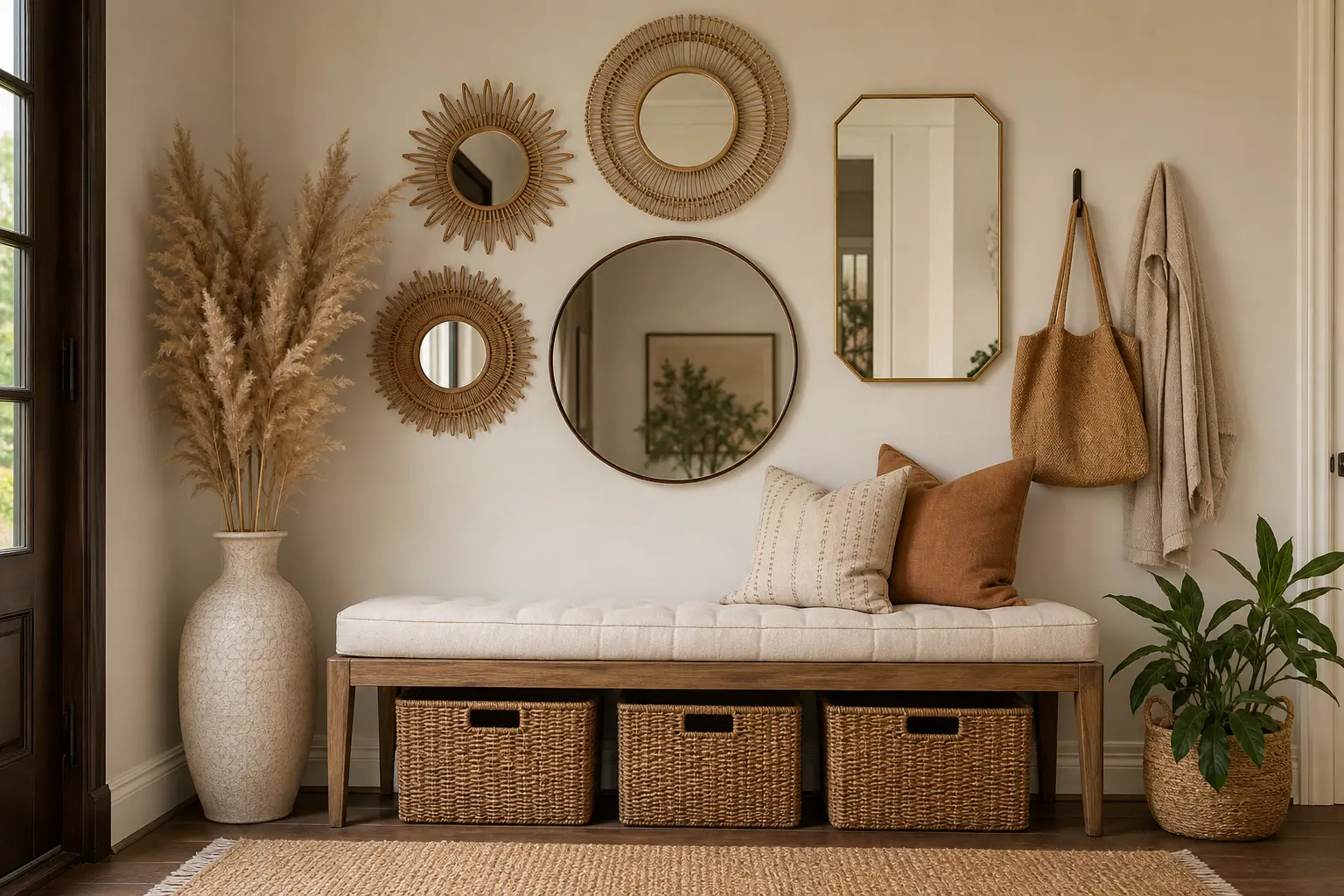
Storage only works in an entryway if it’s genuinely convenient to use, so position baskets close enough to the bench that sitting down to remove shoes naturally leads to placing them in the basket rather than on the floor nearby. A basket tucked directly beneath the bench, rather than across the room, gets used far more consistently in daily practice. This small placement detail often determines whether an entryway actually stays tidy or slowly accumulates clutter regardless of how nice the initial styling looked.
Choose baskets sized specifically for what they’ll hold, a shallow wide basket for shoes and a smaller, deeper one for accessories, rather than one oversized catch all bin. Multiple purpose specific baskets tend to get used more accurately than a single large bin that becomes a dumping ground for anything and everything. This specificity is a small functional upgrade that meaningfully supports the space’s overall aesthetic staying intact over time.
8. Balance the Mirror Cluster’s Scale With the Wall Size
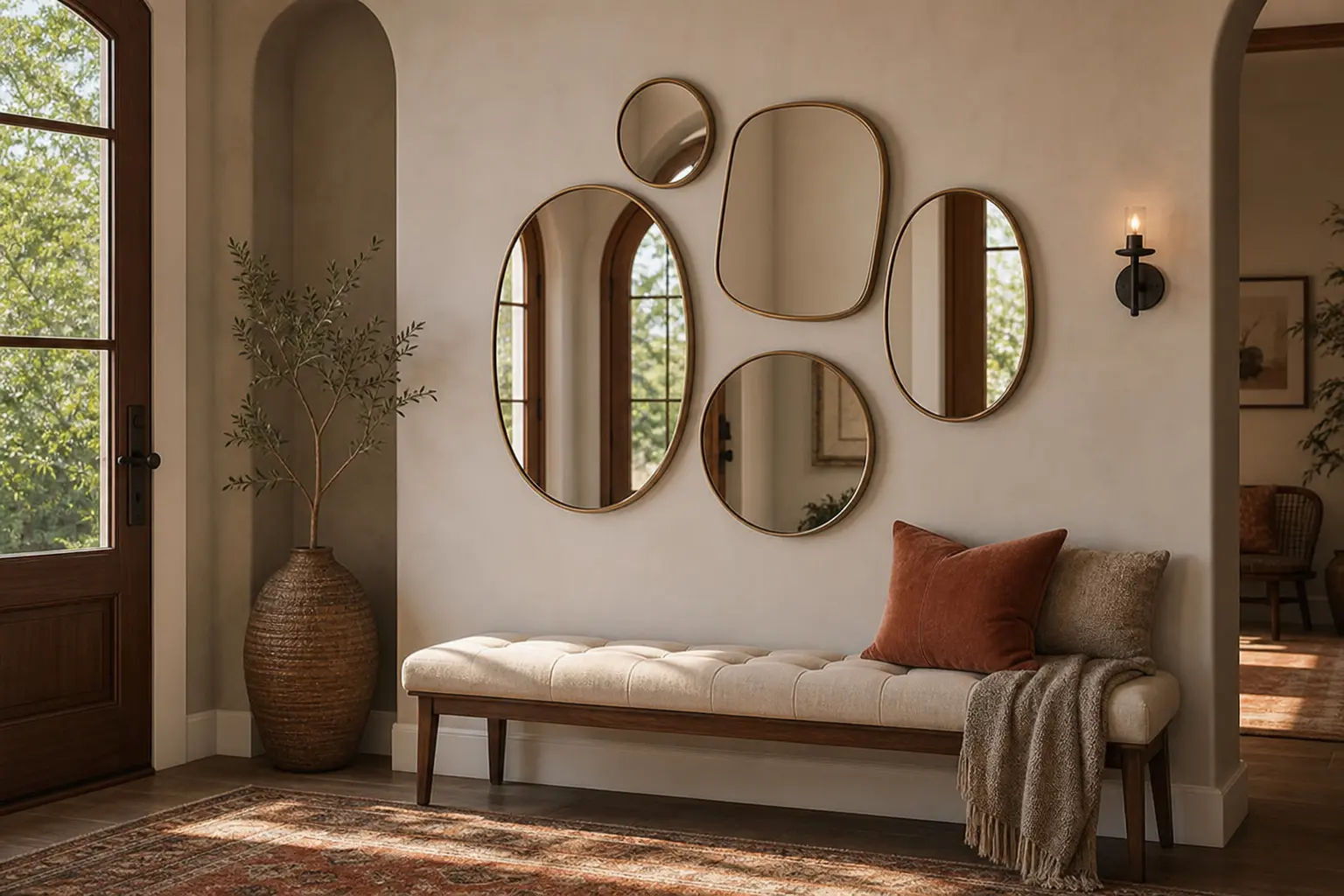
A gallery mirror cluster needs to feel proportional to both the bench beneath it and the overall wall it occupies, since an undersized cluster can look sparse above a substantial bench, while an oversized one can overwhelm a smaller entryway. As a general guide, the cluster’s total width should roughly match or slightly exceed the bench’s width for a visually balanced pairing. Measure both the bench and the available wall space before finalizing how many mirrors to include and at what sizes.
A narrower entryway wall might only comfortably fit three mirrors in a tighter cluster, while a wider wall can support five or more in a more spread out arrangement. Resist forcing a larger cluster into a tight space just because it looked appealing in a photo from a bigger room. Scaling the cluster to your actual wall is one of the more common places this kind of gallery styling goes wrong.
9. Add Warmth With a Small Plant and Natural Light
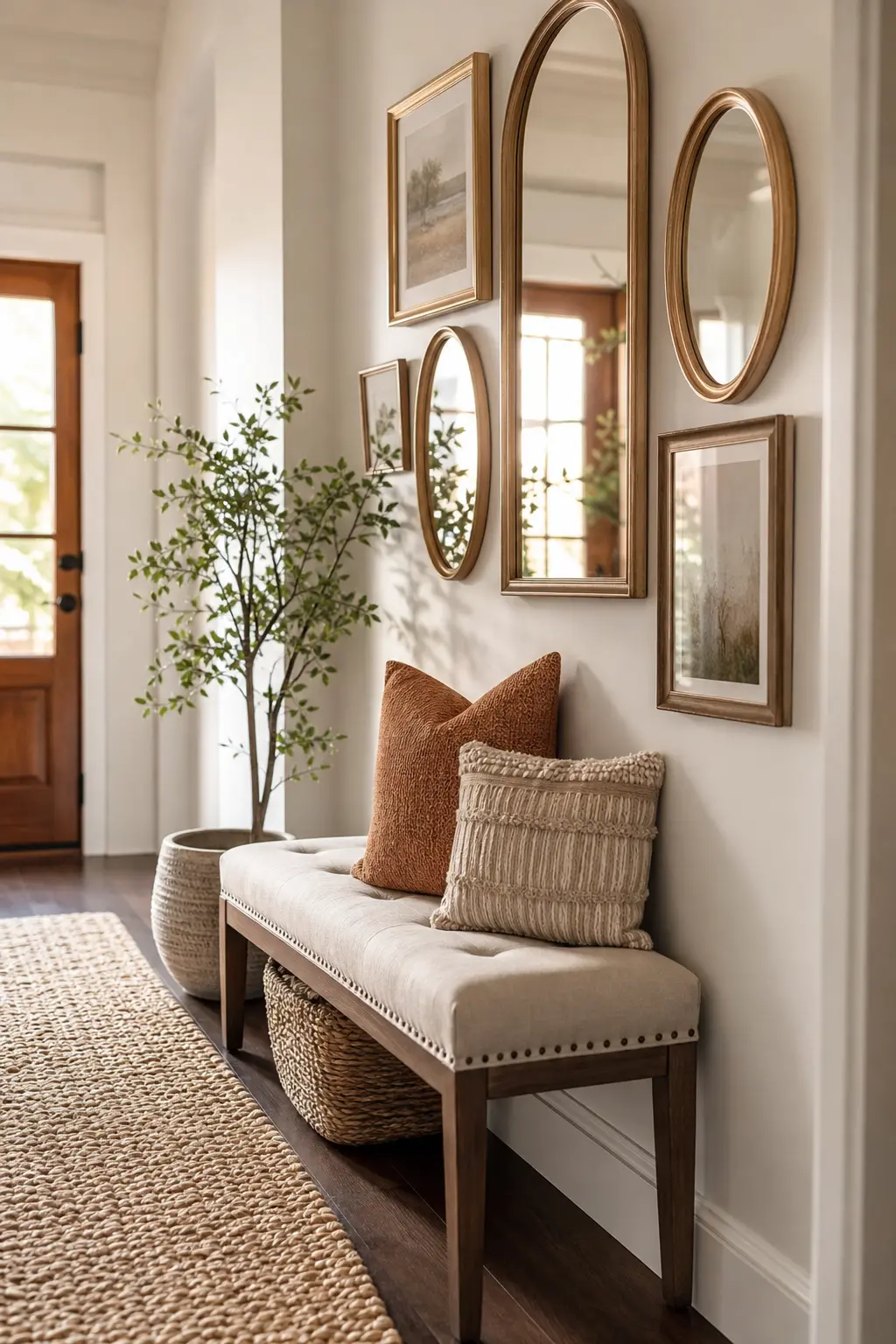
A small plant placed on one end of the bench or on the floor beside it adds a living, organic element that complements the woven textures and mismatched mirror frames throughout the space. Pothos, a small palm, or a trailing plant in a warm terracotta pot all suit a boho entryway’s natural, textural feel without requiring much light, which matters since entryways often get limited natural sun. Position the plant somewhere it won’t obstruct the walking path or crowd the bench’s usable seating space.
Natural light, even from a small nearby window or a transom above the door, does a lot to make an entryway feel warm rather than dim and passed through quickly. If the entryway lacks natural light entirely, a warm toned lamp on a nearby surface or a wall sconce can fill that role instead. This layer of warmth, whether from a plant, real daylight, or a warm bulb, is often what makes the difference between an entryway that looks styled and one that actually feels welcoming to walk into.
10. Avoid Letting the Bench Become a Catch All Surface
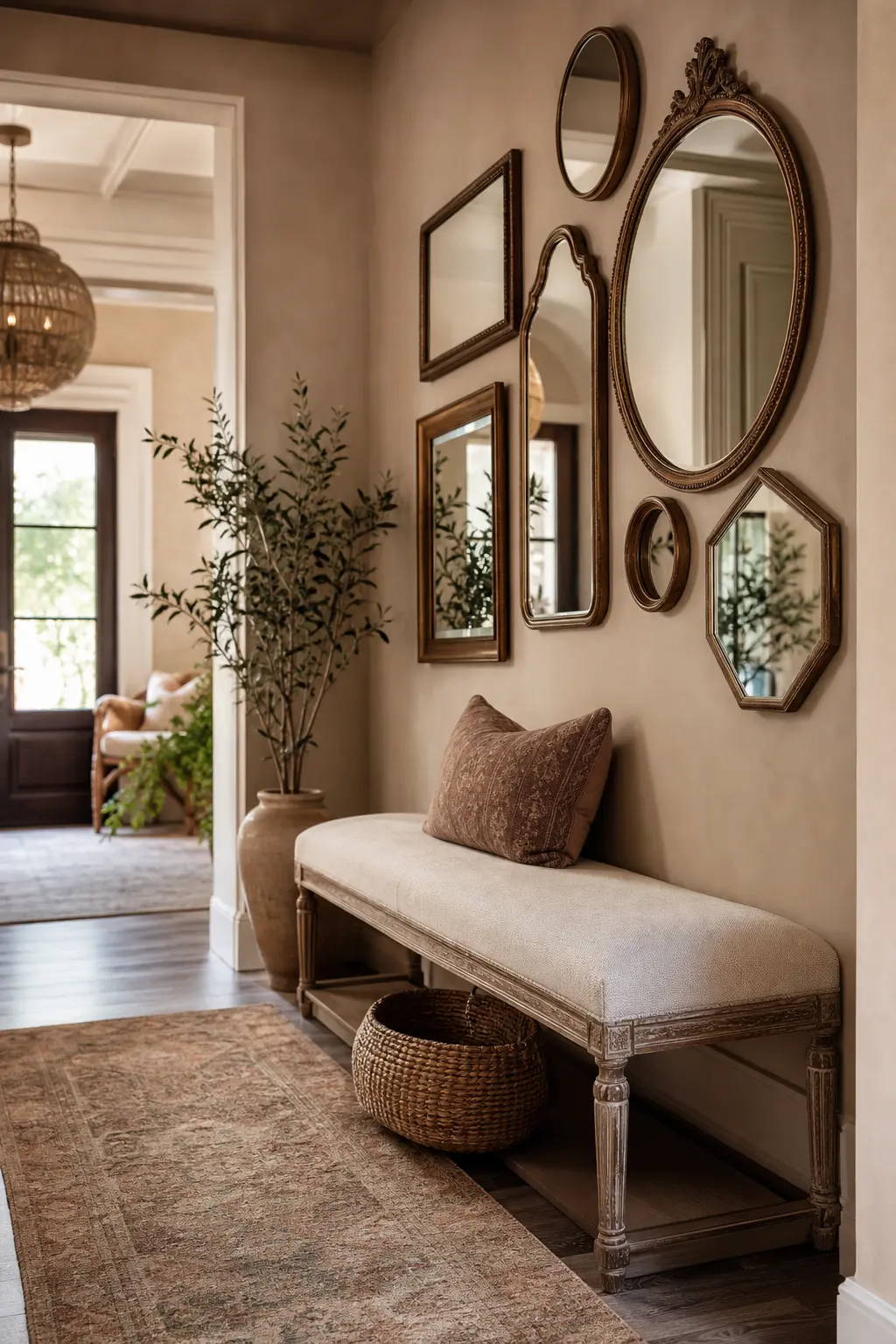
An entryway bench, especially a soft upholstered one, can quickly turn into a landing spot for bags, jackets, and mail if there’s no other designated place for those items nearby. Keep at least one basket or hook specifically for coats and bags so the bench itself stays clear enough to actually sit on, which is the whole reason it earns its place in the entryway to begin with. A bench permanently covered in loose items loses its function and starts to undercut the careful styling above it.
Set a simple habit of clearing the bench surface at the end of each day, moving stray items into their designated basket or hook. This small routine matters more than any single styling decision for keeping the space looking as intentional day to day as it does the first week it’s set up. A bench that stays genuinely usable is what separates a functional, welcoming entryway from one that just looks good in an initial photo.
Mistakes to Avoid
- Buying a matched mirror set instead of sourcing genuinely mismatched shapes and frames
- Choosing a delicate fabric like unprotected linen or velvet for a high traffic entryway bench
- Placing storage baskets too far from the bench, leading to shoes and bags left on the floor instead
- Forcing an oversized mirror cluster onto a narrow entryway wall
- Skipping a rug, which leaves the bench and mirror grouping feeling disconnected from the floor
- Letting the bench surface slowly fill with mail and loose items instead of staying a place to actually sit
Frequently Asked Questions
How many mirrors should a gallery cluster include? Most boho entryway clusters use three to five mirrors, with the total arrangement scaled to roughly match the width of the bench or console beneath it.
What fabric holds up best on an entryway bench? A performance fabric or tightly woven boucle handles daily wear from shoes and bags better than a delicate linen or velvet in this specific high traffic spot.
Should the rug match the mirror frames or the bench fabric? A neutral or naturally textured rug like jute generally works best, since it supports both the mirror frames and bench fabric without introducing a competing pattern or color.
How do I keep the entryway from becoming cluttered again after styling it? Position storage baskets directly beneath or beside the bench so using them becomes the natural, convenient choice rather than leaving items on the floor or bench surface.
Can this style work in a very narrow entryway? Yes, using a smaller three mirror cluster and a narrower bench scaled to the space, since forcing a larger arrangement into a tight wall usually looks disproportionate.
Final Thoughts
An aesthetic boho entryway with a gallery mirror cluster and an upholstered bench works because the mismatched textures and shapes feel collected rather than staged, while the bench gives the space genuine daily function. Start with the bench size and placement, since that decision anchors everything else that follows. Build the mirror cluster and storage baskets around it in stages, checking proportions against your actual wall and bench before committing to a final arrangement.