10 Luxurious Long Hallway Accent Wall Ideas with Warm LED Strip Lighting
Nobody decorates their hallway first. It’s the space you rush through, not the one you plan around, so it usually ends up as a flat white tunnel with a single overhead bulb and nothing else going on. That’s a missed opportunity. A hallway is one of the easiest places in a home to make a strong first impression, and it doesn’t take much to get there. These hallway accent wall ideas lean on warm LED strip lighting to turn that dead space into something people actually notice. No huge budget. No contractor. Just a wall, some warm white strips, and a bit of patience.
Think about the last time you walked into someone’s house and the hallway actually caught your attention. Chances are there was texture on the wall and a soft glow somewhere you couldn’t quite place. That’s the trick. It’s not about flash. It’s about making a plain space feel finished.
1. Vertical Wood Slat Wall with Hidden LED Backlighting
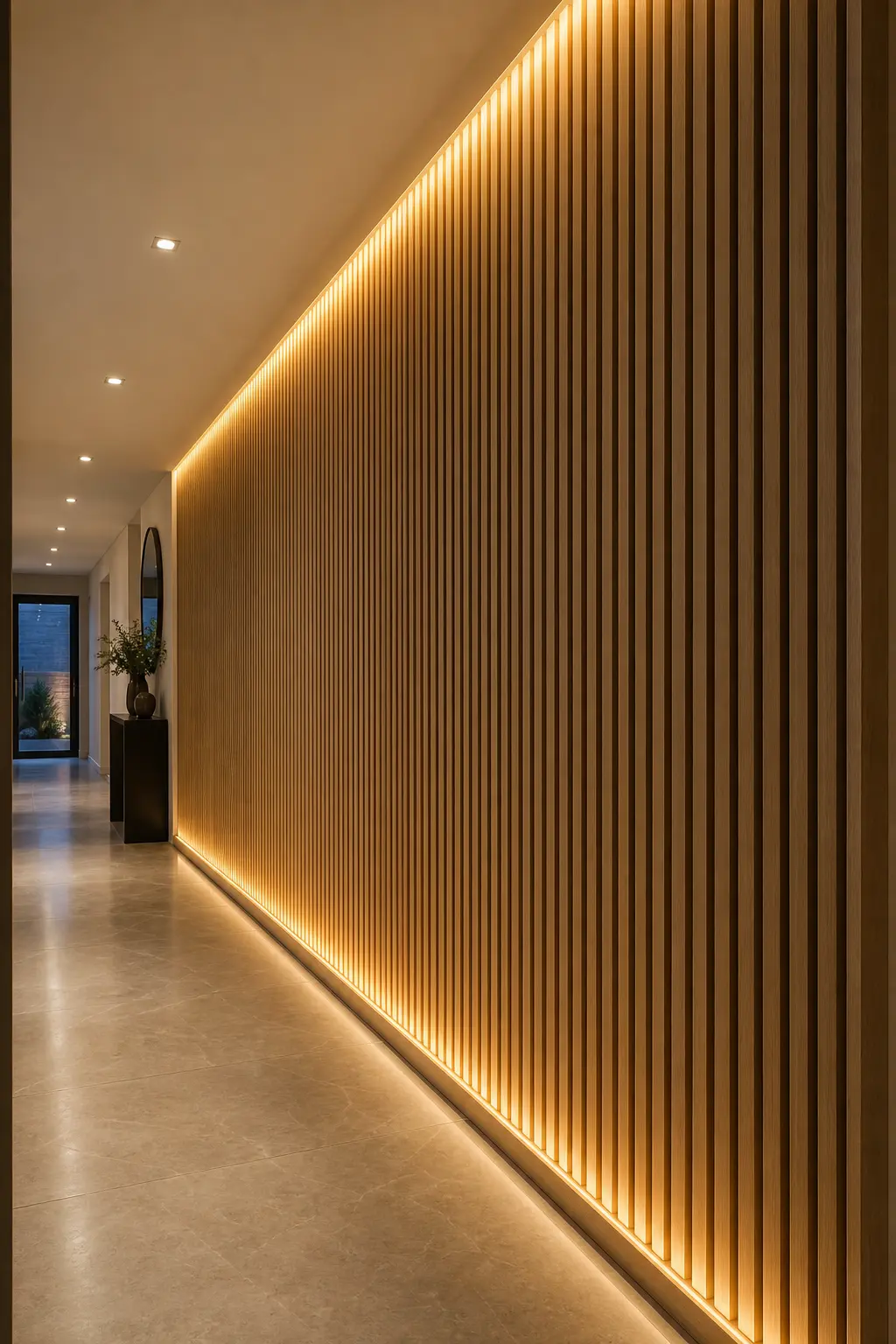
Wood slats add instant texture to a flat wall, and mounting them vertically with small gaps between each one gives you somewhere to hide the light. Run a warm LED strip behind the slats near the top or bottom, and the glow spills through the gaps in soft vertical stripes. A basic slat kit from a home improvement store works fine here. You don’t need anything custom. Just stick with a color temperature around 2700K to 3000K so the light reads amber and warm instead of cold and clinical.
2. Recessed Shadow Gap Lighting Along the Baseboard
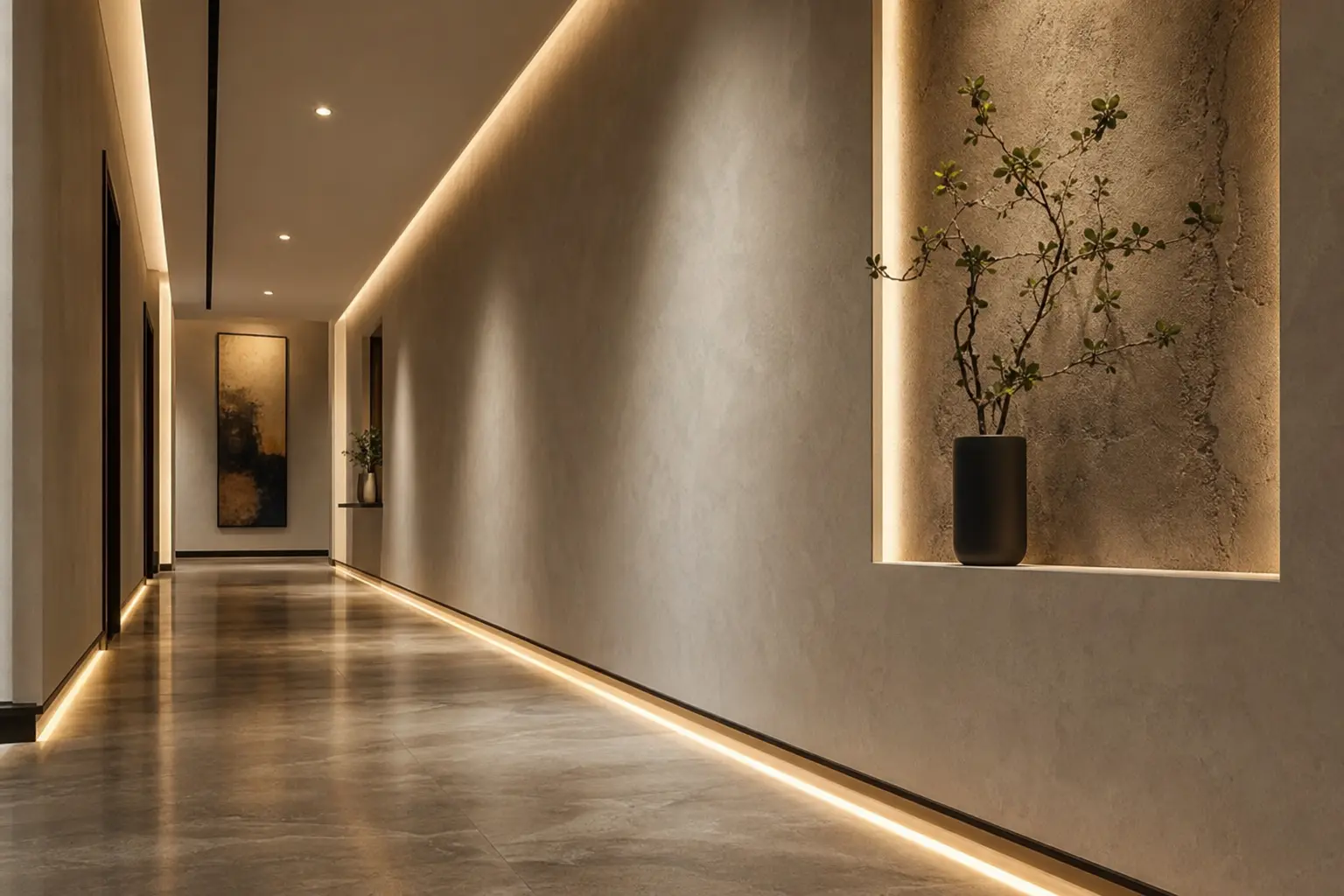
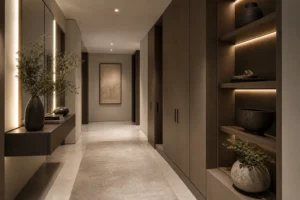
A shadow gap is a small recessed channel, usually built where the wall meets the floor or ceiling. Tuck a warm LED strip into that gap and you get a soft wash of light with no visible fixture in sight. It reads as expensive, even though the materials cost is fairly low. In a long hallway, this trick does something extra. The light draws your eye down the whole length of the space, which makes it feel longer and more dramatic instead of cramped.
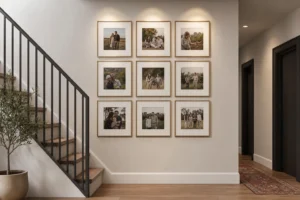
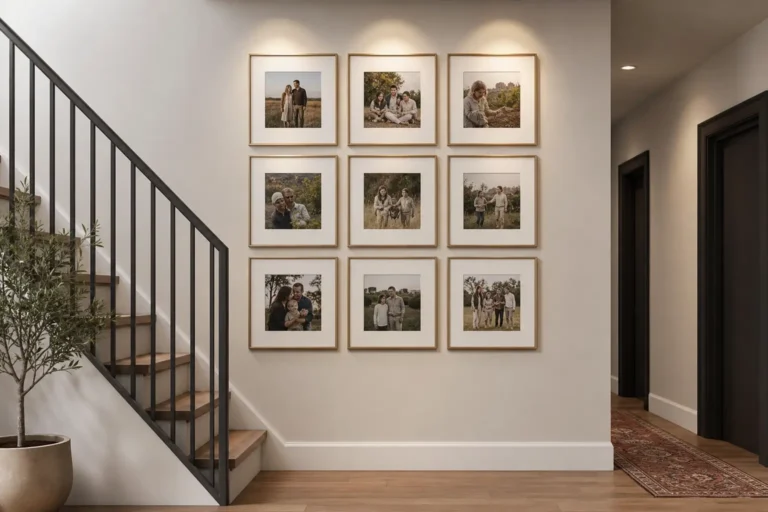
3. Gallery Wall Framed with a Warm Light Border
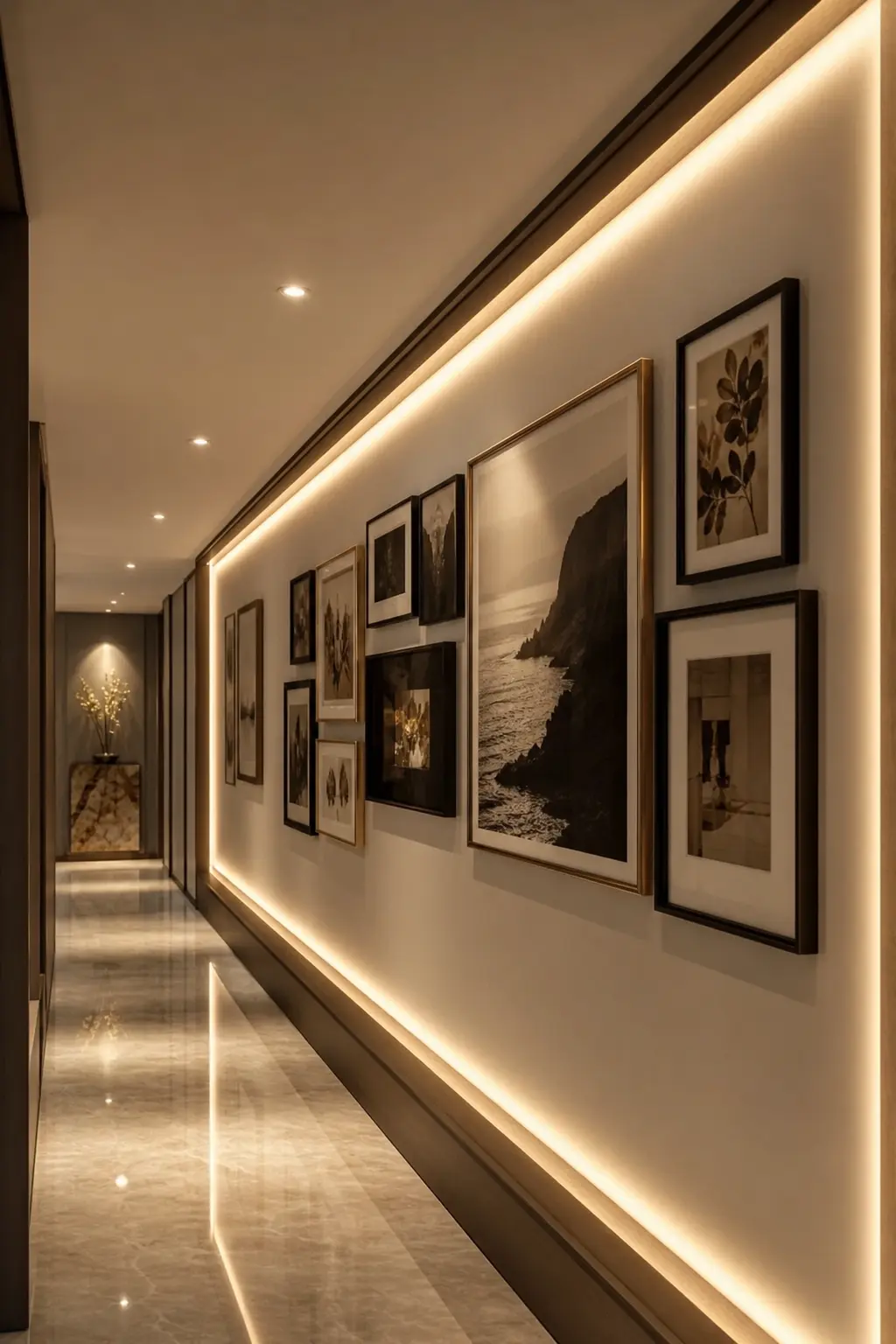
If you’ve already got a wall of framed photos, why not light the whole arrangement? A thin LED strip around the perimeter of the group turns simple frames into something closer to a lit display case. Stick with warm white bulbs here, since cool light tends to wash out skin tones and flatten photo colors. Put the strip on a dimmer too. You’ll want a different mood in the morning than you do at night.
4. Board and Batten with Integrated Lighting Channels
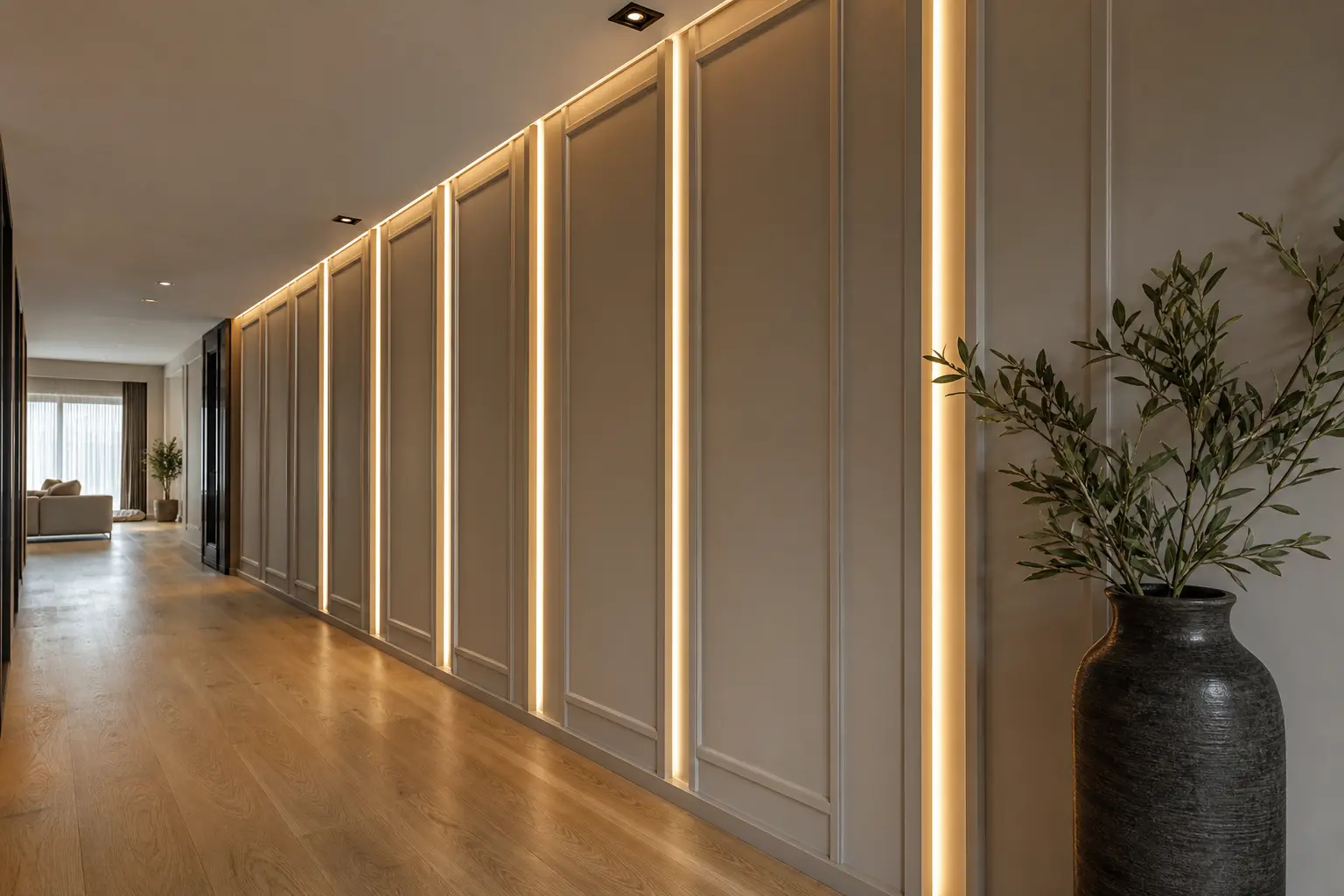
Board and batten paneling gives a hallway classic texture right away. Build a small channel behind the top batten rail and run your LED strip there, either pointed up toward the ceiling or down along the wall. The vertical battens catch the light and cast subtle shadow lines that shift depending on where you’re standing. Paint it any color you want. This idea works in traditional homes just as easily as modern ones.
5. Textured Plaster or Limewash Wall with Uplighting
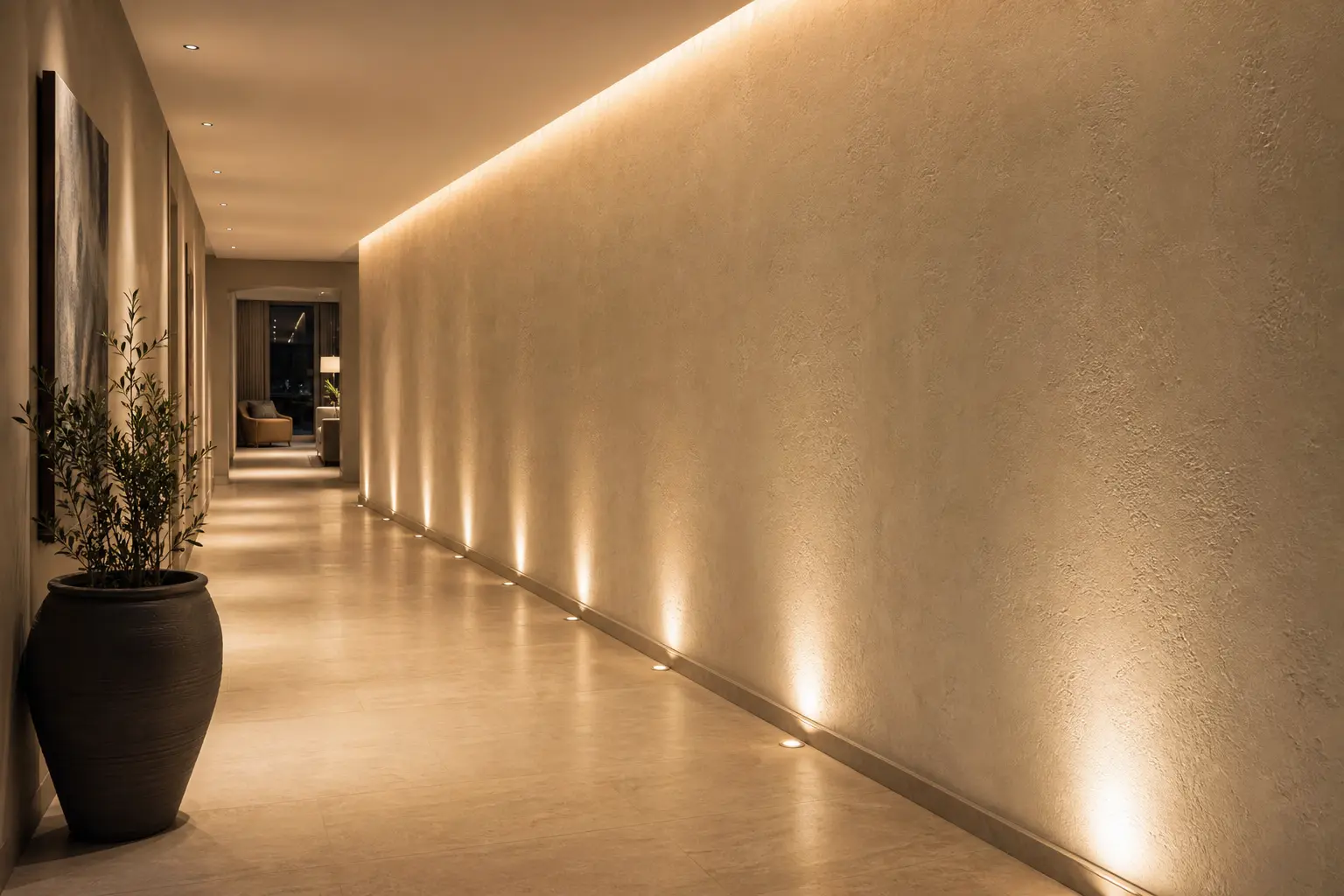
Limewash and textured plaster have a depth that plain paint just doesn’t. Add a warm LED strip at the base, pointed upward, and every bump and variation in the surface gets exaggerated. The effect looks almost candlelit. Out of every option on this list, this one tends to feel the most organic and handmade, which matters if the rest of your home leans that direction too.
6. Floating Wood Shelf with Under-Shelf Glow
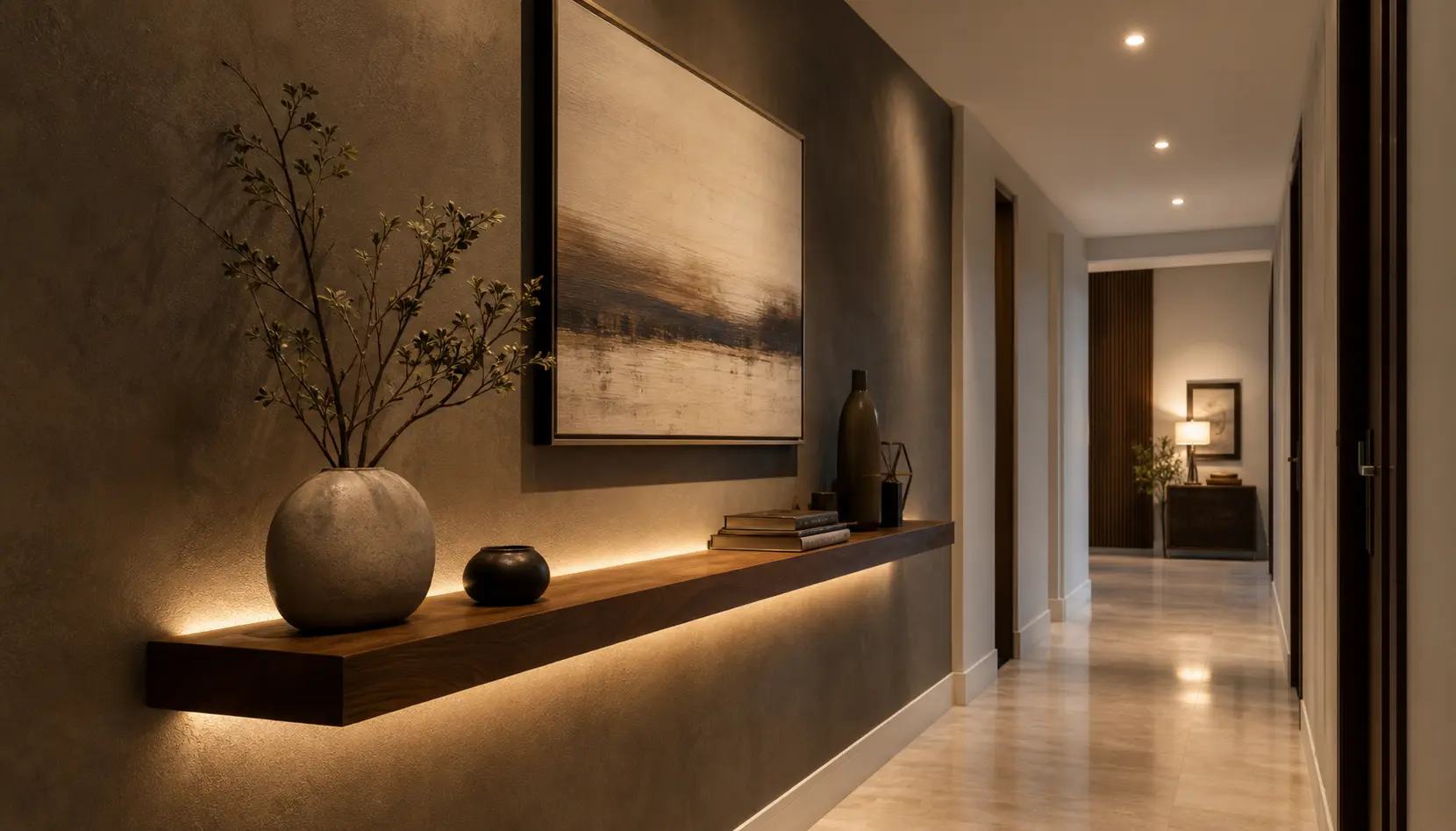
A single floating shelf running the length of the hallway gives you somewhere to set books, small decor, or a few framed photos. Run a thin LED strip along the underside so it casts a warm glow down onto the wall below. It’s a practical pick, honestly. You get storage and display space along with the lighting, not just one or the other.
7. Arched Niche Wall with Warm Backlighting
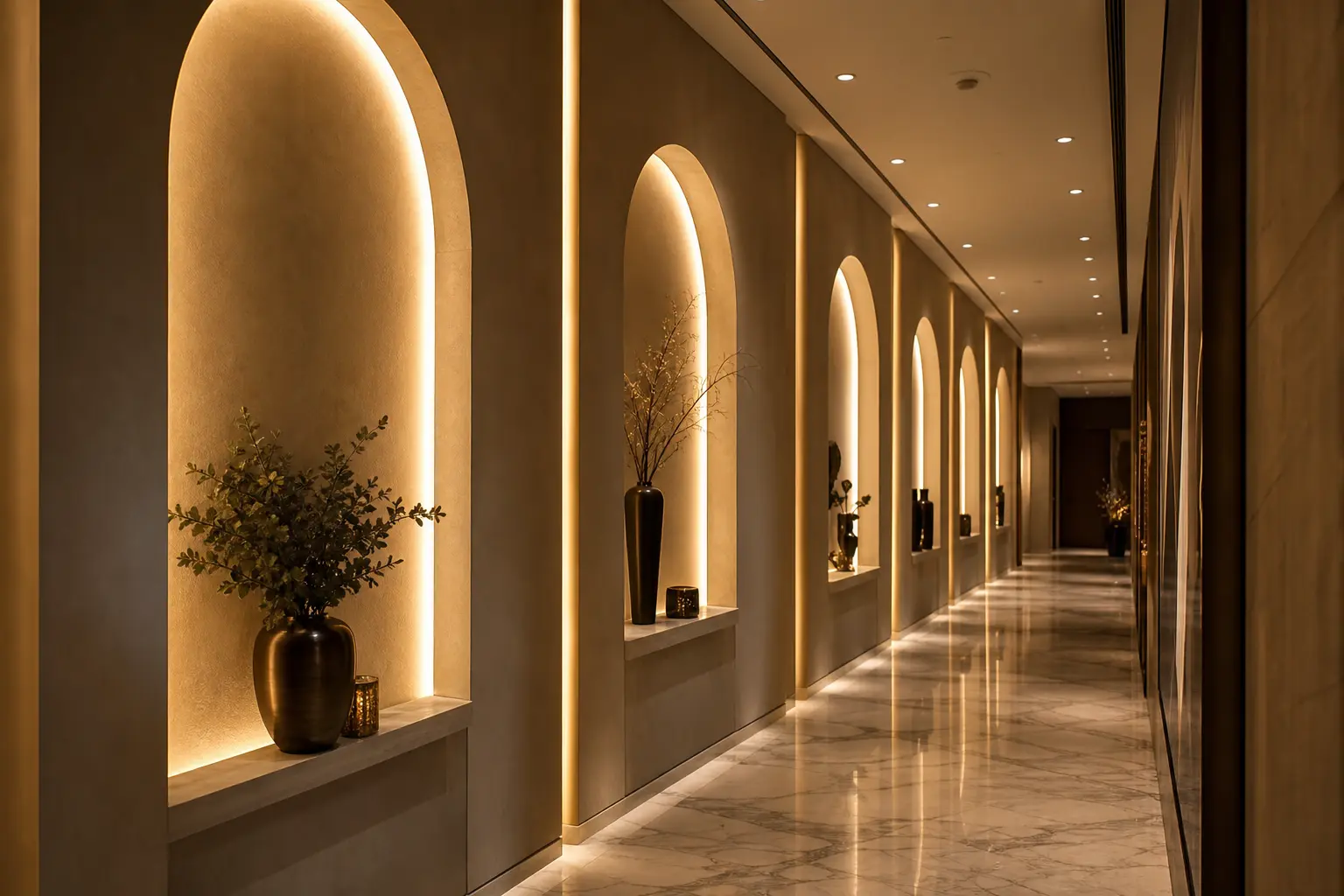
Arched wall niches have made a real comeback. Build a shallow arch into the hallway wall, line the inside edge with a warm LED strip, and you get a soft halo around whatever sits inside, whether that’s a vase, a small plant, or a piece of art. The curve of the arch softens the light in a way a straight edge simply can’t replicate.
8. Vertical LED Channels Between Wood Panels
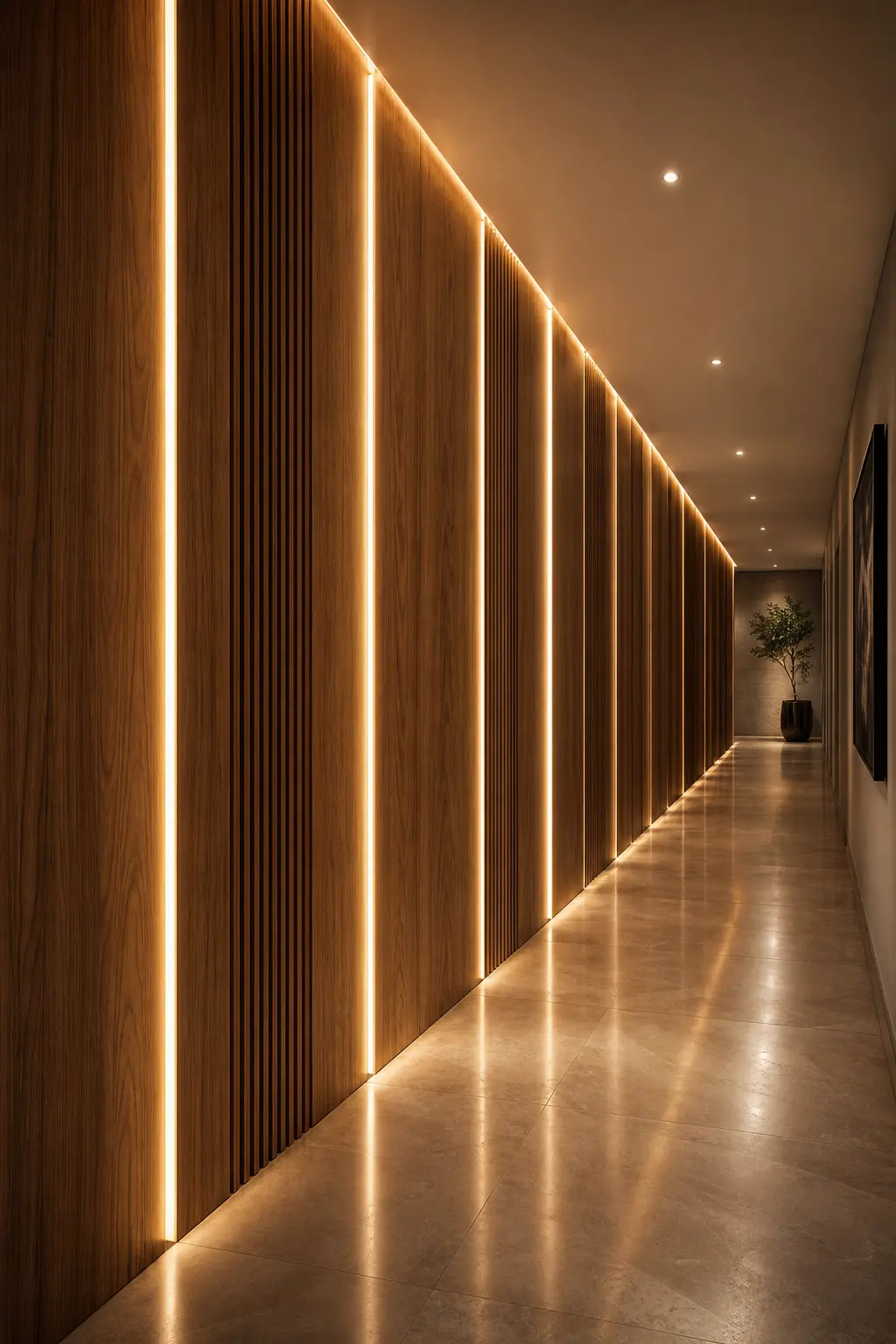
Some of these ideas hide the light. This one doesn’t. Space wood panels a few inches apart and run a warm strip in each gap, facing outward instead of tucked away. You end up with a rhythmic pattern of glowing lines down the hallway, which is a bolder look. It suits hallways with higher ceilings best, where those vertical lines actually have room to stretch out.
9. Stone or Brick Veneer Wall with Warm Uplighting
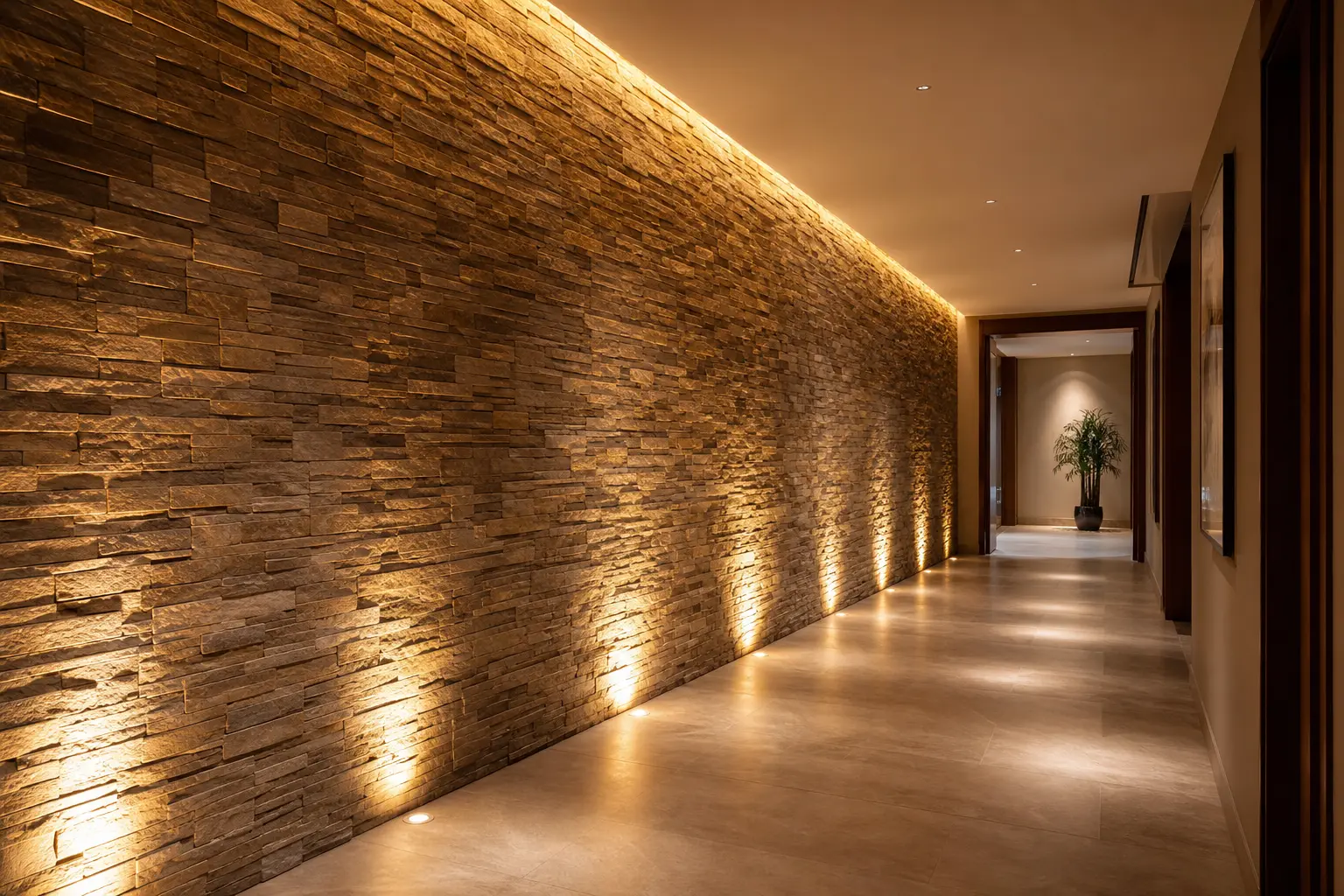
A stone or brick veneer wall brings a rustic, textured feel that most hallways don’t have. Place a warm LED strip along the base and angle it upward so it highlights every ridge and groove in the material. The rough texture paired with warm light gives off a cozy, almost cabin-like feel, even in a home that’s fully modern everywhere else.
10. Mirror Wall with Warm LED Edge Lighting
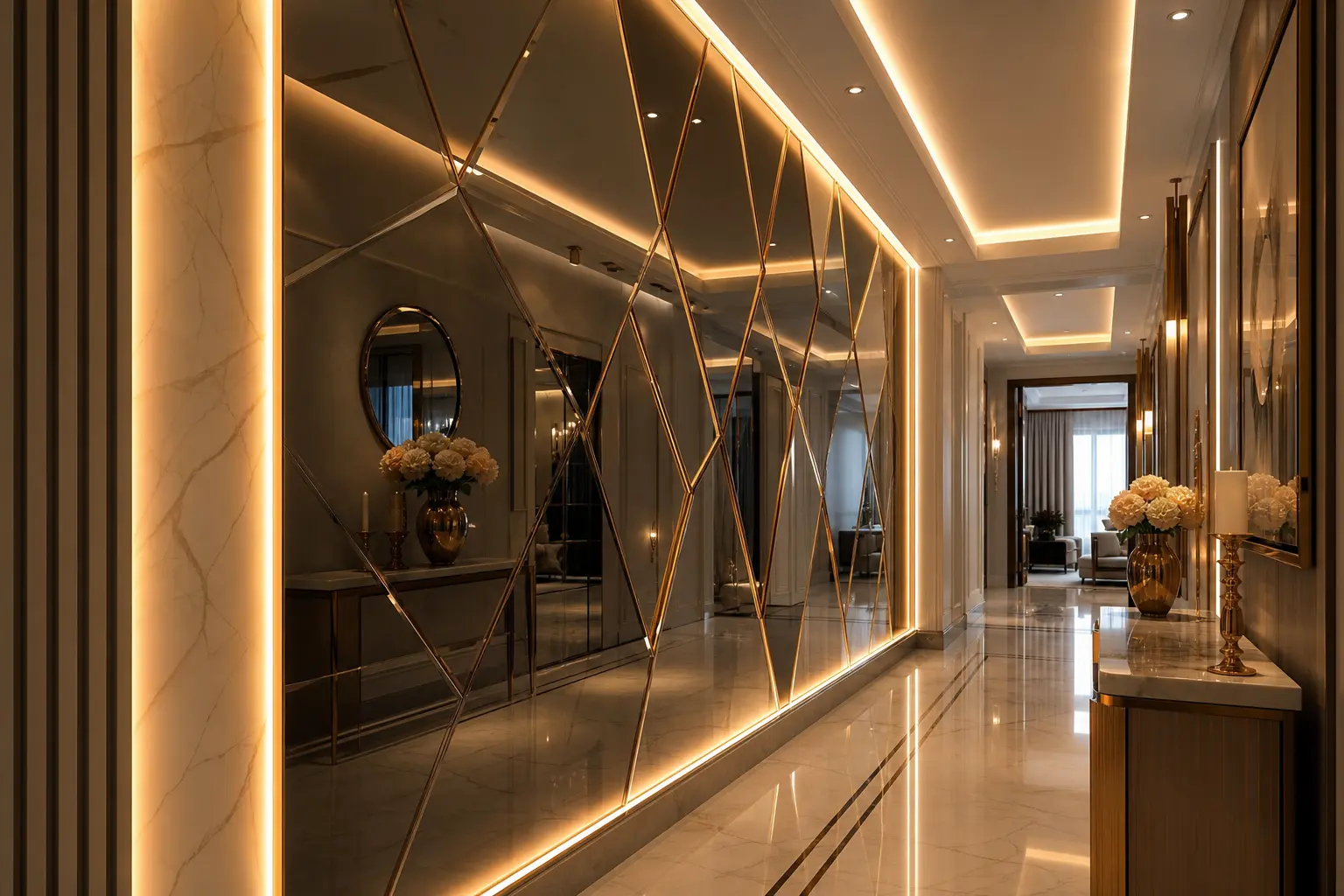
A full or partial mirror wall makes a narrow hallway feel twice as wide, which is reason enough to consider it. Run a warm LED strip along the mirror’s edge instead of a cold white one, and the reflected light stays soft rather than harsh. Small entry hallways especially benefit from this. You get a dramatic lighting moment without giving up any actual floor space.
Mistakes to Avoid
- Choosing a cool white or daylight LED strip instead of warm white, which can make a hallway feel clinical instead of cozy
- Skipping a dimmer switch, which limits you to one brightness setting all day and night
- Running strips without a diffuser channel, leaving visible hot spots or individual LED dots
- Overloading a single wall outlet with multiple lighting transformers instead of using one properly rated power supply
- Forgetting to measure the full run length before buying strips, leading to visible seams or gaps
- Placing the strip too close to the ceiling in a low hallway, which can create harsh shadows overhead
Frequently Asked Questions
What color temperature should I use for warm LED strip lighting in a hallway? Look for LED strips rated between 2700K and 3000K. This range gives off a soft, amber toned light similar to a traditional incandescent bulb, which reads as warm rather than sterile.
Do I need an electrician to install LED strip lighting? Most plug in LED strip kits don’t require an electrician, since they run off a low voltage transformer that connects to a standard outlet. Hardwired installations built into the wall or ceiling usually do need a licensed electrician.
How long do LED strips typically last? Quality LED strips generally last between 25,000 and 50,000 hours of use. That works out to many years of typical hallway lighting before a replacement is even necessary.
Can I use LED strip lighting in a rental home? Yes. Several of the hallway accent wall ideas here, like floating shelves or plug in strip kits, require no permanent changes to the wall and come down without damage when you move.
What is the average cost to add LED strip lighting to a hallway accent wall? A basic plug in kit typically runs between 20 and 60 dollars for a 16 foot roll. A fully built out feature like a shadow gap or niche with hardwired lighting can run several hundred dollars depending on materials and labor.
How bright should hallway accent lighting be? Accent lighting is meant to supplement, not replace, your main light source. Aim for a soft glow rather than full brightness, and pair it with a dimmer so you can adjust based on the time of day.
Conclusion
A hallway doesn’t have to stay an afterthought. Pair the right texture with warm LED strip lighting, and even a long, narrow passage can become one of the most inviting parts of a home. Pick whichever of these hallway accent wall ideas fits your budget and skill level, whether that’s a simple plug in strip under a shelf or a fully built shadow gap detail. The warmth of the light does most of the heavy lifting, turning a plain wall into a space people actually stop and look at.