10 Modern Luxury Bedroom Interior Design Ideas with Neutral Tone Master Bedroom Decor
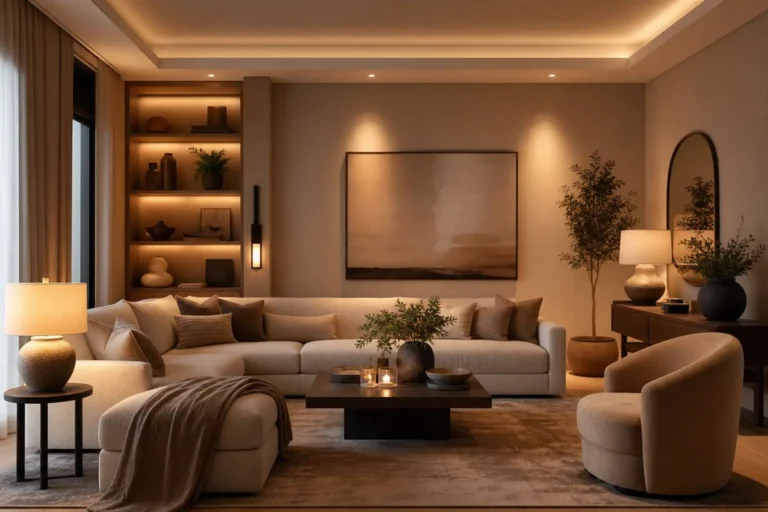
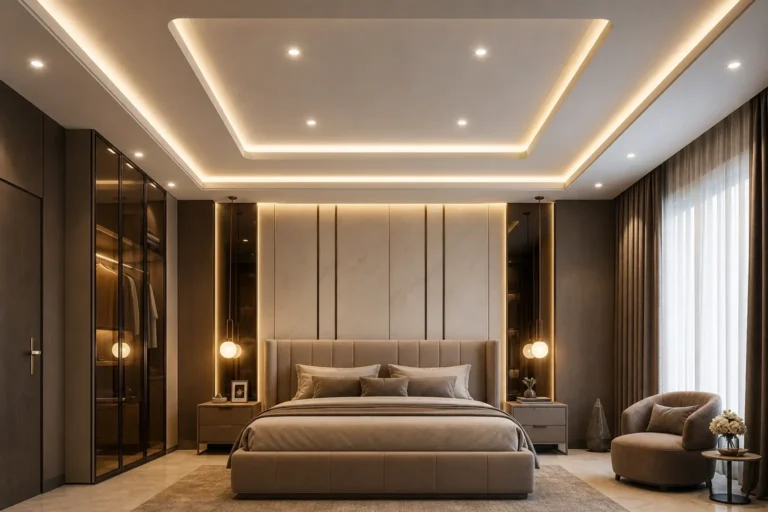
A neutral bedroom has a reputation for being safe, maybe even a little boring, but that’s usually a sign of a palette that stopped at one shade instead of building several. A genuinely luxurious neutral bedroom layers cream, taupe, warm white, and soft greige together, along with a real mix of textures, so the room reads as rich rather than flat. None of it requires bold color to feel expensive. These master bedroom ideas focus on that layering, since a tonal palette done well often looks more considered, and more luxurious, than a room built around a single bold statement color.
Picture a bedroom where every surface is some shade of the same warm neutral family, but nothing about it feels plain. The bedding, the walls, the rug, all slightly different tones of the same general palette, with texture doing the work that color usually handles in a bolder room. That’s the whole approach behind a well done neutral master bedroom.
1. Layered Tonal Neutrals from Wall to Bedding
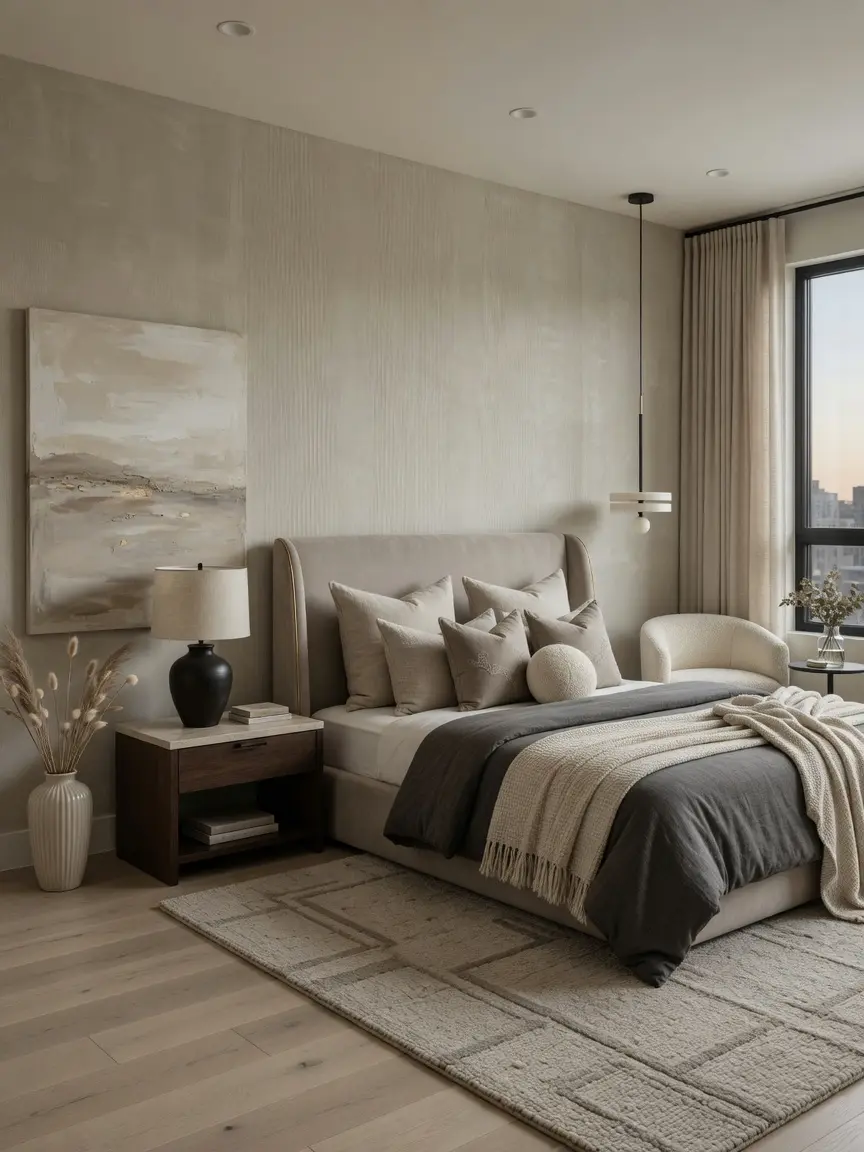
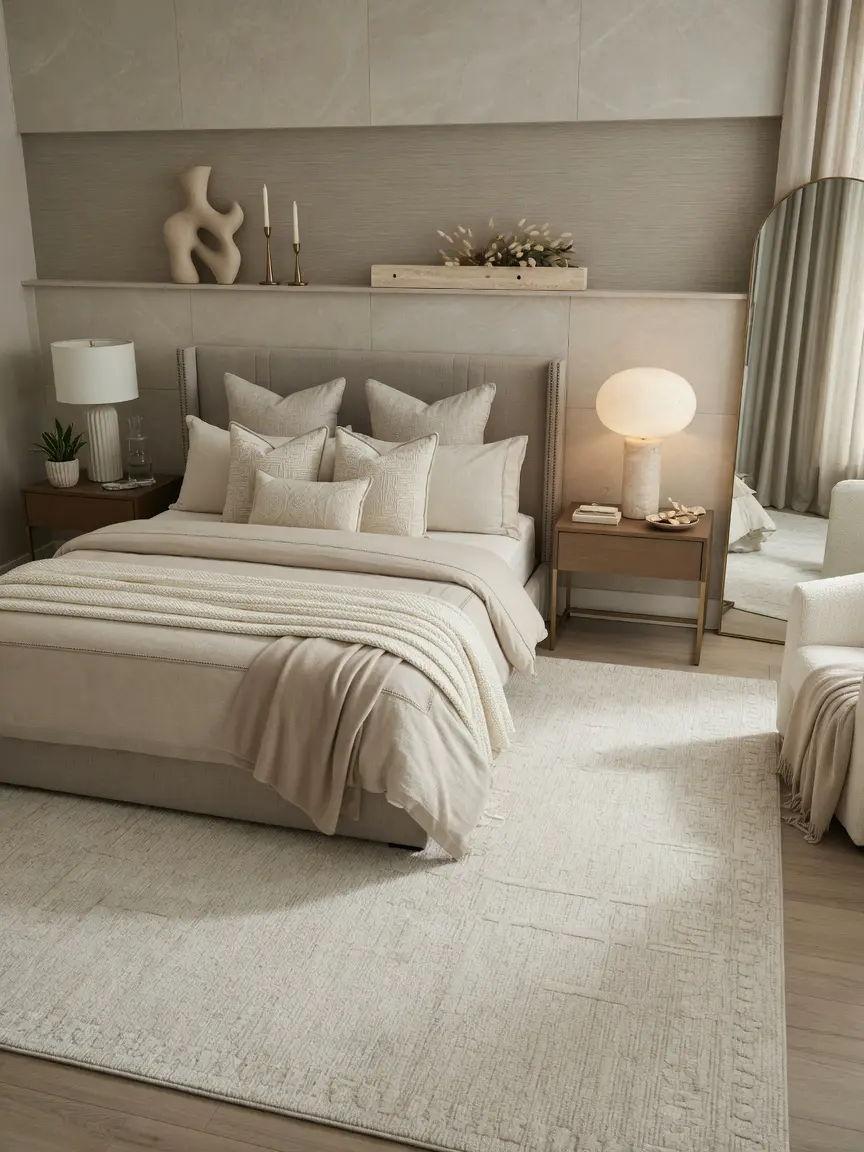
Rather than choosing one neutral shade and repeating it everywhere, layer two or three closely related tones, a warm white wall, a taupe headboard, cream bedding, so the room has subtle depth instead of a single flat color. This tonal approach reads as considered rather than accidental, since matching shades exactly can flatten a room in a way that slight variation avoids. Keep the undertones consistent, all warm or all cool, so the different tones actually work together rather than clashing subtly, and test fabric and paint samples together in the room’s actual light before committing, since neutrals shift more than people expect under different lighting conditions.
2. Upholstered Linen Bed Frame as the Anchor Piece
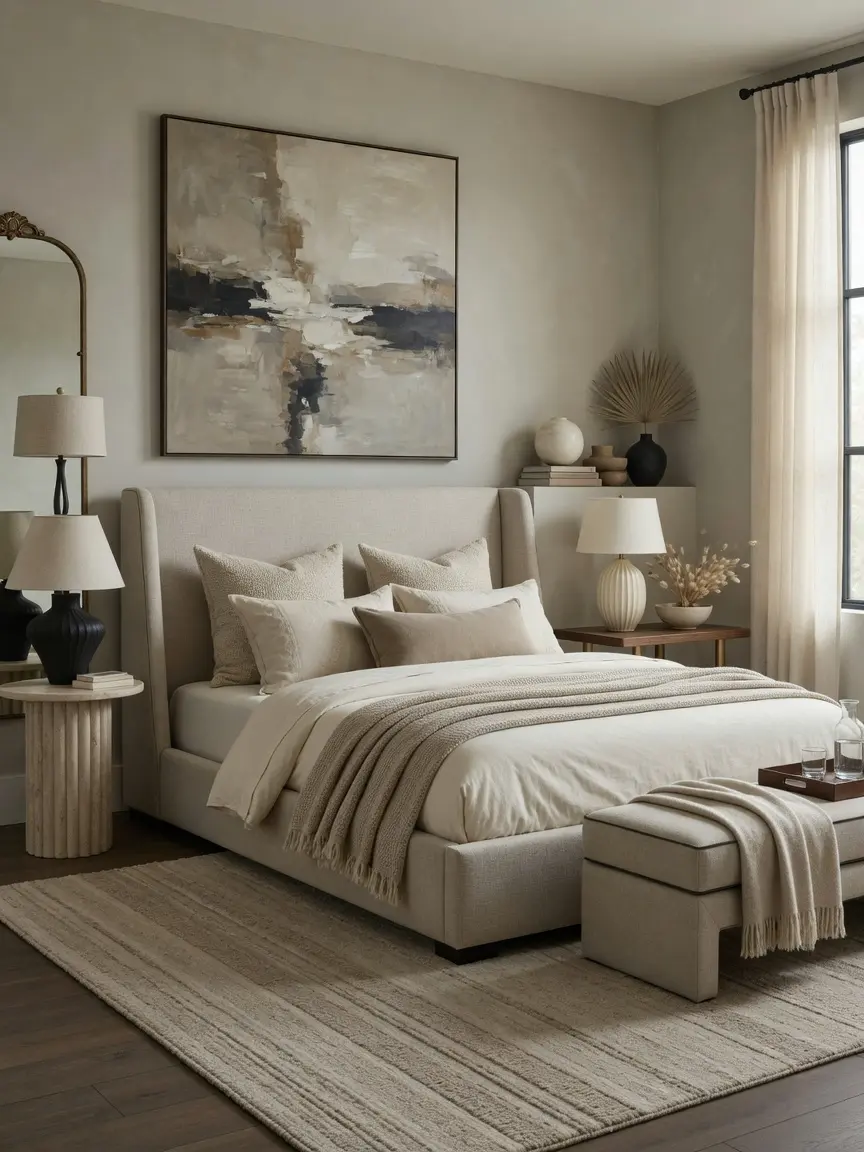
A bed frame upholstered in natural linen, in a soft oatmeal or warm white tone, gives a neutral bedroom its main textural anchor. Linen has a slightly nubby, relaxed texture that reads as high end without needing an ornate design, and it pairs naturally with the layered neutral tones elsewhere in the room. This piece works as the room’s primary investment, since a well upholstered frame tends to outlast trend driven furniture choices by a wide margin, and a neutral tone means it won’t need replacing when other smaller decor choices eventually shift.

3. Warm Wood Accents Against a Cool Neutral Base
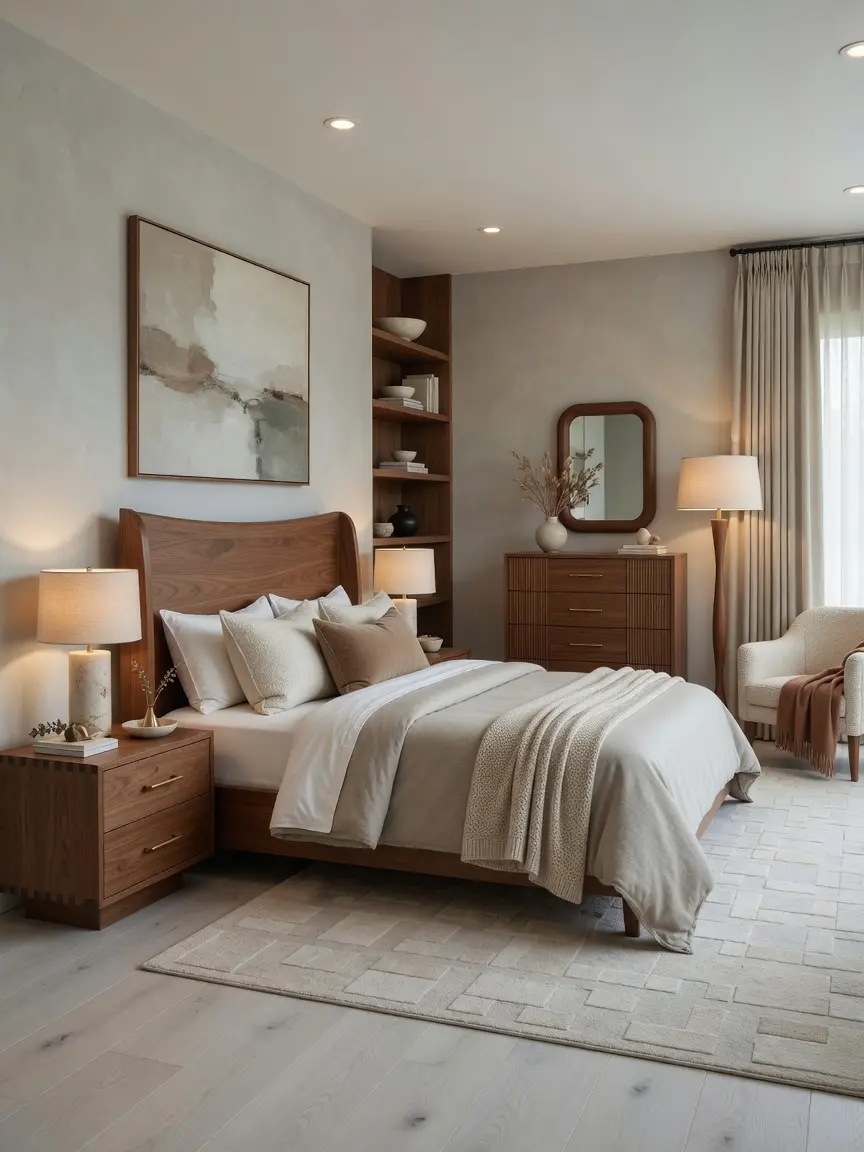
If the walls and bedding lean toward a cooler greige or dove gray, bring in warm wood furniture, a nightstand, a bench at the foot of the bed, a headboard frame, to keep the room from feeling sterile. The contrast between cool wall tones and warm wood grounds the space, giving it the kind of balance that an all cool or all warm palette sometimes misses. Oak, walnut, and other mid tone woods tend to work particularly well here, since anything too dark or too pale can end up fighting with the surrounding neutrals instead of settling into them.
4. Textured Wall Finish in a Single Neutral Tone
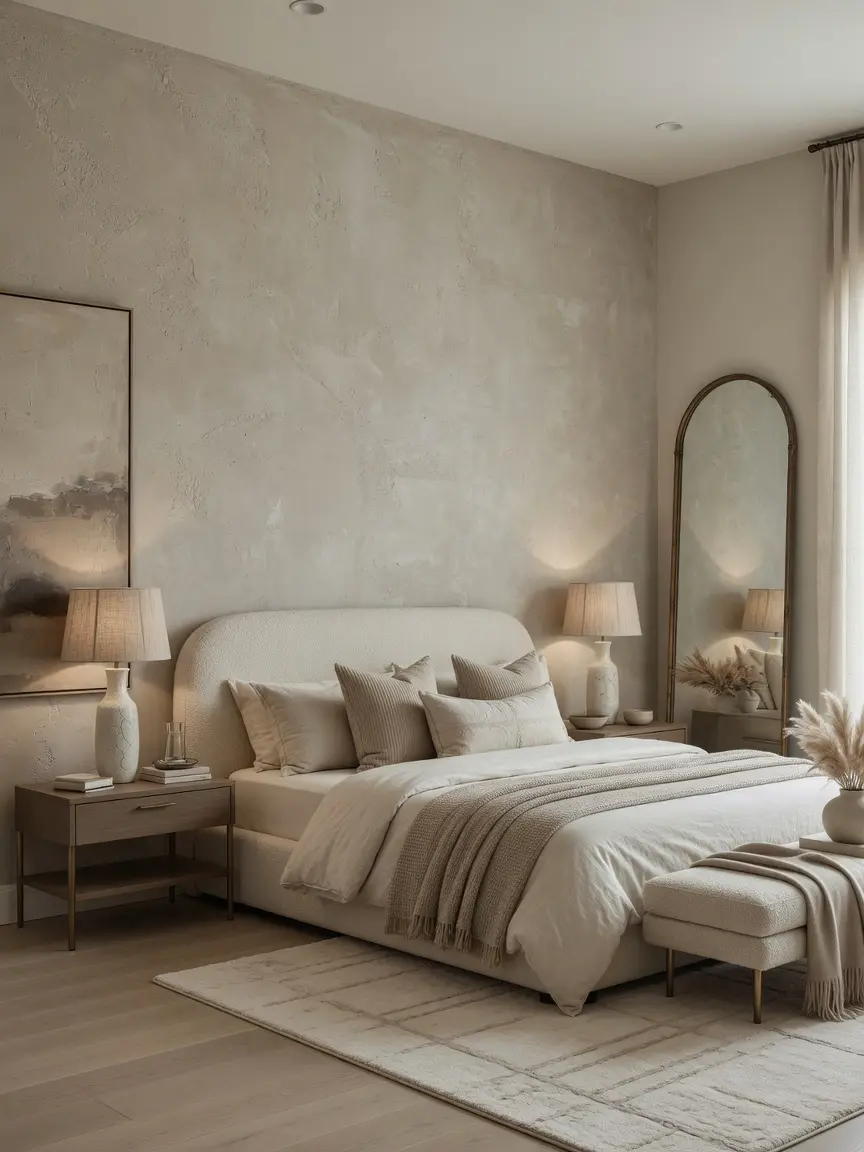
Instead of flat paint, a textured wall finish, limewash, Venetian plaster, or a subtle grasscloth wallpaper, adds visual interest in a single neutral color without introducing a second tone at all. The texture itself does the work that pattern or color would handle in a bolder room. This works especially well as a backdrop behind the bed, since the texture catches light differently throughout the day and adds a bit of quiet movement to an otherwise still wall.
5. Boucle and Wool Layering on the Bed
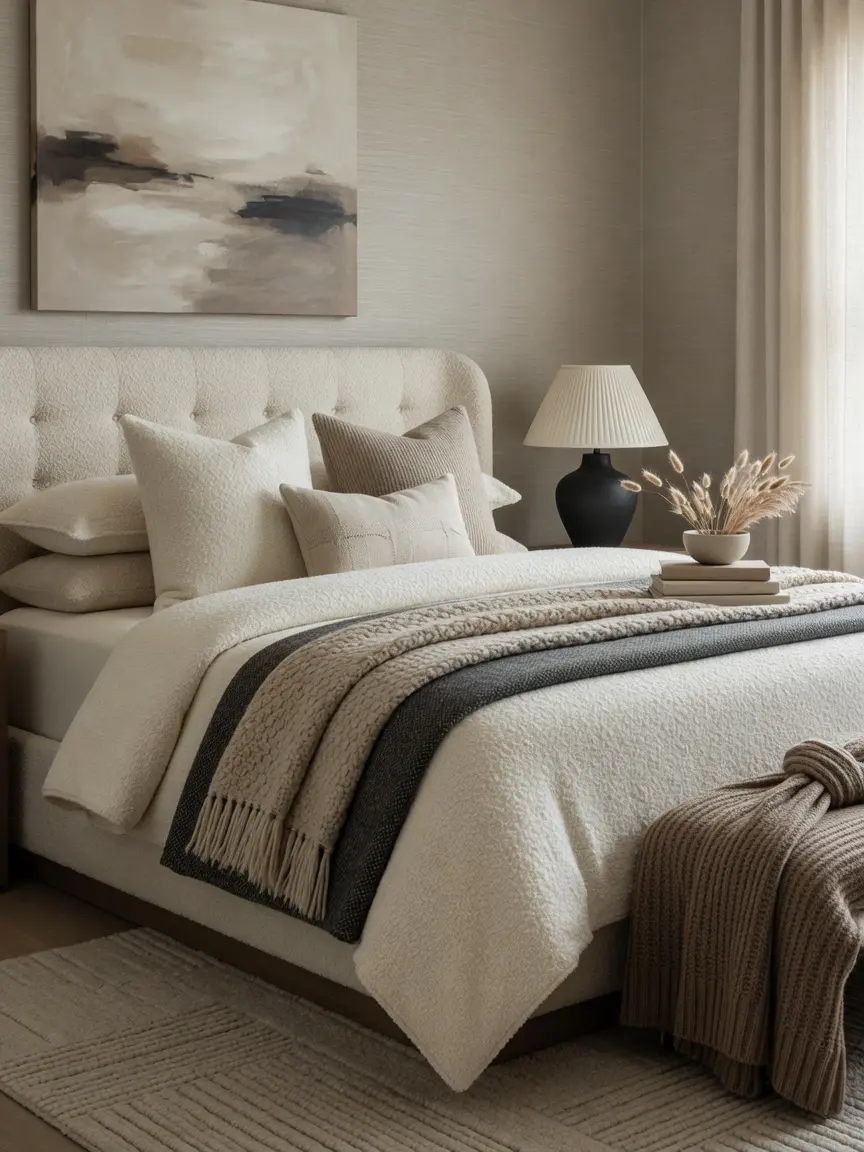
Mix a boucle throw pillow, a chunky wool blanket, and a smoother linen duvet on the same bed, all within a similar tonal range, and the different textures create depth that color alone couldn’t achieve. This layering technique works in any neutral bedroom, but it matters most in a fully tonal room, since texture becomes the primary way the eye distinguishes one element from another.
6. Sculptural Bedside Lighting in Matte Finishes
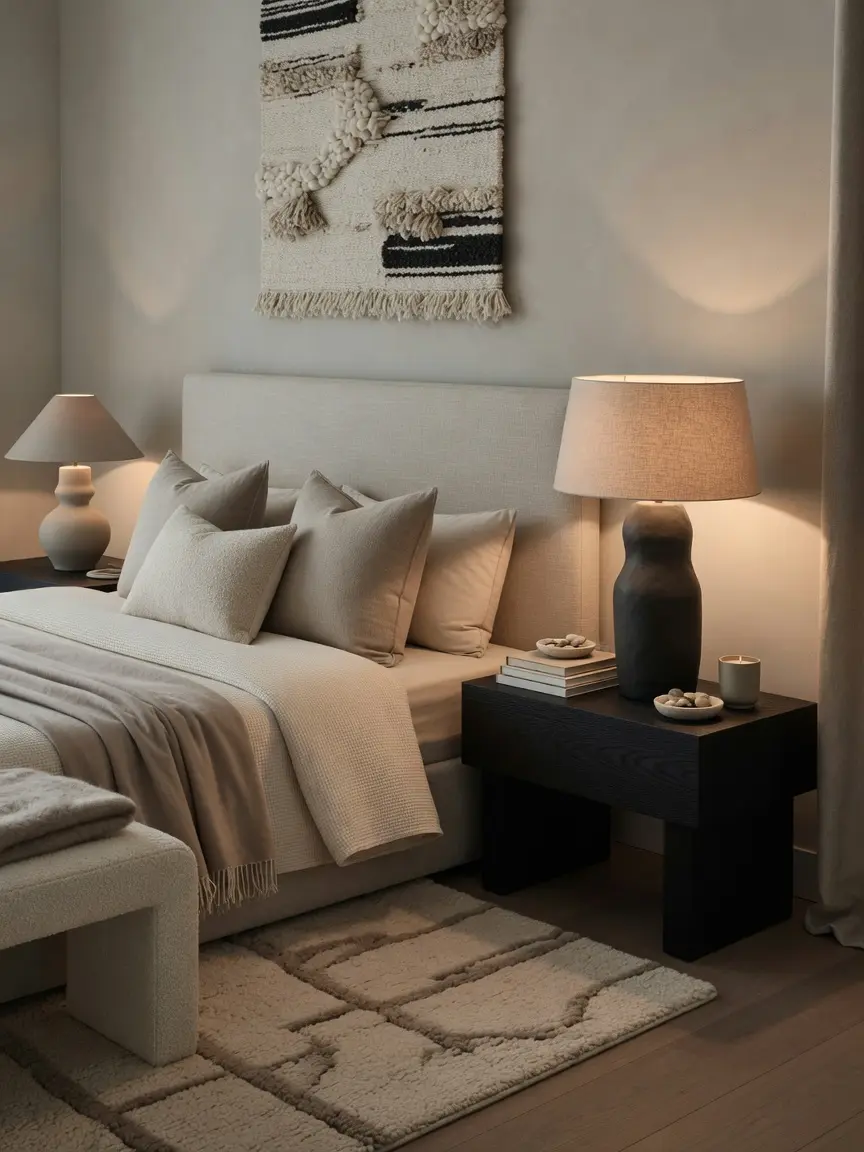
A pair of sculptural bedside lamps, in a matte cream, plaster, or warm bronze finish, adds a bit of quiet drama without introducing a bold color or a busy shape. Choose a lamp with an interesting silhouette rather than a purely functional design, since in a neutral room, the shape of an object often carries more visual weight than it would in a busier, more colorful space.
7. Oversized Rug Beneath the Bed
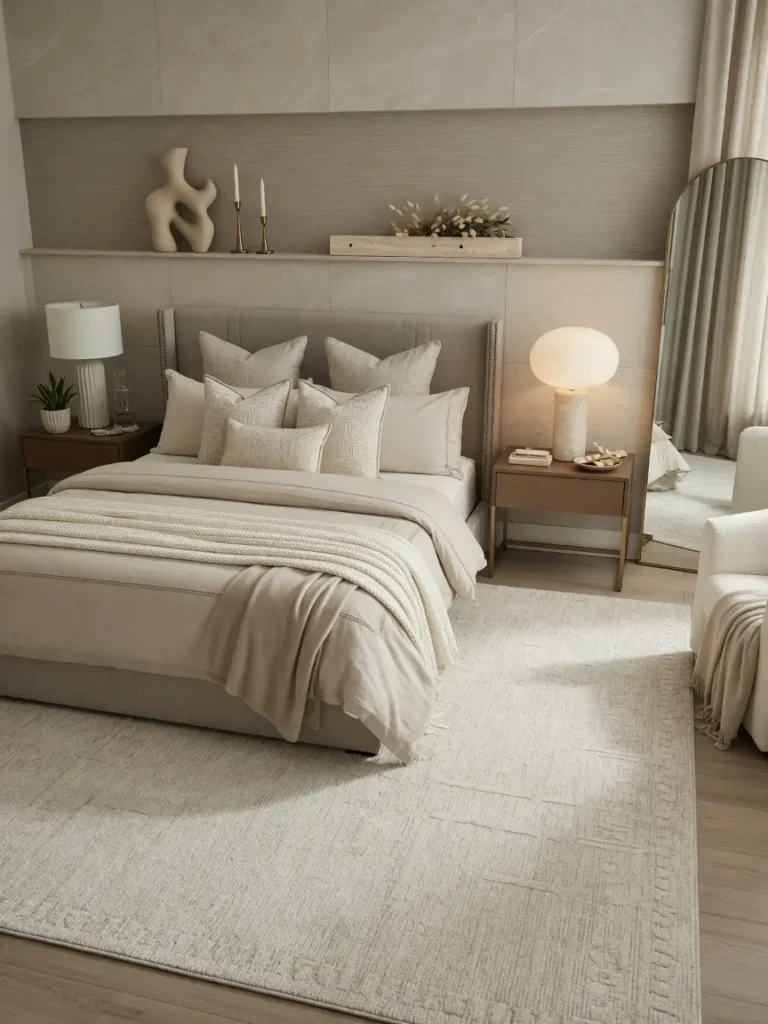
A large area rug, extending well beyond the edges of the bed rather than just peeking out from underneath, adds another layer of neutral texture at floor level. A subtly patterned or textured weave, rather than a completely flat, solid rug, keeps the floor from feeling like an afterthought in a room where every other surface has been considered carefully.
8. Monochromatic Drapery for a Soft, Enclosed Feel
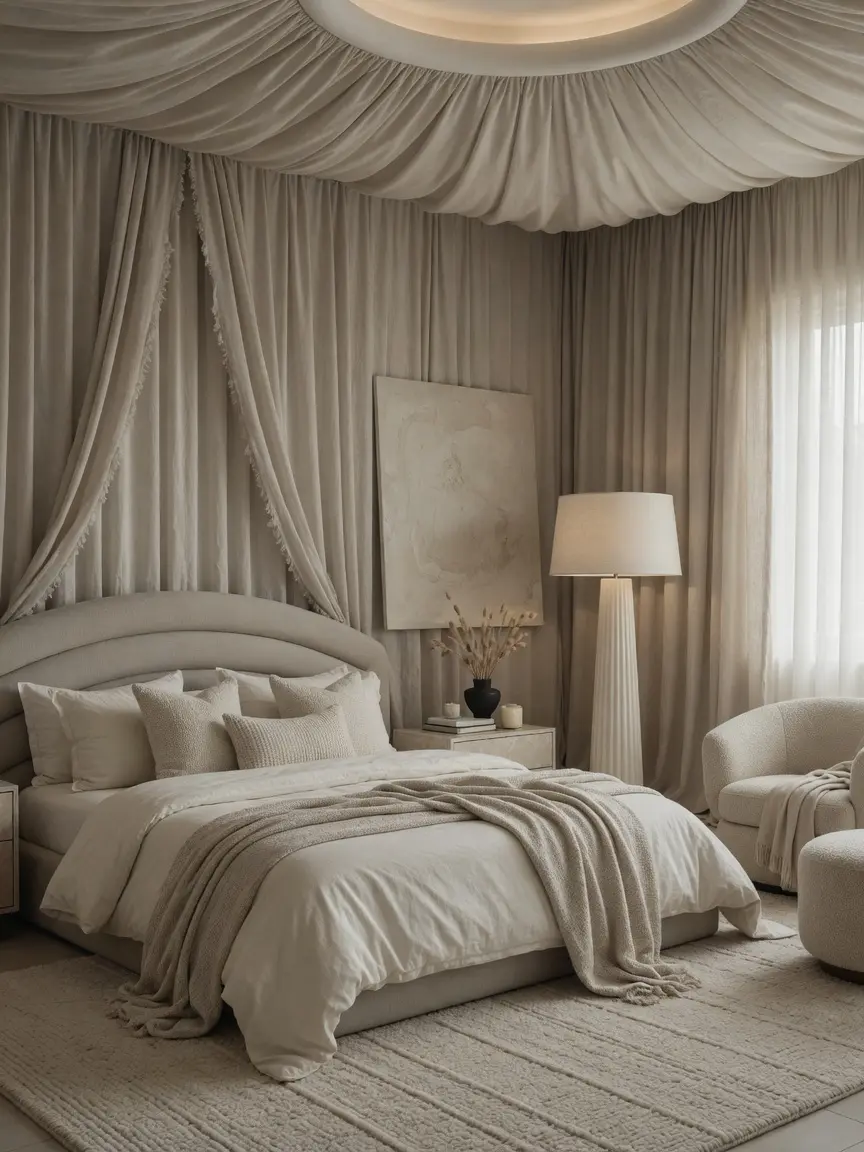
Floor to ceiling drapery in the same tonal family as the walls and bedding creates a soft, almost cocoon like feel in the bedroom, especially when the fabric has a bit of weight and drape to it rather than a stiff, sheer material. This works particularly well in bedrooms with large windows, since the drapery visually extends the neutral palette all the way up to the ceiling rather than stopping at the wall.
9. Stone and Plaster Details in Warm Neutrals
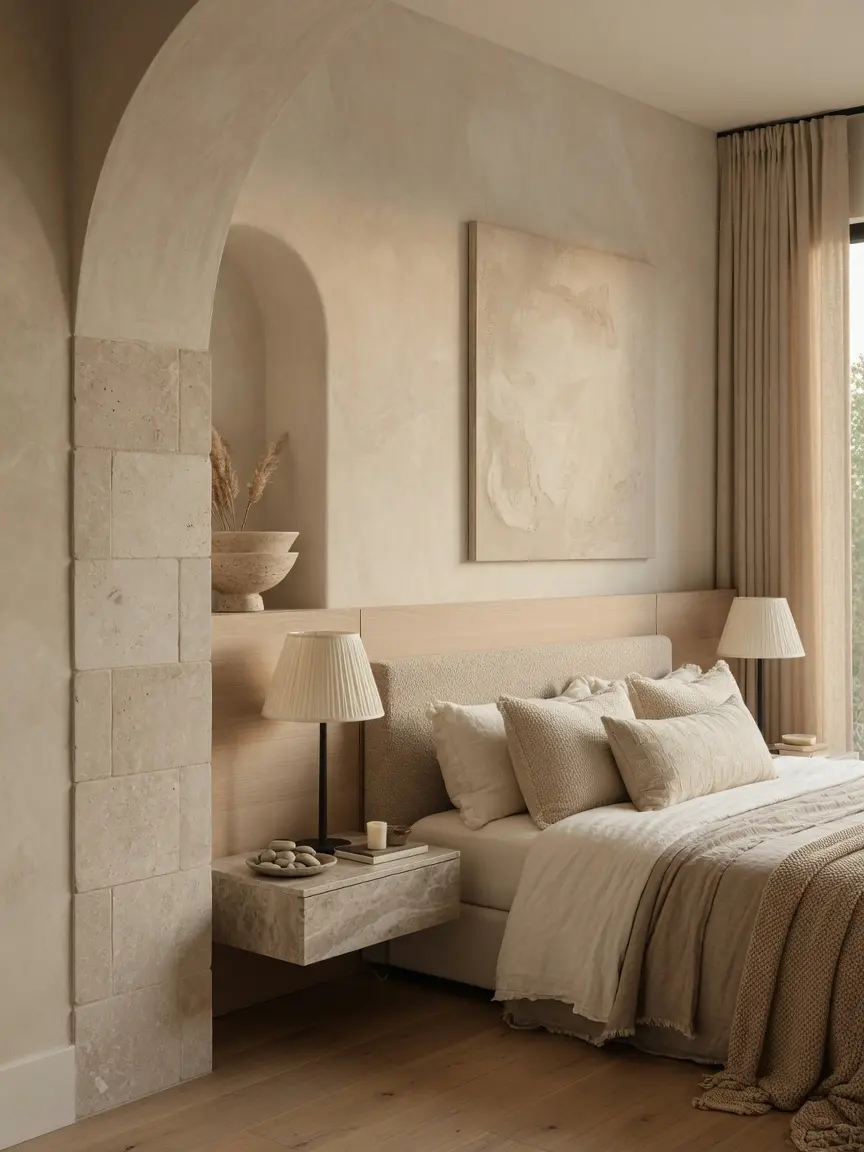
Incorporating a stone element, a side table, a decorative object, or even a plaster fireplace surround if the room has one, brings a cool, mineral texture into the palette that fabric and wood alone don’t offer. Warm toned stones like travertine or a honey colored limestone tend to blend more naturally into a warm neutral bedroom than a stark white or gray stone would.
10. Minimal Art in a Single Neutral Frame Tone
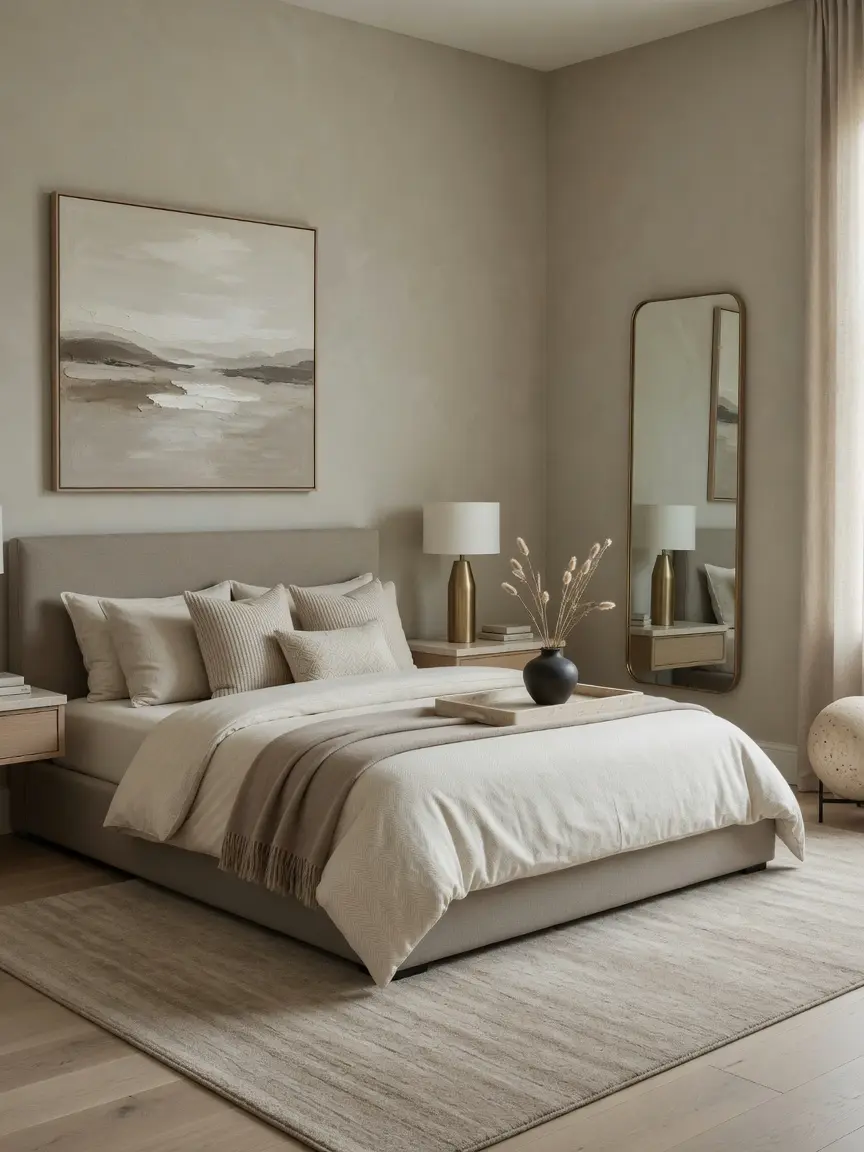
A single piece of abstract or minimal art, in tones that closely match the surrounding palette, works better in this kind of bedroom than a bold, colorful piece would. Choose a frame in the same wood tone as other furniture in the room, or a matching neutral matte finish, so the art integrates into the palette rather than standing apart from it as an obvious accent.
Mistakes to Avoid
- Matching every neutral tone exactly, which can flatten the room instead of adding the layered depth a tonal palette depends on
- Skipping texture entirely and relying on color variation alone, leaving the room feeling under considered
- Mixing warm and cool undertones inconsistently, which can make the palette feel subtly off rather than intentional
- Choosing all matte finishes with no shine or reflectivity anywhere in the room, leaving the space feeling flat
- Ignoring lighting quality, since a neutral palette shows every shift in light temperature more obviously than a bold color scheme would
- Overfilling the room with decor, which works against the quiet, considered feel a good neutral bedroom depends on
Frequently Asked Questions
How many different neutral tones should a bedroom use? Generally two to four closely related tones work well, enough to create depth without so many that the palette starts to feel scattered or uncoordinated.
Does a neutral bedroom need a lot of natural light to work? Natural light helps, since it reveals the subtle tonal variation a neutral room depends on, but layered artificial lighting, especially warm toned lamps and sconces, can achieve a similar effect in rooms with less daylight.
What’s the easiest way to add luxury to a neutral bedroom on a budget? Focus on texture first, a wool throw, linen bedding, a textured rug, since texture tends to read as more expensive than color or pattern and often costs less than large furniture upgrades.
Do neutral bedrooms need warm or cool undertones? Either can work, but consistency matters more than the specific choice. Mixing warm and cool neutrals without intention tends to look off in a way that committing to one direction avoids.
Can a neutral master bedroom still feel cozy rather than cold? Yes, and texture is usually the deciding factor. Plenty of soft, tactile materials, wool, linen, boucle, warm wood, keep a neutral room feeling inviting rather than sterile or overly minimal.
Conclusion
A neutral master bedroom proves that luxury doesn’t require bold color to feel considered. Layering a few closely related tones, mixing in real texture, and choosing pieces with some quiet presence, a sculptural lamp, an upholstered bed frame, does more for the room’s overall feel than any single statement color choice could. These master bedroom ideas show that restraint, done thoughtfully, often reads as more luxurious than anything louder.