10 Modern TV Wall Design Ideas with Geometric Backlit Panels and Wood Slats
Your TV wall probably gets more daily eye contact than almost any other spot in your home, and yet it’s often the most ignored surface in the whole living room. A flat wall with a mounted screen and nothing else reads as unfinished, no matter how nice the furniture around it is. These TV wall design ideas fix that by combining wood slats, geometric panel patterns, and hidden backlighting into a wall that actually looks intentional, warm, and textured instead of blank.
1. Combine Wood Slats with Backlit Panels for Warmth and Depth
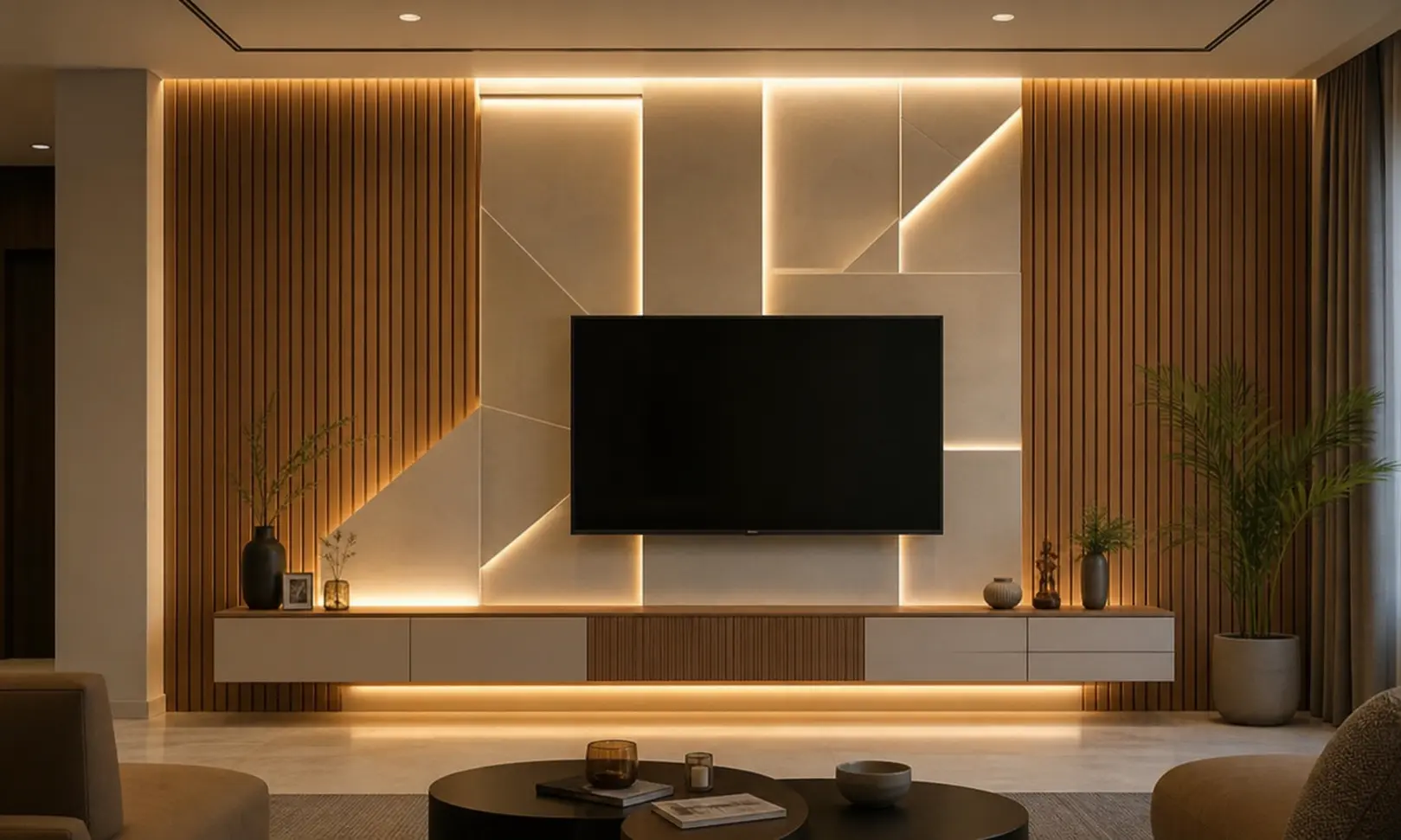
Wood slats alone add texture. Backlighting alone adds glow. Together, they create a wall that has both warmth and depth, since the wood softens the light and the light gives the wood dimension it wouldn’t have under flat room lighting alone.
This combination works in almost any room style, from a warm minimalist living room to a more traditional space with existing wood furniture. The slats can run vertically for a taller, more dramatic feel, or horizontally for a wider, calmer look depending on your ceiling height and room proportions.
Why the Pairing Works
Wood grain catches shadow differently than a flat painted wall, so even ambient light creates subtle variation across the surface. Adding a backlit glow behind or between the slats amplifies that natural texture instead of flattening it out.
2. Choose a Geometric Pattern That Fits Your Wall Proportions
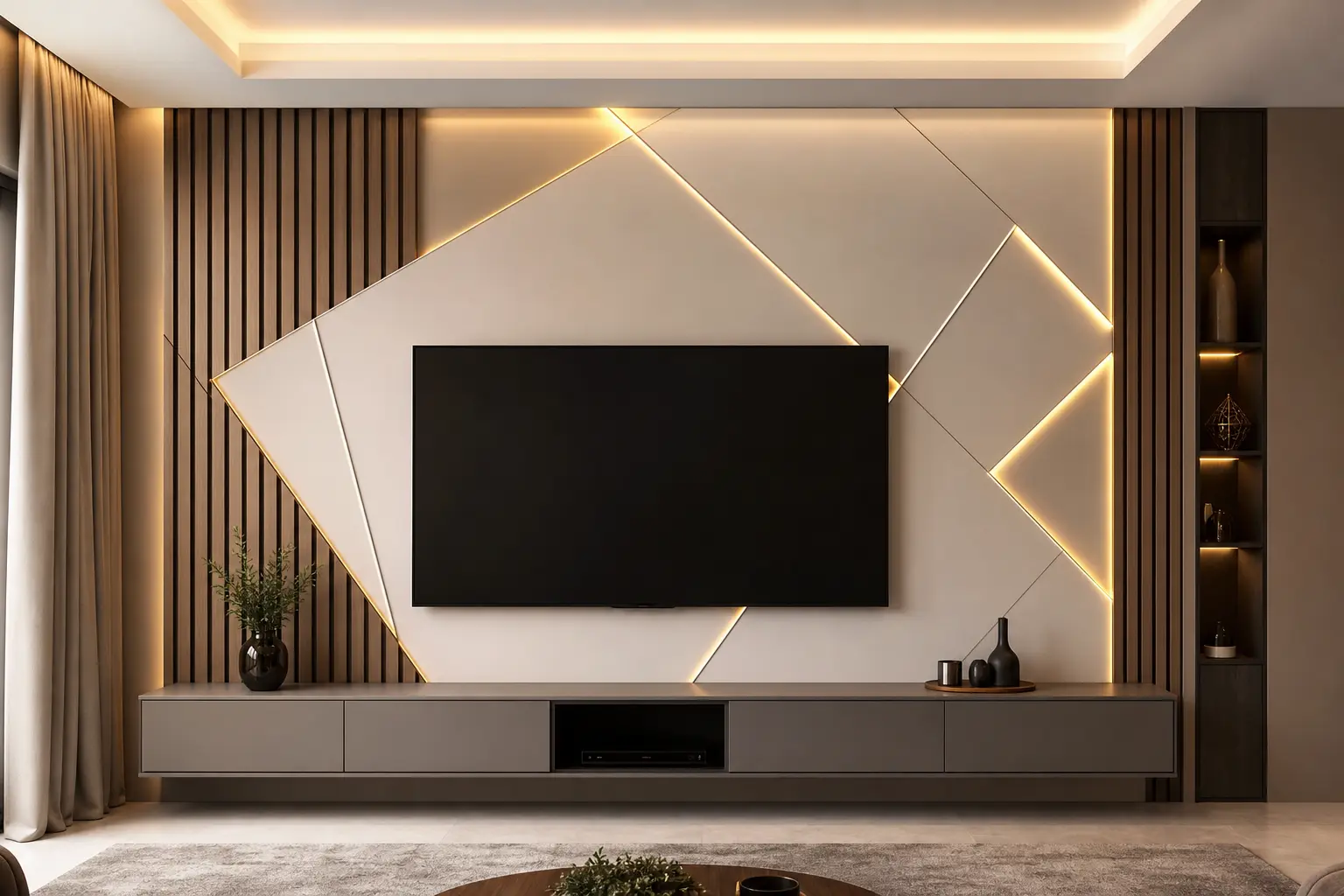
Not every geometric pattern suits every wall. A tall, narrow wall generally looks better with a vertical slat or chevron pattern, while a wide, low wall often works better with a horizontal grid or a repeated square panel layout. Measure your wall’s height to width ratio before choosing a pattern so the geometry feels proportional rather than stretched or squished.
Common patterns include straight vertical slats, a herringbone or chevron arrangement, and a modular grid of square or rectangular panels. Herringbone tends to feel more traditional despite the modern materials, while a straight grid reads as cleaner and more minimalist.
3. Use Hidden LED Strips Behind Wood Slats for a Soft Glow
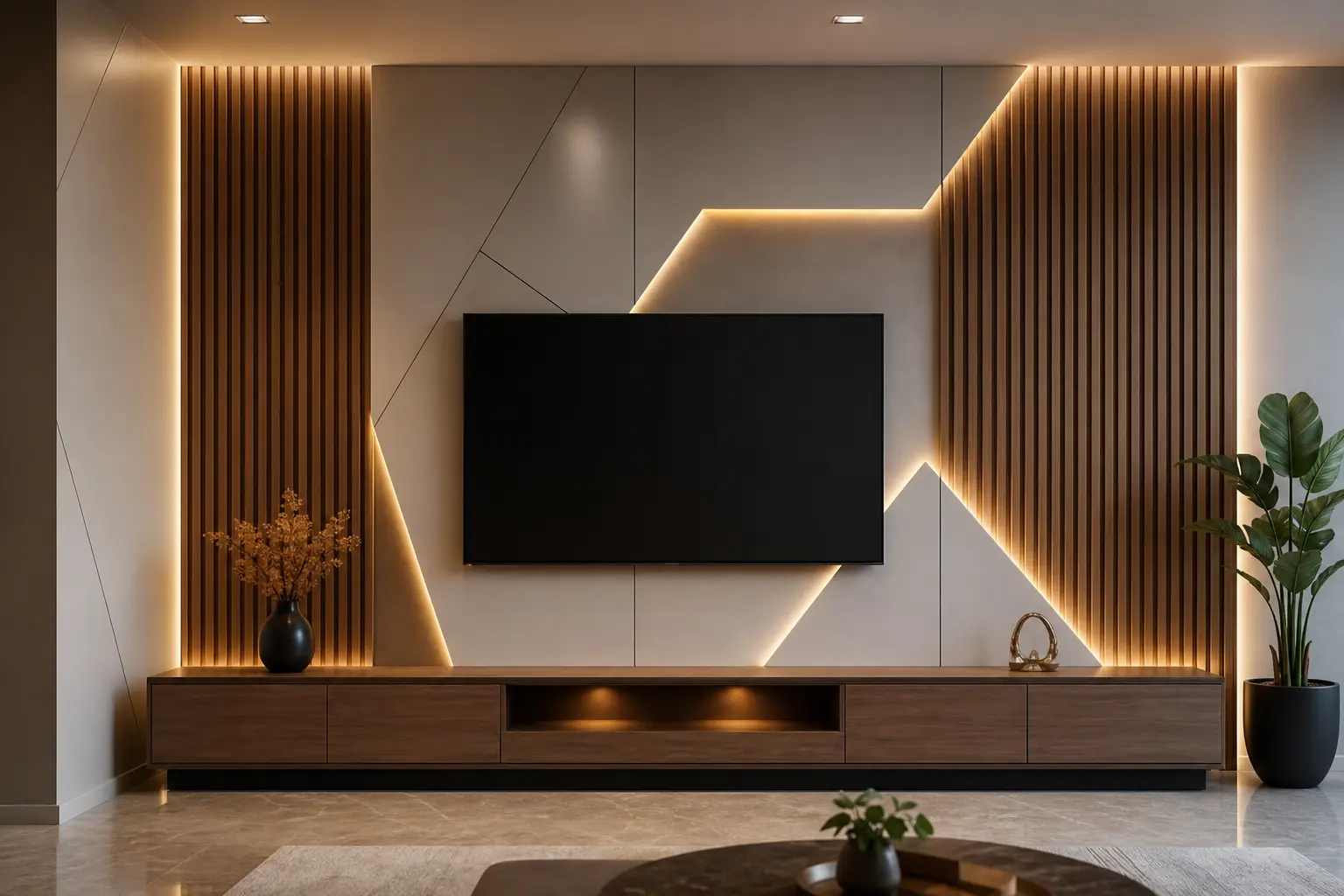
Rather than a visible light fixture, many modern TV wall designs hide thin LED strips behind or between the wood slats, so only the soft glow is visible rather than the light source itself. This creates a subtle backlit effect that highlights the texture of the wood without competing with the TV screen for attention.
LED strip kits generally cost 20 to 60 dollars for a standard living room wall, and most are simple enough to install with adhesive backing along the mounting frame before the slats go up. Warm white strips, in the 2700K to 3000K range, tend to complement natural wood tones far better than cool white options.
4. Mix Matte Black Trim with Natural Wood Tones
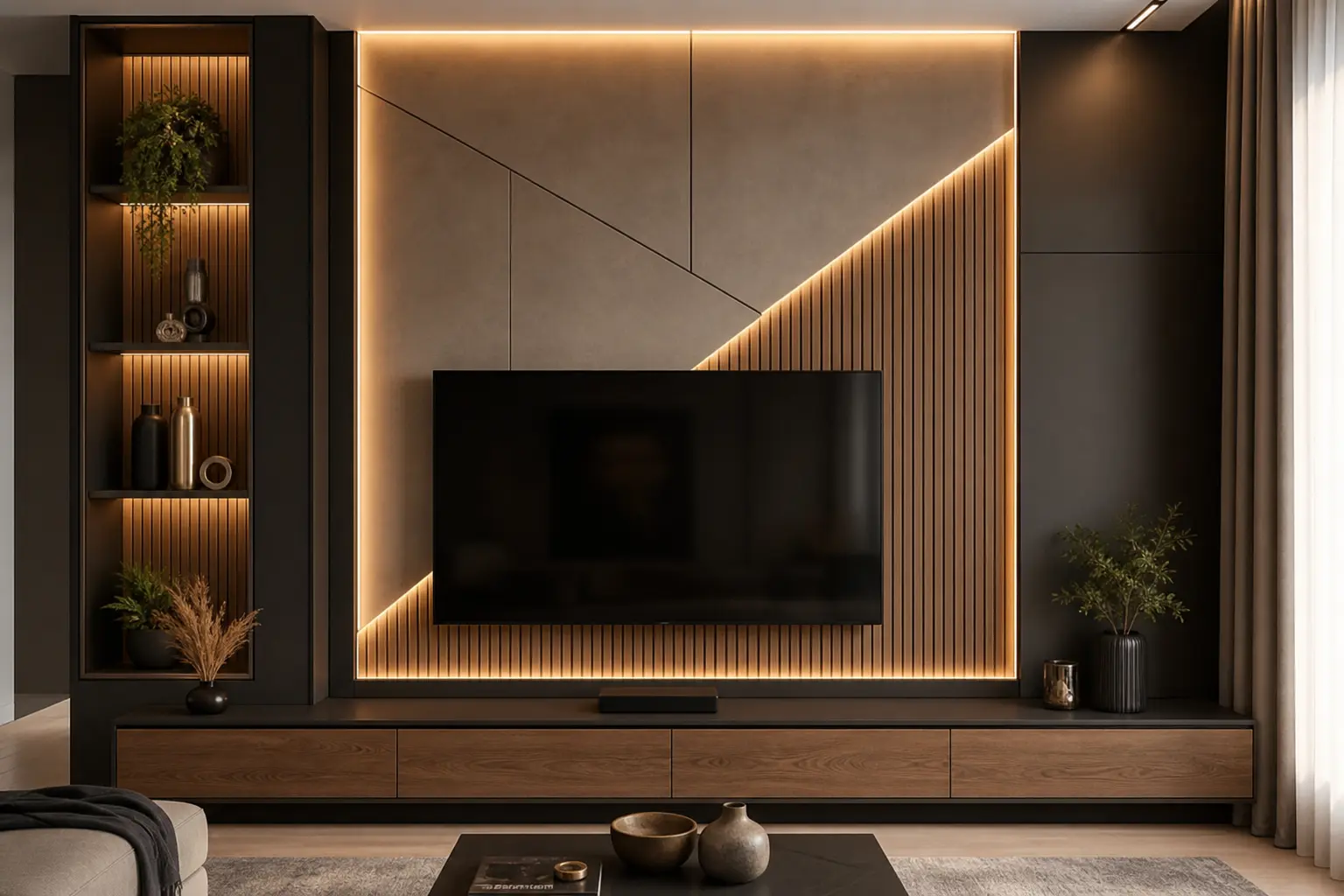
A thin matte black frame or trim around a wood slat panel adds contrast and makes the wood tone stand out more clearly. This pairing has become one of the most requested combinations in modern TV wall design ideas because it bridges warm and cool tones in a single wall without feeling busy.
Keep the black trim minimal, generally just an outline or a thin dividing strip between panel sections, rather than covering large areas. The goal is contrast at the edges, with the wood itself remaining the dominant visual material across the wall.
5. Add a Floating TV Mount for a Clean, Modern Line
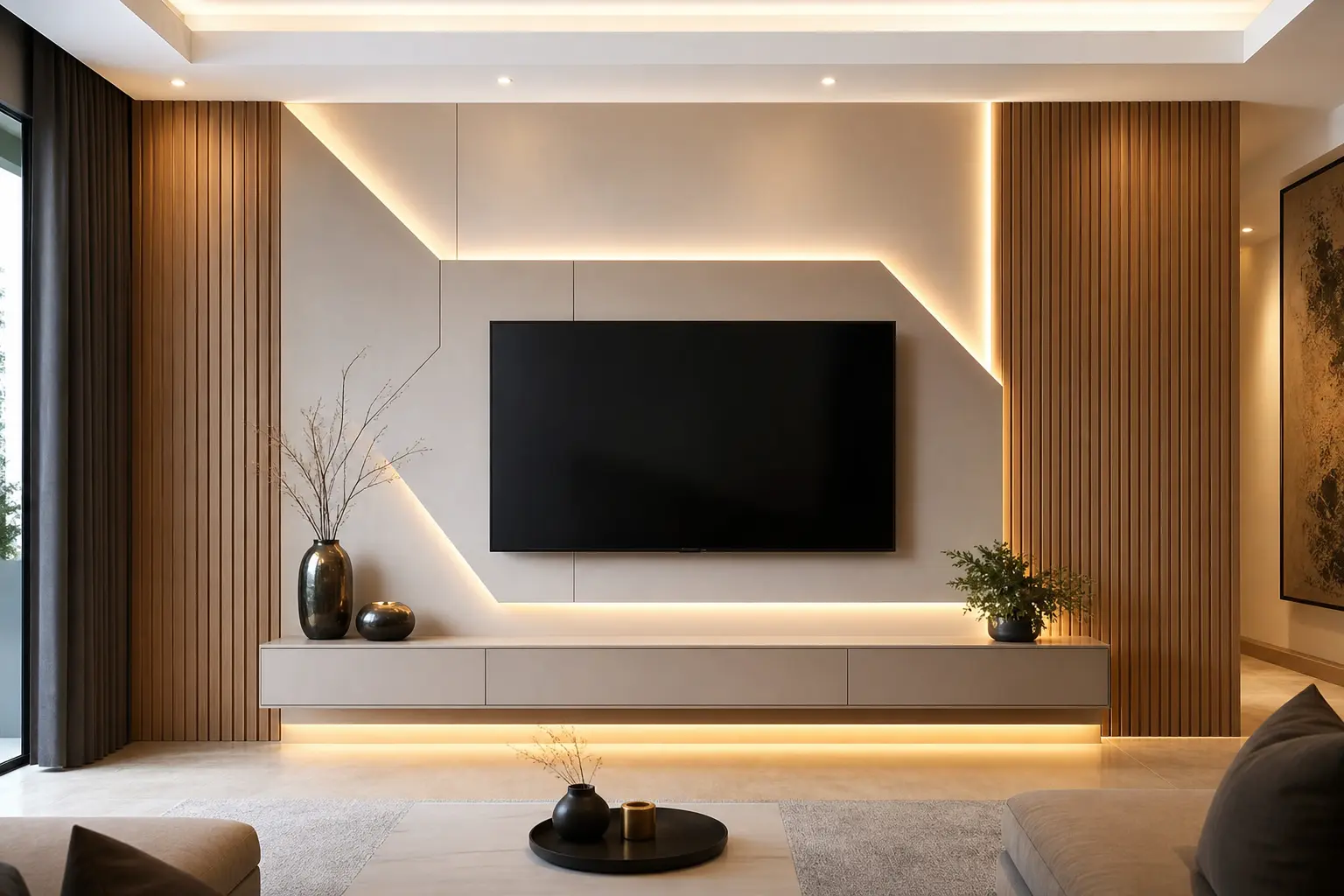
A recessed or floating TV mount keeps cables hidden and lets the screen sit flush against the slat pattern instead of protruding awkwardly off the wall. Many modern builds recess a shallow box behind the slat panel specifically to house the mount and hide wiring, so the TV appears to float directly within the geometric design.
If a full recess isn’t possible, a slim wall mount paired with a cord cover painted to match the wall color achieves a similar clean effect for a fraction of the cost. Either approach keeps the visual focus on the pattern and lighting rather than on cables and hardware.
6. Choose the Right Wood Slat Spacing for Your Room
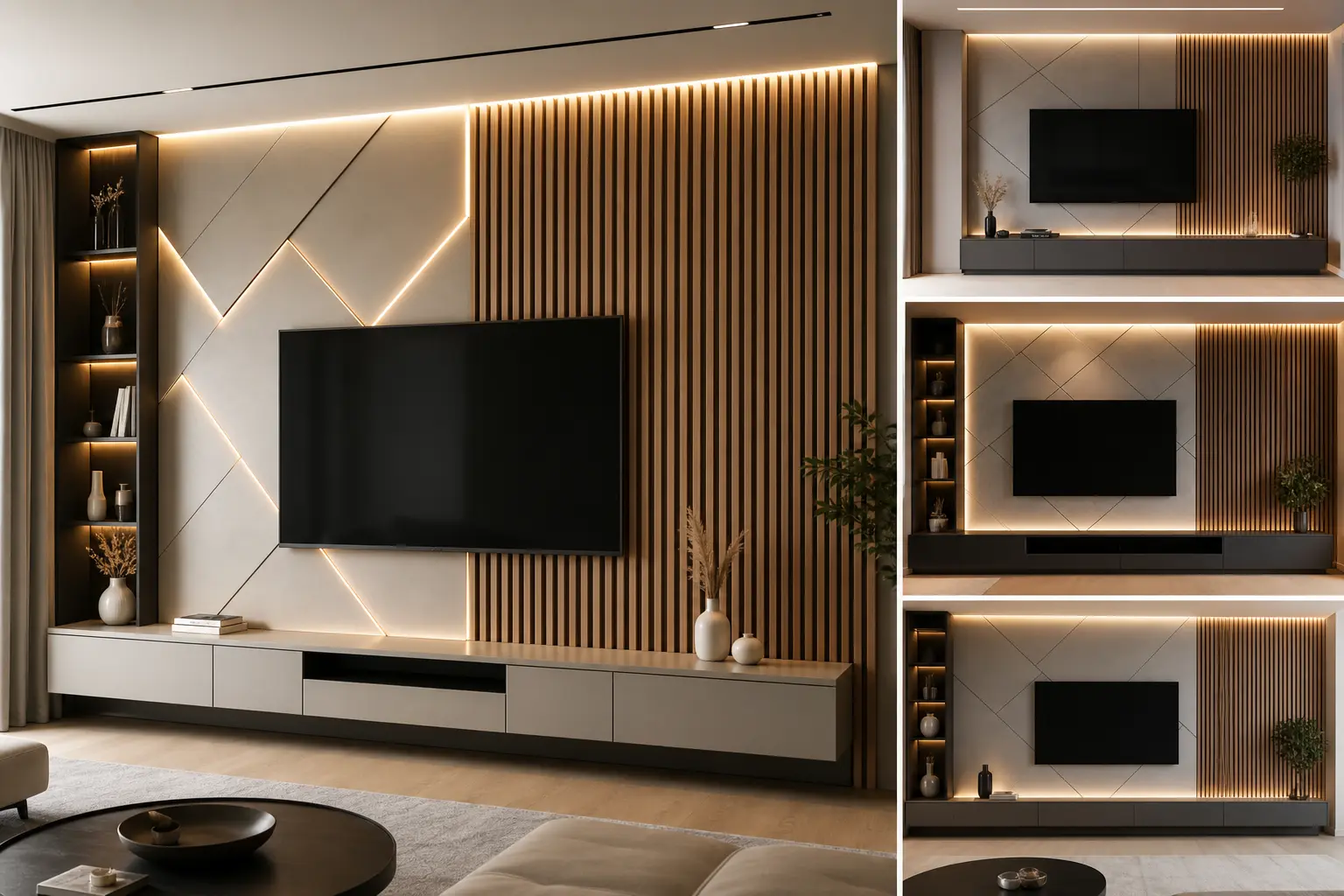
Slat spacing changes the whole feel of the wall. Tight spacing, generally under half an inch between slats, creates a dense, almost solid looking surface with strong vertical or horizontal lines. Wider spacing, closer to one to two inches, lets more of the backing wall or LED glow show through, creating a lighter, more open pattern.
For a room that wants maximum texture and drama, tighter spacing generally reads as bolder. For a room aiming for a softer, more subtle accent wall, wider spacing lets the glow do more of the visual work than the wood itself.
7. Use Geometric Backlit Panels to Create a Focal Point
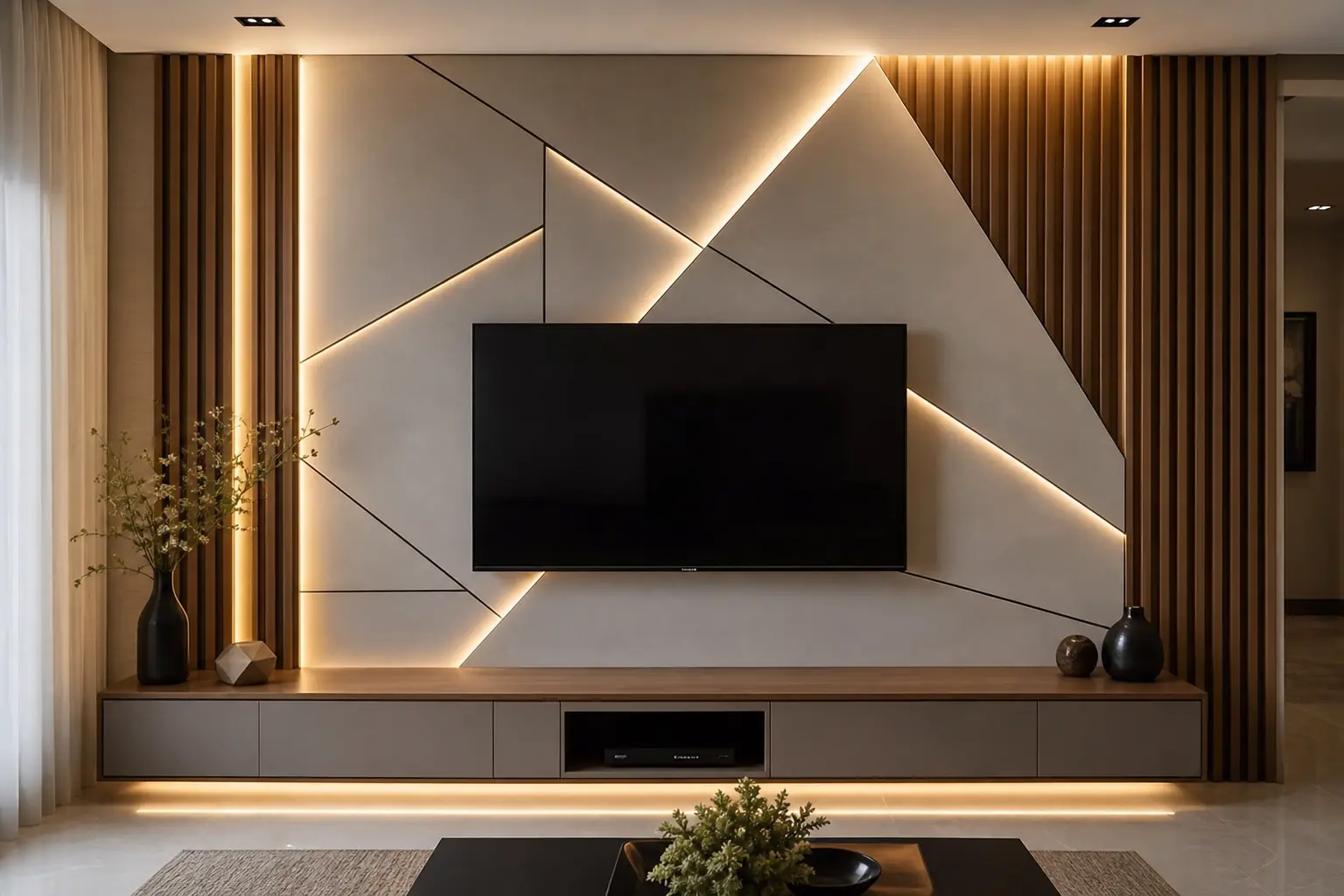
Beyond simple slats, some walls use larger geometric panel shapes, hexagons, diamonds, or overlapping rectangles, each with its own recessed backlighting. This creates a bolder, more architectural focal point than slats alone, and works particularly well in larger living rooms where a subtler wood slat wall might get visually lost.
Panel kits vary widely in price depending on material and size, generally starting around 300 dollars for a modest DIY setup and running higher for a fully custom built wall. This is one of the more advanced modern TV wall design ideas on this list, so budgeting extra time for planning and possibly professional installation is worth it.
8. Layer in Stone or Fluted Panel Accents for Texture
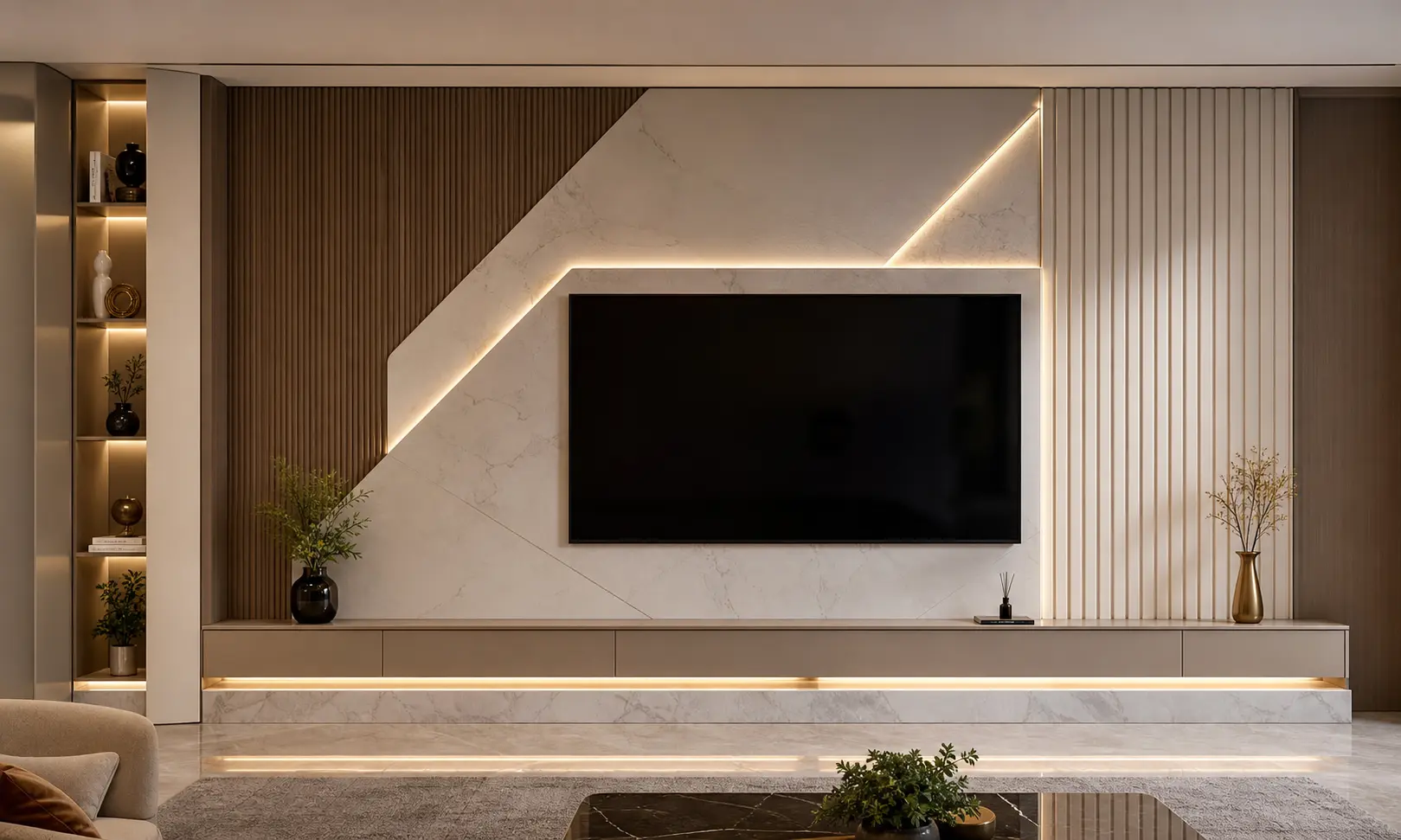
Pairing wood slats with a section of stone veneer or fluted panel material adds another layer of texture without relying on pattern alone. A stone accent along the base of the wall, for example, grounds the design and adds visual weight beneath the lighter wood and glow above it.
This layering approach photographs particularly well since it combines multiple materials, wood, stone, and light, into a single cohesive wall rather than relying on any one element to carry the whole design. Keep the material palette to two or three total finishes so the wall stays cohesive instead of busy.
9. Add Hidden Storage Beside Your Wood Slat Wall
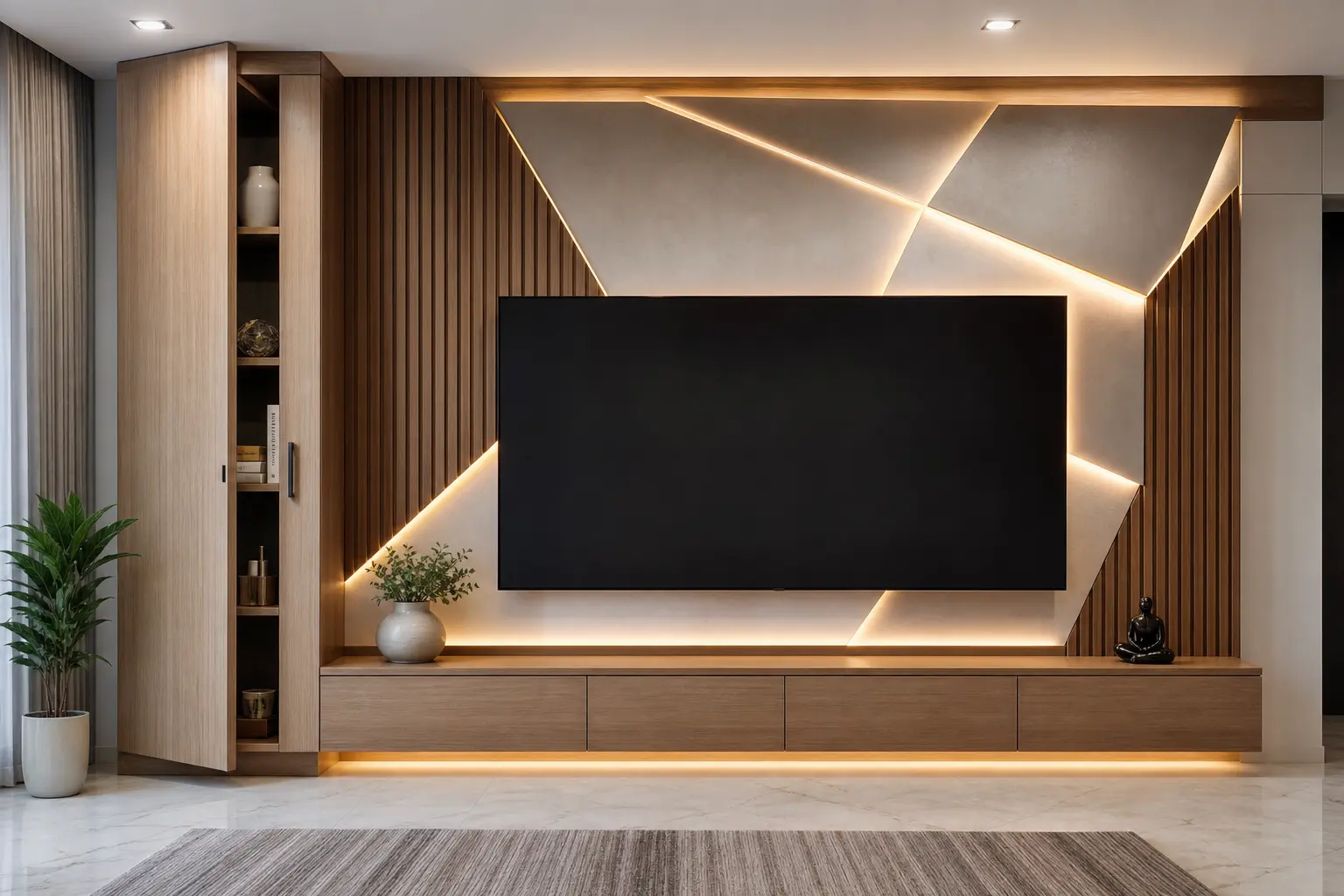
A wood slat and backlit panel wall pairs naturally with built in storage on either side, since the same slat material can continue onto flanking cabinets for a seamless, custom look. This is especially useful in living rooms that need media storage, since the cabinetry disappears visually into the larger wall design rather than standing out as a separate piece of furniture.
Push to open cabinet doors, built with the same slat facing as the main wall, keep the whole design free of visible hardware. This small detail matters more than people expect, since visible handles or pulls can break the clean, unified look the wall is going for.
10. Balance a Statement TV Wall with Simple Surrounding Decor
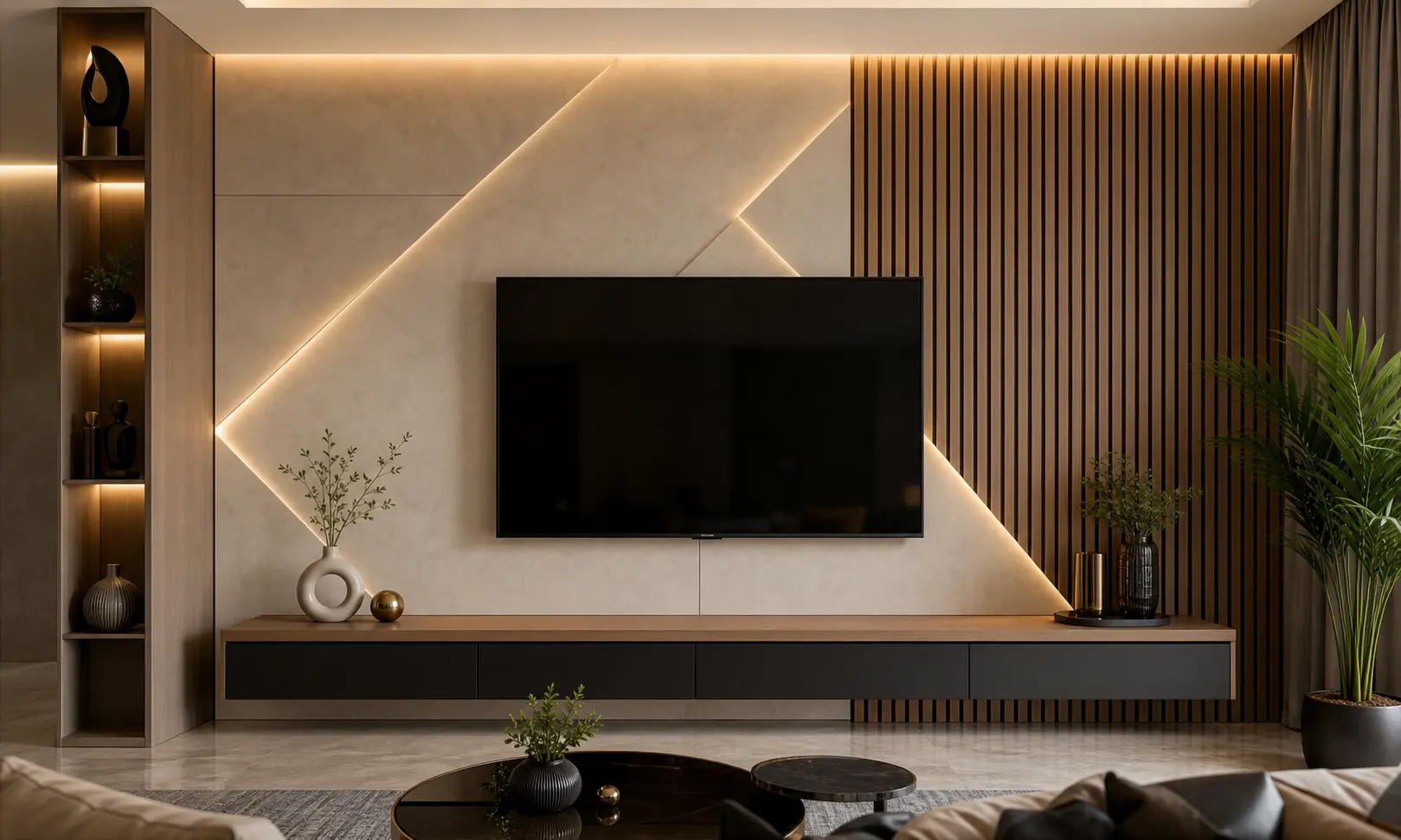
A wall this detailed and textured needs a calmer room around it to actually stand out. Busy patterned rugs, heavily layered gallery walls, or cluttered shelving compete with the slat and panel design instead of letting it be the room’s clear focal point.
Keep surrounding furniture simple in line and neutral in color, saving bold choices for the wall itself. A room built this way reads as intentional and designed, rather than like every surface is trying to be the star at once.
Mistakes to Avoid
- Choosing a pattern that doesn’t match your wall’s height to width proportions
- Using cool white LED strips against warm toned wood
- Overcrowding the wall with too many materials at once
- Skipping proper cable management before mounting the TV
- Spacing wood slats too tightly or too widely for the intended effect
- Adding visible cabinet hardware that breaks the seamless slat look
- Filling the rest of the room with patterns that compete with the wall
Frequently Asked Questions
What wood works best for a slat TV wall? Oak, walnut, and pine are common choices depending on budget and tone. Oak and walnut generally offer richer grain and a higher end look, while pine is a more budget friendly option that still takes stain well.
How much does a wood slat and backlit panel wall typically cost? A basic DIY slat wall with LED strips can run a few hundred dollars in materials, while a fully custom geometric panel build with professional installation can range from 1000 to several thousand dollars depending on size and complexity.
Do LED strips behind wood slats get too hot? Standard LED strips run cool to the touch compared to older lighting types, but it’s still worth leaving small air gaps behind the panel for basic ventilation, especially in an enclosed recessed build.
Can I add a wood slat accent wall in a rental? Some renters use freestanding slat panels or peel and stick wood slat wallpaper that doesn’t require permanent installation, though it’s worth checking your lease before altering any wall surface.
What’s the difference between a geometric panel wall and a simple slat wall? A slat wall uses repeated straight wood pieces in one consistent pattern. A geometric panel wall uses varied shapes, like hexagons or diamonds, often with individual backlighting behind each shape for a bolder architectural effect.
Should the TV wall match the rest of my living room’s wood tones? It doesn’t need to match exactly, but it should coordinate. A close or complementary wood tone across the room, even if not identical, keeps the space feeling cohesive rather than mismatched.
Conclusion
A wood slat and backlit geometric panel wall turns the most overlooked surface in your living room into its most textured, warmest feature. Start by matching your pattern to your wall’s proportions and choosing a warm LED tone, since those two decisions shape the entire feel of the space before any furniture gets involved. From there, layering in trim, storage, and complementary materials builds out a wall that feels custom and considered, not just decorated.