10 Modern White & Wood Kitchen Cabinet Design Ideas | Luxury Minimalist Japandi Kitchen
A lot of kitchens end up feeling either sterile or heavy. All white can read cold and clinical. All wood can feel dark and dated fast. A Japandi kitchen solves that by putting the two together on purpose, using white for calm and wood for warmth so neither one dominates the room. This article covers 10 white and wood kitchen cabinet design ideas that actually hold up to daily use, not just a photo shoot, from tone matching to storage planning.
1. Choose a White Tone That Complements Wood Instead of Fighting It
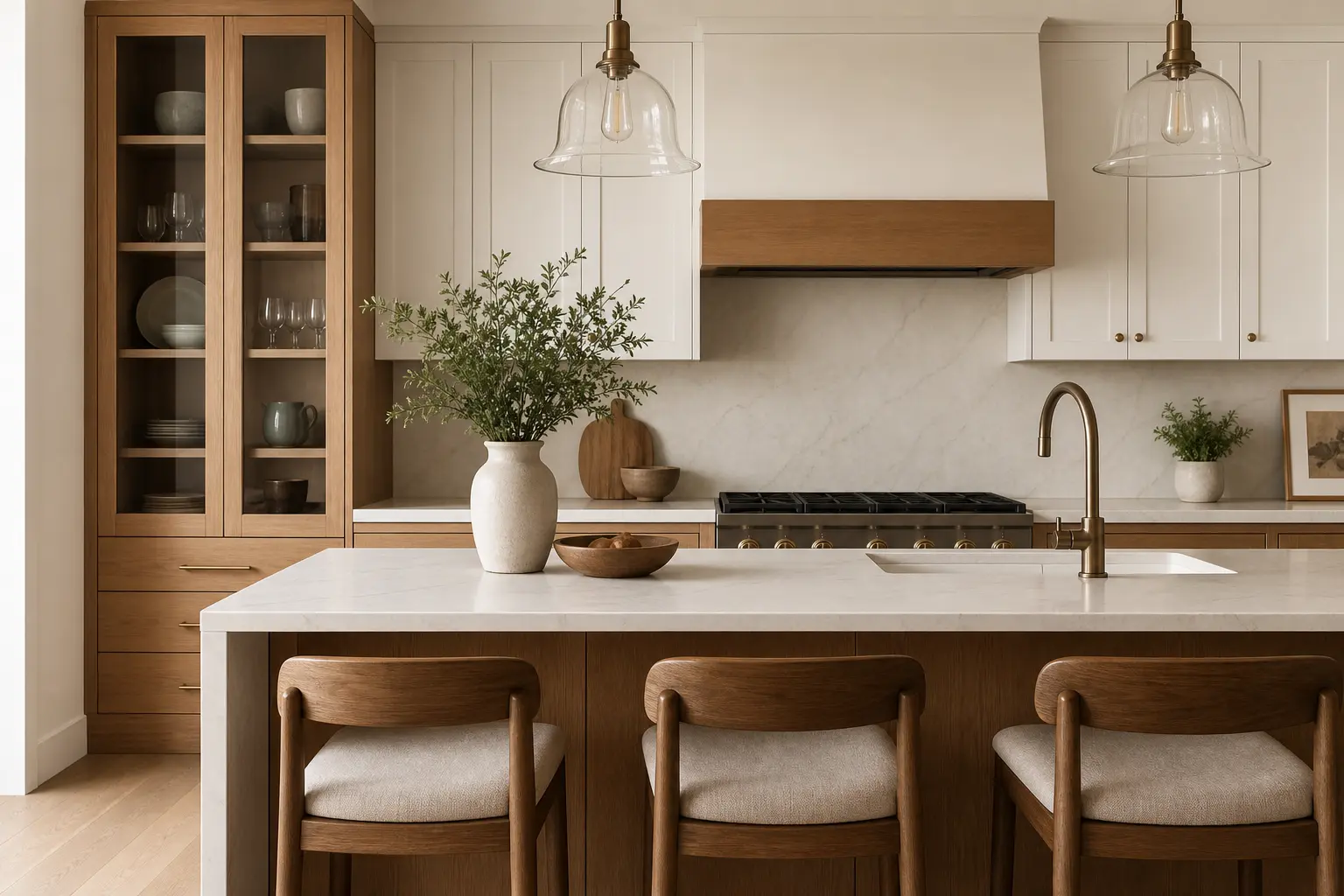
Not all whites work the same way next to wood. A stark, cool white can make warm toned wood look muddy by comparison. A soft off white, something with a hint of gray or beige undertone, tends to sit better against oak, walnut or ash. Test a sample against your actual wood tone before committing, since paint chips under store lighting rarely match how they’ll look in your kitchen.
Matte finishes generally read as more Japandi than high gloss, which can feel closer to a modern European kitchen than a minimalist one. If you want some sheen, keep it low, closer to eggshell than satin.
2. Pick Wood Grain and Finish for a True Japandi Look
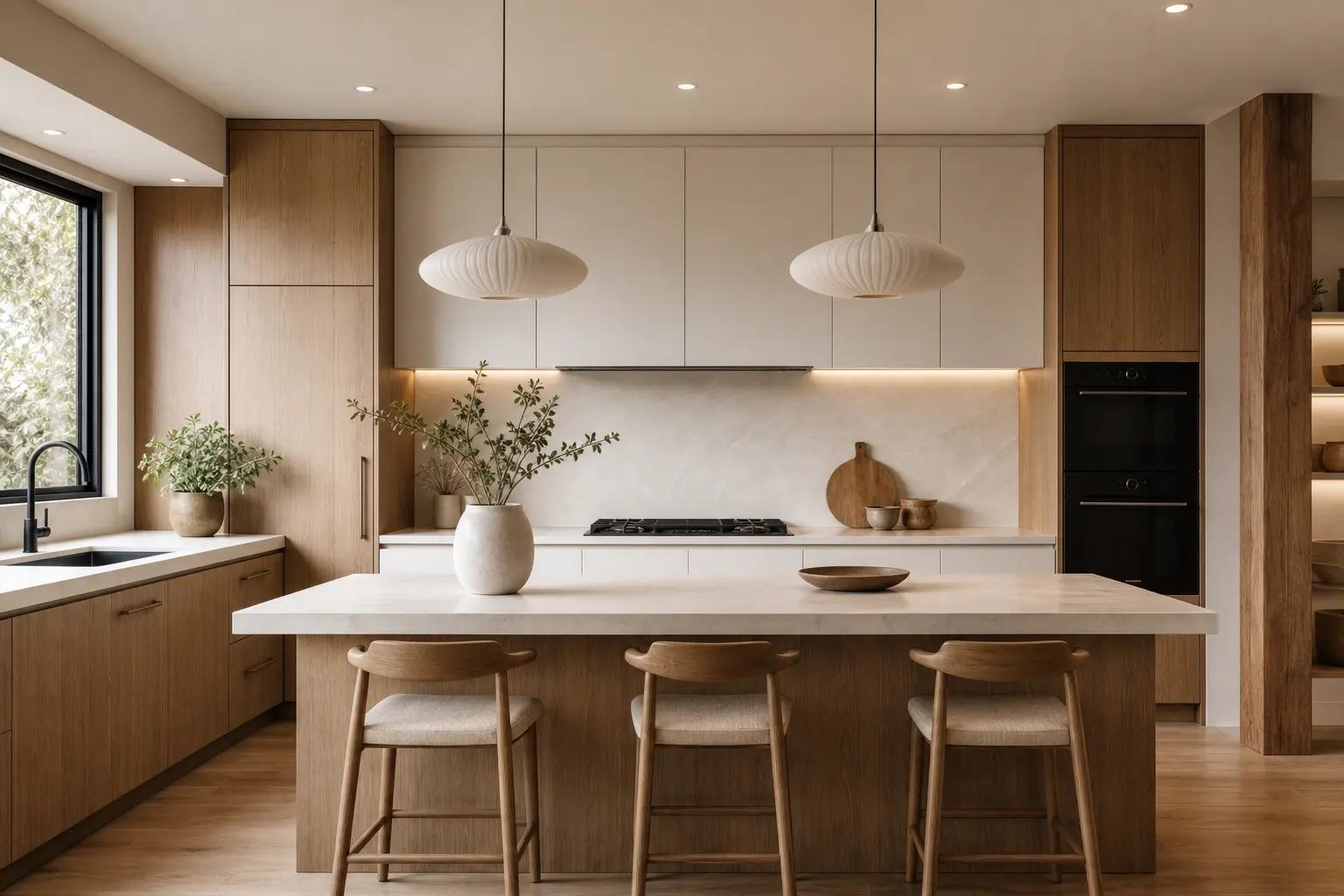
Wood grain does a lot of the visual work in a Japandi kitchen, so it’s worth choosing carefully. Straight, tight grain patterns like ash or white oak feel calmer and more intentional than busy, swirling grain. Avoid heavily varnished, glossy wood finishes. A matte or lightly oiled finish keeps the wood looking natural rather than plastic.
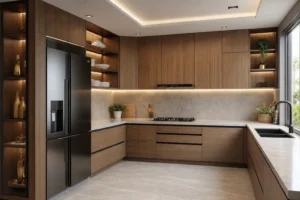
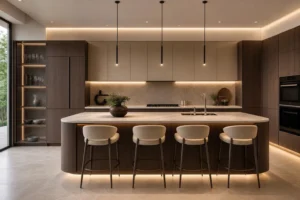
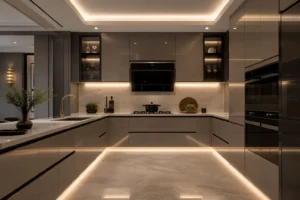
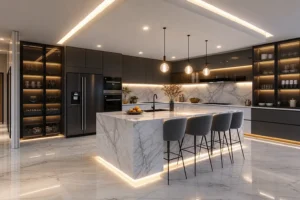
Real Wood vs Wood Look Laminate
Real wood veneer costs more but ages with more character over time. Wood look laminate is more budget friendly and resists moisture better near a sink, though it won’t develop the same natural patina.
3. Balance Upper and Lower Cabinet Materials for Visual Weight
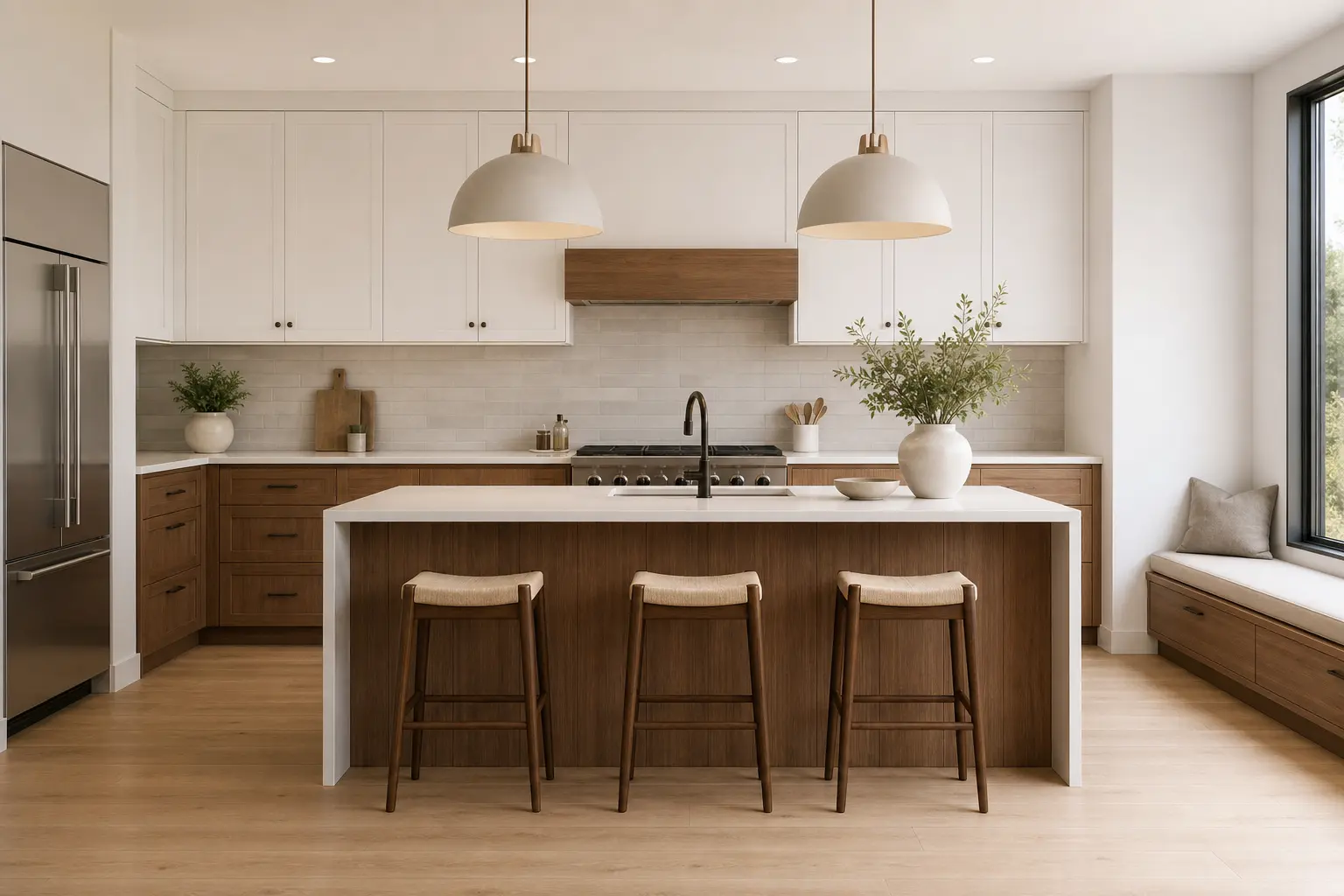
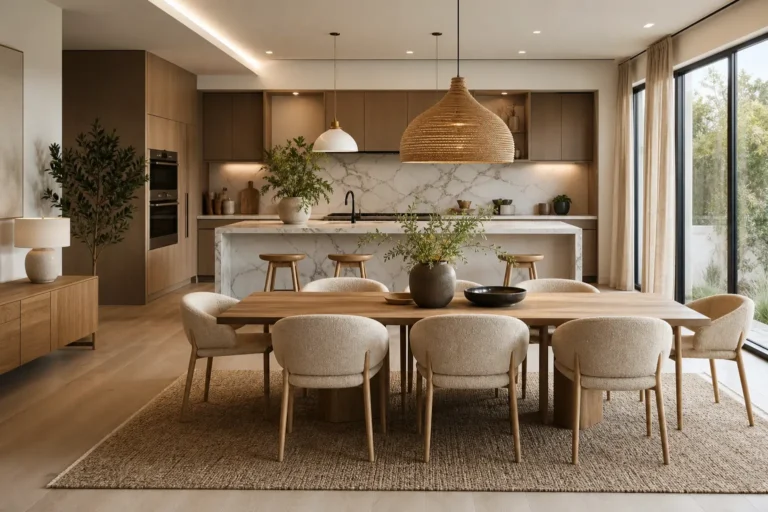
The classic Japandi split puts wood on the lower cabinets and white on the upper ones. This isn’t just a style choice. It actually balances the room visually, since a fully wood kitchen can feel heavy and closed in, while wood on the bottom grounds the space without weighing down the ceiling line.
If you want more wood presence, consider a wood island paired with white perimeter cabinets instead of splitting upper and lower. This keeps the calm feeling while giving the wood a stronger focal point.
4. Use Handleless Cabinet Fronts for a Cleaner Minimalist Line
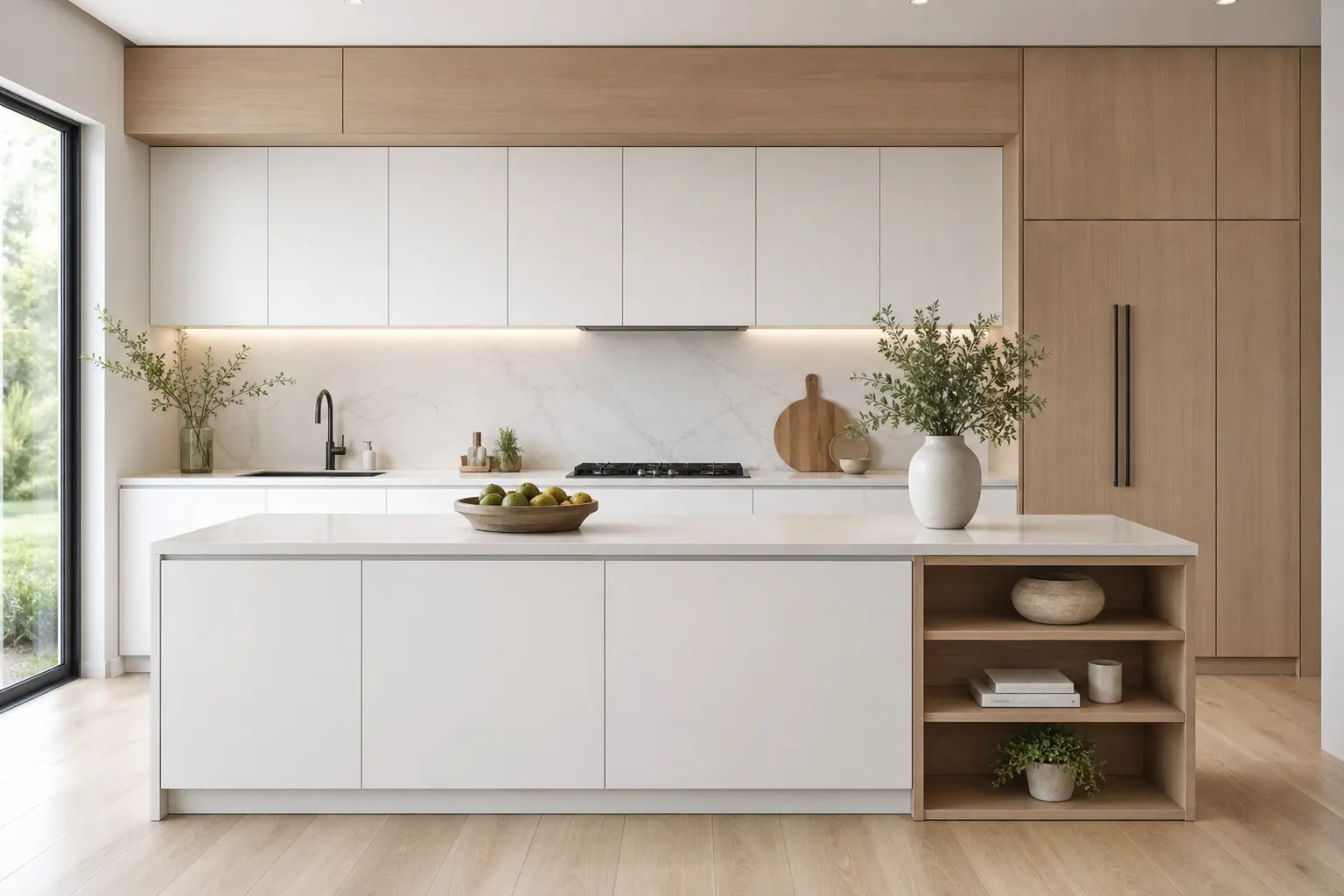
Hardware is one of the fastest ways to break a minimalist look. Handleless cabinets, using either a push to open mechanism or a recessed finger pull, keep the cabinet fronts clean and uninterrupted. This matters more in a white and wood kitchen than a single tone kitchen, since visible hardware draws attention to the seam between the two materials.
Push to open systems cost more and can wear out faster with heavy daily use, so if budget matters, a simple recessed pull channel is a durable middle ground.
5. Add Open Wood Shelving to Break Up Solid Cabinet Runs
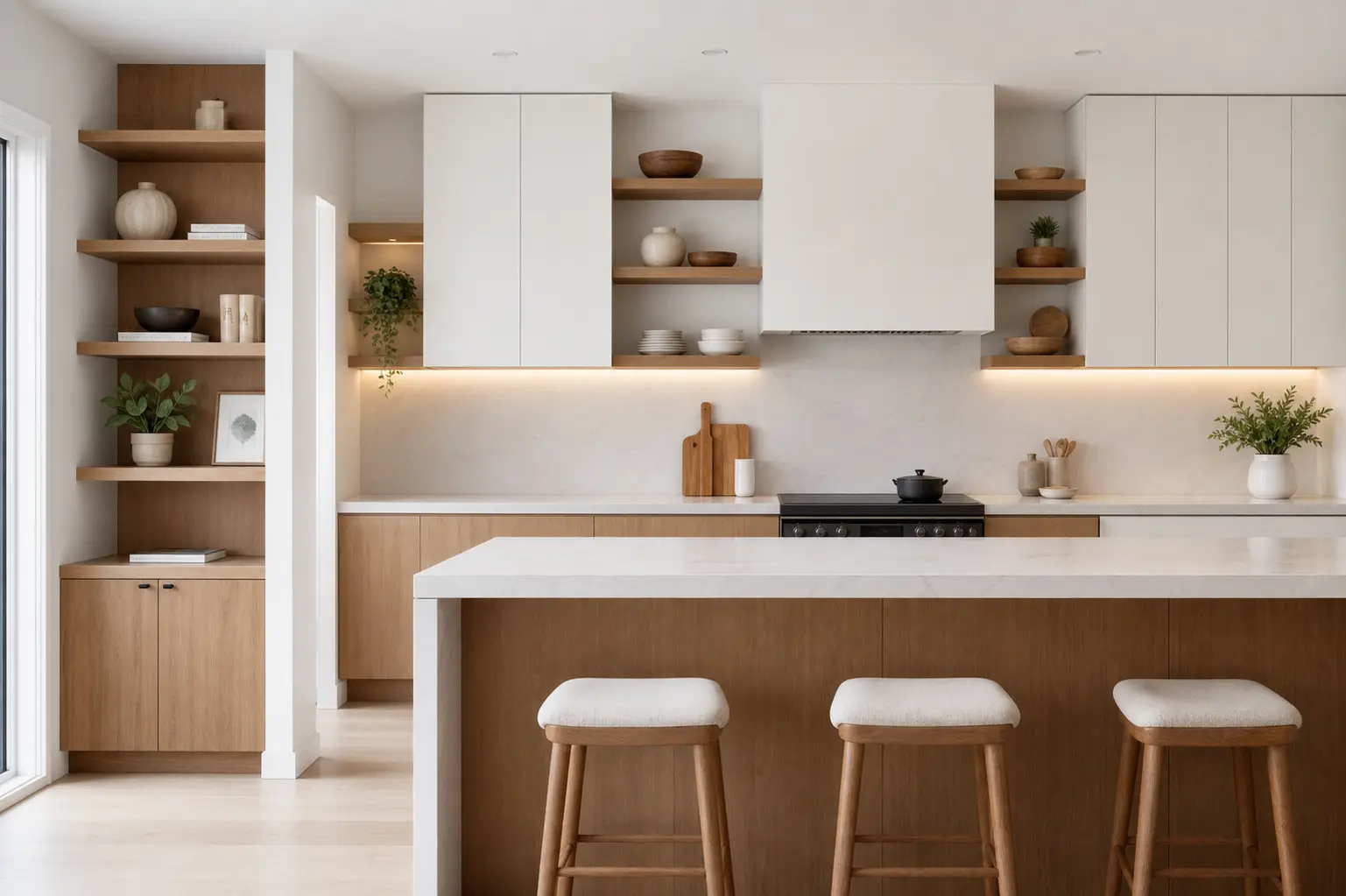
A long, unbroken run of cabinets, even in a balanced white and wood palette, can start to feel monotonous. One or two open wood shelves interrupt that rhythm and give you a spot to display a few intentional pieces, like ceramics or a small plant. Keep what’s on display minimal. Japandi design relies on restraint, so an open shelf packed with clutter undoes the calm effect fast.
6. Choose Countertop Materials That Sit Well Between White and Wood
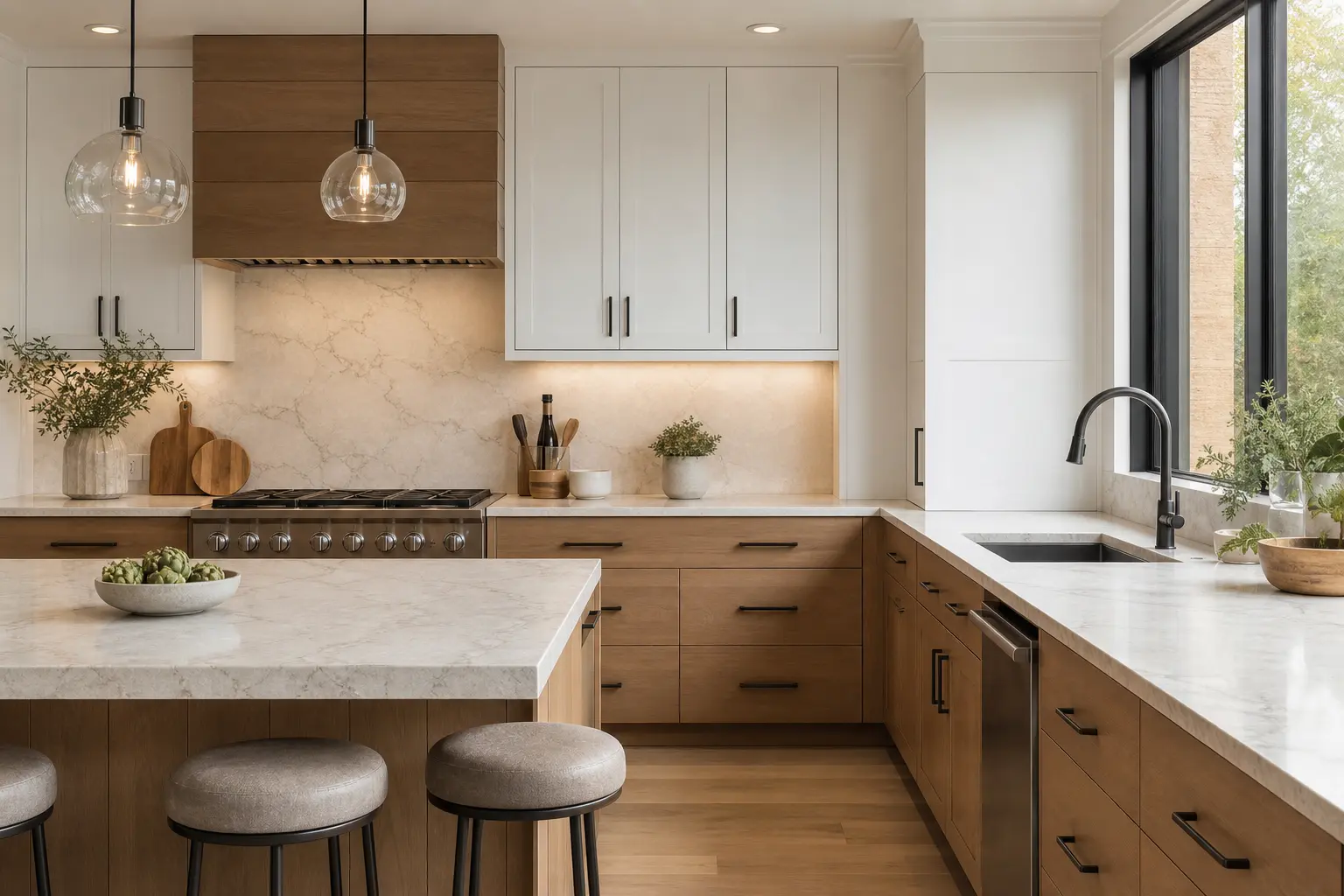
The countertop has to bridge two different materials without competing with either. A honed stone or quartz countertop in a soft white or light gray tone usually works better than a busy veined marble, which can pull focus from the cabinetry. Butcher block countertops on a wood island add warmth but need regular oiling to resist water damage near a sink.
7. Layer Lighting to Highlight Cabinet Texture and Grain
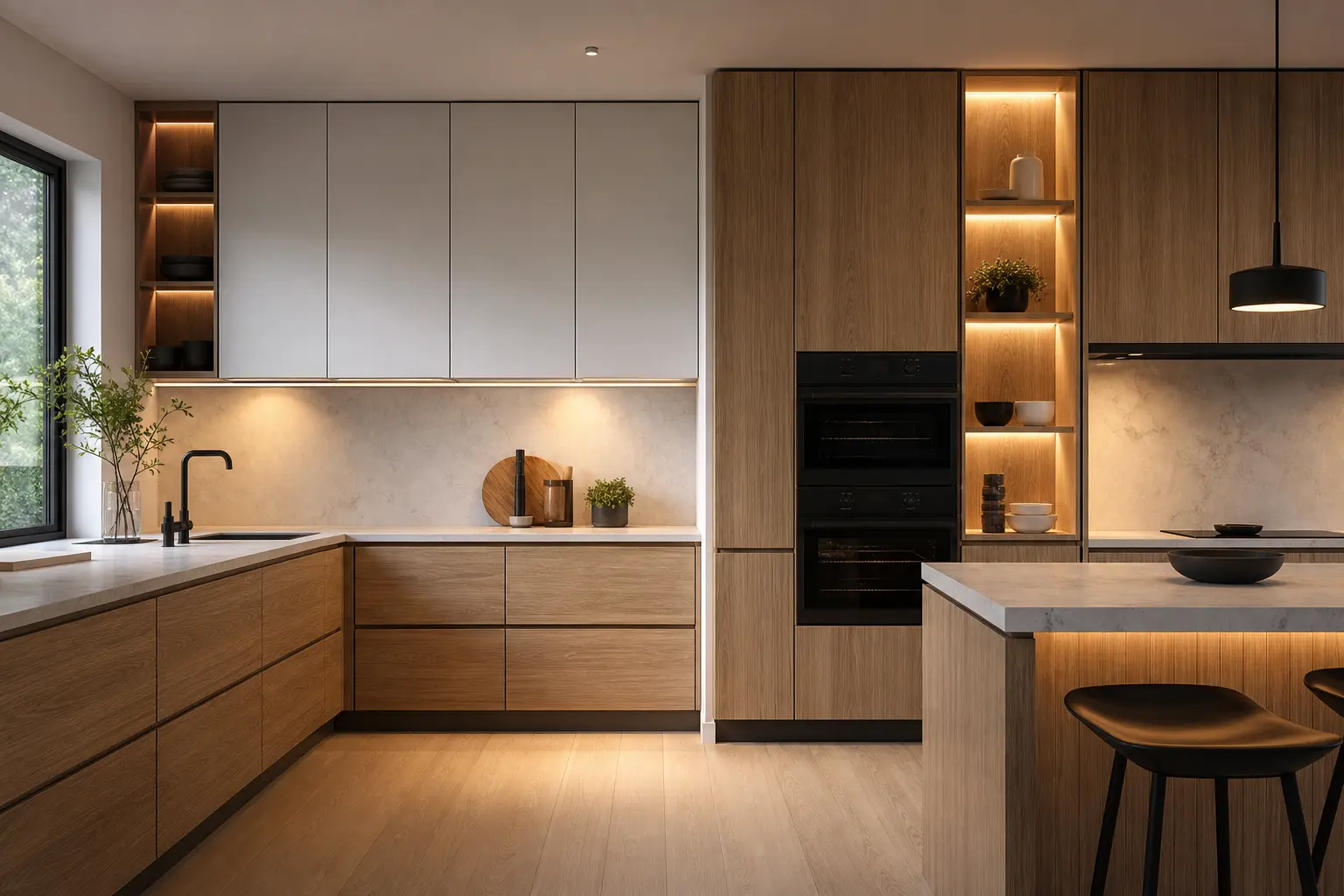
Flat overhead lighting flattens both the white finish and the wood grain, which is the opposite of what a Japandi kitchen needs. Under cabinet lighting along the lower wood cabinets brings out the grain texture, especially in the evening. Pendant lighting over an island adds a warm focal point without relying on harsh overhead light.
Warm Light Temperature Matters
Stick to warm white bulbs, generally 2700 to 3000 Kelvin, since cooler light tends to wash out the warmth in wood tones and can make the white cabinets look sterile instead of soft.
8. Select Hardware and Fixtures That Match the Japandi Palette
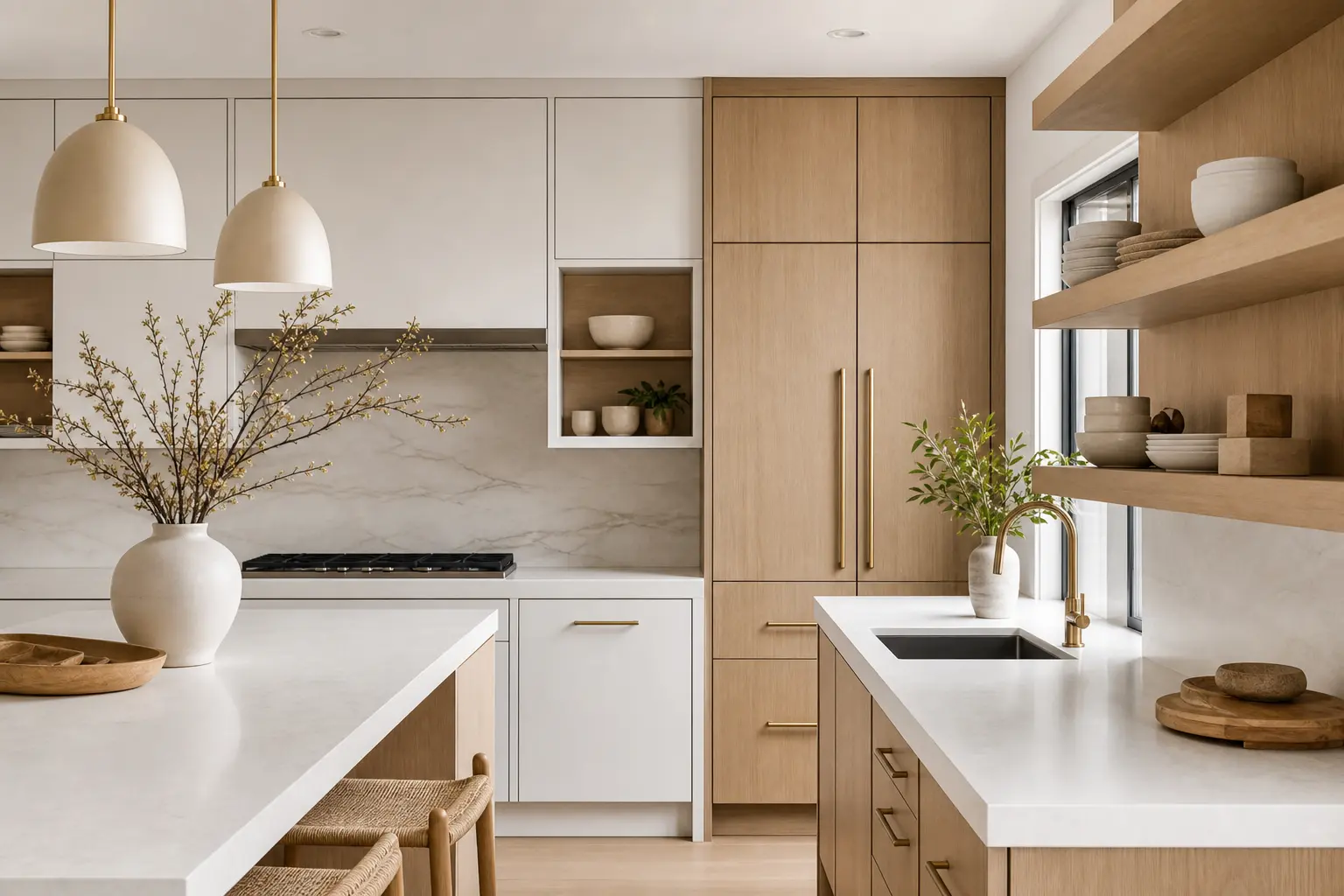
Where hardware does show, like faucets or cabinet pulls on drawers that need them, keep the finish consistent. Matte black, brushed brass or brushed nickel all work within a Japandi palette, but mixing several metal finishes in one kitchen breaks the calm, intentional feel. Pick one metal tone and use it throughout, including on light fixtures.
9. Mix Matte and Textured Finishes for Depth Without Clutter
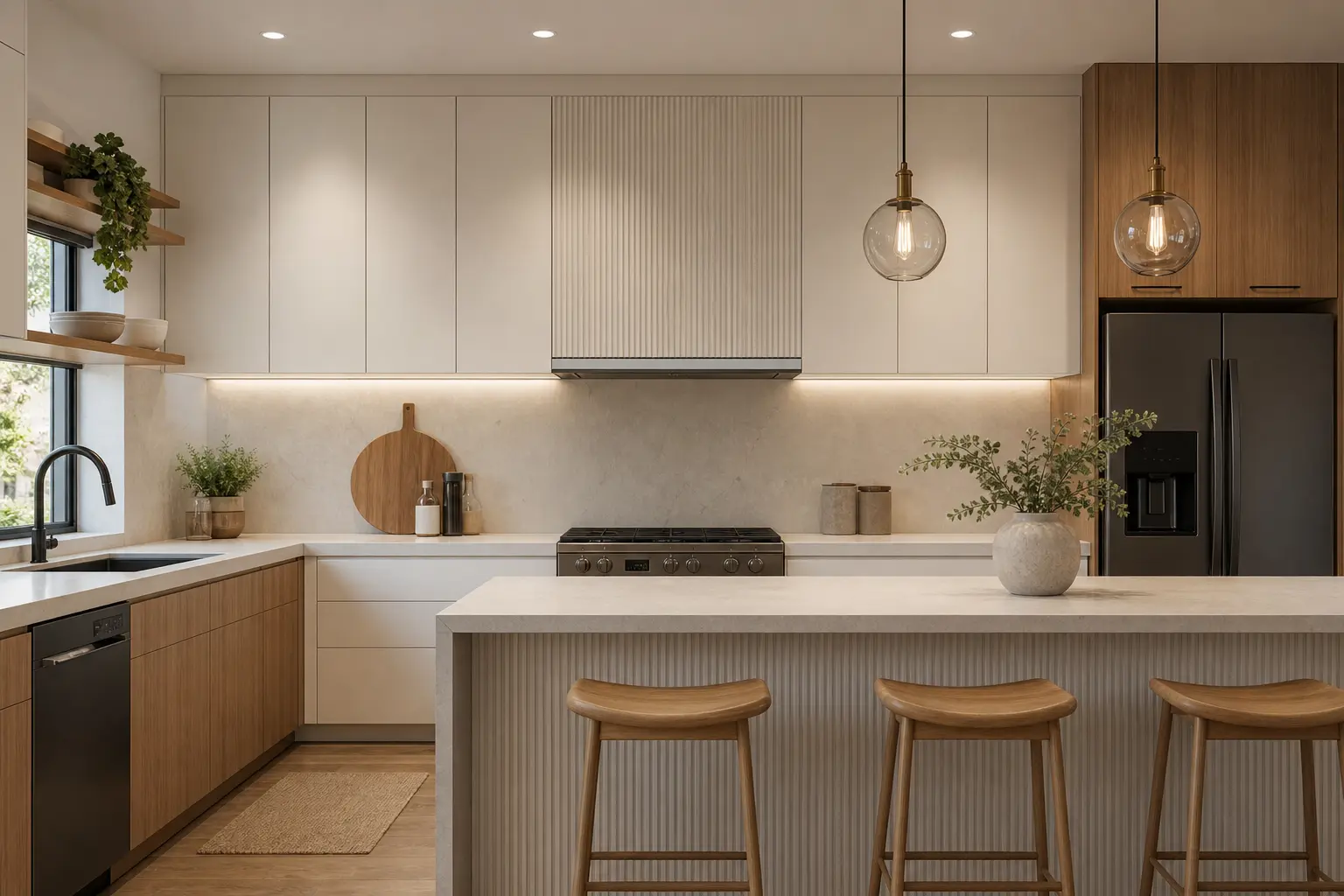
A kitchen that’s entirely smooth and matte can start to feel flat, even in a good white and wood combination. Bring in one or two textured elements, like a woven pendant shade, a slightly ribbed cabinet front, or a textured ceramic backsplash tile. The goal is subtle contrast, not a second competing pattern.
10. Plan Storage Layout to Keep the Minimalist Look Functional
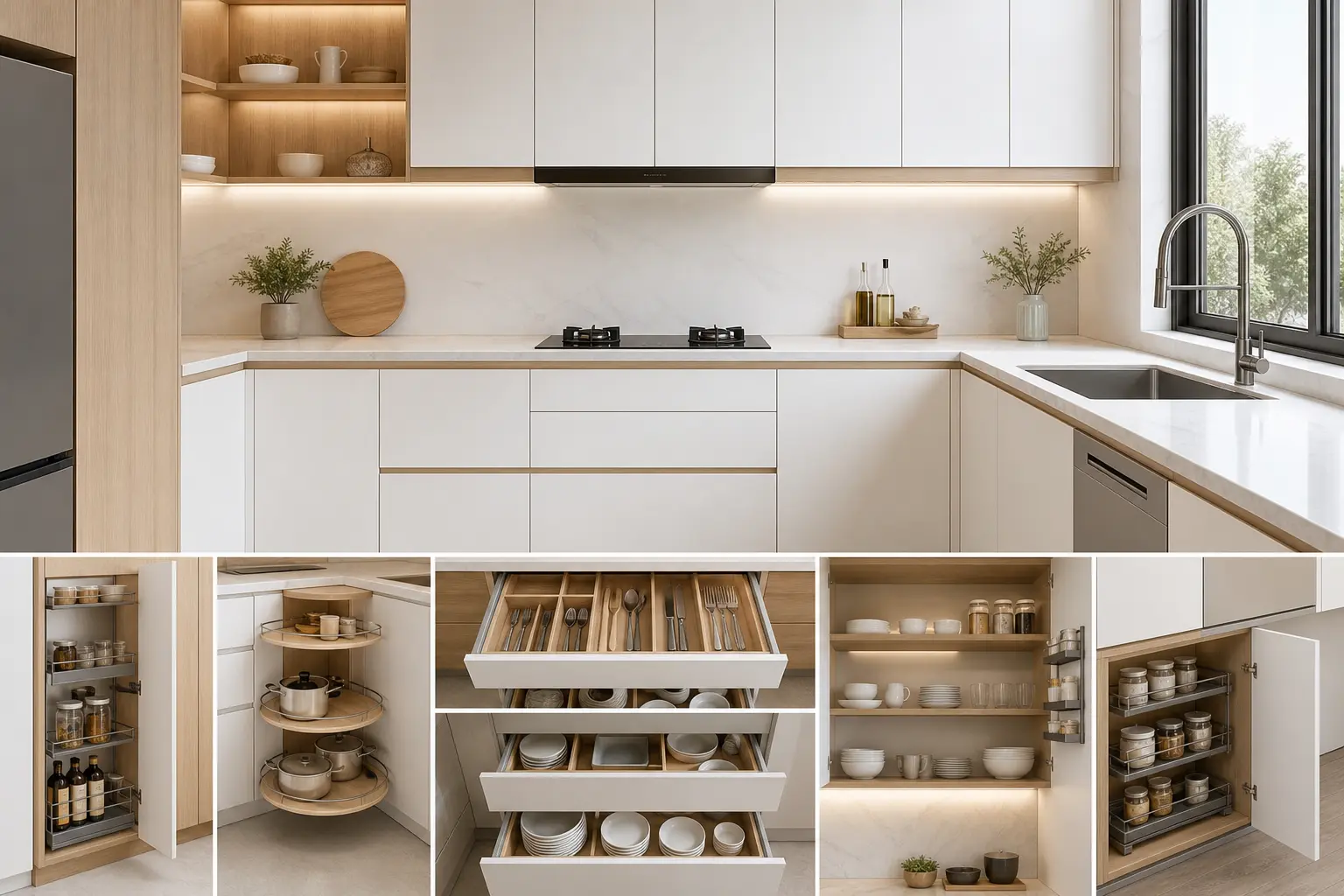
A Japandi kitchen only stays calm if there’s enough hidden storage to keep countertops clear. Deep drawers with dividers handle small appliances and utensils better than open shelving for daily use items. Pull out pantry cabinets keep dry goods out of sight without sacrificing easy access.
Plan this early, since retrofitting more storage into a finished minimalist kitchen usually means adding visible cabinets that disrupt the clean lines you started with.
Mistakes to Avoid
- Choosing a stark white that clashes with the wood’s warm undertone
- Mixing more than one metal finish across hardware, faucets and lighting
- Overloading open wood shelving with too many decorative pieces
- Using only cool white lighting, which flattens both the white and wood tones
- Skipping enough hidden storage, leading to visible clutter on countertops
Frequently Asked Questions
Is a Japandi kitchen more expensive than a standard white kitchen? Not necessarily. Real wood elements can add cost, but wood look laminate or a smaller wood accent, like an island, keeps the look achievable on a moderate budget.
What wood types work best for a Japandi kitchen? Ash, white oak and walnut are common choices, since their grain patterns read as calm rather than busy. Straight grain generally suits the style better than highly figured wood.
Do white and wood kitchen cabinets work in a small kitchen? Yes, and they often work especially well, since the lighter white tones keep a small space from feeling closed in while the wood adds warmth without bulk.
How do I keep a white and wood kitchen from looking cold? Layer warm lighting, add a few textured elements, and make sure the white you choose has a soft undertone rather than a stark, cool base.
Can I mix this style with existing stainless steel appliances? Yes. Stainless steel generally reads as neutral enough to sit alongside a white and wood Japandi kitchen without clashing, especially with matte black or brass hardware to tie the palette together.
Conclusion
A white and wood Japandi kitchen comes down to restraint and balance. Choose tones that complement each other, keep hardware and lighting consistent, and build in enough hidden storage to protect the clean look day to day. Start with the cabinet split between white and wood, then layer in lighting, hardware and a few textured details once that foundation feels right.