10 Modern Wooden Slat Wall Decor Ideas With LED Floating Shelves for Minimalist Interior Design
Minimalist rooms can sometimes tip into feeling cold or unfinished, especially when everything is white walls and empty space. Wooden slat wall paneling paired with LED floating shelves solves that problem by adding warmth and texture without adding visual clutter. These 10 modern wooden slat wall decor ideas with LED floating shelves show how to bring a natural, grounded feel into a minimalist room while keeping the clean lines the style is known for.
Picture a plain white living room wall with nothing on it, technically finished but a little flat. Now picture that same wall covered in vertical wood slats, with a single floating shelf crossing the middle, lit softly from underneath by a warm LED strip. The room instantly feels more grounded and intentional, without adding a single busy pattern or extra piece of furniture. That balance of texture and restraint is exactly what makes this combination work so well in a minimalist space.
1. Understand Why Wood Slats and Minimalism Actually Work Together
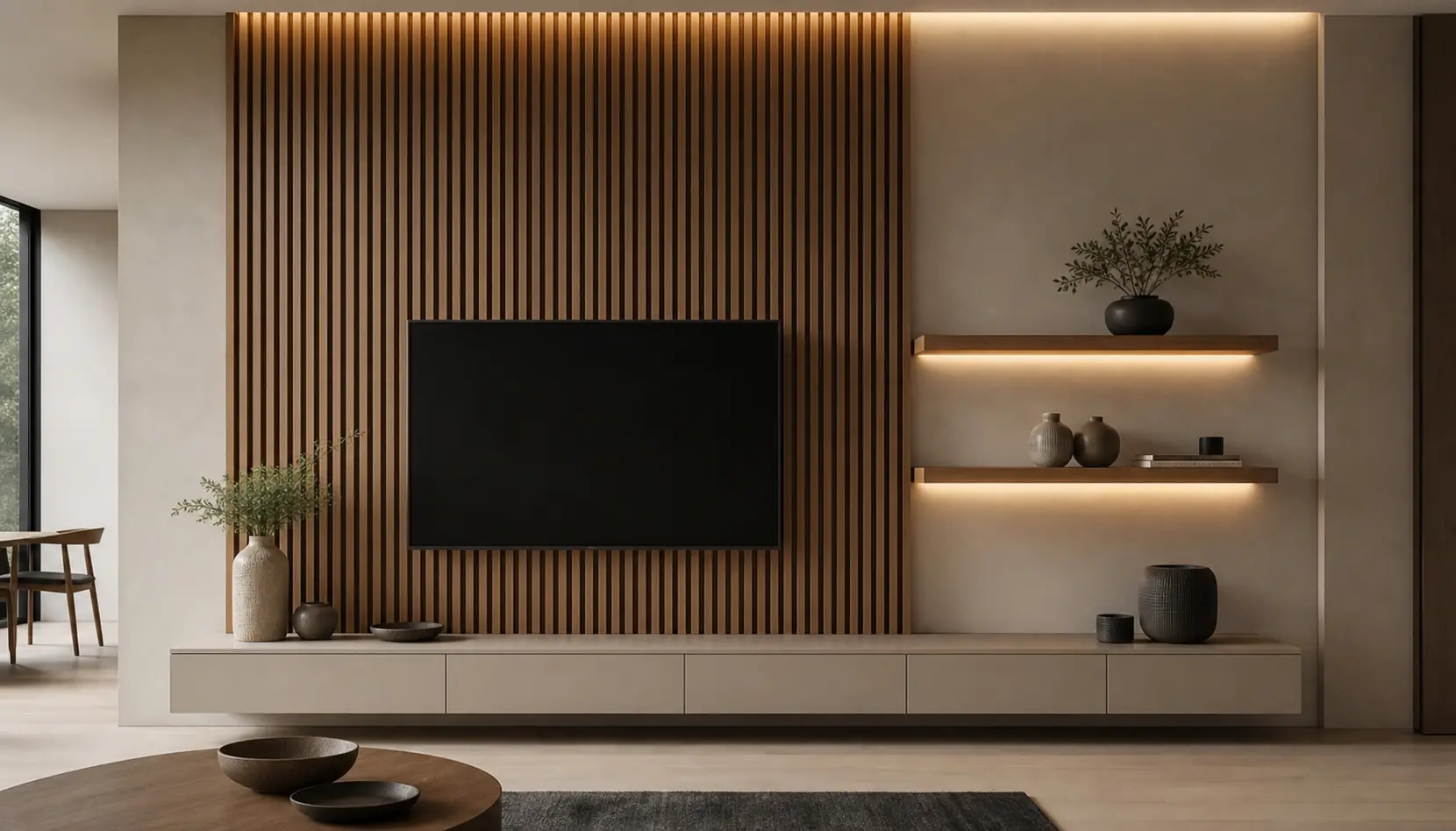
Minimalism is often mistaken for an absence of texture, but the two are not the same thing. Wood slat paneling adds depth and warmth through its natural grain and shadow lines, without introducing color, pattern, or clutter. The repetition of the slats itself feels calm and orderly, which fits naturally into a minimalist mindset even though the wall is doing more visual work than a flat painted surface. This is why slat walls have become such a popular way to add richness to modern interiors without breaking the simplicity the style is built around.
2. Choose a Slat Direction That Suits the Room’s Proportions
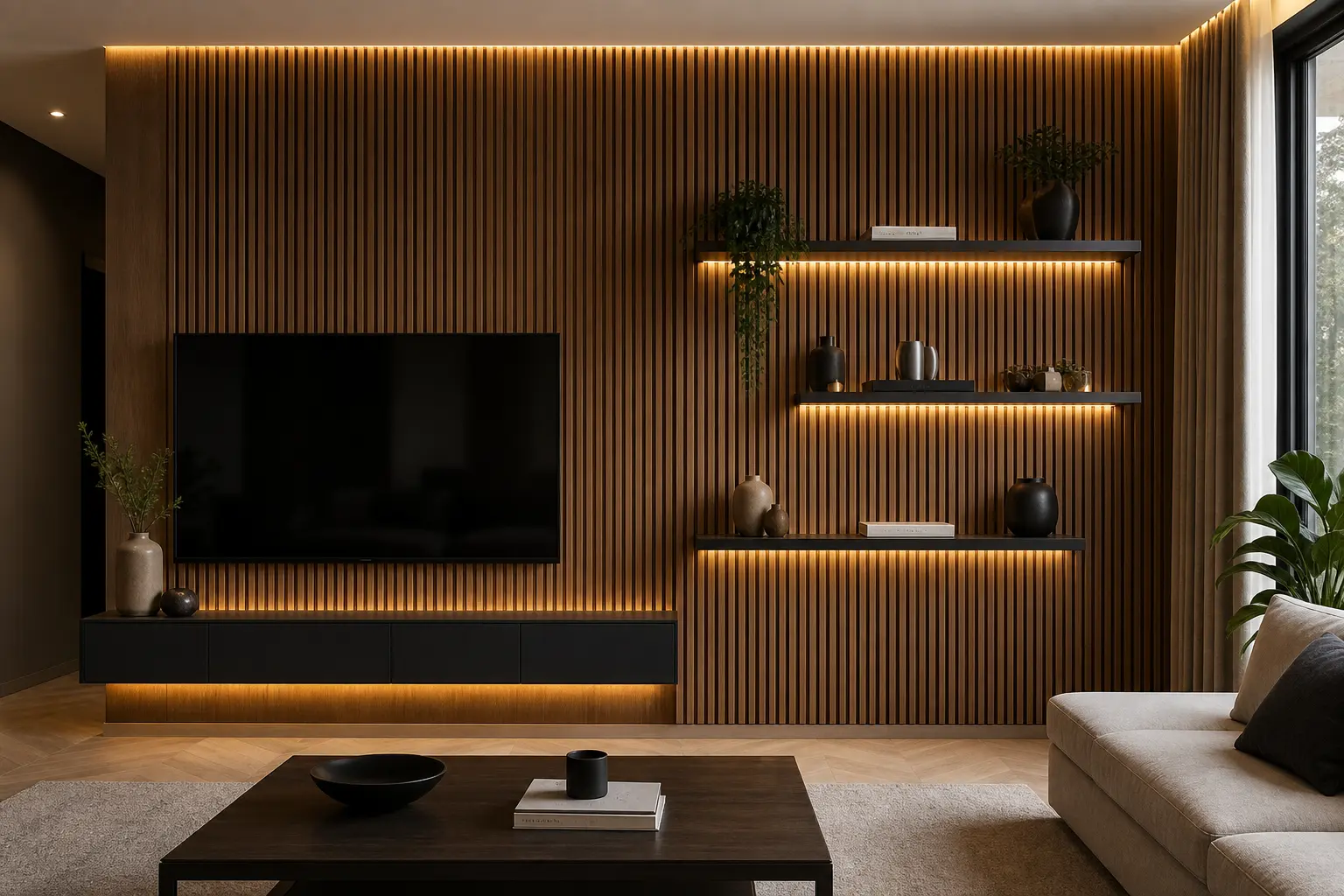
Vertical slats tend to make a room feel taller, which works well in spaces with lower ceilings, while horizontal slats can make a narrow wall feel wider. Before committing to a direction, consider the actual proportions of the room the wall sits in. A tall, narrow room might benefit from horizontal slats to balance the height, while a low, wide room often looks better with vertical lines drawing the eye upward. There is no single correct choice here, only the direction that best corrects for whatever the room’s shape is already doing.
3. Pick a Wood Tone That Complements Your Existing Furniture
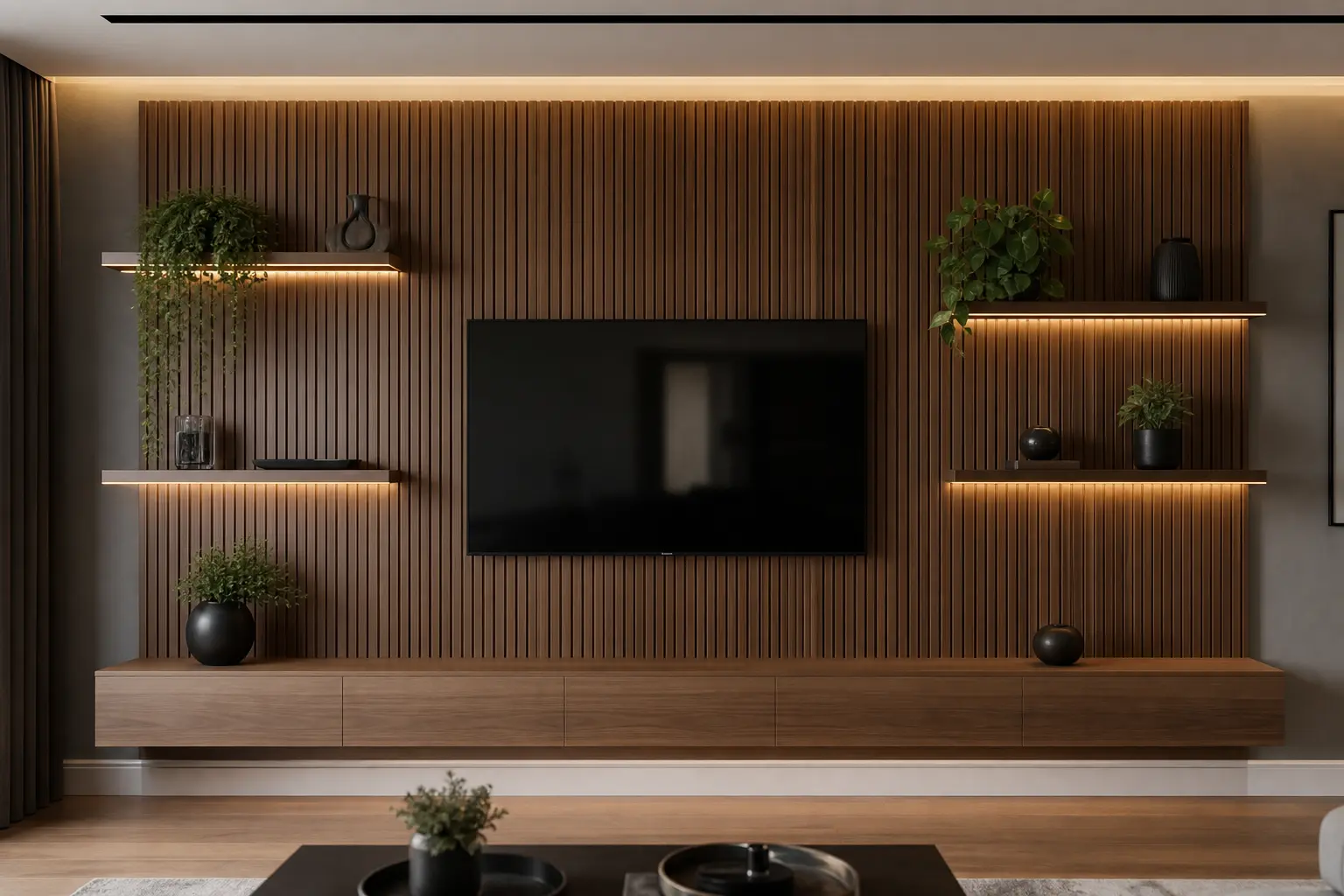
The wood tone of your slat wall should relate to the other wood already present in the room, whether that is flooring, furniture, or trim. A close match creates a cohesive, calm look, while a deliberate contrast, like a dark walnut slat wall against light oak flooring, can create intentional depth if done carefully. Avoid picking a slat tone completely at random, since an unrelated wood tone can make the wall feel like an unplanned addition rather than part of the room’s overall design.
4. Add a Single Floating Shelf Across the Slat Panel
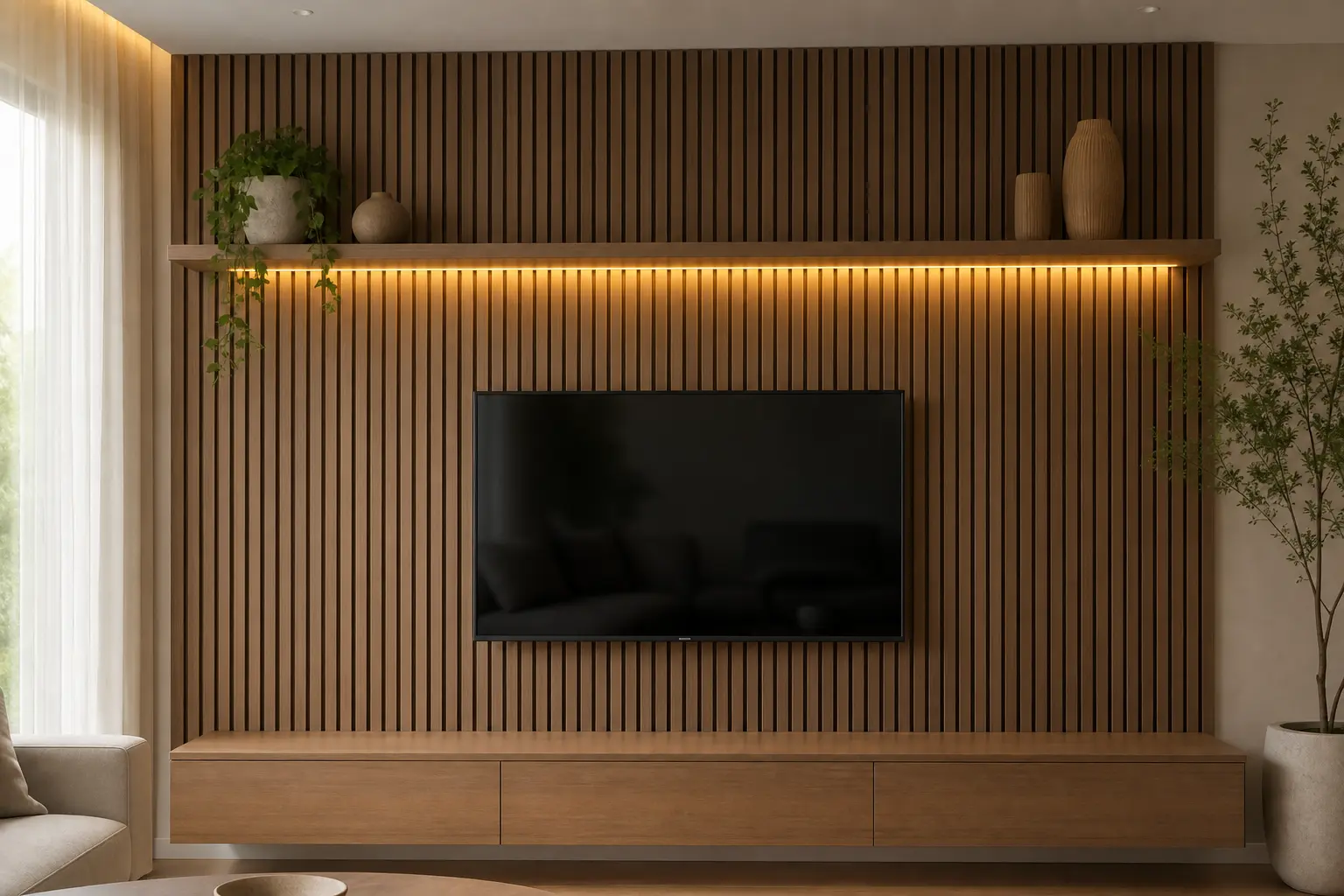
Rather than covering the slat wall with multiple shelves, a single floating shelf placed across the width of the panel keeps the look restrained and modern. This gives you a spot for a few styled objects while letting the slats themselves remain the dominant visual feature. Position the shelf at a natural focal height, generally around 60 inches from the floor if the wall is a general feature, or lower if it sits behind a specific piece of furniture like a sofa or bed.
5. Use LED Strips to Highlight the Texture of the Slats
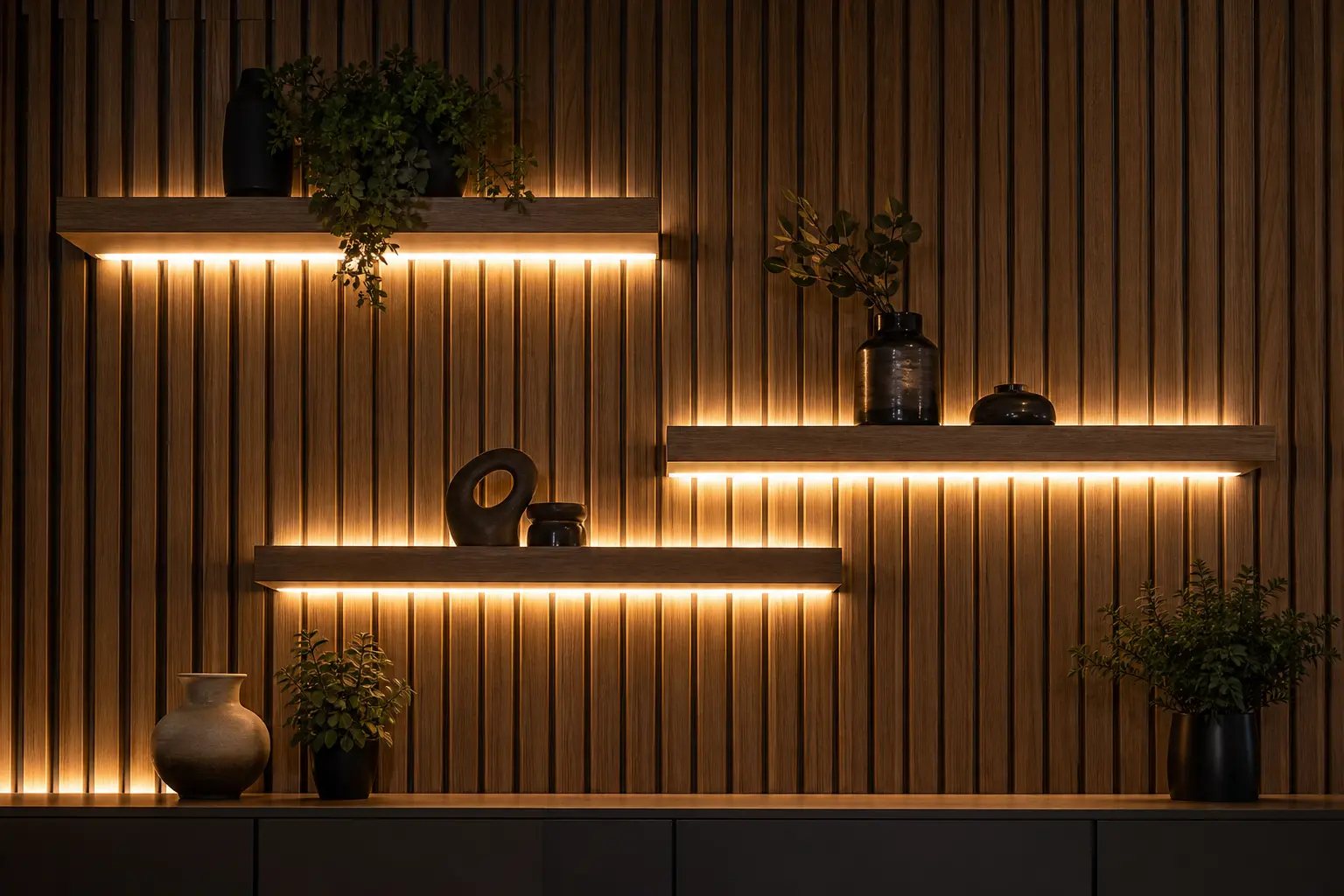
A warm LED strip mounted along the underside of the floating shelf, or hidden at the top or base of the slat panel itself, brings out the natural shadow lines between each slat. This lighting trick adds dimension to the wall, especially in the evening when overhead lighting is dimmed. Choose a warm white temperature, generally 2700K to 3000K, so the glow complements the wood tone rather than competing with it. A dimmable strip gives you flexibility to shift the mood depending on the time of day.
Hiding the LED Strip Itself
Recess the LED strip slightly behind the shelf’s front lip or within a small channel cut into the top slat, so the light source stays hidden and only the resulting glow is visible.
6. Keep Shelf Styling Minimal So the Wood Grain Stays the Focus
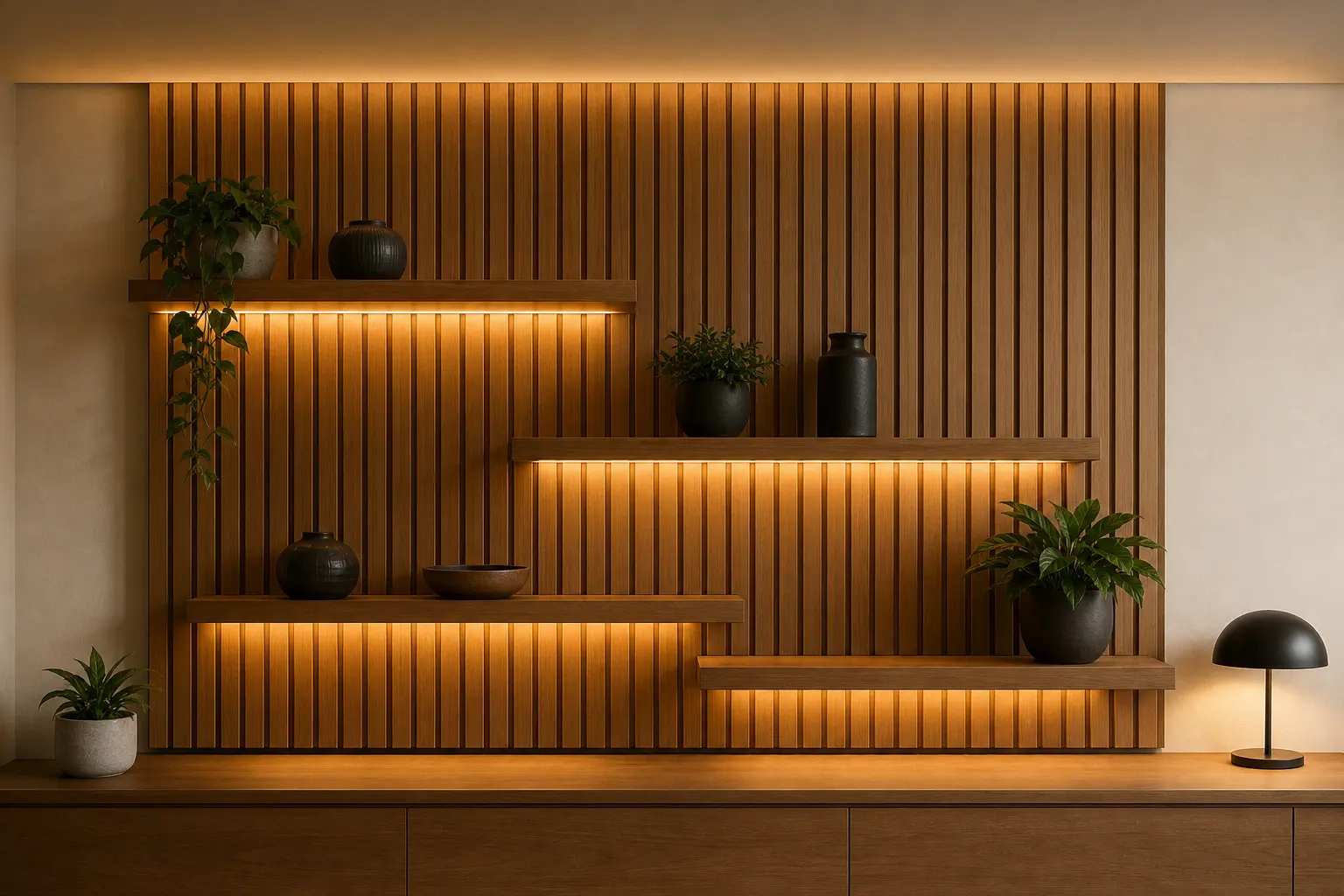
It can be tempting to fill the floating shelf with several decorative objects, but a heavily styled shelf competes with the slat wall for attention. Stick to two or three simple objects, like a single ceramic vase, a small stack of books, or one framed print leaned against the wall. This restraint keeps the wood texture as the clear focal point, with the shelf acting as a quiet supporting detail rather than the main event.
7. Consider Partial Slat Walls for a Softer Transition
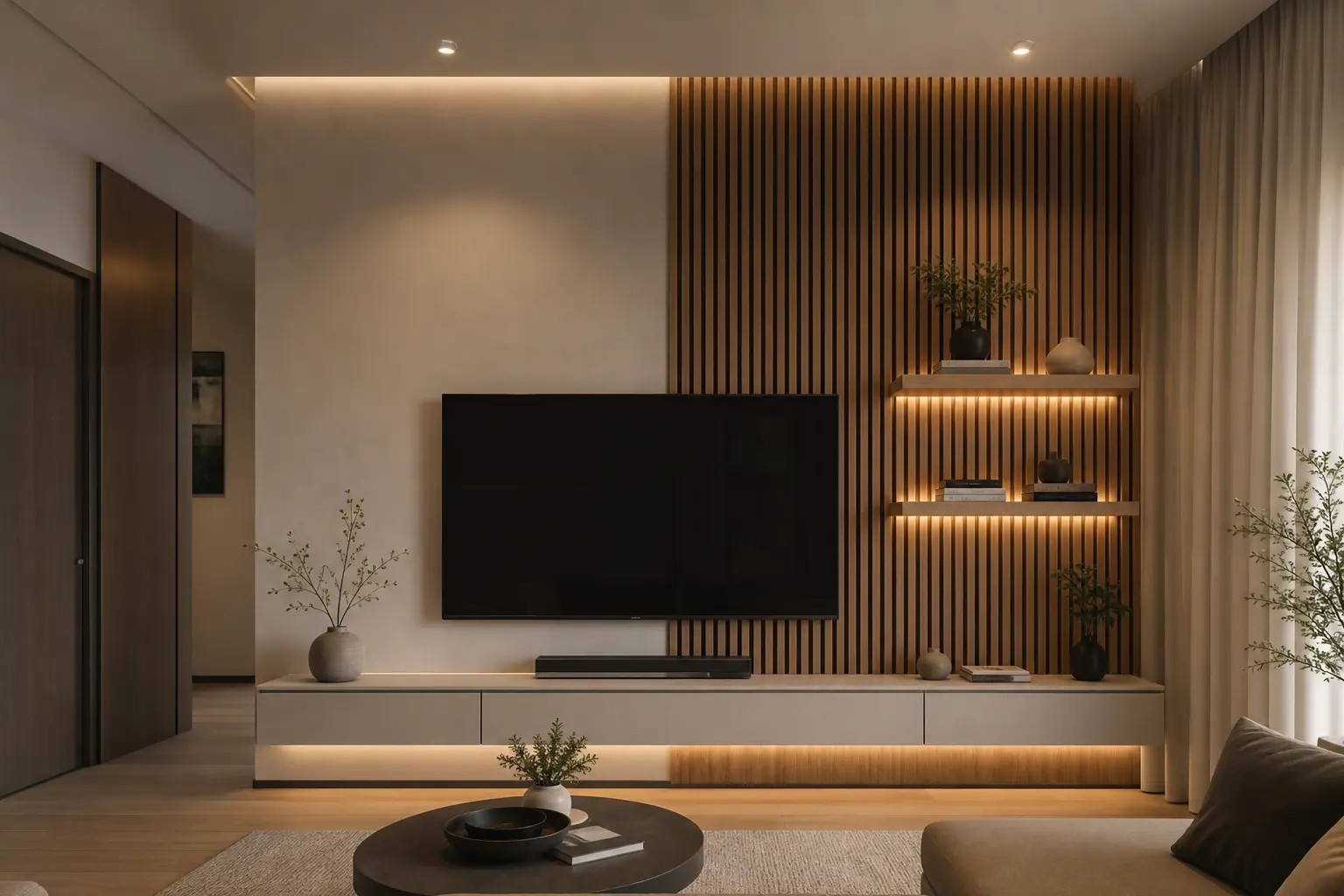
A full floor to ceiling slat wall is a bold commitment, and not every room needs that much coverage. A partial slat wall, covering the lower two thirds of the wall or a defined section behind a specific piece of furniture, offers a softer way to bring in the texture without overwhelming the space. This approach also tends to be more budget friendly and easier to install, since you are covering less surface area overall.
8. Pair the Look With Simple, Matte Wall Paint Around It
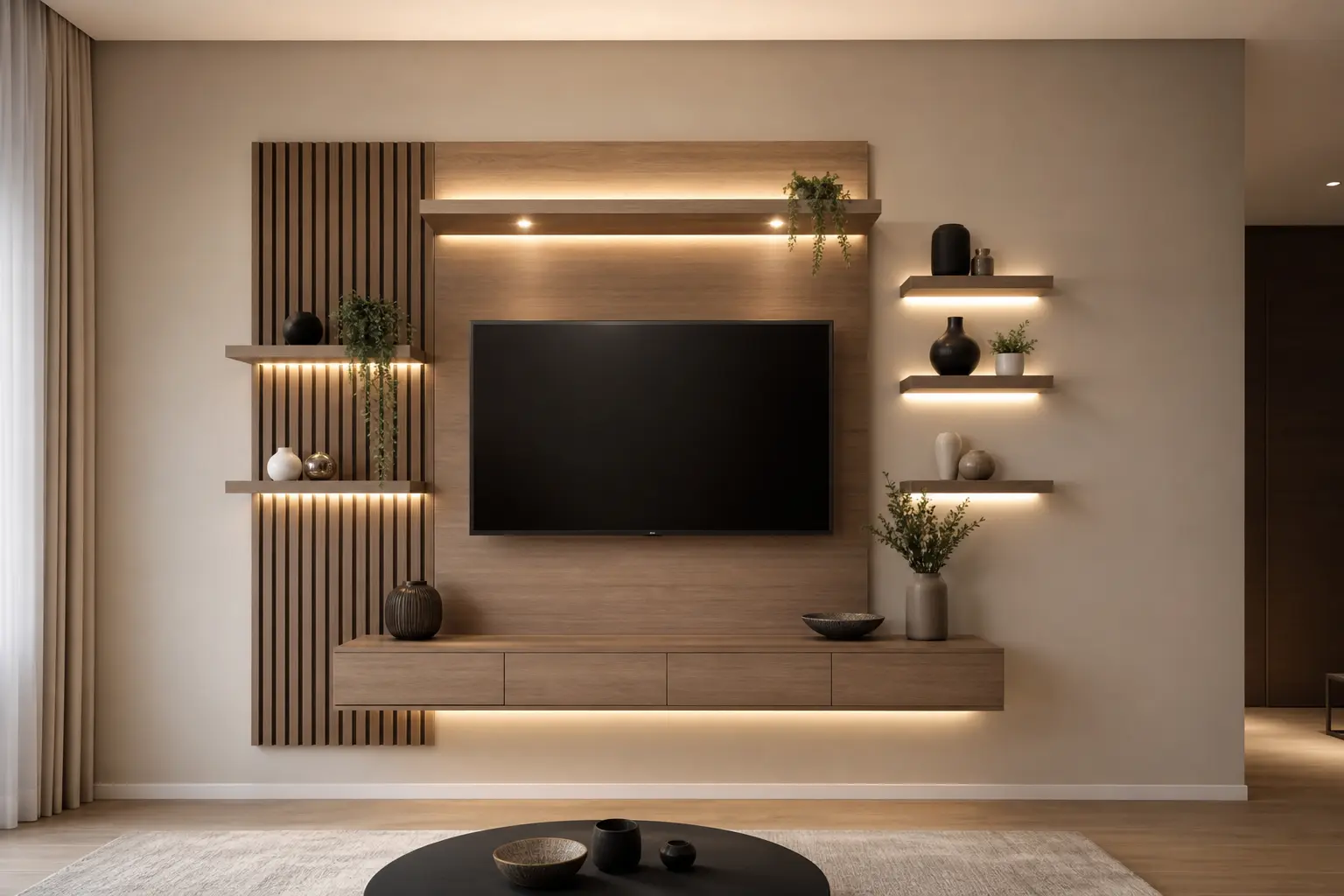
The wall space surrounding a slat panel should stay simple and matte, ideally in a warm white, soft greige, or light neutral tone. A glossy finish nearby can create distracting reflections that compete with the slat wall’s texture and the LED glow. Keeping the surrounding paint understated allows the slat panel to read clearly as an intentional feature rather than getting lost among other visual elements in the room.
9. Use the Slat Wall Behind a Bed or Sofa as a Headboard Effect
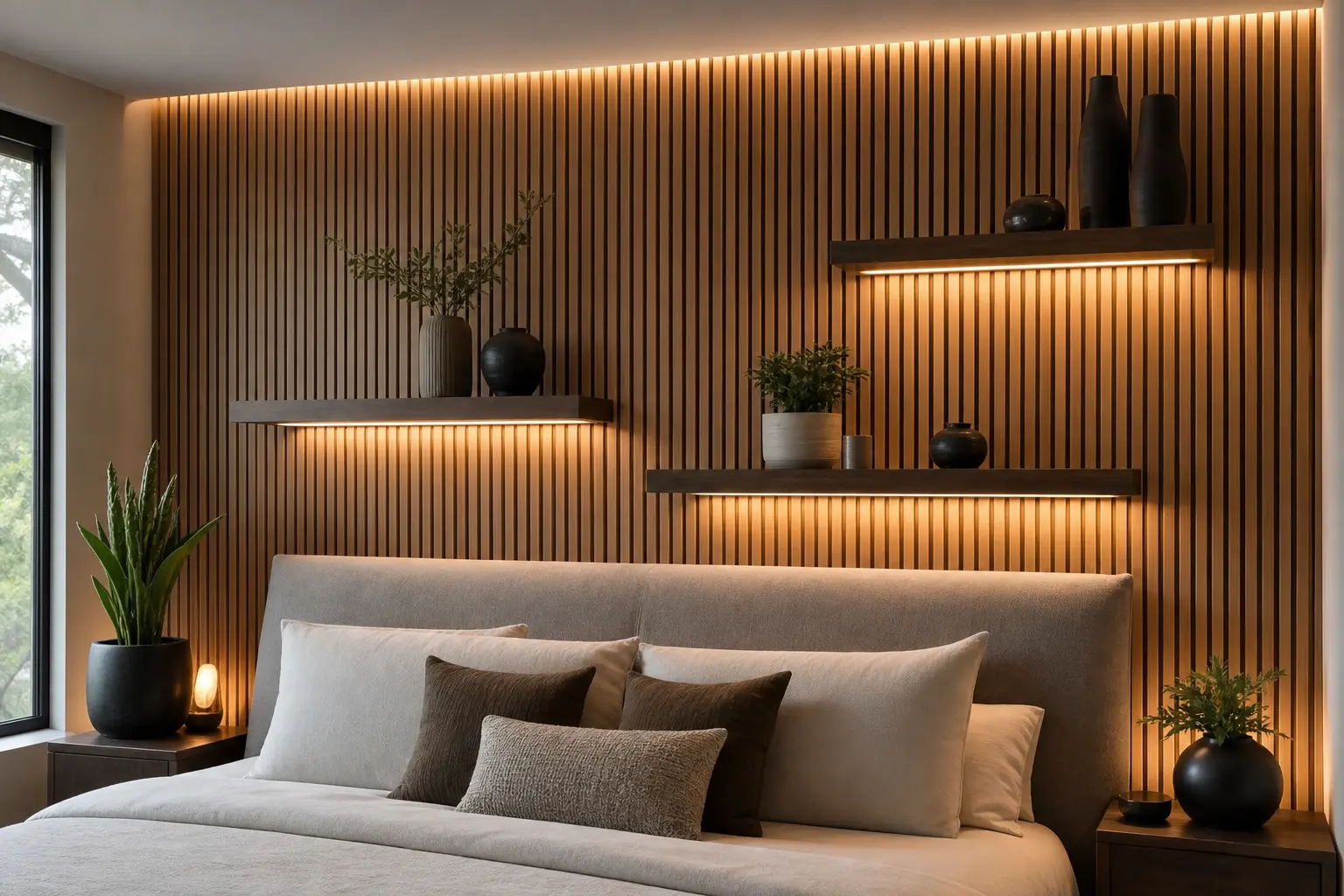
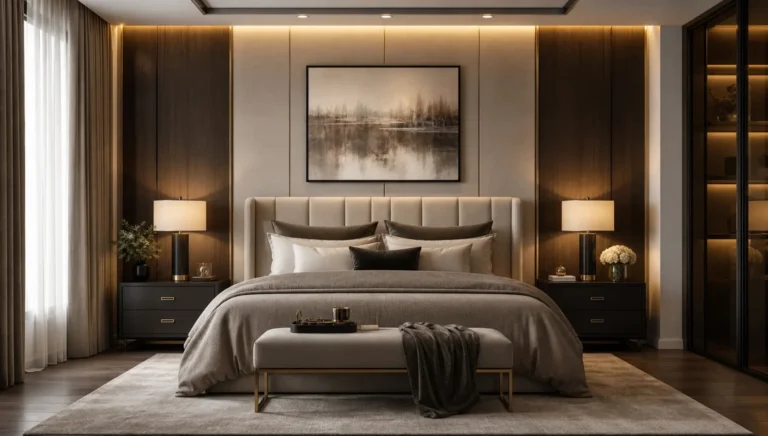
One of the most popular applications of a wood slat wall is behind a bed, acting as an oversized, built in headboard effect, or behind a sofa in a living room. This placement gives the slat wall a clear functional role in the room’s layout, rather than existing as a standalone feature elsewhere. In a bedroom, this also removes the need for a separate headboard entirely, simplifying the room while still adding a strong visual anchor behind the bed.
10. Avoid Overloading the Space With Too Many Textures at Once
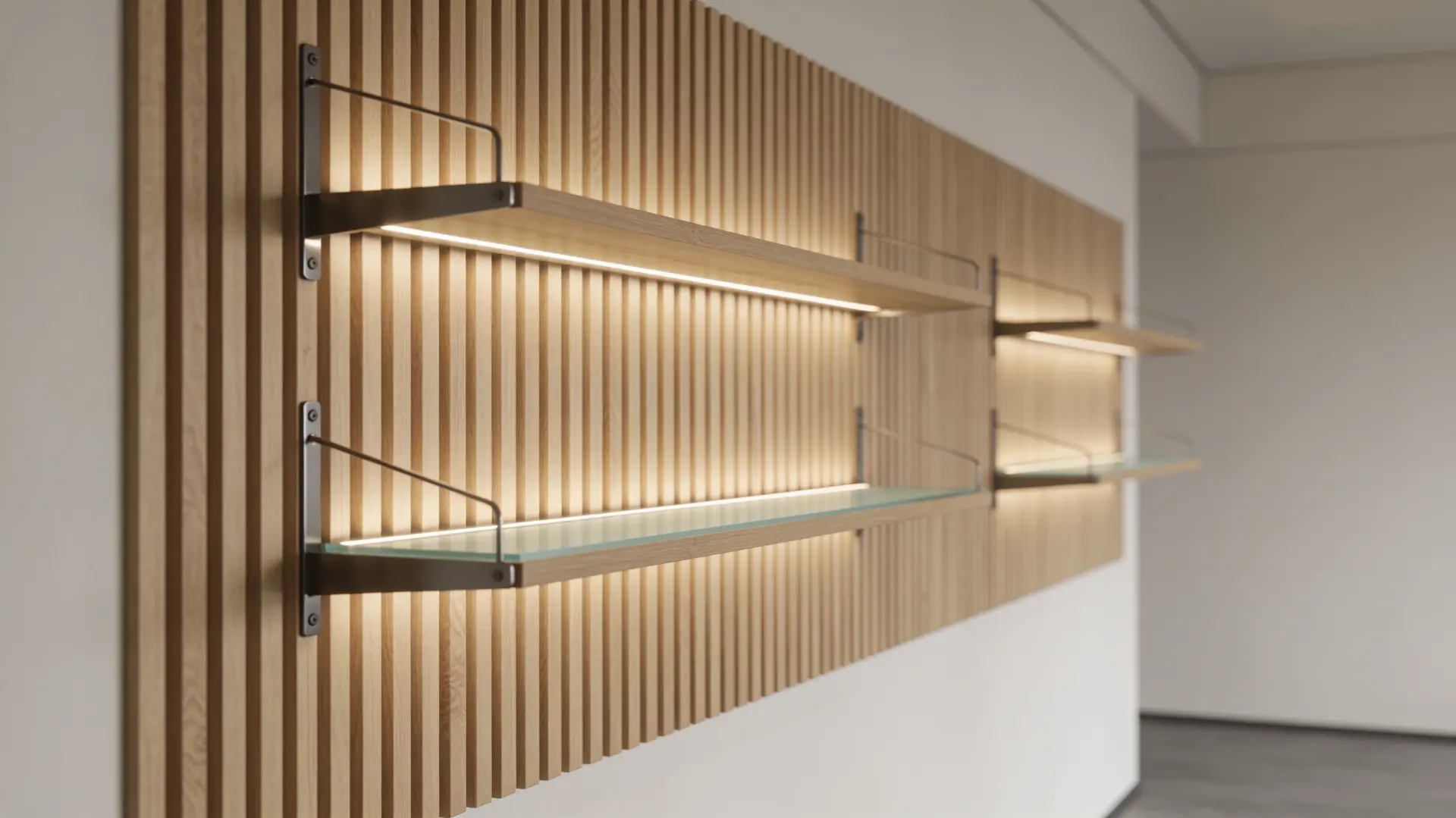
A slat wall already brings a strong texture into a room, so it is important not to pile on too many other competing textures nearby. Avoid pairing it with heavily textured rugs, busy patterned pillows, or another strong wood grain in a mismatched tone. Let the slat wall be the primary textural statement, and keep everything else in the room simpler by comparison. This restraint is what keeps the overall look feeling minimalist rather than cluttered, even with a fairly bold wall feature in place.
Mistakes to Avoid
- Choosing a slat direction that works against the room’s existing proportions
- Mismatching the wood tone with existing furniture or flooring without a clear reason
- Overloading the floating shelf with too many decorative objects
- Skipping a dimmer on the LED strip, which limits flexibility for different times of day
- Painting the surrounding wall in a glossy finish that competes with the slat texture
- Adding too many other bold textures nearby, like patterned rugs or busy pillows
Frequently Asked Questions
Should wood slat walls run vertically or horizontally? Vertical slats tend to make a room feel taller, which suits lower ceilings, while horizontal slats can make a narrow wall feel wider, so the choice depends on the room’s proportions.
Do LED floating shelves work well with wood slat walls? Yes, a warm LED strip under a floating shelf highlights the natural shadow lines of the slats, adding depth to the wall especially in the evening.
Is a full floor to ceiling slat wall necessary for the look to work? No, a partial slat wall covering a lower section or a specific area behind furniture can achieve a similar effect with less material and cost.
What wood tone works best for a slat wall in a minimalist room? A tone that closely matches or intentionally complements existing wood furniture and flooring in the room tends to look the most cohesive.
Can a slat wall replace a headboard in a bedroom? Yes, many people use a slat wall behind the bed as an oversized headboard effect, which can simplify the room while still adding a strong visual feature.
How many floating shelves should I add to a slat wall? A single floating shelf across the slat panel usually keeps the look clean and modern, since multiple shelves can start to clutter the wall’s natural texture.
Conclusion
Wood slat wall paneling paired with a single LED floating shelf brings warmth, texture, and quiet dimension into a minimalist room without sacrificing the clean lines the style depends on. The key is choosing a slat direction and wood tone that suit your specific space, keeping the shelf styling restrained, and letting the natural grain of the wood do most of the visual work. Start with one wall, and you may find it becomes the room’s most grounding feature.