10 Modern TV Wall Design Ideas | Luxury Living Room TV Unit Inspiration
You mounted the TV, added a basic stand underneath, and called it done. But every time you walk into the room, that wall looks unfinished, like a hotel room rather than a space you actually designed. That flat, forgettable wall is exactly what these TV wall design ideas are meant to fix. A little texture, the right lighting, and a proper media console can turn a plain screen into real luxury living room TV unit inspiration, without needing a full renovation.
1. Choose a TV Wall Layout That Fits the Room’s Proportions
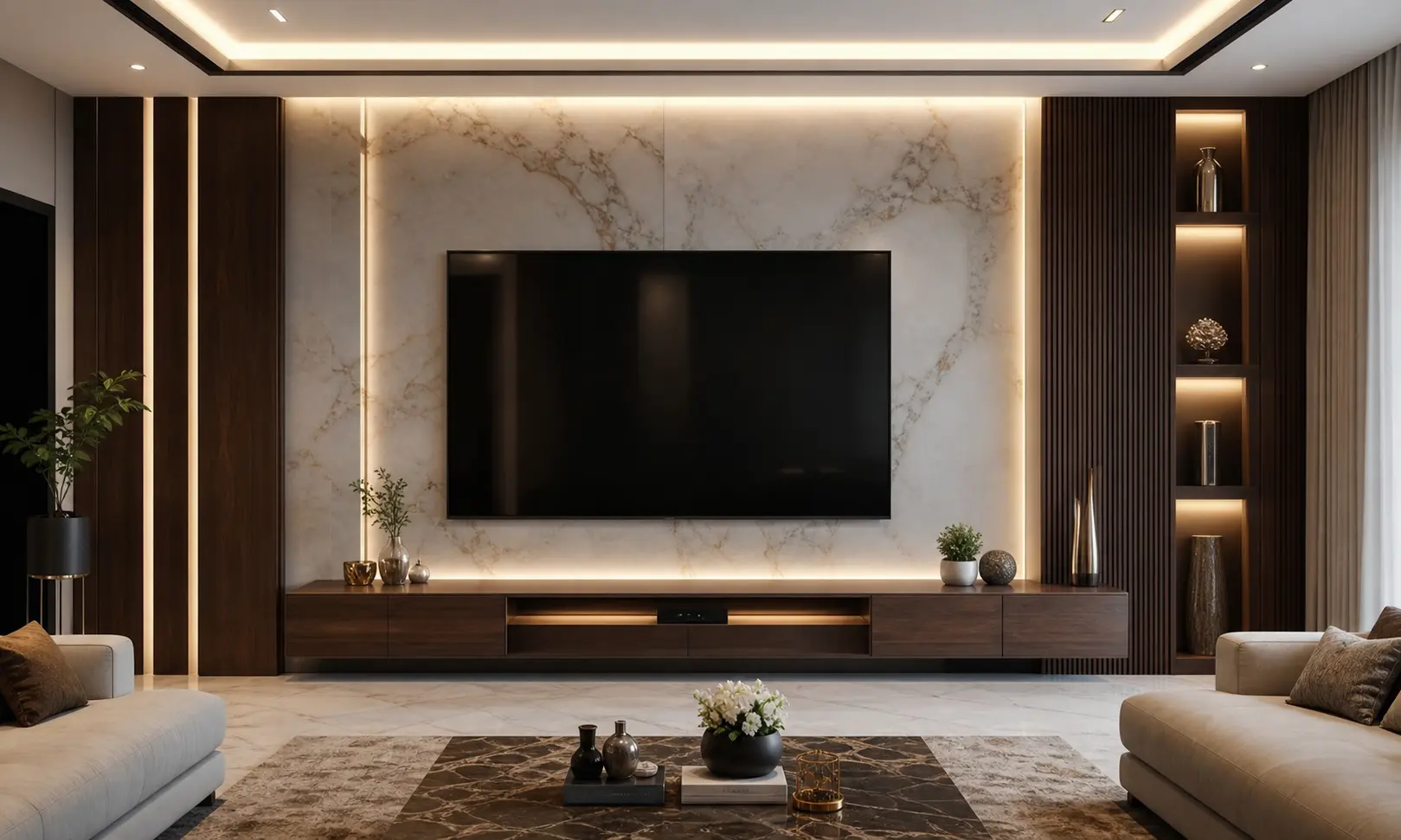
A TV centered on a wall works in a symmetrical room, but in a room with a window or door off to one side, an offset layout often looks more natural. Before choosing a spot, look at the wall as a whole, not just where an outlet happens to be.
As a rough guide, the bottom of the TV should sit roughly 18 to 24 inches above a media console, and the whole setup should feel centered within the seating area, not just the wall itself. A TV that’s technically centered on the wall but off center from the sofa will always look slightly wrong.
Measuring Viewing Height
For most seated viewing heights, the center of the screen should land close to eye level when you’re sitting on the sofa. That’s usually around 42 inches from the floor, though this can shift depending on your ceiling height and furniture.
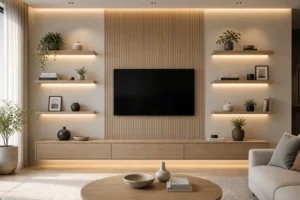
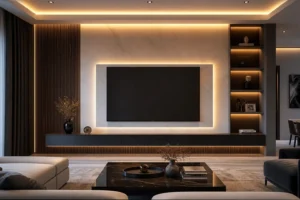
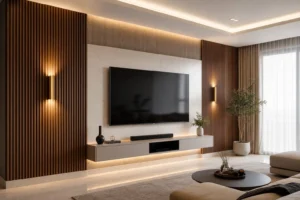
2. Pick a Backdrop Material That Adds Texture Behind the Screen
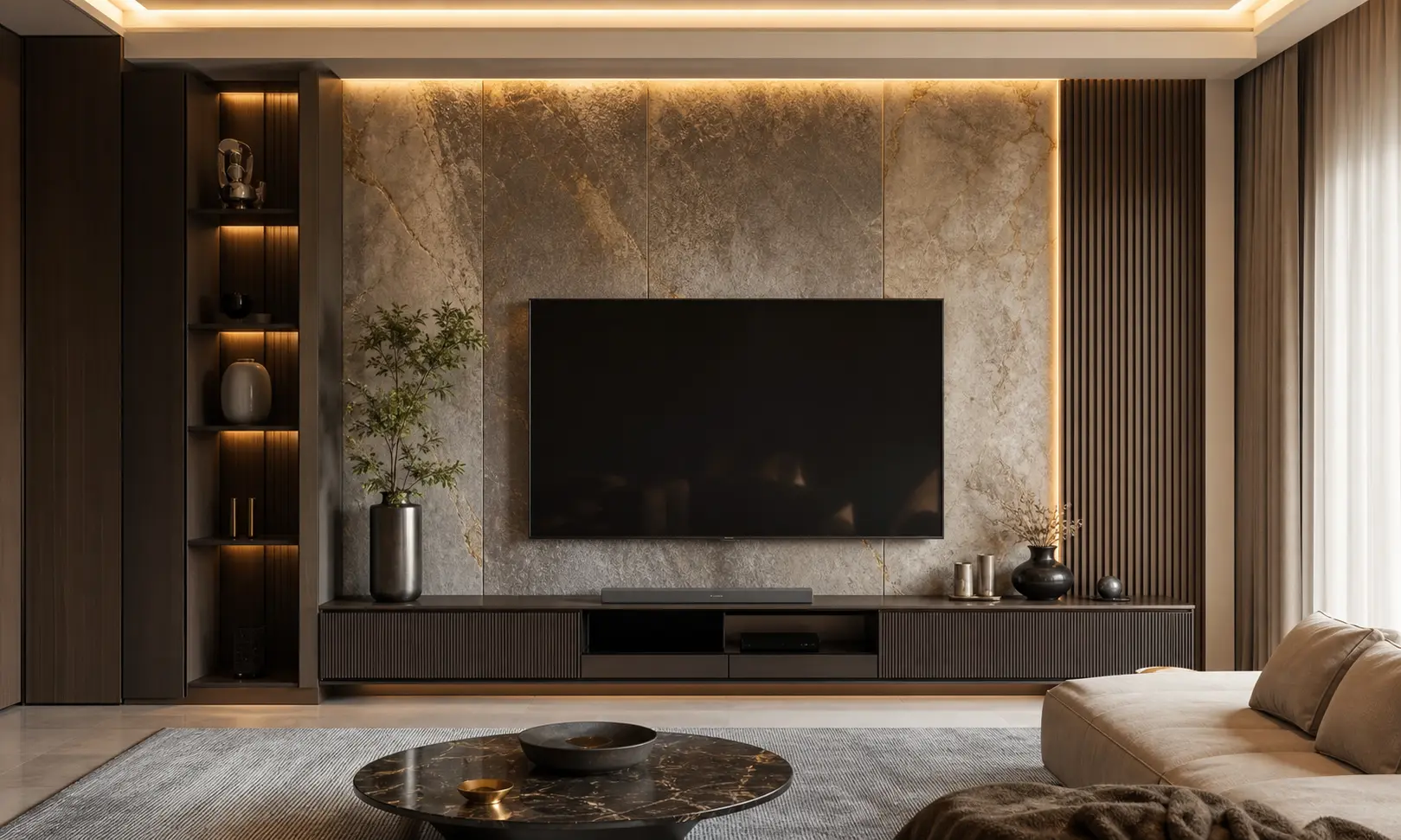
A flat painted wall behind a TV tends to disappear visually once the screen is on. Materials like wood paneling, stone veneer, or a textured plaster finish give the wall presence even when the TV is turned off.
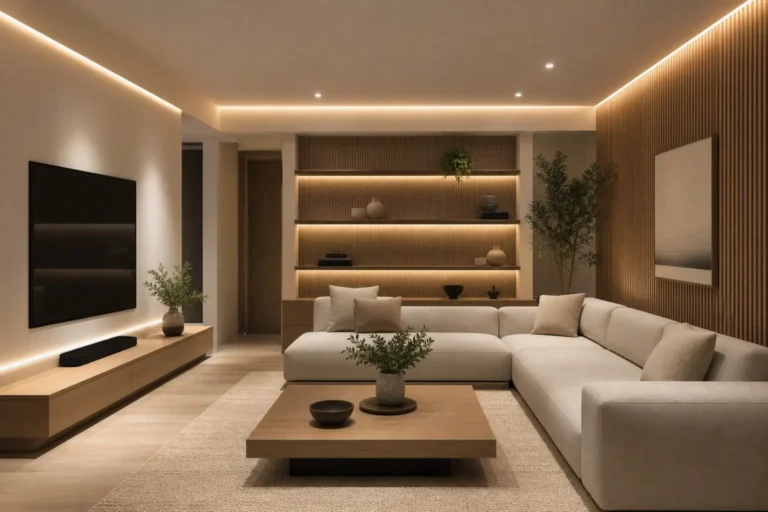
Wood slats and natural stone are two of the most popular choices for a luxury living room TV unit look right now, mainly because they add depth without adding busy pattern. A textured backdrop also helps hide the TV’s black frame, which can otherwise look like a floating rectangle on a plain wall.
3. Add a Media Console With Real Storage, Not Just Style
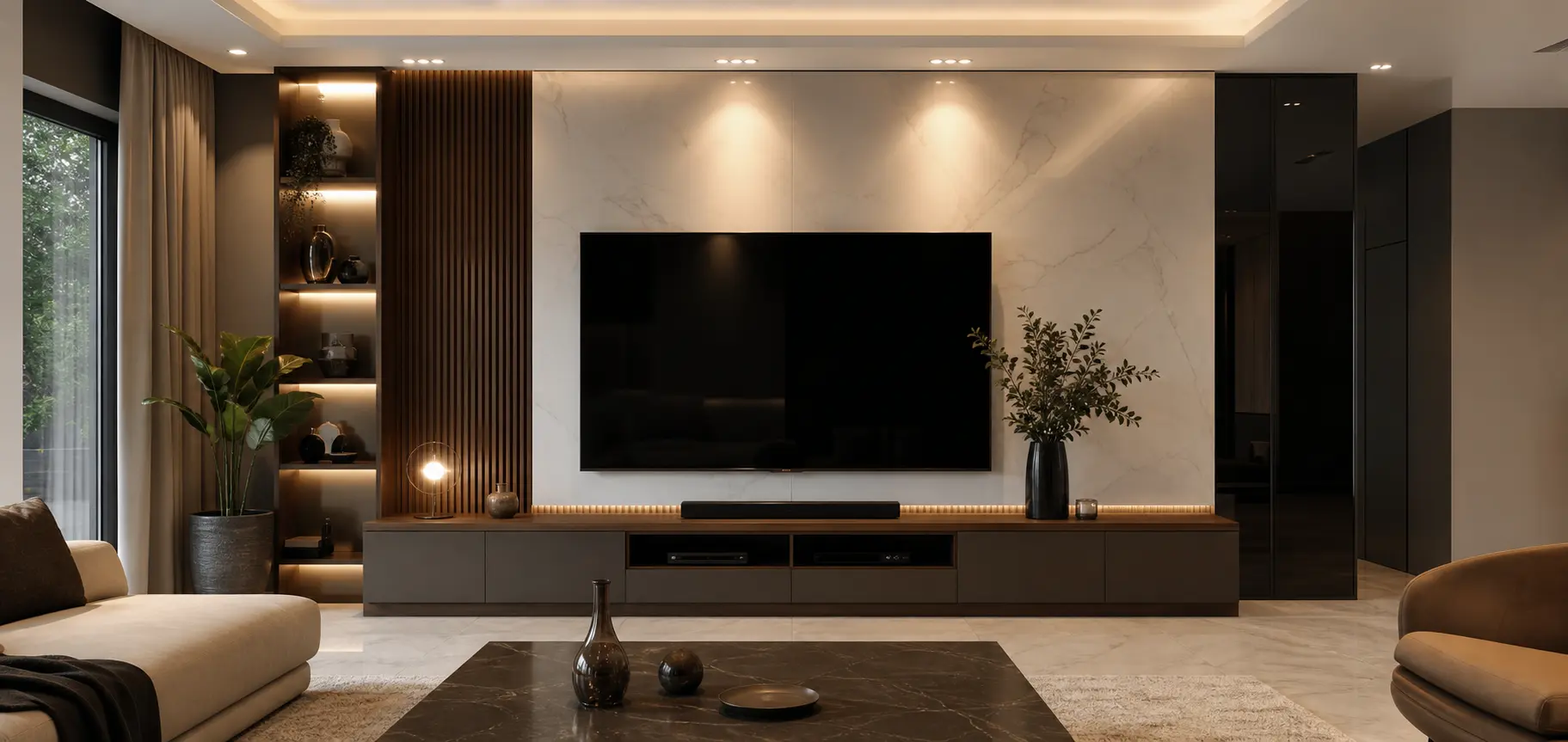
A media console that looks great but holds nothing usually ends up surrounded by cords, remotes, and clutter within a month. Look for a console with at least one or two closed cabinets, not just open shelving, so equipment like routers and game consoles can stay out of sight.
A floating console, mounted a few inches off the floor, also adds a lighter, more modern feel to the wall and makes cleaning underneath much easier.
4. Balance the TV With Art or Shelving on One Side
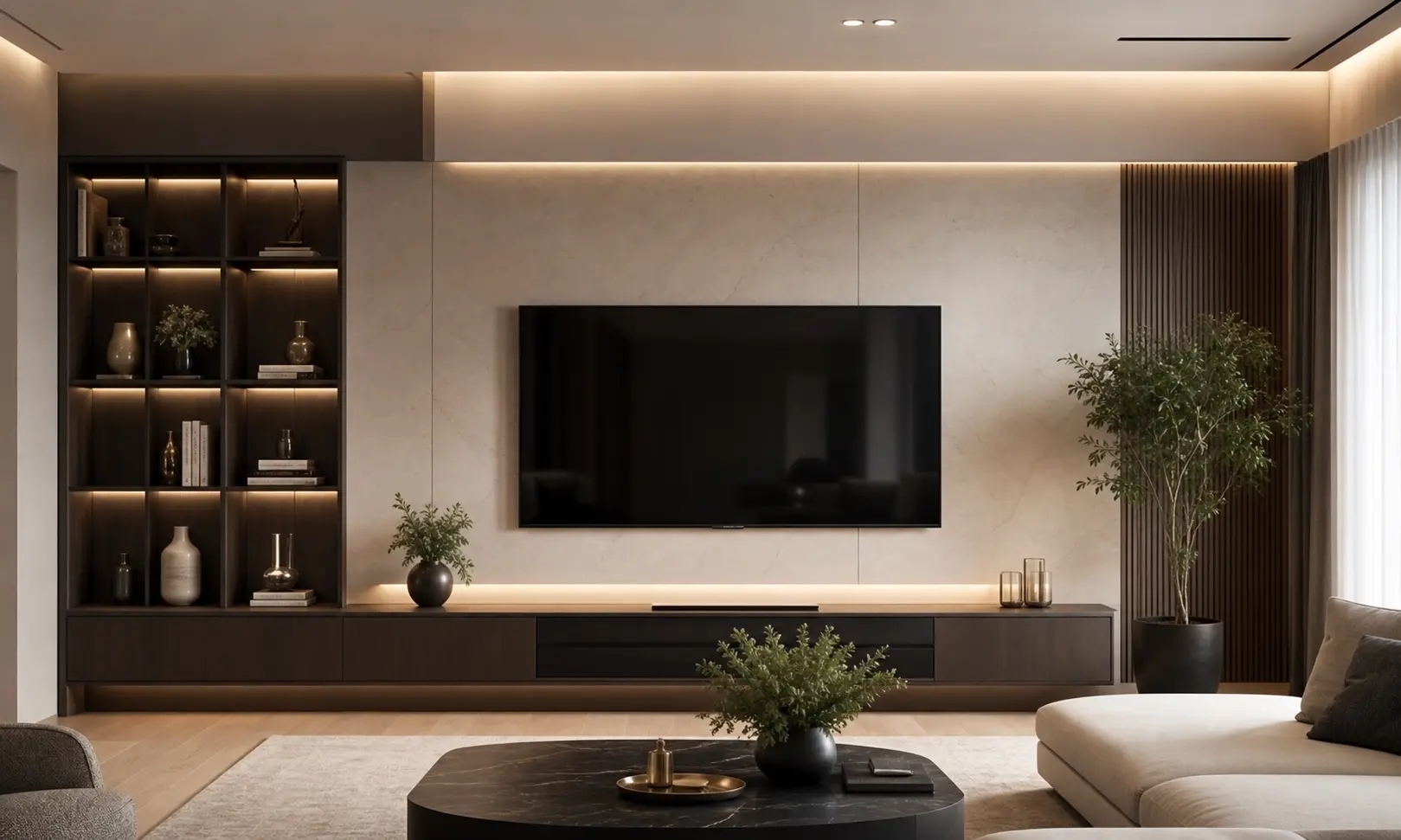
A TV alone in the middle of a large wall can look small and isolated. Adding a narrow shelf, a piece of art, or a slim vertical plant on one side gives the eye something else to land on and makes the whole wall feel designed rather than accidental.
Keep whatever you add secondary in scale. The goal is balance, not competition with the screen itself.
5. Use Warm Lighting to Soften the Glow of the Screen
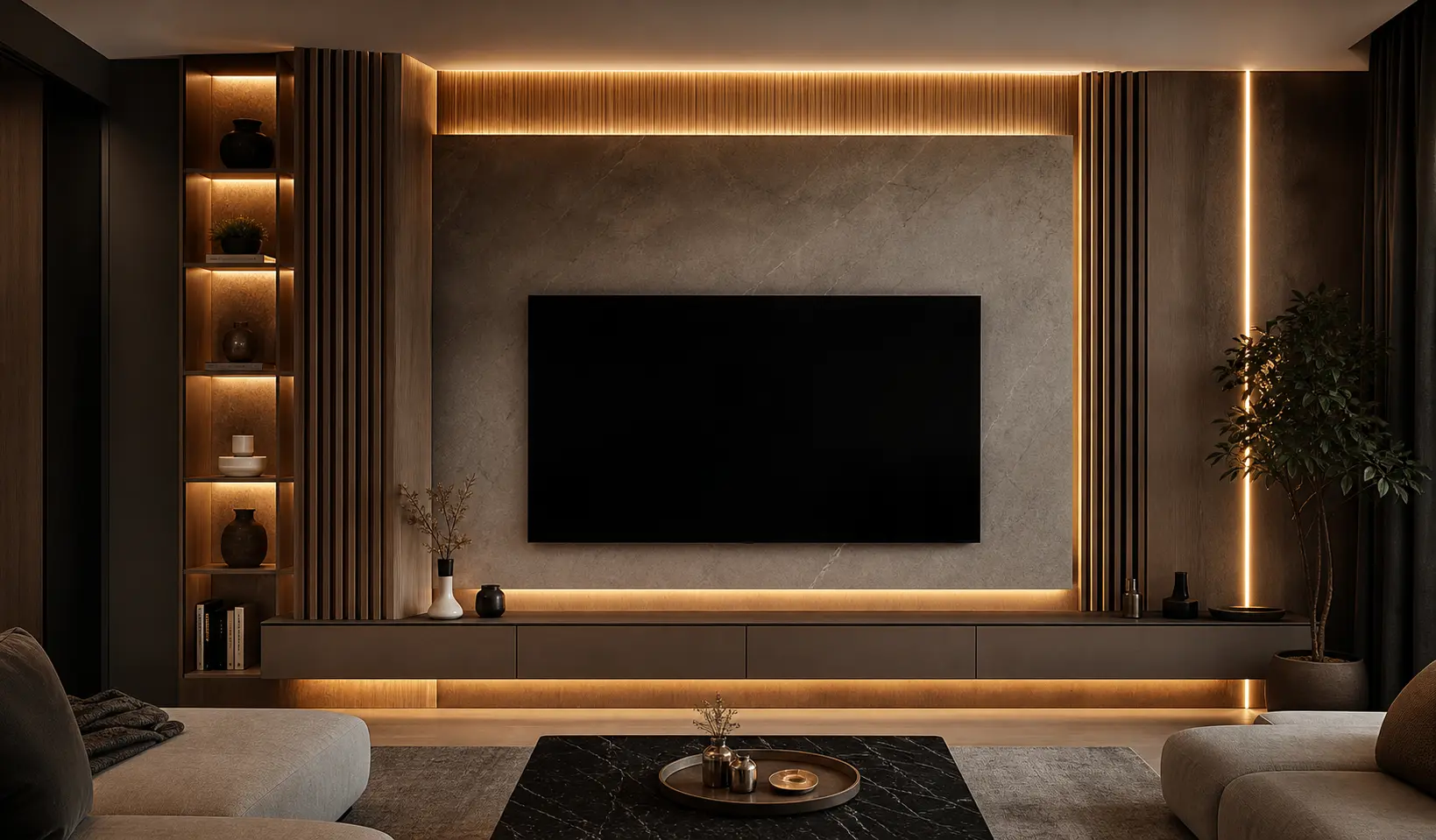
A TV in a dark room with no ambient light creates harsh contrast that’s tiring on the eyes and can make the whole wall feel like a black hole. Adding a warm light source nearby, like a floor lamp or a small wall sconce, softens that contrast significantly.
Bias lighting, a thin LED strip placed directly behind the TV, is another simple option. It reduces eye strain and adds a subtle glow that also makes the wall look more finished when the TV is off.
6. Hide Cords and Cables for a Clean Luxury Look
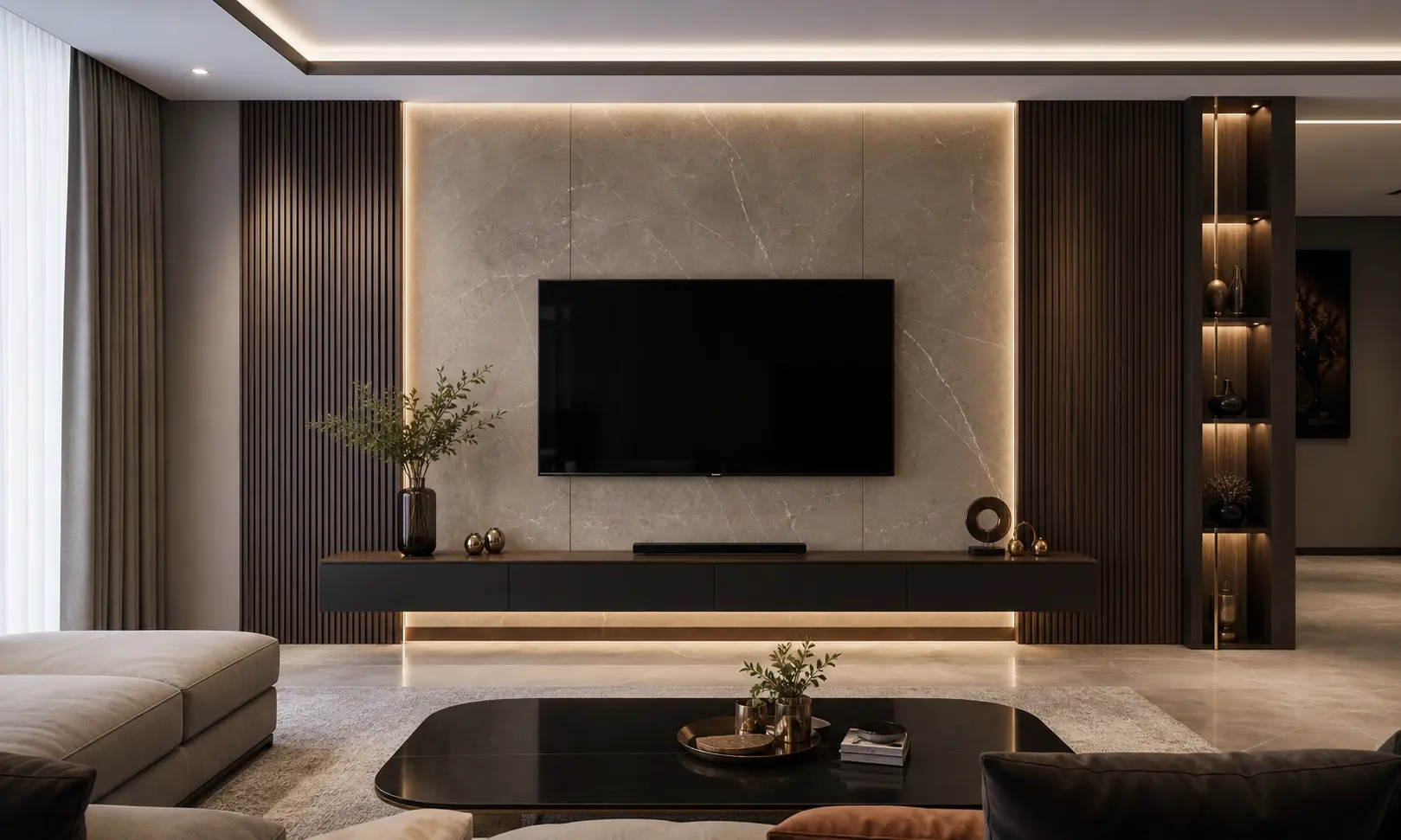
Visible cords running down a wall are one of the fastest ways to undercut an otherwise well designed space. An in wall cord channel, run by a licensed electrician if it involves cutting into drywall, keeps everything hidden and gives the wall a clean, finished look.
If running cords inside the wall isn’t an option, a paintable cord cover or a cord management box behind the console is a simpler, lower cost alternative that still hides the mess.
7. Choose a Color Palette That Frames the TV Without Competing
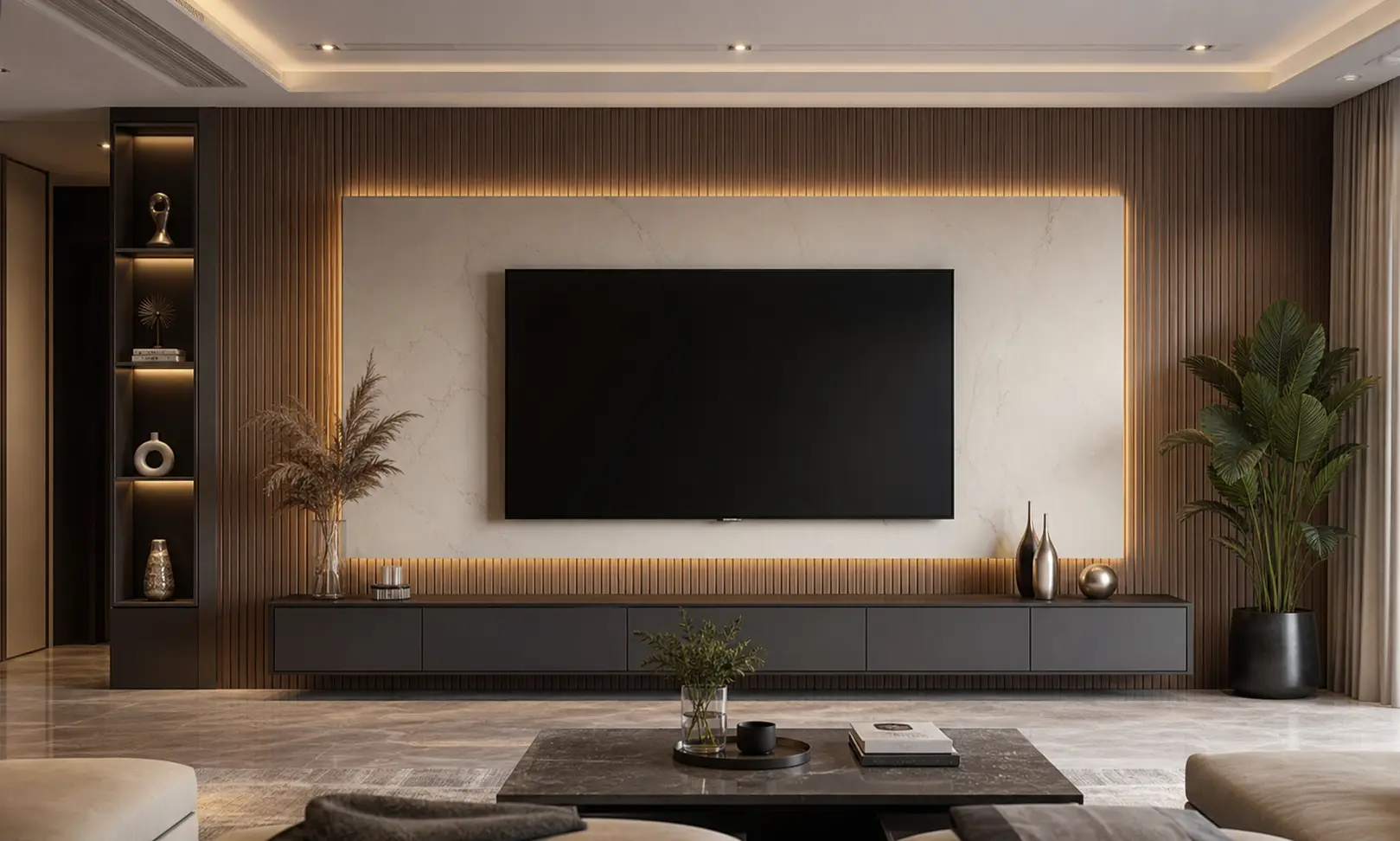
A TV screen is naturally dark, so a wall painted in a very deep, saturated color can end up blending into the screen rather than framing it. Warm neutrals or a soft muted tone tend to give the TV enough contrast to stand out clearly against the wall.
If you want a bold, dark accent wall, adding warm lighting nearby becomes even more important, since it prevents the whole area from reading as one flat dark mass.
8. Add Floating Shelves for Function and Visual Balance
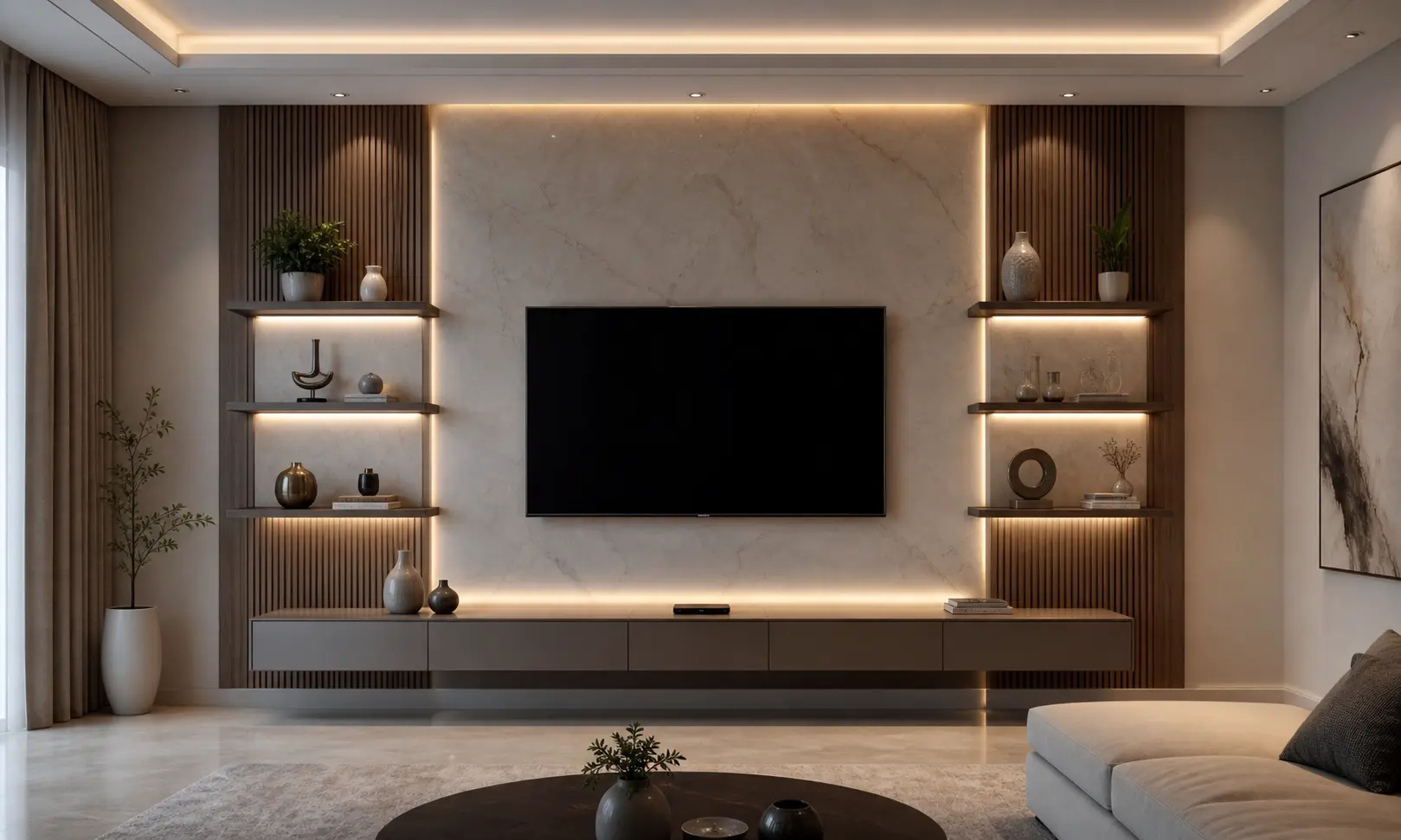
Floating shelves on either side of a TV, or above a media console, add storage and display space without the visual bulk of a full cabinet. Styling them with a mix of books, small plants, and a few ceramic pieces keeps the area from feeling like an afterthought.
Avoid overloading shelves directly next to the screen. Too much visual clutter close to the TV competes with it instead of supporting it.
9. Consider a Fireplace or Feature Element Below or Beside the TV
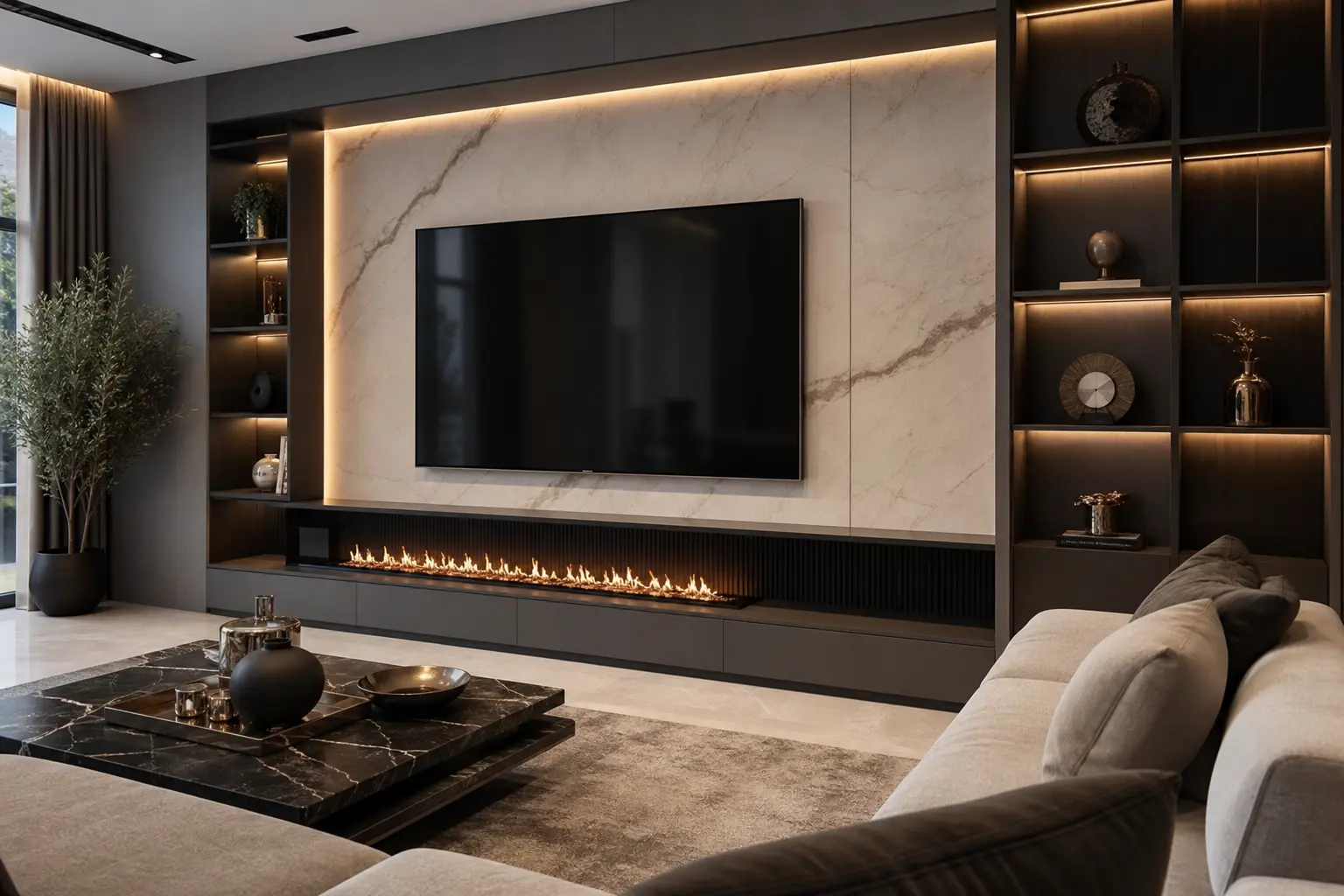
An electric fireplace built into the wall below or beside the TV adds warmth, both literally and visually, to a wall that might otherwise feel purely functional. This pairing has become a common feature in modern luxury living room designs, since it gives the wall a second focal point beyond the screen.
If a fireplace isn’t practical, a textured stone or plaster panel in the same spot can create a similar sense of a designed feature rather than just a mounted television.
10. Scale Wall Decor to the Size of the TV Wall
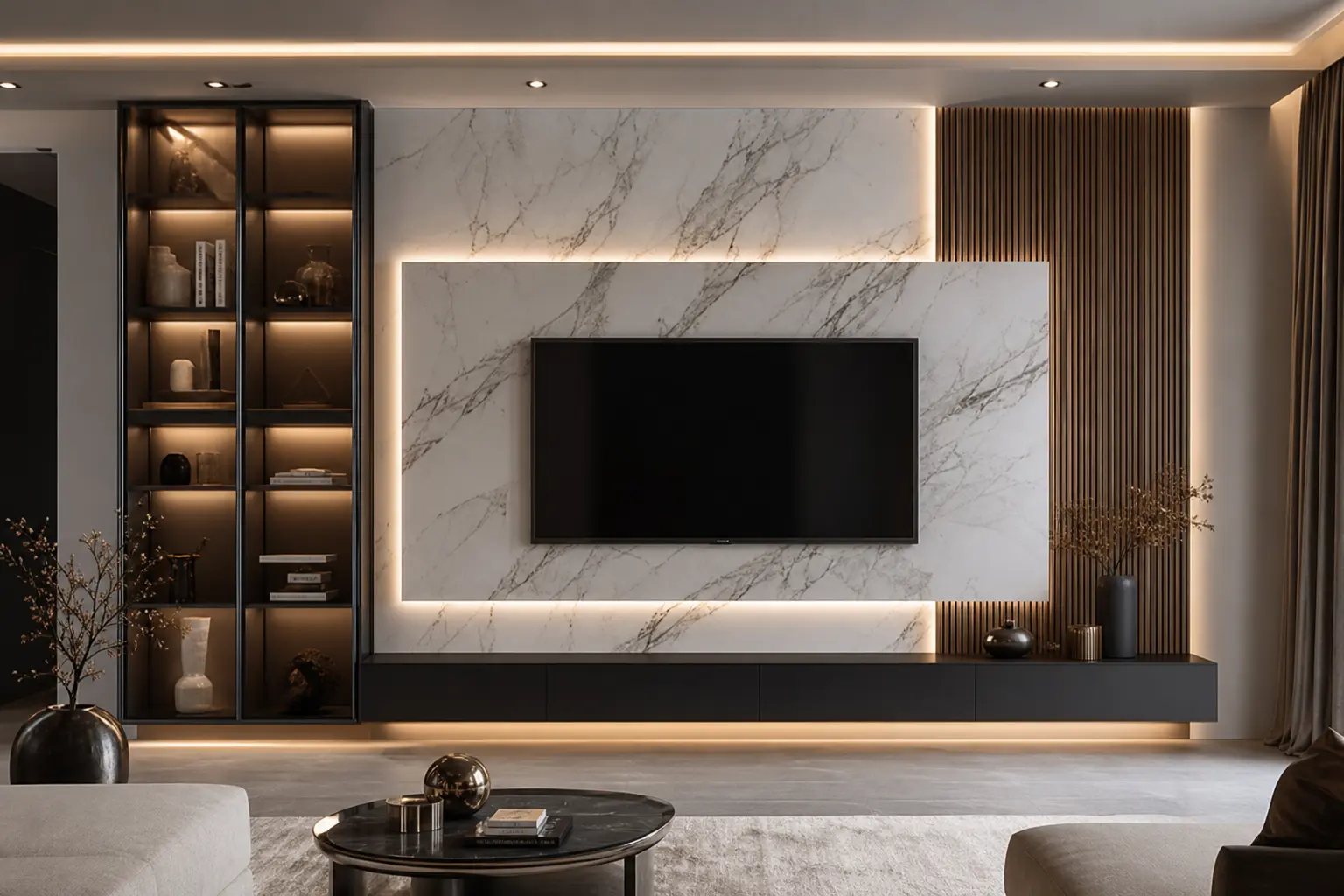
A large TV wall with only small, scattered decor can look empty and unfinished. Scaling art, shelving, and lighting fixtures to match the size of the wall keeps everything feeling proportional. A tall wall usually calls for a large piece of art or a full height plant, not a small frame that gets lost.
As a general rule, decor elements should feel like they belong to the same wall, not like separate small additions scattered around the TV.
Mistakes to Avoid
- Mounting the TV too high above the console, which strains the neck during longer viewing
- Leaving cords fully visible, which undercuts an otherwise well designed wall
- Choosing a media console with no closed storage for cords and equipment
- Overloading floating shelves right next to the screen with too much clutter
- Ignoring the wall’s overall proportions and centering the TV without considering the seating area
Frequently Asked Questions
What is the best height to mount a TV above a media console? Most consoles work well with about 18 to 24 inches of space above them to the bottom of the TV, though this can shift slightly depending on the console’s height and your seating distance.
Does a textured backdrop actually make a difference behind a TV? Yes. A flat painted wall tends to disappear visually once the screen turns on, while textured materials like wood or stone keep the wall interesting even when the TV is off.
Is bias lighting worth adding behind a TV? For most rooms, yes. A simple warm LED strip behind the TV reduces eye strain in dark rooms and adds a soft glow that makes the wall feel more finished.
How do I hide cords without cutting into the wall? A paintable cord cover or a cord management box behind the media console are both effective, lower cost alternatives to running cords inside the wall.
Should I paint a TV wall a dark, bold color? You can, but pair it with some warm lighting nearby. Otherwise a very dark wall and a dark screen can blend together and make the whole area look flat.
Conclusion
A TV wall doesn’t have to be an afterthought in an otherwise well designed living room. A textured backdrop, a media console with real storage, and some warm lighting can turn it into one of the most intentional parts of the space. Start with hiding your cords and adding one warm light source this week, and build from there.