10 Aesthetic Balcony Garden Ideas for a Cozy Small Balcony
You look at your narrow balcony and assume a real garden just isn’t possible in five feet of width, so you end up with one sad plant and a lot of empty concrete. Aesthetic balcony garden ideas prove that a small balcony can genuinely feel like a garden, not just a spot with a couple of pots, if the plants and containers are chosen and arranged with the same intention as a full sized yard. The trick is treating vertical space, container variety, and plant pairing as seriously as you would in a real garden bed.
1. Treat Your Balcony as a Garden Room, Not an Afterthought
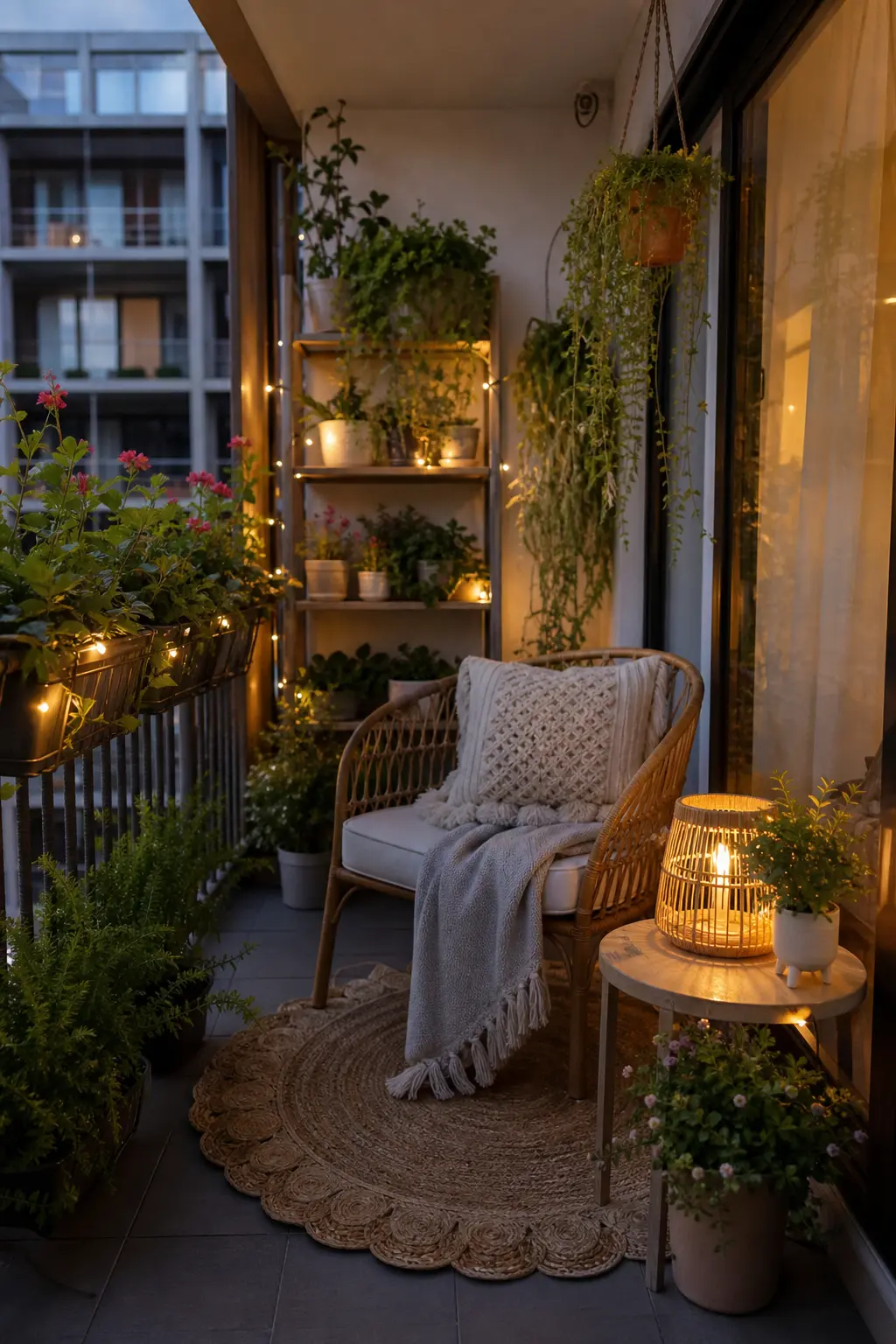
The biggest shift in making a small balcony feel like a real garden is mental before it’s practical. Plan it the way you’d plan a garden bed, with a mix of heights, textures, and a couple of focal plants, rather than just adding pots as you happen to buy them. That planning mindset is what separates a genuine aesthetic balcony garden from a random collection of plants.
Sketch a rough layout before buying anything, marking where the tallest plants go, where trailing plants can spill over an edge, and where a seating spot fits. Even a five minute sketch on paper helps you see gaps and overcrowding before they become permanent. A little planning up front saves you from an unbalanced, lopsided result later.
2. Choose a Plant Mix That Reads as a Real Garden
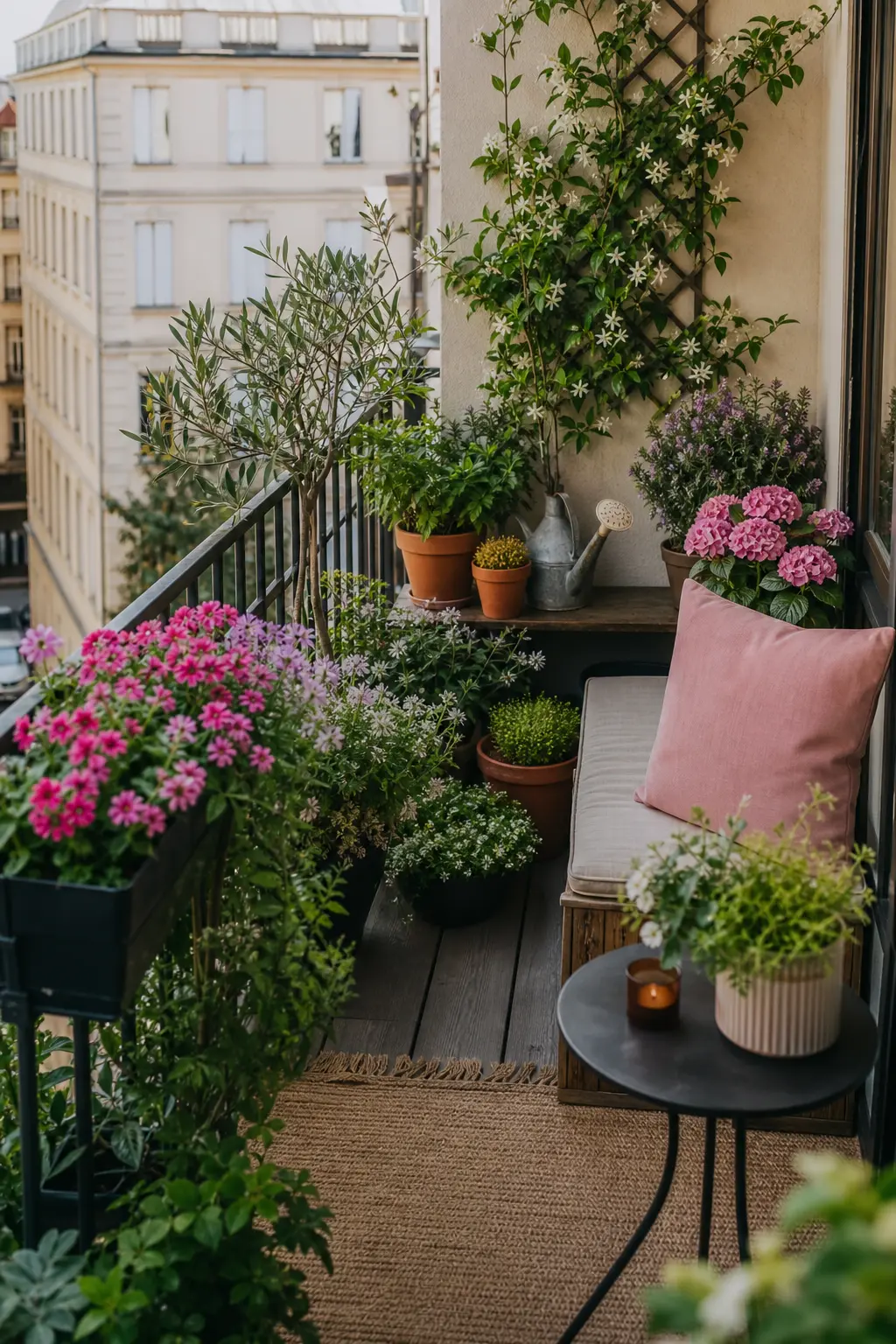
A true garden feel comes from variety: some upright structure, some trailing softness, and a bit of seasonal color. Combine a small upright plant like a dwarf citrus or rosemary bush, a trailing plant like ivy or creeping jenny, and a flowering annual like petunias or marigolds. That combination of shapes is what a full garden bed does naturally, just scaled down.
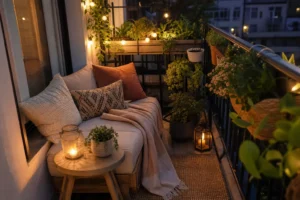
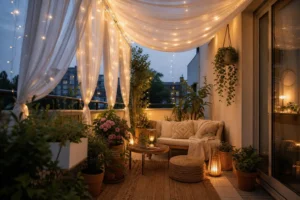
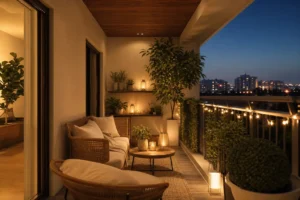
Avoid choosing every plant purely for how it looks in a nursery pot, since a garden needs contrast, not a matched set. One dominant leaf shape and color throughout actually reads as flatter than a varied mix. A little visual tension between plant types is what makes the whole balcony feel intentional rather than decorative.
3. Use Vertical Growing to Multiply Your Planting Space
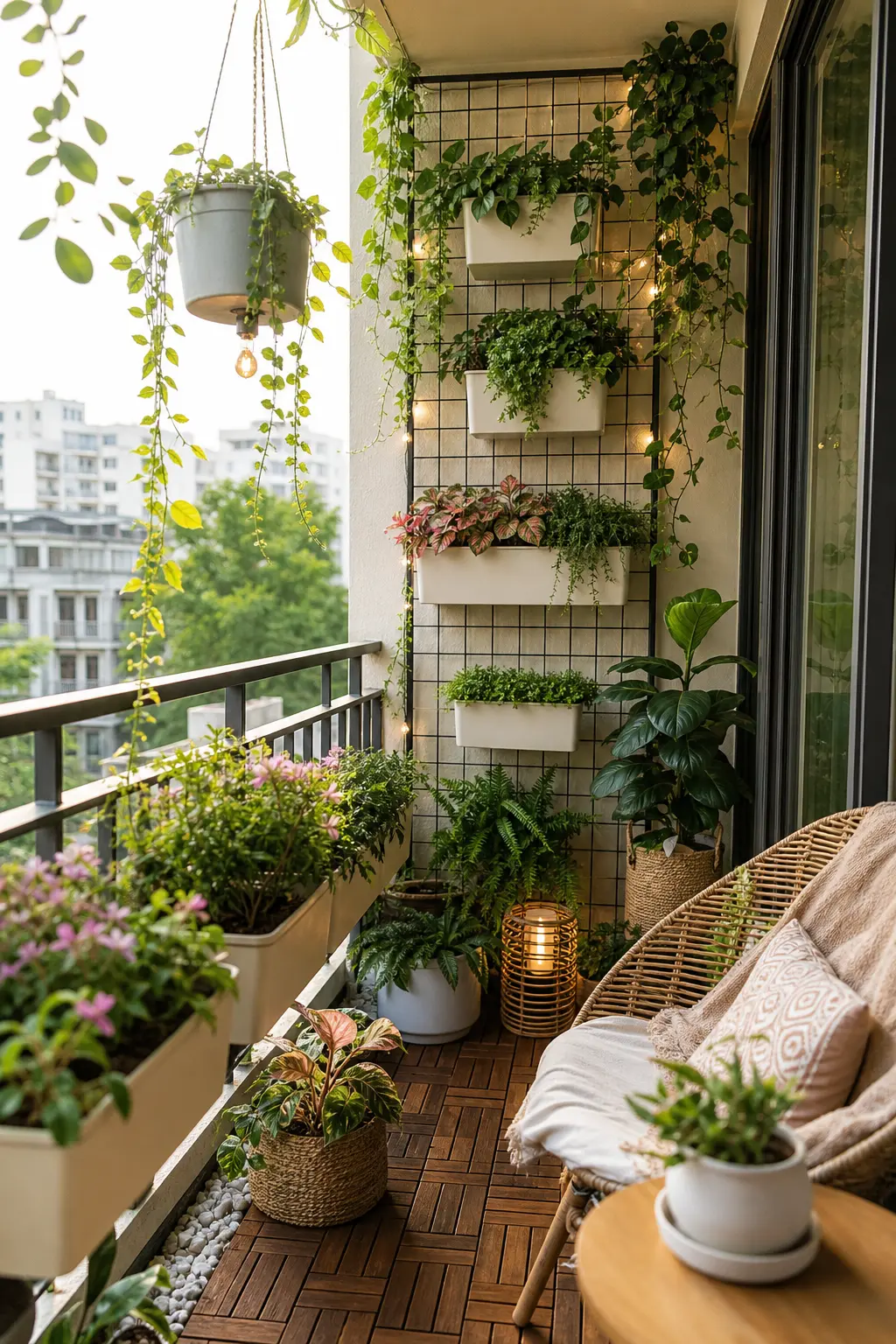
Vertical growing is the single biggest lever for making a small balcony feel like a full garden. Railing planters, wall mounted pockets, and hanging baskets all add planting area without using any floor space at all. A narrow balcony that can only fit three or four floor pots might support double that number once vertical space is in play.
Choosing the Right Vertical Systems
Railing planter boxes clip directly onto most standard railings and work well for trailing herbs or shallow rooted annuals. Wall mounted felt pocket planters suit shallow rooted plants like lettuce or strawberries if you’re leaning toward an edible garden. Hanging baskets work best for trailing plants like ivy or string of pearls, positioned where they won’t block the walking path.
4. Group Containers by Height and Texture, Not Just Type
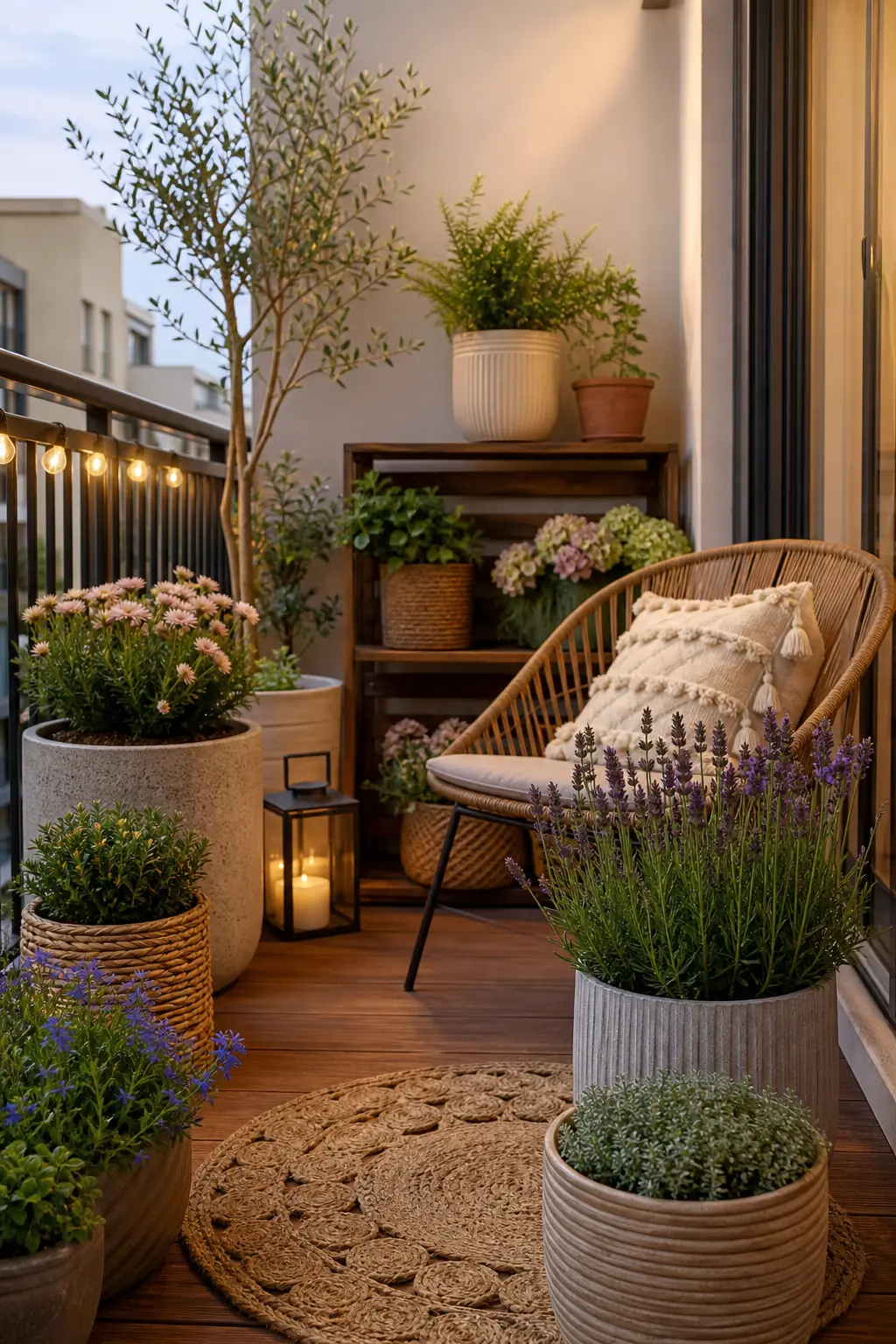
Clustering pots by height, tallest in back or center, shortest toward the front or edges, mimics how a landscaped garden bed is arranged. Mixing broad leafed plants next to fine, feathery ones adds textural contrast the way a real garden border does. A cluster of three to five pots grouped this way reads as a designed vignette rather than a random row of plants.
Leave small gaps of visible floor or rug between clusters rather than lining every pot edge to edge. Those gaps let each grouping stand out instead of blending into one solid mass of green. This kind of grouping is what most photographed balcony gardens are actually doing, even when it looks effortless.
5. Pick Containers That Match a Cohesive Material Story
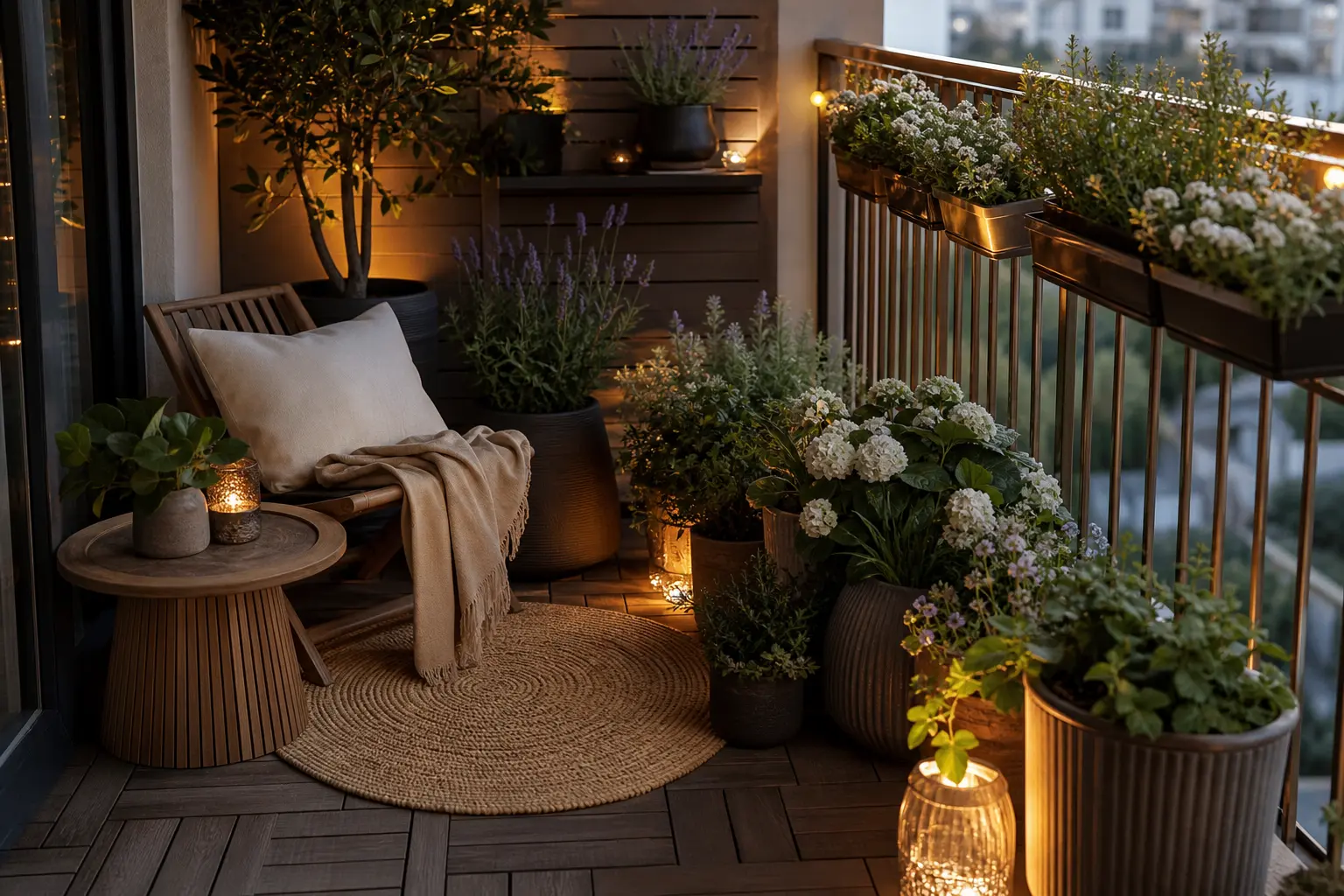
A garden made of ten completely different pot styles reads as cluttered no matter how good the plants look. Stick to one or two container materials, like terracotta and a matching stone grey concrete, so the container itself recedes and the plants become the focus. Varying pot size within that material story still gives you height variation without visual chaos.
Terracotta remains one of the most popular choices for an aesthetic garden look, since it ages naturally and pairs with almost any plant color. If budget is a concern, mix a few real terracotta pots with lightweight resin versions in the same color and finish. Guests rarely notice the material difference once everything is planted and the colors match.
6. Add a Trellis or Climbing Structure Along One Wall
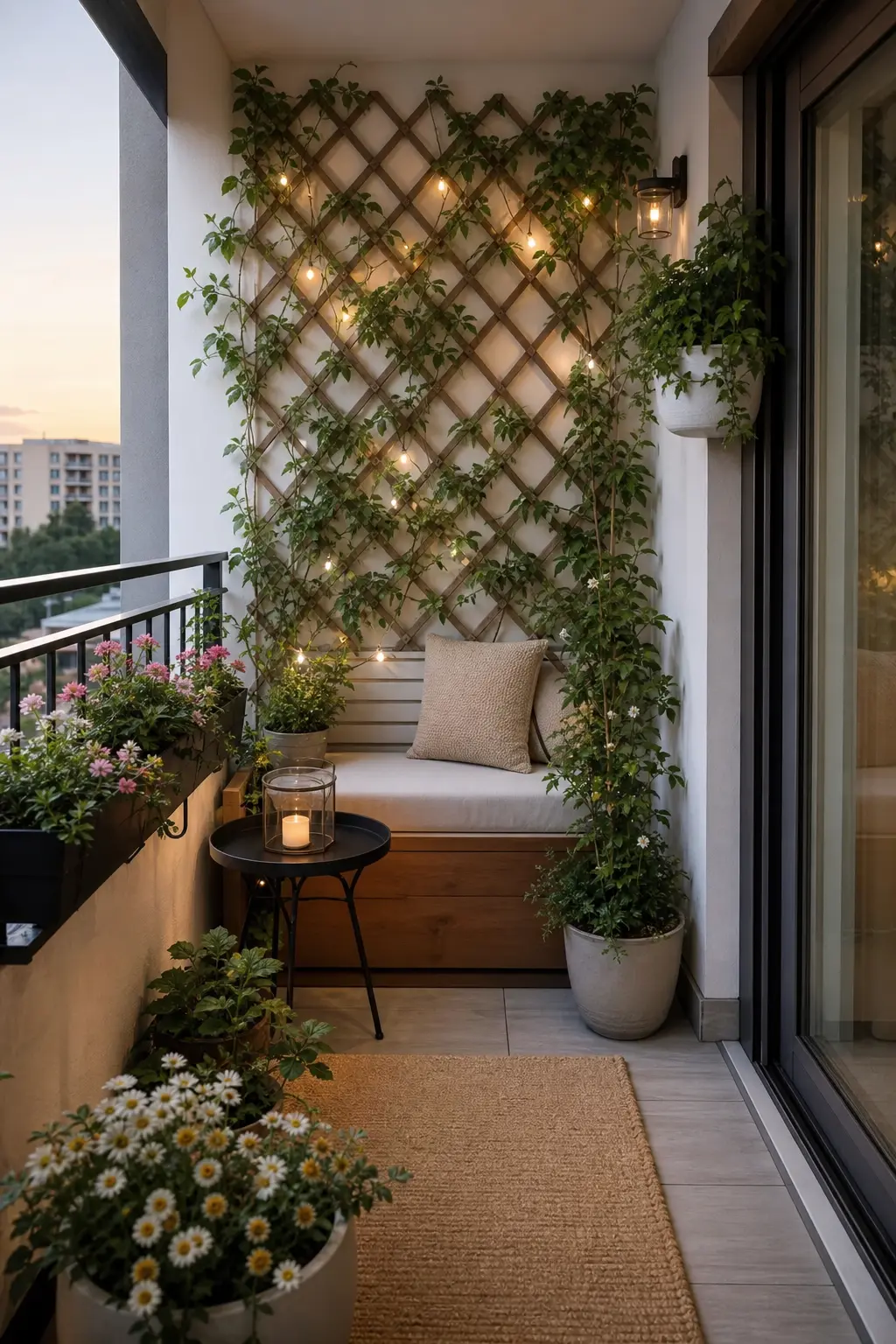
A trellis against one wall adds height and structure without taking up any floor footprint, which matters enormously on a small balcony. A climbing vine like jasmine, morning glory, or a flowering clematis trained up a trellis creates a living wall effect within a single growing season. This vertical greenery is often what makes a small balcony read as lush rather than just decorated.
Attach the trellis with removable brackets if you’re renting, so it comes down cleanly without wall damage. Give the climbing plant a full season before expecting significant coverage, since most vines need time to establish before they fill in. Patience here pays off with one of the most dramatic aesthetic upgrades available for a small space.
7. Include a Small Herb Section for Function and Fragrance
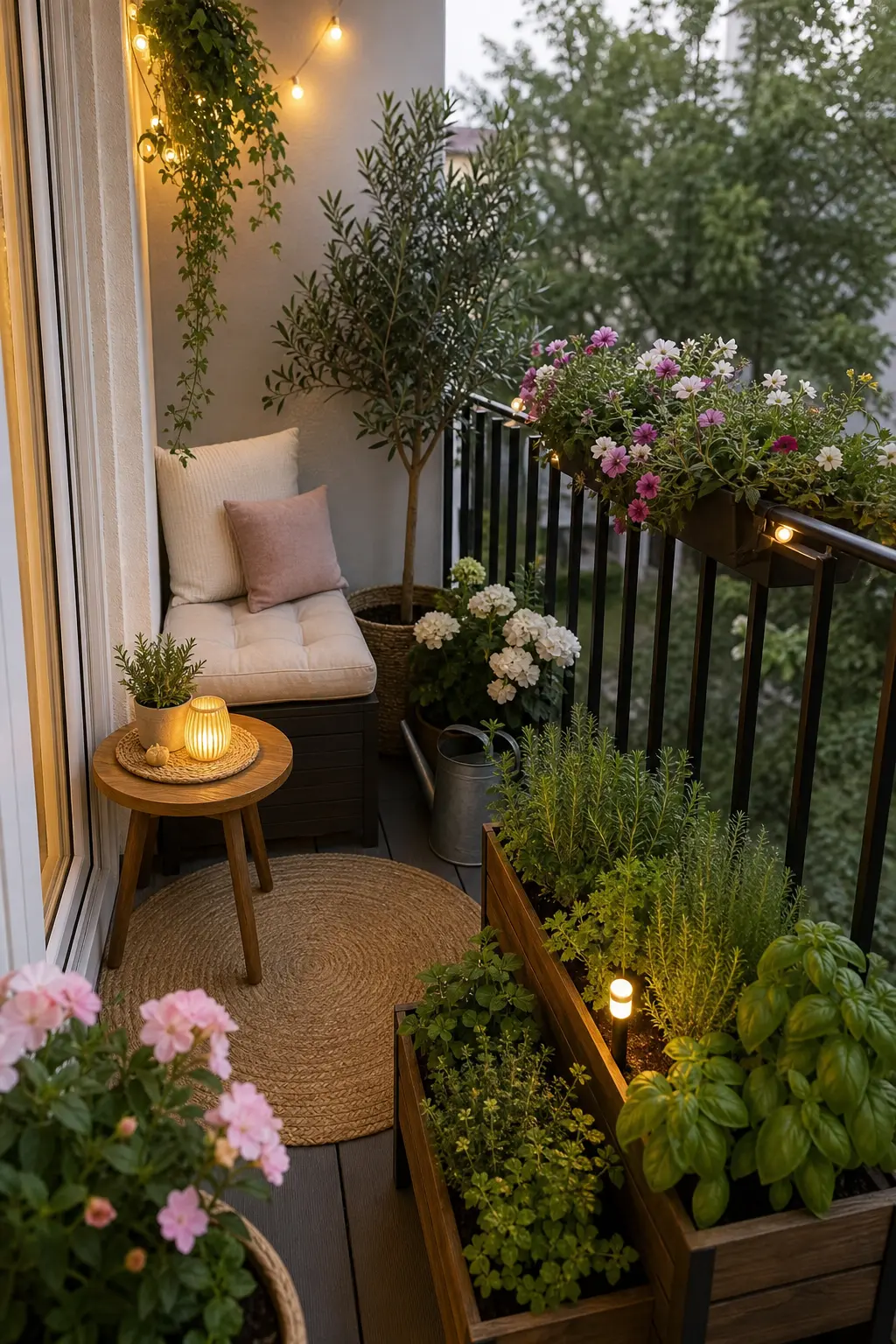
A cluster of herb pots, basil, mint, thyme, and rosemary among the most balcony friendly options, adds fragrance and function to an otherwise purely decorative garden. Brushing past rosemary or basil releases scent that makes the whole balcony feel more alive than silent foliage alone. Herbs also tend to be forgiving for beginners, tolerating some inconsistency in watering better than more delicate flowering plants.
Keep mint in its own container rather than planting it with other herbs, since it spreads aggressively and will crowd out neighboring roots given the chance. Group the herb pots near the kitchen door or wherever you’ll actually remember to snip from them while cooking. A herb section that’s convenient to use gets used far more than one tucked in a corner.
8. Fit in Seating Without Losing Garden Space
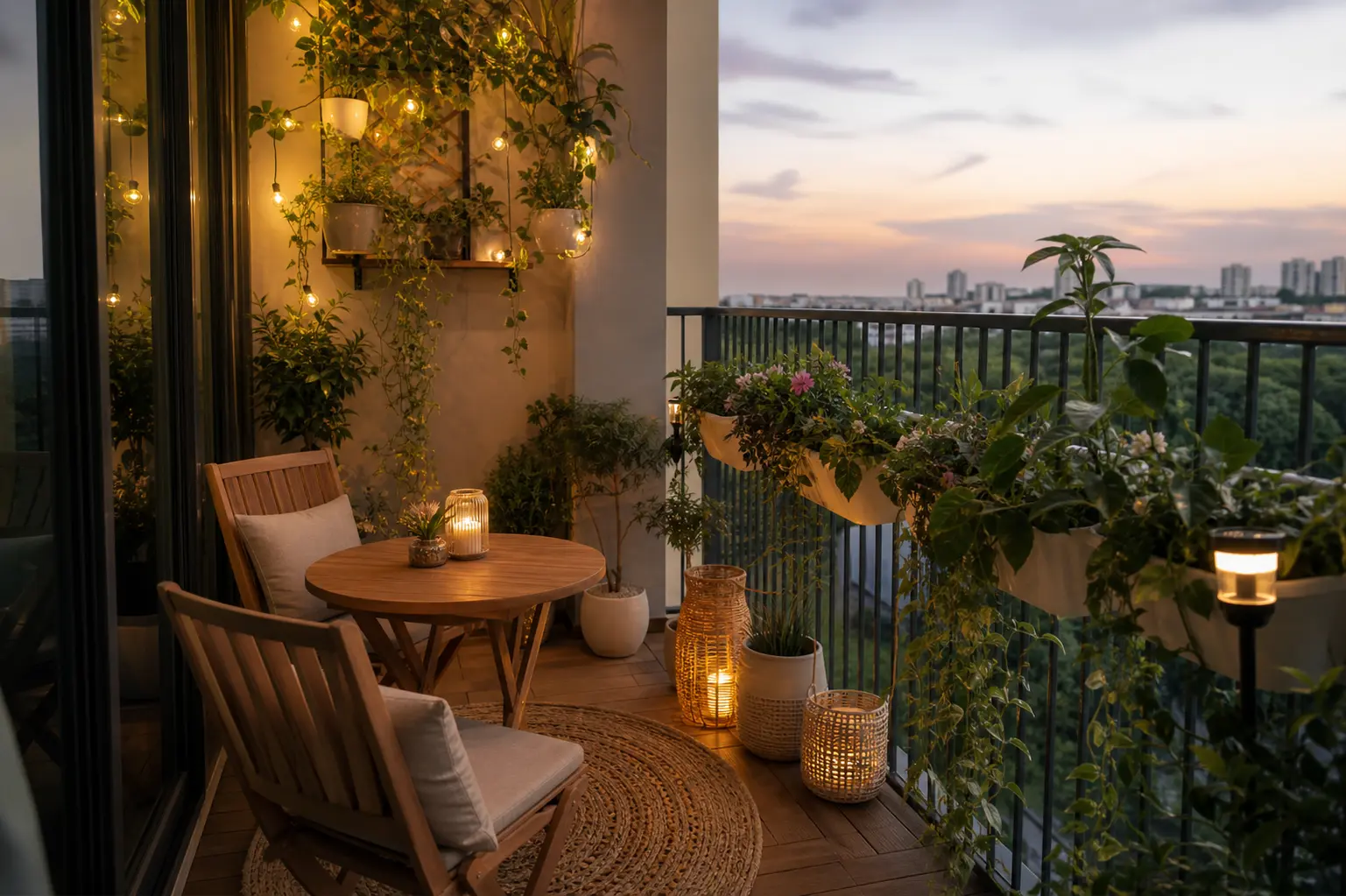
A garden without anywhere to sit and enjoy it misses half the point. A small bench or a single folding chair tucked at one end preserves most of the planting area while still giving you a spot to sit among the greenery. Look for a bench under 40 inches wide if the balcony is narrow, since anything larger starts to compete with the planting space.
Position the seat facing outward toward the view or toward the densest planting cluster, whichever gives the better payoff. A single cushion in a color pulled from your container palette ties the seating into the same visual story as the rest of the garden. Even one small seat changes a balcony from a display to a place you actually use.
9. Plan a Simple Watering System for Consistency
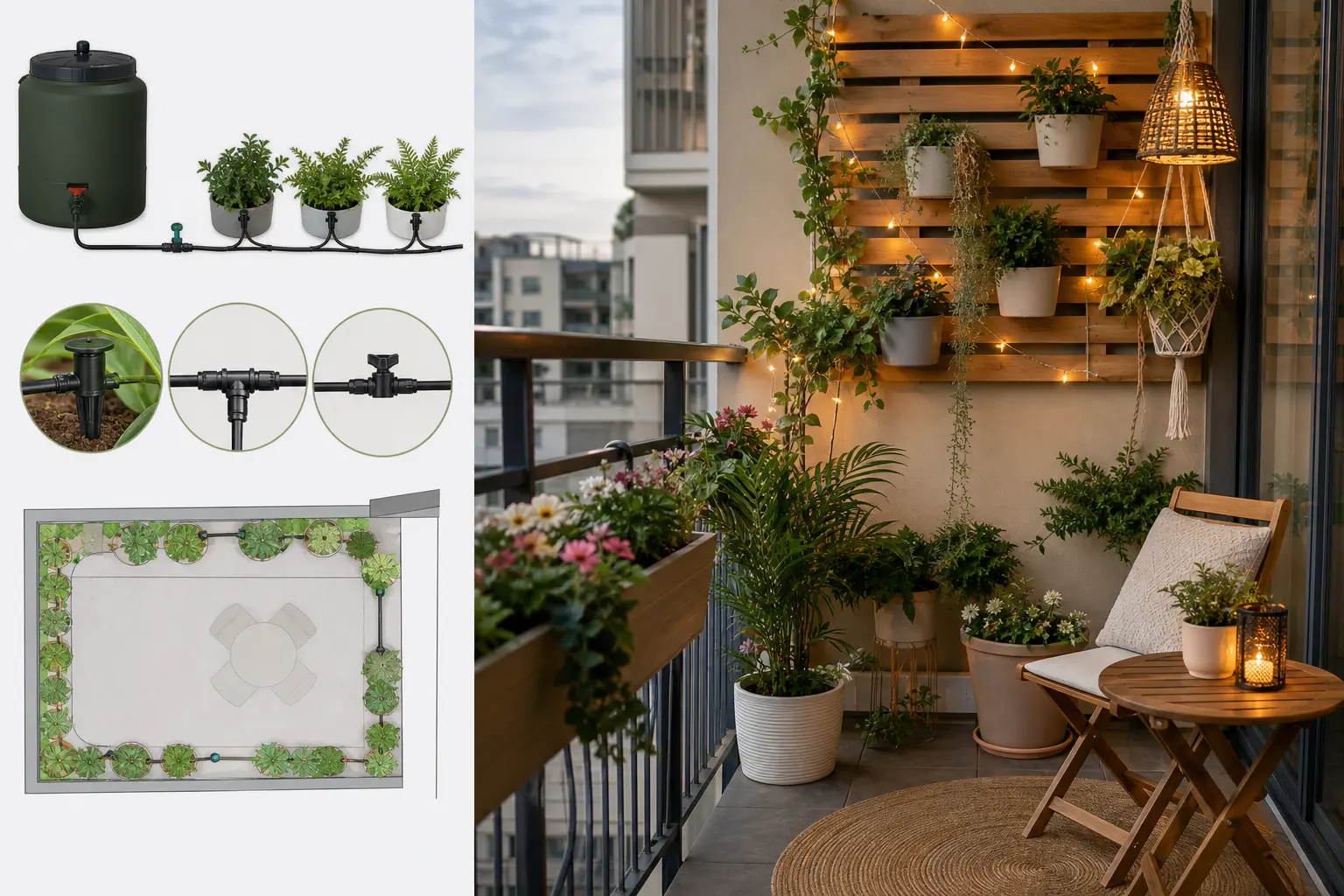
A balcony garden with a real variety of plants needs more consistent watering than a single pot ever did, and inconsistency is the most common reason a balcony garden fails within a season. A simple drip irrigation kit on a timer, sold as a kit for container gardens, keeps every pot watered evenly without daily manual effort. Even without a full drip system, grouping plants with similar water needs together makes manual watering far more manageable.
Self watering pots with a built in reservoir are a good middle ground for anyone not ready to install drip irrigation. They hold a few days of water in a base reservoir, which helps on the days watering gets forgotten. This single system decision often determines whether a balcony garden thrives past its first month or fades by midsummer.
10. Rotate Seasonal Color Without Redoing the Whole Garden
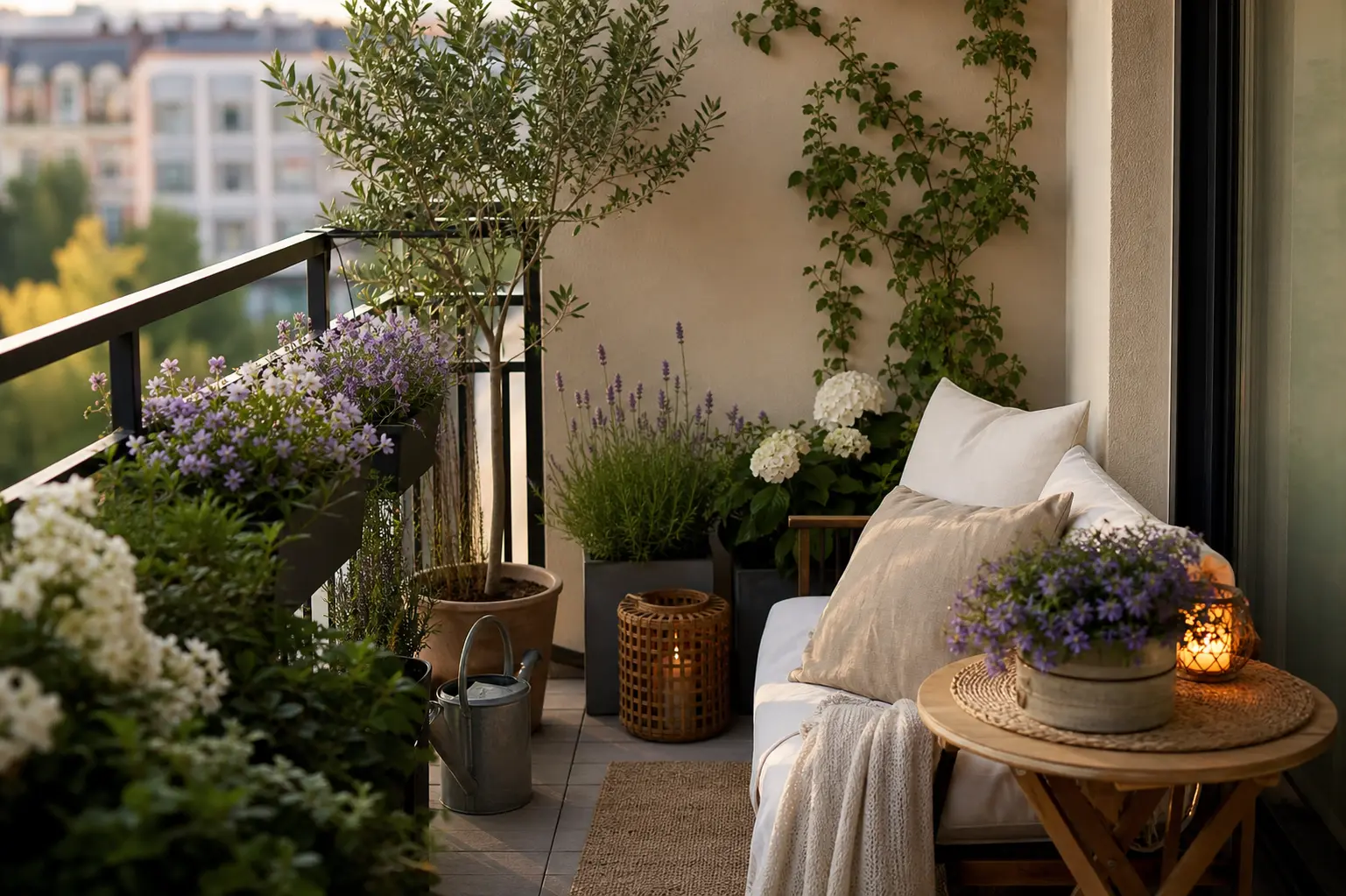
A garden that looks the same in every season starts to feel static, but replanting the entire balcony every few months isn’t realistic for most people. Keep your structural plants, the citrus tree, the rosemary bush, the trailing ivy, as permanent anchors that stay in place year round. Swap only the flowering annuals in two or three pots each season for an easy refresh without touching the rest of the layout.
Pansies and violas work well for cooler months, while petunias and marigolds carry a balcony garden through the warmer season. Keep those seasonal pots in the same size and material as your permanent containers so the swap doesn’t disrupt the overall look. This small, contained rotation is what keeps a balcony garden feeling current without the cost or effort of redesigning it from scratch.
Mistakes to Avoid
- Buying plants purely based on nursery display appeal instead of planning for height and texture variety
- Skipping vertical growing options and only using floor space, which limits a small balcony unnecessarily
- Mixing too many container materials and colors, which makes the garden look cluttered
- Planting mint alongside other herbs in the same container, letting it crowd out its neighbors
- Forgetting a consistent watering plan, which is the most common reason a balcony garden fails
- Adding oversized seating that eats up most of the available planting space
Frequently Asked Questions
Can a narrow balcony actually support a real garden feel? Yes, largely through vertical growing methods like railing planters, wall pockets, and trellises, which multiply planting space without using floor area.
What are the easiest plants for a beginner balcony garden? Herbs like basil, mint, and rosemary, along with trailing plants like pothos or ivy, tend to be the most forgiving for inconsistent watering and lower maintenance schedules.
Do I need drip irrigation for a small balcony garden? Not necessarily, though a simple timer based drip kit or self watering pots make consistent watering far easier once you have more than a handful of containers.
How do I keep a balcony garden from looking cluttered? Stick to one or two container materials and colors, group plants by height and texture, and leave small visible gaps between clusters rather than lining pots edge to edge.
What climbing plants work well on a balcony trellis? Jasmine, morning glory, and clematis are commonly used for balcony trellises, though check your specific climate and sun exposure before choosing a variety.
Final Thoughts
An aesthetic balcony garden comes down to treating a small space with the same intention as a full garden bed: varied plant heights, a cohesive container story, and vertical growing to multiply what little floor space you have. Start with a rough sketch and a consistent watering plan, since those two decisions shape whether the garden thrives past the first season. Add plants in clusters rather than all at once, stepping back after each grouping to check the balance before moving to the next.