10 Modern Luxury Modular Kitchen Design Ideas with LED Lighting | Contemporary Kitchen Interior
A modular kitchen can have excellent cabinets and still feel underwhelming once the sun goes down, because most kitchens rely on a single overhead light doing all the work. If you’re looking into luxury modular kitchen design with LED lighting because your space feels flat at night despite good bones during the day, lighting layers are usually the missing piece. This article covers ten ways to bring a genuinely contemporary, high end feel to a modular kitchen using LED lighting alongside cabinet and material choices.
1. What Defines a Truly Luxury Modular Kitchen Design
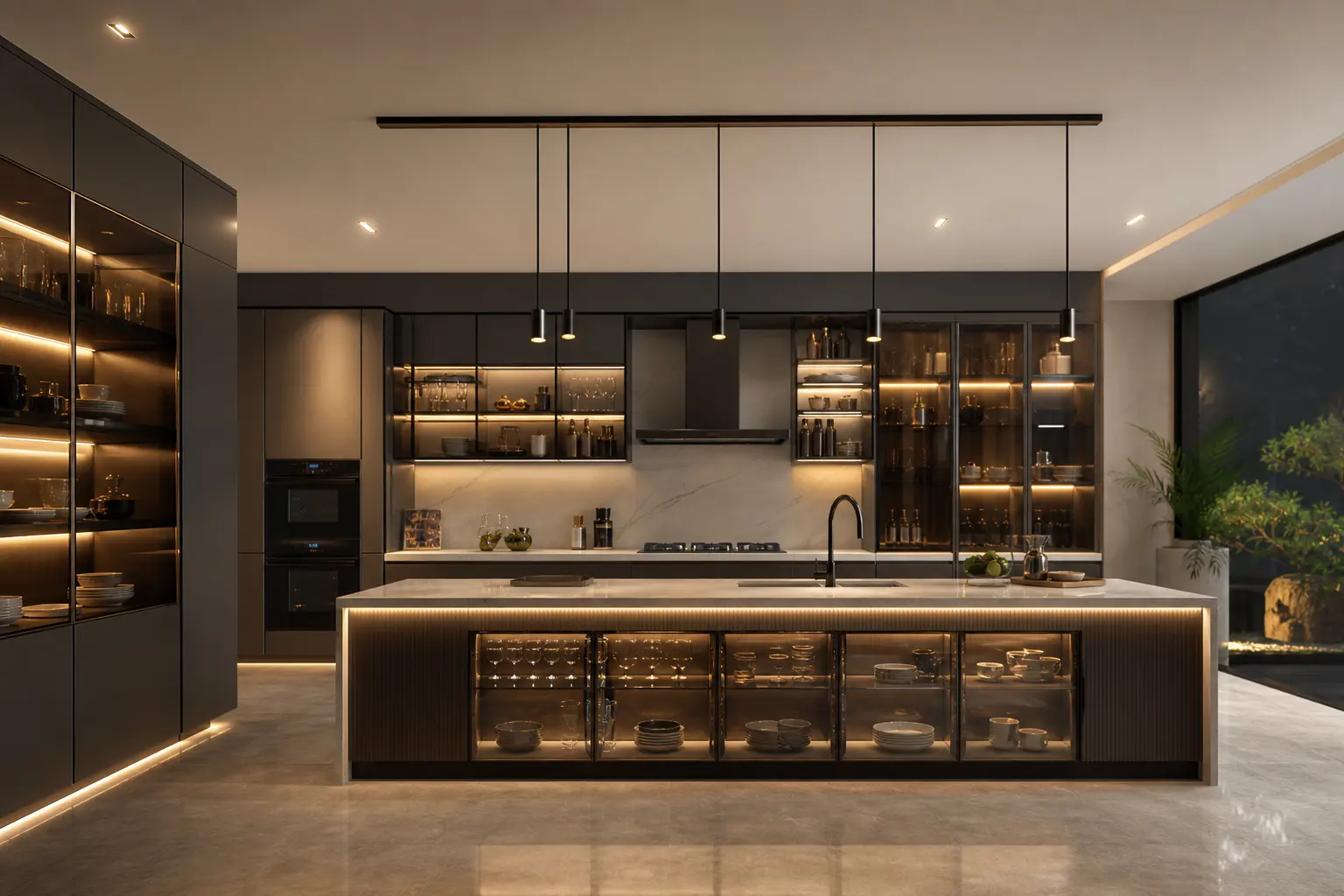
A modular kitchen is built from standardized cabinet units that fit together in a planned layout, which makes it efficient to install and easy to customize. The luxury feel comes from how those modules are finished and lit, not from the modular system itself.
The details that separate a builder grade modular kitchen from a luxury one usually include handleless cabinet fronts, layered lighting instead of a single ceiling fixture, and consistent, high quality finishes across every visible surface. None of these require a fully custom kitchen, which is part of why modular systems have become such a popular way to achieve a luxury look at a more accessible price point.
2. Choosing LED Lighting Types for a Modular Kitchen Layout
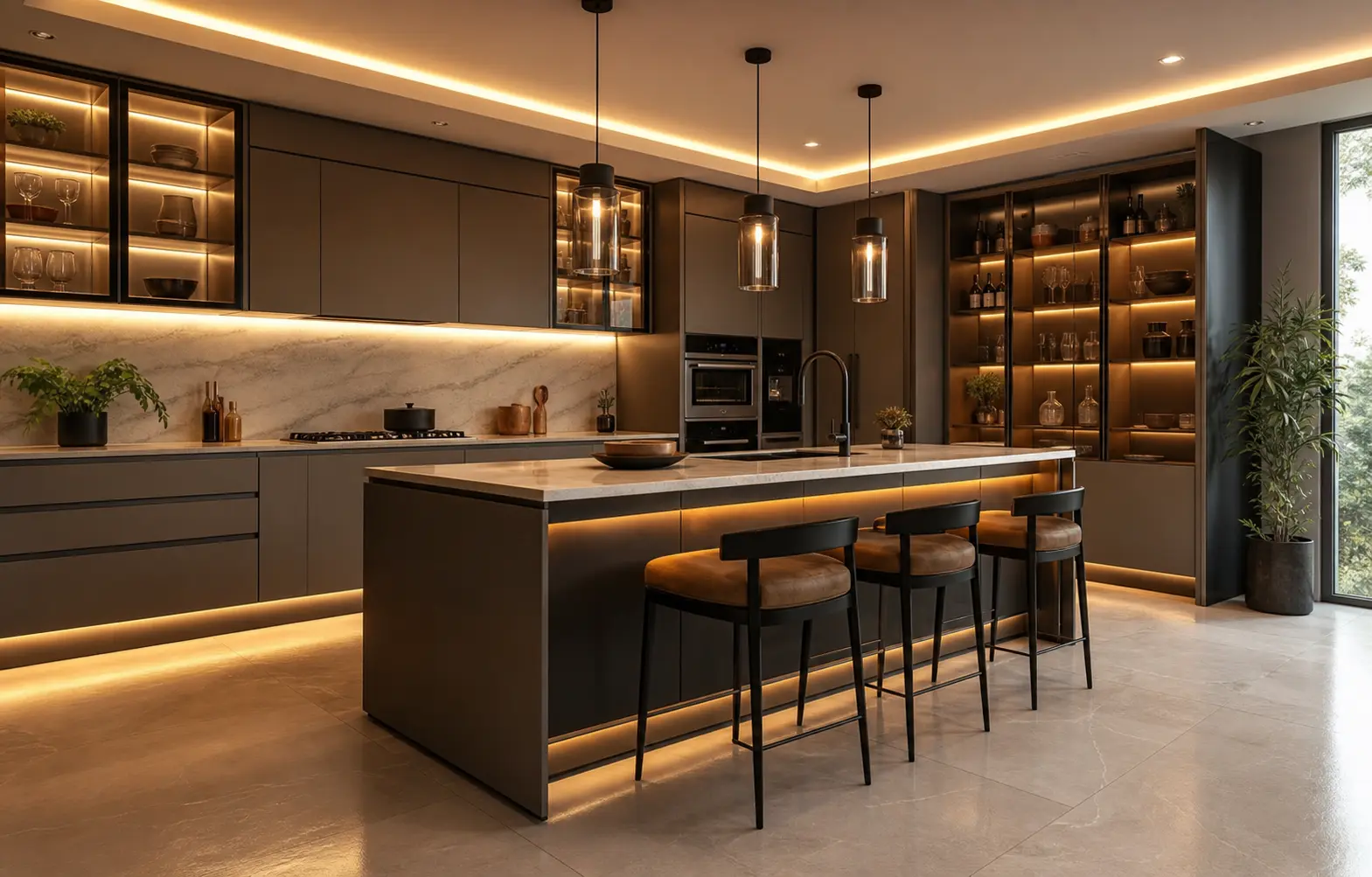
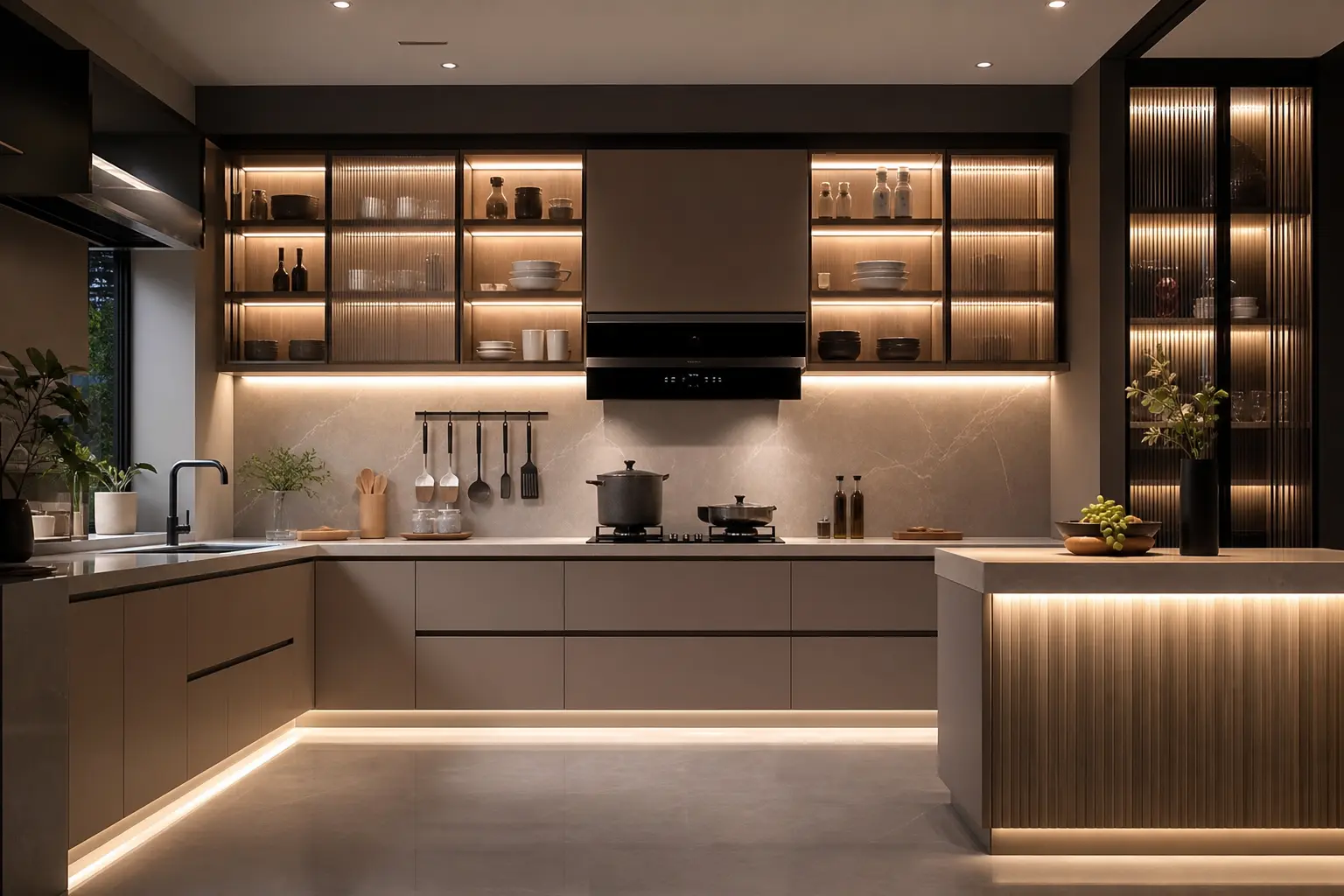
A kitchen needs at least three distinct lighting layers to feel properly designed rather than flat. Task lighting, usually under cabinet LED strips, illuminates the actual work surfaces. Ambient lighting, from ceiling fixtures or recessed downlights, fills the general room with usable light. Accent lighting, like toe kick strips or interior cabinet lighting, adds depth and visual interest without contributing much practical brightness.
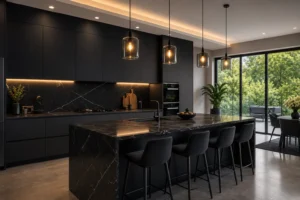
Skipping any one of these three layers is usually what makes a kitchen feel unfinished at night. A kitchen with only ceiling lights, and no under cabinet task lighting, tends to leave the countertop in shadow from the cook’s own body blocking the overhead light source.
3. Under Cabinet LED Placement and Color Temperature
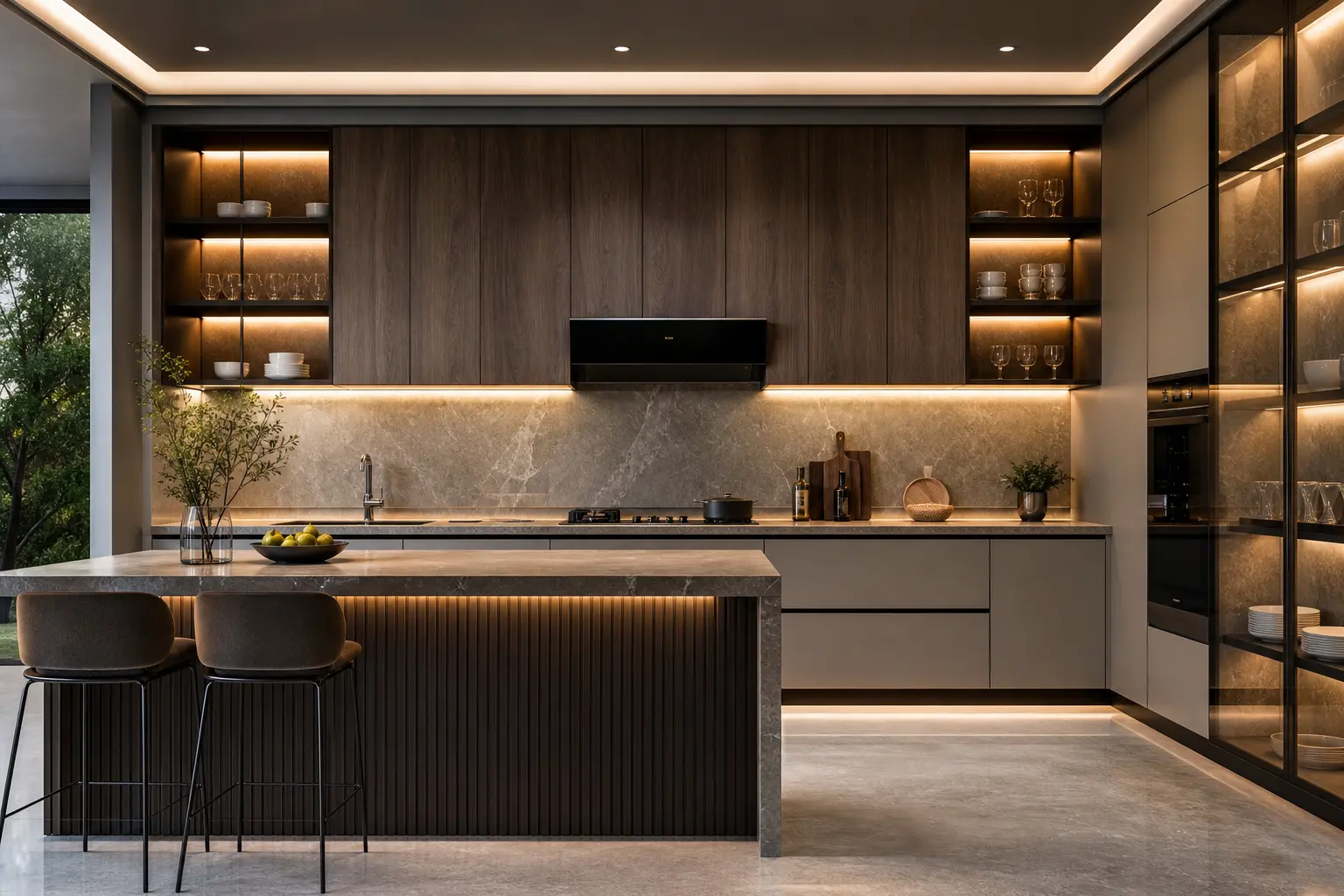
Under cabinet LED strips should sit as close to the front edge of the cabinet as possible, angled slightly to spread light evenly across the counter rather than in a single hot line. Strips placed too far back toward the wall create uneven lighting, bright near the backsplash and dim near the counter edge where you’re actually working.
Color temperature matters just as much as placement. For a warm, luxury feel, LED strips in the 2700K to 3000K range work best, especially against wood or warm toned cabinetry. Cooler temperatures, above 4000K, suit very white, minimalist kitchens better but can feel sterile against warmer material palettes.
Continuous Strips vs Puck Lights
Continuous LED strips give even, shadow free light across the entire counter run. Individual puck lights are easier to install but create visible pools of brighter and dimmer light between fixtures. For a genuinely polished look, a continuous strip is almost always worth the small extra cost over puck lighting.
4. Modular Cabinet Finishes That Read as Contemporary
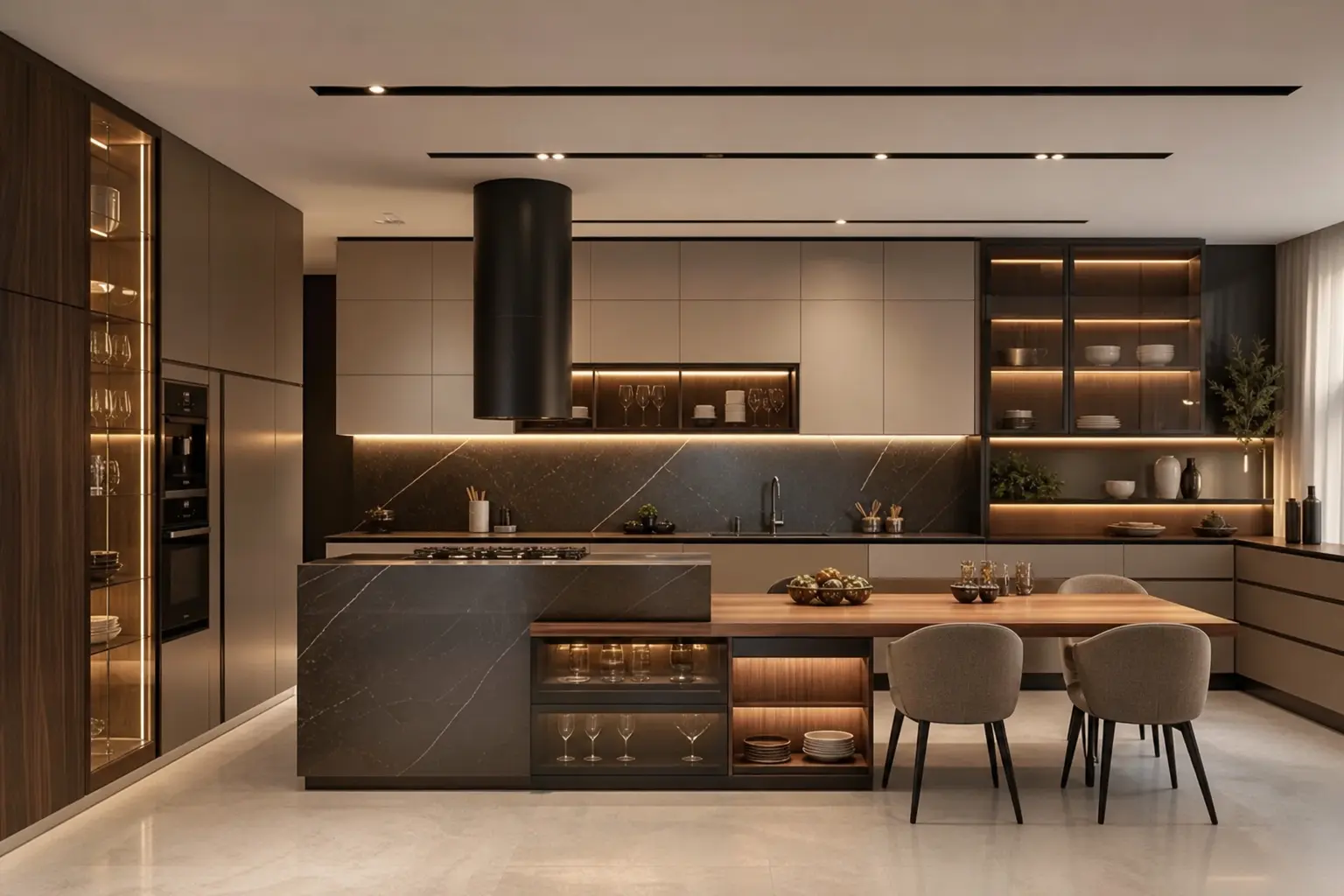
Matte finishes have largely overtaken high gloss as the dominant contemporary cabinet choice, since matte surfaces hide fingerprints and light scratches far better while still looking sleek. High gloss lacquer cabinets can look striking in photos but show every smudge in daily use, which matters a lot in a working kitchen.
Textured finishes, like a subtle wood grain laminate or a soft touch matte lacquer, add tactile depth that a flat, single tone finish can’t. Neutral tones, warm white, soft gray, and deep charcoal, remain the most common contemporary choices, since they pair easily with almost any countertop or backsplash material.
5. Island and Ceiling Lighting for a Layered Look
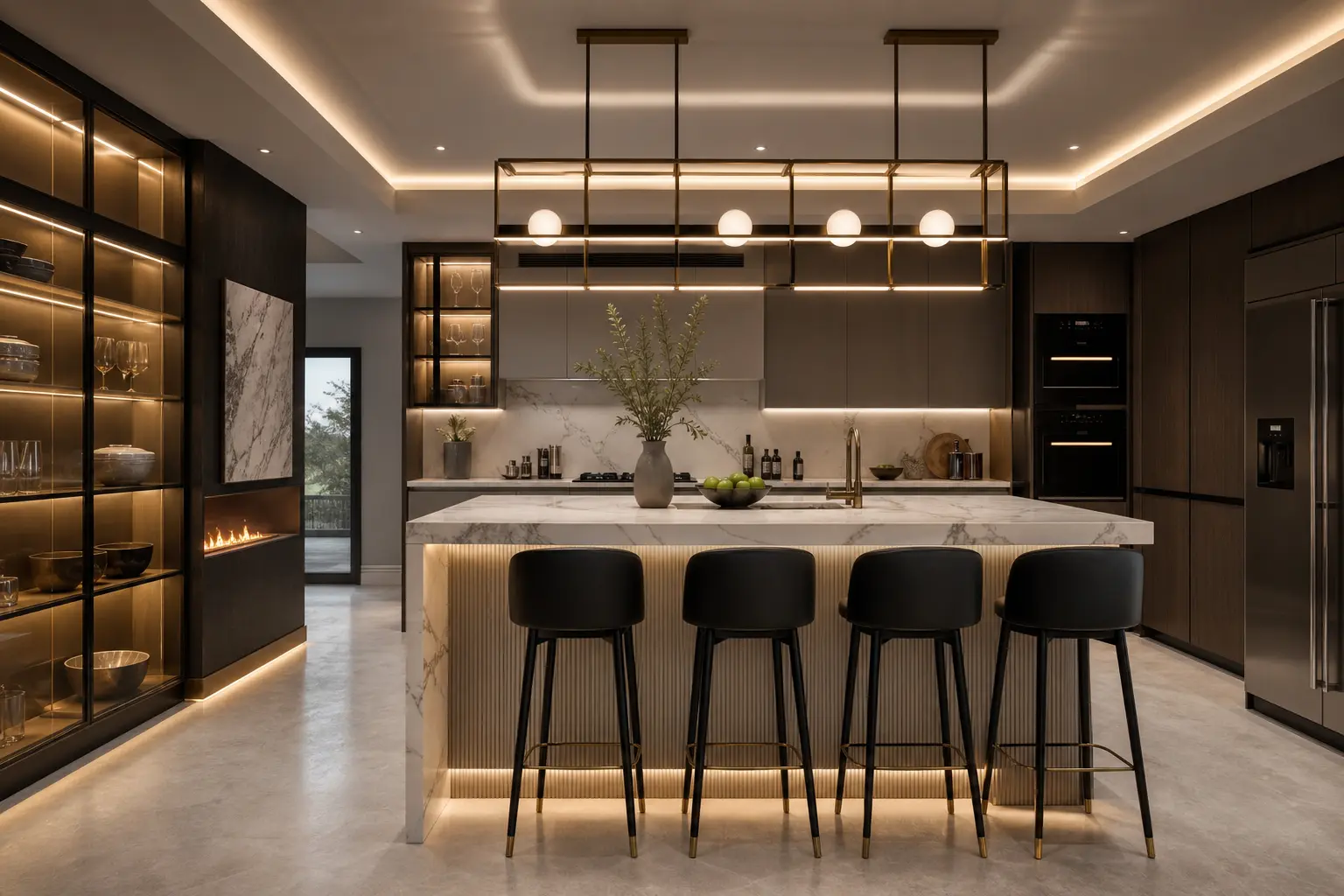
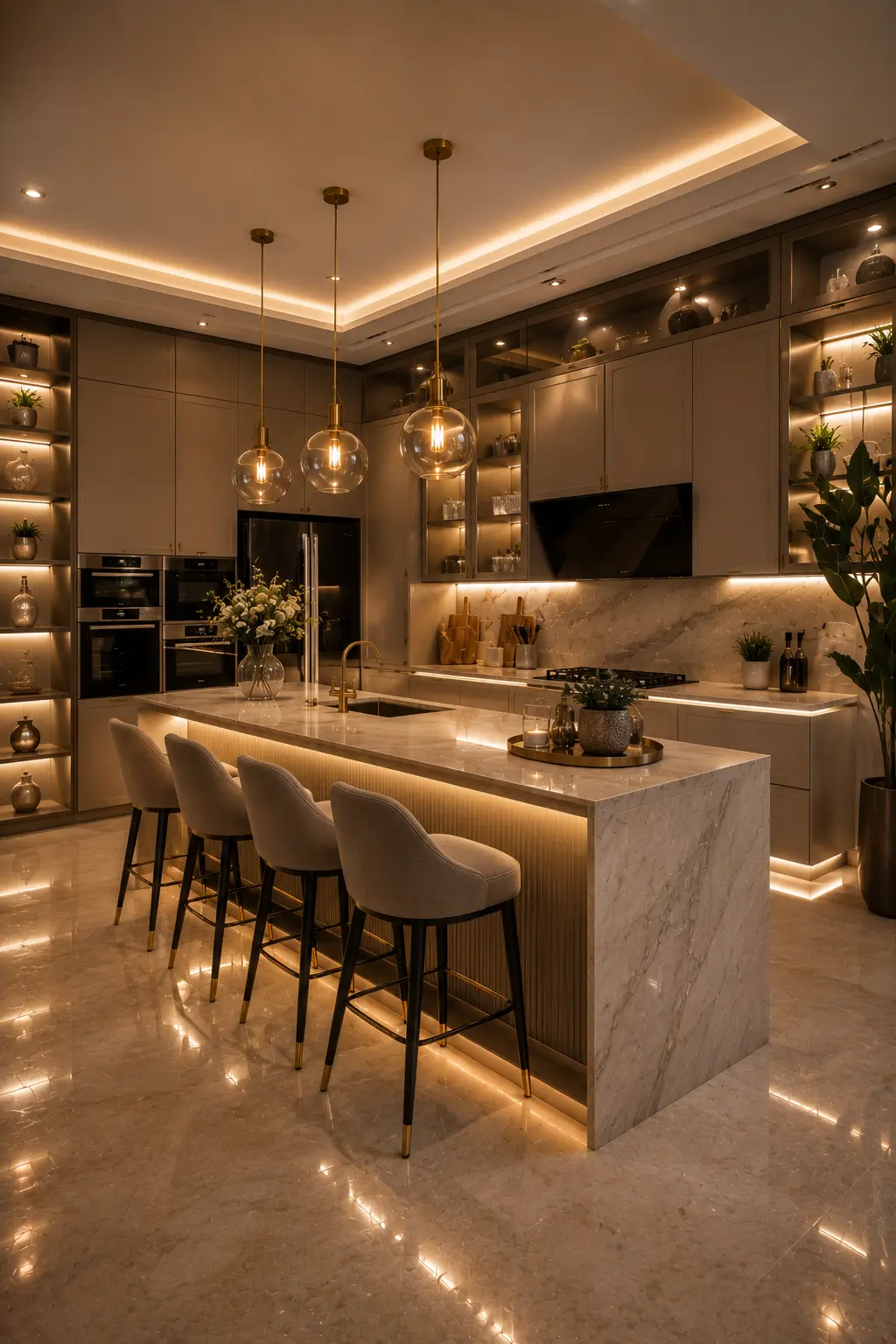
An island benefits from its own dedicated lighting layer, separate from general ceiling fixtures. Pendant lights hung above an island, typically with the bottom of the fixture sitting 28 to 34 inches above the counter surface, add both task lighting and a strong visual focal point.
Recessed ceiling downlights placed evenly across the room provide the ambient base layer that everything else builds on. Spacing recessed lights roughly 4 to 6 feet apart, depending on ceiling height, generally avoids both harsh shadows and uneven bright spots across the room.
6. Handleless Cabinet Systems and Why They Feel Luxury
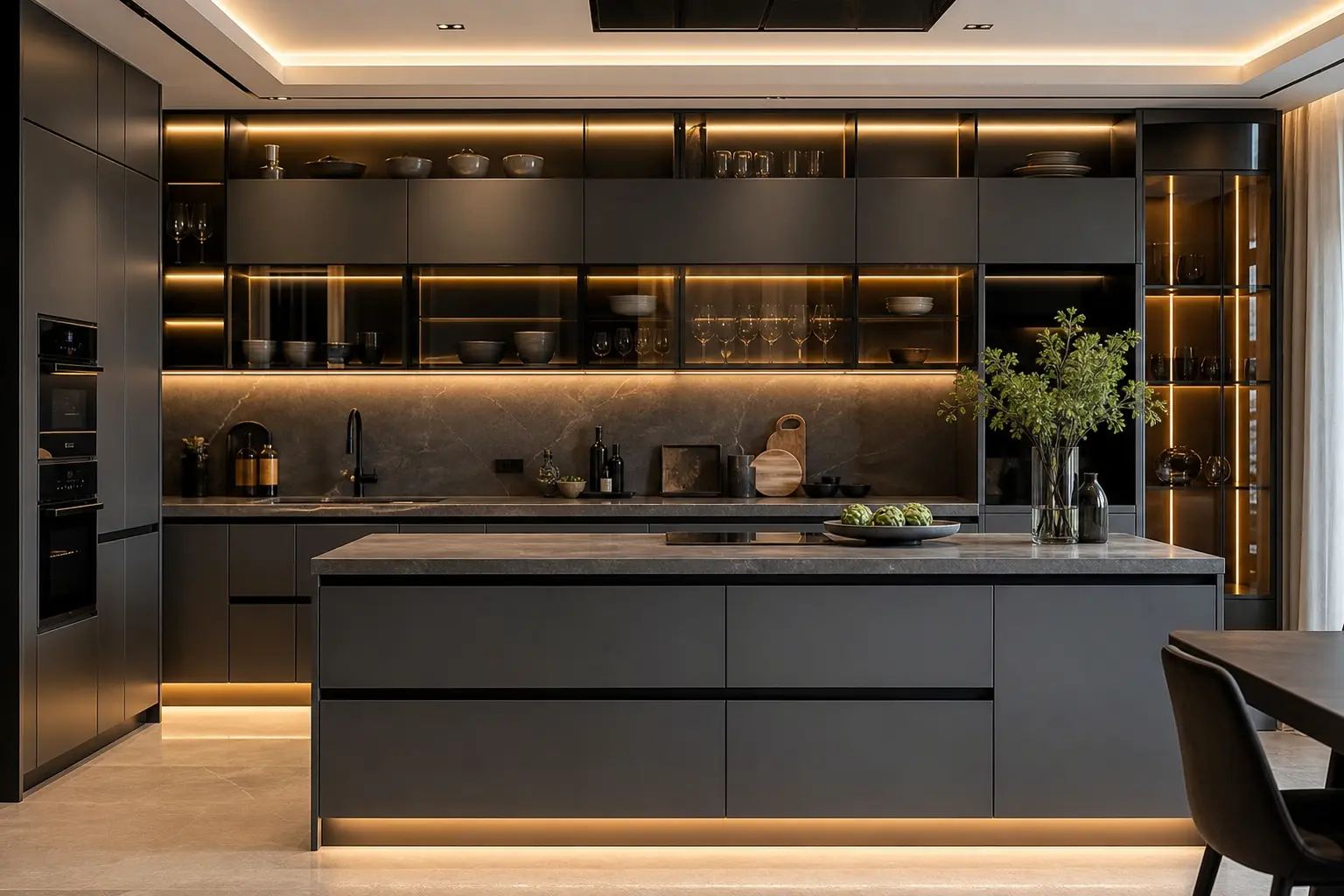
Handleless cabinets use a push to open mechanism or a recessed grip channel instead of visible knobs and pulls. The result is a cleaner, more streamlined cabinet face, which is a big part of why handleless systems have become closely associated with a luxury, contemporary look.
Beyond the visual effect, handleless systems are also genuinely more practical in a kitchen, since there are no protruding handles to catch on clothing or collect grease and grime. The tradeoff is usually a slightly higher install cost, since the push to open mechanisms and recessed channels require more precise cabinet manufacturing than standard hardware.
7. Countertop and Backsplash Materials for a Modern Kitchen
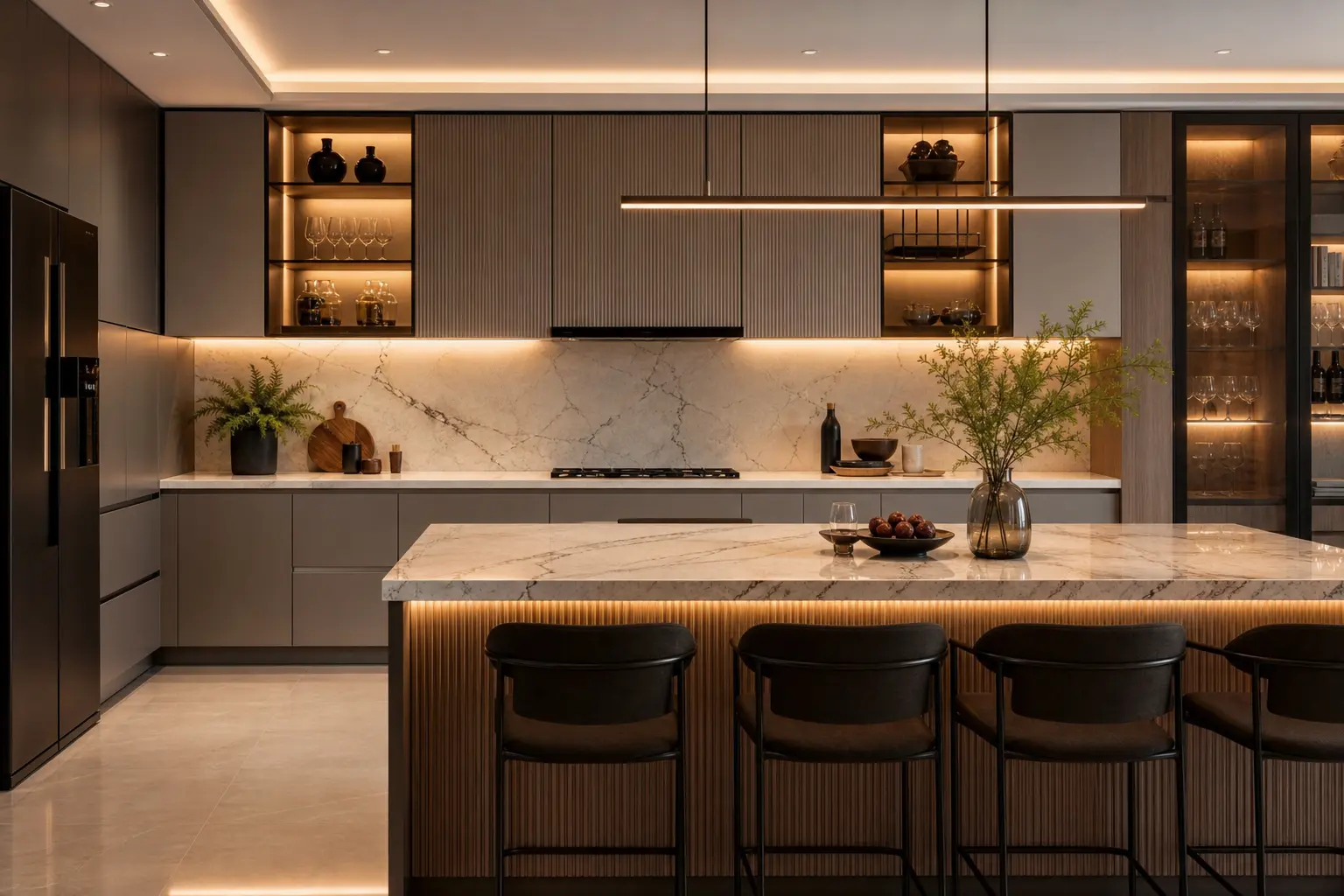
Quartz remains one of the most practical luxury countertop choices, since it combines a natural stone look with better stain and scratch resistance than most natural stone options. Large format porcelain slabs have also grown in popularity, offering a similar high end look with strong heat and scratch resistance.
For backsplashes, a full height slab backsplash, running the countertop material all the way up to the underside of the upper cabinets with no grout lines, has become a signature feature of higher end modular kitchens. It’s a more expensive choice than standard tile, but it reads as noticeably more polished and continuous.
8. Smart LED Controls and Dimming for Everyday Use
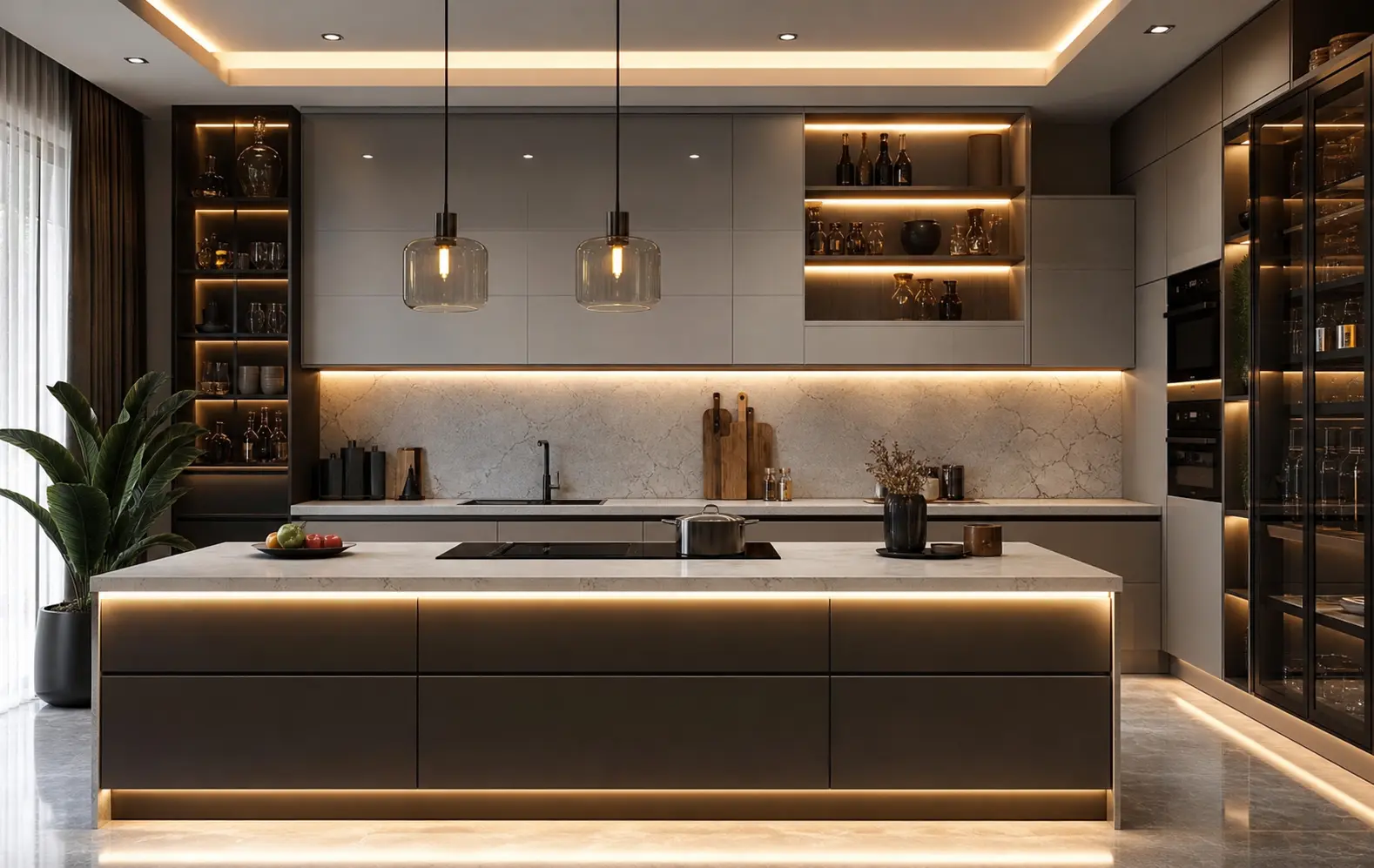
Dimmable LED lighting, ideally controlled through a smart switch or app, lets a kitchen shift from bright task lighting during meal prep to a softer ambient glow for evening use. This flexibility is part of what makes layered lighting feel genuinely luxury rather than just decorative.
Warm dimming LED strips, which shift toward a warmer color temperature as they’re dimmed down, mimic the behavior of old incandescent bulbs and tend to look more natural at low brightness than standard LED strips, which can look slightly cold even when dimmed.
9. Small Kitchen Adaptations for Modular LED Lighting Design
Smaller kitchens still benefit from layered lighting, but the fixtures need to scale down accordingly. A single, slightly smaller pendant over a compact island or peninsula still provides a focal point without overwhelming the space the way an oversized fixture would.
Under cabinet lighting matters even more in a small kitchen, since there’s often less natural light reaching the counters in a compact layout. Reflective surfaces, like a light colored quartz countertop or a glossy backsplash tile, also help bounce available light around a smaller room more effectively than matte, dark surfaces would.
10. Budget Planning for a Luxury Modular Kitchen with LED Lighting
Costs vary significantly based on cabinet finish, hardware system, and lighting complexity. A modular kitchen upgrade focused mainly on adding layered LED lighting and updating cabinet fronts to a handleless system can run somewhere between 5000 and 15000 dollars for an average sized kitchen.
A full luxury modular kitchen installation, including quartz or porcelain countertops, a slab backsplash, and a complete smart LED lighting system, tends to run considerably higher, often somewhere between 20000 and 50000 dollars depending on region, materials, and kitchen size. Phasing the project, starting with lighting and hardware before a full cabinet replacement, is a common way to spread the cost over time.
Mistakes to Avoid
- Relying on a single ceiling fixture instead of layering task, ambient, and accent lighting
- Placing under cabinet LED strips too far back, leaving the counter edge dim
- Choosing high gloss cabinet finishes that show every fingerprint and smudge
- Skipping dimmable controls, which limits the kitchen to one fixed brightness level
- Using puck lights instead of a continuous strip and ending up with uneven counter lighting
- Underestimating how much a full height slab backsplash adds to material and labor cost
Frequently Asked Questions
What’s the best LED color temperature for a luxury kitchen feel? Something in the 2700K to 3000K range generally reads as warm and upscale, especially paired with wood tones or warm neutral cabinet finishes. Very white, minimalist kitchens can lean slightly cooler, closer to 3500K.
Are handleless cabinets more expensive than standard cabinets? Yes, typically. The push to open mechanisms and precise channel routing needed for a handleless system usually add a moderate premium over standard cabinets with hardware, though the exact difference depends on the manufacturer.
Do I need an electrician to install kitchen LED lighting? Plug in, low voltage LED strip kits can often be installed without an electrician. Hardwired lighting connected to a dedicated switch or dimmer, especially anything tied into existing kitchen wiring, should be installed or at least connected by a licensed electrician.
What’s the difference between task lighting and accent lighting in a kitchen? Task lighting, like under cabinet strips, is meant to light up work surfaces for cooking and prep. Accent lighting, like toe kick strips or interior cabinet lights, adds visual depth and mood rather than practical brightness.
Is a full height slab backsplash worth the extra cost? It depends on your priorities. It creates a noticeably more seamless, high end look with no grout lines to maintain, but it costs more upfront than standard tile and can be more difficult to replace if damaged.
Conclusion
A luxury modular kitchen design with LED lighting comes down to layering, not just picking expensive materials. Task, ambient, and accent lighting working together do more for the finished feel than any single splurge item. Pair that layered lighting with a matte, handleless cabinet system and a warm color temperature, and even a standard modular kitchen layout starts to feel genuinely contemporary and high end. Start with the lighting plan before finalizing cabinet and material choices, since the lighting layout often affects where cabinets, islands, and outlets end up.