10 Cozy Scandinavian Dining Room Decor Ideas with Round Wooden Tables | Warm & Minimalist Inspiration
A rectangular table in a formal arrangement can make even a small gathering feel stiff and distant. If you’re considering a round wooden table for a Scandinavian dining room, the appeal goes beyond looks. A round shape naturally encourages conversation, since everyone sits at roughly the same distance from each other, and it pairs especially well with the warm, understated character of Scandinavian design. This article covers ten ways to build a cozy, minimalist dining room around a round wooden table, with practical detail on wood tone, chairs, and cost.
1. Why a Round Table Suits a Scandinavian Dining Room
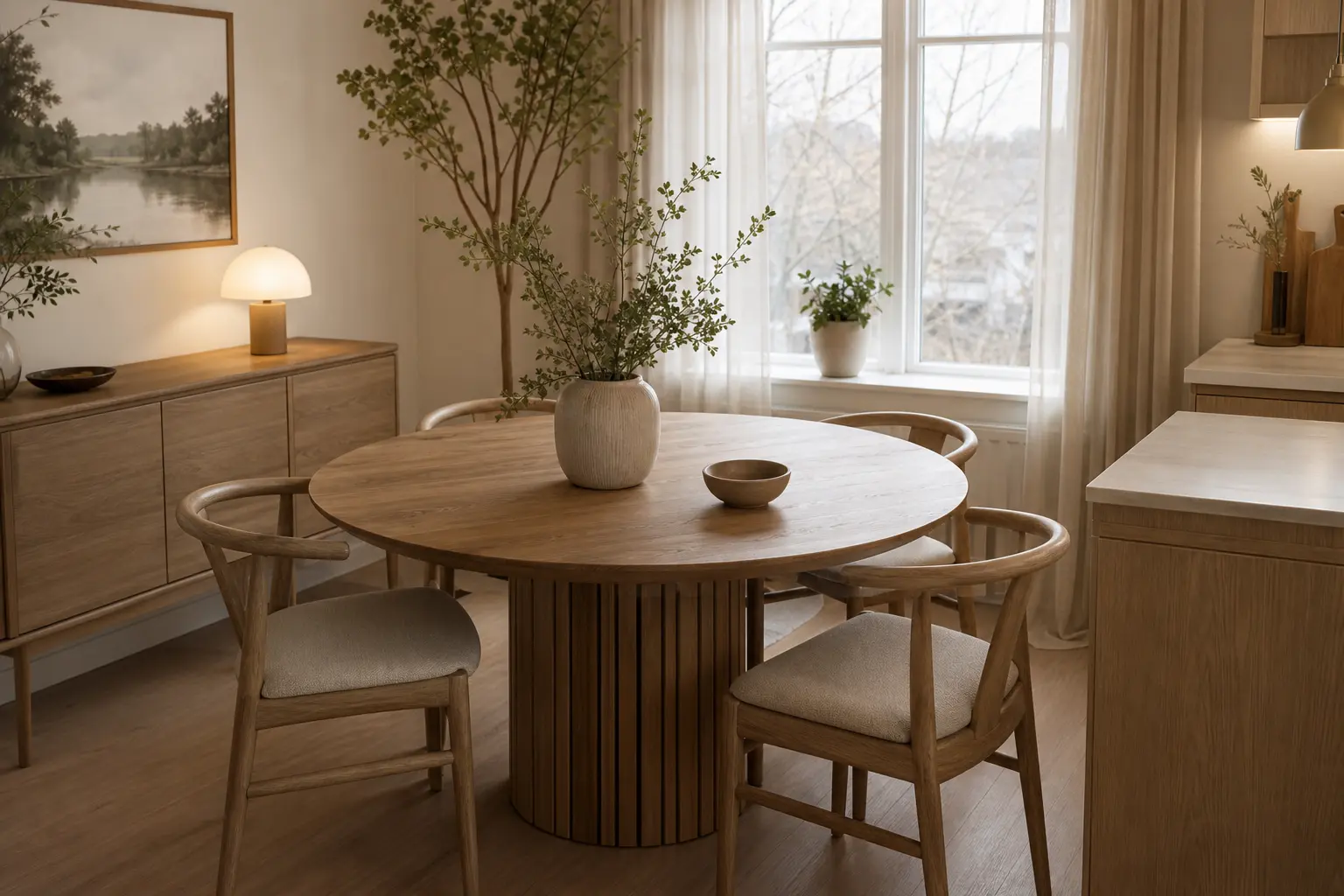
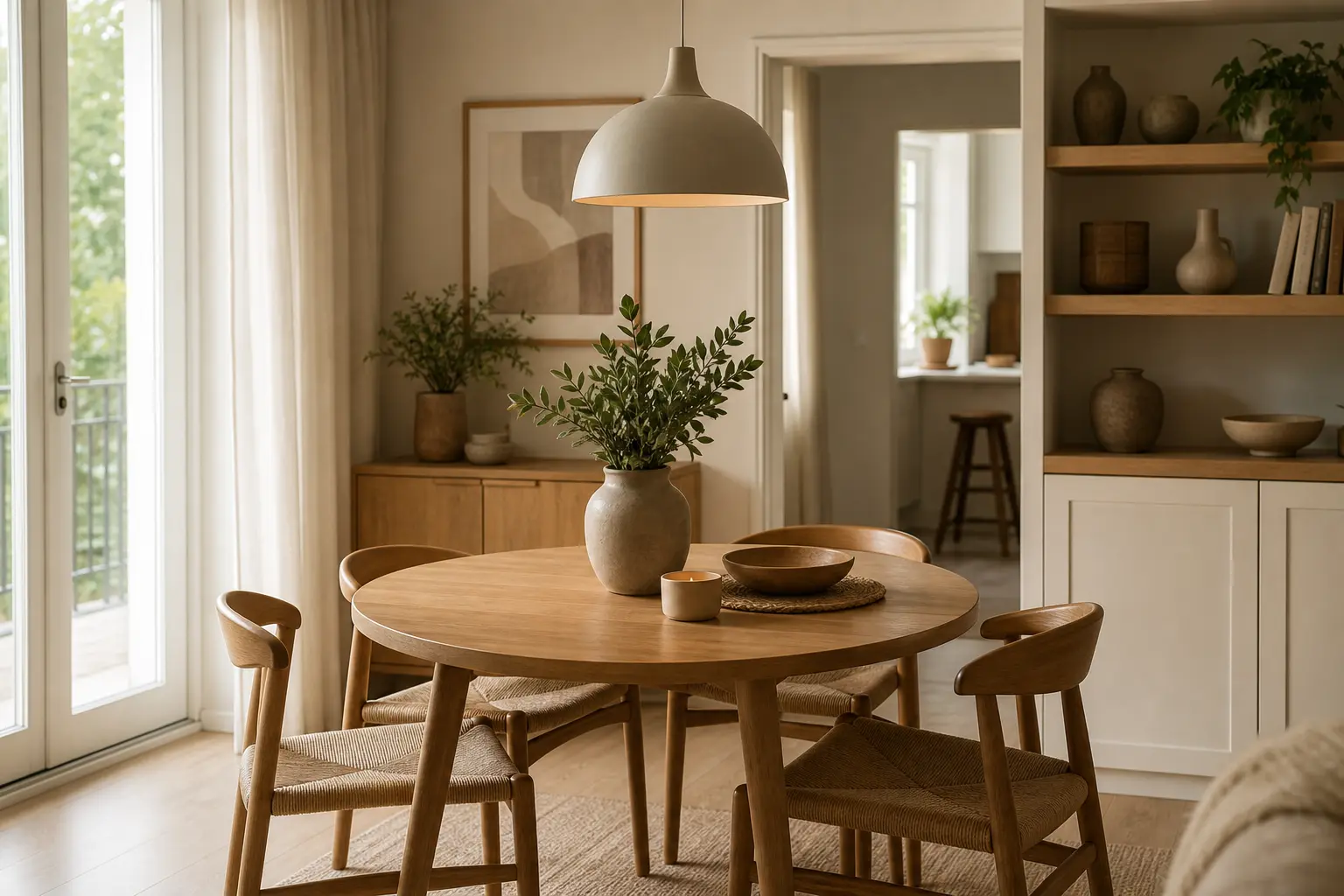
A round table removes the hierarchy that a rectangular table with a clear head and foot naturally creates, which suits the relaxed, communal feeling central to Scandinavian design. Everyone at a round table sits within easy reach and eye line of everyone else, which makes the shape especially well suited to everyday family meals and casual entertaining alike.
The rounded silhouette also softens a room’s overall geometry. Most dining rooms are already full of straight lines, from the walls to the windows to a rectangular rug, so a round table introduces a gentle visual break from all those hard edges.
2. Choosing Wood Tones for a Warm Minimalist Table
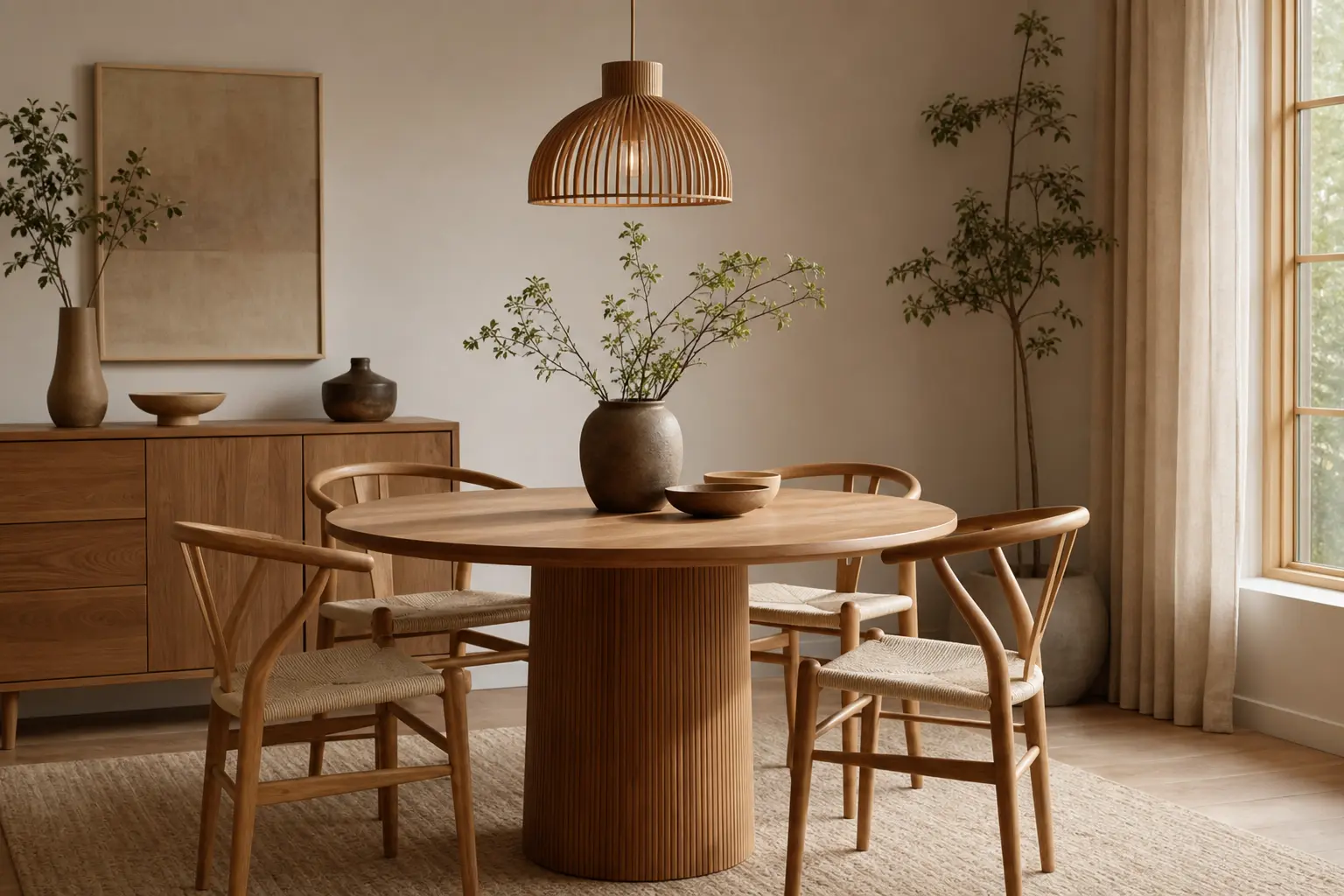
Light oak and ash remain the most characteristic wood choices for a Scandinavian dining table, valued for their pale, warm tone and visible but understated grain. Pine is another traditional option, often left in a natural or lightly whitewashed finish that keeps the wood looking soft rather than heavy.
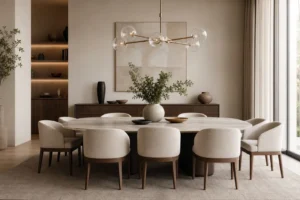
Avoid a deep, dark stained table if you’re going for a genuinely warm minimalist look, since darker wood tends to visually anchor a room in a heavier, more formal direction than the airy character Scandinavian design typically aims for. A single, consistent wood tone across the table and any nearby furniture, like a sideboard, helps the room feel cohesive.
3. Chair Styles That Pair Well with a Round Wooden Table
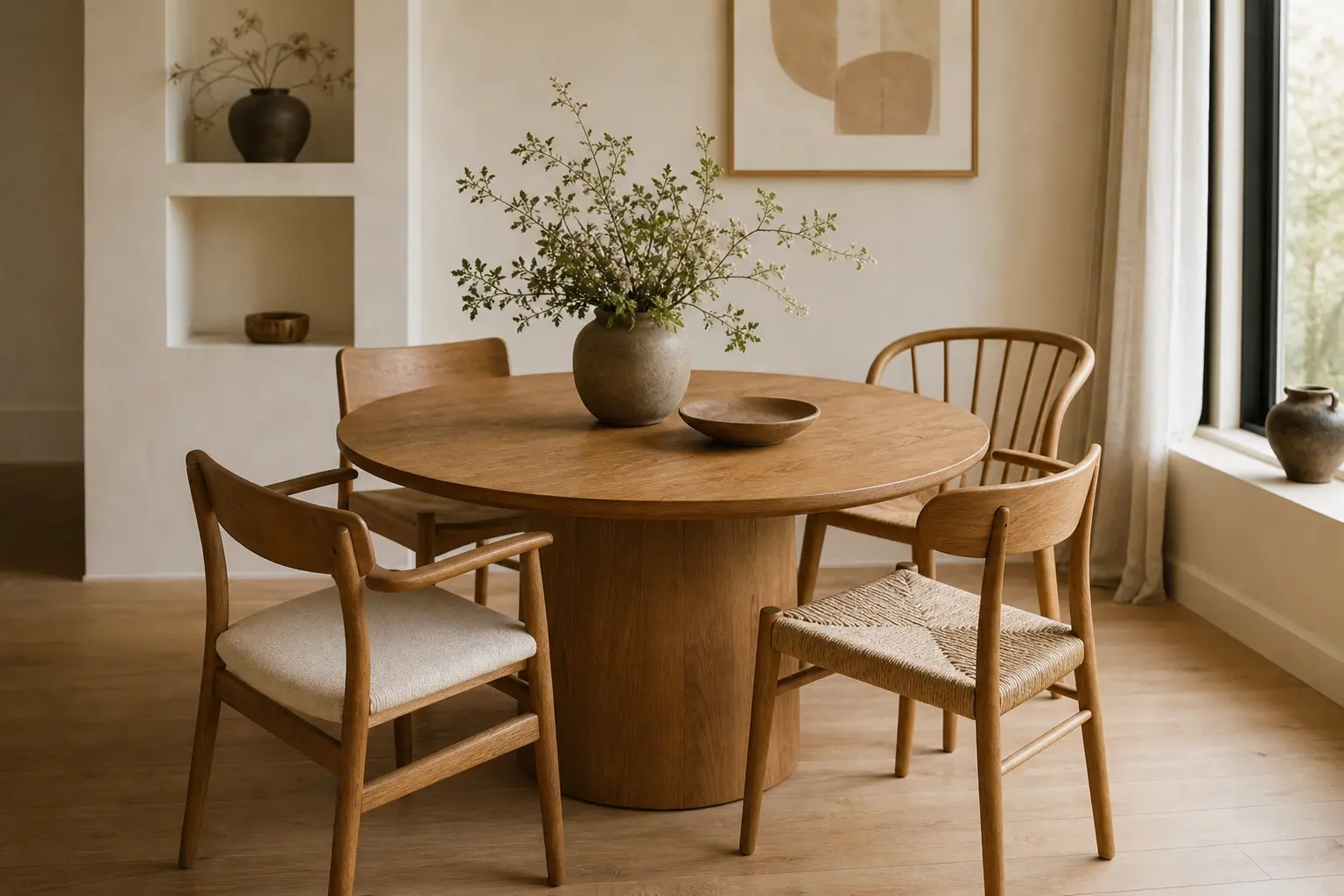
Simple wooden chairs, with tapered legs and minimal ornamentation, echo the same understated character as the table itself and are one of the most classic pairings in Scandinavian dining room design. Woven rattan or cane chairs add a slightly different natural texture and work especially well when mixed with wood chairs rather than used exclusively throughout the set.
Upholstered dining chairs, in a soft neutral fabric like boucle or linen, introduce a layer of softness and comfort, particularly appreciated for longer meals or when entertaining. Mixing one or two upholstered chairs with primarily wooden seating is a common way to add variety without disrupting the overall calm, cohesive look.
4. Layering Textiles for Warmth Around the Dining Space
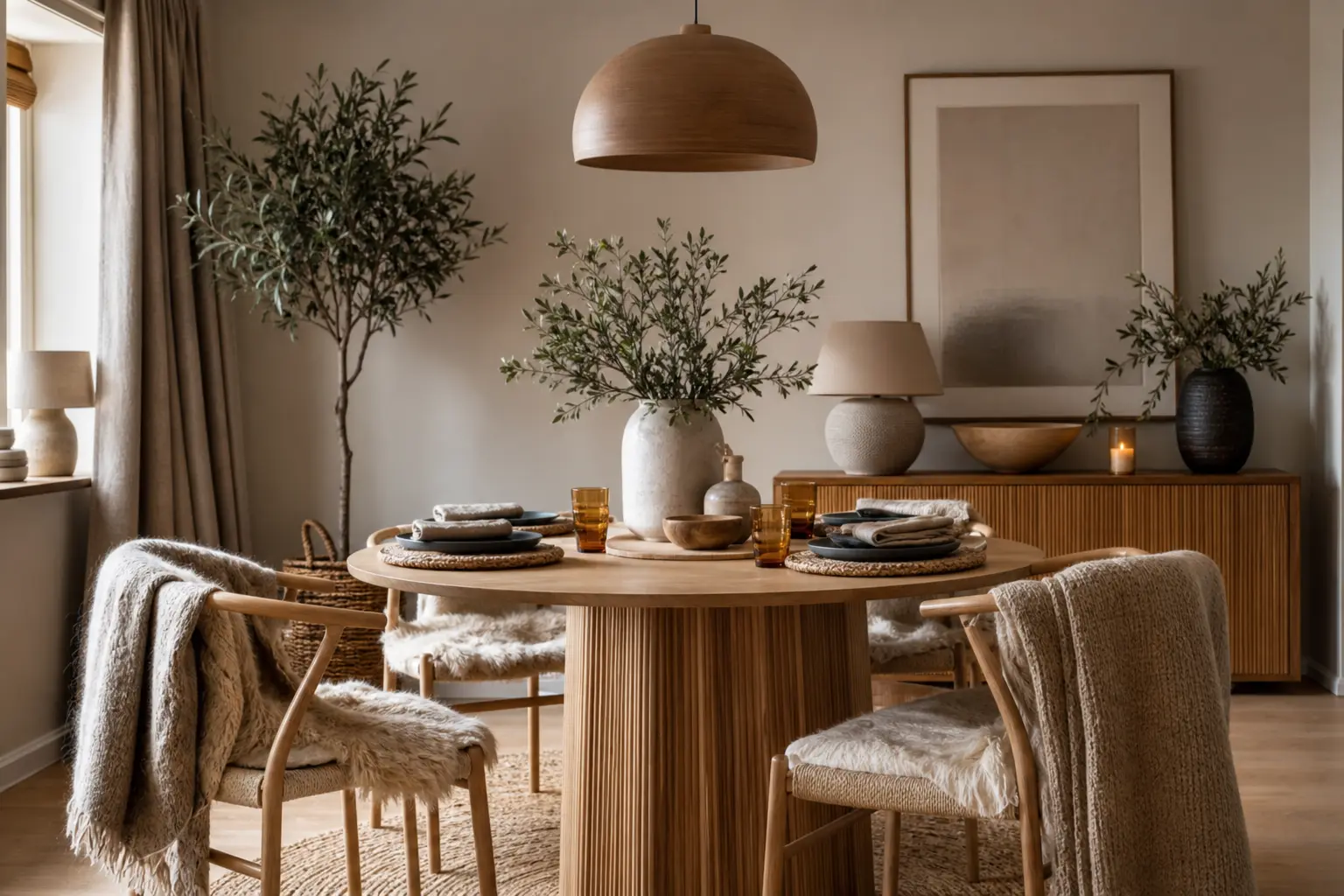
A natural fiber rug beneath the table, whether jute, sisal, or a soft wool blend, adds texture underfoot and helps define the dining area, especially useful in an open floor plan where the space isn’t clearly separated from an adjacent room. A linen table runner or simple woven placemats add another small layer of texture directly on the table itself.
Seat cushions, tied onto wooden chairs in a natural fiber fabric, add both comfort and visual softness without introducing new colors into the room. These small textile layers are what keep a Scandinavian dining room from reading as sparse, even though the overall palette and furniture selection stay quite restrained.
5. Lighting That Complements a Cozy Scandinavian Room
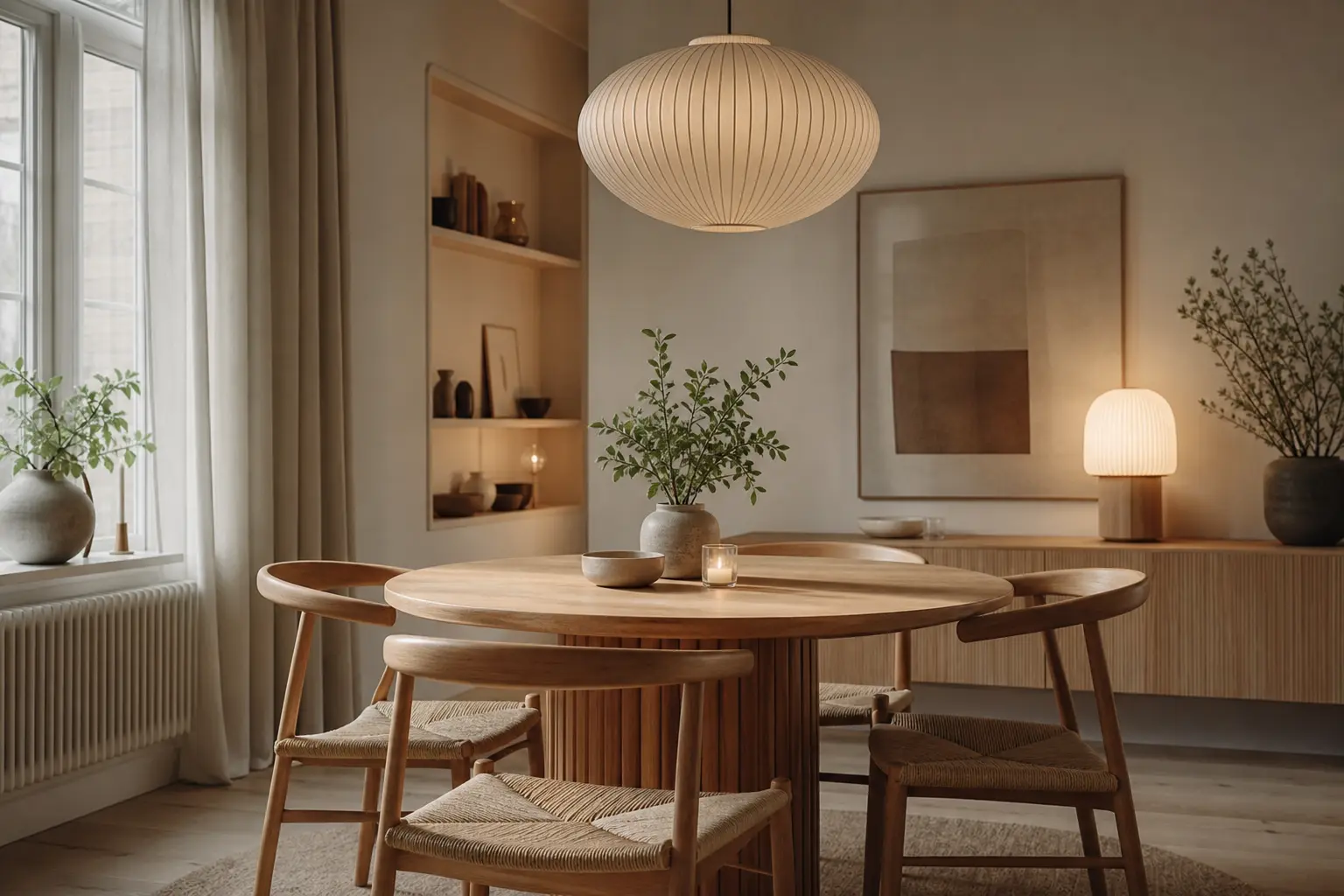
Warm LED lighting, generally in the 2700K to 3000K range, is essential to achieving the cozy character central to the style, since cooler lighting tends to work against the relaxed, inviting mood Scandinavian design aims for. A pendant light with a simple, understated shade, in natural materials like wicker or paper, suits the aesthetic better than an elaborate crystal or heavily ornate fixture.
Candles remain a genuinely common part of Scandinavian dining room styling, often placed directly on the table for everyday meals rather than reserved only for special occasions, contributing to the soft, warm atmosphere the style is known for.
6. Storage and Sideboard Choices That Stay Clutter Free
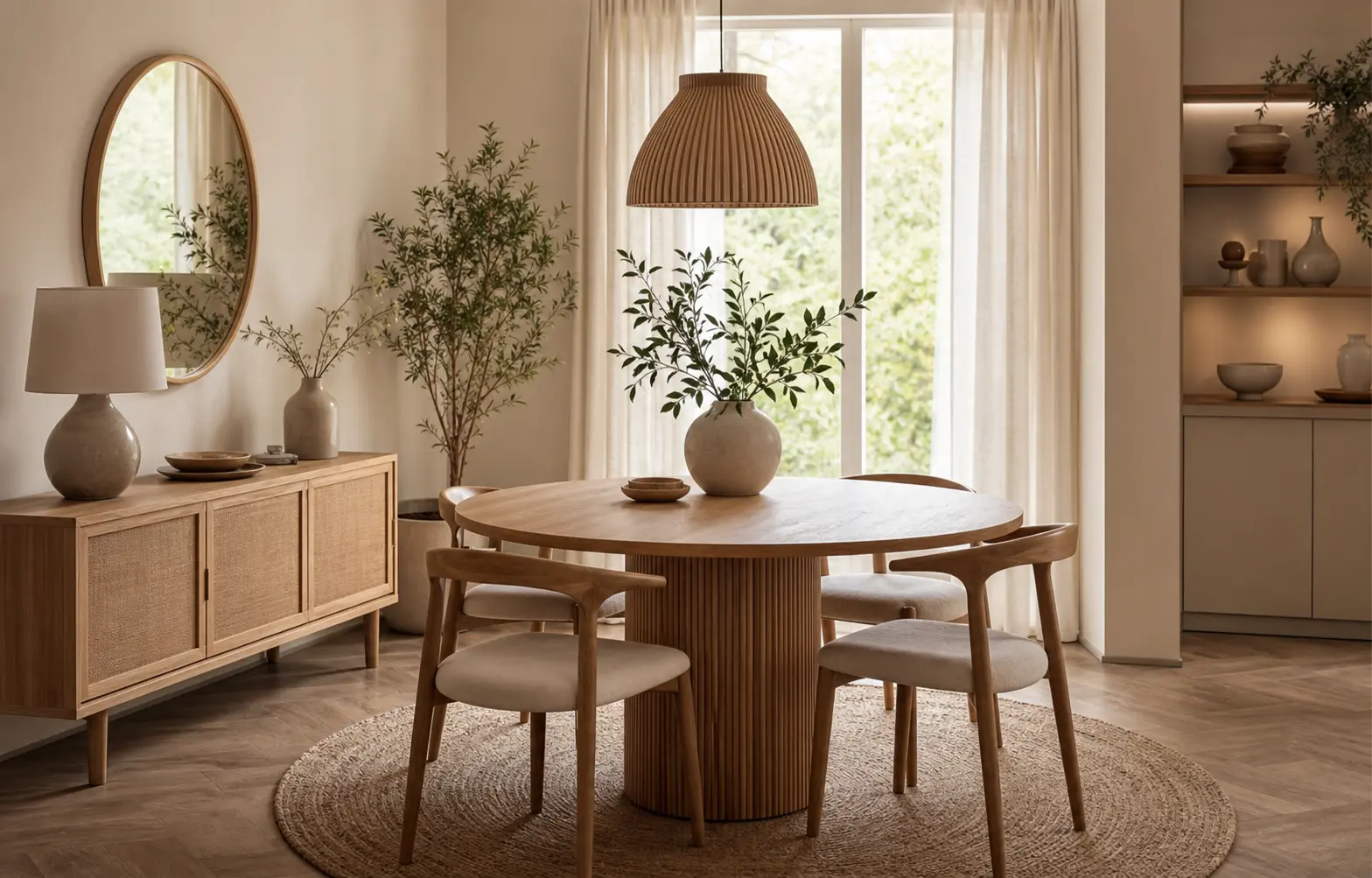
A simple wood sideboard, in a matching or complementary light wood tone to the table, provides storage for dishware and linens without disrupting the room’s restrained aesthetic. Closed cabinet doors, rather than open shelving, keep the sideboard’s contents out of sight, which matters in a style built around visual calm.
Keeping the sideboard surface itself mostly clear, aside from perhaps a single vase or a small stack of neatly folded linens, maintains the same uncluttered feeling found throughout the rest of a well executed Scandinavian room.
7. Color Palettes for a Warm Minimalist Dining Room
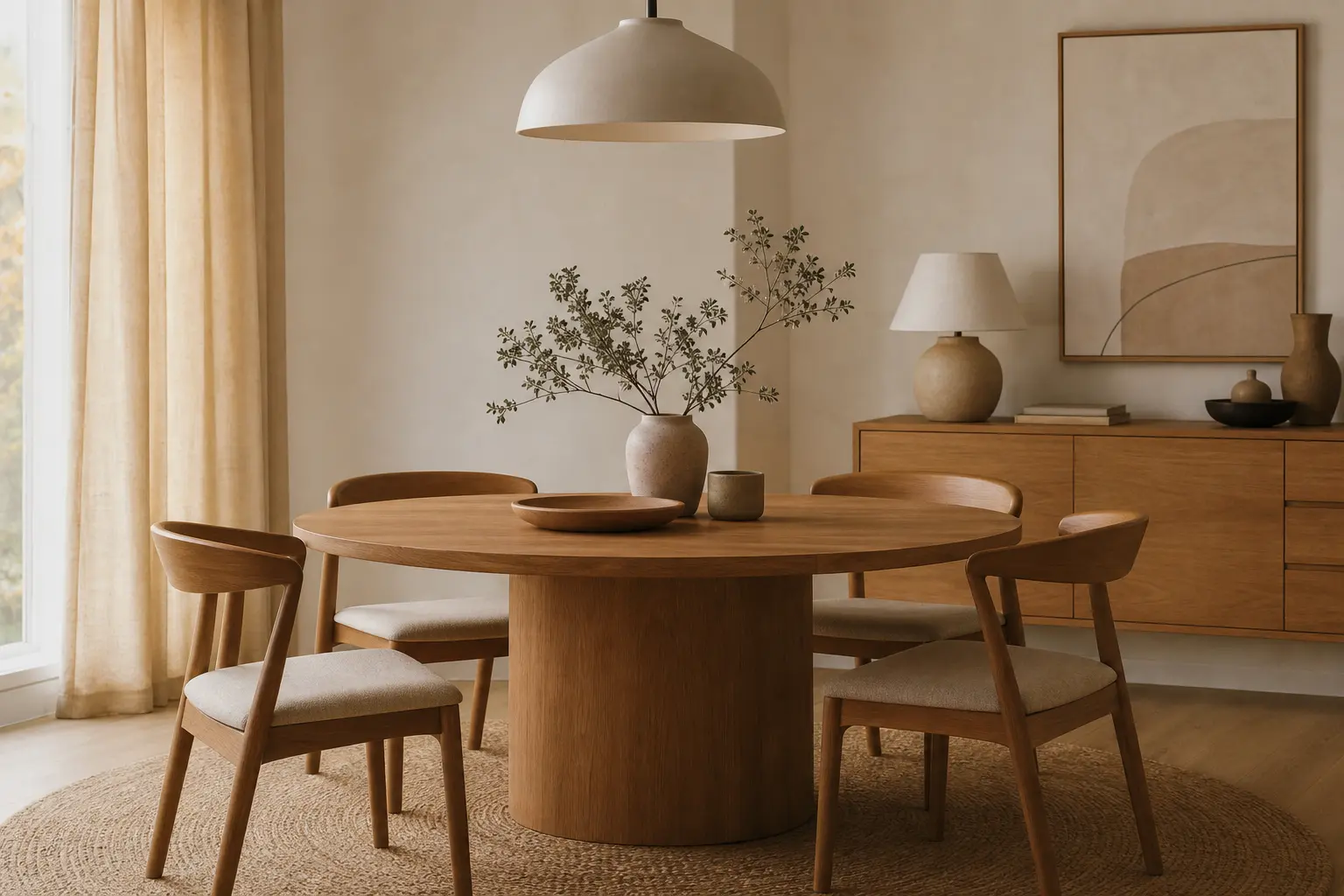
Soft neutral wall colors, warm white, light greige, or a pale oatmeal tone, let the natural wood tones of the table and chairs stand out as the room’s main visual feature. A single muted accent color, like a dusty blue or sage green, introduced through a table runner or a set of seat cushions, adds a small amount of variation without disrupting the overall calm palette.
Black metal accents, whether in a light fixture, chair legs, or picture frames on an adjacent wall, provide a small amount of grounding contrast, a pairing that has become closely associated with the modern Scandinavian aesthetic more broadly.
8. Table Setting and Centerpiece Ideas That Fit the Aesthetic
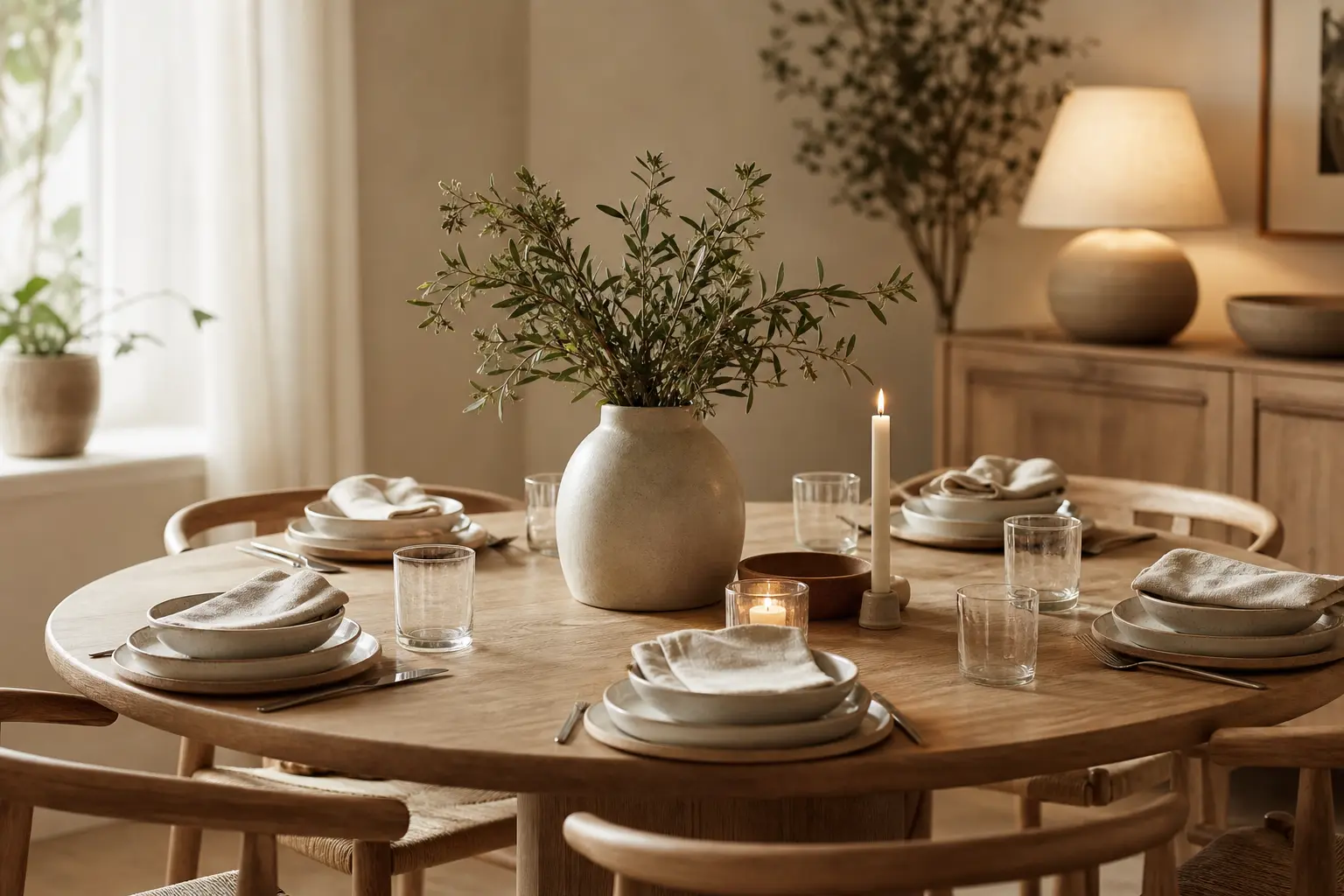
A simple, low centerpiece, like a small ceramic bowl or a cluster of candles, keeps sightlines open across the table, which matters more at a round table than a rectangular one, since a tall centerpiece can block conversation between people seated across from each other. Seasonal branches or a few stems in a simple ceramic vase are a common, low maintenance centerpiece choice that fits the natural, understated character of the style.
Neutral toned dinnerware, in stoneware or a matte ceramic finish, complements the wood table better than very bright or heavily patterned dishware, which can compete visually with the room’s otherwise restrained palette.
9. Small Dining Room Adaptations for a Round Table Layout
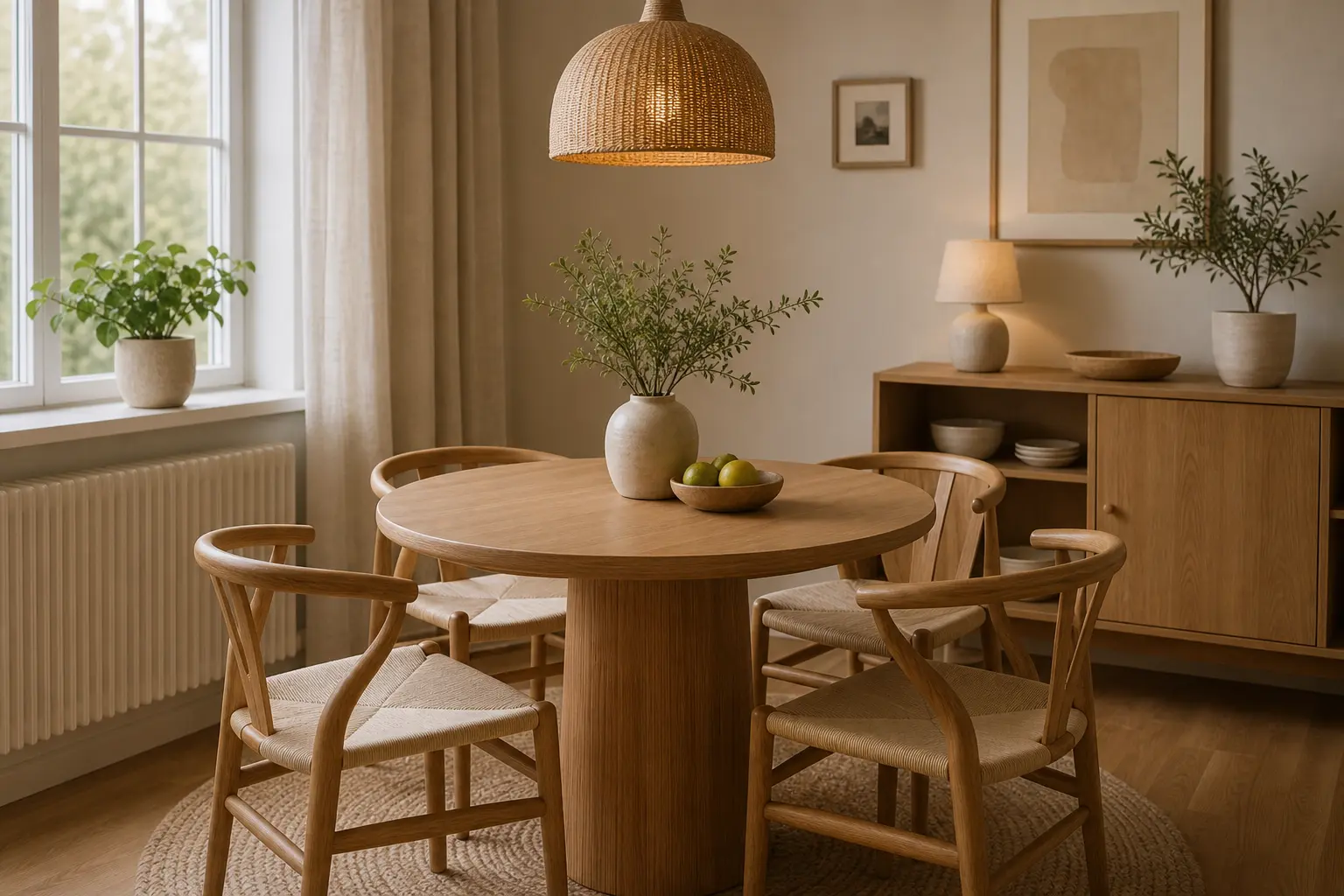
A round table is often a more efficient choice for a small dining room than a rectangular one, since it lacks corners that can make navigating a tight space awkward. A smaller diameter table, around 36 to 42 inches, comfortably seats four in a compact room without requiring as much surrounding clearance as an equivalently sized rectangular table.
Choosing lighter wood tones and keeping the surrounding wall colors soft and neutral both help a small dining room feel more open, particularly when paired with a simple pendant light rather than a larger, more dominant fixture that could feel oversized in a tight space.
10. Budget Planning for a Scandinavian Dining Room Refresh
A round wooden table alone, in solid oak or ash, typically runs somewhere between 500 and 1500 dollars depending on size and construction quality. Adding matching wooden or woven chairs increases that range, often by an additional 400 to 1200 dollars for a full set of four to six chairs.
A more complete room refresh, including a new pendant light, a natural fiber rug, and a matching sideboard, tends to run considerably higher, often somewhere between 2000 and 6000 dollars depending on room size and furniture quality chosen.
Mistakes to Avoid
- Choosing a table too large for the room, leaving insufficient walking clearance around the seating
- Mixing several distinct wood tones across the table, chairs, and sideboard
- Using cool toned lighting that works against the style’s warm, cozy intent
- Selecting a tall centerpiece that blocks sightlines across a round table
- Overfilling the sideboard surface instead of keeping it mostly clear and intentional
- Skipping textile layers like a rug or seat cushions, leaving the room feeling sparse rather than cozy
Frequently Asked Questions
What size round table works best for a small dining room? A diameter around 36 to 42 inches comfortably seats four people in a compact room without requiring as much surrounding clearance as a similarly sized rectangular table.
Can I mix wooden chairs with upholstered ones at a Scandinavian dining table? Yes, mixing one or two upholstered chairs with primarily wooden or woven seating is a common way to add comfort and variety without disrupting the overall cohesive look.
What wood tone is most associated with Scandinavian dining furniture? Light oak and ash are the most characteristic choices, prized for their pale, warm tone and understated grain. Pine, left natural or lightly whitewashed, is another traditional option.
Does a round table seat fewer people than a rectangular one? Generally yes, for a comparable footprint, though a round table often makes better use of space in a smaller room since it lacks corners that require additional clearance.
How do I keep a Scandinavian dining room from feeling too sparse? Layer in natural textiles, like a jute rug, linen table runner, and tied seat cushions, and use warm LED lighting rather than cool toned bulbs. These textural and lighting choices create the cozy feeling central to the style.
Conclusion
A Scandinavian dining room built around a round wooden table works because it combines a naturally communal shape with the warmth and texture that define the style at its best. Choose a light, consistent wood tone, layer in natural textiles like a rug and simple table linens, and keep lighting warm and understated. Handled thoughtfully, even a small dining room can feel like a genuinely inviting place to gather, rather than a formal space reserved for special occasions.