10 Modern Indoor Courtyard Design Ideas with Luxury Skylight Inspiration
Homes built around a central courtyard feel different from the second you walk in. Instead of a dark hallway cutting through the middle of the house, there’s an open, bright space pulling light down from above, and every surrounding room gets something worth looking at rather than another blank wall. Nine times out of ten, a well placed skylight is what makes that happen. The ten ideas below focus on exactly that: how the right skylight, matched to the right layout, can turn the center of a home into its best room instead of a wasted pass through space.
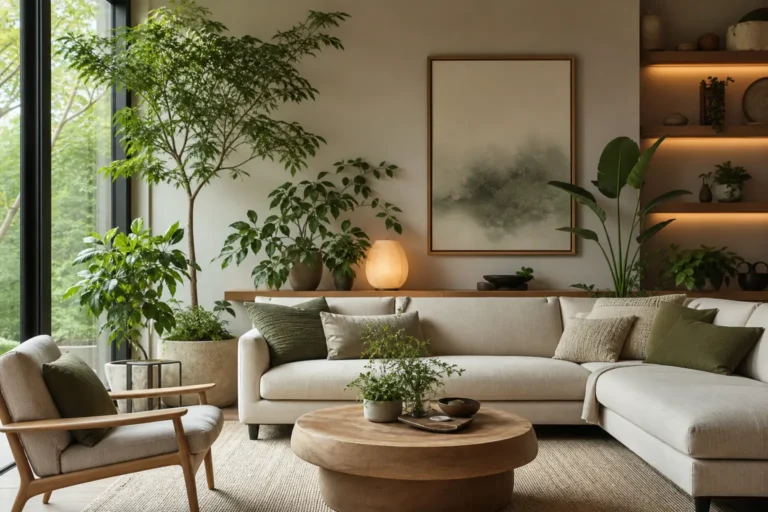
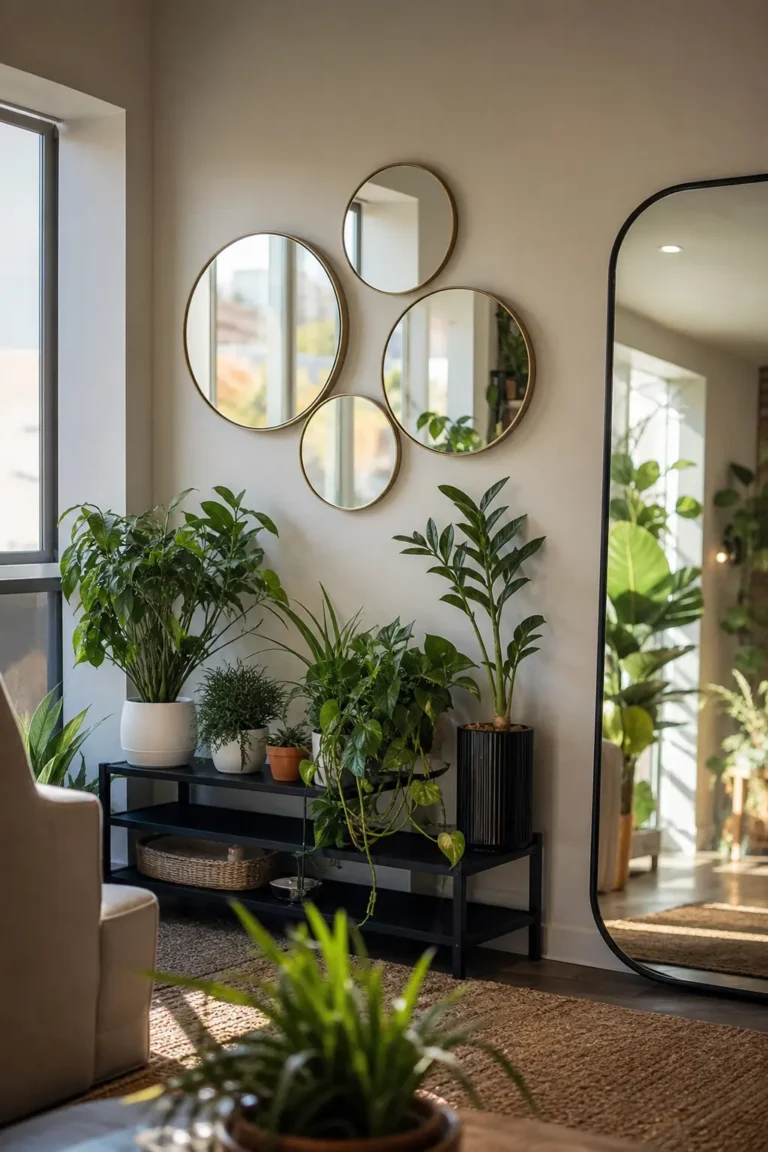
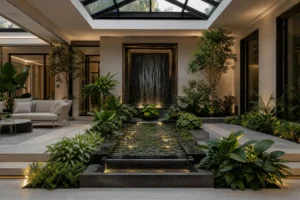
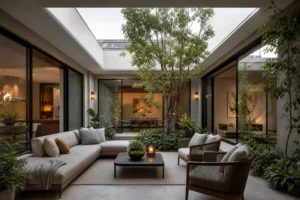
Think about the homes that genuinely surprised you with how much light reached the middle of the floor plan, somewhere you’d normally expect shadows. There’s almost always a skylight or glass ceiling behind it, usually with a plant taking full advantage of all that sun. That pairing, skylight plus greenery, is really the whole concept behind an indoor courtyard.
1. Central Atrium Skylight Over an Indoor Tree
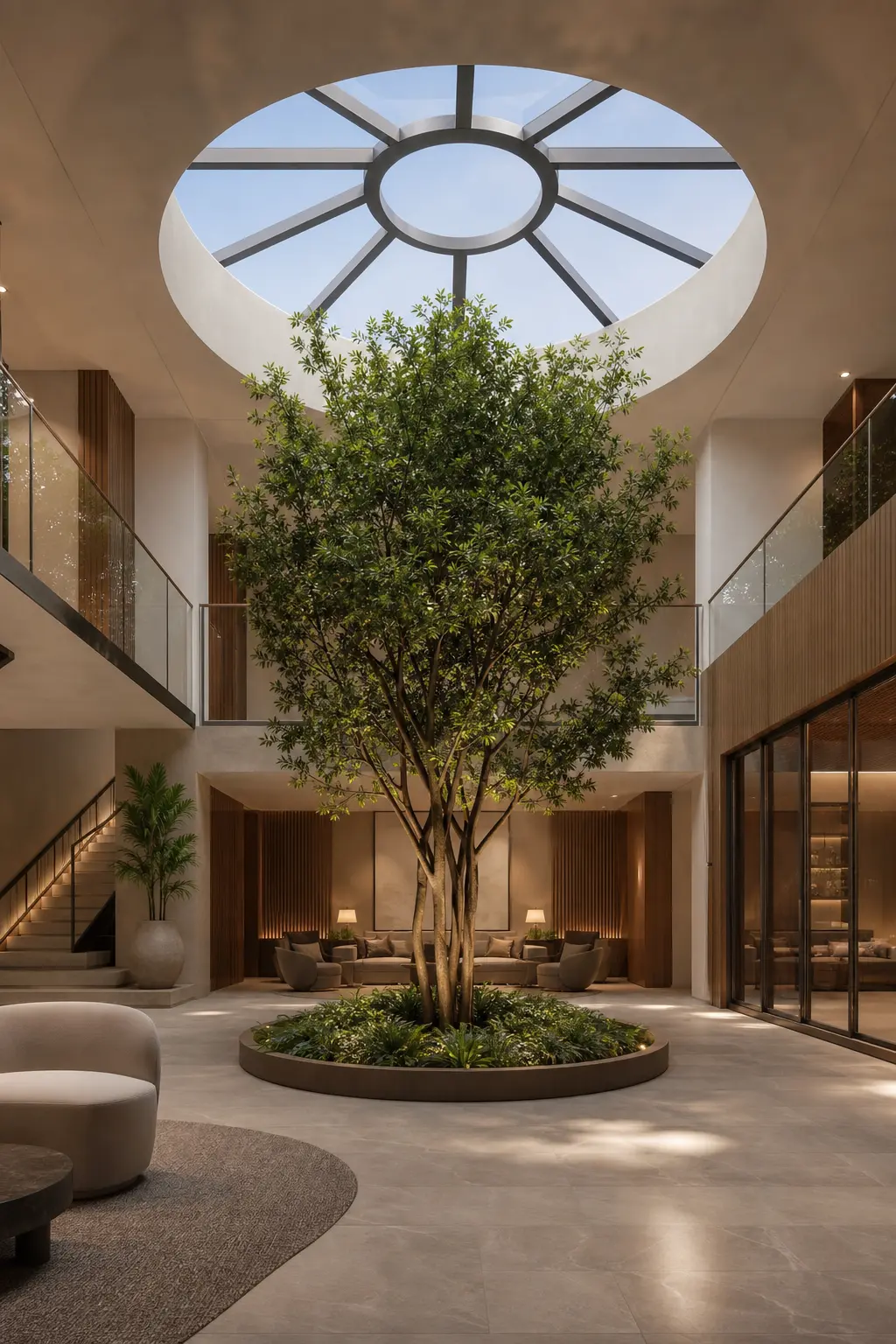
Put a large skylight directly above a single indoor tree, a ficus or an olive tree in a big planter, and you’ve got an instant focal point without much else needed. The tree gets the direct light it actually needs to thrive, and the skylight above frames it almost like architecture rather than a simple light source. Aim for a skylight at least 6 to 8 feet across so the canopy has room to grow without pressing into the glass, and check the tree’s mature height ahead of time so ceiling clearance doesn’t become a problem later.
2. Glass Ceiling Courtyard with Surrounding Walkways
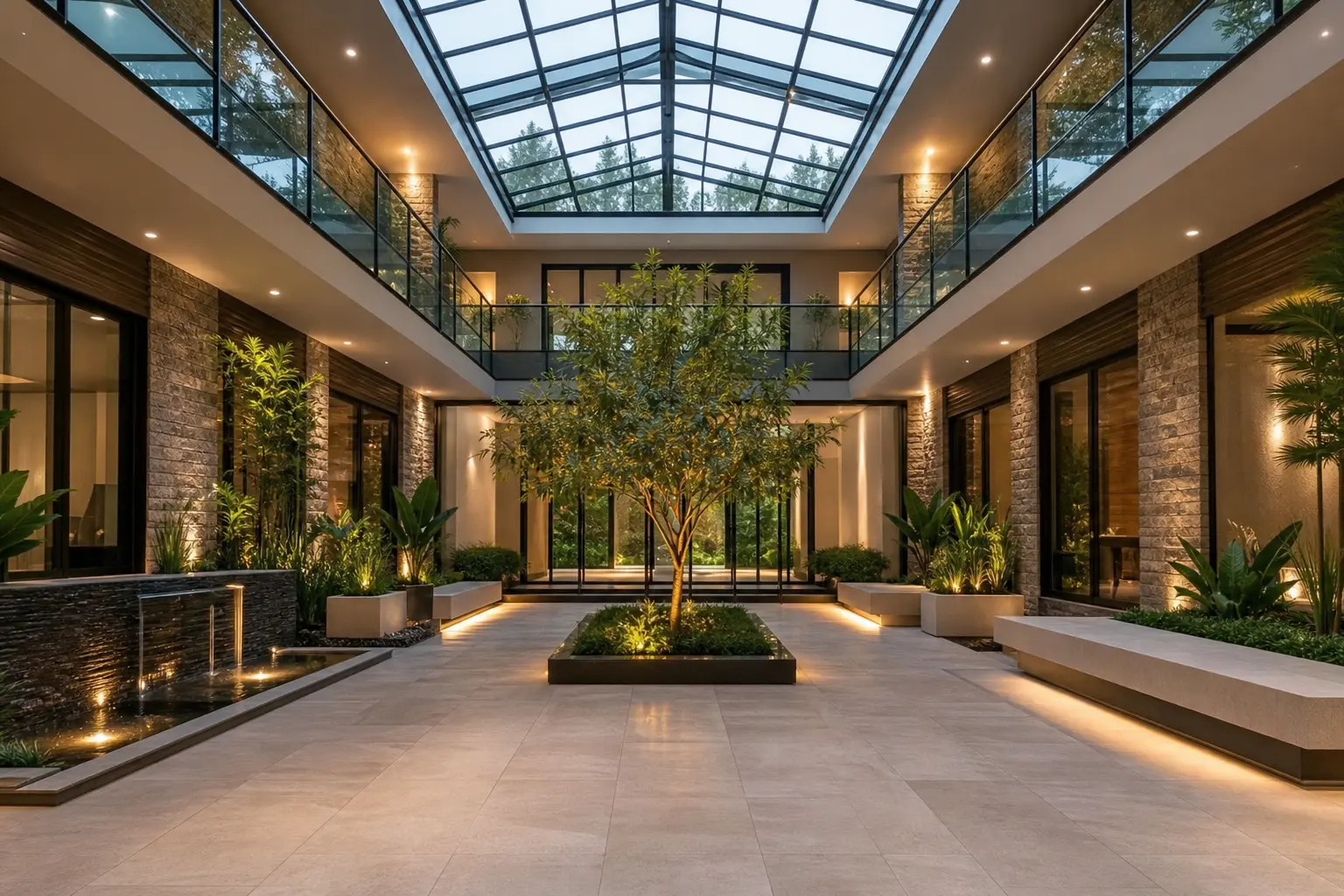
Rather than a single skylight, cover the whole courtyard with glass and wrap walkways or hallways around its edge. Every room opening onto that courtyard now looks out onto something open and bright instead of another wall, and that changes how the home feels even in rooms that don’t technically touch the courtyard at all. Larger homes benefit the most from this layout, since the courtyard can act as a central hub linking separate wings, giving everyone a shared visual anchor no matter which direction they’re walking.
3. Pyramid Skylight Above a Sunken Seating Area
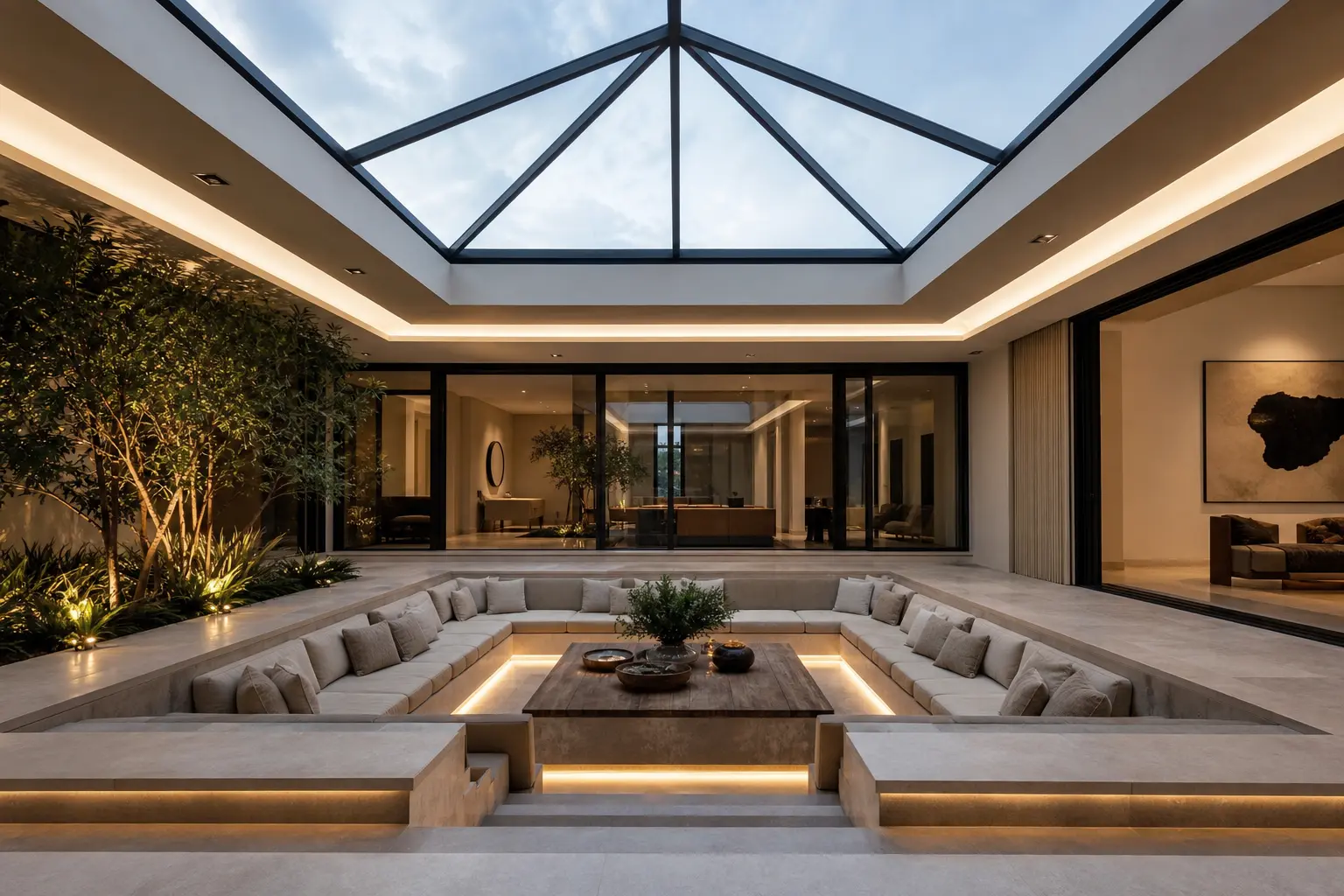
A pyramid shaped skylight brings architectural interest that a flat pane of glass simply can’t, and pairing it with a sunken seating area below carves out a defined, cozy zone within a larger open courtyard. Angled glass panels catch light differently through the day, casting shifting patterns across the seating below as the sun moves overhead. Keep the sunken section fairly shallow, 12 to 18 inches below the surrounding floor tends to feel intentional without turning into a tripping hazard.
4. Linear Skylight Strip Running the Length of the Courtyard
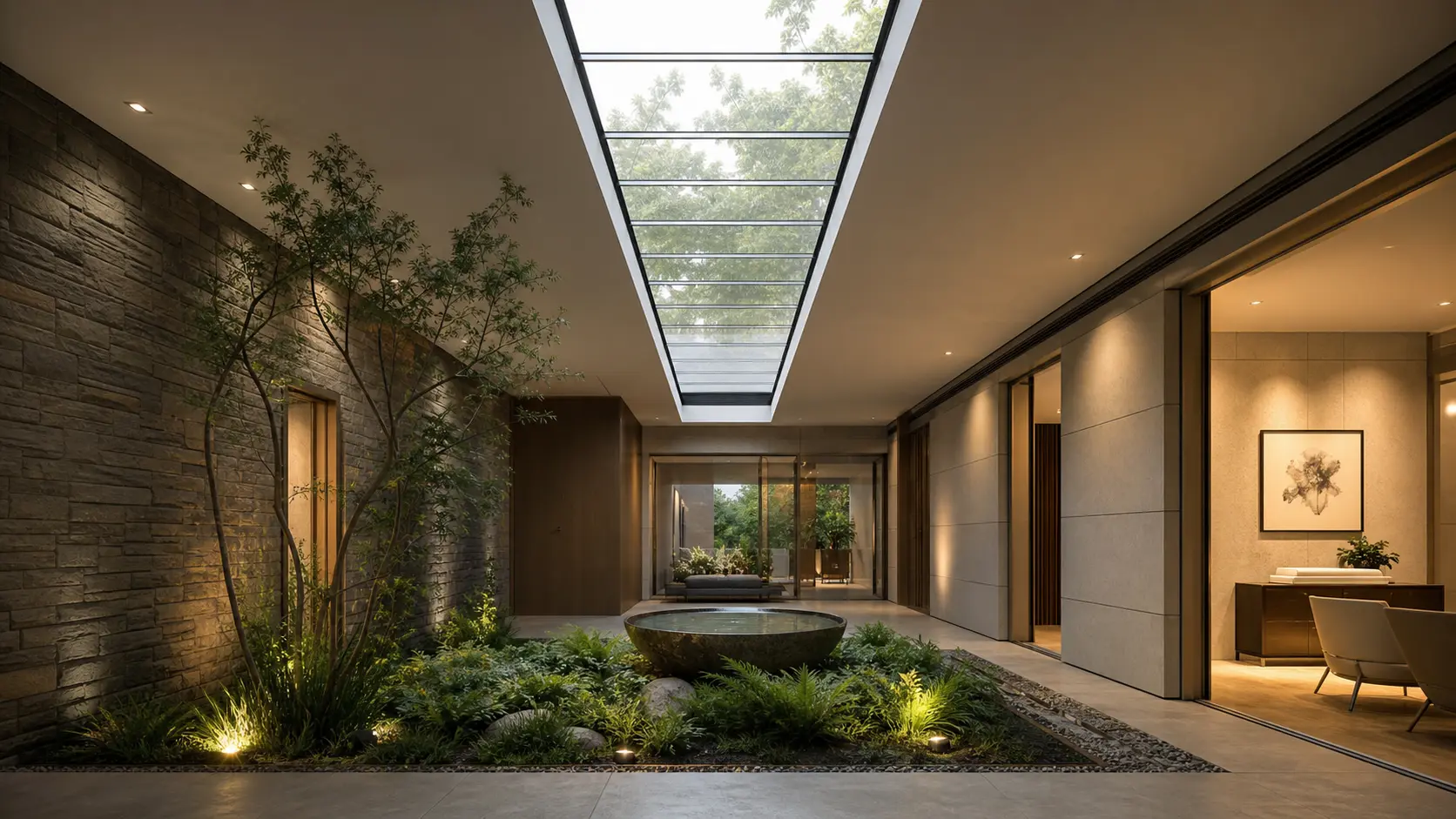
One large centered skylight can leave the ends of a long courtyard dim. A narrow linear strip running the full length solves that by spreading light evenly instead of pooling it in one spot. This suits long, narrow courtyards especially well, and placing plants at intervals along the strip keeps every one of them getting consistent light through the day, rather than one thriving plant near the skylight and a struggling one further off.
5. Domed Skylight Over a Water Feature
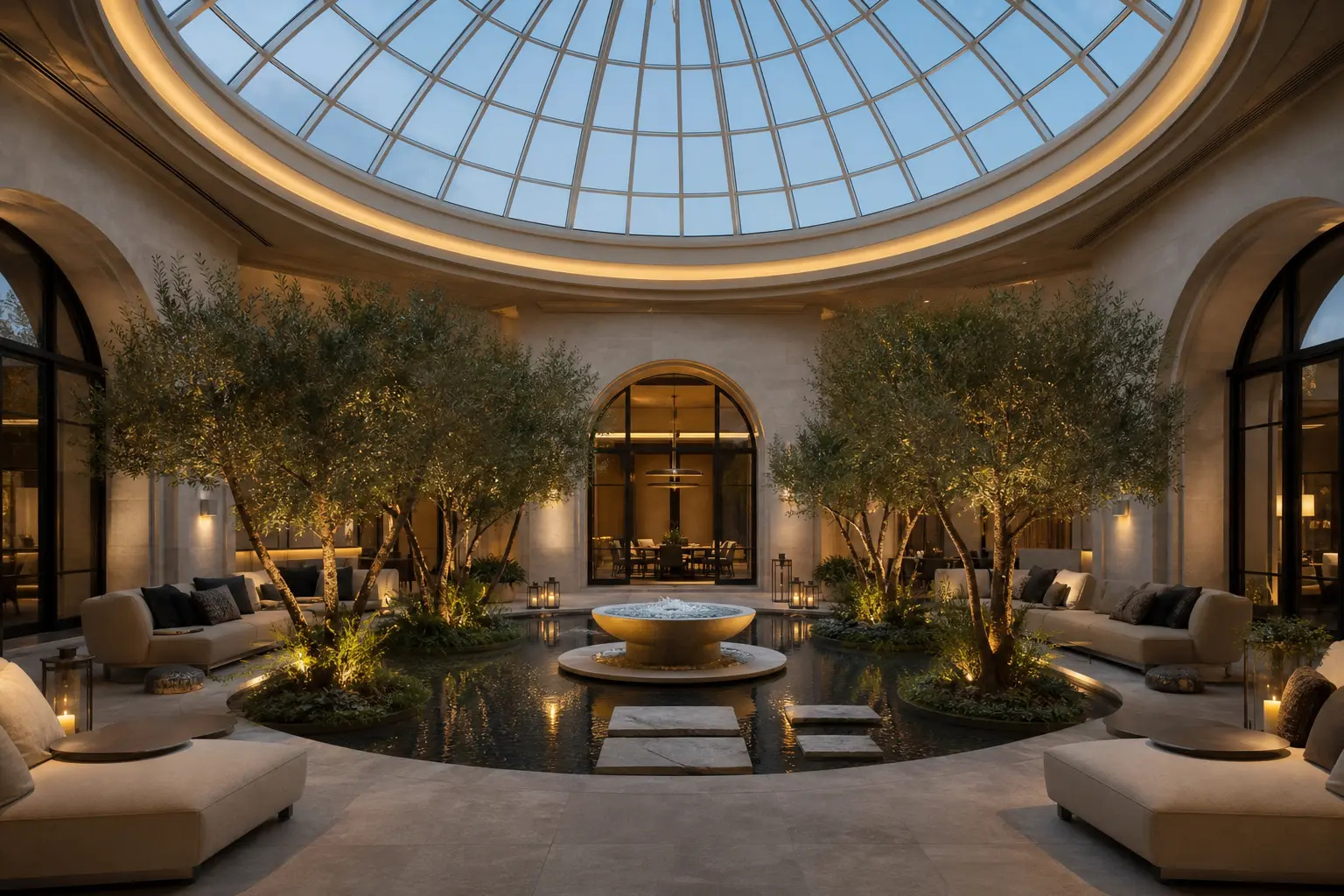
A domed skylight above a small reflecting pool or fountain adds drama a flat skylight just can’t match. Curved glass bends and scatters light slightly, so the water’s surface catches movement even without a breeze in the room. This combination works best in courtyards meant to feel calm and contemplative rather than purely functional, since the water and light together carry most of the emotional weight of the space on their own.
6. Frosted Glass Skylight for Soft, Diffused Light
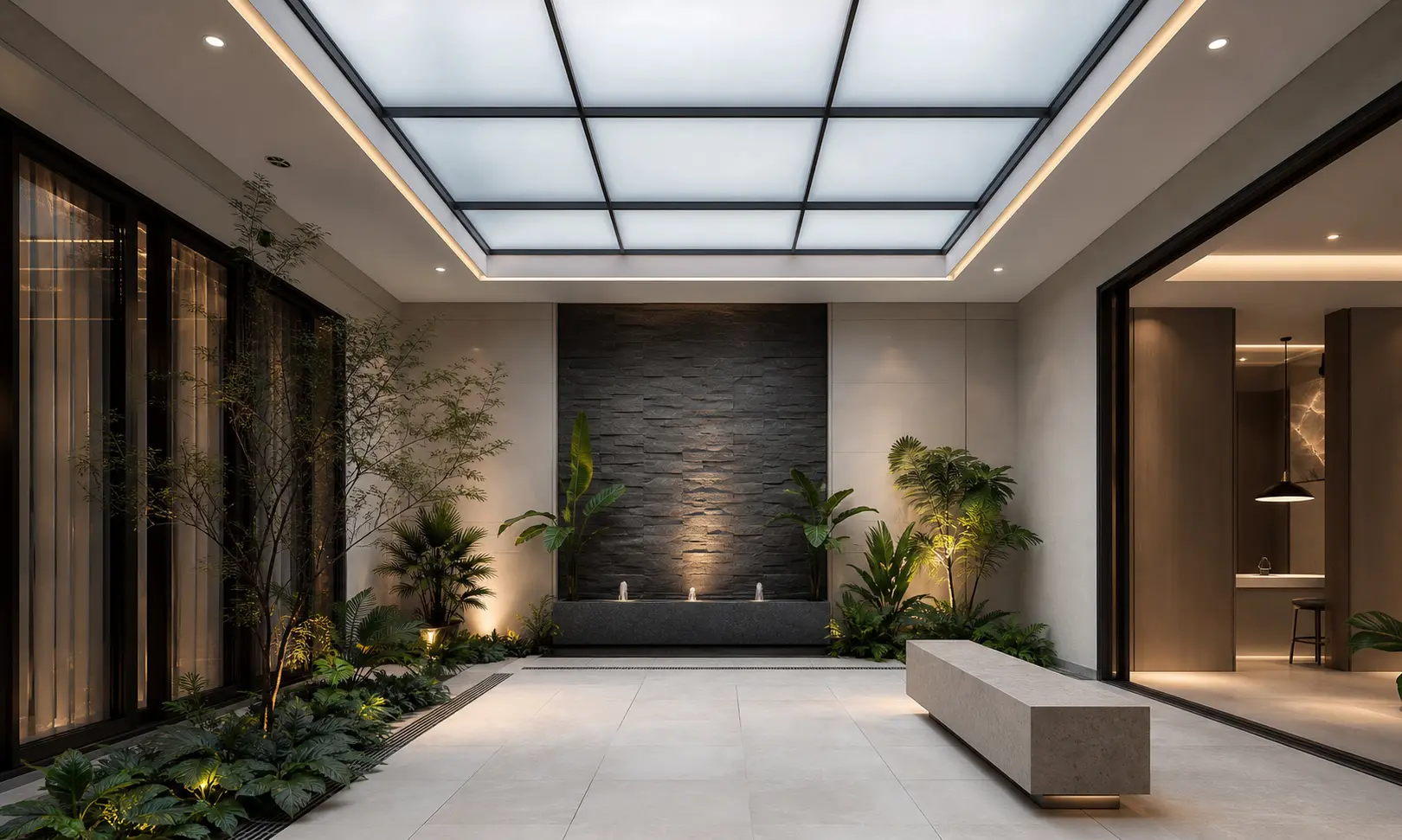
Clear glass isn’t always right, especially where a courtyard gets intense direct sun for part of the day. Frosted or etched glass softens harsh light into something more even and diffused, which is easier on the eyes and better suited to plants that prefer indirect light over direct blast. There’s a privacy bonus too, since frosted glass keeps overlooking windows in denser neighborhoods from becoming a real concern.
7. Operable Skylight with Retractable Shade
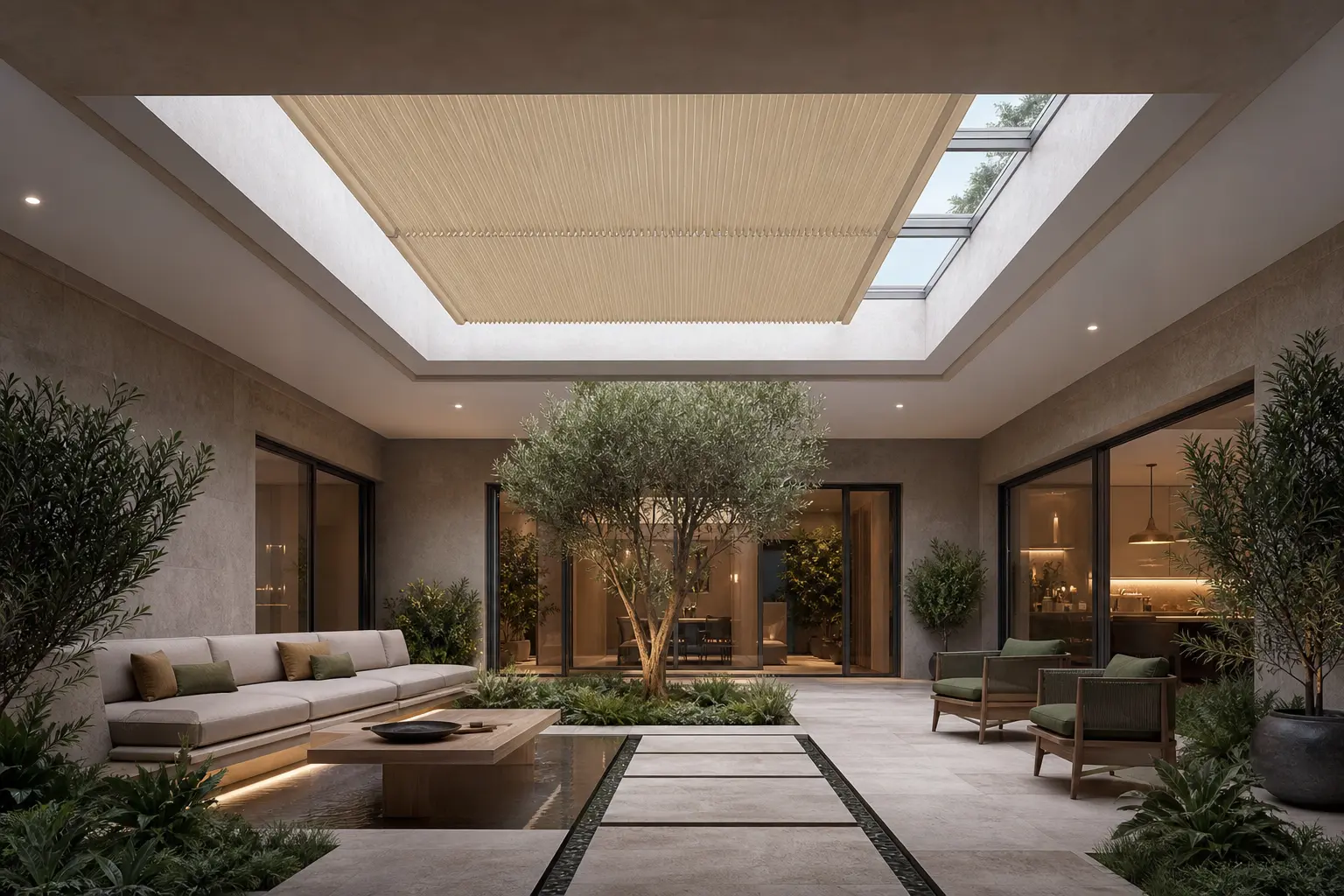
An operable skylight, one that opens partially or fully, turns an indoor courtyard into something that shifts with the weather instead of staying static year round. Pair it with a retractable shade for hot afternoons, and the space stays comfortable in summer without overheating. It costs more upfront, often two to three times a fixed skylight depending on size and automation, but the flexibility it adds is real, and a fixed pane simply can’t offer the same thing.
8. Multi Panel Skylight Grid Over an Open Floor Plan
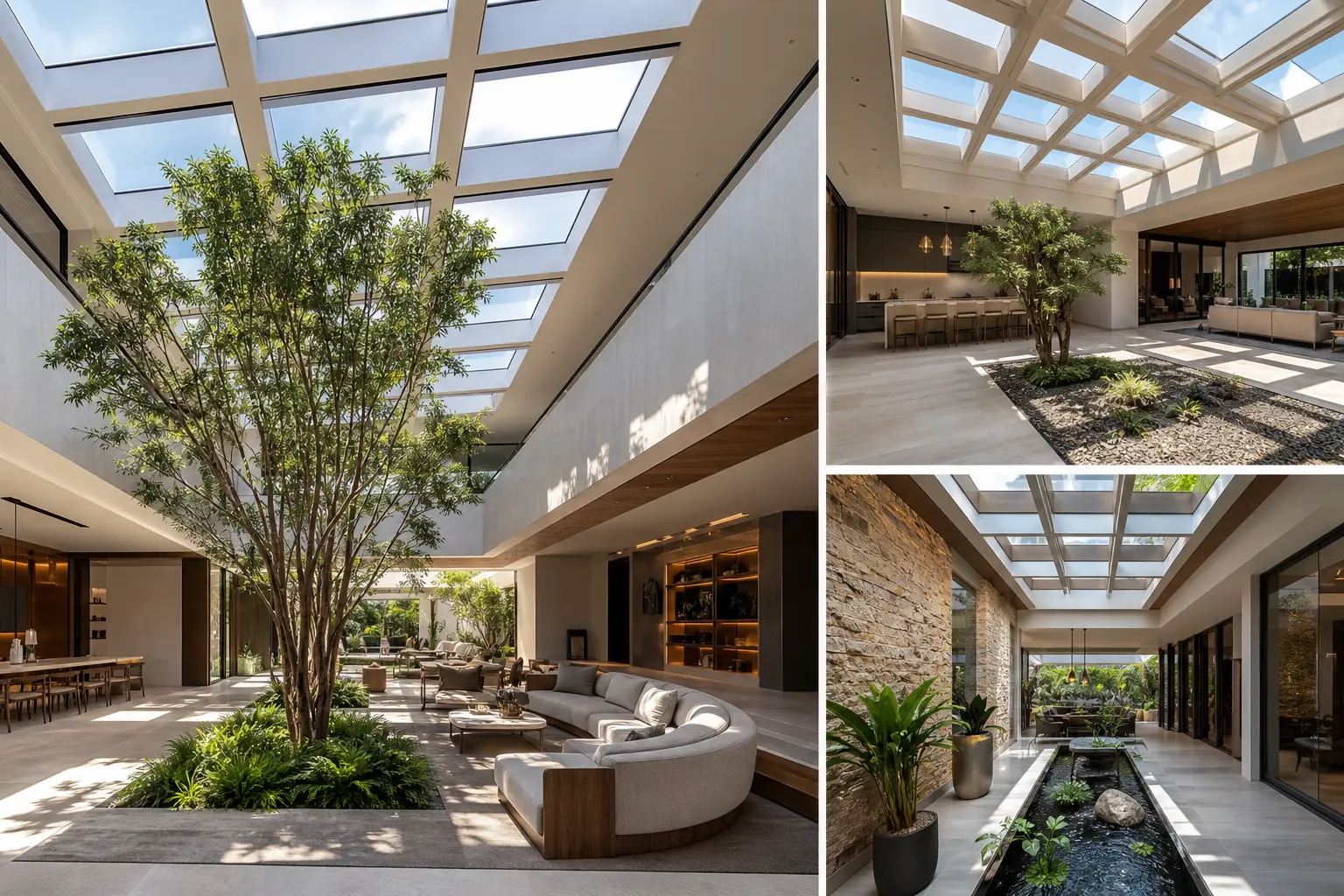
A grid of smaller skylight panels distributes light more evenly across a wide courtyard than one large sheet of glass, and it creates a more architectural ceiling pattern in the process. The visible grid lines between panels add structure to what could otherwise feel like an overwhelming amount of open glass overhead. Larger, more open floor plans tend to suit this approach best, since a single oversized skylight can look out of scale once the room gets big enough.
9. Courtyard Skylight Paired with a Living Moss Wall
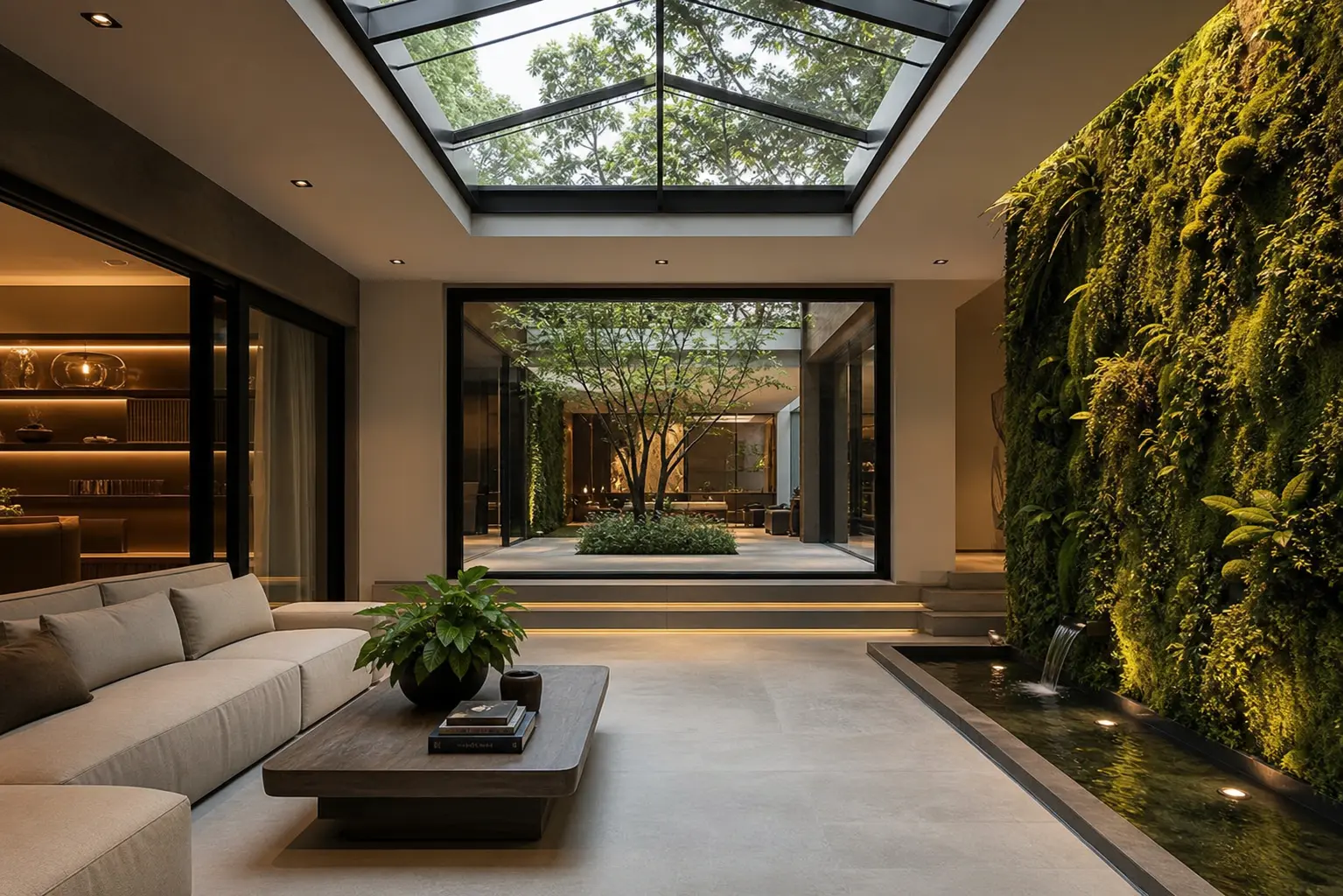
Moss thrives in indirect, humid conditions, and skylight courtyards naturally create exactly that environment, so this pairing isn’t forced at all. A living moss wall along one side, lit from above by the skylight, adds texture and a deep green backdrop without the ongoing watering that most other plants demand. Preserved moss panels exist too, for anyone who wants the visual effect without any maintenance whatsoever.
10. Clerestory Skylight Windows Along the Courtyard Roofline
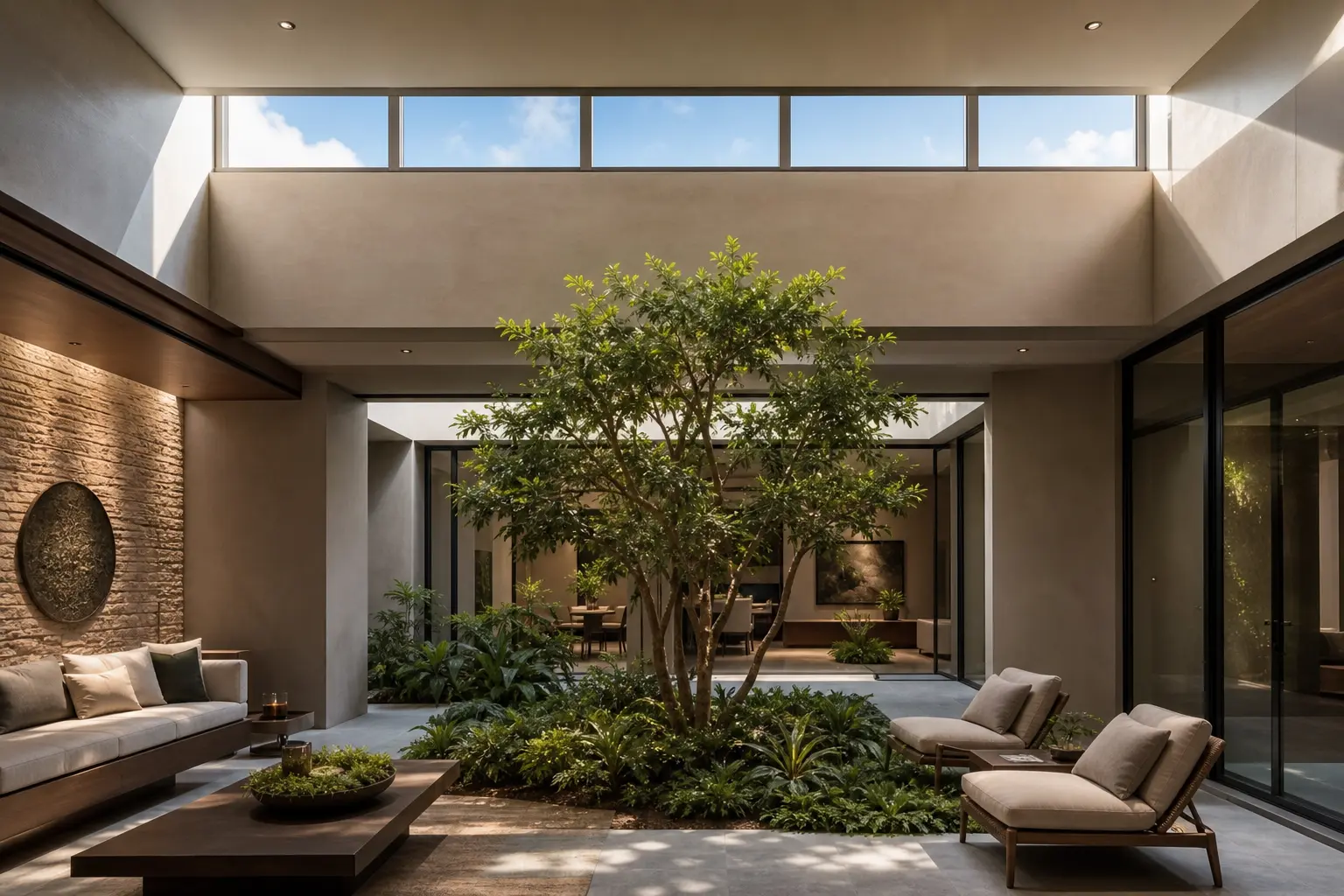
Clerestory windows, a row of narrow windows set high along the roofline, bring light in while holding onto more privacy and a slightly more traditional look than a full skylight overhead. Homeowners who like the idea of a bright courtyard but aren’t ready to commit to a fully glazed ceiling tend to land here. It’s typically cheaper to install too, since clerestory windows use standard window framing rather than the specialized glazing a full skylight system requires.
Mistakes to Avoid
- Choosing a skylight without considering heat gain, which can turn a courtyard into an uncomfortably hot space in summer
- Skipping UV protective glazing, which can fade furniture and flooring over time
- Placing plants directly under a skylight without checking their sun tolerance, leading to scorched leaves
- Ignoring drainage and waterproofing details around the skylight frame, risking leaks during heavy rain
- Choosing a skylight size that overwhelms a smaller courtyard, making the space feel more like a greenhouse than a room
- Forgetting to plan for cleaning access, since skylights collect dust and debris that’s harder to reach than standard windows
Frequently Asked Questions
How much does it cost to install a skylight in an indoor courtyard? A basic fixed skylight generally runs 1,500 to 3,000 dollars installed. Larger custom or operable systems can climb to 5,000 dollars or more depending on size and complexity.
Do skylights cause a room to overheat in summer? They can, particularly with clear glass and direct southern exposure, but frosted glazing, UV coatings, and retractable shades all cut heat gain considerably while still letting light through.
What plants do best in a skylight lit indoor courtyard? Plants that like bright, indirect light tend to do well here, ferns, moss, and many tropical varieties among them, especially if the glass overhead is frosted or the plant sits out of direct overhead sun for most of the day.
Can an existing home be renovated to add an indoor courtyard? Yes, though it usually requires structural changes to the roofline and sometimes to the floor plan itself, making it a bigger project than simply adding a skylight to an existing room. Bring a structural engineer in early, and budget extra time for permitting, since roofline changes tend to draw more review than a standard interior remodel.
Is a glass ceiling courtyard private from neighbors or upper floors? It depends on what surrounds it. Frosted glass, clerestory windows, and courtyards enclosed entirely by the home’s own walls all tend to offer more privacy than a fully open glass ceiling sitting in a densely built neighborhood.
Conclusion
Few architectural features change a home the way an indoor courtyard does, turning what could be a dark, wasted center space into the brightest room in the house. The skylight is what makes it work, whether that’s one dramatic dome over a water feature or a simple linear strip running the length of a long, narrow space. Pick whichever version fits the home’s layout and budget, and let the natural light handle the rest of the design work on its own.