10 Modern Hallway Design Ideas with Indoor Plants & LED Lighting
A hallway spends most of its life as a space people walk through rather than spend time in, which is exactly why it’s so often left undecorated. Plants change that dynamic more than almost anything else, bringing life and texture into a space that’s usually just flat walls and a floor. Pair that greenery with warm LED lighting, and the hallway stops feeling like a pass through and starts feeling like a genuine part of the home’s design. These ideas focus on that combination specifically, since plants and the right lighting tend to elevate each other more than either does alone, and the two together cost far less than a full hallway renovation would.
Picture a hallway lined with plants, each one lit softly from below or beside, casting long shadows up the wall as you walk past. That kind of layered, living lighting does something a plain hallway with a single overhead fixture just can’t manage, and it’s really the whole idea behind combining greenery with intentional lighting in the first place.
1. Tall Plant Row with Uplighting Along the Base
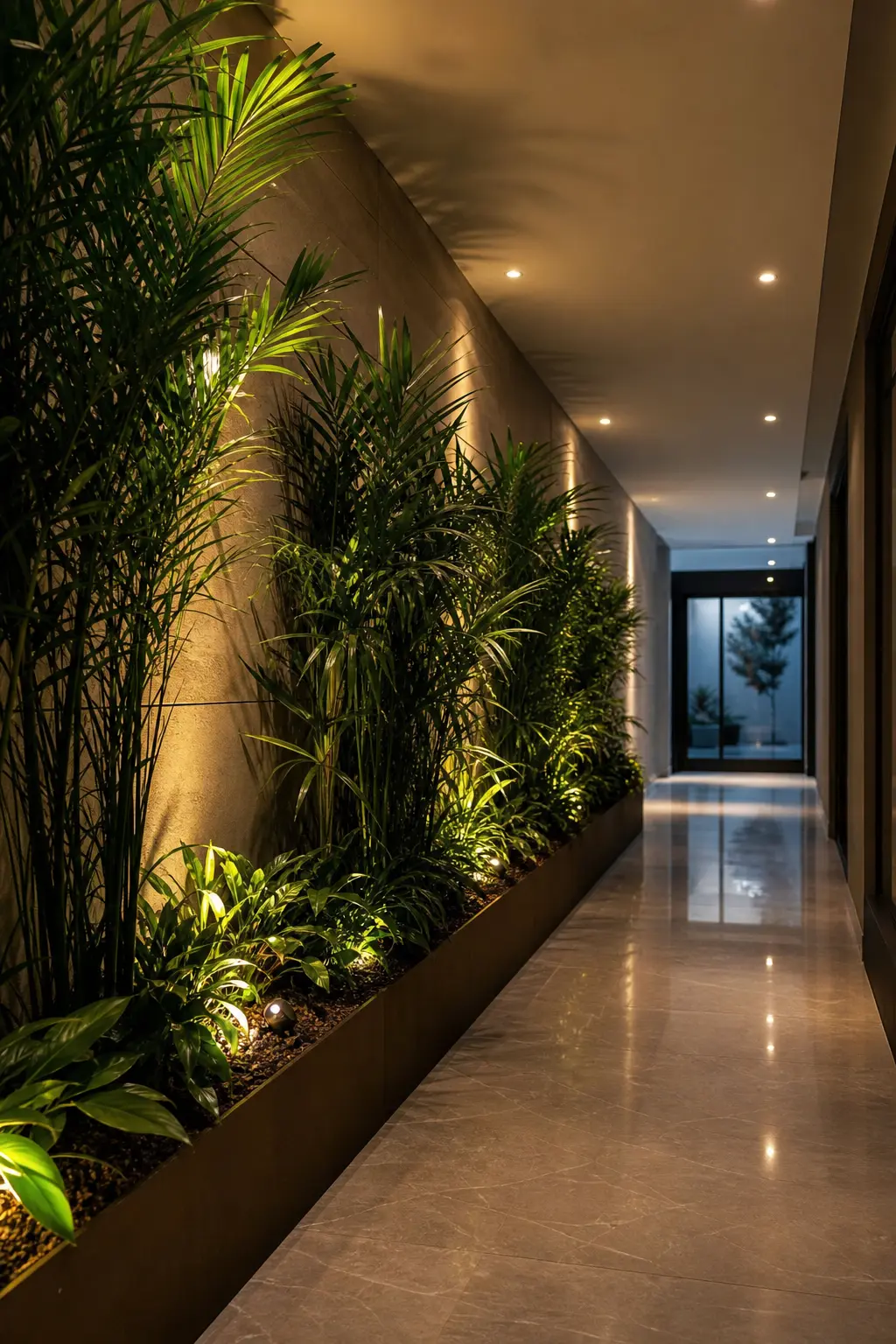
Line one wall of the hallway with a few tall plants, spaced evenly apart, and place a small LED uplight at the base of each one. The light travels up through the leaves and casts dramatic, shifting shadows onto the wall and ceiling above, turning simple foliage into something closer to a lighting feature. This works particularly well in longer hallways, where the repeated plant and light pairing creates a rhythm that draws the eye down the length of the space, making the walk from one end feel more like moving through a considered space than a plain corridor.
2. Hanging Plants Lit from a Recessed Ceiling Strip
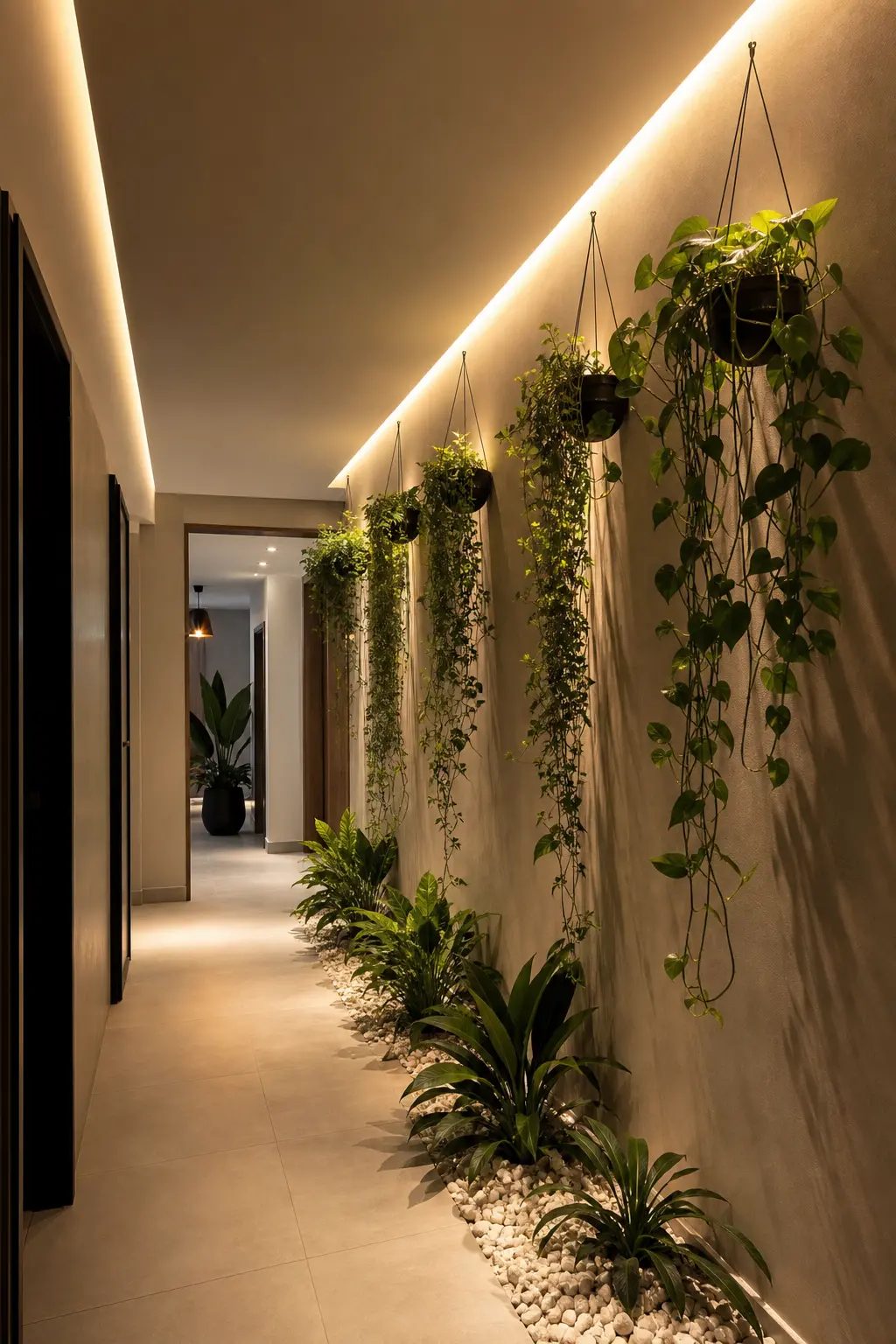
If the hallway ceiling has any recessed detail or a dropped section, run a warm LED strip along it and hang a row of trailing plants below, positioned so the light catches their leaves as they cascade down. This adds greenery at a height that floor plants can’t reach, and the lighting from above creates a soft glow through the foliage rather than a harsh shadow underneath, giving the ceiling itself a bit of the same attention usually reserved for the walls and floor.
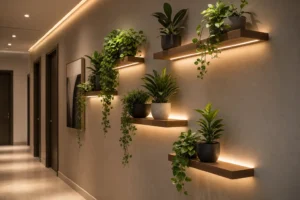
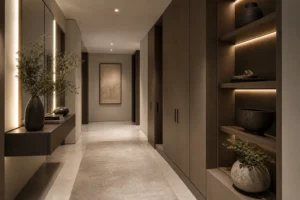
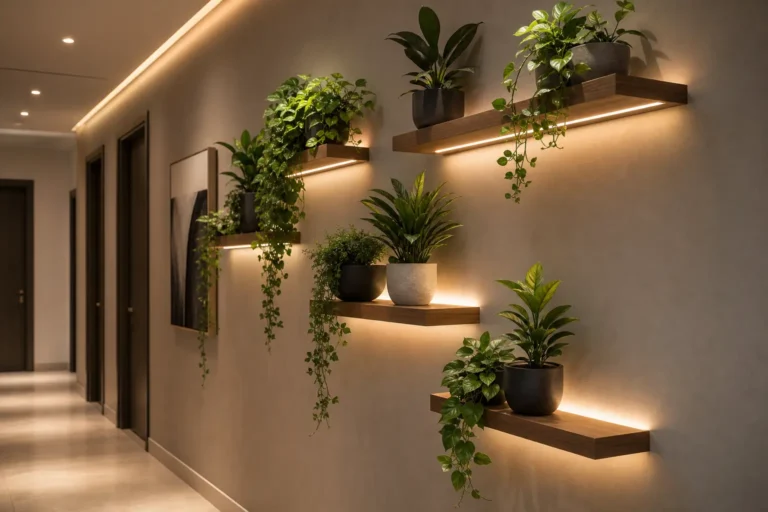
3. Plant Ledge with Warm LED Backlighting
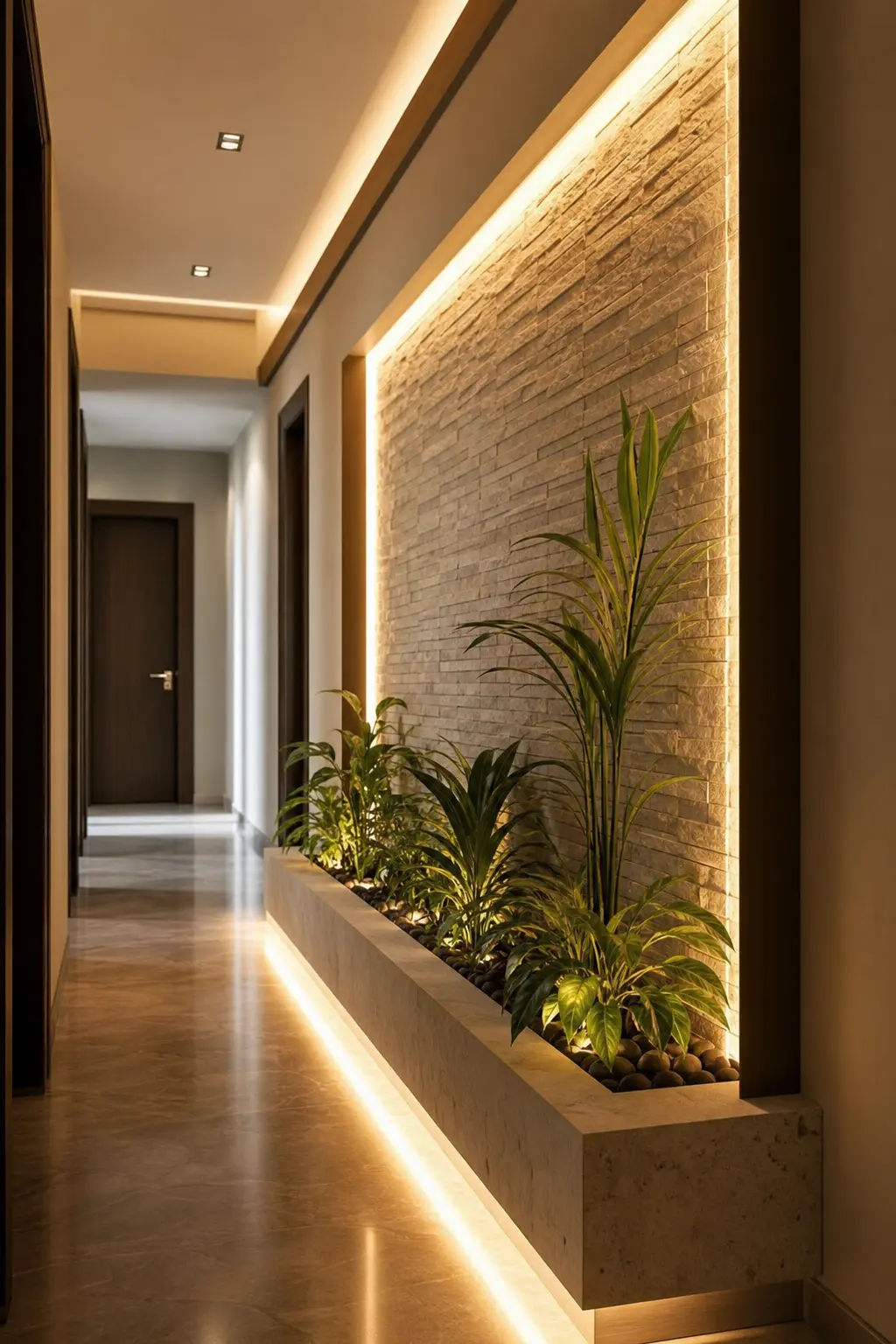
Build a narrow floating ledge along the hallway wall, wide enough to hold a row of small potted plants, and run an LED strip along the underside so it glows down toward the floor. The ledge keeps the plants at a consistent height and off the ground entirely, which matters in narrower hallways where floor space for pots simply isn’t available, and the uniform height also gives the whole row a tidier, more intentional look than pots scattered at varying levels.
4. Corner Plant Cluster with a Single Spotlight
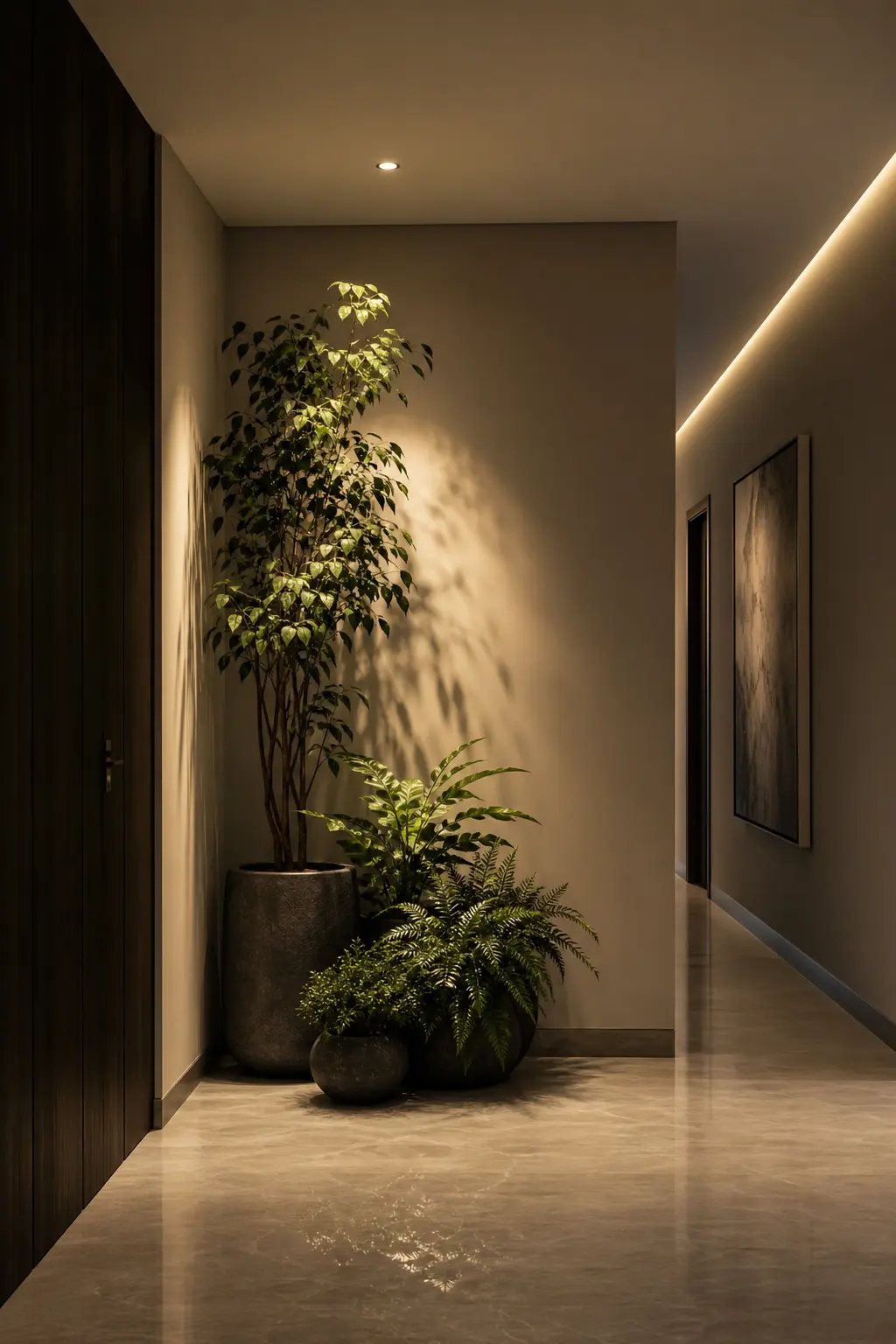
At the end of a hallway, or in any corner where the space opens up slightly, group a cluster of plants at different heights and aim a single warm spotlight at the grouping from above or the side. This creates a clear destination point at the end of the hallway, giving the eye somewhere to land rather than trailing off into a blank wall, which matters especially in hallways that lead nowhere particularly interesting on their own.
5. Trailing Vines Along a Backlit Shelf
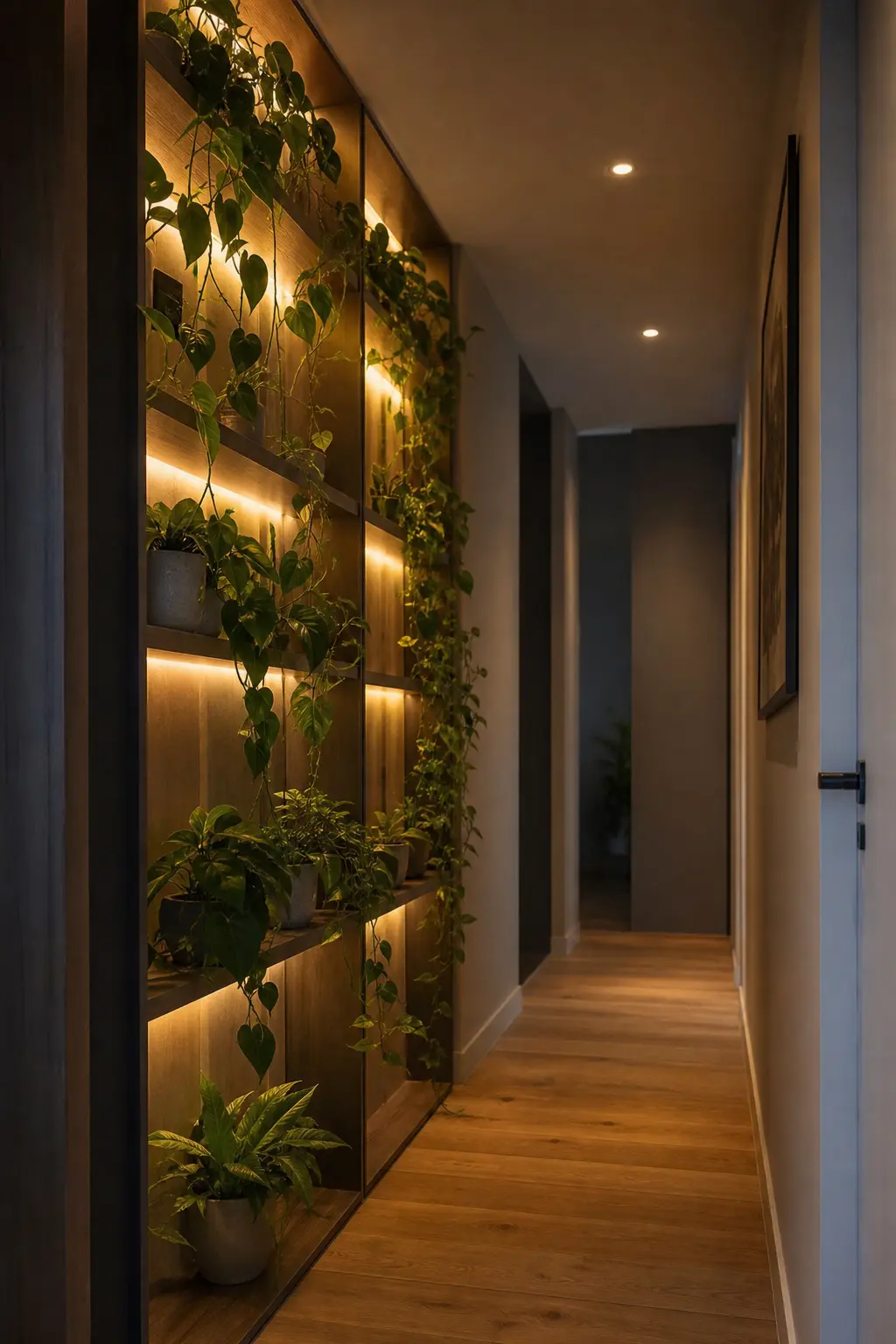
Mount a shelf partway up the hallway wall, and let a trailing plant like pothos or ivy spill over the edge, positioned in front of a warm LED strip running along the shelf’s back edge. The backlighting catches the trailing leaves as they hang down, creating a softly glowing curtain of greenery rather than a plant that just sits there during the day, and the effect changes noticeably depending on how far the vines have grown out over time.
6. Plant Wall Niche with Hidden Edge Lighting
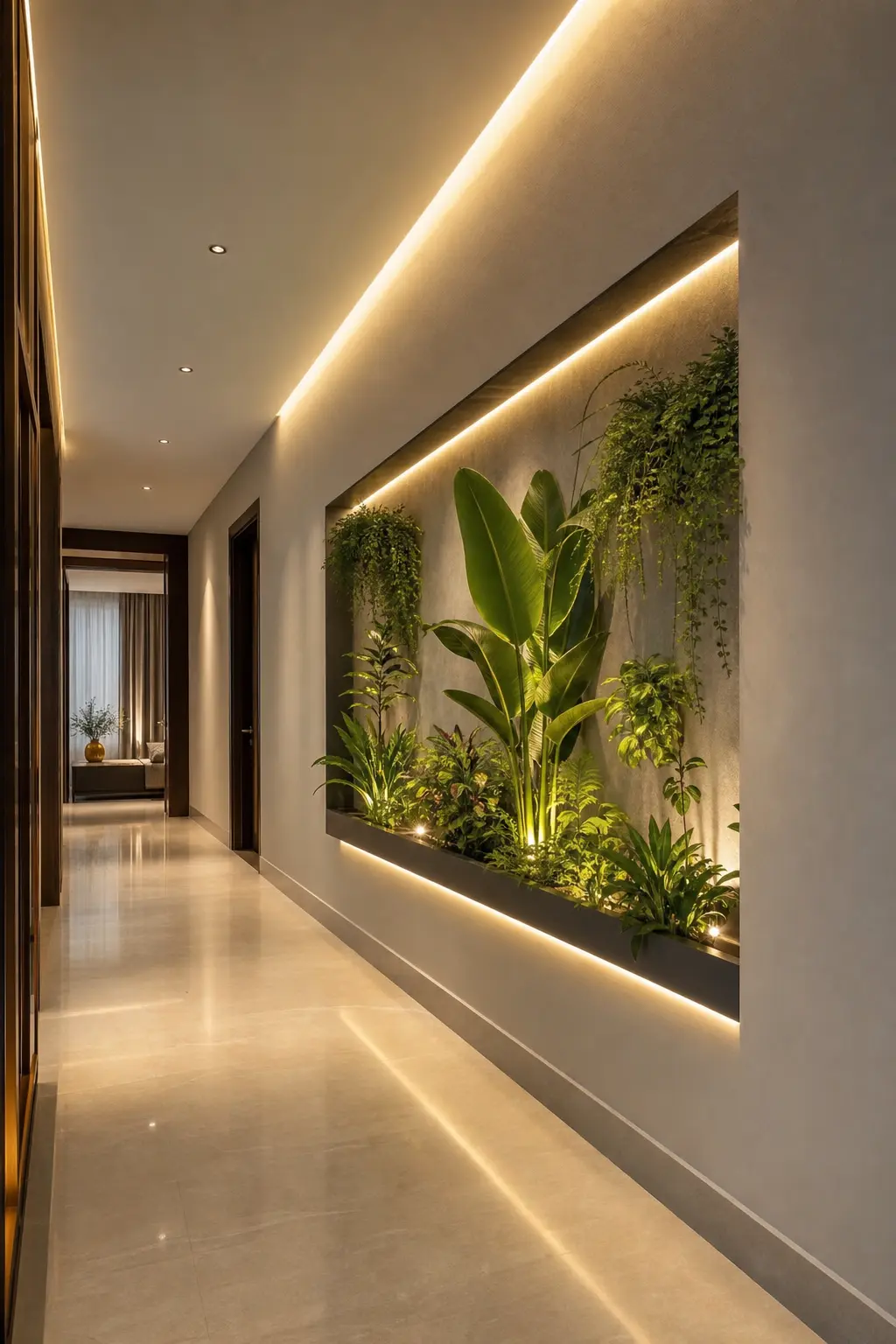
Build a shallow niche into the hallway wall, sized to fit one or two plants, and line the inside edge with LED strip lighting. The niche gives the plants a defined, architectural home rather than sitting on an open shelf, and the hidden lighting creates a soft halo effect around the greenery that a simple potted plant on the floor wouldn’t achieve.
7. Statement Tree Beneath a Skylight or Fixture
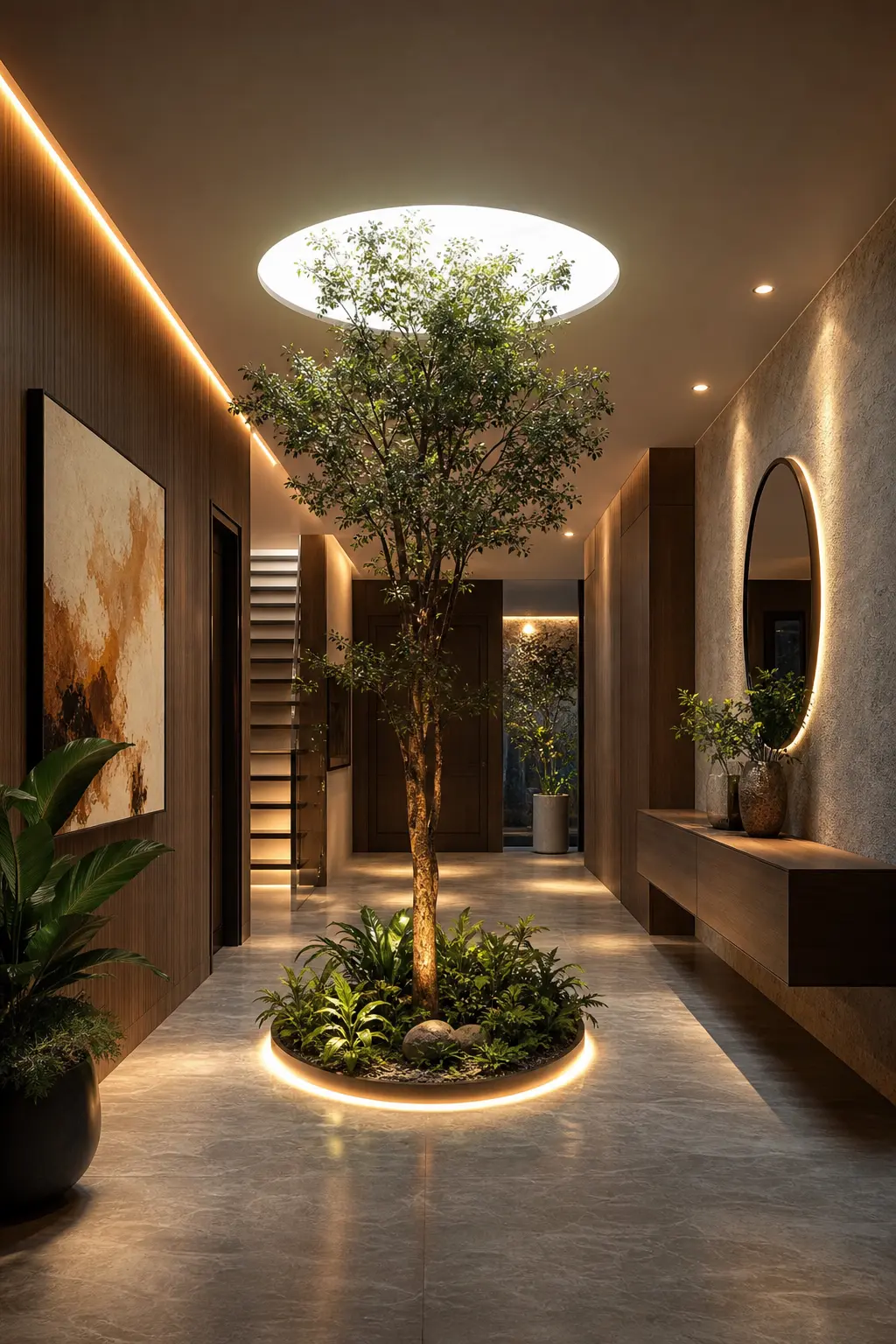
If the hallway has a skylight or a dramatic overhead fixture, position a single tall statement plant, like a fiddle leaf fig or an olive tree, directly beneath it. During the day, natural light from above does most of the work, and at night, a warm downlight from the fixture takes over, keeping the tree looking intentional and lit around the clock rather than just during daylight hours. This pairing works especially well as the very first thing someone sees stepping through the front door.
8. Layered Plant Heights with Staggered LED Strips
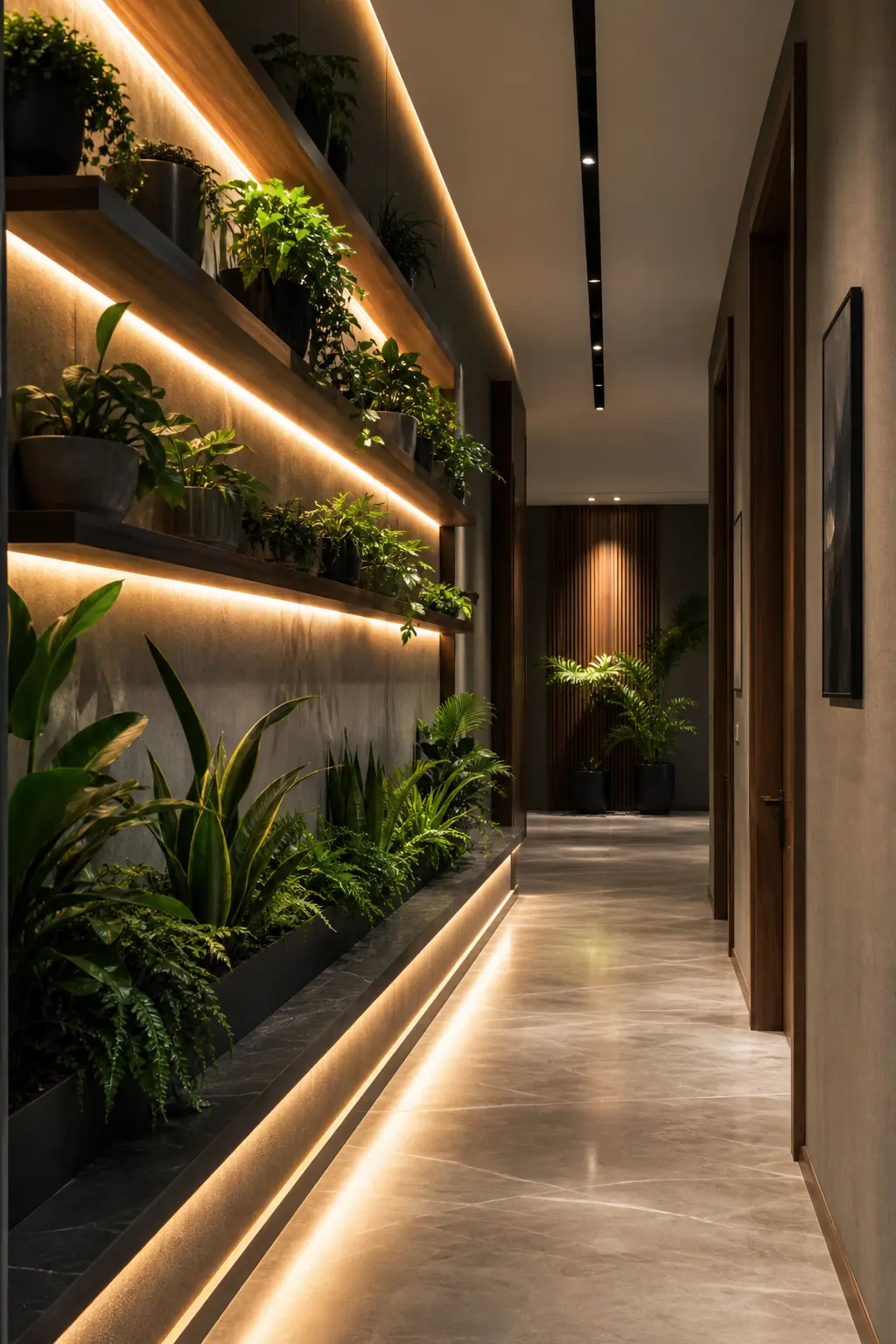
Rather than one uniform row, vary the plant heights along the hallway, tall, medium, short, tall again, and stagger the LED strips accordingly, some at floor level, some higher up on shelves or ledges. This layered approach mimics how a well designed garden uses varied heights, bringing that same sense of depth into an indoor hallway setting.
9. Plant and Mirror Pairing with Warm Glow
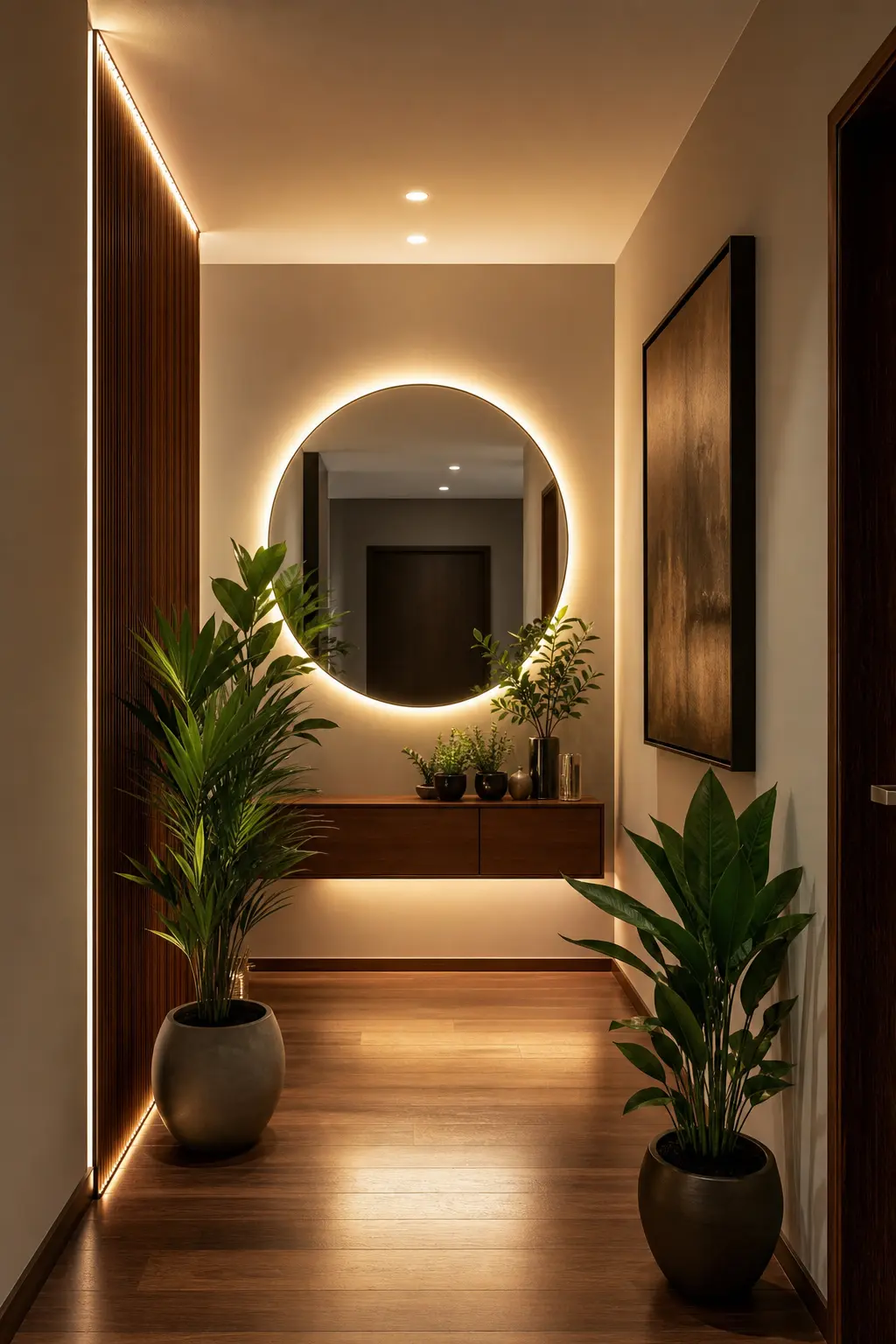
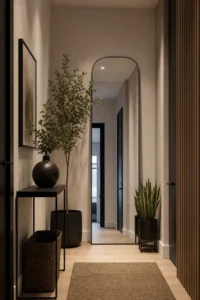
Position a tall plant beside a mirror with warm LED edge lighting, and the reflection doubles the greenery visually while the mirror’s glow adds ambient light to a hallway that might otherwise feel dim. This combination works especially well in narrower hallways, where the mirror also helps the space feel a bit wider than it actually is.
10. Minimalist Single Plant with a Spotlight Moment
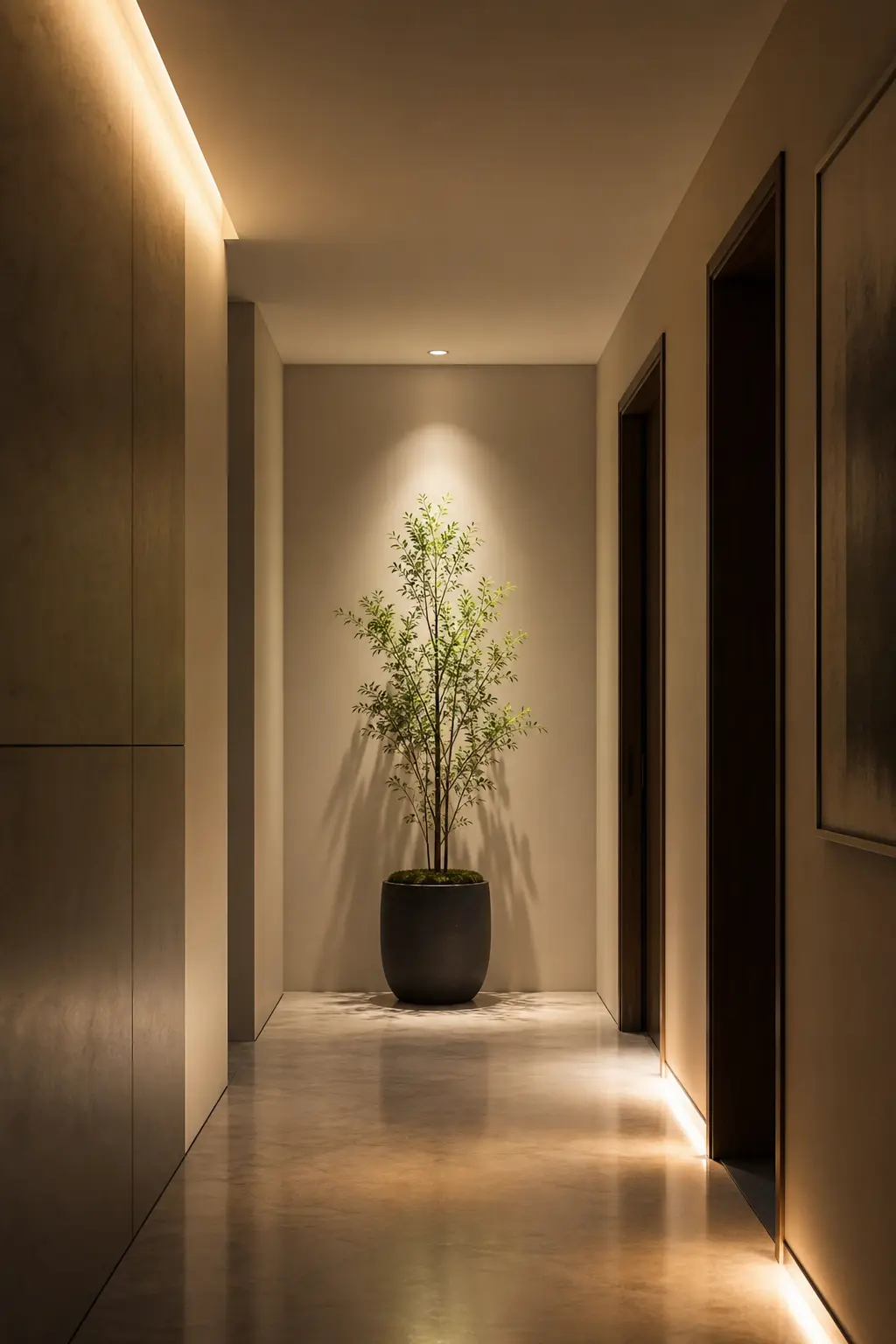
Sometimes one plant, placed deliberately and lit well, does more than a whole row of them scattered without much thought. A single striking plant, lit with one warm spotlight from above or the side, becomes a genuine moment in an otherwise simple hallway, proving that the lighting and placement matter more than the sheer number of plants involved. This approach also tends to suit smaller entryways best, where a busier layered display might feel like too much for the space available.
Mistakes to Avoid
- Choosing plants that need more light than a typically dim, window free hallway can actually provide
- Overcrowding a narrow hallway with too many pots, leaving little room to comfortably walk through
- Skipping drainage trays under pots, risking water damage to hallway flooring over time
- Using cool white lighting instead of warm tones, which can make greenery look flat rather than vibrant
- Ignoring plant maintenance access, placing pots somewhere so tight that watering or trimming becomes difficult
- Forgetting to rotate plants near a single light source periodically, leading to uneven, lopsided growth over time
Frequently Asked Questions
What plants survive best in a hallway with little natural light? Snake plants, ZZ plants, and pothos all tolerate low, indirect light reasonably well, making them solid choices for hallways that don’t get much natural daylight throughout the day.
How do I light plants in a hallway without natural windows? Small LED grow lights, disguised within a warm toned fixture or spotlight, can supplement the plant’s light needs while still contributing to the hallway’s overall ambient lighting design.
Can artificial plants work just as well in this kind of hallway design? High quality artificial plants can achieve a similar visual effect, especially in hallways with very limited light, though they won’t offer the subtle movement or air quality benefits that real plants provide over time.
How much does it cost to add LED uplighting for a row of hallway plants? Small plug in LED uplights typically run 15 to 40 dollars each, making a row of five or six lights a fairly affordable upgrade compared to a full hardwired lighting renovation.
Do hallway plants need special pots for narrow spaces? Slimmer, taller pots generally work better in narrow hallways than wide, squat ones, since they take up less floor footprint while still giving the plant’s root system enough depth to grow properly.
Conclusion
A hallway rarely gets much design attention, but plants and the right lighting can change that faster than almost any other update. The greenery brings life and texture, the warm light gives it a reason to be noticed even after the sun goes down, and together the two turn a plain pass through space into something worth walking through slowly instead of rushing past. These hallway ideas show that even the most overlooked part of a home has real potential once it gets treated like an actual room.