10 Modern Two Tone Kitchen Cabinet Ideas with Under Cabinet Strip Lighting
Your kitchen cabinets are all one color, and even with new countertops or a fresh backsplash, the whole room still feels flat under the lights. Modern two tone kitchen cabinets paired with under cabinet strip lighting fix that by adding contrast and depth, then lighting that contrast so it actually shows at night. It’s a renovation level change that costs far less than replacing every cabinet in the room.
1. Understand the Logic Behind Two Tone Cabinets
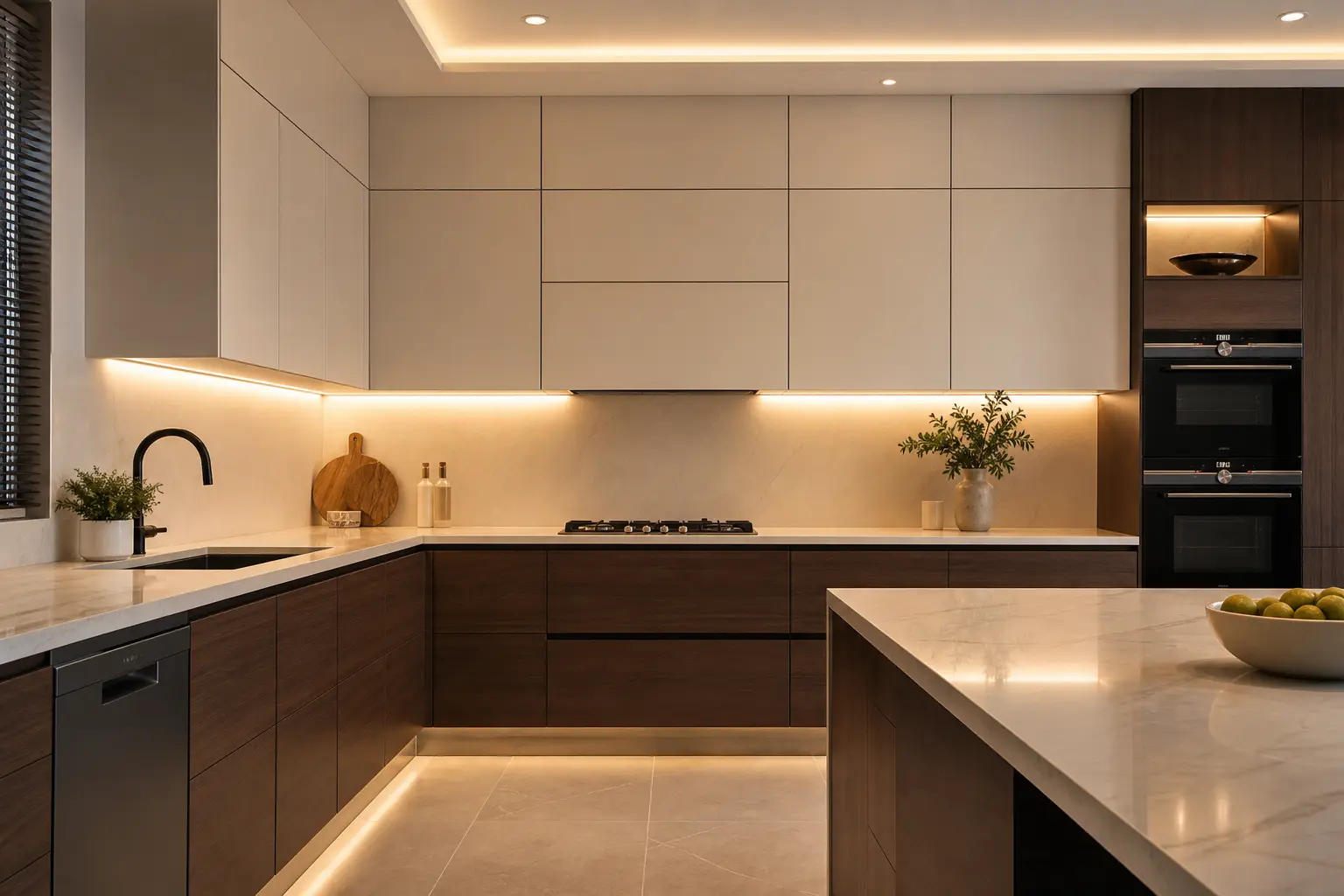
Two tone kitchens use one color for lower cabinets and a different color for upper cabinets, or sometimes one tone for a central island against a different tone everywhere else. The contrast breaks up what would otherwise be one flat wall of color from floor to ceiling. It also lets a smaller kitchen feel less boxed in, since the eye reads two distinct zones instead of one solid block.
This isn’t a new trend so much as a return to how kitchens were often built before uniform cabinet sets became standard. A dark lower run grounds the room, while a lighter upper run keeps the space feeling open. That balance is the whole reason two tone kitchens photograph as well as they do.
2. Pick a Color Pair That Actually Works Together
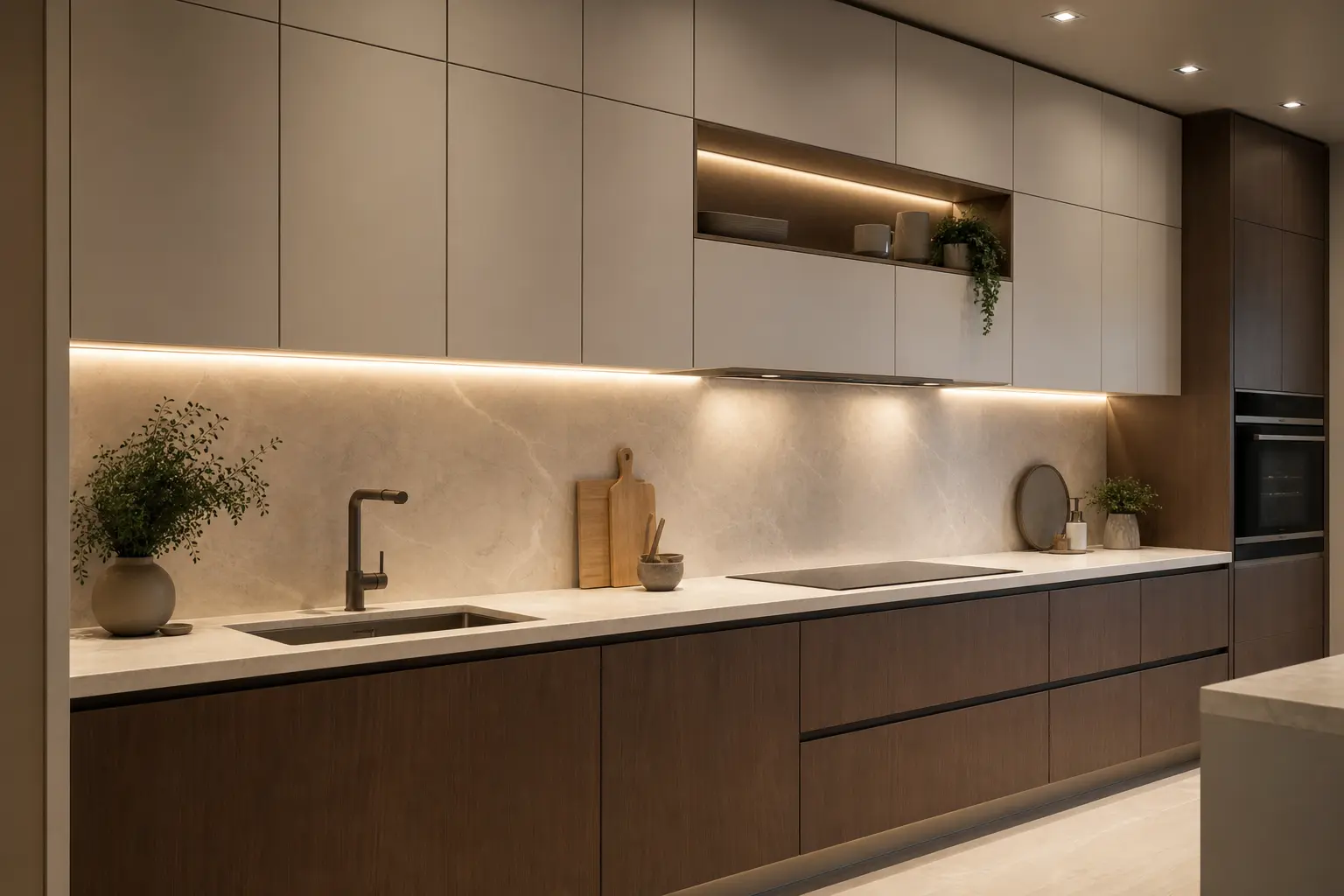
Stick to pairs with enough contrast to read intentionally, not so much that they clash. Charcoal lowers with warm white uppers is one of the most common and reliable combinations. Deep green or navy lowers with a soft cream upper also works well if you want more color without losing the calm, grounded feel.
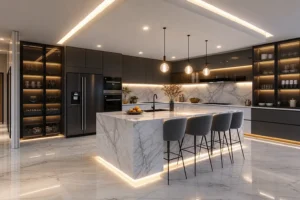
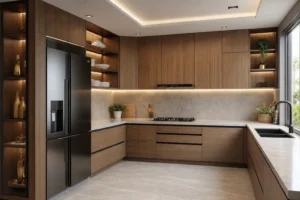
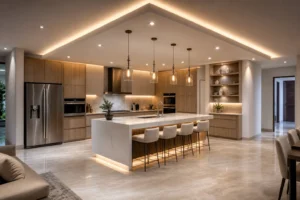
Avoid pairing two colors of similar mid tone value, since that reads as mismatched rather than intentional. The goal is enough separation that a stranger walking in immediately understands it’s a deliberate choice. Bring a paint swatch and a cabinet sample into the actual kitchen lighting before committing, since undertones shift under different bulbs.
Testing Color Under Your Actual Lighting
Cabinet colors look different under warm LED strip lighting than they do under a showroom’s fluorescent lights. Tape large swatches to the cabinets and view them at night with the under cabinet lighting on. What reads as a rich charcoal in daylight can look almost black under warm 2700K light, which changes the whole balance.
3. Decide Which Cabinets Get the Darker Tone
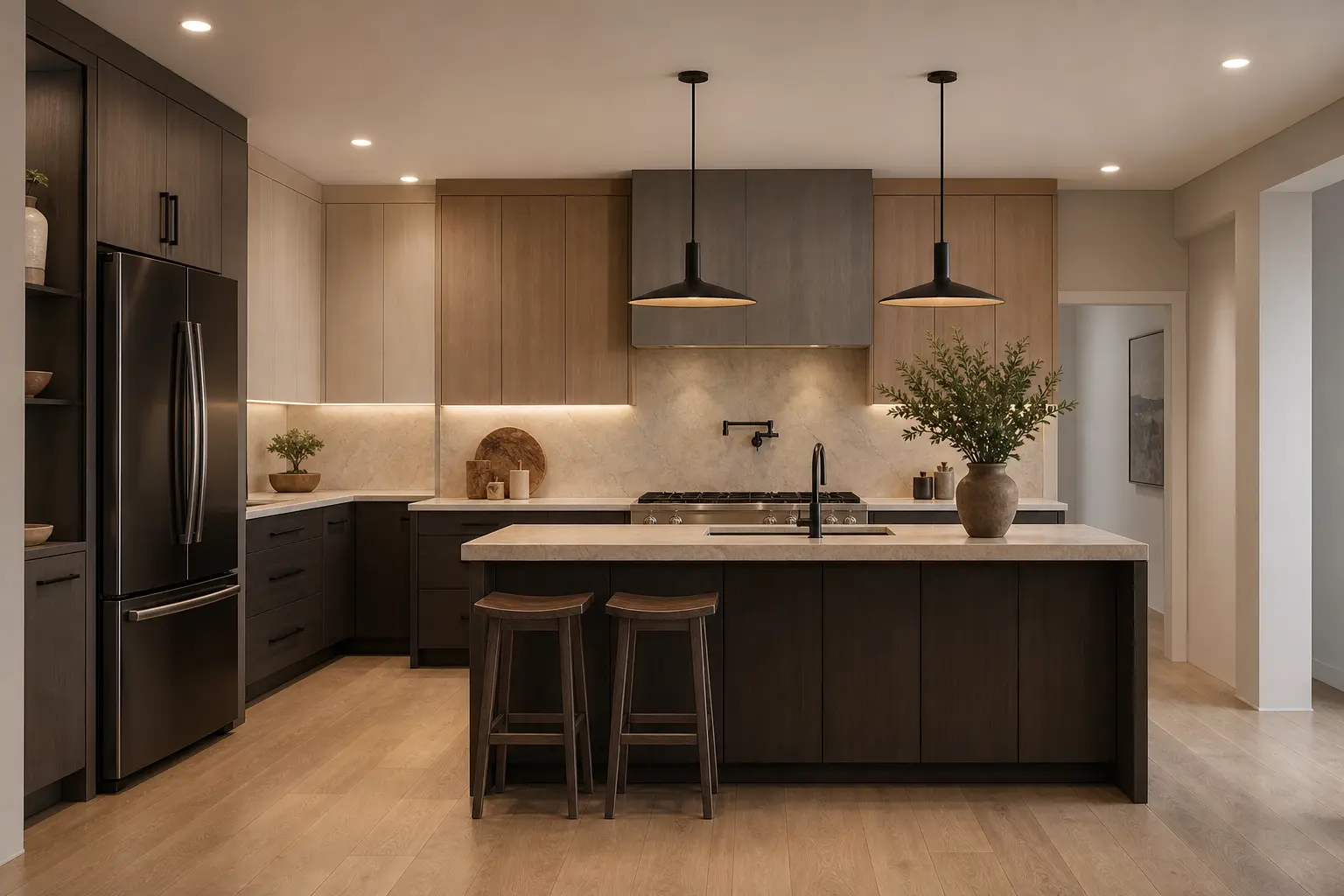
The most common approach puts the darker color on lower cabinets and the lighter color on uppers. This grounds the room visually and keeps the upper cabinets from feeling heavy above eye level. It also hides scuffs and daily wear better, since lower cabinets take more physical contact from feet, carts, and kids.
Some kitchens flip this, using a dark color on an island only while keeping the rest of the cabinetry light. That approach works well when the island already serves as the room’s natural focal point. Either way, pick one clear rule and apply it consistently rather than mixing tones cabinet by cabinet.
4. Choose a Sheen That Suits Daily Kitchen Use
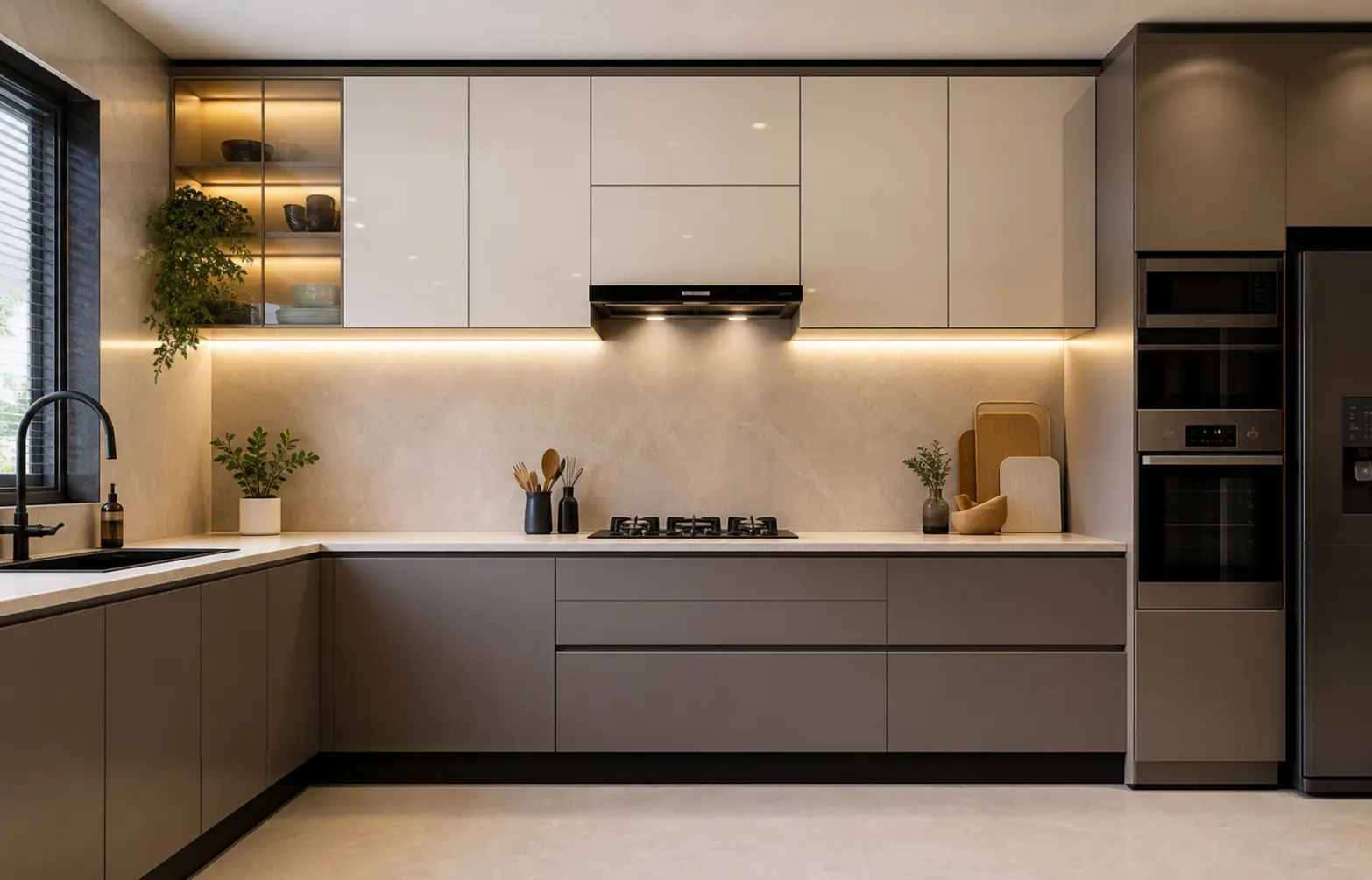
Matte and satin finishes have become the more popular choice for two tone kitchens, since they hide fingerprints and small imperfections better than a high gloss finish. Satin adds a bit more sheen and durability for cabinets that get wiped down often, particularly around the stove and sink. High gloss looks striking in photos but shows every smudge under strong under cabinet lighting.
If budget allows, consider a slightly higher sheen on the lower cabinets, since they need more frequent cleaning. Keep the upper cabinets in a softer matte finish, since they see far less daily contact. That small sheen difference between upper and lower also adds another subtle layer of depth to the two tone effect.
5. Add Under Cabinet Strip Lighting for Task and Mood
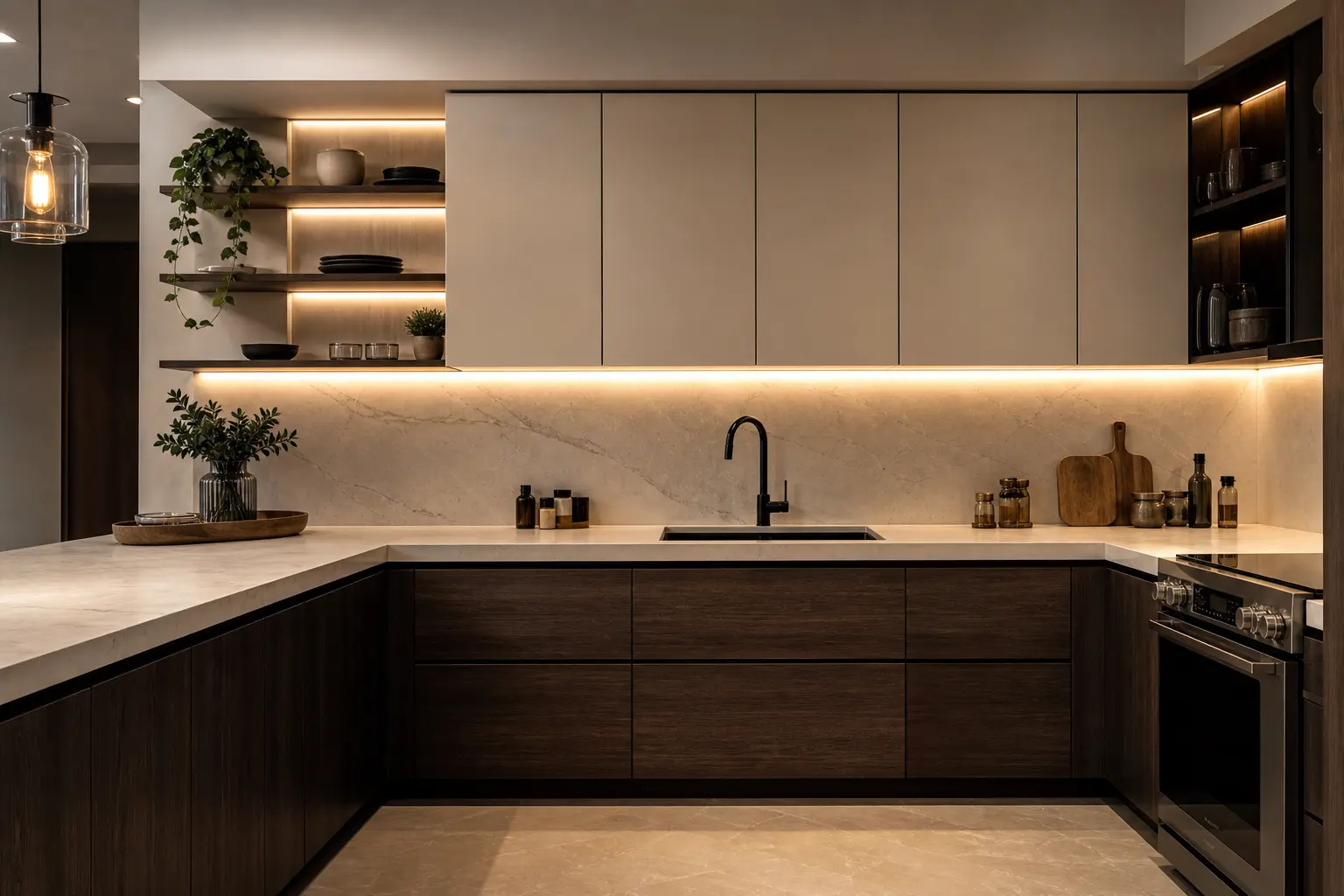
Under cabinet LED strips light the counter directly below, which helps with food prep and also highlights the backsplash and countertop material. Look for strips rated 250 to 400 lumens per foot for kitchen task lighting, dimmable if possible. A warm 2700K to 3000K temperature keeps the light feeling like part of the room rather than a cold work light.
This lighting does double duty in a two tone kitchen, since it draws a visible line between the upper and lower cabinet colors. That glow essentially highlights the exact spot where the two tones meet. It’s a small addition that makes the whole color scheme read more intentionally designed.
6. Get the LED Strip Placement Right for Even Light
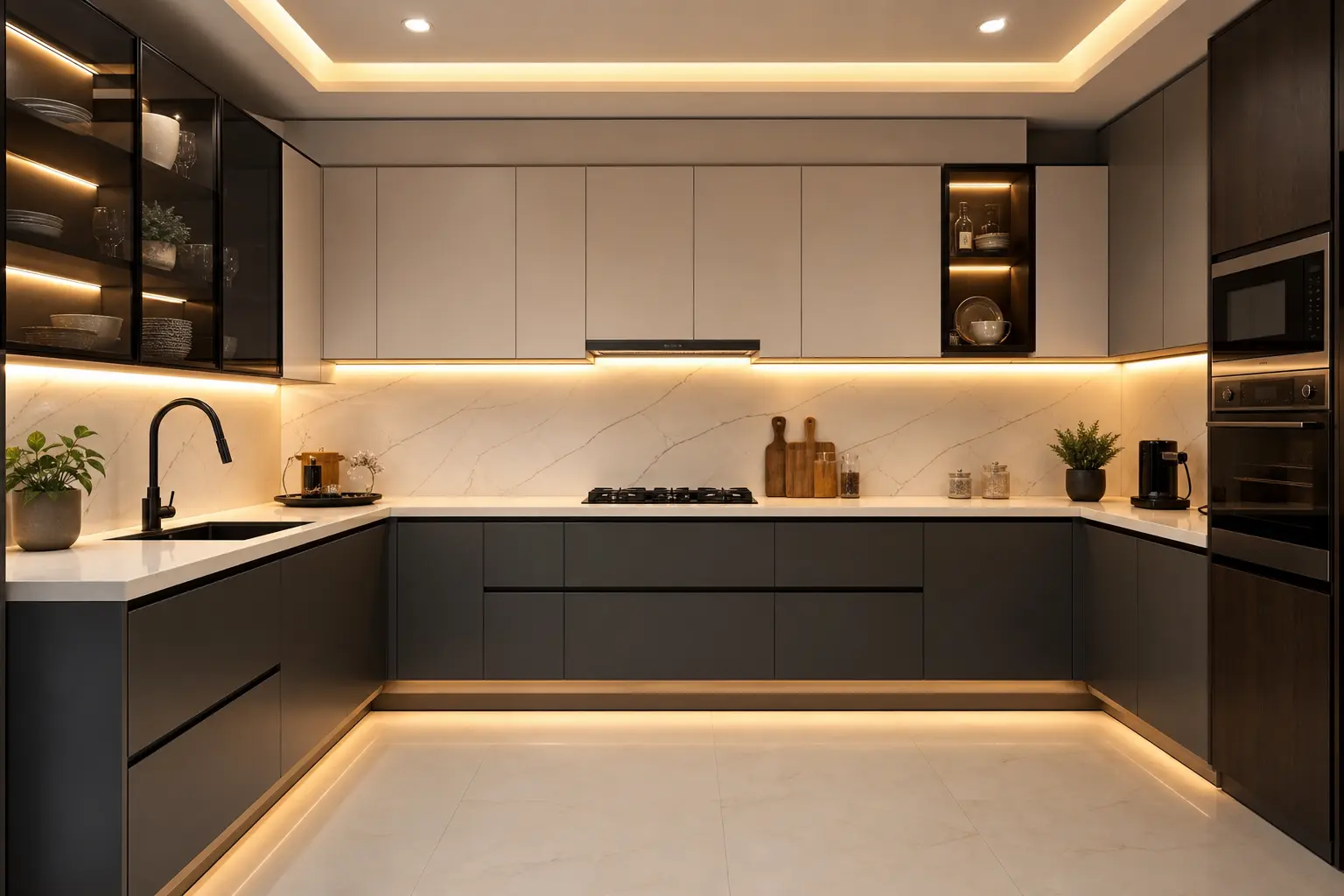
Mount the strip toward the front edge of the upper cabinet rather than tucked against the back wall, since front placement lights the counter more evenly and reduces shadows from your own hands while working. Use a diffuser channel over the bare strip to soften hot spots and avoid seeing individual LED dots reflected in a glossy countertop. Plan for roughly one continuous strip run per cabinet section rather than piecing together short segments with visible gaps.
Test the placement with the strip taped in position before final mounting, since a few inches forward or back changes how the light falls on the counter. Turn off the overhead lights and check for dark spots or glare on the backsplash. A five minute test now saves an awkward reinstall later.
7. Tie the Two Tones Together With Hardware
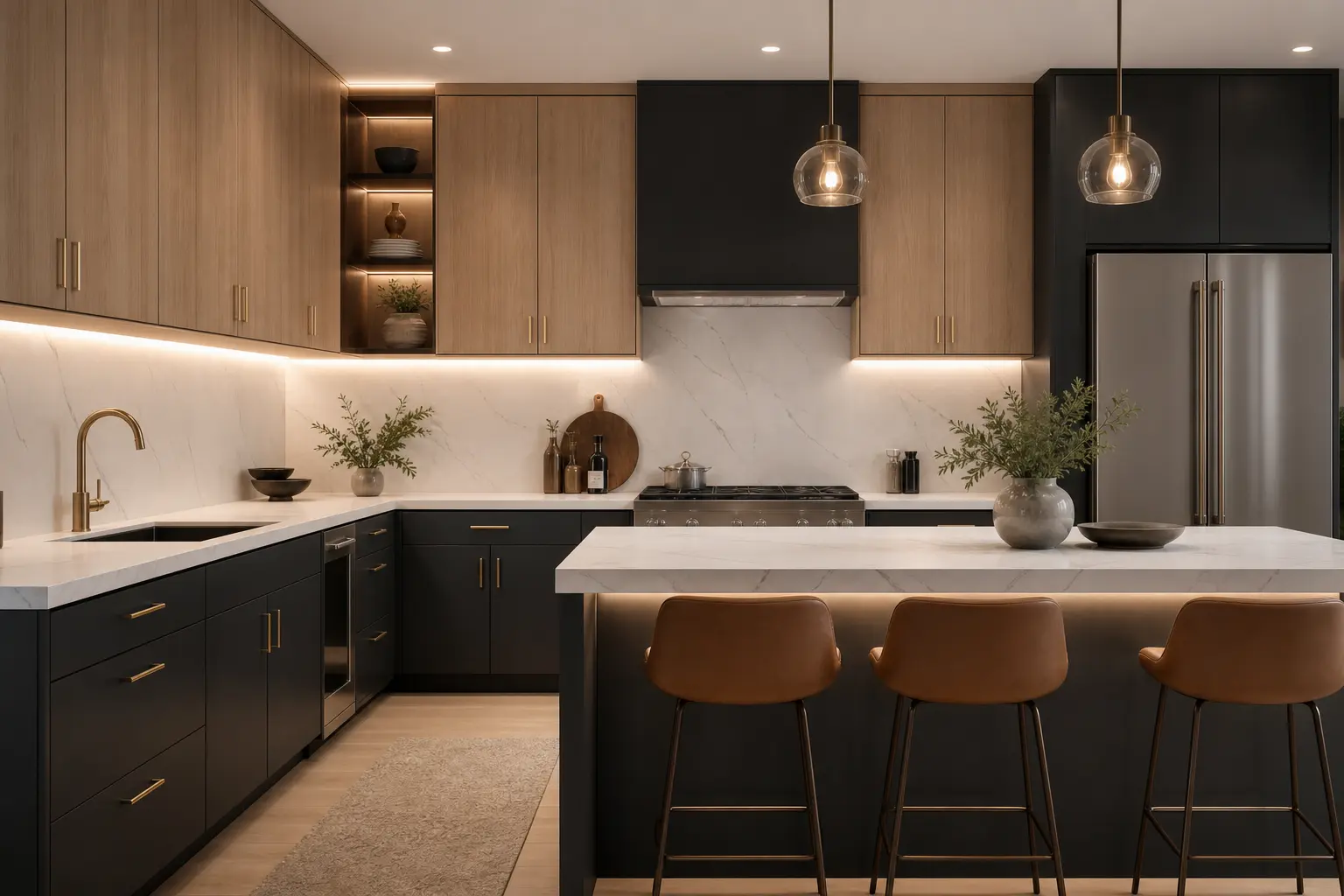
Matching hardware finish across both cabinet colors keeps the two tone look feeling cohesive rather than like two separate kitchens pushed together. Warm brass or matte black both work well against most two tone pairings, since either reads as a neutral connector rather than a third competing color. Keep the hardware style, whether a bar pull or a knob, consistent across both tones as well.
The one exception is a deliberate shift in hardware shape between the two zones, which some kitchens use on purpose to reinforce the contrast. This works best when the two shapes still share the same metal finish. Mixing both finish and shape at once usually reads as cluttered rather than intentional.
8. Use the Backsplash to Bridge Both Cabinet Colors
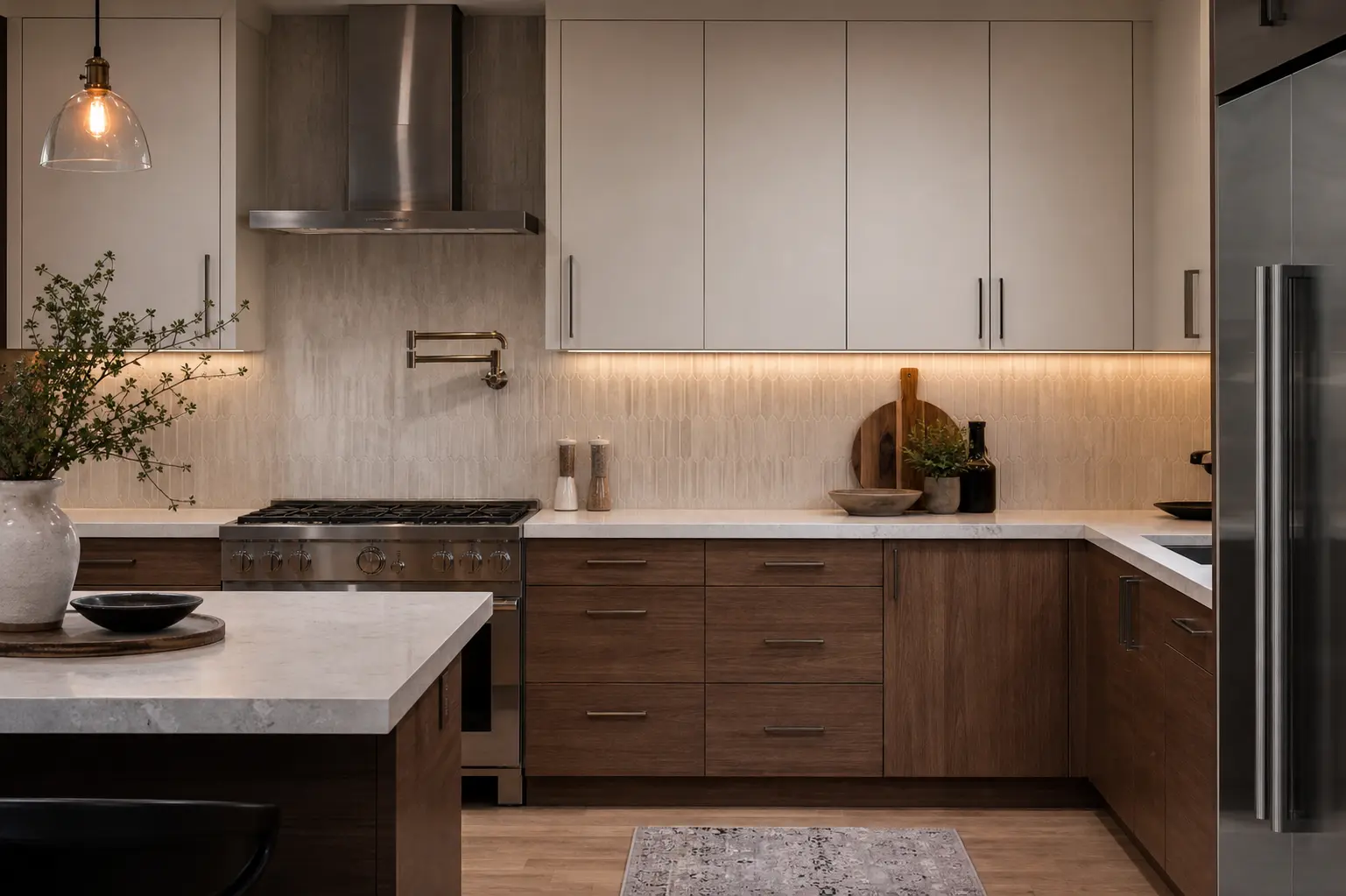
A backsplash sitting between the two cabinet colors is a natural place to pull in tones from both. A stone or tile backsplash with subtle veining that echoes both the dark lower and light upper cabinet can visually connect the two halves of the kitchen. Under cabinet lighting shining down onto that backsplash is what makes the connecting material actually noticeable.
Avoid a backsplash so busy it competes with both cabinet colors at once. A simpler pattern, even a plain subway tile in a warm off white, often does more to unify the space than a bold statement tile. The backsplash’s job here is to bridge, not to compete.
9. Plan the Wiring Before Cabinets Are Installed
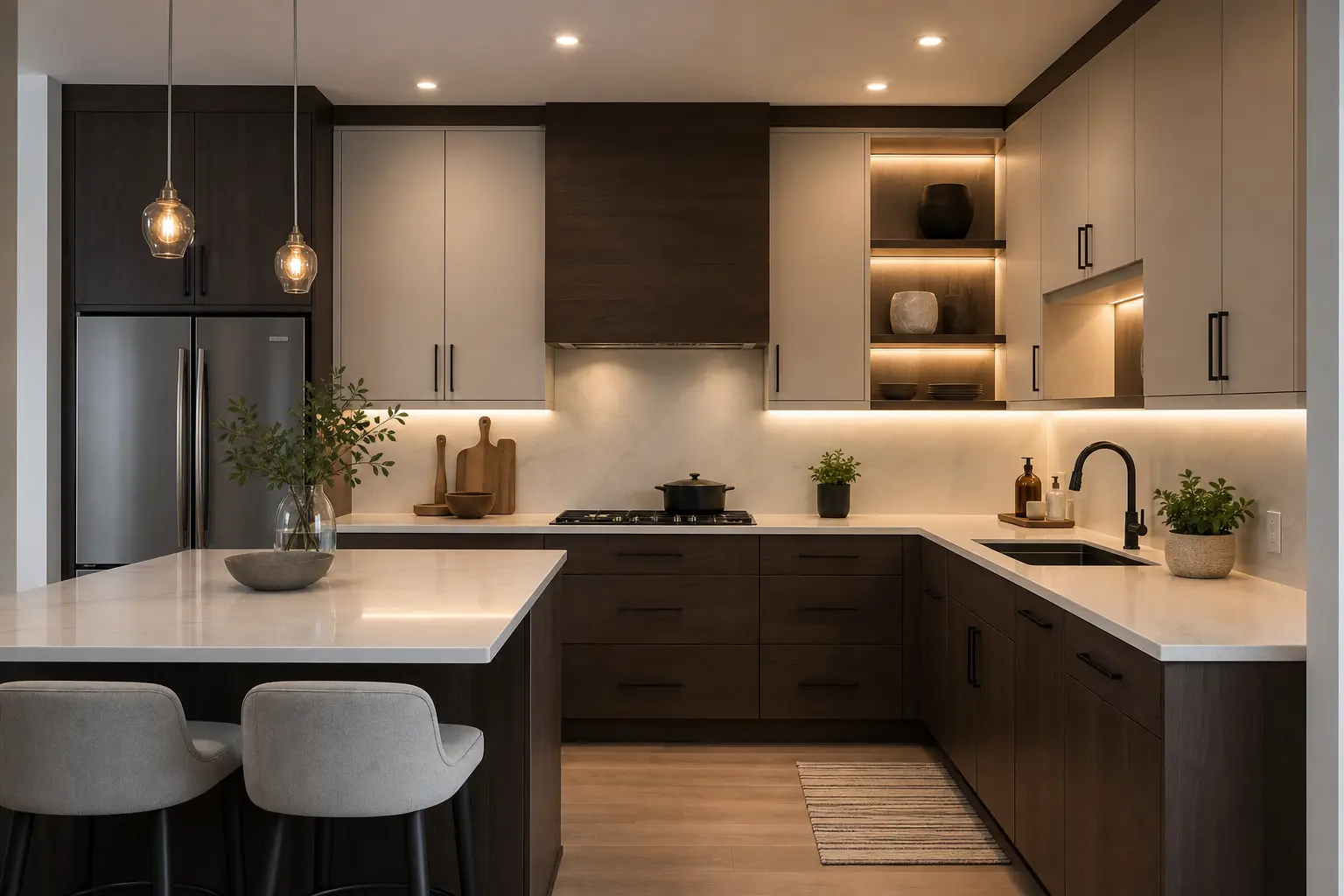
Under cabinet lighting needs power access, ideally hardwired to a switch rather than relying on a visible plug and cord. Run the wiring during cabinet installation if you’re doing new cabinets, since retrofitting power into finished upper cabinets means drilling through cabinet boxes later. A licensed electrician can add a switched outlet inside the upper cabinet box specifically for this purpose.
If you’re adding lighting to existing cabinets, plug in LED strips with a nearby outlet are a realistic workaround. They won’t be quite as clean as a hardwired system, but they avoid opening up finished cabinetry. Route the cord along the underside of the cabinet and secure it with clips so it doesn’t hang visibly below the light strip.
10. Avoid a Look That Feels Split in Half
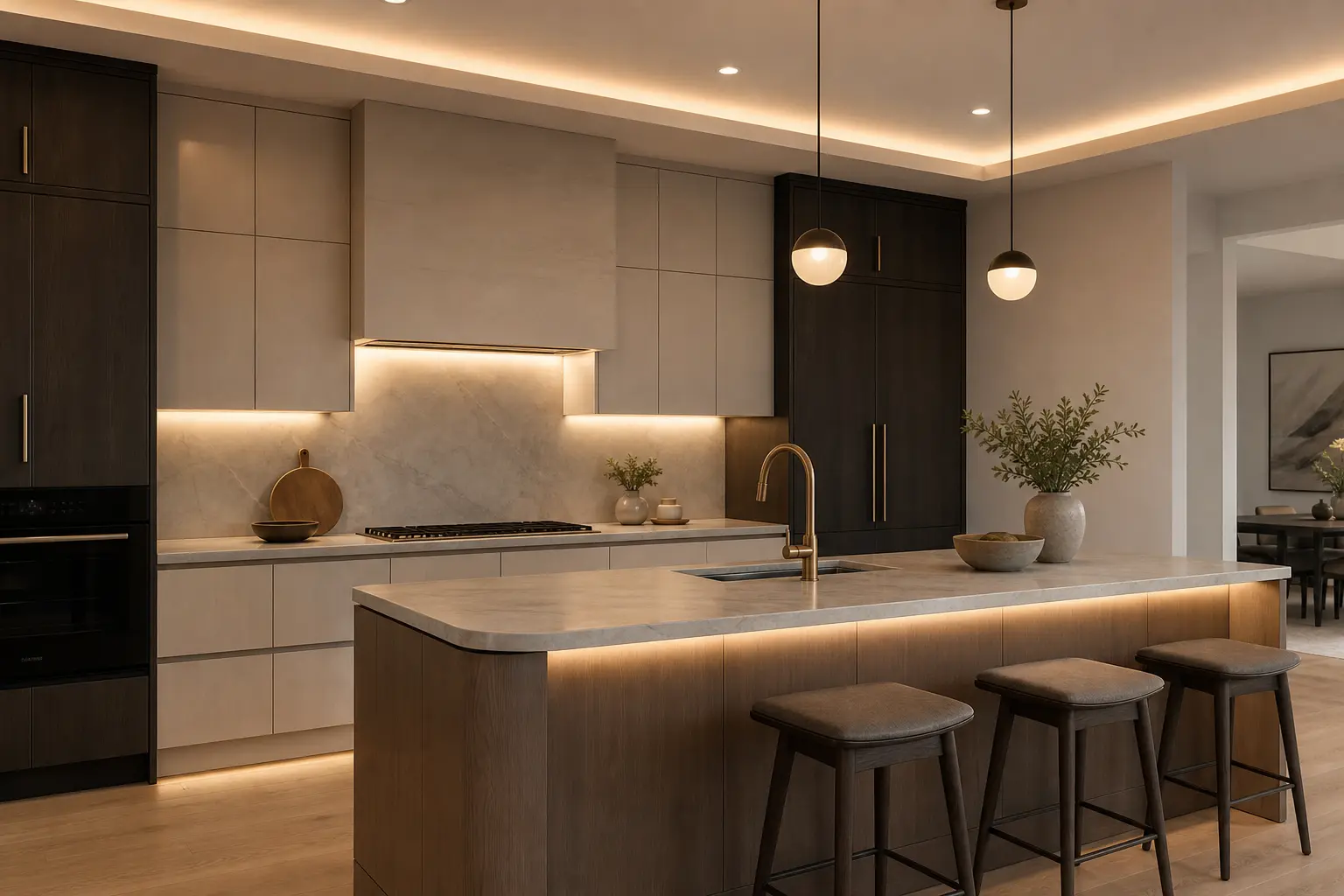
A two tone kitchen can tip from intentional contrast into a cabinet scheme that looks like two unrelated kitchens pushed together. The fix is repetition, making sure both tones show up more than once around the room instead of staying strictly confined to upper and lower cabinets. A dark island alongside dark lower cabinets, or a light open shelf alongside light uppers, reinforces the pairing as a deliberate design choice.
Countertops, hardware, and the backsplash all play a role in avoiding the split in half look, since they’re the elements that physically connect the two cabinet zones. If the two tones only ever meet at one horizontal line across the room, that line can start to look like an unfinished paint job rather than a style choice. Repeating each tone in at least one other spot, even a small one, is usually enough to read as designed rather than accidental.
Mistakes to Avoid
- Pairing two cabinet colors with too similar a value, which reads as mismatched rather than intentional
- Choosing a high gloss finish on lower cabinets that will show every smudge and scuff
- Mounting the LED strip too far back on the cabinet, creating shadows and uneven light
- Skipping hardware consistency between the two cabinet tones
- Testing paint or cabinet swatches only in daylight, then being surprised by how they look under warm lighting at night
- Choosing a backsplash pattern too busy to bridge the two cabinet colors cleanly
Frequently Asked Questions
What’s the most popular two tone cabinet color combination right now? Charcoal or navy lower cabinets paired with a warm white or cream upper is one of the most requested combinations, since it grounds the room without feeling heavy.
Do under cabinet lights need to be hardwired? A hardwired system with a switch is the cleanest option for new cabinet installs, but plug in LED strips work as a retrofit for existing cabinets without opening up the cabinet boxes.
Should the darker color go on upper or lower cabinets? Most two tone kitchens put the darker tone on lower cabinets, since it grounds the room and hides daily wear better than a light lower cabinet would.
What sheen works best for two tone kitchen cabinets? Matte or satin finishes are generally preferred for daily use, since they hide fingerprints and small imperfections better than high gloss.
How bright should under cabinet strip lighting be? Around 250 to 400 lumens per foot works well for task lighting at the counter, with a warm 2700K to 3000K temperature for a cozier feel.
Final Thoughts
A modern two tone kitchen with under cabinet strip lighting works because the color contrast and the lighting reinforce each other instead of competing. Start by testing your color pair under the kitchen’s actual lighting conditions, not just in daylight. Then plan the wiring and strip placement early, since that decision is far easier to get right before cabinets go in than after.