10 Modern Pergola Walkway Design Ideas With Climbing Plants and Luxury Garden Pathway Inspiration
Walking from your driveway to the front door under full sun isn’t exactly the welcome home moment anyone wants. A bare concrete path with nothing overhead can feel harsh, especially in the middle of summer. A pergola walkway fixes that problem by adding structure, shade and a sense of arrival before you even reach the door. This guide covers ten specific pergola walkway design ideas, including how to choose climbing plants that actually thrive, so you can build a luxury garden pathway that works in real conditions, not just in photos.
1. Choose a Pergola Style That Matches Your Home’s Architecture
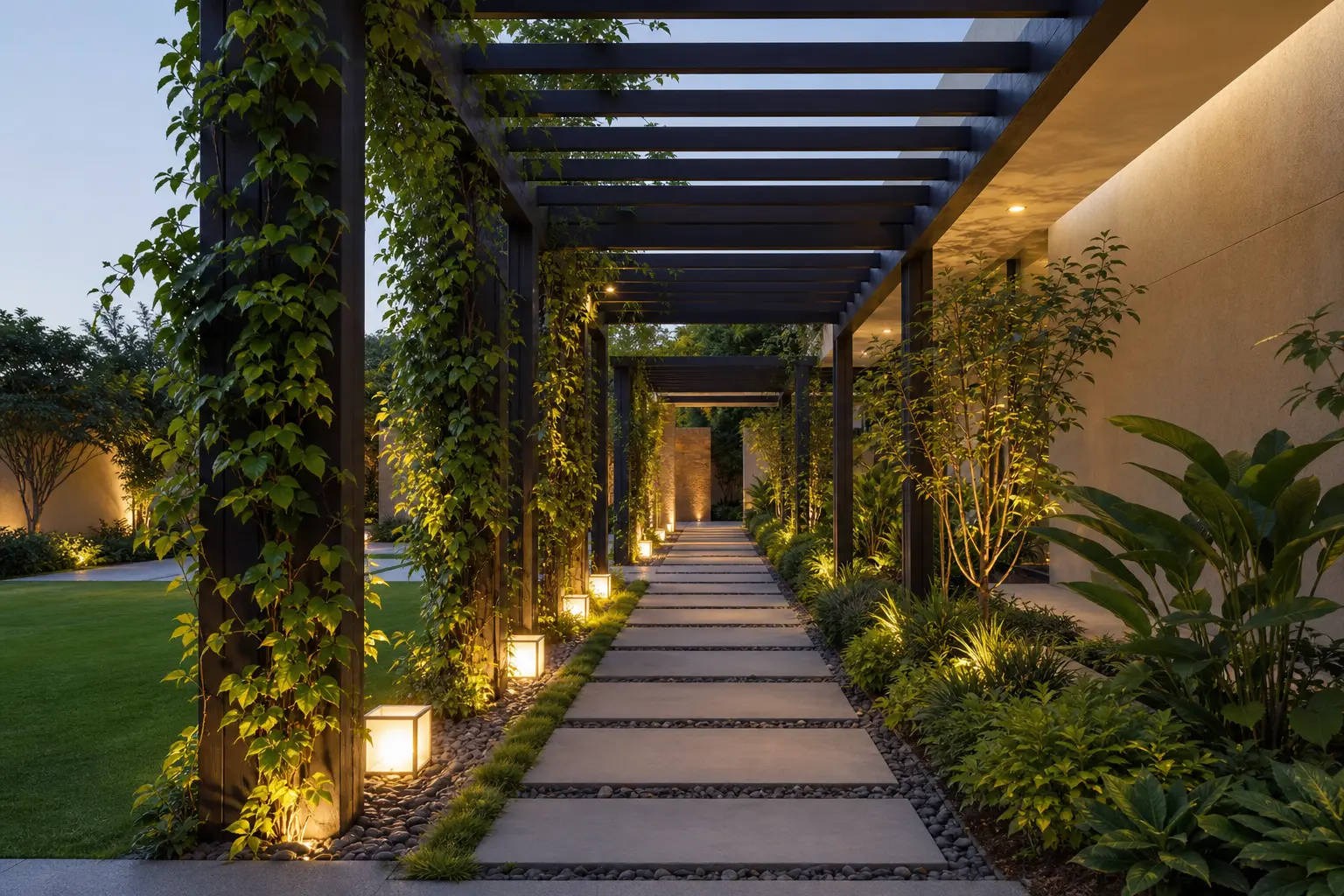
A pergola should look like it belongs to your house, not like it was added as an afterthought. If your home leans traditional, with brick or clapboard siding, a classic square post pergola with simple crossbeams usually fits best. For a more modern home with clean lines and large windows, a slatted flat roof pergola in a dark powder coated metal or stained cedar reads more current. Match the pergola’s finish, wood tone or paint color, to an existing element on your house, like the trim or the front door, so it feels connected rather than separate.
2. Pick the Right Climbing Plants for Your Climate
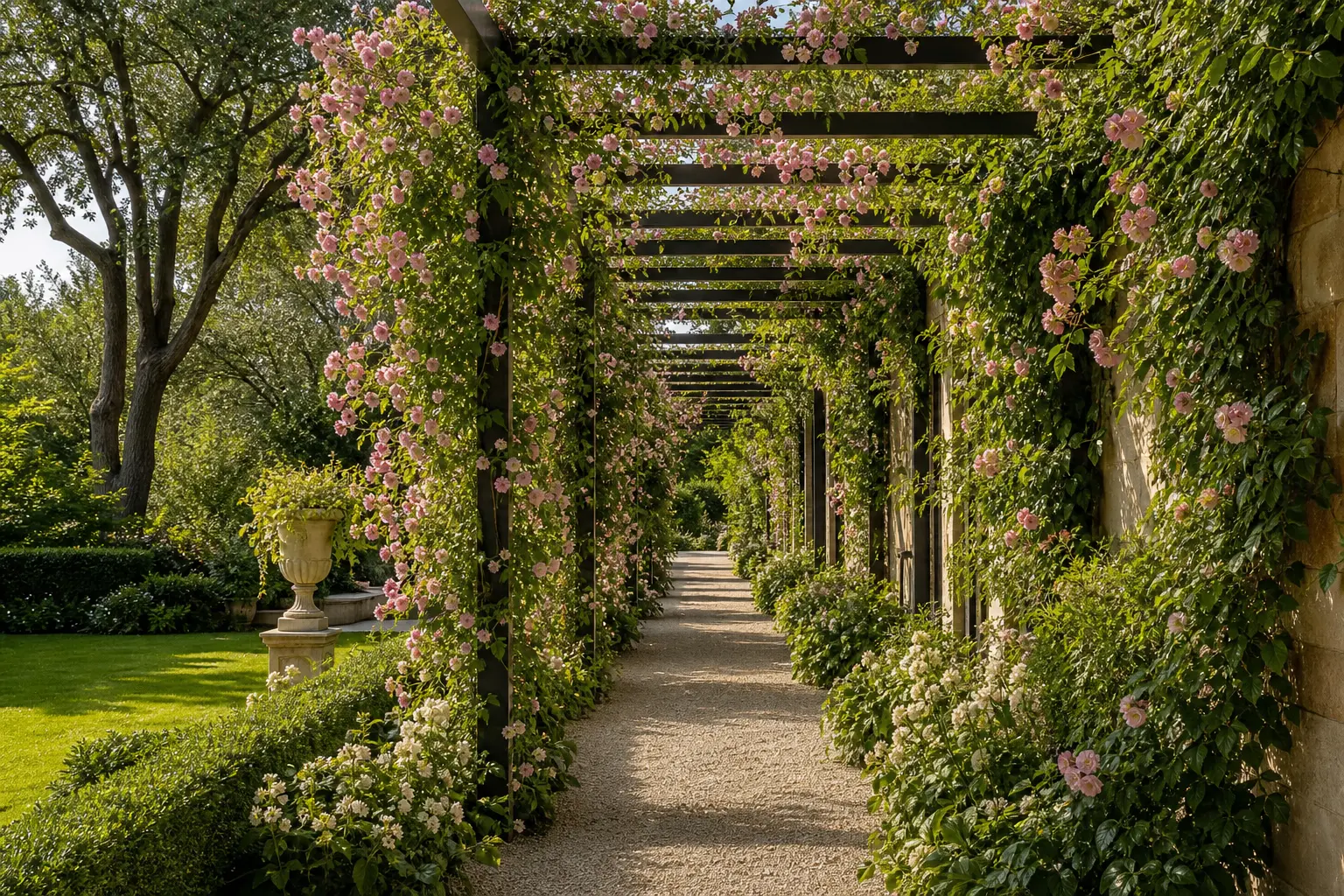
Not every climbing plant will thrive on every pergola, and choosing the wrong one means years of thin, patchy coverage instead of the lush look most people picture. Wisteria and climbing roses are popular but need a genuinely sturdy structure and a fair amount of pruning to control. In hotter, drier climates, trumpet vine or bougainvillea handle heat better. Ask a local nursery which climbing plants are proven in your specific zone before committing, since a plant that thrives two states over might struggle in your yard.
Fast Growing vs Slow Growing Options
Fast growing vines like wisteria fill in quickly but need regular pruning to stay controlled. Slower growers like climbing hydrangea take longer to establish but require less ongoing maintenance once mature.
3. Use Consistent Paving Materials for a Cohesive Path
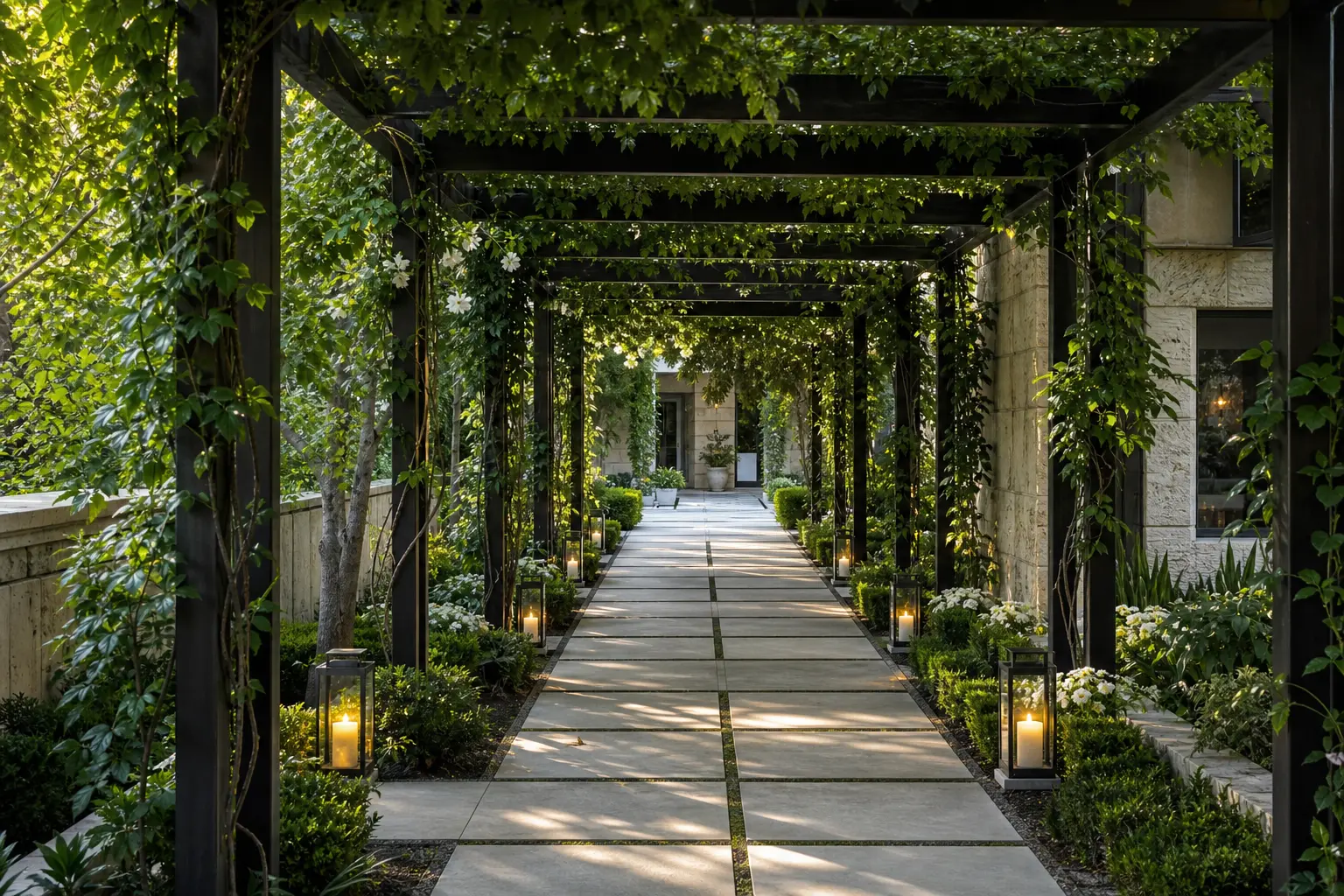
A pergola walkway should feel like one continuous path, not a collection of mismatched materials. Choose one paving type, natural stone, brick or poured concrete pavers, and use it the entire length of the walkway. Mixing materials partway through usually reads as a budget compromise rather than an intentional design choice. If you want visual interest, vary the paving pattern instead of the material itself, herringbone brick instead of a straight running pattern, for example.
4. Add Structural Beams Spaced for Maximum Shade
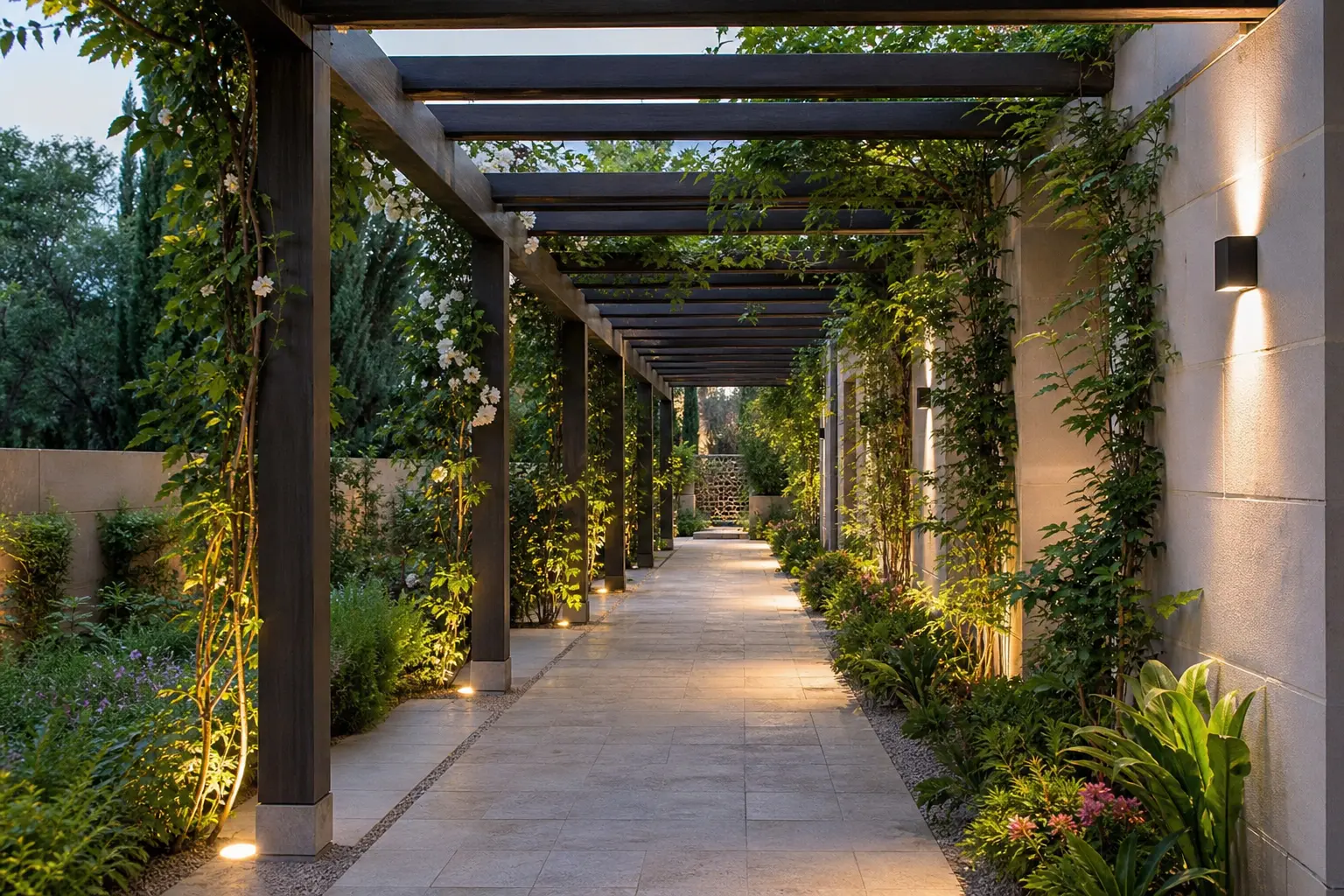
The spacing of your pergola’s crossbeams determines how much shade the walkway actually gets, and this matters more than people expect before installation. Beams spaced closer together, roughly 6 to 8 inches apart, block more direct sun. Wider spacing lets more light through, which works better in climates that don’t get intense afternoon sun. Once climbing plants fill in, they’ll add additional shade regardless of beam spacing, so factor in a season or two of growth before judging the final coverage.
5. Layer Low Lighting Along the Walkway
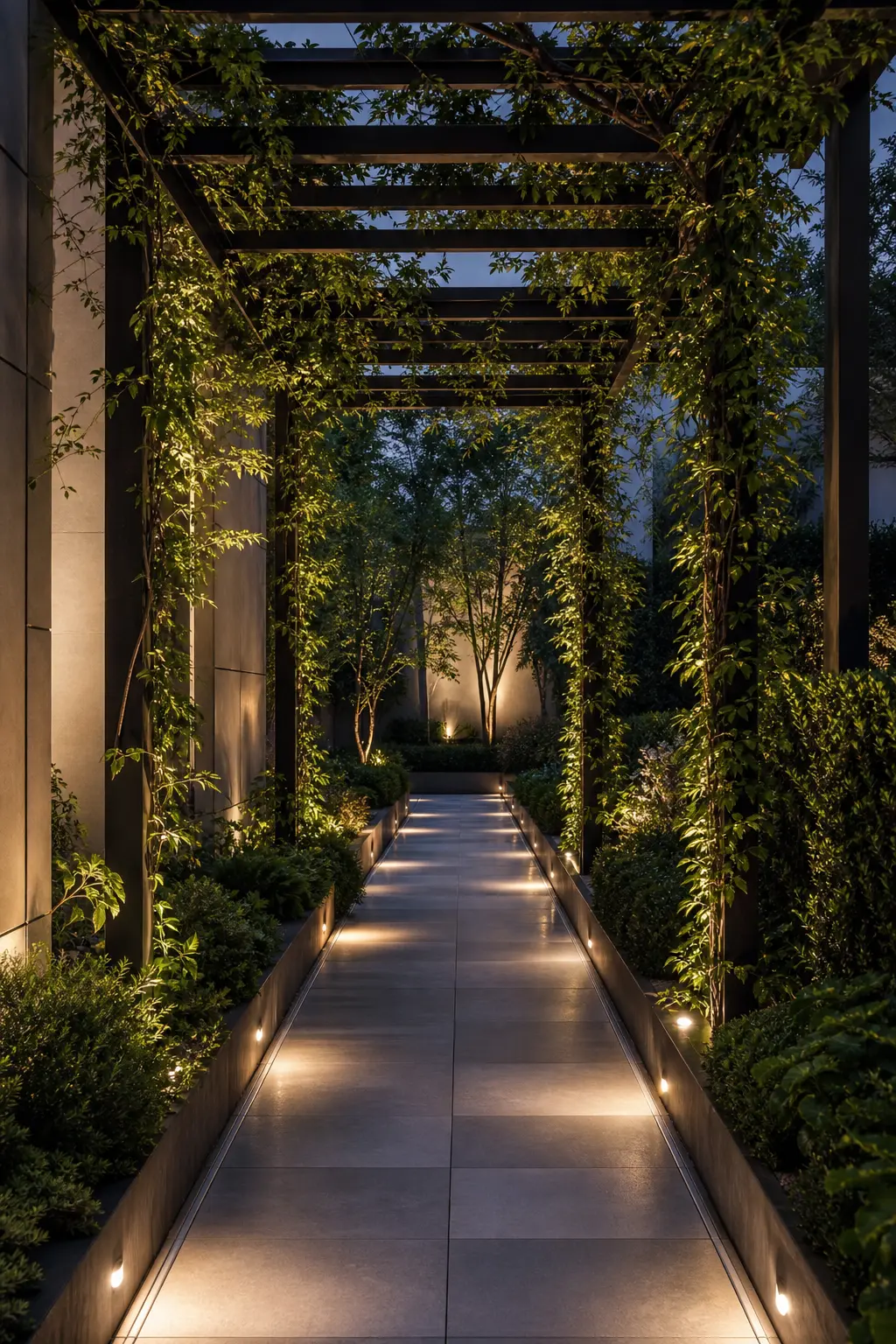
A pergola walkway that looks stunning in daylight can feel unsafe and uninviting after dark without proper lighting. Low, warm path lights along the edges guide the way without overpowering the garden feel. String lights woven through the crossbeams add a softer, more ambient glow overhead. Stick to warm white light in the 2700K to 3000K range for both, since cooler light tends to clash with the natural materials and greenery surrounding the path.
6. Frame the Path With Layered Garden Planting
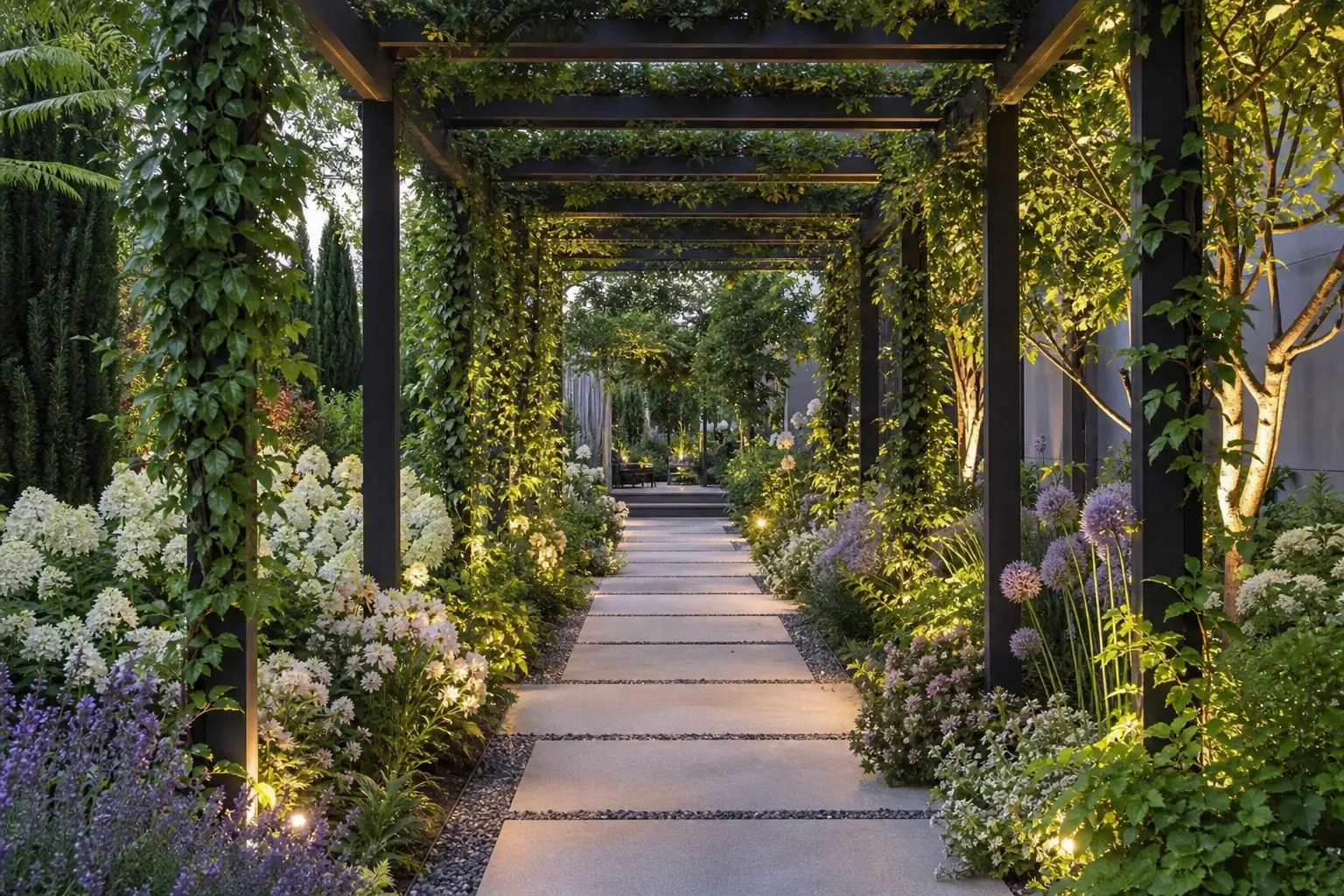
Beyond the climbing plants overhead, the planting along the ground level matters just as much for the finished look. Layer taller shrubs or ornamental grasses behind lower flowering plants along the path’s edge. This creates depth and makes the walkway feel like it’s part of a larger garden rather than an isolated structure. Repeat the same plant varieties at intervals along the path for a cohesive, intentional rhythm rather than a random mix.
7. Choose a Wood Finish That Weathers Well Outdoors
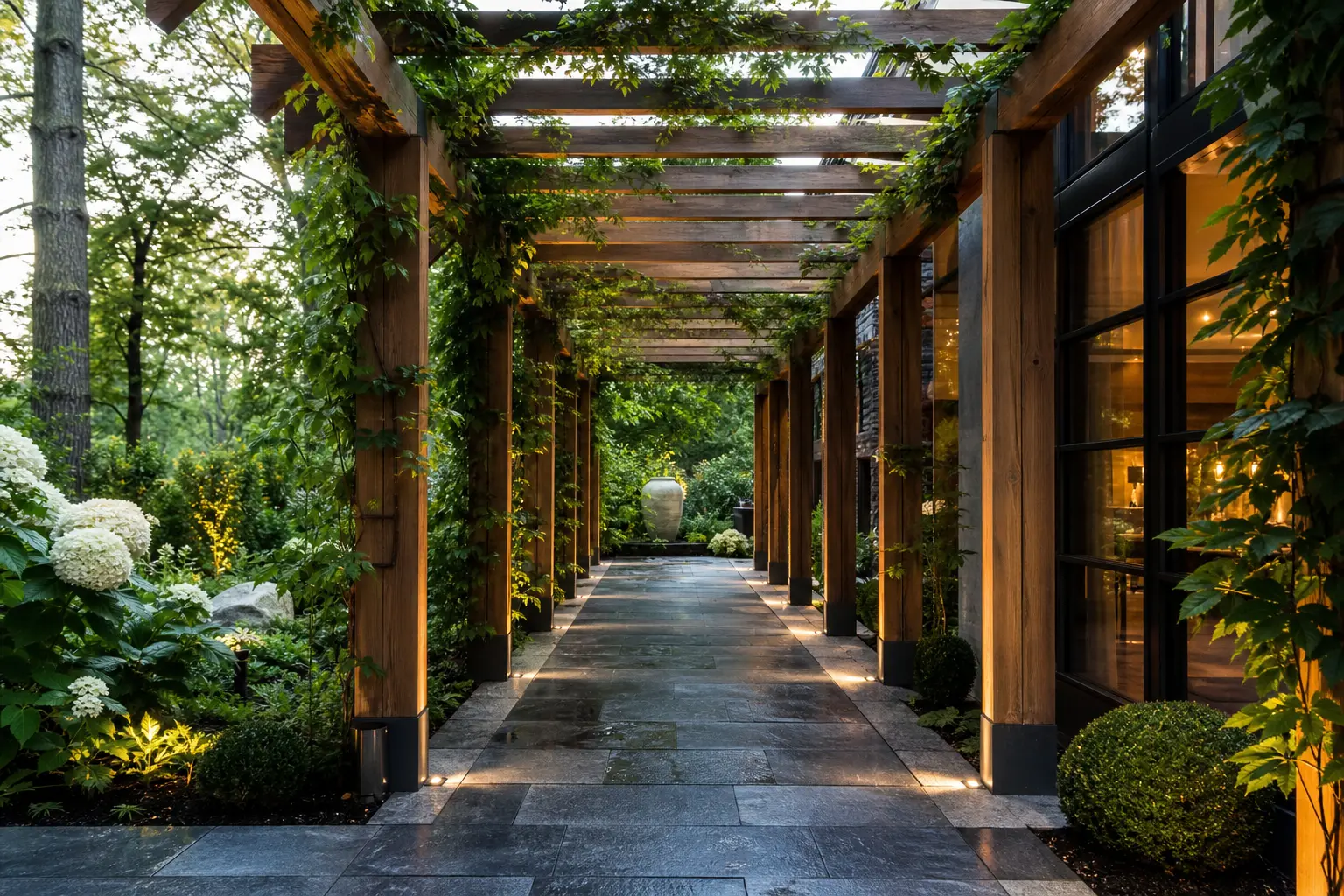
Untreated wood left exposed to the elements will gray and crack faster than most people expect, sometimes within a single season in harsh climates. Cedar and redwood naturally resist rot better than pine, though all wood benefits from a protective sealant reapplied every couple of years. If low maintenance matters more than natural wood grain, a powder coated aluminum or steel pergola frame skips the upkeep entirely while still supporting climbing plants just as well.
8. Add a Focal Point at the End of the Walkway

A pergola walkway feels more intentional when it leads somewhere specific rather than just ending. A simple bench, a small water feature, or an arched gate at the far end gives the path a destination and encourages a slower walk through rather than a quick pass through. This focal point doesn’t need to be elaborate. Even a single well placed planter can do the job if it’s positioned deliberately.
9. Leave Room for Seasonal Color Changes
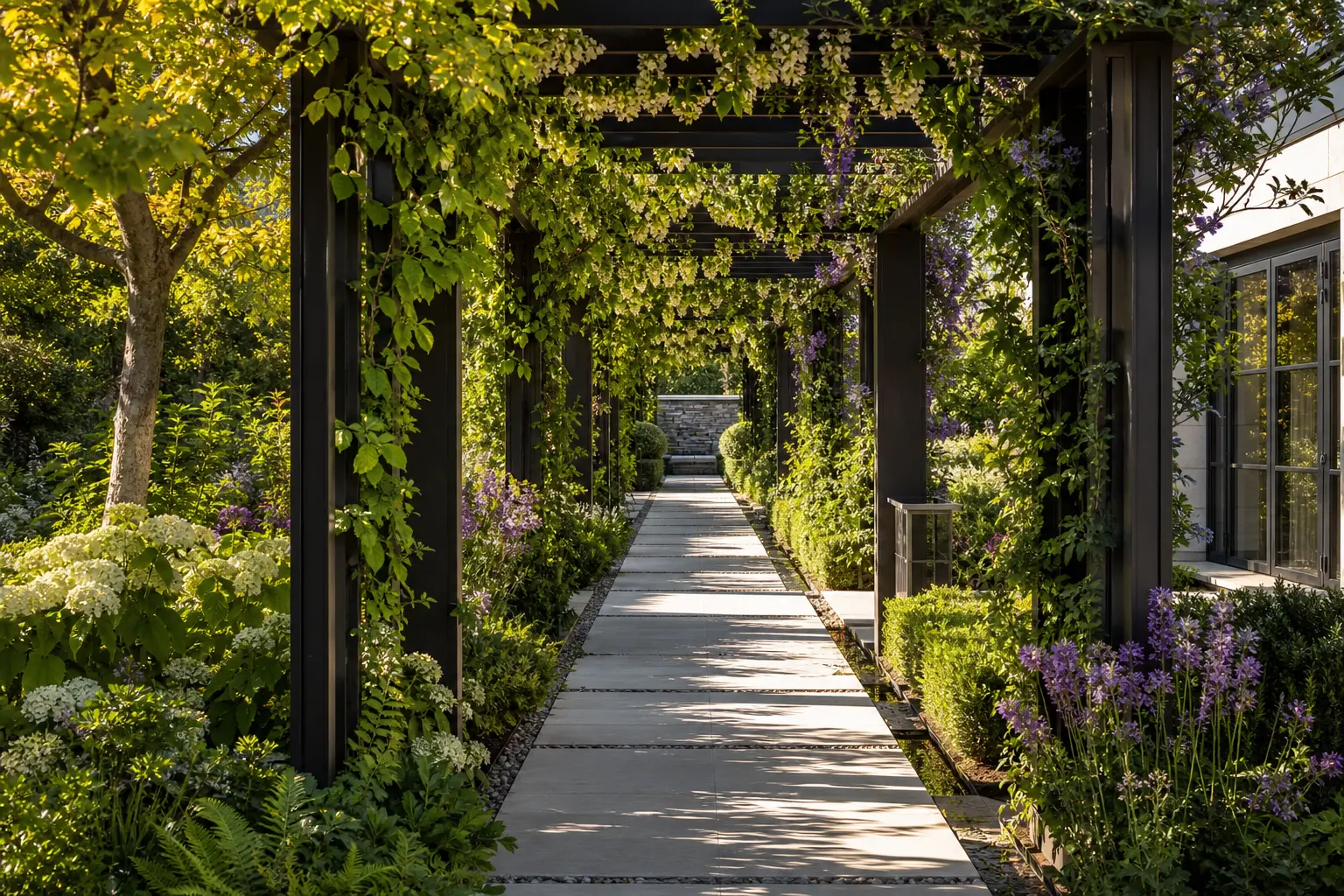
A walkway planted entirely with one flowering season in mind looks incredible for a few weeks and fairly plain the rest of the year. Mix climbing and ground level plants with staggered bloom times, some flowering in spring, others in summer or fall, so the pathway has visual interest across more of the year. Evergreen structure plants, like boxwood, help fill the gaps between blooming seasons.
10. Keep Maintenance in Mind From the Start
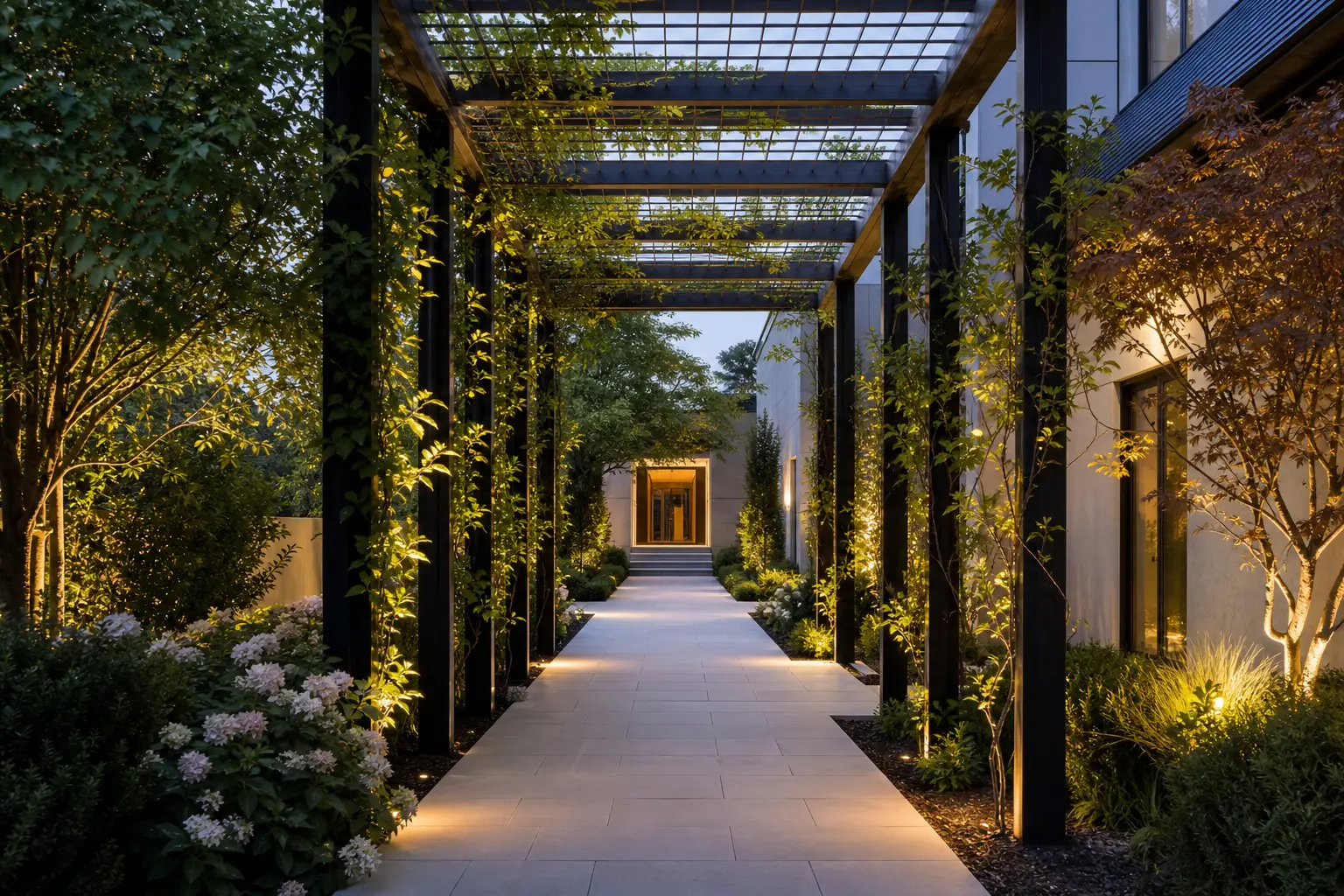
A luxury garden pathway that requires constant upkeep tends to get neglected fast, which undercuts the whole point of building it. Choose climbing plants suited to your actual climate and your realistic maintenance schedule, not just the ones that look best in photos. Build in access for pruning and light watering without needing special equipment. A walkway that’s easy to maintain is one that actually stays looking good year after year.
Mistakes to Avoid
- Choosing a pergola style that clashes with your home’s existing architecture
- Picking a climbing plant that isn’t suited to your climate zone
- Mixing more than one paving material along the same path
- Skipping outdoor lighting, leaving the walkway unusable after dark
- Planting only for one bloom season instead of staggering color
- Ignoring long term maintenance when choosing wood or plant varieties
Frequently Asked Questions
How long does it take for climbing plants to fully cover a pergola? It varies by species and climate, but most climbing plants take two to three growing seasons to provide full coverage. Faster growing vines like wisteria may fill in sooner.
What’s the best wood for an outdoor pergola? Cedar and redwood both resist rot and insects better than pine, making them common choices for pergola walkway design. Regular sealant reapplication extends the life of any wood option.
Do pergola walkways need electrical wiring for lighting? Not necessarily. Solar path lights and battery powered string lights work well for many walkways and avoid the cost of running electrical lines outdoors.
What climbing plants work best for a luxury garden pathway? Climbing roses and wisteria are popular for their lush, romantic look, though they need regular pruning. Climbing hydrangea offers a lower maintenance option with a similar layered appearance.
How wide should a pergola walkway be? Most residential pergola walkways range from 4 to 6 feet wide, enough for two people to walk comfortably side by side.
Can I add a pergola walkway to an existing paved path? Often yes, depending on the paving material and structural support needed. It’s worth consulting a contractor to confirm your existing path can support the pergola’s footings.
Conclusion
A pergola walkway design works best when the structure, the plants and the lighting are all considered together rather than added one at a time. Start with a pergola style that fits your home, choose climbing plants suited to your actual climate, and layer in warm lighting for evening use. Those three elements alone will turn a plain path into a genuine luxury garden pathway, and the rest of this list can be built in as time and budget allow.