10 Modern Neutral Bedroom Ideas with Wavy LED Wood Slat Walls
Your neutral bedroom looks clean and calm on paper, but in person it just reads as plain and a little forgettable, with nothing for the eye to actually land on. Modern neutral bedroom ideas built around a wavy LED wood slat wall solve that by adding a soft, sculptural feature that still fits a neutral palette instead of fighting it. The curve and hidden light give the room a focal point without introducing a single loud color.
1. Understand What Makes a Wavy Slat Wall Different From a Straight One
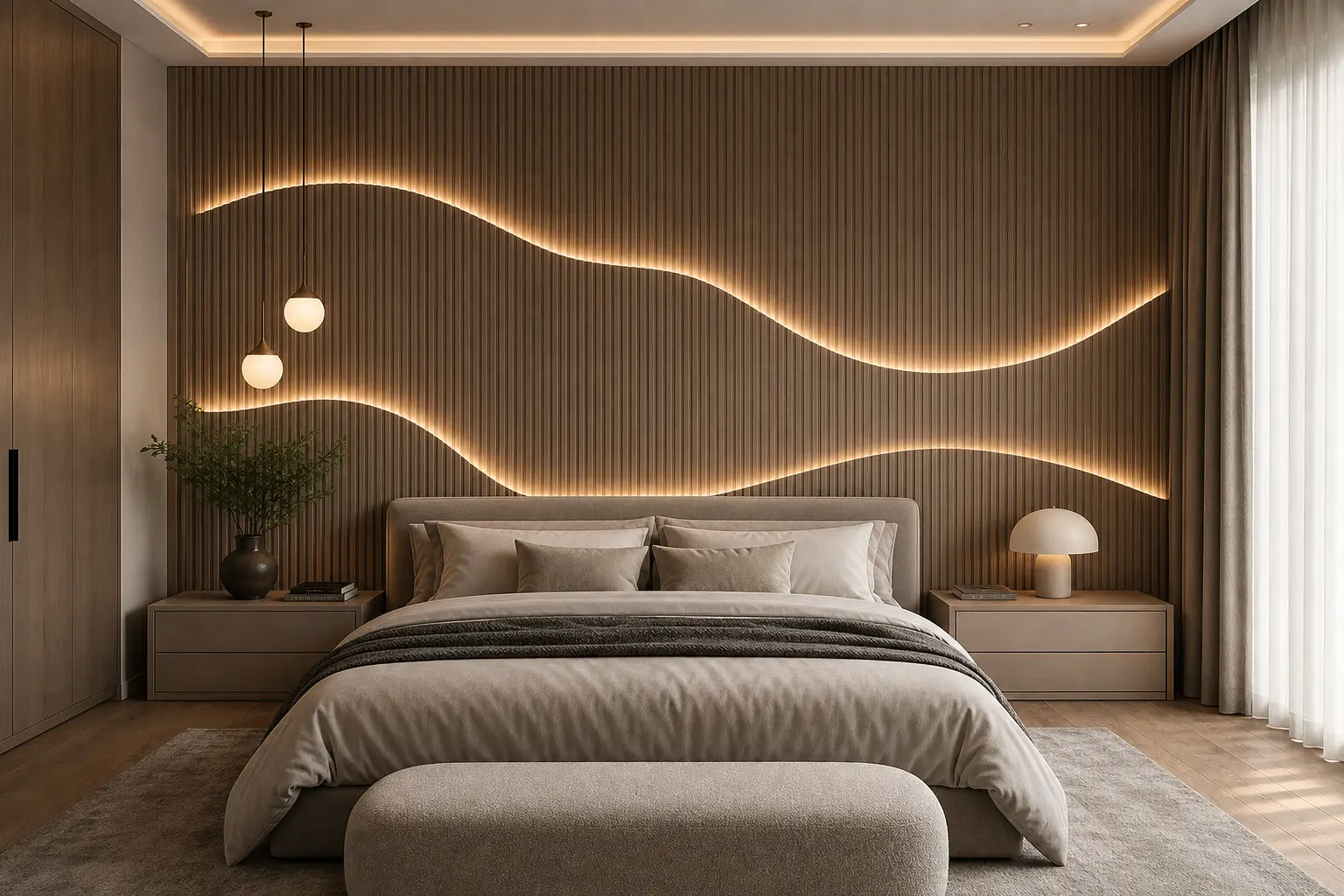
A standard slat wall uses straight vertical boards spaced evenly across a flat surface. A wavy slat wall bends those same boards, or uses pre curved panel sections, to create a rolling, organic pattern instead of a rigid grid. That curve softens the whole feature, which suits a neutral bedroom aiming for a calm, soothing feel rather than a bold graphic statement.
The wave pattern also catches light differently than a flat slat wall does, since the curves create constantly shifting shadow lines as the light source moves or dims. This gives the wall a sense of movement even though nothing on it is actually in motion. It’s part of why wavy slat walls have become popular in bedrooms specifically, where a calm but visually interesting focal point matters more than a bold accent color would.
2. Choose a Wave Pattern That Suits Your Wall Size
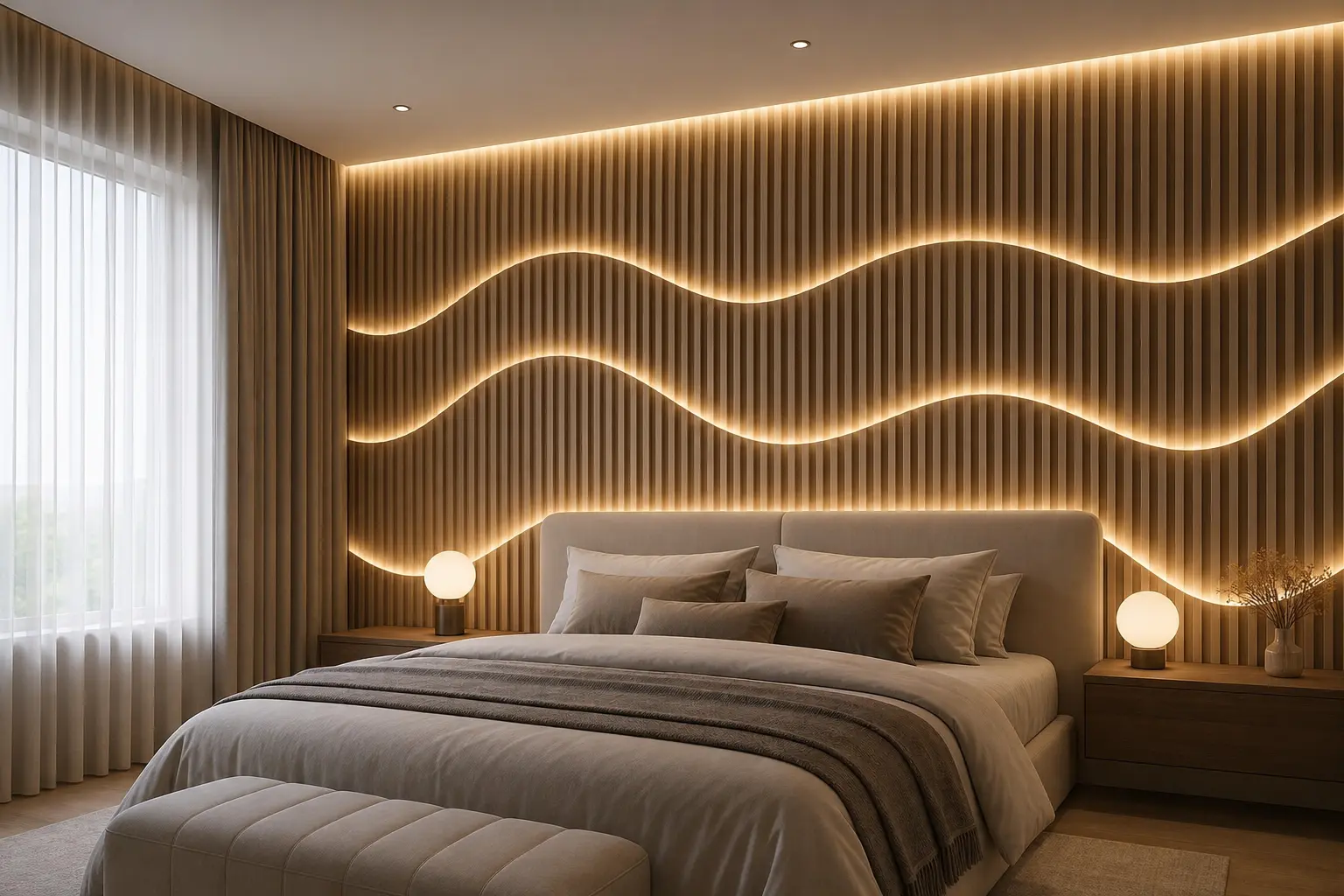
A gentle, wide wave with long, slow curves suits most bedroom walls better than a tight, frequent ripple, since the slower pattern reads as calmer and more in line with a neutral, restful room. For a standard queen or king headboard wall, a wave repeating every 3 to 4 feet across the wall usually looks proportional rather than busy. Narrower, tighter waves can start to feel chaotic once they’re scaled up across a full wall.
Adjusting the Pattern for Wall Width
A narrower wall, under 8 feet wide, generally suits a single gentle curve or two rather than a full repeating wave pattern. Save the repeating wave for walls wide enough to actually show the rhythm of multiple curves in sequence. Getting this scale right is one of the more common mistakes in wavy slat installations, since a pattern that looks right on a sample board can read completely differently across a full wall.
3. Pick a Light Neutral Wood Tone for a Softer Look
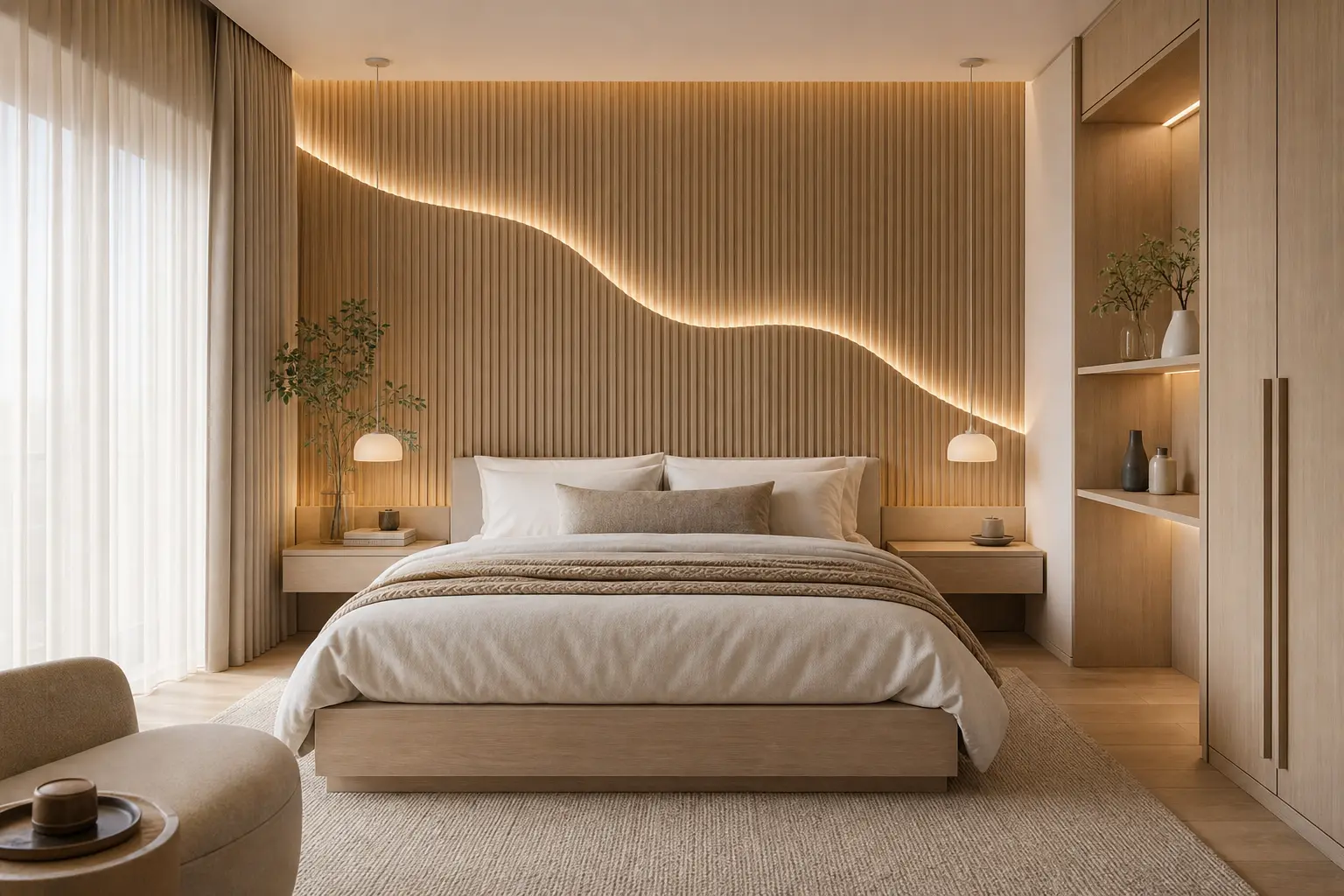
A pale ash, whitewashed oak, or light natural pine tone keeps the wavy wall feeling soft and in line with a neutral bedroom palette rather than becoming a dark, heavy statement piece. Darker wood tones work in some bedrooms, but they shift a wavy wall from soft and organic toward bold and dramatic, which may not suit a room built around a neutral, calming palette. Stick to lighter tones if the rest of the room leans toward cream, oatmeal, and soft grey.
Test a sample of the actual slat material in the room under your planned lighting before committing to the full wall. Wood tones can shift noticeably warmer or cooler depending on the light source, and a wavy wall’s constantly changing shadow lines make that shift even more noticeable than on a flat surface. A five minute test with a real sample saves a costly mismatch later.
4. Hide the LED Strip Along the Wave’s Natural Curves
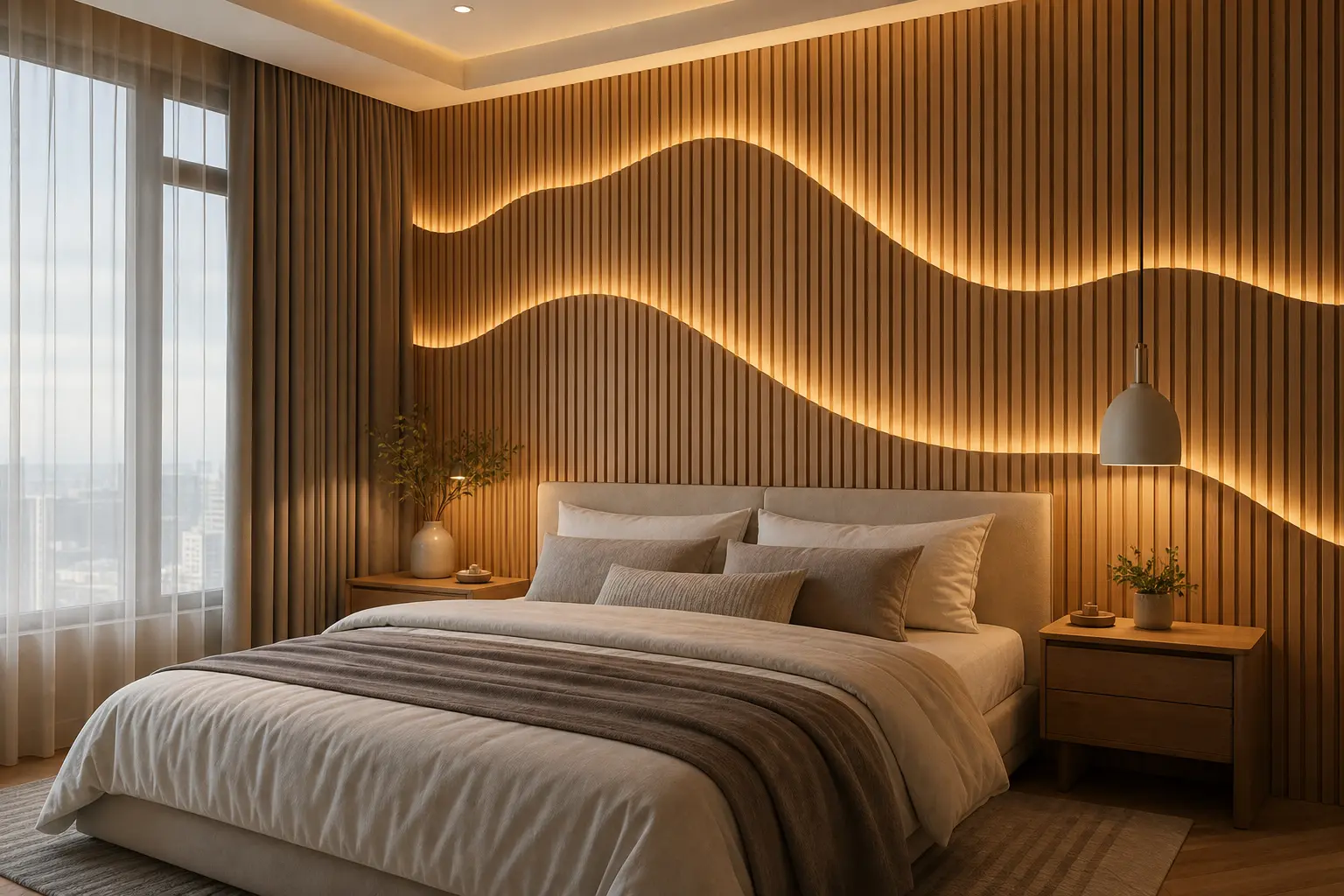
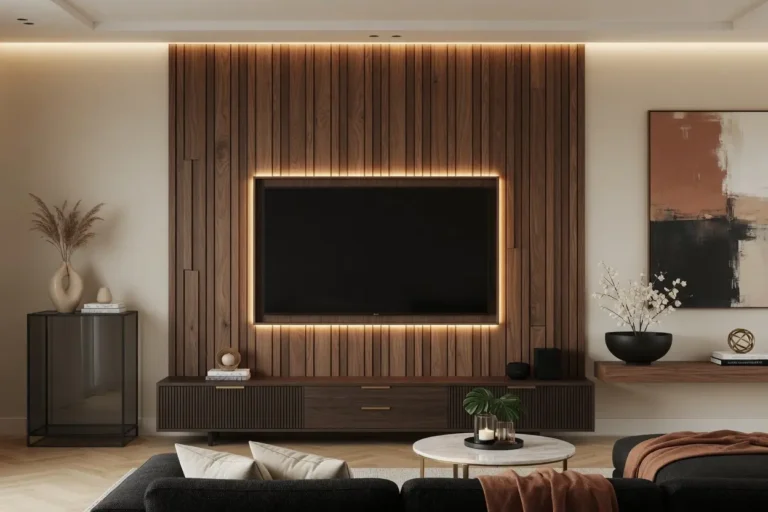
Running a warm LED strip along the top or bottom edge of the wave, following its natural curve rather than a straight horizontal line, keeps the light source hidden while still lighting the full shape of the wall. The curved strip placement means the light glow follows the same rolling pattern as the wood itself, which reinforces the organic feel rather than cutting across it with a straight line of light. A flexible LED strip, made specifically to bend around curves, is necessary here rather than a rigid strip meant for flat installations.
A warm 2700K strip keeps the glow soft and consistent with the room’s neutral, calming intent. Keep the strip on a separate dimmer from any other lighting in the room, since the wall’s glow works best as its own adjustable layer rather than tied to a single master switch. This flexibility lets you turn the wall’s glow up for a feature moment or down to nearly nothing for sleep.
5. Keep the Rest of the Room Strictly Neutral
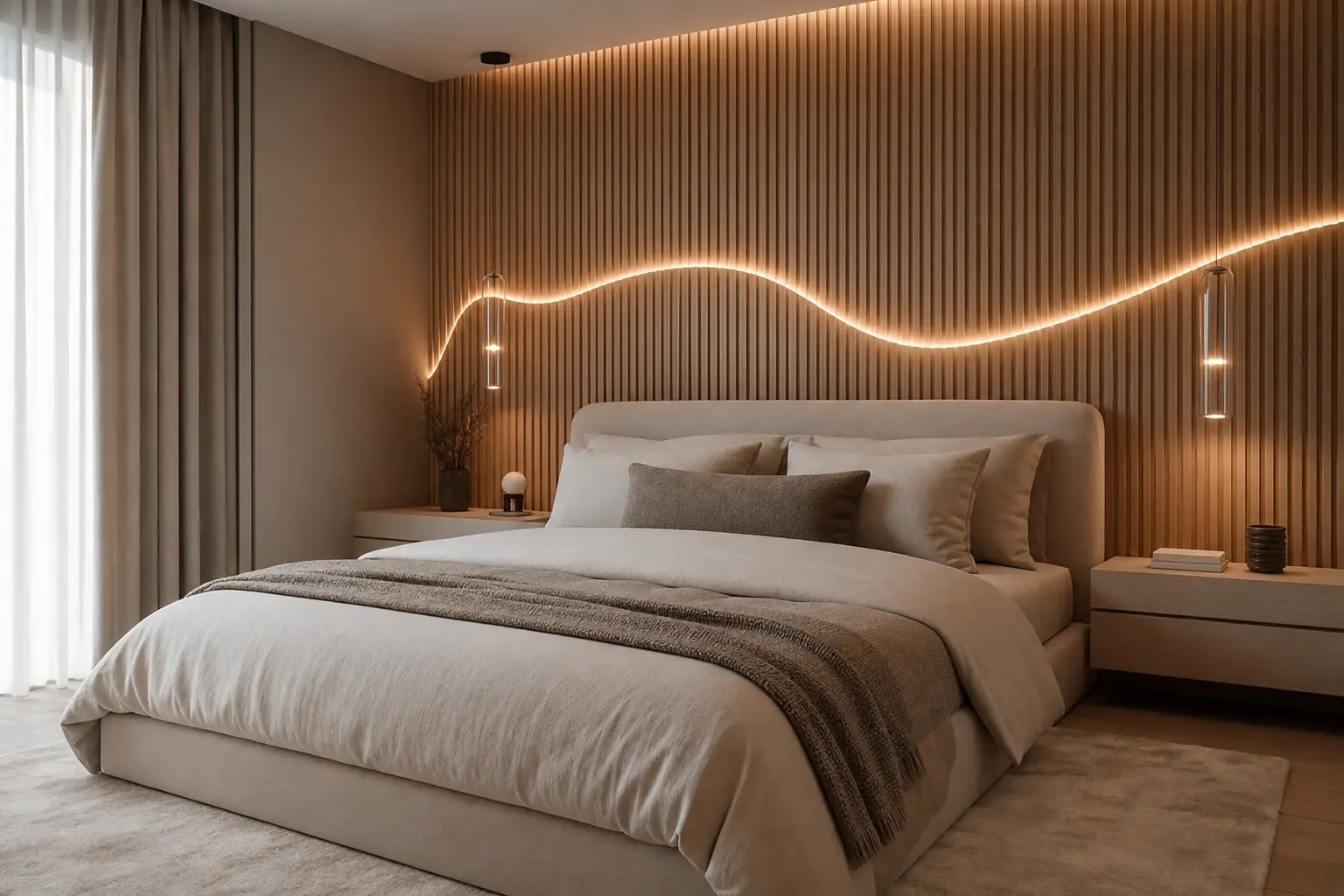
A wavy slat wall already provides plenty of visual interest through its shape and shadow play, so the rest of the room benefits from staying quiet and neutral rather than competing for attention. Stick to cream, oatmeal, soft grey, and warm white across bedding, curtains, and any additional furniture. Adding a second bold feature, a patterned rug or a brightly colored accent chair, can pull focus away from the wall and make the room feel busier than intended.
This restraint is really what makes the wavy wall read as a deliberate design choice rather than one loud element in an otherwise chaotic room. A neutral palette everywhere else gives the wall’s curves and shadow lines the space to actually be noticed. Save any color or pattern for small, easily changed accents like a single throw pillow rather than anything structural.
6. Decide Between a Full Wall or a Partial Curved Panel
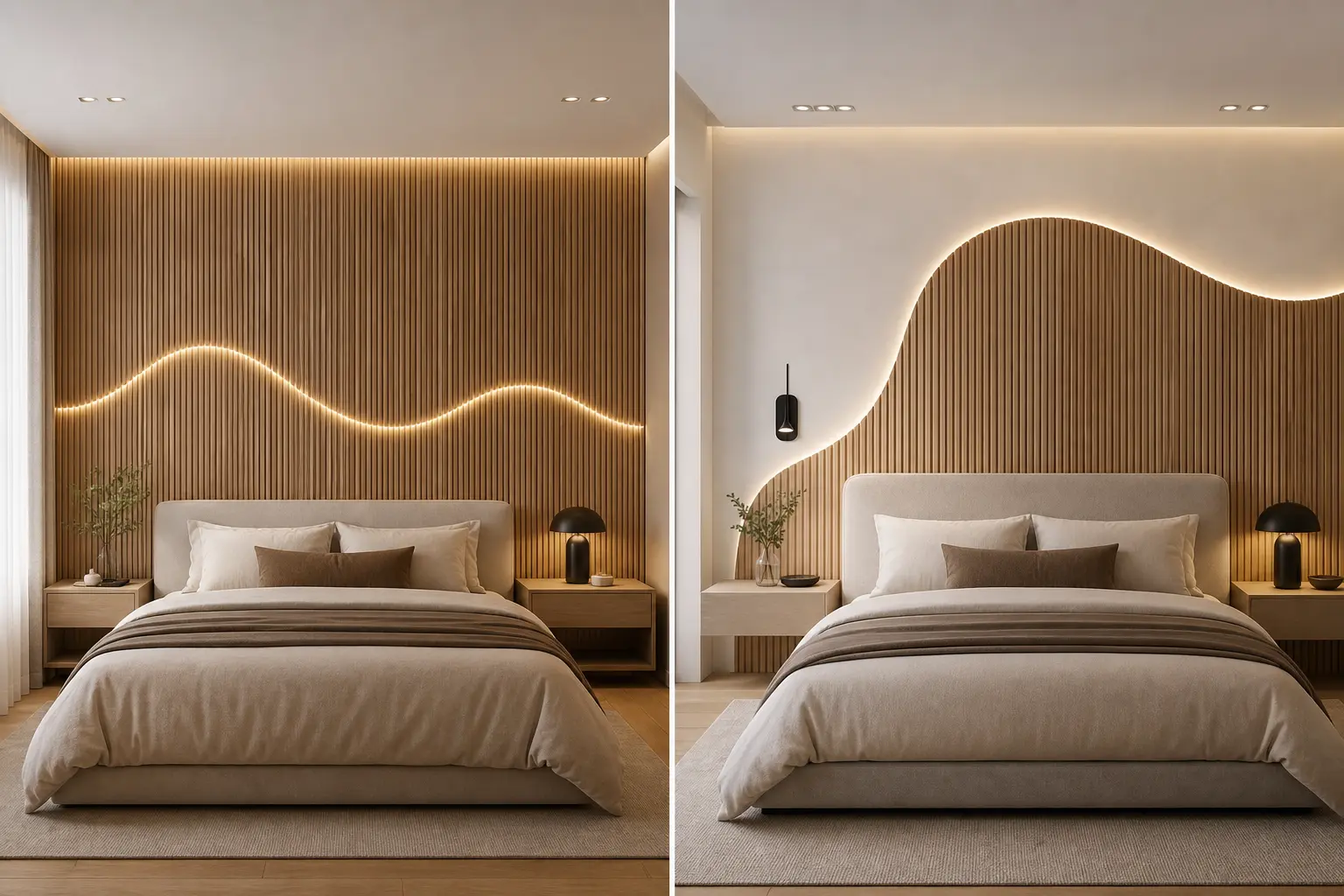
A full floor to ceiling wavy slat wall behind the bed creates the strongest visual statement and suits a primary bedroom with generous ceiling height. A smaller curved panel, centered behind the headboard and rising only 5 to 6 feet, works well in a smaller bedroom or a room with a lower ceiling where a full wall might feel overwhelming. Partial panels also cost meaningfully less in both material and installation labor.
A partial panel still needs the same wave pattern consideration as a full wall, since a curve that looks proportional at full height can look cramped or oddly cropped in a shorter panel. Sketch or mock up the panel size against the actual wall before committing to dimensions. This step matters more for a wavy design than a straight slat wall, since the curve’s proportions are less forgiving of last minute size changes.
7. Add Soft Textures That Echo the Wall’s Curved Lines
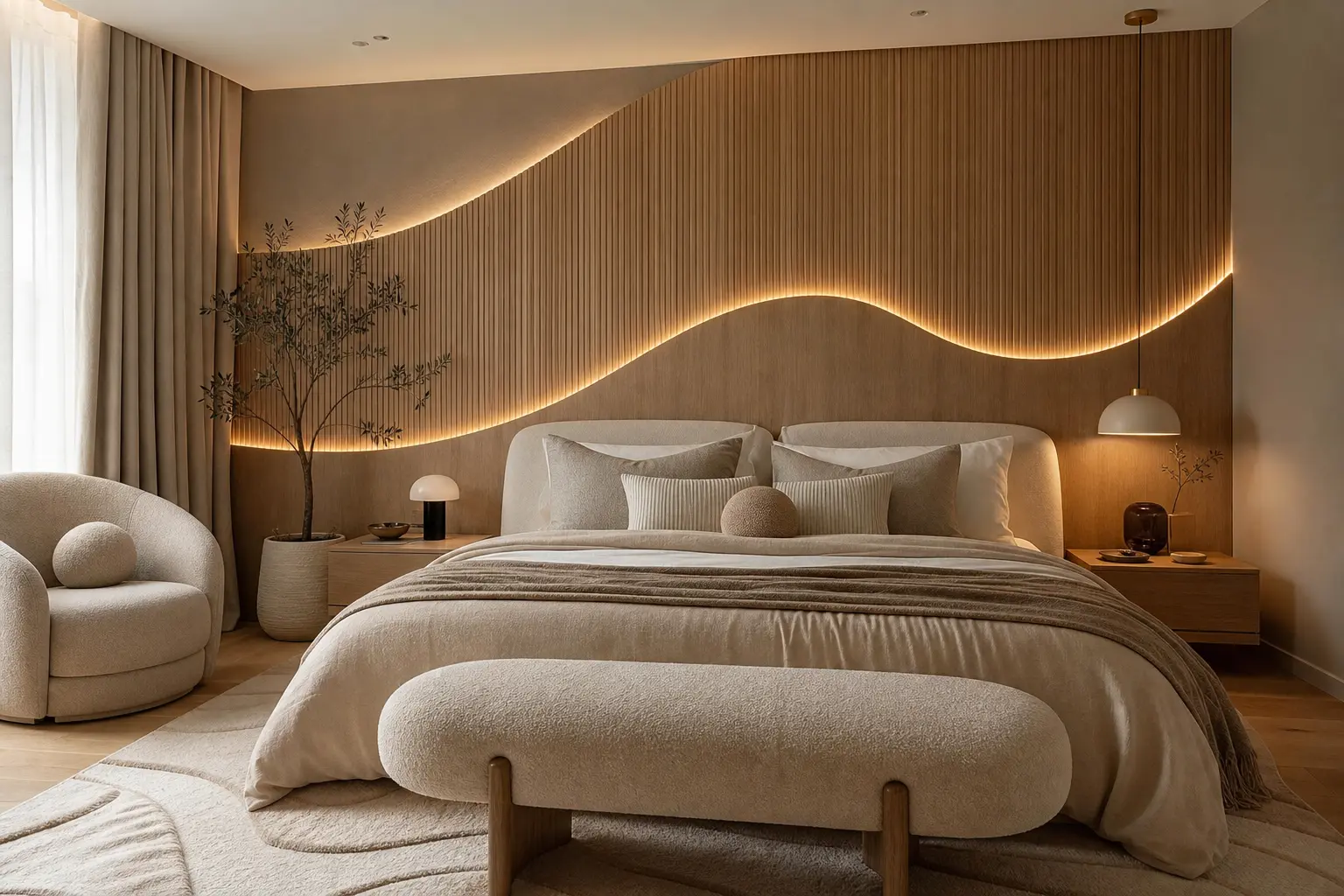
A wavy wood wall pairs naturally with other soft, rounded shapes in the room, since sharp, angular furniture can visually clash with the wall’s organic curves. A rounded nightstand, a curved arch mirror, or a boucle accent chair all echo the wall’s soft lines rather than fighting them. This kind of shape repetition ties the whole room together around the same design language.
Layered bedding in a soft knit or linen texture also supports the calm, organic feel the wavy wall is going for. Avoid heavily geometric patterns on bedding or curtains, since sharp lines and angles read as visually opposed to the wall’s rolling curves. A room built entirely around soft shapes and neutral tones lets the wavy wall feel like the natural centerpiece rather than an isolated feature.
8. Get the Wave Depth Right for Your Room’s Size
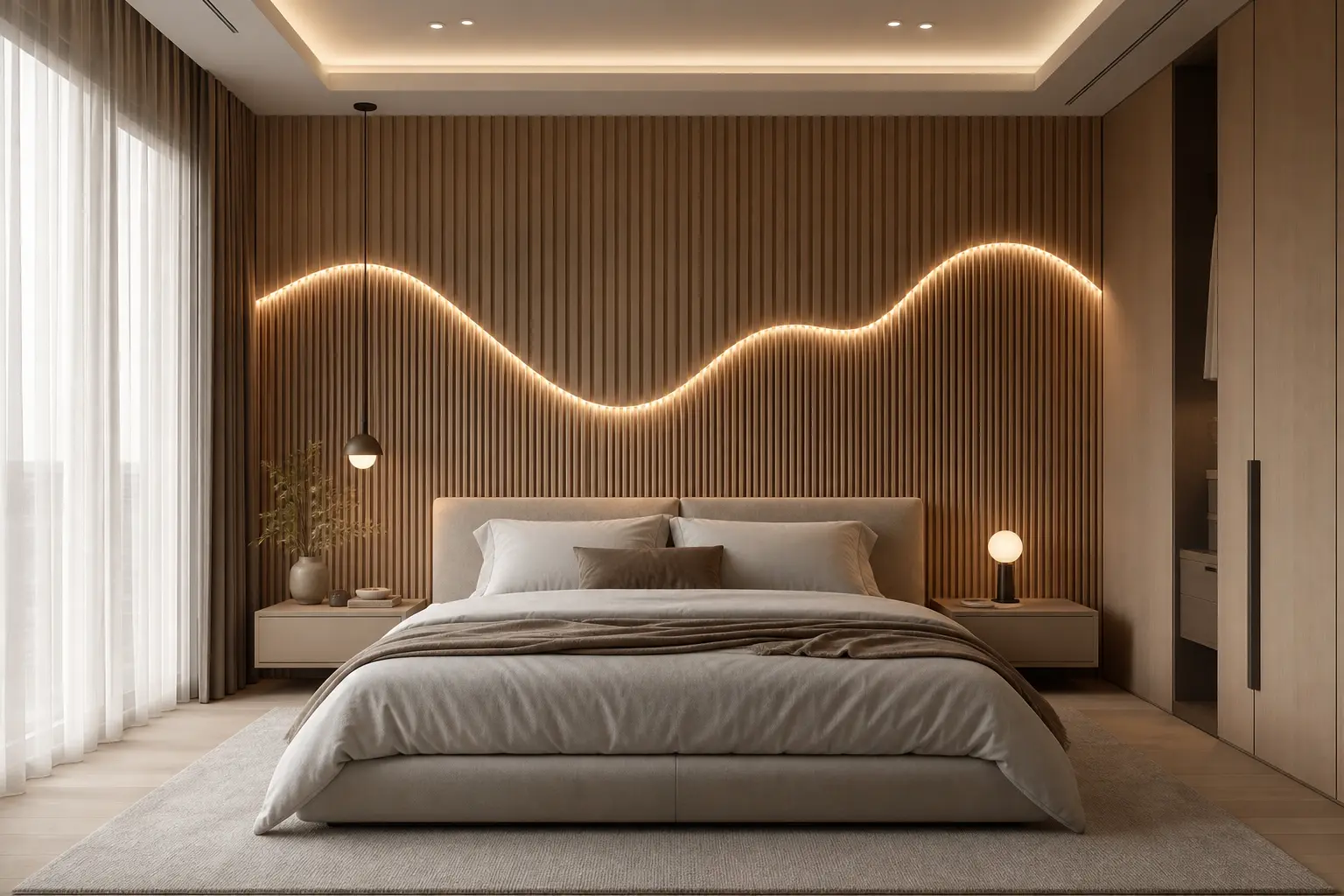
Wave depth, meaning how far the curve projects out from the flat wall behind it, typically ranges from 2 to 5 inches for a residential bedroom installation. A deeper wave creates more dramatic shadow play but also takes up more room depth, which matters in a smaller bedroom where every inch of floor space counts. A shallower wave suits a tighter room while still providing the curved, textural effect the design is going for.
Consider the viewing distance from your actual bed placement when choosing depth, since a wave meant to be seen from across a larger room may look overly subtle up close, and one designed for a close view might feel too dramatic from farther away. Most rooms land somewhere in the 3 inch range as a reasonable middle ground. A physical sample section, even a small one, helps confirm the depth choice before committing to a full wall order.
9. Plan for Professional Installation
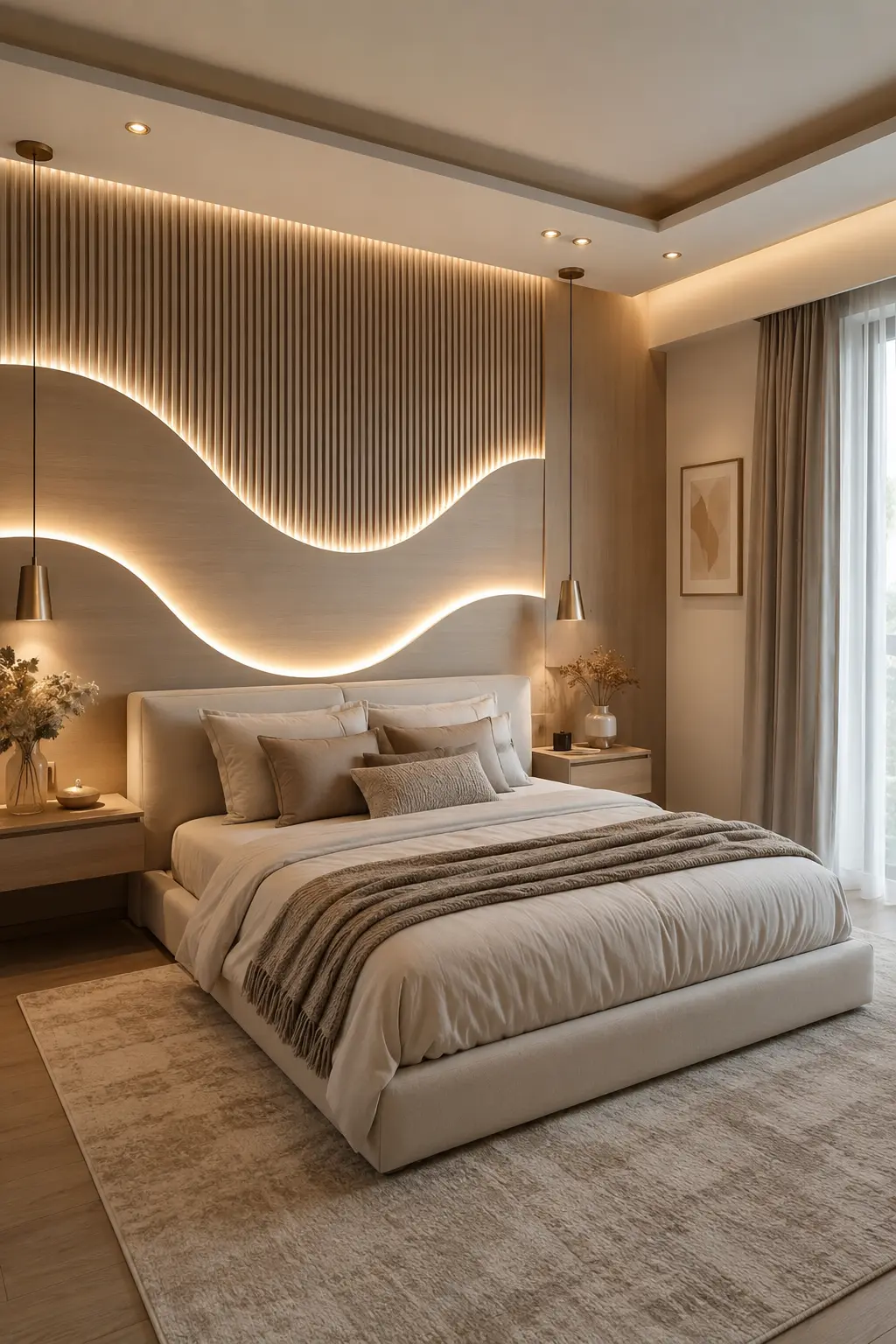
A wavy slat pattern is far harder to achieve with basic DIY tools than a straight slat wall, since the curve typically requires either steam bent wood, flexible engineered slats, or panels cut by a CNC machine to a precise wave template. Most homeowners source pre made wavy slat panels from a supplier and have them professionally installed rather than attempting to bend or cut the curves by hand. This adds to the overall cost compared to a straight slat wall, but it also produces a far more consistent, even wave across the full installation.
Get a quote from at least two installers experienced specifically with curved or wavy panel systems, since a straight slat installer may not have the right tools or template experience for this pattern. Ask to see a sample of their previous wavy wall work before committing, since the quality of the curve execution varies a lot between installers. This is one step worth budgeting extra time and money for rather than rushing into a DIY attempt.
10. Use Layered Lighting So the Wall Isn’t the Only Light Source
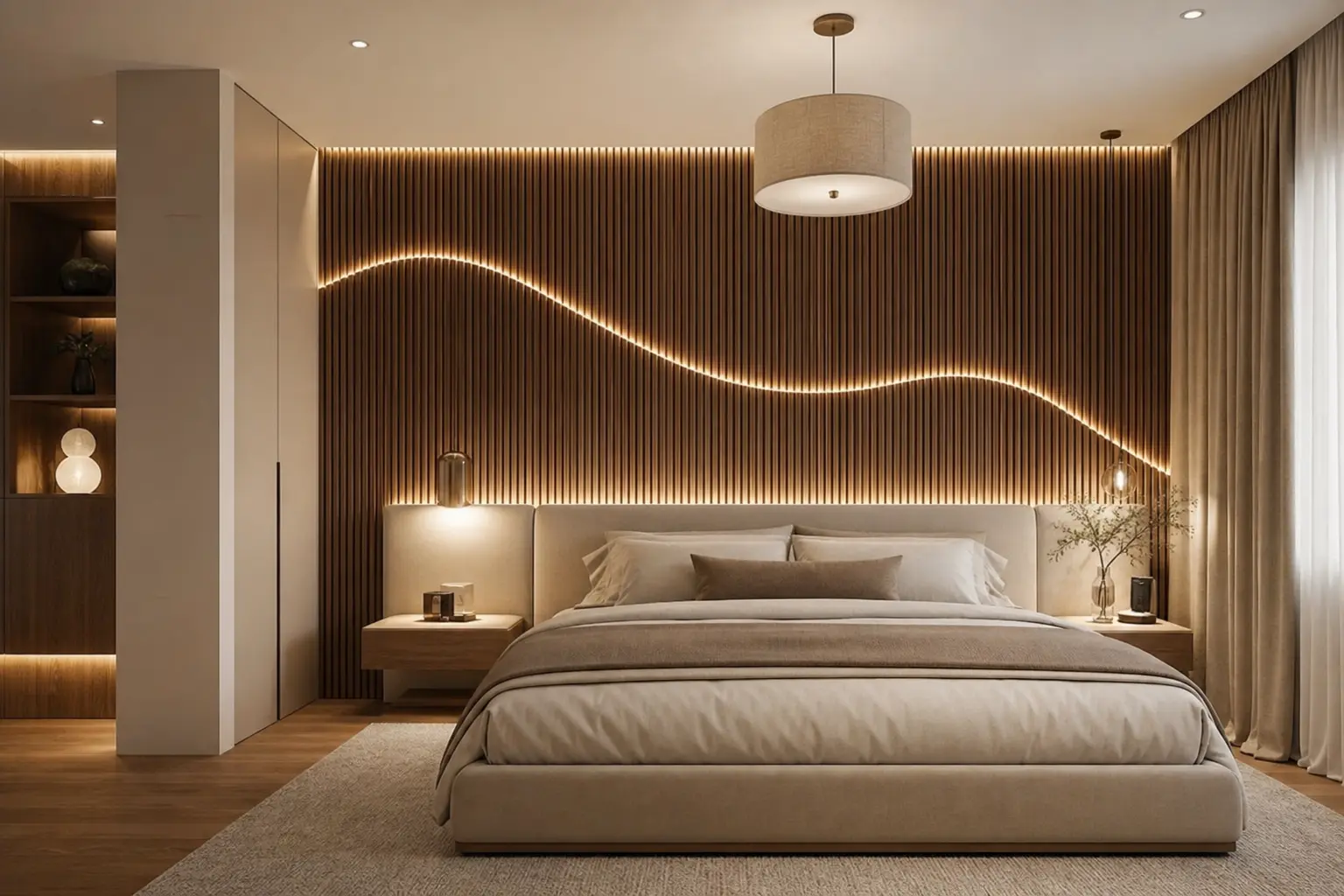
The wavy wall’s backlit glow works best as one layer among several, not the room’s only source of light. Add a pair of nightstand lamps and possibly a floor lamp elsewhere in the room, each on its own switch or dimmer, so the space has flexibility beyond just the wall’s ambient glow. Relying on the wall alone leaves the room either too dim for regular use or forces the wall’s dimmer to full brightness just to see clearly, which defeats its soft, ambient purpose.
Keep the additional lamps in simple, neutral shades, linen or a soft cream, so they support the room’s palette rather than introducing a competing style. A dimmable lamp near a reading chair or on each nightstand covers the room’s practical lighting needs while the wall handles the mood setting. This layered approach is what keeps a wavy slat bedroom feeling genuinely functional, not just photogenic.
Mistakes to Avoid
- Choosing a tight, frequent wave pattern that looks chaotic once scaled across a full wall
- Picking a dark wood tone that shifts the wall from soft and organic to bold and heavy
- Using a rigid LED strip instead of a flexible one made to follow the wave’s curves
- Adding a second bold feature elsewhere in the room that competes with the wall for attention
- Skipping a physical sample or mockup before committing to wave depth and panel size
- Pairing the curved wall with sharp, angular furniture that visually clashes with its organic lines
Frequently Asked Questions
Is a wavy slat wall harder to install than a straight one? Yes, generally, since it requires either pre curved panels or a more involved installation process, and professional installation or a CNC cut panel is usually recommended over a fully custom DIY build.
What wood tone works best for a neutral bedroom’s wavy wall? Light tones like pale ash, whitewashed oak, or natural pine tend to keep the wall feeling soft and in line with a neutral, calming palette.
Can I run LED lighting along a curved wall? Yes, using a flexible LED strip specifically made to bend around curves, run along the wave’s natural top or bottom edge rather than in a straight line.
How deep should the wave curve project from the wall? Most residential installations use a depth between 2 and 5 inches, with around 3 inches working as a reasonable middle ground for most rooms.
Does a wavy slat wall work in a small bedroom? Yes, especially as a partial panel centered behind the headboard rather than a full floor to ceiling treatment, which keeps the feature proportional to a smaller space.
Final Thoughts
A modern neutral bedroom with a wavy LED wood slat wall works because the curve and hidden light give an otherwise quiet, neutral room a genuine focal point without introducing any bold color. Start by testing your wave pattern and wood tone at actual scale before committing to a full wall, since proportions matter more here than with a straight slat design. Keep everything else in the room neutral and softly shaped, and let the wall’s curves and warm glow do the visual work the rest of the space intentionally leaves open.