10 Modern Scandinavian Staircase Foyer Ideas with Cozy Under-Stairs Seating
That triangle of space under your stairs has probably held a vacuum cleaner, a stack of shoes, or nothing at all for years. It’s one of the most overlooked corners in a home, and it’s also one of the easiest to turn into something genuinely useful. These Scandinavian staircase foyer ideas focus on cozy under stairs seating, using light, natural texture, and simple function to turn dead space into a real part of the foyer.
1. Choose a Light, Warm Palette for the Staircase Foyer
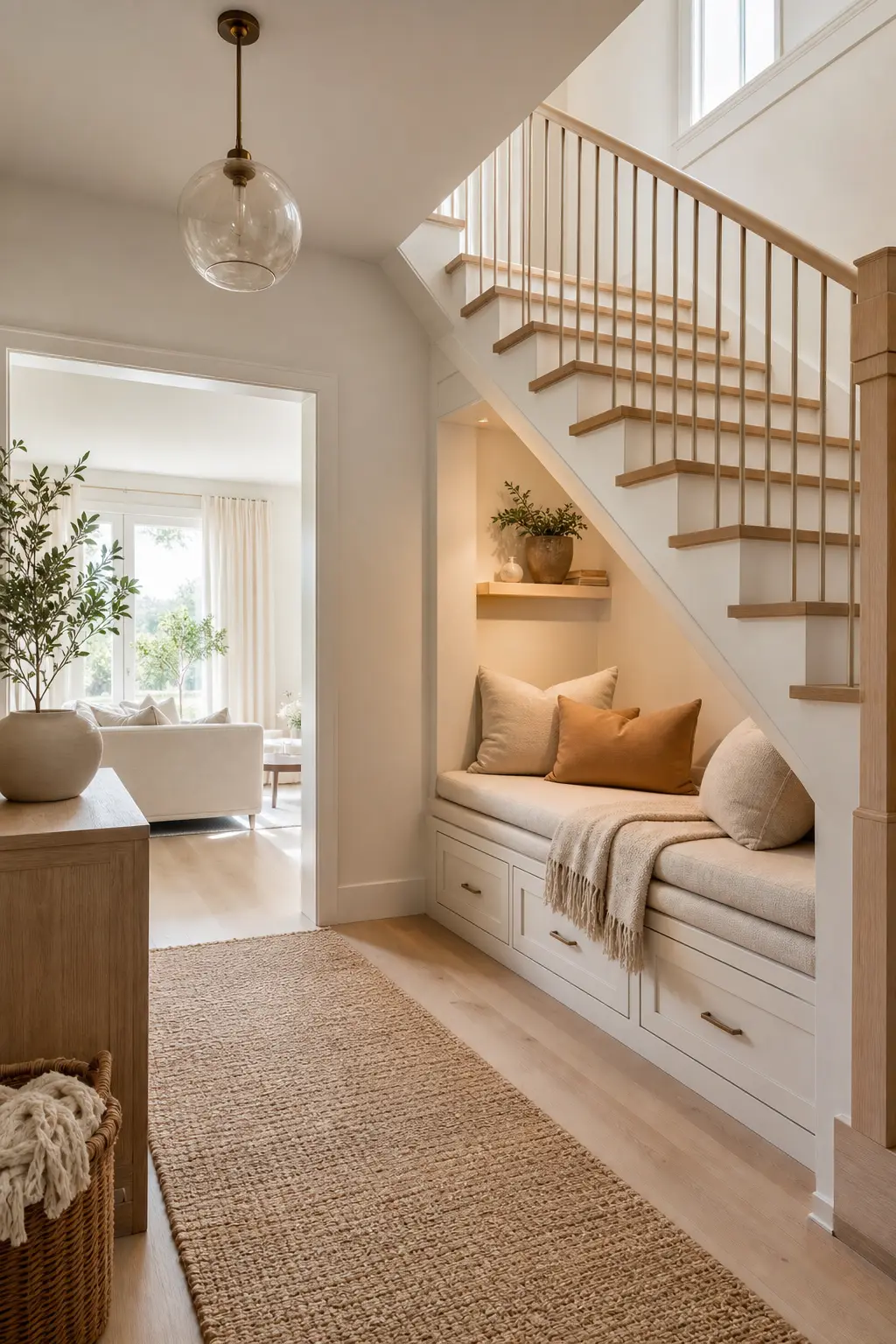
A staircase foyer often gets less natural light than other rooms, especially the area tucked beneath the stairs. A light, warm neutral palette, like soft white, warm gray, or pale oatmeal, helps the space feel open rather than closed in, even without much daylight reaching it.
Paint the underside of the stairs the same tone as the surrounding walls if possible. A mismatched or darker underside can make the nook feel separate from the rest of the foyer rather than integrated into it.
Why Light Colors Matter More Here
The area beneath a staircase is often naturally shadowed by the stairs themselves. A lighter palette reflects whatever light does reach the space more effectively, which matters more here than in a room with its own windows.
2. Add a Built In Bench for Under Stairs Seating
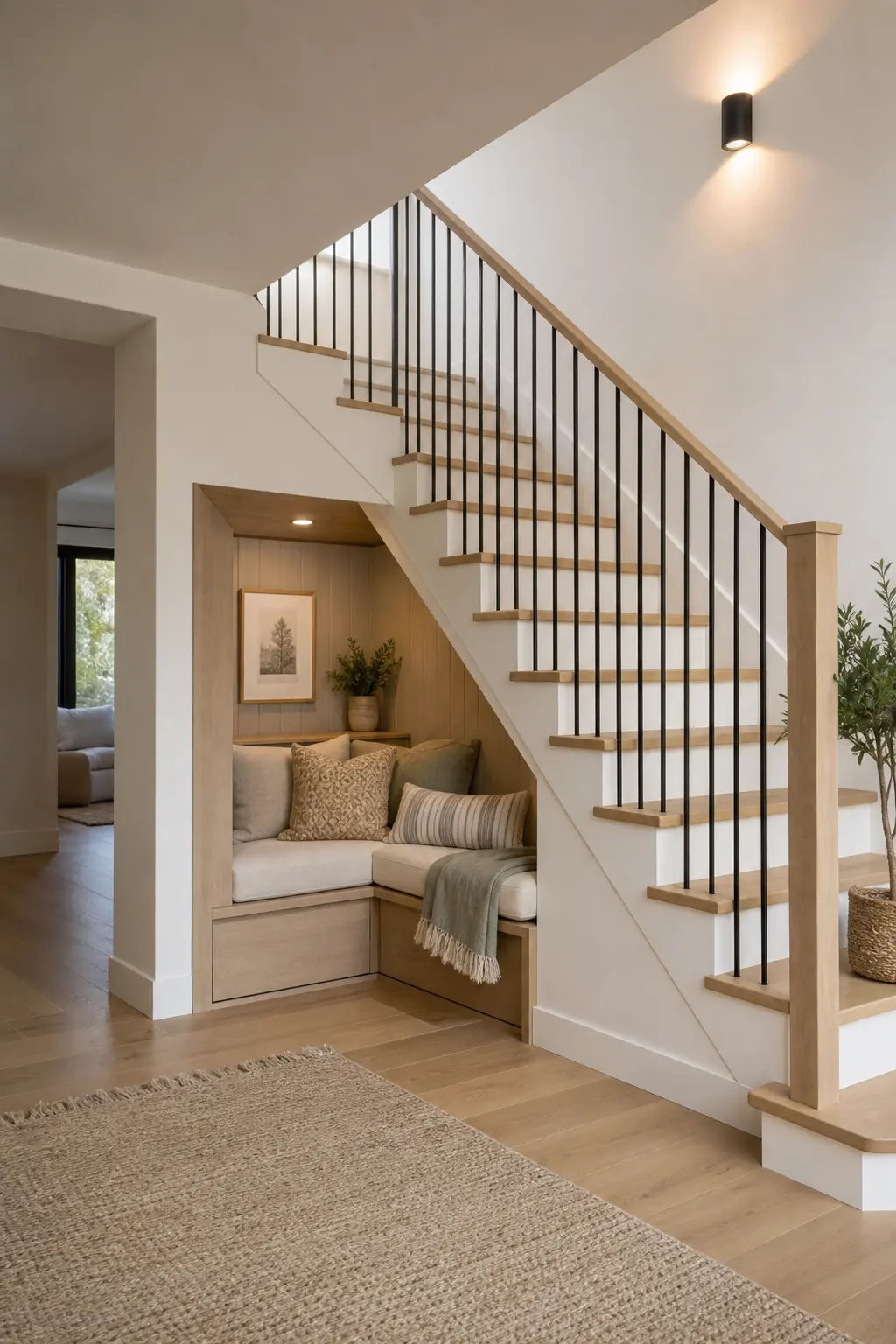
A simple bench, either built directly into the space or a freestanding piece sized to fit, turns unused square footage into a functional seat. Measure the available height carefully, since the ceiling slopes downward as it follows the stairs, and the seat needs enough headroom to actually be comfortable.
A bench with straight, simple wood legs fits a Scandinavian aesthetic well and keeps the piece feeling light rather than bulky in an already tight space.
3. Layer Warm Lighting Along the Staircase Wall
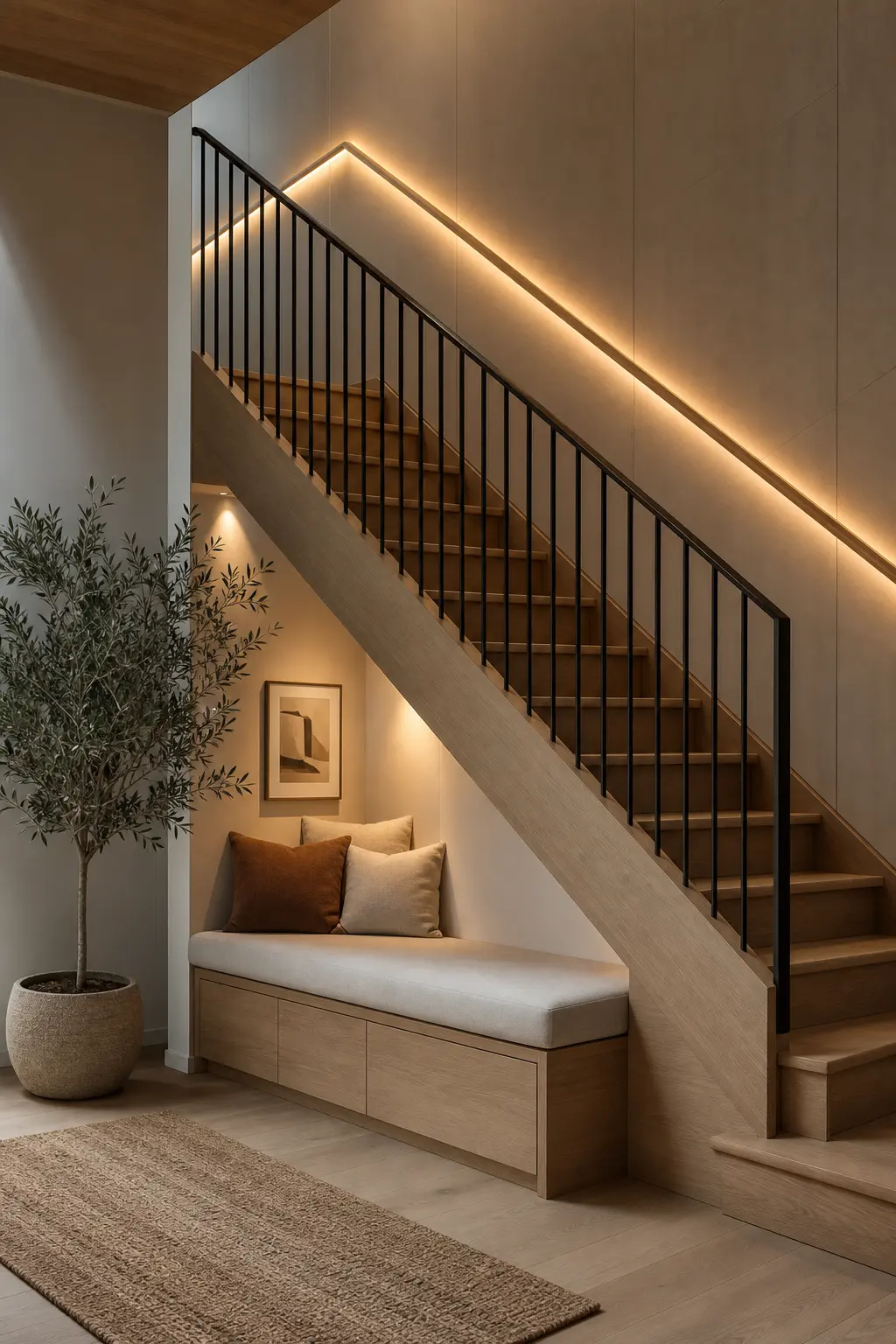
Overhead light rarely reaches the underside of a staircase effectively, since the stairs themselves block much of it. A small wall sconce or a warm LED strip tucked beneath the stair treads adds direct light to the seating nook without needing a bulky floor lamp.
Keep any added lighting on a warm color temperature, generally 2700K to 3000K, since this creates the softer, calmer glow associated with Scandinavian interiors.
4. Choose Natural Textures for the Seating Nook
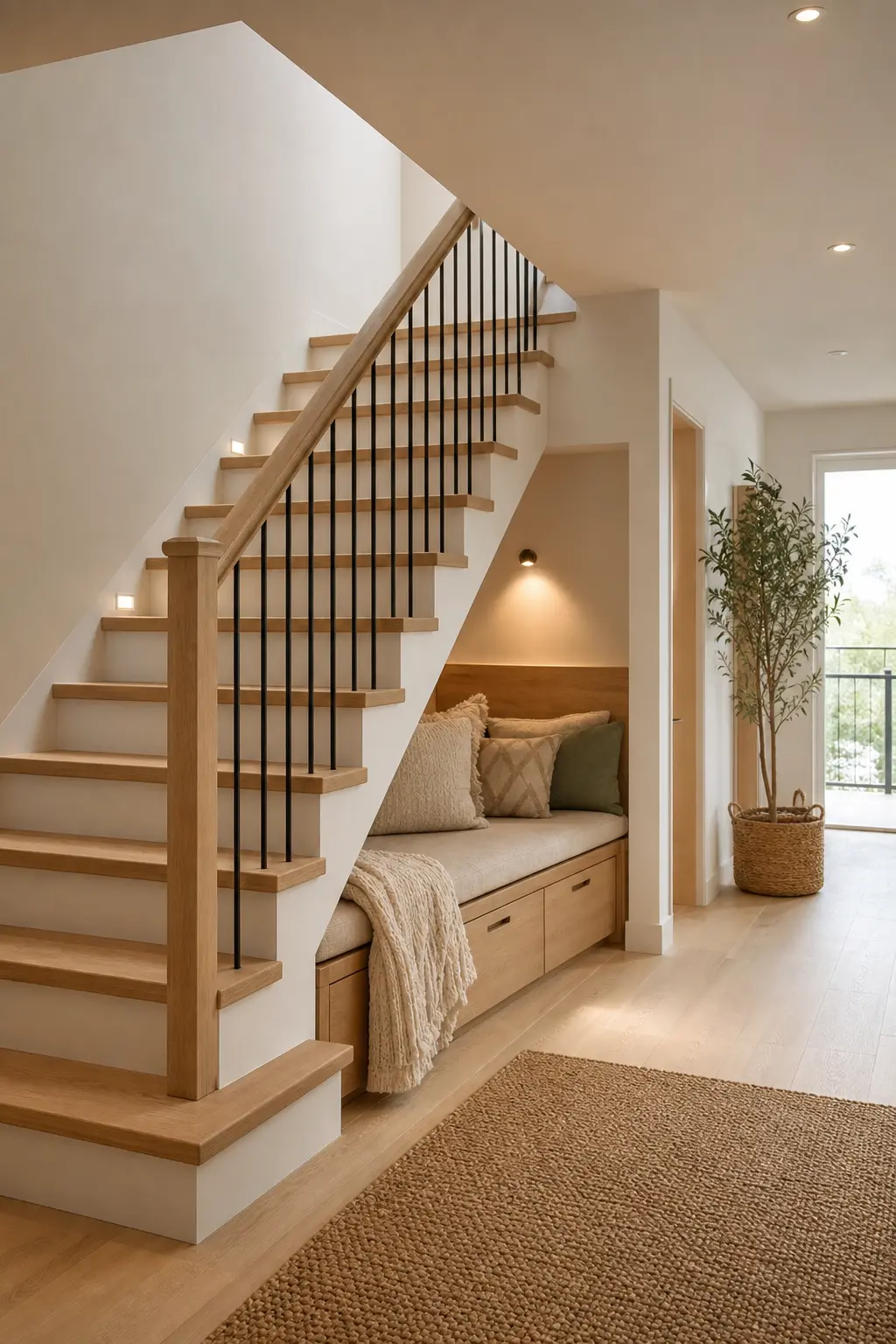
A wool seat cushion, a linen back pillow, and a light wood bench frame all add texture without introducing new color into the space. This layering is what keeps a small, functional nook from feeling plain or purely utilitarian.
Two or three natural textures are usually enough in a space this size. A nook doesn’t need heavy layering to feel warm and considered.
5. Add Storage Beneath the Stairs for Function
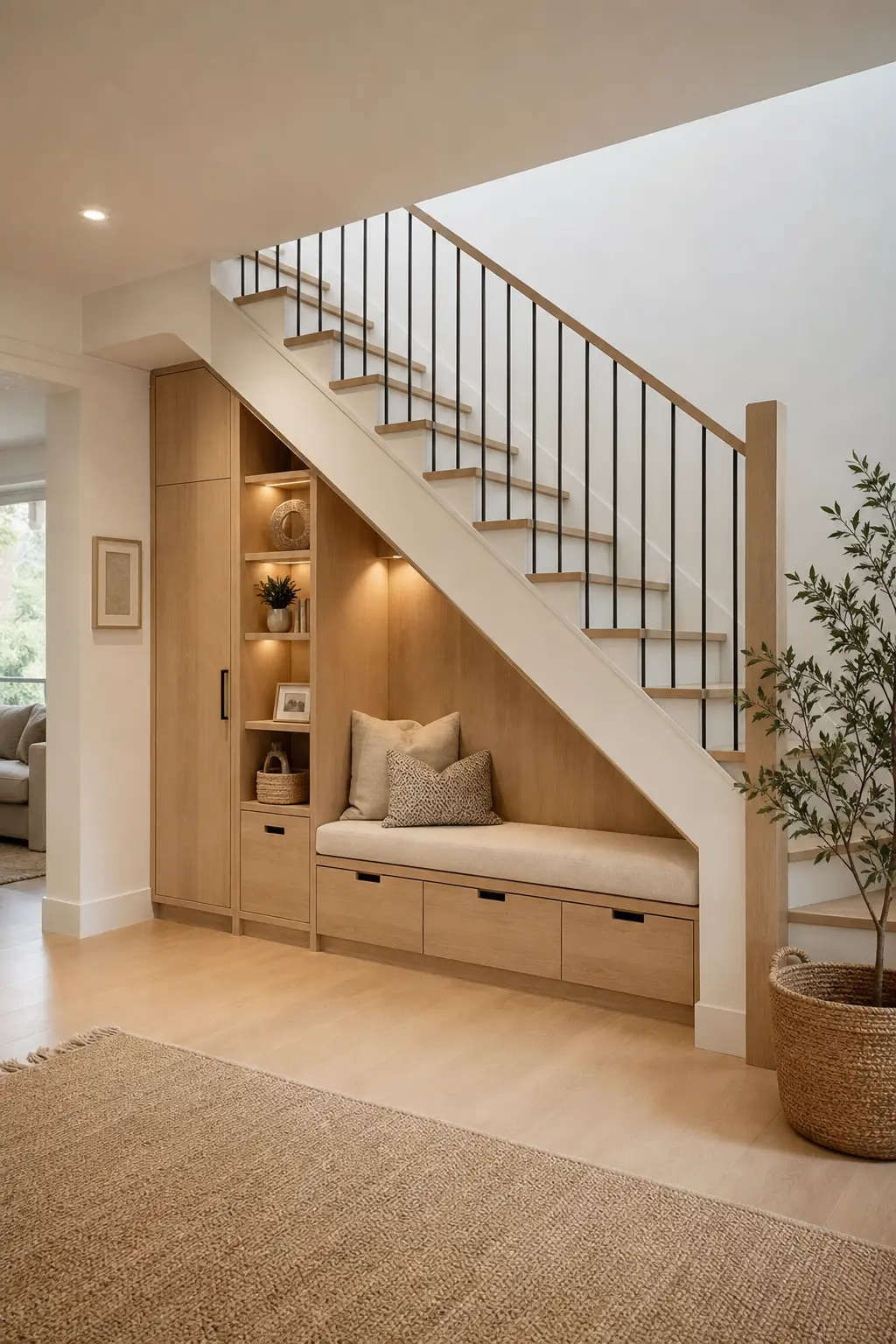
If the bench has a lift up seat or built in drawers, the space underneath can hold shoes, blankets, or seasonal items out of sight. This kind of hidden storage supports the calm, uncluttered look Scandinavian interiors are known for, while still making practical use of the space.
If a built in storage bench isn’t an option, a few woven baskets tucked beneath a freestanding bench serve a similar purpose with less installation effort.
6. Use a Runner Rug to Soften the Staircase Steps
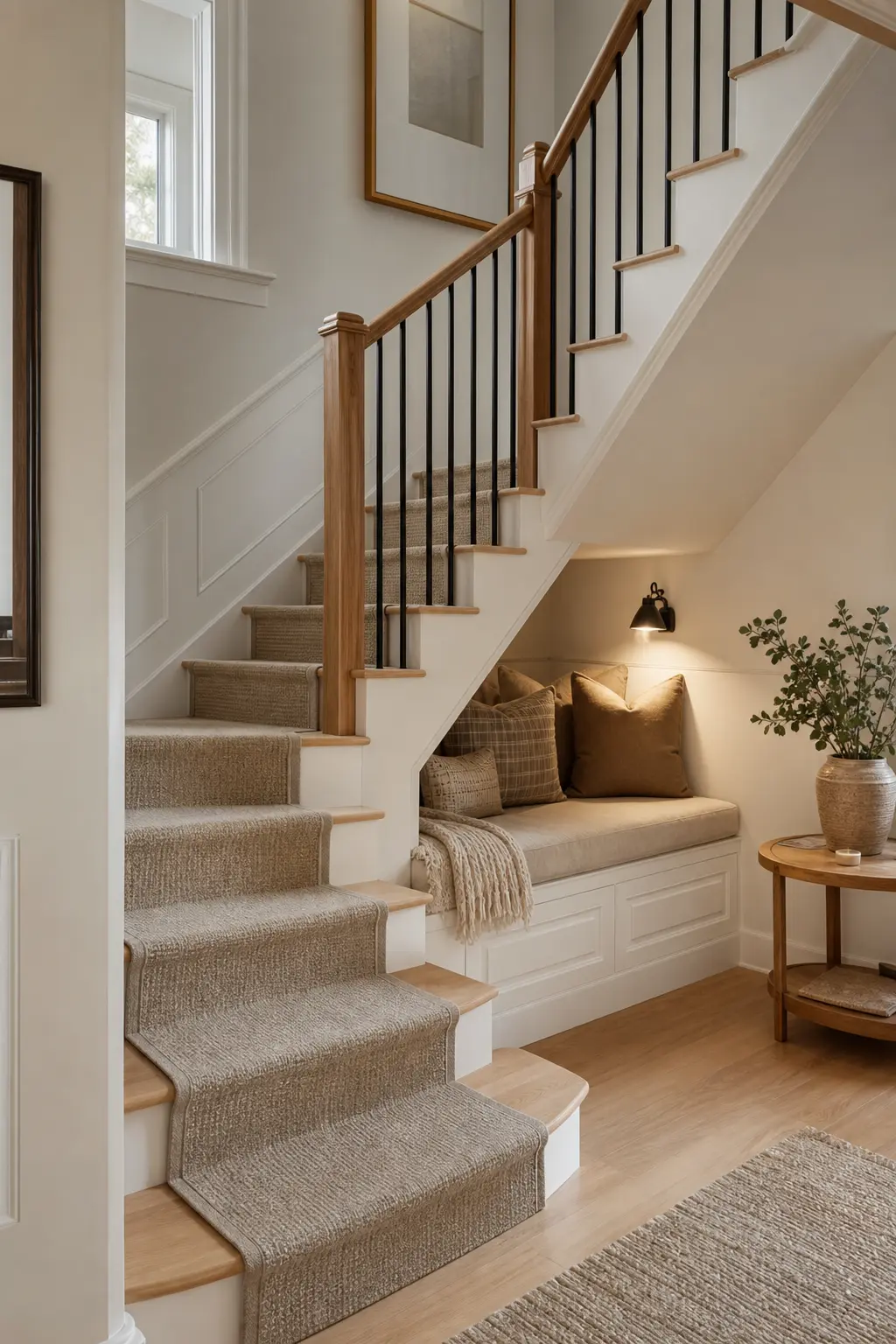
A slim runner rug along the stairs themselves adds texture and a bit of warmth underfoot, while also softening the sound of footsteps in a foyer that often has hard flooring. Choose a light, low pile option that fits the overall neutral palette rather than a bold pattern that would stand out against the calm styling below.
Securing the runner properly with stair rods or a non slip pad is worth the extra step, both for safety and for keeping the rug looking neat over time.
7. Add a Single Plant to Bring in a Natural Touch
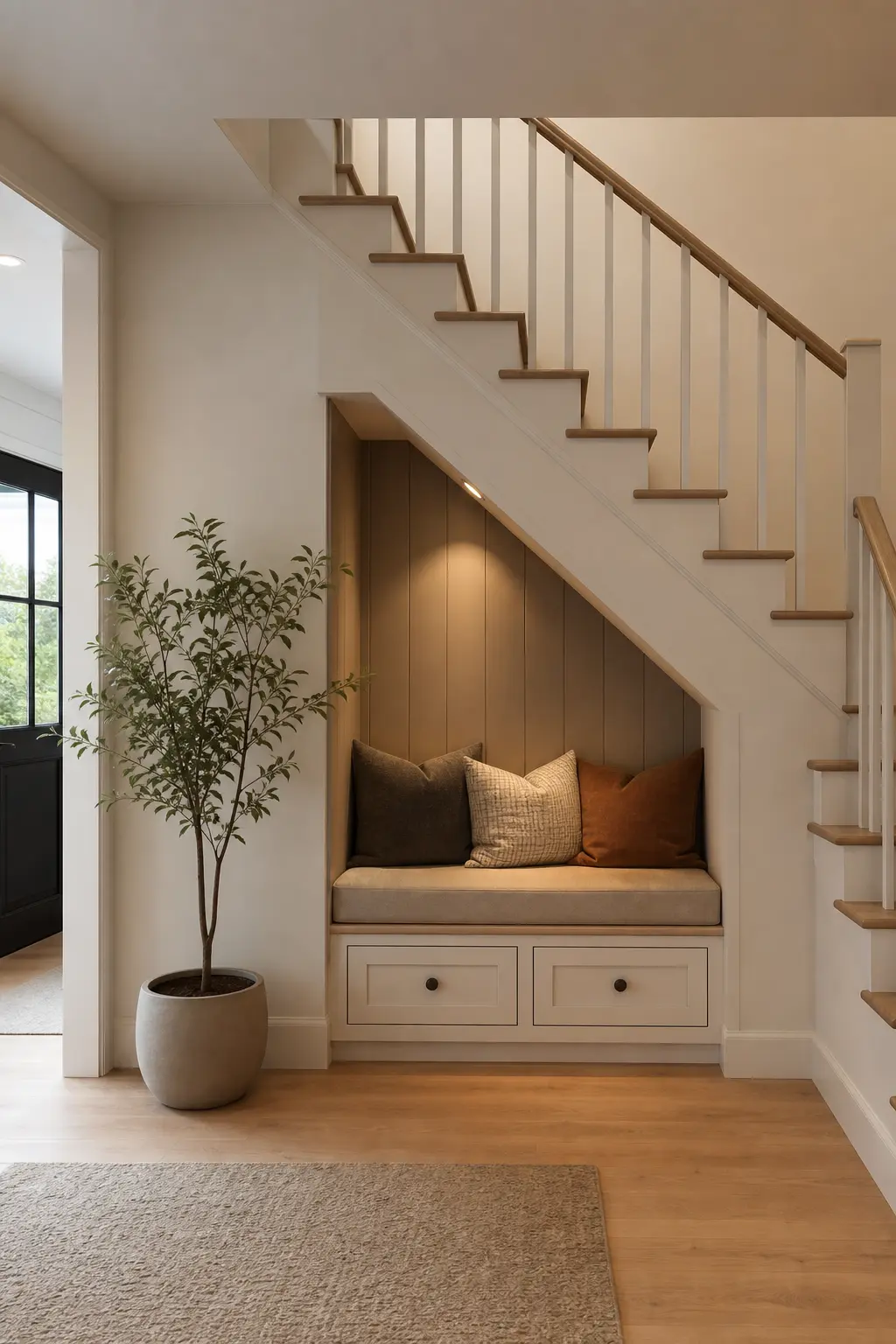
A small plant placed on or near the bench, like a compact pothos or a low light tolerant fern, softens the hard lines of the staircase structure with a natural element. Choose a plant suited to the actual light levels in the space, since the area under stairs often receives limited or indirect light at best.
One plant is typically enough in a small nook. Overcrowding the space with multiple pots can start to feel cluttered rather than calm.
8. Keep Wall Decor Simple Along the Staircase
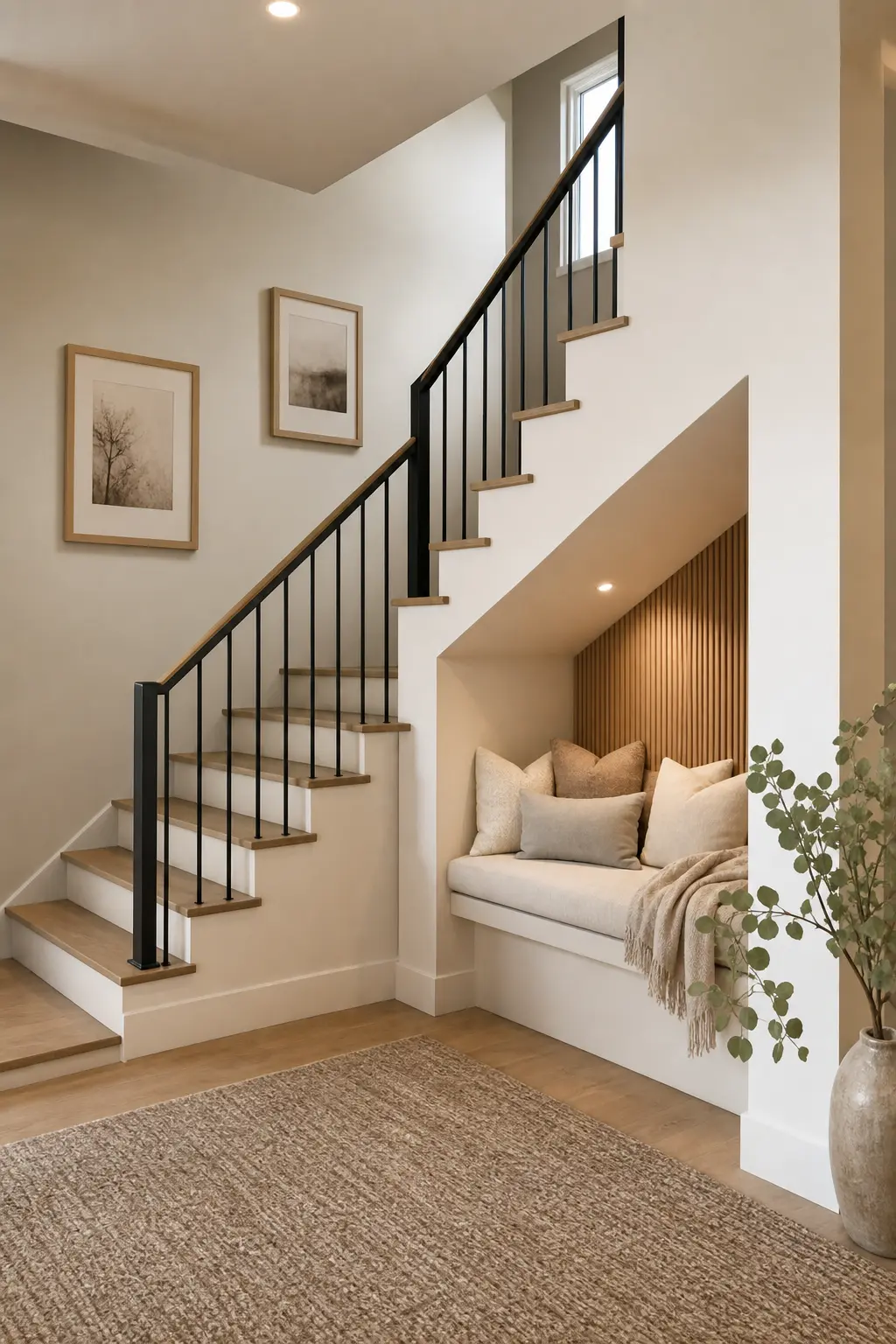
A single piece of art or a small gallery, spaced evenly along the ascending wall, tends to look more intentional than a crowded, mismatched collection. Choose frames in warm, muted tones that echo the room’s overall palette rather than bold, high contrast pieces.
Leave consistent spacing between frames if you choose a gallery arrangement, since even spacing reads as considered, while uneven gaps can look accidental.
9. Choose Cushions and Throws That Add Comfort
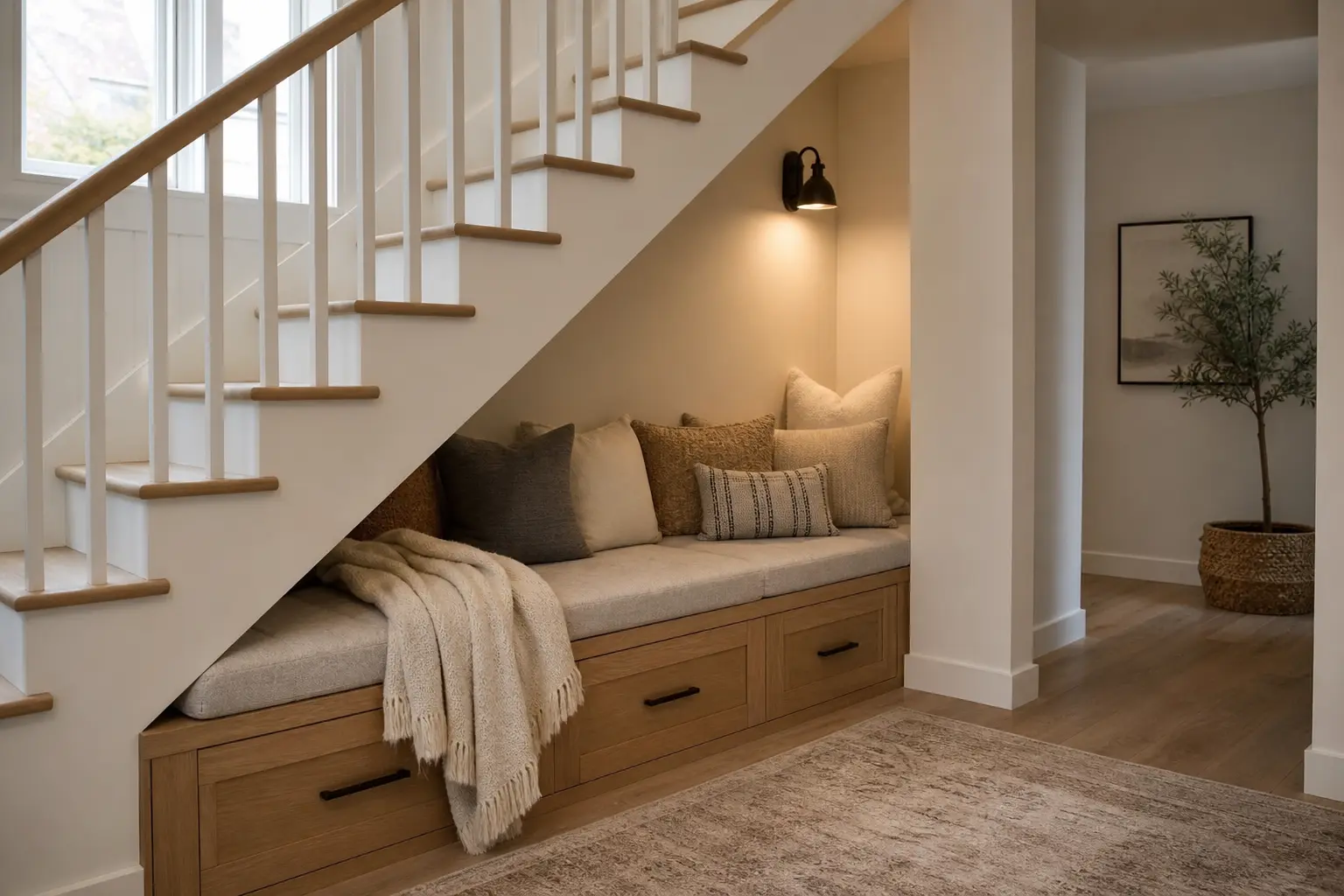
A well cushioned seat with a soft throw nearby turns a purely functional bench into somewhere people actually want to sit for a moment. Stick to two or three tones within the same warm neutral family, so the styling feels cohesive rather than like scattered leftover textiles.
A folded throw draped over one end of the bench also adds a lived in, welcoming touch that a bare wood seat alone doesn’t provide.
10. Balance Function and Calm in the Foyer Layout
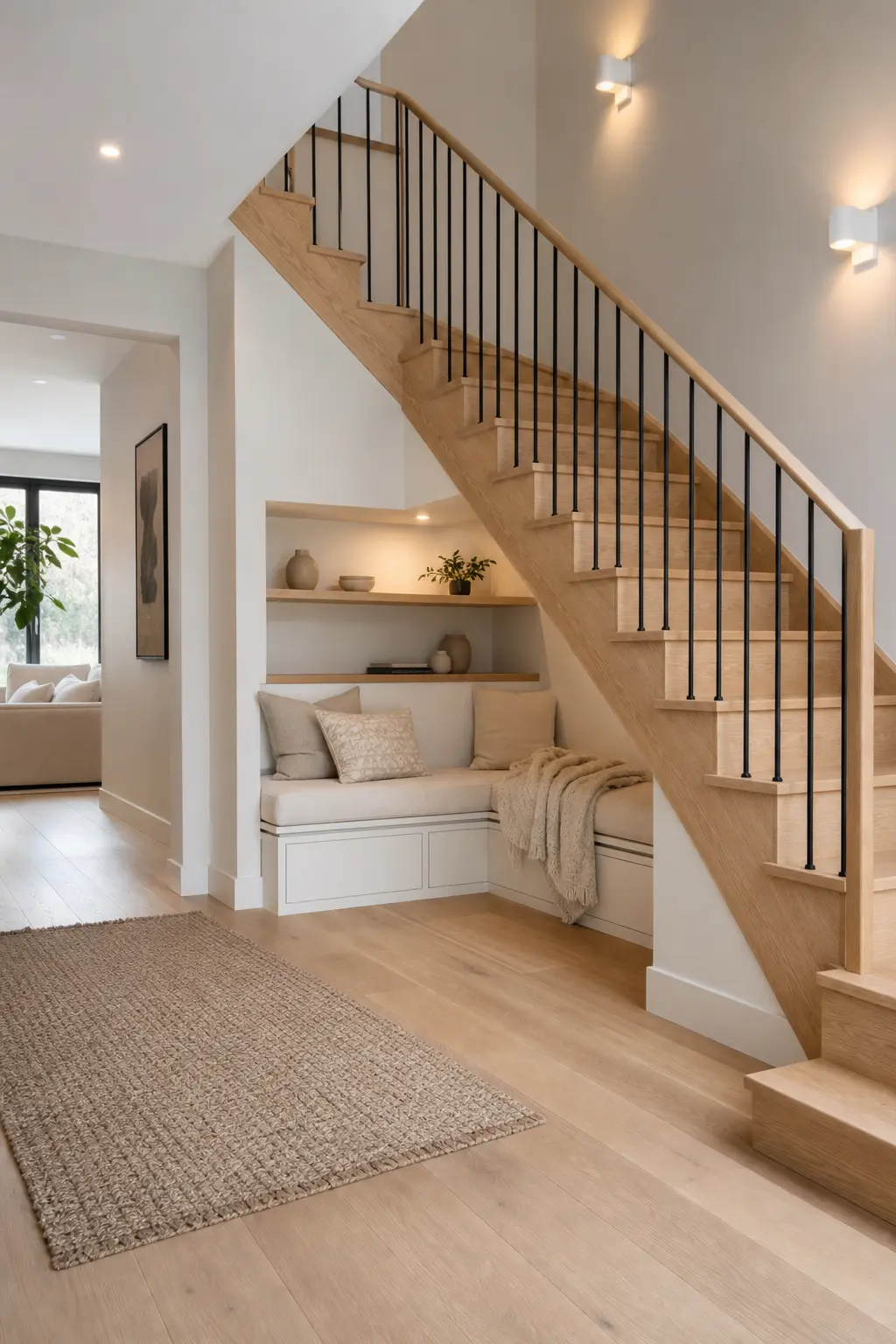
The whole point of a staircase foyer nook is that it serves a real purpose, whether that’s putting on shoes, holding mail, or simply sitting for a moment before heading out. Every piece added to the space should support that function, not just look good in a photo.
Before adding another decorative object to the nook, consider whether it actually earns its place in daily use. If it doesn’t, it’s likely working against the calm, functional feeling the space is meant to have.
Mistakes to Avoid
- Choosing a bench too tall for the sloped ceiling under the stairs, leaving no headroom
- Skipping lighting entirely, leaving the nook dim and unused
- Overcrowding the space with too many decorative objects instead of functional pieces
- Using a bold, patterned runner that clashes with the calm, neutral palette
- Ignoring available storage opportunities beneath the bench or stairs
Frequently Asked Questions
How much headroom do I need for a bench under the stairs? This depends on where along the staircase you place it, since the ceiling slopes. Measure the actual height at your intended bench location, and aim for enough clearance that someone can sit comfortably without ducking.
What’s the easiest way to add storage under the stairs without a full renovation? A freestanding bench with a lift up seat, or simply a few woven baskets tucked beneath an open bench, both add functional storage without requiring built in construction.
Do I need a runner rug on the stairs, or is it just decorative? Beyond adding texture, a runner also softens the sound of footsteps and can improve grip on the stairs, making it both a practical and a styling choice.
What plants work well in a low light staircase area? Pothos, ZZ plants, and certain ferns tend to tolerate lower or indirect light better than most flowering plants, which makes them a practical choice for this kind of space.
Is a built in bench necessary, or can I use a freestanding one? A freestanding bench sized to fit the space works well and is usually easier to install than a fully built in option, though a custom built bench can make more efficient use of an irregular space.
Conclusion
The space under your stairs doesn’t have to stay empty or become a catch all storage spot. A simple bench, warm lighting, and a few natural textures can turn it into a genuinely cozy, functional part of your foyer. Start by measuring the space and clearance you actually have, then build the seating nook from there.