10 Luxury TV Wall Ideas with Fluted Wood Panels | Modern Living Room Inspiration
A flat painted wall behind the TV rarely looks intentional, and most homeowners know it the moment they walk into a room designed with actual texture. If you’ve been researching fluted wood panels for a TV wall because your living room feels a little plain, the appeal makes sense. The repeating vertical grooves catch light and shadow in a way a flat surface simply can’t. This article covers ten ways to design a luxury TV wall around fluted wood panels, including spacing, wood tone, and real cost ranges.
1. Why Fluted Wood Panels Have Become a Favorite Living Room Feature
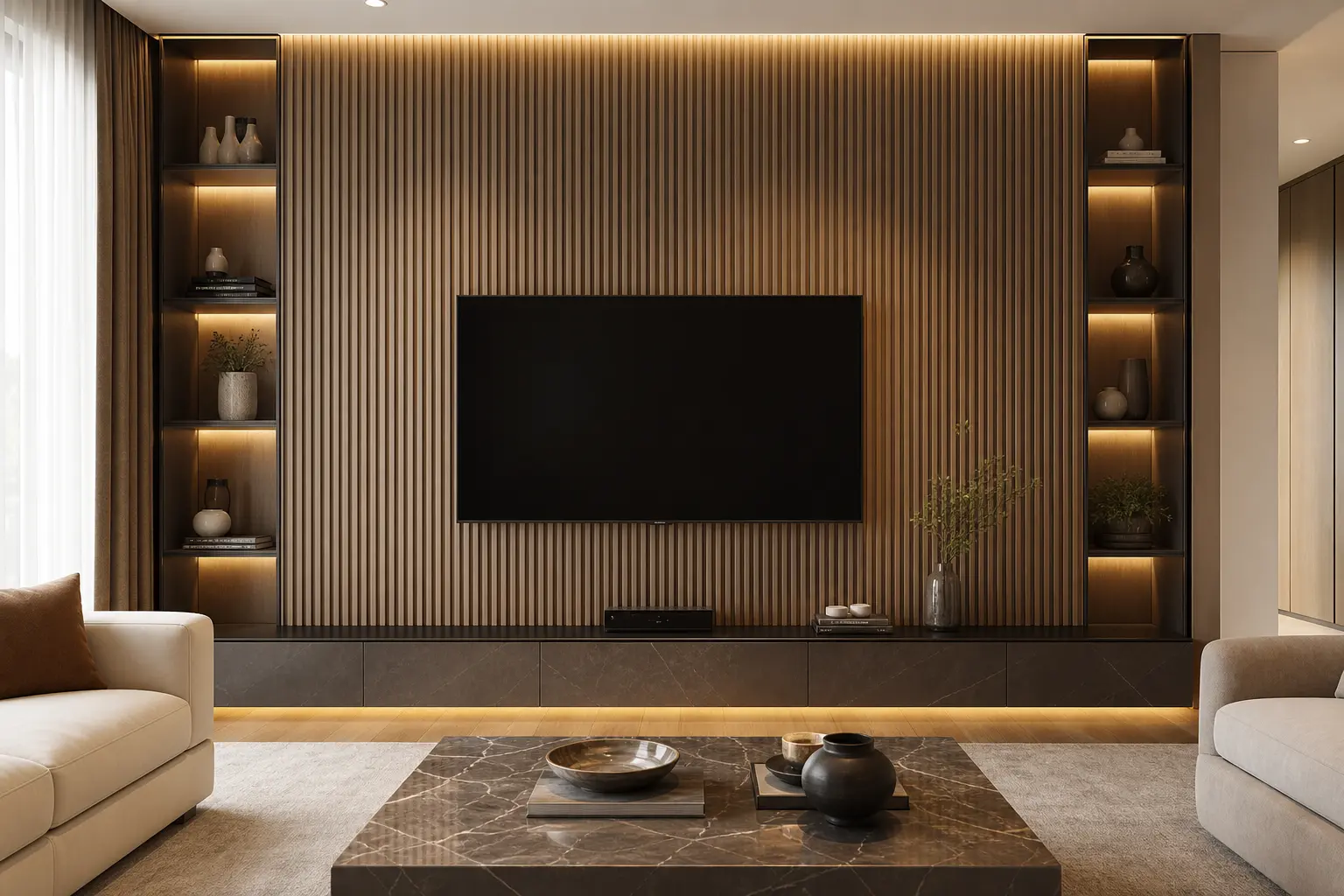
Fluted panels use a series of evenly spaced vertical grooves cut or applied across a wood surface. That repeating pattern creates a rhythm the eye naturally follows, which is part of why the look reads as more architectural than a standard flat panel wall.
The texture also interacts with light in a way flat surfaces don’t. As natural light shifts through the day, the grooves cast changing shadow lines across the wall, so the same wall can look noticeably different in the morning versus the evening. That subtle movement is a big part of the appeal in higher end interior design right now.
2. Choosing Flute Width and Spacing for Your TV Wall
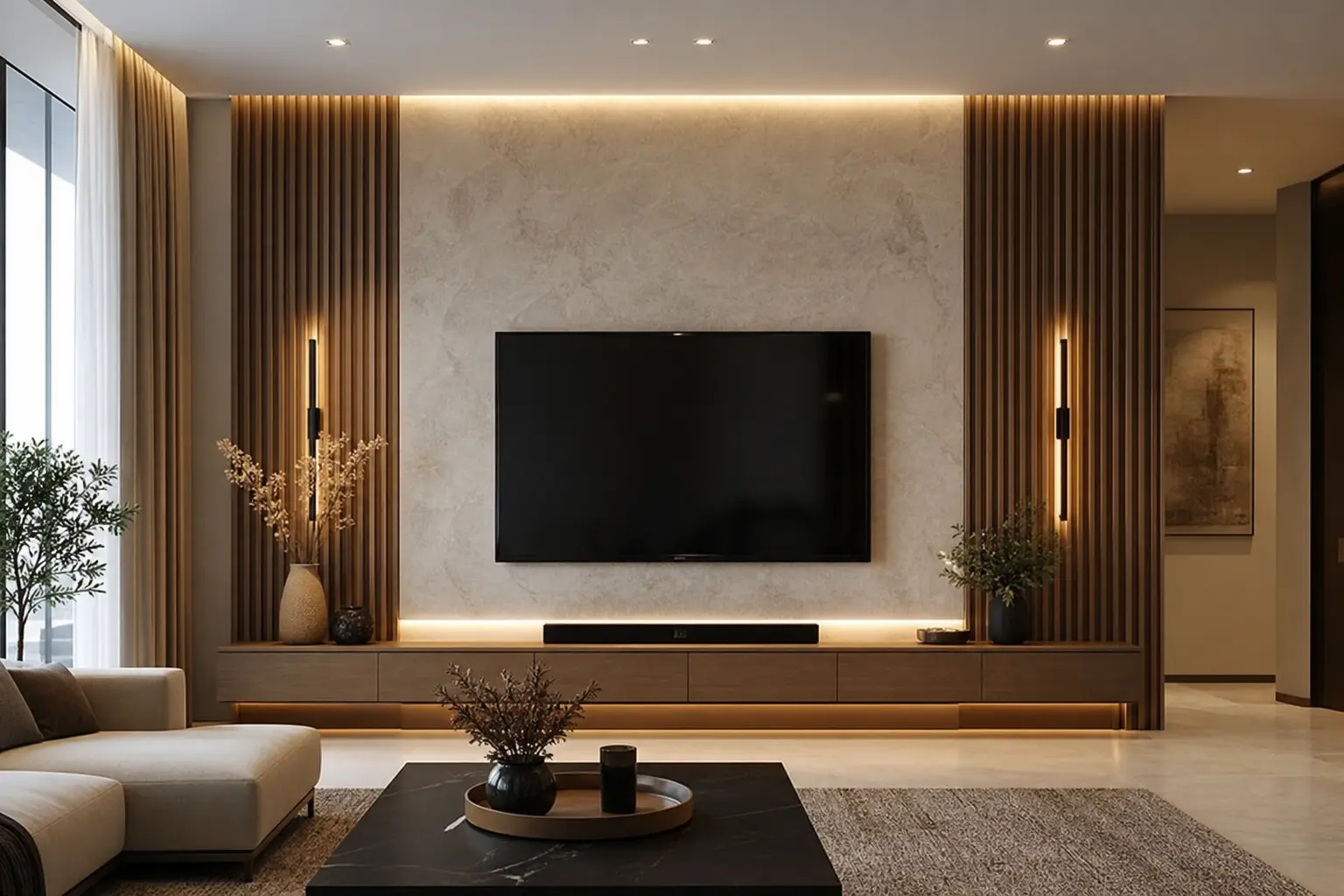
Flute width affects how bold or subtle the texture reads from across the room. Narrow flutes, spaced around half an inch to three quarters of an inch apart, create a tighter, more refined pattern that suits smaller rooms or a more minimalist style. Wider flutes, closer to an inch and a half apart, cast deeper shadows and read as bolder and more dramatic.
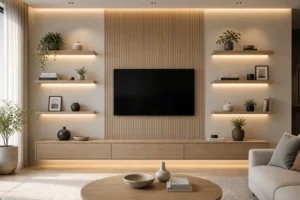
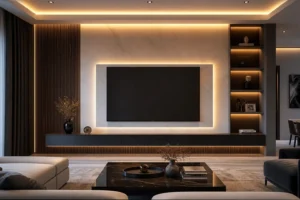
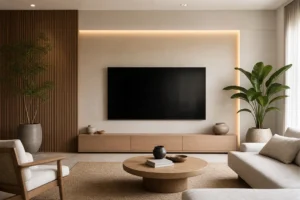
Even spacing matters more than exact width. Once panels are installed and lit, any inconsistency in the gap between grooves becomes noticeable, especially under angled LED light that’s specifically designed to highlight the texture.
Depth of the Groove Itself
Groove depth, not just spacing, changes how strong the shadow line looks. Deeper grooves, often used in solid wood fluted panels, create a more dramatic shadow than shallow grooves found in some MDF veneer panel products. If a strong shadow effect matters to you, check groove depth specifically rather than assuming all fluted panels look the same.
3. Wood Species and Finishes That Suit Fluted Panels
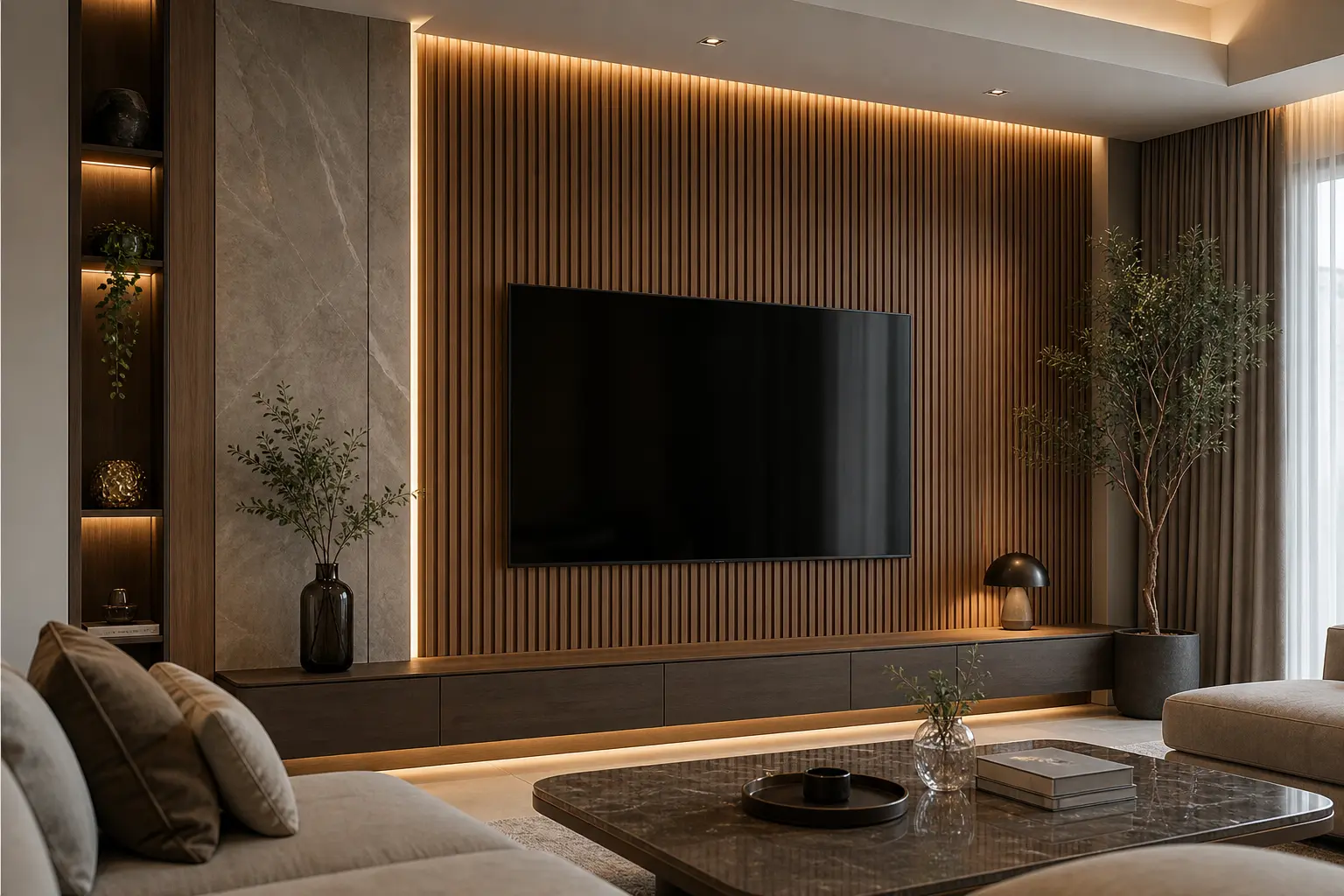
Oak and walnut remain the two most common wood choices for fluted panels, largely because their grain patterns complement the repeating vertical lines rather than competing with them. Walnut leans darker and reads as more formal and luxurious, while oak offers a warmer, lighter, more casual feel.
MDF fluted panels with a wood veneer finish are a lower cost alternative that still deliver the same visual grooved texture, though they generally show less natural grain variation up close than solid wood. Painted fluted panels, especially in black or a deep charcoal, are also popular for a bolder, more contrast driven look rather than a warm wood tone.
4. Pairing LED Lighting with Fluted Wood Texture
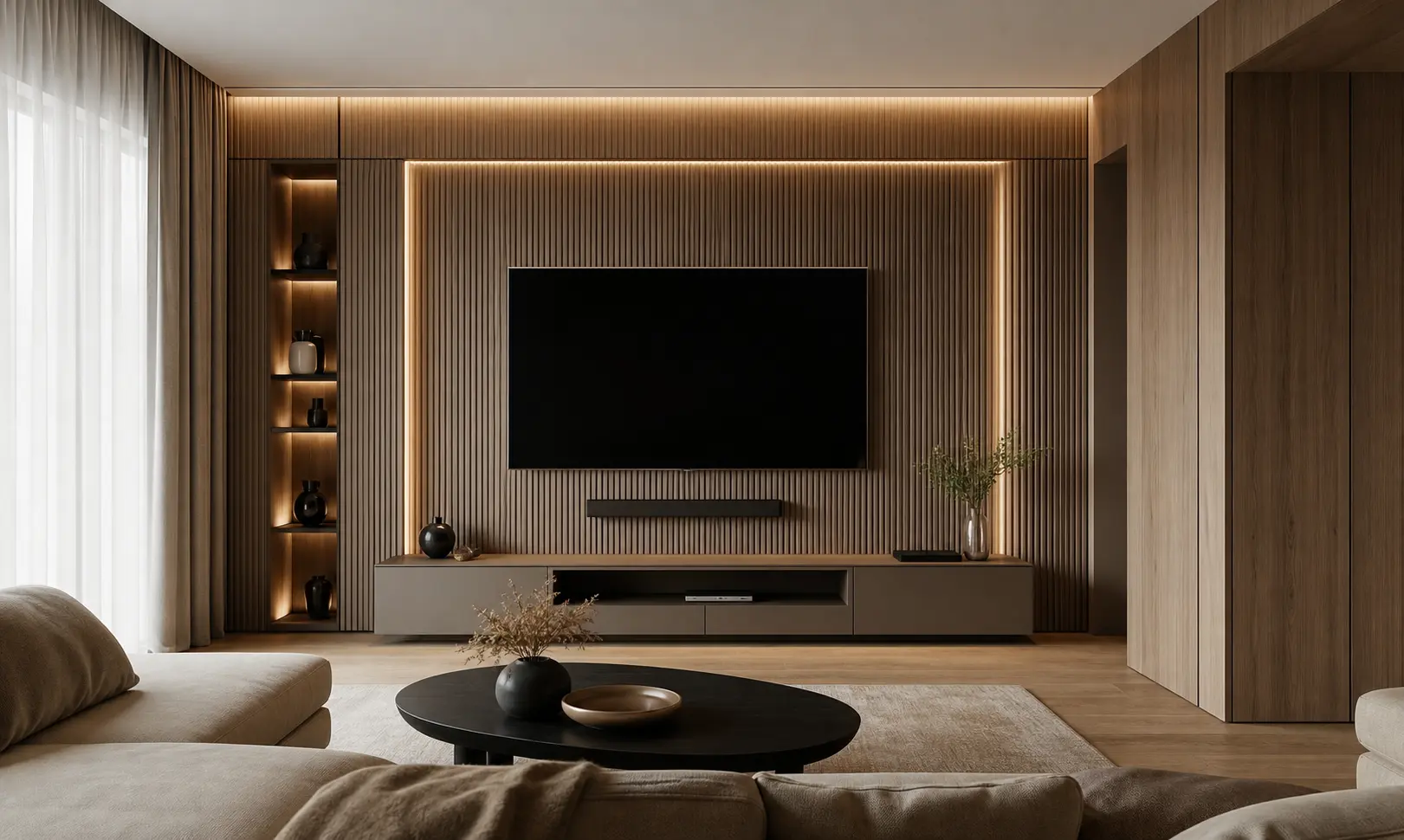
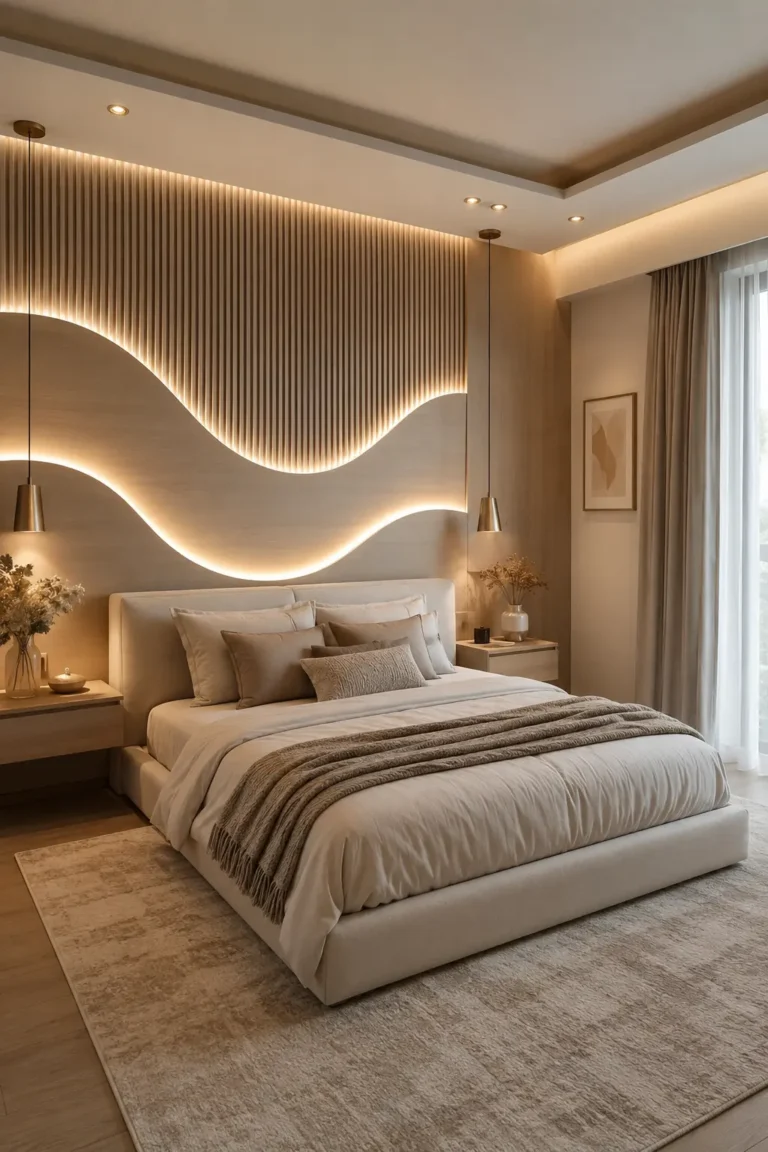
Angled lighting brings out fluted texture far more effectively than light shining straight onto the wall. LED strips placed along the top edge of the panel, angled slightly downward, graze light across the grooves and create strong, defined shadow lines. Direct, straight on lighting tends to flatten the texture instead of highlighting it.
Warm LED color temperature, in the 2700K to 3000K range, works especially well with fluted wood, since the warm tone deepens the look of the wood grain within each groove. A dimmable strip lets you adjust how dramatic the shadow effect looks depending on the time of day or occasion.
5. Sizing a Fluted Panel Wall Around Your TV
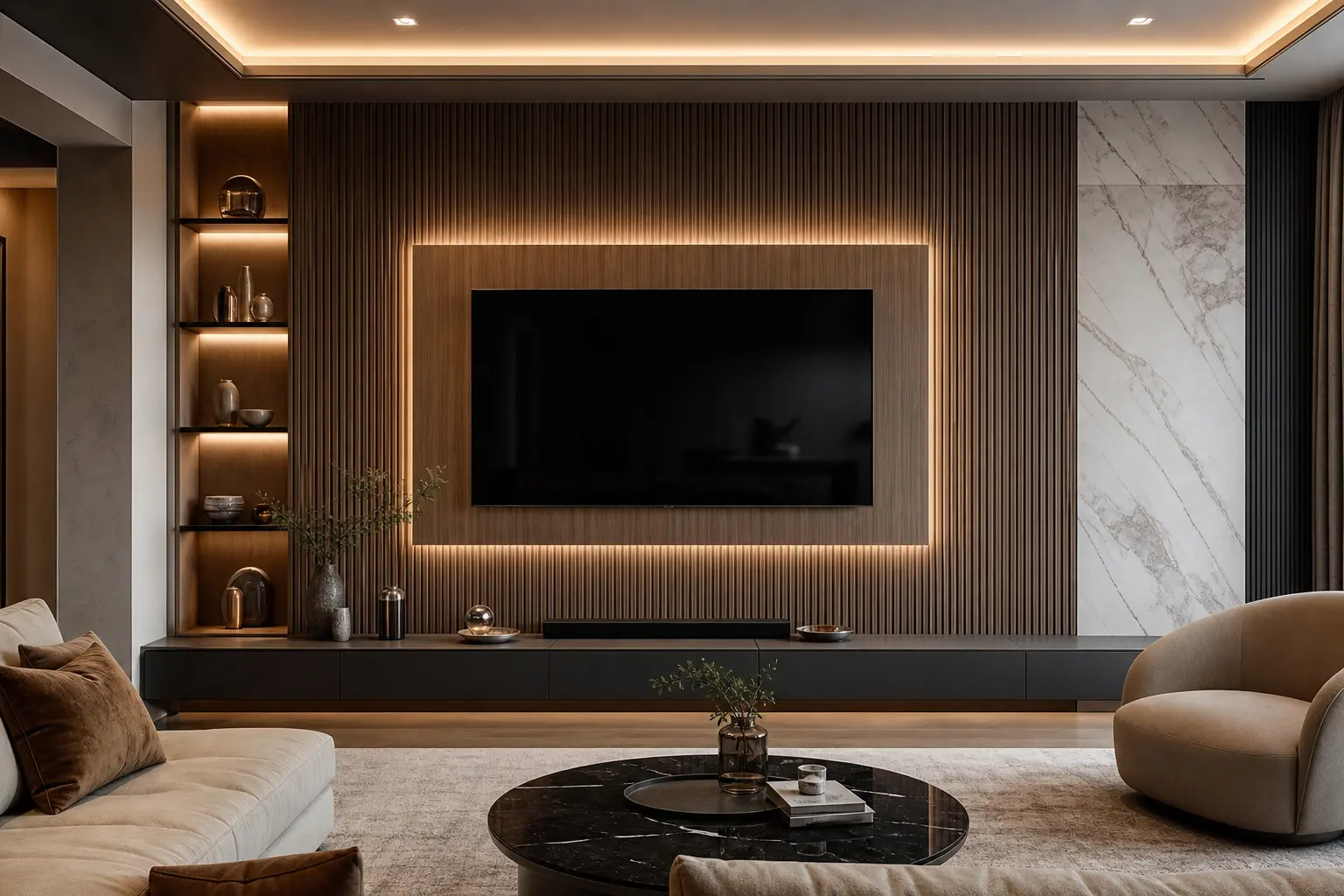
A fluted panel section should generally extend at least 12 to 18 inches beyond each side of the television to avoid looking undersized relative to the screen. For a 65 inch TV, that puts a reasonable panel width somewhere around 7 to 8 feet across, depending on how much of the wall you want covered.
Height matters too. Running the panel from floor to ceiling creates the strongest visual statement, while a partial height panel, stopping around 7 to 8 feet up the wall, is a more moderate option that still delivers most of the visual texture at a lower material cost.
6. Fluted Panels as a Full Wall vs a Framed Accent Section
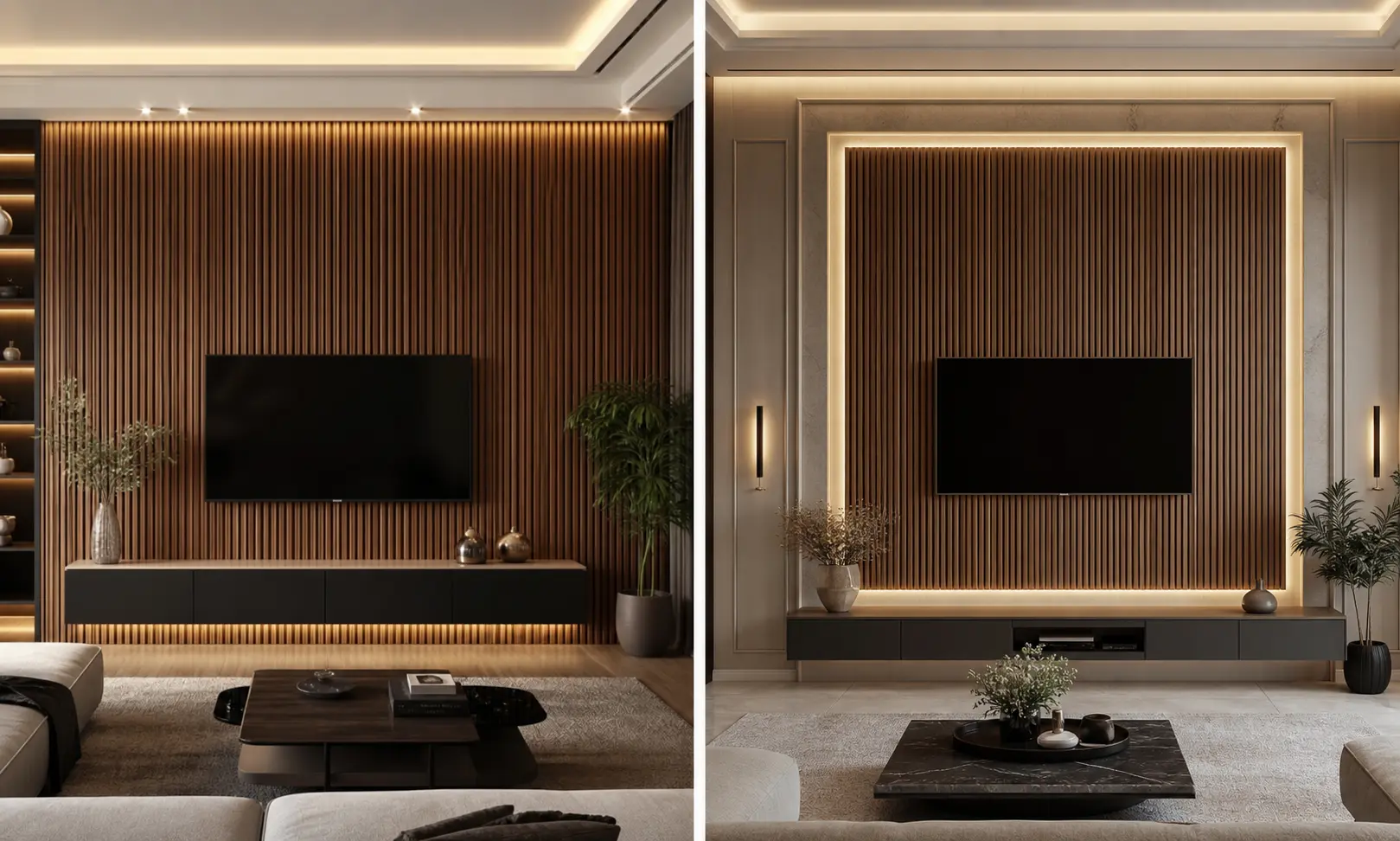
A full wall treatment, covering the entire TV wall edge to edge, creates a dramatic, immersive backdrop and tends to suit larger living rooms with enough space for the pattern to feel substantial rather than cramped. It also simplifies the design decision, since there’s no need to center or frame the panel around the TV specifically.
A framed accent section, sized specifically around the television, works well in smaller rooms or in spaces where you want the fluted texture to read as one deliberate feature rather than covering the whole wall. This approach usually costs less as well, since it uses considerably less material.
7. Color Backgrounds That Make Fluted Texture Pop
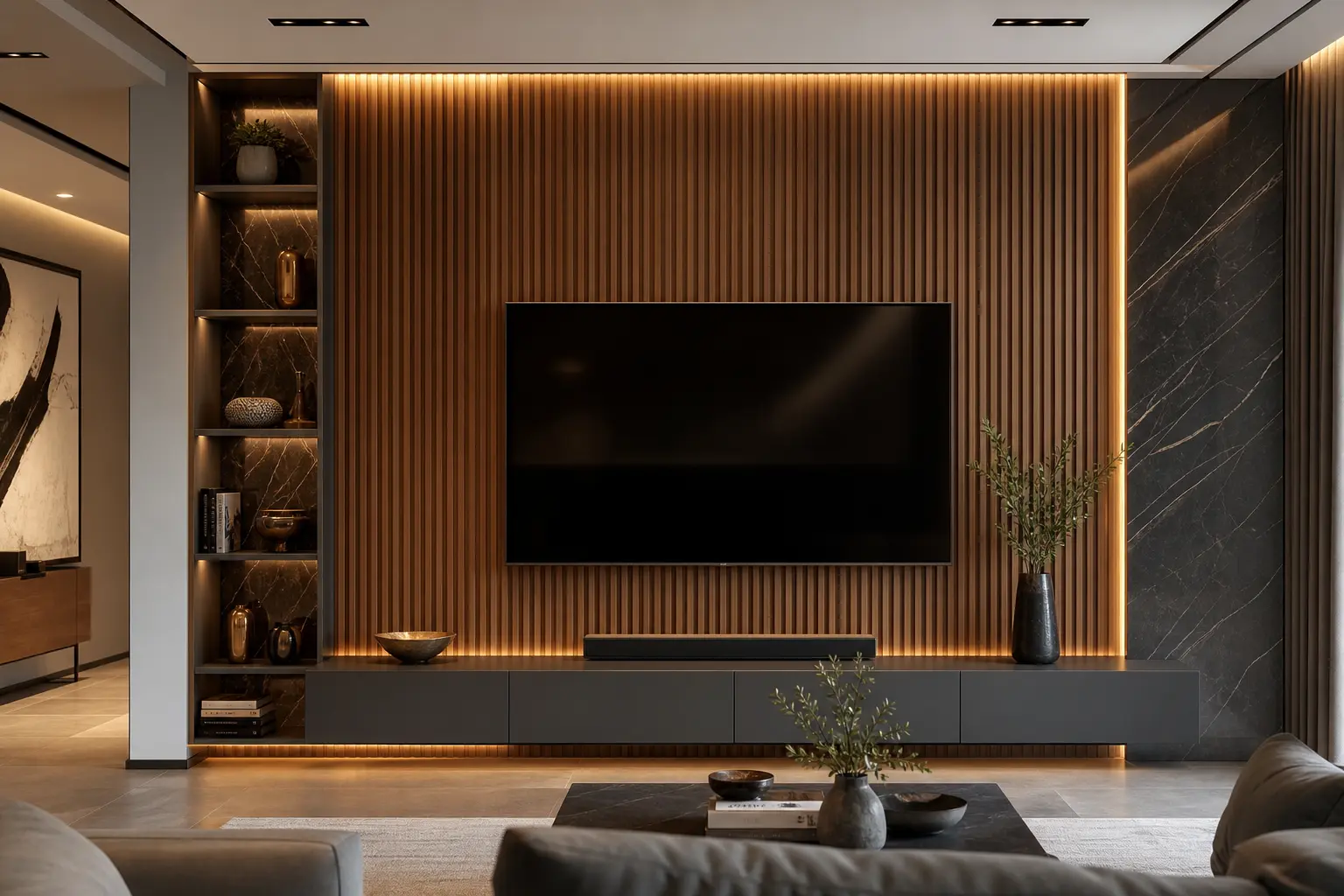
The wall color surrounding a fluted panel section changes how much the texture stands out. A neutral background, in soft white or warm gray, lets the panel read as the clear focal point without visual competition. A deeper background color, like a warm terracotta or deep green, can make the panel feel more integrated into an overall color story rather than standing entirely apart from the rest of the room.
If the fluted panel itself is a lighter wood tone, a slightly darker surrounding wall color tends to create more contrast and make the texture more visible from across the room, especially in rooms with limited natural light.
8. Storage and Shelving Options Within a Fluted Panel Wall
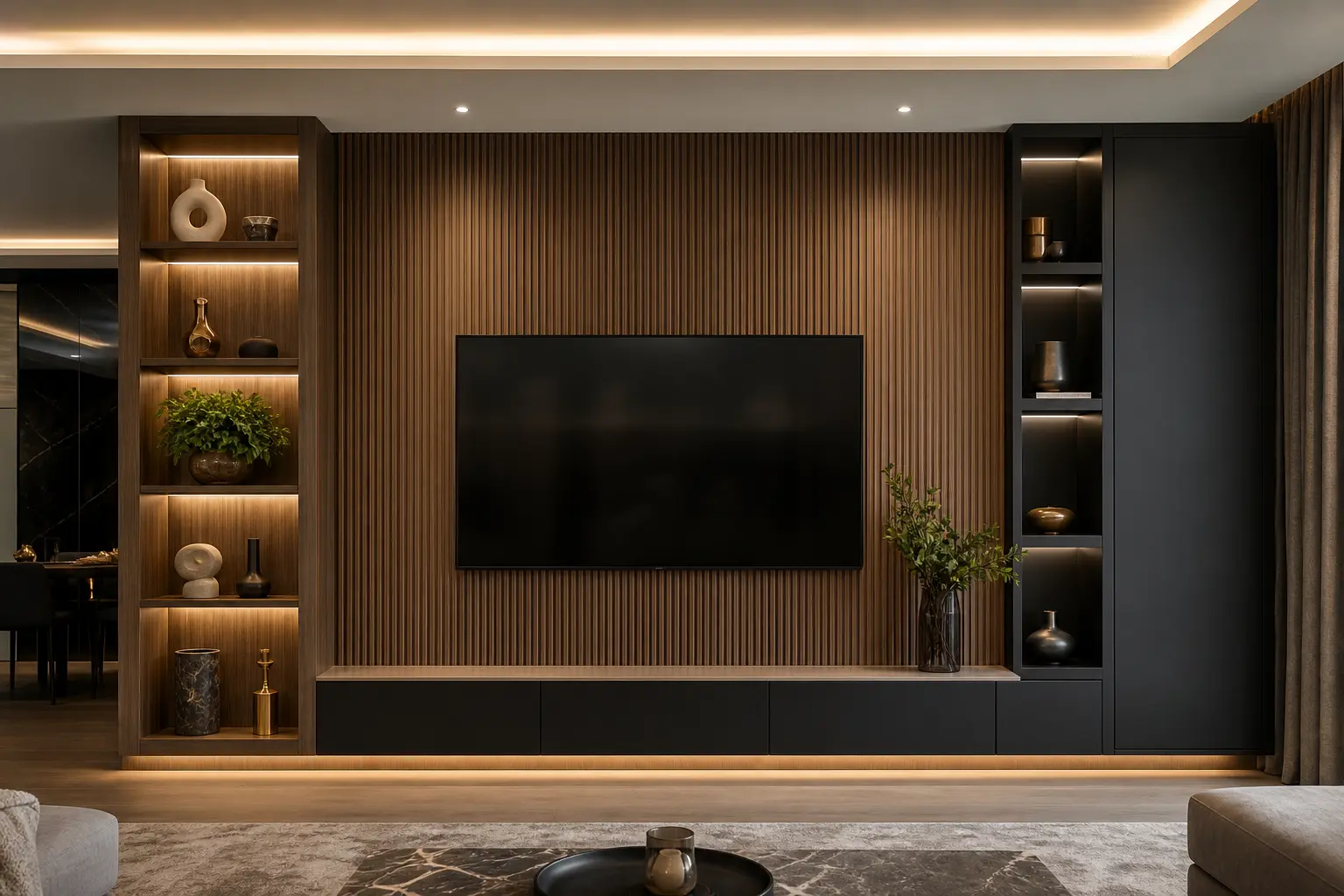
A fluted panel wall can still accommodate practical storage, though it takes some planning since cutting into a textured panel needs to look deliberate rather than accidental. Recessed shelving, built into a clean gap within the panel layout, keeps electronics accessible without disrupting the fluted pattern elsewhere on the wall.
A floating console below the panel is often the simplest storage solution, since it avoids cutting into the fluted texture at all. Pairing the console with under console LED lighting adds another lighting layer while keeping the panel itself completely uninterrupted.
9. Curved and Corner Applications for Fluted Wood Panels
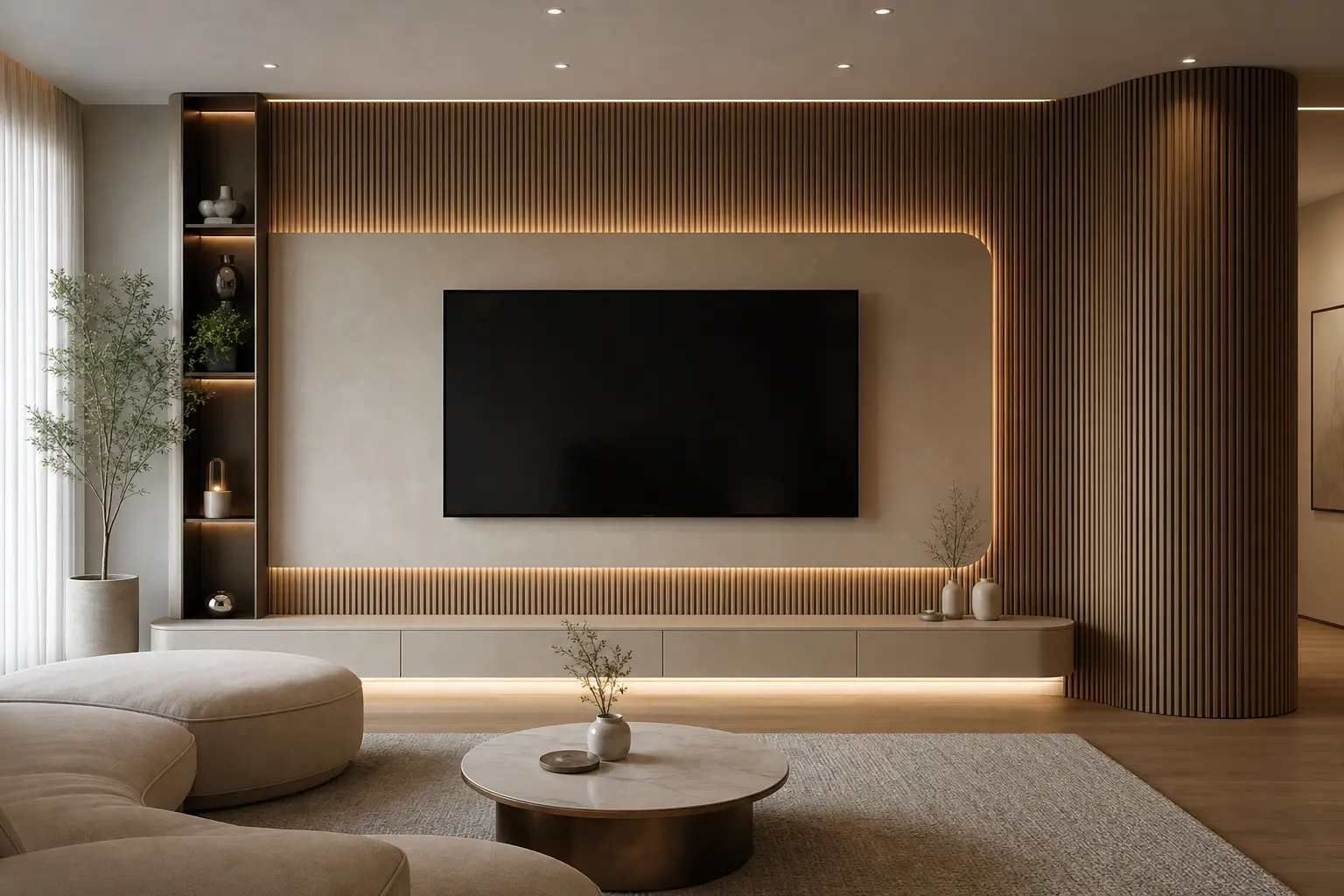
Fluted panels aren’t limited to flat, straight walls. Flexible fluted panel products can wrap around a curved wall or a rounded corner, extending the same vertical rhythm around a bend rather than stopping at a hard edge. This works especially well for a media wall that wraps partially around toward an adjacent doorway or hallway.
Corner applications, where fluted panels meet at an inside or outside corner, need careful attention to groove alignment. Mismatched flute spacing at a corner seam is one of the more common installation mistakes, and it’s noticeable enough to undercut an otherwise well executed design.
10. Budget Planning for a Fluted Wood Panel TV Wall
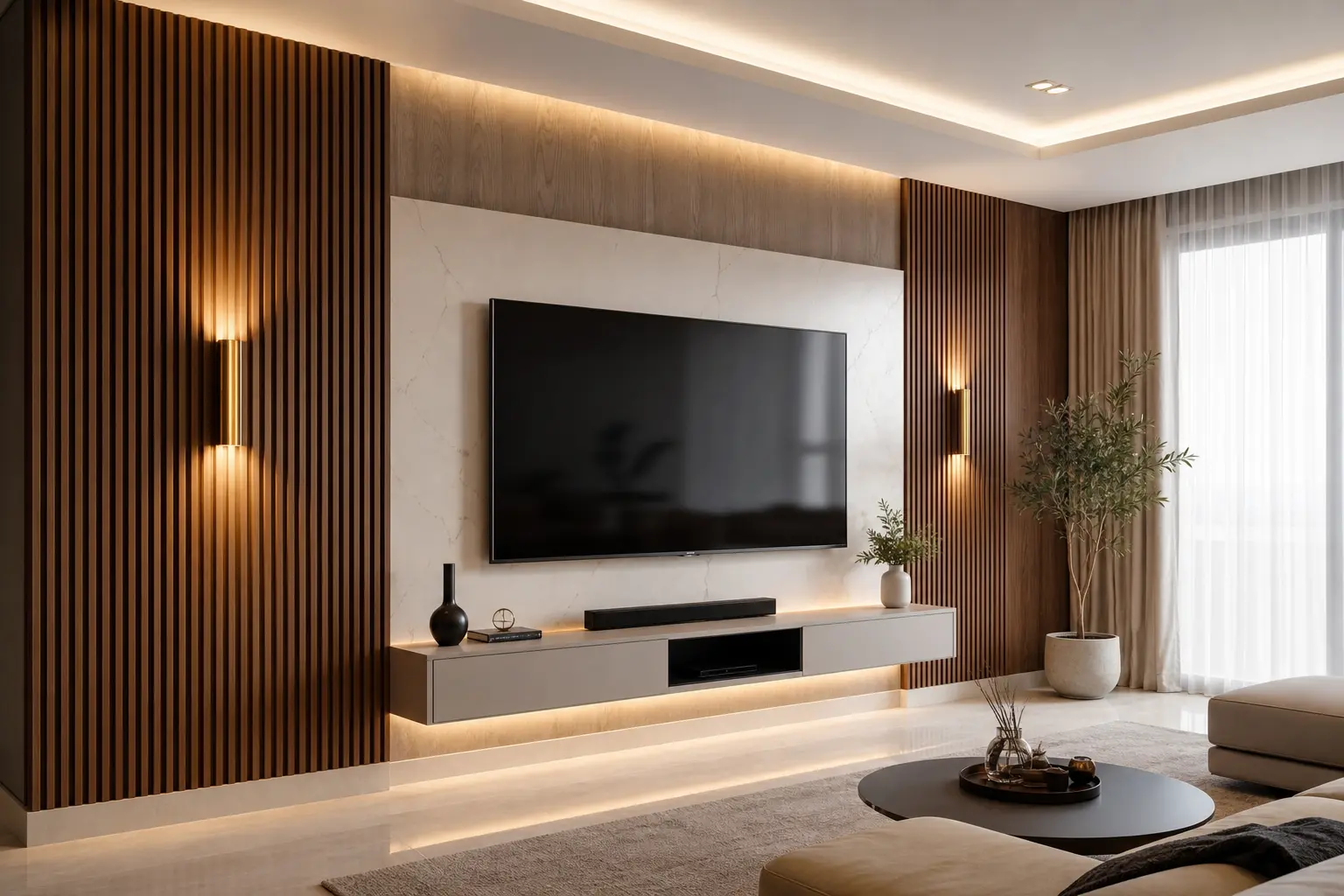
Costs depend heavily on material choice and whether the panels are solid wood or an MDF veneer alternative. MDF fluted panels with a basic LED strip kit typically run somewhere between 400 and 1000 dollars for an average sized TV wall, depending on square footage.
Solid wood fluted panels, along with professional installation and a layered LED lighting system, tend to run considerably higher, often somewhere between 2500 and 7000 dollars depending on wood species, region, and wall size. Painted MDF versions generally sit toward the lower end of that range, since the material itself costs less than solid hardwood.
Mistakes to Avoid
- Installing panels with inconsistent flute spacing, which becomes obvious once lit
- Lighting the panel with straight on light instead of angled light that highlights the grooves
- Sizing a framed accent section too narrow relative to the TV width
- Mismatching flute alignment at a corner or curved seam
- Choosing a background wall color too close to the panel tone, reducing contrast
- Skipping a dimmer, which limits how dramatic the shadow effect can look at different times of day
Frequently Asked Questions
What’s the difference between fluted panels and regular wood slats? Fluted panels have continuous vertical grooves cut or molded into a single surface, while wood slats are separate individual pieces of wood mounted with gaps between them. Both create vertical texture, but fluted panels read as more seamless and slats create more visible shadow between distinct pieces.
Are fluted panels hard to install myself? MDF veneer fluted panels are generally manageable for an experienced DIYer, especially in a framed accent section. Solid wood panels, curved applications, and corner seams usually benefit from professional installation to keep spacing and alignment consistent.
What wood tone works best for a small living room? Lighter tones, like natural oak, tend to keep a smaller room feeling open rather than closed in, especially when paired with a lighter background wall color and warm, moderate LED lighting.
Can fluted panels be used outside of a TV wall? Yes, fluted panels are commonly used on kitchen islands, bathroom vanities, and as standalone accent walls unrelated to a television, using the same spacing and lighting principles.
Do fluted panels need special cleaning or maintenance? Wood veneer and solid wood panels generally just need occasional dusting and a wood safe cleaner if needed. Painted MDF versions can typically be wiped down with a damp cloth, though grooves can collect more dust than a flat surface over time.
Conclusion
A fluted wood panel TV wall works because the texture does something a flat surface can’t, catching light and shadow in a way that changes throughout the day. Get the flute spacing consistent, angle your LED lighting to highlight rather than flatten the grooves, and size the panel generously relative to your TV. Handled well, a fluted wall becomes a genuine architectural feature, whether you cover the whole wall or frame a smaller section around the screen.