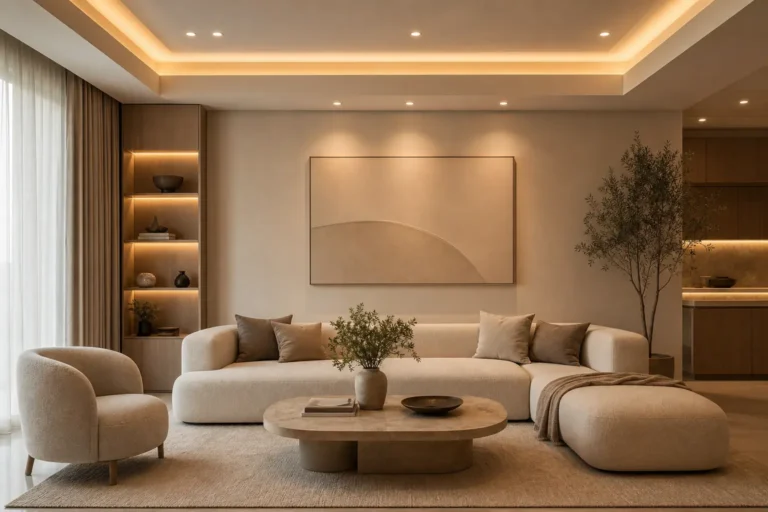
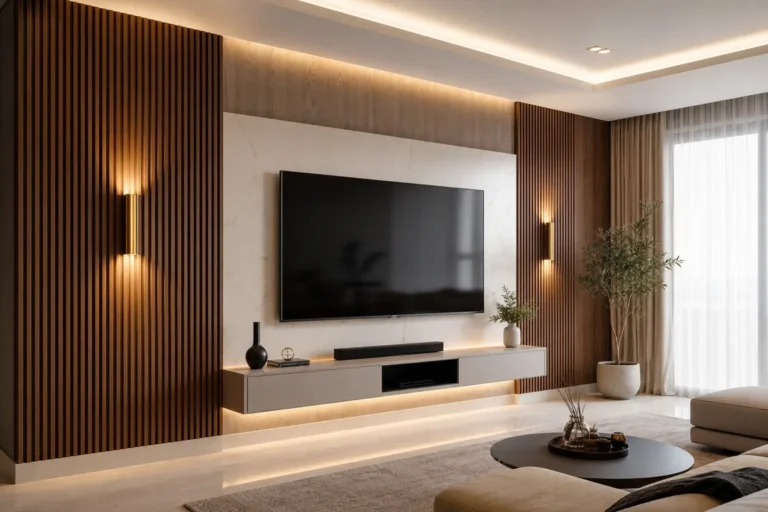
10 Modern Minimalist Living Room Ideas with Cozy Neutral Decor
You’ve stripped your living room down to the essentials the way every minimalist guide told you to, but now it just feels bare and a little unwelcoming rather than calm and intentional. Modern minimalist living room ideas with cozy neutral decor solve that by adding warmth back into the restraint through texture, wood tones, and thoughtful lighting, without abandoning the clean, uncluttered feel that drew you to minimalism in the first place. The goal isn’t more stuff, it’s better chosen materials working harder within a simple palette.
1. Understand the Difference Between Minimalist and Empty
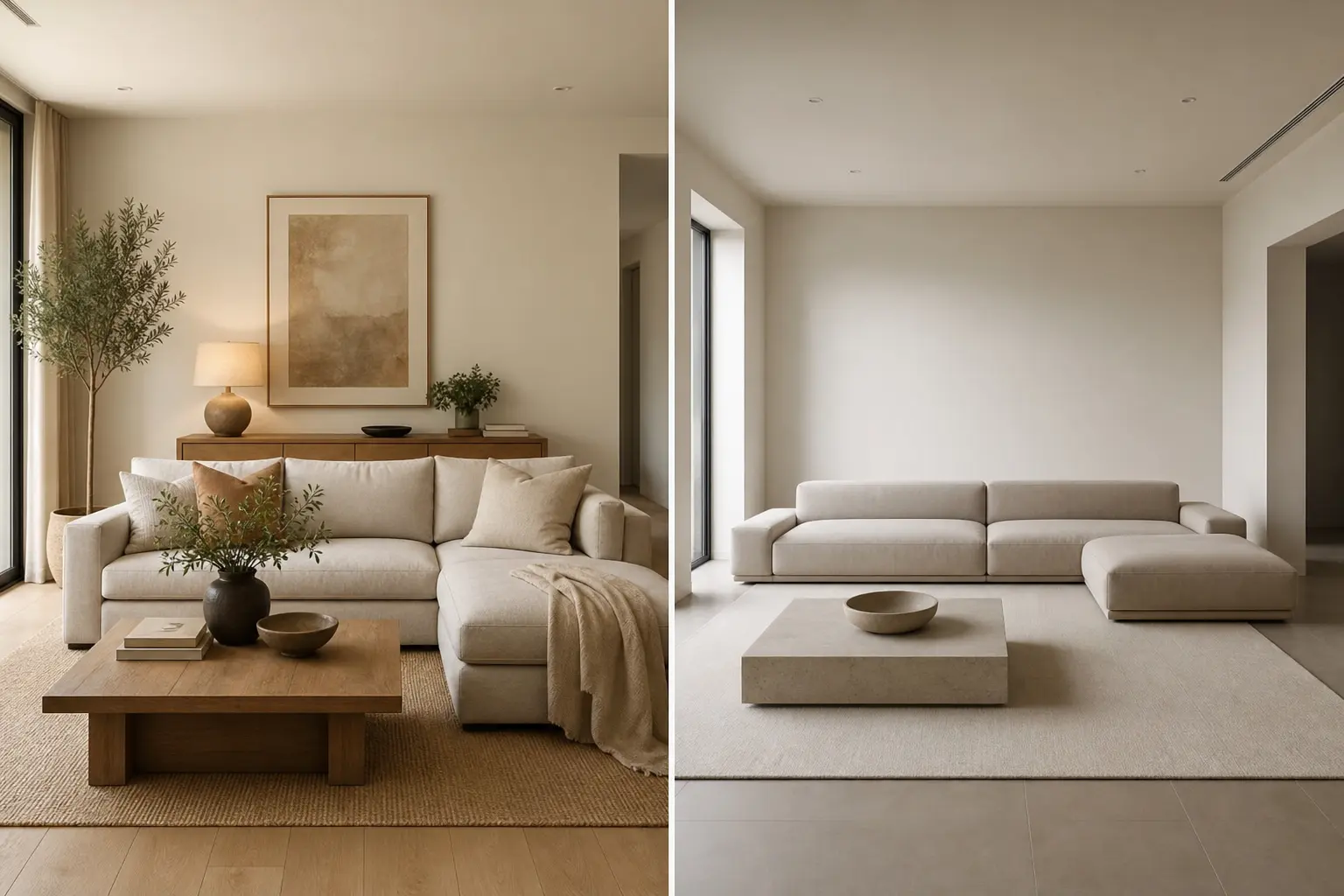
Minimalism at its best is about intentional editing, keeping only what genuinely serves the room and removing what doesn’t, not about achieving the smallest possible number of objects for its own sake. A living room can have relatively few pieces and still feel warm and inviting if those pieces are well chosen and layered with texture, while a similarly sparse room with hard, cold materials and no textile layering reads as simply empty. This distinction is the foundation for making minimalism feel cozy rather than stark.
Before removing anything further from an already minimal room, ask whether the room actually needs less, or whether it needs the existing pieces to work harder through better texture and material choices. Often the fix for a minimalist room that feels cold isn’t adding more decor, it’s improving the quality and warmth of what’s already there. This reframing matters more than any single specific decor choice that follows.
2. Choose Furniture With Soft, Rounded Lines
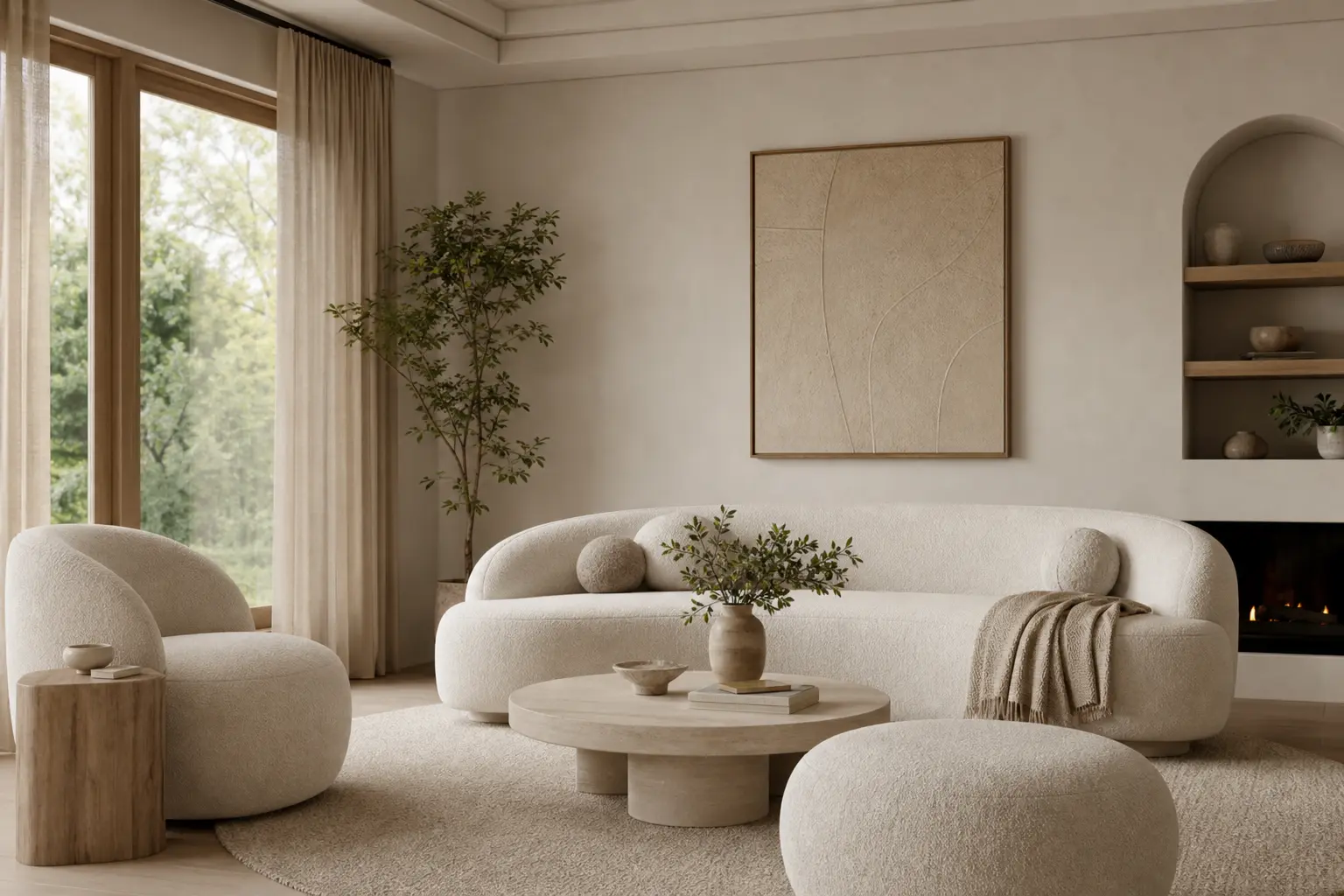
Furniture with softly rounded edges, a curved sofa arm or an organically shaped coffee table, reads as more inviting than sharp, angular pieces, even within an otherwise very pared back room. This softness in shape does real work toward making a minimalist space feel warm rather than severe, since the eye responds to curved lines as more relaxed than hard right angles. A single rounded piece, even just a coffee table, can shift the whole room’s feel without requiring a full furniture replacement.
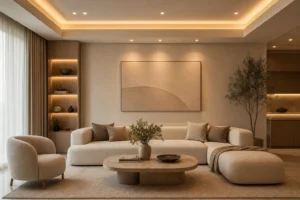
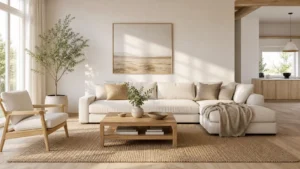
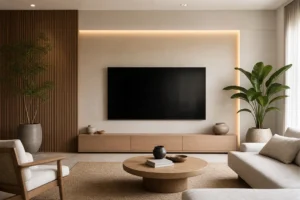
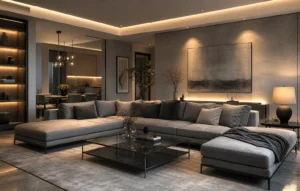
Keep the overall furniture selection simple in silhouette even while embracing some curve, since minimalism still benefits from restraint in form and detail. A clean, unfussy curved shape supports the room’s minimal intent far better than an ornate or heavily detailed rounded piece would. This balance between soft lines and overall simplicity is part of what separates warm minimalism from a busier maximalist style.
3. Layer at Least Three Textures Into the Seating Area
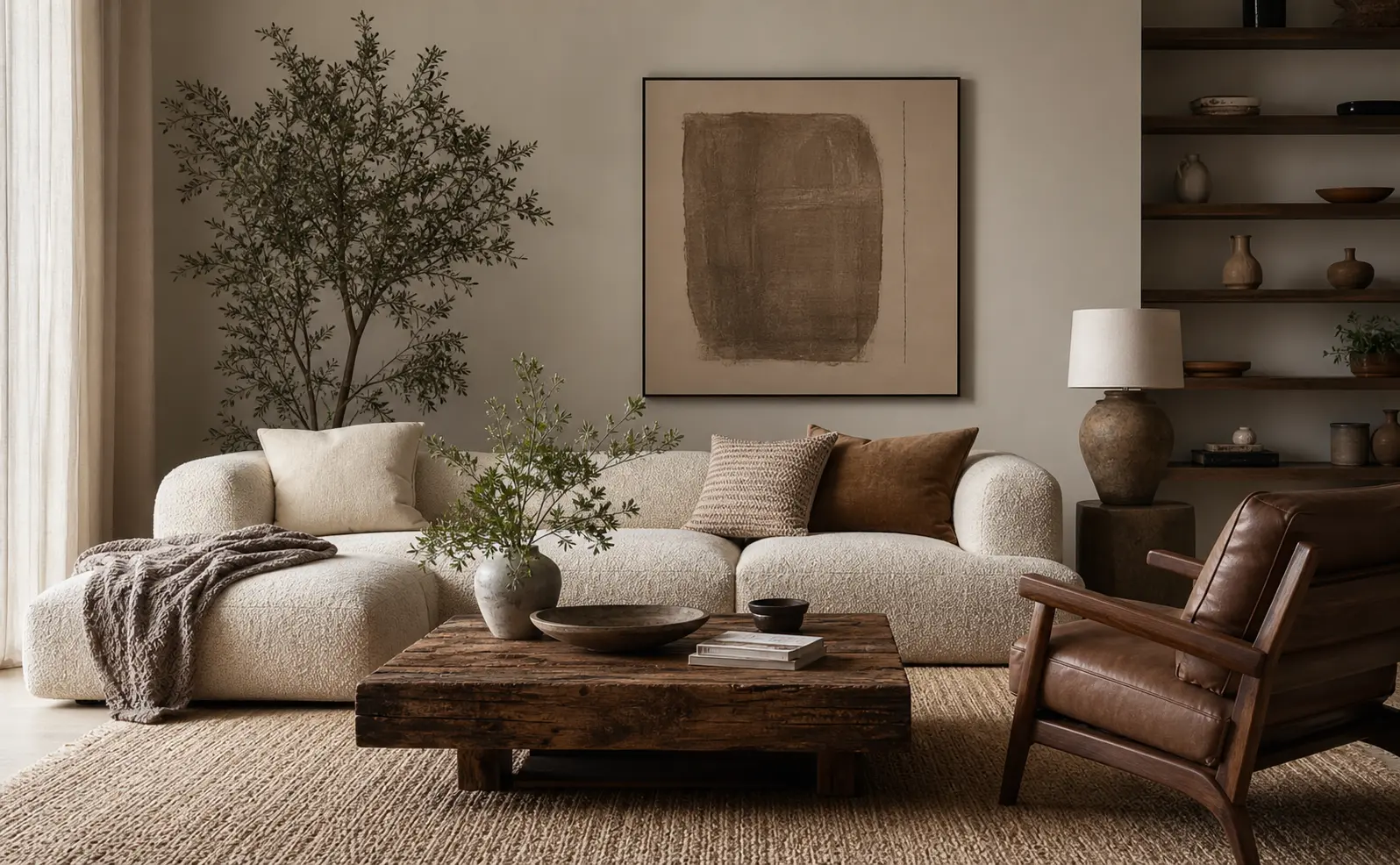
A minimalist room built entirely from smooth, flat materials, a plain sofa, a bare floor, unadorned walls, tends to feel cold regardless of how well the color palette is chosen. Introduce at least three distinct textures into the main seating area: a nubby boucle or linen sofa fabric, a chunky knit throw, and a woven or textured rug beneath. This kind of layering is often the single most effective tool for warming up a minimalist space without adding visual clutter or extra objects.
Vary the texture’s scale as well as its material, mixing a fine woven pillow with a larger scale chunky knit throw, so the layering reads as intentional rather than repetitive. This variety in texture does the visual work that color or pattern might do in a less restrained style, giving the eye something to notice without introducing additional busyness. Texture, more than almost any other tool, is what makes minimalism feel warm rather than stark.
4. Pick a Warm Neutral Palette Instead of Stark White
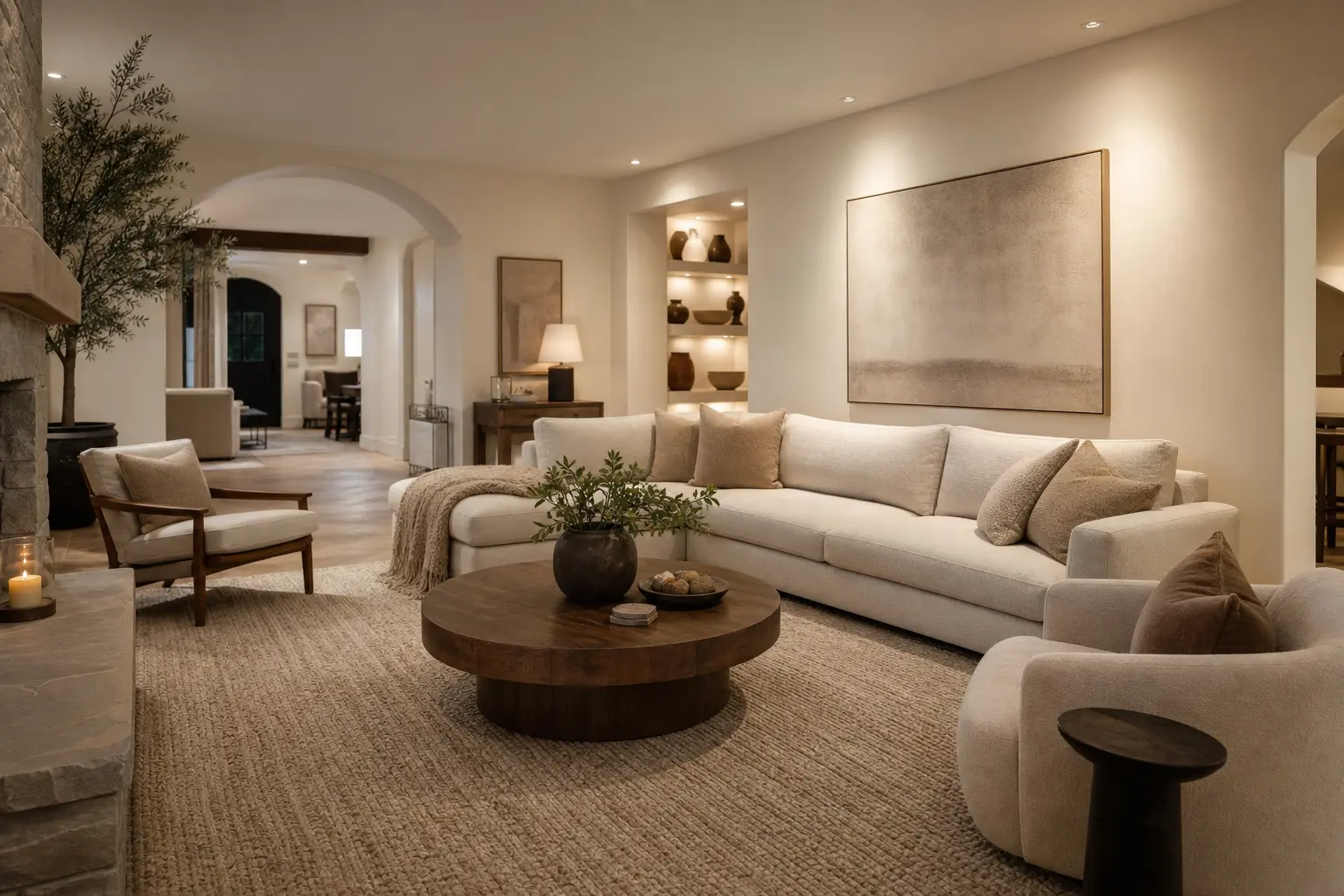
A palette built around warm neutrals, cream, oatmeal, warm greige, and soft taupe, reads as considerably cozier than a stark white and gray palette often associated with a colder, more clinical minimalist aesthetic. Test paint and fabric swatches together in the room’s actual lighting, since undertones that look neutral in isolation can shift noticeably warmer or cooler once placed against each other. A warm white wall paired with cream upholstery generally feels more inviting than a cool white wall paired with the same fabric.
Keep the palette relatively tight, generally three or four closely related warm neutral tones, rather than introducing a stark contrast color that disrupts the room’s overall calm. This tight, warm palette is foundational to why some minimalist rooms feel cozy while others, built on the same basic principle of restraint, feel cold and uninviting instead. The specific undertones chosen matter as much as the restraint itself.
5. Add Wood Tones to Ground the Room’s Coolness
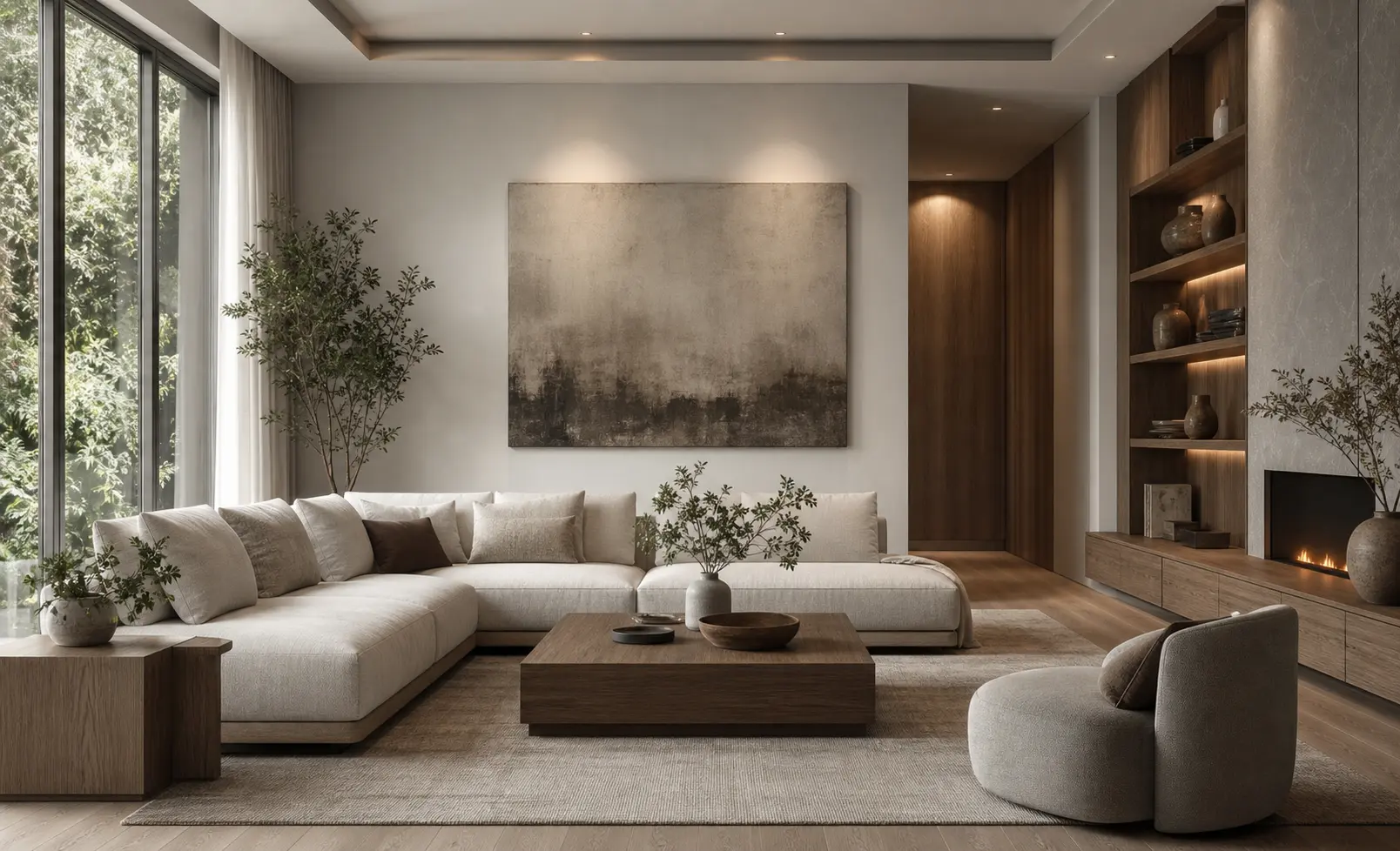
A light or mid tone wood coffee table, side table, or media console introduces warmth through natural material and visible grain, directly countering the coolness that an all upholstery, all painted surface room can develop. Choose wood with visible grain and a slightly matte finish rather than a glossy, heavily lacquered surface, since that natural texture supports the room’s overall warm, tactile feel. Even a single wood piece can meaningfully shift a room’s temperature if the rest of the furniture leans cooler or more neutral.
Keep any additional wood tones in the room consistent with this first piece, since mixing several unrelated wood finishes can undercut the cohesive, considered feel minimalism relies on. A single wood family running through the coffee table and any shelving or additional furniture ties the room together around one grounding material. This consistency matters as much in a minimalist room as the wood choice itself.
6. Use Layered Lighting to Add Warmth After Dark
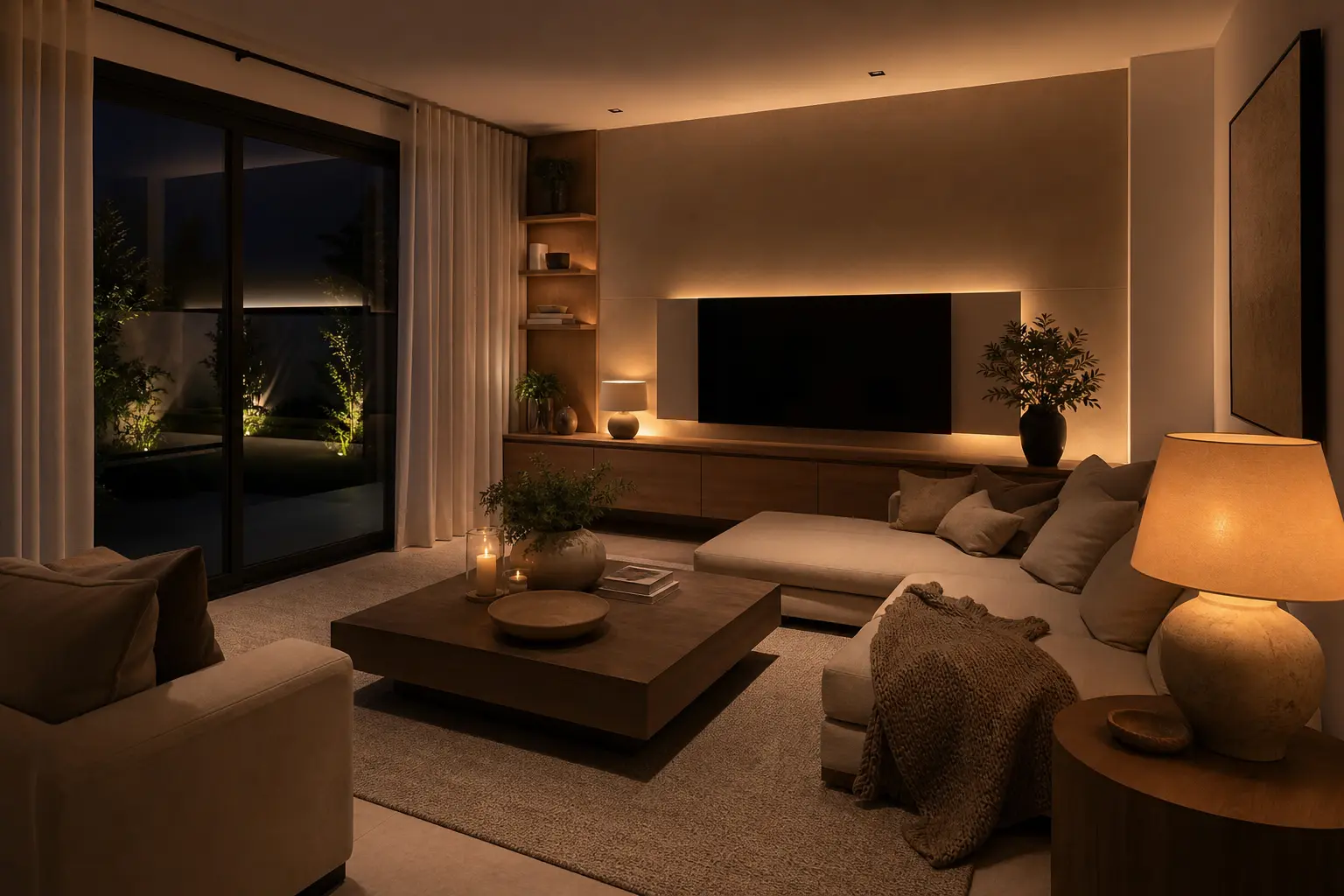
A single overhead fixture creates flat, even light that does little to support a cozy, warm feeling once natural daylight fades in the evening. Add a floor lamp near the seating area and a table lamp on a side table, both fitted with warm 2700K to 3000K bulbs, so the room has multiple soft light sources rather than one central, often harsher one. This layered approach matters significantly in a minimalist room specifically, since there’s less decor and pattern to distract from flat, unflattering lighting.
Dimmable lamps add flexibility for shifting the room’s mood between a brighter daytime setting and a softer evening glow. A warm light source positioned near the main seating spot does particular work toward making that corner feel like a genuinely inviting place to sit and unwind, which is often the whole point of the room to begin with.
7. Choose One or Two Statement Objects, Not a Collection
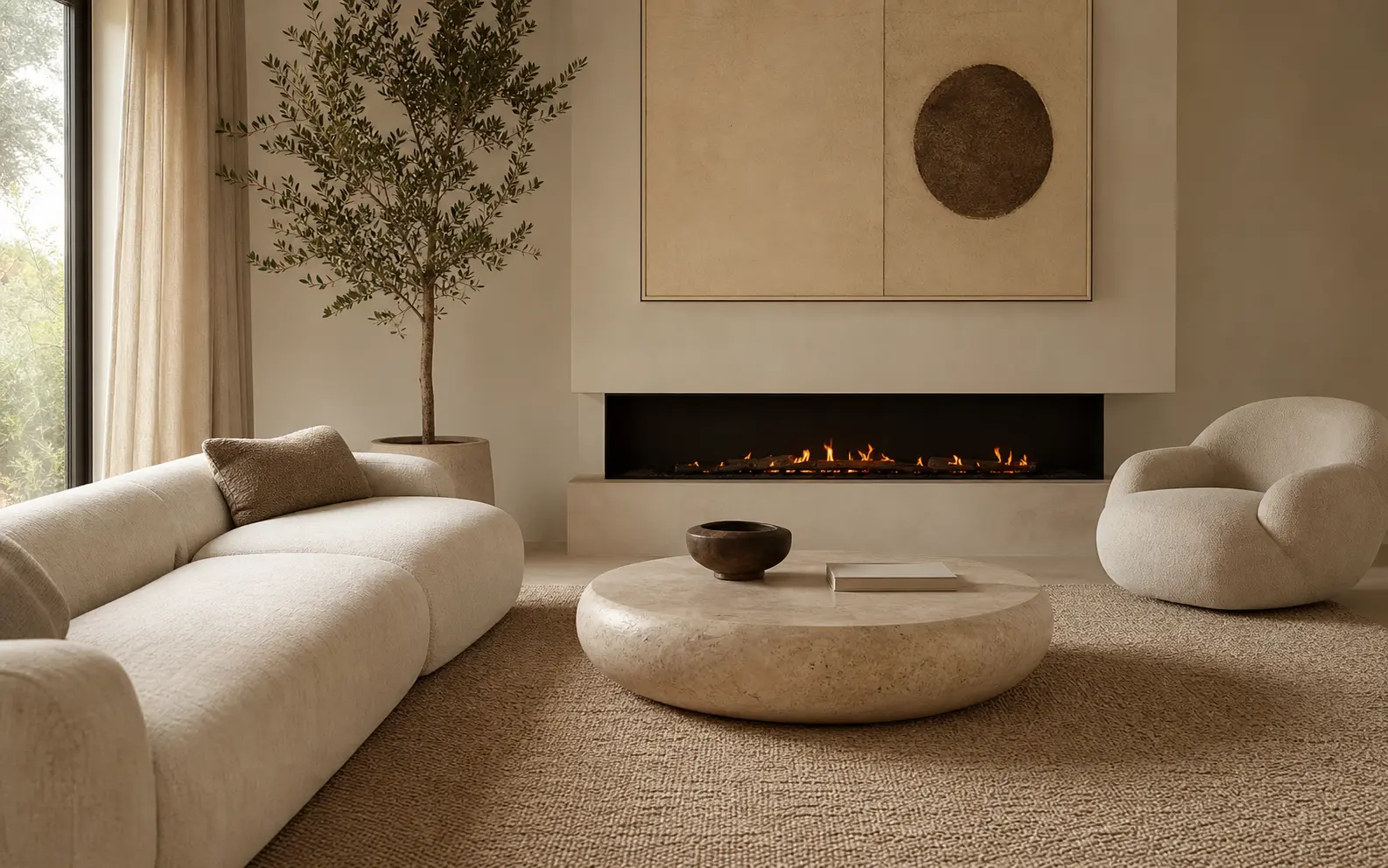
A single well made ceramic bowl, a considered piece of art, or one sculptural object on the coffee table carries far more visual weight in a minimalist room than several smaller decorative items scattered throughout the space. Choose pieces with genuine craftsmanship or interesting texture, an irregular glaze or a natural material like stone or raw wood, since quality matters more here than quantity ever could in this style. This restraint in decor selection is central to how minimalism achieves visual interest without clutter.
Rotate these statement pieces occasionally if you want some variety over time, swapping a vase or a piece of art seasonally rather than adding permanently to the room’s collection. This keeps the minimal room feeling intentional and cared for rather than static, without ever tipping into the kind of accumulation that would work against the style’s core restraint.
8. Add a Textured Rug to Soften Hard Flooring
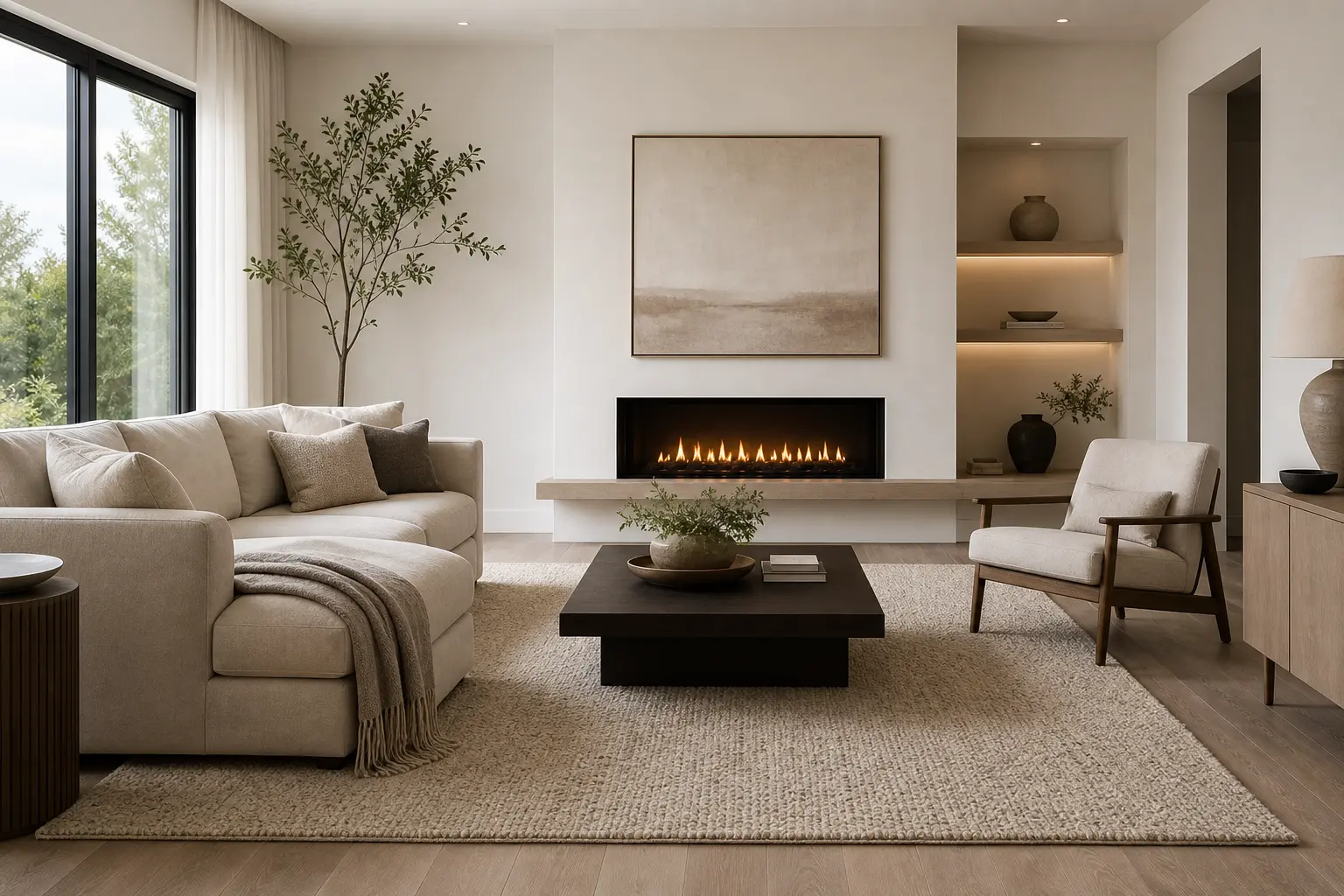
A jute, wool, or textured flatweave rug beneath the seating area softens hard flooring, whether wood, tile, or polished concrete, and adds a foundational layer of warmth at floor level. Choose a rug large enough that the front legs of the main seating pieces sit on it, generally requiring a rug at least 8 feet wide for a standard living room arrangement. A subtle woven texture, rather than a flat, smooth material, adds visual interest without introducing a pattern that would compete with the room’s overall restraint.
This rug does real functional work as well, dampening sound and adding comfort underfoot, both of which contribute to how genuinely livable a minimalist room feels day to day. A bare floor beneath a seating area, even a well styled one, can make the whole space feel less finished and less inviting than the same setup with a textured rug grounding it.
9. Bring In a Single Plant for Organic Contrast
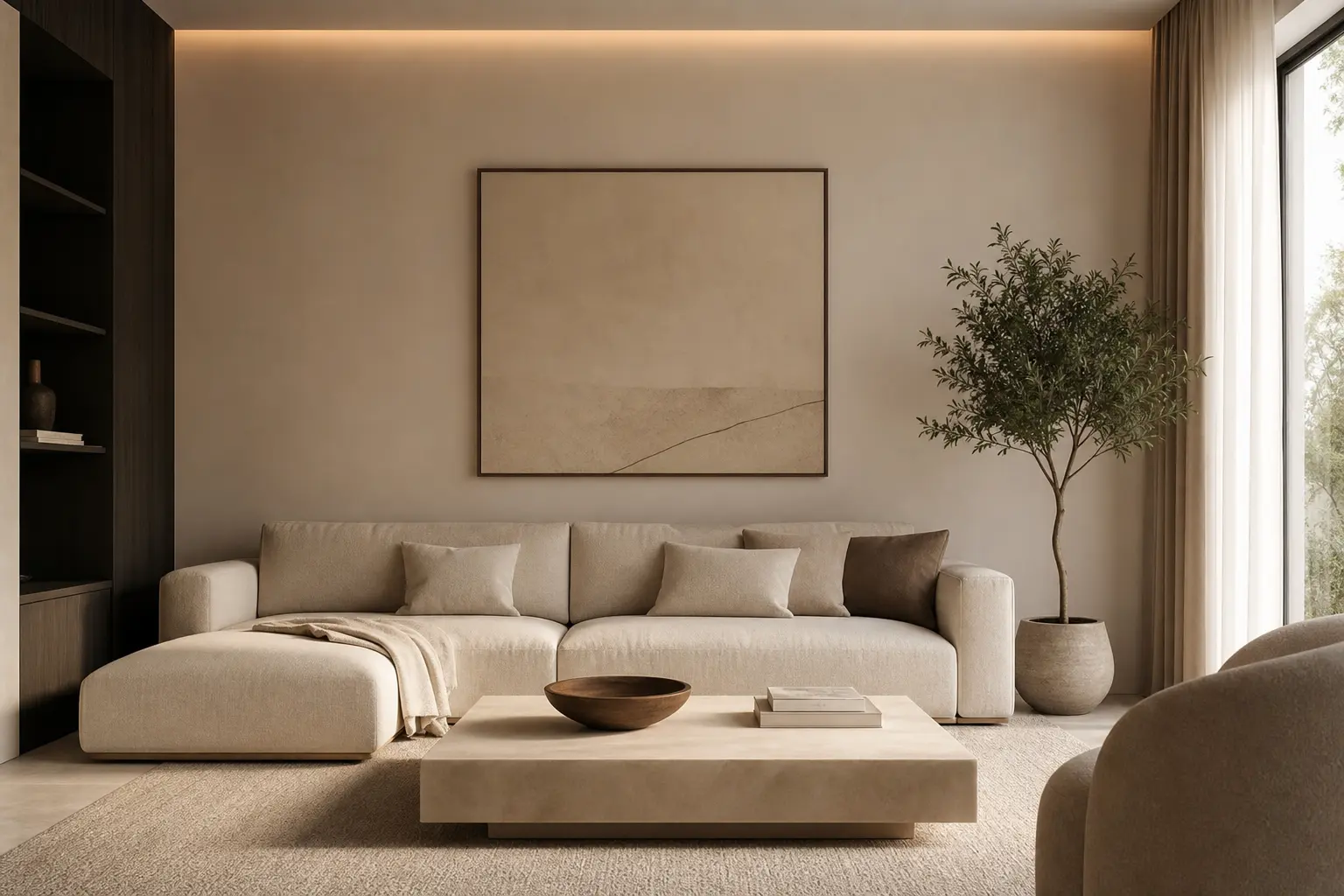
A single plant, whether a tall fiddle leaf fig in an empty corner or a smaller potted plant on a side table, introduces organic life and soft, irregular shape that balances a minimalist room otherwise built from fairly structured, neutral materials. This one addition does a lot of work in a room where every other element has been carefully edited down, since the plant’s natural, unpredictable form contrasts with the room’s clean lines and calm palette. Choose a plant scaled to the space, avoiding anything so large it starts to feel like clutter in an otherwise restrained room.
Keep the plant’s pot simple and in a material that matches the room’s existing palette, unglazed terracotta or a matte ceramic in a warm neutral tone. A single well placed plant reads as intentional and considered, while several plants scattered throughout the room can start to work against the minimalist restraint the rest of the space is built around. One is often genuinely enough here.
10. Keep Storage Hidden to Preserve the Calm Feel
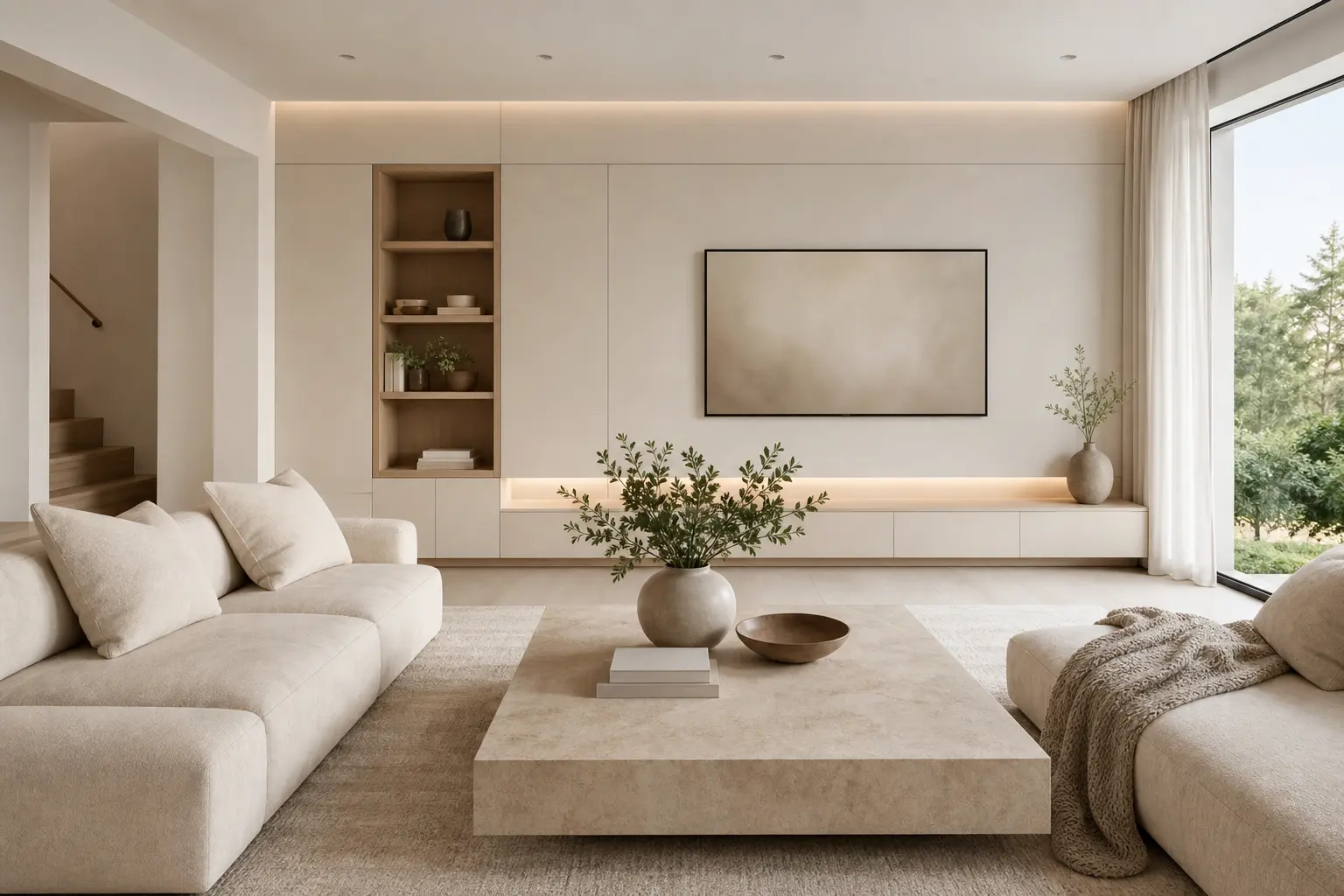
Visible clutter, remote controls, chargers, mail, and other daily household items left out on surfaces, undoes a minimalist room’s calm feeling faster than almost anything else, regardless of how well the furniture and textiles are chosen. Build in simple hidden storage, a coffee table with a drawer, a media console with closed cabinets, or a woven basket tucked beside the sofa, so daily items have a designated home out of sight. This practical layer matters as much as any material or color choice for how calm the room actually feels in daily use, not just in photos.
Choose storage solutions that match the room’s existing material palette, a woven basket in a natural fiber or a wood console in the same tone as the coffee table, so the storage itself supports the room’s aesthetic rather than looking like an afterthought. A few minutes spent each evening returning items to their designated spots keeps the room looking as intentional day to day as it did the first week it was styled. This small habit is often what separates a minimalist room that stays genuinely calm from one that slowly drifts back toward clutter.
Mistakes to Avoid
- Removing too much decor in pursuit of minimalism until the room feels empty rather than intentional
- Choosing an entirely stark white and gray palette instead of warmer neutral undertones
- Skipping texture layering, leaving the room with flat, smooth materials throughout
- Relying on a single overhead fixture instead of layering warm lamp lighting
- Scattering several small decorative objects instead of choosing one or two well made statement pieces
- Leaving storage visibly exposed and cluttered, which undercuts the room’s calm, considered feel
Frequently Asked Questions
How do I make a minimalist living room feel warm instead of cold? Layer at least three distinct textures into the seating area, choose warm neutral tones over stark white, and add natural wood furniture to ground the room’s overall palette.
What colors work best for a cozy minimalist palette? Warm neutrals like cream, oatmeal, warm greige, and soft taupe generally read as cozier than a stark white and gray combination often associated with colder minimalist spaces.
Is it okay to include a lot of texture in a minimalist room? Yes, texture is one of the most effective tools for adding warmth without visual clutter, since it works through material rather than pattern or additional objects.
How much decor should a minimalist living room have? Generally one or two well chosen statement pieces work better than a wider collection of smaller decorative items, since quality and intention matter more than quantity in this style.
Does a minimalist living room need a rug? A textured rug isn’t strictly required, but it adds meaningful warmth and comfort underfoot, particularly in a room with hard flooring throughout the main seating area.
Final Thoughts
A modern minimalist living room with cozy neutral decor works because warmth comes from texture, wood tones, and layered lighting rather than from adding more objects to the room. Start with the palette and furniture shapes, since those foundational choices determine whether the room reads as warm or stark before any styling even begins. Layer in texture, a grounding wood piece, and warm lighting in stages, checking that the room still feels calm and intentional rather than cluttered after each addition.