10 Modern Minimalist Entryway Decor Ideas with Full-Length Mirrors & Plants | Small Entryway Inspiration
A small entryway fills up fast. Shoes pile near the door, coats hang wherever there’s a hook, and within a week the space that should feel welcoming just feels cramped. If you’re looking into minimalist entryway ideas built around full length mirrors and plants, the appeal is that both do a lot of visual work without adding clutter. This article covers ten ways to make a small entry feel calm, open, and genuinely finished, with real detail on mirror choice, plant care, and cost.
1. Why Minimalist Entryways Work So Well in Small Spaces
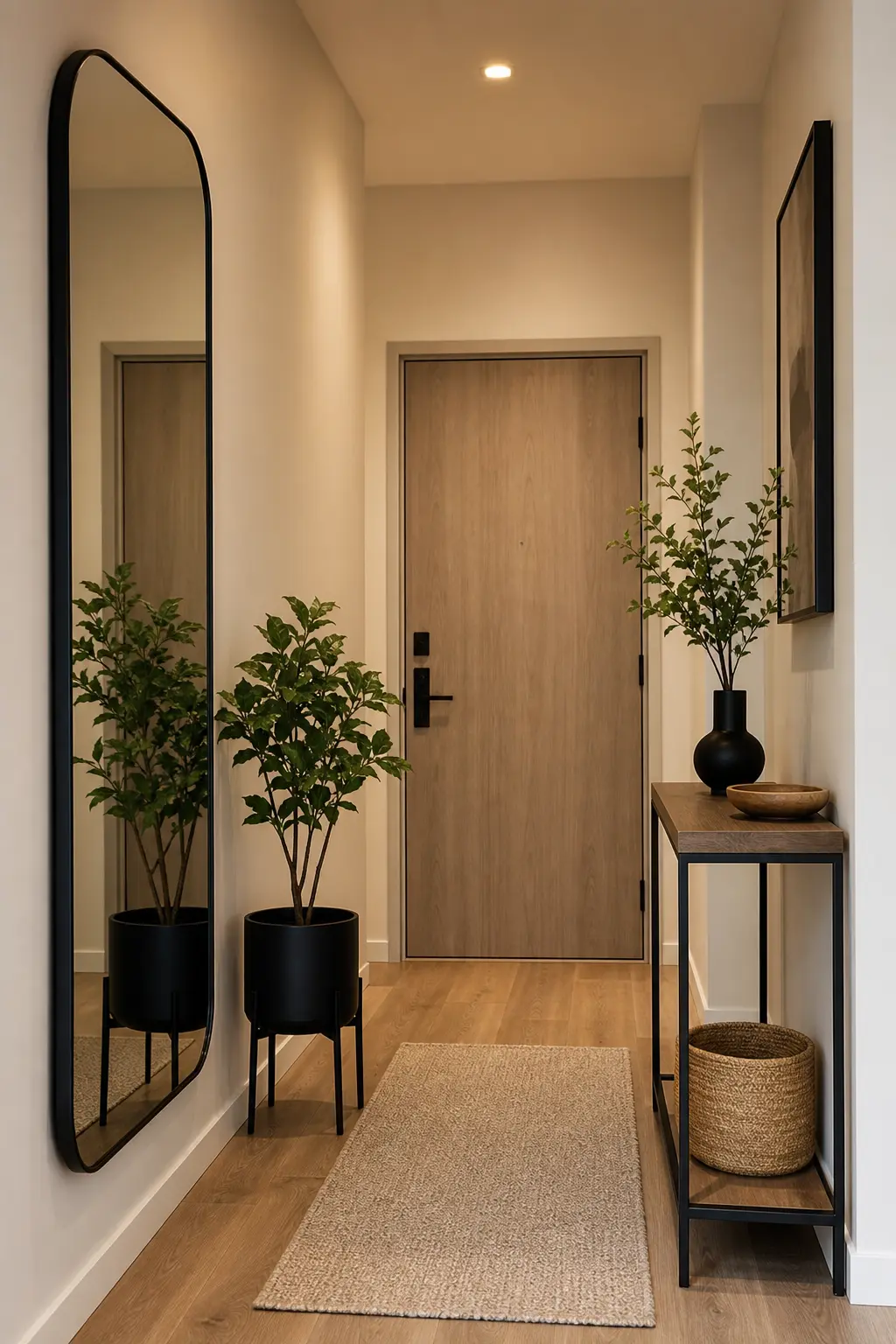
A small entryway has limited square footage to begin with, so every object in it carries more visual weight than it would in a larger room. Minimalist design responds to that by being selective. A few well chosen pieces, rather than a lot of small decorative items, keep a tight space feeling open instead of busy.
A full length mirror and a plant or two do double duty in this kind of space. They add visual interest and a sense of life to the room without requiring extra furniture or storage, which is exactly the kind of low clutter impact a small entryway benefits from most.
2. Choosing the Right Full Length Mirror for Your Entryway
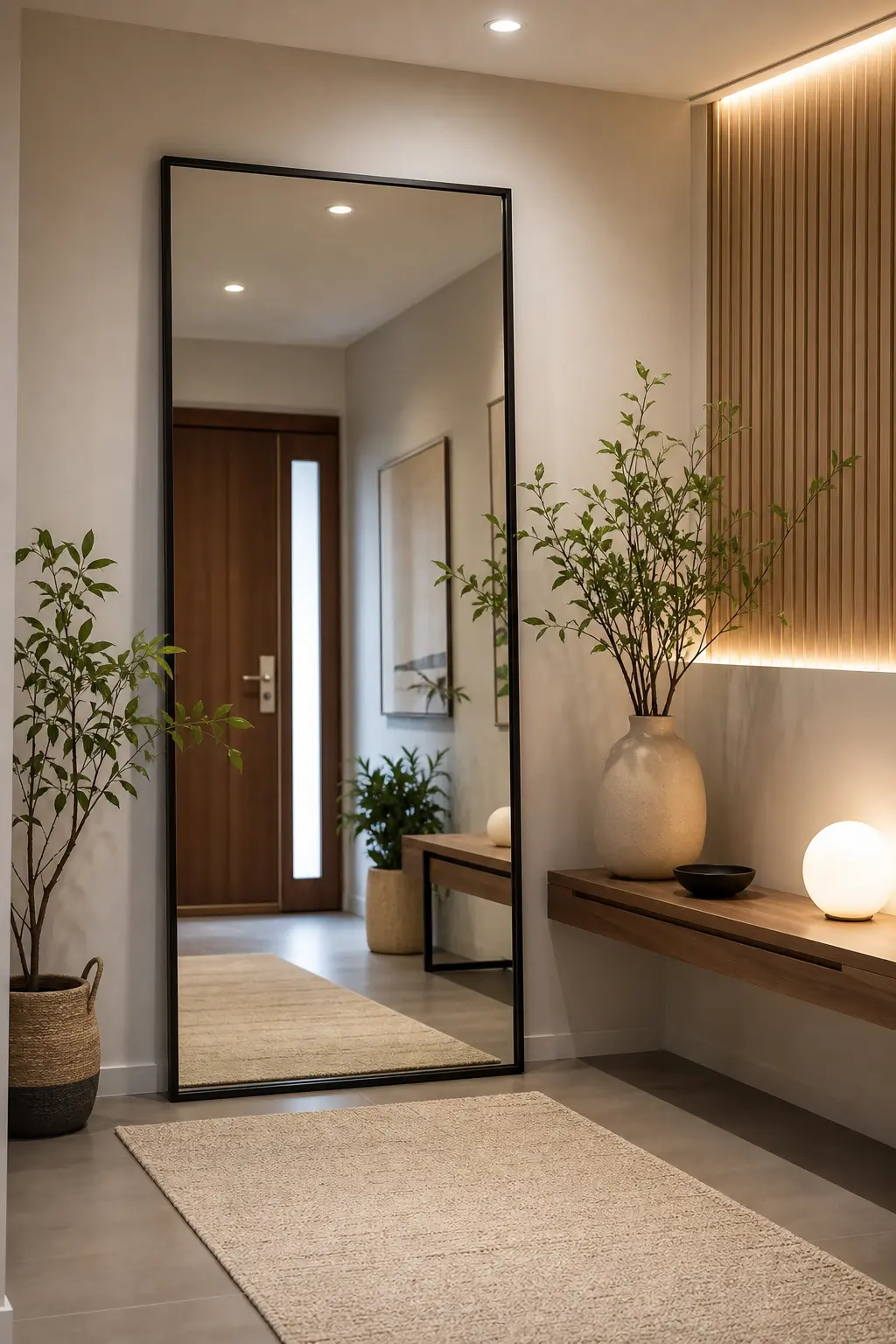
A leaning floor mirror is one of the easiest ways to add a full length mirror without mounting anything to the wall, which matters in rentals or anywhere drilling isn’t an option. A wall mounted mirror, secured flush against the wall, takes up slightly less floor depth and suits very tight entryways where even a leaning mirror’s base footprint matters.
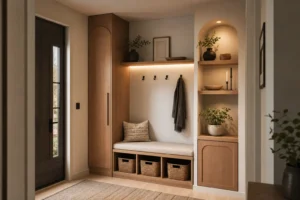
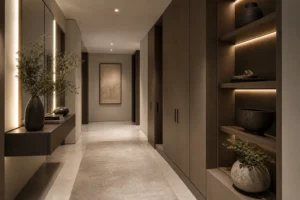
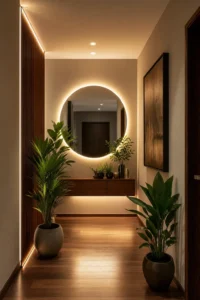
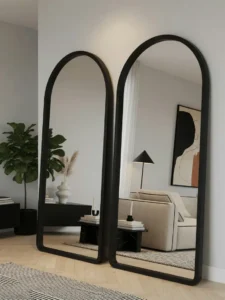
Thin metal framed mirrors, in matte black or brushed brass, tend to suit a modern minimalist entryway better than a heavy, ornately carved wood frame, since the thinner frame reads as lighter and less visually heavy in a small space.
Mirror Shape and Proportion
A rectangular mirror generally reads as the most versatile shape for an entryway, since its proportions echo the vertical lines of a doorway. An arched mirror is a softer alternative that’s grown in popularity recently, adding a subtle architectural detail without requiring any actual construction.
3. Best Plant Choices for a Low Light Entryway
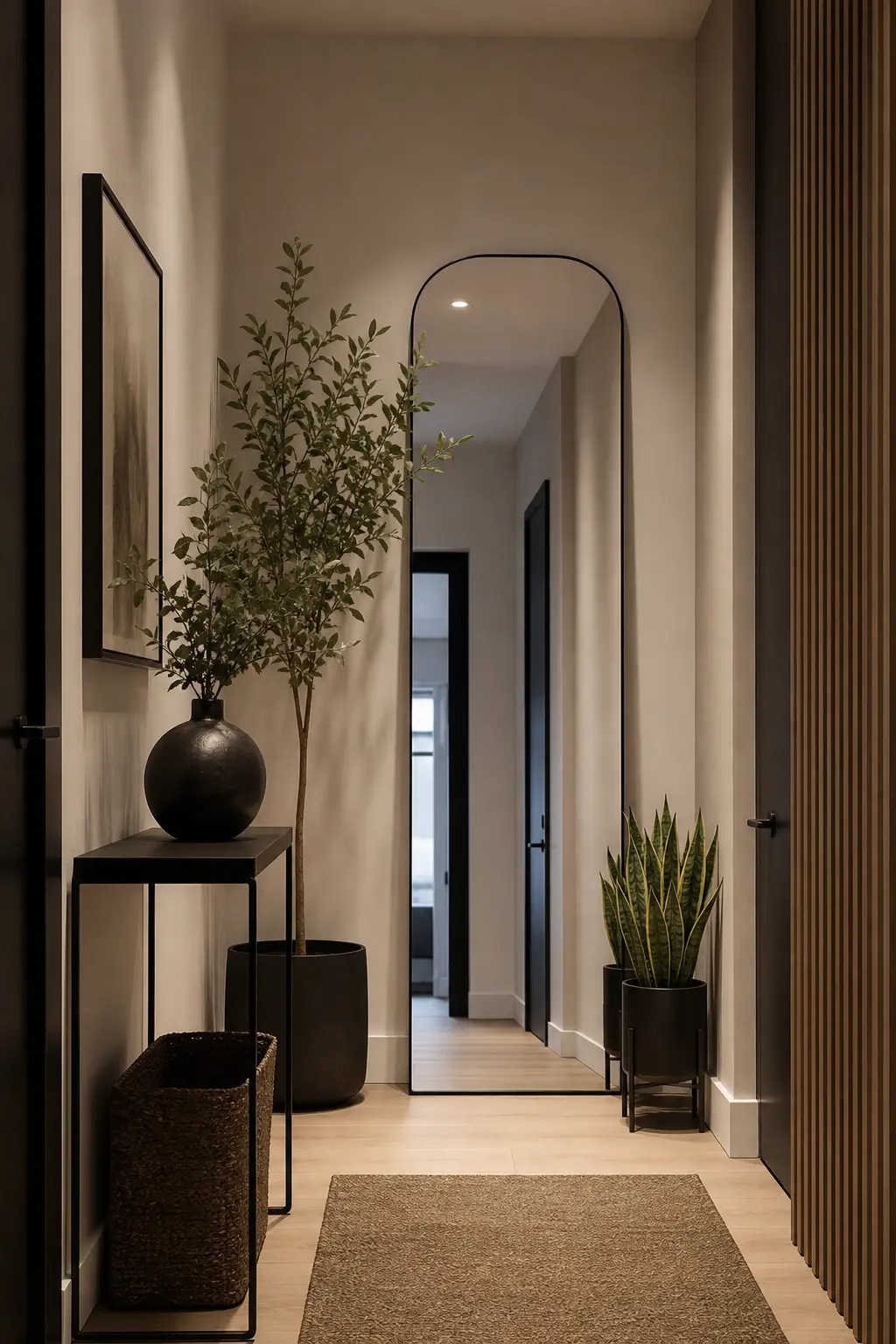
Most entryways get limited natural light, since they’re often positioned away from windows or tucked behind a front door. Snake plants and ZZ plants both tolerate low light conditions well and need infrequent watering, making them a practical choice for a space that isn’t always top of mind for daily care.
A tall, narrow plant, like a snake plant in a slim floor pot, fits the vertical proportions of most entryways better than a wide, bushy plant that takes up more floor footprint. If your entryway gets genuinely no natural light at all, a well made faux plant is a reasonable alternative that still adds the same visual softness without the maintenance concern.
4. Mirror Placement Tips That Make a Small Entryway Feel Bigger
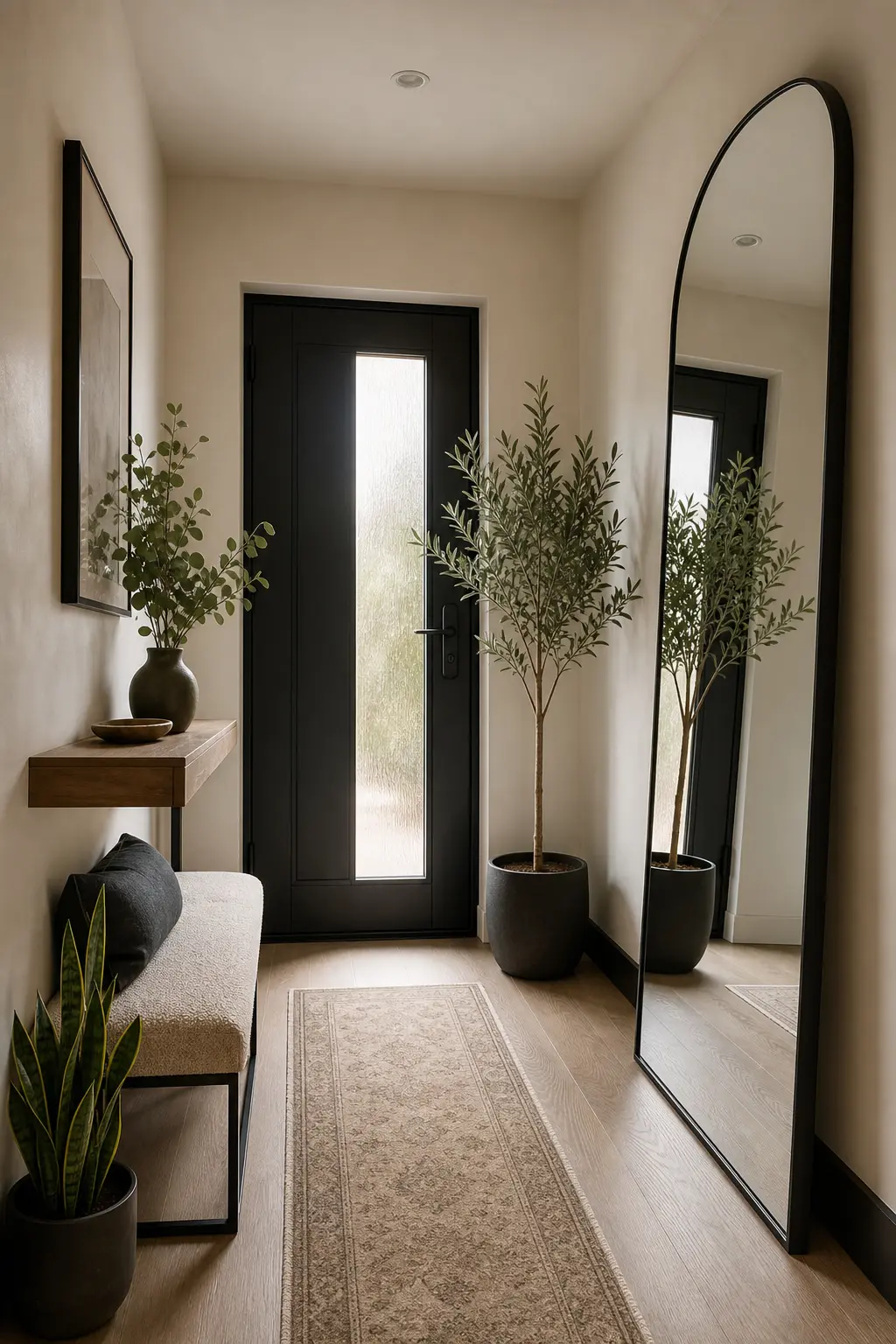
Placing a mirror directly across from or near the front door reflects incoming light and the view beyond the entryway, which visually extends the perceived depth of the space. Angling a leaning mirror very slightly, rather than placing it perfectly flat against the wall, can also help it catch and reflect more of the room’s available light throughout the day.
Avoid placing a mirror where it primarily reflects a cluttered coat closet or a messy shoe pile, since the mirror will double whatever it reflects, cluttered or calm. Positioning it to reflect an open wall, a plant, or a piece of art tends to work better than reflecting storage areas directly.
5. Layering Storage Without Cluttering a Minimalist Entryway
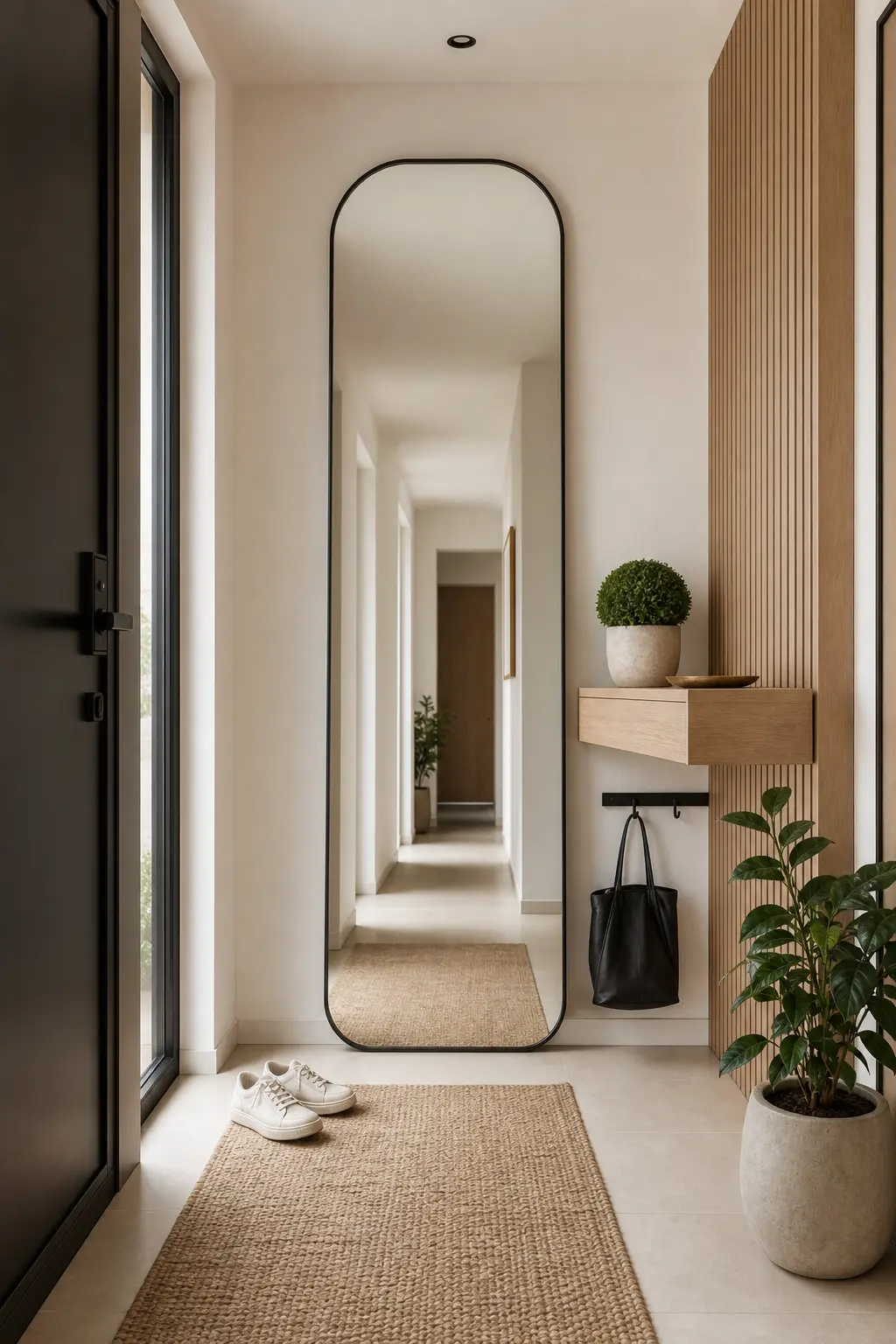
A small entryway still needs somewhere for shoes, bags, and outerwear, and hiding that storage is often what keeps the space feeling minimalist rather than merely empty. A narrow closed cabinet, sized to fit a tight footprint, holds shoes and clutter out of sight far more effectively than open shelving in a small space.
Wall mounted hooks, kept to just two or three rather than a long row, provide coat storage without requiring floor space at all. A single woven basket beside the door is enough for smaller items like gloves or a spare umbrella, without introducing multiple competing storage pieces into the room.
6. Lighting Ideas That Complement Mirrors and Plants
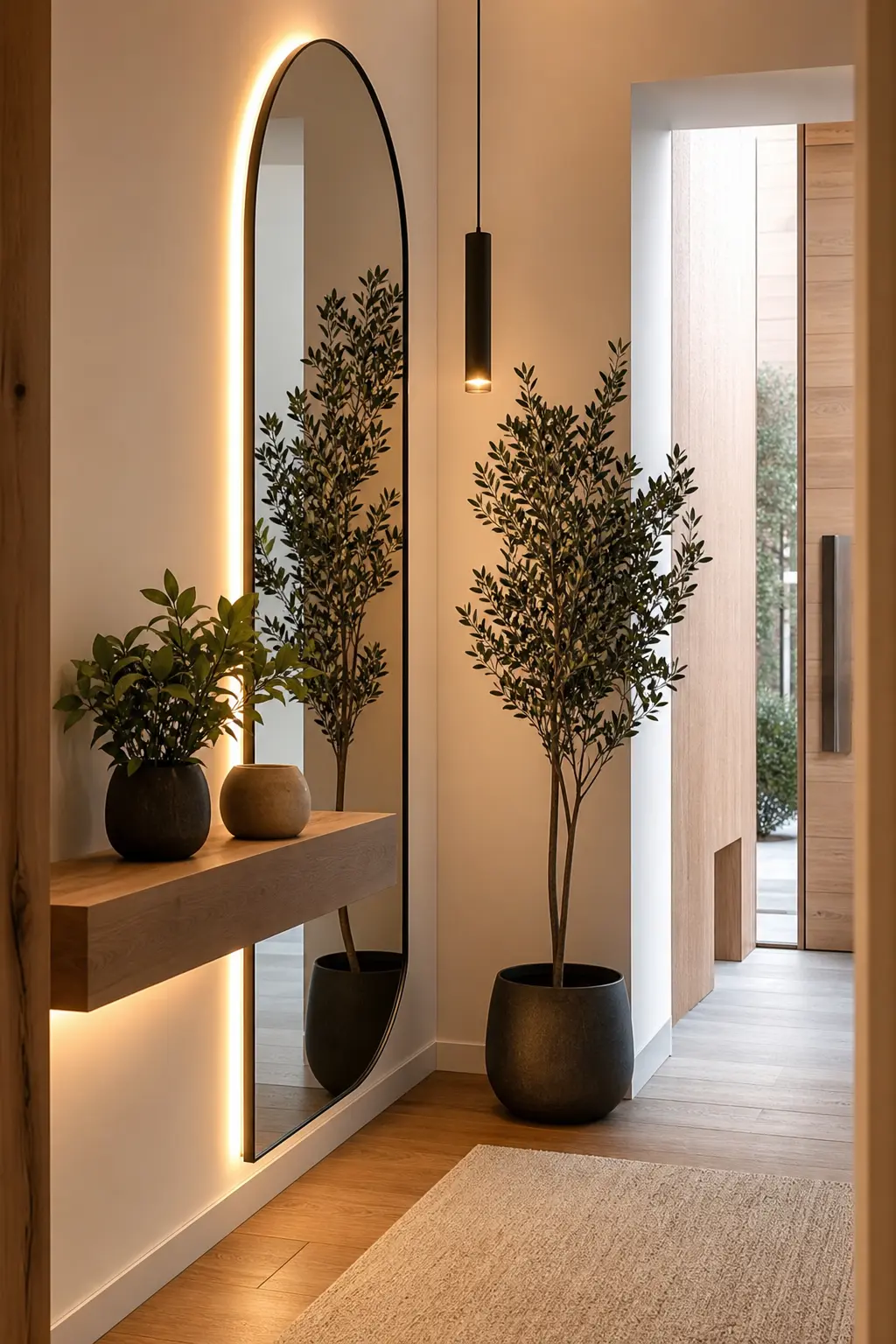
A wall sconce positioned near the mirror adds flattering, indirect light that also illuminates the mirror’s reflective surface, making the whole space feel brighter without needing a large overhead fixture. Warm LED bulbs, in the 2700K to 3000K range, keep the entryway feeling welcoming rather than clinical the moment someone walks through the door.
If your entryway has very limited natural light, a plant friendly LED grow bulb, discreetly placed within a nearby fixture, can help sustain a low light tolerant plant over the long term without needing an obvious, unattractive grow light setup.
7. Color Palettes That Suit a Minimalist Entryway

Soft neutral tones, warm white, light greige, or a pale sage, keep a small entryway feeling open and let the mirror and plants stand out as the main visual features. A single deeper accent wall, in a muted tone like a dusty blue or warm terracotta, can add character without overwhelming a tight space, especially when the rest of the room stays simple.
Avoid heavily patterned wallpaper in a very small entryway unless the space is genuinely large enough to handle it, since a strong pattern in a tight, low light area can make the room feel more cramped rather than more interesting.
8. Flooring and Rug Choices for a Small Entry Space
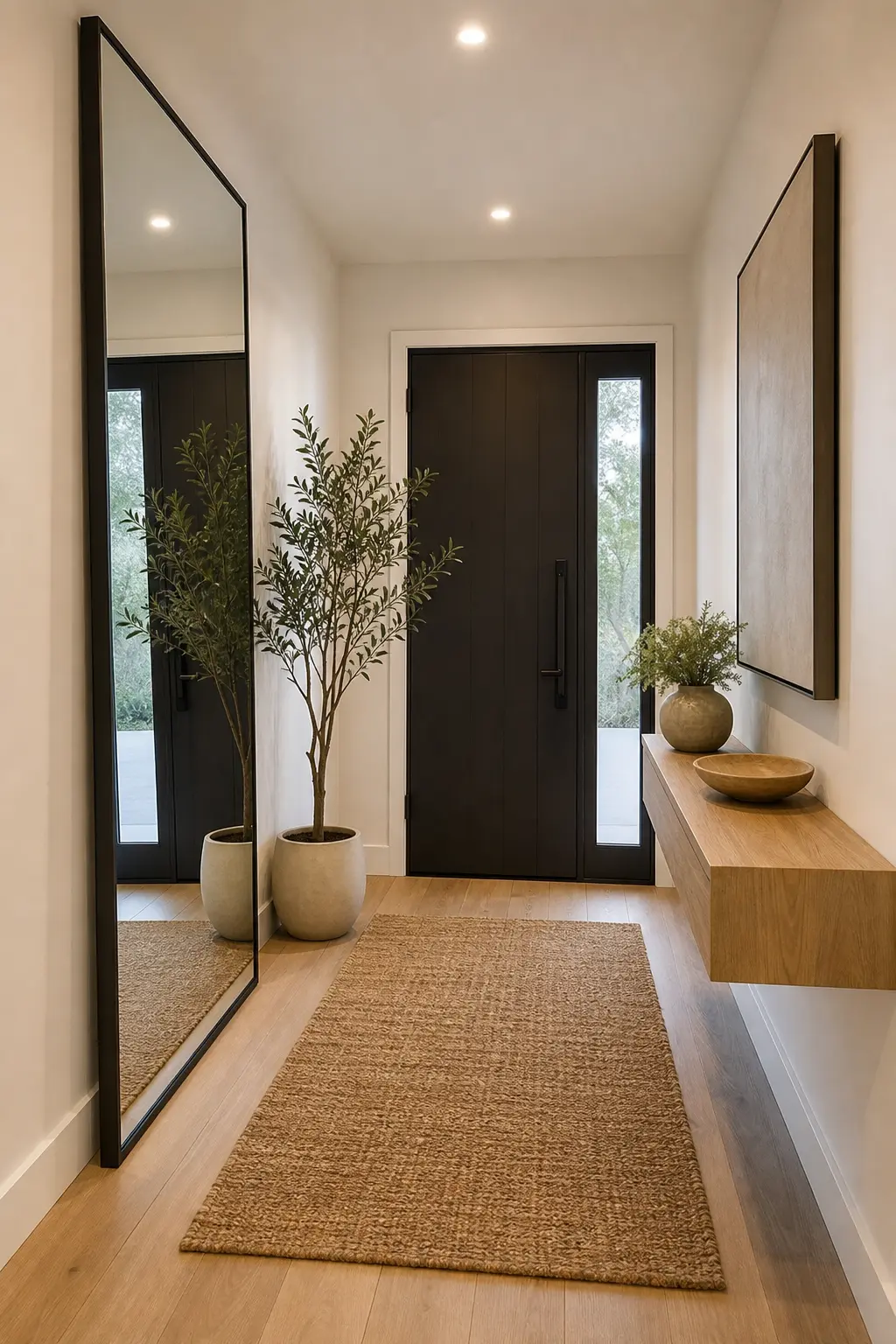
A durable, easy to clean flooring material matters in an entryway more than almost any other room, since it takes the brunt of daily foot traffic and weather. Tile, stone, or a durable vinyl plank all hold up well to repeated wear better than carpet in this specific location.
A low pile rug or a simple woven runner adds warmth and helps define the entry space, especially in an open floor plan where the entryway isn’t clearly separated from an adjacent room. Keep the rug pattern simple and the color palette consistent with the rest of the space to maintain the minimalist feel.
9. Seasonal Touches That Don’t Disrupt a Minimalist Look
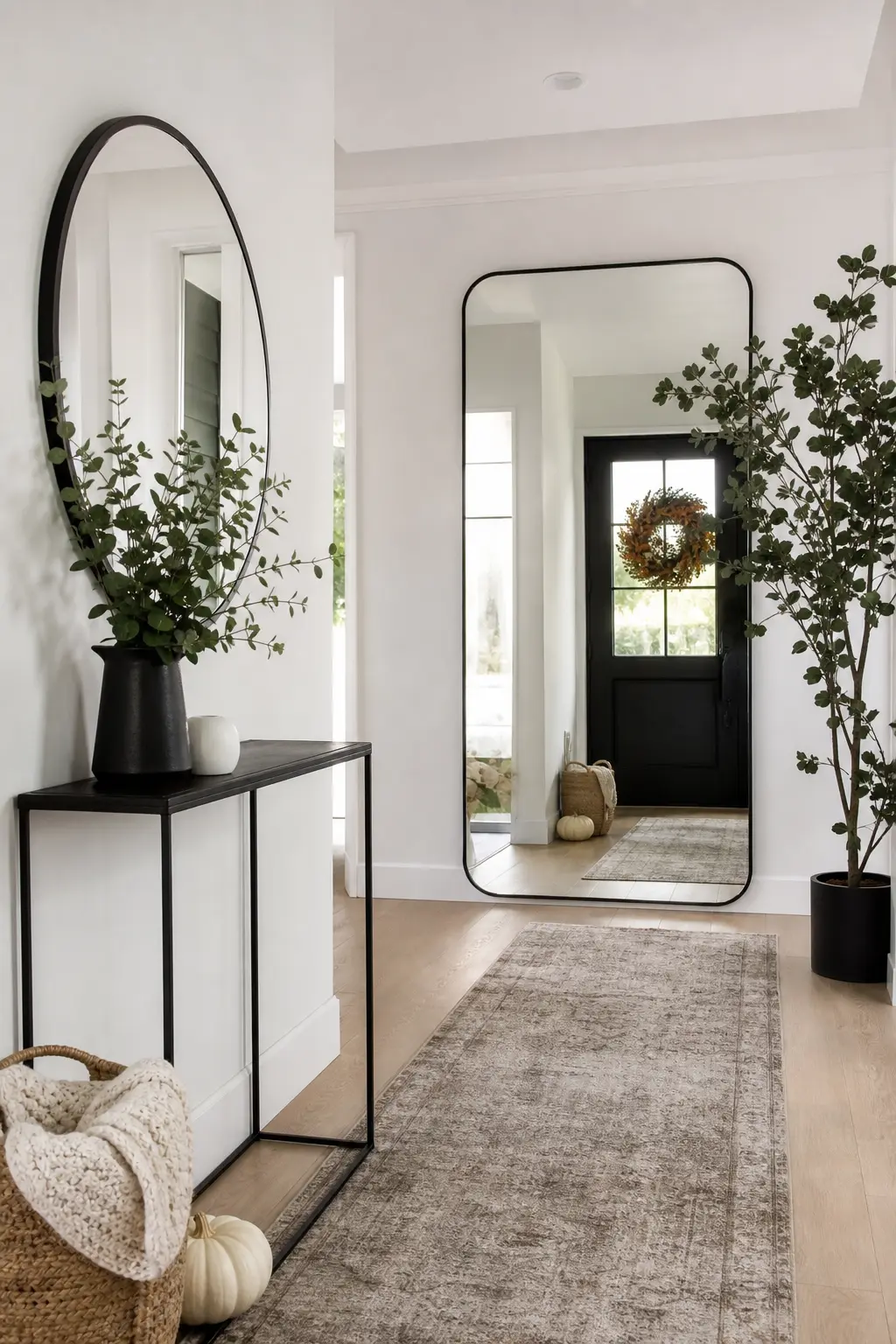
A minimalist entryway doesn’t have to stay completely static year round. Swapping a single seasonal item, like a small vase of seasonal branches or a subtle seasonal wreath on the door, adds variety without requiring a full redecoration of the space.
Keeping seasonal additions to one or two items, rather than layering in multiple decorative pieces at once, maintains the calm, uncluttered feel that defines the space the rest of the year. The goal is a small seasonal nod, not a temporary departure from the minimalist approach entirely.
10. Budget Ranges for a Minimalist Entryway Refresh
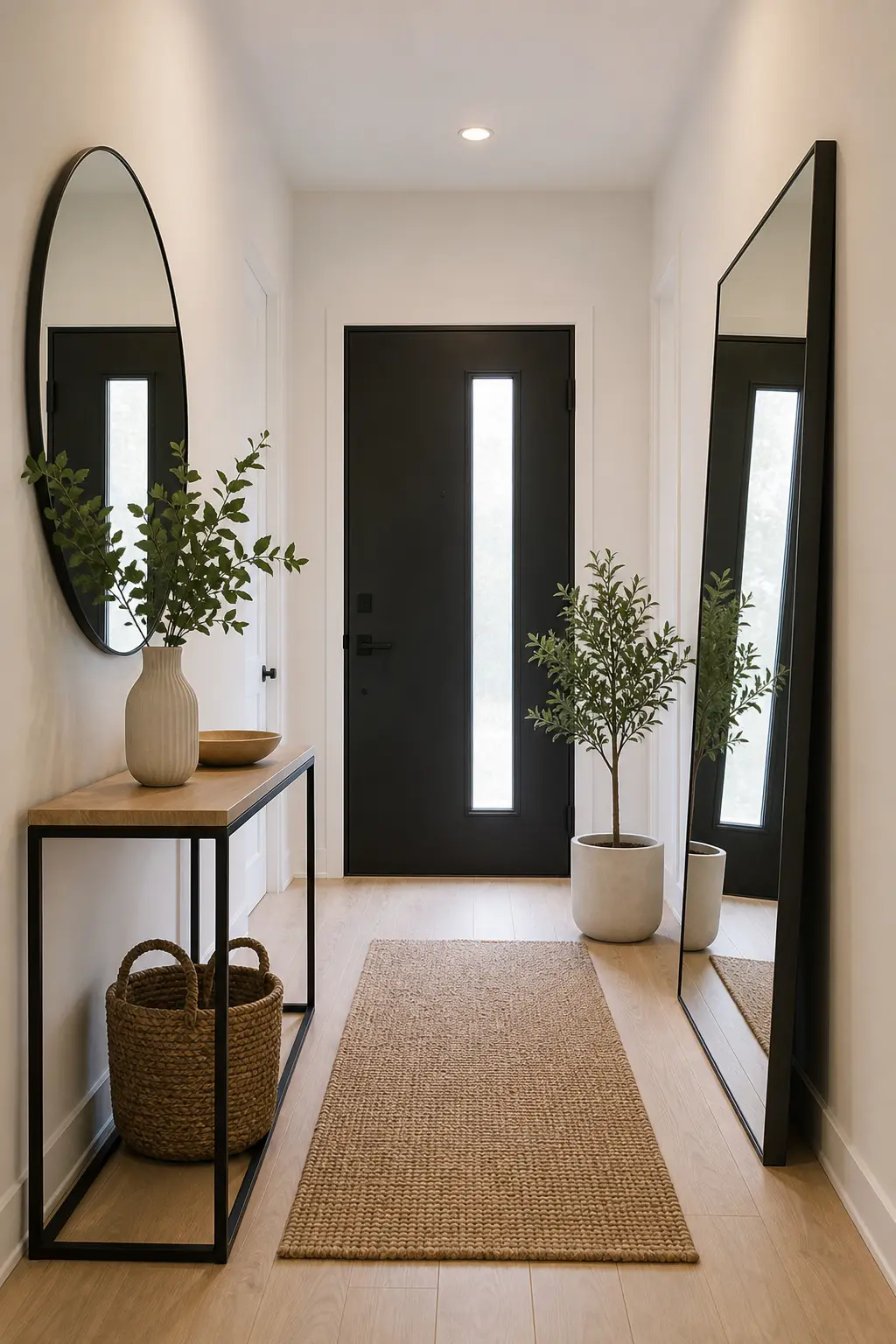
A basic refresh, including a full length mirror, one or two plants, and updated wall hooks, typically runs somewhere between 150 and 500 dollars depending on mirror size and plant choice. Adding a narrow storage cabinet or bench increases that range, often by an additional 200 to 600 dollars depending on materials.
A more complete entryway overhaul, including new flooring, a wall sconce, and custom built in storage, tends to run considerably higher, often somewhere between 1500 and 4000 dollars depending on the scope of construction involved.
Mistakes to Avoid
- Choosing a mirror so large it overwhelms the actual footprint of a small entryway
- Positioning a mirror to reflect a cluttered closet or messy shoe pile
- Overcrowding the space with too many decorative items competing for attention
- Selecting a high maintenance plant for a space that gets very little natural light
- Skipping closed storage entirely and relying only on open shelving in a tight space
- Using a heavily patterned rug or wallpaper that makes the room feel busier and smaller
Frequently Asked Questions
What size mirror works best for a small entryway? A mirror close to the height of an average adult, generally 60 to 72 inches tall, tends to work well for a full length effect without overwhelming a tight space. Width should stay proportional, usually somewhere between 24 and 36 inches for a narrow entry.
What plants survive best in a low light entryway? Snake plants and ZZ plants are both well suited to low light conditions and need relatively infrequent watering, making them practical choices for a space that isn’t always top of mind for daily care.
Should a mirror lean against the wall or be mounted? Either works. A leaning mirror is easier to install and move later, while a wall mounted mirror takes up slightly less floor depth, which can matter in a very tight entryway.
How do I keep a small entryway from looking cluttered? Limit storage to one or two closed pieces, like a narrow cabinet or a small basket, rather than several open baskets or a long row of hooks. Keeping decorative items to a small, intentional number also helps.
Is a rug necessary in an entryway? Not strictly, but a low pile rug or runner helps define the space and adds warmth, especially in an open floor plan where the entryway isn’t clearly separated from an adjacent room.
Conclusion
A minimalist entryway built around a full length mirror and one or two well chosen plants proves that a small space doesn’t need a lot of furniture to feel finished. The mirror adds light and visual depth, the plants add life without clutter, and closed storage keeps daily items out of sight without extra decoration. Get those pieces working together, and even the tightest entryway can feel like a genuine, welcoming first impression instead of a cramped afterthought.