10 Modern TV Wall Design Ideas with Geometric Backlit Panels & Wood Slats
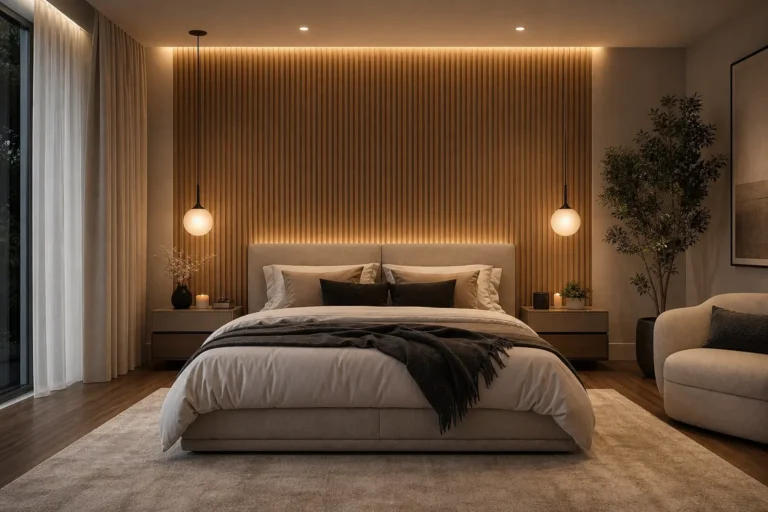
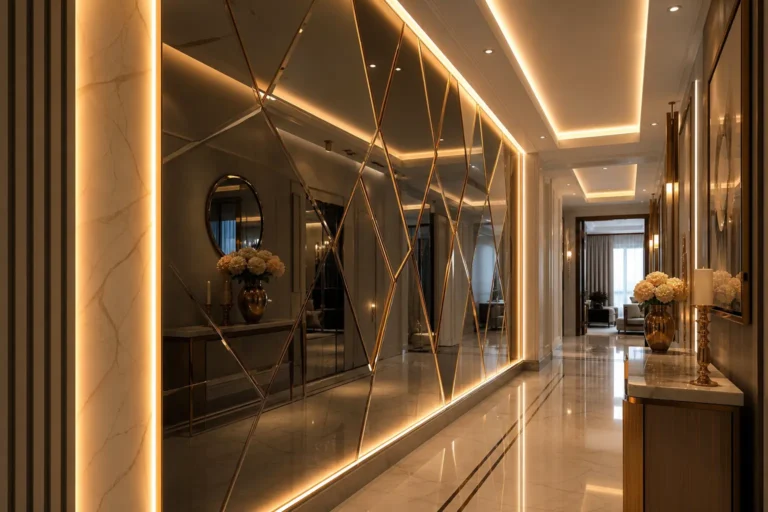
Wood slats bring warmth to a media wall, and geometric backlit panels bring structure and a bit of drama, but put the two together and you get something that neither one quite achieves alone. The wood softens the sharp lines of the geometry, while the panels give the slats a clear focal point instead of one uniform texture running the length of the wall. None of these builds need to cover an entire wall either, some work just as well as a smaller accent beside the screen. What follows are ten ways to combine the two, ranging from a single geometric shape tucked into a slat wall to a fully layered composition, each one balancing texture and light a little differently.
Picture a wall where the texture changes as your eye moves across it, smooth painted drywall giving way to ridged wood slats, then breaking into a glowing hexagon or diamond shape lit from behind. That kind of variation is what makes a media wall feel considered rather than default, and it’s really the whole point of mixing geometry with texture in the first place.
1. Hexagon Panel Cluster Beside Vertical Slats
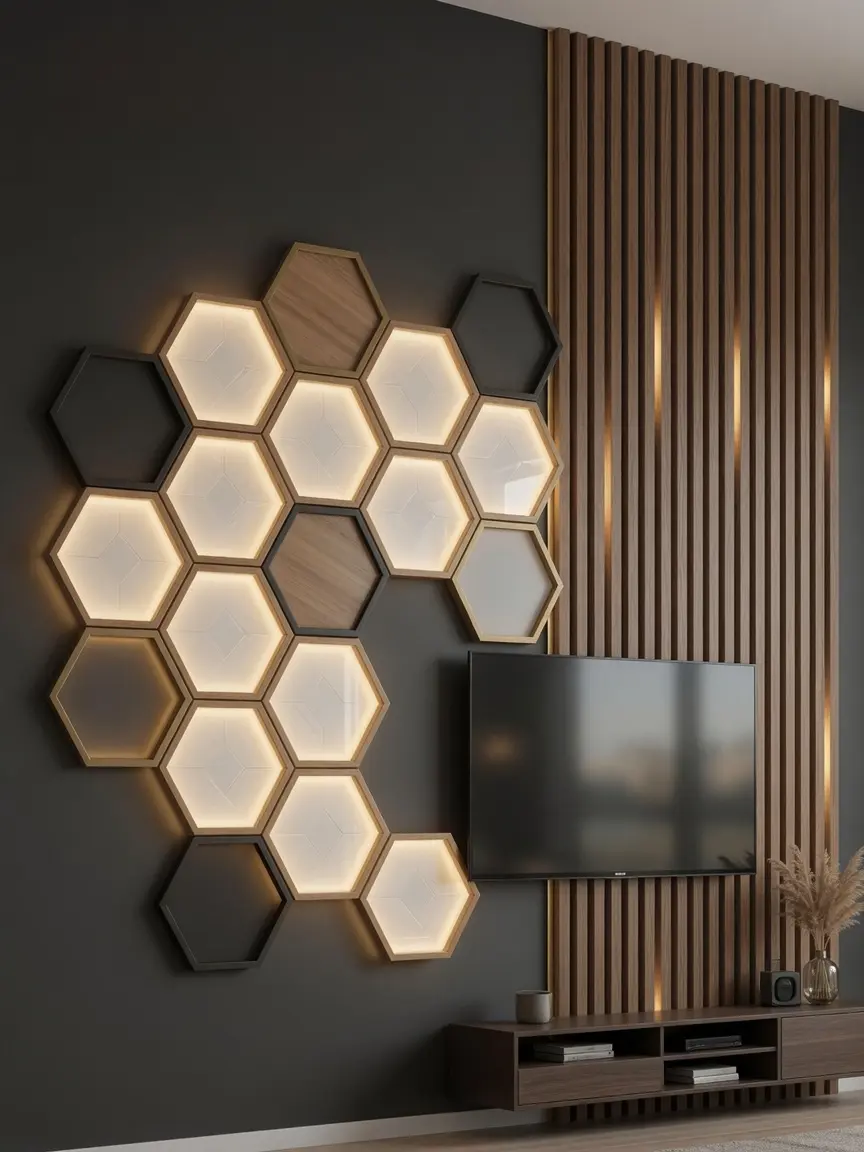
Group a handful of small hexagonal panels together on one side of the TV, each lit from behind so the seams between panels glow softly, and pair that cluster with vertical wood slats running along the rest of the wall. The hexagons create a honeycomb-like focal point that draws the eye without needing to be huge, and the slats give the rest of the wall enough texture that the hexagon section doesn’t feel randomly placed. Keeping the hexagons roughly the same size throughout the cluster helps the pattern read as deliberate rather than mismatched.
2. Diamond Grid Backlit Section Behind the Screen
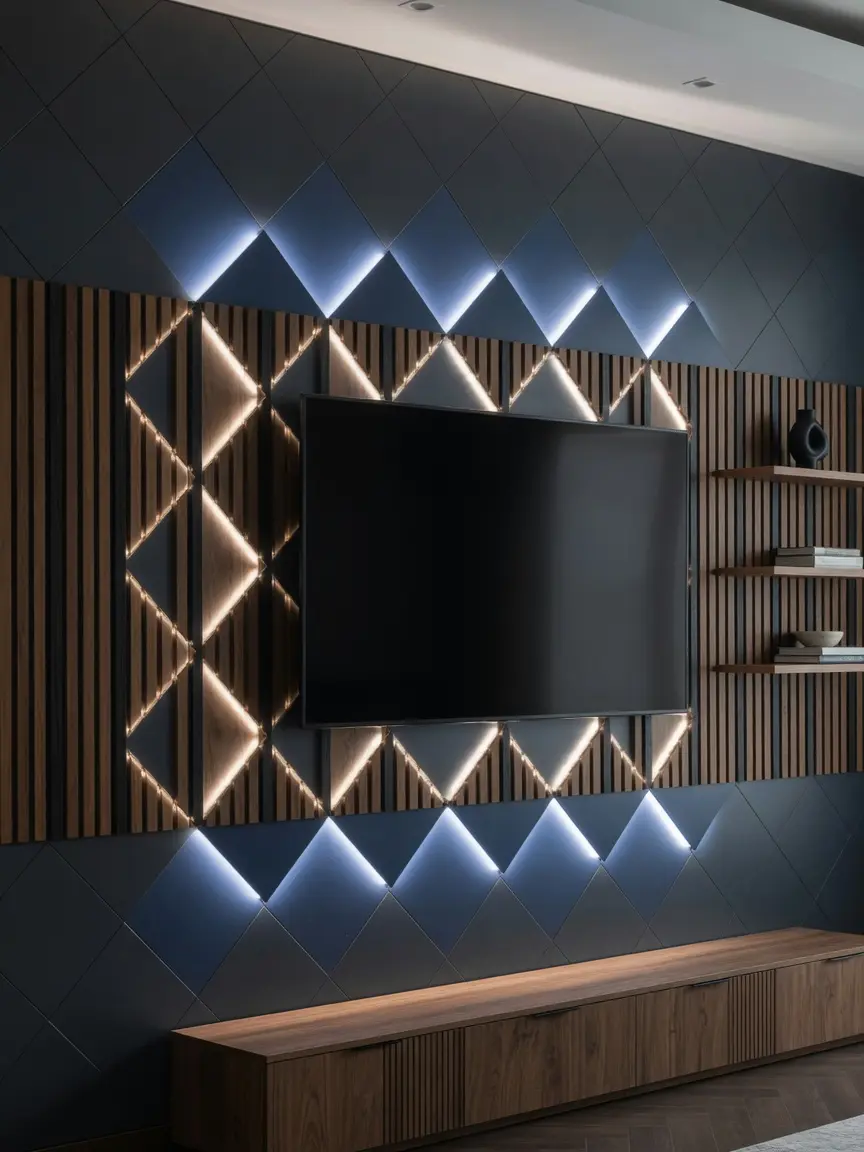
Build a grid of diamond shapes directly behind the TV itself, each with a thin LED strip along its edges, so the screen sits inside a lattice of glowing lines. Keep the diamonds a consistent size for a clean, repeating pattern, and extend the grid a foot or so beyond the edges of the TV on all sides so the screen doesn’t feel cramped inside too small a frame. A slightly darker wall finish behind the grid helps the glowing lines read clearly rather than blending into the background.
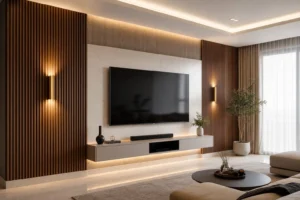
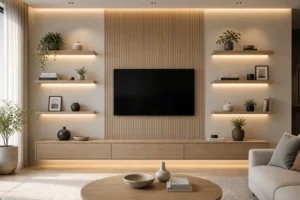
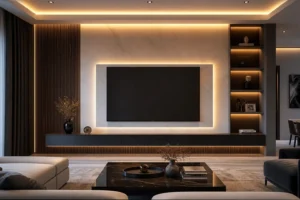
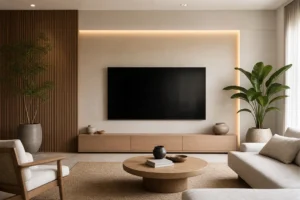
3. Triangular Panel Accent Framing One Side
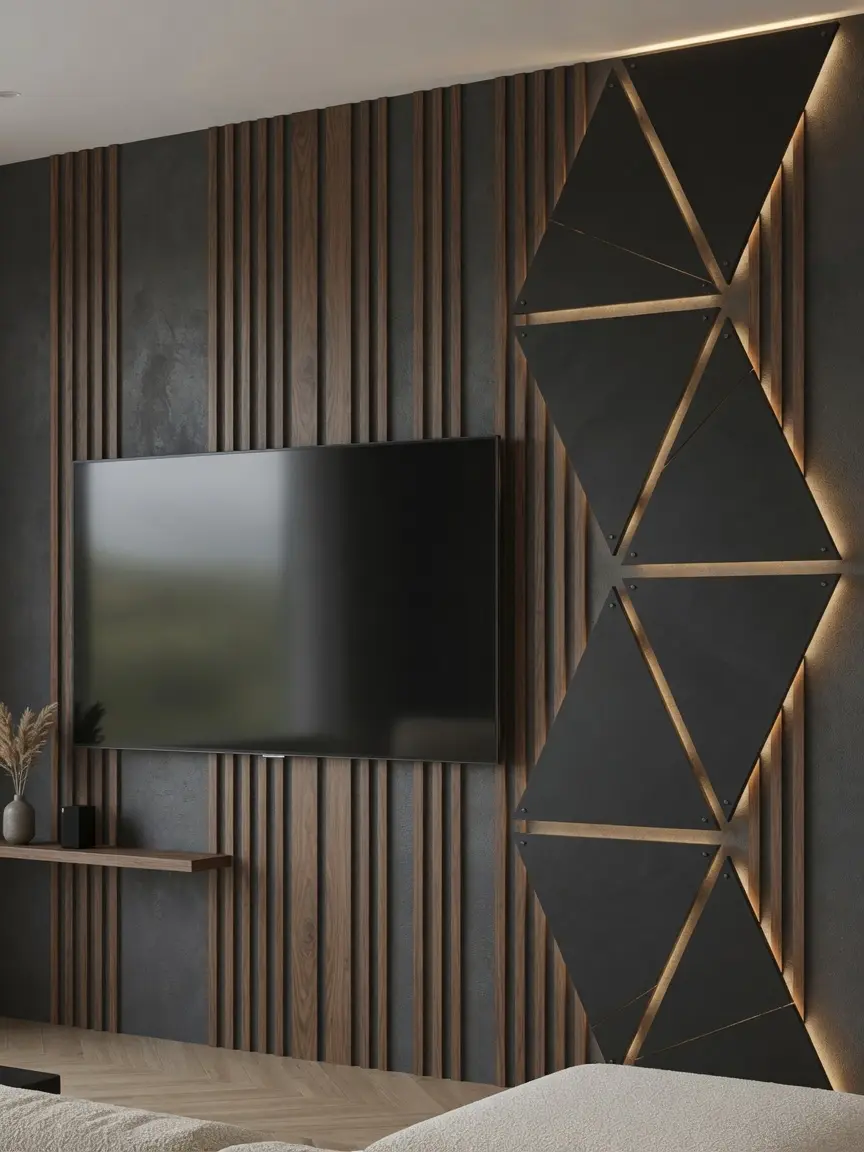
Rather than centering the geometric element, run a cluster of triangular panels up one side of the wall only, lit from behind, while wood slats cover the remaining space. This asymmetrical layout feels more contemporary than a fully symmetrical design, and it works especially well when the TV itself sits slightly off center in the room rather than dead center on the wall. The uneven balance also gives the eye somewhere specific to land first, rather than settling evenly across the whole wall at once.
4. Wood Slats Wrapping Around a Square Backlit Frame
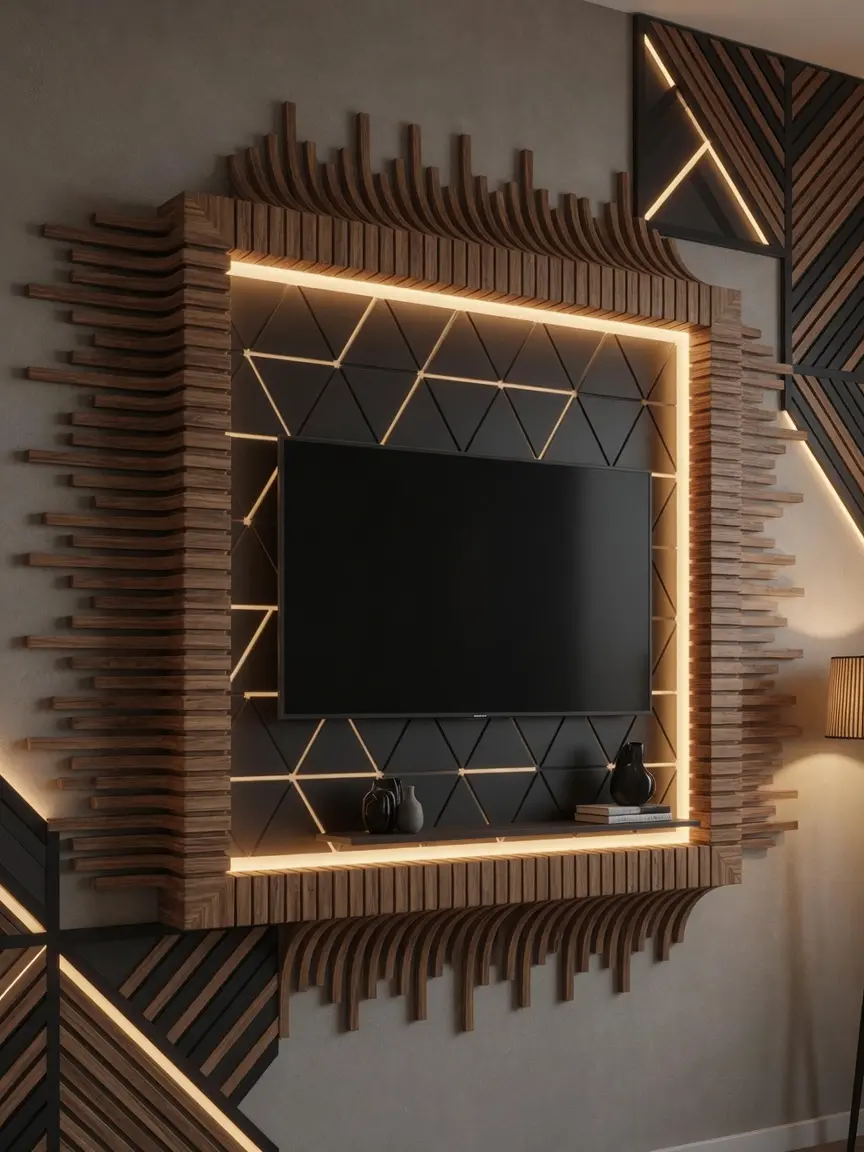
Build a square or rectangular backlit panel directly around the TV, essentially framing the screen in a glowing border, then run wood slats outward from that frame to cover the rest of the wall. The square shape keeps things simple and clean around the actual screen, while the slats add warmth and texture to everything surrounding it without competing for attention.
5. Chevron Pattern Slats with Hidden Edge Lighting
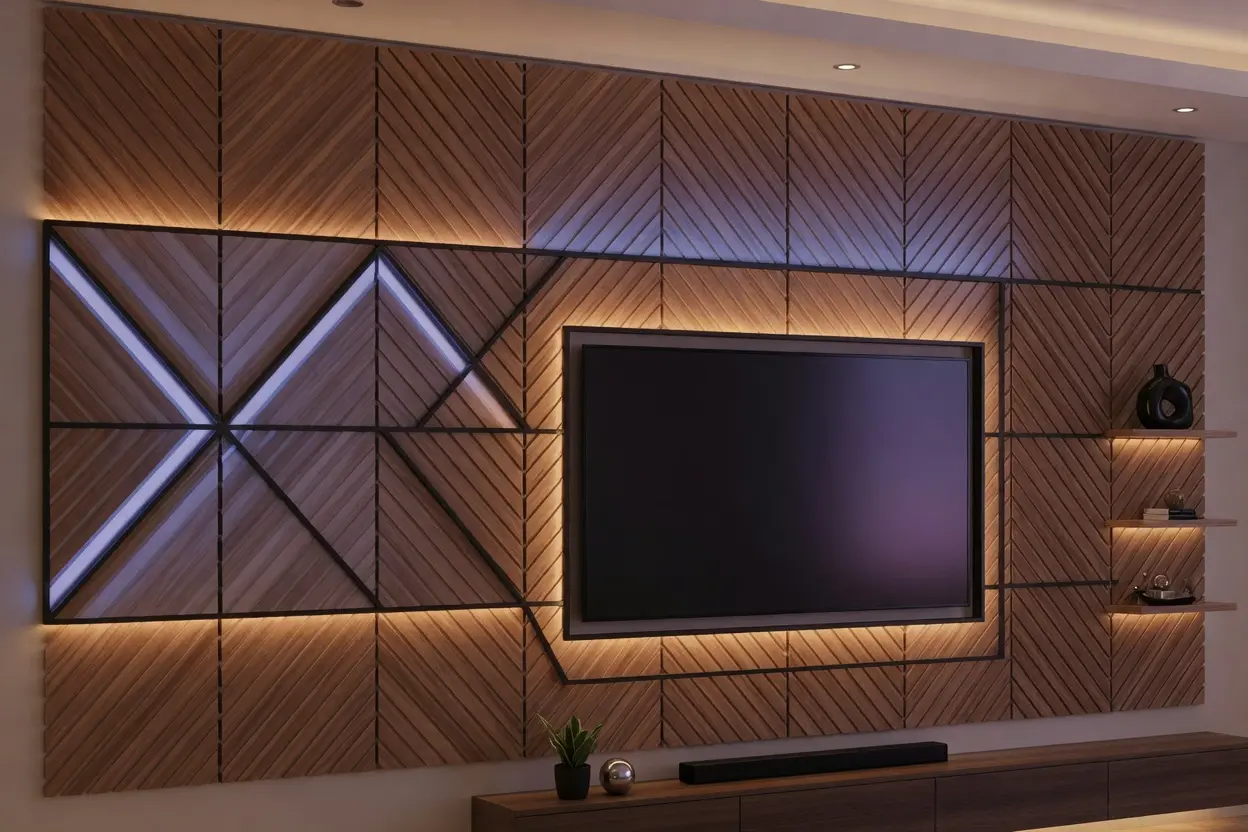
Instead of straight vertical or horizontal slats, arrange them in a chevron or herringbone pattern, and hide a thin LED strip along the top or bottom edge where the pattern breaks. The angled slats already add visual movement on their own, and the hidden lighting adds just enough glow to highlight that pattern once the room gets darker in the evening.
6. Circular Panel Set Into a Slat Background
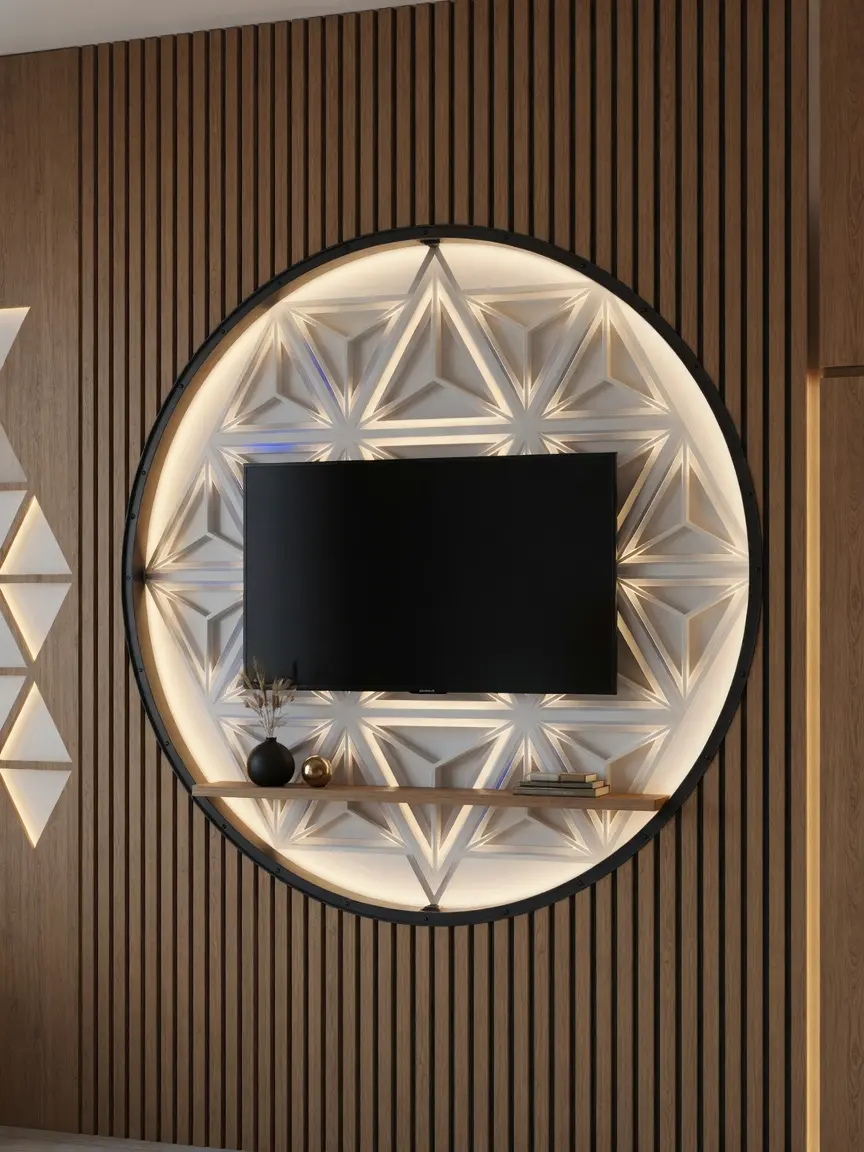
Cut a circular section out of an otherwise continuous slat wall, and fit it with a backlit panel instead, so the round shape interrupts the linear rhythm of the slats around it. The contrast between straight, repeating lines and one smooth curved break gives the wall real visual interest, more than either element would provide sitting on its own. This is one of the more subtle ways to introduce geometry into a slat wall, since the surrounding texture stays consistent everywhere except that one deliberate break.
7. Layered Rectangular Panels at Staggered Depths
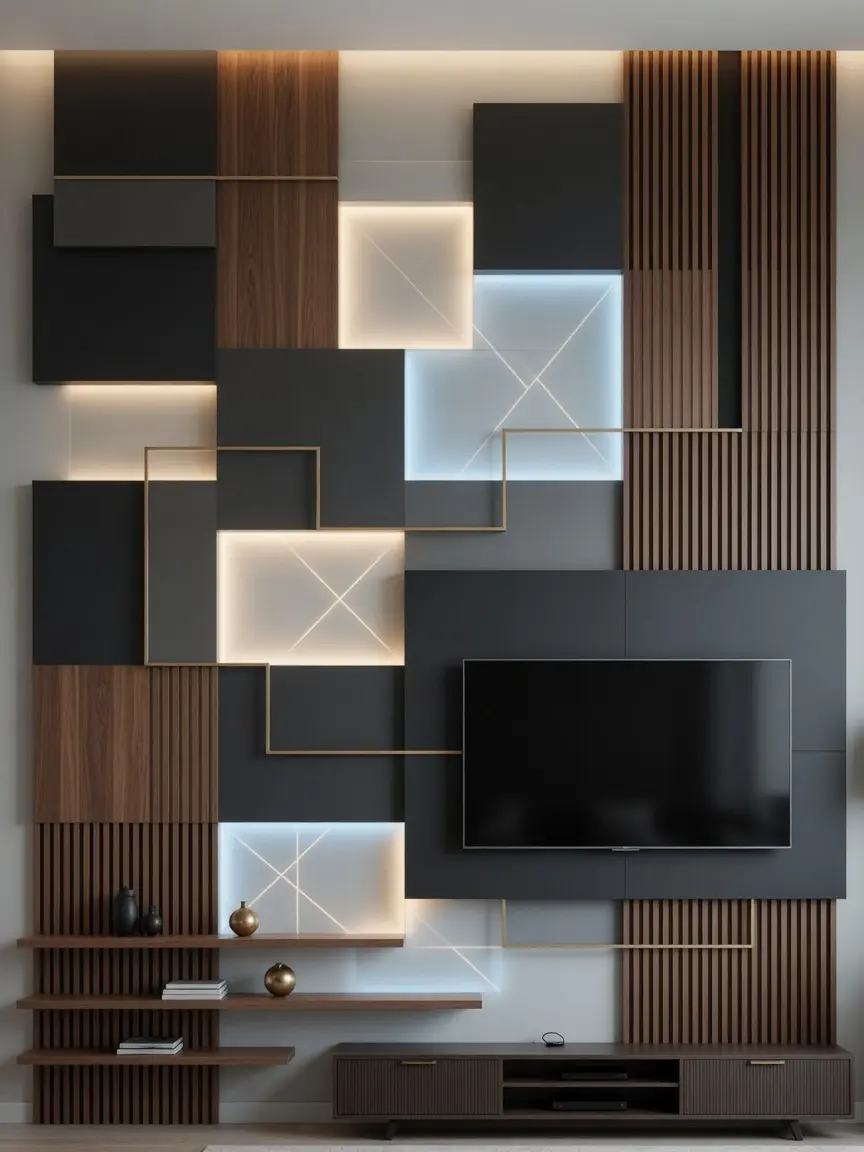
Build a few rectangular panels at slightly different depths from the wall, each with LED lighting along its edge, layered near the TV alongside a run of wood slats on the opposite side. The staggered depths catch light and shadow differently depending on the angle in the room, giving the wall a sense of dimension that a flat design, no matter how well lit, just can’t replicate.
8. Asymmetrical Geometric Cluster Around the TV
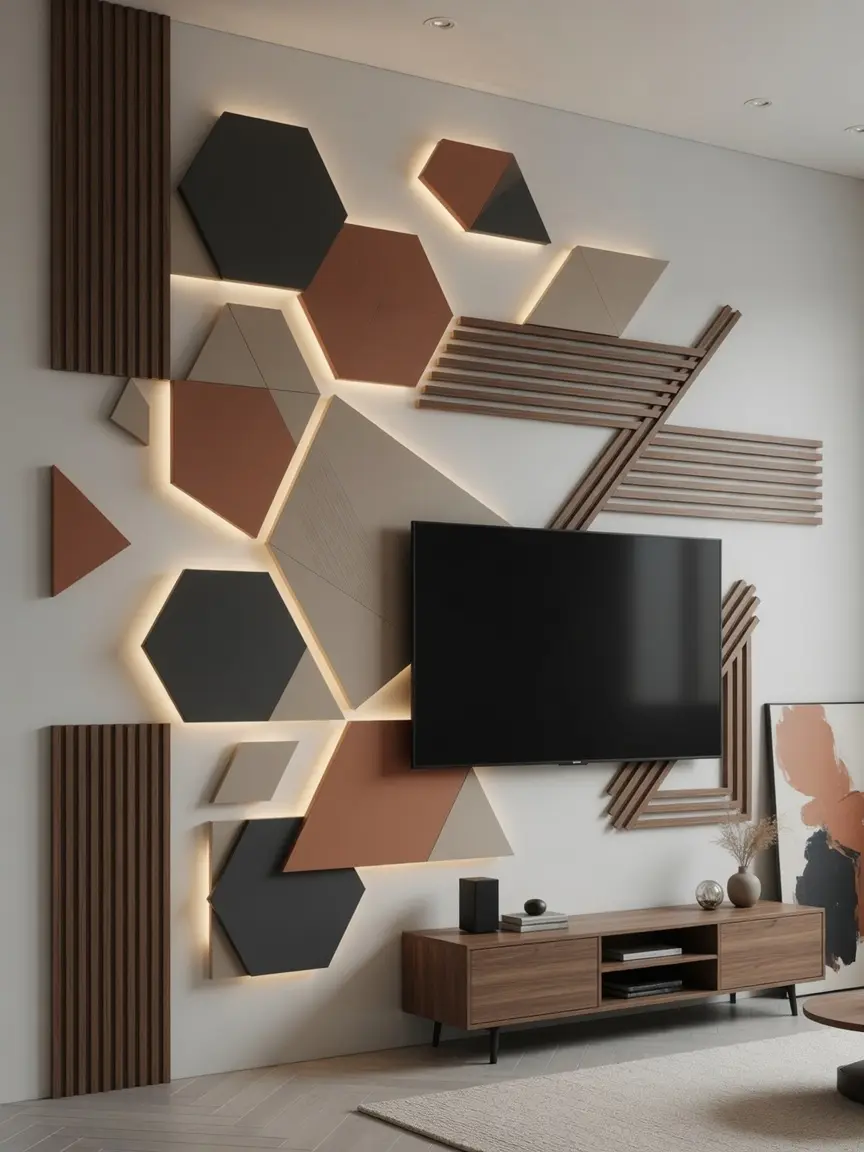
Scatter a mix of different geometric shapes, a few triangles, a hexagon, a small circle, around the TV in a deliberately uneven arrangement, each lit individually. This works best when paired with a simpler wood slat backdrop rather than another busy pattern, since the geometric cluster alone provides plenty of visual complexity without needing competition from the surrounding texture.
9. Slat Wall with a Single Backlit Diamond Centerpiece
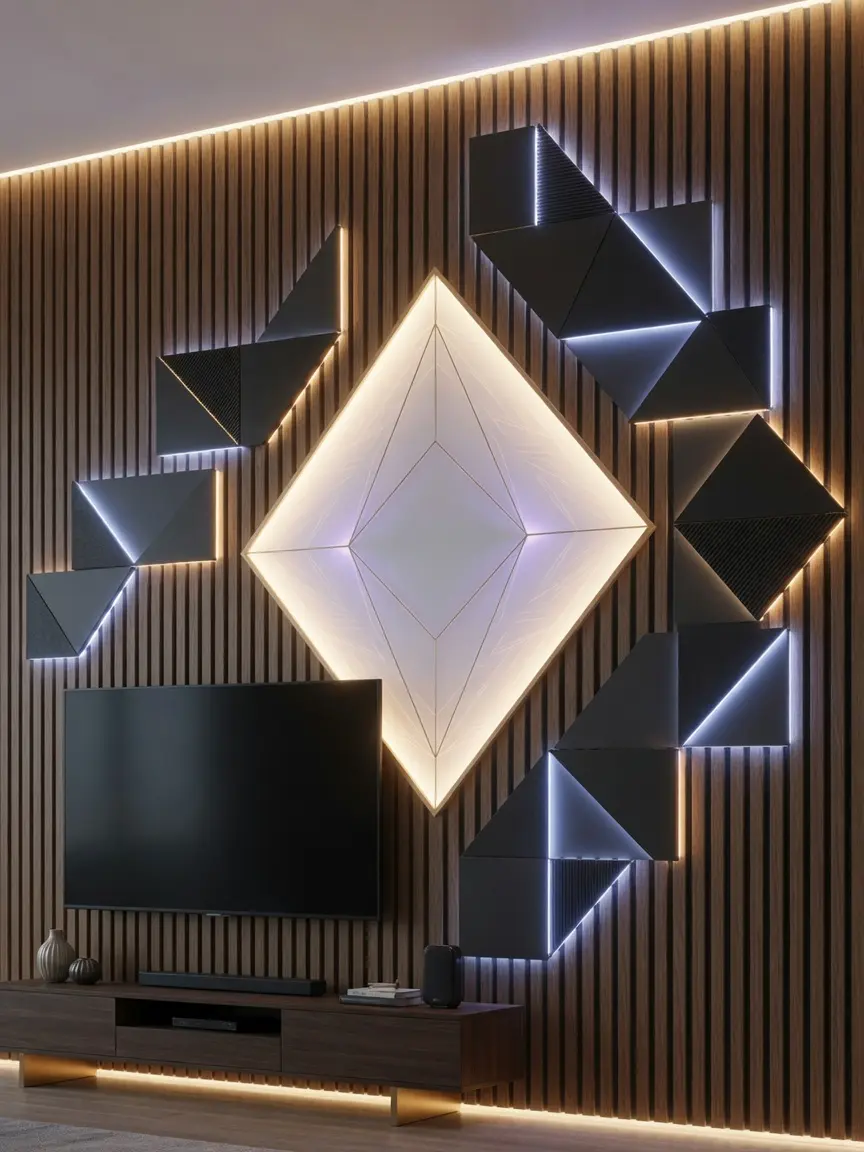
Keep things simple with one diamond shaped panel, backlit and centered directly behind the TV, set into an otherwise plain wood slat wall. This is one of the more restrained options on this list, letting a single geometric moment carry the whole design rather than layering multiple shapes together, which suits smaller living rooms where a busier composition might feel like too much.
10. Modular Hex Tile Wall with Selective Backlighting
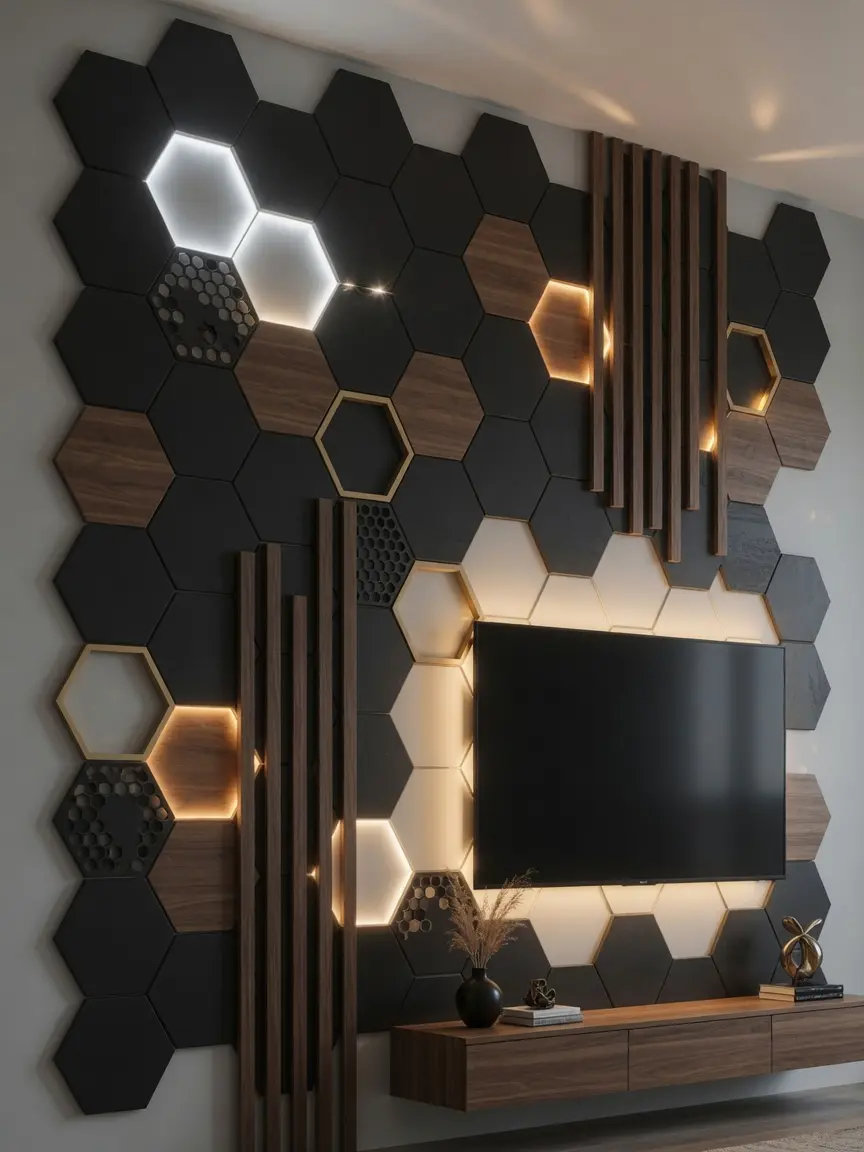
Cover a section of the wall in modular hexagonal tiles, but only backlight a handful of them scattered throughout rather than the whole grid. The unlit tiles still provide the honeycomb texture during the day, while the lit ones create a scattered, almost random glow pattern once the lights come on at night, giving the wall two distinct looks depending on the time of day.
Mistakes to Avoid
- Mixing too many different geometric shapes on one wall, which can look chaotic rather than intentionally layered
- Choosing wood slats and backlit panels in clashing finishes, making the two elements feel disconnected instead of paired
- Skipping a dimmer on the backlighting, losing the ability to shift the wall’s mood between daytime and evening use
- Overcomplicating a small wall with a design better suited to a much larger, more open living room
- Ignoring proper ventilation behind a TV mounted inside a fully enclosed geometric frame or niche
- Forgetting to plan cable routing before installation, making it far harder to hide cords cleanly afterward
Frequently Asked Questions
How much does a geometric backlit panel wall typically cost? Costs vary widely by size and complexity, but a smaller accent section, like a single hexagon cluster, can run a few hundred dollars in materials, while a full wall combining panels and slats can run into the thousands once labor is included.
Can I add backlit geometric panels to an existing wood slat wall? In many cases yes, especially if the slat wall was built with removable sections or enough depth behind it to add LED wiring, though retrofitting an existing wall is generally more involved than planning for both elements from the start.
What wood finish works best paired with backlit panels? Warmer wood tones, oak, walnut, or a mid tone stain, tend to balance the coolness of LED lighting nicely, while very pale or very dark woods can sometimes make the backlighting look either washed out or overly stark by comparison.
Do geometric panels need to be symmetrical to look good? Not at all. Asymmetrical arrangements often read as more modern and intentional than a perfectly mirrored layout, especially when the geometric shapes are meant to draw attention rather than blend seamlessly into the wall.
Is this style suitable for a rental apartment? Smaller, surface mounted panel kits and adhesive backed slat sections can work in rentals without major wall damage, though a fully custom build involving structural changes generally isn’t reversible enough for most lease agreements.
Conclusion
A media wall gets more interesting the moment it stops being one flat surface behind a screen. Geometric backlit panels bring shape and glow, wood slats bring warmth and texture, and together they turn what’s usually the most predictable wall in a living room into something worth looking at even when the TV is off. Whether that means one small hexagon cluster or a fully layered composition of shapes and light, these ideas show how much a bit of geometry and texture can transform a space.