10 Modern Wooden Bedroom Design Ideas with Built-In Shelves & Warm Lighting
A lot of bedrooms end up with mismatched furniture and cords running everywhere because there’s nowhere built in to put things. Wooden bedroom design solves both problems at once. Built-in shelves give you real storage without extra freestanding furniture, and warm lighting brings out the wood’s natural texture instead of flattening it under harsh overhead light. This article covers 10 wooden bedroom design ideas with built-in shelves and warm lighting that work for daily use, not just for photos.
1. Choose a Wood Tone That Sets the Room’s Overall Mood
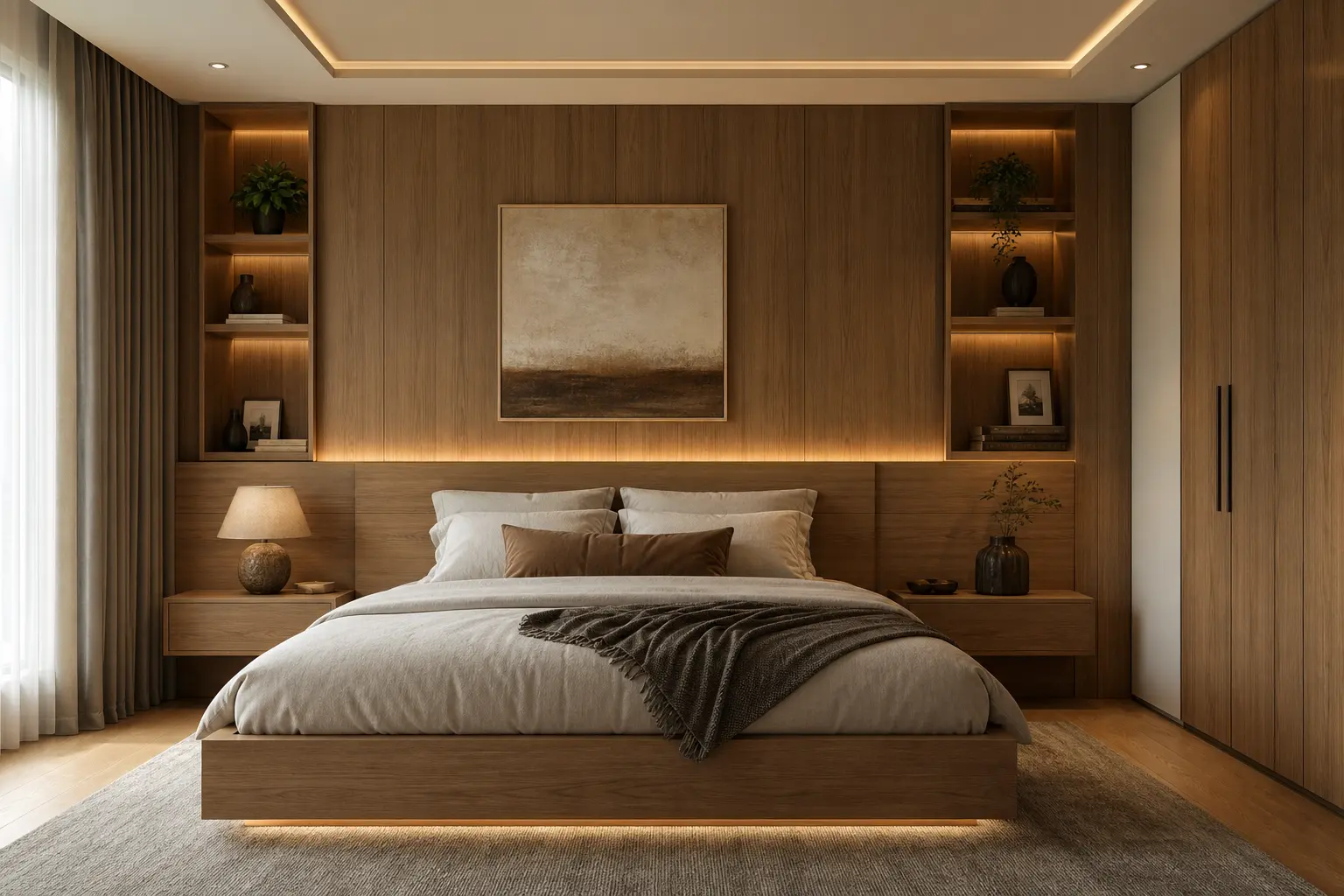
Wood tone sets the emotional temperature of the whole room before anything else gets added. Darker woods like walnut create a moodier, more intimate feel, which works well in a bedroom meant primarily for sleep and rest. Lighter woods like oak or ash feel airier and suit a bedroom that also functions as a reading or work space during the day.
Match the wood tone to the room’s natural light levels. A north facing bedroom with less direct sun often benefits from a lighter wood, since dark wood in low light can start to feel heavy rather than cozy.
2. Design Built-In Shelves Around the Bed for Function and Style
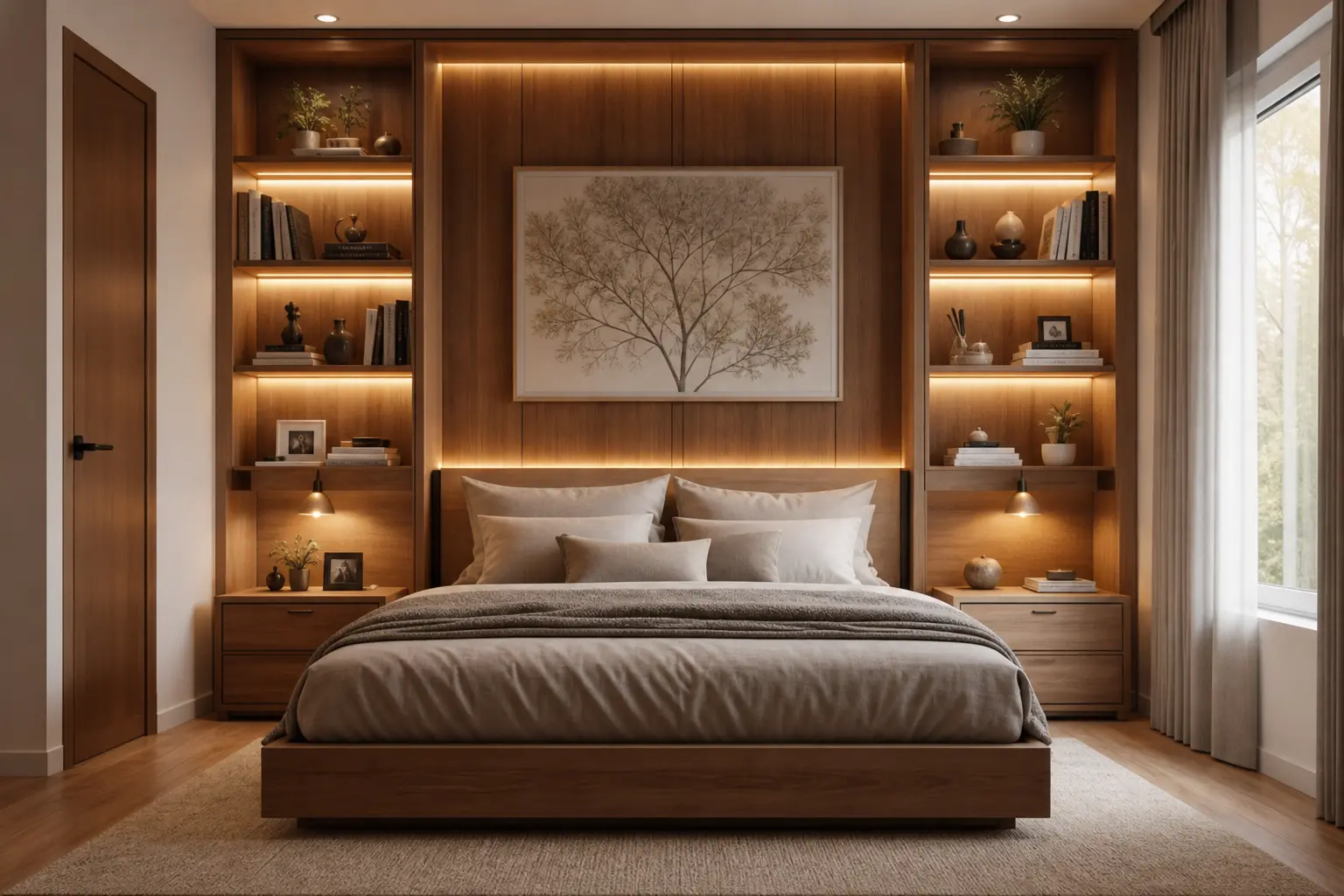
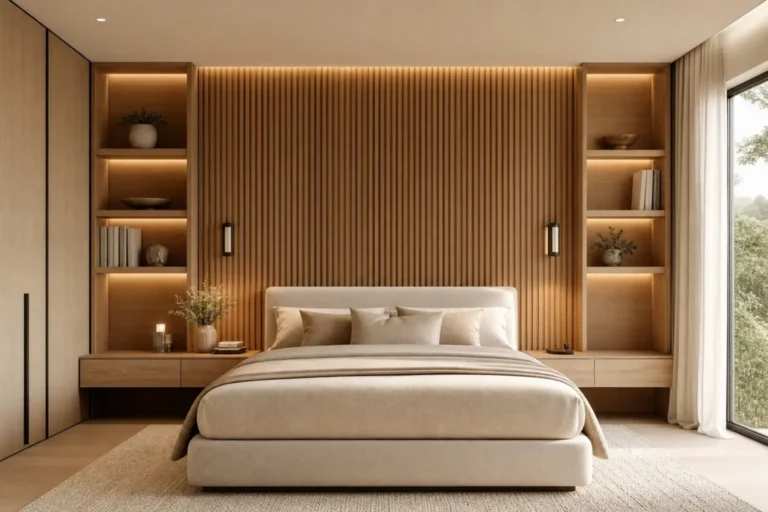
Built-in shelves flanking the headboard do double duty. They provide storage for books, lamps and personal items, and they frame the bed as the room’s clear focal point. Floor to ceiling shelving on either side of the bed makes the most of vertical space, especially useful in bedrooms without room for a full dresser.
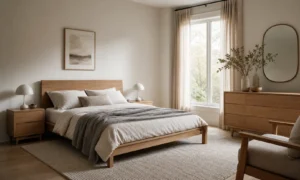
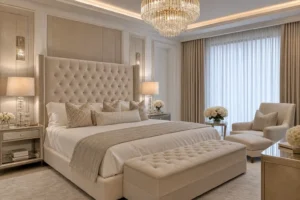
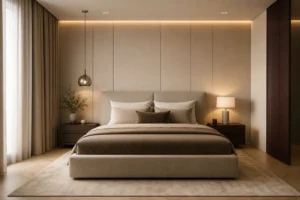
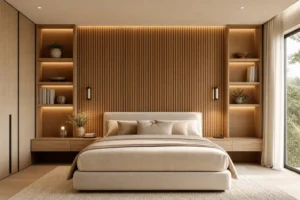
Open vs Closed Shelving
Open shelves work well for books and display items, but they need regular tidying to avoid looking cluttered. A mix of open shelves up top and closed cabinet storage below keeps the display area curated while hiding less attractive daily items.
3. Balance Wood Surfaces with Lighter Wall Tones
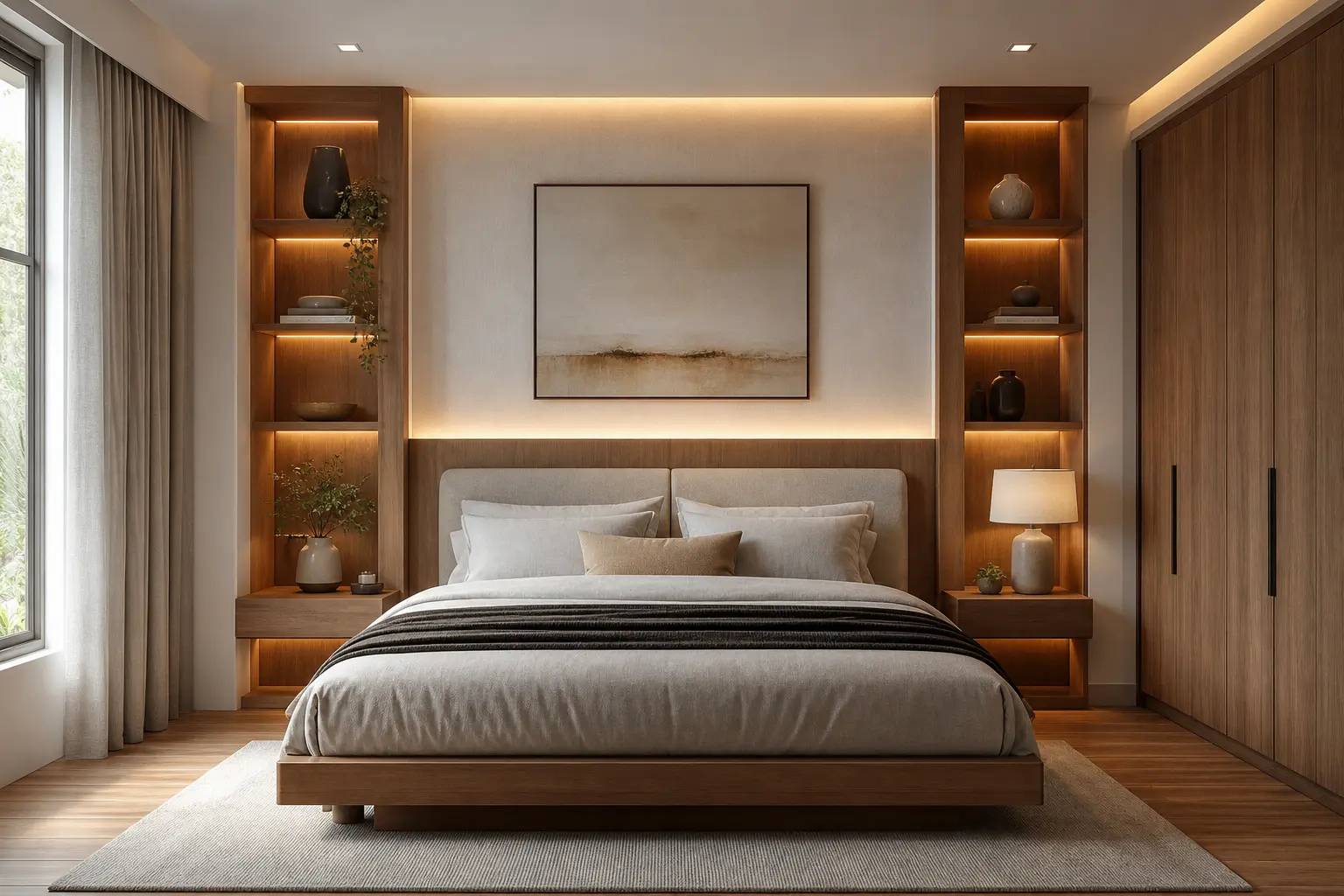
A bedroom with wood shelving, wood furniture and wood flooring all at once can start to feel heavy and closed in. Balance the wood with a lighter wall color, like soft white, warm beige or pale gray, so the wood reads as a warm accent rather than an overwhelming amount of one material. This contrast also makes the wood grain stand out more clearly.
4. Layer Warm Lighting to Highlight Wood Grain and Texture
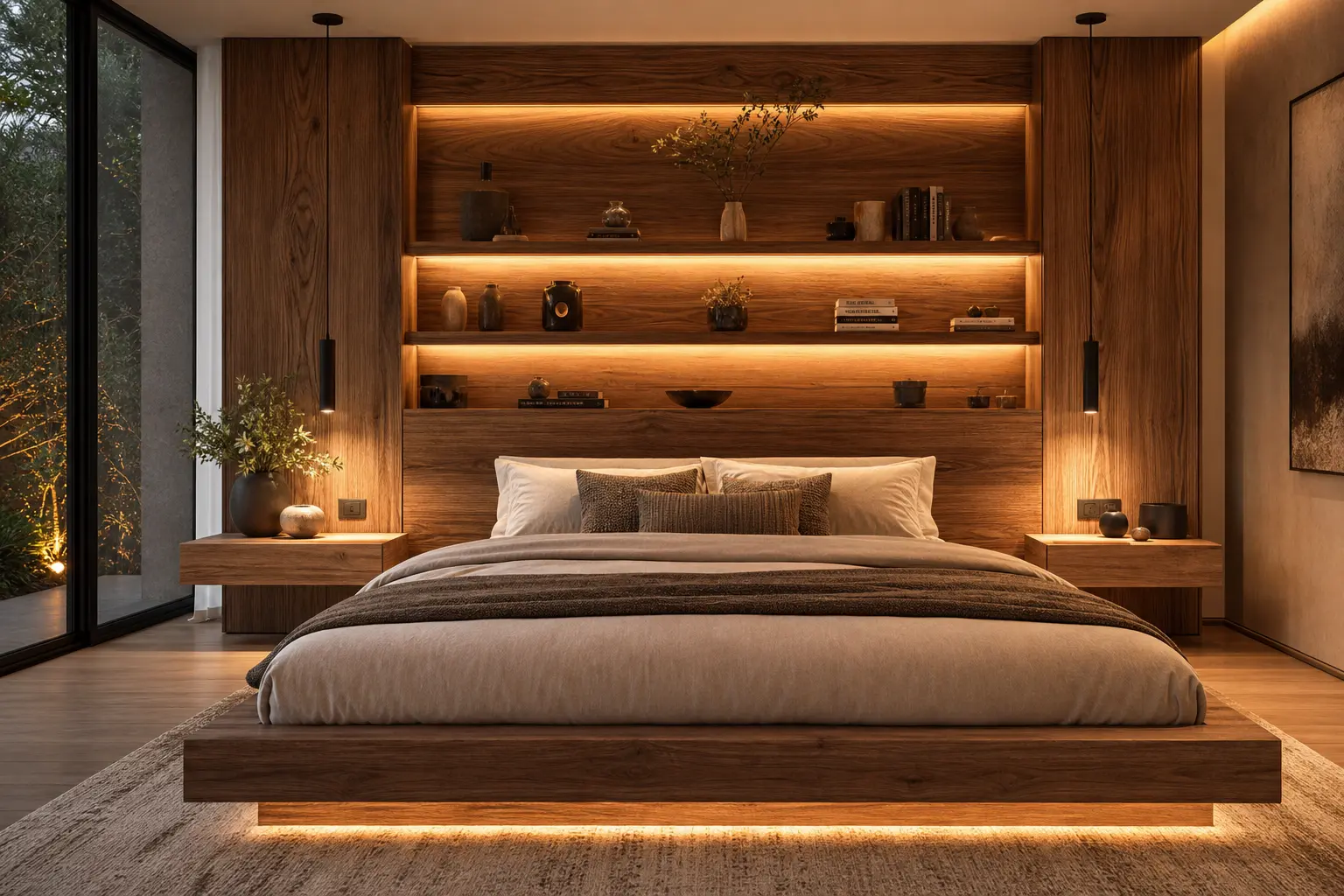
Flat, cool overhead lighting flattens wood grain and makes even high quality wood look dull. Warm lighting, generally in the 2700 to 3000 Kelvin range, brings out the natural variation and depth in wood surfaces. Layer at least two or three light sources, including a bedside lamp and some form of accent or shelf lighting, rather than relying on a single ceiling fixture.
Angle at least one light source so it grazes across the wood surface rather than hitting it straight on, since angled light emphasizes texture and grain far more than direct overhead light.
5. Add a Wood Accent Wall Behind the Headboard
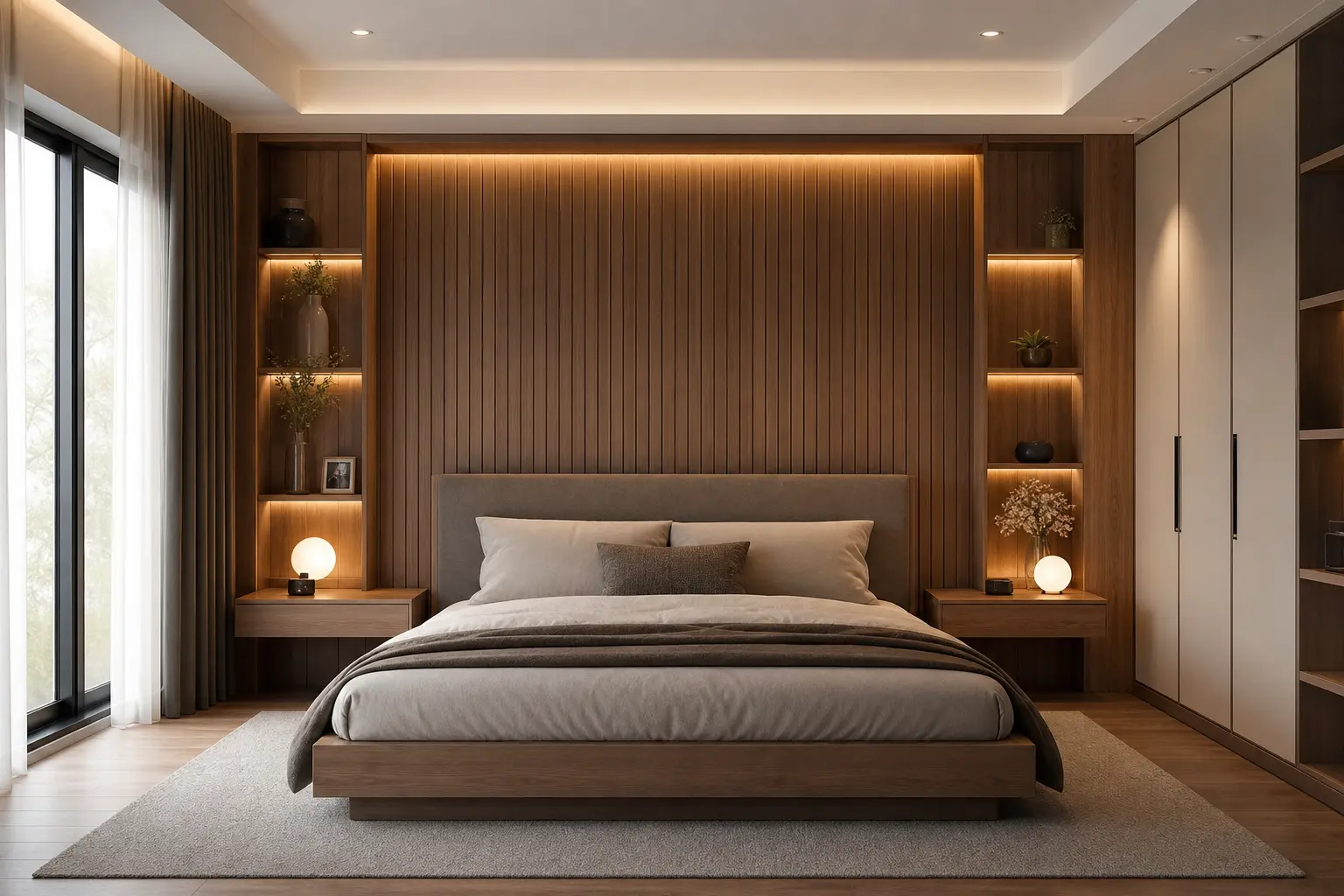
A wood accent wall behind the bed adds warmth and texture without requiring wood throughout the entire room. Wood slat paneling, either vertical or horizontal, is a common approach that adds visual interest through shadow lines as light hits the raised sections. Reclaimed or textured wood panels add even more character, though they cost more than a flat, smooth panel option.
Keep the accent wall’s wood tone within the same family as any built-in shelving, so the two elements feel connected rather than like separate design decisions.
6. Choose Wood Furniture Finishes That Age Well Together
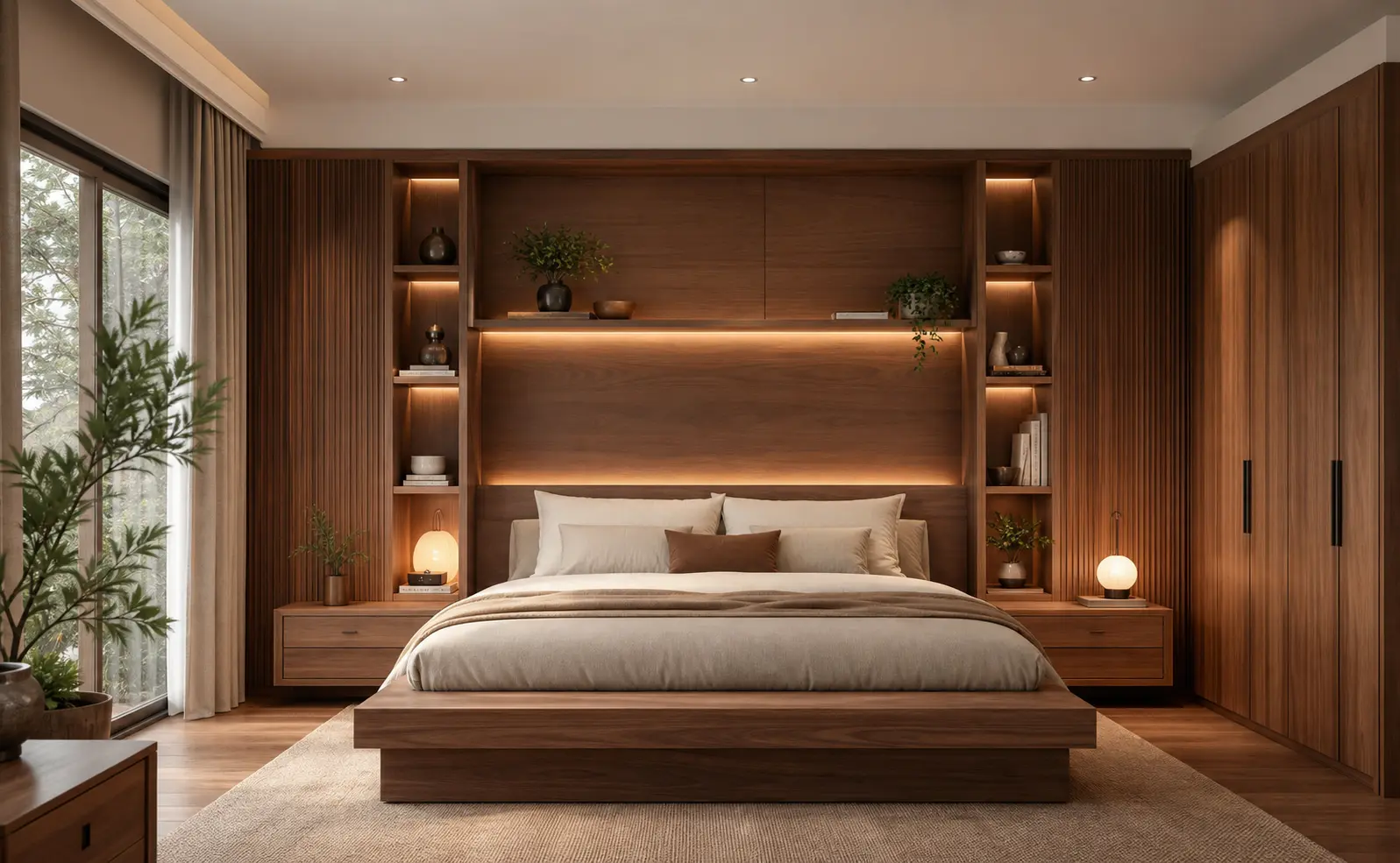
Mixing too many different wood tones in one bedroom, especially without any coordinating logic, can make the space feel unplanned rather than intentionally layered. Choose a primary wood tone for the largest elements, like the bed frame and built-in shelving, then stick to that same tone or a close complementary shade for smaller furniture pieces like nightstands.
Matte or satin finishes generally age better than high gloss lacquer, since gloss shows scratches and wear more visibly over years of daily use.
7. Use Built-In Storage to Reduce Visual Clutter
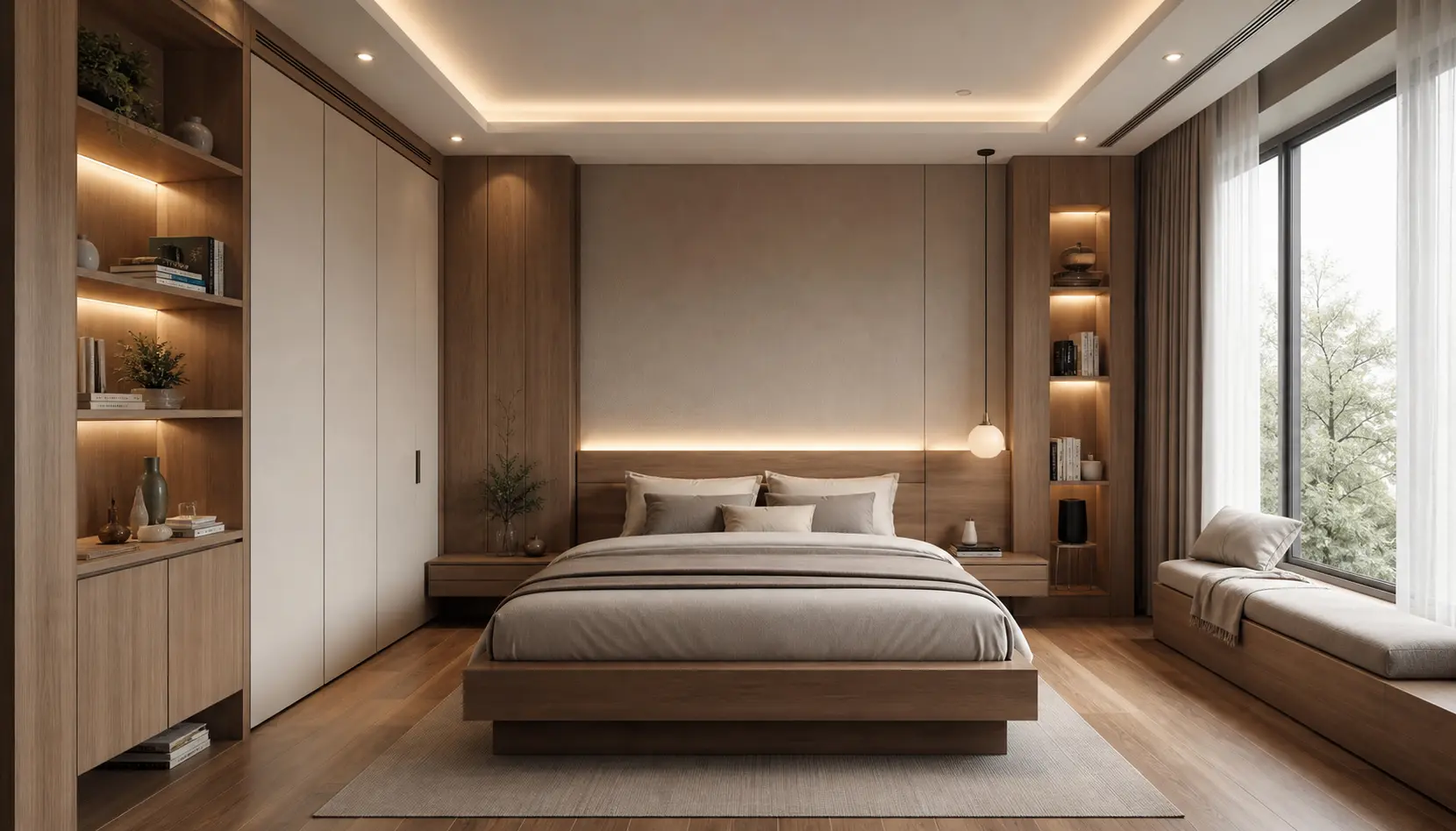
Beyond open shelving, built-in drawers and cabinets integrated into the wood shelving unit reduce the need for a separate freestanding dresser. This keeps floor space open and the room feeling less crowded, especially in a smaller bedroom where extra furniture eats into usable space fast.
Plan drawer and cabinet sizes around your actual storage needs, like folded clothing or extra bedding, rather than a generic size, so the built-in unit actually replaces the furniture it’s meant to.
8. Add Warm Textiles That Complement Wood Tones
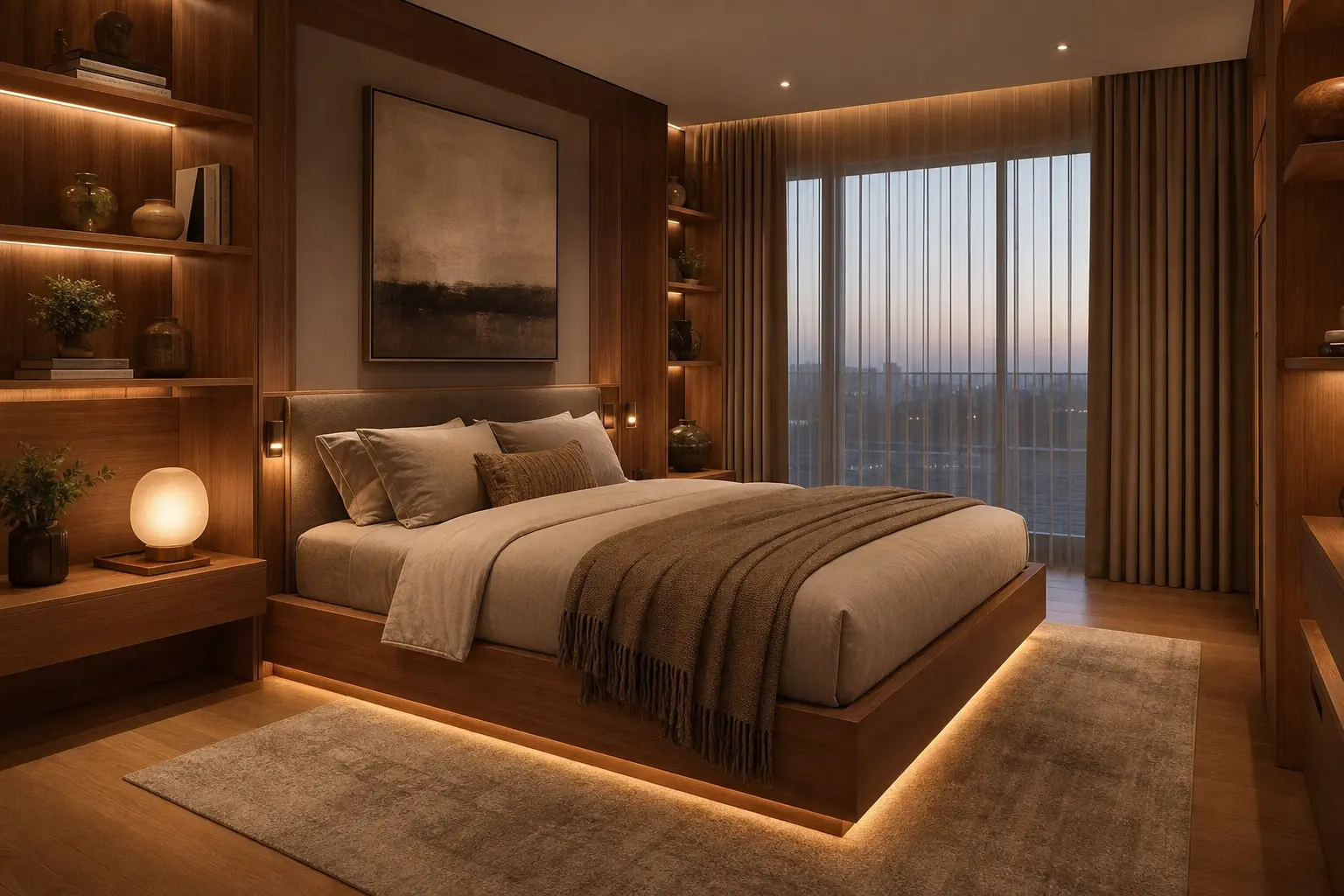
Wood surfaces pair well with warm, textured fabrics rather than cool or overly slick materials. Wool throws, linen bedding and woven cotton rugs all complement wood tones better than glossy synthetic fabrics, which can create a jarring contrast against the wood’s natural texture.
Rust, terracotta, deep green and warm cream all work well as accent colors against most wood tones, since they echo the warmth already present in the wood itself.
9. Incorporate Hidden or Indirect Lighting Within Shelving
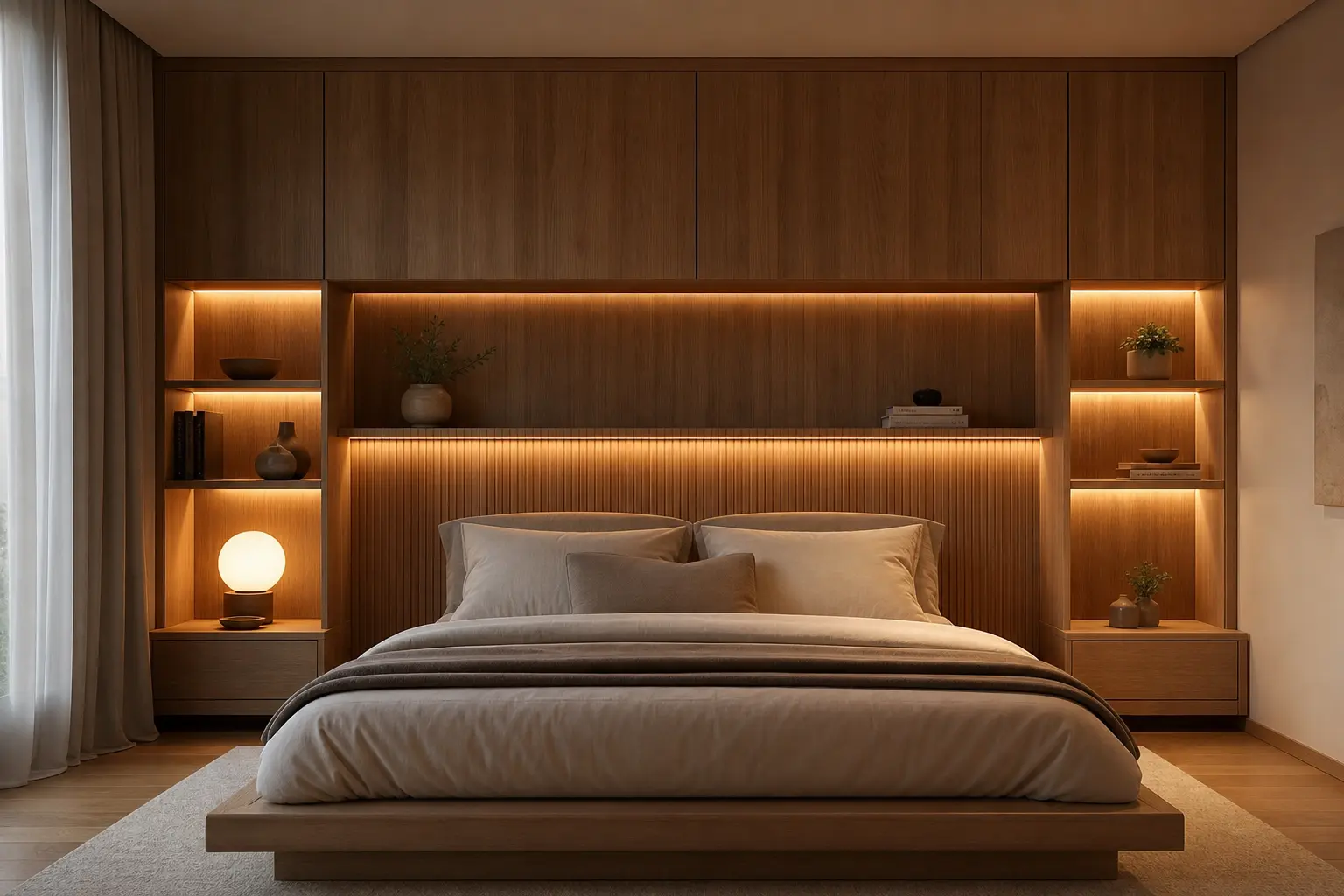
LED strip lighting hidden along the underside of shelves or inside cabinet edges adds a soft glow that highlights the wood without any visible fixture. This kind of indirect lighting works especially well on open shelving, where it illuminates displayed items and casts a warm ambient light across the wall at night.
Placement for Best Effect
Position the LED strip toward the front edge of each shelf, angled slightly downward, so the light washes over the wood surface below rather than shining directly outward into the room.
10. Balance Wood with Metal or Textile Accents for Contrast
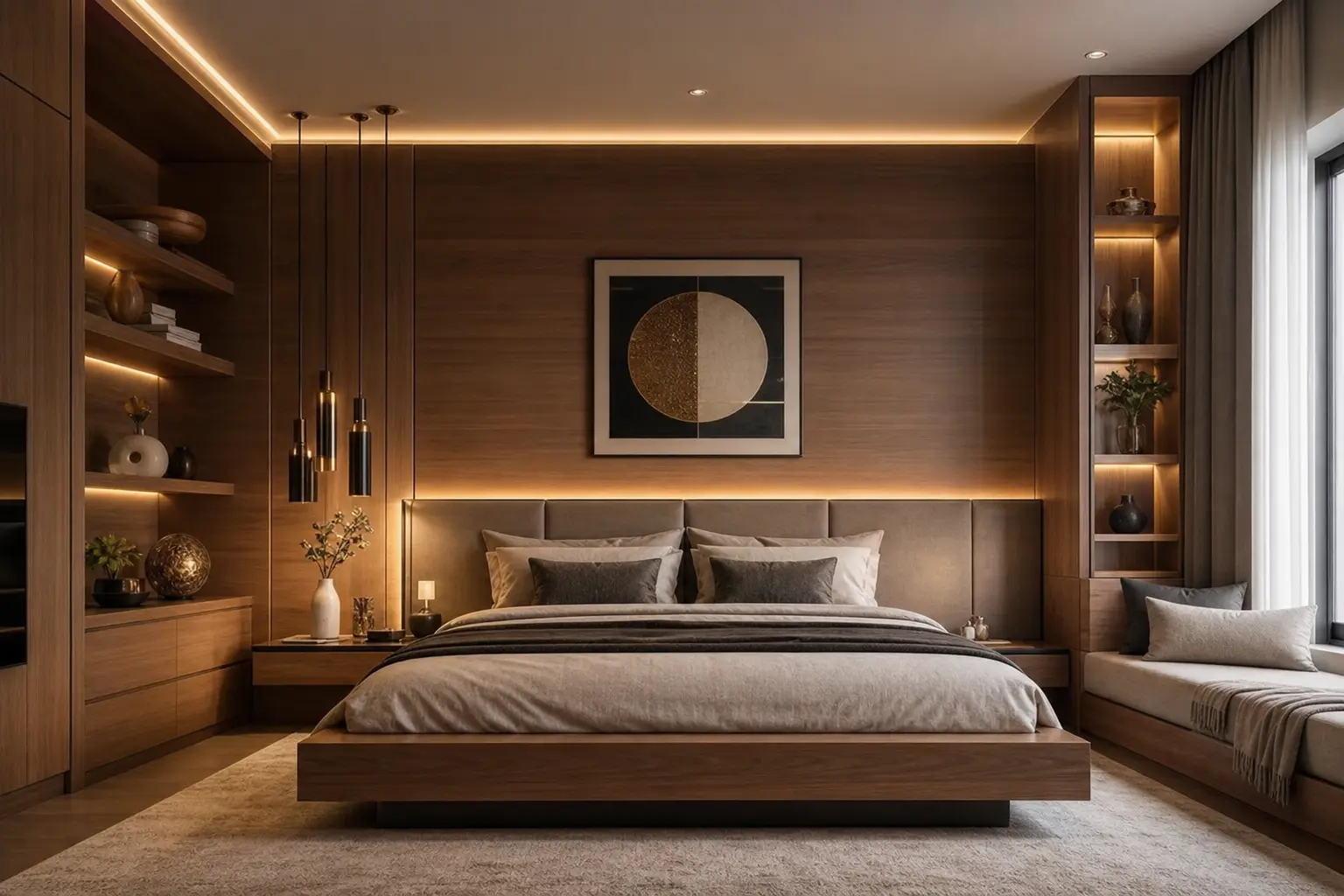
An all wood bedroom, even a well designed one, can start to feel monotonous without some material contrast. A black or brushed brass reading lamp, a woven textile wall hanging, or a stone topped nightstand all introduce contrast without competing with the wood. Keep contrasting materials to one or two accents rather than scattering several different textures throughout the room.
Mistakes to Avoid
- Mixing too many different wood tones without any coordinating logic
- Relying on flat overhead lighting instead of warm, angled accent lighting
- Filling open shelving with too many items, creating visual clutter
- Skipping wall color contrast, leaving the room feeling heavy with wood
- Placing hidden LED strips without angling them to actually highlight the wood
Frequently Asked Questions
What’s the best wood tone for a small bedroom? Lighter woods like ash or white oak generally work better in smaller bedrooms, since dark wood in a confined space can make the room feel smaller than it is.
How much storage can built-in shelving actually replace? A well planned built-in unit with both open shelving and closed cabinets can often replace a dresser and one or two smaller storage pieces, depending on the unit’s depth and cabinet count.
Do built-in shelves work in a rented apartment? Freestanding modular shelving units that mimic a built-in look are a common alternative for renters, since true built-ins usually require permanent installation.
What lighting color temperature works best for a wooden bedroom? Warm white, generally 2700 to 3000 Kelvin, brings out wood grain and texture far better than cooler daylight bulbs, which tend to flatten the wood’s natural warmth.
How do I keep an all wood bedroom from feeling too dark? Balance wood surfaces with lighter wall colors, add layered warm lighting, and limit dark wood tones to one or two focal elements rather than using them throughout the entire room.
Conclusion
A wooden bedroom with built-in shelves and warm lighting comes down to balance. Choose one primary wood tone, pair it with lighter walls, and layer in warm, angled lighting to highlight the grain instead of flattening it. Once the shelving and lighting foundation is in place, a few textile and metal accents are enough to keep the room feeling warm and complete rather than heavy with a single material.