10 Modern Bedroom Design Ideas with Ambient Lighting & Wood Slat Walls
You climb into bed at night and flip on the same harsh overhead light you use to get dressed in the morning, and the whole room feels more like an office than somewhere to actually unwind. Modern bedroom design with ambient lighting and a wood slat wall fixes that by giving the room a warm focal point and a lighting plan built around rest, not just visibility. It’s one of the more affordable bedroom upgrades that changes how the whole space feels at the end of a long day.
1. Understand Why Wood Slat Walls Suit a Modern Bedroom
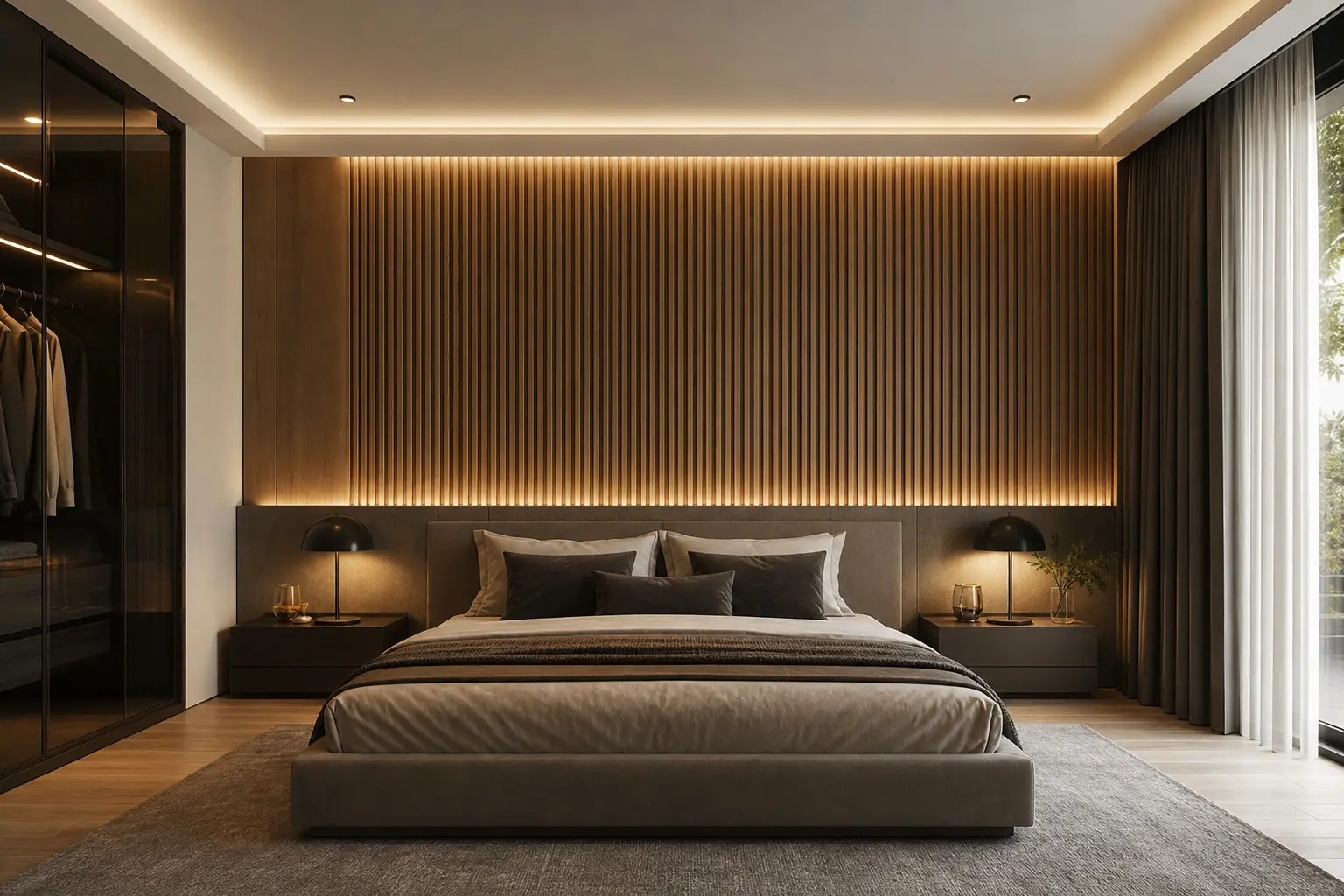
A wood slat wall adds texture and warmth to a bedroom without introducing a bold pattern or color that gets tiring over time. The repeated vertical lines create a subtle rhythm that reads as calm rather than busy, which suits a room meant for rest. It’s also one of the few accent wall treatments that works equally well in a small bedroom and a large one, since the scale adjusts with slat width and spacing.
Unlike wallpaper or paint, a slat wall adds real dimension you can see change under different light throughout the day. Morning light catches the slats differently than a warm lamp does at night, which gives the wall a sense of depth that flat finishes can’t match. That dimensional quality is part of why slat walls have become such a common feature behind modern headboards.
2. Choose the Right Slat Spacing and Depth
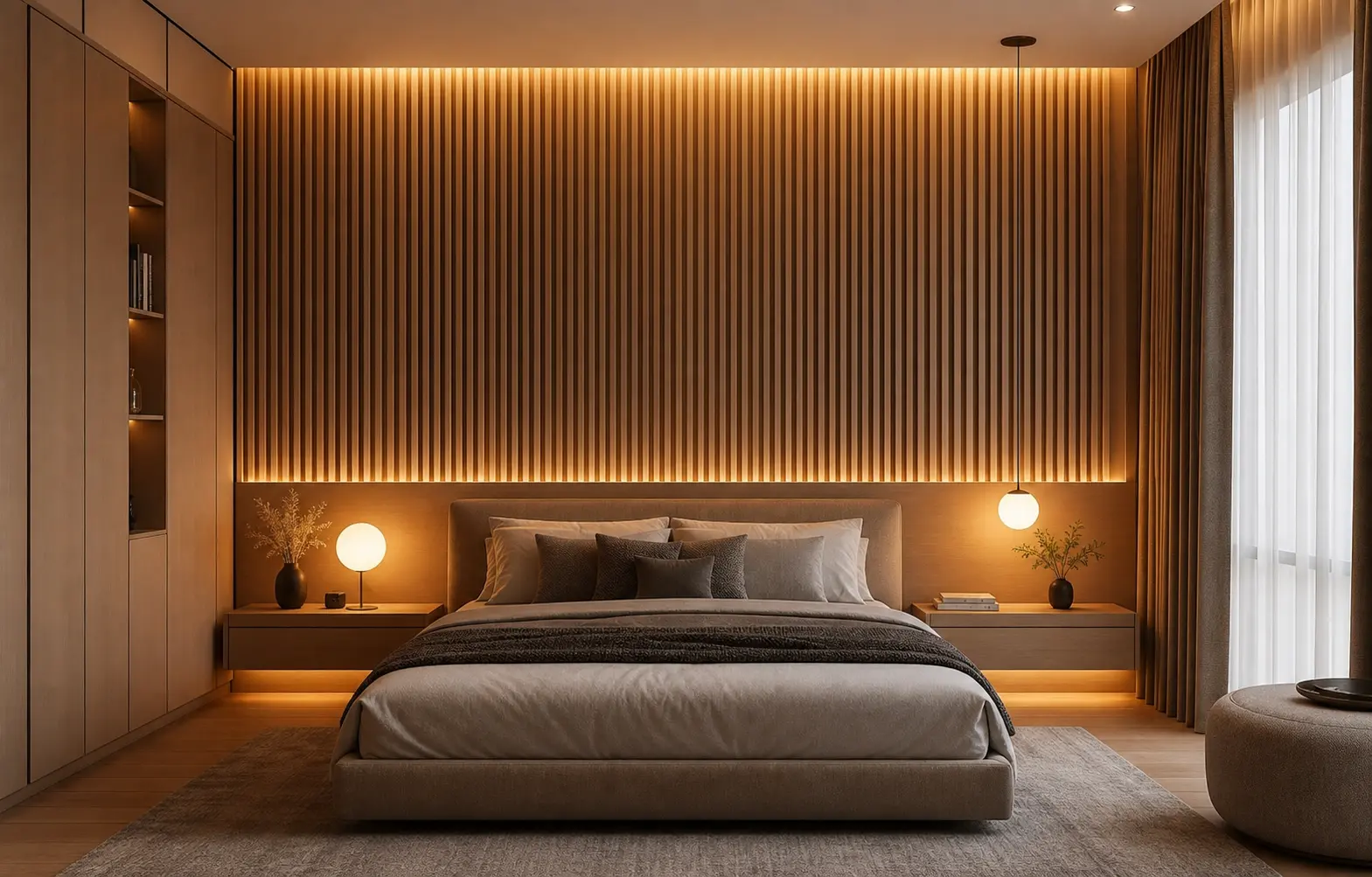
Most residential slat walls use boards between 2 and 4 inches wide, spaced with a gap roughly half the board’s width. Wider spacing reads as more relaxed and modern, while tighter spacing gives a denser, more traditional look. A typical setup runs slats about 0.75 to 1 inch deep off the wall, enough to cast a small shadow line without eating up much room depth.
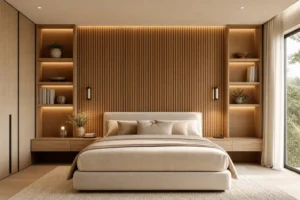
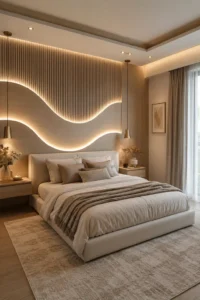
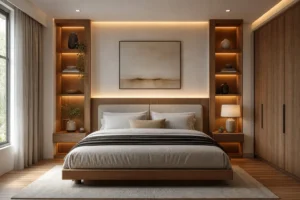
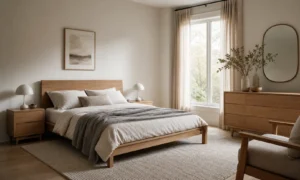
Working With a Narrow Bedroom
In a smaller bedroom, keep the slats shallower, closer to 0.5 inches deep, so the wall doesn’t visually shrink the room further. Wider gaps between slats also help a small room feel less closed in than tight, dense spacing would. These small adjustments matter more in a compact bedroom than they do in a larger primary suite.
3. Hide LED Strips Behind the Slats for a Backlit Glow
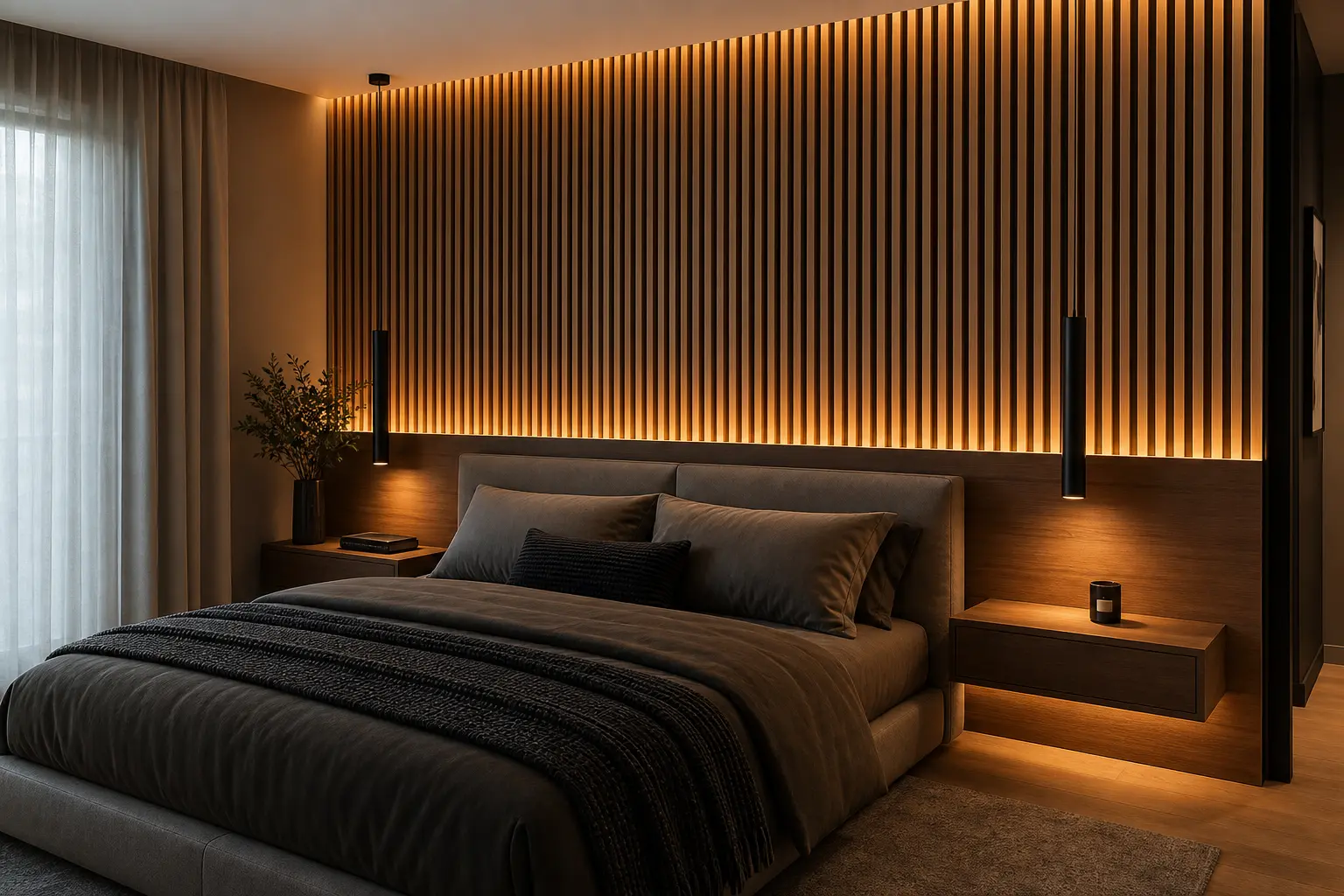
Running a warm LED strip behind the slats, rather than mounting it visibly on top, creates a soft glow that seems to come from the wall itself rather than an obvious fixture. Mount the strip along a thin furring strip behind the slats near the top of the wall, aimed to bounce light off the real wall surface behind. This backlit approach avoids visible hot spots and keeps the light source completely hidden from a normal sightline.
A 2700K warm white strip works best for this effect, since anything cooler starts to look more like task lighting than ambiance. Keep the strip on its own dimmer switch, since full brightness rarely suits a bedroom setting anyway. This single detail is often what makes a slat wall feel like a designed feature rather than a simple wood accent.
4. Layer Ambient Light Instead of Relying on One Overhead Fixture
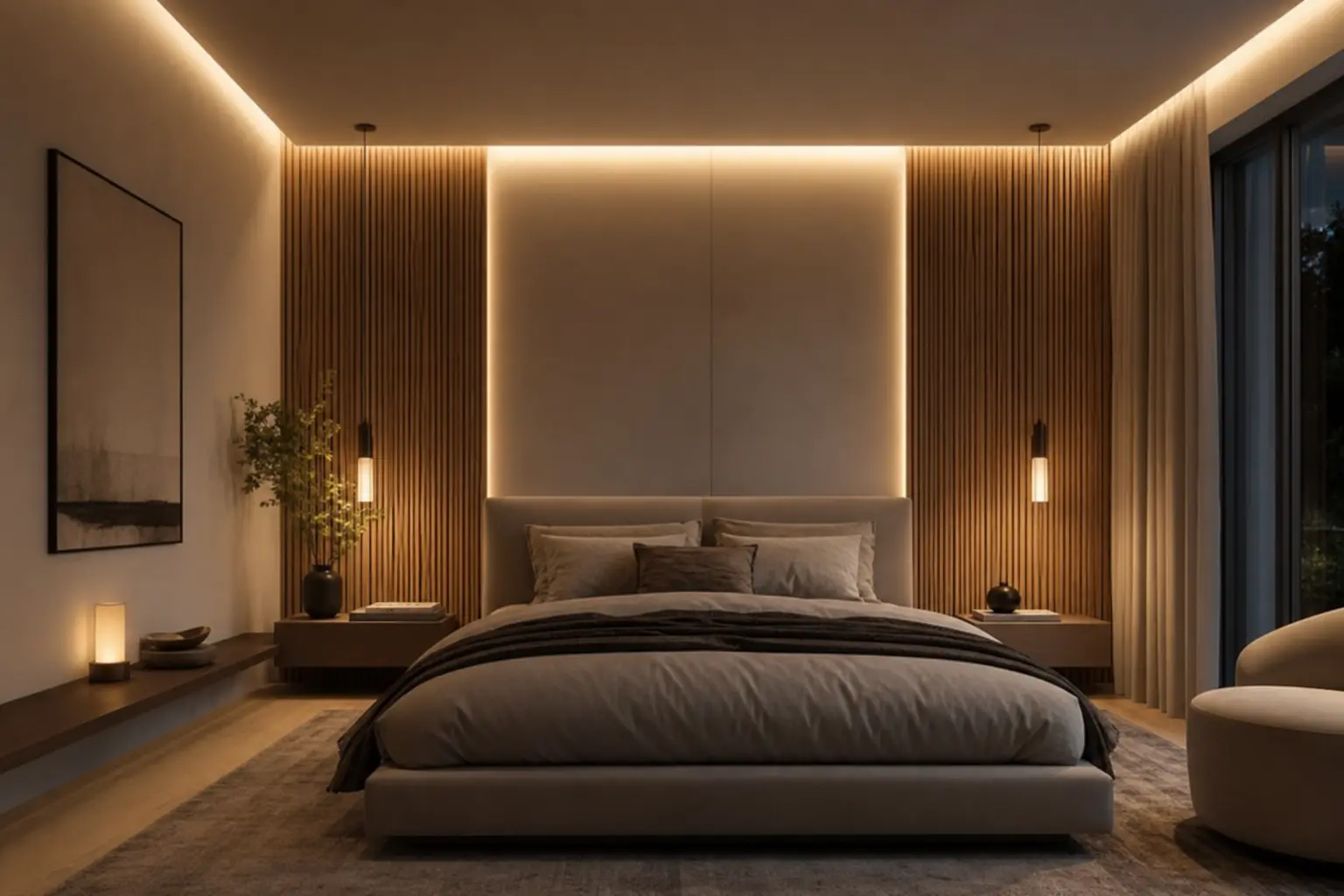
A single ceiling fixture forces the whole room into one brightness level, which rarely suits a bedroom’s range of uses from reading to sleeping. Layer in at least three light sources: the backlit slat wall, a pair of nightstand lamps, and one additional floor or table lamp elsewhere in the room. Each source can be controlled separately, which lets you dial in exactly the mood a given moment calls for.
This layering approach is standard in hotel bedroom design for a reason, since it avoids the flat, even lighting most homes default to. A room lit only from table and floor height, with the slat wall glowing softly behind the bed, reads as far calmer than the same room under one bright ceiling light. Skip the overhead fixture most evenings and let the layered sources do the work instead.
5. Pick a Wood Tone That Works With Your Existing Furniture
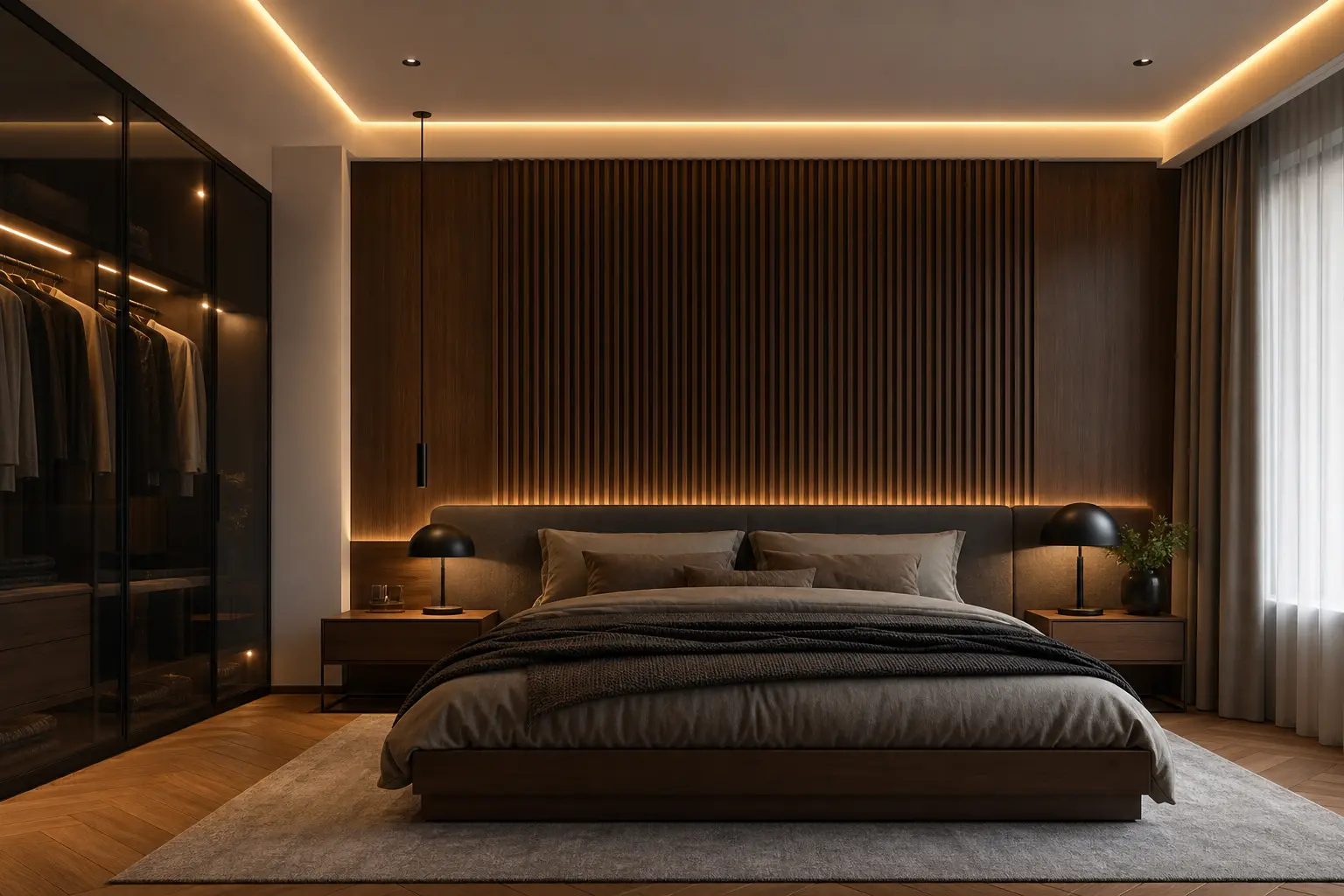
Match the slat wood tone to your existing furniture rather than treating it as a completely separate design decision. A warm oak or walnut slat wall pairs naturally with existing wood nightstands or a wood bed frame in a similar family of tones. A lighter ash or whitewashed slat suits a room with mostly white or light grey furniture already in place.
If your existing furniture spans several different wood tones already, a mid tone slat wall in a neutral brown often bridges the gap better than matching any single piece exactly. Bring a small sample of the slat material into the room and view it next to your furniture before committing to a full wall. Undertones that look fine in a showroom sometimes clash once placed against your actual furniture at home.
6. Decide How Much of the Wall the Slats Should Cover
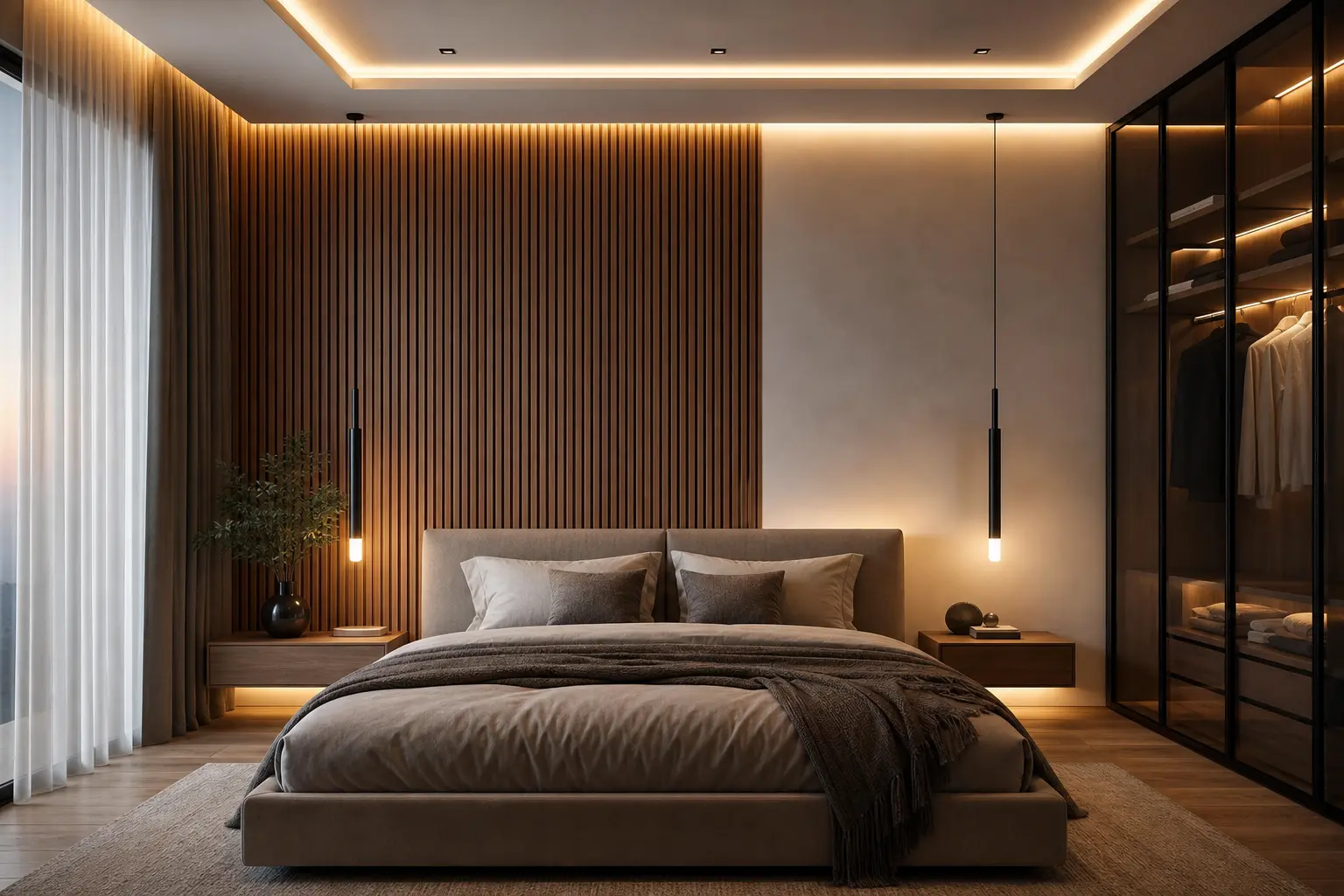
A full floor to ceiling slat wall behind the headboard makes the strongest visual statement and works well in a room with at least 8 foot ceilings. A partial slat treatment, running only 5 to 6 feet up from the floor, suits a lower ceiling or a room where a full wall would feel heavy. Partial coverage also costs less in materials and installation time than a complete wall.
Center the slat section behind the bed rather than running it corner to corner if you’re doing a partial treatment. This keeps the headboard as the clear focal point rather than spreading the eye across the whole wall. A centered partial wall often reads as more intentional than a full wall that wasn’t fully planned out in advance.
7. Add Dimmers So the Room Can Shift From Day to Night
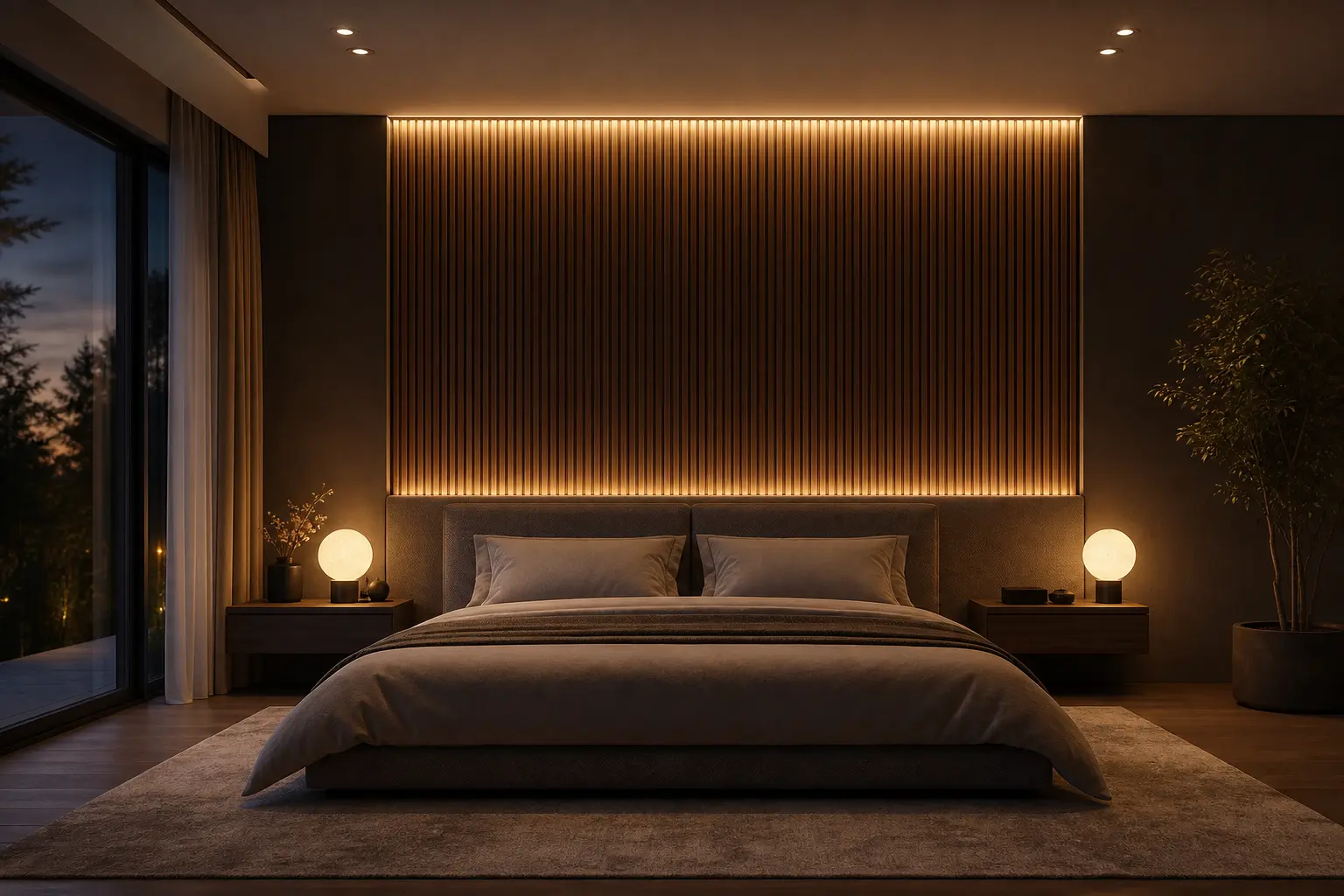
Every light source in the room, the slat wall strip, the nightstand lamps, and any floor lamp, benefits from its own dimmer rather than a simple on and off switch. A bright setting works for getting dressed or cleaning, while a much dimmer setting suits reading in bed or winding down before sleep. Smart bulbs with app based dimming work as a retrofit option if running new dimmer switches isn’t practical.
Set a few saved lighting scenes if you’re using smart bulbs, one for daytime brightness and one for a warm, low evening setting. This removes the friction of manually adjusting three or four different light sources every time the mood in the room needs to shift. A well planned dimming setup is often what separates a bedroom that feels genuinely restful from one that just looks nice in photos.
8. Balance the Slat Wall With Softer Textiles Nearby
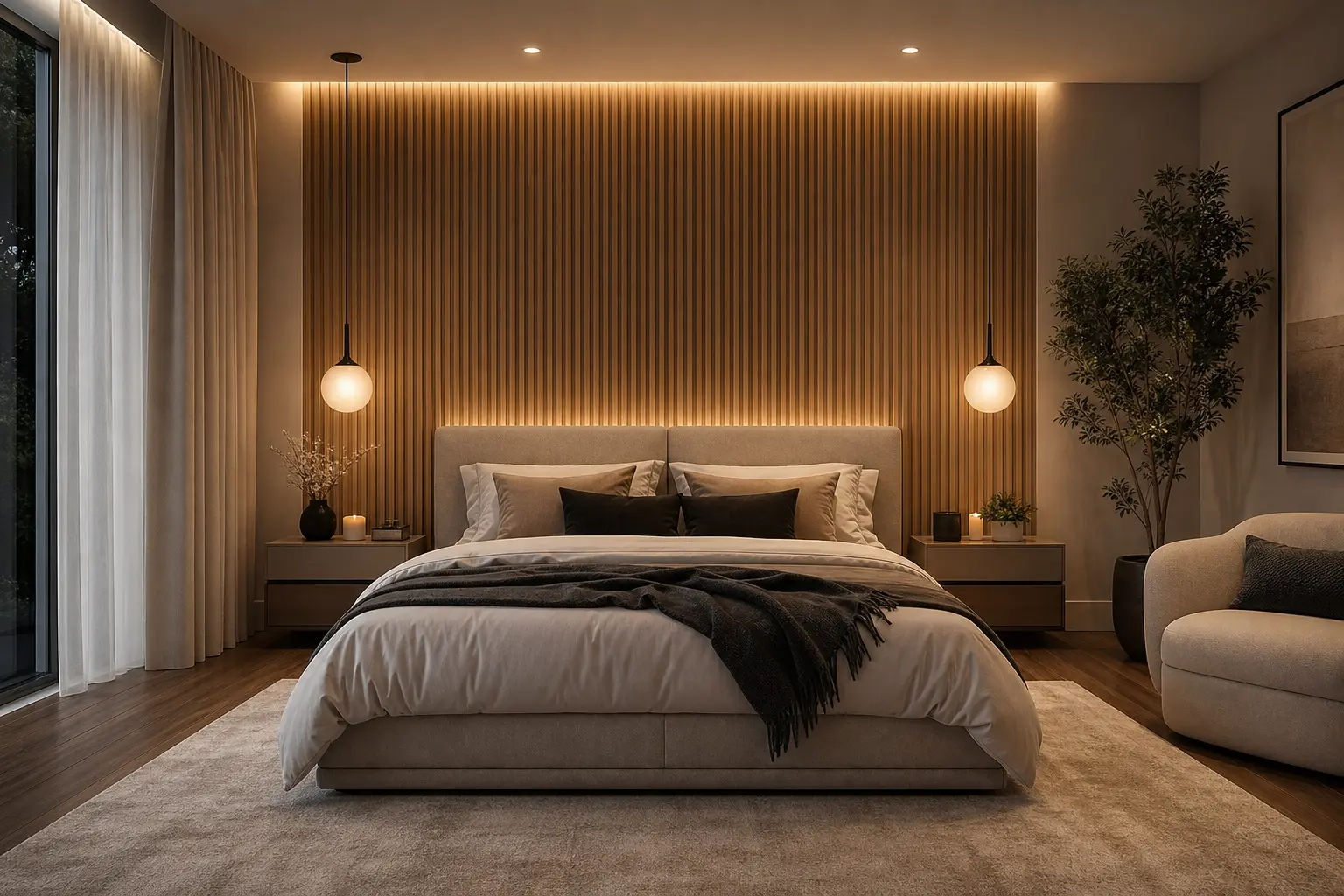
A wood slat wall introduces a hard, linear texture that benefits from softer materials nearby to keep the room from feeling too rigid. Layered bedding in linen or a heavier knit throw adds the textural contrast that keeps the room feeling warm rather than showroom like. A woven rug at the foot of the bed does similar work on the floor level.
Curtains in a soft, slightly heavier fabric also help soften a room with a strong wood feature wall. Avoid pairing a slat wall with entirely hard surfaced furniture and no soft textiles at all, since that combination can start to feel cold despite the warm wood tone. A few soft layers is usually enough to balance out the wall’s linear structure.
9. Plan the Wiring Before the Slats Go Up
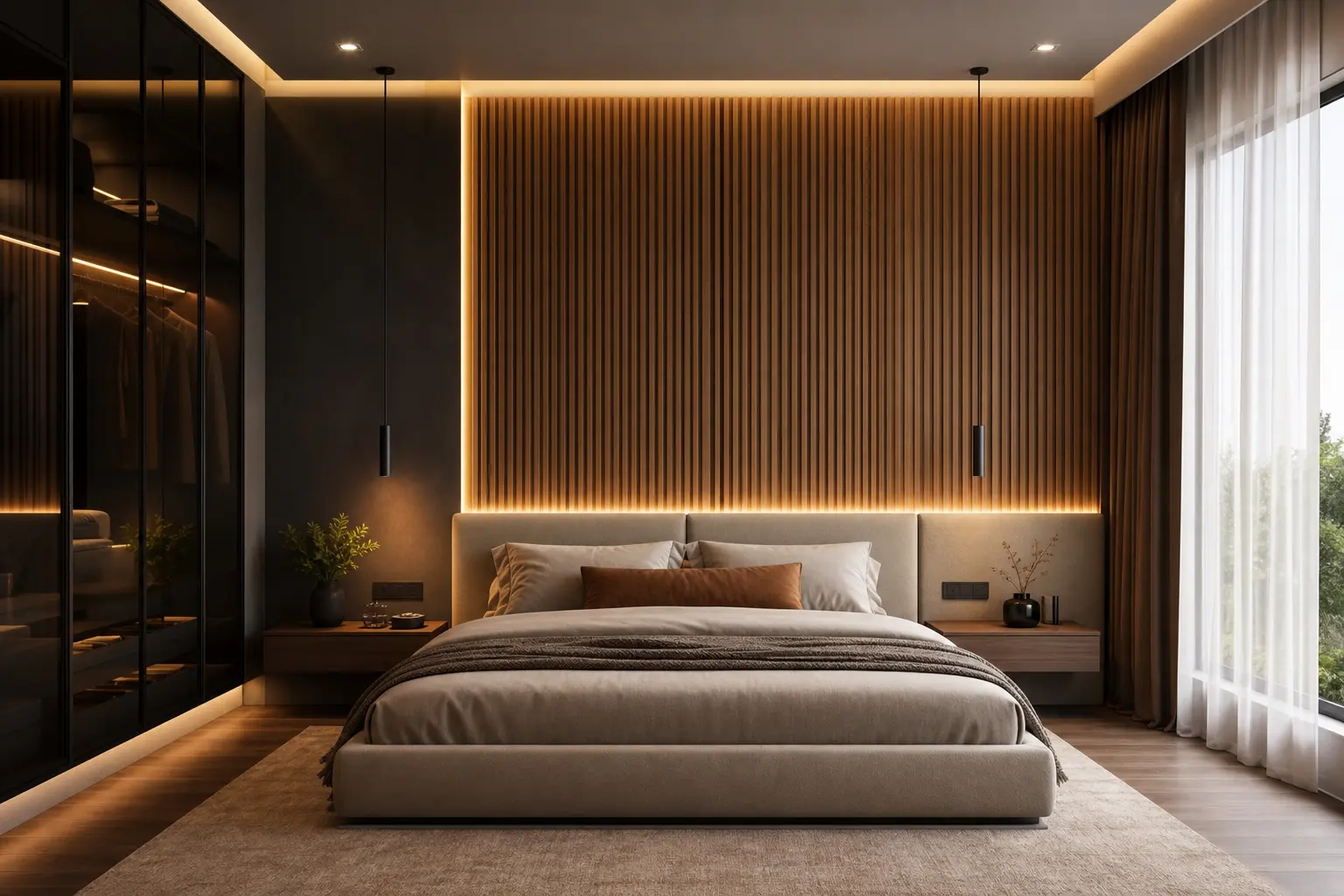
If you’re running an LED strip behind the slats on a dedicated switch, plan the wiring and switch location before the slats are installed, since accessing wiring behind a finished slat wall later means partial disassembly. A licensed electrician can add a switched outlet or hardwired connection behind the wall specifically for this purpose. Route the wiring along the furring strips so it stays hidden and doesn’t interfere with slat spacing.
For a simpler retrofit onto an existing wall without new wiring, plug in LED strips with a nearby outlet and a visible but minimal cord are a realistic option. Route that cord down one edge of the slat wall where it’s least visible rather than across the middle of the wall. It won’t be quite as seamless as a hardwired system, but it avoids reopening a finished installation.
10. Keep the Rest of the Room Simple So the Wall Stands Out
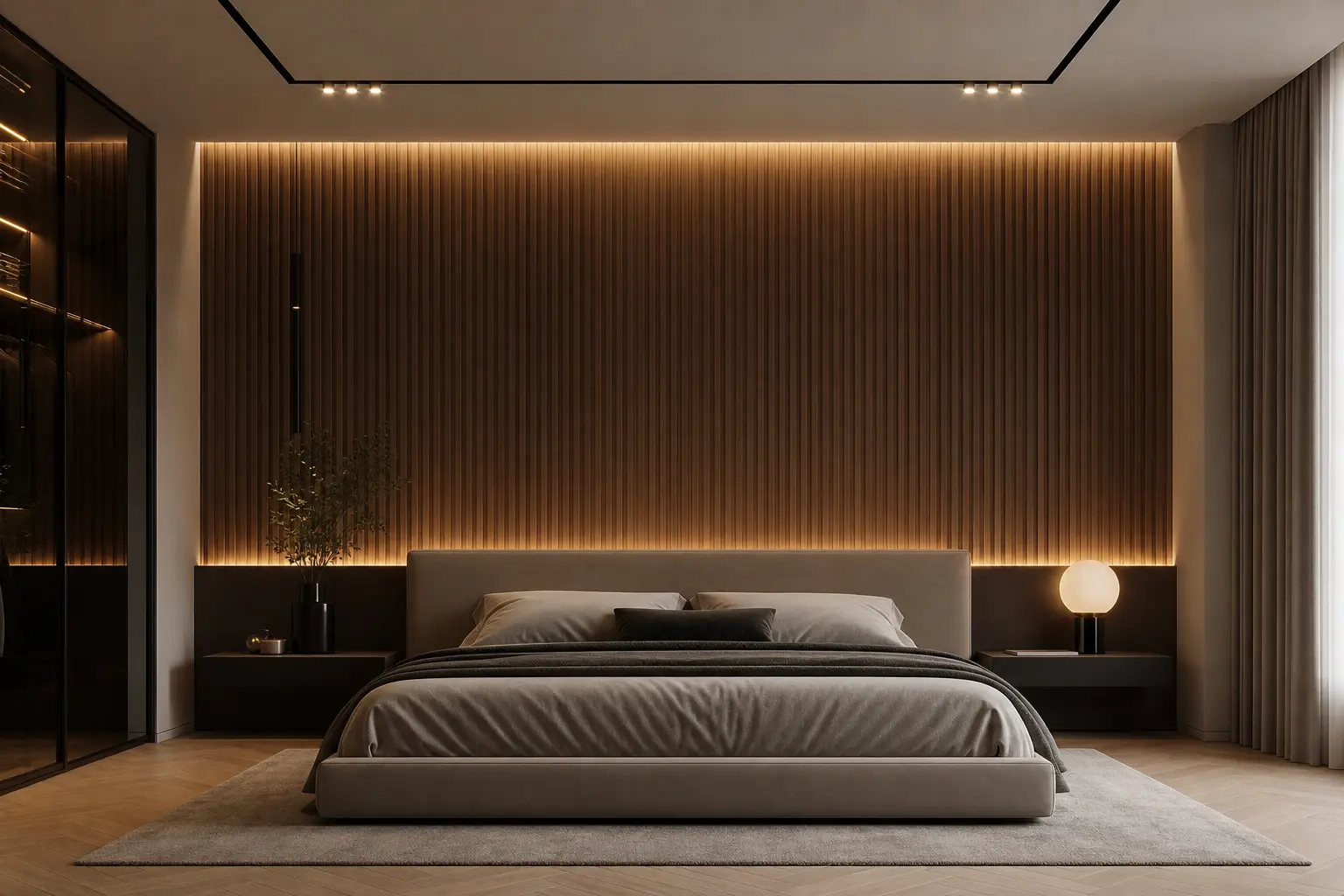
A wood slat wall with hidden ambient lighting already carries a lot of visual weight, so the rest of the bedroom benefits from staying relatively restrained around it. Keep other walls a simple neutral paint color and avoid adding a second bold pattern or accent color that competes with the slat texture for attention. This isn’t about making the room boring, it’s about giving the feature wall room to actually be the focal point instead of one of several loud elements.
Furniture across the rest of the room can lean simple and low profile, letting the headboard wall carry the visual interest on its own. A patterned rug or a bold piece of art elsewhere in the room can still work, but keep it to one additional accent at most. Restraint everywhere else is usually what makes a feature wall like this read as intentional rather than accidental.
Mistakes to Avoid
- Using cool white LED strips behind the slats instead of warm 2700K light
- Relying on one bright overhead fixture instead of layering multiple light sources
- Choosing a slat wood tone that clashes with existing furniture without testing it in the room first
- Running a full floor to ceiling slat wall in a low ceiling room where partial coverage would suit better
- Skipping dimmers, which leaves the room stuck at one brightness level regardless of time of day
- Pairing the wood slat wall with only hard surfaces and no soft textiles nearby
Frequently Asked Questions
Do wood slat walls work in small bedrooms? Yes, with narrower slat depth and wider spacing to avoid making the room feel closed in, a slat wall can work well even in a compact bedroom.
What LED color temperature works best behind a slat wall? A warm 2700K temperature generally suits a bedroom’s ambient lighting best, since anything cooler tends to look more like task lighting than a relaxing glow.
How much of the wall should the slats cover? A full floor to ceiling treatment makes the strongest statement in a room with higher ceilings, while a partial 5 to 6 foot section centered behind the bed works well in a lower ceiling room.
Can I add a slat wall without hiring an electrician? Yes, using plug in LED strips with a visible but minimal cord routed along one edge of the wall, though a hardwired setup planned before installation gives a cleaner final result.
What wood tone should I choose for a slat wall? Match it to your existing furniture where possible, or choose a neutral mid tone brown if your current furniture already spans a few different wood tones.
Final Thoughts
A modern bedroom with ambient lighting and a wood slat wall works because the two elements support each other, the slats give the light something warm to glow against, and the layered light gives the wood texture a reason to stand out at night. Start with the slat spacing and wiring plan first, since those decisions are far easier to get right before installation than after. Add the layered lamps and dimmers once the wall itself is finished, and keep the rest of the room simple enough that the feature wall stays the clear focal point.